

Energy Metabolism in Uncoupling Protein 3 Gene Knockout Mice
Open accessThe DOI matches its Crossref record; 63 of the 63 references it cites were found in a registry or an index.
Abstract
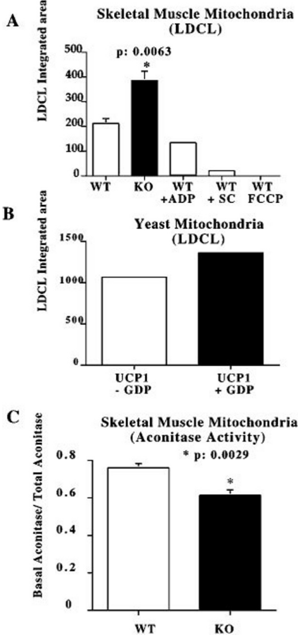
Uncoupling protein 3 (UCP3) is a member of the mitochondrial anion carrier superfamily. Based upon its high homology with UCP1 and its restricted tissue distribution to skeletal muscle and brown adipose tissue, UCP3 has been suggested to play important roles in regulating energy expenditure, body weight, and thermoregulation. Other postulated roles for UCP3 include regulation of fatty acid metabolism, adaptive responses to acute exercise and starvation, and prevention of reactive oxygen species (ROS) formation. To address these questions, we have generated mice lacking UCP3 (UCP3 knockout (KO) mice). Here, we provide evidence that skeletal muscle mitochondria lacking UCP3 are more coupled (i.e. increased state 3/state 4 ratio), indicating that UCP3 has uncoupling activity. In addition, production of ROS is increased in mitochondria lacking UCP3. This study demonstrates that UCP3 has uncoupling activity and that its absence may lead to increased production of ROS. Despite these effects on mitochondrial function, UCP3 does not seem to be required for body weight regulation, exercise tolerance, fatty acid oxidation, or cold-induced thermogenesis. The absence of such phenotypes in UCP3 KO mice could not be attributed to up-regulation of other UCP mRNAs. However, alternative compensatory mechanisms cannot be excluded. The consequence of increased mitochondrial coupling in UCP3 KO mice on metabolism and the possible role of yet unidentified compensatory mechanisms, remains to be determined.
Overview
The claims and statistics of this paper haven’t been checked yet.
Free: it reads the open-access text and checks the first 5 claims that cite a source we can check. Create a free account to check every claim.
Integrity signals
Registry
Cites
Statistics
Figures
Verification
Claims the paper makes
The claims and statistics of this paper haven’t been checked yet.
Free: it reads the open-access text and checks the first 5 claims that cite a source we can check. Create a free account to check every claim.
Claims other papers make about this one
Each is checked against this paper’s own text: does it say what the citing paper says it does?
The cited source says what the claim attributes to it.
In the citing paper
“Evidence has been presented that the new UCPs are involved in cell defense against oxidative stress (22-27).”
From Respiration, oxidative phosphorylation, and uncoupling protein in Candida albicans (2004) · cites this paper as [25]
The cited source says what the claim attributes to it.
In the citing paper
“They are able to induce mild uncoupling, thus increasing the rate of respiration and decreasing the production of reactive oxygen species (ROS) (24-27).”
From Respiration, oxidative phosphorylation, and uncoupling protein in Candida albicans (2004) · cites this paper as [25]
Self-check
Percentages, sums and reported differences re-computed from the paper’s own numbers.
The self-check needs the paper’s full text.
Citations
Cites
(1975) · Journal of AOAC INTERNATIONAL · doi:10.1093/jaoac/58.5.1085 · Cited by 19,795
(1974) · Elsevier eBooks · doi:10.1016/b978-0-12-091304-6.x5001-0 · Cited by 6,755
Boveris, A., & Chance, B. (1973) · Biochemical Journal · doi:10.1042/bj1340707 · Cited by 2,626
Changes in Energy Expenditure Resulting from Altered Body Weight
Leibel, R. L., Rosenbaum, M., & Hirsch, J. (1995) · New England Journal of Medicine · doi:10.1056/nejm199503093321001 · Cited by 2,012
Uncoupling protein-2: a novel gene linked to obesity and hyperinsulinemia
Fleury, C., Neverova, M., Collins, S., Raimbault, S., Champigny, O., Levi-Meyrueis, C., Bouillaud, F., Seldin, M. F., Surwit, R. S., Ricquier, D., et al. (1997) · Nature Genetics · doi:10.1038/ng0397-269 · Cited by 1,631
Thermogenic mechanisms in brown fat.
Nicholls, D. G., & Locke, R. M. (1984) · Physiological Reviews · doi:10.1152/physrev.1984.64.1.1 · Cited by 1,602
Mice lacking mitochondrial uncoupling protein are cold-sensitive but not obese
Enerbäck, S., Jacobsson, A., Simpson, E. M., Guerra, C., Yamashita, H., Harper, M.-E., & Kozak, L. P. (1997) · Nature · doi:10.1038/387090a0 · Cited by 1,379
Superoxide Anion Radical (O·̄2), Superoxide Dismutases, and Related Matters
Fridovich, I. (1997) · Journal of Biological Chemistry · doi:10.1074/jbc.272.30.18515 · Cited by 1,337
Reduced Rate of Energy Expenditure as a Risk Factor for Body-Weight Gain
Ravussin, E., Lillioja, S., Knowler, W. C., Christin, L., Freymond, D., Abbott, W. G. H., Boyce, V., Howard, B. V., & Bogardus, C. (1988) · New England Journal of Medicine · doi:10.1056/nejm198802253180802 · Cited by 1,215
Boss, O., Samec, S., Paoloni-Giacobino, A., Rossier, C., Dulloo, A., Seydoux, J., Muzzin, P., & Giacobino, J.-P. (1997) · FEBS Letters · doi:10.1016/s0014-5793(97)00384-0 · Cited by 1,041
Self-citation
Research works printed but not linked: 3
- Jaworek, D., Gruber, W., and Bergmeyer, H. U. (1974) in Methods of Enzy- matic Analysis (Bergmeyer, H. U., ed) Vol. 4, pp. 2127-2131, Verlag- Chemie, Winheim/Academic Press, New York 43. Deleted in proof
- Salmon, D. M., and Flat, J. P. (1985) Int. J. Obes. 9, 443-449
- Li, Y., Zhu, H., and Trush, M. A. (1999) Biochim. Biophys. Acta 28, 1-12
Cited by
Oxidants, oxidative stress and the biology of ageing
Finkel, T., & Holbrook, N. J. (2000) · Nature · doi:10.1038/35041687 · Cited by 9,413
“, whereas levels of mitochondrial oxidants rise in mice with a targeted deletion of UCP-3 (ref”
BackgroundBrown Adipose Tissue: Function and Physiological Significance
CANNON, B., & NEDERGAARD, J. (2004) · Physiological Reviews · doi:10.1152/physrev.00015.2003 · Cited by 6,433
Obesity and the regulation of energy balance
Spiegelman, B. M., & Flier, J. S. (2001) · Cell · doi:10.1016/s0092-8674(01)00240-9 · Cited by 2,398
Myocardial Fatty Acid Metabolism in Health and Disease
Lopaschuk, G. D., Ussher, J. R., Folmes, C. D. L., Jaswal, J. S., & Stanley, W. C. (2010) · Physiological Reviews · doi:10.1152/physrev.00015.2009 · Cited by 2,179
Myocardial Substrate Metabolism in the Normal and Failing Heart
Stanley, W. C., Recchia, F. A., & Lopaschuk, G. D. (2005) · Physiological Reviews · doi:10.1152/physrev.00006.2004 · Cited by 2,048
Puigserver, P., & Spiegelman, B. M. (2003) · Endocrine Reviews · doi:10.1210/er.2002-0012 · Cited by 2,076
Physiological and Molecular Basis of Thyroid Hormone Action
Yen, P. M. (2001) · Physiological Reviews · doi:10.1152/physrev.2001.81.3.1097 · Cited by 2,011
PPARs and the complex journey to obesity
Evans, R. M., Barish, G. D., & Wang, Y.-X. (2004) · Nature Medicine · doi:10.1038/nm1025 · Cited by 1,602
Mitochondrial electron transport chain, ROS generation and uncoupling (Review)
Zhao, R., Jiang, S., Zhang, L., & Yu, Z. (2019) · International Journal of Molecular Medicine · doi:10.3892/ijmm.2019.4188 · Cited by 1,386
“Experiments have demonstrated that ROS production is increased in UcP2/3-ablated mice (184-186).”
BackgroundSuperoxide activates mitochondrial uncoupling proteins
Echtay, K. S., Roussel, D., St-Pierre, J., Jekabsons, M. B., Cadenas, S., Stuart, J. A., Harper, J. A., Roebuck, S. J., Morrison, A., Pickering, S., et al. (2002) · Nature · doi:10.1038/415096a · Cited by 1,382
“UCP2 and UCP3 are present at much lower abundance than UCP1, and the uncoupling with which they are associated is not significantly thermogeni”
BackgroundFlier, J. S. (2004) · Cell · doi:10.1016/s0092-8674(03)01081-x · Cited by 1,112
Role of Mitochondrial Dysfunction in Insulin Resistance
Kim, J.-A., Wei, Y., & Sowers, J. R. (2008) · Circulation Research · doi:10.1161/circresaha.107.165472 · Cited by 1,103
Arsenijevic, D., Onuma, H., Pecqueur, C., Raimbault, S., Manning, B. S., Miroux, B., Couplan, E., Alves-Guerra, M.-C., Goubern, M., Surwit, R., et al. (2000) · Nature Genetics · doi:10.1038/82565 · Cited by 1,079
“A higher level of ROS was recently measured in skeletal muscle of mice deficient for Ucp3 (ref”
BackgroundCalorie restriction, SIRT1 and metabolism: understanding longevity
Bordone, L., & Guarente, L. (2005) · Nature Reviews Molecular Cell Biology · doi:10.1038/nrm1616 · Cited by 1,020
“How might changes in UCPs affect cells? Mitochondria from UCP3-knockout mice show increased superoxide generatio”
BackgroundMitochondrial superoxide: production, biological effects, and activation of uncoupling proteins
Brand, M. D., Affourtit, C., Esteves, T. C., Green, K., Lambert, A. J., Miwa, S., Pakay, J. L., & Parker, N. (2004) · Free Radical Biology and Medicine · doi:10.1016/j.freeradbiomed.2004.05.034 · Cited by 1,032
Zhang, C.-Y., Baffy, G., Perret, P., Krauss, S., Peroni, O., Grujic, D., Hagen, T., Vidal-Puig, A. J., Boss, O., Kim, Y.-B., et al. (2001) · Cell · doi:10.1016/s0092-8674(01)00378-6 · Cited by 917
Self-citationSpeakman, J. R., & Mitchell, S. E. (2011) · Molecular Aspects of Medicine · doi:10.1016/j.mam.2011.07.001 · Cited by 749
Physiological functions of the mitochondrial uncoupling proteins UCP2 and UCP3
Brand, M. D., & Esteves, T. C. (2005) · Cell Metabolism · doi:10.1016/j.cmet.2005.06.002 · Cited by 785
Speakman, J. R., Talbot, D. A., Selman, C., Snart, S., McLaren, J. S., Redman, P., Krol, E., Jackson, D. M., Johnson, M. S., & Brand, M. D. (2004) · Aging Cell · doi:10.1111/j.1474-9728.2004.00097.x · Cited by 761
Voltage-Gated Proton Channels and Other Proton Transfer Pathways
Decoursey, T. E. (2003) · Physiological Reviews · doi:10.1152/physrev.00028.2002 · Cited by 737
Cytokine Stimulation of Energy Expenditure through p38 MAP Kinase Activation of PPARγ Coactivator-1
Puigserver, P., Rhee, J., Lin, J., Wu, Z., Yoon, J. C., Zhang, C.-Y., Krauss, S., Mootha, V. K., Lowell, B. B., & Spiegelman, B. M. (2001) · Molecular Cell · doi:10.1016/s1097-2765(01)00390-2 · Cited by 732
“Taken together, the stud(Vidal-Puig et al., 2000), using a medium containing 250 mM sucrose, ies presented here suggest a possible anticachectic 5 mM Tris, and 2 mM EGTA (pH 7.”
MethodSelf-citationSirt1 Regulates Insulin Secretion by Repressing UCP2 in Pancreatic β Cells
Bordone, L., Motta, M. C., Picard, F., Robinson, A., Jhala, U. S., Apfeld, J., McDonagh, T., Lemieux, M., McBurney, M., Szilvasi, A., et al. (2005) · PLoS Biology · doi:10.1371/journal.pbio.0040031 · Cited by 715
“In one example, mitochondria from UCP3 KO mice generated higher levels of superoxide [53,54], suggesting that some degree of uncoupling can be beneficial by controlling reactive oxygen species production [55].”
Shi, T., Wang, F., Stieren, E., & Tong, Q. (2005) · Journal of Biological Chemistry · doi:10.1074/jbc.m414670200 · Cited by 712
Thermogenic Mechanisms and Their Hormonal Regulation
Silva, J. E. (2006) · Physiological Reviews · doi:10.1152/physrev.00009.2005 · Cited by 687
“exhibit a readily evident thermogenic deficiency (7, 99, 244).”
BackgroundThe mitochondrial uncoupling-protein homologues
Krauss, S., Zhang, C.-Y., & Lowell, B. B. (2005) · Nature Reviews Molecular Cell Biology · doi:10.1038/nrm1592 · Cited by 663
“Mitochondria that are isolated from the skeletal muscle of UCP3 -knockout mice show decreased proton lea”
BackgroundSelf-citationMaeda, H., Hosokawa, M., Sashima, T., Funayama, K., & Miyashita, K. (2005) · Biochemical and Biophysical Research Communications · doi:10.1016/j.bbrc.2005.05.002 · Cited by 639
“Indeed , unexpected physiological or pathological implications of the UCP2 and UCP3 function were indicated [2], such as the possible UCP2 involvement in diabetes and in apoptosis.”
BackgroundInfluentialNedergaard, J., Golozoubova, V., Matthias, A., Asadi, A., Jacobsson, A., & Cannon, B. (2001) · Biochimica et Biophysica Acta (BBA) - Bioenergetics · doi:10.1016/s0005-2728(00)00247-4 · Cited by 615
A signalling role for 4‐hydroxy‐2‐nonenal in regulation of mitochondrial uncoupling
Echtay, K. S., Esteves, T. C., Pakay, J. L., Jekabsons, M. B., Lambert, A. J., Portero‐Otín, M., Pamplona, R., Vidal‐Puig, A. J., Wang, S., Roebuck, S. J., et al. (2003) · The EMBO Journal · doi:10.1093/emboj/cdg412 · Cited by 597
Self-citationMitochondrial uncoupling, ROS generation and cardioprotection
Cadenas, S. (2018) · Biochimica et Biophysica Acta (BBA) - Bioenergetics · doi:10.1016/j.bbabio.2018.05.019 · Cited by 591
Transcriptional regulation of gene expression in human skeletal muscle during recovery from exercise
Pilegaard, H., Ordway, G. A., Saltin, B., & Neufer, P. D. (2000) · American Journal of Physiology-Endocrinology and Metabolism · doi:10.1152/ajpendo.2000.279.4.e806 · Cited by 563
“Although the physiological role of HO-1 in muscle has not been established, partially reduced ROS are produced in human skeletal muscle during intense exercise (14).”
BackgroundInfluentialThe Biology of Mitochondrial Uncoupling Proteins
Rousset, S., Alves-Guerra, M.-C., Mozo, J., Miroux, B., Cassard-Doulcier, A.-M., Bouillaud, F., & Ricquier, D. (2004) · Diabetes · doi:10.2337/diabetes.53.2007.s130 · Cited by 553
“(36) observed elevated production of ROS in skeletal muscle of Ucp3 / mice.”
BackgroundUncoupling proteins and the control of mitochondrial reactive oxygen species production
Mailloux, R. J., & Harper, M.-E. (2011) · Free Radical Biology and Medicine · doi:10.1016/j.freeradbiomed.2011.06.022 · Cited by 537
“damage in comparison to wild type [96,97].”
The Regulation and Physiology of Mitochondrial Proton Leak
Divakaruni, A. S., & Brand, M. D. (2011) · Physiology · doi:10.1152/physiol.00046.2010 · Cited by 486
“Additionally, UCP3 lowers ROS production in isolated skeletal muscle mitochondria (215), mitigates ROS-induced damage (37, 223), and allows for less harmful fatty acid oxidation (197).”
BackgroundOnly UCP1 can mediate adaptive nonshivering thermogenesis in the cold
Golozoubova, V., Hohtola, E., Matthias, A., Jacobsson, A., Cannon, B., & Nedergaard, J. (2001) · The FASEB Journal · doi:10.1096/fj.00-0536fje · Cited by 503
Boudina, S., Sena, S., O’Neill, B. T., Tathireddy, P., Young, M. E., & Abel, E. D. (2005) · Circulation · doi:10.1161/circulationaha.105.554360 · Cited by 502
Hypothalamus‐Pituitary‐Thyroid Axis
Ortiga‐Carvalho, T. M., Chiamolera, M. I., Pazos‐Moura, C. C., & Wondisford, F. E. (2016) · Comprehensive Physiology · doi:10.1002/cphy.c150027 · Cited by 394
“In addition, UCP2 and UCP3 knockout mice exhibit no evident thermogenesis abnormalities, although they exhibit a reduced T3-induced increase in heat production (26,495,550).”
Pecqueur, C., Alves-Guerra, M.-C., Gelly, C., Lévi-Meyrueis, C., Couplan, E., Collins, S., Ricquier, D., Bouillaud, F., & Miroux, B. (2001) · Journal of Biological Chemistry · doi:10.1074/jbc.m006938200 · Cited by 474
Crosstalk between Oxidative Stress and SIRT1: Impact on the Aging Process
Salminen, A., Kaarniranta, K., & Kauppinen, A. (2013) · International Journal of Molecular Sciences · doi:10.3390/ijms14023834 · Cited by 452
“[94] also observed that the knockout of the UCP3 gene increased the mitochondrial ROS production in mouse skeletal muscle.”
BackgroundPhysical activity and resting metabolic rate
Speakman, J. R., & Selman, C. (2003) · Proceedings of The Nutrition Society · doi:10.1079/pns2003282 · Cited by 441
“However, this interpretation is not straightforward because the thermogenic and uncoupling nature of uncoupling protein 3 has been questioned (Vidal-Puig et al. 2000; Schrauwen et al. 2001), as has the effect of exercise on its expression (Hesselink & Schrauwen, 2003; Holloszy & Jones, 2003; Jones…”
BackgroundMaassen, J. A., ‘t Hart, L. M., van Essen, E., Heine, R. J., Nijpels, G., Jahangir Tafrechi, R. S., Raap, A. K., Janssen, G. M. C., & Lemkes, H. H. P. J. (2004) · Diabetes · doi:10.2337/diabetes.53.2007.s103 · Cited by 439
Medina-Gomez, G., Gray, S. L., Yetukuri, L., Shimomura, K., Virtue, S., Campbell, M., Curtis, R. K., Jimenez-Linan, M., Blount, M., Yeo, G. S. H., et al. (2007) · PLoS Genetics · doi:10.1371/journal.pgen.0030064 · Cited by 430
“ITTs on four-week-old mice were performed as previously published [58].”
MethodSelf-citationOxidative Capacity, Lipotoxicity, and Mitochondrial Damage in Type 2 Diabetes
Schrauwen, P., & Hesselink, M. K. C. (2004) · Diabetes · doi:10.2337/diabetes.53.6.1412 · Cited by 408
Superoxide-mediated activation of uncoupling protein 2 causes pancreatic β cell dysfunction
Krauss, S., Zhang, C.-Y., Scorrano, L., Dalgaard, L. T., St-Pierre, J., Grey, S. T., & Lowell, B. B. (2003) · Journal of Clinical Investigation · doi:10.1172/jci19774 · Cited by 394
“(c) Mitochondria from mice that lack UCP3 show a tendency toward elevated levels of oxidative protein damage (51).”
BackgroundInfluentialSelf-citationMitochondrial uncoupling proteins: from mitochondria to the regulation of energy balance
Ricquier, D., & Bouillaud, F. (2000) · The Journal of Physiology · doi:10.1111/j.1469-7793.2000.00003.x · Cited by 385
“This hypothesis was confirmed by studies of mitochondria isolated from skeletal muscle of UCP3-deficient mice (Vidal-Puig et al. 2000).”
BackgroundResultAbu-Elheiga, L., Oh, W., Kordari, P., & Wakil, S. J. (2003) · Proceedings of the National Academy of Sciences · doi:10.1073/pnas.1733877100 · Cited by 389
Superoxide Activates Mitochondrial Uncoupling Protein 2 from the Matrix Side
Echtay, K. S., Murphy, M. P., Smith, R. A. J., Talbot, D. A., & Brand, M. D. (2002) · Journal of Biological Chemistry · doi:10.1074/jbc.m208262200 · Cited by 388
Gong, D.-W., Monemdjou, S., Gavrilova, O., Leon, L. R., Marcus-Samuels, B., Chou, C. J., Everett, C., Kozak, L. P., Li, C., Deng, C., et al. (2000) · Journal of Biological Chemistry · doi:10.1074/jbc.m910177199 · Cited by 385
Thyroid hormone-induced oxidative stress
Venditti, P., & Meo, S. D. (2006) · Cellular and Molecular Life Sciences CMLS · doi:10.1007/s00018-005-5457-9 · Cited by 381
Mitochondrial uncoupling proteins—What is their physiological role?
Echtay, K. S. (2007) · Free Radical Biology and Medicine · doi:10.1016/j.freeradbiomed.2007.08.011 · Cited by 341
The role of mitochondrial oxidative stress in aging
Sastre, J. (2003) · Free Radical Biology and Medicine · doi:10.1016/s0891-5849(03)00184-9 · Cited by 342
Uncoupling proteins 2 and 3 are fundamental for mitochondrial Ca2+ uniport
Trenker, M., Malli, R., Fertschai, I., Levak-Frank, S., & Graier, W. F. (2007) · Nature Cell Biology · doi:10.1038/ncb1556 · Cited by 333
Himms-Hagen, J., & Harper, M.-E. (2001) · Experimental Biology and Medicine · doi:10.1177/153537020122600204 · Cited by 323
Superoxide-mediated activation of uncoupling protein 2 causes pancreatic β cell dysfunction
Krauss, S., Zhang, C.-Y., Scorrano, L., Dalgaard, L. T., St-Pierre, J., Grey, S. T., & Lowell, B. B. (2003) · Journal of Clinical Investigation · doi:10.1172/jci200319774 · Cited by 401
Self-citationParadoxical resistance to diet-induced obesity in UCP1-deficient mice
Liu, X., Rossmeisl, M., McClaine, J. W., & Kozak, L. P. (2003) · Journal of Clinical Investigation · doi:10.1172/jci15737 · Cited by 265
“Because mice with inactivated genes for Ucp2 and Ucp3 are not sensitive to the cold like Ucp1-targeted mice (35, 36), there has been a tendency to conclude that UCP2 and UCP3 are not thermogenic.”
BackgroundEchtay, K. S., Winkler, E., Frischmuth, K., & Klingenberg, M. (2001) · Proceedings of the National Academy of Sciences · doi:10.1073/pnas.98.4.1416 · Cited by 313
Murphy, M. P., Echtay, K. S., Blaikie, F. H., Asin-Cayuela, J., Cochemé, H. M., Green, K., Buckingham, J. A., Taylor, E. R., Hurrell, F., Hughes, G., et al. (2003) · Journal of Biological Chemistry · doi:10.1074/jbc.m308529200 · Cited by 303
Lipin, a lipodystrophy and obesity gene
Phan, J., & Reue, K. (2005) · Cell Metabolism · doi:10.1016/j.cmet.2004.12.002 · Cited by 302
Molecular mechanisms linking calorie restriction and longevity
Merry, B. J. (2002) · The International Journal of Biochemistry & Cell Biology · doi:10.1016/s1357-2725(02)00038-9 · Cited by 304
Skeletal muscle respiratory uncoupling prevents diet-induced obesity and insulin resistance in mice
Li, B., Nolte, L. A., Ju, J.-S., Ho Han, D., Coleman, T., Holloszy, J. O., & Semenkovich, C. F. (2000) · Nature Medicine · doi:10.1038/80450 · Cited by 291
Paradoxical resistance to diet-induced obesity in UCP1-deficient mice
Liu, X., Rossmeisl, M., McClaine, J., & Kozak, L. P. (2003) · Journal of Clinical Investigation · doi:10.1172/jci200315737 · Cited by 281
Lipopolysaccharide induces oxidative cardiac mitochondrial damage and biogenesis
SULIMAN, H., WELTYWOLF, K., CARRAWAY, M., TATRO, L., & PIANTADOSI, C. (2004) · Cardiovascular Research · doi:10.1016/j.cardiores.2004.07.005 · Cited by 269
“UCP-3 facilitates glucose transport and metabolism in cardiac and skeletal muscle cells [21], and mitochondria lacking UCP-3 overproduce ROS [45].”
BackgroundMitochondrial uncoupling proteins and energy metabolism
Busiello, R. A., Savarese, S., & Lombardi, A. (2015) · Frontiers in Physiology · doi:10.3389/fphys.2015.00036 · Cited by 259
Mitochondria in the diabetic heart
Bugger, H., & Abel, E. D. (2010) · Cardiovascular Research · doi:10.1093/cvr/cvq239 · Cited by 260
“44 Several studies have demonstrated uncoupling activity for UCP3 in muscle tissue.(45,46) The group of Brand(47,48) also demonstrated that both fatty acids and superoxide can activate UCP3 protein activity in skeletal muscle.”
BackgroundSuwa, M., Nakano, H., & Kumagai, S. (2003) · Journal of Applied Physiology · doi:10.1152/japplphysiol.00349.2003 · Cited by 250
“In addition, acute exercise and AICAR increase skeletal muscle UCP3 (57), which is a possible regulator of free radical production (49).”
BackgroundInvited Review: Uncoupling proteins and thermoregulation
Argyropoulos, G., & Harper, M.-E. (2002) · Journal of Applied Physiology · doi:10.1152/japplphysiol.00994.2001 · Cited by 256
“It can be concluded from the animal studies that mUCP1 is thermogenic, whereas mUCP3 (and possibly mUCP2) seems to play significant roles in fatty acid oxidation, glucose clearance, and ROS production.”
BackgroundInfluentialAgeing, oxidative stress, and mitochondrial uncoupling
Harper, M. ‐., Bevilacqua, L., Hagopian, K., Weindruch, R., & Ramsey, J. J. (2004) · Acta Physiologica Scandinavica · doi:10.1111/j.1365-201x.2004.01370.x · Cited by 253
Mitochondrial uncoupling protein‐2 protects the immature brain from excitotoxic neuronal death
Sullivan, P. G., Dubé, C., Dorenbos, K., Steward, O., & Baram, T. Z. (2003) · Annals of Neurology · doi:10.1002/ana.10543 · Cited by 251
“The physiological roles of UCP2 expression in hippocampus, amygdala, and limbic (perirhinal and piriform) cortex are unclear.(27,28) However, UCP2-”
BackgroundTranscriptional responses to oxidative stress: Pathological and toxicological implications
Ma, Q. (2010) · Pharmacology & Therapeutics · doi:10.1016/j.pharmthera.2009.11.004 · Cited by 251
Mitochondrial uncoupling as a target for drug development for the treatment of obesity.
Harper, J. A., Dickinson, K., & Brand, M. D. (2001) · Obesity Reviews · doi:10.1046/j.1467-789x.2001.00043.x · Cited by 250
“The proton conductance of skeletal muscle mitochondria from UCP3 knockout mice was decreased (115,116), indicating that UCP3 is responsible for at least some of the proton conductance in skeletal muscle.”
BackgroundProtective Role of Uncoupling Protein 2 in Atherosclerosis
Blanc, J., Alves-Guerra, M. C., Esposito, B., Rousset, S., Gourdy, P., Ricquier, D., Tedgui, A., Miroux, B., & Mallat, Z. (2003) · Circulation · doi:10.1161/01.cir.0000051722.66074.60 · Cited by 240
Role of thyroid hormone in skeletal muscle physiology
Bloise, F. F., Cordeiro, A., & Ortiga-Carvalho, T. M. (2018) · Journal of Endocrinology · doi:10.1530/joe-16-0611 · Cited by 235
Goglia, F., & Skulachev, V. P. (2003) · The FASEB Journal · doi:10.1096/fj.03-0159hyp · Cited by 229
“In line with this assumption, Lowell and co-workers (36) reported an increase in the ROS level in skeletal muscles from UCP3 knockout mice.”
ResultGroop, L., & Orho‐Melander, M. (2001) · Journal of Internal Medicine · doi:10.1046/j.1365-2796.2001.00864.x · Cited by 234
The allenic carotenoid fucoxanthin, a novel marine nutraceutical from brown seaweeds
Miyashita, K., Nishikawa, S., Beppu, F., Tsukui, T., Abe, M., & Hosokawa, M. (2011) · Journal of the Science of Food and Agriculture · doi:10.1002/jsfa.4353 · Cited by 224
Nedergaard, J., & Cannon, B. (2003) · Experimental Physiology · doi:10.1113/eph8802502 · Cited by 226
MacLellan, J. D., Gerrits, M. F., Gowing, A., Smith, P. J. S., Wheeler, M. B., & Harper, M.-E. (2005) · Diabetes · doi:10.2337/diabetes.54.8.2343 · Cited by 213
“The UCP3 knockout mouse provided the first evidence of such a role (42).”
BackgroundMitochondrial Oxidative Damage in Chicken Skeletal Muscle Induced by Acute Heat Stress
Mujahid, A., Pumford, N. R., Bottje, W., Nakagawa, K., Miyazawa, T., Akiba, Y., & Toyomizu, M. (2007) · The Journal of Poultry Science · doi:10.2141/jpsa.44.439 · Cited by 206
Sherman, E. L., Nkrumah, J. D., Murdoch, B. M., Li, C., Wang, Z., Fu, A., & Moore, S. S. (2008) · Journal of Animal Science · doi:10.2527/jas.2006-799 · Cited by 209
“The UCP3, which is expressed in skeletal muscle (Boss et al., 1998), has been shown to have a role in the efficiency of ATP production as UCP3 knock-out mice have higher ATP production (Vidal-Puig et al., 2000).”
BackgroundUCP2 and UCP3 in muscle controlling body metabolism
Schrauwen, P., & Hesselink, M. (2002) · Journal of Experimental Biology · doi:10.1242/jeb.205.15.2275 · Cited by 205
Mechanisms of distal axonal degeneration in peripheral neuropathies
Cashman, C. R., & Höke, A. (2015) · Neuroscience Letters · doi:10.1016/j.neulet.2015.01.048 · Cited by 199
“UCP-2 and UCP-3 were also quickly identified as inhibitors of ROS generation in the mitochondria [179,253], since null mice displayed evidence of increased ROS production and damage (as reviewed in [30]).”
Neuromedin U has a novel anorexigenic effect independent of the leptin signaling pathway
Hanada, R., Teranishi, H., Pearson, J. T., Kurokawa, M., Hosoda, H., Fukushima, N., Fukue, Y., Serino, R., Fujihara, H., Ueta, Y., et al. (2004) · Nature Medicine · doi:10.1038/nm1106 · Cited by 209
UCP1 deficiency increases susceptibility to diet‐induced obesity with age
Kontani, Y., Wang, Y., Kimura, K., Inokuma, K. ‐., Saito, M., Suzuki‐Miura, T., Wang, Z., Sato, Y., Mori, N., & Yamashita, H. (2005) · Aging Cell · doi:10.1111/j.1474-9726.2005.00157.x · Cited by 207
Wong, K. E., Kong, J., Zhang, W., Szeto, F. L., Ye, H., Deb, D. K., Brady, M. J., & Li, Y. C. (2011) · Journal of Biological Chemistry · doi:10.1074/jbc.m111.257568 · Cited by 201
Mujahid, A., Sato, K., Akiba, Y., & Toyomizu, M. (2006) · Poultry Science · doi:10.1093/ps/85.7.1259 · Cited by 198
“…oxidative phosphorylation and cause basal proton leak in mitochondria is controversial: 2 studies showed greatly reduced proton conductance (Gong et al., 2000) and an increased respiratory control ratio (Vidal-Puig et al., 2000) in skeletal muscle mitochondria isolated from UCP3 knockout mice.”
BackgroundInfluentialMiller, V. J., Villamena, F. A., & Volek, J. S. (2018) · Journal of Nutrition and Metabolism · doi:10.1155/2018/5157645 · Cited by 199
“In rats fed a ketogenic diet (% energy: 78.1 fat, 0 carbohydrate, and 21.9 protein) for 8 weeks, UCP3 expression increased in the soleus but not the extensor digitorum longus, which is consistent with the soleus containing mostly oxidative, type I muscle 8bers [152].”
BackgroundInfluentialThe pathophysiology of mitochondrial disease as modeled in the mouse
Wallace, D. C., & Fan, W. (2009) · Genes & Development · doi:10.1101/gad.1784909 · Cited by 202
“production was increased by 58% and muscle mitochondrial aconitase was reduced by 20% (Vidal-Puig et al. 2000).”
BackgroundMuller, F. (2000) · AGE · doi:10.1007/s11357-000-0022-9 · Cited by 193
“cently it has been proposed that the specific role of these proteins is, in fact, to control the mitochondrial membrane potential in order to minimize O2~- production (163).”
BackgroundInfluentialCadenas, S., Echtay, K. S., Harper, J. A., Jekabsons, M. B., Buckingham, J. A., Grau, E., Abuin, A., Chapman, H., Clapham, J. C., & Brand, M. D. (2002) · Journal of Biological Chemistry · doi:10.1074/jbc.m109736200 · Cited by 199
Mitochondrial Uncoupling: A Key Contributor to Reduced Cardiac Efficiency in Diabetes
Boudina, S., & Abel, E. D. (2006) · Physiology · doi:10.1152/physiol.00008.2006 · Cited by 199
Molecular mechanisms for myocardial mitochondrial dysfunction in the metabolic syndrome
Bugger, H., & Dale Abel, E. (2008) · Clinical Science · doi:10.1042/cs20070166 · Cited by 198
Oxidative phosphorylation and aging
Lesnefsky, E. J., & Hoppel, C. L. (2006) · Ageing Research Reviews · doi:10.1016/j.arr.2006.04.001 · Cited by 189
From muscle disuse to myopathy in COPD: potential contribution of oxidative stress
Couillard, A., & Prefaut, C. (2005) · European Respiratory Journal · doi:10.1183/09031936.05.00139904 · Cited by 191
Mogensen, M., Bagger, M., Pedersen, P. K., Fernström, M., & Sahlin, K. (2006) · The Journal of Physiology · doi:10.1113/jphysiol.2005.101691 · Cited by 179
“Studies using UCP3 knockout mice have shown an unaltered body weight, exercise tolerance and FA oxidation (Vidal-Puig et al. 2000) and normal resting oxygen consumption and respiratory exchange ratio (Gong et al. 2000).”
BackgroundFridell, Y.-W. C., Sánchez-Blanco, A., Silvia, B. A., & Helfand, S. L. (2005) · Cell Metabolism · doi:10.1016/j.cmet.2005.01.005 · Cited by 184
“Despite their diverse physiological functions, the involvement of UCPs in ROS metabolism has been demonstrated using gene knockout models and in vitro systems (Arsenijevic et al., 2000; Echtay et al., 2002; Kim-Han et al., 2001; Vidal-Puig et al., 2000).”
BackgroundBRAND, M. D., PAMPLONA, R., PORTERO-OTÍN, M., REQUENA, J. R., ROEBUCK, S. J., BUCKINGHAM, J. A., CLAPHAM, J. C., & CADENAS, S. (2002) · Biochemical Journal · doi:10.1042/bj20021077 · Cited by 184
Choi, C. S., Fillmore, J. J., Kim, J. K., Liu, Z.-X., Kim, S., Collier, E. F., Kulkarni, A., Distefano, A., Hwang, Y.-J., Kahn, M., et al. (2007) · Journal of Clinical Investigation · doi:10.1172/jci13579 · Cited by 184
Liu, D., Chan, S. L., de Souza-Pinto, N. C., Slevin, J. R., Wersto, R. P., Zhan, M., Mustafa, K., de Cabo, R., & Mattson, M. P. (2006) · NeuroMolecular Medicine · doi:10.1385/nmm:8:3:389 · Cited by 180
“…et al., 2001); fasting increases the expression of UCP2 and UCP3 (Boss et al., 1997; Millet et al., 1997); and macrophages isolated from UCP2–/– mice and skeletal muscle mitochondria isolated from UCP3–/– mice show increased ROS production (Arsenijevic et al., 2000; Vidal-Puig et al., 2000).”
BackgroundUncoupling Proteins Prevent Glucose-Induced Neuronal Oxidative Stress and Programmed Cell Death
Vincent, A. M., Olzmann, J. A., Brownlee, M., Sivitz, W. I., & Russell, J. W. (2004) · Diabetes · doi:10.2337/diabetes.53.3.726 · Cited by 178
“Both UCPs regulate energy metabolism and weight regulation (19,20,26).”
BackgroundMouse models for mitochondrial disease
Wallace, D. C. (2001) · American Journal of Medical Genetics · doi:10.1002/ajmg.1393 · Cited by 179
The Emerging Functions of UCP2 in Health, Disease, and Therapeutics
Mattiasson, G., & Sullivan, P. G. (2006) · Antioxidants & Redox Signaling · doi:10.1089/ars.2006.8.1 · Cited by 177
“The”
Metadata
- Authors
- Vidal-Puig, A. J., Grujic, D., Zhang, C.-Y., Hagen, T., Boss, O., Ido, Y., Szczepanik, A., Wade, J., Mootha, V., Cortright, R., Muoio, D. M., & Lowell, B. B.
- Affiliations
- Beth Israel Deaconess Medical Center (US)
- Boston Medical Center (US)
- East Carolina University (US)
- Corresponding author
- Lowell, Bradford B.
- Venue
- Journal of Biological Chemistry
- Publisher
- Elsevier BV
- Published
- 2000-05
- Volume
- 275
- Issue
- 21
- Pages
- 16258-16266
- ISSN
- 0021-9258 (ISSN-L)
- OpenAlex
- W2156172044
- Cited by
- 677
- References
- 63
- Citations by year
- 2026: 2 · 2025: 6 · 2024: 7 · 2023: 5 · 2022: 12 · 2021: 11 · 2020: 7 · 2019: 16 · 2018: 16 · 2017: 8 · 2016: 14 · 2015: 18 · 2014: 14 · 2013: 23 · 2012: 18
- FWCI
- 23.73
- Type
- journal article
- Language
- en
- Open access
- hybrid
- doi.org
- Licence
- cc-by
- www.elsevier.com/tdm/userlicense/1.0/ (tdm)
- creativecommons.org/licenses/by/4.0/ (vor, 7462 d)
- Locations
- Journal of Biological Chemistry (publishedVersion, cc-by)
- PubMed (publishedVersion)
- USF Scholarship Repository (University of San Francisco) (submittedVersion)
- Funders
- Eli Lilly and Company
- National Institutes of Health (DK46200)
- National Institute of Diabetes and Digestive and Kidney Diseases (P30DK046200, DK 49569, R01DK049569, P30 DK-46200, R37DK053477)
- Topics
- Life Sciences › Biochemistry, Genetics and Molecular Biology › Molecular Biology › Mitochondrial Function and Pathology
- Health Sciences › Medicine › Physiology (medical) › Adipose Tissue and Metabolism
- Life Sciences › Biochemistry, Genetics and Molecular Biology › Molecular Biology › Metabolism, Diabetes, and Cancer
- Keywords
- UCP3, mitochondrial uncoupling, reactive oxygen species, skeletal muscle mitochondria, mitochondrial coupling, thermogenesis, fatty acid oxidation, exercise tolerance, energy metabolism
- MeSH terms
- Uncoupling Protein 2, Uncoupling Protein 3, Uncoupling Protein 1, Animals, Body Temperature, Body Weight, Carrier Proteins, Eating, Energy Metabolism, Female, Ion Channels, Male, Membrane Proteins, Mitochondria, Muscle, Oxygen Consumption, Phenotype, Physical Conditioning, Animal, Proteins, RNA, Messenger, Reactive Oxygen Species, Mice, Knockout, Gene Targeting, Muscle, Skeletal, Mitochondrial Proteins, Membrane Transport Proteins, Mice
About these checks
Registry, retraction, Cites and statistics results are computed, not judged, with one exception: a printed reference that no index lists is read once by a model before it counts as a citation error. Claims are extracted by a model and kept only when their quote appears verbatim in the text; each cited source is then checked, with a model’s help, for whether it says what the claim relies on. Those verdicts can be wrong — read the claim’s quote and the cited source before relying on one.
Statistics and arithmetic are recomputed, not judged.
Confidence bands are shown only for fields calibrated on our annotated test set. None is calibrated yet, so no band is shown.
What counts as a claim ›How we measure confidence ›How we check this ›
Are you an author, or do you see a problem with this page? Request a review
Data sources
Bibliographic data: Semantic Scholar, OpenAlex, Crossref.
Contains information from the Semantic Scholar Academic Graph Datasets, made available under the ODC Attribution License (ODC-BY 1.0).
Semantic Scholar’s data is described in: Kinney, R., et al. (2023). The Semantic Scholar Open Data Platform. arXiv:2301.10140.
