

A Dual Pressure Linear Ion Trap Orbitrap Instrument with Very High Sequencing Speed
Open accessThe DOI matches its Crossref record; 22 of the 22 references it cites were found in a registry or an index.
Abstract
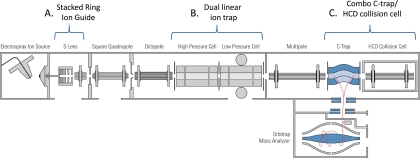
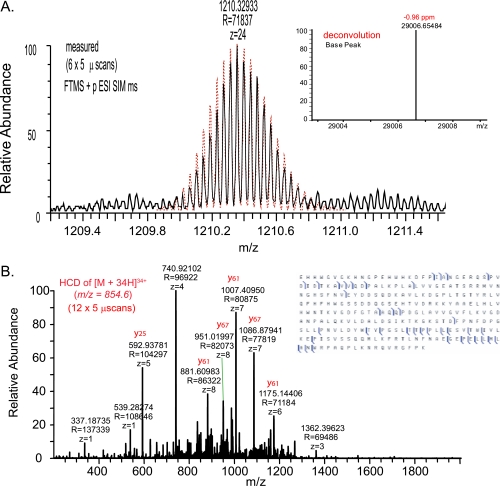
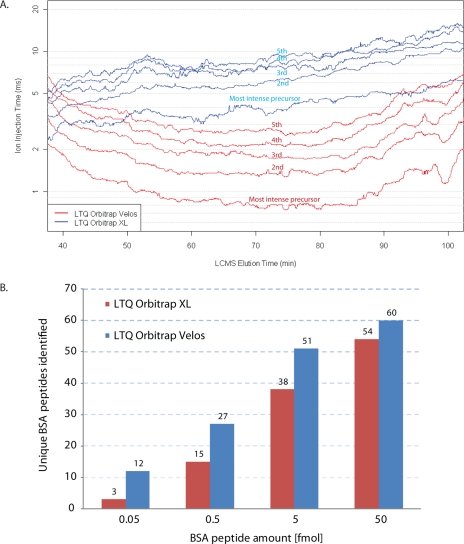
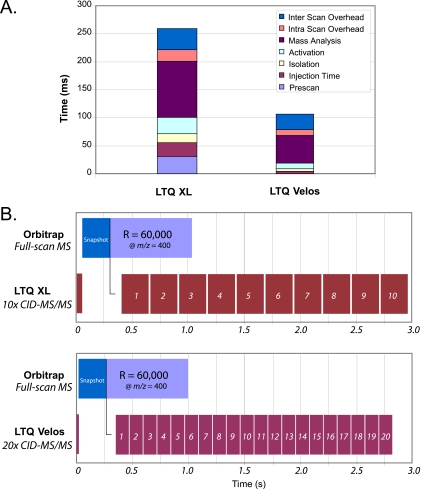
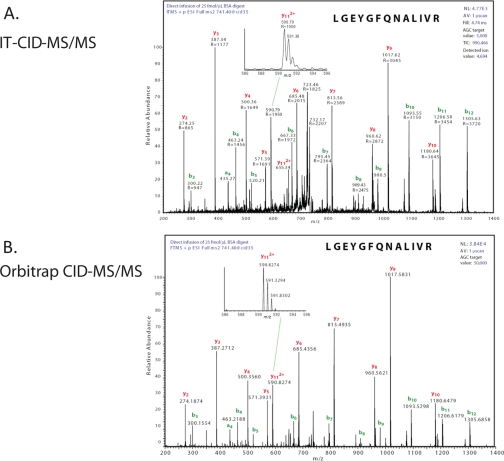
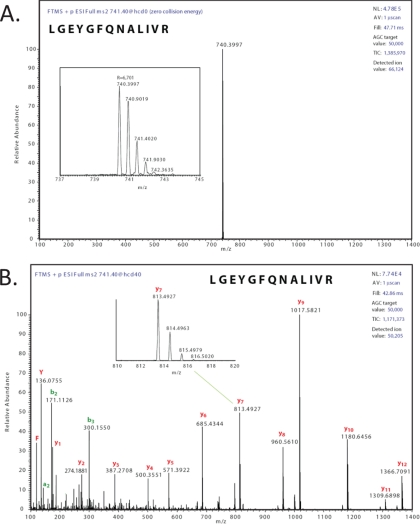
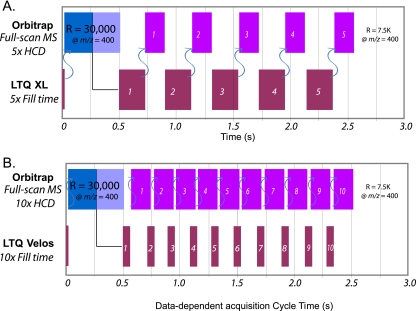
Since its introduction a few years ago, the linear ion trap Orbitrap (LTQ Orbitrap) instrument has become a powerful tool in proteomics research. For high resolution mass spectrometry measurements ions are accumulated in the linear ion trap and passed on to the Orbitrap analyzer. Simultaneously with acquisition of this signal, the major peaks are isolated in turn, fragmented and recorded at high sensitivity in the linear ion trap, combining the strengths of both mass analyzer technologies. Here we describe a next generation LTQ Orbitrap system termed Velos, with significantly increased sensitivity and scan speed. This is achieved by a vacuum interface using a stacked ring radio frequency ion guide with 10-fold higher transfer efficiency in MS/MS mode and 3-5-fold in full scan spectra, by a dual pressure ion trap configuration, and by reduction of overhead times between scans. The first ion trap efficiently captures and fragments ions at relatively high pressure whereas the second ion trap realizes extremely fast scan speeds at reduced pressure. Ion injection times for MS/MS are predicted from full scans instead of performing automatic gain control scans. Together these improvements routinely enable acquisition of up to ten fragmentation spectra per second. Furthermore, an improved higher-energy collisional dissociation cell with increased ion extraction capabilities was implemented. Higher-collision energy dissociation with high mass accuracy Orbitrap readout is as sensitive as ion trap MS/MS scans in the previous generation of the instrument.
Overview
The claims and statistics of this paper haven’t been checked yet.
Free: it reads the open-access text and checks the first 5 claims that cite a source we can check. Create a free account to check every claim.
Integrity signals
Registry
Cites
Statistics
Figures
Verification
Claims the paper makes
The claims and statistics of this paper haven’t been checked yet.
Free: it reads the open-access text and checks the first 5 claims that cite a source we can check. Create a free account to check every claim.
Claims other papers make about this one
Each is checked against this paper’s own text: does it say what the citing paper says it does?
In the citing paper
“The linear trap quadrupole (LTQ)-Orbitrap Velos mass spectrometer has improved higher-energy collisional dissociation (HCD) capabilities, and therefore enables acquisition of high resolution tandem MS (MS/MS) spectra without compromising the depth of analysis (14).”
From Comparative Proteomic Analysis of Eleven Common Cell Lines Reveals Ubiquitous but Varying Expression of Most Proteins (2012) · cites this paper as [14]
Self-check
Percentages, sums and reported differences re-computed from the paper’s own numbers.
The self-check needs the paper’s full text.
Citations
Cites
Cox, J., & Mann, M. (2008) · Nature Biotechnology · doi:10.1038/nbt.1511 · Cited by 14,855 · cited 2×
“Raw LC-MS Data Analysis—Fragmented peptides were identified and quantified by MASCOT and MaxQuant; Raw Orbitrap full-scan MS and ion trap CID-MS/MS and Orbitrap HCD spectra from the SILAC-labeled HeLa cytoplasmic extracts were processed by MaxQuant as described (20, 21).”
MethodSelf-citationMass spectrometry-based proteomics
Aebersold, R., & Mann, M. (2003) · Nature · doi:10.1038/nature01511 · Cited by 6,955 · cited 1×
“Proteomics experiments typically involve the analysis of peptide mixtures obtained by the enzymatic digestion of proteomes that can be as complex as complete cell lysates ( 1 , 2). Dynamic range of peptide abundances and the sheer number of peptides encountered in these mixtures require extremely sensitive and fast pe…”
Self-citationOng, S.-E., Blagoev, B., Kratchmarova, I., Kristensen, D. B., Steen, H., Pandey, A., & Mann, M. (2002) · Molecular & Cellular Proteomics · doi:10.1074/mcp.m200025-mcp200 · Cited by 5,574 · cited 4×
“HeLa SILAC Cytoplasmic Extract 1:3 Standard—Two populations of HeLa S3 cervix carcinoma cells were grown in suspension and SILAC-labeled (18) in RPMI 1640 medium supplemented with dialyzed bovine serum and two distinct isotopic variants of arginine ((13)C6, (15)N4-L-Arg) and lysine ( (13)C6, (15)N2-L-Lys).”
MethodInfluentialSelf-citationRappsilber, J., Ishihama, Y., & Mann, M. (2003) · Analytical Chemistry · doi:10.1021/ac026117i · Cited by 2,644 · cited 3×
“The peptide mixture was aliquoted, desalted, and concentrated on a C18-StageTip, and eluted with 20 l of 80% acetonitrile in 0.5% acetic acid.”
MethodInfluentialSelf-citationMass Spectrometry and Protein Analysis
Domon, B., & Aebersold, R. (2006) · Science · doi:10.1126/science.1124619 · Cited by 2,181 · cited 1×
“Among many different instrumental formats (5), the combination of a linear ion trap (6) with a Fourier transform (FT)(1)”
BackgroundOlsen, J. V., de Godoy, L. M. F., Li, G., Macek, B., Mortensen, P., Pesch, R., Makarov, A., Lange, O., Horning, S., & Mann, M. (2005) · Molecular & Cellular Proteomics · doi:10.1074/mcp.t500030-mcp200 · Cited by 1,510 · cited 1×
“120024) was used as an internal calibrant as described (19).”
MethodSelf-citationThe Orbitrap: a new mass spectrometer
Hu, Q., Noll, R. J., Li, H., Makarov, A., Hardman, M., & Graham Cooks, R. (2005) · Journal of Mass Spectrometry · doi:10.1002/jms.856 · Cited by 1,333
Self-citationHigher-energy C-trap dissociation for peptide modification analysis
Olsen, J. V., Macek, B., Lange, O., Makarov, A., Horning, S., & Mann, M. (2007) · Nature Methods · doi:10.1038/nmeth1060 · Cited by 999 · cited 15×
“which occurs in a separate RF multipole at the far side of the C-trap (12).”
BackgroundInfluentialSelf-citationComprehensive mass-spectrometry-based proteome quantification of haploid versus diploid yeast
de Godoy, L. M. F., Olsen, J. V., Cox, J., Nielsen, M. L., Hubner, N. C., Fröhlich, F., Walther, T. C., & Mann, M. (2008) · Nature · doi:10.1038/nature07341 · Cited by 873 · cited 1×
“Although a first comprehensively identified and quantified proteome has recently been reported ( 4 ), further gains in instrumental performance are clearly needed to reduce overall measurement time, improve sequence coverage of identified proteins, and for the in-depth analysis of mammalian proteomes.”
BackgroundSelf-citationA two-dimensional quadrupole ion trap mass spectrometer
Schwartz, J. C., Senko, M. W., & Syka, J. E. P. (2002) · Journal of the American Society for Mass Spectrometry · doi:10.1016/s1044-0305(02)00384-7 · Cited by 796 · cited 1×
“Among many different instrumental formats (5), the combination of a linear ion trap (6) with a Fourier transform (FT)(1)”
BackgroundSelf-citation
Cited by
Items 201–300 of 479
de Graaf, E. L., Pellegrini, D., & McDonnell, L. A. (2016) · Journal of Proteome Research · doi:10.1021/acs.jproteome.6b00889 · Cited by 42
Introduction to Mass Spectrometry, a Tutorial
Niessen, W. M. A., & Falck, D. (2015) · Wiley eBooks · doi:10.1002/9783527673391.ch1 · Cited by 56
Mass spectrometry at the interface of proteomics and genomics
Krug, K., Nahnsen, S., & Macek, B. (2010) · Molecular BioSystems · doi:10.1039/c0mb00168f · Cited by 39
Cismesia, A. P., Bailey, L. S., Bell, M. R., Tesler, L. F., & Polfer, N. C. (2016) · Journal of the American Society for Mass Spectrometry · doi:10.1007/s13361-016-1366-4 · Cited by 39
“From a point of view of maximizing sensitivity, it is our opinion that cryogenic LITs will play a prominent role to address this challenge, and in fact dual LIT designs are already commercially available, and fit well into this scheme [58].”
Human disease glycomics: technology advances enabling protein glycosylation analysis – part 1
Everest‐Dass, A., Moh, E. S. X., Ashwood, C., Shathili, A. M. M., & Packer, N. H. (2017) · Expert Review of Proteomics · doi:10.1080/14789450.2018.1421946 · Cited by 39
“The CID glycan spectra are dependent on the instrument type, and especially on the collisional energy [104] since the collision results in fragmentation of chemical bonds based on their lability.”
MethodInfluentialCanterbury, J. D., Merrihew, G. E., MacCoss, M. J., Goodlett, D. R., & Shaffer, S. A. (2014) · Journal of the American Society for Mass Spectrometry · doi:10.1007/s13361-014-0981-1 · Cited by 39
“The Thermo LTQ Velos instrument incorporates technology improvements over the previous LTQ design, including using a stacked-ring ion guide called the “S-lens,” which replaced the LTQ’s tube lensskimmer configuration [29].”
MethodMann, K., Cerveau, N., Gummich, M., Fritz, M., Mann, M., & Jackson, D. J. (2018) · Proteome Science · doi:10.1186/s12953-018-0139-3 · Cited by 39
“The Orbitrap Velos and Orbitrap Elite were operated in a HCD top 10 mode essentially as described ([31](Velos),[32] (Elite)).”
MethodSelf-citationSavitski, M. M., Mathieson, T., Becher, I., & Bantscheff, M. (2010) · Journal of Proteome Research · doi:10.1021/pr1006813 · Cited by 35
Ito, T., Maldonado, N., Yamada, I., Goettsch, C., Matsumoto, J., Aikawa, M., Singh, S. A., & Aïkawa, E. (2013) · Arteriosclerosis Thrombosis and Vascular Biology · doi:10.1161/atvbaha.113.302576 · Cited by 39
Desorption electrospray ionisation (DESI) for beginners – how to adjust settings for tissue imaging
Bodzoń‐Kułakowska, A., Drabik, A., Ner, J., Kotlinska, J. H., & Suder, P. (2013) · Rapid Communications in Mass Spectrometry · doi:10.1002/rcm.6755 · Cited by 37
Studencka‐Turski, M., Konzer, A., Moneron, G., Wenzel, D., Opitz, L., Salinas, G., Bedet, C., Krüger, M., Hell, S. W., Wiśniewski, J. R., et al. (2011) · Molecular and Cellular Biology · doi:10.1128/mcb.05229-11 · Cited by 43
“spectrometer (Thermo Fisher Scientific) equipped with a nanoelectrospray source (Proxeon) and coupled online to a nanoflow highperformance liquid chromatograph (HPLC) (Proxeon) (35).”
MethodValencia, A., Sapp, E., Kimm, J. S., McClory, H., Ansong, K. A., Yohrling, G. J., Kwak, S., Kegel, K. B., Green, K. M., Shaffer, S. A., et al. (2013) · Journal of Huntington s Disease · doi:10.3233/jhd-130080 · Cited by 37
“[25].”
Mann, K., & Mann, M. (2015) · Proteome Science · doi:10.1186/s12953-015-0078-1 · Cited by 38
Self-citationLee, B., López‐Ferrer, D., Kim, B. C., Na, H. B., Park, Y. I., Weitz, K., Warner, M. G., Hyeon, T., Lee, S., Smith, R. D., et al. (2010) · PROTEOMICS · doi:10.1002/pmic.201000378 · Cited by 36
Overview of Peptide and Protein Analysis by Mass Spectrometry
Zhang, G., Annan, R. S., Carr, S. A., & Neubert, T. A. (2014) · Current Protocols in Molecular Biology · doi:10.1002/0471142727.mb1021s108 · Cited by 40
“Despite these complications, in recent years, there has been rapid progress in development of MS-based approaches for protein quantitation (Ong et al., 2003a; Ong and Mann, 2005, 2007).”
BackgroundStoehr, G., Schaab, C., Graumann, J., & Mann, M. (2013) · Molecular & Cellular Proteomics · doi:10.1074/mcp.m112.024679 · Cited by 38
Self-citationAnalysis of Changes in SUMO-2/3 Modification during Breast Cancer Progression and Metastasis
Subramonian, D., Raghunayakula, S., Olsen, J. V., Beningo, K. A., Paschen, W., & Zhang, X. D. (2014) · Journal of Proteome Research · doi:10.1021/pr500119a · Cited by 36
Self-citationMapping in vivo signal transduction defects by phosphoproteomics
Stasyk, T., & Huber, L. A. (2011) · Trends in Molecular Medicine · doi:10.1016/j.molmed.2011.11.001 · Cited by 34
Investigation of post-translational modifications in type 2 diabetes
Chatterjee, B., & Thakur, S. S. (2018) · Clinical Proteomics · doi:10.1186/s12014-018-9208-y · Cited by 34
Dumouchel, J. L., & Argikar, U. A. (2011) · Rapid Communications in Mass Spectrometry · doi:10.1002/rcm.4996 · Cited by 33
Clinical Protein Science and Bioanalytical Mass Spectrometry with an Emphasis on Lung Cancer
Végvári, Á., & Marko‐Varga, G. (2010) · Chemical Reviews · doi:10.1021/cr100011x · Cited by 38
Mass Spectrometry-Based Bacterial Proteomics: Focus on Dermatologic Microbial Pathogens
Soufi, Y., & Soufi, B. (2016) · Frontiers in Microbiology · doi:10.3389/fmicb.2016.00181 · Cited by 34
Zhao, X., Wang, Q., Wang, S., Zou, X., An, M., Zhang, X., & Ji, J. (2013) · Journal of Proteome Research · doi:10.1021/pr301061q · Cited by 35
Towards single-cell LC-MS phosphoproteomics
Polat, A. N., & Özlü, N. (2014) · The Analyst · doi:10.1039/c4an00463a · Cited by 33
Yang, Y., Rhodus, N. L., Ondrey, F. G., Wuertz, B. R. K., Chen, X., Zhu, Y., & Griffin, T. J. (2014) · PLoS ONE · doi:10.1371/journal.pone.0095389 · Cited by 36
Nanoparticle growth and surface chemistry changes in cell-conditioned culture medium
Kendall, M., Hodges, N. J., Whitwell, H. J., Tyrrell, J., & Cangül, H. (2014) · Philosophical Transactions of the Royal Society B Biological Sciences · doi:10.1098/rstb.2014.0100 · Cited by 32
Friso, G., Olinares, P. D. B., & van Wijk, K. J. (2011) · Methods in molecular biology · doi:10.1007/978-1-61779-237-3_14 · Cited by 36
Ma, C., Zhang, Q., Qu, J., Zhao, X., Xu, L., Liu, Y., & Wang, P. G. (2014) · Journal of Proteomics · doi:10.1016/j.jprot.2014.09.001 · Cited by 31
Pinpointing Phosphorylation Sites: Quantitative Filtering and a Novel Site-specific x-Ion Fragment
Kelstrup, C. D., Hekmat, O., Francavilla, C., & Olsen, J. V. (2011) · Journal of Proteome Research · doi:10.1021/pr200154t · Cited by 38
Self-citationAnalytical Aspects of Proteomics: 2009–2010
Ning, Z., Zhou, H., Wang, F., Abu‐Farha, M., & Figeys, D. (2011) · Analytical Chemistry · doi:10.1021/ac200857t · Cited by 39
Maple, H. J., Scheibner, O., Baumert, M., Allen, M. H., Taylor, R. J., Garlish, R. A., Bromirski, M., & Burnley, R. J. (2014) · Rapid Communications in Mass Spectrometry · doi:10.1002/rcm.6925 · Cited by 33
Ion channels and their molecular environments – Glimpses and insights from functional proteomics
Schulte, U., Müller, C. S., & Fakler, B. (2010) · Seminars in Cell and Developmental Biology · doi:10.1016/j.semcdb.2010.09.015 · Cited by 34
“Current LC–MS/MS instruments of choice are capable of reliably identifying hundreds of proteins with a sensitivity of ≤1 femtomol in a single run [42,43].”
BackgroundSalivary proteomics in bisphosphonate‐related osteonecrosis of the jaw
Thumbigere‐Math, V., Michalowicz, B. S., de Jong, E. P., Griffin, T. J., Basi, D. L., Hughes, P., Tsai, M., Swenson, K., Rockwell, L., & Gopalakrishnan, R. (2013) · Oral Diseases · doi:10.1111/odi.12204 · Cited by 32
“Mass Spectrometry Mass spectrometry was performed using a linear ion trap-Orbitrap (LTQ-Orbitrap) Velos instrument (Thermo Fisher Scientific) (Olsen et al. 2009).”
MethodTu, C., Li, J., Shen, S., Sheng, Q., Shyr, Y., & Qu, J. (2016) · PLoS ONE · doi:10.1371/journal.pone.0160160 · Cited by 31
Peng, W., Zhang, Y., Zhu, R., & Mechref, Y. S. (2017) · Electrophoresis · doi:10.1002/elps.201700027 · Cited by 33
Gao, J.-X., Qin, L., Wen, S.-Y., Huang, X.-H., Dong, X., Zhou, D., & Zhu, B. (2021) · Journal of Agricultural and Food Chemistry · doi:10.1021/acs.jafc.0c06743 · Cited by 30
Mass Spectrometry-Based Proteomics: Basic Principles and Emerging Technologies and Directions
Riper, S. K. V., de Jong, E. P., Carlis, J. V., & Griffin, T. J. (2013) · Advances in experimental medicine and biology · doi:10.1007/978-94-007-5896-4_1 · Cited by 35
In-depth proteomic profiling of left ventricular tissues in human end-stage dilated cardiomyopathy
Liu, S., Xia, Y., Liu, X., Wang, Y., Chen, Z., Xie, J., Qian, J., Shen, H., & Yang, P. (2017) · Oncotarget · doi:10.18632/oncotarget.15689 · Cited by 31
“The recent development of liquid chromatography coupled with tandem mass spectrometry (LC-MS/MS) technology in high-resolution platforms allowed for better detection of proteins expressed in low abundance [10, 11].”
Proteomic Analysis of Cellular Systems
Hein, M. Y., Sharma, K., Cox, J., & Mann, M. (2012) · Elsevier eBooks · doi:10.1016/b978-0-12-385944-0.00001-0 · Cited by 45
Self-citationProbiotic Bacteria and Enteric Infections
Paton, A., Morona, R., & Paton, J. (2011) · Springer eBooks · doi:10.1007/978-94-007-0386-5 · Cited by 30
Measuring masses of large biomolecules and bioparticles using mass spectrometric techniques
Peng, W., Chou, S.-W., & Patil, A. A. (2014) · The Analyst · doi:10.1039/c3an02329j · Cited by 31
Banks, C. A. S., Kong, S. E., & Washburn, M. P. (2012) · Protein Expression and Purification · doi:10.1016/j.pep.2012.09.007 · Cited by 32
Mass Spectrometric Studies on Epigenetic Interaction Networks in Cell Differentiation
Xiong, L., Darwanto, A., Sharma, S., Herring, J. L., Hu, S., Filippova, M., Filippov, V. A., Wang, Y., Chen, C.-S., Duerksen-Hughes, P. J., et al. (2011) · Journal of Biological Chemistry · doi:10.1074/jbc.m110.204800 · Cited by 29
Croner, R. S., Stürzl, M., Rau, T. T., Metodieva, G., Geppert, C. I., Naschberger, E., Lausen, B., & Metodiev, M. V. (2014) · International Journal of Cancer · doi:10.1002/ijc.28929 · Cited by 33
Krutchinsky, A. N., Padovan, J. C., Cohen, H., & Chait, B. T. (2015) · Journal of the American Society for Mass Spectrometry · doi:10.1007/s13361-014-1062-1 · Cited by 29
“To address this question, we compared the performance of interfaces produced for the Velos Orbitrap and Q Exactive mass spectrometers (Thermo) (henceforth referred to as the S-lens interface [31, 32]) with a version of the ConDuct interface (Figure 1e).”
Large scale systematic proteomic quantification from non-metastatic to metastatic colorectal cancer
Yin, X., Zhang, Y., Guo, S., Hong, J., Wang, W., & Yang, P. (2015) · Scientific Reports · doi:10.1038/srep12120 · Cited by 29
The spectra count label-free quantitation in cancer proteomics.
Zhou, W., Liotta, L. A., & Petricoin, E. F. (2012) · Cancer Genomics & Proteomics · Cited by 39
The discovery and validation of colorectal cancer biomarkers
Ang, C., Phung, J., & Nice, E. C. (2010) · Biomedical Chromatography · doi:10.1002/bmc.1528 · Cited by 32
“They can be broadly grouped into three main types: gel based techniques [e.g. 2D PAGE (Gorg et al., 2000; O’Farrell, 1975), geLCMS (Li et al., 2003), chromatographic fractionation of proteins/peptides including multidimensional/ orthogonal liquid fractionation (Nice et al., 2007; Wang et al., 2002)], removal of abunda…”
BackgroundMethodSong, C., Wang, F., Cheng, K., Wei, X., Bian, Y., Wang, K., Tan, Y., Wang, H., Ye, M., & Zou, H. (2013) · Journal of Proteome Research · doi:10.1021/pr400544j · Cited by 29
Single analyzer precursor scans using an ion trap
Snyder, D. T., Pulliam, C. J., & Cooks, R. G. (2016) · Rapid Communications in Mass Spectrometry · doi:10.1002/rcm.7500 · Cited by 28
RockerBox: Analysis and Filtering of Massive Proteomics Search Results
van den Toorn, H., Muñoz, J., Mohammed, S., Raijmakers, R., Heck, A. J. R., & van Breukelen, B. (2011) · Journal of Proteome Research · doi:10.1021/pr1010185 · Cited by 35
Pejchinοvski, M., Klein, J., Ramírez‐Torres, A., Bitsika, V., Mermelekas, G., Vlahou, A., Mullen, W., Mischak, H., & Jankowski, V. (2015) · PROTEOMICS - CLINICAL APPLICATIONS · doi:10.1002/prca.201400163 · Cited by 28
Kelstrup, C. D., Frese, C. K., Heck, A. J. R., Olsen, J. V., & Nielsen, M. L. (2014) · Molecular & Cellular Proteomics · doi:10.1074/mcp.o113.035915 · Cited by 28
Self-citationUsing proteomics to study sexual reproduction in angiosperms
Miernyk, J. A., Preťová, A., Olmedilla, A., Klubicová, K., Obert, B., & Hajdúch, M. (2010) · Sexual Plant Reproduction · doi:10.1007/s00497-010-0149-5 · Cited by 32
“Any discipline that is largely or exclusively instrument based will always be searching for improvements (c.f., Olsen et al. 2009).”
BackgroundWeisbrod, C. R., Hoopmann, M. R., Senko, M. W., & Bruce, J. E. (2013) · Journal of Proteomics · doi:10.1016/j.jprot.2013.04.009 · Cited by 29
“The first of these instruments released was simply a stand-alone, bench-top dual cell linear ion trap[5] (Velos) and is currently available coupled to the Orbitrap mass spectrometer [4].”
BackgroundMethodInfluentialSelf-citationMapping O ‐glycosylation of apolipoprotein C ‐III in MALDI ‐ FT‐ICR protein profiles
Nicolardi, S., van der Burgt, Y. E. M., Wuhrer, M., & Deelder, A. M. (2013) · PROTEOMICS · doi:10.1002/pmic.201200293 · Cited by 26
Mapping Yeast N-Glycosites with Isotopically Recoded Glycans
Breidenbach, M. A., Palaniappan, K. K., Pitcher, A. A., & Bertozzi, C. R. (2012) · Molecular & Cellular Proteomics · doi:10.1074/mcp.m111.015339 · Cited by 32
“Next generation hardware designed to allow rapid, sensitive, and highly accurate analyses of both precursor and fragment ion masses will undoubtedly reduce false positives in proteomic hit lists (49).”
BackgroundKim, M., Kandasamy, K., Chaerkady, R., & Pandey, A. (2010) · Journal of the American Society for Mass Spectrometry · doi:10.1016/j.jasms.2010.04.011 · Cited by 34
“We observed that the number of PSMs in FT-FT group was significantly lower than that observed in FT-IT group (P value 1.8 10 –16 ). This can be explained by the fact that IT detection is more sensitive than FT detection because of faster scan speed and lower detection threshold in the ion-trap [ 25 ].”
BackgroundInfluentialGlobal discovery of protein kinases and other nucleotide‐binding proteins by mass spectrometry
Xiao, Y., & Wang, Y. (2014) · Mass Spectrometry Reviews · doi:10.1002/mas.21447 · Cited by 27
“Recent developments in mass spectrometry instrumentation (Olsen et al., 2009), sample preparation methods (Wisniewski et al.”
BackgroundMethodInfluentialIdentification of Histone Deacetylase 1 Protein Complexes in Liver Cancer Cells
Farooq, M., Hozzein, W. N., Elsayed, E. A., Taha, N. A., & Wadaan, M. A. M. (2013) · Asian Pacific Journal of Cancer Prevention · doi:10.7314/apjcp.2013.14.2.915 · Cited by 28
“A Top5 collision induced dissociation method (CID) with wide band activation was used (Olsen et al., 2009).”
MethodKonstantinell, A., Bruun, J., Olsen, R. F., Aspar, A., Škalko‐Basnet, N., Sveinbjørnsson, B., & Moens, U. L. (2016) · PROTEOMICS · doi:10.1002/pmic.201600223 · Cited by 26
Kaur, B., Kumar, B. T. N., Tyagi, A., Holeyappa, S. A., & Singh, N. K. (2021) · Fish & Shellfish Immunology · doi:10.1016/j.fsi.2021.04.019 · Cited by 26
Hahne, H., & Küster, B. (2011) · Journal of the American Society for Mass Spectrometry · doi:10.1007/s13361-011-0107-y · Cited by 27
“Our approach lends itself to real-time decision-making akin to what has been proposed for the analysis of phosphopeptides [37], and further improvements should arise from increasing scan speed and sensitivity of ion trap-Orbitrap [ 38 ] and quadrupole TOF mass spectrometers [39, 40].”
MethodQuantitative Proteomic Analysis of Gene Regulation by miR-34a and miR-34c
Ebner, O. A., & Selbach, M. (2014) · PLoS ONE · doi:10.1371/journal.pone.0092166 · Cited by 25
Challenges in plasma membrane phosphoproteomics
Orsburn, B. C., Stockwin, L. H., & Newton, D. L. (2011) · Expert Review of Proteomics · doi:10.1586/epr.11.40 · Cited by 26
How Soft Is Secondary Electrospray Ionization?
Kaeslin, J., Wüthrich, C., Giannoukos, S., & Zenobi, R. (2022) · Journal of the American Society for Mass Spectrometry · doi:10.1021/jasms.2c00201 · Cited by 24
Ichou, F., Lesage, D., Machuron‐Mandard, X., Junot, C., Cole, R. B., & Tabet, J. (2013) · Journal of Mass Spectrometry · doi:10.1002/jms.3143 · Cited by 24
Faherty, B. K., & Gerber, S. A. (2010) · Analytical Chemistry · doi:10.1021/ac100783x · Cited by 23
Marino, F., Cristobal, A., Binai, N. A., Bache, N., Heck, A. J. R., & Mohammed, S. (2014) · The Analyst · doi:10.1039/c4an01568a · Cited by 23
Discovery of O-GlcNAc-6-phosphate Modified Proteins in Large-scale Phosphoproteomics Data
Hahne, H., & Küster, B. (2012) · Molecular & Cellular Proteomics · doi:10.1074/mcp.m112.019760 · Cited by 25
Fundamentals of Orbitrap analyzer
Makarov, A., Grinfeld, D., & Ayzikov, K. (2019) · Elsevier eBooks · doi:10.1016/b978-0-12-814013-0.00002-8 · Cited by 25
Self-citationZhang, Y., Hu, Z., Qin, H., Wei, X., Cheng, K., Liu, F., Wu, R., & Zou, H. (2012) · Analytical Chemistry · doi:10.1021/ac302695u · Cited by 24
Complementary Proteomic Analysis of Protein Complexes
Greco, T. M., Miteva, Y., Conlon, F. L., & Cristea, I. M. (2012) · Methods in Molecular Biology · doi:10.1007/978-1-61779-992-1_22 · Cited by 23
“These methods are complemented by continued development of nanoscale liquid chromatography, affording improved separation efficiency (5), as well as mass spectrometry technology that provides improved mass accuracy, resolution, and ion transmission and fragmentation (6, 7).”
MethodMa, C., Qu, J., Meisner, J. S., Zhao, X., Xu, L., Wu, Z., Zhu, H. J., Yu, Z. J., Li, L., Guo, Y., et al. (2015) · Analytical Chemistry · doi:10.1021/acs.analchem.5b02177 · Cited by 23
Top-down protein identification using isotopic envelope fingerprinting
Xiao, K., Yu, F., & Tian, Z. (2016) · Journal of Proteomics · doi:10.1016/j.jprot.2016.10.010 · Cited by 22
Identification of Peptide Features in Precursor Spectra Using Hardklör and Krönik
Hoopmann, M. R., MacCoss, M. J., & Moritz, R. L. (2012) · Current Protocols in Bioinformatics · doi:10.1002/0471250953.bi1318s37 · Cited by 26
“Recently, interest has increased in the acquisition of high resolution MS/MS (Jedrychowski et al., 2011; Nagaraj et al., 2010; Olsen et al., 2009).”
BackgroundMultipurpose Dissociation Cell for Enhanced ETD of Intact Protein Species
Rose, C. M., Russell, J. D., Ledvina, A. R., McAlister, G. C., Westphall, M. S., Griep‐Raming, J., Schwartz, J. C., Coon, J. J., & Syka, J. E. P. (2013) · Journal of the American Society for Mass Spectrometry · doi:10.1007/s13361-013-0622-0 · Cited by 21
“The introduction of a quadrupole collision cell into the designs of recent generations of commercial hybrid QLTOrbitrap instruments [20] offers the opportunity to perform ETD in a device better suited for ion–ion reactions than a quadrupole ion trap of design specifically optimized for m/z analysis.”
Self-citationQuantitative proteomics to decipher ubiquitin signaling
Chen, P., Na, C. H., & Peng, J. (2012) · Amino Acids · doi:10.1007/s00726-012-1286-y · Cited by 22
“Recently, the availability of modern mass spectrometers (Olsen et al. 2007, 2009) prompted the re-analysis of the ubiquitinated proteome in yeast and mammalian cells (Danielsen et al. 2011; Shi et al. 2011a; Starita et al. 2011), increasing the number of identified ubiquitinated proteins and…”
Phung, B., Kazi, J. U., Lundby, A., Bergsteinsdóttir, K., Sun, J., Goding, C. R., Jönsson, G. B., Olsen, J. V., Steingrímsson, E., & Rönnstrand, L. (2017) · Molecular Cancer Research · doi:10.1158/1541-7786.mcr-17-0149 · Cited by 22
Self-citationA Conjoined Rectilinear Collision Cell and Pulsed Extraction Ion Trap with Auxiliary DC Electrodes
Stewart, H. I., Grinfeld, D., Wagner, A., Kholomeev, A., Biel, M., Giannakopulos, A. E., Makarov, A., & Hock, C. (2023) · Journal of the American Society for Mass Spectrometry · doi:10.1021/jasms.3c00311 · Cited by 21
Self-citationRemes, P. M., Jacob, C. C., Heil, L. R., Shulman, N., MacLean, B., & MacCoss, M. J. (2024) · Journal of Proteome Research · doi:10.1021/acs.jproteome.4c00599 · Cited by 21
Self-citationGeoghegan, K. F., Varghese, A. H., Feng, X., Bessire, A. J., Conboy, J. J., Ruggeri, R. B., Ahn, K., Spath, S. N., Filippov, S. V., Conrad, S. J., et al. (2012) · Biochemistry · doi:10.1021/bi201872j · Cited by 21
López-García, I. A., Gerő, D., Szczęsny, B., Szoleczky, P., Oláh, G., Módis, K., Zhang, K., Gao, J., Wu, P., Sowers, L. C., et al. (2016) · British Journal of Pharmacology · doi:10.1111/bph.13642 · Cited by 20
“The procedures used for proteomics analysis of protein analysis were adapted from our laboratory and other previously published protocols (Olsen et al., 2004; Wang et al., 2010; Nicholas et al., 2015).”
MethodCampuzano, I. D. G., & Loo, J. A. (2025) · Journal of the American Society for Mass Spectrometry · doi:10.1021/jasms.4c00348 · Cited by 21
Sheng, Q., Li, R., Dai, J., Li, Q., Su, Z., Guo, Y. P., Li, C., Shyr, Y., & Zeng, R. (2014) · Molecular & Cellular Proteomics · doi:10.1074/mcp.o114.041376 · Cited by 21
Human Biomonitoring of DNA Adducts by Ion Trap Multistage Mass Spectrometry
Guo, J., & Turesky, R. J. (2016) · Current Protocols in Nucleic Acid Chemistry · doi:10.1002/cpnc.12 · Cited by 20
“However, the product ion scan mode is rarely employed for the characterization of DNA adducts in vivo because the rate of scanning is slow and not sufficiently sensitive to detect adducts at trace levels (Paehler et al., 2002).”
BackgroundLi, P., Zhen, Y., & Yu, Y. (2019) · Methods in enzymology on CD-ROM/Methods in enzymology · doi:10.1016/bs.mie.2019.06.024 · Cited by 20
“Analyze the samples on an LTQ-Velos Pro Orbitrap mass spectrometer or any mass spectrometers with conventional CID capabilities (Olsen et al., 2009).”
MethodGuan, T., Liang, Y., Li, C., Xie, L. Y., Wang, G., & Sheng, L. (2011) · Chinese Journal of Natural Medicines · doi:10.3724/sp.j.1009.2011.00385 · Cited by 20
Discovery of a Novel B-Raf Fusion Protein Related to c-Met Drug Resistance
Dillon, R., Nilsson, C. L., Shi, S. D. ‐., Lee, N. V., Krastins, B., & Greig, M. J. (2011) · Journal of Proteome Research · doi:10.1021/pr200498v · Cited by 21
Proteomic approaches to understanding the role of the cytoskeleton in host-defense mechanisms
Radulović, M., & Godovac‐Zimmermann, J. (2011) · Expert Review of Proteomics · doi:10.1586/epr.10.91 · Cited by 21
Sun, J., Mohlin, S., Lundby, A., Kazi, J. U., Hellman, U., Påhlman, S., Olsen, J. V., & Rönnstrand, L. (2013) · Oncogene · doi:10.1038/onc.2013.479 · Cited by 21
Self-citationChiva, C., & Sabidó, E. (2013) · Journal of Proteomics · doi:10.1016/j.jprot.2013.11.013 · Cited by 19
“[13] Olsen JV, Schwartz JC, Griep-Raming J, Nielsen ML, Damoc E, Denisov E, et al.”
BackgroundLombardi, B., Rendell, N. B., Edwards, M., Katan, M., & Godovac‐Zimmermann, J. (2015) · EuPA Open Proteomics · doi:10.1016/j.euprot.2015.01.002 · Cited by 19
Platforms and Pipelines for Proteomics Data Analysis and Management
Codrea, M. C., & Nahnsen, S. (2016) · Advances in experimental medicine and biology · doi:10.1007/978-3-319-41448-5_9 · Cited by 22
Fundamentals and Advances of Orbitrap Mass Spectrometry
Ščigelová, M., & Makarov, A. (2000) · Wiley eBooks · doi:10.1002/9780470027318.a9309 · Cited by 20
Self-citationOptimizing Linear Ion-Trap Data-Independent Acquisition toward Single-Cell Proteomics
Phlairaharn, T., Ye, Z., Krismer, E., Pedersen, A.-K., Pietzner, M., Olsen, J. V., Schoof, E. M., & Searle, B. C. (2023) · Analytical Chemistry · doi:10.1021/acs.analchem.3c00842 · Cited by 19
Self-citationMass spectrometry-based shotgun proteomic analysis of C. elegans protein complexes
Fonslow, B. R., Moresco, J. J., Tu, P. G., Aalto, A. P., Pasquinelli, A. E., Dillin, A. G., & Yates, J. R. (2014) · WormBook · doi:10.1895/wormbook.1.171.1 · Cited by 17
Proteomic approaches in research of cyanobacterial photosynthesis
Battchikova, N., Angeleri, M., & Aro, E. (2014) · Photosynthesis Research · doi:10.1007/s11120-014-0050-4 · Cited by 20
“Modern mass spectrometers like LTQ-Orbitrap Velos (Olsen et al. 2009), QExactive (Michalski et al. 2011) and others provide a high mass accuracy, a high resolving power, a high sensitivity , a high dynamic range and nowadays are widely used in large-scale proteomic research.”
BackgroundMethodBereman, M. S., Canterbury, J. D., Egertson, J. D., Horner, J. A., Remes, P. M., Schwartz, J. C., Zabrouskov, V., & MacCoss, M. J. (2011) · Analytical Chemistry · doi:10.1021/ac203210a · Cited by 17
Self-citationMeyer, G. M. J., Maurer, H. H., & Meyer, M. R. (2016) · Bioanalysis · doi:10.4155/bio.16.15 · Cited by 18
Metadata
- Authors
- Olsen, J. V., Schwartz, J. C., Griep-Raming, J., Nielsen, M. L., Damoc, E., Denisov, E., Lange, O., Remes, P., Taylor, D., Splendore, M., Wouters, E. R., Senko, M., Makarov, A., Mann, M., & Horning, S.
- Affiliations
- Max Planck Society (DE)
- Thermo Fisher Scientific (United States) (US)
- Thermo Fisher Scientific (Germany) (DE)
- Corresponding author
- Mann, Matthias
- Horning, Stevan
- ORCID
- Venue
- Molecular & Cellular Proteomics
- Publisher
- Elsevier BV
- Published
- 2009-12
- Volume
- 8
- Issue
- 12
- Pages
- 2759-2769
- ISSN
- 1535-9476 (ISSN-L)
- PMC
- PMC2816009
- OpenAlex
- W2097780295
- Cited by
- 464
- References
- 22
- Citations by year
- 2026: 6 · 2025: 7 · 2024: 8 · 2023: 13 · 2022: 6 · 2021: 12 · 2020: 7 · 2019: 14 · 2018: 14 · 2017: 29 · 2016: 20 · 2015: 30 · 2014: 49 · 2013: 55 · 2012: 67
- FWCI
- 27.32
- Type
- journal article
- Language
- en
- Open access
- hybrid
- doi.org
- Licence
- cc-by
- www.elsevier.com/tdm/userlicense/1.0/ (tdm)
- www.elsevier.com/legal/tdmrep-license (tdm)
- creativecommons.org/licenses/by/4.0/ (vor, 3942 d)
- Locations
- Molecular & Cellular Proteomics (publishedVersion, cc-by)
- PubMed Central (publishedVersion, cc-by-nc)
- PubMed (publishedVersion)
- Max Planck Institute for Plasma Physics (submittedVersion)
- Funders
- European Commission (201648)
- Topics
- Physical Sciences › Chemistry › Spectroscopy › Mass Spectrometry Techniques and Applications
- Physical Sciences › Chemistry › Spectroscopy › Advanced Proteomics Techniques and Applications
- Life Sciences › Biochemistry, Genetics and Molecular Biology › Molecular Biology › Metabolomics and Mass Spectrometry Studies
- Keywords
- VELO, high-resolution mass spectrometry, higher-energy collisional dissociation, ion extraction, vacuum interface, automatic gain control, proteomics instrumentation
- MeSH terms
- Amino Acid Sequence, Animals, Carbonic Anhydrases, Cattle, HeLa Cells, Humans, Molecular Sequence Data, Peptides, Pressure, Serum Albumin, Bovine, Mass Spectrometry, Time Factors, Sequence Analysis, Protein, Proteomics
About these checks
Registry, retraction, Cites and statistics results are computed, not judged, with one exception: a printed reference that no index lists is read once by a model before it counts as a citation error. Claims are extracted by a model and kept only when their quote appears verbatim in the text; each cited source is then checked, with a model’s help, for whether it says what the claim relies on. Those verdicts can be wrong — read the claim’s quote and the cited source before relying on one.
Statistics and arithmetic are recomputed, not judged.
Confidence bands are shown only for fields calibrated on our annotated test set. None is calibrated yet, so no band is shown.
What counts as a claim ›How we measure confidence ›How we check this ›
Are you an author, or do you see a problem with this page? Request a review
Data sources
Bibliographic data: Semantic Scholar, OpenAlex, Crossref.
Contains information from the Semantic Scholar Academic Graph Datasets, made available under the ODC Attribution License (ODC-BY 1.0).
Semantic Scholar’s data is described in: Kinney, R., et al. (2023). The Semantic Scholar Open Data Platform. arXiv:2301.10140.
