

A Dual Pressure Linear Ion Trap Orbitrap Instrument with Very High Sequencing Speed
Open accessThe DOI matches its Crossref record; 22 of the 22 references it cites were found in a registry or an index.
Abstract
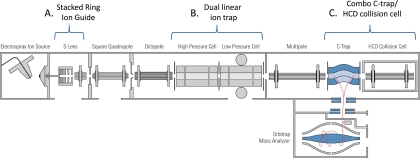
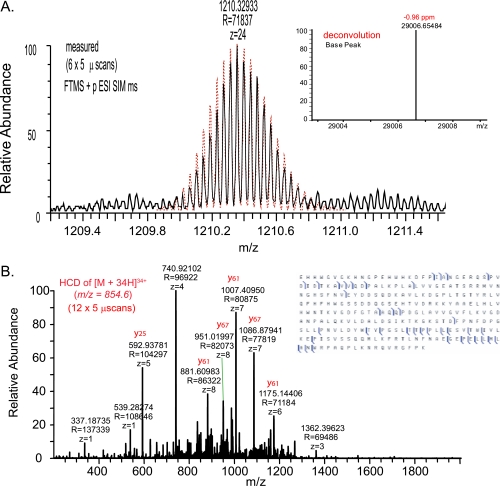
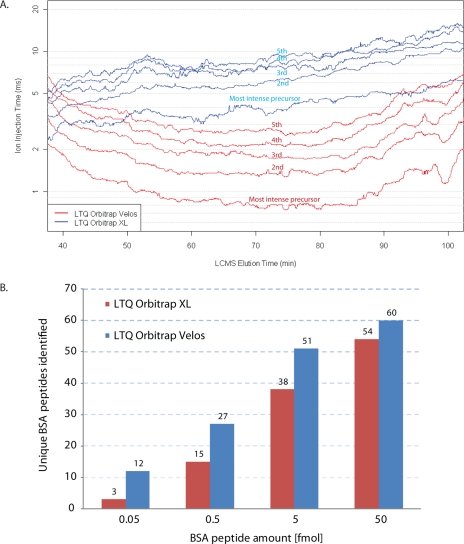
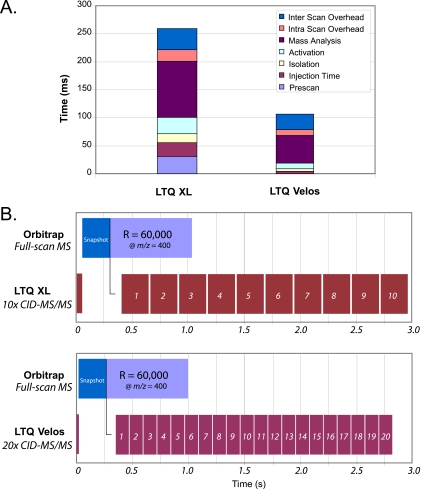
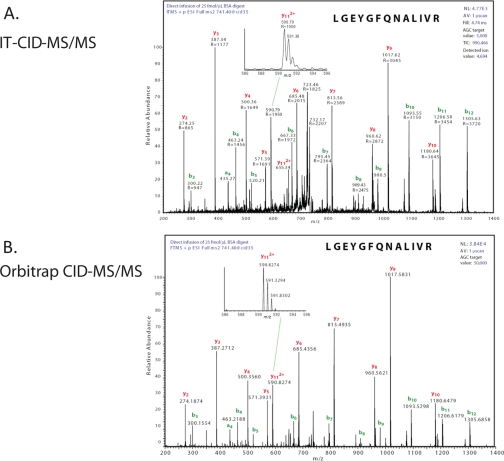
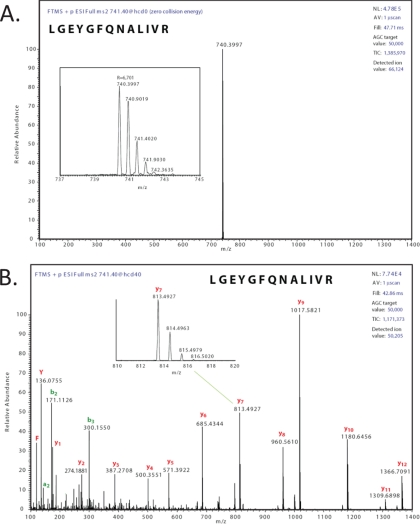
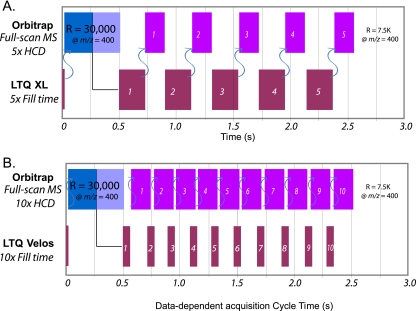
Since its introduction a few years ago, the linear ion trap Orbitrap (LTQ Orbitrap) instrument has become a powerful tool in proteomics research. For high resolution mass spectrometry measurements ions are accumulated in the linear ion trap and passed on to the Orbitrap analyzer. Simultaneously with acquisition of this signal, the major peaks are isolated in turn, fragmented and recorded at high sensitivity in the linear ion trap, combining the strengths of both mass analyzer technologies. Here we describe a next generation LTQ Orbitrap system termed Velos, with significantly increased sensitivity and scan speed. This is achieved by a vacuum interface using a stacked ring radio frequency ion guide with 10-fold higher transfer efficiency in MS/MS mode and 3-5-fold in full scan spectra, by a dual pressure ion trap configuration, and by reduction of overhead times between scans. The first ion trap efficiently captures and fragments ions at relatively high pressure whereas the second ion trap realizes extremely fast scan speeds at reduced pressure. Ion injection times for MS/MS are predicted from full scans instead of performing automatic gain control scans. Together these improvements routinely enable acquisition of up to ten fragmentation spectra per second. Furthermore, an improved higher-energy collisional dissociation cell with increased ion extraction capabilities was implemented. Higher-collision energy dissociation with high mass accuracy Orbitrap readout is as sensitive as ion trap MS/MS scans in the previous generation of the instrument.
Overview
The claims and statistics of this paper haven’t been checked yet.
Free: it reads the open-access text and checks the first 5 claims that cite a source we can check. Create a free account to check every claim.
Integrity signals
Registry
Cites
Statistics
Figures
Verification
Claims the paper makes
The claims and statistics of this paper haven’t been checked yet.
Free: it reads the open-access text and checks the first 5 claims that cite a source we can check. Create a free account to check every claim.
Claims other papers make about this one
Each is checked against this paper’s own text: does it say what the citing paper says it does?
In the citing paper
“The linear trap quadrupole (LTQ)-Orbitrap Velos mass spectrometer has improved higher-energy collisional dissociation (HCD) capabilities, and therefore enables acquisition of high resolution tandem MS (MS/MS) spectra without compromising the depth of analysis (14).”
From Comparative Proteomic Analysis of Eleven Common Cell Lines Reveals Ubiquitous but Varying Expression of Most Proteins (2012) · cites this paper as [14]
Self-check
Percentages, sums and reported differences re-computed from the paper’s own numbers.
The self-check needs the paper’s full text.
Citations
Cites
Cox, J., & Mann, M. (2008) · Nature Biotechnology · doi:10.1038/nbt.1511 · Cited by 14,855 · cited 2×
“Raw LC-MS Data Analysis—Fragmented peptides were identified and quantified by MASCOT and MaxQuant; Raw Orbitrap full-scan MS and ion trap CID-MS/MS and Orbitrap HCD spectra from the SILAC-labeled HeLa cytoplasmic extracts were processed by MaxQuant as described (20, 21).”
MethodSelf-citationMass spectrometry-based proteomics
Aebersold, R., & Mann, M. (2003) · Nature · doi:10.1038/nature01511 · Cited by 6,955 · cited 1×
“Proteomics experiments typically involve the analysis of peptide mixtures obtained by the enzymatic digestion of proteomes that can be as complex as complete cell lysates ( 1 , 2). Dynamic range of peptide abundances and the sheer number of peptides encountered in these mixtures require extremely sensitive and fast pe…”
Self-citationOng, S.-E., Blagoev, B., Kratchmarova, I., Kristensen, D. B., Steen, H., Pandey, A., & Mann, M. (2002) · Molecular & Cellular Proteomics · doi:10.1074/mcp.m200025-mcp200 · Cited by 5,574 · cited 4×
“HeLa SILAC Cytoplasmic Extract 1:3 Standard—Two populations of HeLa S3 cervix carcinoma cells were grown in suspension and SILAC-labeled (18) in RPMI 1640 medium supplemented with dialyzed bovine serum and two distinct isotopic variants of arginine ((13)C6, (15)N4-L-Arg) and lysine ( (13)C6, (15)N2-L-Lys).”
MethodInfluentialSelf-citationRappsilber, J., Ishihama, Y., & Mann, M. (2003) · Analytical Chemistry · doi:10.1021/ac026117i · Cited by 2,644 · cited 3×
“The peptide mixture was aliquoted, desalted, and concentrated on a C18-StageTip, and eluted with 20 l of 80% acetonitrile in 0.5% acetic acid.”
MethodInfluentialSelf-citationMass Spectrometry and Protein Analysis
Domon, B., & Aebersold, R. (2006) · Science · doi:10.1126/science.1124619 · Cited by 2,181 · cited 1×
“Among many different instrumental formats (5), the combination of a linear ion trap (6) with a Fourier transform (FT)(1)”
BackgroundOlsen, J. V., de Godoy, L. M. F., Li, G., Macek, B., Mortensen, P., Pesch, R., Makarov, A., Lange, O., Horning, S., & Mann, M. (2005) · Molecular & Cellular Proteomics · doi:10.1074/mcp.t500030-mcp200 · Cited by 1,510 · cited 1×
“120024) was used as an internal calibrant as described (19).”
MethodSelf-citationThe Orbitrap: a new mass spectrometer
Hu, Q., Noll, R. J., Li, H., Makarov, A., Hardman, M., & Graham Cooks, R. (2005) · Journal of Mass Spectrometry · doi:10.1002/jms.856 · Cited by 1,333
Self-citationHigher-energy C-trap dissociation for peptide modification analysis
Olsen, J. V., Macek, B., Lange, O., Makarov, A., Horning, S., & Mann, M. (2007) · Nature Methods · doi:10.1038/nmeth1060 · Cited by 999 · cited 15×
“which occurs in a separate RF multipole at the far side of the C-trap (12).”
BackgroundInfluentialSelf-citationComprehensive mass-spectrometry-based proteome quantification of haploid versus diploid yeast
de Godoy, L. M. F., Olsen, J. V., Cox, J., Nielsen, M. L., Hubner, N. C., Fröhlich, F., Walther, T. C., & Mann, M. (2008) · Nature · doi:10.1038/nature07341 · Cited by 873 · cited 1×
“Although a first comprehensively identified and quantified proteome has recently been reported ( 4 ), further gains in instrumental performance are clearly needed to reduce overall measurement time, improve sequence coverage of identified proteins, and for the in-depth analysis of mammalian proteomes.”
BackgroundSelf-citationA two-dimensional quadrupole ion trap mass spectrometer
Schwartz, J. C., Senko, M. W., & Syka, J. E. P. (2002) · Journal of the American Society for Mass Spectrometry · doi:10.1016/s1044-0305(02)00384-7 · Cited by 796 · cited 1×
“Among many different instrumental formats (5), the combination of a linear ion trap (6) with a Fourier transform (FT)(1)”
BackgroundSelf-citation
Cited by
Peterson, A. C., Russell, J. D., Bailey, D. J., Westphall, M. S., & Coon, J. J. (2012) · Molecular & Cellular Proteomics · doi:10.1074/mcp.o112.020131 · Cited by 1,288
“2005 (46-49), have made fast and sensitive MS/MS scanning (50-53) with <10 parts-per-million (ppm) mass measurement error routine (54).”
BackgroundDeep proteome and transcriptome mapping of a human cancer cell line
Nagaraj, N., Wisniewski, J. R., Geiger, T., Cox, J., Kircher, M., Kelso, J., Pääbo, S., & Mann, M. (2011) · Molecular Systems Biology · doi:10.1038/msb.2011.81 · Cited by 979
“Peptide MS spectra as well as fragment MS/MS spectra were measured with high resolution and mass accuracy (Mann and Kelleher, 2008; Olsen et al, 2007; Olsen et al, 2009).”
MethodSelf-citationWagner, S. A., Beli, P., Weinert, B. T., Nielsen, M. L., Cox, J., Mann, M., & Choudhary, C. (2011) · Molecular & Cellular Proteomics · doi:10.1074/mcp.m111.013284 · Cited by 889
Self-citationPrecision Mapping of an In Vivo N-Glycoproteome Reveals Rigid Topological and Sequence Constraints
Zielinska, D. F., Gnad, F., Wiśniewski, J. R., & Mann, M. (2010) · Cell · doi:10.1016/j.cell.2010.04.012 · Cited by 902
Self-citationMichalski, A., Damoc, E., Hauschild, J.-P., Lange, O., Wieghaus, A., Makarov, A., Nagaraj, N., Cox, J., Mann, M., & Horning, S. (2011) · Molecular & Cellular Proteomics · doi:10.1074/mcp.m111.011015 · Cited by 832
“those of the LTQ Orbitrap Velos (18), indicating comparable sensitivity of both instrument types in full scan and HCD”
BackgroundMethodSelf-citationQuantitative mass spectrometry in proteomics: critical review update from 2007 to the present
Bantscheff, M., Lemeer, S., Savitski, M. M., & Kuster, B. (2012) · Analytical and Bioanalytical Chemistry · doi:10.1007/s00216-012-6203-4 · Cited by 801
Geiger, T., Wehner, A., Schaab, C., Cox, J., & Mann, M. (2012) · Molecular & Cellular Proteomics · doi:10.1074/mcp.m111.014050 · Cited by 797
“LC-MS/MS Analysis—Peptides were separated by reverse-phase chromatography on in-house made 20-cm columns (inner diameter 75 m, 1.8 m ReproSil-Pur C18-AQ media), using a nano-flow HPLC (Easy nanoLC, Thermo Fisher Scientific).”
BackgroundMethodInfluentialSelf-citationMurray, D. T., Kato, M., Lin, Y., Thurber, K. R., Hung, I., McKnight, S. L., & Tycko, R. (2017) · Cell · doi:10.1016/j.cell.2017.08.048 · Cited by 757
Zubarev, R. A., & Makarov, A. (2013) · Analytical Chemistry · doi:10.1021/ac4001223 · Cited by 658
Self-citationQuantitative, High-Resolution Proteomics for Data-Driven Systems Biology
Cox, J., & Mann, M. (2011) · Annual Review of Biochemistry · doi:10.1146/annurev-biochem-061308-093216 · Cited by 685
Self-citationDecoding signalling networks by mass spectrometry-based proteomics
Choudhary, C., & Mann, M. (2010) · Nature Reviews Molecular Cell Biology · doi:10.1038/nrm2900 · Cited by 571
“The recent introduction of higher energy collisional dissociation (HCD) has made a similar fragmentation mode to that in quadrupole TOF available to linear ion trap–orbitrap instruments, without diminishing sensitivit”
BackgroundSelf-citationLundby, A., Lage, K., Weinert, B. T., Bekker-Jensen, D. B., Secher, A., Skovgaard, T., Kelstrup, C. D., Dmytriyev, A., Choudhary, C., Lundby, C., et al. (2012) · Cell Reports · doi:10.1016/j.celrep.2012.07.006 · Cited by 547
“The three resulting SCX fractions were analyzed by 3 hr nanoflow liquid chromatography tandem mass spectrometry (LC-MS/MS) gradients on a LTQOrbitrap Velos mass spectrometer (Olsen et al., 2009) with all tandem mass spectra recorded in the orbitrap analyzer at high resolution using the higher-energy collisional dissoc…”
MethodSelf-citationProLuCID: An improved SEQUEST-like algorithm with enhanced sensitivity and specificity
Xu, T., Park, S. K., Venable, J. D., Wohlschlegel, J. A., Diedrich, J. K., Cociorva, D., Lu, B., Liao, L., Hewel, J., Han, X., et al. (2015) · Journal of Proteomics · doi:10.1016/j.jprot.2015.07.001 · Cited by 511
“Recent improvements in MS technologies allow theacquisition of hundredsof thousands of MS/MS spectra over the course of one LC/MS/MS analysis [5 – 7], and a large-scale shotgun proteomics project typically generates hundreds of millions of MS/MS spectra.”
BackgroundTargeted Proteomic Quantification on Quadrupole-Orbitrap Mass Spectrometer
Gallien, S., Duriez, E., Crone, C., Kellmann, M., Moehring, T., & Domon, B. (2012) · Molecular & Cellular Proteomics · doi:10.1074/mcp.o112.019802 · Cited by 510
Spermidine and resveratrol induce autophagy by distinct pathways converging on the acetylproteome
Morselli, E., Mariño, G., Bennetzen, M. V., Eisenberg, T., Megalou, E., Schroeder, S., Cabrera, S., Bénit, P., Rustin, P., Criollo, A., et al. (2011) · Journal of Cell Biology · doi:10.1083/jcb.201008167 · Cited by 499
Top Down proteomics: Facts and perspectives
Catherman, A. D., Skinner, O. S., & Kelleher, N. L. (2014) · Biochemical and Biophysical Research Communications · doi:10.1016/j.bbrc.2014.02.041 · Cited by 507
Evolution of Orbitrap Mass Spectrometry Instrumentation
Eliuk, S., & Makarov, A. (2015) · Annual Review of Analytical Chemistry · doi:10.1146/annurev-anchem-071114-040325 · Cited by 456
“In 2009, the LTQ Orbitrap Velos hybrid mass spectrometer was released with new capabilities aimed directly at achieving these objectives (26).”
MethodSelf-citationProbing Native Protein Structures by Chemical Cross-linking, Mass Spectrometry, and Bioinformatics
Leitner, A., Walzthoeni, T., Kahraman, A., Herzog, F., Rinner, O., Beck, M., & Aebersold, R. (2010) · Molecular & Cellular Proteomics · doi:10.1074/mcp.r000001-mcp201 · Cited by 458
“New generations of MS/MS instruments now generate high mass accuracy MS/MS spectra without compromising sequencing speed (34, 35).”
BackgroundMass spectrometry-based proteomics: existing capabilities and future directions
Angel, T. E., Aryal, U. K., Hengel, S. M., Baker, E. S., Kelly, R. T., Robinson, E. W., & Smith, R. D. (2012) · Chemical Society Reviews · doi:10.1039/c2cs15331a · Cited by 441
Citrullination regulates pluripotency and histone H1 binding to chromatin
Christophorou, M. A., Castelo-Branco, G., Halley-Stott, R. P., Oliveira, C. S., Loos, R., Radzisheuskaya, A., Mowen, K. A., Bertone, P., Silva, J. C. R., Zernicka-Goetz, M., et al. (2014) · Nature · doi:10.1038/nature12942 · Cited by 412
Self-citationHigh-sensitivity Orbitrap mass analysis of intact macromolecular assemblies
Rose, R. J., Damoc, E., Denisov, E., Makarov, A., & Heck, A. J. R. (2012) · Nature Methods · doi:10.1038/nmeth.2208 · Cited by 392
Self-citationAcetylation-dependent regulation of endothelial Notch signalling by the SIRT1 deacetylase
Guarani, V., Deflorian, G., Franco, C. A., Krüger, M., Phng, L.-K., Bentley, K., Toussaint, L., Dequiedt, F., Mostoslavsky, R., Schmidt, M. H. H., et al. (2011) · Nature · doi:10.1038/nature09917 · Cited by 383
Michalski, A., Damoc, E., Lange, O., Denisov, E., Nolting, D., Müller, M., Viner, R., Schwartz, J., Remes, P., Belford, M., et al. (2012) · Molecular & Cellular Proteomics · doi:10.1074/mcp.o111.013698 · Cited by 373
Self-citationSite-specific characterization of the Asp- and Glu-ADP-ribosylated proteome
Zhang, Y., Wang, J., Ding, M., & Yu, Y. (2013) · Nature Methods · doi:10.1038/nmeth.2603 · Cited by 352
Deep and Highly Sensitive Proteome Coverage by LC-MS/MS Without Prefractionation
Thakur, S. S., Geiger, T., Chatterjee, B., Bandilla, P., Fröhlich, F., Cox, J., & Mann, M. (2011) · Molecular & Cellular Proteomics · doi:10.1074/mcp.m110.003699 · Cited by 337
Self-citationEgerod, K. L., Engelstoft, M. S., Grunddal, K. V., Nøhr, M. K., Secher, A., Sakata, I., Pedersen, J., Windeløv, J. A., Füchtbauer, E.-M., Olsen, J., et al. (2012) · Endocrinology · doi:10.1210/en.2012-1595 · Cited by 334
“Seventy-thousand cells obtained from FACS sorting of the small intestine were analyzed for natural occurring small peptide fragments without enzymatic treatment using LC-MS as previously described (27).”
MethodSelf-citationQuantitative maps of protein phosphorylation sites across 14 different rat organs and tissues
Lundby, A., Secher, A., Lage, K., Nordsborg, N. B., Dmytriyev, A., Lundby, C., & Olsen, J. V. (2012) · Nature Communications · doi:10.1038/ncomms1871 · Cited by 343
“We combine an effective tissue phosphoproteome preservation and homogenization protocol with a simple, single-step phosphopep-tide enrichment method followed by higher-energy collisional dissociation (HCD) fragmentation 26 on an LTQ-Orbitrap Velos instrument 27 .”
Self-citationMatic, I., Schimmel, J., Hendriks, I. A., van Santen, M. A., van de Rijke, F., van Dam, H., Gnad, F., Mann, M., & Vertegaal, A. C. O. (2010) · Molecular Cell · doi:10.1016/j.molcel.2010.07.026 · Cited by 314
Self-citationZhang, Z., Wu, S., Stenoien, D. L., & Paša-Tolić, L. (2014) · Annual Review of Analytical Chemistry · doi:10.1146/annurev-anchem-071213-020216 · Cited by 323
Scheltema, R. A., Hauschild, J.-P., Lange, O., Hornburg, D., Denisov, E., Damoc, E., Kuehn, A., Makarov, A., & Mann, M. (2014) · Molecular & Cellular Proteomics · doi:10.1074/mcp.m114.043489 · Cited by 323
Self-citationMass Spectrometric Analysis of Lysine Ubiquitylation Reveals Promiscuity at Site Level
Danielsen, J. M. R., Sylvestersen, K. B., Bekker-Jensen, S., Szklarczyk, D., Poulsen, J. W., Horn, H., Jensen, L. J., Mailand, N., & Nielsen, M. L. (2011) · Molecular & Cellular Proteomics · doi:10.1074/mcp.m110.003590 · Cited by 318
Self-citationFrese, C. K., Altelaar, A. F. M., Hennrich, M. L., Nolting, D., Zeller, M., Griep-Raming, J., Heck, A. J. R., & Mohammed, S. (2011) · Journal of Proteome Research · doi:10.1021/pr1011729 · Cited by 312
Self-citationLi, Z., Adams, R. M., Chourey, K., Hurst, G. B., Hettich, R. L., & Pan, C. (2012) · Journal of Proteome Research · doi:10.1021/pr200748h · Cited by 302
Nakayama, R. T., Pulice, J. L., Valencia, A. M., McBride, M. J., McKenzie, Z. M., Gillespie, M. A., Ku, W. L., Teng, M., Cui, K., Williams, R. T., et al. (2017) · Nature Genetics · doi:10.1038/ng.3958 · Cited by 291
Proteomic Analyses Reveal Divergent Ubiquitylation Site Patterns in Murine Tissues
Wagner, S. A., Beli, P., Weinert, B. T., Schölz, C., Kelstrup, C. D., Young, C., Nielsen, M. L., Olsen, J. V., Brakebusch, C., & Choudhary, C. (2012) · Molecular & Cellular Proteomics · doi:10.1074/mcp.m112.017905 · Cited by 285
Self-citationThe EGFR-specific antibody cetuximab combined with chemotherapy triggers immunogenic cell death
Pozzi, C., Cuomo, A., Spadoni, I., Magni, E., Silvola, A., Conte, A., Sigismund, S., Ravenda, P. S., Bonaldi, T., Zampino, M. G., et al. (2016) · Nature Medicine · doi:10.1038/nm.4078 · Cited by 292
Povlsen, L. K., Beli, P., Wagner, S. A., Poulsen, S. L., Sylvestersen, K. B., Poulsen, J. W., Nielsen, M. L., Bekker-Jensen, S., Mailand, N., & Choudhary, C. (2012) · Nature Cell Biology · doi:10.1038/ncb2579 · Cited by 288
Self-citationKelstrup, C. D., Young, C., Lavallee, R., Nielsen, M. L., & Olsen, J. V. (2012) · Journal of Proteome Research · doi:10.1021/pr3000249 · Cited by 281
Self-citationGeiger, T., Wisniewski, J. R., Cox, J., Zanivan, S., Kruger, M., Ishihama, Y., & Mann, M. (2011) · Nature Protocols · doi:10.1038/nprot.2010.192 · Cited by 281
Self-citationZielinska, D. F., Gnad, F., Schropp, K., Wiśniewski, J. R., & Mann, M. (2012) · Molecular Cell · doi:10.1016/j.molcel.2012.04.031 · Cited by 276
“The deglycosylated peptides were purified on StageTips (Rappsilber et al., 2003) prior to the measurement on the LTQ-Orbitrap Velos mass spectrometer (Thermo Fisher Scientific, Germany) and coupled to HPLC via a nanoelectrospray ion source.”
MethodSelf-citationWeinert, B. T., Wagner, S. A., Horn, H., Henriksen, P., Liu, W. R., Olsen, J. V., Jensen, L. J., & Choudhary, C. (2011) · Science Signaling · doi:10.1126/scisignal.2001902 · Cited by 275
Self-citationMultiplexed and data‐independent tandem mass spectrometry for global proteome profiling
Chapman, J. D., Goodlett, D. R., & Masselon, C. D. (2014) · Mass Spectrometry Reviews · doi:10.1002/mas.21400 · Cited by 259
Proteomic and phosphoproteomic comparison of human ES and iPS cells
Phanstiel, D. H., Brumbaugh, J., Wenger, C. D., Tian, S., Probasco, M. D., Bailey, D. J., Swaney, D. L., Tervo, M. A., Bolin, J. M., Ruotti, V., et al. (2011) · Nature Methods · doi:10.1038/nmeth.1699 · Cited by 259
“To remove this limitation we used beam-type CAD (HCD) with high-mass-accuracy detection of fragment ion”
MethodQuantitative proteomics using SILAC: Principles, applications, and developments
Chen, X., Wei, S., Ji, Y., Guo, X., & Yang, F. (2015) · PROTEOMICS · doi:10.1002/pmic.201500108 · Cited by 240
“Most laboratories use the Orbitrap-based mass spectrometers such as linear ion-trap Orbitrap (LTQ-OrbitrapVelos) [50] or quadrupole Orbitrap (Q-Exactive) [51,52] to perform the SILAC MS analysis.”
MethodCoupling liquid chromatography to Orbitrap mass spectrometry
Makarov, A., & Scigelova, M. (2010) · Journal of Chromatography A · doi:10.1016/j.chroma.2010.02.022 · Cited by 231
Self-citationChristofi, E., & Barran, P. (2023) · Chemical Reviews · doi:10.1021/acs.chemrev.2c00600 · Cited by 233
Extensive quantitative remodeling of the proteome between normal colon tissue and adenocarcinoma
Wiśniewski, J. R., Ostasiewicz, P., Duś, K., Zielińska, D. F., Gnad, F., & Mann, M. (2012) · Molecular Systems Biology · doi:10.1038/msb.2012.44 · Cited by 248
“Fragment spectra were obtained by Higher Energy Collisional Dissociation (HCD) with high mass accuracy (Olsen et al, 2009).”
MethodSelf-citationHenriksen, P., Wagner, S. A., Weinert, B. T., Sharma, S., Bačinskaja, G., Rehman, M., Juffer, A. H., Walther, T. C., Lisby, M., & Choudhary, C. (2012) · Molecular & Cellular Proteomics · doi:10.1074/mcp.m112.017251 · Cited by 246
Cappellini, E., Jensen, L. J., Szklarczyk, D., Ginolhac, A., da Fonseca, R. A. R., Stafford, T. W., Holen, S. R., Collins, M. J., Orlando, L., Willerslev, E., et al. (2012) · Journal of Proteome Research · doi:10.1021/pr200721u · Cited by 242
Self-citationSenko, M. W., Remes, P. M., Canterbury, J. D., Mathur, R., Song, Q., Eliuk, S. M., Mullen, C., Earley, L., Hardman, M., Blethrow, J. D., et al. (2013) · Analytical Chemistry · doi:10.1021/ac403115c · Cited by 243
Self-citationOstasiewicz, P., Zielinska, D. F., Mann, M., & Wiśniewski, J. R. (2010) · Journal of Proteome Research · doi:10.1021/pr100234w · Cited by 234
Self-citationJedrychowski, M. P., Huttlin, E. L., Haas, W., Sowa, M. E., Rad, R., & Gygi, S. P. (2011) · Molecular & Cellular Proteomics · doi:10.1074/mcp.m111.009910 · Cited by 189
Targeted proteomics for quantification of histone acetylation in Alzheimer's disease
Zhang, K., Schrag, M., Crofton, A., Trivedi, R., Vinters, H., & Kirsch, W. (2012) · PROTEOMICS · doi:10.1002/pmic.201200010 · Cited by 192
Hettich, R. L., Pan, C., Chourey, K., & Giannone, R. J. (2013) · Analytical Chemistry · doi:10.1021/ac303053e · Cited by 189
Eberl, H. C., Spruijt, C. G., Kelstrup, C. D., Vermeulen, M., & Mann, M. (2013) · Molecular Cell · doi:10.1016/j.molcel.2012.10.026 · Cited by 189
“Furthermore, we made use of the increased sequencing speed of a linear ion trap—Orbitrap mass spectrometer (Olsen et al., 2009)—as well as longer gradients, to reduce the measurement of pull-downs to single LC-MS/MS runs.”
MethodSelf-citationMass Spectrometry-Based Proteomics in Preclinical Drug Discovery
Schirle, M., Bantscheff, M., & Kuster, B. (2012) · Chemistry & Biology · doi:10.1016/j.chembiol.2012.01.002 · Cited by 180
Wu, R., Dephoure, N., Haas, W., Huttlin, E. L., Zhai, B., Sowa, M. E., & Gygi, S. P. (2011) · Molecular & Cellular Proteomics · doi:10.1074/mcp.m111.009654 · Cited by 176
“The recent introduction of a hybrid dual-cell linear ion trap-Or-bitrap mass spectrometer has offered improved speed and sensitivity for proteomic analyses (17, 18).”
BackgroundMethodPichler, P., Köcher, T., Holzmann, J., Mazanek, M., Taus, T., Ammerer, G., & Mechtler, K. (2010) · Analytical Chemistry · doi:10.1021/ac100890k · Cited by 175
Soltow, Q. A., Strobel, F. H., Mansfield, K. G., Wachtman, L., Park, Y., & Jones, D. P. (2013) · Metabolomics · doi:10.1007/s11306-011-0332-1 · Cited by 174
“Links between such exposures and human diseases have already been identified (Howell and Mangum 2010; Peng et al. 2010; Lewis et al. 2007; Ziech et al. 2010; Gilmour et al. 2006), and systematic collection of information on these exposures by improved metabolic profiling could be instrumental to…”
BackgroundKalli, A., Smith, G. T., Sweredoski, M. J., & Hess, S. (2013) · Journal of Proteome Research · doi:10.1021/pr3011588 · Cited by 166
Deeb, S. J., D'Souza, R. C. J., Cox, J., Schmidt-Supprian, M., & Mann, M. (2012) · Molecular & Cellular Proteomics · doi:10.1074/mcp.m111.015362 · Cited by 173
Self-citationDi Palma, S., Hennrich, M. L., Heck, A. J. R., & Mohammed, S. (2012) · Journal of Proteomics · doi:10.1016/j.jprot.2012.04.033 · Cited by 170
Belov, M. E., Damoc, E., Denisov, E., Compton, P. D., Horning, S., Makarov, A. A., & Kelleher, N. L. (2013) · Analytical Chemistry · doi:10.1021/ac4029328 · Cited by 175
Self-citationShotgun Lipidomics on High Resolution Mass Spectrometers
Schwudke, D., Schuhmann, K., Herzog, R., Bornstein, S. R., & Shevchenko, A. (2011) · Cold Spring Harbor Perspectives in Biology · doi:10.1101/cshperspect.a004614 · Cited by 172
“It might take up to 2 sec to acquire a spectrum at 100,000 mass resolution, which is impractical for the analysis by liquid chromatography tandem mass spectrometry (LC-MS/MS) (Olsen et al. 2009).”
MethodTowards Higher Sensitivity of Mass Spectrometry: A Perspective From the Mass Analyzers
Li, C., Chu, S., Tan, S., Yin, X., Jiang, Y., Dai, X., Gong, X., Fang, X., & Tian, D. (2021) · Frontiers in Chemistry · doi:10.3389/fchem.2021.813359 · Cited by 196
“The dual trap is introduced (McAlister et al., 2010; Olsen et al., 2009).”
Technologies and challenges in large‐scale phosphoproteomics
Engholm‐Keller, K., & Larsen, M. R. (2013) · PROTEOMICS · doi:10.1002/pmic.201200484 · Cited by 166
Zeiler, M., Straube, W. L., Lundberg, E., Uhlen, M., & Mann, M. (2012) · Molecular & Cellular Proteomics · doi:10.1074/mcp.o111.009613 · Cited by 168
Self-citationAnalysis of High Accuracy, Quantitative Proteomics Data in the MaxQB Database
Schaab, C., Geiger, T., Stoehr, G., Cox, J., & Mann, M. (2012) · Molecular & Cellular Proteomics · doi:10.1074/mcp.m111.014068 · Cited by 164
Self-citationNagaraj, N., D’Souza, R. C. J., Cox, J., Olsen, J. V., & Mann, M. (2010) · Journal of Proteome Research · doi:10.1021/pr100637q · Cited by 163
Self-citationThe Proteome of Primary Prostate Cancer
Iglesias-Gato, D., Wikström, P., Tyanova, S., Lavallee, C., Thysell, E., Carlsson, J., Hägglöf, C., Cox, J., Andrén, O., Stattin, P., et al. (2016) · European Urology · doi:10.1016/j.eururo.2015.10.053 · Cited by 163
Self-citationFirmiana: towards a one-stop proteomic cloud platform for data processing and analysis
Feng, J., Ding, C., Qiu, N., Ni, X., Zhan, D., Liu, W., Xia, X., Li, P., Lu, B., Zhao, Q., et al. (2017) · Nature Biotechnology · doi:10.1038/nbt.3825 · Cited by 162
A Proteomics Search Algorithm Specifically Designed for High-Resolution Tandem Mass Spectra
Wenger, C. D., & Coon, J. J. (2013) · Journal of Proteome Research · doi:10.1021/pr301024c · Cited by 159
Sol, E. M., Wagner, S. A., Weinert, B. T., Kumar, A., Kim, H.-S., Deng, C.-X., & Choudhary, C. (2012) · PLoS ONE · doi:10.1371/journal.pone.0050545 · Cited by 150
“Peptide fractions were analyzed on a LTQOrbitrap Velos or Q Exactive mass spectrometer (Thermo Scientific) equipped with an nanoflow HPLC system (Thermo Scientific) as described [19,20,47].”
MethodInfluentialIn-depth analysis of the chicken egg white proteome using an LTQ Orbitrap Velos
Mann, K., & Mann, M. (2011) · Proteome Science · doi:10.1186/1477-5956-9-7 · Cited by 167
“The LTQ Orbitrap Velos was operated in a CID top 10 mode essentially as described [13].”
MethodInfluentialSelf-citationThe dynamic state of protein turnover: It's about time
Hinkson, I. V., & Elias, J. E. (2011) · Trends in Cell Biology · doi:10.1016/j.tcb.2011.02.002 · Cited by 167
Proteomic analysis of sea urchin (Strongylocentrotus purpuratus) spicule matrix
Mann, K., Wilt, F. H., & Poustka, A. J. (2010) · Proteome Science · doi:10.1186/1477-5956-8-33 · Cited by 143
Rapid and Deep Human Proteome Analysis by Single-dimension Shotgun Proteomics
Pirmoradian, M., Budamgunta, H., Chingin, K., Zhang, B., Astorga-Wells, J., & Zubarev, R. A. (2013) · Molecular & Cellular Proteomics · doi:10.1074/mcp.o113.028787 · Cited by 144
Large-scale phosphosite quantification in tissues by a spike-in SILAC method
Monetti, M., Nagaraj, N., Sharma, K., & Mann, M. (2011) · Nature Methods · doi:10.1038/nmeth.1647 · Cited by 152
Self-citationFischer, R., & Kessler, B. M. (2015) · PROTEOMICS · doi:10.1002/pmic.201400436 · Cited by 131
Pérez-Berezo, T., Pujo, J., Martin, P., Le Faouder, P., Galano, J.-M., Guy, A., Knauf, C., Tabet, J. C., Tronnet, S., Barreau, F., et al. (2017) · Nature Communications · doi:10.1038/s41467-017-01403-9 · Cited by 125
Conformational Switching of the Molecular Chaperone Hsp90 via Regulated Phosphorylation
Soroka, J., Wandinger, S. K., Mäusbacher, N., Schreiber, T., Richter, K., Daub, H., & Buchner, J. (2012) · Molecular Cell · doi:10.1016/j.molcel.2011.12.031 · Cited by 139
A protease for 'middle-down' proteomics
Wu, C., Tran, J. C., Zamdborg, L., Durbin, K. R., Li, M., Ahlf, D. R., Early, B. P., Thomas, P. M., Sweedler, J. V., & Kelleher, N. L. (2012) · Nature Methods · doi:10.1038/nmeth.2074 · Cited by 128
A Systematic Investigation into the Nature of Tryptic HCD Spectra
Michalski, A., Neuhauser, N., Cox, J., & Mann, M. (2012) · Journal of Proteome Research · doi:10.1021/pr3007045 · Cited by 120
Self-citationThe grand challenge to decipher the cancer proteome
Hanash, S., & Taguchi, A. (2010) · Nature reviews. Cancer · doi:10.1038/nrc2918 · Cited by 140
Overview of Peptide and Protein Analysis by Mass Spectrometry
Zhang, G., Annan, R. S., Carr, S. A., & Neubert, T. A. (2010) · Current Protocols in Protein Science · doi:10.1002/0471140864.ps1601s62 · Cited by 127
“The Orbitrap is a newly developed mass analyzer (Makarov, 2000; Hardman and Makarov, 2003; Hu et al., 2005; Makarov et al., 2006; Perry et al., 2008; Olsen et al., 2009).”
MethodSchuhmann, K., Herzog, R., Schwudke, D., Metelmann-Strupat, W., Bornstein, S. R., & Shevchenko, A. (2011) · Analytical Chemistry · doi:10.1021/ac102505f · Cited by 121
Analytic framework for peptidomics applied to large-scale neuropeptide identification
Secher, A., Kelstrup, C. D., Conde‐Frieboes, K. W., Pyke, C., Raun, K., Wulff, B. S., & Olsen, J. V. (2016) · Nature Communications · doi:10.1038/ncomms11436 · Cited by 126
Self-citationProteomic analysis of extracellular vesicles derived from Mycobacterium tuberculosis
Lee, J., Kim, S., Choi, D., Lee, J. S., Kim, D., Go, G., Park, S., Kim, S., Shin, J. H., Chang, C. L., et al. (2015) · PROTEOMICS · doi:10.1002/pmic.201500037 · Cited by 128
Chakravarty, A. K., Subbotin, R. I., Chait, B. T., & Shuman, S. (2012) · Proceedings of the National Academy of Sciences · doi:10.1073/pnas.1201207109 · Cited by 117
“The tryptic peptides were analyzed by HPLC interfaced with nano-electrospray ionization mass spectrometry (19).”
MethodUltrafast Ultraviolet Photodissociation at 193 nm and its Applicability to Proteomic Workflows
Madsen, J. A., Boutz, D. R., & Brodbelt, J. S. (2010) · Journal of Proteome Research · doi:10.1021/pr100515x · Cited by 117
Sharma, K., Vabulas, R. M., Macek, B., Pinkert, S., Cox, J., Mann, M., & Hartl, F. U. (2012) · Molecular & Cellular Proteomics · doi:10.1074/mcp.m111.014654 · Cited by 114
Self-citationEdwards, R. L., Creese, A. J., Baumert, M., Griffiths, P., Bunch, J., & Cooper, H. J. (2011) · Analytical Chemistry · doi:10.1021/ac1030804 · Cited by 111
Biomonitoring Human Albumin Adducts: The Past, the Present, and the Future
Sabbioni, G., & Turesky, R. J. (2016) · Chemical Research in Toxicology · doi:10.1021/acs.chemrestox.6b00366 · Cited by 117
Farré, M., Picó, Y., & Barceló, . (2014) · Journal of Chromatography A · doi:10.1016/j.chroma.2013.12.082 · Cited by 110
Yang, Y., Xu, Q., Owsiany, K. M., Zhang, Z., Thannhauser, T. W., & Li, L. (2011) · Journal of Proteome Research · doi:10.1021/pr200455s · Cited by 110
Savitski, M. M., Sweetman, G., Askenazi, M., Marto, J. A., Lang, M., Zinn, N., & Bantscheff, M. (2011) · Analytical Chemistry · doi:10.1021/ac201760x · Cited by 108
de la Vega, L., Grishina, I., Moreno, R., Krüger, M., Braun, T. W., & Schmitz, M. L. (2012) · Molecular Cell · doi:10.1016/j.molcel.2012.03.003 · Cited by 119
“For higher C-trap dissociation (HCD) with a LTQ-Orbitrap Velos instrument 30,000 ions were accumulated in the c-trap and MS/MS spectra were detected in the Orbitrap at a resolution of 7500 (Olsen et al., 2009).”
MethodKöcher, T., Pichler, P., Swart, R., & Mechtler, K. (2012) · Nature Protocols · doi:10.1038/nprot.2012.036 · Cited by 121
Gross, J. H. (2010) · Springer eBooks · doi:10.1007/978-3-642-10711-5_9 · Cited by 110
Fonslow, B. R., Carvalho, P. C., Academia, K., Freeby, S., Xu, T., Nakorchevsky, A., Paulus, A., & Yates, J. R. (2011) · Journal of Proteome Research · doi:10.1021/pr200304u · Cited by 102
Metadata
- Authors
- Olsen, J. V., Schwartz, J. C., Griep-Raming, J., Nielsen, M. L., Damoc, E., Denisov, E., Lange, O., Remes, P., Taylor, D., Splendore, M., Wouters, E. R., Senko, M., Makarov, A., Mann, M., & Horning, S.
- Affiliations
- Max Planck Society (DE)
- Thermo Fisher Scientific (United States) (US)
- Thermo Fisher Scientific (Germany) (DE)
- Corresponding author
- Mann, Matthias
- Horning, Stevan
- ORCID
- Venue
- Molecular & Cellular Proteomics
- Publisher
- Elsevier BV
- Published
- 2009-12
- Volume
- 8
- Issue
- 12
- Pages
- 2759-2769
- ISSN
- 1535-9476 (ISSN-L)
- PMC
- PMC2816009
- OpenAlex
- W2097780295
- Cited by
- 464
- References
- 22
- Citations by year
- 2026: 6 · 2025: 7 · 2024: 8 · 2023: 13 · 2022: 6 · 2021: 12 · 2020: 7 · 2019: 14 · 2018: 14 · 2017: 29 · 2016: 20 · 2015: 30 · 2014: 49 · 2013: 55 · 2012: 67
- FWCI
- 27.32
- Type
- journal article
- Language
- en
- Open access
- hybrid
- doi.org
- Licence
- cc-by
- www.elsevier.com/tdm/userlicense/1.0/ (tdm)
- www.elsevier.com/legal/tdmrep-license (tdm)
- creativecommons.org/licenses/by/4.0/ (vor, 3942 d)
- Locations
- Molecular & Cellular Proteomics (publishedVersion, cc-by)
- PubMed Central (publishedVersion, cc-by-nc)
- PubMed (publishedVersion)
- Max Planck Institute for Plasma Physics (submittedVersion)
- Funders
- European Commission (201648)
- Topics
- Physical Sciences › Chemistry › Spectroscopy › Mass Spectrometry Techniques and Applications
- Physical Sciences › Chemistry › Spectroscopy › Advanced Proteomics Techniques and Applications
- Life Sciences › Biochemistry, Genetics and Molecular Biology › Molecular Biology › Metabolomics and Mass Spectrometry Studies
- Keywords
- VELO, high-resolution mass spectrometry, higher-energy collisional dissociation, ion extraction, vacuum interface, automatic gain control, proteomics instrumentation
- MeSH terms
- Amino Acid Sequence, Animals, Carbonic Anhydrases, Cattle, HeLa Cells, Humans, Molecular Sequence Data, Peptides, Pressure, Serum Albumin, Bovine, Mass Spectrometry, Time Factors, Sequence Analysis, Protein, Proteomics
About these checks
Registry, retraction, Cites and statistics results are computed, not judged, with one exception: a printed reference that no index lists is read once by a model before it counts as a citation error. Claims are extracted by a model and kept only when their quote appears verbatim in the text; each cited source is then checked, with a model’s help, for whether it says what the claim relies on. Those verdicts can be wrong — read the claim’s quote and the cited source before relying on one.
Statistics and arithmetic are recomputed, not judged.
Confidence bands are shown only for fields calibrated on our annotated test set. None is calibrated yet, so no band is shown.
What counts as a claim ›How we measure confidence ›How we check this ›
Are you an author, or do you see a problem with this page? Request a review
Data sources
Bibliographic data: Semantic Scholar, OpenAlex, Crossref.
Contains information from the Semantic Scholar Academic Graph Datasets, made available under the ODC Attribution License (ODC-BY 1.0).
Semantic Scholar’s data is described in: Kinney, R., et al. (2023). The Semantic Scholar Open Data Platform. arXiv:2301.10140.
