

A Dual Pressure Linear Ion Trap Orbitrap Instrument with Very High Sequencing Speed
Open accessThe DOI matches its Crossref record; 22 of the 22 references it cites were found in a registry or an index.
Abstract
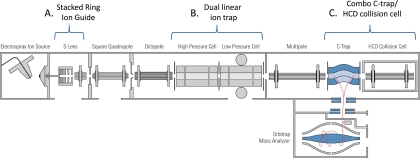
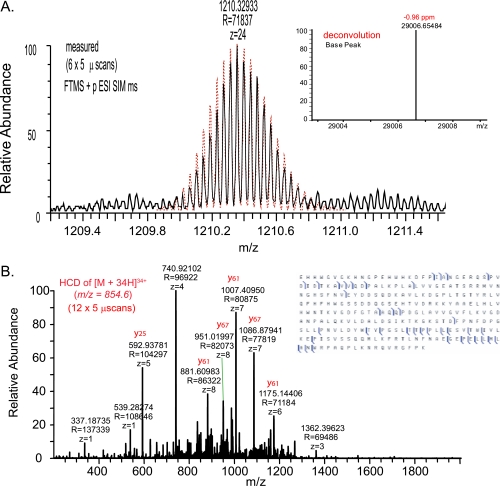
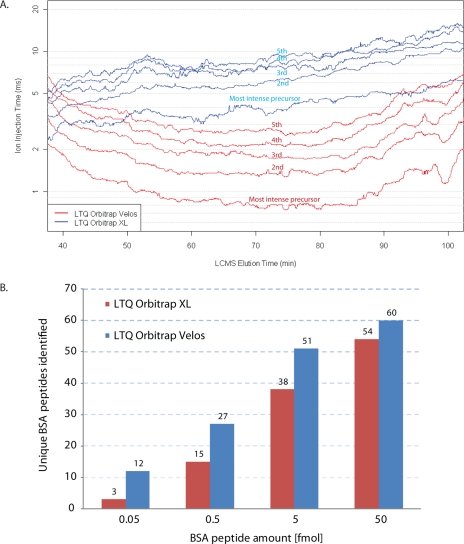
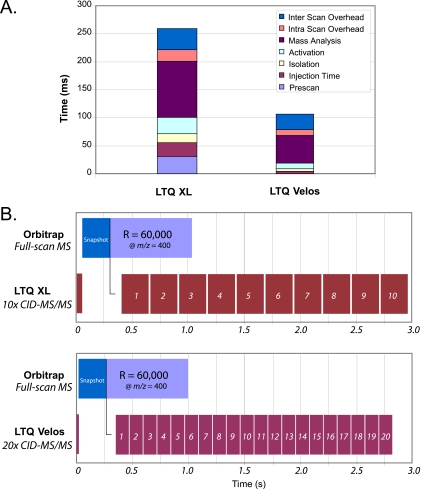
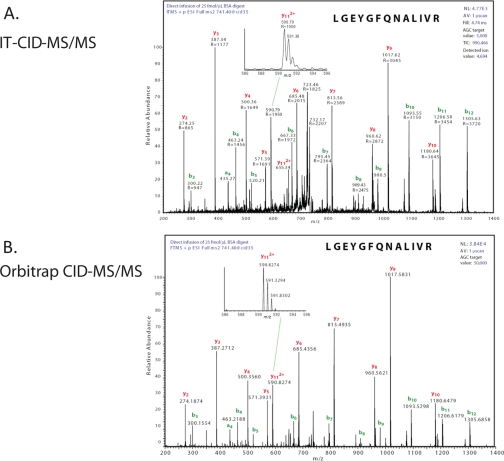
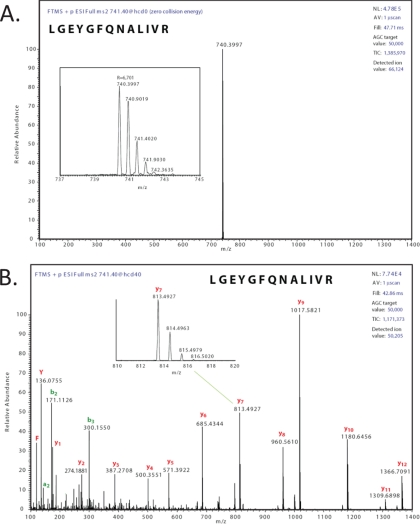
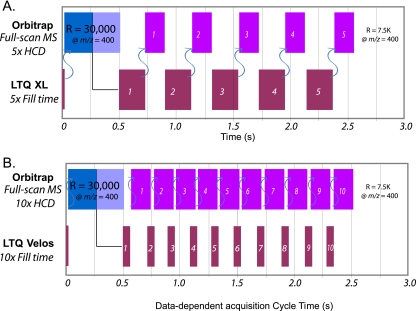
Since its introduction a few years ago, the linear ion trap Orbitrap (LTQ Orbitrap) instrument has become a powerful tool in proteomics research. For high resolution mass spectrometry measurements ions are accumulated in the linear ion trap and passed on to the Orbitrap analyzer. Simultaneously with acquisition of this signal, the major peaks are isolated in turn, fragmented and recorded at high sensitivity in the linear ion trap, combining the strengths of both mass analyzer technologies. Here we describe a next generation LTQ Orbitrap system termed Velos, with significantly increased sensitivity and scan speed. This is achieved by a vacuum interface using a stacked ring radio frequency ion guide with 10-fold higher transfer efficiency in MS/MS mode and 3-5-fold in full scan spectra, by a dual pressure ion trap configuration, and by reduction of overhead times between scans. The first ion trap efficiently captures and fragments ions at relatively high pressure whereas the second ion trap realizes extremely fast scan speeds at reduced pressure. Ion injection times for MS/MS are predicted from full scans instead of performing automatic gain control scans. Together these improvements routinely enable acquisition of up to ten fragmentation spectra per second. Furthermore, an improved higher-energy collisional dissociation cell with increased ion extraction capabilities was implemented. Higher-collision energy dissociation with high mass accuracy Orbitrap readout is as sensitive as ion trap MS/MS scans in the previous generation of the instrument.
Overview
The claims and statistics of this paper haven’t been checked yet.
Free: it reads the open-access text and checks the first 5 claims that cite a source we can check. Create a free account to check every claim.
Integrity signals
Registry
Cites
Statistics
Figures
Verification
Claims the paper makes
The claims and statistics of this paper haven’t been checked yet.
Free: it reads the open-access text and checks the first 5 claims that cite a source we can check. Create a free account to check every claim.
Claims other papers make about this one
Each is checked against this paper’s own text: does it say what the citing paper says it does?
In the citing paper
“The linear trap quadrupole (LTQ)-Orbitrap Velos mass spectrometer has improved higher-energy collisional dissociation (HCD) capabilities, and therefore enables acquisition of high resolution tandem MS (MS/MS) spectra without compromising the depth of analysis (14).”
From Comparative Proteomic Analysis of Eleven Common Cell Lines Reveals Ubiquitous but Varying Expression of Most Proteins (2012) · cites this paper as [14]
Self-check
Percentages, sums and reported differences re-computed from the paper’s own numbers.
The self-check needs the paper’s full text.
Citations
Cites
Cox, J., & Mann, M. (2008) · Nature Biotechnology · doi:10.1038/nbt.1511 · Cited by 14,855 · cited 2×
“Raw LC-MS Data Analysis—Fragmented peptides were identified and quantified by MASCOT and MaxQuant; Raw Orbitrap full-scan MS and ion trap CID-MS/MS and Orbitrap HCD spectra from the SILAC-labeled HeLa cytoplasmic extracts were processed by MaxQuant as described (20, 21).”
MethodSelf-citationMass spectrometry-based proteomics
Aebersold, R., & Mann, M. (2003) · Nature · doi:10.1038/nature01511 · Cited by 6,955 · cited 1×
“Proteomics experiments typically involve the analysis of peptide mixtures obtained by the enzymatic digestion of proteomes that can be as complex as complete cell lysates ( 1 , 2). Dynamic range of peptide abundances and the sheer number of peptides encountered in these mixtures require extremely sensitive and fast pe…”
Self-citationOng, S.-E., Blagoev, B., Kratchmarova, I., Kristensen, D. B., Steen, H., Pandey, A., & Mann, M. (2002) · Molecular & Cellular Proteomics · doi:10.1074/mcp.m200025-mcp200 · Cited by 5,574 · cited 4×
“HeLa SILAC Cytoplasmic Extract 1:3 Standard—Two populations of HeLa S3 cervix carcinoma cells were grown in suspension and SILAC-labeled (18) in RPMI 1640 medium supplemented with dialyzed bovine serum and two distinct isotopic variants of arginine ((13)C6, (15)N4-L-Arg) and lysine ( (13)C6, (15)N2-L-Lys).”
MethodInfluentialSelf-citationRappsilber, J., Ishihama, Y., & Mann, M. (2003) · Analytical Chemistry · doi:10.1021/ac026117i · Cited by 2,644 · cited 3×
“The peptide mixture was aliquoted, desalted, and concentrated on a C18-StageTip, and eluted with 20 l of 80% acetonitrile in 0.5% acetic acid.”
MethodInfluentialSelf-citationMass Spectrometry and Protein Analysis
Domon, B., & Aebersold, R. (2006) · Science · doi:10.1126/science.1124619 · Cited by 2,181 · cited 1×
“Among many different instrumental formats (5), the combination of a linear ion trap (6) with a Fourier transform (FT)(1)”
BackgroundOlsen, J. V., de Godoy, L. M. F., Li, G., Macek, B., Mortensen, P., Pesch, R., Makarov, A., Lange, O., Horning, S., & Mann, M. (2005) · Molecular & Cellular Proteomics · doi:10.1074/mcp.t500030-mcp200 · Cited by 1,510 · cited 1×
“120024) was used as an internal calibrant as described (19).”
MethodSelf-citationThe Orbitrap: a new mass spectrometer
Hu, Q., Noll, R. J., Li, H., Makarov, A., Hardman, M., & Graham Cooks, R. (2005) · Journal of Mass Spectrometry · doi:10.1002/jms.856 · Cited by 1,333
Self-citationHigher-energy C-trap dissociation for peptide modification analysis
Olsen, J. V., Macek, B., Lange, O., Makarov, A., Horning, S., & Mann, M. (2007) · Nature Methods · doi:10.1038/nmeth1060 · Cited by 999 · cited 15×
“which occurs in a separate RF multipole at the far side of the C-trap (12).”
BackgroundInfluentialSelf-citationComprehensive mass-spectrometry-based proteome quantification of haploid versus diploid yeast
de Godoy, L. M. F., Olsen, J. V., Cox, J., Nielsen, M. L., Hubner, N. C., Fröhlich, F., Walther, T. C., & Mann, M. (2008) · Nature · doi:10.1038/nature07341 · Cited by 873 · cited 1×
“Although a first comprehensively identified and quantified proteome has recently been reported ( 4 ), further gains in instrumental performance are clearly needed to reduce overall measurement time, improve sequence coverage of identified proteins, and for the in-depth analysis of mammalian proteomes.”
BackgroundSelf-citationA two-dimensional quadrupole ion trap mass spectrometer
Schwartz, J. C., Senko, M. W., & Syka, J. E. P. (2002) · Journal of the American Society for Mass Spectrometry · doi:10.1016/s1044-0305(02)00384-7 · Cited by 796 · cited 1×
“Among many different instrumental formats (5), the combination of a linear ion trap (6) with a Fourier transform (FT)(1)”
BackgroundSelf-citation
Cited by
Items 401–479 of 479
Mass Spectrometric Identification of a Novel Factor XIIIa Cross-Linking Site in Fibrinogen
Semkova, M. E., & Hsuan, J. J. (2021) · Proteomes · doi:10.3390/proteomes9040043 · Cited by 1
Fu, Y., Brown, C. J., Johnson, J. T., Marsh, B. M., Gilbert, J. R., Feng, E., & Kenttämaa, H. I. (2023) · Journal of the American Society for Mass Spectrometry · doi:10.1021/jasms.2c00313 · Cited by 1
Ion trap mass spectrometer for kinetic studies of subnanometer particles
Li, K. J., Yan, Y., & Lengyel, J. (2026) · Aerosol Science and Technology · doi:10.1080/02786826.2026.2633182 · Cited by 1
“…originally commercialized for Thermo Scientific LTQ instruments, is a stacked-ring ion guide consisting of two sequential sets of progressively spaced flat ring electrodes driven by RF voltages of opposite phase on adjacent rings (Olsen et al. 2009; Second et al. 2009; Michalski et al. 2011).”
Use of Theoretical Peptide Distributions in Phosphoproteome Analysis
Kalita, M. K., Kasumov, T., Brasier, A. R., & Sadygov, R. G. (2013) · Journal of Proteome Research · doi:10.1021/pr4003382 · Cited by 1
Rissanen, J., Moulder, R., Lahesmaa, R., & Nevalainen, O. (2012) · Rapid Communications in Mass Spectrometry · doi:10.1002/rcm.6292 · Cited by 1
Carpentier, S. (2015) · Sustainable development and biodiversity · doi:10.1007/978-3-319-25637-5_12 · Cited by 1
Mass spectrometry for human kinome analysis
Miao, W., & Wang, Y. (2021) · Elsevier eBooks · doi:10.1016/b978-0-12-821433-6.00001-5 · Cited by 1
Zhang, Z., Zheng, M., Zhao, Y., & Wang, P. G. (2021) · Bioanalysis · doi:10.4155/bio-2021-0202 · Cited by 1
Gross, J. H. (2012) · Springer eBooks · doi:10.1007/978-3-8274-2981-0_9 · Cited by 1
Vlad, C. (2011) · KOPS (University of Konstanz) · Cited by 2
Design and Validation of Proteome Measurements
Claassen, M. (2010) · Repository for Publications and Research Data (ETH Zurich) · doi:10.3929/ethz-a-006113183 · Cited by 1
Filtering tandem mass spectra for quality
Feldman, S., Frewen, B. E., MacCoss, M. J., & Gupta, M. R. (2012) · Cited by 1
Belov (2017) · Digital Repository Service (Northeastern University) · doi:10.17760/d20259955 · Cited by 1
Galluzzi, F. (2021) · theses.fr (ABES) · doi:10.70675/544c95bfz2ddbz4ecaza12dz64e75d212990 · Cited by 4
Probing yeast molecular systems biology by new proteomics strategies
Helbig, A. O. (2010) · Utrecht University Repository (Utrecht University)
Resende, V. M. F. (2013) · Digital Library of Theses and Dissertations (Universidade de São Paulo) · doi:10.11606/t.5.2013.tde-12062013-115302 · Cited by 2
Divide and conquer strategies for the in-depth analysis of proteomes
Gauci, S. (2010) · Utrecht University Repository (Utrecht University)
Proteomics enabled Vaccinology. Probing Antigen and Epitope Repertoires
Mommen, G. P. M. (2014) · Utrecht University Repository (Utrecht University)
Atanassov, I. (2015) · eDiss (Georg-August-Universität Göttingen) · doi:10.53846/goediss-5170
Clinical and Biomedical Mass Spectrometry: New Frontiers in Drug Developments and Diagnosis
Végvári, Á., Rezeli, M., Erlinge, D., & Marko‐Varga, G. (2012) · Translational bioinformatics · doi:10.1007/978-94-007-5811-7_7
Identification of Missing Proteins: Toward the Completion of Human Proteome
Végvári, Á. (2014) · Translational bioinformatics · doi:10.1007/978-94-017-9202-8_2
Multiplexing Techniques in Quantitative Proteomics to Study Disease
Evans, A. R. (2015) · D-Scholarship@Pitt (University of Pittsburgh)
Lys-N: A versatile enzyme for proteomics
Taouatas, N. (2010) · Utrecht University Repository (Utrecht University)
Viner, R., Horn, D. M., Tao, S., & Orlando, R. (2009)
Phosphoproteomics-Based Network Analysis of Cancer Cell Signaling Systems
Kozuka‐Hata, H., & Oyama, M. (2015) · Springer eBooks · doi:10.1007/978-4-431-55561-2_1
Soldi, M. (2013) · Archivio Istituzionale della Ricerca (Universita Degli Studi Di Milano) · doi:10.13130/soldi-monica_phd2013-03-04
“It is also routinely capable of recording MS/MS spectra at high resolution either by CID or by “higher-energy collisional dissociation” (HCD) methods (55).”
MethodSubramonian, D. (2016) · Human Biology
Hanash, S., & Taguchi, A. (2013) · Cambridge University Press eBooks · doi:10.1017/cbo9781139046947.008
Experimental Methods and Instrumentation
Niessen, W. M. A. (2015) · Springer eBooks · doi:10.1007/978-1-4899-7588-1_4
Rojsajjakul, T. (2014) · The Research Repository @ WVU (West Virginia University) · doi:10.33915/etd.443
Meyer, J. G. (2015) · eScholarship (California Digital Library) · doi:10.13140/rg.2.1.3030.2324
Proteomic Studies of HIV-1 and Its Posttranslational Modifications
Colquhoun, D. R., & Graham, D. R. M. (2016) · Springer eBooks · doi:10.1007/978-1-4939-6542-7_6
Discovery And Quantification In Mass Spectrometry-Based Proteomics
Ruse, C. I., & Chen, E. I. (2014) · Journal of Proteomics and Genomics research · doi:10.14302/issn.2326-0793.jpgr-13-357
“Instrument modifications such as the dual ion trap-orbitrap[25] in the LTQ-Velos Orbitrap were used to minimize the ratio compression effect.”
MethodA Global Proteomic Investigation of Magnaporthe oryzae During Nitrogen Starvation Conditions.
Robertson, S. L. (2016) · NCSU Libraries Repository (North Carolina State University Libraries)
Peyman, H. (2016) · Spectrum Research Repository (Concordia University)
The Exocyst Subunit Sec6 Interacts with Assembled Exocytic Snare Complexes: A Dissertation
Dubuke, M. L. (2015) · eScholarship@UMassChan · doi:10.13028/m2b01m
“…Proxeon Easy-nLC (Thermo Scientific) system using a linear gradient from 100% A (5% acetonitrile with 0.1% (v/v) 50 formic acid) to 35% B (acetonitrile with 0.1% formic acid) in 90 min and eluted directly into an LTQ Orbitrap Velos hybrid mass spectrometer (Thermo Scientific) (Olsen et al., 2009).”
InfluentialProteomics of lipid accumulation and DGAT inhibition in HepG2 liver carcinoma cells
Bhatt-Wessel, B. (2017) · Open Access Victoria University of Wellington | Te Herenga Waka (Figshare) · doi:10.26686/wgtn.17058194
“Instruments like the LTQ-Orbitrap Velos are capable of scan speeds of up to 5 Hz [444] as compared to 1 Hz at a resolution of 60,000 at 400 m/z.”
MethodAdam, K. (2014) · theses.fr (ABES) · doi:10.70675/caf4aa72zbfcaz471dz8ad2z5f01e74465c4 · Cited by 1
Functional characterization of KAISO and Kaiso knockout mice : apoptosis and testis atropy
고동인 (2014) · YUHSpace (Yonsei University Medical Library)
Towards Comprehensive Identification of Proteins from MALDI imaging
Maier, S. K. (2014) · mediaTUM (Technical University of Munich)
Jarnuczak, A. F. (2015) · Research Explorer (The University of Manchester)
Quantitative Mass Spectrometric Analysis of RNA-Protein Cross-Links
Qamar, S. (2019) · eDiss (Georg-August-Universität Göttingen) · doi:10.53846/goediss-7732
“Depending upon the experimental necessity, HCD fragmentation can also be performed in HCD collision cell of the selected ions which are then measured in orbitrap (Olsen et al., 2009).”
BackgroundVialaret, J. (2019) · theses.fr (ABES) · doi:10.70675/76929231zc1e3z41bbzbde5z2b8caf0948e2
Shotgun lipidomics of metabolic disorders by high resolution mass spectrometry
Schuhmann, K. (2012) · Qucosa (Saxon State and University Library Dresden)
Computational Strategies for Proteogenomics Analyses
Kong, A. T. (2017) · Deep Blue (University of Michigan)
Kari, O. K. (2020) · Helda - University of Helsinki Institutional Repository
Latosińska, A., Vlahou, A., & Makridakis, M. (2018) · Wiley eBooks · doi:10.1002/9781119183952.ch8
Current literature in mass spectrometry
(2010) · Journal of Mass Spectrometry · doi:10.1002/jms.1651
Quantitative phosphoproteomics for studying B-cell receptor signaling in Burkitt’s lymphoma
Corso, J. (2017) · eDiss (Georg-August-Universität Göttingen) · doi:10.53846/goediss-6137
巩鹏涛 (2015) · 计算分子生物学 · doi:10.5376/cmb.cn.2015.04.0001
LC‐MS / MS ‐Based Proteomics Methods for Quantifying Drug‐Metabolizing Enzymes and Transporters
Smith, L. S., Jung, S. M., Li, J., & Zhu, H. (2022) · Wiley eBooks · doi:10.1002/9781119851042.ch6
He, Z., He, X., Deng, F., Wang, Z., Jiang, X., Dai, J., Duan, Y., Guo, X., & Zhao, Z. (2025) · Journal of the American Society for Mass Spectrometry · doi:10.1021/jasms.5c00341
Bai, H. (2013) · D-Scholarship@Pitt (University of Pittsburgh)
Discovery And Validation Of Early Life Plasma Protein Biomarkers For Childhood Asthma
Xu, H. (2014) · UA Campus Repository (The University of Arizona)
Caractérisation du système microtubulaire par analyse top-down et protéomique d'affinité
Calligaris, D. (2011) · theses.fr (ABES) · doi:10.70675/b01c0bc4zcec4z4ba5z8313z533703831e2d
Terral, G. (2016) · theses.fr (ABES) · doi:10.70675/13d0a9eez820bz40a1z90e3z3cd6f694b1dc · Cited by 1
Développement d'approches protéomiques pour l'étude de la borréliose de Lyme
Schnell, G. (2014) · theses.fr (ABES) · doi:10.70675/594a19e5z0c25z48a8z901cz7c99f2e3d756 · Cited by 1
Liuu, S. (2014) · theses.fr (ABES) · doi:10.70675/642a4f47zb5b3z47e2z9df9z60914a927595 · Cited by 2
“Une nouvelle génération de piège à ions linéaire à double pression a fait son apparition depuis peu [205].”
Wen, Z., Wang, Y., Meng, X., Wang, F. Q., Huang, J., Wang, G., Tang, Y., Gao, S., Liu, C., Xu, M., et al. (2026) · Rapid Communications in Mass Spectrometry · doi:10.1002/rcm.70066
Bonnet, J. (2017) · theses.fr (ABES) · doi:10.70675/3064bc89zacb1z4dfez8fe7z289a7fc067d5 · Cited by 1
Yayé, H. S. (2018) · theses.fr (ABES) · doi:10.70675/cb148748z8151z4262zb8b9zaa3a3c2c1341 · Cited by 2
Bakar, J. (2021) · theses.fr (ABES) · doi:10.70675/6a7eda89zf8e0z402azafccz2983c4a80767 · Cited by 3
Sioud, S. (2023) · theses.fr (ABES) · doi:10.70675/c87c0084z6733z4241zba23zac38c7326a37
A framework for implementing industrial mass spectrometry protocols in peptide research
Kuril, A. K. (2026) · Advances in protein chemistry and structural biology · doi:10.1016/bs.apcsb.2026.06.011
Top-Down versus Bottom-Up Proteomics in Highly Sensitive LC-MS-Based Profiling of Limited Samples
Gao, Y., Greguš, M., Kostas, J. C., Marie, A., & Ivanov, A. R. (2026) · Analytical Chemistry · doi:10.1021/acs.analchem.6c01310
Proteomics: Methods and Applications
Babar, M., Raza, A., & Khan, A. H. (2026) · Springer eBooks · doi:10.1007/978-981-92-2642-9_9
Zhao, W., Lupala, C. S., Liu, F., Peng, H., Wang, Y., Zhang, Y., Wang, W., Feng, X., Zhu, Y. Z., Chen, M., et al. (2026) · Communications Chemistry · doi:10.1038/s42004-026-02218-w
Shen, J., Li, Y., Zhang, J., An, Z., Zhou, P., Finkenzeller, H., Juuti, P., Mikkilä, J., Vinkvist, N., Iyer, S., et al. (2026) · doi:10.5194/egusphere-2026-5947
Trauchessec, M. (2013) · theses.fr (ABES) · doi:10.70675/70424851zf29fz4556z875bz45220a88395a
“J’adresse ma gratitude à Sylvie Kieffer-Jaquinod pour son aide sur l’analyse des protéines entières et des acides aminés, à Anne Marie Hesse pour la formation à - 5 - l’utilisation du Q-Exactive, et à Alexandra Kraut pour les analyses MS/MS Orbitrap.”
BackgroundInfluential
Metadata
- Authors
- Olsen, J. V., Schwartz, J. C., Griep-Raming, J., Nielsen, M. L., Damoc, E., Denisov, E., Lange, O., Remes, P., Taylor, D., Splendore, M., Wouters, E. R., Senko, M., Makarov, A., Mann, M., & Horning, S.
- Affiliations
- Max Planck Society (DE)
- Thermo Fisher Scientific (United States) (US)
- Thermo Fisher Scientific (Germany) (DE)
- Corresponding author
- Mann, Matthias
- Horning, Stevan
- ORCID
- Venue
- Molecular & Cellular Proteomics
- Publisher
- Elsevier BV
- Published
- 2009-12
- Volume
- 8
- Issue
- 12
- Pages
- 2759-2769
- ISSN
- 1535-9476 (ISSN-L)
- PMC
- PMC2816009
- OpenAlex
- W2097780295
- Cited by
- 464
- References
- 22
- Citations by year
- 2026: 6 · 2025: 7 · 2024: 8 · 2023: 13 · 2022: 6 · 2021: 12 · 2020: 7 · 2019: 14 · 2018: 14 · 2017: 29 · 2016: 20 · 2015: 30 · 2014: 49 · 2013: 55 · 2012: 67
- FWCI
- 27.32
- Type
- journal article
- Language
- en
- Open access
- hybrid
- doi.org
- Licence
- cc-by
- www.elsevier.com/tdm/userlicense/1.0/ (tdm)
- www.elsevier.com/legal/tdmrep-license (tdm)
- creativecommons.org/licenses/by/4.0/ (vor, 3942 d)
- Locations
- Molecular & Cellular Proteomics (publishedVersion, cc-by)
- PubMed Central (publishedVersion, cc-by-nc)
- PubMed (publishedVersion)
- Max Planck Institute for Plasma Physics (submittedVersion)
- Funders
- European Commission (201648)
- Topics
- Physical Sciences › Chemistry › Spectroscopy › Mass Spectrometry Techniques and Applications
- Physical Sciences › Chemistry › Spectroscopy › Advanced Proteomics Techniques and Applications
- Life Sciences › Biochemistry, Genetics and Molecular Biology › Molecular Biology › Metabolomics and Mass Spectrometry Studies
- Keywords
- VELO, high-resolution mass spectrometry, higher-energy collisional dissociation, ion extraction, vacuum interface, automatic gain control, proteomics instrumentation
- MeSH terms
- Amino Acid Sequence, Animals, Carbonic Anhydrases, Cattle, HeLa Cells, Humans, Molecular Sequence Data, Peptides, Pressure, Serum Albumin, Bovine, Mass Spectrometry, Time Factors, Sequence Analysis, Protein, Proteomics
About these checks
Registry, retraction, Cites and statistics results are computed, not judged, with one exception: a printed reference that no index lists is read once by a model before it counts as a citation error. Claims are extracted by a model and kept only when their quote appears verbatim in the text; each cited source is then checked, with a model’s help, for whether it says what the claim relies on. Those verdicts can be wrong — read the claim’s quote and the cited source before relying on one.
Statistics and arithmetic are recomputed, not judged.
Confidence bands are shown only for fields calibrated on our annotated test set. None is calibrated yet, so no band is shown.
What counts as a claim ›How we measure confidence ›How we check this ›
Are you an author, or do you see a problem with this page? Request a review
Data sources
Bibliographic data: Semantic Scholar, OpenAlex, Crossref.
Contains information from the Semantic Scholar Academic Graph Datasets, made available under the ODC Attribution License (ODC-BY 1.0).
Semantic Scholar’s data is described in: Kinney, R., et al. (2023). The Semantic Scholar Open Data Platform. arXiv:2301.10140.
