

A Dual Pressure Linear Ion Trap Orbitrap Instrument with Very High Sequencing Speed
Open accessThe DOI matches its Crossref record; 22 of the 22 references it cites were found in a registry or an index.
Abstract
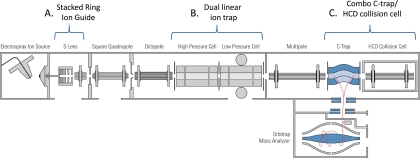
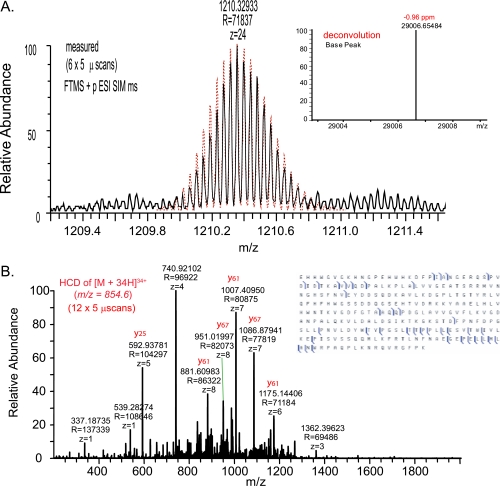
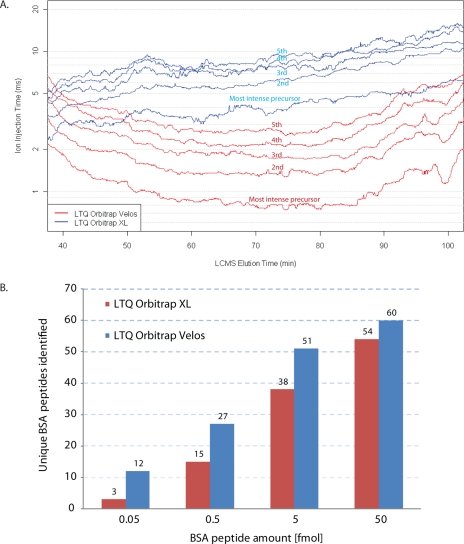
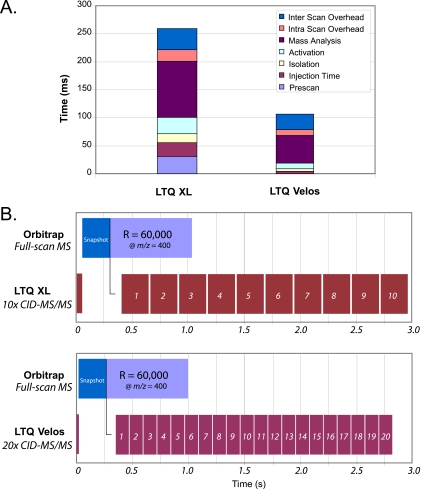
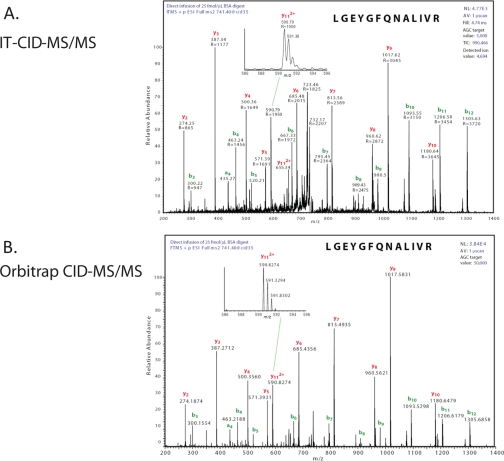
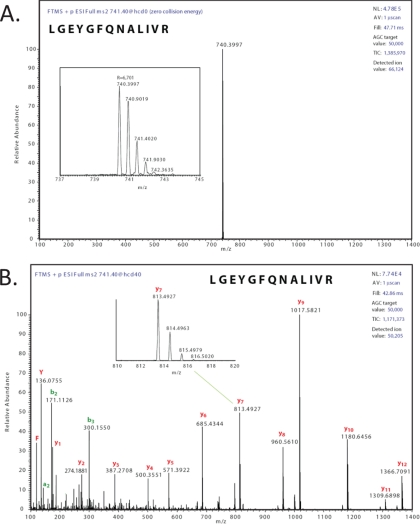
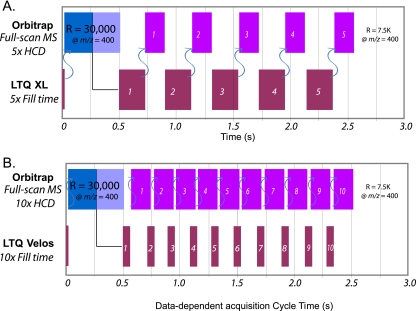
Since its introduction a few years ago, the linear ion trap Orbitrap (LTQ Orbitrap) instrument has become a powerful tool in proteomics research. For high resolution mass spectrometry measurements ions are accumulated in the linear ion trap and passed on to the Orbitrap analyzer. Simultaneously with acquisition of this signal, the major peaks are isolated in turn, fragmented and recorded at high sensitivity in the linear ion trap, combining the strengths of both mass analyzer technologies. Here we describe a next generation LTQ Orbitrap system termed Velos, with significantly increased sensitivity and scan speed. This is achieved by a vacuum interface using a stacked ring radio frequency ion guide with 10-fold higher transfer efficiency in MS/MS mode and 3-5-fold in full scan spectra, by a dual pressure ion trap configuration, and by reduction of overhead times between scans. The first ion trap efficiently captures and fragments ions at relatively high pressure whereas the second ion trap realizes extremely fast scan speeds at reduced pressure. Ion injection times for MS/MS are predicted from full scans instead of performing automatic gain control scans. Together these improvements routinely enable acquisition of up to ten fragmentation spectra per second. Furthermore, an improved higher-energy collisional dissociation cell with increased ion extraction capabilities was implemented. Higher-collision energy dissociation with high mass accuracy Orbitrap readout is as sensitive as ion trap MS/MS scans in the previous generation of the instrument.
Overview
The claims and statistics of this paper haven’t been checked yet.
Free: it reads the open-access text and checks the first 5 claims that cite a source we can check. Create a free account to check every claim.
Integrity signals
Registry
Cites
Statistics
Figures
Verification
Claims the paper makes
The claims and statistics of this paper haven’t been checked yet.
Free: it reads the open-access text and checks the first 5 claims that cite a source we can check. Create a free account to check every claim.
Claims other papers make about this one
Each is checked against this paper’s own text: does it say what the citing paper says it does?
In the citing paper
“The linear trap quadrupole (LTQ)-Orbitrap Velos mass spectrometer has improved higher-energy collisional dissociation (HCD) capabilities, and therefore enables acquisition of high resolution tandem MS (MS/MS) spectra without compromising the depth of analysis (14).”
From Comparative Proteomic Analysis of Eleven Common Cell Lines Reveals Ubiquitous but Varying Expression of Most Proteins (2012) · cites this paper as [14]
Self-check
Percentages, sums and reported differences re-computed from the paper’s own numbers.
The self-check needs the paper’s full text.
Citations
Cites
Cox, J., & Mann, M. (2008) · Nature Biotechnology · doi:10.1038/nbt.1511 · Cited by 14,855 · cited 2×
“Raw LC-MS Data Analysis—Fragmented peptides were identified and quantified by MASCOT and MaxQuant; Raw Orbitrap full-scan MS and ion trap CID-MS/MS and Orbitrap HCD spectra from the SILAC-labeled HeLa cytoplasmic extracts were processed by MaxQuant as described (20, 21).”
MethodSelf-citationMass spectrometry-based proteomics
Aebersold, R., & Mann, M. (2003) · Nature · doi:10.1038/nature01511 · Cited by 6,955 · cited 1×
“Proteomics experiments typically involve the analysis of peptide mixtures obtained by the enzymatic digestion of proteomes that can be as complex as complete cell lysates ( 1 , 2). Dynamic range of peptide abundances and the sheer number of peptides encountered in these mixtures require extremely sensitive and fast pe…”
Self-citationOng, S.-E., Blagoev, B., Kratchmarova, I., Kristensen, D. B., Steen, H., Pandey, A., & Mann, M. (2002) · Molecular & Cellular Proteomics · doi:10.1074/mcp.m200025-mcp200 · Cited by 5,574 · cited 4×
“HeLa SILAC Cytoplasmic Extract 1:3 Standard—Two populations of HeLa S3 cervix carcinoma cells were grown in suspension and SILAC-labeled (18) in RPMI 1640 medium supplemented with dialyzed bovine serum and two distinct isotopic variants of arginine ((13)C6, (15)N4-L-Arg) and lysine ( (13)C6, (15)N2-L-Lys).”
MethodInfluentialSelf-citationRappsilber, J., Ishihama, Y., & Mann, M. (2003) · Analytical Chemistry · doi:10.1021/ac026117i · Cited by 2,644 · cited 3×
“The peptide mixture was aliquoted, desalted, and concentrated on a C18-StageTip, and eluted with 20 l of 80% acetonitrile in 0.5% acetic acid.”
MethodInfluentialSelf-citationMass Spectrometry and Protein Analysis
Domon, B., & Aebersold, R. (2006) · Science · doi:10.1126/science.1124619 · Cited by 2,181 · cited 1×
“Among many different instrumental formats (5), the combination of a linear ion trap (6) with a Fourier transform (FT)(1)”
BackgroundOlsen, J. V., de Godoy, L. M. F., Li, G., Macek, B., Mortensen, P., Pesch, R., Makarov, A., Lange, O., Horning, S., & Mann, M. (2005) · Molecular & Cellular Proteomics · doi:10.1074/mcp.t500030-mcp200 · Cited by 1,510 · cited 1×
“120024) was used as an internal calibrant as described (19).”
MethodSelf-citationThe Orbitrap: a new mass spectrometer
Hu, Q., Noll, R. J., Li, H., Makarov, A., Hardman, M., & Graham Cooks, R. (2005) · Journal of Mass Spectrometry · doi:10.1002/jms.856 · Cited by 1,333
Self-citationHigher-energy C-trap dissociation for peptide modification analysis
Olsen, J. V., Macek, B., Lange, O., Makarov, A., Horning, S., & Mann, M. (2007) · Nature Methods · doi:10.1038/nmeth1060 · Cited by 999 · cited 15×
“which occurs in a separate RF multipole at the far side of the C-trap (12).”
BackgroundInfluentialSelf-citationComprehensive mass-spectrometry-based proteome quantification of haploid versus diploid yeast
de Godoy, L. M. F., Olsen, J. V., Cox, J., Nielsen, M. L., Hubner, N. C., Fröhlich, F., Walther, T. C., & Mann, M. (2008) · Nature · doi:10.1038/nature07341 · Cited by 873 · cited 1×
“Although a first comprehensively identified and quantified proteome has recently been reported ( 4 ), further gains in instrumental performance are clearly needed to reduce overall measurement time, improve sequence coverage of identified proteins, and for the in-depth analysis of mammalian proteomes.”
BackgroundSelf-citationA two-dimensional quadrupole ion trap mass spectrometer
Schwartz, J. C., Senko, M. W., & Syka, J. E. P. (2002) · Journal of the American Society for Mass Spectrometry · doi:10.1016/s1044-0305(02)00384-7 · Cited by 796 · cited 1×
“Among many different instrumental formats (5), the combination of a linear ion trap (6) with a Fourier transform (FT)(1)”
BackgroundSelf-citation
Cited by
Items 101–200 of 479
Mann, K., Edsinger, E., & Mann, M. (2012) · Proteome Science · doi:10.1186/1477-5956-10-28 · Cited by 106
“Using LTQ Orbitrap Velos high-performance mass spectrometers [27] in combination with the MaxQuant software package designed for analysis of large high-resolution mass spectrometric data sets [28-30] we identified 311 proteins in the organic matrix of the Lottia shell with very high stringency.”
MethodSelf-citationBenevento, M., Palma, S. D., Snijder, J., Moyer, C. L., Reddy, V. S., Nemerow, G. R., & Heck, A. J. R. (2014) · Journal of Biological Chemistry · doi:10.1074/jbc.m113.537498 · Cited by 106
Development of a GC/Quadrupole-Orbitrap Mass Spectrometer, Part I: Design and Characterization
Peterson, A. C., Hauschild, J.-P., Quarmby, S. T., Krumwiede, D., Lange, O., Lemke, R. A. S., Grosse-Coosmann, F., Horning, S. R., Donohue, T. J., Westphall, M. S., et al. (2014) · Analytical Chemistry · doi:10.1021/ac5014767 · Cited by 99
Self-citationDrexler, H. C. A., Ruhs, A., Konzer, A., Mendler, L., Bruckskotten, M., Looso, M., Günther, S., Boettger, T., Krüger, M., & Braun, T. (2012) · Molecular & Cellular Proteomics · doi:10.1074/mcp.m111.010801 · Cited by 95
Online Nanoflow Multidimensional Fractionation for High Efficiency Phosphopeptide Analysis
Ficarro, S. B., Zhang, Y., Carrasco-Alfonso, M. J., Garg, B., Adelmant, G., Webber, J. T., Luckey, C. J., & Marto, J. A. (2011) · Molecular & Cellular Proteomics · doi:10.1074/mcp.o111.011064 · Cited by 95
Fundamentals and Advances of Orbitrap Mass Spectrometry
Hecht, E. S., Ščigelová, M., Eliuk, S. M., & Makarov, A. (2019) · Wiley eBooks · doi:10.1002/9780470027318.a9309.pub2 · Cited by 101
Self-citationUncovering Ubiquitin and Ubiquitin-like Signaling Networks
Vertegaal, A. C. O. (2011) · Chemical Reviews · doi:10.1021/cr200187e · Cited by 100
A practical approach to detect unique metabolic patterns for personalized medicine
Johnson, J. M., Yu, T., Strobel, F. H., & Jones, D. P. (2010) · The Analyst · doi:10.1039/c0an00333f · Cited by 98
de Graaf, E. L., Altelaar, A. F. M., van Breukelen, B., Mohammed, S., & Heck, A. J. R. (2011) · Journal of Proteome Research · doi:10.1021/pr200156b · Cited by 93
Hettich, R. L., Sharma, R., Chourey, K., & Giannone, R. J. (2012) · Current Opinion in Microbiology · doi:10.1016/j.mib.2012.04.008 · Cited by 99
Savitski, M. M., Fischer, F., Mathieson, T., Sweetman, G., Lang, M., & Bantscheff, M. (2010) · Journal of the American Society for Mass Spectrometry · doi:10.1016/j.jasms.2010.01.012 · Cited by 88
“Experiments were performed on Thermo LTQ Orbitrap XL and Thermo LTQ Orbitrap Velos [ 13 ] mass spectrometers that were coupled to split-less Eksigent NanoLCs (Dublin, CA, USA).”
MethodEvaluation of the Compact High-Field Orbitrap for Top-Down Proteomics of Human Cells
Ahlf, D. R., Compton, P. D., Tran, J. C., Early, B. P., Thomas, P. M., & Kelleher, N. L. (2012) · Journal of Proteome Research · doi:10.1021/pr3004216 · Cited by 89
Instrumentation at the Leading Edge of Proteomics
Peters-Clarke, T. M., Coon, J. J., & Riley, N. M. (2024) · Analytical Chemistry · doi:10.1021/acs.analchem.3c04497 · Cited by 96
Hsieh, E. J., Bereman, M. S., Durand, S., Valaskovic, G. A., & MacCoss, M. J. (2012) · Journal of the American Society for Mass Spectrometry · doi:10.1007/s13361-012-0508-6 · Cited by 89
“Developments in mass spectrometer technologies have increased the speed and sensitivity of mass spectrometers used in shotgun proteomics, improving the ability to sample more ions eluting from the column at any given time [6].”
BackgroundElschenbroich, S., & Kislinger, T. (2010) · Molecular BioSystems · doi:10.1039/c0mb00159g · Cited by 98
Roth, R., Chiapello, M., Montero, H., Gehrig, P., Grossmann, J., O’Holleran, K., Hartken, D., Walters, F., Yang, S.-Y., Hillmer, S., et al. (2018) · Nature Communications · doi:10.1038/s41467-018-06865-z · Cited by 93
A comprehensive pipeline for translational top-down proteomics from a single blood draw
Toby, T. K., Fornelli, L., Srzentić, K., DeHart, C. J., Levitsky, J., Friedewald, J., & Kelleher, N. L. (2019) · Nature Protocols · doi:10.1038/s41596-018-0085-7 · Cited by 86
Suh, M.-J., Fedorova, N. D., Cagas, S. E., Hastings, S., Fleischmann, R. D., Peterson, S. N., Perlin, D. S., Nierman, W. C., Pieper, R., & Momany, M. (2012) · Proteome Science · doi:10.1186/1477-5956-10-30 · Cited by 85
“the LTQ Orbitrap Velos, promise to eliminate these bottlenecks for proteome-wide quantification [18,19].”
Quantitative Tracking of Isotope Flows in Proteomes of Microbial Communities
Pan, C., Fischer, C. R., Hyatt, D., Bowen, B. P., Hettich, R. L., & Banfield, J. F. (2011) · Molecular & Cellular Proteomics · doi:10.1074/mcp.m110.006049 · Cited by 98
“In these validation experiments, we used both an LTQ Orbitrap XL instrument (21) and an LTQ Orbitrap Velos instrument (22) (Thermo Fisher Scientific) to investigate the effects of instrument types on the number and false discovery rate of protein identifications.”
MethodCurrent methodologies for proteomics of bacterial surface‐exposed and cell envelope proteins
Solis, N., & Cordwell, S. J. (2011) · PROTEOMICS · doi:10.1002/pmic.201000808 · Cited by 87
Beck, M., Claassen, M., & Aebersold, R. (2011) · Current Opinion in Biotechnology · doi:10.1016/j.copbio.2010.09.002 · Cited by 83
The Use of Selected Reaction Monitoring in Quantitative Proteomics
Holman, S. W., Sims, P. F. G., & Eyers, C. E. (2012) · Bioanalysis · doi:10.4155/bio.12.126 · Cited by 90
To Cleave or Not To Cleave in XL-MS?
Steigenberger, B., Albanese, P., Heck, A. J. R., & Scheltema, R. A. (2020) · Journal of the American Society for Mass Spectrometry · doi:10.1021/jasms.9b00085 · Cited by 84
Shen, Y., Tolić, N., Xie, F., Zhao, R., Purvine, S. O., Schepmoes, A., Ronald, J., Anderson, G., & Smith, R. D. (2011) · Journal of Proteome Research · doi:10.1021/pr200052c · Cited by 82
Flores-Morales, A., Bergmann, T. B., Lavallee, C., Batth, T. S., Lin, D., Lerdrup, M., Friis, S., Bartels, A., Kristensen, G., Krzyzanowska, A., et al. (2019) · Clinical Cancer Research · doi:10.1158/1078-0432.ccr-18-0729 · Cited by 82
“MS/MS spectra were acquired in data-dependent mode, after Higher Energy Collisional Dissociation fragmentation, at a resolution of 17,500 (31).”
MethodSelf-citationSecreted IGFBP5 mediates mTORC1-dependent feedback inhibition of IGF-1 signalling
Ding, M., Bruick, R. K., & Yu, Y. (2016) · Nature Cell Biology · doi:10.1038/ncb3311 · Cited by 96
Ion traps in modern mass spectrometry
Nolting, D., Malek, R., & Makarov, A. (2017) · Mass Spectrometry Reviews · doi:10.1002/mas.21549 · Cited by 90
Self-citationThe quest for tolerant varieties: the importance of integrating “omics” techniques to phenotyping
Zivy, M., Wienkoop, S., Renaut, J., Pinheiro, C., Goulas, E., & Carpentier, S. (2015) · Frontiers in Plant Science · doi:10.3389/fpls.2015.00448 · Cited by 81
Jiang, N., Hjorth-Jensen, K., Hekmat, O., Iglesias‐Gato, D., Kruse, T., Wang, C., Wei, W., Ke, B., Yan, B., Niu, Y., et al. (2014) · Oncogene · doi:10.1038/onc.2014.206 · Cited by 81
Self-citationKrug, K., Carpy, A., Behrends, G., Matić, K., Soares, N. C., & Maček, B. (2013) · Molecular & Cellular Proteomics · doi:10.1074/mcp.m113.029165 · Cited by 90
Sun, L., Zhu, G., & Dovichi, N. J. (2013) · Rapid Communications in Mass Spectrometry · doi:10.1002/rcm.6437 · Cited by 73
“Several reports made the comparison of CID and HCD for large-scale proteome [3, 11], phosphoproteome [12, 13] and peptidome [14, 15] analysis.”
Large-Scale Differential Proteome Analysis in Plasmodium falciparum under Drug Treatment
Prieto, J. H., Končarević, S., Park, S. K., Yates, J. R., & Becker, K. (2008) · PLoS ONE · doi:10.1371/journal.pone.0004098 · Cited by 74
Advances in top-down proteomics for disease biomarker discovery
Calligaris, D., Villard, C., & Lafitte, D. (2011) · Journal of Proteomics · doi:10.1016/j.jprot.2011.03.030 · Cited by 80
Expanding Proteome Coverage with Orthogonal-specificity α-Lytic Proteases
Meyer, J. G., Kim, S., Maltby, D. A., Ghassemian, M., Bandeira, N., & Komives, E. A. (2014) · Molecular & Cellular Proteomics · doi:10.1074/mcp.m113.034710 · Cited by 80
The QT Interval International GWAS Consortium (QT-IGC), Lundby, A., Rossin, E. J., Steffensen, A. B., Acha, M. R., Newton-Cheh, C., Pfeufer, A., Lynch, S. N., Olesen, S.-P., Brunak, S., et al. (2014) · Nature Methods · doi:10.1038/nmeth.2997 · Cited by 71
Self-citationDiscovery of O-GlcNAc-modified Proteins in Published Large-scale Proteome Data
Hahne, H., Gholami, A. M., & Küster, B. (2012) · Molecular & Cellular Proteomics · doi:10.1074/mcp.m112.019463 · Cited by 74
Mass Spectrometry in the Postgenomic Era
Chait, B. T. (2011) · Annual Review of Biochemistry · doi:10.1146/annurev-biochem-110810-095744 · Cited by 81
Ichou, F., Schwarzenberg, A., Lesage, D., Alvès, S., Junot, C., Machuron‐Mandard, X., & Tabet, J. (2014) · Journal of Mass Spectrometry · doi:10.1002/jms.3365 · Cited by 70
Triple SILAC to Determine Stimulus Specific Interactions in the Wnt Pathway
Hilger, M., & Mann, M. (2012) · Journal of Proteome Research · doi:10.1021/pr200740a · Cited by 68
Self-citationA Cell-Line-Specific Atlas of PARP-Mediated Protein Asp/Glu-ADP-Ribosylation in Breast Cancer
Zhen, Y., Zhang, Y., & Yu, Y. (2017) · Cell Reports · doi:10.1016/j.celrep.2017.10.106 · Cited by 75
“Samples were analyzed by LC-MS/MS on an LTQ-Velos Pro Orbitrap mass spectrometer (Thermo Fischer Scientific, San Jose, CA) using a top twenty method (Olsen et al., 2009).”
MethodAnalysis of the Acidic Proteome with Negative Electron-Transfer Dissociation Mass Spectrometry
McAlister, G. C., Russell, J. D., Rumachik, N. G., Hebert, A. S., Syka, J. E. P., Geer, L. Y., Westphall, M. S., Pagliarini, D. J., & Coon, J. J. (2012) · Analytical Chemistry · doi:10.1021/ac203430u · Cited by 69
Advancing Cell Biology Through Proteomics in Space and Time (PROSPECTS)
Lamond, A. I., Uhlén, M., Horning, S. R., Makarov, A., Robinson, C. V., Serrano, L., Hartl, F. U., Baumeister, W. P., Werenskiold, A. K., Andersen, J., et al. (2012) · Molecular & Cellular Proteomics · doi:10.1074/mcp.o112.017731 · Cited by 76
“previous joint efforts leading to the development of hybrid linear ion trap OrbitrapTM instruments (4, 5), in this special issue, Thermo and the Mann group describe the latest linear ion trap Orbitrap instrument, termed the Orbitrap ELITE (Michalski et al.”
BackgroundSelf-citationQuantitative Proteomics for Epigenetics
Eberl, H. C., Mann, M., & Vermeulen, M. (2010) · ChemBioChem · doi:10.1002/cbic.201000429 · Cited by 75
Self-citationOudenhove, L. V., & Devreese, B. V. (2013) · Applied Microbiology and Biotechnology · doi:10.1007/s00253-013-4897-7 · Cited by 74
“Subparts per million precursor as well as product mass accuracy are achieved after internal calibration (Olsen et al. 2009; Wenger et al. 2010).”
BackgroundThe proteomic future: where mass spectrometry should be taking us
Thelen, J. J., & Miernyk, J. A. (2012) · Biochemical Journal · doi:10.1042/bj20110363 · Cited by 72
Expert System for Computer-assisted Annotation of MS/MS Spectra
Neuhauser, N., Michalski, A., Cox, J., & Mann, M. (2012) · Molecular & Cellular Proteomics · doi:10.1074/mcp.m112.020271 · Cited by 66
“Resulting peptides were analyzed by LC MS/MS on a linear ion trap – Orbitrap instrument (LTQ Velos [17] or ELITE [18], Thermo Fisher Scientific).”
MethodSelf-citationHighly Sensitive Proteome Analysis of FACS-Sorted Adult Colon Stem Cells
Di Palma, S., Stange, D., van de Wetering, M., Clevers, H., Heck, A. J. R., & Mohammed, S. (2011) · Journal of Proteome Research · doi:10.1021/pr200367p · Cited by 62
Zhou, F., Sikorski, T. W., Ficarro, S. B., Webber, J. T., & Marto, J. A. (2011) · Analytical Chemistry · doi:10.1021/ac200639v · Cited by 63
Pines, A., Kelstrup, C. D., Vrouwe, M. G., Puigvert, J. C., Typas, D., Mišovic, B., de Groot, A., von Stechow, L., van de Water, B., Danen, E. H. J., et al. (2011) · Molecular and Cellular Biology · doi:10.1128/mcb.05258-11 · Cited by 77
“A total of 14 fractions were collected from SCX chromatography, and after TiO2 enrichment, each fraction was analyzed by high-resolution tandem mass spectrometry on an LTQ-Orbitrap Velos MS (41) using higher-energy collisional dissociation (HCD) (40) for all MS/MS events (Fig.”
MethodSelf-citationGlatter, T., Schittenhelm, R. B., Rinner, O., Roguska, K., Wepf, A., Jünger, M. A., Köhler, K., Jevtov, I., Choi, H., Schmidt, A., et al. (2011) · Molecular Systems Biology · doi:10.1038/msb.2011.79 · Cited by 63
“Quantitative analysis dTOR complexes using directed MS We next used a directed MS approach in combination with label-free quantification to estimate the relative distribution of dTOR complexes in Drosophila cells (Schmidt et al, 2008; Olsen et al, 2009) (Figure 4A).”
MethodPichler, P., Mazanek, M., Dusberger, F., Weilnböck, L., Huber, C. G., Stingl, C., Luider, T. M., Straube, W. L., Köcher, T., & Mechtler, K. (2012) · Journal of Proteome Research · doi:10.1021/pr300163u · Cited by 64
Evolution of Mass Spectrometry Instruments and Techniques for Blood Proteomics
Zhao, Y. C., Xue, Q., Wang, M., Meng, B., Jiang, Y., Zhai, R., Zhang, Y., Dai, X., & Fang, X. (2023) · Journal of Proteome Research · doi:10.1021/acs.jproteome.3c00102 · Cited by 62
Scheltema, R. A., & Mann, M. (2012) · Journal of Proteome Research · doi:10.1021/pr201219e · Cited by 63
Self-citationIntact MicroRNA Analysis Using High Resolution Mass Spectrometry
Kullolli, M., Knouf, E., Arampatzidou, M., Tewari, M., & Pitteri, S. J. (2014) · Journal of the American Society for Mass Spectrometry · doi:10.1007/s13361-013-0759-x · Cited by 61
“mi-RNA dissociation (CID) and by higher-energy collisional dissociation (HCD) which yields similar sequence coverage from both methods but additional fragmentation by HCD versus CID.”
InfluentialPapanastasiou, D. K., Kounadis, D., Lekkas, A., Orfanopoulos, I., Mpozatzidis, A., Smyrnakis, A., Panagiotopoulos, E., Kosmopoulou, M., Reinhardt-Szyba, M., Fort, K. L., et al. (2022) · Journal of the American Society for Mass Spectrometry · doi:10.1021/jasms.2c00214 · Cited by 66
Self-citationA solid phase extraction-based platform for rapid phosphoproteomic analysis
Dephoure, N., & Gygi, S. P. (2011) · Methods · doi:10.1016/j.ymeth.2011.03.008 · Cited by 66
Becher, D., Bernhardt, J., Fuchs, S., & Riedel, K. (2013) · PROTEOMICS · doi:10.1002/pmic.201300095 · Cited by 64
Sample preparation and fractionation techniques for intact proteins for mass spectrometric analysis
Thomas, S. L., Thacker, J. B., Schug, K. A., & Maráková, K. (2020) · Journal of Separation Science · doi:10.1002/jssc.202000936 · Cited by 64
The Exocyst Subunit Sec6 Interacts with Assembled Exocytic SNARE Complexes
Dubuke, M. L., Maniatis, S., Shaffer, S. A., & Munson, M. (2015) · Journal of Biological Chemistry · doi:10.1074/jbc.m115.673806 · Cited by 56
“Variations on this reaction were also performed to improve detection sensitivity: with the addition of either 500 molar excess NHS (Thermo Scientific) or 500 molar excess sulfo-NHS (Thermo Scientific) to increase the stability of the partially cross-linked complex; and at low concentrations of reactants (1 micromolar)…”
MethodInfluentialThe RNA‐binding protein HuR/ELAVL1 regulates IFN‐β mRNA abundance and the type I IFN response
Herdy, B., Karonitsch, T., Vladimer, G. I., Tan, C. S. H., Stukalov, A., Jessen‐Trefzer, C., Bigenzahn, J. W., Theil, T., Holinka, J., Kiener, H. P., et al. (2015) · European Journal of Immunology · doi:10.1002/eji.201444979 · Cited by 63
Pichler, P., Köcher, T., Holzmann, J., Möhring, T., Ammerer, G., & Mechtler, K. (2011) · Analytical Chemistry · doi:10.1021/ac102265w · Cited by 55
Tissue Proteomics for the Next Decade? Towards a Molecular Dimension in Histology
Longuespée, R., Fléron, M., Pottier, C., Quesada‐Calvo, F., Meuwis, M., Baiwir, D., Smargiasso, N., Mazzucchelli, G., Pauw‐Gillet, M. D., Delvenne, P., et al. (2014) · OMICS A Journal of Integrative Biology · doi:10.1089/omi.2014.0033 · Cited by 57
“, 2011) and the increase in scanning speed, for example with the use of Orbitrap analyzers (Hardman and Makarov, 2003; Makarov et al., 2006; Makarov et al., 2009; Olsen et al., 2009).”
Current algorithmic solutions for peptide-based proteomics data generation and identification
Hoopmann, M. R., & Moritz, R. L. (2012) · Current Opinion in Biotechnology · doi:10.1016/j.copbio.2012.10.013 · Cited by 60
“Higher-energy collisional activation (HCD) prior to Orbitrap acquisition produces a more complete ion series in the low mass region [12].”
MethodCompton, P. D., Strukl, J. V., Bai, D. L., Shabanowitz, J., & Hunt, D. F. (2012) · Analytical Chemistry · doi:10.1021/ac202807h · Cited by 54
Optimization of parameters for coverage of low molecular weight proteins
Müller, S. A., Kohajda, T., Findeiß, S., Stadler, P. F., Washietl, S., Kellis, M., von Bergen, M., & Kalkhof, S. (2010) · Analytical and Bioanalytical Chemistry · doi:10.1007/s00216-010-4093-x · Cited by 54
“the Orbitrap analyzer [31].”
Guo, J., Villalta, P. W., Weight, C., Bonala, R., Johnson, F., Rosenquist, T. A., & Turesky, R. J. (2018) · Chemical Research in Toxicology · doi:10.1021/acs.chemrestox.8b00268 · Cited by 58
The molecular basis of ATM-dependent dimerization of the Mdc1 DNA damage checkpoint mediator
Jungmichel, S., Clapperton, J. A., Lloyd, J., Hari, F. J., Spycher, C., Pavic, L., Li, J., Haire, L. F., Bonalli, M., Larsen, D. H., et al. (2012) · Nucleic Acids Research · doi:10.1093/nar/gkr1300 · Cited by 65
Self-citationA Targeted Quantitative Proteomics Strategy for Global Kinome Profiling of Cancer Cells and Tissues
Xiao, Y., Guo, L., & Wang, Y. (2014) · Molecular & Cellular Proteomics · doi:10.1074/mcp.m113.036905 · Cited by 57
High-Resolution Filtering for Improved Small Molecule Identification via GC/MS
Kwiecien, N. W., Bailey, D. J., Rush, M. J. P., Cole, J. S., Ulbrich, A., Hebert, A. S., Westphall, M. S., & Coon, J. J. (2015) · Analytical Chemistry · doi:10.1021/acs.analchem.5b01503 · Cited by 53
Data-Independent Mass Spectrometry Approach for Screening and Identification of DNA Adducts
Guo, J., Villalta, P. W., & Turesky, R. J. (2017) · Analytical Chemistry · doi:10.1021/acs.analchem.7b03208 · Cited by 55
Cristobal, A., Hennrich, M. L., Giansanti, P., Goerdayal, S. S., Heck, A. J. R., & Mohammed, S. (2012) · The Analyst · doi:10.1039/c2an35445d · Cited by 52
KAISO, a critical regulator of p53-mediated transcription of CDKN1A and apoptotic genes
Koh, D.-I., Han, D., Ryu, H., Choi, W., Jeon, B.-N., Kim, M.-K., Kim, Y., Kim, J. Y., Parry, L., Clarke, A. R., et al. (2014) · Proceedings of the National Academy of Sciences · doi:10.1073/pnas.1318780111 · Cited by 58
“Mass spectrometry, in-gel tryptic digestion, and on-line nano LCMS/MS were performed as previously reported (35, 36).”
MethodMischerikow, N., Altelaar, M. A. F., Navarro, J. D., Mohammed, S., & Heck, A. J. R. (2010) · Molecular & Cellular Proteomics · doi:10.1074/mcp.m900619-mcp200 · Cited by 53
Weisbrod, C. R., Kaiser, N. K., Syka, J. E. P., Early, L., Mullen, C., Dunyach, J.-J., English, A. M., Anderson, L. C., Blakney, G. T., Shabanowitz, J., et al. (2017) · Journal of the American Society for Mass Spectrometry · doi:10.1007/s13361-017-1702-3 · Cited by 49
“from multiple fragmentation techniques [39, 40].”
Quantitative analysis of the secretion of the MCP family of chemokines by muscle cells
Henningsen, J., Pedersen, B. K., & Kratchmarova, I. (2010) · Molecular BioSystems · doi:10.1039/c0mb00209g · Cited by 51
Espadas, G., Borràs, E., Chiva, C., & Sabidó, E. (2017) · PROTEOMICS · doi:10.1002/pmic.201600416 · Cited by 54
“In the last decade, the field of mass spectrometry-based proteomics has benefited from the advances in instrument sensitivity, mass resolution and scanning speed, which have facilitated the analysis of complete proteomes with minimal sample fractionation and reduced chromatographic separation times [8, 9, 10, 11, 12,…”
BackgroundGross, J. H. (2017) · Springer eBooks · doi:10.1007/978-3-319-54398-7_9 · Cited by 60
Lommen, A., Gerssen, A., Oosterink, J. E., Kools, H. J., Ruiz‐Aracama, A., Peters, R., & Mol, H. G. J. (2010) · Metabolomics · doi:10.1007/s11306-010-0230-y · Cited by 52
“may improve future specifications (Makarov et al. 2009; Olsen et al. 2009).”
Fonslow, B. R., Niessen, S. M., Singh, M., Wong, C. C. L., Xu, T., Carvalho, P. C., Choi, J., Park, S. K., & Yates, J. R. (2012) · Journal of Proteome Research · doi:10.1021/pr300200x · Cited by 50
Lim, U.-M., Yap, M. G. S., Lim, Y. P., Goh, L., & Ng, S. K. (2013) · Journal of Proteome Research · doi:10.1021/pr400352n · Cited by 54
Andresen, C. A., Smedegaard, S. B., Sylvestersen, K. B., Svensson, C., Iglesias‐Gato, D., Cazzamali, G., Nielsen, T. K., Nielsen, M. L., & Flores‐Morales, A. (2013) · Journal of Biological Chemistry · doi:10.1074/jbc.m113.534602 · Cited by 49
Self-citationTargeted mutation of SLC4A5 induces arterial hypertension and renal metabolic acidosis
Gröger, N., Vitzthum, H., Fröhlich, H., Krüger, M., Ehmke, H., Braun, T. W., & Boettger, T. (2011) · Human Molecular Genetics · doi:10.1093/hmg/ddr533 · Cited by 51
“The following parameters were used: full scan (mass range m/z 300–2000) was recorded in the Orbitrap analyzer with a resolution R 1⁄4 60 000 followed by the sequential isolation and fragmentation of the 15 most intense ions from each scan (34).”
MethodButs, K., Michielssens, S., Hertog, M., Hayakawa, E., Cordewener, J. H. G., America, A. H. P., Nicolaï, B. M., & Carpentier, S. (2014) · Journal of Proteomics · doi:10.1016/j.jprot.2014.02.015 · Cited by 50
Yang, C., Park, A. C., Davis, N. A., Russell, J. D., Kim, B., Brand, D. D., Lawrence, M. J., Ge, Y., Westphall, M. S., Coon, J. J., et al. (2012) · Journal of Biological Chemistry · doi:10.1074/jbc.m112.406850 · Cited by 47
Emerging Technologies in Mass Spectrometry-Based DNA Adductomics
Guo, J., & Turesky, R. J. (2019) · Microarrays · doi:10.3390/ht8020013 · Cited by 47
“Ions are accumulated in an ion trap-like device (such as the “curved trap”, termed C-trap in the commercial hybrid Orbitrap from Thermo Fisher Scientific) for a predetermined period (max injection time) or until the influx ion count reaches the number defined by the AGC function [85].”
BackgroundData-independent Proteomic Screen Identifies Novel Tamoxifen Agonist that Mediates Drug Resistance
Hengel, S. M., Murray, E., Langdon, S. P., Hayward, L., O'Donoghue, J. E., Panchaud, A., Hupp, T. R., & Goodlett, D. R. (2011) · Journal of Proteome Research · doi:10.1021/pr2004117 · Cited by 48
Developing top down proteomics to maximize proteome and sequence coverage from cells and tissues
Ahlf, D. R., Thomas, P. M., & Kelleher, N. L. (2013) · Current Opinion in Chemical Biology · doi:10.1016/j.cbpa.2013.07.028 · Cited by 45
“Moving forward, benchtop style instruments will bring this capability to more research groups than in past years [19–21].”
In pursuit of resolution in time‐of‐flight mass spectrometry: A historical perspective
Radionova, A., Filippov, I., & Derrick, P. J. (2015) · Mass Spectrometry Reviews · doi:10.1002/mas.21470 · Cited by 46
Song, B., Greco, T. M., Lum, K. K., Taber, C. E., & Cristea, I. M. (2020) · Molecular & Cellular Proteomics · doi:10.1074/mcp.ra120.001981 · Cited by 47
“Desalted peptides (2 l) were analyzed by data-dependent LCMS/MS using a Top 15 acquisition strategy on an LTQ Orbitrap Velos-ETD (Velos) (43, 45, 46) or Q Exactive HF Hybrid QuadrupoleOrbitrap (QE) mass spectrometer (47, 48) equipped with an EASYSpray or Thermoflex ion source, respectively, and interfaced with Dionex…”
MethodNeutron Encoded Labeling for Peptide Identification
Rose, C. M., Merrill, A. E., Bailey, D. J., Hebert, A. S., Westphall, M. S., & Coon, J. J. (2013) · Analytical Chemistry · doi:10.1021/ac400476w · Cited by 45
Exploring frontiers of orbitrap performance for long transients
Denisov, E. V., Damoc, E., & Makarov, A. (2021) · International Journal of Mass Spectrometry · doi:10.1016/j.ijms.2021.116607 · Cited by 48
Self-citationFANCJ/BACH1 Acetylation at Lysine 1249 Regulates the DNA Damage Response
Xie, J., Peng, M., Guillemette, S., Quan, S., Maniatis, S., Wu, Y., Venkatesh, A., Shaffer, S. A., Brosh, R. M., & Cantor, S. B. (2012) · PLoS Genetics · doi:10.1371/journal.pgen.1002786 · Cited by 48
“spectrometer (Thermo Scientific) [40].”
Higher-energy Collision-activated Dissociation Without a Dedicated Collision Cell
McAlister, G. C., Phanstiel, D. H., Brumbaugh, J., Westphall, M. S., & Coon, J. J. (2011) · Molecular & Cellular Proteomics · doi:10.1074/mcp.o111.009456 · Cited by 43
Lauber, M. A., Koza, S. M., McCall, S. A., Alden, B. A., Iraneta, P. C., & Fountain, K. J. (2013) · Analytical Chemistry · doi:10.1021/ac401481z · Cited by 44
Effect of Embryonic Development on the Chicken Egg Yolk Plasma Proteome after 12 Days of Incubation
Réhault‐Godbert, S., Mann, K., Bourin, M. C., Brionne, A., & Nys, Y. Y. (2014) · Journal of Agricultural and Food Chemistry · doi:10.1021/jf404512x · Cited by 43
Hekmat, O., Munk, S., Fogh, L., Yadav, R., Francavilla, C., Horn, H., Würtz, S. Ø., Schrohl, A., Damsgaard, B., Rømer, M. U., et al. (2013) · Journal of Proteome Research · doi:10.1021/pr400457u · Cited by 45
Self-citationDissociation techniques in mass spectrometry-based proteomics
Jones, A. W., & Cooper, H. J. (2011) · The Analyst · doi:10.1039/c0an01011a · Cited by 57
Wenger, C. D., McAlister, G. C., Xia, Q., & Coon, J. J. (2010) · Molecular & Cellular Proteomics · doi:10.1074/mcp.m900541-mcp200 · Cited by 43
Thingholm, T. E., Bak, S. Y., Beck‐Nielsen, H., Jensen, O. N., & Gaster, M. (2011) · Molecular & Cellular Proteomics · doi:10.1074/mcp.m110.006650 · Cited by 45
Roth, M. J., Plymire, D. A., Chang, A. N., Kim, J., Maresh, E. M., Larson, S. E., & Patrie, S. M. (2011) · Analytical Chemistry · doi:10.1021/ac202339x · Cited by 41
Metadata
- Authors
- Olsen, J. V., Schwartz, J. C., Griep-Raming, J., Nielsen, M. L., Damoc, E., Denisov, E., Lange, O., Remes, P., Taylor, D., Splendore, M., Wouters, E. R., Senko, M., Makarov, A., Mann, M., & Horning, S.
- Affiliations
- Max Planck Society (DE)
- Thermo Fisher Scientific (United States) (US)
- Thermo Fisher Scientific (Germany) (DE)
- Corresponding author
- Mann, Matthias
- Horning, Stevan
- ORCID
- Venue
- Molecular & Cellular Proteomics
- Publisher
- Elsevier BV
- Published
- 2009-12
- Volume
- 8
- Issue
- 12
- Pages
- 2759-2769
- ISSN
- 1535-9476 (ISSN-L)
- PMC
- PMC2816009
- OpenAlex
- W2097780295
- Cited by
- 464
- References
- 22
- Citations by year
- 2026: 6 · 2025: 7 · 2024: 8 · 2023: 13 · 2022: 6 · 2021: 12 · 2020: 7 · 2019: 14 · 2018: 14 · 2017: 29 · 2016: 20 · 2015: 30 · 2014: 49 · 2013: 55 · 2012: 67
- FWCI
- 27.32
- Type
- journal article
- Language
- en
- Open access
- hybrid
- doi.org
- Licence
- cc-by
- www.elsevier.com/tdm/userlicense/1.0/ (tdm)
- www.elsevier.com/legal/tdmrep-license (tdm)
- creativecommons.org/licenses/by/4.0/ (vor, 3942 d)
- Locations
- Molecular & Cellular Proteomics (publishedVersion, cc-by)
- PubMed Central (publishedVersion, cc-by-nc)
- PubMed (publishedVersion)
- Max Planck Institute for Plasma Physics (submittedVersion)
- Funders
- European Commission (201648)
- Topics
- Physical Sciences › Chemistry › Spectroscopy › Mass Spectrometry Techniques and Applications
- Physical Sciences › Chemistry › Spectroscopy › Advanced Proteomics Techniques and Applications
- Life Sciences › Biochemistry, Genetics and Molecular Biology › Molecular Biology › Metabolomics and Mass Spectrometry Studies
- Keywords
- VELO, high-resolution mass spectrometry, higher-energy collisional dissociation, ion extraction, vacuum interface, automatic gain control, proteomics instrumentation
- MeSH terms
- Amino Acid Sequence, Animals, Carbonic Anhydrases, Cattle, HeLa Cells, Humans, Molecular Sequence Data, Peptides, Pressure, Serum Albumin, Bovine, Mass Spectrometry, Time Factors, Sequence Analysis, Protein, Proteomics
About these checks
Registry, retraction, Cites and statistics results are computed, not judged, with one exception: a printed reference that no index lists is read once by a model before it counts as a citation error. Claims are extracted by a model and kept only when their quote appears verbatim in the text; each cited source is then checked, with a model’s help, for whether it says what the claim relies on. Those verdicts can be wrong — read the claim’s quote and the cited source before relying on one.
Statistics and arithmetic are recomputed, not judged.
Confidence bands are shown only for fields calibrated on our annotated test set. None is calibrated yet, so no band is shown.
What counts as a claim ›How we measure confidence ›How we check this ›
Are you an author, or do you see a problem with this page? Request a review
Data sources
Bibliographic data: Semantic Scholar, OpenAlex, Crossref.
Contains information from the Semantic Scholar Academic Graph Datasets, made available under the ODC Attribution License (ODC-BY 1.0).
Semantic Scholar’s data is described in: Kinney, R., et al. (2023). The Semantic Scholar Open Data Platform. arXiv:2301.10140.
