

A Dual Pressure Linear Ion Trap Orbitrap Instrument with Very High Sequencing Speed
Open accessThe DOI matches its Crossref record; 22 of the 22 references it cites were found in a registry or an index.
Abstract
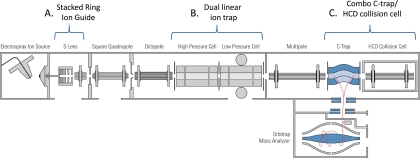
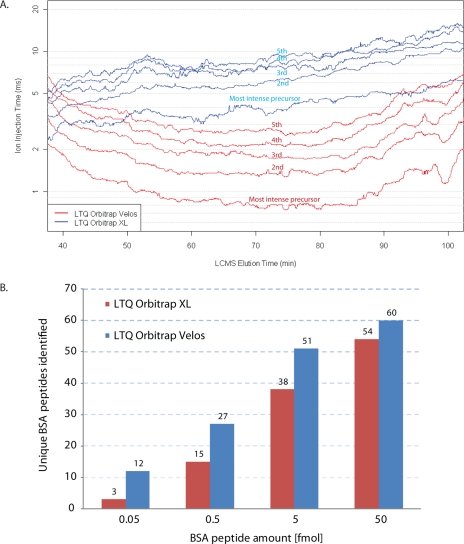
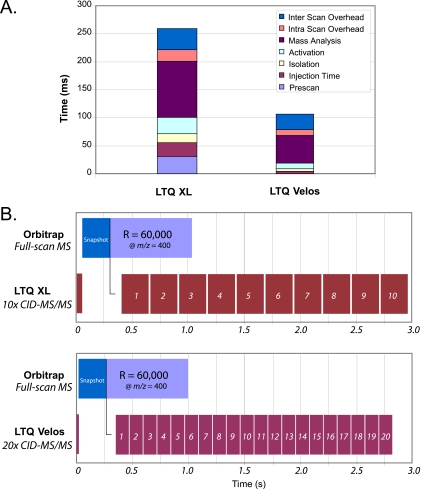
Since its introduction a few years ago, the linear ion trap Orbitrap (LTQ Orbitrap) instrument has become a powerful tool in proteomics research. For high resolution mass spectrometry measurements ions are accumulated in the linear ion trap and passed on to the Orbitrap analyzer. Simultaneously with acquisition of this signal, the major peaks are isolated in turn, fragmented and recorded at high sensitivity in the linear ion trap, combining the strengths of both mass analyzer technologies. Here we describe a next generation LTQ Orbitrap system termed Velos, with significantly increased sensitivity and scan speed. This is achieved by a vacuum interface using a stacked ring radio frequency ion guide with 10-fold higher transfer efficiency in MS/MS mode and 3-5-fold in full scan spectra, by a dual pressure ion trap configuration, and by reduction of overhead times between scans. The first ion trap efficiently captures and fragments ions at relatively high pressure whereas the second ion trap realizes extremely fast scan speeds at reduced pressure. Ion injection times for MS/MS are predicted from full scans instead of performing automatic gain control scans. Together these improvements routinely enable acquisition of up to ten fragmentation spectra per second. Furthermore, an improved higher-energy collisional dissociation cell with increased ion extraction capabilities was implemented. Higher-collision energy dissociation with high mass accuracy Orbitrap readout is as sensitive as ion trap MS/MS scans in the previous generation of the instrument.
Overview
The claims and statistics of this paper haven’t been checked yet.
Free: it reads the open-access text and checks the first 5 claims that cite a source we can check. Create a free account to check every claim.
Integrity signals
Registry
Cites
Statistics
Figures
Verification
Claims the paper makes
The claims and statistics of this paper haven’t been checked yet.
Free: it reads the open-access text and checks the first 5 claims that cite a source we can check. Create a free account to check every claim.
Claims other papers make about this one
Each is checked against this paper’s own text: does it say what the citing paper says it does?
In the citing paper
“The linear trap quadrupole (LTQ)-Orbitrap Velos mass spectrometer has improved higher-energy collisional dissociation (HCD) capabilities, and therefore enables acquisition of high resolution tandem MS (MS/MS) spectra without compromising the depth of analysis (14).”
From Comparative Proteomic Analysis of Eleven Common Cell Lines Reveals Ubiquitous but Varying Expression of Most Proteins (2012) · cites this paper as [14]
Self-check
Percentages, sums and reported differences re-computed from the paper’s own numbers.
The self-check needs the paper’s full text.
Citations
Cites
Cox, J., & Mann, M. (2008) · Nature Biotechnology · doi:10.1038/nbt.1511 · Cited by 14,855 · cited 2×
“Raw LC-MS Data Analysis—Fragmented peptides were identified and quantified by MASCOT and MaxQuant; Raw Orbitrap full-scan MS and ion trap CID-MS/MS and Orbitrap HCD spectra from the SILAC-labeled HeLa cytoplasmic extracts were processed by MaxQuant as described (20, 21).”
MethodSelf-citationMass spectrometry-based proteomics
Aebersold, R., & Mann, M. (2003) · Nature · doi:10.1038/nature01511 · Cited by 6,955 · cited 1×
“Proteomics experiments typically involve the analysis of peptide mixtures obtained by the enzymatic digestion of proteomes that can be as complex as complete cell lysates ( 1 , 2). Dynamic range of peptide abundances and the sheer number of peptides encountered in these mixtures require extremely sensitive and fast pe…”
Self-citationOng, S.-E., Blagoev, B., Kratchmarova, I., Kristensen, D. B., Steen, H., Pandey, A., & Mann, M. (2002) · Molecular & Cellular Proteomics · doi:10.1074/mcp.m200025-mcp200 · Cited by 5,574 · cited 4×
“HeLa SILAC Cytoplasmic Extract 1:3 Standard—Two populations of HeLa S3 cervix carcinoma cells were grown in suspension and SILAC-labeled (18) in RPMI 1640 medium supplemented with dialyzed bovine serum and two distinct isotopic variants of arginine ((13)C6, (15)N4-L-Arg) and lysine ( (13)C6, (15)N2-L-Lys).”
MethodInfluentialSelf-citationRappsilber, J., Ishihama, Y., & Mann, M. (2003) · Analytical Chemistry · doi:10.1021/ac026117i · Cited by 2,644 · cited 3×
“The peptide mixture was aliquoted, desalted, and concentrated on a C18-StageTip, and eluted with 20 l of 80% acetonitrile in 0.5% acetic acid.”
MethodInfluentialSelf-citationMass Spectrometry and Protein Analysis
Domon, B., & Aebersold, R. (2006) · Science · doi:10.1126/science.1124619 · Cited by 2,181 · cited 1×
“Among many different instrumental formats (5), the combination of a linear ion trap (6) with a Fourier transform (FT)(1)”
BackgroundOlsen, J. V., de Godoy, L. M. F., Li, G., Macek, B., Mortensen, P., Pesch, R., Makarov, A., Lange, O., Horning, S., & Mann, M. (2005) · Molecular & Cellular Proteomics · doi:10.1074/mcp.t500030-mcp200 · Cited by 1,510 · cited 1×
“120024) was used as an internal calibrant as described (19).”
MethodSelf-citationThe Orbitrap: a new mass spectrometer
Hu, Q., Noll, R. J., Li, H., Makarov, A., Hardman, M., & Graham Cooks, R. (2005) · Journal of Mass Spectrometry · doi:10.1002/jms.856 · Cited by 1,333
Self-citationHigher-energy C-trap dissociation for peptide modification analysis
Olsen, J. V., Macek, B., Lange, O., Makarov, A., Horning, S., & Mann, M. (2007) · Nature Methods · doi:10.1038/nmeth1060 · Cited by 999 · cited 15×
“which occurs in a separate RF multipole at the far side of the C-trap (12).”
BackgroundInfluentialSelf-citationComprehensive mass-spectrometry-based proteome quantification of haploid versus diploid yeast
de Godoy, L. M. F., Olsen, J. V., Cox, J., Nielsen, M. L., Hubner, N. C., Fröhlich, F., Walther, T. C., & Mann, M. (2008) · Nature · doi:10.1038/nature07341 · Cited by 873 · cited 1×
“Although a first comprehensively identified and quantified proteome has recently been reported ( 4 ), further gains in instrumental performance are clearly needed to reduce overall measurement time, improve sequence coverage of identified proteins, and for the in-depth analysis of mammalian proteomes.”
BackgroundSelf-citationA two-dimensional quadrupole ion trap mass spectrometer
Schwartz, J. C., Senko, M. W., & Syka, J. E. P. (2002) · Journal of the American Society for Mass Spectrometry · doi:10.1016/s1044-0305(02)00384-7 · Cited by 796 · cited 1×
“Among many different instrumental formats (5), the combination of a linear ion trap (6) with a Fourier transform (FT)(1)”
BackgroundSelf-citation
Cited by
Items 301–400 of 479
Optimized Fragmentation Conditions for iTRAQ-labeled Phosphopeptides
Linke, D., Hung, C., Cassidy, L., & Tholey, A. (2013) · Journal of Proteome Research · doi:10.1021/pr400113n · Cited by 17
Huang, P., Liu, C., Gao, W., Chu, B., Cai, Z., & Tian, R. (2020) · Journal of Mass Spectrometry · doi:10.1002/jms.4653 · Cited by 17
Nicolardi, S., Palmblad, M., Hensbergen, P. J., Tollenaar, R. A. �. �., Deelder, A. M., & van der Burgt, Y. E. M. (2011) · Rapid Communications in Mass Spectrometry · doi:10.1002/rcm.5246 · Cited by 16
“It is well recognised that a similar mass precision of a large amount of peptides can be obtained from an LC/MS platform with high-end mass analysis, such as the Orbitrap or an ESI-FTICR system.([25,26])”
BackgroundMoruz, L., Hoopmann, M. R., Rosenlund, M., Granholm, V., Moritz, R. L., & Käll, L. (2013) · Journal of Proteome Research · doi:10.1021/pr400705q · Cited by 16
15N-Labeled Brain Enables Quantification of Proteome and Phosphoproteome in Cultured Primary Neurons
Liao, L., Sando, R. C., Farnum, J. B., Vanderklish, P. W., Maximov, A., & Yates, J. R. (2012) · Journal of Proteome Research · doi:10.1021/pr200987h · Cited by 16
Neves, B., Duarte, S., Domingues, P. M., Pérez‐Sala, D., Oliveira, M. M., Domingues, M. R., & Melo, T. (2020) · Molecules · doi:10.3390/molecules25092120 · Cited by 16
Martins, C. P. B., Bromirski, M., Conaway, M. C. P., & Makarov, A. (2016) · Comprehensive analytical chemistry · doi:10.1016/bs.coac.2016.01.001 · Cited by 16
Self-citationShao, Y., Yin, X., Kang, D., Shen, B., Zhu, Z., Li, X., Li, H., Xie, L. Y., Wang, G., & Liang, Y. (2017) · Talanta · doi:10.1016/j.talanta.2017.04.050 · Cited by 17
“LTQ-Orbitrap XL, a hybrid high resolution mass spectrometry which incorporates Orbitrap and linear ion trap, enables to increase peptide identification rates and enhance proteome coverage [24,25].”
Maximizing Tandem Mass Spectrometry Acquisition Rates for Shotgun Proteomics
Trujillo, E. A., Hebert, A. S., Brademan, D. R., & Coon, J. J. (2019) · Analytical Chemistry · doi:10.1021/acs.analchem.9b02979 · Cited by 16
Ion transmission in an electrospray ionization‐mass spectrometry interface using an S‐lens
Yan, Y., Schmitt, L., Khramchenkova, A., & Lengyel, J. (2023) · Journal of Mass Spectrometry · doi:10.1002/jms.4955 · Cited by 15
Chamrád, I., Rix, U., Stukalov, A., Gridling, M., Parapatics, K., Müller, A. C., Altiok, S., Colinge, J., Superti‐Furga, G., Haura, E. B., et al. (2013) · Journal of Proteome Research · doi:10.1021/pr400309p · Cited by 15
A strategy for identification of protein tyrosine phosphorylation
Lind, S. B., Artemenko, K. A., & Pettersson, U. (2011) · Methods · doi:10.1016/j.ymeth.2011.09.021 · Cited by 15
Samperi, R., Capriotti, A. L., Cavaliere, C., Colapicchioni, V., Chiozzi, R. Z., & Laganà, A. (2015) · Comprehensive analytical chemistry · doi:10.1016/b978-0-444-63340-8.00006-6 · Cited by 15
Kislinger, T., & Gramolini, A. O. (2010) · Journal of Proteomics · doi:10.1016/j.jprot.2010.05.004 · Cited by 17
“[90] Olsen JV, Schwartz JC, Griep-Raming J, Nielsen ML, Damoc E, Denisov E, et al.”
BackgroundDetermination of oxidative protein modifications using mass spectrometry
Raftery, M. J. (2014) · Redox Report · doi:10.1179/1351000214y.0000000089 · Cited by 17
A stringent approach to improve the quality of nitrotyrosine peptide identifications
Ghesquière, B., Helsens, K., Vandekerckhove, J. S., & Gevaert, K. (2011) · PROTEOMICS · doi:10.1002/pmic.201000526 · Cited by 15
Logical MS/MS scans: a new set of operations for tandem mass spectrometry
Snyder, D. T., Szalwinski, L. J., Wells, J. M., & Cooks, R. G. (2018) · The Analyst · doi:10.1039/c8an01661e · Cited by 15
Roolf, C., Dybowski, N., Sekora, A., Mueller, S., Knuebel, G., Tebbe, A., Escobar, H. M., Godl, K., Junghanß, C., & Schaab, C. (2017) · Molecular & Cellular Proteomics · doi:10.1074/mcp.m117.067462 · Cited by 16
“…analytical column (packed in-house with C18 beads), resolved by an acetonitrile gradient using an Easy nLC system (Thermo Fisher Scientific, Wal-tham, MA) and directly electrosprayed via a nanoelectrospray ion source into an LTQ Orbitrap Velos mass spectrometer (Thermo Fisher Scientific) (27, 31).”
Precursor and Neutral Loss Scans in an RF Scanning Linear Quadrupole Ion Trap
Snyder, D. T., Szalwinski, L. J., Schrader, R., Pirro, V., Hilger, R. T., & Cooks, R. G. (2018) · Journal of the American Society for Mass Spectrometry · doi:10.1007/s13361-018-1920-3 · Cited by 14
“Dual linear ion traps (LITs) (e.g., Thermo Velos) [10], triple quadrupole linear ion traps (e.g., SCIEXQTRAP) [11, 12], and LIT-Orbitrap [13, 14] or LIT-TOF [15] have recently become commonplace in modern instrument suites.”
BackgroundProteomics by mass spectrometry—Go big or go home?
Khan, M. F., Bennett, M. J., Jumper, C. C., Percy, A. J., Silva, L. P., & Schriemer, D. C. (2011) · Journal of Pharmaceutical and Biomedical Analysis · doi:10.1016/j.jpba.2011.02.012 · Cited by 17
SILAC-Based Temporal Phosphoproteomics
Francavilla, C., Hekmat, O., Blagoev, B., & Olsen, J. V. (2014) · Methods in molecular biology · doi:10.1007/978-1-4939-1142-4_10 · Cited by 15
Self-citationRoss, R. L., Yu, N., Zhao, R., Wood, A., & Limbach, P. A. (2023) · Journal of the American Society for Mass Spectrometry · doi:10.1021/jasms.3c00298 · Cited by 12
Progress in Tandem Mass Spectrometry Data Analysis for Nucleic Acids
Lanzillotti, M. B., & Brodbelt, J. S. (2025) · Mass Spectrometry Reviews · doi:10.1002/mas.21923 · Cited by 15
“…precursor ions are increased via application of a frequency ‐ selective waveform, or alternatively by accelerating ions through a separate collision cell (termed beam ‐ type activation) in a process known as higher ‐ energy collisional dissociation (HCD) (Olsen et al. 2009; Schuhmann et al. 2011).”
In SilicoProteome Cleavage Reveals Iterative Digestion Strategy for High Sequence Coverage
Meyer, J. G. (2014) · ISRN Computational Biology · doi:10.1155/2014/960902 · Cited by 12
“Mass spectrometers are becoming more sensitive and versatile [8–10].”
BackgroundGeiger, T., & Geiger, B. (2010) · Seminars in Cancer Biology · doi:10.1016/j.semcancer.2010.05.004 · Cited by 12
Guo, L., Xiao, Y., & Wang, Y. (2014) · Analytical Chemistry · doi:10.1021/ac502592d · Cited by 13
Munteanu, C. V. A., Chirițoiu, G. N., Petrescu, A., & Petrescu, S. M. (2019) · Advances in experimental medicine and biology · doi:10.1007/978-3-030-15950-4_9 · Cited by 13
Brydon, S. C., da Silva, G. F., O’Hair, R. A. J., & White, J. M. (2021) · Physical Chemistry Chemical Physics · doi:10.1039/d1cp04494j · Cited by 11
Mass Spectrometry-Driven Proteomics: An Introduction
Helsens, K., Martens, L., Vandekerckhove, J. S., & Gevaert, K. (2011) · Methods in molecular biology · doi:10.1007/978-1-61779-148-2_1 · Cited by 13
Neves, B., Pérez‐Sala, D., Ferreira, H. B., Guerra, I. M. S., Moreira, A. S. P., Domingues, P. M., Domingues, M. R., & Melo, T. (2022) · Progress in Lipid Research · doi:10.1016/j.plipres.2022.101176 · Cited by 11
Yin, X., Liu, X., Zhang, Y., Yan, G., Wang, F., Lu, H., Shen, H., & Yang, P. (2014) · PROTEOMICS · doi:10.1002/pmic.201300510 · Cited by 11
Neves, B., Domingues, P. M., Oliveira, M. M., Domingues, M. R., & Melo, T. (2018) · Molecules · doi:10.3390/molecules24010107 · Cited by 11
“known that HCD (used in Orbitrap instruments) is able to enhance the yield of low molecular weight fragment ions due to the multiple collisions of both precursor and fragments ions with the gas molecules [29].”
BackgroundNagaraj, N., D’Souza, R. C. J., Cox, J., Olsen, J. V., & Mann, M. (2012) · Journal of Proteome Research · doi:10.1021/pr3003886 · Cited by 11
Self-citationYeast Expression Proteomics by High-Resolution Mass Spectrometry
Walther, T. C., Olsen, J. V., & Mann, M. (2010) · Methods in enzymology on CD-ROM/Methods in enzymology · doi:10.1016/s0076-6879(10)70011-2 · Cited by 10
Self-citationThe filter diagonalization method and its assessment for Fourier transform mass spectrometry
Martini, B. R., Aizikov, K., & Mandelshtam, V. A. (2014) · International Journal of Mass Spectrometry · doi:10.1016/j.ijms.2014.08.010 · Cited by 11
Optimizing Electrospray Interfaces Using Slowly Diverging Conical Duct (ConDuct) Electrodes
Krutchinsky, A. N., Padovan, J. C., Cohen, H., & Chait, B. T. (2015) · Journal of the American Society for Mass Spectrometry · doi:10.1007/s13361-014-1063-0 · Cited by 10
The Expanding Universe of Mass Analyzer Configurations for Biological Analysis
Calvete, J. J. (2013) · Methods in molecular biology · doi:10.1007/978-1-62703-631-3_6 · Cited by 13
Bennetzen, M. V., Košař, M., Bunkenborg, J., Payne, M., Bártková, J., Lindström, M. S., Lukas, J., Andersen, J., Bártek, J., & Larsen, D. H. (2018) · Cell Cycle · doi:10.1080/15384101.2018.1515552 · Cited by 11
“[65] Olsen JV, Schwartz JC, Griep-Raming J, et al.”
MethodMass Spectrometry for Cancer Biomarkers
Albulescu, R., Petrescu, A., Sârbu, M., Grigore, A., Ică, R., Munteanu, C. V. A., Albulescu, A., Militaru, I. V., Zamfir, A. D., Petrescu, S. M., et al. (2019) · IntechOpen eBooks · doi:10.5772/intechopen.85609 · Cited by 10
Ma, R., Han, Y., Jiang, T., Li, D., Zhai, Y., & Xu, W. L. (2025) · Analytical Chemistry · doi:10.1021/acs.analchem.5c04683 · Cited by 9
Ivanova, B. B., & Spiteller, M. (2022) · Environmental Science and Pollution Research · doi:10.1007/s11356-022-24259-z · Cited by 9
Are the majority of a2-ions cyclic?
Good, D. M., Marín‐Vicente, C., & Zubarev, R. A. (2010) · Physical Chemistry Chemical Physics · doi:10.1039/c0cp00514b · Cited by 9
Computer simulations of a new toroidal‐cylindrical ion trap mass analyzer
Yu, Q., Tang, L.-J., Ni, K., Qian, X., & Wang, X. (2016) · Rapid Communications in Mass Spectrometry · doi:10.1002/rcm.7713 · Cited by 9
Proteomics and Precision Medicine
Ding, C., Qin, Z., Li, Y., Shi, W., Li, L., Zhan, D., & Yang, W. (2019) · Small Methods · doi:10.1002/smtd.201900075 · Cited by 9
Cell fate decisions by c-Myc depend on ZBTB5 and p53
Choi, S.-H., Koh, D.-I., Ahn, H., Kim, J. Y., Kim, Y., & Hur, M. (2020) · Biochemical and Biophysical Research Communications · doi:10.1016/j.bbrc.2020.09.137 · Cited by 9
Jeong, Y. J. (2020) · Plant Biotechnology Reports · doi:10.1007/s11816-020-00646-1 · Cited by 9
García-Reyes, J. F., Moreno‐González, D., Nortes-Méndez, R., Gilbert‐López, B., & Molina‐Díaz, A. (2017) · Elsevier eBooks · doi:10.1016/b978-0-12-809464-8.00002-6 · Cited by 9
Natural Abundance Isotope Ratio Measurements of Organic Molecules Using 21 T FTICR MS
Kew, W., Boiteau, R. M., Eiler, J. M., Paša‐Tolić, L., & Moran, J. (2023) · Analytical Chemistry · doi:10.1021/acs.analchem.3c01816 · Cited by 8
Next Generation Instruments and Methods for Proteomics
Mena, M. C., & Albar, J. P. (2013) · Wiley eBooks · doi:10.1002/9781118537282.ch2 · Cited by 8
Tandem-in-time mass spectrometry analysis facilitated by real-time pressure adjustments
Li, N., Zhou, X., & Ouyang, Z. (2021) · International Journal of Mass Spectrometry · doi:10.1016/j.ijms.2021.116523 · Cited by 8
Toward Quantitative Proteomics of Organ Substructures: Implications for Renal Physiology
Velić, A., Maček, B., & Wagner, C. A. (2010) · Seminars in Nephrology · doi:10.1016/j.semnephrol.2010.07.006 · Cited by 9
DMSO as a mobile phase additive enhances detection of ubiquitination sites by nano‐ LC‐ESI‐MS/MS
Doellinger, J., Grossegesse, M., Nitsche, A., & Lasch, P. (2017) · Journal of Mass Spectrometry · doi:10.1002/jms.4049 · Cited by 8
Stable Isotope Labeling by Amino Acids in Cell Culture (SILAC) Technology in Fission Yeast
Maček, B., Carpy, A., Koch, A., Bicho, C. C., Borek, W. E., Hauf, S., & Sawin, K. E. (2017) · Cold Spring Harbor Protocols · doi:10.1101/pdb.top079814 · Cited by 8
“This strategy has been used in several large-scale phosphoproteomics studies in eukaryotes (Olsen et al. 2006, 2009) and prokaryotes (Maček et al. 2007, 2008).”
MethodBereman, M. S., Hsieh, E. J., Corso, T. N., Pelt, C. K. V., & MacCoss, M. J. (2013) · Molecular & Cellular Proteomics · doi:10.1074/mcp.o112.024893 · Cited by 7
Rapid assay development for low input targeted proteomics using a versatile linear ion trap
Shannon, A. E., Teodorescu, R., Song, N. J., Heil, L. R., Jacob, C. C., Remes, P. M., Li, Z., Rubinstein, M. P., & Searle, B. C. (2025) · Nature Communications · doi:10.1038/s41467-025-58757-8 · Cited by 7
“These con fi gurations produce high scanning speeds by performing ion accumulation in parallel with mass analysis in the low-pressure LIT 31,32 .”
Self-citationComparative proteome analysis across non-small cell lung cancer cell lines
Grundner‐Culemann, K., Dybowski, J. N., Klammer, M., Tebbe, A., Schaab, C., & Daub, H. (2015) · Journal of Proteomics · doi:10.1016/j.jprot.2015.09.003 · Cited by 7
Banu, M., Ng, D., Zheng, L., Goh, L., Bi, X., & Ow, D. S. (2014) · Journal of Biotechnology · doi:10.1016/j.jbiotec.2014.10.017 · Cited by 7
Integration of proteomics into systems biology of cancer
Hanash, S., Schliekelman, M. J., Zhang, Q., & Taguchi, A. (2012) · WIREs Systems Biology and Medicine · doi:10.1002/wsbm.1169 · Cited by 7
“53 The database is intended to (1) record and manage sample information consistently and to link sample information to assay data across multiple resources; (2) minimize data entry efforts for the user, enabling submission of sample descriptions only once; (3) support cross database sample queries by sample descriptio…”
BackgroundFilipović, S. R., Siebner, H. R., Rowe, J. B., Cordivari, C., Gerschlager, W., Rothwell, J. C., Frackowiak, R. S. J., & Bhatia, K. P. (2004) · PubMed · Cited by 7
First 20 Years of Orbitrap Mass Spectrometry as the Mainstream Analytical Technique
Makarov, A. (2026) · Mass Spectrometry Reviews · doi:10.1002/mas.70024 · Cited by 6
“In 2009, an integrated C‐trap and HCD cell, back‐end electron transfer dissociation (ETD) (Syka et al. 2004; McAlister et al. 2008), dual pressure linear trap and a more sensitive atmosphere‐to‐vacuum interface became part of the LTQ Orbi-trap Velos™ system (Olsen et al. 2009).”
Self-citationAlves, G., Ogurtsov, A. Y., Porterfield, H. S., Maity, T. K., Jenkins, L. M. M., Sacks, D. B., & Yu, Y. (2024) · Journal of the American Society for Mass Spectrometry · doi:10.1021/jasms.3c00445 · Cited by 6
Yao, L., Liu, Y., Cui, Y., Sun, J., Xia, X., Wang, J., Wei, Y., & Chen, W. (2023) · Journal of Separation Science · doi:10.1002/jssc.202300606 · Cited by 6
Recent Developments in Liquid Chromatography–Mass Spectrometry
Lacorte, S., Agüera, A., Cortina‐Puig, M., & Gómez‐Canela, C. (2015) · Wiley eBooks · doi:10.1002/9781119070771.ch6 · Cited by 6
Nahnsen, S., Sachsenberg, T. T., & Kohlbacher, O. (2013) · PROTEOMICS · doi:10.1002/pmic.201200315 · Cited by 6
Combined Total Proteomic and Phosphoproteomic Analysis of Human Pluripotent Stem Cells
Hou, J., Tobe, B. T. D., Lo, F., Blethrow, J. D., Crain, A., Wolf, D. A., Snyder, E. Y., Singeç, I., & Brill, L. M. (2013) · Methods in molecular biology · doi:10.1007/978-1-62703-478-4_12 · Cited by 6
A Large-Scale Method to Measure the Stoichiometries of Protein Poly-ADP-Ribosylation
Li, P., Zhang, Y., Kim, C., & Yu, Y. (2026) · ACS Chemical Biology · doi:10.1021/acschembio.5c00817 · Cited by 6
Phosphoproteomics-Based Characterization of Cancer Cell Signaling Networks
Kozuka‐Hata, H., Goto, Y., & Oyam, M. (2013) · InTech eBooks · doi:10.5772/52915 · Cited by 7
“Especially, modern mass spectrometers termed linear ion trap (LTQ) Orbitrap instrument coupled to nano-flow liquid chromatography (nanoLC) enables us to identify and quantify thousands of signaling factors, leading to characterize diverse aspects of biological processes [18,19].”
BackgroundLibrary dependent LC ‐ MS / MS acquisition via mz API / L ive
Webber, J. T., Askenazi, M., Ficarro, S. B., Iglehart, M. A., & Marto, J. A. (2013) · PROTEOMICS · doi:10.1002/pmic.201200583 · Cited by 5
Zhang, B., Burchill, L., Altalhi, W. A. O., Ma, H. Z., & O’Hair, R. A. J. (2024) · Rapid Communications in Mass Spectrometry · doi:10.1002/rcm.9681 · Cited by 5
He, X., Guo, X., Deng, F., Zeng, P., Wu, B., Sun, H., Zhao, Z., & Duan, Y. (2024) · Talanta · doi:10.1016/j.talanta.2024.125980 · Cited by 5
State-Of-The-Art MS Technology Applications in Lung Disease
Végvári, Á., & Döme, B. (2011) · Bioanalysis · doi:10.4155/bio.11.271 · Cited by 7
Leach, F. E., Norheim, R. V., Anderson, G., & Paša‐Tolić, L. (2014) · Journal of the American Society for Mass Spectrometry · doi:10.1007/s13361-014-0952-6 · Cited by 5
Deciphering the complexity of the cancer proteome for diagnostic applications
Hanash, S., Taguchi, A., Wang, H., & Ostrin, E. J. (2015) · Expert Review of Molecular Diagnostics · doi:10.1586/14737159.2016.1135738 · Cited by 5
“Current instruments provide very high sensitivity and scan speed that allow identification of at least one major protein form for virtually all proteins translated from expressed genes in a cell population and across several logs of protein abundance (Figure 1).[6] A relatively recent development is the inclusion of a…”
BackgroundMann, K. (2017) · Elsevier eBooks · doi:10.1016/b978-0-12-804007-2.00016-3 · Cited by 11
ZNF509S1 downregulates PUMA by inhibiting p53K382 acetylation and p53-DNA binding
Jeon, B.-N., Yoon, J.-H., Han, D., Kim, M.-K., Kim, Y., Choi, S.-H., Song, J.-Y., Kim, K., Kim, K., & Hur, M. (2017) · Biochimica et Biophysica Acta (BBA) - Gene Regulatory Mechanisms · doi:10.1016/j.bbagrm.2017.07.008 · Cited by 6
pClean: An Algorithm To Preprocess High-Resolution Tandem Mass Spectra for Database Searching
Deng, Y., Ren, Z., Pan, Q., Qi, D., Wen, B., Ren, Y., Yang, H., Wu, L., Chen, F., & Liu, S. (2019) · Journal of Proteome Research · doi:10.1021/acs.jproteome.9b00141 · Cited by 5
Proteomics Technologies and Applications
Abdurakhmonov, I. Y. (2019) · IntechOpen eBooks · doi:10.5772/intechopen.73445 · Cited by 5
Williams, T. I., Kowalchyk, C., Collins, L. B., & Reading, B. J. (2023) · ACS Omega · doi:10.1021/acsomega.2c07614 · Cited by 5
Myung, S., Cohen, H., Fenyö, D., Padovan, J. C., Krutchinsky, A. N., & Chait, B. T. (2010) · International Journal of Mass Spectrometry · doi:10.1016/j.ijms.2010.09.013 · Cited by 4
Yang, H., Good, D. M., van der Spoel, D., & Zubarev, R. A. (2012) · Journal of the American Society for Mass Spectrometry · doi:10.1007/s13361-012-0418-7 · Cited by 4
“In the CAD regime, fragmentation was performed in the linear ion trap (LTQ) through collisions with helium; in higher energy collisional dissociation (HCD), in the “C-trap,” through collisions with nitrogen [23].”
MethodModified Ion Source for the Improved Collisional Activation of Protein Complexes
Schrader, R. L., Walker, T. E., & Russell, D. H. (2023) · Journal of the American Society for Mass Spectrometry · doi:10.1021/jasms.3c00071 · Cited by 4
Biomolecular dual-ion-trap mass analyzer
Hsu, Y.-F., Lin, J., Chu, M.-L., & Chen, C. (2013) · The Analyst · doi:10.1039/c3an00653k · Cited by 4
Navigating Mass Spectrometry: A Comprehensive Guide to Basic Concepts and TechniquesPreprint
Kuril, A. K. (2024) · SSRN Electronic Journal · doi:10.2139/ssrn.4879107 · Cited by 4
Application of Probiotic Proteomics in Enteric Cytoprotection
Beck, H. C., Feddersen, S., & Petersen, J. H. (2011) · Springer eBooks · doi:10.1007/978-94-007-0386-5_7 · Cited by 5
“The recent introduction of hybride analyser instruments such as quadrupole time of flight (q-TOF) and iontrap-orbitrap (LTQ orbitrap) instruments combined with novel fragmentation techniques such as electron transfer dissociation provide sensitive, high-resolution (more than 100,000), high mass-accuracy ( 5,000) and f…”
BackgroundThe amino acid's backup bone — Storage solutions for proteomics facilities
Meckel, H., Stephan, C., Bunse, C., Krafzik, M., Reher, C., Kohl, M., Meyer, H. E., & Eisenacher, M. (2013) · Biochimica et Biophysica Acta (BBA) - Proteins and Proteomics · doi:10.1016/j.bbapap.2013.05.018 · Cited by 3
“In the past decade fromMS device toMS device generation [2,3], raw file sizes significantly grew due to two main reasons: better peptide LC separation comprising increasing resolution power (i.”
BackgroundMarlton, S. J. P., McKinnon, B. I., Greißel, P. M., Shiels, O. J., Ucur, B., & Trevitt, A. J. (2021) · The Journal of Chemical Physics · doi:10.1063/5.0071847 · Cited by 3
Introduction To LC–MS Technology
Niessen, W. M. A., & C., R. A. C. (2017) · Wiley eBooks · doi:10.1002/9781119294269.ch1 · Cited by 3
Electronic and Steric Effects on the Reactivity of Seleniranium Ions with Alkenes in the Gas Phase
Brydon, S. C., Thomson, C., O’Hair, R. A. J., & White, J. M. (2023) · The Journal of Organic Chemistry · doi:10.1021/acs.joc.2c02233 · Cited by 3
Ruse, C. I., Peacock, S., Ghiban, C., Rivera, K. D., Pappin, D., & Leopold, P. (2013) · PROTEOMICS · doi:10.1002/pmic.201300022 · Cited by 3
Macromolecular ion accelerator mass spectrometer
Hsu, Y.-F., Lin, J., Chu, M.-L., Wang, Y., & Chen, C. (2013) · The Analyst · doi:10.1039/c3an01534c · Cited by 3
Crescendo: A Protein Sequence Database Search Engine for Tandem Mass Spectra
Wang, J., Zhang, Y., & Yu, Y. (2015) · Journal of the American Society for Mass Spectrometry · doi:10.1007/s13361-015-1120-3 · Cited by 3
“A top 20 method [10] was used for collision-induced dissociation (CID) experiments, in which the isolation window, minimal signal threshold, and normalized collision energy were set to be 2 Th, 500 and 35 ev, respectively.”
MethodLacroix‐Andrivet, O., Castaing, S., Hubert‐Roux, M., Loutelier‐Bourhis, C., Siqueira, A. L. M., & Afonso, C. (2024) · Energy & Fuels · doi:10.1021/acs.energyfuels.4c02785 · Cited by 2
Brydon, S. C., White, J. M., & O’Hair, R. A. J. (2025) · Journal of the American Society for Mass Spectrometry · doi:10.1021/jasms.4c00495 · Cited by 2
Ion Activation and Mass Analysis in Protein Mass Spectrometry
Lin, C., & O’Connor, P. B. (2011) · Wiley eBooks · doi:10.1002/9781118116555.ch2 · Cited by 2
Farooq, M., & Wadaan, M. A. M. (2013) · Epigenomics · doi:10.2217/epi.13.45 · Cited by 2
Predmore, Z. (2011) · Cited by 2
Large-Scale Differential Proteome Analysis in Plasmodium falciparum Under Drug Treatment
Prieto, J. H., Fischer, E., Končarević, S., Yates, J. R., & Becker, K. (2014) · Methods in molecular biology · doi:10.1007/978-1-4939-1438-8_17 · Cited by 2
Tandem Mass Spectrometry in Resolving Complex Gut Microbiota Functions
Kolmeder, C. A., Lähteenmäki, K., Wacklin, P., Kotovuori, A., Ritamo, I., Mättö, J., de Vos, W. M., & Valmu, L. (2017) · Wiley eBooks · doi:10.1002/9781118960226.ch19 · Cited by 2
Xing, L., Ding, T., Huang, C., Xi, Y., Wu, Q., Qian, W., Wan, F., & Zhang, B. (2019) · Journal of Proteomics · doi:10.1016/j.jprot.2019.103465 · Cited by 2
Hybrid Mass Analyzers in Drug Metabolism Applications
Chacko, S. A., Ramanathan, R., Humphreys, W. G., & Josephs, J. L. (2012) · Wiley eBooks · doi:10.1002/9780470921920.edm097 · Cited by 2
Metadata
- Authors
- Olsen, J. V., Schwartz, J. C., Griep-Raming, J., Nielsen, M. L., Damoc, E., Denisov, E., Lange, O., Remes, P., Taylor, D., Splendore, M., Wouters, E. R., Senko, M., Makarov, A., Mann, M., & Horning, S.
- Affiliations
- Max Planck Society (DE)
- Thermo Fisher Scientific (United States) (US)
- Thermo Fisher Scientific (Germany) (DE)
- Corresponding author
- Mann, Matthias
- Horning, Stevan
- ORCID
- Venue
- Molecular & Cellular Proteomics
- Publisher
- Elsevier BV
- Published
- 2009-12
- Volume
- 8
- Issue
- 12
- Pages
- 2759-2769
- ISSN
- 1535-9476 (ISSN-L)
- PMC
- PMC2816009
- OpenAlex
- W2097780295
- Cited by
- 464
- References
- 22
- Citations by year
- 2026: 6 · 2025: 7 · 2024: 8 · 2023: 13 · 2022: 6 · 2021: 12 · 2020: 7 · 2019: 14 · 2018: 14 · 2017: 29 · 2016: 20 · 2015: 30 · 2014: 49 · 2013: 55 · 2012: 67
- FWCI
- 27.32
- Type
- journal article
- Language
- en
- Open access
- hybrid
- doi.org
- Licence
- cc-by
- www.elsevier.com/tdm/userlicense/1.0/ (tdm)
- www.elsevier.com/legal/tdmrep-license (tdm)
- creativecommons.org/licenses/by/4.0/ (vor, 3942 d)
- Locations
- Molecular & Cellular Proteomics (publishedVersion, cc-by)
- PubMed Central (publishedVersion, cc-by-nc)
- PubMed (publishedVersion)
- Max Planck Institute for Plasma Physics (submittedVersion)
- Funders
- European Commission (201648)
- Topics
- Physical Sciences › Chemistry › Spectroscopy › Mass Spectrometry Techniques and Applications
- Physical Sciences › Chemistry › Spectroscopy › Advanced Proteomics Techniques and Applications
- Life Sciences › Biochemistry, Genetics and Molecular Biology › Molecular Biology › Metabolomics and Mass Spectrometry Studies
- Keywords
- VELO, high-resolution mass spectrometry, higher-energy collisional dissociation, ion extraction, vacuum interface, automatic gain control, proteomics instrumentation
- MeSH terms
- Amino Acid Sequence, Animals, Carbonic Anhydrases, Cattle, HeLa Cells, Humans, Molecular Sequence Data, Peptides, Pressure, Serum Albumin, Bovine, Mass Spectrometry, Time Factors, Sequence Analysis, Protein, Proteomics
About these checks
Registry, retraction, Cites and statistics results are computed, not judged, with one exception: a printed reference that no index lists is read once by a model before it counts as a citation error. Claims are extracted by a model and kept only when their quote appears verbatim in the text; each cited source is then checked, with a model’s help, for whether it says what the claim relies on. Those verdicts can be wrong — read the claim’s quote and the cited source before relying on one.
Statistics and arithmetic are recomputed, not judged.
Confidence bands are shown only for fields calibrated on our annotated test set. None is calibrated yet, so no band is shown.
What counts as a claim ›How we measure confidence ›How we check this ›
Are you an author, or do you see a problem with this page? Request a review
Data sources
Bibliographic data: Semantic Scholar, OpenAlex, Crossref.
Contains information from the Semantic Scholar Academic Graph Datasets, made available under the ODC Attribution License (ODC-BY 1.0).
Semantic Scholar’s data is described in: Kinney, R., et al. (2023). The Semantic Scholar Open Data Platform. arXiv:2301.10140.
