

Food groups and risk of coronary heart disease, stroke and heart failure: A systematic review and dose-response meta-analysis of prospective studies
Open accessThe DOI matches its Crossref record, with a small difference in title or year; 228 of the 228 references it cites were found in a registry or an index; none of the 57 sources its claims cite is checked for support yet.
Abstract
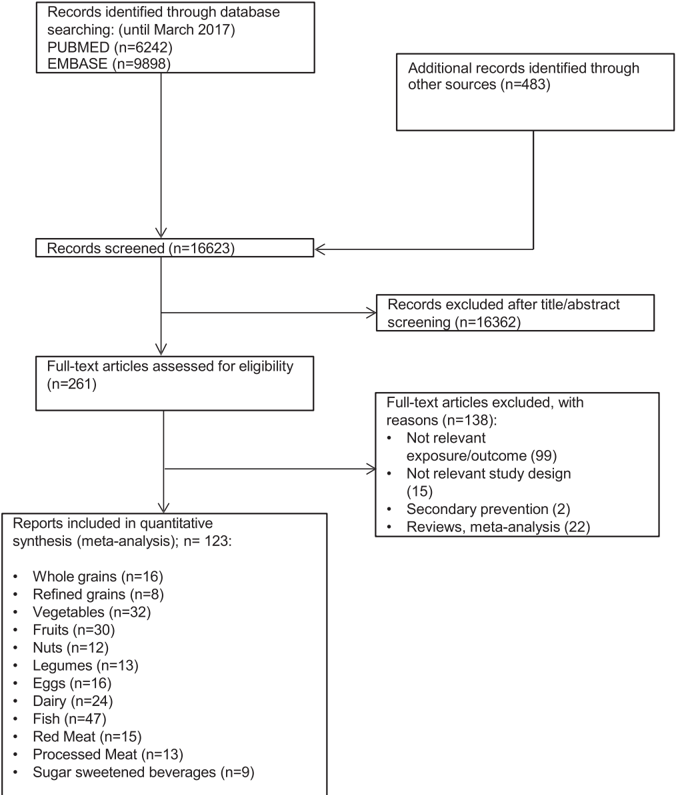
Background: Despite growing evidence for food-based dietary patterns' potential to reduce cardiovascular disease risk, knowledge about the amounts of food associated with the greatest change in risk of specific cardiovascular outcomes and about the quality of meta-evidence is limited. Therefore, the aim of this meta-analysis was to synthesize the knowledge about the relation between intake of 12 major food groups (whole grains, refined grains, vegetables, fruits, nuts, legumes, eggs, dairy, fish, red meat, processed meat, and sugar-sweetened beverages [SSB]) and the risk of coronary heart disease (CHD), stroke and heart failure (HF).Methods: We conducted a systematic search in PubMed and Embase up to March 2017 for prospective studies. Summary risk ratios (RRs) and 95% confidence intervals (95% CI) were estimated using a random effects model for highest versus lowest intake categories, as well as for linear and non-linear relationships.Results: Overall, 123 reports were included in the meta-analyses. An inverse association was present for whole grains (RRCHD: 0.95 (95% CI: 0.92–0.98), RRHF: 0.96 (0.95–0.97)), vegetables and fruits (RRCHD: 0.97 (0.96–0.99), and 0.94 (0.90–0.97); RRstroke: 0.92 (0.86–0.98), and 0.90 (0.84–0.97)), nuts (RRCHD: 0.67 (0.43–1.05)), and fish consumption (RRCHD: 0.88 (0.79–0.99), RRstroke: 0.86 (0.75–0.99), and RRHF: 0.80 (0.67–0.95)), while a positive association was present for egg (RRHF: 1.16 (1.03–1.31)), red meat (RRCHD: 1.15 (1.08–1.23), RRstroke: 1.12 (1.06–1.17), RRHF: 1.08 (1.02–1.14)), processed meat (RRCHD: 1.27 (1.09–1.49), RRstroke: 1.17 (1.02–1.34), RRHF: 1.12 (1.05–1.19)), and SSB consumption (RRCHD: 1.17 (1.11–1.23), RRstroke: 1.07 (1.02–1.12), RRHF: 1.08 (1.05–1.12)) in the linear dose-response meta-analysis. There were clear indications for non-linear dose-response relationships between whole grains, fruits, nuts, dairy, and red meat and CHD.Conclusion: An optimal intake of whole grains, vegetables, fruits, nuts, legumes, dairy, fish, red and processed meat, eggs and SSB showed an important lower risk of CHD, stroke, and HF.
Overview
CoChat Summary
TL;DR
This systematic review and dose-response meta-analysis of prospective studies found that higher intakes of whole grains, vegetables, fruits, nuts, legumes, and fish were generally associated with lower risk of coronary heart disease, stroke, or heart failure, while higher intakes of eggs, red meat, processed meat, and sugar-sweetened beverages were associated with higher risk for some outcomes. The authors conclude that optimal food-group intakes could substantially lower cardiovascular risk, though meta-evidence quality was mostly moderate or lower.
Key findings
- In linear dose-response analyses, inverse associations were reported for whole grains with CHD (RR 0.95, 95% CI 0.92–0.98) and HF (RR 0.96, 0.95–0.97); vegetables with CHD (RR 0.97, 0.96–0.99), stroke (RR 0.92, 0.86–0.98), and HF (RR 0.96, 0.94–0.98); fruits with CHD (RR 0.94, 0.90–0.97) and stroke (RR 0.90, 0.84–0.97); nuts with CHD (RR 0.67, 0.43–1.05); and fish with CHD (RR 0.88, 0.79–0.99), stroke (RR 0.86, 0.75–0.99), and HF (RR 0.80, 0.67–0.95).
- Positive linear dose-response associations were reported for eggs with HF (RR 1.16, 1.03–1.31); red meat with CHD (RR 1.15, 1.08–1.23), stroke (RR 1.12, 1.06–1.17), and HF (RR 1.08, 1.02–1.14); processed meat with CHD (RR 1.27, 1.09–1.49), stroke (RR 1.17, 1.02–1.34), and HF (RR 1.12, 1.05–1.19); and SSB with CHD (RR 1.17, 1.11–1.23), stroke (RR 1.07, 1.02–1.12), and HF (RR 1.08, 1.05–1.12).
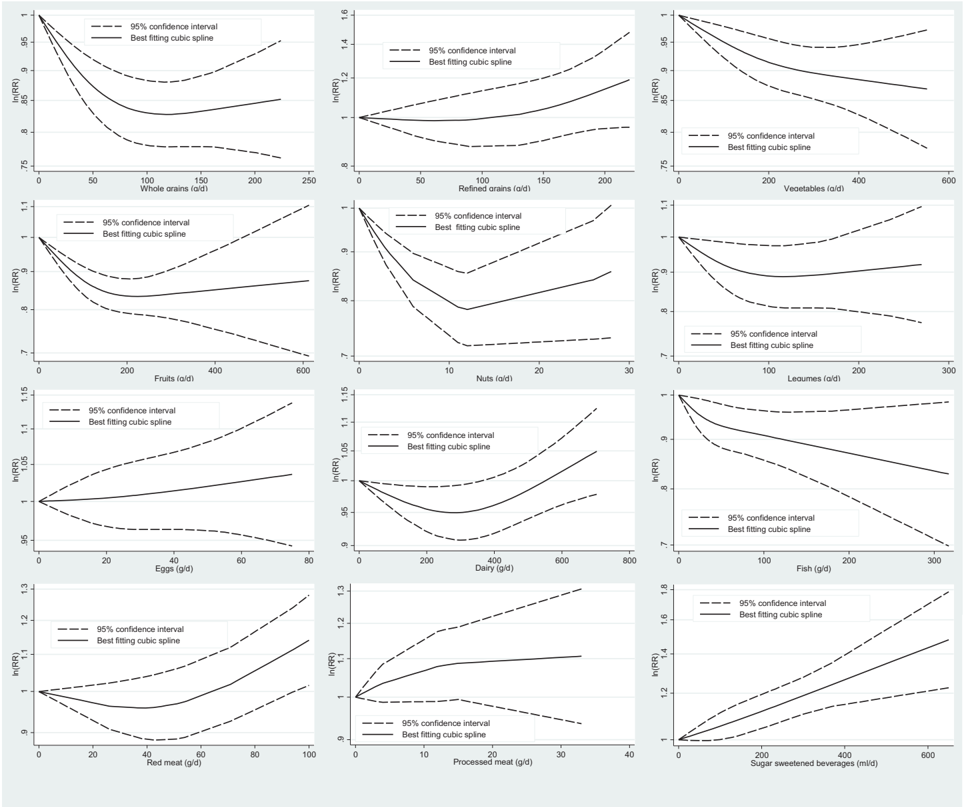
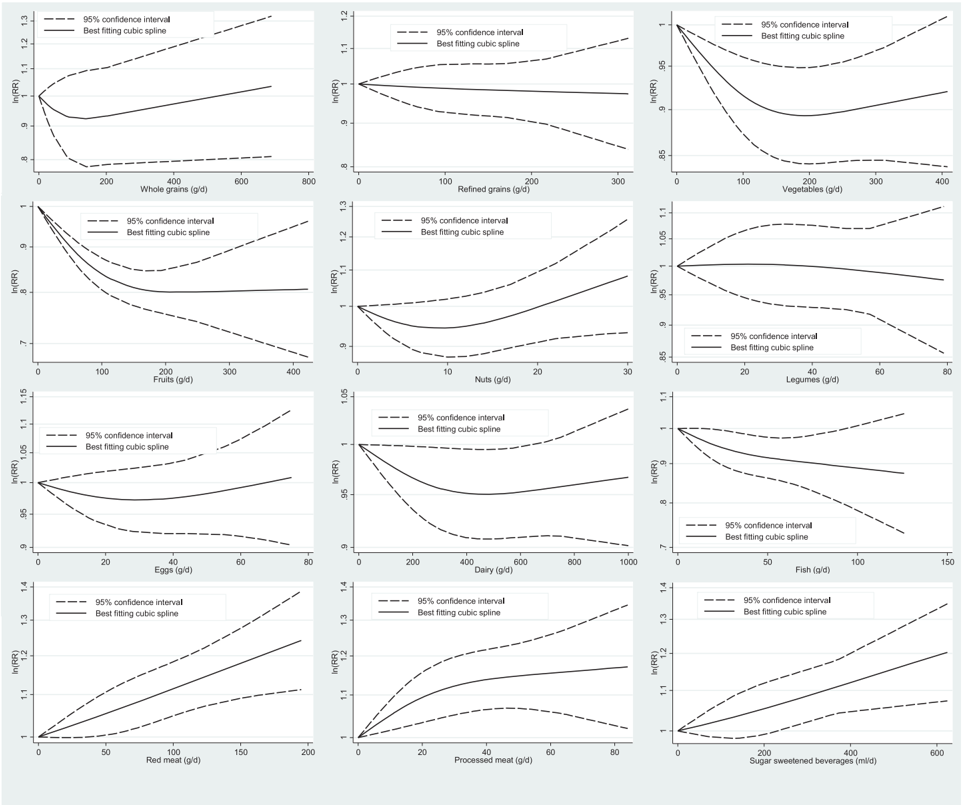
- Non-linear dose-response relationships were indicated for whole grains, fruits, nuts, dairy, and red meat with CHD, and for vegetables with stroke. Optimal consumption of risk-decreasing foods was calculated to reduce CHD risk by 65% and stroke risk by 40%; consuming 2 servings/day of red meat, processed meat, and SSB was associated with a 60% increased stroke risk, and not consuming these foods would reduce stroke risk by about 38%.
- NutriGrade meta-evidence was moderate for 10 food groups and low for refined grains and eggs regarding CHD; for stroke it was low for whole grains, refined grains, nuts, and legumes and moderate for the other eight; for HF it was very low for refined grains, low for whole grains, vegetables, fruits, nuts, dairy, and SSB, and moderate for eggs, fish, red meat, and processed meat.
Methods
- Systematic search of PubMed and Embase up to March 2017 for prospective studies; 123 reports were included, covering 12 a priori defined food groups and CHD, stroke, and HF outcomes.
- Random-effects meta-analyses estimated summary RRs and 95% CIs for highest versus lowest intake categories and for linear and non-linear dose-response relationships; restricted cubic splines were used for non-linearity, and NutriGrade assessed meta-evidence quality.
- Subgroup and sensitivity analyses examined sex, follow-up length, geographic location, number of cases, dietary assessment, low risk of bias, nested case-control studies, and odds-ratio studies; the review was registered in PROSPERO (CRD42016037069).
Limitations
- Stated: some included studies used only baseline food intake, assuming stable consumption over time; substantial heterogeneity existed in population size, follow-up length, baseline age, and food consumption, and high statistical heterogeneity often persisted in subgroup analyses.
- Stated: residual confounding by lifestyle or socioeconomic status was possible, and for most food groups in relation to HF only a very limited number of studies was available, so some HF results should be interpreted with caution.
- Stated: the review excluded prospective studies on overall CVD and outcome-specific mortality, which may explain differences from other meta-analyses; evident from the text, many dose-response estimates relied on few studies (e.g., HF analyses with n = 1 for some foods), and NutriGrade confidence was mostly moderate or lower, limiting certainty.
Model-written summary. Check it against the paper before relying on it.
Integrity signals
Registry
Cites
Statistics
Figures


Verification
Claims the paper makes
0 Valid · 1 Not valid · 31 Not checked · 214 Own results and interpretations
A result the paper reports from its own data — it cites no other source for it, so there is none to check. The quote shows it is in the paper.
In the paper
“vegetables and fruits (RRCHD: 0.97 (0.96 -0.99)”
- Also stated in: § Vegetables · p. 7 · plain
“Each additional daily 100 g of vegetables were inversely associated with risk of CHD (RR: 0.97; 95% CI 0.96 to 0.99, I 2 D 12%, pheterogeneity D 0.32, n D 14)”
plainstates an association- Asserted: passes — The authors put it forward as true.
- Checkable: passes — It can be checked against evidence.
- Load-bearing: passes — The paper’s conclusions depend on it.
- Based: passes — The paper gives a reason why it holds.
- Rests on 3 assumptions not shown here.
- Also stated in: § Vegetables · p. 7 · plain
A result the paper reports from its own data — it cites no other source for it, so there is none to check. The quote shows it is in the paper.
In the paper
“stroke (RR: 0.91; 95% CI 0.82 to 1.02, I 2 D 53%, pheterogeneity D 0.05)”
plainstates an associationn = 11,114- Asserted: passes — The authors put it forward as true.
- Checkable: passes — It can be checked against evidence.
- Load-bearing: passes — The paper’s conclusions depend on it.
- Based: passes — The paper gives a reason why it holds.
- Rests on an assumption not shown here.
A result the paper reports from its own data — it cites no other source for it, so there is none to check. The quote shows it is in the paper.
In the paper
“There were clear indications for nonlinear dose-response relationships between whole grains, fruits, nuts, dairy, and red meat and CHD.”
boostedstates an association- Asserted: passes — The authors put it forward as true.
- Checkable: passes — It can be checked against evidence.
- Load-bearing: passes — The paper’s conclusions depend on it.
- Based: passes — The paper gives a reason why it holds.
- Rests on 3 assumptions not shown here.
A result the paper reports from its own data — it cites no other source for it, so there is none to check. The quote shows it is in the paper.
In the paper
“but not with risk of stroke (RR: 0.99; 95% CI 0.95 to 1.03, I 2 D 65%, pheterogeneity D 0.04, n D 4)”
plain- Asserted: passes — The authors put it forward as true.
- Checkable: passes — It can be checked against evidence.
- Load-bearing: passes — The paper’s conclusions depend on it.
- Based: passes — The paper gives a reason why it holds.
- Rests on 3 assumptions not shown here.
A result the paper reports from its own data — it cites no other source for it, so there is none to check. The quote shows it is in the paper.
In the paper
“RRHF: 0.96 (0.95 -0.97))”
- Also stated in: § Whole grains · p. 6 · plain
“and HF (RR: 0.96; 95% CI 0.95 to 0.97, I 2 D 0%, pheterogeneity D 0.36, n D 2)”
plainstates an associationn = 6,455- Asserted: passes — The authors put it forward as true.
- Checkable: passes — It can be checked against evidence.
- Load-bearing: passes — The paper’s conclusions depend on it.
- Based: passes — The paper gives a reason why it holds.
- Rests on 3 assumptions not shown here.
- Also stated in: § Whole grains · p. 6 · plain
181 more claims
Create a free account to see all 246 claims and to verify the 57 references still open.
- The quote only partly states this claim. 16
- It may state two separate claims as one. 24
- Probably not a substantial claim. 25
Claims other papers make about this one
Each is checked against this paper’s own text: does it say what the citing paper says it does?
The source backs part of the claim, not all of it — or backs it for a different population, condition or comparison.
In the citing paper
“each 250 mL/day increment of sugar sweetened beverage consumption was associated with a 17% and 4% higher risk of coronary heart disease (class II evidence) and all cause mortality (class III evidence), respectively.”
From Dietary sugar consumption and health: umbrella review (2023) · cites this paper as [10]
Experimental — accuracy not yet measuredThe source backs part of the claim, not all of it — or backs it for a different population, condition or comparison.
In the citing paper
“We observed no significant association between sugar sweetened beverage consumption and changes in diastolic blood pressure (children and adolescents)69 or heart failure.10”
From Dietary sugar consumption and health: umbrella review (2023) · cites this paper as [10]
Experimental — accuracy not yet measuredThe cited source says what the claim attributes to it.
In the citing paper
“A recent dose-response meta-analysis showed that each 250 mL/day increment of sugar sweetened beverage consumption was positively associated with a 7% (risk ratio 1.07, 1.02 to 1.12) higher risk of stroke.”
From Dietary sugar consumption and health: umbrella review (2023) · cites this paper as [10]
The cited source says what the claim attributes to it.
In the citing paper
“harmful associations between dietary sugar consumption and cardiovascular outcomes were also observed, including coronary heart disease,10 cardiovascular disease,8 cardiovascular disease mortality,68 71 hypertension in children and adolescents,69 hypertension in adults,70 myocardial infarction,66 change in systolic blood pressure in children and adolescents,69 and stroke.10”
From Dietary sugar consumption and health: umbrella review (2023) · cites this paper as [10]
Self-check
Percentages, sums and reported differences re-computed from the paper’s own numbers.
Each contradiction between two passages listed here was confirmed by an independent check.
Rated minor: it would not touch a result — a value no result rests on, a p-value that stays on the same side of the significance level, or a conflict that is clerical, resolved elsewhere in the paper, or outside its own findings.
In the paper
§ Discussion · p. 12
“The NutriGrade tool for evaluating the meta-evidence suggested a moderate con fi dence in the effect estimate for eggs, dairy, fi sh, red meat, and processed meat with respect to all three outcomes simultaneously;”
§ Quality of meta-evidence · p. 11
“The NutriGrade meta-evidence grading regarding CHD was rated ' low ' for re fi ned grains, and eggs and ' moderate ' for the 10 other food groups.”
Citations
Cites
Bias in meta-analysis detected by a simple, graphical test
Egger, M., Smith, G. D., Schneider, M., & Minder, C. (1997) · BMJ · doi:10.1136/bmj.315.7109.629 · Cited by 56,722 · cited 2×
“Potential small-study effects, such as publication bias, were explored using Egger (cid:2) s test and funnel plots (Egger et al. 1997), if at least 10 studies were available (Higgins and Green 2011).”
Meta-analysis in clinical trials
DerSimonian, R., & Laird, N. (1986) · Controlled Clinical Trials · doi:10.1016/0197-2456(86)90046-2 · Cited by 39,552 · cited 1×
“To evaluate the weighting of each study, the standard error for the log-transformed RR of each study was calculated and regarded as the estimated variance of the log-transformed RR, using an inverse variance method (DerSimonian and Laird 1986).”
Quantifying heterogeneity in a meta‐analysis
Higgins, J. P. T., & Thompson, S. G. (2002) · Statistics in Medicine · doi:10.1002/sim.1186 · Cited by 36,763 · cited 2×
“…Buckland et al. 2009; Dauchet et al. 2004; Del Gobbo et al. 2015; Dilis et al. 2012; Gillman et al. 1995; Hansen et al. 2017; Hansen et al. 2010; Hirvonen et al. 2001; Johnsen et al. 2003; Joshipura et al. 1999; Keli et al. 1996; Kobylecki et al. 2015; Larsson et al. 2009b; Larsson et al.…”
Meta-analysis of Observational Studies in Epidemiology<SUBTITLE>A Proposal for Reporting</SUBTITLE>
Stroup, D. F. (2000) · JAMA · doi:10.1001/jama.283.15.2008 · Cited by 20,623
European Guidelines on cardiovascular disease prevention in clinical practice (version 2012)
Authors/Task Force Members:, Perk, J., De Backer, G., Gohlke, H., Graham, I., Reiner, Ž., Verschuren, M., Albus, C., Benlian, P., Boysen, G., et al. (2012) · European Heart Journal · doi:10.1093/eurheartj/ehs092 · Cited by 8,490
(1980) · Neuropediatrics · doi:10.1055/s-2008-1071391 · Cited by 3,990 · cited 1×
“This systematic review was planned and conducted according to the standards of the Meta-analysis of Observational Studies in Epi-demiology (Stroup et al. 2000).”
Authors/Task Force Members, Graham, I., Atar, D., Borch-Johnsen, K., Boysen, G., Burell, G., Cifkova, R., Dallongeville, J., De Backer, G., Ebrahim, S., et al. (2007) · European Heart Journal · doi:10.1093/eurheartj/ehm316 · Cited by 3,753
Flexible regression models with cubic splines
Durrleman, S., & Simon, R. (1989) · Statistics in Medicine · doi:10.1002/sim.4780080504 · Cited by 2,689 · cited 1×
“…three fi xed knots at 10%, 50%, and 90% through the total distribution of the reported intake, and combined them using multivariable meta-analysis (Durrleman and Simon 1989) (if at least 2 studies with at least three quantitative exposure levels were known for one of the 12 food groups with the…”
Aune, D., Giovannucci, E., Boffetta, P., Fadnes, L. T., Keum, N., Norat, T., Greenwood, D. C., Riboli, E., Vatten, L. J., & Tonstad, S. (2017) · International Journal of Epidemiology · doi:10.1093/ije/dyw319 · Cited by 2,419 · cited 4×
“This difference could be explained by the greater number of studies (due to inclusion of studies on cause-speci fi c mortality and overall CVD) included by Aune et al. (Aune et al. 2017).”
InfluentialMethods for Trend Estimation from Summarized Dose-Response Data, with Applications to Meta-Analysis
Greenland, S., & Longnecker, M. P. (1992) · American Journal of Epidemiology · doi:10.1093/oxfordjournals.aje.a116237 · Cited by 2,353 · cited 1×
“The method described by Greenland and Longnecker (Greenland and Longnecker 1992) was applied for the dose-response analysis and computed study-speci fi c slopes (linear trends) and corresponding 95% CIs from the natural logs of the RRs and CIs across intake categories of the 12 food groups.”
Research works printed but not linked: 1
- Higgins, J., and S. Green. 2011. Cochrane handbook for systematic reviews of interventions Version 5.1.0 [updated March 2011]. The Cochrane Collaboration. Available from www.handbook.cochrane.org.
Cited by
Items 201–300 of 596
Ali, B. M., Ang, F., & van der Fels‐Klerx, H. J. (2021) · PLoS ONE · doi:10.1371/journal.pone.0260488 · Cited by 37
de Medeiros, G. C. B. S., de Azevedo, K. P. M., Mesquita, G. X. B., Lima, S. C. V. C., Silva, D. F. O., Pimenta, I. D. S. F., Gonçalves, A. K., Lyra, C. D. O., & Piuvezam, G. (2019) · Medicine · doi:10.1097/md.0000000000017271 · Cited by 31
“Given the relevance of the evidence that indicates the consumption of red and processed meat as a risk factor for the development of chronic non-communicable disease([8,14,15,17]) and for all-cause mortality,([16]) it is opportune to investigate the association between this consumption and its gradient, as well as to…”
Wiegman, A., Bourbon, M., Freiberger, T., Gidding, S. S., Greber‐Platzer, S., Grošelj, U., Holven, K. B., Hudgins, L. C., Humphries, S. E., Hutten, B. A., et al. (2026) · European Heart Journal · doi:10.1093/eurheartj/ehag382 · Cited by 32
“109,110 Dietary components that should be limited or promoted in children with FH are listed in Table 2 .”
Baliou, S., Ιωάννου, Π., Apetroaei, M.-M., Vakonaki, E., Fragkiadaki, P., Kirithras, E., Tzatzarakis, M. N., Arsene, A. L., Docea, A. O., & Tsatsakis, A. M. (2024) · Nutrients · doi:10.3390/nu16152525 · Cited by 34
“…or processed meat intake contributed to increased CVD incidence, whereas a healthy diet composed of fruits, legumes, and fish reduced CVD risk [39]. meta-analysis, it was proved that high saturated fatty acid (SFA) intake through either sugar-sweetened beverages or processed meat intake…”
BackgroundKeller, A., O'Reilly, E. J., Malik, V., Buring, J. E., Andersen, I., Steffen, L., Robien, K., Männistö, S., Rimm, E. B., Willett, W., et al. (2020) · Preventive Medicine · doi:10.1016/j.ypmed.2019.105970 · Cited by 43
Eggs and Cardiovascular Disease Risk: An Update of Recent Evidence
Carter, S., Connole, E. S., Hill, A. M., Buckley, J. D., & Coates, A. M. (2023) · Current Atherosclerosis Reports · doi:10.1007/s11883-023-01109-y · Cited by 34
Plant-based diets and metabolic syndrome: Evaluating the influence of diet quality
McGrath, L., & Fernández, M. L. (2022) · Journal of Agriculture and Food Research · doi:10.1016/j.jafr.2022.100322 · Cited by 31
Lépine, G., Fouillet, H., Rémond, D., Huneau, J., Mariotti, F., & Polakof, S. (2021) · Advances in Nutrition · doi:10.1093/advances/nmab073 · Cited by 39
Xu, D., Wang, S., Feng, M., Shete, V., Chu, Y., Kamil, A., Yang, C., Liu, H., Xia, H., Wang, X., et al. (2021) · Molecular Nutrition & Food Research · doi:10.1002/mnfr.202001059 · Cited by 32
Nutritional Viewpoints on Eggs and Cholesterol
Sugano, M., & Matsuoka, R. (2021) · Foods · doi:10.3390/foods10030494 · Cited by 29
“Indeed, an optimal intake of whole grains, vegetables, fruits, nuts, legumes, dairy, fish, red and processed meat, eggs, and sugar-sweetened beverages showed an important lower risk of CHD, stroke, and heart failure [44].”
BackgroundGreco, A., Brugnera, A., Adorni, R., D’Αddario, M., Fattirolli, F., Franzelli, C., Giannattasio, C., Maloberti, A., Zanatta, F., & Steca, P. (2021) · Nutrients · doi:10.3390/nu13020634 · Cited by 26
“Data about the intake of legumes are less consistent but go in the same direction [9,10].”
BackgroundAnti-Inflammatory Diet and Risk of Heart Failure: Two Prospective Cohort Studies
Kałuża, J., Levitan, E. B., Michaëlsson, K., & Wolk, A. (2020) · European Journal of Heart Failure · doi:10.1002/ejhf.1746 · Cited by 27
“The range (median) of the AIDI was 0–12 (6) in men and 0–13 (6) in women.”
BackgroundIqbal, K., Schwingshackl, L., Floegel, A., Schwedhelm, C., Stelmach-Mardas, M., Wittenbecher, C., Galbete, C., Knüppel, S., Schulze, M. B., & Boeing, H. (2018) · European Journal of Nutrition · doi:10.1007/s00394-018-1714-1 · Cited by 26
Self-citationThe Mediterranean Diet and Cardiovascular Disease: Gaps in the Evidence and Research Challenges
Temple, N. J., Guercio, V., & Tavani, A. (2018) · Cardiology in Review · doi:10.1097/crd.0000000000000222 · Cited by 37
Ray, S., Maitra, S., Sairam, M., Sravya, M., Priyadarshini, A., Shubhadarshi, S., & Padhi, D. P. (2024) · International Journal of experimental research and review · doi:10.52756/ijerr.2024.v41spl.003 · Cited by 59
“A high-fiber diet lowers the risk of atherosclerotic cardiovascular illnesses and cardiovascular death, ischemic stroke (Bechthold et al., 2017), type 2 diabetes (Aune et al., 2016; McRae, 2017; Sur et al., 2023; Biswas et al., 2023; Roy et al., 2023; Acharya et al., 2023) and obesity (Seal and…”
BackgroundMeat and meat products – a scoping review for Nordic Nutrition Recommendations 2023
Meinilä, J. M., & Virtanen, J. K. (2024) · Food & Nutrition Research · doi:10.29219/fnr.v68.10538 · Cited by 31
“Although Bechthold et al. (20) found significant non-linearity for the association between total red meat and CHD, that particular analysis was based only on two cohort studies.”
BackgroundResultInfluentialFruit consumption and multiple health outcomes: An umbrella review
Sun, L., Liang, X., Wang, Y., Zhu, S., Ou, Q., Xu, H., Li, F., Tan, X., Lai, Z., Pu, L., et al. (2021) · Trends in Food Science & Technology · doi:10.1016/j.tifs.2021.09.023 · Cited by 30
Yun, H. Y., Tinker, L. F., Neuhouser, M. L., Schoeller, D. A., Mossavar‐Rahmani, Y., Snetselaar, L., Horn, L. V., Eaton, C. B., Prentice, R. L., Lampe, J. W., et al. (2020) · Journal of Nutrition · doi:10.1093/jn/nxaa195 · Cited by 24
“SSB 4 (4, 10) 4 (4, 5) 4 (4, 6) 9 (4, 27) 0.”
Shaikh, A. M., Wandhekar, S. S., Ahmed, A. E. M., Várallyay, S., Pandey, V. K., Prokisch, J., & Kovács, B. (2024) · Horticulturae · doi:10.3390/horticulturae10050433 · Cited by 28
Meltzer, H. M., Eneroth, H., Erkkola, M., Trolle, E., Fantke, P., Helenius, J., Olesen, J. E., Saarinen, M., Maage, A., & Ydersbond, T. A. (2024) · Food & Nutrition Research · doi:10.29219/fnr.v68.10489 · Cited by 39
“Excess consumption of processed meats is also a risk factor for cardiovascular diseases and colorectal cancer (162, 163) Nordic food consumption may cause high pressure on biodiversity in sensitive ecosystems in other parts of the world through high food imports.”
BackgroundWood, J. D., Giromini, C., & Givens, D. I. (2024) · Frontiers in Animal Science · doi:10.3389/fanim.2024.1332694 · Cited by 39
Madsen, M. T. B., Landberg, R., Nielsen, D. S., Zhang, Y., Anneberg, O. M., Lauritzen, L., & Damsgaard, C. T. (2023) · American Journal of Clinical Nutrition · doi:10.1016/j.ajcnut.2023.10.025 · Cited by 28
Damigou, E., Kosti, R. I., & Panagiotakos, D. B. (2022) · Nutrients · doi:10.3390/nu14245213 · Cited by 27
“Other meta-analyses have shown a robust positive association between red and processed meat consumption and incidence of CVD and diabetes [9,10].”
BackgroundSun, T., Zhang, Y., Ding, L., Zhang, Y., Li, T., & Li, Q. (2022) · Advances in Nutrition · doi:10.1016/j.advnut.2022.12.002 · Cited by 31
Perez‐Cornago, A., Crowe, F. L., Appleby, P. N., Bradbury, K. E., Wood, A., Jakobsen, M. U., Johnson, L., Sacerdote, C., Steur, M., Weiderpass, E., et al. (2020) · International Journal of Epidemiology · doi:10.1093/ije/dyaa155 · Cited by 25
Morin, C., Gandy, J., Brazeilles, R., Moreno, L. A., Kavouras, S. A., Martínez, H., Salas‐Salvadó, J., Bottin, J. H., & Guelinckx, I. (2018) · European Journal of Nutrition · doi:10.1007/s00394-018-1725-y · Cited by 22
“Each daily serving increase in SSB has been linked to a 21% increased risk of type 2 diabetes [10], 7% increased risk of hypertension [11] and 7–18% increased risk of stroke, heart failure and coronary heart disease [12].”
BackgroundRigi, P., Kamani, H., Ansari, H., Mohamadi, L., & Dargahi, A. (2025) · Scientific Reports · doi:10.1038/s41598-025-03807-w · Cited by 23
“Meat fat not only nutritionally increases the intake of calories, saturated fatty acids and increases the risk of cardiovascular diseases in the consumer 74 , but it is also an important substrate for the production of polycyclic aromatic hydrocarbon compounds and promoting the pyrolysis process.”
Developing health and environmental warning messages about red meat: An online experiment
Taillie, L. S., Prestemon, C. E., Hall, M. G., Grummon, A. H., Vesely, A., & Jaacks, L. M. (2022) · PLoS ONE · doi:10.1371/journal.pone.0268121 · Cited by 28
“Cardiovascular disease Heart damage [44] American Heart Association [45]: Notes: “In general, red meats (beef, pork and lamb) have more saturated (bad) fat than chicken, fish and vegetable proteins such as beans.”
BackgroundLu, J.-W., Yu, L.-H., Tu, Y., Cheng, H.-Y., Chen, L.-Y., Loh, C., & Chen, T. (2021) · Nutrients · doi:10.3390/nu13093019 · Cited by 26
“Previous dose–response metaanalyses indicated that the effect might vary greatly within the group of (any) consumers, and it might be nonlinear [37,38].”
BackgroundBrunin, J., Pointereau, P., Allès, B., Touvier, M., Herçberg, S., Lairon, D., Baudry, J., & Kesse‐Guyot, E. (2021) · European Journal of Nutrition · doi:10.1007/s00394-021-02631-y · Cited by 28
Im, J., & Park, K. (2021) · Nutrients · doi:10.3390/nu13051407 · Cited by 26
Seconda, L., Baudry, J., Allès, B., Touvier, M., Herçberg, S., Pointereau, P., Lairon, D., & Kesse‐Guyot, E. (2020) · European Journal of Epidemiology · doi:10.1007/s10654-020-00619-2 · Cited by 28
“Red and processed meat intakes which are lowered in these models are known to be important risk factors for some non-communicable diseases (NCDs) [11–16] while others that are augmented are known to be protective factors, such as fruit and vegetables [15–18], unrefined cereals [18] or legumes and nuts [15, 16, 18, 19].”
BackgroundDietary Intake Trajectories from Early Life and Associated Health Outcomes: A Systematic Review
Zheng, M., Park, S. Y., Bolton, K. A., Chong, M. F., Grafenauer, S., & Xi, B. (2025) · Advances in Nutrition · doi:10.1016/j.advnut.2025.100528 · Cited by 26
Kiesswetter, E., Neuenschwander, M., Stadelmaier, J., Szczerba, E., Hofacker, L., Sedlmaier, K., Kussmann, M., Roeger, C., Hauner, H., Schlesinger, S., et al. (2024) · Current Developments in Nutrition · doi:10.1016/j.cdnut.2024.102159 · Cited by 23
“For each daily serving increase in total dairy, whole-fat dairy, low-fat dairy, milk, cheese, and yogurt, no association with coronary artery disease (CAD) was observed [9,10].”
InfluentialSelf-citationVogtschmidt, Y. D., Soedamah‐Muthu, S. S., Imamura, F., Givens, D. I., & Lovegrove, J. A. (2024) · American Journal of Clinical Nutrition · doi:10.1016/j.ajcnut.2024.04.007 · Cited by 26
“Other studies have showed the relationship between red meat intake and stroke incidence has been inconsistent, with studies showing nonsigni fi cant [22,23] or positive associations [24,25], whereas processed meat has been consistently associated with higher stroke incidence [22,25].”
ResultDietary protein consumption profiles show contrasting impacts on environmental and health indicators
Perraud, E., Wang, J., Salomé, M., Mariotti, F., & Kesse‐Guyot, E. (2022) · The Science of The Total Environment · doi:10.1016/j.scitotenv.2022.159052 · Cited by 29
“In this study, we set up the HiDiet model with values reported in a series of validated international meta-analyses published by a European team (Bechthold et al., 2019; Schwingshackl et al., 2019, 2018, 2017a, 2017b).”
MethodJakobsen, M. U., Bysted, A., Mejborn, H., Stockmarr, A., & Trolle, E. (2021) · Nutrients · doi:10.3390/nu13103303 · Cited by 24
“[18] did not use a satisfactory technique for assessing the risk of bias in the primary studies that were included in the review.”
BackgroundMethodInfluentialOnni, A. T., Balakrishna, R., Perillo, M., Amato, M., Arjmand, E. J., Thomassen, L. M., Lorenzini, A., & Fadnes, L. T. (2025) · Advances in Nutrition · doi:10.1016/j.advnut.2025.100393 · Cited by 24
“…and healthy fats, all of which are essential for minimizing in fl am-mation, enhancing metabolic health, and preventing non-communicable diseases such as cardiovascular disease, type 2 diabetes, and cancers [6,8,68 – 75], which are the likely mediators of the inverse associations with mortality.”
Vegetables, fruits, and berries – a scoping review for Nordic Nutrition Recommendations 2023
Rosell, M., & Fadnes, L. T. (2024) · Food & Nutrition Research · doi:10.29219/fnr.v68.10455 · Cited by 32
“Regarding evidence for other outcomes than cancer, recent meta-analyses have shown inverse associations between total fruit and vegetable intake combined as well as separately and cardiovascular disease incidence and mortality, including coronary heart disease and stroke (17–20).”
BackgroundHow to Promote Healthier and More Sustainable Food Choices: The Case of Portugal
Pais, D. F., Marques, A. C., & Fuinhas, J. A. (2023) · Sustainability · doi:10.3390/su15043868 · Cited by 32
“The current global diet is generally associated with increases in non‑communicable diseases [25,26], including coronary heart disease, the world’s leading cause of death [27].”
Szymandera-Buszka, K. E., Gumienna, M., Jędrusek‐Golińska, A., Waszkowiak, K., Hęś, M., Szwengiel, A., & Gramza‐Michałowska, A. (2021) · Nutrients · doi:10.3390/nu13124538 · Cited by 23
“According to the assumptions of the so-called planetary health diet that is supposed to improve health, including reduced risk of coronary artery disease [6] and weight control [7], environmental benefits and also food security, the Food and Agriculture Organization of the United Nations (FAO), and other authors postu…”
BackgroundNicholl, A., Deering, K., Evelegh, K., Lyons‐Wall, P., Lawrence, D. M., Mori, T. A., Kratz, M., & O’Sullivan, T. A. (2021) · American Journal of Clinical Nutrition · doi:10.1093/ajcn/nqab288 · Cited by 24
“Systematic reviews and meta-analyses of prospective adult cohorts have shown that core dairy whole foods—milk, cheese, and yogurt—are associated with lower risks of cardiometabolic dysfunction (1), including obesity (2); cardiovascular disease (CVD) (3–6); coronary heart disease (3–8); heart failure (7); hypertension…”
BackgroundAnthropometrics, diet, and resting energy expenditure in Norwegian adults with achondroplasia
Madsen, A., Fredwall, S. O., Månum, G., Henriksen, C., & Slettahjell, H. B. (2019) · American Journal of Medical Genetics Part A · doi:10.1002/ajmg.a.61272 · Cited by 21
Tolkunova, K., Usoltsev, D., Moguchaia, E., Boyarinova, M., Kolesova, E., Erina, A., Voortman, T., Vasilyeva, E., Kostareva, A., Shlyakhto, E., et al. (2023) · Scientific Reports · doi:10.1038/s41598-023-37119-8 · Cited by 18
Bodirsky, B. L., Beier, F., Humpenöder, F., Leip, D., Crawford, M., Chen, D. M.-C., von Jeetze, P., Springmann, M., Soergel, B., Nicholls, Z., et al. (2025) · Nature Food · doi:10.1038/s43016-025-01268-y · Cited by 45
Akyil, S., Winkler, S., Meyer, D. M., Kiesswetter, E., Kussmann, M., Schwingshackl, L., & Hauner, H. (2025) · European Journal of Clinical Nutrition · doi:10.1038/s41430-025-01639-5 · Cited by 27
Self-citationMercurio, G., Giacco, A., Scopigno, N., Vigliotti, M., Goglia, F., Cioffi, F., & Silvestri, E. (2025) · Nutrients · doi:10.3390/nu17071214 · Cited by 22
“Several studies have highlighted the beneficial effects of a higher consumption of vegetables, fruits, and tomatoes [114,115,121–124].”
Liu, X., Beck, T. L., Dhana, K., Desai, P., Krueger, K. R., Tangney, C., Holland, T. M., Agarwal, P., Evans, D. A., & Rajan, K. B. (2023) · Neurology · doi:10.1212/wnl.0000000000207938 · Cited by 20
Wang, Q. J., Schmidt, A. F., LENNON, L. T., Papacosta, O., Whincup, P. H., & Wannamethee, S. G. (2023) · European Journal of Nutrition · doi:10.1007/s00394-023-03193-x · Cited by 20
“Meanwhile, based on meta-analyses of prospective studies focusing on dietary components, higher intakes of vegetables, fruits, and fish were inversely associated with coronary heart disease and stroke [10], while whole grains, fruits, and dairy were associated with reduced risk of type 2 diabetes [11].”
BackgroundResultPerraud, E., Wang, J., Salomé, M., Huneau, J., Lapidus, N., & Mariotti, F. (2022) · Frontiers in Nutrition · doi:10.3389/fnut.2022.924526 · Cited by 30
Herchenroeder, L., Forestell, C. A., & Bravo, A. J. (2022) · The Journal of Social Psychology · doi:10.1080/00224545.2022.2081529 · Cited by 21
“, 2016), and cardiovascular disease (Bechthold et al., 2019; Pan et al., 2011).”
A New Evidence-Based Diet Score to Capture Associations of Food Consumption and Chronic Disease Risk
Jannasch, F., Nickel, D., Bergmann, M. M., & Schulze, M. B. (2022) · Nutrients · doi:10.3390/nu14112359 · Cited by 20
“Regarding the food group Legumes, meta-analyses on observational studies suggested a risk reduction for ischaemic heart disease by 14% per four 100 g portions weekly [31], and a 9% reduction in CHD risk comparing extreme intakes in the included studies [11].”
BackgroundResultInfluentialLi, C., Li, Q., Xu, J., Wu, W., Wu, Y., Xie, J., & Yang, X. (2020) · Evidence-based Complementary and Alternative Medicine · doi:10.1155/2020/5067137 · Cited by 23
“Coronary heart disease (CHD) is one of the most serious heart diseases that threaten human health [1].”
BackgroundObesity Risk Factors in Patients After Kidney Transplantation
Małgorzewicz, S., Wołoszyk, P., Chamienia, A. L., Jankowska, M., & Dębska-Ślizień, A. M. (2018) · Transplantation Proceedings · doi:10.1016/j.transproceed.2018.02.099 · Cited by 21
Valuation of the health and climate-change benefits of healthy diets
Springmann, M., & Springmann, M. (2020) · FAO eBooks · doi:10.4060/cb1699en · Cited by 35
“…the risk factors to the disease endpoints were adopted from meta-analyses of prospective cohort studies (Afshin et al., 2014; Aune et al., 2016a, 2016b, 2016c; Bechthold et al., 2019; Chan et al., 2011; Schwingshackl et al., 2017; The Global BMI Mortality Collaboration, 2016; Zheng et al., 2012).”
MethodInfluentialElechi, J. O. G., Sirianni, R., Conforti, F. L., Cione, E., & PELLEGRINO, M. A. (2023) · Foods · doi:10.3390/foods12122286 · Cited by 34
“The acronym stands for Sustainable (S), Healthy (H), Affordable (A; accessible for consumers while also supporting the agriculture food sector), Reliable (R; stable in its supply and safe), and Preferable (P; consistent with cultural norms and food preferences) [274].”
BackgroundEmpfehlungen zur Ernährung von Personen mit Typ-2-Diabetes mellitus
Skurk, T., Bosy‐Westphal, A., Grünerbel, A., Kabisch, S., Keuthage, W., Kronsbein, P., Müssig, K., Nussbaumer, H., Pfeiffer, A. F. H., Simon, M., et al. (2024) · Die Diabetologie · doi:10.1007/s11428-024-01174-0
Gao, N., Li, X., Kong, M., Ni, M., Wei, D., Zhu, X., Wang, Y., Hong, Z., & Dong, A. (2022) · Frontiers in Nutrition · doi:10.3389/fnut.2022.910949 · Cited by 19
Designing Environmental Messages to Discourage Red Meat Consumption: An Online Experiment
Wistar, A., Hall, M. G., Bercholz, M., & Taillie, L. S. (2022) · International Journal of Environmental Research and Public Health · doi:10.3390/ijerph19052919 · Cited by 25
“Recent meta-analyses show the associations between red meat (beef, lamb, pork, and other mammalian meat) and colorectal cancer [2–4], type II diabetes [5], stroke [6], coronary heart disease [6], heart failure [6], obesity [7], and allcause mortality [8,9].”
BackgroundSchaefer, S. M., Kaiser, A., Behrendt, I., Eichner, G., & Faßhauer, M. (2022) · British Journal Of Nutrition · doi:10.1017/s000711452200040x · Cited by 24
“The following five exclusion criteria (ec) were applied to all primary and sensitivity analyses: (1) missing smoking status; (2) missing socio-economic factors (i.”
BackgroundMethodFreund, F., & Springmann, M. (2021) · Nature Food · doi:10.1038/s43016-021-00306-9 · Cited by 20
What are the potential strategies to achieve potentially more healthful meat products?
Guedes‐Oliveira, J. M., Kim, Y. H. B., & Conte‐Júnior, C. A. (2021) · International Journal of Food Science & Technology · doi:10.1111/ijfs.15104 · Cited by 20
Mota, J. D. O., Guillou, S., Pierre, F., & Membré, J. (2021) · Food and Chemical Toxicology · doi:10.1016/j.fct.2021.111994 · Cited by 24
Roy, G., Boucher, A., Couture, P., & Drouin‐Chartier, J. (2021) · Nutrients · doi:10.3390/nu13010235 · Cited by 23
Mousavi, S. M., Jayedi, A., Jalilpiran, Y., Hajishafiee, M., Aminianfar, A., & Esmaillzadeh, A. (2020) · Critical Reviews in Food Science and Nutrition · doi:10.1080/10408398.2020.1841730 · Cited by 23
Tang, H., Cao, Y. L., Yang, X., & Zhang, Y. (2020) · Frontiers in Nutrition · doi:10.3389/fnut.2020.00153 · Cited by 24
Liang, J., Wen, Y., Yin, J., Zhu, G., & Wang, T. (2024) · npj Science of Food · doi:10.1038/s41538-024-00362-y · Cited by 23
“Additionally,a meta-analysisof123studiesdemonstrated that the highest compared to the lowest intake of fruits signi fi cantly decreases the risk of stroke 7 .”
Martins, L. B., Gamba, M., Stubbendorff, A., Gasser, N., Löbl, L., Stern, F., Ericson, U., Marques-Vidal, P. M., Vuilleumier, S., & Chatelan, A. (2024) · Journal of Nutrition · doi:10.1016/j.tjnut.2024.12.012 · Cited by 17
MICROPLASTIC DEBRIS IN YOGURT: OCCURRENCE, CHARACTERIZATION, AND IMPLICATIONS FOR HUMAN HEALTH
Banica, A. L., Rădulescu, C., Dulamă, I. D., Bucurică, I. A., Ştirbescu, R. M., & Stănescu, S. G. (2024) · Journal of Science and Arts · doi:10.46939/j.sci.arts-24.1-b04 · Cited by 19
Cereals and cereal products – a scoping review for Nordic Nutrition Recommendations 2023
Skeie, G., & Fadnes, L. T. (2024) · Food & Nutrition Research · doi:10.29219/fnr.v68.10457 · Cited by 22
“…both whole grains and refined grains generally indicate more beneficial associations for whole grains/whole grain products than for refined grains/refined grain products for most health outcomes, including cardiovascular disease and mortality, diabetes type 2, and overweight/obesity (38, 45–50).”
BackgroundTalukdar, J. R., Steen, J. P., Goldenberg, J. Z., Zhang, Q., Vernooij, R. W. M., Ge, L., Zeraatkar, D., Bała, M. M., Ball, G. D. C., Thabane, L., et al. (2023) · Systematic Reviews · doi:10.1186/s13643-023-02312-3 · Cited by 19
“Four SRMAs reported on CHD associated with SFA reduction or replacement, including 3 reviews of observational studies (follow-up ranging from 1 to 32 years) [25, 31, 36] and 1 review of RCTs (follow-up ranging from 4 to 5 years, on average) [38].”
BackgroundBekele, T. H., Trijsburg, L. E., Brouwer, I. D., de Vries, J. H. M., Covic, N. M., Kennedy, G., Alemayehu, D., & Feskens, E. J. M. (2023) · Advances in Nutrition · doi:10.1016/j.advnut.2023.05.005 · Cited by 18
Dong, X. Y., Zhuang, Z., Zhao, Y., Song, Z., Xiao, W., Wang, W., Li, Y., Huang, N., Jia, J., Liu, Z., et al. (2023) · Journal of the American Heart Association · doi:10.1161/jaha.122.027934 · Cited by 23
Scrafford, C., Bi, X., Multani, J. K., Murphy, M. M., Schmier, J. K., & Barraj, L. M. (2020) · Nutrients · doi:10.3390/nu12010233 · Cited by 20
“2017 [23] (81%) N = 24 studies (Europe = 15, US = 8, Asia = 1) 5.”
BackgroundSvezia, B., Cabiati, M., Matteucci, M., Passino, C., Pè, M. E., Lionetti, V., & Ry, S. D. (2019) · European Journal of Nutrition · doi:10.1007/s00394-019-02134-x · Cited by 19
Zhang, M., Guo, L., Namassevayam, G., Miao, W., Xie, Y., Guo, Y., & Liu, Y. (2024) · Journal of Clinical Nursing · doi:10.1111/jocn.17103 · Cited by 14
Wu, S., Feng, P., Li, W., Zhuo, S., Lu, W., Chen, P., Sui, Y., Fang, S., Yang, Z., & Ye, Y. (2022) · Annals of Nutrition and Metabolism · doi:10.1159/000527529 · Cited by 17
Dietary recommendations for persons with type 2 diabetes mellitus
Skurk, T., Bosy‐Westphal, A., Grünerbel, A., Kabisch, S., Keuthage, W., Kleinridders, A., Kronsbein, P., Müssig, K., Nussbaumer, H., Pfeiffer, A. F. H., et al. (2022) · Experimental and Clinical Endocrinology & Diabetes · doi:10.1055/a-1624-5095 · Cited by 13
Li, M., Li, X., Zhao, Y., Zhang, L., Yang, H. J., Zhou, M., & Wang, Z. (2020) · Journal of Diabetes · doi:10.1111/1753-0407.13132 · Cited by 16
Dietary policies and programs in the United States: A narrative review
Russo, R. G., Li, Y., Chong, S. K., Siscovick, D. S., Trinh‐Shevrin, C., & Yi, S. S. (2020) · Preventive Medicine Reports · doi:10.1016/j.pmedr.2020.101135 · Cited by 16
“…been well documented as increasing body mass index (BMI), waist circumference (WC), as well as the risk of CVD, stroke, and fatal coronary heart disease (CHD) (Bahadoran et al., 2015; Bechthold et al., 2017; Graudal et al., 2014; Micha et al., 2017; Ruanpeng et al., 2017; Moosavian et al., 2017).”
BackgroundInfluentialThe effect of egg consumption on cardiometabolic health outcomes: an umbrella review
Mah, E., Chen, C. O., & Liska, D. J. (2019) · Public Health Nutrition · doi:10.1017/s1368980019002441 · Cited by 25
“2017(27) Synthesize the data on twelve major food groups (whole grains, refined grains, vegetables, fruits, nuts, legumes, eggs, dairy, fish, red meat, processed meat, and sugar-sweetened beverages) and the risk of CHD, stroke, and HF Database: PubMed, Embase Years: through March 2017 (cross-referenced studies in othe…”
BackgroundMethodResultInfluentialEffectiveness of Changes in Diet Composition on Reducing the Incidence of Cardiovascular Disease
Calabrese, I., & Riccardi, G. (2019) · Current Cardiology Reports · doi:10.1007/s11886-019-1176-y · Cited by 16
Diet and Prevention of Cardiovascular Disease and Cancer
Hull, S. C., Mszar, R., Ostfeld, R. J., Ferrucci, L. M., Mucci, L. A., Giovannucci, E. L., & Loeb, S. (2025) · JACC CardioOncology · doi:10.1016/j.jaccao.2025.07.008 · Cited by 16
Emerging Roles for Sphingolipids in Cardiometabolic Disease: A Rational Therapeutic Target?
Foran, D., Antoniades, C. A., & Akoumianakis, I. (2024) · Nutrients · doi:10.3390/nu16193296 · Cited by 17
Healthy eating index-2015 and its association with the prevalence of stroke among US adults
Wu, X., Yin, F., Wang, G.-J., Lu, Y., Jin, R.-F., & Jin, D.-L. (2024) · Scientific Reports · doi:10.1038/s41598-024-54087-9 · Cited by 17
“A separate meta-analysis by Angela et al . reported that high consumption of whole grains was associated with a lower risk of stroke, with an 8% reduction in risk observed for every 3 servings per day increase in whole grain intake 33 .”
MethodEggs – a scoping review for Nordic Nutrition Recommendations 2023
Virtanen, J. K., & Larsson, S. C. (2024) · Food & Nutrition Research · doi:10.29219/fnr.v68.10507 · Cited by 15
Singh, B. P., Khan, A. A., Anamika, F., Munjal, R. S., Munjal, J., & Jain, R. (2023) · Cardiology in Review · doi:10.1097/crd.0000000000000575 · Cited by 20
“45 Whereas an association between red meat consumption with cardiovascular diseases, such as coronary artery disease, stroke, and heart failure has been demonstrated 27,30,46 with an additional daily intake of 100 g of red meat being positively associated with all-cause mortality.”
Dairy Foods: Beneficial Effects of Fermented Products on Cardiometabolic Health
Nestel, P. J., & Mori, T. A. (2023) · Current Nutrition Reports · doi:10.1007/s13668-023-00476-x · Cited by 18
Wang, B., Tian, G., & Zhang, Q. (2022) · Current Problems in Cardiology · doi:10.1016/j.cpcardiol.2022.101485 · Cited by 15
Dairy Foods: Is Its Cardiovascular Risk Profile Changing?
Nestel, P. J., & Mori, T. A. (2022) · Current Atherosclerosis Reports · doi:10.1007/s11883-022-00984-1 · Cited by 17
Murphy, M. M., & Schmier, J. K. (2020) · Nutrients · doi:10.3390/nu12082323 · Cited by 18
“Two meta-analyses were identified as candidate sources for the RR estimates [3,12], while a third study presented RR estimates for CHD, stroke, and heart failure but not total CVD [13].”
ResultSharifan, P., Roustaee, R., Shafiee, M., Longworth, Z. L., Keshavarz, P., Davies, I. G., Webb, R. J., Mazidi, M., & Vatanparast, H. (2025) · Nutrients · doi:10.3390/nu17172723 · Cited by 25
“Our findings align with most prior meta-analyses, which reported no significant association between total dairy consumption and CHD [24,25,27,28,44,48,54] [48] consistently found null associations across total, high-fat, and low-fat dairy intake.”
InfluentialLópez‐Moreno, M., & Fresán, U. (2025) · Current Nutrition Reports · doi:10.1007/s13668-025-00647-y · Cited by 15
“On the contrary, calcium is largely available in plant-based sources, such as legumes (e.g., beans and chickpeas), nuts (e.g., almonds) and vegetables (e.g., broccoli) [ 39 ], with larger scientific evidence confirm - ing their health benefits [ 40 ].”
Izquierdo-Sandoval, D., Duan, X., Fryganas, C., Portolés, T., Sancho, J. V., & Rubert, J. (2024) · Food Chemistry · doi:10.1016/j.foodchem.2024.140161 · Cited by 13
Wu, M., Li, S., Lv, Y., Liu, K., Wang, Y., Cui, Z., Wang, X., & Meng, H. (2023) · Food & Function · doi:10.1039/d3fo02579a · Cited by 16
Yong, C., Kuang, X., Liu, Y., Xiang, C., Xi, Y., Huo, J., Liang, J., Zou, H., & Lin, Q. (2023) · Appetite · doi:10.1016/j.appet.2023.106547 · Cited by 16
Rice-Based Diet and Cardiovascular Disease Mortality in Japan: From the Takayama Study
Wada, K., Oba, S., & Nagata, C. (2022) · Nutrients · doi:10.3390/nu14112291 · Cited by 14
de Farias, L. M., Brito, A. K. D. S., Oliveira, A. S. D. S. S., Lima, G. D. M., Rodrigues, L. A. R. L., de Carvalho, V. B. L., Cunha, F. V. M., Pereira, C. F. D. C., Rizzo, M. D. S., Nunes, P. H. M., et al. (2022) · South African Journal of Botany · doi:10.1016/j.sajb.2022.05.008 · Cited by 18
Umesawa, M., Yamagishi, K., & Iso, H. (2020) · European Journal of Clinical Nutrition · doi:10.1038/s41430-020-00751-y · Cited by 14
Dried fruit consumption and cardiometabolic health: a randomised crossover trial
Sullivan, V. K., Petersen, K. S., & Kris‐Etherton, P. M. (2020) · British Journal Of Nutrition · doi:10.1017/s0007114520002007 · Cited by 21
“Exclusion criteria included the following: allergy to study foods, tobacco use, alcohol consumption >14 drinks/week, use of lipid-, glucose- or blood pressure-lowering medications or supplements, lactation or pregnancy, diagnosed inflammatory disease, diabetes, CVD, kidney disease, untreated thyroid disease and report…”
BackgroundInfluential
Metadata
- Authors
- Bechthold, A., Boeing, H., Schwedhelm, C., Hoffmann, G., Knüppel, S., Iqbal, K., De Henauw, S., Michels, N., Devleesschauwer, B., Schlesinger, S., & Schwingshackl, L.
- Affiliations
- German Nutrition Society, Bonn, Germany
- German Institute of Human Nutrition (DE)
- University of Vienna (AT)
- Department of Public Health, Ghent University, Gent, Belgium
- Ghent University (BE)
- Institut Scientifique de Santé Publique (BE)
- Deutsches Diabetes-Zentrum e.V. (DE)
- Corresponding author
- Bechthold, Angela
- Boeing, Heiner
- Schwedhelm, Carolina
- Hoffmann, Georg
- Knüppel, Sven
- Iqbal, Khalid
- Michels, Nathalie
- Devleesschauwer, Brecht
- Schlesinger, Sabrina
- Schwingshackl, Lukas
- ORCID
- Venue
- Critical Reviews in Food Science and Nutrition
- Publisher
- Informa UK Limited
- Published
- 2017-11-07
- Volume
- 59
- Issue
- 7
- Pages
- 1071-1090
- ISSN
- 1040-8398 (ISSN-L)
- 1549-7852
- OpenAlex
- W2765815272
- Cited by
- 693
- References
- 227
- Citations by year
- 2026: 37 · 2025: 81 · 2024: 92 · 2023: 95 · 2022: 127 · 2021: 95 · 2020: 73 · 2019: 56 · 2018: 32 · 2017: 2
- FWCI
- 7.24
- Type
- journal article
- Language
- en
- Open access
- hybrid
- doi.org
- Licence
- Locations
- Critical Reviews in Food Science and Nutrition (publishedVersion, cc-by-nc-nd)
- PubMed (publishedVersion)
- Ghent University Academic Bibliography (Ghent University) (submittedVersion, cc-by-nc-nd)
- Figshare (submittedVersion, cc-by)
- Informationszentrum Lebenswissenschaften (ZB MED) (submittedVersion, cc-by-nc-nd)
- Figshare (cc-by)
- Topics
- Health Sciences › Medicine › Public Health, Environmental and Occupational Health › Nutritional Studies and Diet
- Health Sciences › Medicine › Cardiology and Cardiovascular Medicine › Cardiovascular Health and Risk Factors
- Life Sciences › Agricultural and Biological Sciences › Food Science › Nutrition, Health, and Society Studies
- Keywords
- coronary artery disease, stroke, heart failure, food groups, whole grains, refined grains, vegetables, fruits, nuts, fish consumption, red meat, processed meat, egg consumption, dairy products, Fabaceae, sugar-sweetened beverages, dietary habits, cardiovascular risk, dose-response relationship, dietary fiber, dietary cholesterol, dietary sodium
- MeSH terms
- Whole Grains, Red Meat, Beverages, Coronary Disease, Diet, Eggs, Feeding Behavior, Fruit, Heart Failure, Humans, Nuts, Prospective Studies, Risk Factors, Vegetables, Databases, Factual, Seafood, Stroke, Risk Reduction Behavior
About these checks
Registry, retraction, Cites and statistics results are computed, not judged, with one exception: a printed reference that no index lists is read once by a model before it counts as a citation error. Claims are extracted by a model and kept only when their quote appears verbatim in the text; each cited source is then checked, with a model’s help, for whether it says what the claim relies on. Those verdicts can be wrong — read the claim’s quote and the cited source before relying on one.
A language model drew the claims from the paper on 2026-10-05, under version 3 of the claim definition (model deepseek-v4.1-flash, prompt extract-v3).
A second model labelled each claim on 2026-10-05 (model jev-1.13-20260917, definition revision gold-guideline-v0.2).
Statistics and arithmetic are recomputed, not judged.
Confidence bands are shown only for fields calibrated on our annotated test set. None is calibrated yet, so no band is shown.
What counts as a claim ›How we measure confidence ›How we check this ›
Are you an author, or do you see a problem with this page? Request a review
Data sources
Bibliographic data: Semantic Scholar, OpenAlex, Crossref.
Contains information from the Semantic Scholar Academic Graph Datasets, made available under the ODC Attribution License (ODC-BY 1.0).
Semantic Scholar’s data is described in: Kinney, R., et al. (2023). The Semantic Scholar Open Data Platform. arXiv:2301.10140.
