

Food groups and risk of coronary heart disease, stroke and heart failure: A systematic review and dose-response meta-analysis of prospective studies
Open accessThe DOI matches its Crossref record, with a small difference in title or year; 228 of the 228 references it cites were found in a registry or an index; none of the 57 sources its claims cite is checked for support yet.
Abstract
Background: Despite growing evidence for food-based dietary patterns' potential to reduce cardiovascular disease risk, knowledge about the amounts of food associated with the greatest change in risk of specific cardiovascular outcomes and about the quality of meta-evidence is limited. Therefore, the aim of this meta-analysis was to synthesize the knowledge about the relation between intake of 12 major food groups (whole grains, refined grains, vegetables, fruits, nuts, legumes, eggs, dairy, fish, red meat, processed meat, and sugar-sweetened beverages [SSB]) and the risk of coronary heart disease (CHD), stroke and heart failure (HF).Methods: We conducted a systematic search in PubMed and Embase up to March 2017 for prospective studies. Summary risk ratios (RRs) and 95% confidence intervals (95% CI) were estimated using a random effects model for highest versus lowest intake categories, as well as for linear and non-linear relationships.Results: Overall, 123 reports were included in the meta-analyses. An inverse association was present for whole grains (RRCHD: 0.95 (95% CI: 0.92–0.98), RRHF: 0.96 (0.95–0.97)), vegetables and fruits (RRCHD: 0.97 (0.96–0.99), and 0.94 (0.90–0.97); RRstroke: 0.92 (0.86–0.98), and 0.90 (0.84–0.97)), nuts (RRCHD: 0.67 (0.43–1.05)), and fish consumption (RRCHD: 0.88 (0.79–0.99), RRstroke: 0.86 (0.75–0.99), and RRHF: 0.80 (0.67–0.95)), while a positive association was present for egg (RRHF: 1.16 (1.03–1.31)), red meat (RRCHD: 1.15 (1.08–1.23), RRstroke: 1.12 (1.06–1.17), RRHF: 1.08 (1.02–1.14)), processed meat (RRCHD: 1.27 (1.09–1.49), RRstroke: 1.17 (1.02–1.34), RRHF: 1.12 (1.05–1.19)), and SSB consumption (RRCHD: 1.17 (1.11–1.23), RRstroke: 1.07 (1.02–1.12), RRHF: 1.08 (1.05–1.12)) in the linear dose-response meta-analysis. There were clear indications for non-linear dose-response relationships between whole grains, fruits, nuts, dairy, and red meat and CHD.Conclusion: An optimal intake of whole grains, vegetables, fruits, nuts, legumes, dairy, fish, red and processed meat, eggs and SSB showed an important lower risk of CHD, stroke, and HF.
Overview
CoChat Summary
TL;DR
This systematic review and dose-response meta-analysis of prospective studies found that higher intakes of whole grains, vegetables, fruits, nuts, legumes, and fish were generally associated with lower risk of coronary heart disease, stroke, or heart failure, while higher intakes of eggs, red meat, processed meat, and sugar-sweetened beverages were associated with higher risk for some outcomes. The authors conclude that optimal food-group intakes could substantially lower cardiovascular risk, though meta-evidence quality was mostly moderate or lower.
Key findings
- In linear dose-response analyses, inverse associations were reported for whole grains with CHD (RR 0.95, 95% CI 0.92–0.98) and HF (RR 0.96, 0.95–0.97); vegetables with CHD (RR 0.97, 0.96–0.99), stroke (RR 0.92, 0.86–0.98), and HF (RR 0.96, 0.94–0.98); fruits with CHD (RR 0.94, 0.90–0.97) and stroke (RR 0.90, 0.84–0.97); nuts with CHD (RR 0.67, 0.43–1.05); and fish with CHD (RR 0.88, 0.79–0.99), stroke (RR 0.86, 0.75–0.99), and HF (RR 0.80, 0.67–0.95).
- Positive linear dose-response associations were reported for eggs with HF (RR 1.16, 1.03–1.31); red meat with CHD (RR 1.15, 1.08–1.23), stroke (RR 1.12, 1.06–1.17), and HF (RR 1.08, 1.02–1.14); processed meat with CHD (RR 1.27, 1.09–1.49), stroke (RR 1.17, 1.02–1.34), and HF (RR 1.12, 1.05–1.19); and SSB with CHD (RR 1.17, 1.11–1.23), stroke (RR 1.07, 1.02–1.12), and HF (RR 1.08, 1.05–1.12).
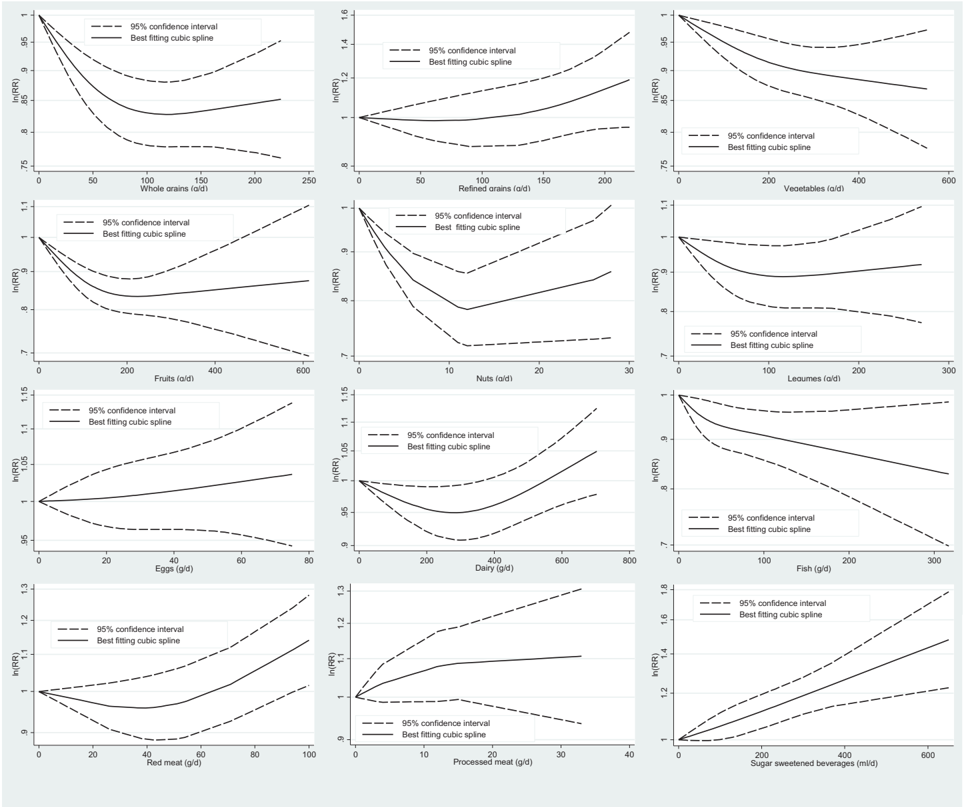
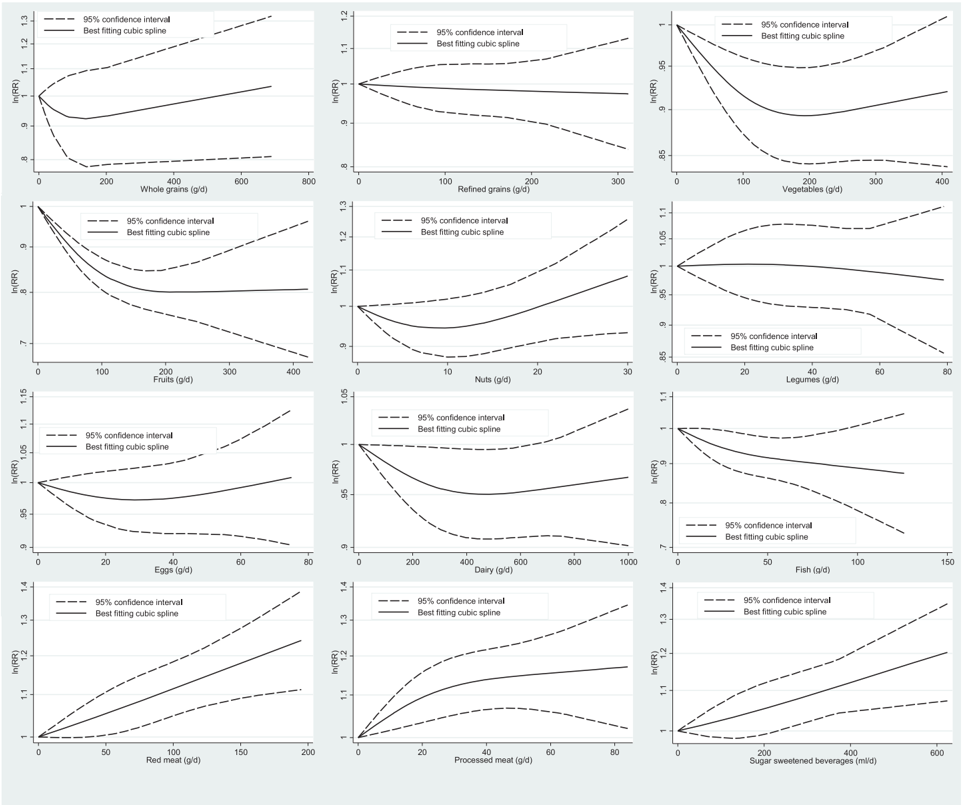
- Non-linear dose-response relationships were indicated for whole grains, fruits, nuts, dairy, and red meat with CHD, and for vegetables with stroke. Optimal consumption of risk-decreasing foods was calculated to reduce CHD risk by 65% and stroke risk by 40%; consuming 2 servings/day of red meat, processed meat, and SSB was associated with a 60% increased stroke risk, and not consuming these foods would reduce stroke risk by about 38%.
- NutriGrade meta-evidence was moderate for 10 food groups and low for refined grains and eggs regarding CHD; for stroke it was low for whole grains, refined grains, nuts, and legumes and moderate for the other eight; for HF it was very low for refined grains, low for whole grains, vegetables, fruits, nuts, dairy, and SSB, and moderate for eggs, fish, red meat, and processed meat.
Methods
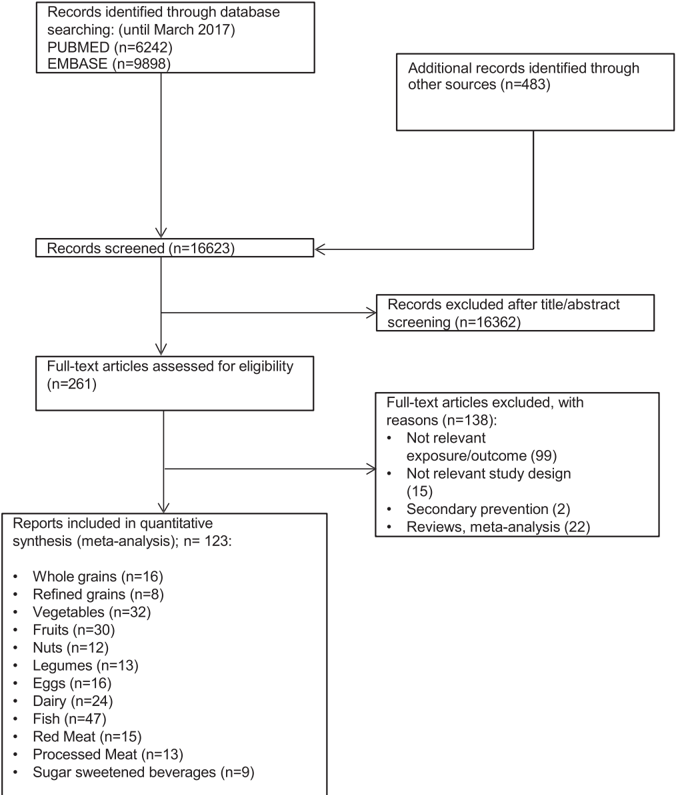
- Systematic search of PubMed and Embase up to March 2017 for prospective studies; 123 reports were included, covering 12 a priori defined food groups and CHD, stroke, and HF outcomes.
- Random-effects meta-analyses estimated summary RRs and 95% CIs for highest versus lowest intake categories and for linear and non-linear dose-response relationships; restricted cubic splines were used for non-linearity, and NutriGrade assessed meta-evidence quality.
- Subgroup and sensitivity analyses examined sex, follow-up length, geographic location, number of cases, dietary assessment, low risk of bias, nested case-control studies, and odds-ratio studies; the review was registered in PROSPERO (CRD42016037069).
Limitations
- Stated: some included studies used only baseline food intake, assuming stable consumption over time; substantial heterogeneity existed in population size, follow-up length, baseline age, and food consumption, and high statistical heterogeneity often persisted in subgroup analyses.
- Stated: residual confounding by lifestyle or socioeconomic status was possible, and for most food groups in relation to HF only a very limited number of studies was available, so some HF results should be interpreted with caution.
- Stated: the review excluded prospective studies on overall CVD and outcome-specific mortality, which may explain differences from other meta-analyses; evident from the text, many dose-response estimates relied on few studies (e.g., HF analyses with n = 1 for some foods), and NutriGrade confidence was mostly moderate or lower, limiting certainty.
Model-written summary. Check it against the paper before relying on it.
Integrity signals
Registry
Cites
Statistics
Figures


Verification
Claims the paper makes
0 Valid · 1 Not valid · 31 Not checked · 214 Own results and interpretations
A result the paper reports from its own data — it cites no other source for it, so there is none to check. The quote shows it is in the paper.
In the paper
“vegetables and fruits (RRCHD: 0.97 (0.96 -0.99)”
- Also stated in: § Vegetables · p. 7 · plain
“Each additional daily 100 g of vegetables were inversely associated with risk of CHD (RR: 0.97; 95% CI 0.96 to 0.99, I 2 D 12%, pheterogeneity D 0.32, n D 14)”
plainstates an association- Asserted: passes — The authors put it forward as true.
- Checkable: passes — It can be checked against evidence.
- Load-bearing: passes — The paper’s conclusions depend on it.
- Based: passes — The paper gives a reason why it holds.
- Rests on 3 assumptions not shown here.
- Also stated in: § Vegetables · p. 7 · plain
A result the paper reports from its own data — it cites no other source for it, so there is none to check. The quote shows it is in the paper.
In the paper
“stroke (RR: 0.91; 95% CI 0.82 to 1.02, I 2 D 53%, pheterogeneity D 0.05)”
plainstates an associationn = 11,114- Asserted: passes — The authors put it forward as true.
- Checkable: passes — It can be checked against evidence.
- Load-bearing: passes — The paper’s conclusions depend on it.
- Based: passes — The paper gives a reason why it holds.
- Rests on an assumption not shown here.
A result the paper reports from its own data — it cites no other source for it, so there is none to check. The quote shows it is in the paper.
In the paper
“There were clear indications for nonlinear dose-response relationships between whole grains, fruits, nuts, dairy, and red meat and CHD.”
boostedstates an association- Asserted: passes — The authors put it forward as true.
- Checkable: passes — It can be checked against evidence.
- Load-bearing: passes — The paper’s conclusions depend on it.
- Based: passes — The paper gives a reason why it holds.
- Rests on 3 assumptions not shown here.
A result the paper reports from its own data — it cites no other source for it, so there is none to check. The quote shows it is in the paper.
In the paper
“but not with risk of stroke (RR: 0.99; 95% CI 0.95 to 1.03, I 2 D 65%, pheterogeneity D 0.04, n D 4)”
plain- Asserted: passes — The authors put it forward as true.
- Checkable: passes — It can be checked against evidence.
- Load-bearing: passes — The paper’s conclusions depend on it.
- Based: passes — The paper gives a reason why it holds.
- Rests on 3 assumptions not shown here.
A result the paper reports from its own data — it cites no other source for it, so there is none to check. The quote shows it is in the paper.
In the paper
“RRHF: 0.96 (0.95 -0.97))”
- Also stated in: § Whole grains · p. 6 · plain
“and HF (RR: 0.96; 95% CI 0.95 to 0.97, I 2 D 0%, pheterogeneity D 0.36, n D 2)”
plainstates an associationn = 6,455- Asserted: passes — The authors put it forward as true.
- Checkable: passes — It can be checked against evidence.
- Load-bearing: passes — The paper’s conclusions depend on it.
- Based: passes — The paper gives a reason why it holds.
- Rests on 3 assumptions not shown here.
- Also stated in: § Whole grains · p. 6 · plain
181 more claims
Create a free account to see all 246 claims and to verify the 57 references still open.
- The quote only partly states this claim. 16
- It may state two separate claims as one. 24
- Probably not a substantial claim. 25
Claims other papers make about this one
Each is checked against this paper’s own text: does it say what the citing paper says it does?
The source backs part of the claim, not all of it — or backs it for a different population, condition or comparison.
In the citing paper
“each 250 mL/day increment of sugar sweetened beverage consumption was associated with a 17% and 4% higher risk of coronary heart disease (class II evidence) and all cause mortality (class III evidence), respectively.”
From Dietary sugar consumption and health: umbrella review (2023) · cites this paper as [10]
Experimental — accuracy not yet measuredThe source backs part of the claim, not all of it — or backs it for a different population, condition or comparison.
In the citing paper
“We observed no significant association between sugar sweetened beverage consumption and changes in diastolic blood pressure (children and adolescents)69 or heart failure.10”
From Dietary sugar consumption and health: umbrella review (2023) · cites this paper as [10]
Experimental — accuracy not yet measuredThe cited source says what the claim attributes to it.
In the citing paper
“A recent dose-response meta-analysis showed that each 250 mL/day increment of sugar sweetened beverage consumption was positively associated with a 7% (risk ratio 1.07, 1.02 to 1.12) higher risk of stroke.”
From Dietary sugar consumption and health: umbrella review (2023) · cites this paper as [10]
The cited source says what the claim attributes to it.
In the citing paper
“harmful associations between dietary sugar consumption and cardiovascular outcomes were also observed, including coronary heart disease,10 cardiovascular disease,8 cardiovascular disease mortality,68 71 hypertension in children and adolescents,69 hypertension in adults,70 myocardial infarction,66 change in systolic blood pressure in children and adolescents,69 and stroke.10”
From Dietary sugar consumption and health: umbrella review (2023) · cites this paper as [10]
Self-check
Percentages, sums and reported differences re-computed from the paper’s own numbers.
Each contradiction between two passages listed here was confirmed by an independent check.
Rated minor: it would not touch a result — a value no result rests on, a p-value that stays on the same side of the significance level, or a conflict that is clerical, resolved elsewhere in the paper, or outside its own findings.
In the paper
§ Discussion · p. 12
“The NutriGrade tool for evaluating the meta-evidence suggested a moderate con fi dence in the effect estimate for eggs, dairy, fi sh, red meat, and processed meat with respect to all three outcomes simultaneously;”
§ Quality of meta-evidence · p. 11
“The NutriGrade meta-evidence grading regarding CHD was rated ' low ' for re fi ned grains, and eggs and ' moderate ' for the 10 other food groups.”
Citations
Cites
Bias in meta-analysis detected by a simple, graphical test
Egger, M., Smith, G. D., Schneider, M., & Minder, C. (1997) · BMJ · doi:10.1136/bmj.315.7109.629 · Cited by 56,722 · cited 2×
“Potential small-study effects, such as publication bias, were explored using Egger (cid:2) s test and funnel plots (Egger et al. 1997), if at least 10 studies were available (Higgins and Green 2011).”
Meta-analysis in clinical trials
DerSimonian, R., & Laird, N. (1986) · Controlled Clinical Trials · doi:10.1016/0197-2456(86)90046-2 · Cited by 39,552 · cited 1×
“To evaluate the weighting of each study, the standard error for the log-transformed RR of each study was calculated and regarded as the estimated variance of the log-transformed RR, using an inverse variance method (DerSimonian and Laird 1986).”
Quantifying heterogeneity in a meta‐analysis
Higgins, J. P. T., & Thompson, S. G. (2002) · Statistics in Medicine · doi:10.1002/sim.1186 · Cited by 36,763 · cited 2×
“…Buckland et al. 2009; Dauchet et al. 2004; Del Gobbo et al. 2015; Dilis et al. 2012; Gillman et al. 1995; Hansen et al. 2017; Hansen et al. 2010; Hirvonen et al. 2001; Johnsen et al. 2003; Joshipura et al. 1999; Keli et al. 1996; Kobylecki et al. 2015; Larsson et al. 2009b; Larsson et al.…”
Meta-analysis of Observational Studies in Epidemiology<SUBTITLE>A Proposal for Reporting</SUBTITLE>
Stroup, D. F. (2000) · JAMA · doi:10.1001/jama.283.15.2008 · Cited by 20,623
European Guidelines on cardiovascular disease prevention in clinical practice (version 2012)
Authors/Task Force Members:, Perk, J., De Backer, G., Gohlke, H., Graham, I., Reiner, Ž., Verschuren, M., Albus, C., Benlian, P., Boysen, G., et al. (2012) · European Heart Journal · doi:10.1093/eurheartj/ehs092 · Cited by 8,490
(1980) · Neuropediatrics · doi:10.1055/s-2008-1071391 · Cited by 3,990 · cited 1×
“This systematic review was planned and conducted according to the standards of the Meta-analysis of Observational Studies in Epi-demiology (Stroup et al. 2000).”
Authors/Task Force Members, Graham, I., Atar, D., Borch-Johnsen, K., Boysen, G., Burell, G., Cifkova, R., Dallongeville, J., De Backer, G., Ebrahim, S., et al. (2007) · European Heart Journal · doi:10.1093/eurheartj/ehm316 · Cited by 3,753
Flexible regression models with cubic splines
Durrleman, S., & Simon, R. (1989) · Statistics in Medicine · doi:10.1002/sim.4780080504 · Cited by 2,689 · cited 1×
“…three fi xed knots at 10%, 50%, and 90% through the total distribution of the reported intake, and combined them using multivariable meta-analysis (Durrleman and Simon 1989) (if at least 2 studies with at least three quantitative exposure levels were known for one of the 12 food groups with the…”
Aune, D., Giovannucci, E., Boffetta, P., Fadnes, L. T., Keum, N., Norat, T., Greenwood, D. C., Riboli, E., Vatten, L. J., & Tonstad, S. (2017) · International Journal of Epidemiology · doi:10.1093/ije/dyw319 · Cited by 2,419 · cited 4×
“This difference could be explained by the greater number of studies (due to inclusion of studies on cause-speci fi c mortality and overall CVD) included by Aune et al. (Aune et al. 2017).”
InfluentialMethods for Trend Estimation from Summarized Dose-Response Data, with Applications to Meta-Analysis
Greenland, S., & Longnecker, M. P. (1992) · American Journal of Epidemiology · doi:10.1093/oxfordjournals.aje.a116237 · Cited by 2,353 · cited 1×
“The method described by Greenland and Longnecker (Greenland and Longnecker 1992) was applied for the dose-response analysis and computed study-speci fi c slopes (linear trends) and corresponding 95% CIs from the natural logs of the RRs and CIs across intake categories of the 12 food groups.”
Research works printed but not linked: 1
- Higgins, J., and S. Green. 2011. Cochrane handbook for systematic reviews of interventions Version 5.1.0 [updated March 2011]. The Cochrane Collaboration. Available from www.handbook.cochrane.org.
Cited by
Items 301–400 of 596
Dietary patterns, food groups, and incidence of aortic valve stenosis: A prospective cohort study
Larsson, S. C., Wolk, A., & Bäck, M. (2018) · International Journal of Cardiology · doi:10.1016/j.ijcard.2018.11.007 · Cited by 16
Springmann, M., Hansoge, M. P., Schultz, L., Pastorino, S., & Bundy, D. A. P. (2025) · The Lancet Planetary Health · doi:10.1016/j.lanplh.2025.06.002 · Cited by 19
Fish consumption benefits and PFAS risks: Epidemiology and public health recommendations
Hamade, A. K. (2024) · Toxicology Reports · doi:10.1016/j.toxrep.2024.101736 · Cited by 15
Schaefer, S. M., Kaiser, A., Eichner, G., & Faßhauer, M. (2024) · Nutrition Journal · doi:10.1186/s12937-024-00926-4 · Cited by 13
“In agreement with these findings, comparing the highest to the lowest category of intake, an inverse association of vegetable and fruit consumption with risk of IHD and stroke is found in a meta-analysis of 123 studies [49].”
ResultDunne, S., McGillicuddy, F. C., Gibney, E. R., & Feeney, E. L. (2022) · American Journal of Clinical Nutrition · doi:10.1016/j.ajcnut.2022.10.002 · Cited by 12
Shams‐White, M., O’Connor, L. E., O’Connor, S. G., & Herrick, K. (2022) · Journal of the Academy of Nutrition and Dietetics · doi:10.1016/j.jand.2022.06.019 · Cited by 9
Yi, S., Kanetkar, V., & Brauer, P. M. (2022) · BMC Public Health · doi:10.1186/s12889-022-13054-7 · Cited by 13
“A specific focus on increased FV consumption is justified by the large body of epidemiological evidence relating increased consumption to decreased mortality [23, 24].”
BackgroundThe Changing Landscape of Legume Products Available in Australian Supermarkets
Bielefeld, D., Hughes, J., & Grafenauer, S. (2021) · Nutrients · doi:10.3390/nu13093226 · Cited by 13
Genotoxicity evaluation of fried meat: A comprehensive review
Sanz-Serrano, J., de Ceráin, A. L., Garayoa, R., Azqueta, A., & Vettorazzi, A. (2019) · Food and Chemical Toxicology · doi:10.1016/j.fct.2019.110943 · Cited by 15
Metabolic footprint and intestinal microbial changes in response to dietary proteins in a pig model
Schutkowski, A., König, B., Kluge, H., Hirche, F., Henze, A., Schwerdtle, T., Lorkowski, S., Dawczynski, C., Gabel, A., Große, I., et al. (2019) · The Journal of Nutritional Biochemistry · doi:10.1016/j.jnutbio.2019.02.004 · Cited by 12
Prioux, C., Kesse‐Guyot, E., Srour, B., Fezeu, L., Baudry, J., Wagner, S., Herçberg, S., Touvier, M., & Allès, B. (2025) · The Lancet Regional Health - Europe · doi:10.1016/j.lanepe.2025.101470 · Cited by 17
“Healthy, minimally or non-processed plant-based foods, such as whole grains, fruits, vegetables, and legumes, have been consistently associated with cardiovascular benefits reported in many studies included in meta-analyses 34,35 and one umbrella review.”
Liu, H., Zhu, J., Gao, R., Ding, L., Yang, Y., Zhao, W., Cui, X., Lu, W., Wang, J., & Li, Y. (2024) · Nutrition Journal · doi:10.1186/s12937-024-00957-x · Cited by 15
“The difference between these studies might be partially attributable to different included studies [6, 7].”
BackgroundMethodResultInfluentialChauhan, S., Joshi, T., Adhikari, U., Sinha, A., Deepa, P. R., & Sharma, P. K. (2024) · Food and Humanity · doi:10.1016/j.foohum.2024.100295 · Cited by 13
Ready-to-Eat Food Environments and Risk of Incident Heart Failure: A Prospective Cohort Study
Xue, Q., Li, X., Ma, H., Wang, X., Heianza, Y., & Qi, L. (2024) · Circulation Heart Failure · doi:10.1161/circheartfailure.123.010830 · Cited by 12
Hentilä, A., Männistö, S., Kaartinen, N. E., Jousilahti, P., & Konttinen, H. M. (2023) · European Journal of Nutrition · doi:10.1007/s00394-023-03231-8 · Cited by 9
“In addition, high red and processed meat consumption has been associated with many adverse health outcomes [4, 5], whereas legume consumption with positive health outcomes [4, 6].”
BackgroundA Comparative Study of the Effects of Whole Cereals and Refined Cereals on Intestinal Microbiota
Yu, D., Zhu, L. N., Gao, M., Yin, Z., Zhang, Z., Zhu, L., & Zhan, X. (2023) · Foods · doi:10.3390/foods12152847 · Cited by 14
“A meta-analysis showed that the intake of refined cereals ranged from 15 g/day to 540 g/day; when comparing the high- and low-intake groups, the highintake group had a significantly increased risk of coronary heart disease [4].”
BackgroundDietary intervention for children and adolescents with familial hypercholesterolaemia
Capra, M. E., Biasucci, G., Crivellaro, E., Banderali, G., & Pederiva, C. (2023) · The Italian Journal of Pediatrics/Italian journal of pediatrics · doi:10.1186/s13052-023-01479-8 · Cited by 16
“In the past few years, research in nutritional field has been focused mainly on dietary patterns’ effect on CVD risk factors [21, 22] rather than on the effect of single nutritional component on plasma lipids [23].”
BackgroundYao, L., Tan, Y., & Chen, F. (2022) · BMC Cardiovascular Disorders · doi:10.1186/s12872-022-02847-8 · Cited by 11
Johansson, A., Acosta, S., Mutie, P. M., Sonestedt, E., Engström, G., & Drake, I. (2022) · Frontiers in Cardiovascular Medicine · doi:10.3389/fcvm.2022.993112 · Cited by 14
“In order to assess specific aspects of diet quality that may be important in development of aIS, we considered food groups and beverages that have been associated with atherosclerotic disease as well as stroke (10, 20, 21) and have been addressed in many national dietary guidelines (22).”
BackgroundResultRefined grain intake and cardiovascular disease: Meta-analyses of prospective cohort studies
Gaesser, G. A. (2022) · Trends in Cardiovascular Medicine · doi:10.1016/j.tcm.2022.08.002 · Cited by 15
Sex Differences in Dilated Cardiomyopathy Prognosis: A Systematic Review and Meta-analysis
Long, C., Liu, X., Xiong, Q., Su, Y., & Hong, K. (2022) · International Heart Journal · doi:10.1536/ihj.20-448 · Cited by 16
Association between Dietary Patterns and Low HDL-C among Community-Dwelling Elders in North China
Song, P., Man, Q., Li, Y., Jia, S., Yu, D., Zhang, J., & Ding, G. (2021) · Nutrients · doi:10.3390/nu13103308 · Cited by 14
“However, fruits have been determined as healthy, with beneficial effects on HDL-C concentrations [28] and CHD [41], but other foods mentioned in this dietary pattern might reverse the plausible benefits.”
BackgroundInfection and food combine to cause atherosclerotic coronary heart disease – Review and hypothesis
Lawson, J. S., & Glenn, W. K. (2021) · IJC Heart & Vasculature · doi:10.1016/j.ijcha.2021.100807 · Cited by 12
“I’m eating healthy now”: The relationship between perceived behavior change and diet
Szymczak, H., Keller, L., Debbeler, L. J., Kollmann, J., Lages, N. C., Sproesser, G., Gollwitzer, P. M., Schupp, H. T., & Renner, B. (2020) · Food Quality and Preference · doi:10.1016/j.foodqual.2020.104142 · Cited by 12
Karageorgou, D., Magriplis, E., Bakogianni, I., Mitsopoulou, A.-V., Dimakopoulos, I., Micha, R., Michas, G., Ntouroupi, T. G., Tsaniklidou, S.-M., Argyri, K., et al. (2019) · Nutrition Metabolism and Cardiovascular Diseases · doi:10.1016/j.numecd.2019.09.024 · Cited by 15
Sürdürülebilir Beslenme ve Beslenme Örüntüsü: Bitkisel Kaynaklı Beslenme
Pekcan, A. G. (2019) · Journal of Nutrition and Dietetics · doi:10.33076/2019.bdd.1268 · Cited by 49
“Yapılan çalışmada birçok ülke için en önemli diyet risk etmenleri olarak ilk sırada yüksek sodyum alımı (ölüm: 3 [1-5] milyon, DALY: 70[34-118] milyon), düşük tam tahıl (ölüm: 3 [1-5] milyon, DALY: 70 [34118] milyon) ve düşük meyve tüketimi (ölüm: 2 [1-4] milyon, DALY: 65 [41-92] milyon) belirlenmiştir.”
O’Leary, F., Grech, A. L., Sui, Z., Cheng, H., Rangan, A., & Hirani, V. (2019) · European Journal of Clinical Nutrition · doi:10.1038/s41430-019-0478-x · Cited by 11
“Lean red meat is a nutrient-dense food containing essential nutrients, such as zinc and vitamin B12, but high intake is associated with increased rates of colorectal cancer [42], stroke [43, 44] and coronary heart disease [44].”
BackgroundAssociations of food groups and cardiometabolic and inflammatory biomarkers: does the meal matter?
Schwedhelm, C., Schwingshackl, L., Agogo, G. O., Sonestedt, E., Boeing, H., & Knüppel, S. (2019) · British Journal Of Nutrition · doi:10.1017/s000711451900151x · Cited by 16
Self-citationAdams, M., & Sabaté, J. (2019) · Current Atherosclerosis Reports · doi:10.1007/s11883-019-0796-4 · Cited by 15
Chashman, S., Sanghvi, G. V., Menon, S. V., Rasheed, M., Kashyap, A., Devi, A., Chaudhary, P., & Ndagire, C. T. (2025) · European Food Research and Technology · doi:10.1007/s00217-025-04909-5 · Cited by 11
Xie, Y., Xiong, Y., Sun, M., Zhao, Y., & Wu, M. (2024) · Frontiers in Nutrition · doi:10.3389/fnut.2024.1489222 · Cited by 12
The Mediterranean Diet in the Era of Climate Change: A Reference Diet for Human and Planetary Health
Koliaki, C. C., Katsilambros, N. L., & Dimosthenopoulos, C. (2024) · Climate · doi:10.3390/cli12090136 · Cited by 18
Yin, M.-Y., & Wang, X.-C. (2023) · Journal of Food Measurement & Characterization · doi:10.1007/s11694-023-02298-5 · Cited by 9
“There was a negative association between fish intake and the risk of stroke and coronary heart disease [18], which was summarised in a meta-analysis of observational study.”
Chinese residents’ knowledge about and behavior towards dairy products: a cross-sectional study
Wei, J. J., & Wang, J. (2023) · BMC Public Health · doi:10.1186/s12889-023-15254-1 · Cited by 13
Kouvari, M., Damigou, E., Florentin, M., Kosti, R. I., Chrysohoou, C. A., Pitsavos, C. S., & Panagiotakos, D. B. (2022) · Nutrients · doi:10.3390/nu14245291 · Cited by 12
“Yet, no significance was reached in European studies [13].”
BackgroundGrau, N., Mohammadifard, N., Hassannejhad, R., Haghighatdoost, F., Sadeghi, M., Talaei, M., Sajjadi, F., Mavrommatis, Y., & Sarrafzadegan, N. (2021) · International Journal of Food Sciences and Nutrition · doi:10.1080/09637486.2021.1993797 · Cited by 9
“Indeed, this finding is in line with an increased risk ratio for IHD of 1.15 (1.08–1.23) as reported in a recent doseresponse meta-analysis of prospective studies (Bechthold et al. 2019)”
InfluentialJiang, N., Yi, S. S., Russo, R. G., Bu, D. D., Zhang, D. “., Ferket, B. S., Zhang, F. F., Pagán, J. A., Wang, Y. C., & Li, Y. (2020) · Preventive Medicine Reports · doi:10.1016/j.pmedr.2020.101162 · Cited by 13
“studies have shown that sugary drink consumption increases the risk of chronic diseases such as diabetes, hypertension, coronary heart disease, stroke and myocardial infarction (Te Morenga et al., 2013; Vartanian et al., 2007; Cheungpasitporn et al., 2015; Narain et al., 2016; Bechthold et al., 2017; Malik et al., 201…”
BackgroundMoreira-Rosário, A., Pinheiro, H., Marques, C., Teixeira, J. A., Calhau, C., & Azevedo, L. F. (2019) · BMJ Open · doi:10.1136/bmjopen-2018-023662 · Cited by 10
Mouodi, S., Hosseini, S. R., Cumming, R. G., Bijani, A., Esmaeili, H., & Ghadimi, R. (2019) · PubMed Central · doi:10.22088/cjim.10.1.55 · Cited by 8
“He listed them as to increase consumption of whole grains, fruits, vegetables, legumes, nuts and seeds, and fish; to keep a moderate dairy and vegetable oil intake, and to avoid or reduce consumption of refined grains, sugar-sweetened beverages, and red and processed (sodium-preserved) meats (45).”
BackgroundMazur, M. J., Szymańska, M., Malik, A., Szlasa, W., & Popiołek-Kalisz, J. (2025) · Pathophysiology · doi:10.3390/pathophysiology32030037 · Cited by 11
“Diets such as the Mediterranean, DASH, vegetarian, vegan, and hunter-gatherer diets emphasize the intake of nutrient-dense foods—especially fruits, vegetables, legumes, whole grains, nuts, and seeds—while limiting processed foods, added sugars, and sodium [48,49].”
Navigating the protein transition: why dairy and its matrix matter amid rising plant protein trends
Witard, O. C., Devrim-Lanpir, A., McKinley, M. C., & Givens, D. I. (2025) · Nutrition Research Reviews · doi:10.1017/s0954422425000101 · Cited by 10
“Similar conclusions were reached by the meta-analysis of 123 prospective studies, although this compared associations between food groups (not SFA) and risk of coronary heart disease (CHD) (62) .”
Eurasian clinical practice guidelines for dietary management of cardiovascular diseases (2024)
Starodubova, A. V., Chazova, I. E., Tutelyan, V. A., Nikityuk, D. B., Pavlovskaya, E. V., Кislyak, O. A., Blinova, N. V., Brumberg, A. A. B., Bubnova, M. G., Varaeva, Y. R., et al. (2024) · Eurasian heart journal · doi:10.38109/2225-1685-2024-4-6-66 · Cited by 13
Kachouei, A. A., Mohammadifard, N., Haghighatdoost, F., Hajihashemi, P., Zarepur, E., Nouhi, F., Kazemi, T., Salehi, N., Solati, K., Ghaffari, S., et al. (2024) · European Journal of Nutrition · doi:10.1007/s00394-024-03475-y · Cited by 9
“Further - more, several studies have found an association between animal foods and increased risk of CVDs and its risk fac - tors [42, 43].”
Enciso, L. C., Silleras, B. D. M., Marcos, S. D. L. C., & del Río, P. R. (2024) · Nutrients · doi:10.3390/nu16091308 · Cited by 14
“In an isolated way, FV intake is related to beneficial effects in preventing coronary disease [29,30], some types of cancer, and mortality [31,32].”
BackgroundPouzou, J. G., & Zagmutt, F. J. (2024) · Advances in Nutrition · doi:10.1016/j.advnut.2024.100214 · Cited by 12
“In the “ classic ” version, we applied the default method used in nutritional DRMA [3,73,74] where the median of the highest group was estimated as the minimum consumption of that group plus the distance between that minimum and the median of the second highest consumption group.”
MethodTypes of fiber and gut microbiota composition and diversity among arab females
Aljuraiban, G. S., Algabsani, S., Sabico, S., Al-Shammari, S., Aljazairy, E. A., & Al-Musharaf, S. (2023) · Saudi Journal of Biological Sciences · doi:10.1016/j.sjbs.2023.103767 · Cited by 9
Torres‐Gonzalez, M. (2023) · Nutrients · doi:10.3390/nu15163570 · Cited by 7
“Likewise, a meta-analysis of thirteen studies found no associations between total dairy consumption and risk for CHD, regardless of fat content [19].”
BackgroundJun, S.-H., Lee, J.-W., Shin, W., Lee, S., & Kim, Y. (2023) · Nutrition Research and Practice · doi:10.4162/nrp.2023.17.5.969 · Cited by 8
“A doseresponse meta-analysis of prospective cohort studies revealed a notable link between the consumption of nuts or legumes and a reduced risk of chronic heart disease and all-cause mortality [48,49], the mechanism and role of LNS protein in muscular health warrants further investigation.”
BackgroundZapata, M. E., Arrieta, E. M., Beltramo, B., & Rovirosa, A. (2023) · Nutrition Bulletin · doi:10.1111/nbu.12624 · Cited by 13
Causal associations between dietary habits and CVD: a Mendelian randomisation study
Yang, M., Gao, X., Xie, L., Lin, Z., Ye, X., Ou, J., & Peng, J. (2023) · British Journal Of Nutrition · doi:10.1017/s000711452300140x · Cited by 12
“intake (17) , less coffee (18) and tea intake (19) , decreased cheese intake (20) and fish intake (16) .”
Andersen, G. B. H., Alexi, N., Sfyra, K., Byrne, D. V., & Kidmose, U. (2023) · Journal of Sensory Studies · doi:10.1111/joss.12838 · Cited by 11
Koelman, L., Reichmann, R., Börnhorst, C., Schulze, M. B., Weikert, C., Biemann, R., Isermann, B., Fritsche, A., & Aleksandrova, K. (2021) · Endocrine Connections · doi:10.1530/ec-21-0273 · Cited by 11
Vitale, M., Hanhineva, K., Koistinen, V., Auriola, S. O. K., Paananen, J., Costabile, G., Pepa, G. D., Rivellese, A. A., Riccardi, G., & Giacco, R. (2020) · Nutrition Metabolism and Cardiovascular Diseases · doi:10.1016/j.numecd.2020.12.022 · Cited by 14
Changing dietary approaches to prevent cardiovascular disease
Nestel, P. J., Beilin, L. J., & Mori, T. A. (2020) · Current Opinion in Lipidology · doi:10.1097/mol.0000000000000709 · Cited by 11
Wang, W., Wang, Y., Gao, X., Zhao, Z., Li, L., Yu, B., Liu, G., & Lin, P. (2020) · Nutrition Metabolism and Cardiovascular Diseases · doi:10.1016/j.numecd.2020.08.027 · Cited by 10
Egg Consumption and Coronary Artery Disease: A Nice Knockdown Argument
Takagi, H., Hari, Y., Nakashima, K., Kuno, T., & Ando, T. (2020) · Angiology · doi:10.1177/0003319719897493 · Cited by 10
“However, an association of egg consumption with stroke incidence has been still controversial.(2,4) In their meta-analysis of 9 studies, Xu et al(2) showed an association of egg Figure 4.”
BackgroundUnderstanding Shareholder Satisfaction and Retention in CSA Incentive Programs
Rossi, J., & Woods, T. (2020) · Journal of food distribution research · doi:10.22004/ag.econ.309028 · Cited by 11
“…vegetable consumption is associated with a number of positive health outcomes (Dauchet et al., 2006; Boeing et al., 2012; Bellavia et al., 2013; Bechthold et al., 2019), CSA incentive programs within diverse organizations could have broader public health implications (Berkowitz et al., 2019).”
BackgroundDairy consumption and cardiometabolic diseases: Evidence from prospective studies
Soedamah‐Muthu, S. S., & Guo, J. (2020) · Elsevier eBooks · doi:10.1016/b978-0-12-815603-2.00001-2 · Cited by 9
Raza, N., Sadaf, A., Mushtaq, R., Mehmood, M. A., Amrao, L., Islam, F., Afzaal, M., & Shah, M. A. (2026) · Food Science & Nutrition · doi:10.1002/fsn3.71480 · Cited by 12
Yi, S.-Y. Y., Steffen, L. M., Guan, W., Duprez, D. A., Lakshminarayan, K., & Jacobs, D. R. (2025) · European Heart Journal · doi:10.1093/eurheartj/ehaf406 · Cited by 9
“28 In a meta-analysis of 24 randomized placebo-controlled trials, fibre supplementation lowered systolic and diastolic blood pressure by 1.13 and 1.26 mmHg, respectively.”
InfluentialHealth and environmental impacts of shifting to plant-based analogues: a risk-benefit assessment
Carvalho, C., Correia, D. M., Costa, S. A., Pereira, R., Oliveira, A., Pinto, E. C. B., Lopes, C. M. M., & Torres, D. P. M. (2025) · European Journal of Nutrition · doi:10.1007/s00394-025-03749-z · Cited by 7
Association between DASH diet and metabolic syndrome in US adults: a cross-sectional study
Liu, J., Yang, R., Ma, P., & Zhu, X. (2025) · Frontiers in Public Health · doi:10.3389/fpubh.2025.1524399 · Cited by 8
Wang, H., Wu, B., Guan, W., Zhou, T., Wang, H., Li, W., & He, X. (2025) · PLoS ONE · doi:10.1371/journal.pone.0316022 · Cited by 9
Fiedler, J., Wunsch, K., Hubenschmid, S., Reiterer, H., Renner, B., & Wöll, A. (2025) · JMIR mhealth and uhealth · doi:10.2196/65558 · Cited by 7
Food, nutrition, and fertility: from soil to fork
Maitin‐Shepard, M., Werner, E. F., Feig, L. A., Chavarro, J. E., Mumford, S. L., Wylie, B. J., Rando, O. J., Gaskins, A. J., Sakkas, D., Arora, M., et al. (2023) · American Journal of Clinical Nutrition · doi:10.1016/j.ajcnut.2023.12.005 · Cited by 16
Jensen, T. M. E., Braaten, T., Jacobsen, B. K., Ibsen, D. B., & Skeie, G. (2023) · British Journal Of Nutrition · doi:10.1017/s0007114523002040 · Cited by 14
“While there is evidence supporting a linear relationship between red and processed meat consumption and mortality(9), there are also indications of potential non-linear associations(7,8,17,18).”
BackgroundPapier, K., Kakkoura, M., Yu, C., Knüppel, A., Pei, P., Tong, T. Y. N., Yu, C., Perez‐Cornago, A., Chang, W. C., Chen, J., et al. (2022) · European Journal of Nutrition · doi:10.1007/s00394-022-03031-6 · Cited by 9
“Likewise, in large observational studies fresh fruit intake has been found to be associated with a ~ 30% lower risk of ischaemic heart disease in Asian adults [2], but only a ~ 10% lower risk in North American and European adults [3].”
A scale development study for evaluating the dietary behaviors of patients with heart failure
Boy, Y., & Enç, N. (2022) · Heart & Lung · doi:10.1016/j.hrtlng.2022.01.017 · Cited by 10
Bains, K., DeMarco, N., Brauer, P. M., & Yi, S. (2021) · Current Developments in Nutrition · doi:10.1093/cdn/nzab109 · Cited by 10
“The food-choice environment is very complex and thus a specific focus on increased FV consumption is justified by the large body of epidemiological evidence relating increased consumption to decreased mortality (27, 28).”
BackgroundQuantitative assessment of microbiological risks due to red meat consumption in France
Mota, J. D. O., Guillou, S., Pierre, F. H. F., & Membré, J. (2020) · Microbial Risk Analysis · doi:10.1016/j.mran.2020.100103 · Cited by 9
Motallaei, M., Darand, M., Taftian, M., Beigrezaei, S., Golvardi-Yazdi, F., Mohyadini, M., Mirjalili, F. S., Darabi, Z., Vasmehjani, A. A., Seyedhosseini, S., et al. (2024) · PubMed Central · doi:10.48305/arya.2023.41026.2843 · Cited by 10
“Although gender, age, and modifiable risk factors such as unhealthy diet, obesity, smoking, dyslipidemia, diabetes, and hypertension are known to contribute to CAD occurrence 6-11 , data on CAD severity risk factors are still lacking.”
BackgroundCurioni, C. C., da Silva, A. C. F., Pereira, A. D. S., & Mocellin, M. C. (2022) · Integrated science · doi:10.1007/978-3-030-85357-0_5 · Cited by 19
Updates on Mediterranean diet and health status: active ingredients and pharmacological mechanisms
Schwingshackl, L., Morze, J., Wallerer, S., & HOFFMANN, G. E. (2026) · British Journal of Pharmacology · doi:10.1111/bph.70441 · Cited by 8
“(Bechthold et al., 2017; Halvorsen et al., 2021; Schlesinger et al., 2019; Schwingshackl et al., 2018; Schwingshackl, Hoffmann, Lampousi, Knuppel, et al., 2017; Schwingshackl, Schwedhelm, Hoffmann, Knuppel, et al., 2017; Schwingshackl, Schwedhelm, Hoffmann, Lampousi, et al., 2017; Wang, Li, et al.,…”
InfluentialSelf-citationJia, J., Sun, Z., Tao, X., Tong, Y., Feng, H., Yang, J., Lü, X., Qu, C., Liu, Z., & Wu, J. (2024) · Heart & Lung · doi:10.1016/j.hrtlng.2024.06.006 · Cited by 6
Willits-Smith, A. M., Taillie, L. S., Jaacks, L. M., Frank, S. M., & Grummon, A. H. (2024) · International Journal of Behavioral Nutrition and Physical Activity · doi:10.1186/s12966-024-01584-9 · Cited by 9
“First, the reduction in selection of red meat could improve population health outcomes given that high consumption of red meat is associated with increased risk of coronary heart disease [52] and type 2 diabetes [48].”
BackgroundHuang, J., He, Z., Xu, M., Du, J., & Zhao, Y.-T. (2023) · Frontiers in Nutrition · doi:10.3389/fnut.2023.1161175 · Cited by 10
Klapkiv, Y., Пуцентейло, П. Р., & Карпенко, В. (2023) · Comparative Economic Research Central and Eastern Europe · doi:10.18778/1508-2008.26.15 · Cited by 8
Vranić, D., Milešević, J., Trbović, D., Gurinović, M., Korićanac, V., Zeković, M., Petrović, Z., Ranković, S., & Milićević, D. (2023) · Nutrients · doi:10.3390/nu15122777 · Cited by 6
“Even though meat and meat products are one of the most important contributors of the modern diet, it is well known that the nutritional profile of processed meat has been perceived as unhealthy due to the high levels of saturated fatty acids, cholesterol [1], or components that could be considered with negative health…”
BackgroundKaiser, A., Schaefer, S. M., Behrendt, I., Eichner, G., & Faßhauer, M. (2022) · British Journal Of Nutrition · doi:10.1017/s0007114522003233 · Cited by 11
Abdullah, M. M. H., Hughes, J., & Grafenauer, S. (2022) · Nutrients · doi:10.3390/nu14142912 · Cited by 11
“[14] of ~10% reduction in CHD risk with 1 serving intake were utilized.”
BackgroundMethodBakre, A. T., Chen, A., Tao, X. G., Hou, J., Yao, Y., Nevill, A. M., Tang, J. J., Rohrmann, S., Ni, J., Hu, Z., et al. (2022) · European Journal of Nutrition · doi:10.1007/s00394-022-02887-y · Cited by 6
“We recorded details relating to socio-demography, lifestyles, social networks and support, CVDRFs, dietary intakes, and histories of chronic diseases for each participant.”
BackgroundInfluentialRed meat consumption, incident CVD and the influence of dietary quality in the Jackson Heart Study
Bigornia, S., Noel, S. E., Porter, C., Zhang, X., Talegawker, S., Carithers, T., Correa, A., & Tucker, K. L. (2022) · Public Health Nutrition · doi:10.1017/s1368980022001434 · Cited by 8
“Heart failure was reported to be associated with processed meat intake in two meta-analyses(8,12), but conflicting results were observed for unprocessed red meat(12).”
BackgroundResultInfluentialLi, L., Zhao, Z., Wang, Y., Gao, X., Liu, G., Yu, B., & Lin, P. (2022) · Frontiers in Nutrition · doi:10.3389/fnut.2022.920892 · Cited by 6
Sun, L. V., & Zhang, Y. (2022) · Medicine · doi:10.1097/md.0000000000028927 · Cited by 41
Mattavelli, E., Catapano, A. L., & Baragetti, A. (2021) · Nutrients · doi:10.3390/nu13113768 · Cited by 16
Tertsunen, H.-M., Hantunen, S., Tuomainen, T.-P., Salonen, J. T., & Virtanen, J. K. (2021) · British Journal Of Nutrition · doi:10.1017/s0007114521001227 · Cited by 12
Östman, E. M., Samigullin, A., Heyman‐Lindén, L., Andersson, K. E., Björck, I., Öste, R., & Humpert, P. M. (2020) · PLoS ONE · doi:10.1371/journal.pone.0234237 · Cited by 7
Mediterranean Diet and atherothrombosis biomarkers: a randomized controlled trialPreprint
Hernáez, Á., Castañer, O., Tresserra‐Rimbau, A., Pintó, X., Fitó, M., Casas, R. M., Martínez‐González, M. Á., Corella, D., Salas‐Salvadó, J., Lapetra, J., et al. (2019) · medRxiv · doi:10.1101/19001909 · Cited by 1
Soft Drinks: Public Health Perspective
Zupanič, N., Mis, N. F., & Pravst, I. (2019) · Elsevier eBooks · doi:10.1016/b978-0-12-816938-4.00011-2 · Cited by 13
Andersson, J., Smidt, M. F. D., Sundström, A. E., Nordin, S., Wennberg, P., & Näslund, U. (2025) · BMC Public Health · doi:10.1186/s12889-025-24076-2 · Cited by 9
“As many as 80–85% of all CVDs are related to modifiable lifestyle factors [5, 6] such as lack of physical activity [7], unhealthy diet [8], and smoking [9].”
Arnesen, E., Christensen, J. J., Laake, I., Carlsen, M. H., Veierød, M. B., & Retterstøl, K. (2025) · American Journal of Clinical Nutrition · doi:10.1016/j.ajcnut.2025.07.035 · Cited by 8
“In systematic reviews of 20 – 30 prospective cohort studies, intake of overall dairy products has not been associated with risk of CVD or coronary artery disease (CAD) [6,10,11].”
Li, Z., Song, Y., Huang, X., Dong, S., Lin, X., Chen, J., Zhou, Y., Wang, X., Liu, Q., Yang, L., et al. (2025) · American Journal of Clinical Nutrition · doi:10.1016/j.ajcnut.2025.06.016 · Cited by 6
Carter, S., Hill, A. M., Yandell, C. A., Wood, L. G., Coates, A. M., & Buckley, J. D. (2025) · American Journal of Clinical Nutrition · doi:10.1016/j.ajcnut.2025.05.001 · Cited by 11
Chebykin, Y. S., Musin, E. V., Kim, A. L., & Tikhonenko, S. A. (2024) · International Journal of Molecular Sciences · doi:10.3390/ijms252010978 · Cited by 6
Analysis of the Nutritional Composition of Ready-to-Use Meat Alternatives in Belgium
Mertens, E., Deriemaeker, P., & Beneden, K. V. (2024) · Nutrients · doi:10.3390/nu16111648 · Cited by 7
Mahajan, H., Mallinson, P. A. C., Lieber, J., Bhogadi, S., Banjara, S. K., Reddy, V., Reddy, G. B., Kulkarni, B., & Kinra, S. (2024) · Nutrients · doi:10.3390/nu16050746 · Cited by 5
Zhang, S., Yu, G., Ping, M., Du, Q., & Guo, X. (2024) · Clinics · doi:10.1016/j.clinsp.2024.100386 · Cited by 9
“At present, there are few studies on the impact of aerobic exercise on myocardial damage, glucolipid metabolism, and in fl ammation in CHD.”
BackgroundInfluentialBrayner, B., Kaur, G., Keske, M. A., Marchese, L. E., & Livingstone, K. M. (2023) · Frontiers in Nutrition · doi:10.3389/fnut.2023.1071855 · Cited by 10
Yisak, H., Chandravanshi, B. S., Redi‐Abshiro, M., & Yaya, E. E. (2022) · Bulletin of the Chemical Society of Ethiopia · doi:10.4314/bcse.v37i2.5 · Cited by 6
“Based on the observational and intervention studies made, higher consumption of whole grain has been linked to a lower incidence and mortality from cardiovascular diseases [2, 3].”
BackgroundRace/Ethnicity Predicts School Meal Participation
Spruance, L. A., & Vo, T. (2022) · Journal of School Health · doi:10.1111/josh.13270 · Cited by 7
Metadata
- Authors
- Bechthold, A., Boeing, H., Schwedhelm, C., Hoffmann, G., Knüppel, S., Iqbal, K., De Henauw, S., Michels, N., Devleesschauwer, B., Schlesinger, S., & Schwingshackl, L.
- Affiliations
- German Nutrition Society, Bonn, Germany
- German Institute of Human Nutrition (DE)
- University of Vienna (AT)
- Department of Public Health, Ghent University, Gent, Belgium
- Ghent University (BE)
- Institut Scientifique de Santé Publique (BE)
- Deutsches Diabetes-Zentrum e.V. (DE)
- Corresponding author
- Bechthold, Angela
- Boeing, Heiner
- Schwedhelm, Carolina
- Hoffmann, Georg
- Knüppel, Sven
- Iqbal, Khalid
- Michels, Nathalie
- Devleesschauwer, Brecht
- Schlesinger, Sabrina
- Schwingshackl, Lukas
- ORCID
- Venue
- Critical Reviews in Food Science and Nutrition
- Publisher
- Informa UK Limited
- Published
- 2017-11-07
- Volume
- 59
- Issue
- 7
- Pages
- 1071-1090
- ISSN
- 1040-8398 (ISSN-L)
- 1549-7852
- OpenAlex
- W2765815272
- Cited by
- 693
- References
- 227
- Citations by year
- 2026: 37 · 2025: 81 · 2024: 92 · 2023: 95 · 2022: 127 · 2021: 95 · 2020: 73 · 2019: 56 · 2018: 32 · 2017: 2
- FWCI
- 7.24
- Type
- journal article
- Language
- en
- Open access
- hybrid
- doi.org
- Licence
- Locations
- Critical Reviews in Food Science and Nutrition (publishedVersion, cc-by-nc-nd)
- PubMed (publishedVersion)
- Ghent University Academic Bibliography (Ghent University) (submittedVersion, cc-by-nc-nd)
- Figshare (submittedVersion, cc-by)
- Informationszentrum Lebenswissenschaften (ZB MED) (submittedVersion, cc-by-nc-nd)
- Figshare (cc-by)
- Topics
- Health Sciences › Medicine › Public Health, Environmental and Occupational Health › Nutritional Studies and Diet
- Health Sciences › Medicine › Cardiology and Cardiovascular Medicine › Cardiovascular Health and Risk Factors
- Life Sciences › Agricultural and Biological Sciences › Food Science › Nutrition, Health, and Society Studies
- Keywords
- coronary artery disease, stroke, heart failure, food groups, whole grains, refined grains, vegetables, fruits, nuts, fish consumption, red meat, processed meat, egg consumption, dairy products, Fabaceae, sugar-sweetened beverages, dietary habits, cardiovascular risk, dose-response relationship, dietary fiber, dietary cholesterol, dietary sodium
- MeSH terms
- Whole Grains, Red Meat, Beverages, Coronary Disease, Diet, Eggs, Feeding Behavior, Fruit, Heart Failure, Humans, Nuts, Prospective Studies, Risk Factors, Vegetables, Databases, Factual, Seafood, Stroke, Risk Reduction Behavior
About these checks
Registry, retraction, Cites and statistics results are computed, not judged, with one exception: a printed reference that no index lists is read once by a model before it counts as a citation error. Claims are extracted by a model and kept only when their quote appears verbatim in the text; each cited source is then checked, with a model’s help, for whether it says what the claim relies on. Those verdicts can be wrong — read the claim’s quote and the cited source before relying on one.
A language model drew the claims from the paper on 2026-10-05, under version 3 of the claim definition (model deepseek-v4.1-flash, prompt extract-v3).
A second model labelled each claim on 2026-10-05 (model jev-1.13-20260917, definition revision gold-guideline-v0.2).
Statistics and arithmetic are recomputed, not judged.
Confidence bands are shown only for fields calibrated on our annotated test set. None is calibrated yet, so no band is shown.
What counts as a claim ›How we measure confidence ›How we check this ›
Are you an author, or do you see a problem with this page? Request a review
Data sources
Bibliographic data: Semantic Scholar, OpenAlex, Crossref.
Contains information from the Semantic Scholar Academic Graph Datasets, made available under the ODC Attribution License (ODC-BY 1.0).
Semantic Scholar’s data is described in: Kinney, R., et al. (2023). The Semantic Scholar Open Data Platform. arXiv:2301.10140.
