

Food groups and risk of coronary heart disease, stroke and heart failure: A systematic review and dose-response meta-analysis of prospective studies
Open accessThe DOI matches its Crossref record, with a small difference in title or year; 228 of the 228 references it cites were found in a registry or an index; none of the 57 sources its claims cite is checked for support yet.
Abstract
Background: Despite growing evidence for food-based dietary patterns' potential to reduce cardiovascular disease risk, knowledge about the amounts of food associated with the greatest change in risk of specific cardiovascular outcomes and about the quality of meta-evidence is limited. Therefore, the aim of this meta-analysis was to synthesize the knowledge about the relation between intake of 12 major food groups (whole grains, refined grains, vegetables, fruits, nuts, legumes, eggs, dairy, fish, red meat, processed meat, and sugar-sweetened beverages [SSB]) and the risk of coronary heart disease (CHD), stroke and heart failure (HF).Methods: We conducted a systematic search in PubMed and Embase up to March 2017 for prospective studies. Summary risk ratios (RRs) and 95% confidence intervals (95% CI) were estimated using a random effects model for highest versus lowest intake categories, as well as for linear and non-linear relationships.Results: Overall, 123 reports were included in the meta-analyses. An inverse association was present for whole grains (RRCHD: 0.95 (95% CI: 0.92–0.98), RRHF: 0.96 (0.95–0.97)), vegetables and fruits (RRCHD: 0.97 (0.96–0.99), and 0.94 (0.90–0.97); RRstroke: 0.92 (0.86–0.98), and 0.90 (0.84–0.97)), nuts (RRCHD: 0.67 (0.43–1.05)), and fish consumption (RRCHD: 0.88 (0.79–0.99), RRstroke: 0.86 (0.75–0.99), and RRHF: 0.80 (0.67–0.95)), while a positive association was present for egg (RRHF: 1.16 (1.03–1.31)), red meat (RRCHD: 1.15 (1.08–1.23), RRstroke: 1.12 (1.06–1.17), RRHF: 1.08 (1.02–1.14)), processed meat (RRCHD: 1.27 (1.09–1.49), RRstroke: 1.17 (1.02–1.34), RRHF: 1.12 (1.05–1.19)), and SSB consumption (RRCHD: 1.17 (1.11–1.23), RRstroke: 1.07 (1.02–1.12), RRHF: 1.08 (1.05–1.12)) in the linear dose-response meta-analysis. There were clear indications for non-linear dose-response relationships between whole grains, fruits, nuts, dairy, and red meat and CHD.Conclusion: An optimal intake of whole grains, vegetables, fruits, nuts, legumes, dairy, fish, red and processed meat, eggs and SSB showed an important lower risk of CHD, stroke, and HF.
Overview
CoChat Summary
TL;DR
This systematic review and dose-response meta-analysis of prospective studies found that higher intakes of whole grains, vegetables, fruits, nuts, legumes, and fish were generally associated with lower risk of coronary heart disease, stroke, or heart failure, while higher intakes of eggs, red meat, processed meat, and sugar-sweetened beverages were associated with higher risk for some outcomes. The authors conclude that optimal food-group intakes could substantially lower cardiovascular risk, though meta-evidence quality was mostly moderate or lower.
Key findings
- In linear dose-response analyses, inverse associations were reported for whole grains with CHD (RR 0.95, 95% CI 0.92–0.98) and HF (RR 0.96, 0.95–0.97); vegetables with CHD (RR 0.97, 0.96–0.99), stroke (RR 0.92, 0.86–0.98), and HF (RR 0.96, 0.94–0.98); fruits with CHD (RR 0.94, 0.90–0.97) and stroke (RR 0.90, 0.84–0.97); nuts with CHD (RR 0.67, 0.43–1.05); and fish with CHD (RR 0.88, 0.79–0.99), stroke (RR 0.86, 0.75–0.99), and HF (RR 0.80, 0.67–0.95).
- Positive linear dose-response associations were reported for eggs with HF (RR 1.16, 1.03–1.31); red meat with CHD (RR 1.15, 1.08–1.23), stroke (RR 1.12, 1.06–1.17), and HF (RR 1.08, 1.02–1.14); processed meat with CHD (RR 1.27, 1.09–1.49), stroke (RR 1.17, 1.02–1.34), and HF (RR 1.12, 1.05–1.19); and SSB with CHD (RR 1.17, 1.11–1.23), stroke (RR 1.07, 1.02–1.12), and HF (RR 1.08, 1.05–1.12).
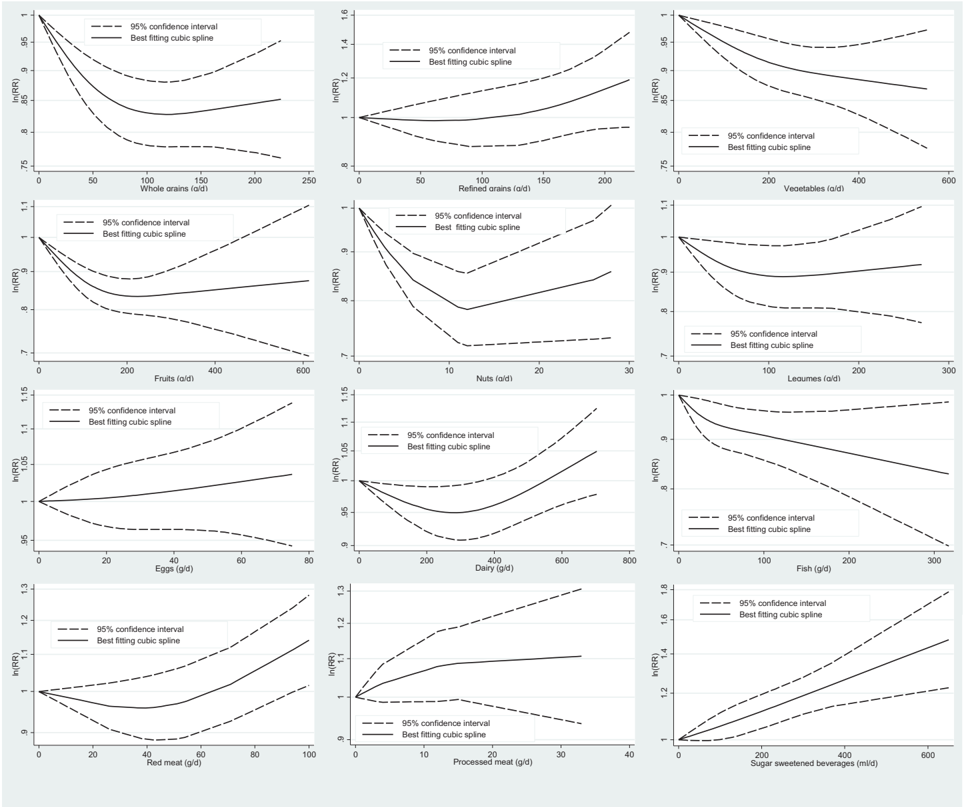
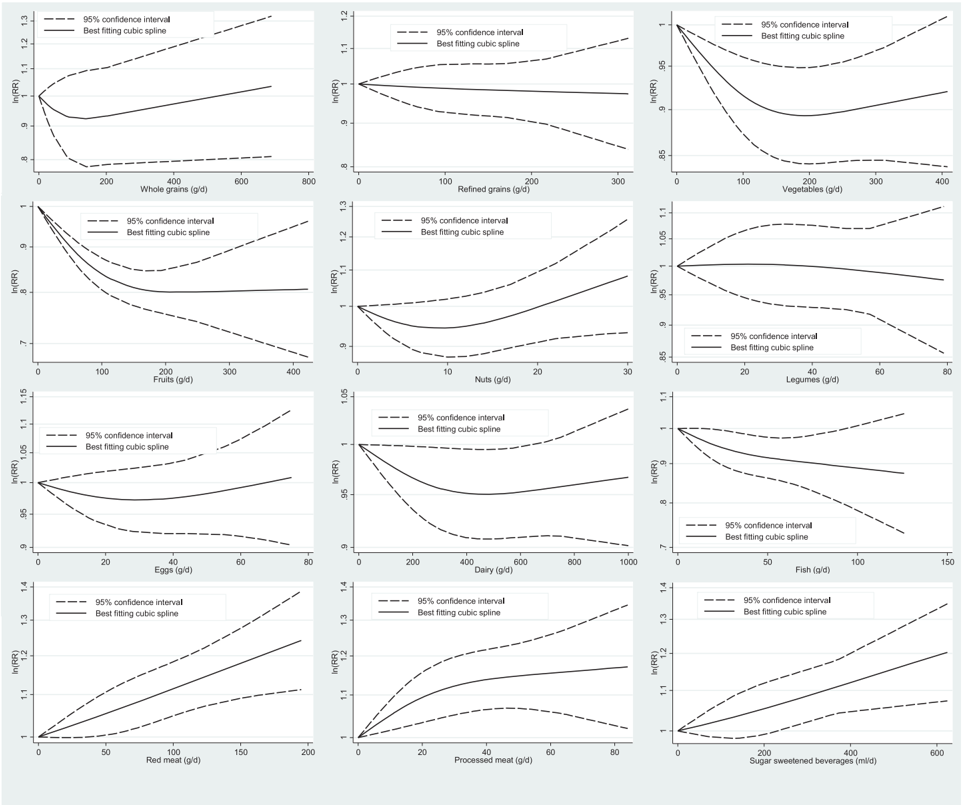
- Non-linear dose-response relationships were indicated for whole grains, fruits, nuts, dairy, and red meat with CHD, and for vegetables with stroke. Optimal consumption of risk-decreasing foods was calculated to reduce CHD risk by 65% and stroke risk by 40%; consuming 2 servings/day of red meat, processed meat, and SSB was associated with a 60% increased stroke risk, and not consuming these foods would reduce stroke risk by about 38%.
- NutriGrade meta-evidence was moderate for 10 food groups and low for refined grains and eggs regarding CHD; for stroke it was low for whole grains, refined grains, nuts, and legumes and moderate for the other eight; for HF it was very low for refined grains, low for whole grains, vegetables, fruits, nuts, dairy, and SSB, and moderate for eggs, fish, red meat, and processed meat.
Methods
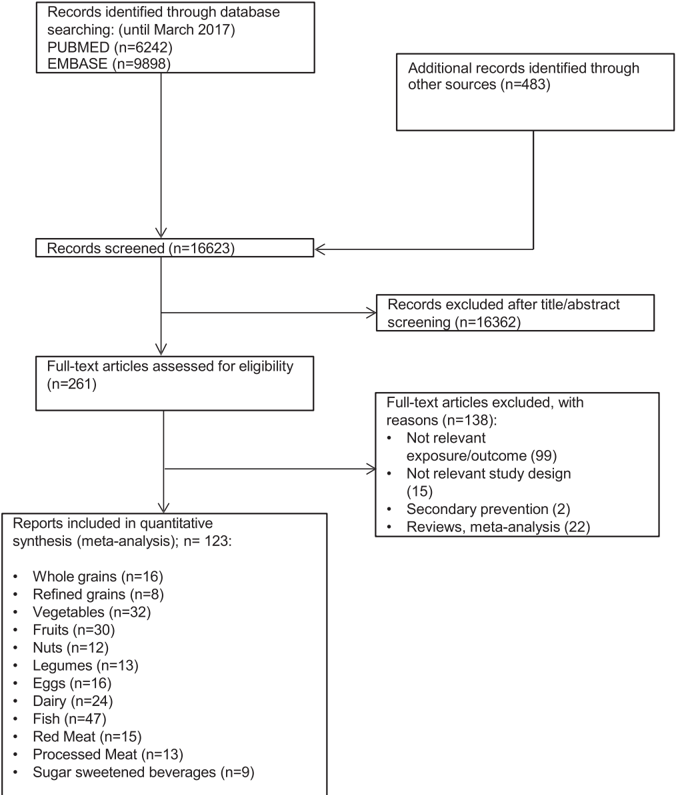
- Systematic search of PubMed and Embase up to March 2017 for prospective studies; 123 reports were included, covering 12 a priori defined food groups and CHD, stroke, and HF outcomes.
- Random-effects meta-analyses estimated summary RRs and 95% CIs for highest versus lowest intake categories and for linear and non-linear dose-response relationships; restricted cubic splines were used for non-linearity, and NutriGrade assessed meta-evidence quality.
- Subgroup and sensitivity analyses examined sex, follow-up length, geographic location, number of cases, dietary assessment, low risk of bias, nested case-control studies, and odds-ratio studies; the review was registered in PROSPERO (CRD42016037069).
Limitations
- Stated: some included studies used only baseline food intake, assuming stable consumption over time; substantial heterogeneity existed in population size, follow-up length, baseline age, and food consumption, and high statistical heterogeneity often persisted in subgroup analyses.
- Stated: residual confounding by lifestyle or socioeconomic status was possible, and for most food groups in relation to HF only a very limited number of studies was available, so some HF results should be interpreted with caution.
- Stated: the review excluded prospective studies on overall CVD and outcome-specific mortality, which may explain differences from other meta-analyses; evident from the text, many dose-response estimates relied on few studies (e.g., HF analyses with n = 1 for some foods), and NutriGrade confidence was mostly moderate or lower, limiting certainty.
Model-written summary. Check it against the paper before relying on it.
Integrity signals
Registry
Cites
Statistics
Figures


Verification
Claims the paper makes
0 Valid · 1 Not valid · 31 Not checked · 214 Own results and interpretations
A result the paper reports from its own data — it cites no other source for it, so there is none to check. The quote shows it is in the paper.
In the paper
“vegetables and fruits (RRCHD: 0.97 (0.96 -0.99)”
- Also stated in: § Vegetables · p. 7 · plain
“Each additional daily 100 g of vegetables were inversely associated with risk of CHD (RR: 0.97; 95% CI 0.96 to 0.99, I 2 D 12%, pheterogeneity D 0.32, n D 14)”
plainstates an association- Asserted: passes — The authors put it forward as true.
- Checkable: passes — It can be checked against evidence.
- Load-bearing: passes — The paper’s conclusions depend on it.
- Based: passes — The paper gives a reason why it holds.
- Rests on 3 assumptions not shown here.
- Also stated in: § Vegetables · p. 7 · plain
A result the paper reports from its own data — it cites no other source for it, so there is none to check. The quote shows it is in the paper.
In the paper
“stroke (RR: 0.91; 95% CI 0.82 to 1.02, I 2 D 53%, pheterogeneity D 0.05)”
plainstates an associationn = 11,114- Asserted: passes — The authors put it forward as true.
- Checkable: passes — It can be checked against evidence.
- Load-bearing: passes — The paper’s conclusions depend on it.
- Based: passes — The paper gives a reason why it holds.
- Rests on an assumption not shown here.
A result the paper reports from its own data — it cites no other source for it, so there is none to check. The quote shows it is in the paper.
In the paper
“There were clear indications for nonlinear dose-response relationships between whole grains, fruits, nuts, dairy, and red meat and CHD.”
boostedstates an association- Asserted: passes — The authors put it forward as true.
- Checkable: passes — It can be checked against evidence.
- Load-bearing: passes — The paper’s conclusions depend on it.
- Based: passes — The paper gives a reason why it holds.
- Rests on 3 assumptions not shown here.
A result the paper reports from its own data — it cites no other source for it, so there is none to check. The quote shows it is in the paper.
In the paper
“but not with risk of stroke (RR: 0.99; 95% CI 0.95 to 1.03, I 2 D 65%, pheterogeneity D 0.04, n D 4)”
plain- Asserted: passes — The authors put it forward as true.
- Checkable: passes — It can be checked against evidence.
- Load-bearing: passes — The paper’s conclusions depend on it.
- Based: passes — The paper gives a reason why it holds.
- Rests on 3 assumptions not shown here.
A result the paper reports from its own data — it cites no other source for it, so there is none to check. The quote shows it is in the paper.
In the paper
“RRHF: 0.96 (0.95 -0.97))”
- Also stated in: § Whole grains · p. 6 · plain
“and HF (RR: 0.96; 95% CI 0.95 to 0.97, I 2 D 0%, pheterogeneity D 0.36, n D 2)”
plainstates an associationn = 6,455- Asserted: passes — The authors put it forward as true.
- Checkable: passes — It can be checked against evidence.
- Load-bearing: passes — The paper’s conclusions depend on it.
- Based: passes — The paper gives a reason why it holds.
- Rests on 3 assumptions not shown here.
- Also stated in: § Whole grains · p. 6 · plain
181 more claims
Create a free account to see all 246 claims and to verify the 57 references still open.
- The quote only partly states this claim. 16
- It may state two separate claims as one. 24
- Probably not a substantial claim. 25
Claims other papers make about this one
Each is checked against this paper’s own text: does it say what the citing paper says it does?
The source backs part of the claim, not all of it — or backs it for a different population, condition or comparison.
In the citing paper
“each 250 mL/day increment of sugar sweetened beverage consumption was associated with a 17% and 4% higher risk of coronary heart disease (class II evidence) and all cause mortality (class III evidence), respectively.”
From Dietary sugar consumption and health: umbrella review (2023) · cites this paper as [10]
Experimental — accuracy not yet measuredThe source backs part of the claim, not all of it — or backs it for a different population, condition or comparison.
In the citing paper
“We observed no significant association between sugar sweetened beverage consumption and changes in diastolic blood pressure (children and adolescents)69 or heart failure.10”
From Dietary sugar consumption and health: umbrella review (2023) · cites this paper as [10]
Experimental — accuracy not yet measuredThe cited source says what the claim attributes to it.
In the citing paper
“A recent dose-response meta-analysis showed that each 250 mL/day increment of sugar sweetened beverage consumption was positively associated with a 7% (risk ratio 1.07, 1.02 to 1.12) higher risk of stroke.”
From Dietary sugar consumption and health: umbrella review (2023) · cites this paper as [10]
The cited source says what the claim attributes to it.
In the citing paper
“harmful associations between dietary sugar consumption and cardiovascular outcomes were also observed, including coronary heart disease,10 cardiovascular disease,8 cardiovascular disease mortality,68 71 hypertension in children and adolescents,69 hypertension in adults,70 myocardial infarction,66 change in systolic blood pressure in children and adolescents,69 and stroke.10”
From Dietary sugar consumption and health: umbrella review (2023) · cites this paper as [10]
Self-check
Percentages, sums and reported differences re-computed from the paper’s own numbers.
Each contradiction between two passages listed here was confirmed by an independent check.
Rated minor: it would not touch a result — a value no result rests on, a p-value that stays on the same side of the significance level, or a conflict that is clerical, resolved elsewhere in the paper, or outside its own findings.
In the paper
§ Discussion · p. 12
“The NutriGrade tool for evaluating the meta-evidence suggested a moderate con fi dence in the effect estimate for eggs, dairy, fi sh, red meat, and processed meat with respect to all three outcomes simultaneously;”
§ Quality of meta-evidence · p. 11
“The NutriGrade meta-evidence grading regarding CHD was rated ' low ' for re fi ned grains, and eggs and ' moderate ' for the 10 other food groups.”
Citations
Cites
Bias in meta-analysis detected by a simple, graphical test
Egger, M., Smith, G. D., Schneider, M., & Minder, C. (1997) · BMJ · doi:10.1136/bmj.315.7109.629 · Cited by 56,722 · cited 2×
“Potential small-study effects, such as publication bias, were explored using Egger (cid:2) s test and funnel plots (Egger et al. 1997), if at least 10 studies were available (Higgins and Green 2011).”
Meta-analysis in clinical trials
DerSimonian, R., & Laird, N. (1986) · Controlled Clinical Trials · doi:10.1016/0197-2456(86)90046-2 · Cited by 39,552 · cited 1×
“To evaluate the weighting of each study, the standard error for the log-transformed RR of each study was calculated and regarded as the estimated variance of the log-transformed RR, using an inverse variance method (DerSimonian and Laird 1986).”
Quantifying heterogeneity in a meta‐analysis
Higgins, J. P. T., & Thompson, S. G. (2002) · Statistics in Medicine · doi:10.1002/sim.1186 · Cited by 36,763 · cited 2×
“…Buckland et al. 2009; Dauchet et al. 2004; Del Gobbo et al. 2015; Dilis et al. 2012; Gillman et al. 1995; Hansen et al. 2017; Hansen et al. 2010; Hirvonen et al. 2001; Johnsen et al. 2003; Joshipura et al. 1999; Keli et al. 1996; Kobylecki et al. 2015; Larsson et al. 2009b; Larsson et al.…”
Meta-analysis of Observational Studies in Epidemiology<SUBTITLE>A Proposal for Reporting</SUBTITLE>
Stroup, D. F. (2000) · JAMA · doi:10.1001/jama.283.15.2008 · Cited by 20,623
European Guidelines on cardiovascular disease prevention in clinical practice (version 2012)
Authors/Task Force Members:, Perk, J., De Backer, G., Gohlke, H., Graham, I., Reiner, Ž., Verschuren, M., Albus, C., Benlian, P., Boysen, G., et al. (2012) · European Heart Journal · doi:10.1093/eurheartj/ehs092 · Cited by 8,490
(1980) · Neuropediatrics · doi:10.1055/s-2008-1071391 · Cited by 3,990 · cited 1×
“This systematic review was planned and conducted according to the standards of the Meta-analysis of Observational Studies in Epi-demiology (Stroup et al. 2000).”
Authors/Task Force Members, Graham, I., Atar, D., Borch-Johnsen, K., Boysen, G., Burell, G., Cifkova, R., Dallongeville, J., De Backer, G., Ebrahim, S., et al. (2007) · European Heart Journal · doi:10.1093/eurheartj/ehm316 · Cited by 3,753
Flexible regression models with cubic splines
Durrleman, S., & Simon, R. (1989) · Statistics in Medicine · doi:10.1002/sim.4780080504 · Cited by 2,689 · cited 1×
“…three fi xed knots at 10%, 50%, and 90% through the total distribution of the reported intake, and combined them using multivariable meta-analysis (Durrleman and Simon 1989) (if at least 2 studies with at least three quantitative exposure levels were known for one of the 12 food groups with the…”
Aune, D., Giovannucci, E., Boffetta, P., Fadnes, L. T., Keum, N., Norat, T., Greenwood, D. C., Riboli, E., Vatten, L. J., & Tonstad, S. (2017) · International Journal of Epidemiology · doi:10.1093/ije/dyw319 · Cited by 2,419 · cited 4×
“This difference could be explained by the greater number of studies (due to inclusion of studies on cause-speci fi c mortality and overall CVD) included by Aune et al. (Aune et al. 2017).”
InfluentialMethods for Trend Estimation from Summarized Dose-Response Data, with Applications to Meta-Analysis
Greenland, S., & Longnecker, M. P. (1992) · American Journal of Epidemiology · doi:10.1093/oxfordjournals.aje.a116237 · Cited by 2,353 · cited 1×
“The method described by Greenland and Longnecker (Greenland and Longnecker 1992) was applied for the dose-response analysis and computed study-speci fi c slopes (linear trends) and corresponding 95% CIs from the natural logs of the RRs and CIs across intake categories of the 12 food groups.”
Research works printed but not linked: 1
- Higgins, J., and S. Green. 2011. Cochrane handbook for systematic reviews of interventions Version 5.1.0 [updated March 2011]. The Cochrane Collaboration. Available from www.handbook.cochrane.org.
Cited by
Items 401–500 of 596
Wright, M. (2022) · Physician Assistant Clinics · doi:10.1016/j.cpha.2022.05.001 · Cited by 9
The Inflammatory Potential of Diet and Pain Incidence: A Cohort Study in Older Adults
Carballo‐Casla, A., García‐Esquinas, E., López‐García, E., Donat‐Vargas, C., Banegas, J. R., Rodríguez‐Artalejo, F., & Ortolá, R. (2022) · The Journals of Gerontology Series A · doi:10.1093/gerona/glac103 · Cited by 7
Morton, K. F., Pantalos, D. C., Ziegler, C. H., & Patel, P. D. (2021) · American Journal of Lifestyle Medicine · doi:10.1177/15598276211041551 · Cited by 8
Nouri, F., Haghighatdoost, F., Mohammadifard, N., Mansourian, M., Sadeghi, M., Roohafza, H., Khani, A., & Sarrafzadegan, N. (2021) · British Food Journal · doi:10.1108/bfj-08-2020-0699 · Cited by 7
Würtz, A. M. L., Hansen, M. D., Tjønneland, A. M., Rimm, E. B., Schmidt, E. B., Overvad, K., & Jakobsen, M. U. (2021) · British Journal Of Nutrition · doi:10.1017/s0007114521000349 · Cited by 7
“However, most studies examining the association between vegetable intake and CHD have not specified the replaced foods.”
BackgroundResultInfluentialLanuza, F., Zamora‐Ros, R., Hidalgo‐Liberona, N., Andrés‐Lacueva, C., & Meroño, T. (2020) · Nutrients · doi:10.3390/nu12092815 · Cited by 8
“The optimal WG intake range is still under debate and although a range of 100 to 125 g/day has been proposed [27], another study suggested that a WG intake of 210–225 g/day was needed to reduce the risk of chronic diseases and mortality [28].”
BackgroundWhole-Wheat Bread for Human Health
Dror, Y., Rimon, E., & Vaida, R. (2020) · doi:10.1007/978-3-030-39823-1 · Cited by 5
Ribeiro, G. J. S., Nobre, L. N., dos Santos, G. R., Moriguchi, E. H., & Pinto, A. D. A. (2024) · Revista Brasileira de Geriatria e Gerontologia · doi:10.1590/1981-22562024027.240020.en · Cited by 7
“Crude and adjusted odds ratios (OR) and 95% confidence intervals (CI) for heart failure associated with the consumption of ultra-processed foods in older adults Roraima, Brazil, 2020. beverages to an increased risk of HF 25 .”
BackgroundSugar Consumption and Oral Health
Heilmann, A., Machuca, C., & Watt, R. G. (2020) · Textbooks in contemporary dentistry · doi:10.1007/978-3-030-50123-5_19 · Cited by 12
Mathiyalagen, P., Rajagopal, A., Vasudevan, K., Gnanasekaran, S., Nagaraja, S. B., Bora, J. K., & Goel, S. (2025) · PLoS ONE · doi:10.1371/journal.pone.0332226 · Cited by 7
Zhang, H., Gan, M., Wu, Q., Dan, H., Chen, L., Niu, L., Zhao, Y., Wang, Y., Zhu, L., & Shen, L. (2025) · Food Chemistry X · doi:10.1016/j.fochx.2025.103211 · Cited by 5
Langmann, F., Prioux, C., Touvier, M., Kesse‐Guyot, E., Fezeu, L., Baudry, J., Dahm, C. C., & Allès, B. (2025) · European Journal of Nutrition · doi:10.1007/s00394-025-03722-w · Cited by 5
“In fact, the consumption of up to 100 g/day legumes was associated with a 10% lower risk of coronary heart disease in a non-linear meta-analysis [ 18].”
InfluentialRegis, B., Passeri, L., Moreira, N. X., Borges, N. A., Alves, M. R., & Mafra, D. (2025) · Molecular Nutrition & Food Research · doi:10.1002/mnfr.70121 · Cited by 4
“Generally, studies indicate that fish consumption is associated with a reduced risk of CVD, partly attributed to the high content of long-chain n –3 PUFAs [8].”
InfluentialChanges in attitudes toward meat consumption after chatting with a large language model
Karakaş, N., & Jaeger, B. (2025) · Social Influence · doi:10.1080/15534510.2025.2475802 · Cited by 7
“In recent years, there has been an increasing recognition of the negative consequences of meat consumption for the environment, personal health, and animal welfare (Bechthold et al., 2019; Bonnet et al., 2020; Etemadi et al., 2017; Henry et al., 2019; Roser, 2023; Xu et al., 2021).”
Red Meat Consumption and Hypertension: An Updated Review
Allen, T. S., Najem, M., Wood, A. C., Lee, D. J., Pacheco, L. S., Daniels, L. B., & Allison, M. (2025) · Current Cardiology Reports · doi:10.1007/s11886-025-02201-2 · Cited by 6
Kesse‐Guyot, E., Baudry, J., Berlivet, J., Perraud, E., Allès, B., Julia, C., Fezeu, L., Herçberg, S., Mariotti, F., Touvier, M., et al. (2025) · European Journal of Epidemiology · doi:10.1007/s10654-024-01196-4 · Cited by 4
Gu, F., Yu, W., Shu, T., & Zhu, Y. (2025) · Frontiers in Nutrition · doi:10.3389/fnut.2024.1496379 · Cited by 6
School Milk Programs in Latin America and the Caribbean
Wineman, A., Martinez, M., Jacquet, N., Rodrigues, E. L. D. G. V. N., & Mitchell, A. H. (2024) · Current Developments in Nutrition · doi:10.1016/j.cdnut.2024.104541 · Cited by 6
“Milk or dairy consumption is associated with children ’ s growth and lean body mass [4]; greater micro-nutrient suf fi ciency [5]; and reduced likelihood of coronary artery disease, stroke, and heart failure (speci fi cally when consumed in an optimal amount) [6].”
Healthy food diversity and the risk of major chronic diseases in the EPIC-Potsdam study
Nickel, D., Jannasch, F., Eroglu, E. I., Kuxhaus, O., & Schulze, M. B. (2024) · Scientific Reports · doi:10.1038/s41598-024-78287-5 · Cited by 7
Heterogeneity in diet-related non-communicable disease risks in a Chinese population
Chang, Z., Biesbroek, S., Cai, H., Fan, S., Ni, Y., Wen, X., Veer, P. V. ’., & Talsma, E. F. (2024) · European Journal of Nutrition · doi:10.1007/s00394-024-03481-0 · Cited by 4
“The SR represents the combined risk-increasing or risk-reducing potential of a complete diet on the corresponding diet-related non-communicable diseases (NCDs), following the methods outlined by Schwingshackl et al. in 2019 [25].”
InfluentialIdentifying the Leading Sources of Saturated Fat and Added Sugar in U.S. Adults
Taylor, C. A., Madril, P., Weiss, R., Thomson, C. A., Dunton, G. F., Jospe, M. R., Richardson, K. M., Bedrick, E. J., & Schembre, S. M. (2024) · Nutrients · doi:10.3390/nu16152474 · Cited by 7
“Decreasing risks for cardiovascular disease (CVD), diabetes, hypertension, and other chronic diseases are directly anchored to overall diet quality and, more specifically, dietary components [1–3].”
BackgroundCoyle, D. H., Davies, T., Taylor, F., Howes, K., Pettigrew, S., & Jones, A. (2024) · Current Developments in Nutrition · doi:10.1016/j.cdnut.2023.102058 · Cited by 4
“High sugar intakes can contribute to a wide range of unfavorable health outcomes including unhealthy weight gain [1,2], dental caries [3], and an increased risk of noncommunicable diseases, such as type 2 diabetes [3], cardiovascular disease [4, 5], stroke [4], and certain cancers [6 – 8].”
BackgroundDietary Recommendations for Persons with Type 2 Diabetes Mellitus
Skurk, T., Bosy‐Westphal, A., Grünerbel, A., Kabisch, S., Keuthage, W., Kronsbein, P., Müssig, K., Nussbaumer, H., Pfeiffer, A. F. H., Simon, M., et al. (2024) · Experimental and Clinical Endocrinology & Diabetes · doi:10.1055/a-2166-6772 · Cited by 5
Effects of incorporation of lupin flour on the quality attributes of beef burger
Alrahaife, A. J., & Abu-Alruz, K. (2023) · Online Journal of Animal and Feed Research · doi:10.51227/ojafr.2023.48 · Cited by 4
“Due to their high protein content (Sujak et al., 2006), low-fat content (Annicchiarico et al., 2014), and significant beneficial effects on the physiological state of the human body, in particular for those suffering from diabetes, hypertension, obesity, and (CVD) (Ahmed, 2014; Prusinski, 2017), this study sought to u…”
BackgroundMcCormick, S. J., Smith-Holmquist, N., & Benton, M. J. (2023) · Journal of the American Association of Nurse Practitioners · doi:10.1097/jxx.0000000000000925 · Cited by 6
“Aninverseassociationbetween fruit and vegetableintakeandriskforheartdisease, stroke, heart failure (Bechthold et al., 2019), type 2 diabetes (Li et al., 2014), osteoarthritis (Han et al., 2017), and all-cause mortality (Leenders et al., 2014) has also been observed.”
BackgroundHealthy Eating in Population Models of Nutrition: Asian Diet Style Summary
Shvabskaya, O. B., Karamnova, N. S., Izmailova, O. V., & Drapkina, O. M. (2023) · Rational Pharmacotherapy in Cardiology · doi:10.20996/1819-6446-2022-12-08 · Cited by 4
The role of the dietary patterns in the cardiovascular disease risk prevention
Pelczyńska, M., Burak, W., Królak, S., Geppert, A., Lipczyński, M., Grzybołowska, J., & Kociubiński, P. (2022) · Journal of Medical Science · doi:10.20883/medical.e704 · Cited by 6
Empfehlungen zur Ernährung von Personen mit Diabetes mellitus Typ 2
Skurk, T., Bosy‐Westphal, A., Grünerbel, A., Kabisch, S., Keuthage, W., Kronsbein, P., Müssig, K., Pfeiffer, A. F. H., Simon, M., Tombek, A., et al. (2022) · Die Diabetologie · doi:10.1007/s11428-022-00908-2 · Cited by 6
“kardiovaskuläres Risiko undeinegeringere kardiovaskuläre und Gesamtmortalität angaben [241, 253, 254].”
BackgroundZhang, H., Lin, Z., Chen, J., Gan, D., Zhou, H., Ma, Z., Zeng, X., Xue, Y., Wang, X., Zhan, Q., et al. (2022) · Frontiers in Cardiovascular Medicine · doi:10.3389/fcvm.2022.893436 · Cited by 7
The Influence of My Plate Campaign to Increase Local Fruit And Vegetable Consumption
Khairunnisa, M., Nurcahyani, Y. D., Samsudin, M., & Martiyana, C. (2022) · IOP Conference Series Earth and Environmental Science · doi:10.1088/1755-1315/1024/1/012081 · Cited by 6
Ge, B., Chen, H. H., & Liao, X. (2022) · Evidence-based Complementary and Alternative Medicine · doi:10.1155/2022/7984658 · Cited by 5
“Compared with traditional experimental research, metaanalysis is a systematic review method with a combination of quantitative and qualitative analysis, contributing to expanding the sample size of this research topic and obtaining more objective and scientific results [9].”
MethodHe, C., Wang, W., Chen, Q., Shen, Z., Pan, E., Sun, Z., Lou, P., & Zhang, X. (2022) · Public Health Nutrition · doi:10.1017/s1368980022000763 · Cited by 4
“effect on stroke, which are consistent with the results of our study(41,49,52,55).”
ResultLu, Y., Matsuyama, S., Sugawara, Y., Sone, T., & Tsuji, I. (2022) · European Journal of Nutrition · doi:10.1007/s00394-022-02843-w · Cited by 5
Diet Quality and Survival in a Population-Based Bladder Cancer Study
Leeming, R. C., Karagas, M. R., Gilbert‐Diamond, D., Emond, J. A., Zens, M. S., Schned, A. R., Seigne, J. D., & Passarelli, M. N. (2021) · Nutrition and Cancer · doi:10.1080/01635581.2021.2008989 · Cited by 6
Rossi, J., & Woods, T. A. (2021) · Journal of Agriculture Food Systems and Community Development · doi:10.5304/jafscd.2021.111.005 · Cited by 7
“, 2018), as well as decreasing rates of other chronic diseases (Bechthold et al., 2019; Bellavia et al., 2013; Boeing et al., 2012; Dauchet et al., 2006).”
BackgroundDisparities in Local Wellness Policies Implementation Across Maryland Schools
Feinberg, T., Parker, E. A. D., Lane, H., Rubio, D. S., Wang, Y., & Hager, E. R. (2021) · Journal of School Health · doi:10.1111/josh.13087 · Cited by 4
Yi, S.-Y. Y., Steffen, L. M., Haring, B., Rebholz, C. M., Mosley, T. H., & Shah, A. M. (2021) · Nutrition Metabolism and Cardiovascular Diseases · doi:10.1016/j.numecd.2021.08.050 · Cited by 6
Thomsen, S. T., Nauta, M. J., Jakobsen, L. S., Jakobsen, M. U., Mejborn, H., Outzen, M. H., Poulsen, M., Ravn‐Haren, G., & Andersen, R. (2021) · Frontiers in Nutrition · doi:10.3389/fnut.2021.607929 · Cited by 5
Marchello, N. J., Gibbs, H., Sullivan, D. K., Taylor, M. K., Hamilton‐Reeves, J. M., Beltramo, A., & Befort, C. A. (2020) · Journal of Cancer Survivorship · doi:10.1007/s11764-020-00951-2 · Cited by 5
Song, P., Li, C., Feng, G.-Y., Zhang, J., Li, L., Yang, T.-T., Dong, M., Liu, A.-L., Zhang, Q., Liu, Y., et al. (2020) · China CDC Weekly · doi:10.46234/ccdcw2020.120 · Cited by 4
Egg consumption and risk of chronic disease: an (un-)resolved issue?
Schwingshackl, L. (2020) · American Journal of Clinical Nutrition · doi:10.1093/ajcn/nqaa035 · Cited by 6
Self-citationNutrients and Nutraceuticals for Active & Healthy Ageing
Nabavi, S., Grazia, D., Onofrio, & Nabavi, S. (2020) · doi:10.1007/978-981-15-3552-9 · Cited by 4
A Global Perspective on White Rice Consumption and Risk of Type 2 Diabetes
van Dam, R. M. (2020) · Diabetes Care · doi:10.2337/dci20-0042 · Cited by 32
Sun, Q., & Hu, F. B. (2026) · Journal of Nutrition · doi:10.1016/j.tjnut.2026.101669 · Cited by 4
Optimizing Wheat Milling By-Products: An Overview of Processing Techniques
Khashaba, R. A., Lou, H., Li, Y. J., Omer, S. H. S., Wang, X., Gu, Z., & Zhao, R. (2026) · Foods · doi:10.3390/foods15061085 · Cited by 4
“…by strong evidence from clinical studies that have evaluated the https://doi.org/10.3390/foods15061085 relationship between WBP consumption and a reduced incidence of hypercholesterolemia, atherosclerosis, cardiovascular diseases [81], type 2 diabetes [82], and different types of cancer [83,84].”
InfluentialLiu, J., Shen, Q., & Wang, X. (2026) · Journal of Human Nutrition and Dietetics · doi:10.1111/jhn.70198 · Cited by 3
Antioxidants and Exercise Performance: Focus on Mediterranean Diet
Annunziata, G., Camajani, E., Galasso, M., Verde, L., Caprio, M., Muscogiuri, G., Paoli, A., & Barrea, L. (2025) · Antioxidants · doi:10.3390/antiox15010010 · Cited by 6
Ding, R., Elmadhoun, O., Chen, R., & Ji, X. (2025) · Brain Circulation · doi:10.4103/bc.bc_15_25 · Cited by 5
“[71] The Mediterranean diet is an effective approach to reducing stroke risk.”
Akinboyewa, T., Li, Z.-L., Ning, H., Lessani, M. N., Holmes, L. M., & Qiao, S. (2025) · PLoS ONE · doi:10.1371/journal.pone.0329455 · Cited by 3
“These food groups are rich in vitamins, minerals, and antioxidants, which play crucial roles in heart health by reducing blood pressure and mitigating inflammation [15].”
Arango‐Angarita, A., Unar‐Munguía, M., Zepeda‐Tello, R., Batis, C., & Rivera, J. Á. (2025) · BMC Public Health · doi:10.1186/s12889-025-23988-3 · Cited by 7
“Nevertheless, the RR information was sourced from studies of moderate to high methodological quality [3, 5, 6, 44–46] and was used in similar studies [20, 21].”
InfluentialHe, T., Deng, Y., Ohgami, N., Kagawa, T., Tazaki, A., Harusato, A., Ohnuma, S., Naito, H., Tamura, T., Wakai, K., et al. (2025) · Ecotoxicology and Environmental Safety · doi:10.1016/j.ecoenv.2025.118581 · Cited by 3
Simojoki, M., Kaartinen, N. E., Maukonen, M., Harald, K., Tapanainen, H., Albanes, D., Eriksson, J. G., Jousilahti, P., Koskinen, S., Pajari, A., et al. (2025) · European Journal of Epidemiology · doi:10.1007/s10654-025-01232-x · Cited by 3
“Red meat and processed meat were studied separately as they may have a different impact on the risk of CVD [2].”
Lv, Y., Wu, M., Liu, W., Liu, K., Wang, Y., Cui, Z., Ma, Q., & Meng, H. (2025) · Nutrients · doi:10.3390/nu17071152 · Cited by 4
“These food groups have been reported to relate to reduced risk of CMDs [59–61] and all-cause mortality [61,62], which may be attributed to their favorable effects on body weight management [63] and improving cardiometabolic risk factors, such as lipid and lipoprotein profiles [63,64], insulin…”
Alkhulaifi, H. S. M., Al-Shammari, N., Hakami, A. H. O., Alqarnii, M. S. M., Alshehri, K. M., Alshammary, H. H., Somily, T. I., Mahnashi, A., Albalawi, S. S., Otabei, M. H. S. A., et al. (2024) · Egyptian Journal of Chemistry · doi:10.21608/ejchem.2024.320089.10401 · Cited by 3
Valuing Health and Performance: A Case for Prioritizing Nutrition
Carins, J., Fisher, B., Probert, B., & Fallowfield, J. L. (2024) · Military Medicine · doi:10.1093/milmed/usae522 · Cited by 5
Lotfi, M., Jalali, S. M., Leilami, K., Askarpour, M., Shateri, Z., Rezaianzadeh, A., Johari, M. G., Nouri, M., & Faghih, S. (2024) · BMC Research Notes · doi:10.1186/s13104-024-06976-5 · Cited by 3
“Numerous studies have shown that the consumption of different food groups and different types of patterns can be positively or negatively associated with risk factors for CVDs [5–7].”
BackgroundGluten-Free Bakery Foods Enriched with Plant Proteins: An Overview
Menaka, U., Wijesekara, I., Navaratne, S. B., & Wickramasinghe, I. (2024) · Food Reviews International · doi:10.1080/87559129.2024.2374814 · Cited by 5
“[41] Consumption of plant proteins has a negative correlation with the risk of all-cause mortality, [42] cardiovascular disease, [42] coronary heart disease, [43] diabetes, [44] and level of low-density lipoproteins (LDL).”
English, C. J., Jones, M., Lohning, A. E., Mayr, H. L., MacLaughlin, H. L., & Reidlinger, D. P. (2023) · European Journal of Nutrition · doi:10.1007/s00394-023-03277-8 · Cited by 4
Prediction Model for Diagnosing Heart Disease Using Classification Algorithm
Pradini, R. S., Anshori, M., Haris, M. S., Marilia, B., & Geraldo, T. (2023) · Journal of World Future Medicine Health and Nursing · doi:10.55849/health.v1i2.347 · Cited by 3
Rikhtehgaran, R., Shamsi, K., Renani, E. M., Arab, A., Nouri, F., Mohammadifard, N., Marateb, H. R., Mansourian, M., & Sarrafzadegan, N. (2023) · Frontiers in Nutrition · doi:10.3389/fnut.2023.1150481 · Cited by 6
Keshabyants, E. E., Denisova, N. N., Сергеевна, А. М., & Smirnova, E. A. (2023) · ЗДОРОВЬЕ НАСЕЛЕНИЯ И СРЕДА ОБИТАНИЯ - ЗНиСО / PUBLIC HEALTH AND LIFE ENVIRONMENT · doi:10.35627/2219-5238/2023-31-2-47-55 · Cited by 7
Meng, L., & Huang, W. (2022) · Medicine · doi:10.1097/md.0000000000030250 · Cited by 3
“3 million annual deaths, and China has contributed about 130,000 deaths.[8,9] Together with arrhythmia, it is responsible for the largest number of cardiac-associated mortality and morbidity worldwide.”
BackgroundAbou‐Dakn, M., Alexy, U., Beyer, K., Cremer, M., Ensenauer, R. E., Flothkötter, M., Geene, R., Hellmers, C., Joisten, C., Koletzko, B. V., et al. (2022) · Monatsschrift Kinderheilkunde · doi:10.1007/s00112-022-01519-3 · Cited by 9
Quintão, E. C. R. (2022) · Archives of Endocrinology and Metabolism · doi:10.20945/2359-3997000000464 · Cited by 4
“Other authors blame dietary cholesterol in cardiovascular risk (42-46).”
BackgroundMatre, Å. O., Parys, A. V., Olsén, T., Haugsgjerd, T. R., Baravelli, C. M., Nygard, O. K., Dierkes, J., & Lysne, V. (2021) · Frontiers in Nutrition · doi:10.3389/fnut.2021.642612 · Cited by 5
“However, data on the association between meat intake and clinical outcomes among CVD patients are lacking.”
BackgroundInfluentialOpportunities and challenges for research on low-carbohydrate diets in prostate cancer
Langlais, C. S., & Chan, J. M. (2020) · Nature Reviews Urology · doi:10.1038/s41585-020-0326-8 · Cited by 3
Ribeiro, G. J. S., Nobre, L. N., dos Santos, G. R., Moriguchi, E. H., & Pinto, A. D. A. (2024) · Revista Brasileira de Geriatria e Gerontologia · doi:10.1590/1981-22562024027.240020.pt · Cited by 7
Melhaoui, R., Houmy, N., Kodad, S., Belhaj, K., Mansouri, F., Addi, M., Abid, M., Mihamou, A., Hano, C., Sindic, M., et al. (2021) · E3S Web of Conferences · doi:10.1051/e3sconf/202124004004 · Cited by 4
Vegetarian Dietary Patterns in the Prevention and Treatment of Disease
Kahleová, H., & Katz, D. L. (2020) · Frontiers Research Topics · doi:10.3389/978-2-88963-929-8 · Cited by 3
Li, R., Ye, L., & Qian, L. (2026) · Frontiers in Sustainable Food Systems · doi:10.3389/fsufs.2026.1730111 · Cited by 3
Simojoki, M., Kaartinen, N. E., Maukonen, M., Paalanen, L., Sares‐Jäske, L., Suikki, T., Tapanainen, H., & Männistö, S. (2026) · Sosiaalilääketieteellinen Aikakauslehti · doi:10.23990/sa.163134 · Cited by 4
Relationship between staple food types and cardiovascular disease risk among older Chinese adults
Chen, C., Zhao, F., Du, M., & Wang, X. (2025) · Frontiers in Nutrition · doi:10.3389/fnut.2025.1539920 · Cited by 1
Quantification of Naturally Occurring Prebiotics in Selected Foods
Natale, A., Fiori, F., Turati, F., Vecchia, C. L., Parpinel, M. T., & Rossi, M. (2025) · Nutrients · doi:10.3390/nu17040683 · Cited by 2
“A protective effect of legume consumption on overall mortality [42], coronary heart disease [42], selected cancers [43], and type-2 diabetes [44] has also been reported.”
Vegetable-Enriched Brownies: A Healthier Twist on a Classic Treat
Petka, K., & Topolska, K. (2025) · Nutrients · doi:10.3390/nu17010184 · Cited by 10
“Their low-fat content and bioactive compounds, including polyphenols, reduce cholesterol and inflammation, lowering the risk of chronic diseases [16,17].”
Ganiero, E. G. H. A., Quenum, L. M. G., Dotché, I., Salifou, C., Karim, I., & Karou, S. (2025) · Journal of Food Quality · doi:10.1155/jfq/1990566 · Cited by 2
A Focus on Heart Failure Management through Diet and Nutrition: A Comprehensive Review
Liao, L. P., Pant, A., Marschner, S. L., Talbot, P. L., & Zaman, S. J. (2024) · Hearts · doi:10.3390/hearts5030022 · Cited by 6
“…( 250 g/day) and vegetables (80 g/day) [90] legumes ( 100 g/day) [90] fish (250 g/day) with long-chain omega-3 polyunsaturated fatty acids (PUFA) [90] • Co-administration of L-arginine, PUFA, albumin, folic acid, vitamins B 6 , B 12 and C and magnesium, with statins and aspirin stabilised CAD…”
Senff, J., Tack, R., Mallick, A., Gutiérrez-Martínez, L., Duskin, J., Kimball, T., Chemali, Z., Newhouse, A., Kourkoulis, C., Rivier, C., et al. (2024) · medRxiv · doi:10.1101/2024.07.08.24309905 · Cited by 2
Colizzi, C., Beulens, J. W. J., Vellinga, R. E., Aleksandrova, K., Dahm, C. C., Huybrechts, I., Key, T. J., Laine, J. E., Papier, K., Vineis, P., et al. (2024) · medRxiv · doi:10.1101/2024.06.17.24309022 · Cited by 4
“…fermented dairy) and limited consumption of red and processed meat and sugar-481 sweetened beverages have all been related to both lower risk of stroke and CHD 36–41 , while intakes of whole grains, nuts, and legumes have been more consistently associated with CHD rather than stroke 36,38,40 .”
BackgroundWu, Q. M., Zhang, L., Cheng, C., Chen, X., Bian, S., Huang, L., Li, T., Li, Z., Liu, H., Yan, J., et al. (2024) · BMJ Open · doi:10.1136/bmjopen-2023-082957 · Cited by 2
Li, J.-B. (2024) · Service Oriented Computing and Applications · doi:10.1007/s11761-024-00383-1 · Cited by 2
Carter, S., Hill, A. M., Yandell, C. A., Buckley, J. D., & Coates, A. M. (2024) · BMJ Open · doi:10.1136/bmjopen-2023-081664 · Cited by 2
da Conceição, A. R., da Silva, A., Marcadenti, A., Bersch-Ferreira, Â. C., Weber, B., & Bressan, J. (2023) · International Journal of Food Sciences and Nutrition · doi:10.1080/09637486.2023.2164922 · Cited by 2
Cereal intake and mortality in older Chinese: a 15-year follow-up of a prospective cohort study
Sun, C., Zhang, W. S., Jiang, C. Q., Jin, Y. L., Deng, X. Q., Thomas, G. N., Woo, J., Cheng, K. K., Lam, T. H., & Xu, L. (2022) · European Journal of Nutrition · doi:10.1007/s00394-022-03067-8 · Cited by 5
“In a meta-analysis involving 16,144 events, higher refined grain intake (overall intake ranged from 15 to 540 g/day) was associated with an 11% higher risk of coronary heart disease [36].”
BackgroundResultBochenek, H., Krga, I., Sergi, D., Kouvari, M., Zec, M. M., & Naumovski, N. (2022) · Reviews in Cardiovascular Medicine · doi:10.31083/j.rcm2301041 · Cited by 2
Fisberg, M., Kovalskys, I., Gómez, G., Rigotti, A., Cortés, L. Y., García, M. C. Y., Pareja, R. G., Herrera‐Cuenca, M., Koletzko, B. V., Moreno, L. A., et al. (2021) · Archivos Latinoamericanos de Nutrición · doi:10.37527/2021.71.3.001 · Cited by 4
“…de la asociación de su ingesta con el desarrollo de algunas ENT, que representan algunos de los problemas de salud más costosos y prevenibles (10, 15, 16), es importante reconocer que las bebidas caseras elaboradas a partir de alimentos naturales también pueden aportar cantidades significativas…”
BackgroundGe, B., Chen, H., & Liao, X. (2021) · Medicine · doi:10.1097/md.0000000000026452 · Cited by 5
Eating habits and food composition of stroke survivors as a form of secondary prevention
Mrosková, S., Reľovská, M., Kuriplachová, G., & Schlosserová, A. (2021) · Kontakt · doi:10.32725/kont.2020.047 · Cited by 2
“…fish [RR: 0.86 (0.75–0.99)] and stroke, as well as a positive association between red meat intake [RR: 1.12 (1.06–1.17)], processed meat [RR: 1.17 (1.02–1.34)], sugar-sweetened bev- Mrosková et al. / KONTAKT2 erages [RR: 1.07 (1.02–1.12)] and the risk of stroke (Bechthold et al., 2019).”
BackgroundInfluentialVegane Kinderernährung: Hinweise zur praktischen Umsetzung
Alexy, U., Weder, S., Hoffmann, M., & Keller, M. (2020) · Aktuelle Ernährungsmedizin · doi:10.1055/a-1066-4342 · Cited by 1
“Studien zur Gesundheit und zum Nährstoffstatus von vegan ernährten Säuglingen liegen bisher nicht vor [20].”
BackgroundInfluentialQuelle place pour les produits animaux dans l’alimentation de demain ?
Rémond, D. (2019) · INRAE Productions Animales · doi:10.20870/productions-animales.2019.32.2.2500 · Cited by 12
Fish, fish oil, and fish peptides and other seafood
Singh, R. B., Kartikey, K., Isaza, A., Yazawa, K., Watanabe, S., Juneja, L. R., & Smail, M. M. A. (2021) · Elsevier eBooks · doi:10.1016/b978-0-12-819815-5.00002-1 · Cited by 5
Holovanova, I., Oksak, G. A., Tkachenko, I. M., Khorosh, M. V., Tovstiak, M. M., & Strashko, Y. (2020) · Wiadomosci lekarskie · doi:10.36740/wlek202006132 · Cited by 2
“INTRODUCTION The issue of coronary heart disease is one of the most important medical problems in the world (heart attack aka myocardial infarction, coronary heart disease, angina pectoris) [1, 2, 3, 4].”
BackgroundFathzadeh, K., Nasli‐Esfahani, E., Kazeminejad, S., Yekaninejad, M. S., Lahouti, M., & Azadbakht, L. (2026) · Journal of Diabetes & Metabolic Disorders · doi:10.1007/s40200-026-02024-0 · Cited by 1
“…of trimeth-ylamine n-oxide (TMAO), which may increase the risk of atherosclerosis [56 ]; second, its yolk contains xanthophyll carotenoids such as lutein and zeaxanthin, which have anti-inflammatory, antioxidant, and anti-atherosclerotic effects and may improve cardiovascular health [57].”
Wang, M. E., Britton, A. R., Katsoulis, M., Chang, K., Vamos, E. P., & Llewellyn, C. H. (2026) · BMC Medicine · doi:10.1186/s12916-026-05081-7 · Cited by 1
“…breads and ready-to-eat meals; MPF subcatego-ries comprised fresh fruits and vegetables, whole grains, legumes and beans, dairy products, meats and poultry, fish, and beverages (water, unsweetened tea and coffee), consistent with prior operationalisations in prospective cohort studies [30, 31].”
Global dietary estimates for conducting health, environmental and economic impact assessments
Springmann, M. (2026) · Nature Food · doi:10.1038/s43016-026-01388-z · Cited by 1
“…and relative risk estimates that relate change in risk factors to changes in disease mortality from meta-analyses of epidemiological cohort studies 54–56 , For calculating environmental impacts, we paired the estimates of dietary intake with a set of trade-adjusted and regionalized environmental…”
Schäfer, A. C., Boeing, H., Gazan, R., Conrad, J., Devleesschauwer, B., Gedrich, K., Hauner, H., Kroke, A., Linseisen, J., Limbeck, M., et al. (2026) · Food & Nutrition Research · doi:10.29219/fnr.v70.13758 · Cited by 1
“DALYs originate from complex calculations based on dose-response meta-analyses (4, 5, 18, 19), which result mostly in nonlinear risk relations.”
Self-citationLee, U., Kang, E., Kim, B., Shubekova, D., Dookhuu, A., Lee, H., Lee, J. E., & Kang, M. (2026) · PLoS ONE · doi:10.1371/journal.pone.0350821 · Cited by 1
“Moreover, the steady increase in meat consumption has heightened the risk of colorectal cancer and cardiovascular diseases [8,9].”
Ren, J., Ablimit, M., Maimaitiaili, T., Tuoheti, Z., Zhang, J. J., Jiao, D., Xue, H., & Ablat, N. (2026) · Frontiers in Public Health · doi:10.3389/fpubh.2026.1763155 · Cited by 1
“As PM intake increases to > 70 g/day, the risk of stroke increases by approximately 15% (34).”
InfluentialZhao, L., Sang, L., Liu, Y., Lai, B., Zhao, Q., Zou, L., & Shen, Q. (2026) · Nutrients · doi:10.3390/nu18040659 · Cited by 2
“Moreover, evidence from dietary intervention studies indicates that dose–response relationships are often non-linear, and higher intake levels do not necessarily translate into greater physiological benefits [16].”
Ortega, N., Tennant, P. W. G., Greenwood, D. C., Pano, O., Dahm, C. C., de Souza, R. J., Ibsen, D. B., MacDonald, C., Tobias, D. K., & Tomova, G. D. (2026) · American Journal of Epidemiology · doi:10.1093/aje/kwag188 · Cited by 4
“Three of the meta-analyses we examined (12,14,16) used the Grading of Recommendations Assessment, Development and Evaluation (GRADE) criteria to evaluate the quality of the primary studies and another three (17–19) used the Newcastle-Ottawa Scale to assess risk of bias (26,27).”
Determinants of fish consumption among older adults in the UK
Ekpenyong, M. S., Ogunleye, A., & Bakre, A. T. (2025) · Frontiers in Nutrition · doi:10.3389/fnut.2025.1716700 · Cited by 3
Metadata
- Authors
- Bechthold, A., Boeing, H., Schwedhelm, C., Hoffmann, G., Knüppel, S., Iqbal, K., De Henauw, S., Michels, N., Devleesschauwer, B., Schlesinger, S., & Schwingshackl, L.
- Affiliations
- German Nutrition Society, Bonn, Germany
- German Institute of Human Nutrition (DE)
- University of Vienna (AT)
- Department of Public Health, Ghent University, Gent, Belgium
- Ghent University (BE)
- Institut Scientifique de Santé Publique (BE)
- Deutsches Diabetes-Zentrum e.V. (DE)
- Corresponding author
- Bechthold, Angela
- Boeing, Heiner
- Schwedhelm, Carolina
- Hoffmann, Georg
- Knüppel, Sven
- Iqbal, Khalid
- Michels, Nathalie
- Devleesschauwer, Brecht
- Schlesinger, Sabrina
- Schwingshackl, Lukas
- ORCID
- Venue
- Critical Reviews in Food Science and Nutrition
- Publisher
- Informa UK Limited
- Published
- 2017-11-07
- Volume
- 59
- Issue
- 7
- Pages
- 1071-1090
- ISSN
- 1040-8398 (ISSN-L)
- 1549-7852
- OpenAlex
- W2765815272
- Cited by
- 693
- References
- 227
- Citations by year
- 2026: 37 · 2025: 81 · 2024: 92 · 2023: 95 · 2022: 127 · 2021: 95 · 2020: 73 · 2019: 56 · 2018: 32 · 2017: 2
- FWCI
- 7.24
- Type
- journal article
- Language
- en
- Open access
- hybrid
- doi.org
- Licence
- Locations
- Critical Reviews in Food Science and Nutrition (publishedVersion, cc-by-nc-nd)
- PubMed (publishedVersion)
- Ghent University Academic Bibliography (Ghent University) (submittedVersion, cc-by-nc-nd)
- Figshare (submittedVersion, cc-by)
- Informationszentrum Lebenswissenschaften (ZB MED) (submittedVersion, cc-by-nc-nd)
- Figshare (cc-by)
- Topics
- Health Sciences › Medicine › Public Health, Environmental and Occupational Health › Nutritional Studies and Diet
- Health Sciences › Medicine › Cardiology and Cardiovascular Medicine › Cardiovascular Health and Risk Factors
- Life Sciences › Agricultural and Biological Sciences › Food Science › Nutrition, Health, and Society Studies
- Keywords
- coronary artery disease, stroke, heart failure, food groups, whole grains, refined grains, vegetables, fruits, nuts, fish consumption, red meat, processed meat, egg consumption, dairy products, Fabaceae, sugar-sweetened beverages, dietary habits, cardiovascular risk, dose-response relationship, dietary fiber, dietary cholesterol, dietary sodium
- MeSH terms
- Whole Grains, Red Meat, Beverages, Coronary Disease, Diet, Eggs, Feeding Behavior, Fruit, Heart Failure, Humans, Nuts, Prospective Studies, Risk Factors, Vegetables, Databases, Factual, Seafood, Stroke, Risk Reduction Behavior
About these checks
Registry, retraction, Cites and statistics results are computed, not judged, with one exception: a printed reference that no index lists is read once by a model before it counts as a citation error. Claims are extracted by a model and kept only when their quote appears verbatim in the text; each cited source is then checked, with a model’s help, for whether it says what the claim relies on. Those verdicts can be wrong — read the claim’s quote and the cited source before relying on one.
A language model drew the claims from the paper on 2026-10-05, under version 3 of the claim definition (model deepseek-v4.1-flash, prompt extract-v3).
A second model labelled each claim on 2026-10-05 (model jev-1.13-20260917, definition revision gold-guideline-v0.2).
Statistics and arithmetic are recomputed, not judged.
Confidence bands are shown only for fields calibrated on our annotated test set. None is calibrated yet, so no band is shown.
What counts as a claim ›How we measure confidence ›How we check this ›
Are you an author, or do you see a problem with this page? Request a review
Data sources
Bibliographic data: Semantic Scholar, OpenAlex, Crossref.
Contains information from the Semantic Scholar Academic Graph Datasets, made available under the ODC Attribution License (ODC-BY 1.0).
Semantic Scholar’s data is described in: Kinney, R., et al. (2023). The Semantic Scholar Open Data Platform. arXiv:2301.10140.
