

Food groups and risk of coronary heart disease, stroke and heart failure: A systematic review and dose-response meta-analysis of prospective studies
Open accessThe DOI matches its Crossref record, with a small difference in title or year; 228 of the 228 references it cites were found in a registry or an index; none of the 57 sources its claims cite is checked for support yet.
Abstract
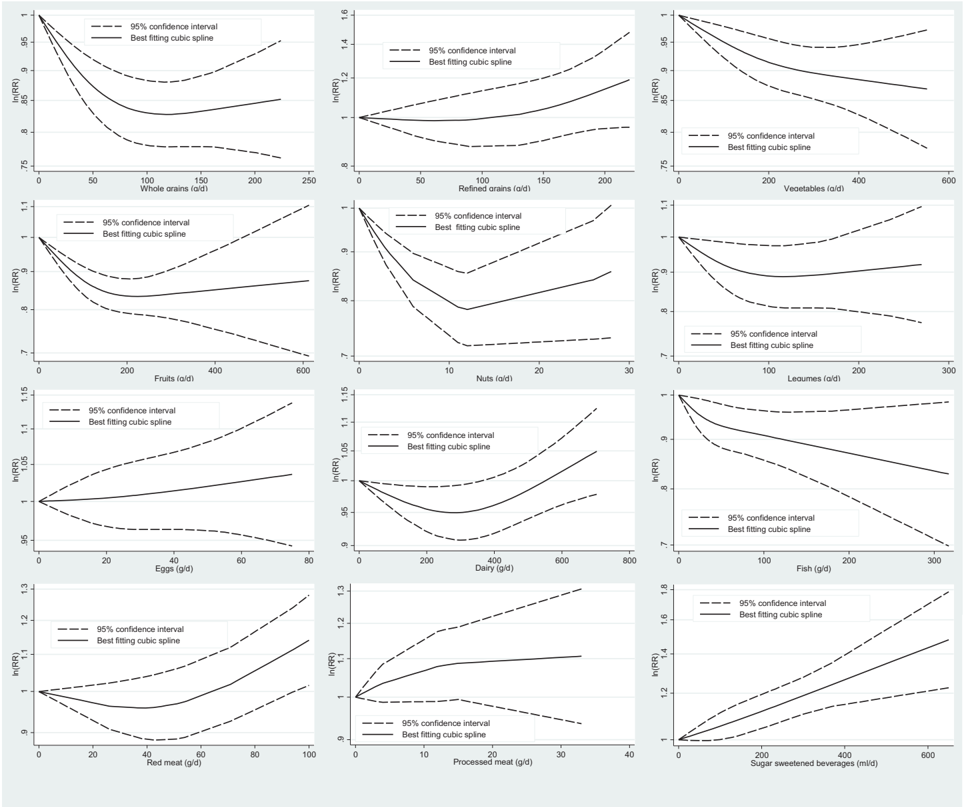
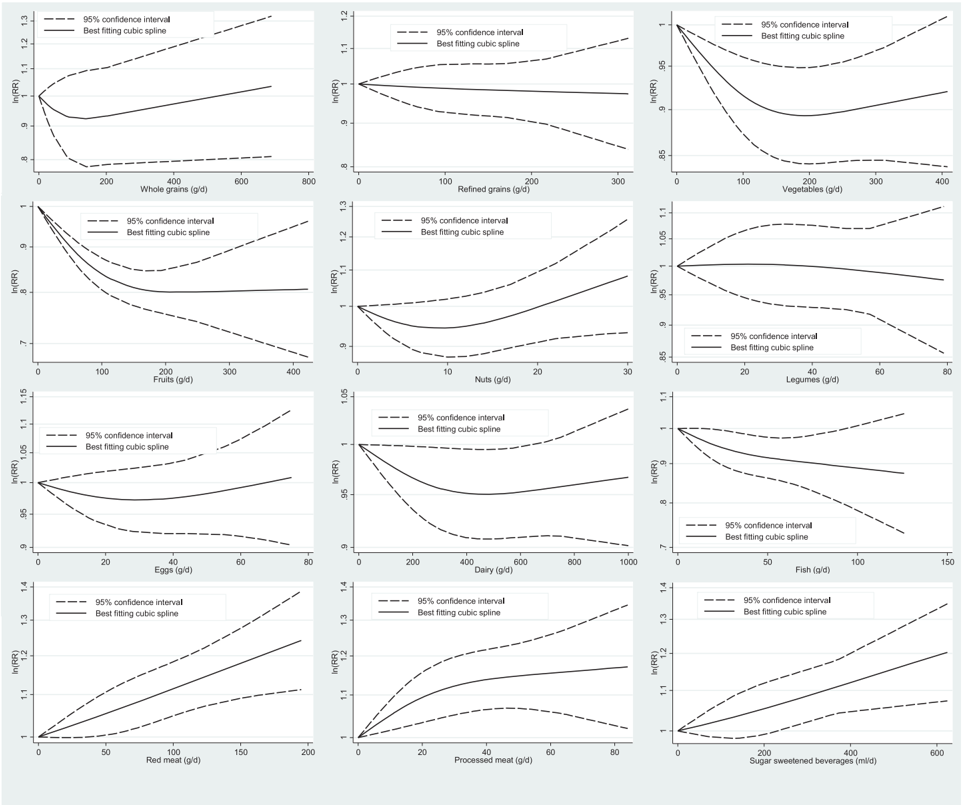
Background: Despite growing evidence for food-based dietary patterns' potential to reduce cardiovascular disease risk, knowledge about the amounts of food associated with the greatest change in risk of specific cardiovascular outcomes and about the quality of meta-evidence is limited. Therefore, the aim of this meta-analysis was to synthesize the knowledge about the relation between intake of 12 major food groups (whole grains, refined grains, vegetables, fruits, nuts, legumes, eggs, dairy, fish, red meat, processed meat, and sugar-sweetened beverages [SSB]) and the risk of coronary heart disease (CHD), stroke and heart failure (HF).Methods: We conducted a systematic search in PubMed and Embase up to March 2017 for prospective studies. Summary risk ratios (RRs) and 95% confidence intervals (95% CI) were estimated using a random effects model for highest versus lowest intake categories, as well as for linear and non-linear relationships.Results: Overall, 123 reports were included in the meta-analyses. An inverse association was present for whole grains (RRCHD: 0.95 (95% CI: 0.92–0.98), RRHF: 0.96 (0.95–0.97)), vegetables and fruits (RRCHD: 0.97 (0.96–0.99), and 0.94 (0.90–0.97); RRstroke: 0.92 (0.86–0.98), and 0.90 (0.84–0.97)), nuts (RRCHD: 0.67 (0.43–1.05)), and fish consumption (RRCHD: 0.88 (0.79–0.99), RRstroke: 0.86 (0.75–0.99), and RRHF: 0.80 (0.67–0.95)), while a positive association was present for egg (RRHF: 1.16 (1.03–1.31)), red meat (RRCHD: 1.15 (1.08–1.23), RRstroke: 1.12 (1.06–1.17), RRHF: 1.08 (1.02–1.14)), processed meat (RRCHD: 1.27 (1.09–1.49), RRstroke: 1.17 (1.02–1.34), RRHF: 1.12 (1.05–1.19)), and SSB consumption (RRCHD: 1.17 (1.11–1.23), RRstroke: 1.07 (1.02–1.12), RRHF: 1.08 (1.05–1.12)) in the linear dose-response meta-analysis. There were clear indications for non-linear dose-response relationships between whole grains, fruits, nuts, dairy, and red meat and CHD.Conclusion: An optimal intake of whole grains, vegetables, fruits, nuts, legumes, dairy, fish, red and processed meat, eggs and SSB showed an important lower risk of CHD, stroke, and HF.
Overview
CoChat Summary
TL;DR
This systematic review and dose-response meta-analysis of prospective studies found that higher intakes of whole grains, vegetables, fruits, nuts, legumes, and fish were generally associated with lower risk of coronary heart disease, stroke, or heart failure, while higher intakes of eggs, red meat, processed meat, and sugar-sweetened beverages were associated with higher risk for some outcomes. The authors conclude that optimal food-group intakes could substantially lower cardiovascular risk, though meta-evidence quality was mostly moderate or lower.
Key findings
- In linear dose-response analyses, inverse associations were reported for whole grains with CHD (RR 0.95, 95% CI 0.92–0.98) and HF (RR 0.96, 0.95–0.97); vegetables with CHD (RR 0.97, 0.96–0.99), stroke (RR 0.92, 0.86–0.98), and HF (RR 0.96, 0.94–0.98); fruits with CHD (RR 0.94, 0.90–0.97) and stroke (RR 0.90, 0.84–0.97); nuts with CHD (RR 0.67, 0.43–1.05); and fish with CHD (RR 0.88, 0.79–0.99), stroke (RR 0.86, 0.75–0.99), and HF (RR 0.80, 0.67–0.95).
- Positive linear dose-response associations were reported for eggs with HF (RR 1.16, 1.03–1.31); red meat with CHD (RR 1.15, 1.08–1.23), stroke (RR 1.12, 1.06–1.17), and HF (RR 1.08, 1.02–1.14); processed meat with CHD (RR 1.27, 1.09–1.49), stroke (RR 1.17, 1.02–1.34), and HF (RR 1.12, 1.05–1.19); and SSB with CHD (RR 1.17, 1.11–1.23), stroke (RR 1.07, 1.02–1.12), and HF (RR 1.08, 1.05–1.12).
- Non-linear dose-response relationships were indicated for whole grains, fruits, nuts, dairy, and red meat with CHD, and for vegetables with stroke. Optimal consumption of risk-decreasing foods was calculated to reduce CHD risk by 65% and stroke risk by 40%; consuming 2 servings/day of red meat, processed meat, and SSB was associated with a 60% increased stroke risk, and not consuming these foods would reduce stroke risk by about 38%.
- NutriGrade meta-evidence was moderate for 10 food groups and low for refined grains and eggs regarding CHD; for stroke it was low for whole grains, refined grains, nuts, and legumes and moderate for the other eight; for HF it was very low for refined grains, low for whole grains, vegetables, fruits, nuts, dairy, and SSB, and moderate for eggs, fish, red meat, and processed meat.
Methods
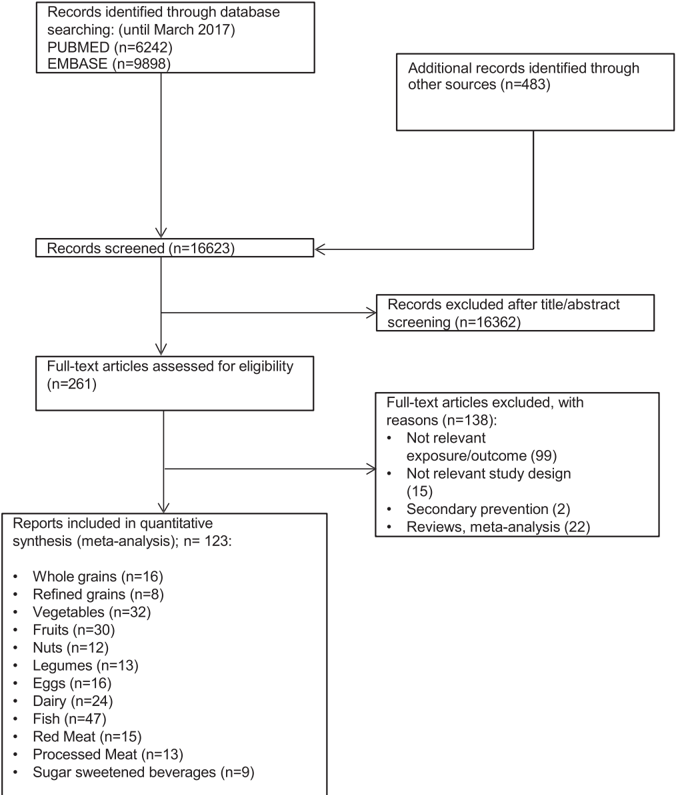
- Systematic search of PubMed and Embase up to March 2017 for prospective studies; 123 reports were included, covering 12 a priori defined food groups and CHD, stroke, and HF outcomes.
- Random-effects meta-analyses estimated summary RRs and 95% CIs for highest versus lowest intake categories and for linear and non-linear dose-response relationships; restricted cubic splines were used for non-linearity, and NutriGrade assessed meta-evidence quality.
- Subgroup and sensitivity analyses examined sex, follow-up length, geographic location, number of cases, dietary assessment, low risk of bias, nested case-control studies, and odds-ratio studies; the review was registered in PROSPERO (CRD42016037069).
Limitations
- Stated: some included studies used only baseline food intake, assuming stable consumption over time; substantial heterogeneity existed in population size, follow-up length, baseline age, and food consumption, and high statistical heterogeneity often persisted in subgroup analyses.
- Stated: residual confounding by lifestyle or socioeconomic status was possible, and for most food groups in relation to HF only a very limited number of studies was available, so some HF results should be interpreted with caution.
- Stated: the review excluded prospective studies on overall CVD and outcome-specific mortality, which may explain differences from other meta-analyses; evident from the text, many dose-response estimates relied on few studies (e.g., HF analyses with n = 1 for some foods), and NutriGrade confidence was mostly moderate or lower, limiting certainty.
Model-written summary. Check it against the paper before relying on it.
Integrity signals
Registry
Cites
Statistics
Figures


Verification
Claims the paper makes
0 Valid · 1 Not valid · 31 Not checked · 214 Own results and interpretations
A result the paper reports from its own data — it cites no other source for it, so there is none to check. The quote shows it is in the paper.
In the paper
“vegetables and fruits (RRCHD: 0.97 (0.96 -0.99)”
- Also stated in: § Vegetables · p. 7 · plain
“Each additional daily 100 g of vegetables were inversely associated with risk of CHD (RR: 0.97; 95% CI 0.96 to 0.99, I 2 D 12%, pheterogeneity D 0.32, n D 14)”
plainstates an association- Asserted: passes — The authors put it forward as true.
- Checkable: passes — It can be checked against evidence.
- Load-bearing: passes — The paper’s conclusions depend on it.
- Based: passes — The paper gives a reason why it holds.
- Rests on 3 assumptions not shown here.
- Also stated in: § Vegetables · p. 7 · plain
A result the paper reports from its own data — it cites no other source for it, so there is none to check. The quote shows it is in the paper.
In the paper
“stroke (RR: 0.91; 95% CI 0.82 to 1.02, I 2 D 53%, pheterogeneity D 0.05)”
plainstates an associationn = 11,114- Asserted: passes — The authors put it forward as true.
- Checkable: passes — It can be checked against evidence.
- Load-bearing: passes — The paper’s conclusions depend on it.
- Based: passes — The paper gives a reason why it holds.
- Rests on an assumption not shown here.
A result the paper reports from its own data — it cites no other source for it, so there is none to check. The quote shows it is in the paper.
In the paper
“There were clear indications for nonlinear dose-response relationships between whole grains, fruits, nuts, dairy, and red meat and CHD.”
boostedstates an association- Asserted: passes — The authors put it forward as true.
- Checkable: passes — It can be checked against evidence.
- Load-bearing: passes — The paper’s conclusions depend on it.
- Based: passes — The paper gives a reason why it holds.
- Rests on 3 assumptions not shown here.
A result the paper reports from its own data — it cites no other source for it, so there is none to check. The quote shows it is in the paper.
In the paper
“but not with risk of stroke (RR: 0.99; 95% CI 0.95 to 1.03, I 2 D 65%, pheterogeneity D 0.04, n D 4)”
plain- Asserted: passes — The authors put it forward as true.
- Checkable: passes — It can be checked against evidence.
- Load-bearing: passes — The paper’s conclusions depend on it.
- Based: passes — The paper gives a reason why it holds.
- Rests on 3 assumptions not shown here.
A result the paper reports from its own data — it cites no other source for it, so there is none to check. The quote shows it is in the paper.
In the paper
“RRHF: 0.96 (0.95 -0.97))”
- Also stated in: § Whole grains · p. 6 · plain
“and HF (RR: 0.96; 95% CI 0.95 to 0.97, I 2 D 0%, pheterogeneity D 0.36, n D 2)”
plainstates an associationn = 6,455- Asserted: passes — The authors put it forward as true.
- Checkable: passes — It can be checked against evidence.
- Load-bearing: passes — The paper’s conclusions depend on it.
- Based: passes — The paper gives a reason why it holds.
- Rests on 3 assumptions not shown here.
- Also stated in: § Whole grains · p. 6 · plain
181 more claims
Create a free account to see all 246 claims and to verify the 57 references still open.
- The quote only partly states this claim. 16
- It may state two separate claims as one. 24
- Probably not a substantial claim. 25
Claims other papers make about this one
Each is checked against this paper’s own text: does it say what the citing paper says it does?
The source backs part of the claim, not all of it — or backs it for a different population, condition or comparison.
In the citing paper
“each 250 mL/day increment of sugar sweetened beverage consumption was associated with a 17% and 4% higher risk of coronary heart disease (class II evidence) and all cause mortality (class III evidence), respectively.”
From Dietary sugar consumption and health: umbrella review (2023) · cites this paper as [10]
Experimental — accuracy not yet measuredThe source backs part of the claim, not all of it — or backs it for a different population, condition or comparison.
In the citing paper
“We observed no significant association between sugar sweetened beverage consumption and changes in diastolic blood pressure (children and adolescents)69 or heart failure.10”
From Dietary sugar consumption and health: umbrella review (2023) · cites this paper as [10]
Experimental — accuracy not yet measuredThe cited source says what the claim attributes to it.
In the citing paper
“A recent dose-response meta-analysis showed that each 250 mL/day increment of sugar sweetened beverage consumption was positively associated with a 7% (risk ratio 1.07, 1.02 to 1.12) higher risk of stroke.”
From Dietary sugar consumption and health: umbrella review (2023) · cites this paper as [10]
The cited source says what the claim attributes to it.
In the citing paper
“harmful associations between dietary sugar consumption and cardiovascular outcomes were also observed, including coronary heart disease,10 cardiovascular disease,8 cardiovascular disease mortality,68 71 hypertension in children and adolescents,69 hypertension in adults,70 myocardial infarction,66 change in systolic blood pressure in children and adolescents,69 and stroke.10”
From Dietary sugar consumption and health: umbrella review (2023) · cites this paper as [10]
Self-check
Percentages, sums and reported differences re-computed from the paper’s own numbers.
Each contradiction between two passages listed here was confirmed by an independent check.
Rated minor: it would not touch a result — a value no result rests on, a p-value that stays on the same side of the significance level, or a conflict that is clerical, resolved elsewhere in the paper, or outside its own findings.
In the paper
§ Discussion · p. 12
“The NutriGrade tool for evaluating the meta-evidence suggested a moderate con fi dence in the effect estimate for eggs, dairy, fi sh, red meat, and processed meat with respect to all three outcomes simultaneously;”
§ Quality of meta-evidence · p. 11
“The NutriGrade meta-evidence grading regarding CHD was rated ' low ' for re fi ned grains, and eggs and ' moderate ' for the 10 other food groups.”
Citations
Cites
Bias in meta-analysis detected by a simple, graphical test
Egger, M., Smith, G. D., Schneider, M., & Minder, C. (1997) · BMJ · doi:10.1136/bmj.315.7109.629 · Cited by 56,722 · cited 2×
“Potential small-study effects, such as publication bias, were explored using Egger (cid:2) s test and funnel plots (Egger et al. 1997), if at least 10 studies were available (Higgins and Green 2011).”
Meta-analysis in clinical trials
DerSimonian, R., & Laird, N. (1986) · Controlled Clinical Trials · doi:10.1016/0197-2456(86)90046-2 · Cited by 39,552 · cited 1×
“To evaluate the weighting of each study, the standard error for the log-transformed RR of each study was calculated and regarded as the estimated variance of the log-transformed RR, using an inverse variance method (DerSimonian and Laird 1986).”
Quantifying heterogeneity in a meta‐analysis
Higgins, J. P. T., & Thompson, S. G. (2002) · Statistics in Medicine · doi:10.1002/sim.1186 · Cited by 36,763 · cited 2×
“…Buckland et al. 2009; Dauchet et al. 2004; Del Gobbo et al. 2015; Dilis et al. 2012; Gillman et al. 1995; Hansen et al. 2017; Hansen et al. 2010; Hirvonen et al. 2001; Johnsen et al. 2003; Joshipura et al. 1999; Keli et al. 1996; Kobylecki et al. 2015; Larsson et al. 2009b; Larsson et al.…”
Meta-analysis of Observational Studies in Epidemiology<SUBTITLE>A Proposal for Reporting</SUBTITLE>
Stroup, D. F. (2000) · JAMA · doi:10.1001/jama.283.15.2008 · Cited by 20,623
European Guidelines on cardiovascular disease prevention in clinical practice (version 2012)
Authors/Task Force Members:, Perk, J., De Backer, G., Gohlke, H., Graham, I., Reiner, Ž., Verschuren, M., Albus, C., Benlian, P., Boysen, G., et al. (2012) · European Heart Journal · doi:10.1093/eurheartj/ehs092 · Cited by 8,490
(1980) · Neuropediatrics · doi:10.1055/s-2008-1071391 · Cited by 3,990 · cited 1×
“This systematic review was planned and conducted according to the standards of the Meta-analysis of Observational Studies in Epi-demiology (Stroup et al. 2000).”
Authors/Task Force Members, Graham, I., Atar, D., Borch-Johnsen, K., Boysen, G., Burell, G., Cifkova, R., Dallongeville, J., De Backer, G., Ebrahim, S., et al. (2007) · European Heart Journal · doi:10.1093/eurheartj/ehm316 · Cited by 3,753
Flexible regression models with cubic splines
Durrleman, S., & Simon, R. (1989) · Statistics in Medicine · doi:10.1002/sim.4780080504 · Cited by 2,689 · cited 1×
“…three fi xed knots at 10%, 50%, and 90% through the total distribution of the reported intake, and combined them using multivariable meta-analysis (Durrleman and Simon 1989) (if at least 2 studies with at least three quantitative exposure levels were known for one of the 12 food groups with the…”
Aune, D., Giovannucci, E., Boffetta, P., Fadnes, L. T., Keum, N., Norat, T., Greenwood, D. C., Riboli, E., Vatten, L. J., & Tonstad, S. (2017) · International Journal of Epidemiology · doi:10.1093/ije/dyw319 · Cited by 2,419 · cited 4×
“This difference could be explained by the greater number of studies (due to inclusion of studies on cause-speci fi c mortality and overall CVD) included by Aune et al. (Aune et al. 2017).”
InfluentialMethods for Trend Estimation from Summarized Dose-Response Data, with Applications to Meta-Analysis
Greenland, S., & Longnecker, M. P. (1992) · American Journal of Epidemiology · doi:10.1093/oxfordjournals.aje.a116237 · Cited by 2,353 · cited 1×
“The method described by Greenland and Longnecker (Greenland and Longnecker 1992) was applied for the dose-response analysis and computed study-speci fi c slopes (linear trends) and corresponding 95% CIs from the natural logs of the RRs and CIs across intake categories of the 12 food groups.”
Research works printed but not linked: 1
- Higgins, J., and S. Green. 2011. Cochrane handbook for systematic reviews of interventions Version 5.1.0 [updated March 2011]. The Cochrane Collaboration. Available from www.handbook.cochrane.org.
Cited by
Items 501–596 of 596
Weschenfelder, C., Miller, K. M., Murphy, R. D., Braymer, A., Mayet, C. L., Greenway, F. L., Cheung, S. N., Hennigar, S. R., & Berryman, C. E. (2025) · Journal of Nutrition · doi:10.1016/j.tjnut.2025.10.028 · Cited by 2
Mao, Y., Wang, J., Xuan, S., Wang, M., Yang, S., Wu, Q., & Tang, Z. (2025) · Frontiers in Nutrition · doi:10.3389/fnut.2025.1630331 · Cited by 1
Lin, J., Li, J., Wang, L., Cui, M., & Chen, L. (2025) · Food & Nutrition Research · doi:10.29219/fnr.v69.12302 · Cited by 1
“A recent meta-analysis suggested that a variety of foods (whole grains, vegetables, fruits, etc.) may mitigate the risks of coronary heart disease, heart failure, and stroke (2).”
Aloraini, G. F., McKeown, N. M., Rogers, G. T., Das, S. K., Lichtenstein, A. H., & Jacques, P. F. (2025) · Nutrition Journal · doi:10.1186/s12937-025-01194-6 · Cited by 3
“Evidence from prospective cohort studies have shown that low-quality carbohydrates are associated with adverse changes in lipoprotein concentrations [20, 23, 65], incident dyslipidemia [23] and risk of CVD [66, 67] and CVD mortality [68, 69].”
Sun, W., Hou, L., Wu, J., Shan, S., & Song, P. (2025) · International Journal of Stroke · doi:10.1177/17474930251365865 · Cited by 3
“34,35 For social-psychological stroke risk factors investigated in the current study, area-based high deprivation, individual low SES, and depressive and anxiety symptoms were significantly associated with incident stroke.”
Social Determinants of Health and Effects on Cardiovascular Disease
Amireh, K., & Makaryus, A. N. (2025) · International Journal of Angiology · doi:10.1055/a-2645-8778 · Cited by 1
“These factors are de fi ned as the consistent availability of nutritionally adequate foods acquired through socially acceptable means, which play a signi fi cant role in shaping dietary habits and CVD risk”
Jones, J. M. (2025) · Nutrients · doi:10.3390/nu17132188 · Cited by 1
Sengupta, S., Thomsen, S. T., Davydova, A., Redondo, H., Jakobsen, L., & Pires, S. M. (2025) · European Journal of Nutrition · doi:10.1007/s00394-025-03715-9 · Cited by 1
Guo, L., Zhou, L., Li, S.-N., Bai, J., Shi, L., Hua, F., & Zhou, P. (2024) · Acta Pharmaceutica · doi:10.2478/acph-2025-0001 · Cited by 3
“As the end stage of most CVDs, the long-term prognosis of HF after AMI is poor and imposes a significant disease burden on society (27).”
InfluentialMatsunaga, T., Wakai, K., Imaeda, N., Goto, C., Tamada, Y., Kato, Y., Kubo, Y., Okada, R., Nagayoshi, M., Tamura, T., et al. (2024) · Public Health Nutrition · doi:10.1017/s1368980024001599 · Cited by 1
Beheshti, N., Tavakoli, A., Saeedirad, Z., Mousavi, Z. S., Nooriani, N., Mobarakeh, K. A., Mahmoudi, Z., Kamali, M., Mohammadi, S., Namakian, S. A., et al. (2024) · Cardiovascular Endocrinology & Metabolism · doi:10.1097/xce.0000000000000311 · Cited by 3
“Some other studies reported an adverse association of sugar-sweetened beverages with incidents of heart disease and stroke [29–32].”
BackgroundYılmaz, H. Ö., Ayhan, N. Y., & Asıl, S. (2024) · Clinical and Experimental Health Sciences · doi:10.33808/clinexphealthsci.1521943 · Cited by 2
Lawson, J. S. (2023) · Frontiers in Cardiovascular Medicine · doi:10.3389/fcvm.2023.1267205 · Cited by 2
“Bechtold et al. have conducted a recent review of the intake of speci fi c food groups and the risk of coronary heart disease (38).”
BackgroundEvery little helps: exploring meat and animal product consumption in the Tesco 1.0 dataset
Ben-Arye, R. C., Bryant, C., & Hofmann, K. (2023) · CABI Agriculture and Bioscience · doi:10.1186/s43170-023-00178-y · Cited by 1
Samigullin, A., Humpert, P. M., & Östman, E. M. (2022) · Frontiers in Medical Technology · doi:10.3389/fmedt.2022.931837 · Cited by 2
The Modern Aspects of Nutrition during Chronic Heart Failure
Salikova, S. P., Grinevich, V. B., & Vlasov, A. A. (2022) · Экспериментальная и клиническая гастроэнтерология · doi:10.31146/1682-8658-ecg-196-12-62-73 · Cited by 2
“Установлено, что потребление фруктов, овощей, цельного зерна и шоколада обратно связано с частотой, тяжестью ХСН, и, наоборот, распространенность, выраженность ХСН имеют прямую положительную зависимость от применения в рационе обработанного или красного мяса, а также молочных продуктов [49, 50].”
Vegetable Preference and Prediction of Proteinuria: A Retrospective Cohort Study
Ozaki, S., Yamamoto, R., Shinzawa, M., Tomi, R., Yoshimura, R., Nakanishi, K., Nishida, M., Nagatomo, I., Kudo, T., Yamauchi‐Takihara, K., et al. (2021) · Annals of Nutrition and Metabolism · doi:10.1159/000520044 · Cited by 1
Empfehlungen zur Ernährung von Personen mit Typ-2-Diabetes mellitus
Skurk, T., Bosy‐Westphal, A., Grünerbel, A., Kabisch, S., Keuthage, W., Kronsbein, P., Müssig, K., Nussbaumer, H., Pfeiffer, A. F. H., Simon, M., et al. (2025) · Die Diabetologie · doi:10.1007/s11428-025-01341-x
“[241] Bechthold A, Boeing H, Schwedhelm C et al.”
Grand Challenges in Product Quality
Lorenzo, J. M. (2020) · Frontiers in Animal Science · doi:10.3389/fanim.2020.599866 · Cited by 2
“Particularly for meat products, the risk of developing cardiovascular diseases and cancer has been the center of discussion among health authorities, researchers and professionals of the meat industry (Bechthold et al., 2019; Zhao et al., 2020).”
BackgroundSupporting vegans through pregnancy and lactation
Barlow, J. (2020) · British Journal of Midwifery · doi:10.12968/bjom.2020.28.9.644 · Cited by 6
Eggs and diabetes: 1 daily egg a safe bet?
Dehghan, M., Mente, A., & Yusuf, S. (2020) · American Journal of Clinical Nutrition · doi:10.1093/ajcn/nqaa183 · Cited by 2
Dietary approaches for patients with heart failure and diabetes
Butler, T., Georgousopoulou, E. N., & Mellor, D. D. (2018) · Practical Diabetes · doi:10.1002/pdi.2179 · Cited by 1
Effects of polyunsaturated fatty acid–rich diets and risk of non-communicable diseases
Singh, R. B., Watanabe, S., Li, D., Nakamura, T., Juneja, L. R., Takahashi, T., Wichansawakun, S., Wilczyńska, A., Jantan, I., Sulaeman, A., et al. (2021) · Elsevier eBooks · doi:10.1016/b978-0-12-819815-5.00011-2 · Cited by 9
Albornoz, M., & Britos, S. (2022) · Actualización en Nutrición · doi:10.48061/san.2022.23.2.96 · Cited by 1
Butler, T., Confue, C., Guild, J., & Mushtaq, S. (2018) · Proceedings of the Nutrition Society · doi:10.1017/s0029665118001702 · Cited by 1
Worm, N., Weingärtner, O., Schulze, P. C., & Lechner, K. (2021) · Herz · doi:10.1007/s00059-021-05067-6 · Cited by 5
Golovanova, I. А., Oksak, G. A., Khorosh, M. V., & Tovstyak, M. M. (2020) · Modern medical technologies · doi:10.34287/mmt.2(45).2020.16
The oral und systemic health risks of sugar consumption: an umbrella review
Woelber, J. P., Wirth, N., Dallmer-Zerbe, A., & Tennert, C. (2026) · Clinical Oral Investigations · doi:10.1007/s00784-026-07191-1
“Another study found a 17% higher risk of coronary heart disease, 7% for stroke, and 8% for heart failure per 250 ml SSB per day [ 172].”
Yamaguchi, Y., 小川, 一., & Kumagaı, H. (2026) · Food Bioscience · doi:10.1016/j.fbio.2026.109916
Flomenbaum, D., Maldonado, L. E., April-Sanders, A. K., Lee, U., Kaplan, R. C., Mossavar-Rahmani, Y., Ostfeld, R. J., Sotres-Alvarez, D., Mattei, J., Ma, W.-Y., et al. (2026) · American Journal of Medicine · doi:10.1016/j.amjmed.2026.09.009
Self-Care Behaviors and Dietary Habits Among Patients with Heart Failure: A Cross-Sectional Study
Chatziefstratiou, A. A., Giakoumidakis, K., Fotos, N. V., Christofi, A., Gavathoglou, S., Patelarou, E., & Brokalaki, H. (2026) · Nutrients · doi:10.3390/nu18172745 · Cited by 1
Candussi, C. J., Bell, W., Mutapcic, M., Thompson, A., Rohrmann, S., Cassidy, A., Kühn, T., & Gaggl, M. (2026) · Scientific Reports · doi:10.1038/s41598-026-62827-2
McCormick, S., Solberg, T., Scoles, J., Mayne, C., & Morgan-Bathke, M. E. (2026) · Current Issues in Molecular Biology · doi:10.3390/cimb48080798
“This study showed that those who ate nuts more frequently were leaner than those who infrequently consumed nuts [26,27].”
Sikorski, C., Yusuf, S., Miller, V., Anand, S. S., Teo, K., Paré, G., Rangarajan, S., Poirier, P., Swaminathan, S., Mohan, V., et al. (2026) · Nutrition · doi:10.1016/j.nut.2026.113365
THE DIETARY ANIMAL-TO-PLANT SPECTRUM AND CARDIOVASCULAR HEALTH: A NARRATIVE REVIEW
Lamparski, Ł., Modrzejewska, W., Szmit, G., Wcisło, Z., Basak, W., Chmielewska, M., Piekarska, P., Purwin, A., Siwiec, K., Lach, K., et al. (2026) · International Journal of Innovative Technologies in Social Science · doi:10.31435/ijitss.2(50).2026.5269
di Gennaro, G., Licata, F., Pittore, P., & Bianco, A. (2026) · JMIR Formative Research · doi:10.2196/81967
Kareem, N., Kadhim, K., & Al-Sabbagh, J. K. (2026) · Kerbala Journal of Veterinary Medical Sciences · doi:10.65639/kjvm.2026.167
“Dairy products from milk supplied people with a great deal of nutritionally rich energy and high-quality proteins as well as numerous other necessary minerals like calcium, magnesium, potassium, zinc and phosphorus, in forms could be quickly absorbed (5).”
Reducing health and climate impacts of the global food systemPreprint
van Greevenbroek, K., Davis, S. J., & Caldeira, K. (2026) · arXiv (Cornell University) · doi:10.48550/arxiv.2606.15471 · Cited by 1
“Researchers have thus often sought opportunities to simultaneously redress these large impacts on human health and climate; “dietary shifts” are frequently identified as key to both improving health 1,3,4 and reducing land-related GHG emissions 5–7 .”
Red Meat in Human Evolution, Health, and Disease: From A Blessing to A Curse?
Jaco, J., Banda, K., Varki, A. P., & Gagneux, P. (2026) · The Quarterly Review of Biology · doi:10.1086/741185 · Cited by 2
Lessard‐Lord, J., Guay, V., Rancourt-Bouchard, M., Couture, P., Gangloff, A., Blais, J., Tremblay, A. J., Greffard, K., Bilodeau, J., Rudkowska, I., et al. (2026) · Nature Communications · doi:10.1038/s41467-026-73468-4 · Cited by 2
Dietary habits and stroke: A Mendelian randomization analysis
He, F., Li, N., Xie, S., Yang, J., Wang, Z., Li, Y., & Yuan, S. (2026) · Medicine · doi:10.1097/md.0000000000048588
Perceptions, Knowledge and Culinary Use of Legumes in Australia: A Convenience Sample Analysis
Nikodijevic, C. J., Pham, T., Macchia, K. L., & Stefoska‐Needham, A. (2026) · Journal of Human Nutrition and Dietetics · doi:10.1111/jhn.70265
“Despite evidence that legume intake of 50 g/day reduces CVD and all‐cause mortality, many populations globally fall short of this target [3, 14, 15].”
A Cross-Sectional Study of the Dietary Carbon Footprints of US Schoolchildren
Barney, A., Rose, D., Willits-Smith, A. M., & Spruance, L. A. (2026) · Nutrients · doi:10.3390/nu18101529
“Higher intake of whole grains, fruits and vegetables, legumes, and nuts has been associated with reduced risk of cardiovascular disease and type 2 diabetes [11,12].”
A Probabilistic Approach to Risk-Benefit Assessment of Fish Consumption in Singapore
Mak, Y. Y., Sin, J. E. V., Lim, G. S., Jakobsen, L. S., Redondo, H. G., Pires, S. M., Poulsen, M., Khoo, J., Chan, J. S. H., & Aung, K. T. (2026) · Exposure and Health · doi:10.1007/s12403-026-00780-1
“…epidemiological studies and international risk-benefit assessments, where RR was assumed to be one at zero intake and followed a log-linear relationship (Zhang et al. 2020; Bechthold et al. 2019 where x is the total fish intake in the given scenario and β is estimated from the RR for a given x .”
Cardiac self efficacy and Mediterranean diet adherence in patients with coronary heart disease
Shakhshir, M. H., Khalil, K. K., Fakhoury, H. T., Hamuda, L. K., Taha, A. A., Ismail, Y., & Zyoud, S. H. (2026) · Scientific Reports · doi:10.1038/s41598-026-49941-x
Pietilä, T. K., Cantini, E., Itkonen, S. T., Salonen, A., & Pajari, A. (2026) · The Journal of Nutritional Biochemistry · doi:10.1016/j.jnutbio.2026.110355
Okada, C., Tousen, Y., Kagami‐Katsuyama, H., Hattori, H., Nishihira, J., Ikeda, K., Inagaki, N., Kuroki, M., Arimura, Y., Miyata, Y., et al. (2026) · BMC Nutrition · doi:10.1186/s40795-026-01284-6
“Furthermore, evidence of a dose– response relationship has emerged for fruit intake, reducing the risk of coronary heart disease [4, 5], stroke [4, 5], cancer [5], and type 2 diabetes mellitus [6].”
Pires, S. M., de Melo, J. F., Redondo, H. G., Assunção, R., Boué, G., Biasini, B., Cozzi, E., Jolliet, O., Menozzi, D., & Vieira, A. C. L. (2026) · PLoS ONE · doi:10.1371/journal.pone.0339454 · Cited by 1
Sakboonyarat, B., Lakshminarayan, K., & Rangsin, R. (2026) · Global Heart · doi:10.5334/gh.1530
“For instance, improving access to hypertension care, ensuring appropriate management, and encouraging lifestyle modification strategies for those already receiving care are essential to reduce CVD risk among Thai men (28, 29).”
Lee, J. H., Kim, H. J., & Lee, K. H. (2026) · Nutrients · doi:10.3390/nu18040682 · Cited by 1
“Consuming one small serving of sweets per week may not affect weight management or HbA1c control, but substituting vegetables, fruit, and whole grains for those foods may be beneficial [40,41].”
Jacob, A. E., Dénos, C., Boone, L., Cooreman-Algoed, M., Dewulf, J. P., Jakobsen, M. U., Vandevijvere, S., Pires, S. M., & Jakobsen, L. S. (2026) · Critical Reviews in Food Science and Nutrition · doi:10.1080/10408398.2025.2610408
“…(red and processed meat and type 2 diabetes), or “moderate” (red and processed meat and coronary heart disease, colorectal cancer and all-cause mortality) from prominent meta-analyses (Bechthold et al. 2019; Schwingshackl et al., 2017; Schwingshackl et al., 2017; Schwingshackl et al. 2018).”
Rathi, A., Potale, S., & Rathi, V. (2026) · International Journal of Clinical Trials · doi:10.18203/2349-3259.ijct20260044 · Cited by 1
Härkänen, T., Tapanainen, H., Sares‐Jäske, L., Männistö, S., Kaartinen, N. E., & Paalanen, L. (2026) · Epidemiology · doi:10.1097/ede.0000000000001932
“9,10 There are also similarities with functional data analysis, in which functional data are projected on a finite number of (spline) basis functions; in our case, we have only one functional observation, consisting of the nonlinear HR estimates of a risk factor.”
Schiemann, T., Diekmann, C., & Egert, S. (2025) · Nutrition Reviews · doi:10.1093/nutrit/nuaf190 · Cited by 1
“8 The health benefits of legume consumption in general or in exchange for animal foods include reduced incidences of type 2 diabetes mellitus, 8 cardiovascular diseases, 8– 11 and all-cause mortality.”
Fu, Y., He, Y., & Wu, W. (2025) · Medicine · doi:10.1097/md.0000000000045084
“[5] Therefore, establishing causal-ities from lifestyle or socioeconomic factors to heart failure would help formulate targeted strategies to macro-control the incidence of heart failure.”
An Overview of West African Traditional Soft Cheese: Processing, Safety, and Quality Characteristics
Tossou, M. W., Achaglinkame, M. A., Dari, L., Sossa-Vihotogbé, C., Bodor, Z., & Mörlein, D. (2025) · Comprehensive Reviews in Food Science and Food Safety · doi:10.1111/1541-4337.70301
Jacob, A. E., Dénos, C., Boone, L., Cooreman-Algoed, M., Dewulf, J. P., Jakobsen, M. U., Vandevijvere, S., Pires, S. M., & Jakobsen, L. S. (2025) · medRxiv · doi:10.1101/2025.08.27.25333764
Roe, A. J., Leschewski, A., Johnson, S., Peutz, J., Hansen, K., Lee, S. G., Elvira, J., & Fitzgerald, N. (2025) · Nutrients · doi:10.3390/nu17193076
Cheng, B., Wei, W., Cheng, S., Pan, C., Wen, Y. F., & Zhang, F. (2025) · Ecotoxicology and Environmental Safety · doi:10.1016/j.ecoenv.2025.118771
Baig, M., Khan, A. A., Moafi-Madani, M., Roberts, M. B., Allison, M., Johnson, K., LaMonte, M. J., Kermani, A., Mohammad, Y., & Eaton, C. B. (2025) · American Journal of Preventive Cardiology · doi:10.1016/j.ajpc.2025.101051
“19)) [19], whereas whole grains, vegetables and fish have been associated with reduced risk of HF.”
Empfehlungen zur Ernährung von Personen mit Typ-2-Diabetes mellitus
Skurk, T., Bosy‐Westphal, A., Grünerbel, A., Kabisch, S., Keuthage, W., Kleinridders, A., Kronsbein, P., Müssig, K., Nussbaumer, H., Pfeiffer, A. F. H., et al. (2026) · Die Diabetologie · doi:10.1007/s11428-026-01472-9
Brandt, E. J., Leung, C. W., Chang, T., Ayanian, J. Z., Banerjee, M., Kirch, M., Mozaffarian, D., & Nallamothu, B. K. (2025) · Journal of Nutrition · doi:10.1016/j.tjnut.2025.06.002 · Cited by 4
Gao, J., Xie, Y.-Y., Zang, Y.-C., Tan, K. W., Li, P., Yu, H.-Y., Lian, Z., & Wang, J.-X. (2025) · Frontiers in Global Women s Health · doi:10.3389/fgwh.2025.1568812
ОСОБЛИВОСТІ ХАРЧОВОГО РАЦІОНУ ДОВГОЖИТЕЛІВ ОКІНАВИ
Тихоплав, О., & Журавель, Н. (2025) · Молодий вчений · doi:10.32839/2304-5809/2025-3-134-5
Wang, R., Sun, J., & Yu, X. (2025) · Scientific Reports · doi:10.1038/s41598-024-85070-z
Liu, X.-M. (2024) · Farmacia · doi:10.31925/farmacia.2024.5.23
“However, its efficacy is limited when used as a single agent [10, 11].”
Diet and Prevention of Cardiovascular Disease
Mendis, S. (2024) · Recent Progress in Nutrition · doi:10.21926/rpn.2403011
Evaluation of lipoproteins and high sensitivity CRP in consumers of bakery products
Lenártová, P., Gažarová, M., Kopčeková, J., & Mrázová, J. (2024) · Roczniki Państwowego Zakładu Higieny · doi:10.32394/rpzh.2024.0287
“Evidence from observational studies found that greater consumption of whole grain bakery products is also associated with a lower risk of cardiovascular disease (CVD) [3], as well as obesity, type 2 diabetes, hypertension [1] and all-cause mortality [11, 31].”
BackgroundIzquierdo-Sandoval, D., Duan, X. L., Fryganas, C., Portolés, T., Sancho, J. V., & Rubert, J. (2023) · bioRxiv (Cold Spring Harbor Laboratory) · doi:10.1101/2023.10.24.562654 · Cited by 4
“On top of that, excessive red meat intake has been associated with gastrointestinal (G.I.) diseases, including inflammatory bowel disease (IBD), colorectal cancer (CRC) 3 , and non-communicable diseases (NCDs) such as diabetes type 2 and coronary heart diseases 4,5 .”
BackgroundAbioye, A. I., Hughes, M. D., Sudfeld, C. R., Noor, R. A., Isanaka, S., Lukmanji, Z., Mugusi, F. M., & Fawzi, W. W. (2023) · JAIDS Journal of Acquired Immune Deficiency Syndromes · doi:10.1097/qai.0000000000003221 · Cited by 1
Tolkunova, K., Usoltsev, D., Moguchaia, E., Boyarinova, M. A., Павловна, К. Е., Erina, A., Voortman, T., Vasilyeva, E. Y., Kostareva, A. A., Shlyakhto, E. V., et al. (2022) · medRxiv · doi:10.1101/2022.11.04.22281954 · Cited by 2
Effectiveness of Physical Exercise and Diet in Heart Failure Patients: A Literature Review
Meilyana, B. D., Rosida, N. A., Ekwantoro, E., Saputro, S. D., & Puspasari, R. A. (2022) · Critical Medical and Surgical Nursing Journal · doi:10.20473/cmsnj.v11i1.36047
“is to increase the consumption of whole grains, fruits, vegetables, nuts, and fish (Bechthold et al., 2019).”
Background2021 - Det internasjonale året for frukt og grønnsaker - med fokus på Norge.
Øvrebø, B. (2021) · Norsk tidsskrift for ernæring · doi:10.18261/ntfe.19.4.16
Red meat and different dietary patterns and cardiovascular health - the review
Borowiecka, M., Góralczyk, W., Zając, M., & Brzezińska, A. (2021) · Journal of Education Health and Sport · doi:10.12775/jehs.2021.11.09.034 · Cited by 1
Eating Well to Prevent Stroke: Peanuts Are on the Plate
Kernan, W. N. (2021) · Stroke · doi:10.1161/strokeaha.121.036172 · Cited by 1
Cereales, enfermedad cardiovascular y mortalidad
Chiaborelli, M. (2021) · Evidencia. Actualización en la Práctica Ambulatoria · doi:10.51987/evidencia.v24i4.6971
Liu, D., Zhang, P., Li, Z., Shen, D., Zhang, X., Chen, P., Huang, Q., Zhong, W.-F., & Mao, C. (2021) · Research Square · doi:10.21203/rs.3.rs-516666/v1
Ernährung in der Parodontitistherapie und -prävention
Wölber, J. (2021) · ZWR - Das Deutsche Zahnärzteblatt · doi:10.1055/a-1473-0385
“[30] Bechthold A, Boeing H, Schwedhelm C et al.”
BackgroundA health and food-system analysis of Brexit-related policy approaches
Freund, F., & Springmann, M. (2021) · doi:10.21203/rs.3.rs-128413/v1
Functional Foods and Dietary Patterns for Prevention of Cognitive Decline in Aging
Bayrami, Z., Khalid, M., Dastjerdi, S. A., & Masjedi, M. S. (2020) · Springer eBooks · doi:10.1007/978-981-15-3552-9_10 · Cited by 5
Bhattacharyya, D., Sheth, M. K., & Sengar, V. (2020) · Indian Journal of Dairy Science · doi:10.33785/ijds.2020.v73i04.007 · Cited by 1
“(Rizzoli, 2014; Black et al. 2002; Bailey et al. 2010; Bechthold et al. 2019; Kardinaal et al. 1999; Pfeuffer and Watzl, 2017; Burgess, 2014).”
BackgroundSievenpiper, J. L. (2020) · Nutrition Reviews · doi:10.1093/nutrit/nuaa054 · Cited by 1
Egg and Health: Focused on the Cholesterol Issue
Sugano, M. (2019) · NIPPON SHOKUHIN KOGYO GAKKAISHI · doi:10.3136/nskkk.66.362
Les protéines de la viande, intérêt pour la nutrition des seniors
Rémond, D. (2019) · Médecine des Maladies Métaboliques · doi:10.1016/s1957-2557(19)30070-7 · Cited by 4
Cholesterin – Baustein oder Risikofaktor?
Friedrichsen, H.-P. (2021) · Erfahrungsheilkunde · doi:10.1055/a-1585-8206
“[6] Bechthold A, Boeing H, Schwedhelm C et al.”
BackgroundCholesterin – Baustein oder Risikofaktor?
Friedrichsen, H.-P. (2019) · Zeitschrift für Orthomolekulare Medizin · doi:10.1055/a-0861-4498
“[6] Bechthold A, Boeing H, Schwedhelm C et al.”
BackgroundAbayomi, J. C., Charnley, M., McCann, M., Cassidy, L., & Newson, L. (2019) · Journal of human nutrition and dietetics (Print) · doi:10.1111/jhn.12630
Alsanussi, E., Raymond, K., Lawrence, W. B., Oda, K., Rajaram, S., David, S., Gary, E. F., & Knutsen, S. F. (2018) · Journal of Public Health and Epidemiology · doi:10.5897/jphe2018.1088
“Each additional daily 250 ml of SSB was positively associated with the risk of stroke (RR=1.07, 95% CI:1.02-1.12) (Bechthold et al., 2017).”
BackgroundInfluentialMacht Zucker krank? Wie viel Zucker macht krank?
Schulze, M. B. (2018) · Aktuelle Ernährungsmedizin · doi:10.1055/a-0660-6142
“Das Risiko für koronare Herzkrankheit und Schlaganfall steigt laut einer aktuellen Metaanalyse kontinuierlich mit höherem Konsum an, sodass keine „sichere“ Verzehrmenge dieser Getränke bestimmbar ist [10].”
BackgroundLepková, Z., Papežíková, I., Mikulíková, I., Banďouchová, H., Blahová, J., Všetičková, L., Poštulková, E., Mareš, J., Toulová, I., Kobelková, K., et al. (2026) · Acta Veterinaria Brno · doi:10.2754/avb202695020165
Plant-based convenience foods available from UK supermarkets - are they any better?
Neary, P., Blennerhassett, C., Relph, N., & Flight, H. (2022) · Proceedings of The Nutrition Society · doi:10.1017/s0029665122000829 · Cited by 1
Toward Health-Environment Policy in a Well-being Economy
Laurent, É., Battaglia, F., Marchiori, G. D. L., Galli, A., Janoo, A., Munteanu, R., & Sommer, C. (2021) · Springer eBooks · doi:10.1007/978-3-030-67860-9_5 · Cited by 4
Mitchell, N. S., & Ard, J. D. (2021) · Contemporary cardiology · doi:10.1007/978-3-030-81034-4_14 · Cited by 1
The Health Impact of the Whole-Wheat Intake as Evaluated by Wide-Scaled Epidemiological Studies
Dror, Y., Rimon, E., & Vaida, R. (2020) · Springer eBooks · doi:10.1007/978-3-030-39823-1_15
Nutritional epidemiology: new insights for meal analysis
Ramirez, C. S. (2018) · DepositOnce · doi:10.14279/depositonce-7551
“Nevertheless, as with nutritional deficiencies, diet plays a role in the development of chronic, non-communicative diseases (7-10).”
Background
Metadata
- Authors
- Bechthold, A., Boeing, H., Schwedhelm, C., Hoffmann, G., Knüppel, S., Iqbal, K., De Henauw, S., Michels, N., Devleesschauwer, B., Schlesinger, S., & Schwingshackl, L.
- Affiliations
- German Nutrition Society, Bonn, Germany
- German Institute of Human Nutrition (DE)
- University of Vienna (AT)
- Department of Public Health, Ghent University, Gent, Belgium
- Ghent University (BE)
- Institut Scientifique de Santé Publique (BE)
- Deutsches Diabetes-Zentrum e.V. (DE)
- Corresponding author
- Bechthold, Angela
- Boeing, Heiner
- Schwedhelm, Carolina
- Hoffmann, Georg
- Knüppel, Sven
- Iqbal, Khalid
- Michels, Nathalie
- Devleesschauwer, Brecht
- Schlesinger, Sabrina
- Schwingshackl, Lukas
- ORCID
- Venue
- Critical Reviews in Food Science and Nutrition
- Publisher
- Informa UK Limited
- Published
- 2017-11-07
- Volume
- 59
- Issue
- 7
- Pages
- 1071-1090
- ISSN
- 1040-8398 (ISSN-L)
- 1549-7852
- OpenAlex
- W2765815272
- Semantic Scholar
- d860d7495082299646f3d6c12cf3967f4c0a4971
- Cited by
- 693
- References
- 227
- Citations by year
- 2026: 37 · 2025: 81 · 2024: 92 · 2023: 95 · 2022: 127 · 2021: 95 · 2020: 73 · 2019: 56 · 2018: 32 · 2017: 2
- FWCI
- 7.24
- Type
- journal article
- Language
- en
- Open access
- hybrid
- doi.org
- Licence
- Locations
- Critical Reviews in Food Science and Nutrition (publishedVersion, cc-by-nc-nd)
- PubMed (publishedVersion)
- Ghent University Academic Bibliography (Ghent University) (submittedVersion, cc-by-nc-nd)
- Figshare (submittedVersion, cc-by)
- Informationszentrum Lebenswissenschaften (ZB MED) (submittedVersion, cc-by-nc-nd)
- Figshare (cc-by)
- Topics
- Health Sciences › Medicine › Public Health, Environmental and Occupational Health › Nutritional Studies and Diet
- Health Sciences › Medicine › Cardiology and Cardiovascular Medicine › Cardiovascular Health and Risk Factors
- Life Sciences › Agricultural and Biological Sciences › Food Science › Nutrition, Health, and Society Studies
- Keywords
- coronary artery disease, stroke, heart failure, food groups, whole grains, refined grains, vegetables, fruits, nuts, fish consumption, red meat, processed meat, egg consumption, dairy products, Fabaceae, sugar-sweetened beverages, dietary habits, cardiovascular risk, dose-response relationship, dietary fiber, dietary cholesterol, dietary sodium
- MeSH terms
- Whole Grains, Red Meat, Beverages, Coronary Disease, Diet, Eggs, Feeding Behavior, Fruit, Heart Failure, Humans, Nuts, Prospective Studies, Risk Factors, Vegetables, Databases, Factual, Seafood, Stroke, Risk Reduction Behavior
About these checks
Registry, retraction, Cites and statistics results are computed, not judged, with one exception: a printed reference that no index lists is read once by a model before it counts as a citation error. Claims are extracted by a model and kept only when their quote appears verbatim in the text; each cited source is then checked, with a model’s help, for whether it says what the claim relies on. Those verdicts can be wrong — read the claim’s quote and the cited source before relying on one.
A language model drew the claims from the paper on 2026-10-05, under version 3 of the claim definition (model deepseek-v4.1-flash, prompt extract-v3).
A second model labelled each claim on 2026-10-05 (model jev-1.13-20260917, definition revision gold-guideline-v0.2).
Statistics and arithmetic are recomputed, not judged.
Confidence bands are shown only for fields calibrated on our annotated test set. None is calibrated yet, so no band is shown.
What counts as a claim ›How we measure confidence ›How we check this ›
Are you an author, or do you see a problem with this page? Request a review
Data sources
Bibliographic data: Semantic Scholar, OpenAlex, Crossref.
Contains information from the Semantic Scholar Academic Graph Datasets, made available under the ODC Attribution License (ODC-BY 1.0).
Semantic Scholar’s data is described in: Kinney, R., et al. (2023). The Semantic Scholar Open Data Platform. arXiv:2301.10140.
