

Beyond Screen Time: Identity Development in the Digital Age
Open accessThe DOI matches its Crossref record; 277 of the 285 references it cites were found in a registry or an index.
Abstract
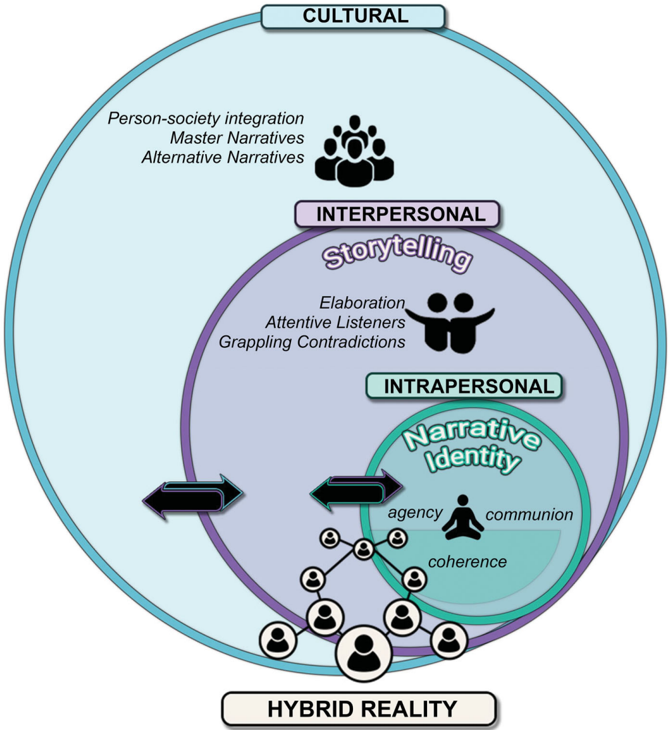
We are in the midst of a global transition in which digital “screens” are no longer simply entertainment devices and distractions; rather, adolescents are currently living in a hybrid reality that links digital spaces to offline contexts. Yet, psychological scientists studying the mental health impact of digital experiences largely focus on correlations with “screen time,” leading to oversimplified and atheoretical conclusions. We propose an alternative, functional approach to studying adolescent mental health in the digital age, one that examines why and how digital media affect adolescent development. Specifically, we suggest that understanding identity development—the core developmental task of adolescence—can help pinpoint the digital experiences that contribute to healthy versus problematic mental health outcomes. We have four objectives: (1) integrate principles from clinical and personality psychology with developmental theory to present a theoretical framework for investigating narrative identity; (2) show how this framework provides a useful lens for evaluating the impact of digital media on adolescents; (3) suggest a set of novel hypotheses that specify what kinds of digital contexts and experiences lead to healthy versus problematic mental health outcomes; and (4) propose a detailed research agenda that tests these hypotheses.
Overview
The claims and statistics of this paper haven’t been checked yet.
Free: it reads the open-access text and checks the first 5 claims that cite a source we can check. Create a free account to check every claim.
Integrity signals
Registry
Cites
Statistics
Figures

Verification
Claims the paper makes
The claims and statistics of this paper haven’t been checked yet.
Free: it reads the open-access text and checks the first 5 claims that cite a source we can check. Create a free account to check every claim.
Claims other papers make about this one
Each is checked against this paper’s own text: does it say what the citing paper says it does?
The source backs part of the claim, not all of it — or backs it for a different population, condition or comparison.
In the citing paper
“However, the permanence of digital platforms can confer benefits as well; reminiscing and nostalgia are encouraged by looking back over photographs, videos, and interactions from the past, and may assist youth in developing their narrative identity (Granic et al., 2020).”
From Technologizing Bronfenbrenner: Neo-ecological Theory. (2023) · cites this paper as Granic et al., 2020
Experimental — accuracy not yet measuredThe cited source says what the claim attributes to it.
In the citing paper
“The asychnronicity of virtual microsystems can create more opportunities for adolescents to engage on their terms (Granic et al., 2020).”
From Technologizing Bronfenbrenner: Neo-ecological Theory. (2023) · cites this paper as Granic et al., 2020
The cited source says what the claim attributes to it.
In the citing paper
“They proposed moving beyond how much time is spent online (i.e., screen time) to look at how and why digital interactions and activities impact identity development.”
From Technologizing Bronfenbrenner: Neo-ecological Theory. (2023) · cites this paper as Granic et al., 2020
The cited source says what the claim attributes to it.
In the citing paper
“Granic et al. proposed that by focusing on identity-formation processes, researchers “…can help pinpoint the digital experiences that will contribute to both healthy normative development as well as the emergence of serious mental health concerns” (p. 196).”
From Technologizing Bronfenbrenner: Neo-ecological Theory. (2023) · cites this paper as Granic et al., 2020
The cited source says what the claim attributes to it.
In the citing paper
“In conjunction with searchability (i.e., the ease with which people can find and verify information online; boyd, 2008; McFarland & Ployhart, 2015) this side of permanence can be detrimental and burdens today’s youth in ways unexperienced by previous generations (Granic et al., 2020).”
From Technologizing Bronfenbrenner: Neo-ecological Theory. (2023) · cites this paper as Granic et al., 2020
6 more claims about this paper
Create a free account to see every claim other papers make about this one.
Self-check
Percentages, sums and reported differences re-computed from the paper’s own numbers.
The self-check needs the paper’s full text.
Citations
Cites
Ryan, R. M., & Deci, E. L. (2000) · American Psychologist · doi:10.1037//0003-066x.55.1.68 · Cited by 54,599 · cited 5×
“…with a broad range of experiences, both positive and negative (e.g., academic achievement, athletic competencies, parental divorce, rejection by popular peers), and a strong sense of agency provides youth with the hope and motivation to overcome current and future adversities (Ryan & Deci, 2000).”
BackgroundInfluentialThe need to belong: Desire for interpersonal attachments as a fundamental human motivation.
Baumeister, R. F., & Leary, M. R. (1995) · Psychological Bulletin · doi:10.1037//0033-2909.117.3.497 · Cited by 23,245 · cited 1×
“Past research on young people who do not emotionally connect with peers has shown increased levels of rejection, loss of status, victimization, and loneliness (Baumeister & Leary, 1995; Granic & Patterson, 2006; Juvonen & Galv an, 2009; Sentse, Scholte, Salmivalli, & Voeten, 2007).”
BackgroundMaslow, A. H. (1943) · Psychological Review · doi:10.1037/h0054346 · Cited by 21,563 · cited 1×
“Most game designers and social media architects still rely on Maslow’s hierarchy (Maslow, 1943) to inform the psychological underpinnings of their digital systems.”
BackgroundThe Standard Edition of the Complete Psychological Works of Sigmund Freud
Freud, S. (1953) · Cited by 18,503
Social Network Analysis: Methods and Applications
Wasserman, S., & Faust, K. (1994) · doi:10.1017/cbo9780511815478 · Cited by 17,557
(1997) · Naming the Mind: How Psychology Found its Language · doi:10.4135/9781446221815.n7 · Cited by 15,148
(1968) · Medical Entomology and Zoology · Cited by 15,136
(2017) · Defining and Classifying Children in Need · doi:10.4324/9781315258324-16 · Cited by 11,320
Erikson, E. H. (2026) · Zenodo (CERN European Organization for Nuclear Research) · doi:10.5281/zenodo.18614668 · Cited by 11,235
Research works printed but not linked: 23
- 10.1016/j.copsyc.2015.10.0006 · doi:10.1016/j.copsyc.2015.10.0006
- 10.1002/1cp.1612 · doi:10.1002/1cp.1612
- Chandler M. J., 1994, Rochester symposium on developmental psychopathology: Disorders and dysfunctions of the self, 371
- Chandler M. J., 1994, The development of theories of mind and the construction of cognitive abilities
- Dickson K., 2019, Screen-based activities and children and young people’s mental health and psychosocial wellbeing: A systematic map of reviews
- Ehrenreich S. E., 2016, The Oxford handbook of coercive relationship dynamics, 140
- Eichhorn K., 2019, The end of forgetting: Growing up with social media, 10.4159/9780674239333 · DOI · Paper page
- Fivush R., 1991, Merrill-Palmer Quarterly, 37, 59
- 10.1007/BF02102894 · doi:10.1007/bf02102894 · Paper page
- Harris Interactive. (2015, June). Pearson student mobile device survey 2015 . Retrieved from https://www.pearsoned.com/wp-content/uploads/2015-Pearson-Student-Mobile-Device-Survey-Grades-4-12.pdf
- Infinite Fall, 2017, Night in the woods
- Kardefelt-Winther D., 2017, How does the time children spend using digital technology impact their mental well-being, social relationships and physical activity?: An evidence-focused literature review
- McCabe A., 1991, Developing narrative structure, 217
- McGonigal J., 2015, Superbetter. A revolutionary approach to getting stronger, happier, braver and more resilient
- Noam G., 1995, Developmental psychopathology: Volume 1, 424
- Pennebaker J.W., 2015, The development and psychometric properties of LIWC2015
- Popcannibal, 2019, Kind words
- Rideout V., 2017, The Common Sense census: Media use by kids age zero to eight
- 10.1037/110003-066X.55.1.68 · doi:10.1037/110003-066x.55.1.68
- 10.1016/S2352(18)30022-1. · doi:10.1016/s2352(18)30022-1
- Thatgamecompany., 2012, Journey
- Thorne A., 2003, Connecting culture and memory: The development of an autobiographical self, 169
- 10.1089/cyber.2017.0247/ · doi:10.1089/cyber.2017.0247/
Cited by
Items 101–200 of 237
The social media scale for depression in adolescence
Twivy, E., Freeman, D. H., Anderson, C., Loe, B. S., & Waite, F. (2025) · International Journal of Adolescence and Youth · doi:10.1080/02673843.2025.2450425 · Cited by 4
“Social media is an integral part of adolescents’ social world (West et al., 2021); however, current understanding of its impact on depression is limited.”
Crisanto, M., Wagaman, B., Kerr, E., McGinnis, J. L., & Berman, S. L. (2022) · The American Journal of Psychology · doi:10.5406/19398298.135.2.07 · Cited by 5
#healing as a Form of Expression among Malaysian TikTokers: Fostering Connections
Shamsuddin, C. M., Musa, N. C., Saad, S. M., & Rizal, N. E. H. M. (2023) · 3L The Southeast Asian Journal of English Language Studies · doi:10.17576/3l-2023-2904-07 · Cited by 6
Alfonso-Benlliure, V., & Teruel, T. M. (2023) · Applied Theatre Research · doi:10.1386/atr_00082_1 · Cited by 7
How do video games affect mental health? A narrative review of 13 proposed mechanismsPreprint
Ballou, N., Hakman, T., Vuorre, M., Magnusson, K., & Przybylski, A. K. (2024) · doi:10.31234/osf.io/q2kxg · Cited by 4
Social Media Ethics: Balancing Transparency, AI Marketing, and Misinformation
Skandali, D. (2025) · Encyclopedia · doi:10.3390/encyclopedia5030086 · Cited by 13
“In addition, [44] emphasizes social media as a positive influencer of culture and the norms and values of people, focusing on advocating diversity and inclusion, along with the need to use social media ethically for social good.”
Liu, K., Gong, H., Liu, X., Zhang, T., & Mei, S. (2025) · Journal of Health Psychology · doi:10.1177/13591053241310321 · Cited by 3
“Furthermore, Granic et al. (2020) suggested that, in the current digital environment, we need to devote significant attention to exploring the impact of excessive screen time on individuals, particularly students.”
Association Between Smartphone Attachment and Mental Health in Adolescents
Liu, X., Huang, L., McIntosh, C. W., Liu, J., & McDonald, C. C. (2025) · Journal of Child and Adolescent Psychiatric Nursing · doi:10.1111/jcap.70030 · Cited by 6
Wachholz, F., Gamper, N., Kruse, S., Anderlan, R. M., & Schnitzer, M. (2026) · JMIR Pediatrics and Parenting · doi:10.2196/80129 · Cited by 5
“…digital games, wherein parents have expressed concerns regarding screen time and sedentary behavior [13] and have delineated a distinction between the “virtual” and “real” world [17], contrasts with children’s perspective of DG as a meaningful social space that fosters autonomy and connection [19].”
THE ROLE OF PARENTAL COMMUNICATION IN SHAPING CHILDREN'S CHARACTER IN THE DIGITAL ERA
Budiono, B. (2024) · Jurnal Keluarga Berencana · doi:10.37306/98vpvr88 · Cited by 4
Hou, C., Foscht, T., Duffek, B., Arigayota, A., & Eisingerich, A. B. (2025) · JMIR Formative Research · doi:10.2196/76770 · Cited by 4
“Young people may spend less time engaging in problem-solving, artistic pursuits, or physical activities that build self-efficacy and pride in achievement [26-28].”
Morita, H., Griffioen, N., & Granic, I. (2022) · Cambridge University Press eBooks · doi:10.1017/9781108976237.006 · Cited by 9
Self-citationKostyrka‐Allchorne, K., Stoilova, M., Bourgaize, J., Murray, A. L., Azeri, E., Hollis, C. P., Townsend, E., Livingstone, S., & Sonuga-Barke, E. J. S. (2024) · BMJ Open · doi:10.1136/bmjopen-2024-085061 · Cited by 4
“38”
Singh, A., Lekha, P. P. S., Jadhav, B. N., & Azeez, E. P. A. (2025) · Adolescent Psychiatry · doi:10.2174/0122106766351202250110055724 · Cited by 2
Lived Experiences of Problematic Internet Use Among Male Adolescents: A Qualitative Study
Singh, S., Kumar, N., & Annapally, S. R. (2025) · Journal of Indian Association for Child and Adolescent Mental Health · doi:10.1177/09731342241312011 · Cited by 6
Screen time addiction and mental health: navigating work-life balance in global careers
Bilderback, S. (2025) · Journal of Systems and Information Technology · doi:10.1108/jsit-02-2024-0036 · Cited by 10
Cho, J., Song, I., Agha, Z., Çağıltay, B., Calambur, V., Rheu, M., & Huh, J. (2025) · CHI Conference Extended Abstracts on Human Factors in Computing Systems (CHI EA) · doi:10.1145/3706599.3706725 · Cited by 3
“The field recognizes the need to shift away from this narrow approach and move towards more nuanced strategies that account for the quality and context of technology use [15, 31, 40, 41, 53].”
ERGİN, E. (2025) · TRT Akademi · doi:10.37679/trta.1743076 · Cited by 2
Adolescent gamers: a four-wave study of gaming trajectories and psychosocial development
van Nierop, B., Wijsbroek, S. A. M., Kleinjan, M., van den Eijnden, R. J. J. M., & Peeters, M. (2026) · Current Psychology · doi:10.1007/s12144-026-09242-y · Cited by 2
“Parents and professionals should assess whether gaming supports developmental goals such as agency (e.g., mastery, coping) and communion (e.g., connection with friends), or if it reflects a fragmentation of identity (Granic et al., 2020 ; Przybylski et al., 2010).”
InfluentialDigital wellbeing education for adolescents: A conceptual framework
Bell, B. T., Polizzi, G., Francis, G. A., Tibbs, M., & Mountain, J. A. (2026) · British Educational Research Journal · doi:10.1002/berj.70254 · Cited by 2
Social Media and Gendered Power: Young Women, Authenticity, and the Curation of Self
Dann, C., & Capdevila, R. (2023) · Springer eBooks · doi:10.1007/978-3-031-41531-9_29 · Cited by 2
Chakraborty, S., Gui, M., Gerosa, T., & Marciano, L. (2024) · Digital Health · doi:10.1177/20552076241234744 · Cited by 3
“Notwithstanding justi fi ed calls to go beyond screen time in the analysis of youths ’ smartphone usage, 31 our results indicate that objective usage duration is signi fi cantly correlated to a pervasive use in speci fi c moments highlighted in the literature as problematic for adolescents ’ social…”
BackgroundHamati, F. J., Chapman, J. A., & Sood, A. (2024) · Pediatric Clinics of North America · doi:10.1016/j.pcl.2024.08.003 · Cited by 4
Ballou, N., Vuorre, M., Hakman, T., Magnusson, K., & Przybylski, A. K. (2025) · Royal Society Open Science · doi:10.1098/rsos.241174 · Cited by 9
“So too may they benefit from the development of social connections, experiences of deeper appreciation or nostalgia [41], and safe places to grapple with questions of identity [42].”
Xiao, N., Zhou, H., Wang, S., Wu, S., Lin, Y., Jiang, H., Wei, X., & Lu, J. (2025) · International Journal of Psychology · doi:10.1002/ijop.70081 · Cited by 2
Traditional values and adolescent depression: Unraveling mediating mechanisms through self-esteem
Jia, Y., & Zhang, C. (2025) · PLoS ONE · doi:10.1371/journal.pone.0331660 · Cited by 3
Al-Asal, M. S. (2025) · E-Learning and Digital Media · doi:10.1177/20427530251391105 · Cited by 6
How do intensive gaming experiences evolve over time in clinical and non-clinical contexts?
Chambers, C. (2023) · Peer Community In Registered Reports · doi:10.24072/pci.rr.100466 · Cited by 1
Salvador, Á., Fonseca, G., da Costa, L. P., & Mansuklal, S. A. (2023) · Journal of Media Psychology Theories Methods and Applications · doi:10.1027/1864-1105/a000389 · Cited by 2
Nörenberg, L., Lazarides, R., Dietrich, J., & Moeller, J. (2022) · OSF Preprints (OSF Preprints) · doi:10.31219/osf.io/87hfz · Cited by 5
Does Digital Game Play Affect Social/Emotional Child Wellbeing?
Plass, J. L., Homer, B. D., Bromley, M., Froehlich, F., Shao, Y., & Young, J. (2023) · Lecture notes in computer science · doi:10.1007/978-3-031-44751-8_11 · Cited by 3
Sabedini, H., Maksutaj, M. B., Shaqiri, Z., Gigollaj, E., & Gojani, L. (2024) · International Journal of Innovative Research and Scientific Studies · doi:10.53894/ijirss.v7i1.2545 · Cited by 2
“Adolescents in the United States, on average, spend a substantial amount of time on their smartphones or other screen devices, approximately 9 hours per day, and this does not include the time spent on homework or other school-related activities [4].”
BackgroundScreentime and Identity Formation as a Digital Dilemma: Identity in the Screen Age
Bajwa, R. S., & Yunus, A. (2024) · Advances in human and social aspects of technology book series · doi:10.4018/979-8-3693-3350-1.ch004 · Cited by 3
Ethnicity, Race, and Identity in the Digital Age
Shaban, A. (2024) · Springer eBooks · doi:10.1007/978-981-97-4734-4_5 · Cited by 3
Odağ, Ö., Bouthiller, E., Wieacker, E., & Toman, N. (2025) · Journal of Media Psychology Theories Methods and Applications · doi:10.1027/1864-1105/a000485 · Cited by 2
Clicks, trust, and care: Digital health engagement among university students in Pakistan
Hussain, S. A., Nshom, E., & Jie, L. (2025) · Telematics and Informatics Reports · doi:10.1016/j.teler.2025.100264 · Cited by 4
Time and change in virtual worlds: Understanding ludo-solastalgia
Byers, T. (2025) · Journal of Gaming & Virtual Worlds · doi:10.1386/jgvw_00121_1 · Cited by 4
The role of social media in social development of trans/gender diverse adolescents
Cowart, H. M. (2025) · Sexual & Relationship Therapy · doi:10.1080/14681994.2025.2605454 · Cited by 4
“Researchers note it is “essential to examine how [adolescents’] developmental needs and goals are served by [virtual] spaces” (Granic et al., 2020, p. 196).”
Young Protesters Emotional Experiences and Mental Health in Post-July Revolution in Bangladesh
Shakira, A. M. (2026) · Journal of South Asian Issues (JSAI) · doi:10.65826/jsai.1.1.2026.81 · Cited by 1
“…by intense peer influence and active identity exploration, making them psychologically aware to invest deeply in political causes yet most vulnerable to the impacts of violence and betrayal when the outcomes failed to match their idealistic expectations (Arnett, 2000; Granic et al., 2020).”
Li, J., & Yang, C. (2026) · Research on Child and Adolescent Psychopathology · doi:10.1007/s10802-026-01434-1 · Cited by 2
Ifeanyi, O. M. (2026) · International Journal of Adolescence and Youth · doi:10.1080/02673843.2026.2641578 · Cited by 1
Muthohar, S., Filasofa, L. M. K., Fatmawati, N. M., & Hayati, M. (2026) · Qualitative Research Journal · doi:10.1108/qrj-12-2025-0456 · Cited by 12
Intentional Strategies for Changing Character Traits
Ratchford, J. L., Schueller, S. M., & Jayawickreme, E. (2026) · Cambridge University Press eBooks · doi:10.1017/9781009707060 · Cited by 1
Varsori, E., & Pinho, M. (2026) · Mobile Media & Communication · doi:10.1177/20501579261454068 · Cited by 1
Chen, Y. A., & Taylor, S. H. (2026) · Communication Research · doi:10.1177/00936502261459750 · Cited by 2
Pastorino, G. M. G., Aquino, A., Suriano, R., Buonaiuto, R., Diaspro, G., Olivieri, M., Mungo, N., & Operto, F. F. (2026) · Frontiers in Psychiatry · doi:10.3389/fpsyt.2026.1926710 · Cited by 2
“According to the compensatory Internet use framework, online environments may provide opportunities to express experiences that are dif fi cult to communicate of fl ine or to seek connection and emotional support (14, 21).”
Digital Media in Adolescent Health Risk and Externalizing Behaviors
Jensen, M. R., Weinstein, M., Brown, M. T., & Navarro, J. (2022) · Cambridge University Press eBooks · doi:10.1017/9781108976237.015 · Cited by 5
Using browser data to understand desires to spend time online.
McCrosky, J. D., Parry, D. A., Sewall, C. J. R., & Orben, A. C. (2023) · Technology Mind and Behavior · doi:10.1037/tmb0000095 · Cited by 3
Effects of screen time on the social well-being of adolescents
Danmaisoro, H. B., & Mozayani, A. (2024) · Forensic Research & Criminology International Journal · doi:10.15406/frcij.2024.12.00412 · Cited by 1
Erica, L., Pudjiati, S. R. R., & Boediman, L. M. (2024) · ANIMA Indonesian Psychological Journal · doi:10.24123/aipj.v39i2.6078 · Cited by 5
“Along with technological developments, Granic et al. (2020) explained that the digital world has become a close part of individuals' intrapersonal and interpersonal relationships.”
BackgroundEnhancing Students’ Brain Development through Technology Use and Digital Characteristics
Abdelwahed, N. A. A., & Ramish, M. S. (2024) · OBM Neurobiology · doi:10.21926/obm.neurobiol.2403242 · Cited by 1
The Promise of Digital Wellness to Promote Youth Well-Being and Healthy Communities
Laffier, J., Rehman, A., & Westley, M. (2025) · IntechOpen eBooks · doi:10.5772/intechopen.1008817 · Cited by 4
Devapramod, V. B. (2025) · Sinergi International Journal of Psychology · doi:10.61194/psychology.v2i3.504 · Cited by 3
“(Granic et al., 2020) emphasized that understanding digital experiences can help identify protective factors for mental health and resilience among adolescents.”
Social Media Affects Emotional and Cognitive Status
Siriwat Wittaya Cambridge Program, P. R., & Chaeycharoen, S. (2022) · International Journal of Current Science Research and Review · doi:10.47191/ijcsrr/v5-i7-47 · Cited by 3
#ConnectedTeens: Social media use and adolescent wellbeing
Boer, M. (2022) · Utrecht University Repository (Utrecht University) · doi:10.33540/1272 · Cited by 2
Sitnik‐Warchulska, K., Izydorczyk, B., Markevych, I., Baumbach, C., Mysak, Y., Buczyłowska, D., Marcin Szwed, A., & Lipowska, M. (2024) · Research Square · doi:10.21203/rs.3.rs-3927506/v1 · Cited by 1
Social Media and Well-being. The Role of Self-reported Measures of Social Media UsePreprint
Cabiró, M. P. (2022) · PsyArXiv (OSF Preprints) · doi:10.31234/osf.io/k4asc · Cited by 1
Nielsen, P., Rigter, H., & Favez, N. (2022) · Cahiers critiques de thérapie familiale et de pratiques de réseaux · doi:10.3917/ctf.069.0187 · Cited by 2
Digital Identity Powered Health Ecosystems: Opportunities, Challenges, and Future Directions
Vasiliu-Feltes, I. (2022) · Advances in healthcare information systems and administration book series · doi:10.4018/978-1-7998-8966-3.ch004
Supplemental Material for Using Browser Data to Understand Desires to Spend Time Online
McCrosky, J. D., Parry, D. A., Sewall, C. J. R., & Orben, A. C. (2023) · Technology Mind and Behavior · doi:10.1037/tmb0000095.supp · Cited by 1
Maksniemi, E., Ketonen, E. E., Salonen, V., Lonka, K., & Salmela‐Aro, K. (2023) · PsyArXiv (OSF Preprints) · doi:10.31234/osf.io/skdf2 · Cited by 1
A Study of the Legal Aspects of Digital Identity Systems in the Metaverse
Jin, S. (2023) · Journal of Humanities Arts and Social Science · doi:10.26855/jhass.2023.10.022
Ebadi, S., & Amiri, M. (2024) · Journal of Psycholinguistic Research · doi:10.1007/s10936-024-10056-x · Cited by 1
“Furthermore, adolescents, defined as people between 10 and 24 years old, are considered a sensitive developmental window characterized by significant opportunities and vulnerabilities (Granic et al., 2020).”
Azevedo, M. (2023) · doi:10.24981/2414-3332-10.2023-7
EXPLORING THE PHOTONOVEL: A NEW HYBRID ART FORM FOR EDUCATION AND COMMUNICATION
Mustica, M., Álvarez, S., & Giner, Á. (2023) · doi:10.24981/2414-3332-10.2023-6
Maio, R., Grande, C., Alves, D. R. P., & Cadima, J. (2023) · doi:10.24981/2414-3332-10.2023-2
s ARTS-BASED ACTIVITIES: LEARNING TOGETHER
Azevedo, I., & Mateus, J. (2023) · doi:10.24981/2414-3332-10.2023-8
NARCISSUS MET PANDORA IN GREECE
Tsekou, M., Ioannides, E., & Theodoridis, I. (2023) · doi:10.24981/2414-3332-10.2023-5
ARTS-BASED ACTIVITIES: 21 CREATING TOGETHER
Azevedo, I., & Mateus, J. (2023) · doi:10.24981/2414-3332-10.2023-4
Towards a deeper understanding of social media behavior: patterns and trends
Almourad, M. B., Hussein, M., Bataineh, E., & Wattar, Z. (2024) · International Conference on Medical Imaging, Electronic Imaging, Information Technologies, and Sensors (MIEITS) · doi:10.1117/12.3030117
“Many research have examined the complex relationships among adolescent’s use of smartphones and social media and their general well-being [6] [7] [8].”
BackgroundСПЕЦИФИКА ИНДИВИДУАЛЬНЫХ ОСОБЕННОСТЕЙ И ЦИФРОВЫХ КОМПЕТЕНЦИЙ СТУДЕНТОВ ВУЗА
Сергеевна, Т. А. (2024) · Человеческий капитал. · doi:10.25629/hc.2024.10.26
Mosina, O. A., & Kulishov, V. V. (2024) · Вестник Тамбовского университета. Серия: Гуманитарные науки · doi:10.20310/1810-0201-2024-29-5-1394-1404
Ribeiro, M. A., Knabem, A., Uvaldo, M. D. C. C., de Lima, F. M. F., & Rodrigues, G. D. S. (2024) · L’Orientation scolaire et professionnelle · doi:10.4000/12y6v
Ribeiro, M. A., Knabem, A., Uvaldo, M. D. C. C., de Lima, F. M. F., & Rodrigues, G. D. S. (2024) · L’Orientation scolaire et professionnelle · doi:10.4000/12y6u
Hyper-Connected: Information Security Education for Today's Children
Mukondeleli, E., Latakgomo, M., Mahlasela, O., & Siphambili, N. (2025) · European Conference on Cyber Warfare and Security · doi:10.34190/eccws.24.1.3598
Paquin, V., Raugh, I. M., Davies, M., Lepage, M., Lavigne, K. M., Dion, J., Abdel‐Baki, A., Shah, J. L., Iyer, S. N., & Ferrari, M. (2025) · BMJ Open · doi:10.1136/bmjopen-2025-103685 · Cited by 4
“22 26 Finally, some video games solicit cognitive functions in ways that may enhance processing, memory and multitasking skills over time.”
Radhakrishnan, A. V., & Meignanamoorthy, V. (2025) · PsyEcology Bilingual Journal of Environmental Psychology · doi:10.1177/21711976251366577
“Esto, a su vez, reduce las interacciones sociales saludables (Pramod, 2024), lo que lleva a disponer de menos tiempo para la autoexploración (Koudenburg et al., 2024), lo que puede afectar al proceso de forma-ción de la identidad (Granic et al., 2020).”
Holmäng, H., Larsson, M., Knez, R., & Carlén, K. (2025) · Frontiers in Public Health · doi:10.3389/fpubh.2025.1657404 · Cited by 1
“As such, the conditions 10.3389/fpubh.2025.1657404 shaping adolescents’ transitions have changed—and continue to change—perhaps more rapidly than ever (54, 55).”
InfluentialDilinika, J. M. S., Kong, E. W. S., Nie, X., & Huang, K. (2025) · Proceedings of the ALISE Annual Conference · doi:10.21900/j.alise.2025.1950
“Such interventions and programs could emphasize productivity and emotional well-being as short-term benefits (Bajwa, 2024; Mursaleen et al., 2024), while also addressing context factors such as high screen time that may hinder long-term change (Granic et al., 2020).”
Ahn, C. K., Nagata, J. M., Rodgers, R. F., Testa, A. M., & Ganson, K. T. (2025) · Body Image · doi:10.1016/j.bodyim.2025.101976
Kpegba-Fiaboe, E. E. (2025) · medRxiv · doi:10.1101/2025.10.20.25338402
“As adolescents strive for autonomy, they also experience a profound need for social belonging, rendering them highly responsive to peer norms and social expectations [4].”
Being and becoming in children’s digital spaces: A portal into their social media use
Pescott, C. K. (2025) · Childhood · doi:10.1177/09075682251396669
“Granic et al. (2020) go so far as saying that children are living in a hybrid reality that links digital spaces to of fl ine contexts.”
SEMİZ, S., Aykanat, Y. B. Y., Çoksağır, B. S., Ali, A. M., Laranjeira, C., & Yıldırım, M. (2025) · European Journal of Investigation in Health Psychology and Education · doi:10.3390/ejihpe15110233 · Cited by 1
“Moreover, the theory also emphasizes the role of cognitive processes, such as attention, retention, and reproduction of observed behaviors, in shaping individuals’ responses to media influences (Granic et al., 2020; Prescott et al., 2018).”
Gomez-Vasquez, L. (2025) · Springer eBooks · doi:10.1007/978-3-658-49350-9_6
Paquin, V., Aversa, S., Nickrenz, E., Jarvis, G. E., Park, M., Ferrari, M., & Shah, J. L. (2025) · BMJ Open · doi:10.1136/bmjopen-2025-104200 · Cited by 2
“Social media and video games are used by young people to experiment with and express their identity, 10 and some youth directly identify with their online communities 35 ( identity ).”
Time trend analysis of all paediatric suicides in Sweden 1980–2023: Call for awareness and actionPreprint
Hökby, S., Eliasson, E. T., & Lundh, A. (2025) · medRxiv · doi:10.1101/2025.11.24.25340902
“…release in 2007 has been hypothesised to increase teenagers’ ‘fear of missing out’, which is a proximal psychosocial exclusion stressor 20 believed to epigenetically increase the suicide risk, particularly among females 21–24 , but also according to individual differences in social capital 25 .”
A Multi-motivational Approach to Understanding Polarized Discourse
Weintraub, L., Yu, J., Williamson, G. T., & Hamilton, E. R. (2025) · Communications in computer and information science · doi:10.1007/978-3-032-12229-2_37 · Cited by 2
Forrai, M., Koban, K., & Matthes, J. (2025) · Cyberpsychology Journal of Psychosocial Research on Cyberspace · doi:10.5817/cp2025-5-1
Motivations for Gaming Scale: A Comparison of Competitive and Noncompetitive Gamers
Berzenski, S. R., Shulze, J., Leitao, M. R., & Ruvalcaba, O. (2025) · Journal of Electronic Gaming and Esports · doi:10.1123/jege.2024-0026
Scholes, L., Stahl, G., & McDonald, S. (2025) · Springer eBooks · doi:10.1007/978-3-032-03144-0_1
Alsarayreh, A. H. (2025) · Studies in systems, decision and control · doi:10.1007/978-3-031-87584-7_152
Liu, J., Liu, X., An, Y., Ji, X., McDonald, C. C., & Ivanova, M. Y. (2026) · Children s Health Care · doi:10.1080/02739615.2025.2610498
Adolescents’ smartphones as a channel for engagement in the arts therapy process
Shamri-Zeevi, L., Ariely, L., & Honig, O. (2026) · International Journal of Art Therapy · doi:10.1080/17454832.2026.2615157
Sitnik‐Warchulska, K., Izydorczyk, B., Sawicki, A. J., Markevych, I., Szwed, M., & Lipowska, M. (2026) · Clinical Psychology & Psychotherapy · doi:10.1002/cpp.70230 · Cited by 1
Digital Foundations Cultivating Literacy and Lifelong Learning Skills in the Early Years
Alahmari, S. A., & Adeoye, M. A. (2026) · IGI Global eBooks · doi:10.4018/979-8-3373-6269-4.ch005
XR-powered ESP for IoT: Evaluating student perceptions across vocational learner backgrounds
Ahmad, Y., Pamungkas, K. N. P., Kustini, S., & Dhiyaussalam (2026) · Computers & Education X Reality · doi:10.1016/j.cexr.2026.100136 · Cited by 6
Arif, M., Noor, R., Bokhary, S., Ashraf, A., & Saleem, T. (2026) · Qlantic journal of social sciences. · doi:10.55737/qjss.vii-i.26457
Holmes, S. E., Sinclair, V., Ee, C. W. K., Martin, A., & Lacey, T. (2026) · Children & Society · doi:10.1111/chso.70024
Metadata
- Authors
- Granic, I., Morita, H., & Scholten, H.
- Affiliations
- Radboud University Nijmegen (NL)
- Corresponding author
- Granic, Isabela
- Venue
- Psychological Inquiry
- Publisher
- Informa UK Limited
- Published
- 2020-07-02
- Volume
- 31
- Issue
- 3
- Pages
- 195-223
- ISSN
- 1047-840X (ISSN-L)
- 1532-7965
- OpenAlex
- W3097014664
- Semantic Scholar
- 05893448633381d0256f25118c809b5098d8630a
- Cited by
- 237
- References
- 285
- Citations by year
- 2026: 57 · 2025: 52 · 2024: 55 · 2023: 36 · 2022: 25 · 2021: 11
- FWCI
- 24.09
- Type
- journal article
- Language
- en
- Open access
- hybrid
- doi.org
- Licence
- Locations
- Psychological Inquiry (publishedVersion, cc-by-nc-nd)
- Radboud Repository (Radboud University) (submittedVersion, other-oa)
- Radboud Repository (Radboud University) (submittedVersion)
- Funders
- European Commission (HORIZON2020)
- H2020 European Research Council (683262)
- Topics
- Social Sciences › Sociology and Political Science › Impact of Technology on Adolescents
- Social Sciences › Education › Child Development and Digital Technology
- Social Sciences › Psychology › Developmental and Educational Psychology › Identity, Memory, and Therapy
- Keywords
- identity construction, adolescents, digital media, screen time, narrative identity, adolescent mental health, mixed reality, personality psychology, developmental theory, research agenda
About these checks
Registry, retraction, Cites and statistics results are computed, not judged, with one exception: a printed reference that no index lists is read once by a model before it counts as a citation error. Claims are extracted by a model and kept only when their quote appears verbatim in the text; each cited source is then checked, with a model’s help, for whether it says what the claim relies on. Those verdicts can be wrong — read the claim’s quote and the cited source before relying on one.
Statistics and arithmetic are recomputed, not judged.
Confidence bands are shown only for fields calibrated on our annotated test set. None is calibrated yet, so no band is shown.
What counts as a claim ›How we measure confidence ›How we check this ›
Are you an author, or do you see a problem with this page? Request a review
Data sources
Bibliographic data: Semantic Scholar, OpenAlex, Crossref.
Contains information from the Semantic Scholar Academic Graph Datasets, made available under the ODC Attribution License (ODC-BY 1.0).
Semantic Scholar’s data is described in: Kinney, R., et al. (2023). The Semantic Scholar Open Data Platform. arXiv:2301.10140.
