

Beyond Screen Time: Identity Development in the Digital Age
Open accessThe DOI matches its Crossref record; 277 of the 285 references it cites were found in a registry or an index.
Abstract
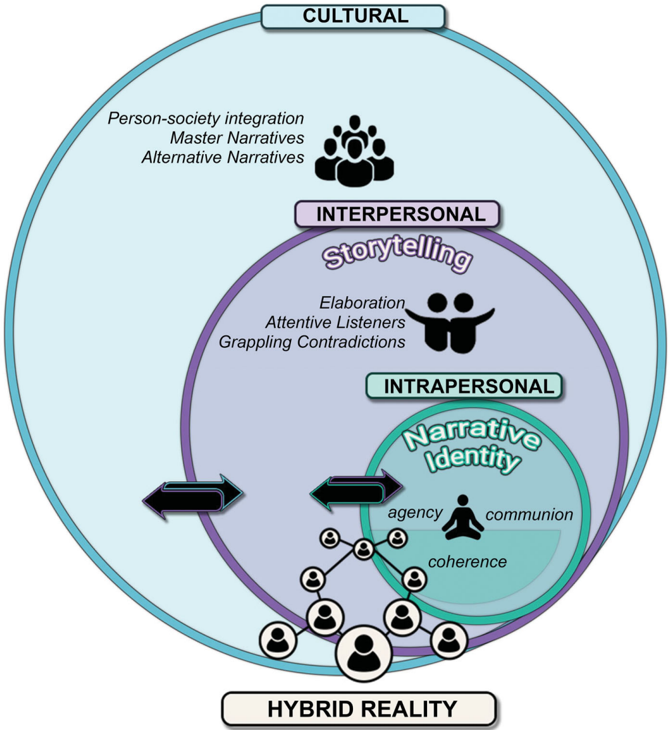
We are in the midst of a global transition in which digital “screens” are no longer simply entertainment devices and distractions; rather, adolescents are currently living in a hybrid reality that links digital spaces to offline contexts. Yet, psychological scientists studying the mental health impact of digital experiences largely focus on correlations with “screen time,” leading to oversimplified and atheoretical conclusions. We propose an alternative, functional approach to studying adolescent mental health in the digital age, one that examines why and how digital media affect adolescent development. Specifically, we suggest that understanding identity development—the core developmental task of adolescence—can help pinpoint the digital experiences that contribute to healthy versus problematic mental health outcomes. We have four objectives: (1) integrate principles from clinical and personality psychology with developmental theory to present a theoretical framework for investigating narrative identity; (2) show how this framework provides a useful lens for evaluating the impact of digital media on adolescents; (3) suggest a set of novel hypotheses that specify what kinds of digital contexts and experiences lead to healthy versus problematic mental health outcomes; and (4) propose a detailed research agenda that tests these hypotheses.
Overview
The claims and statistics of this paper haven’t been checked yet.
Free: it reads the open-access text and checks the first 5 claims that cite a source we can check. Create a free account to check every claim.
Integrity signals
Registry
Cites
Statistics
Figures

Verification
Claims the paper makes
The claims and statistics of this paper haven’t been checked yet.
Free: it reads the open-access text and checks the first 5 claims that cite a source we can check. Create a free account to check every claim.
Claims other papers make about this one
Each is checked against this paper’s own text: does it say what the citing paper says it does?
The source backs part of the claim, not all of it — or backs it for a different population, condition or comparison.
In the citing paper
“However, the permanence of digital platforms can confer benefits as well; reminiscing and nostalgia are encouraged by looking back over photographs, videos, and interactions from the past, and may assist youth in developing their narrative identity (Granic et al., 2020).”
From Technologizing Bronfenbrenner: Neo-ecological Theory. (2023) · cites this paper as Granic et al., 2020
Experimental — accuracy not yet measuredThe cited source says what the claim attributes to it.
In the citing paper
“The asychnronicity of virtual microsystems can create more opportunities for adolescents to engage on their terms (Granic et al., 2020).”
From Technologizing Bronfenbrenner: Neo-ecological Theory. (2023) · cites this paper as Granic et al., 2020
The cited source says what the claim attributes to it.
In the citing paper
“They proposed moving beyond how much time is spent online (i.e., screen time) to look at how and why digital interactions and activities impact identity development.”
From Technologizing Bronfenbrenner: Neo-ecological Theory. (2023) · cites this paper as Granic et al., 2020
The cited source says what the claim attributes to it.
In the citing paper
“Granic et al. proposed that by focusing on identity-formation processes, researchers “…can help pinpoint the digital experiences that will contribute to both healthy normative development as well as the emergence of serious mental health concerns” (p. 196).”
From Technologizing Bronfenbrenner: Neo-ecological Theory. (2023) · cites this paper as Granic et al., 2020
The cited source says what the claim attributes to it.
In the citing paper
“In conjunction with searchability (i.e., the ease with which people can find and verify information online; boyd, 2008; McFarland & Ployhart, 2015) this side of permanence can be detrimental and burdens today’s youth in ways unexperienced by previous generations (Granic et al., 2020).”
From Technologizing Bronfenbrenner: Neo-ecological Theory. (2023) · cites this paper as Granic et al., 2020
6 more claims about this paper
Create a free account to see every claim other papers make about this one.
Self-check
Percentages, sums and reported differences re-computed from the paper’s own numbers.
The self-check needs the paper’s full text.
Citations
Cites
Ryan, R. M., & Deci, E. L. (2000) · American Psychologist · doi:10.1037//0003-066x.55.1.68 · Cited by 54,599 · cited 5×
“…with a broad range of experiences, both positive and negative (e.g., academic achievement, athletic competencies, parental divorce, rejection by popular peers), and a strong sense of agency provides youth with the hope and motivation to overcome current and future adversities (Ryan & Deci, 2000).”
BackgroundInfluentialThe need to belong: Desire for interpersonal attachments as a fundamental human motivation.
Baumeister, R. F., & Leary, M. R. (1995) · Psychological Bulletin · doi:10.1037//0033-2909.117.3.497 · Cited by 23,245 · cited 1×
“Past research on young people who do not emotionally connect with peers has shown increased levels of rejection, loss of status, victimization, and loneliness (Baumeister & Leary, 1995; Granic & Patterson, 2006; Juvonen & Galv an, 2009; Sentse, Scholte, Salmivalli, & Voeten, 2007).”
BackgroundMaslow, A. H. (1943) · Psychological Review · doi:10.1037/h0054346 · Cited by 21,563 · cited 1×
“Most game designers and social media architects still rely on Maslow’s hierarchy (Maslow, 1943) to inform the psychological underpinnings of their digital systems.”
BackgroundThe Standard Edition of the Complete Psychological Works of Sigmund Freud
Freud, S. (1953) · Cited by 18,503
Social Network Analysis: Methods and Applications
Wasserman, S., & Faust, K. (1994) · doi:10.1017/cbo9780511815478 · Cited by 17,557
(1997) · Naming the Mind: How Psychology Found its Language · doi:10.4135/9781446221815.n7 · Cited by 15,148
(1968) · Medical Entomology and Zoology · Cited by 15,136
(2017) · Defining and Classifying Children in Need · doi:10.4324/9781315258324-16 · Cited by 11,320
Erikson, E. H. (2026) · Zenodo (CERN European Organization for Nuclear Research) · doi:10.5281/zenodo.18614668 · Cited by 11,235
Bruner, J. (1986) · doi:10.4159/9780674029019 · Cited by 8,657
Erikson, E. H. (1959) · Medical Entomology and Zoology · Cited by 6,863
Life on the Screen: Identity in the Age of the Internet
Turkle, S. (1997) · Cumulative Index of Computer Aided Architectural Design · Cited by 6,629
Actual Minds, Possible Worlds.
Mergler, N., Schleifer, R., & Bruner, J. (1986) · MLN · doi:10.2307/2905728 · Cited by 6,609
Merikangas, K. R., He, J.-P., Burstein, M., Swanson, S. A., Avenevoli, S., Cui, L., Benjet, C., Georgiades, K., & Swendsen, J. (2010) · Journal of the American Academy of Child & Adolescent Psychiatry · doi:10.1016/j.jaac.2010.05.017 · Cited by 6,278 · cited 1×
“…frequently diagnosed mental health problem for youth and the earliest to emerge among all forms of psychopathology, affecting up to 18% of children and adolescents (Merikangas et al., 2010; Mojtabai, Olfson, & Han, 2016; Olfson, Druss, & Marcus, 2015; Polanczyk, Salum, Sugaya, Caye, & Rohde, 2015).”
BackgroundThe Psychological Meaning of Words: LIWC and Computerized Text Analysis Methods
Tausczik, Y. R., & Pennebaker, J. W. (2010) · Journal of Language and Social Psychology · doi:10.1177/0261927x09351676 · Cited by 5,774 · cited 1×
“LIWC uses simple frequency counts of words and has yielded surprisingly rich accounts of personal, identity-relevant changes over the lifespan (Pennebaker, 1997; Pennebaker & Chung, 2011; Pennebaker & King, 1999; Pennebaker, Mehl, & Niederhoffer, 2003; Tausczik & Pennebaker, 2010).”
MethodDevelopment and validation of ego-identity status.
Marcia, J. E. (1966) · Journal of Personality and Social Psychology · doi:10.1037/h0023281 · Cited by 5,172 · cited 1×
“…past and present representations of the self-come to contradict each other and when conflicts between the norms of different peer groups, societal demands, and self-representations cannot be easily reconciled (Campbell, Assanand, & Di Paula, 2003; Erikson, 1968; Marcia, 1966; Syed & McLean, 2016).”
BackgroundNolen-Hoeksema, S., Wisco, B. E., & Lyubomirsky, S. (2008) · Perspectives on Psychological Science · doi:10.1111/j.1745-6924.2008.00088.x · Cited by 5,172
Narrative knowing and the human sciences
(1988) · Choice Reviews Online · doi:10.5860/choice.26-0378 · Cited by 4,882 · cited 2×
“unfolding over time (Polkinghorne, 1988); they are preoccu-”
BackgroundA study of normative and informational social influences upon individual judgment.
Deutsch, M., & Gerard, H. B. (1955) · The Journal of Abnormal and Social Psychology · doi:10.1037/h0046408 · Cited by 4,819 · cited 2×
“After the early-adolescence stage of conformity (e.g. Deutsch & Gerard, 1955; Dishion & Snyder, 2016; Dishion & Tipsord, 2011; Festinger, 1950), mid-adolescence ushers in a period that prioritizes the need for personal agency.”
BackgroundHandbook of Competence and Motivation
Elliot, A. J., & Dweck, C. S. (2013) · Cited by 4,671
The construction of reality in the child.
Piaget, J. (1954) · doi:10.1037/11168-000 · Cited by 4,558
The online disinhibition effect
Suler, J. (2004) · CyberPsychology & Behavior · doi:10.1089/1094931041291295 · Cited by 4,375 · cited 1×
“For example, theories of online disinhibition suggest that the online context may encourage individuals to more freely express their individual opinions and engage in more disinhibited behaviors than they might offline (for better, or worse, of course; Suler, 2004; Woong Yun & Park, 2011).”
BackgroundOn Becoming a Person: A Therapist's View of Psychotherapy
Rogers, C. R. (1961) · DigitalGeorgetown (Georgetown University Library) · Cited by 3,997
Polanczyk, G. V., Salum, G. A., Sugaya, L. S., Caye, A., & Rohde, L. A. (2015) · Journal of Child Psychology and Psychiatry · doi:10.1111/jcpp.12381 · Cited by 3,990
Motivational, emotional, and behavioral correlates of fear of missing out
Przybylski, A. K., Murayama, K., DeHaan, C. R., & Gladwell, V. (2013) · Computers in Human Behavior · doi:10.1016/j.chb.2013.02.014 · Cited by 3,932
Blackwell, L. S., Trzesniewski, K. H., & Dweck, C. S. (2007) · Child Development · doi:10.1111/j.1467-8624.2007.00995.x · Cited by 3,784
The Psychology of Self-Affirmation: Sustaining the Integrity of the Self
Steele, C. M. (1988) · Advances in Experimental Social Psychology · doi:10.1016/s0065-2601(08)60229-4 · Cited by 3,697 · cited 1×
“A temporally coherent narrative is defined as a causally connected, temporally meaningful story of the evolution of the self and it has long been considered a basic psychological need (e.g. Erikson, 1968; Steele, 1988).”
BackgroundWinnicott, D. W. (2018) · Routledge eBooks · doi:10.4324/9780429482410 · Cited by 3,675
A social neuroscience perspective on adolescent risk-taking
Steinberg, L. (2008) · Developmental Review · doi:10.1016/j.dr.2007.08.002 · Cited by 3,644 · cited 1×
“Many factors—from emotion-regulation patterns to peer and family interactions to school environments—have been implicated in adolescent mental health problems (e.g. Dahl, 2004; Fromme, Corbin, & Kruse, 2008; Steinberg, 2008; Petersen, 1988).”
BackgroundFras, I. (1968) · Psychosomatics · doi:10.1016/s0033-3182(68)71853-3 · Cited by 3,521
Biobehavioral responses to stress in females: Tend-and-befriend, not fight-or-flight.
Taylor, S. E., Klein, L. C., Lewis, B. P., Gruenewald, T. L., Gurung, R. A. R., & Updegraff, J. A. (2000) · Psychological Review · doi:10.1037/0033-295x.107.3.411 · Cited by 3,308 · cited 1×
“…the best suited games and social media provide opportunities for self-exploration and pursuit of communion needs by making friends, cultivating community, and taking care of others—a pattern most often referred to as “tend-and-befriend” in the biopsychosocial literature (Taylor et al., 2000).”
BackgroundAt the Threshold: The Developing Adolescent
Feldman, S. S., & Elliott, G. R. (1990) · Cited by 3,229
Reality is Broken Why Games Make Us Better and How They Can Change the World
(2012) · Choice Reviews Online · doi:10.5860/choice.49-6095 · Cited by 2,933
Psychological Aspects of Natural Language Use: Our Words, Our Selves
Pennebaker, J. W., Mehl, M. R., & Niederhoffer, K. G. (2003) · Annual Review of Psychology · doi:10.1146/annurev.psych.54.101601.145041 · Cited by 2,624
The Maturational Processes and the Facilitating Environment
Harmon, E. B. (1967) · Journal of the American Academy of Child Psychiatry · doi:10.1016/s0002-7138(09)61671-x · Cited by 2,516
Writing About Emotional Experiences as a Therapeutic Process
Pennebaker, J. W. (1997) · Psychological Science · doi:10.1111/j.1467-9280.1997.tb00403.x · Cited by 2,486 · cited 1×
“LIWC uses simple frequency counts of words and has yielded surprisingly rich accounts of personal, identity-relevant changes over the lifespan (Pennebaker, 1997; Pennebaker & Chung, 2011; Pennebaker & King, 1999; Pennebaker, Mehl, & Niederhoffer, 2003; Tausczik & Pennebaker, 2010).”
MethodThe benefits of playing video games.
Granic, I., Lobel, A., & Engels, R. C. M. E. (2014) · American Psychologist · doi:10.1037/a0034857 · Cited by 2,456 · cited 3×
“For those motivated by challenge, frustration, and mastery, daily experiences with these digital training regimens seem to build a “growth mindset” (Dweck & Molden, 2005; see Granic et al., 2014 for review), essentially a mindset that has agency and redemption at its core.”
BackgroundInfluentialSelf-citation(1986) · Medical Entomology and Zoology · Cited by 2,441
Thapar, A., Collishaw, S., Pine, D. S., & Thapar, A. K. (2012) · The Lancet · doi:10.1016/s0140-6736(11)60871-4 · Cited by 2,365
Global burden of disease in young people aged 10–24 years: a systematic analysis
Gore, F. M., Bloem, P. J., Patton, G. C., Ferguson, J., Joseph, V., Coffey, C., Sawyer, S. M., & Mathers, C. D. (2011) · The Lancet · doi:10.1016/s0140-6736(11)60512-6 · Cited by 2,301 · cited 1×
“By 2020, depression is estimated by the World Health Organization to become the leading cause of global disease burden for young people aged 10–24 years (Gore et al., 2011).”
BackgroundA dark side of the American dream: Correlates of financial success as a central life aspiration
Kasser, T., & Ryan, R. M. (1993) · Journal of Personality and Social Psychology · doi:10.1037/0022-3514.65.2.410 · Cited by 2,298 · cited 1×
“For over a century, this American Dream narrative has taught people that financial prosperity is available to all, is the marker of success, and is important to strive for (Kasser & Ryan, 1993).”
BackgroundIs Adolescence a Sensitive Period for Sociocultural Processing?
Blakemore, S.-J., & Mills, K. L. (2014) · Annual Review of Psychology · doi:10.1146/annurev-psych-010213-115202 · Cited by 2,264 · cited 1×
“…games are likely impacting on identity processes at the moment-to-moment scale (e.g. hijacking attention through perceptual and reward circuitry; Blakemore & Mills, 2014; Crone & Konijn, 2018) as well as over developmental time (e.g. creating long-lasting preferences for particular types of…”
BackgroundSweetser (2005) · doi:10.1145/1077246.1077253 · Cited by 2,124 · cited 1×
“Related to the sense of relentless optimism is the motivational “sweet spot” which most good video games target, where challenge and frustration are balanced with eventual success and accomplishment (Sweetser & Wyeth, 2005).”
BackgroundIntroduction to stochastic actor-based models for network dynamics
Snijders, T. A. B., van de Bunt, G. G., & Steglich, C. E. G. (2010) · Social Networks · doi:10.1016/j.socnet.2009.02.004 · Cited by 2,103
Cognitive vulnerability to emotional disorders
Mathews, A., & MacLeod, C. (2005) · Annual Review of Clinical Psychology · doi:10.1146/annurev.clinpsy.1.102803.143916 · Cited by 2,100 · cited 1×
“Contamination themes in narrative identities are characterized by feelings of hopelessness, the failure to persevere (Mathews & MacLeod, 2005), and rumination (Nolen-Hoeksema, Wisco, & Lyubomirsky, 2008) and they commonly correspond with both anxious and depressed outcomes.”
BackgroundA new Big Five: Fundamental principles for an integrative science of personality.
McAdams, D. P., & Pals, J. L. (2006) · American Psychologist · doi:10.1037/0003-066x.61.3.204 · Cited by 1,992 · cited 2×
“A number of psychologists have suggested that identity itself is constituted by this integrated life story, often referred to as narrative identity (McAdams & McLean, 2013; McAdams & Pals, 2006; Singer, 2004).”
BackgroundBody Image: A Handbook of Science, Practice, and Prevention
Cash, T. F., & Smolak, L. (2011) · ODU Digital Commons (Old Dominion University) · Cited by 1,965
Linguistic styles: language use as an individual difference
Pennebaker, J. W., & King, L. A. (1999) · Journal of Personality and Social Psychology · doi:10.1037/0022-3514.77.6.1296 · Cited by 1,961 · cited 1×
“LIWC uses simple frequency counts of words and has yielded surprisingly rich accounts of personal, identity-relevant changes over the lifespan (Pennebaker, 1997; Pennebaker & Chung, 2011; Pennebaker & King, 1999; Pennebaker, Mehl, & Niederhoffer, 2003; Tausczik & Pennebaker, 2010).”
MethodIdentity construction on Facebook: Digital empowerment in anchored relationships.
Zhao, S., Grasmuck, S., & Martin, J. (2008) · Computers in Human Behavior · doi:10.1016/j.chb.2008.02.012 · Cited by 1,848
Livingstone, S. (2008) · New Media & Society · doi:10.1177/1461444808089415 · Cited by 1,780 · cited 1×
“Questionable privacy practices associated with platforms like Facebook and Google dramatically change the stakes for young people when it comes to control over their own narrative identities (Livingstone, 2008; Livingstone, Olafsson, & Staksrud, 2011; Livingstone & Third, 2017).”
BackgroundGetting a life: The emergence of the life story in adolescence.
Habermas, T., & Bluck, S. (2000) · Psychological Bulletin · doi:10.1037/0033-2909.126.5.748 · Cited by 1,743 · cited 1×
“Balancing agency and communion needs is particularly challenging during adolescence (e.g. Chandler, 1994a, 1994b; Chandler & Lalonde, 1994; Erikson, 1968; Fivush, 2011; Habermas & Bluck, 2000; Kroger & Marcia, 2011), given the myriad biological and social changes associated with this phase.”
BackgroundTwenge, J. M., Joiner, T. E., Rogers, M. L., & Martin, G. N. (2018) · Clinical Psychological Science · doi:10.1177/2167702617723376 · Cited by 1,705
Elhai, J. D., Dvorak, R. D., Levine, J. C., & Hall, B. J. (2017) · Journal of Affective Disorders · doi:10.1016/j.jad.2016.08.030 · Cited by 1,689
Adolescent Brain Development: A Period of Vulnerabilities and Opportunities. Keynote Address
DAHL, R. E. (2004) · Annals of the New York Academy of Sciences · doi:10.1196/annals.1308.001 · Cited by 1,667 · cited 1×
“Many factors—from emotion-regulation patterns to peer and family interactions to school environments—have been implicated in adolescent mental health problems (e.g. Dahl, 2004; Fromme, Corbin, & Kruse, 2008; Steinberg, 2008; Petersen, 1988).”
BackgroundNock, M. K., Green, J. G., Hwang, I., McLaughlin, K. A., Sampson, N. A., Zaslavsky, A. M., & Kessler, R. C. (2013) · JAMA Psychiatry · doi:10.1001/2013.jamapsychiatry.55 · Cited by 1,666 · cited 1×
“Perhaps most seriously, both anxiety and depression are linked to suicide (Nock et al., 2013); depressed individuals have a 30- fold higher likelihood of successfully committing suicide than their non-depressed counterparts (Klein, Torpey, Bufferd, & Dyson, 2008).”
BackgroundInformal social communication.
Festinger, L. (1950) · Psychological Review · doi:10.1037/h0056932 · Cited by 1,643 · cited 3×
“After the early-adolescence stage of conformity (e.g. Deutsch & Gerard, 1955; Dishion & Snyder, 2016; Dishion & Tipsord, 2011; Festinger, 1950), mid-adolescence ushers in a period that prioritizes the need for personal agency.”
BackgroundIt's complicated: the social lives of networked teens
(2014) · Choice Reviews Online · doi:10.5860/choice.51-7042 · Cited by 1,607
Age differences in resistance to peer influence.
Steinberg, L., & Monahan, K. C. (2007) · Developmental Psychology · doi:10.1037/0012-1649.43.6.1531 · Cited by 1,566 · cited 3×
“Across diverse ethnic groups and for both males and females, data show that resistance to peer influences increases linearly from 14 to 18 years of age (Steinberg & Monahan, 2007).”
BackgroundThe association between adolescent well-being and digital technology use
Orben, A., & Przybylski, A. K. (2019) · Nature Human Behaviour · doi:10.1038/s41562-018-0506-1 · Cited by 1,500 · cited 4×
“…(e.g. Drummond & Sauer, 2019; Ellis, 2019; Ellis, Davidson, Shaw, & Geyer, 2019; Heffer et al., 2019; Hilgard, Engelhardt, & Rouder, 2017; Kardefelt-Winther, 2017; Markey & Ferguson, 2017; Ophir, Lipshits-Braziler, & Rosenberg, 2020; Orben & Przybylski, 2019a, 2019b; Twenge & Campbell, 2019).”
BackgroundInfluentialMcAdams, D. P., & McLean, K. C. (2013) · Current Directions in Psychological Science · doi:10.1177/0963721413475622 · Cited by 1,497
National trends in the prevalence and treatment of depression in adolescents and young adults.
Mojtabai, R., Olfson, M., & Han, B. (2016) · Pediatrics · doi:10.1542/peds.2016-1878 · Cited by 1,424
Social Identity, Self-Categorization, and the Communication of Group Norms
Hogg, M. A., & Reid, S. A. (2006) · Communication Theory · doi:10.1111/j.1468-2885.2006.00003.x · Cited by 1,399 · cited 1×
“In early adolescence, the need to belong and be accepted by peers is of paramount importance and similarity in attitudes and behaviors among peers increases, explained by both selection and influence processes (e.g. Brechwald & Prinstein, 2011; Hogg & Reid, 2006; Prinstein & Giletta, 2016).”
BackgroundIt's Complicated: The Social Lives of Networked Teens
Vitak, J. (2014) · Journal of Broadcasting & Electronic Media · doi:10.1080/08838151.2014.935944 · Cited by 1,397
(1985) · Medical Entomology and Zoology · Cited by 1,387
Beyond Homophily: A Decade of Advances in Understanding Peer Influence Processes
Brechwald, W. A., & Prinstein, M. J. (2011) · Journal of Research on Adolescence · doi:10.1111/j.1532-7795.2010.00721.x · Cited by 1,334 · cited 2×
“Peer acceptance and the need to fit into a valued peer group are of paramount importance during adolescence (Brechwald & Prinstein, 2011; Brown, 2004).”
BackgroundInformal social communication.
Festinger, L. (1950) · Theory and experiment in social communication. · doi:10.1037/10646-001 · Cited by 1,307
Eysenbach, G., Powell, J., Englesakis, M., Rizo, C., & Stern, A. (2004) · BMJ · doi:10.1136/bmj.328.7449.1166 · Cited by 1,268
A Multicomponent Conceptualization of Authenticity: Theory and Research
Kernis, M. H., & Goldman, B. M. (2006) · Advances in Experimental Social Psychology · doi:10.1016/s0065-2601(06)38006-9 · Cited by 1,244 · cited 1×
“Protracted conformity to others’ expectations is associated with anxiety, depression, and lower psychological wellbeing in general (e.g. Kernis & Goldman, 2006; Rogers, 1961; Ryan & Deci, 2000).”
BackgroundDo social network sites enhance or undermine subjective well-being? A critical review
Verduyn, P., Ybarra, O., Résibois, M., Jonides, J., & Kross, E. (2017) · Social Issues and Policy Review · doi:10.1111/sipr.12033 · Cited by 1,209 · cited 1×
“For example, a review by Verduyn, Ybarra, R esibois, Jonides, and Kross (2017) showed that passively using social media provokes social comparisons and envy, whereas active usage of social media is related to creating social capital and stimulating feelings of social connectedness.”
BackgroundPeer Relationships in Adolescence
Brown, B. B., & Larson, J. (2009) · Handbook of Adolescent Psychology · doi:10.1002/9780470479193.adlpsy002004 · Cited by 1,208 · cited 1×
“…goals during mid-adolescence: autonomy from parents (e.g. Collins, Laursen, Mortensen, Luebker, & Ferreira, 1997; Erikson, 1968), acceptance and admiration by peers (e.g. Brown & Larson, 2009; Prinstein & Giletta, 2016), and the construction of a coherent identity (Erikson, 1950, 1968).”
BackgroundWhat Do We Know When We Know a Person?
McAdams, D. P. (1995) · Journal of Personality · doi:10.1111/j.1467-6494.1995.tb00500.x · Cited by 1,160 · cited 1×
“Narrative identity is built by connecting life events through causal reasoning, attributing meaning to past memories, stitching that meaning to present circumstances, and projecting to future plans, goals, and aspirations (McAdams, 1995; McAdams & Pals, 2006; Singer, 2004).”
BackgroundThe common sense census: media use by tweens and teens
Rideout, V. (2015) · Cited by 1,129
A Networked self: identity, community, and culture on social network sites
(2011) · Choice Reviews Online · doi:10.5860/choice.48-3694 · Cited by 1,097
From Content to Context: Videogames as Designed Experience
Squire, K. (2006) · Educational Researcher · doi:10.3102/0013189x035008019 · Cited by 1,091 · cited 1×
“…them with emotionally powerful opportunities to grapple with identity-relevant paradoxes that often reflect back on offline identity preferences and concerns (e.g. Bessi ere, Seay, & Kiesler, 2007; Ducheneaut & Moore, 2005; Granic & Lamey, 2000; Squire, 2006; Turkle, 1995; Williams et al., 2006).”
BackgroundReducing the racial achievement gap: A social-psychological intervention
Cohen, G. L., Garcia, J., Apfel, N., & Master, A. (2006) · Science · doi:10.1126/science.1128317 · Cited by 1,073
The Experience Sampling Method
Larson, R., & Csikszentmihalyi, M. (2014) · Flow and the Foundations of Positive Psychology · doi:10.1007/978-94-017-9088-8_2 · Cited by 1,034 · cited 1×
“For example, experimental experience sampling methods studies (Larson & Csikszentmihalyi, 2014) could be designed in which adolescents are assigned to either (a) go about their daily activities—digitally and offline—while passive data on their mobile devices is collected (e.g. with the EARS tool:…”
MethodLinguistic predictors of adaptive bereavement
Pennebaker, J. W., Mayne, T. J., & Francis, M. E. (1997) · Journal of Personality and Social Psychology · doi:10.1037/0022-3514.72.4.863 · Cited by 970
Fivush, R., Haden, C. A., & Reese, E. (2006) · Child Development · doi:10.1111/j.1467-8624.2006.00960.x · Cited by 951 · cited 1×
“These are the very types of storytelling processes that have been studied offline in research labs and clinical experiments for decades (e.g. Fivush, 1991, 1993; Fivush et al., 2006; McAdams & McLean, 2013; McCabe & Peterson, 1991a; McLean, 2005; Newcombe & Reese, 2004; Pasupathi & Hoyt, 2010).”
BackgroundNarrative and the Cultural Psychology of Identity
Hammack, P. L. (2008) · Personality and Social Psychology Review · doi:10.1177/1088868308316892 · Cited by 923 · cited 1×
“Cultural values and norms are transmitted to its members through master narratives (Bamberg, 2004; Hammack, 2008; McLean & Syed, 2015; Thorne & McLean, 2003).”
BackgroundPrzybylski, A. K., & Weinstein, N. (2017) · Psychological Science · doi:10.1177/0956797616678438 · Cited by 890 · cited 1×
“…2019; Twenge, Joiner, Rogers, & Martin, 2018; Twenge, Martin, & Campbell, 2018), whereas others find either a positive or no association (Berryman, Ferguson, & Negy, 2018; Hilgard, Engelhardt, & Rouder, 2017; Kardefelt-Winther, 2017; Orben & Przybylski, 2019a, 2019b; Przybylski & Weinstein, 2017).”
Self-determination: The tyranny of freedom.
Schwartz, B. (2000) · American Psychologist · doi:10.1037/0003-066x.55.1.79 · Cited by 875 · cited 1×
“Indeed, such abundance of choices may lead to paralysis or ruminative exploration (Beyers & Luyckx, 2016; Schwartz, 2000).”
BackgroundAdolescents' Relationships with Peers
Brown, B. B. (2004) · Handbook of Adolescent Psychology · doi:10.1002/9780471726746.ch12 · Cited by 872 · cited 1×
“Peer acceptance and the need to fit into a valued peer group are of paramount importance during adolescence (Brechwald & Prinstein, 2011; Brown, 2004).”
BackgroundPeer Contagion in Child and Adolescent Social and Emotional Development
Dishion, T. J., & Tipsord, J. M. (2011) · Annual Review of Psychology · doi:10.1146/annurev.psych.093008.100412 · Cited by 847 · cited 2×
“After the early-adolescence stage of conformity (e.g. Deutsch & Gerard, 1955; Dishion & Snyder, 2016; Dishion & Tipsord, 2011; Festinger, 1950), mid-adolescence ushers in a period that prioritizes the need for personal agency.”
BackgroundMental Health Discourse on reddit: Self-Disclosure, Social Support, and Anonymity
De Choudhury, M., & De, S. (2014) · Proceedings of the International AAAI Conference on Web and Social Media · doi:10.1609/icwsm.v8i1.14526 · Cited by 836 · cited 1×
“For instance, public social media text applications (e.g. Facebook, Twitter) could be used to track contamination themes as they emerge naturalistically in young people’s everyday digital discourse (e.g. De Choudhury & De, 2014; De Choudhury et al., 2016).”
BackgroundThe redemptive self : stories Americans live by
McAdams, D. P. (2005) · Cited by 833
McAdams, D. P., Reynolds, J., Lewis, M., Patten, A. H., & Bowman, P. J. (2001) · Personality and Social Psychology Bulletin · doi:10.1177/0146167201274008 · Cited by 822
Online Communication and Adolescent Relationships
Subrahmanyam, K., & Greenfield, P. (2008) · The Future of Children · doi:10.1353/foc.0.0006 · Cited by 818 · cited 1×
“…young people’s mental health and wellbeing over time (Boyd, 2014; Ducheneaut & Moore, 2005; Granic & Lamey, 2000; Harley, Morgan, & Frith, 2018; Subrahmanyam & Greenfield, 2008; Subrahmanyam, Smahel, & Greenfield, 2006; Turkle, 1995; Valkenburg, Schouten, & Peter, 2005; Visser, Antheunis, &…”
Toward a comprehensive model of antisocial development: A dynamic systems approach.
Granic, I., & Patterson, G. R. (2006) · Psychological Review · doi:10.1037/0033-295x.113.1.101 · Cited by 811 · cited 1×
“Past research on young people who do not emotionally connect with peers has shown increased levels of rejection, loss of status, victimization, and loneliness (Baumeister & Leary, 1995; Granic & Patterson, 2006; Juvonen & Galv an, 2009; Sentse, Scholte, Salmivalli, & Voeten, 2007).”
BackgroundSelf-citationThe Development of Autobiographical Memory
Fivush, R. (2011) · Annual Review of Psychology · doi:10.1146/annurev.psych.121208.131702 · Cited by 786 · cited 4×
“Parental elaboration processes and children’s abilities to build their own self-narratives reinforce each other: Parents who request elaboration of self-stories encourage children to provide more sophisticated, emotionally rich narratives which, in turn, prompt parents to request further elaborations (Farrant & Reese,…”
BackgroundInfluentialAutonomy, conflict, and harmony in the family relationship.
Steinberg, L. D. (1990) · Cited by 783
Twenge, J. M., Martin, G. N., & Campbell, W. K. (2018) · Emotion · doi:10.1037/emo0000403 · Cited by 750
Narrative Identity and Meaning Making Across the Adult Lifespan: An Introduction
Singer, J. A. (2004) · Journal of Personality · doi:10.1111/j.0022-3506.2004.00268.x · Cited by 748 · cited 2×
“A number of psychologists have suggested that identity itself is constituted by this integrated life story, often referred to as narrative identity (McAdams & McLean, 2013; McAdams & Pals, 2006; Singer, 2004).”
BackgroundStice, E. (1994) · Clinical Psychology Review · doi:10.1016/0272-7358(94)90002-7 · Cited by 746 · cited 1×
“For example, the narrative that stipulates that the value of a woman rests on how thin she is has been studied for long-ranging negative impacts on adolescent girls (e.g. Stice, 1994; Vartanian, 2009; Vartanian & Hopkinson, 2010).”
BackgroundMcLean, K. C., & Syed, M. (2015) · Human Development · doi:10.1159/000445817 · Cited by 743 · cited 3×
“For individuals whose personal values and needs do not fit master narratives well, the optimal course of action may be to resist master narratives and adopt or co-construct alternative narratives (McLean & Syed, 2015).”
BackgroundSocial media use and adolescent mental health: Findings from the UK Millennium Cohort Study
Kelly, Y., Zilanawala, A., Booker, C., & Sacker, A. (2018) · EClinicalMedicine · doi:10.1016/j.eclinm.2018.12.005 · Cited by 740
Ego development : [conceptions and theories]
Loevinger, J., & Blasi, A. (1976) · Medical Entomology and Zoology · Cited by 728
Does time spent using social media impact mental health?: An eight year longitudinal study
Coyne, S. M., Rogers, A. A., Zurcher, J. D., Stockdale, L., & Booth, M. (2020) · Computers in Human Behavior · doi:10.1016/j.chb.2019.106160 · Cited by 701
(2013) · mediaTUM (Technical University of Munich) · Cited by 701
Developing Narrative Structure
Gerrig, R. J. (1991) · Language and Speech · doi:10.1177/002383099103400305 · Cited by 693
Identity status change during adolescence and young adulthood: a meta-analysis
Kroger, J., Martinussen, M., & Marcia, J. E. (2010) · Journal of Adolescence · doi:10.1016/j.adolescence.2009.11.002 · Cited by 690
Discovering Shifts to Suicidal Ideation from Mental Health Content in Social Media
De Choudhury, M., Kiciman, E., Dredze, M., Coppersmith, G., & Kumar, M. (2016) · Proceedings of the 2016 CHI Conference on Human Factors in Computing Systems · doi:10.1145/2858036.2858207 · Cited by 683 · cited 1×
“For instance, public social media text applications (e.g. Facebook, Twitter) could be used to track contamination themes as they emerge naturalistically in young people’s everyday digital discourse (e.g. De Choudhury & De, 2014; De Choudhury et al., 2016).”
BackgroundDweck, C. S. (2017) · Psychological Review · doi:10.1037/rev0000082 · Cited by 683 · cited 1×
“Communion needs (often referred to interchangeably as connectedness, belonging, or acceptance) encompass emotional bonding, being cared for and caring for others, and belonging to a socially cohesive group or community (for review, see Dweck, 2017; Ryan & Deci, 2000).”
BackgroundFrom Tree House to Barracks: The Social Life of Guilds in World of Warcraft
Williams, D., Ducheneaut, N., Xiong, L., Zhang, Y., Yee, N., & Nickell, E. (2006) · Games and Culture · doi:10.1177/1555412006292616 · Cited by 659 · cited 2×
“…them with emotionally powerful opportunities to grapple with identity-relevant paradoxes that often reflect back on offline identity preferences and concerns (e.g. Bessi ere, Seay, & Kiesler, 2007; Ducheneaut & Moore, 2005; Granic & Lamey, 2000; Squire, 2006; Turkle, 1995; Williams et al., 2006).”
BackgroundMarino, C., Gini, G., Vieno, A., & Spada, M. M. (2018) · Journal of Affective Disorders · doi:10.1016/j.jad.2017.10.007 · Cited by 658
Ego Development: Conceptions and Theories
Broughton, J., & Zahaykevich, M. (1977) · Telos · doi:10.3817/0677032246 · Cited by 633
McAdams, D. P. (2006) · Oxford University Press eBooks · doi:10.1093/acprof:oso/9780195176933.001.0001 · Cited by 627
The Ideal Elf: Identity Exploration in World of Warcraft
Bessière, K., Seay, A. F., & Kiesler, S. (2007) · CyberPsychology & Behavior · doi:10.1089/cpb.2007.9994 · Cited by 620
Adolescent Development in Interpersonal Context
Collins, W. A., & Steinberg, L. (2007) · Handbook of Child Psychology · doi:10.1002/9780470147658.chpsy0316 · Cited by 616
The interplay between Facebook use, social comparison, envy, and depression
Appel, H., Gerlach, A. L., & Crusius, J. (2016) · Current Opinion in Psychology · doi:10.1016/j.copsyc.2015.10.006 · Cited by 605
Adler, J. M. (2012) · Journal of Personality and Social Psychology · doi:10.1037/a0025289 · Cited by 588 · cited 1×
“…coming-out experiences for gay and lesbian youth, psychotherapy), strong agentic themes expressed in personal narratives predict a range of positive mental health outcomes (e.g. Adler, 2012; Adler & McAdams, 2007; Adler, Skalina, & McAdams, 2008; Bauer & McAdams, 2004; King & Smith, 2004).”
BackgroundA developmental social psychology of identity: understanding the person-in-context
ADAMS, G. R., & MARSHALL, S. K. (1996) · Journal of Adolescence · doi:10.1006/jado.1996.0041 · Cited by 587 · cited 2×
“Eventually, as young people mature over the course of adolescence and into early adulthood, agency and communion needs come to be valued equally, with the goal of achieving relative balance between them (Angyal, 1965; Adams & Marshall, 1996; LichtwarckAschoff, van Geert, Bosma, & Kunnen, 2008).”
BackgroundBeyond the emotional event: Six studies on the social sharing of emotion
Rimé, B., Mesquita, B., Boca, S., & Philippot, P. (1991) · Cognition & Emotion · doi:10.1080/02699939108411052 · Cited by 575
The Identity Statuses: Origins, Meanings, and Interpretations
Kroger, J., & Marcia, J. E. (2011) · Handbook of Identity Theory and Research · doi:10.1007/978-1-4419-7988-9_2 · Cited by 545 · cited 1×
“Balancing agency and communion needs is particularly challenging during adolescence (e.g. Chandler, 1994a, 1994b; Chandler & Lalonde, 1994; Erikson, 1968; Fivush, 2011; Habermas & Bluck, 2000; Kroger & Marcia, 2011), given the myriad biological and social changes associated with this phase.”
BackgroundSearching for a Mate: The Rise of the Internet as a Social Intermediary
Rosenfeld, M. J., & Thomas, R. J. (2012) · American Sociological Review · doi:10.1177/0003122412448050 · Cited by 541 · cited 1×
“This is in stark contrast with just eight years ago when only 22% of heterosexual couples met each other online (Rosenfeld & Thomas, 2012; Rosenfeld et al., 2019).”
ResultAdolescents’ identity experiments on the internet
Valkenburg, P. M., Schouten, A. P., & Peter, J. (2005) · New Media & Society · doi:10.1177/1461444805052282 · Cited by 532
Ferguson, C. J. (2015) · Perspectives on Psychological Science · doi:10.1177/1745691615592234 · Cited by 524
Lysaker, P. H., Carcione, A., Dimaggio, G., Johannesen, J. K., Nicolò, G., Procacci, M., & Semerari, A. (2005) · Acta Psychiatrica Scandinavica · doi:10.1111/j.1600-0447.2005.00514.x · Cited by 523 · cited 2×
“…& McAdams, 1999; Cohen, Garcia, Apfel, & Master, 2006; Lysaker et al., 2005), and increases in narrative coherence over the course of interventions likewise predict improvements in mental health (Foa, Molnar, & Cashman, 1995; Lysaker et al., 2005; Van Minnen, Wessel, Dijkstra, & Roelofs, 2002).”
Background(2003) · Monographs of the Society for Research in Child Development · doi:10.1111/1540-5834.00246 · Cited by 522
Determinants and mechanisms in ego identity development: a review and synthesis
Bosma, H. A., & Kunnen, E. S. (2001) · Developmental Review · doi:10.1006/drev.2000.0514 · Cited by 516 · cited 2×
“This kind of integration is known as person-society integration (Syed & McLean, 2016) and it is considered an essential milestone of identity development in western society (Bosma & Kunnen, 2001).”
BackgroundPals, J. L. (2006) · Journal of Personality · doi:10.1111/j.1467-6494.2006.00403.x · Cited by 515 · cited 4×
“By the time they reach adolescence, they become compelled to provide narrative evidence of causal turning points in their lives, and to share (and check) that meaning with others, especially their peers, glimpsing their own identity development as an unfolding autobiography that forms the basis for who they will becom…”
BackgroundInfluentialChange in rape narratives during exposure therapy for posttraumatic stress disorder
Foa, E. B., Molnar, C., & Cashman, L. (1995) · Journal of Traumatic Stress · doi:10.1002/jts.2490080409 · Cited by 514
Riehm, K. E., Feder, K. A., Tormohlen, K. N., Crum, R. M., Young, A. S., Green, K. M., Pacek, L. R., La Flair, L. N., & Mojtabai, R. (2019) · JAMA Psychiatry · doi:10.1001/jamapsychiatry.2019.2325 · Cited by 511 · cited 1×
“…outcomes over time (Babic et al., 2017; Boers, Afzali, Newton, & Conrod, 2019; Booker, Kelly, & Sacker, 2018; Kim, 2017; Prescott et al., 2018; Riehm et al., 2019; Viner et al., 2019), whereas other studies show little or no effect (Coyne, Rogers, Zurcher, Stockdale, & Booth, 2020; Ferguson,…”
Natural language processing of social media as screening for suicide risk
Coppersmith, G., Leary, R., Crutchley, P., & Fine, A. (2018) · Biomedical Informatics Insights · doi:10.1177/1178222618792860 · Cited by 506 · cited 1×
“Based on the combination of natural language processing and deep learning methods trained on retrospective social media data, Coppersmith et al. (2018) were able to accurately identify about 40% of individuals who would go on to attempt suicide (much better predictions than the 4–6% accuracy…”
MethodChild and adolescent psychopathology
(2008) · Choice Reviews Online · doi:10.5860/choice.46-1183 · Cited by 498
Social media’s enduring effect on adolescent life satisfaction
Orben, A., Dienlin, T., & Przybylski, A. K. (2019) · Proceedings of the National Academy of Sciences · doi:10.1073/pnas.1902058116 · Cited by 485 · cited 1×
“…health and screen use and that these effects are often bidirectional (Berryman et al., 2018; Elhai et al., 2018; Ferguson & Wang, 2019; Heffer et al., 2019; Hilgard, Engelhardt, & Rouder, 2017; Jensen et al., 2019; Markey & Ferguson, 2017; Orben & Przybylski, 2019a, 2019b; Orben et al., 2019).”
BackgroundSocial media use and mental health among young adults
Berryman, C., Ferguson, C. J., & Negy, C. (2018) · Psychiatric Quarterly · doi:10.1007/s11126-017-9535-6 · Cited by 484
Association of screen time and depression in adolescence
Boers, E., Afzali, M. H., Newton, N., & Conrod, P. (2019) · JAMA Pediatrics · doi:10.1001/jamapediatrics.2019.1759 · Cited by 481
Teens, technology and friendships
Lenhart, A., Smith, A. W., Anderson, M., Duggan, M., & Perrin, A. (2015) · Cited by 478
Reinecke, L., & Trepte, S. (2014) · Computers in Human Behavior · doi:10.1016/j.chb.2013.07.030 · Cited by 474 · cited 1×
“For example, young people who express themselves authentically to their peers, meeting their communion needs through honest communication on social media, show higher levels of psychological wellbeing over longitudinal time (Reinecke & Trepte, 2014).”
BackgroundPatterns of Adolescent Identity Development: Review of Literature and Longitudinal Analysis
Meeus, W., Iedema, J., Helsen, M., & Vollebergh, W. (1999) · Developmental Review · doi:10.1006/drev.1999.0483 · Cited by 468
Marchant, A., Hawton, K., Stewart, A., Montgomery, P., Singaravelu, V., Lloyd, K., Purdy, N., Daine, K., & John, A. (2017) · PLoS ONE · doi:10.1371/journal.pone.0181722 · Cited by 464 · cited 1×
“…of recently published reviews and meta-analyses (e.g. Dickson et al., 2019; Elhai, Dvorak, Levine, & Hall, 2017; Hilgard, Engelhardt, & Rouder, 2017; Marchant et al., 2017; Marino, Gini, Vieno, & Spada, 2018; Mathur & VanderWeele, 2019; Prescott, Sargent, & Hull, 2018; Whitlock & Masur, 2019).”
Media use and brain development during adolescence
Crone, E. A., & Konijn, E. A. (2018) · Nature Communications · doi:10.1038/s41467-018-03126-x · Cited by 464 · cited 1×
“…on identity processes at the moment-to-moment scale (e.g. hijacking attention through perceptual and reward circuitry; Blakemore & Mills, 2014; Crone & Konijn, 2018) as well as over developmental time (e.g. creating long-lasting preferences for particular types of digital networks which will…”
BackgroundChildren and young people’s rights in the digital age: An emerging agenda
Livingstone, S., & Third, A. (2017) · New Media & Society · doi:10.1177/1461444816686318 · Cited by 461 · cited 1×
“Questionable privacy practices associated with platforms like Facebook and Google dramatically change the stakes for young people when it comes to control over their own narrative identities (Livingstone, 2008; Livingstone, Olafsson, & Staksrud, 2011; Livingstone & Third, 2017).”
BackgroundThe structure of the self-concept and its relation to psychological adjustment
Campbell, J. D., Assanand, S., & Paula, A. D. (2003) · Journal of Personality · doi:10.1111/1467-6494.t01-1-00002 · Cited by 457
Encouraging narratives in preschoolers: an intervention study
PETERSON, C., JESSO, B., & McCABE, A. (1999) · Journal of Child Language · doi:10.1017/s0305000998003651 · Cited by 434
Rosenfeld, M. J., Thomas, R. J., & Hausen, S. (2019) · Proceedings of the National Academy of Sciences · doi:10.1073/pnas.1908630116 · Cited by 434 · cited 1×
“This is in stark contrast with just eight years ago when only 22% of heterosexual couples met each other online (Rosenfeld & Thomas, 2012; Rosenfeld et al., 2019).”
ResultLate Adolescent Identity Development: Narrative Meaning Making and Memory Telling.
McLean, K. C. (2005) · Developmental Psychology · doi:10.1037/0012-1649.41.4.683 · Cited by 431 · cited 2×
“Research shows that telling stories for the purpose of entertaining peers is less effective for developing integrative, coherent narratives than sharing stories of personal, emotional relevance (McLean, 2005).”
BackgroundMedia Use Is Linked to Lower Psychological Well-Being: Evidence from Three Datasets
Twenge, J. M., & Campbell, W. K. (2019) · Psychiatric Quarterly · doi:10.1007/s11126-019-09630-7 · Cited by 429 · cited 2×
“…(e.g. Drummond & Sauer, 2019; Ellis, 2019; Ellis, Davidson, Shaw, & Geyer, 2019; Heffer et al., 2019; Hilgard, Engelhardt, & Rouder, 2017; Kardefelt-Winther, 2017; Markey & Ferguson, 2017; Ophir, Lipshits-Braziler, & Rosenberg, 2020; Orben & Przybylski, 2019a, 2019b; Twenge & Campbell, 2019).”
Life Story Coherence and its Relation to Psychological Well-Being
Baerger, D. R., & McAdams, D. P. (1999) · Narrative Inquiry · doi:10.1075/ni.9.1.05bae · Cited by 425 · cited 1×
“…of studies show that high levels of temporal narrative coherence are linked to a range of positive outcomes (e.g. Adler, Wagner, & McAdams, 2007; Baerger & McAdams, 1999; Cohen, Garcia, Apfel, & Master, 2006; Lysaker et al., 2005), and increases in narrative coherence over the course of…”
BackgroundSubrahmanyam, K., Smahel, D., & Greenfield, P. (2006) · Developmental Psychology · doi:10.1037/0012-1649.42.3.395 · Cited by 423
Screens, Teens, and Psychological Well-Being: Evidence From Three Time-Use-Diary Studies
Orben, A., & Przybylski, A. K. (2019) · Psychological Science · doi:10.1177/0956797619830329 · Cited by 414 · cited 4×
“…(e.g. Drummond & Sauer, 2019; Ellis, 2019; Ellis, Davidson, Shaw, & Geyer, 2019; Heffer et al., 2019; Hilgard, Engelhardt, & Rouder, 2017; Kardefelt-Winther, 2017; Markey & Ferguson, 2017; Ophir, Lipshits-Braziler, & Rosenberg, 2020; Orben & Przybylski, 2019a, 2019b; Twenge & Campbell, 2019).”
BackgroundInfluentialTrends in Mental Health Care among Children and Adolescents
Olfson, M., Druss, B. G., & Marcus, S. C. (2015) · New England Journal of Medicine · doi:10.1056/nejmsa1413512 · Cited by 408
Health Outcomes Related to Early Adolescent Depression
Keenan-Miller, D., Hammen, C. L., & Brennan, P. A. (2007) · Journal of Adolescent Health · doi:10.1016/j.jadohealth.2007.03.015 · Cited by 399
Petersen, A. C. (1988) · Annual Review of Psychology · doi:10.1146/annurev.ps.39.020188.003055 · Cited by 392
de Graaf, R., ten Have, M., van Gool, C., & van Dorsselaer, S. (2012) · Social Psychiatry and Psychiatric Epidemiology · doi:10.1007/s00127-010-0334-8 · Cited by 390
Themes of Agency and Communion In Significant Autobiographical Scenes
McAdams, D. P., Hoffman, B. J., Day, R., & Mansfield, E. D. (1996) · Journal of Personality · doi:10.1111/j.1467-6494.1996.tb00514.x · Cited by 377
The social construction of personal narratives
Fıvush, R. (1991) · Merrill-palmer Quarterly · Cited by 373
Quiet: The Power of Introverts in a World That Can't Stop Talking
Lucas, K. (2013) · Journal of Business Communication · doi:10.1177/0021943613509338 · Cited by 351
(2016) · Wiley eBooks · doi:10.1002/9781119125556 · Cited by 342
Expressive Writing: Connections to Physical and Mental Health
Pennebaker, J. W., & Chung, C. K. (2012) · The Oxford Handbook of Health Psychology · doi:10.1093/oxfordhb/9780195342819.013.0018 · Cited by 337 · cited 1×
“LIWC uses simple frequency counts of words and has yielded surprisingly rich accounts of personal, identity-relevant changes over the lifespan (Pennebaker, 1997; Pennebaker & Chung, 2011; Pennebaker & King, 1999; Pennebaker, Mehl, & Niederhoffer, 2003; Tausczik & Pennebaker, 2010).”
MethodPersonal Growth in Adults' Stories of Life Transitions
Bauer, J. J., & McAdams, D. P. (2004) · Journal of Personality · doi:10.1111/j.0022-3506.2004.00273.x · Cited by 337 · cited 1×
“…coming-out experiences for gay and lesbian youth, psychotherapy), strong agentic themes expressed in personal narratives predict a range of positive mental health outcomes (e.g. Adler, 2012; Adler & McAdams, 2007; Adler, Skalina, & McAdams, 2008; Bauer & McAdams, 2004; King & Smith, 2004).”
BackgroundRozgonjuk, D., Levine, J. C., Hall, B. J., & Elhai, J. D. (2018) · Computers in Human Behavior · doi:10.1016/j.chb.2018.05.019 · Cited by 327
Do smartphone usage scales predict behavior?
Ellis, D. A., Davidson, B. I., Shaw, H., & Geyer, K. (2019) · International Journal of Human-Computer Studies · doi:10.1016/j.ijhcs.2019.05.004 · Cited by 326 · cited 2×
“Specifically, the bulk of this research used self-report measures that were either poorly related or completely unrelated to actual screen use (Ellis, 2019; Ellis et al., 2019; Sewall, Rosen, & Bear, 2019), rendering most of the conclusions about the negative impact of screen time completely moot.”
BackgroundLilgendahl, J. P., & McAdams, D. P. (2011) · Journal of Personality · doi:10.1111/j.1467-6494.2010.00688.x · Cited by 321 · cited 1×
“Setbacks are reappraised as challenges that were personally overcome such that the initial “negative” event is transformed by an overall “better” outcome (e.g. King & Hicks, 2007; Lilgendahl & McAdams, 2011; Tavernier & Willoughby, 2012).”
BackgroundSchleider, J., & Weisz, J. (2018) · Journal of Child Psychology and Psychiatry · doi:10.1111/jcpp.12811 · Cited by 320
Considering counter narratives
Bamberg, M. (2004) · Studies in Narrative · doi:10.1075/sin.4.43bam · Cited by 319 · cited 1×
“Cultural values and norms are transmitted to its members through master narratives (Bamberg, 2004; Hammack, 2008; McLean & Syed, 2015; Thorne & McLean, 2003).”
BackgroundSocial media and depression symptoms: A network perspective.
Aalbers, G., McNally, R. J., Heeren, A., de Wit, S., & Fried, E. I. (2019) · Journal of Experimental Psychology: General · doi:10.1037/xge0000528 · Cited by 317
Behavioral risks during the transition from high school to college.
Fromme, K., Corbin, W. R., & Kruse, M. I. (2008) · Developmental Psychology · doi:10.1037/a0012614 · Cited by 315
Fox, J., & Ralston, R. (2016) · Computers in Human Behavior · doi:10.1016/j.chb.2016.06.009 · Cited by 310 · cited 2×
“Fortunately, social media sites and support forums such as the ones available on Redditt (e.g. https://www.reddit.com/r/ mentalhealth/) attract active, engaged users committed to listen to and learn about like-minded peers (Fox & Ralston, 2016; Hatchel, Subrahmanyam, & Birkett, 2017).”
BackgroundValkenburg, P. M., & Peter, J. (2008) · Communication Research · doi:10.1177/0093650207313164 · Cited by 306 · cited 3×
“Data have shown that by taking control of their own narrative identity, grappling and experimenting with it, regardless of how accurate it may be, young people (especially lonely youth) can develop their social competence more broadly (Valkenburg & Peter, 2008).”
BackgroundMetaanalysis of the relationship between violent video game play and physical aggression over time
Prescott, A. T., Sargent, J. D., & Hull, J. G. (2018) · Proceedings of the National Academy of Sciences · doi:10.1073/pnas.1611617114 · Cited by 303
Viner, R. M., Gireesh, A., Stiglic, N., Hudson, L. D., Goddings, A.-L., Ward, J. L., & Nicholls, D. E. (2019) · The Lancet Child & Adolescent Health · doi:10.1016/s2352-4642(19)30186-5 · Cited by 295 · cited 2×
“In addition, some longitudinal work shows negative effects of screen time on mental health outcomes over time (Babic et al., 2017; Boers, Afzali, Newton, & Conrod, 2019; Booker, Kelly, & Sacker, 2018; Kim, 2017; Prescott et al., 2018; Riehm et al., 2019; Viner et al., 2019), whereas other studies show little or no eff…”
BackgroundChild victims, child witnesses: Understanding and improving testimony
Amye R., W. (1994) · Journal of Applied Developmental Psychology · doi:10.1016/0193-3973(94)90044-2 · Cited by 290
Online Peer-to-Peer Support for Young People With Mental Health Problems: A Systematic Review
Ali, K., Farrer, L., Gulliver, A., & Griffiths, K. M. (2015) · JMIR Mental Health · doi:10.2196/mental.4418 · Cited by 289
Why we need a small data paradigm
Hekler, E. B., Klasnja, P., Chevance, G., Golaszewski, N. M., Lewis, D., & Sim, I. (2019) · BMC Medicine · doi:10.1186/s12916-019-1366-x · Cited by 289 · cited 1×
“However, many have warned that the analysis of these enormous datasets needs to proceed with theoretical guidance; otherwise, interpretation is often impossible (e.g. Coveney, Dougherty, & Highfield, 2016; Hekler et al., 2019).”
BackgroundThe Individual Psychology of Alfred Adler
WERKMAN, S. L. (1957) · American Journal of Psychiatry · doi:10.1176/ajp.113.10.960 · Cited by 287
Ybarra, M. L., Mitchell, K. J., Palmer, N. A., & Reisner, S. L. (2015) · Child Abuse & Neglect · doi:10.1016/j.chiabu.2014.08.006 · Cited by 287
Heffer, T., Good, M., Daly, O., MacDonell, E., & Willoughby, T. (2019) · Clinical Psychological Science · doi:10.1177/2167702618812727 · Cited by 278 · cited 6×
“…mental health and screen use and that these effects are often bidirectional (Berryman et al., 2018; Elhai et al., 2018; Ferguson & Wang, 2019; Heffer et al., 2019; Hilgard, Engelhardt, & Rouder, 2017; Jensen et al., 2019; Markey & Ferguson, 2017; Orben & Przybylski, 2019a, 2019b; Orben et…”
BackgroundInfluentialBooker, C. L., Kelly, Y. J., & Sacker, A. (2018) · BMC Public Health · doi:10.1186/s12889-018-5220-4 · Cited by 268
Nesi, J., Choukas-Bradley, S., & Prinstein, M. J. (2018) · Clinical Child and Family Psychology Review · doi:10.1007/s10567-018-0262-9 · Cited by 266 · cited 3×
“Narratives that are communicated through or created in digital spaces reach a larger number of people, spread more rapidly, and have greater impact than those expressed in non-digital contexts (Nesi et al., 2018).”
BackgroundInfluentialFarrant, K., & Reese, E. (2000) · Journal of Cognition and Development · doi:10.1207/s15327647jcd010203 · Cited by 261 · cited 1×
“…self-narratives reinforce each other: Parents who request elaboration of self-stories encourage children to provide more sophisticated, emotionally rich narratives which, in turn, prompt parents to request further elaborations (Farrant & Reese, 2000; Fivush, 2011; Peterson, Jesso, & McCabe, 1999).”
BackgroundEffects of Writing About Traumatic Experiences: The Necessity for Narrative Structuring
Smyth, J., True, N., & Souto, J. (2001) · Journal of Social and Clinical Psychology · doi:10.1521/jscp.20.2.161.22266 · Cited by 258
Children at play: an American history
(2008) · Choice Reviews Online · doi:10.5860/choice.45-5761 · Cited by 247
The Oxford Handbook of Coercive Relationship Dynamics
(2015) · Oxford Handbooks Online · doi:10.1093/oxfordhb/9780199324552.001.0001 · Cited by 245
Jensen, M., George, M. J., Russell, M. R., & Odgers, C. L. (2019) · Clinical Psychological Science · doi:10.1177/2167702619859336 · Cited by 242 · cited 1×
“…health and screen use and that these effects are often bidirectional (Berryman et al., 2018; Elhai et al., 2018; Ferguson & Wang, 2019; Heffer et al., 2019; Hilgard, Engelhardt, & Rouder, 2017; Jensen et al., 2019; Markey & Ferguson, 2017; Orben & Przybylski, 2019a, 2019b; Orben et al., 2019).”
BackgroundNarrative Identity: What Is It? What Does It Do? How Do You Measure It?
McAdams, D. P. (2018) · Imagination, Cognition and Personality · doi:10.1177/0276236618756704 · Cited by 236
Depression and emotion regulation predict objective smartphone use measured over one week
Elhai, J. D., Tiamiyu, M. F., Weeks, J. W., Levine, J. C., Picard, K. J., & Hall, B. J. (2018) · Personality and Individual Differences · doi:10.1016/j.paid.2017.04.051 · Cited by 232 · cited 4×
“…show little or no effect (Coyne, Rogers, Zurcher, Stockdale, & Booth, 2020; Ferguson, 2019; Ferguson & Wang, 2019; Heffer et al., 2019; Hilgard, Engelhardt, & Rouder, 2017; Jensen, George, Russell, & Odgers, 2019; Orben, Dienlin, & Przybylski, 2019; Rozgonjuk, Levine, Hall, & Elhai et al., 2018).”
BackgroundInfluentialVariation in narrative identity is associated with trajectories of mental health over several years.
Adler, J. M., Turner, A. F., Brookshier, K. M., Monahan, C., Walder-Biesanz, I., Harmeling, L. H., Albaugh, M., McAdams, D. P., & Oltmanns, T. F. (2015) · Journal of Personality and Social Psychology · doi:10.1037/a0038601 · Cited by 230 · cited 1×
“For example, Adler et al. (2015) have shown that people who tell self-narratives with more redemptive sequences have better psychotherapy outcomes, including fewer depressive feelings after several years.”
BackgroundCoveney, P. V., Dougherty, E. R., & Highfield, R. R. (2016) · Philosophical Transactions of the Royal Society A: Mathematical, Physical and Engineering Sciences · doi:10.1098/rsta.2016.0153 · Cited by 229
Psychological Features of Extreme Political Ideologies
van Prooijen, J.-W., & Krouwel, A. P. M. (2019) · Current Directions in Psychological Science · doi:10.1177/0963721418817755 · Cited by 225 · cited 7×
“Over the last decade, hundreds of studies have been conducted on the impact of “screen time” providing data for a number of recently published reviews and meta-analyses (e.g. Dickson et al., 2019; Elhai, Dvorak, Levine, & Hall, 2017; Hilgard, Engelhardt, & Rouder, 2017; Marchant et al., 2017; Marino, Gini, Vieno, & Sp…”
BackgroundInfluentialSubthreshold depression in children and adolescents – a systematic review
Wesselhoeft, R., Sørensen, M. J., Heiervang, E. R., & Bilenberg, N. (2013) · Journal of Affective Disorders · doi:10.1016/j.jad.2013.06.010 · Cited by 214
Understanding identity integration: Theoretical, methodological, and applied issues
Syed, M., & McLean, K. C. (2016) · Journal of Adolescence · doi:10.1016/j.adolescence.2015.09.005 · Cited by 213 · cited 5×
“This kind of integration is known as person-society integration (Syed & McLean, 2016) and it is considered an essential milestone of identity development in western society (Bosma & Kunnen, 2001).”
BackgroundInfluentialCognitive development, epistemic doubt, and identity formation in adolescence
Boyes, M. C., & Chandler, M. (1992) · Journal of Youth and Adolescence · doi:10.1007/bf01537019 · Cited by 211 · cited 2×
“…are uniquely characterized by their inability to tell a causally coherent life narrative and to temporally link a future self with past and present versions of the self (Ball & Chandler, 1989; Boyes & Chandler, 1992; Chandler, 1994a, 1994b; Chandler & Lalonde, 1994; Noam et al., 1995).”
BackgroundDuchesne, S., Vitaro, F., Larose, S., & Tremblay, R. E. (2008) · Journal of Youth and Adolescence · doi:10.1007/s10964-007-9224-0 · Cited by 205
Psychosocial Stages and the Accessibility of Autobiographical Memories Across the Life Cycle
Conway, M. A., & Holmes, A. (2004) · Journal of Personality · doi:10.1111/j.0022-3506.2004.00269.x · Cited by 203 · cited 1×
“…that young people have the ability to recruit and remember (and be reminded of) only those memories that are most crucial to a healthy narrative and to forget what is less important, or contradictory, to their current and future sense of self (Conway & Holmes, 2004; Fuentes & Desrocher, 2012).”
BackgroundThe Language of Social Support in Social Media and Its Effect on Suicidal Ideation Risk
De Choudhury, M., & Kiciman, E. (2017) · Proceedings of the International AAAI Conference on Web and Social Media · doi:10.1609/icwsm.v11i1.14891 · Cited by 202 · cited 1×
“Then, the contingent peer responses that follow these expressions can be identified and the extent to which these responses either dampen or amplify further contamination expressions can be tested (e.g. De Choudhury & Kiciman, 2017; Sharma & De Choudhury, 2018).”
BackgroundTime and identity: a framework for research and theory formation
Lichtwarck-Aschoff, A., van Geert, P., Bosma, H., & Kunnen, S. (2008) · Developmental Review · doi:10.1016/j.dr.2008.04.001 · Cited by 200
When is social media use social interaction? Defining mediated social interaction
Hall, J. A. (2018) · New Media & Society · doi:10.1177/1461444816660782 · Cited by 198
The relationship between video game use and a performance-based measure of persistence
Ventura, M., Shute, V. J., & Zhao, W. (2012) · Computers & Education · doi:10.1016/j.compedu.2012.07.003 · Cited by 195
Can you tell who I am? Neuroticism, extraversion, and online self-presentation among young adults
Michikyan, M., Subrahmanyam, K., & Dennis, J. (2014) · Computers in Human Behavior · doi:10.1016/j.chb.2014.01.010 · Cited by 193
Whatever happened to "What might have been"? Regrets, happiness, and maturity.
King, L. A., & Hicks, J. A. (2007) · American Psychologist · doi:10.1037/0003-066x.62.7.625 · Cited by 191 · cited 1×
“Setbacks are reappraised as challenges that were personally overcome such that the initial “negative” event is transformed by an overall “better” outcome (e.g. King & Hicks, 2007; Lilgendahl & McAdams, 2011; Tavernier & Willoughby, 2012).”
BackgroundAn Analysis of Socioemotional and Task Communication in Online Multiplayer Video Games
Peña, J., & Hancock, J. T. (2006) · Communication Research · doi:10.1177/0093650205283103 · Cited by 186 · cited 1×
“Contrary to concerns about the violent or simply mundane content being communicated in these games, evidence shows that young people predominantly share socioemotional messages when they play these games (Pe~na & Hancock, 2006).”
BackgroundEllis, D. A. (2019) · Computers in Human Behavior · doi:10.1016/j.chb.2019.03.006 · Cited by 186 · cited 4×
“Specifically, the bulk of this research used self-report measures that were either poorly related or completely unrelated to actual screen use (Ellis, 2019; Ellis et al., 2019; Sewall, Rosen, & Bear, 2019), rendering most of the conclusions about the negative impact of screen time completely moot.”
BackgroundInfluentialNeurosis and Treatment: A Holistic Theory
Angyal, A., Hanfmann, E., & Jones, R. M. (1965) · Medical Entomology and Zoology · Cited by 185
Implicit theories and youth mental health problems: A random-effects meta-analysis
Schleider, J. L., Abel, M. R., & Weisz, J. R. (2015) · Clinical Psychology Review · doi:10.1016/j.cpr.2014.11.001 · Cited by 183
Thinking and talking about the past: Why remember?
Bluck, S., & Alea, N. (2009) · Applied Cognitive Psychology · doi:10.1002/acp.1612 · Cited by 183 · cited 1×
“Our narrative identity, in turn, helps us form and maintain close relationships (Bluck & Alea, 2009).”
BackgroundThe narrative reconstruction of psychotherapy and psychological health
Adler, J. M., Skalina, L. M., & McAdams, D. P. (2008) · Psychotherapy Research · doi:10.1080/10503300802326020 · Cited by 177
Bullying, rejection, and peer victimization: a social cognitive neuroscience perspective
(2009) · Choice Reviews Online · doi:10.5860/choice.47-1712 · Cited by 176
Selective Posting: Willingness to post a message online
Woong Yun, G., & Park, S.-Y. (2011) · Journal of Computer-Mediated Communication · doi:10.1111/j.1083-6101.2010.01533.x · Cited by 176 · cited 1×
“For example, theories of online disinhibition suggest that the online context may encourage individuals to more freely express their individual opinions and engage in more disinhibited behaviors than they might offline (for better, or worse, of course; Suler, 2004; Woong Yun & Park, 2011).”
Background
Research works printed but not linked: 23
- 10.1016/j.copsyc.2015.10.0006 · doi:10.1016/j.copsyc.2015.10.0006
- 10.1002/1cp.1612 · doi:10.1002/1cp.1612
- Chandler M. J., 1994, Rochester symposium on developmental psychopathology: Disorders and dysfunctions of the self, 371
- Chandler M. J., 1994, The development of theories of mind and the construction of cognitive abilities
- Dickson K., 2019, Screen-based activities and children and young people’s mental health and psychosocial wellbeing: A systematic map of reviews
- Ehrenreich S. E., 2016, The Oxford handbook of coercive relationship dynamics, 140
- Eichhorn K., 2019, The end of forgetting: Growing up with social media, 10.4159/9780674239333 · DOI · Paper page
- Fivush R., 1991, Merrill-Palmer Quarterly, 37, 59
- 10.1007/BF02102894 · doi:10.1007/bf02102894 · Paper page
- Harris Interactive. (2015, June). Pearson student mobile device survey 2015 . Retrieved from https://www.pearsoned.com/wp-content/uploads/2015-Pearson-Student-Mobile-Device-Survey-Grades-4-12.pdf
- Infinite Fall, 2017, Night in the woods
- Kardefelt-Winther D., 2017, How does the time children spend using digital technology impact their mental well-being, social relationships and physical activity?: An evidence-focused literature review
- McCabe A., 1991, Developing narrative structure, 217
- McGonigal J., 2015, Superbetter. A revolutionary approach to getting stronger, happier, braver and more resilient
- Noam G., 1995, Developmental psychopathology: Volume 1, 424
- Pennebaker J.W., 2015, The development and psychometric properties of LIWC2015
- Popcannibal, 2019, Kind words
- Rideout V., 2017, The Common Sense census: Media use by kids age zero to eight
- 10.1037/110003-066X.55.1.68 · doi:10.1037/110003-066x.55.1.68
- 10.1016/S2352(18)30022-1. · doi:10.1016/s2352(18)30022-1
- Thatgamecompany., 2012, Journey
- Thorne A., 2003, Connecting culture and memory: The development of an autobiographical self, 169
- 10.1089/cyber.2017.0247/ · doi:10.1089/cyber.2017.0247/
Cited by
Choukas-Bradley, S., Roberts, S. R., Maheux, A. J., & Nesi, J. (2021) · doi:10.31234/osf.io/ju92a · Cited by 331
Choukas-Bradley, S., Roberts, S. R., Maheux, A. J., & Nesi, J. (2022) · Clinical Child and Family Psychology Review · doi:10.1007/s10567-022-00404-5 · Cited by 333
Technologizing Bronfenbrenner: Neo-ecological Theory.
Navarro, J. L., & Tudge, J. R. H. (2023) · Current Psychology · doi:10.1007/s12144-022-02738-3 · Cited by 325
“The feature of publicness is particularly relevant to scholars examining civic engagement among youth (Granic et al., 2020).”
BackgroundInfluentialThe associations between screen time and mental health in adolescents: a systematic review
Santos, R. M. S., Mendes, C. G., Sen Bressani, G. Y., de Alcantara Ventura, S., de Almeida Nogueira, Y. J., de Miranda, D. M., & Romano-Silva, M. A. (2023) · BMC Psychology · doi:10.1186/s40359-023-01166-7 · Cited by 311
“Considering screen time simply by counting frequency and duration may limit understanding of an adolescent’s relationship with the smartphone and the consequences on mental well-being [89].”
BackgroundMechanisms linking social media use to adolescent mental health vulnerability
Orben, A., Meier, A., Dalgleish, T., & Blakemore, S.-J. (2024) · Nature Reviews Psychology · doi:10.1038/s44159-024-00307-y · Cited by 220
“This flexibility and alignment with psychological theory has contributed to the increasing popularity of the affordance approach 35,73,74,85,87 and previous reviews have explored relevant social media affordances in the context of interpersonal communication among adults and adolescents 35,88,89 ,…”
Metadata
- Authors
- Granic, I., Morita, H., & Scholten, H.
- Affiliations
- Radboud University Nijmegen (NL)
- Corresponding author
- Granic, Isabela
- Venue
- Psychological Inquiry
- Publisher
- Informa UK Limited
- Published
- 2020-07-02
- Volume
- 31
- Issue
- 3
- Pages
- 195-223
- ISSN
- 1047-840X (ISSN-L)
- 1532-7965
- OpenAlex
- W3097014664
- Semantic Scholar
- 05893448633381d0256f25118c809b5098d8630a
- Cited by
- 237
- References
- 285
- Citations by year
- 2026: 57 · 2025: 52 · 2024: 55 · 2023: 36 · 2022: 25 · 2021: 11
- FWCI
- 24.09
- Type
- journal article
- Language
- en
- Open access
- hybrid
- doi.org
- Licence
- Locations
- Psychological Inquiry (publishedVersion, cc-by-nc-nd)
- Radboud Repository (Radboud University) (submittedVersion, other-oa)
- Radboud Repository (Radboud University) (submittedVersion)
- Funders
- European Commission (HORIZON2020)
- H2020 European Research Council (683262)
- Topics
- Social Sciences › Sociology and Political Science › Impact of Technology on Adolescents
- Social Sciences › Education › Child Development and Digital Technology
- Social Sciences › Psychology › Developmental and Educational Psychology › Identity, Memory, and Therapy
- Keywords
- identity construction, adolescents, digital media, screen time, narrative identity, adolescent mental health, mixed reality, personality psychology, developmental theory, research agenda
About these checks
Registry, retraction, Cites and statistics results are computed, not judged, with one exception: a printed reference that no index lists is read once by a model before it counts as a citation error. Claims are extracted by a model and kept only when their quote appears verbatim in the text; each cited source is then checked, with a model’s help, for whether it says what the claim relies on. Those verdicts can be wrong — read the claim’s quote and the cited source before relying on one.
Statistics and arithmetic are recomputed, not judged.
Confidence bands are shown only for fields calibrated on our annotated test set. None is calibrated yet, so no band is shown.
What counts as a claim ›How we measure confidence ›How we check this ›
Are you an author, or do you see a problem with this page? Request a review
Data sources
Bibliographic data: Semantic Scholar, OpenAlex, Crossref.
Contains information from the Semantic Scholar Academic Graph Datasets, made available under the ODC Attribution License (ODC-BY 1.0).
Semantic Scholar’s data is described in: Kinney, R., et al. (2023). The Semantic Scholar Open Data Platform. arXiv:2301.10140.
