

Beyond Screen Time: Identity Development in the Digital Age
Open accessThe DOI matches its Crossref record; 277 of the 285 references it cites were found in a registry or an index.
Abstract
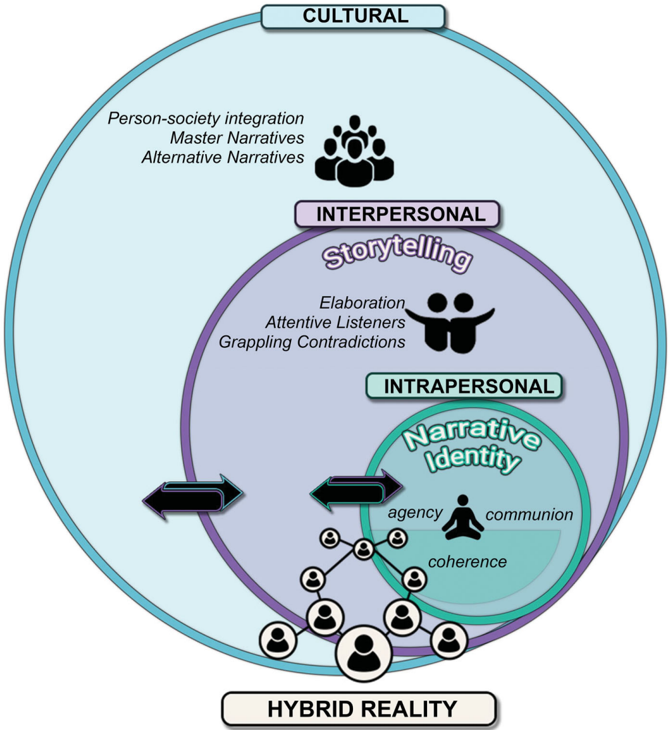
We are in the midst of a global transition in which digital “screens” are no longer simply entertainment devices and distractions; rather, adolescents are currently living in a hybrid reality that links digital spaces to offline contexts. Yet, psychological scientists studying the mental health impact of digital experiences largely focus on correlations with “screen time,” leading to oversimplified and atheoretical conclusions. We propose an alternative, functional approach to studying adolescent mental health in the digital age, one that examines why and how digital media affect adolescent development. Specifically, we suggest that understanding identity development—the core developmental task of adolescence—can help pinpoint the digital experiences that contribute to healthy versus problematic mental health outcomes. We have four objectives: (1) integrate principles from clinical and personality psychology with developmental theory to present a theoretical framework for investigating narrative identity; (2) show how this framework provides a useful lens for evaluating the impact of digital media on adolescents; (3) suggest a set of novel hypotheses that specify what kinds of digital contexts and experiences lead to healthy versus problematic mental health outcomes; and (4) propose a detailed research agenda that tests these hypotheses.
Overview
The claims and statistics of this paper haven’t been checked yet.
Free: it reads the open-access text and checks the first 5 claims that cite a source we can check. Create a free account to check every claim.
Integrity signals
Registry
Cites
Statistics
Figures

Verification
Claims the paper makes
The claims and statistics of this paper haven’t been checked yet.
Free: it reads the open-access text and checks the first 5 claims that cite a source we can check. Create a free account to check every claim.
Claims other papers make about this one
Each is checked against this paper’s own text: does it say what the citing paper says it does?
The source backs part of the claim, not all of it — or backs it for a different population, condition or comparison.
In the citing paper
“However, the permanence of digital platforms can confer benefits as well; reminiscing and nostalgia are encouraged by looking back over photographs, videos, and interactions from the past, and may assist youth in developing their narrative identity (Granic et al., 2020).”
From Technologizing Bronfenbrenner: Neo-ecological Theory. (2023) · cites this paper as Granic et al., 2020
Experimental — accuracy not yet measuredThe cited source says what the claim attributes to it.
In the citing paper
“The asychnronicity of virtual microsystems can create more opportunities for adolescents to engage on their terms (Granic et al., 2020).”
From Technologizing Bronfenbrenner: Neo-ecological Theory. (2023) · cites this paper as Granic et al., 2020
The cited source says what the claim attributes to it.
In the citing paper
“They proposed moving beyond how much time is spent online (i.e., screen time) to look at how and why digital interactions and activities impact identity development.”
From Technologizing Bronfenbrenner: Neo-ecological Theory. (2023) · cites this paper as Granic et al., 2020
The cited source says what the claim attributes to it.
In the citing paper
“Granic et al. proposed that by focusing on identity-formation processes, researchers “…can help pinpoint the digital experiences that will contribute to both healthy normative development as well as the emergence of serious mental health concerns” (p. 196).”
From Technologizing Bronfenbrenner: Neo-ecological Theory. (2023) · cites this paper as Granic et al., 2020
The cited source says what the claim attributes to it.
In the citing paper
“In conjunction with searchability (i.e., the ease with which people can find and verify information online; boyd, 2008; McFarland & Ployhart, 2015) this side of permanence can be detrimental and burdens today’s youth in ways unexperienced by previous generations (Granic et al., 2020).”
From Technologizing Bronfenbrenner: Neo-ecological Theory. (2023) · cites this paper as Granic et al., 2020
6 more claims about this paper
Create a free account to see every claim other papers make about this one.
Self-check
Percentages, sums and reported differences re-computed from the paper’s own numbers.
The self-check needs the paper’s full text.
Citations
Cites
Ryan, R. M., & Deci, E. L. (2000) · American Psychologist · doi:10.1037//0003-066x.55.1.68 · Cited by 54,599 · cited 5×
“…with a broad range of experiences, both positive and negative (e.g., academic achievement, athletic competencies, parental divorce, rejection by popular peers), and a strong sense of agency provides youth with the hope and motivation to overcome current and future adversities (Ryan & Deci, 2000).”
BackgroundInfluentialThe need to belong: Desire for interpersonal attachments as a fundamental human motivation.
Baumeister, R. F., & Leary, M. R. (1995) · Psychological Bulletin · doi:10.1037//0033-2909.117.3.497 · Cited by 23,245 · cited 1×
“Past research on young people who do not emotionally connect with peers has shown increased levels of rejection, loss of status, victimization, and loneliness (Baumeister & Leary, 1995; Granic & Patterson, 2006; Juvonen & Galv an, 2009; Sentse, Scholte, Salmivalli, & Voeten, 2007).”
BackgroundMaslow, A. H. (1943) · Psychological Review · doi:10.1037/h0054346 · Cited by 21,563 · cited 1×
“Most game designers and social media architects still rely on Maslow’s hierarchy (Maslow, 1943) to inform the psychological underpinnings of their digital systems.”
BackgroundThe Standard Edition of the Complete Psychological Works of Sigmund Freud
Freud, S. (1953) · Cited by 18,503
Social Network Analysis: Methods and Applications
Wasserman, S., & Faust, K. (1994) · doi:10.1017/cbo9780511815478 · Cited by 17,557
(1997) · Naming the Mind: How Psychology Found its Language · doi:10.4135/9781446221815.n7 · Cited by 15,148
(1968) · Medical Entomology and Zoology · Cited by 15,136
(2017) · Defining and Classifying Children in Need · doi:10.4324/9781315258324-16 · Cited by 11,320
Erikson, E. H. (2026) · Zenodo (CERN European Organization for Nuclear Research) · doi:10.5281/zenodo.18614668 · Cited by 11,235
Research works printed but not linked: 23
- 10.1016/j.copsyc.2015.10.0006 · doi:10.1016/j.copsyc.2015.10.0006
- 10.1002/1cp.1612 · doi:10.1002/1cp.1612
- Chandler M. J., 1994, Rochester symposium on developmental psychopathology: Disorders and dysfunctions of the self, 371
- Chandler M. J., 1994, The development of theories of mind and the construction of cognitive abilities
- Dickson K., 2019, Screen-based activities and children and young people’s mental health and psychosocial wellbeing: A systematic map of reviews
- Ehrenreich S. E., 2016, The Oxford handbook of coercive relationship dynamics, 140
- Eichhorn K., 2019, The end of forgetting: Growing up with social media, 10.4159/9780674239333 · DOI · Paper page
- Fivush R., 1991, Merrill-Palmer Quarterly, 37, 59
- 10.1007/BF02102894 · doi:10.1007/bf02102894 · Paper page
- Harris Interactive. (2015, June). Pearson student mobile device survey 2015 . Retrieved from https://www.pearsoned.com/wp-content/uploads/2015-Pearson-Student-Mobile-Device-Survey-Grades-4-12.pdf
- Infinite Fall, 2017, Night in the woods
- Kardefelt-Winther D., 2017, How does the time children spend using digital technology impact their mental well-being, social relationships and physical activity?: An evidence-focused literature review
- McCabe A., 1991, Developing narrative structure, 217
- McGonigal J., 2015, Superbetter. A revolutionary approach to getting stronger, happier, braver and more resilient
- Noam G., 1995, Developmental psychopathology: Volume 1, 424
- Pennebaker J.W., 2015, The development and psychometric properties of LIWC2015
- Popcannibal, 2019, Kind words
- Rideout V., 2017, The Common Sense census: Media use by kids age zero to eight
- 10.1037/110003-066X.55.1.68 · doi:10.1037/110003-066x.55.1.68
- 10.1016/S2352(18)30022-1. · doi:10.1016/s2352(18)30022-1
- Thatgamecompany., 2012, Journey
- Thorne A., 2003, Connecting culture and memory: The development of an autobiographical self, 169
- 10.1089/cyber.2017.0247/ · doi:10.1089/cyber.2017.0247/
Cited by
Items 201–237 of 237
Branquinho, L., Forte, P. M., Valente, N., de França, E., Venâncio, T. F., dos Santos, R. T., & Ferraz, J. E. T. A. R. (2026) · IntechOpen eBooks · doi:10.5772/intechopen.1014974
Pastorino, G. M. G., Aquino, A., Buonaiuto, R., Diaspro, G., Olivieri, M., & Operto, F. F. (2026) · Research Square · doi:10.21203/rs.3.rs-9064743/v1
Jun, G., Xu, J., Dharejo, N., Alivi, M. A., & Tian, L. (2026) · Online Journal of Communication and Media Technologies · doi:10.30935/ojcmt/18321
Digital cultures and the exposome of psychosis
Werst, M. J. A., Tiraboschi, G. A., & Paquin, V. (2026) · Schizophrenia Research · doi:10.1016/j.schres.2026.04.006
May, B., & Holmes, S. E. (2026) · International Journal of Christianity & Education · doi:10.1177/20569971261444966
“Granic, Morita and Scholten asserted that optimal narrative identity development is achieved when agency and communion are in balance (Granic et al., 2020).”
InfluentialDesign Insights for Exploring Identity Bubbles with Alternate Reality Gameplay
Almeida, G., Seiça, M., & Roque, L. (2026) · Technologies · doi:10.3390/technologies14050290
Meisel, M. K., Merrill, J. E., Clement, A. C., Kim, J. S., Nguyen, A., Colby, S. M., Gabrielli, J., Wray, T. B., & Jackson, K. M. (2026) · Alcoholism Clinical and Experimental Research · doi:10.1111/acer.70322
Identity and Choice: A Dialogue Between Philosophical Anthropology and Education
Александровна, К. Т. (2026) · Философия и культура · doi:10.7256/2454-0757.2026.6.77597
Cimino, S., & Cerniglia, L. (2026) · Current Psychology · doi:10.1007/s12144-026-09624-2
“This suggests that problematic Tinder use may be associated with a fragmented sense of self, where individuals struggle with maintaining a coherent and stable identity across different contexts and relationships (Granic et al., 2020 ).”
Dolu, İ., Çiçek, E., Gökçe, M. C., Çakici, H. B., & Bozkurt, F. D. (2026) · BMC Nursing · doi:10.1186/s12912-026-04802-w
“While excessive use may reduce physical activity and face-to-face interaction, potentially harming physical and mental health, it also supports learning and access to health information [34], contributing to adolescents’ knowledge and literacy skills [35, 36].”
Sweigart, E. A., & Wiśniewski, P. (2026) · IntechOpen eBooks · doi:10.5772/intechopen.1015652
Rodrigues, F. L. N., Martín, S. C., & Pocinho, R. F. D. S. (2026) · SSRN Electronic Journal · doi:10.2139/ssrn.6960005
Thomas, Z., Dunn, A., Bergin, A., & Hazell, C. M. (2026) · Behavioral Sciences · doi:10.3390/bs16061026
“The benefits of gameplay at this age could potentially be most impactful as this represents a critical life stage for identity formation (McGoldrick & Carter, 2003) and the emergence of mental health difficulties (Granic et al., 2020).”
Siedler, A. (2026) · Studia z Teorii Wychowania · doi:10.5604/01.3001.0055.8022
Digital Socialization – Strengths and Weaknesses
Voicu, C. D. (2026) · Journal of Education Society & Multiculturalism · doi:10.2478/jesm-2026-0008
Knowing How to Ask About Digital Culture in Youth Mental Health Care: A Co‐Designed Tool
Paquin, V., Jiang, R., Shah, J., Jarvis, G. E., Nickrenz, E., Ferrari, M., & Park, M. (2026) · Early Intervention in Psychiatry · doi:10.1111/eip.70203 · Cited by 1
“Reflecting important threads of the literature on digital media effects, the DCI addresses the role of digital culture in identity development (Granic et al. 2020), negative social comparisons online (Gill 2023; van der Wal et al. 2024), harmful contents promoted by algorithms (Brady et al. 2023;…”
Li, W. O., Fung, C.-M., Chow, T. S., Leung, K. I. D., & Cheung, Y.-W. (2026) · Cyberpsychology Journal of Psychosocial Research on Cyberspace · doi:10.5817/cp2026-3-6
“This approach is further motivated by the established proposition that SNS usage should not be measured as a unified variable (Granic et al., 2020; Verduyn et al., 2017, 2022); what matters is the nature of usage — social versus entertainment — rather than usage quantity alone (Hamilton et al.,…”
A brief roadmap for protecting the mental health of youth in the digital age: A scoping review
Ulutaş, D. A., & GÜNDÜZ, D. U. (2026) · Current Psychology · doi:10.1007/s12144-026-09738-7 · Cited by 1
“…shapes the social identity acquisition process (Navarro & Tudge, 2023), enabling self-presentation, sharing, and online interaction, all of which signifi - cantly contribute to adolescents’ sense of belonging (Allen et al., 2021) and their alignment with various social groups (Granic et al., 2020).”
Mittal, P., Kaur, A., Malhotra, S., Kaur, B., & Kaur, A. (2026) · Mental Illness · doi:10.1155/mij/8325823
Regehr, K., Smales, K., Vrikki, P., & Shaughnessy, C. (2026) · Children & Society · doi:10.1111/chso.70075
Media Behaviors Among Generation Z in the United States: Patterns and Future Trends
Gomez-Vasquez, L. (2026) · Management for professionals · doi:10.1007/978-3-658-51813-4_6
Kpegba-Fiaboe, E. E. (2026) · PLoS ONE · doi:10.1371/journal.pone.0335879
“As adolescents strive for autonomy, they also experience a profound need for social belonging, rendering them highly responsive to peer norms and social expectations [4].”
Enhancing Student-Athlete Belonging Through an Identity-Focused Intervention
Bertuccio, R. F., Landrigan, G. K., & Rhoden, B. E. (2026) · NASPA Journal · doi:10.1080/19496591.2026.2712218
“Emerging research suggests that social media use may influence psychosocial outcomes during formative periods of development (Granic et al., 2020; Hunt et al., 2018; Nesi et al., 2018), yet research examining these processes among collegiate student-athletes in the NIL era remains limited and…”
Tam, M. T., Zhang, C. C., Peng, A., & Robillard, J. M. (2026) · Family Relations · doi:10.1111/fare.70256
Family Dynamics Around “Problematic” Internet Use: Parents’ and Adolescents’ Perspectives
Selin, A. Y. A. S., & Demir, A. (2026) · The Family Journal · doi:10.1177/10664807261483718
Karasavva, V., Khalis, A., & Mikami, A. Y. (2026) · Journal of Social Media Research · doi:10.29329/jsomer.107
“In summary, it is also important to consider how young adults use social media - that is, what behaviors they are doing, and what cognitions they are having (Granic et al., 2020; Valkenburg et al., 2022).”
Kineret, M., & Shlomo, S. B. (2026) · Youth & Society · doi:10.1177/0044118x261487690
Baek, S. H. (2026) · International Journal of Educational Research Open · doi:10.1016/j.ijedro.2026.100596
Risk and protective factors associated with misinformation susceptibility in young adulthood
Snijders, A. L., Simpson-Kent, I. L., Roozenbeek, J., van Duijvenvoorde, A. C. K., Blankenstein, N., & Ma, I. (2026) · Computers in Human Behavior Reports · doi:10.1016/j.chbr.2026.101367
Sousa, C., Gursesli, M. C., Pirola, A. C. S., Oliveira, A. F., Hamari, J., & Duradoni, M. (2026) · Communications in computer and information science · doi:10.1007/978-3-032-31642-4_18
The ReDiKid framework: a transdisciplinary systems approach to child resilience in the digital age
Pelclová, J., d'Haenens, L., Potenza, M. N., Suchá, J., Gába, A., Větrovský, T., Šmahel, D., Procházka, R., & Shafi, A. A. (2026) · Frontiers in Psychology · doi:10.3389/fpsyg.2026.1919590 · Cited by 1
“They should therefore not be treated as adversity solely because they occur in digital environments (Granic et al., 2020).”
Tao, W., & Arikkatt, R. M. (2026) · Journal of Technology in Behavioral Science · doi:10.1007/s41347-026-00724-1
Systematized scoping review of instruments for measuring adolescent digital technology use
Vedechkina, M., Banati, P., & Baltag, V. (2026) · EClinicalMedicine · doi:10.1016/j.eclinm.2026.104247
“42,43 These findings have important implications for stakeholders who rely on accurate measurement of adolescent digital engagement.”
The Association Between Video Gaming and Adolescent Identity: A Systematic Review
van Nierop, B., Wijsbroek, S. A. M., Kleinjan, M., Maes, M., Cup, V. H., & Peeters, M. (2026) · Adolescent Research Review · doi:10.1007/s40894-026-00295-5
The Frozen Self: Psychological and Cultural Barriers to Agency in the Age of Tokenized IdentityPreprint
Belk, J. (2026) · Research Square · doi:10.21203/rs.3.rs-11212068/v1
Contextual, Family, and Individual Pathways from Screen Time to Oral Health
Rego, I. N., Baker, S. R., Rebelo, M. A. B., Vettore, M. V., & Vieira, J. M. R. (2026) · Journal of Dental Research · doi:10.1177/00220345261488353
Keessen, L., Piotrowski, J. T., Sumter, S. R., & van Oosten, J. M. F. (2026) · Acta Psychologica · doi:10.1016/j.actpsy.2026.108029
Metadata
- Authors
- Granic, I., Morita, H., & Scholten, H.
- Affiliations
- Radboud University Nijmegen (NL)
- Corresponding author
- Granic, Isabela
- Venue
- Psychological Inquiry
- Publisher
- Informa UK Limited
- Published
- 2020-07-02
- Volume
- 31
- Issue
- 3
- Pages
- 195-223
- ISSN
- 1047-840X (ISSN-L)
- 1532-7965
- OpenAlex
- W3097014664
- Semantic Scholar
- 05893448633381d0256f25118c809b5098d8630a
- Cited by
- 237
- References
- 285
- Citations by year
- 2026: 57 · 2025: 52 · 2024: 55 · 2023: 36 · 2022: 25 · 2021: 11
- FWCI
- 24.09
- Type
- journal article
- Language
- en
- Open access
- hybrid
- doi.org
- Licence
- Locations
- Psychological Inquiry (publishedVersion, cc-by-nc-nd)
- Radboud Repository (Radboud University) (submittedVersion, other-oa)
- Radboud Repository (Radboud University) (submittedVersion)
- Funders
- European Commission (HORIZON2020)
- H2020 European Research Council (683262)
- Topics
- Social Sciences › Sociology and Political Science › Impact of Technology on Adolescents
- Social Sciences › Education › Child Development and Digital Technology
- Social Sciences › Psychology › Developmental and Educational Psychology › Identity, Memory, and Therapy
- Keywords
- identity construction, adolescents, digital media, screen time, narrative identity, adolescent mental health, mixed reality, personality psychology, developmental theory, research agenda
About these checks
Registry, retraction, Cites and statistics results are computed, not judged, with one exception: a printed reference that no index lists is read once by a model before it counts as a citation error. Claims are extracted by a model and kept only when their quote appears verbatim in the text; each cited source is then checked, with a model’s help, for whether it says what the claim relies on. Those verdicts can be wrong — read the claim’s quote and the cited source before relying on one.
Statistics and arithmetic are recomputed, not judged.
Confidence bands are shown only for fields calibrated on our annotated test set. None is calibrated yet, so no band is shown.
What counts as a claim ›How we measure confidence ›How we check this ›
Are you an author, or do you see a problem with this page? Request a review
Data sources
Bibliographic data: Semantic Scholar, OpenAlex, Crossref.
Contains information from the Semantic Scholar Academic Graph Datasets, made available under the ODC Attribution License (ODC-BY 1.0).
Semantic Scholar’s data is described in: Kinney, R., et al. (2023). The Semantic Scholar Open Data Platform. arXiv:2301.10140.
