

Beyond Screen Time: Identity Development in the Digital Age
Open accessThe DOI matches its Crossref record; 277 of the 285 references it cites were found in a registry or an index.
Abstract
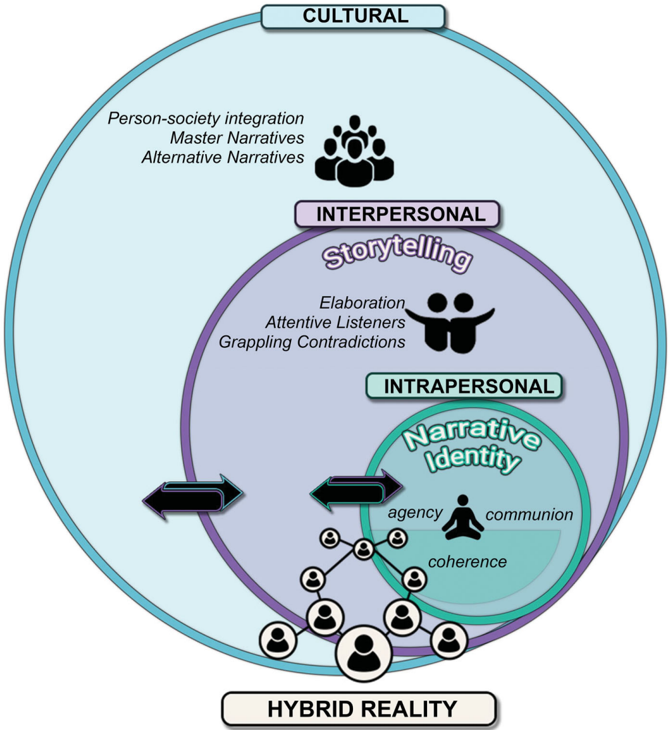
We are in the midst of a global transition in which digital “screens” are no longer simply entertainment devices and distractions; rather, adolescents are currently living in a hybrid reality that links digital spaces to offline contexts. Yet, psychological scientists studying the mental health impact of digital experiences largely focus on correlations with “screen time,” leading to oversimplified and atheoretical conclusions. We propose an alternative, functional approach to studying adolescent mental health in the digital age, one that examines why and how digital media affect adolescent development. Specifically, we suggest that understanding identity development—the core developmental task of adolescence—can help pinpoint the digital experiences that contribute to healthy versus problematic mental health outcomes. We have four objectives: (1) integrate principles from clinical and personality psychology with developmental theory to present a theoretical framework for investigating narrative identity; (2) show how this framework provides a useful lens for evaluating the impact of digital media on adolescents; (3) suggest a set of novel hypotheses that specify what kinds of digital contexts and experiences lead to healthy versus problematic mental health outcomes; and (4) propose a detailed research agenda that tests these hypotheses.
Overview
The claims and statistics of this paper haven’t been checked yet.
Free: it reads the open-access text and checks the first 5 claims that cite a source we can check. Create a free account to check every claim.
Integrity signals
Registry
Cites
Statistics
Figures

Verification
Claims the paper makes
The claims and statistics of this paper haven’t been checked yet.
Free: it reads the open-access text and checks the first 5 claims that cite a source we can check. Create a free account to check every claim.
Claims other papers make about this one
Each is checked against this paper’s own text: does it say what the citing paper says it does?
The source backs part of the claim, not all of it — or backs it for a different population, condition or comparison.
In the citing paper
“However, the permanence of digital platforms can confer benefits as well; reminiscing and nostalgia are encouraged by looking back over photographs, videos, and interactions from the past, and may assist youth in developing their narrative identity (Granic et al., 2020).”
From Technologizing Bronfenbrenner: Neo-ecological Theory. (2023) · cites this paper as Granic et al., 2020
Experimental — accuracy not yet measuredThe cited source says what the claim attributes to it.
In the citing paper
“The asychnronicity of virtual microsystems can create more opportunities for adolescents to engage on their terms (Granic et al., 2020).”
From Technologizing Bronfenbrenner: Neo-ecological Theory. (2023) · cites this paper as Granic et al., 2020
The cited source says what the claim attributes to it.
In the citing paper
“They proposed moving beyond how much time is spent online (i.e., screen time) to look at how and why digital interactions and activities impact identity development.”
From Technologizing Bronfenbrenner: Neo-ecological Theory. (2023) · cites this paper as Granic et al., 2020
The cited source says what the claim attributes to it.
In the citing paper
“Granic et al. proposed that by focusing on identity-formation processes, researchers “…can help pinpoint the digital experiences that will contribute to both healthy normative development as well as the emergence of serious mental health concerns” (p. 196).”
From Technologizing Bronfenbrenner: Neo-ecological Theory. (2023) · cites this paper as Granic et al., 2020
The cited source says what the claim attributes to it.
In the citing paper
“In conjunction with searchability (i.e., the ease with which people can find and verify information online; boyd, 2008; McFarland & Ployhart, 2015) this side of permanence can be detrimental and burdens today’s youth in ways unexperienced by previous generations (Granic et al., 2020).”
From Technologizing Bronfenbrenner: Neo-ecological Theory. (2023) · cites this paper as Granic et al., 2020
6 more claims about this paper
Create a free account to see every claim other papers make about this one.
Self-check
Percentages, sums and reported differences re-computed from the paper’s own numbers.
The self-check needs the paper’s full text.
Citations
Cites
Ryan, R. M., & Deci, E. L. (2000) · American Psychologist · doi:10.1037//0003-066x.55.1.68 · Cited by 54,599 · cited 5×
“…with a broad range of experiences, both positive and negative (e.g., academic achievement, athletic competencies, parental divorce, rejection by popular peers), and a strong sense of agency provides youth with the hope and motivation to overcome current and future adversities (Ryan & Deci, 2000).”
BackgroundInfluentialThe need to belong: Desire for interpersonal attachments as a fundamental human motivation.
Baumeister, R. F., & Leary, M. R. (1995) · Psychological Bulletin · doi:10.1037//0033-2909.117.3.497 · Cited by 23,245 · cited 1×
“Past research on young people who do not emotionally connect with peers has shown increased levels of rejection, loss of status, victimization, and loneliness (Baumeister & Leary, 1995; Granic & Patterson, 2006; Juvonen & Galv an, 2009; Sentse, Scholte, Salmivalli, & Voeten, 2007).”
BackgroundMaslow, A. H. (1943) · Psychological Review · doi:10.1037/h0054346 · Cited by 21,563 · cited 1×
“Most game designers and social media architects still rely on Maslow’s hierarchy (Maslow, 1943) to inform the psychological underpinnings of their digital systems.”
BackgroundThe Standard Edition of the Complete Psychological Works of Sigmund Freud
Freud, S. (1953) · Cited by 18,503
Social Network Analysis: Methods and Applications
Wasserman, S., & Faust, K. (1994) · doi:10.1017/cbo9780511815478 · Cited by 17,557
(1997) · Naming the Mind: How Psychology Found its Language · doi:10.4135/9781446221815.n7 · Cited by 15,148
(1968) · Medical Entomology and Zoology · Cited by 15,136
(2017) · Defining and Classifying Children in Need · doi:10.4324/9781315258324-16 · Cited by 11,320
Erikson, E. H. (2026) · Zenodo (CERN European Organization for Nuclear Research) · doi:10.5281/zenodo.18614668 · Cited by 11,235
Research works printed but not linked: 23
- 10.1016/j.copsyc.2015.10.0006 · doi:10.1016/j.copsyc.2015.10.0006
- 10.1002/1cp.1612 · doi:10.1002/1cp.1612
- Chandler M. J., 1994, Rochester symposium on developmental psychopathology: Disorders and dysfunctions of the self, 371
- Chandler M. J., 1994, The development of theories of mind and the construction of cognitive abilities
- Dickson K., 2019, Screen-based activities and children and young people’s mental health and psychosocial wellbeing: A systematic map of reviews
- Ehrenreich S. E., 2016, The Oxford handbook of coercive relationship dynamics, 140
- Eichhorn K., 2019, The end of forgetting: Growing up with social media, 10.4159/9780674239333 · DOI · Paper page
- Fivush R., 1991, Merrill-Palmer Quarterly, 37, 59
- 10.1007/BF02102894 · doi:10.1007/bf02102894 · Paper page
- Harris Interactive. (2015, June). Pearson student mobile device survey 2015 . Retrieved from https://www.pearsoned.com/wp-content/uploads/2015-Pearson-Student-Mobile-Device-Survey-Grades-4-12.pdf
- Infinite Fall, 2017, Night in the woods
- Kardefelt-Winther D., 2017, How does the time children spend using digital technology impact their mental well-being, social relationships and physical activity?: An evidence-focused literature review
- McCabe A., 1991, Developing narrative structure, 217
- McGonigal J., 2015, Superbetter. A revolutionary approach to getting stronger, happier, braver and more resilient
- Noam G., 1995, Developmental psychopathology: Volume 1, 424
- Pennebaker J.W., 2015, The development and psychometric properties of LIWC2015
- Popcannibal, 2019, Kind words
- Rideout V., 2017, The Common Sense census: Media use by kids age zero to eight
- 10.1037/110003-066X.55.1.68 · doi:10.1037/110003-066x.55.1.68
- 10.1016/S2352(18)30022-1. · doi:10.1016/s2352(18)30022-1
- Thatgamecompany., 2012, Journey
- Thorne A., 2003, Connecting culture and memory: The development of an autobiographical self, 169
- 10.1089/cyber.2017.0247/ · doi:10.1089/cyber.2017.0247/
Cited by
Choukas-Bradley, S., Roberts, S. R., Maheux, A. J., & Nesi, J. (2021) · doi:10.31234/osf.io/ju92a · Cited by 331
Choukas-Bradley, S., Roberts, S. R., Maheux, A. J., & Nesi, J. (2022) · Clinical Child and Family Psychology Review · doi:10.1007/s10567-022-00404-5 · Cited by 333
Technologizing Bronfenbrenner: Neo-ecological Theory.
Navarro, J. L., & Tudge, J. R. H. (2023) · Current Psychology · doi:10.1007/s12144-022-02738-3 · Cited by 325
“The feature of publicness is particularly relevant to scholars examining civic engagement among youth (Granic et al., 2020).”
BackgroundInfluentialThe associations between screen time and mental health in adolescents: a systematic review
Santos, R. M. S., Mendes, C. G., Sen Bressani, G. Y., de Alcantara Ventura, S., de Almeida Nogueira, Y. J., de Miranda, D. M., & Romano-Silva, M. A. (2023) · BMC Psychology · doi:10.1186/s40359-023-01166-7 · Cited by 311
“Considering screen time simply by counting frequency and duration may limit understanding of an adolescent’s relationship with the smartphone and the consequences on mental well-being [89].”
BackgroundMechanisms linking social media use to adolescent mental health vulnerability
Orben, A., Meier, A., Dalgleish, T., & Blakemore, S.-J. (2024) · Nature Reviews Psychology · doi:10.1038/s44159-024-00307-y · Cited by 220
“This flexibility and alignment with psychological theory has contributed to the increasing popularity of the affordance approach 35,73,74,85,87 and previous reviews have explored relevant social media affordances in the context of interpersonal communication among adults and adolescents 35,88,89 ,…”
Mallawaarachchi, S., Burley, J., Mavilidi, M., Howard, S. J., Straker, L., Kervin, L., Staton, S., Hayes, N., Machell, A., Torjinski, M., et al. (2024) · JAMA Pediatrics · doi:10.1001/jamapediatrics.2024.2620 · Cited by 142
Educational Research and Innovation
OECD, & Centre for Educational Research and Innovation (2009) · Educational research and innovation · doi:10.1787/20769679 · Cited by 134
Deconstructing TikTok Videos on Mental Health: Cross-sectional, Descriptive Content Analysis
Basch, C. H., Donelle, L., Fera, J., & Jaime, C. (2022) · JMIR Formative Research · doi:10.2196/38340 · Cited by 126
“In general, adolescents live in a hybrid reality—a mix of offline and online worlds [9].”
BackgroundIdentity development in the digital context
Soh, S., Talaifar, S., & Harari, G. M. (2024) · Social and Personality Psychology Compass · doi:10.1111/spc3.12940 · Cited by 95
Media use, attention, mental health and academic performance among 8 to 12 year old children
Cardoso-Leite, P., Buchard, A., Tissieres, I., Mussack, D., & Bavelier, D. (2021) · PLOS ONE · doi:10.1371/journal.pone.0259163 · Cited by 72
“Yet, this is clearly not the case [6].”
BackgroundHow social media affects teen mental health: a missing link
Orben, A., & Blakemore, S.-J. (2023) · Nature · doi:10.1038/d41586-023-00402-9 · Cited by 71
Paquin, V., Ferrari, M., Sekhon, H., & Rej, S. (2023) · JMIR Serious Games · doi:10.2196/43388 · Cited by 81
“Some authors have also argued that digital experiences have the potential to contribute to agency, connectedness, and storytelling capacities that foster youth’s identity development [58].”
THE ROLE OF TECHNOLOGY IN ENHANCING MENTAL HEALTH ADVOCACY: A SYSTEMATIC REVIEW
Okoro, Y. O., Ayo-Farai, O., Maduka, C. P., Okongwu, C. C., & Sodamade, O. T. (2024) · International Journal of Applied Research in Social Sciences · doi:10.51594/ijarss.v6i1.690 · Cited by 99
Boer, M., Stevens, G. W. J. M., Finkenauer, C., & van den Eijnden, R. J. J. M. (2022) · Computers in Human Behavior · doi:10.1016/j.chb.2021.107084 · Cited by 65
Adolescent user behaviors on short video application, cognitive functioning and academic performance
Xu, Z., Gao, X., Wei, J., Liu, H., & Zhang, Y. (2023) · Computers & Education · doi:10.1016/j.compedu.2023.104865 · Cited by 93
Maheux, A. J., Roberts, S. R., Nesi, J., Widman, L., & Choukas‐Bradley, S. (2022) · Journal of Adolescence · doi:10.1002/jad.12009 · Cited by 52
Hamilton, J. L., Dreier, M. J., & Boyd, S. I. (2023) · Current Opinion in Psychology · doi:10.1016/j.copsyc.2023.101633 · Cited by 78
Everyone Does It—Differently: A Window into Emerging Adults’ Smartphone Use
Griffioen, N., Scholten, H., Lichtwarck-Aschoff, A., van Rooij, M., & Granic, I. (2021) · Humanities and Social Sciences Communications · doi:10.1057/s41599-021-00863-1 · Cited by 51
“This fits well with an identity development and expression point of view: smartphones and social media are ideal tools for expressing and satiating one’s identity needs, such as communion and agency (Granic et al., 2020), and those needs are expressed in youth’s behaviours.”
BackgroundInfluentialSelf-citationMaheux, A. J., Burnell, K., Maza, M. T., Fox, K. A., Telzer, E. H., & Prinstein, M. J. (2025) · Journal of Child Psychology and Psychiatry · doi:10.1111/jcpp.14085 · Cited by 48
Adolescent Deviance and Cyber-Deviance. A Systematic Literature Review
Cioban, S., Lazăr, A. R., Bacter, C., & Hatos, A. (2021) · Frontiers in Psychology · doi:10.3389/fpsyg.2021.748006 · Cited by 79
Mid-Adolescents’ Social Media Use: Supporting and Suppressing Autonomy
West, M., Rice, S., & Vella‐Brodrick, D. (2023) · Journal of Adolescent Research · doi:10.1177/07435584231168402 · Cited by 66
“Granic et al. (2020, p. 200) assert that early adolescence is characterized by conformity, whereas “mid-adolescence ushers in a period that prioritizes the need for personal agency.””
Maheux, A. J., Nesi, J., Galla, B. M., Roberts, S. R., & Choukas‐Bradley, S. (2021) · Journal of Research on Adolescence · doi:10.1111/jora.12650 · Cited by 40
“More broadly, current and future research on adolescent social media use should examine how adolescents are using social media and what socioemotional experiences precede and arise from these experiences (see Granic et al., 2020; Keles et al., 2020; Marino, 2018; Odgers & Jensen, 2020).”
BackgroundHutmacher, F., & Appel, M. (2023) · Review of General Psychology · doi:10.1177/10892680221105663 · Cited by 40
“…of digital media has reduced individuals’ well-being, leading to an increase in depressive symptoms and suicides (e.g., Twenge, 2019; Twenge et al., 2018), whereas others have questioned the evidence for this causal link (e.g., Appel et al., 2020; Granic et al., 2020; Orben & Przybylski, 2019).”
BackgroundFrom social media to artificial intelligence: improving research on digital harms in youth
Mansfield, K. L., Ghai, S., Hakman, T., Ballou, N., Vuorre, M., & Przybylski, A. K. (2025) · The Lancet Child & Adolescent Health · doi:10.1016/s2352-4642(24)00332-8 · Cited by 39
Tibber, M. S., & Silver, E. (2022) · The Cognitive Behaviour Therapist · doi:10.1017/s1754470x22000034 · Cited by 53
“…challenges for adolescence, many have posited, is identity formation, a profoundly social process by which the young person must typically individuate from a family unit and establish a coherent identity that is embedded within a network of peer connections (Erikson, 1968; Granic et al ., 2020).”
InfluentialLarrieu, M., Fombouchet, Y., Billieux, J., & Décamps, G. (2023) · Computers in Human Behavior · doi:10.1016/j.chb.2023.107824 · Cited by 48
Liu, X., Liu, J., Flores, D. D., & McDonald, C. C. (2024) · Journal of Adolescence · doi:10.1002/jad.12367 · Cited by 57
Health Benefits of Social Media Use in Adolescents and Young Adults
Nagata, J. M., Huang, O. H., Hur, J. O., Li, E. J., Helmer, C. K., Weinstein, E., & Moreno, M. A. (2025) · Current Pediatrics Reports · doi:10.1007/s40124-025-00357-7 · Cited by 72
“Black and Hispanic teens are more likely than White teens to view social media as a key space for creative expression and connection [36–38].”
Young Children and the Creation of a Digital Identity on Social Networking Sites: Scoping Review
Berg, V., Arabiat, D. H., Mörelius, E., Kervin, L. K., Zgambo, M., Robinson, S., Jenkins, M. A., & Whitehead, L. (2024) · JMIR Pediatrics and Parenting · doi:10.2196/54414 · Cited by 47
“Identity development theories describe the adolescent years as the most important phase of identity development, and little is theorized about young children’s identity development [20,29,32].”
BackgroundBody, image, and digital technology in adolescence and contemporary youth culture
Demaria, F., Pontillo, M., Vincenzo, C. D., Bellantoni, D., Pretelli, I., & Vicari, S. (2024) · Frontiers in Psychology · doi:10.3389/fpsyg.2024.1445098 · Cited by 52
Adolescent digital emotion regulation
Hollenstein, T., & Faulkner, K. (2024) · Journal of Research on Adolescence · doi:10.1111/jora.13009 · Cited by 56
Koban, K., Stević, A., & Matthes, J. (2023) · Journal of Computer-Mediated Communication · doi:10.1093/jcmc/zmac040 · Cited by 33
The light, the dark, and everything else: making sense of young people's digital gaming
Meriläinen, M., & Ruotsalainen, M. (2023) · Frontiers in Psychology · doi:10.3389/fpsyg.2023.1164992 · Cited by 49
“As they live in a world where gaming is a part of everyday life, it is not surprising that for many young people, gaming is an important part of identity development (Granic et al., 2020) and social life (Bengtsson et al.”
Poppelaars, M., Lichtwarck‐Aschoff, A., Otten, R., & Granic, I. (2021) · Frontiers in Psychology · doi:10.3389/fpsyg.2020.575962 · Cited by 30
Self-citationFrancis, K., Scholten, H., Granic, I., Lougheed, J. P., & Hollenstein, T. (2021) · International Journal of Environmental Research and Public Health · doi:10.3390/ijerph18094686 · Cited by 33
“However, headlines in the media regularly suggest that screen time causes a host of negative mental and physical health outcomes [13].”
BackgroundInfluentialSelf-citationEfrati, Y., Rosenberg, H., & Ophir, Y. (2024) · Addictive Behaviors · doi:10.1016/j.addbeh.2024.108024 · Cited by 29
Adolescent social gaming as a form of social media: A call for developmental science
Maheux, A. J., Garrett, S. L., Fox, K. A., Field, N. H., Burnell, K., Telzer, E. H., & Prinstein, M. J. (2025) · Child Development Perspectives · doi:10.1111/cdep.12518 · Cited by 30
Meriläinen, M. (2022) · Entertainment Computing · doi:10.1016/j.entcom.2022.100538 · Cited by 41
The other side of the screen: The impact of perspective‐taking on adolescents’ online communication
Bowman‐Smith, C. K., Sosa‐Hernandez, L., & Nilsen, E. S. (2021) · Journal of Adolescence · doi:10.1016/j.adolescence.2021.08.006 · Cited by 31
Maheux, A. J., Roberts, S. R., Nesi, J. L., Widman, L. M., & Choukas‐Bradley, S. (2022) · PsyArXiv (OSF Preprints) · doi:10.1016/j.bodyim.2022.08.002 · Cited by 33
Grace, T. D., Abel, C., & Salen, K. (2023) · ACM International Conference on Interaction Design and Children (IDC) · doi:10.1145/3585088.3589370 · Cited by 40
“"screen time" to gauge children’s technology use [43], caution is advised against too much emphasis on this metric, as it may not capture the nuanced ways in which children engage with digital technologies [28, 42].”
BackgroundTrajectories of Adolescent Media Use and Their Associations With Psychotic Experiences
Paquin, V., Ferrari, M., Rej, S., Boivin, M., Ouellet‐Morin, I., Geoffroy, M., & Shah, J. L. (2024) · JAMA Psychiatry · doi:10.1001/jamapsychiatry.2024.0384 · Cited by 25
Kianpour, M., Triandafyllidou, A., Allen, T., Mazrouei, S., & Shams, M. (2025) · Ethnicities · doi:10.1177/14687968251386072 · Cited by 52
“Once considered platforms for fostering narrative identity, spontaneous storytelling, and counter-narratives (Granic et al., 2020) these online spaces are now increasingly described as the “ nude internet ” (Coaston, 2024), where trolling, performative engagement, and digital narcissism thrive…”
InfluentialBradt, L., Grosemans, E., Cock, R. D., Dupont, B., Vansteenkiste, M., & Soenens, B. (2023) · Journal of Adolescence · doi:10.1002/jad.12271 · Cited by 26
A diary study investigating the differential impacts of Instagram content on youths’ body image
Glaser, H. C., Jansma, S. R., & Scholten, H. (2024) · Humanities and Social Sciences Communications · doi:10.1057/s41599-024-02960-3 · Cited by 32
“At this moment in time, identity development — and speci fi cally the role of body image — in the digital age has not been researched in its full complexity (Dittmar, 2009; Granic et al., 2020).”
BackgroundSelf-citationIdentidad en la era digital: construcción de perfiles en redes sociales en adolescentes chilenos/as
Urrutia, V. G., & Figueroa, A. J. (2022) · Convergencia Revista de Ciencias Sociales · doi:10.29101/crcs.v29i0.17430 · Cited by 61
Disconnectivity synced with identity cultivation: adolescent narratives of digital disconnection
Agai, M. (2022) · Journal of Computer-Mediated Communication · doi:10.1093/jcmc/zmac025 · Cited by 29
“In their overview of different factors that affect identity development, especially narrative identity, Granic et al. (2020) highlight the balancing act between agency and communion needs for optimal development at an intrapersonal level.”
BackgroundMaheux, A. J., Laurenceau, J., Roberts, S. R., Nesi, J. L., Widman, L. M., & Choukas‐Bradley, S. (2024) · Journal of Youth and Adolescence · doi:10.1007/s10964-024-01998-5 · Cited by 33
Sonuga-Barke, E., Stoilova, M., Kostyrka-Allchorne, K., Bourgaize, J., Murray, A., Tan, M., Hollis, C., Townsend, E., & Livingstone, S. (2024) · Current Opinion in Behavioral Sciences · doi:10.1016/j.cobeha.2024.101411 · Cited by 15
“Fifth, there is a general lack of focus on understanding potential drivers of the relationship between digital activity and mental health [25].”
Martínez‐Bacaicoa, J., Henry, N., Mateos‐Pérez, E., & Gámez‐Guadix, M. (2024) · Psicothema · doi:10.7334/psicothema2023.315 · Cited by 28
Understanding the impact of misinformation on adolescents
Ma, I., Sultan, M., Kozyreva, A., & van den Bos, W. (2025) · Nature Human Behaviour · doi:10.1038/s41562-025-02338-8 · Cited by 24
“Furthermore, recent European Union elections showed a rise in adolescents’ support for far-right political parties 18,19 , especially among young Perspective https://doi.org/10.1038/s41562-025-02338-8 and further develop their personal identity and self-concept 47–49 .”
InfluentialGriffioen, N., Lichtwarck‐Aschoff, A., van Rooij, M. M. J. W., & Granic, I. (2021) · Frontiers in Psychology · doi:10.3389/fpsyg.2021.789302 · Cited by 20
Self-citationGames in everyday life: Profiles of adolescent digital gaming motives and well-being outcomes
Meriläinen, M., Hietajärvi, L., Aurava, R., & Stenros, J. (2023) · Telematics and Informatics Reports · doi:10.1016/j.teler.2023.100104 · Cited by 25
Craig, S. L., Brooks, A. S., Pascoe, R. V., Pearson, A., Xu, J., & Khudiakova, V. (2023) · Journal of Gay & Lesbian Mental Health · doi:10.1080/19359705.2023.2257626 · Cited by 13
“…for addressing this gap because it allowed the participants to appreciate the progress they made in their development of coping skills over the course of AFFIRM Online—a key elaborative process that may have been therapeutic and formative for the participants in and of itself (Granic et al., 2020).”
Jia, J., Li, D., Liu, Y.-X., Zhou, Y., Sun, W., Wang, Y., & Tong, W. (2024) · Children and Youth Services Review · doi:10.1016/j.childyouth.2024.107748 · Cited by 18
Davis, K. S., Anderson, M., Yang, C., Choukas‐Bradley, S., Bell, B. T., & Slovák, P. (2024) · Journal of Adolescent Research · doi:10.1177/07435584241291163 · Cited by 25
“…include opportunities for social connection (e.g., Nesi et al., 2018), a relatively safe space for identity expression and exploration (e.g., Granic et al., 2020), the ability to pursue interests and develop new skills (e.g., Ito et al., 2009), and opportunities for civic engagement (e.g.,…”
"I Just Don’t Care Enough To Be Interested": Teens’ Moment-By-Moment Experiences on Instagram
Landesman, R., Yoon, J., Kim, J., Lopez, D. E. M., Magis‐Weinberg, L., Hiniker, A., & Davis, K. S. (2024) · ACM International Conference on Interaction Design and Children (IDC) · doi:10.1145/3628516.3655812 · Cited by 31
“Amidst this conflicting evidence, there is a growing recognition among researchers that aggregate-level data and blunt measures such as screen time are unlikely to provide the kind of nuanced insight needed to understand the complexities of teens’ social media interactions [32, 45, 75].”
BackgroundMethodological and Conceptual Issues in Digital Media Research
Subrahmanyam, K., & Michikyan, M. (2022) · Cambridge University Press eBooks · doi:10.1017/9781108976237.003 · Cited by 24
Emerging adults’ digital technology engagement and mental health during the COVID-19 pandemic
Chase, G. E., Brown, M. T., & Jensen, M. R. (2022) · Frontiers in Psychology · doi:10.3389/fpsyg.2022.1023514 · Cited by 20
“It is also likely that uses of digital technology for targeted purposes like education, creativity, and mastery could also be beneficial for mental health (Sanders et al., 2019; Granic et al., 2020).”
BackgroundSoh, S. J., Cruz, B., Meca, A., & Harari, G. M. (2024) · Identity · doi:10.1080/15283488.2024.2404004 · Cited by 24
“…to be a process that is embedded in social and cultural contexts (e.g., Bosma & Kunnen, 2001; Erikson, 1968), scholars have recently called for a better understanding of the digital context in which identity development processes are embedded (e.g., Granic et al., 2020, Navarro & Tudge, 2022).”
Analyzing the Effect of Digital Technology on Mental Health
Raj, G., Sharma, A., & Arora, Y. (2024) · Advances in web technologies and engineering book series · doi:10.4018/979-8-3693-6557-1.ch003 · Cited by 17
Turning Collective Digital Stories of the First-year Transition to College into a Web of Belonging
Diaz, M., Cheng, S., Goodlad, K., Sears, J., Kreniske, P., & Satyanarayana, A. (2021) · American Journal of Qualitative Research · doi:10.29333/ajqr/10793 · Cited by 12
“Because creating a story requires cognitive and affective investment, this process can lead to the narrator’s self-development (Granic et al., 2020; Polkinghorne, 1988; Wertsch, 1991).”
BackgroundContext matters: How smartphone (mis)use may disrupt early emotion regulation development
Roberts, M. Z., Flagg, A. M., & Lin, B. (2021) · New Ideas in Psychology · doi:10.1016/j.newideapsych.2021.100919 · Cited by 14
Understanding Autobiographical Memory in the Digital Age: The AMEDIA-Model
Hutmacher, F., Appel, M., & Schwan, S. (2024) · Psychological Inquiry · doi:10.1080/1047840x.2024.2384125 · Cited by 12
“…one might still ask to what extent social media and digital technologies do in fact contribute to a positive identity development, given that most platforms incentivize quick responses in the form of likes and shares rather than reflection and narrative integration (cf. Granic et al., 2020).”
Boyd, S. I., Moore, A., Moghaddas, S. L., & Hamilton, J. L. (2024) · Journal of Adolescence · doi:10.1002/jad.12311 · Cited by 15
Reframing Adolescent Identity: A Global Perspective for the Digital Age
Sirin, S. R., Brauer, S. Z., & Tugberk, C. (2024) · Annual Review of Developmental Psychology · doi:10.1146/annurev-devpsych-010923-101059 · Cited by 26
Yankouskaya, A., Ali, R., Alshakhsi, S. A. A., Delvecchio, E., Manesis, N., Mazzeschi, C., Turan, S. G., & Panourgia, C. (2025) · New Directions for Child and Adolescent Development · doi:10.1155/cad/4336597 · Cited by 16
Burnell, K., Fox, K. A., Maheux, A. J., & Prinstein, M. J. (2024) · Current Treatment Options in Psychiatry · doi:10.1007/s40501-024-00311-2 · Cited by 19
Ndour, A., & Foulkes, L. (2025) · European Child & Adolescent Psychiatry · doi:10.1007/s00787-025-02701-0 · Cited by 15
“Adolescents also use social media to support their identity development [45].”
Davis, K. S., Landesman, R., Yoon, J., Kim, J., Lopez, D. E. M., Magis‐Weinberg, L., & Hiniker, A. (2025) · CHI Conference on Human Factors in Computing Systems · doi:10.1145/3706598.3713844 · Cited by 24
“Yet, there is also research showing ways that social media can support teen well-being, such as through increased social connection and positive identity development [27, 33, 76, 78].”
Developmental needs of adolescents in the online lifeworld in the context of youth work
Todorović, D., Sieckelinck, S., Manders, W. A., van der Linden, J., & Timmerman, M. (2023) · European Social Work Research · doi:10.1332/oxmm1218 · Cited by 11
Sitnik‐Warchulska, K., Izydorczyk, B., Markevych, I., Baumbach, C., Mysak, Y., Buczyłowska, D., Szwed, M., & Lipowska, M. (2025) · Journal of Community & Applied Social Psychology · doi:10.1002/casp.70071 · Cited by 11
van de Groep, S., van de Groep, I. H., & Crone, E. A. (2025) · Computers in Human Behavior Reports · doi:10.1016/j.chbr.2025.100877 · Cited by 11
Life Thinning and Gaming Disorder: A Longitudinal Qualitative Registered Report
Karhulahti, V., Siutila, M., Vahlo, J., & Koskimaa, R. (2023) · Peer Community Journal · doi:10.24072/pcjournal.313 · Cited by 10
“In this theoretical context, having had gaming as a stable identity particle since adolescence can make it meaningful through the participants’ established sense of self (Granic et al. 2020), and holding on to that particle should keep nursing one’s purpose in life”
BackgroundAdolescents’ daily social media use and mood during the COVID-19 lockdown period
Dreier, M. J., Boyd, S. I., Jorgensen, S. L., Merai, R., Fedor, J., Durica, K. C., Low, C. A., & Hamilton, J. L. (2024) · Current Research in Ecological and Social Psychology · doi:10.1016/j.cresp.2024.100196 · Cited by 15
El impacto del uso prolongado de pantallas en el desarrollo cognitivo de los estudiantes
Tulcanaza, P. E. E., Guarnizo, T. C., Nieves, J. M. N., Taco, B. N. I., Veas, L. J. V., & Chicaiza, D. C. F. (2024) · South Florida Journal of Development · doi:10.46932/sfjdv5n12-086 · Cited by 24
Arrivillaga, C., Rey, L., & Extremera, N. (2022) · Cyberpsychology Journal of Psychosocial Research on Cyberspace · doi:10.5817/cp2022-4-7 · Cited by 15
“Thus, today’s youth face traditional developmental tasks in a hybrid reality between offline and (increasingly) online environments (Granic et al., 2020).”
BackgroundBozhar, H., de Rooij, S. R., Lok, A., Vrijkotte, T. G. M., & Larsen, H. (2024) · Journal of Public Health · doi:10.1093/pubmed/fdae290 · Cited by 9
“28 Exploring both substance and screen-related rules as indicator of broader parental supervision remain important to understand the potential role of these rules.”
InfluentialKineret, M., & Shlomo, S. B. (2025) · Stress and Health · doi:10.1002/smi.70081 · Cited by 6
“Research also indicates that identity formation and brain development continue into the early twenties (Granic et al. 2020).”
Coman, C., Dalban, C. M., Pitea, I., Iordache, M., & Bucs, A. (2025) · Journalism and Media · doi:10.3390/journalmedia6030126 · Cited by 12
The adolescent Internet Adaptability Scale: Development and psychometric properties
Wang, W., Ye, J., Dong, R., Ma, S., Huang, D., & Zhao, X. (2025) · Cyberpsychology Journal of Psychosocial Research on Cyberspace · doi:10.5817/cp2025-1-5 · Cited by 7
“Researchers have argued that the age range of adolescents should be extended somewhat with increasing years of education (Granic et al., 2020).”
ENGINEERING PEDAGOGY COURSE MAPPING
Perig, O. V., Gribkov, E. P., Gavrish, P. A., Zavdoveev, A. V., Міхєєнко, Д. Ю., Суботін, О. В., Razzhyvin, O., Zaliatov, A., Kasian, T. K., Zhuravlov, M. O., et al. (2022) · Acta Metallurgica Slovaca · doi:10.36547/ams.28.1.1411 · Cited by 7
Doron, R., Gordon‐Shaag, A., Shneor, E., Goldstein, A., & Ostrin, L. A. (2023) · Ophthalmic and Physiological Optics · doi:10.1111/opo.13092 · Cited by 6
“While there is, as yet, no evidence that screens, per se, are myopogenic, they are being used daily by children and adolescents for an average of 2 and 9 h, respectively.(32) Therefore, screen time is additional nearwork time that may exacerbate the influence of near work on myopia, and it is of interest to investigat…”
BackgroundZhu, X., Yang, Y., Wright, H. R., Speyer, L. G., Allitt, M., Obsuth, I., Errington, P. J., & Murray, A. L. (2025) · SSM - Mental Health · doi:10.1016/j.ssmmh.2025.100582 · Cited by 10
Статусы виртуальной идентичности: понятие и методика оценки («Статус ВИ»)
Klementyeva, M. V. (2024) · Психология Журнал Высшей школы экономики · doi:10.17323/1813-8918-2024-1-79-100 · Cited by 14
Exploring the Effects of Family Communication on Adolescent Emotional Development
Nasir, S. S. M., & Johari, K. S. K. (2024) · International Journal of Academic Research in Business and Social Sciences · doi:10.6007/ijarbss/v14-i8/22475 · Cited by 5
“According to Granic et al. (2020), teenagers prefer to search for their identity among their peers, especially in today’s digital age where one can easily be influenced by what one sees and thus can easily shape their personality.”
BackgroundWHAT ARE KIDS DOING ONLINE? EVIDENCE FROM STUDIES ON ADOLESCENTS’ DIGITAL PRACTICES
Sysoeva, T. A., & Yaroshevskaya, S. V. (2022) · Moscow University Psychology Bulletin · doi:10.11621/vsp.2022.02.07 · Cited by 10
Devos, S., Schreurs, L., Eggermont, S., & Vandenbosch, L. (2023) · New Media & Society · doi:10.1177/14614448231188935 · Cited by 9
“Moreover, instead of solely receiving content created by others, social media platforms also enable users to create content themselves or interact with others’ content (Granic et al., 2020).”
Khaleghipour, M., Koban, K., Stević, A., & Matthes, J. (2024) · New Media & Society · doi:10.1177/14614448241254015 · Cited by 6
Sitnik‐Warchulska, K., Izydorczyk, B., & Wajda, Z. (2022) · Routledge eBooks · doi:10.4324/9781003221043 · Cited by 4
Magis‐Weinberg, L., & Davis, K. S. (2024) · Elsevier eBooks · doi:10.1016/b978-0-323-96023-6.00105-6 · Cited by 8
The psychological consequences of mental health awareness efforts
Foulkes, L., Winterburn, I., Sandra, D. A., Inzlicht, M., Andrews, J. L., & Holst, C. G. (2026) · Nature Reviews Psychology · doi:10.1038/s44159-026-00532-7 · Cited by 6
Integrating artificial intelligence into neo-ecological theory
Navarro, J. L. (2026) · Current Psychology · doi:10.1007/s12144-025-09006-0 · Cited by 10
“(Granic et al., 2020), and (c) how exposure to sexual health information on social media was related to reduced sexual risk-taking behaviors (Stevens et al., 2016).”
The Impact of New Media on Communication and Engagement in the Digital Age
Zhang, J. (2023) · Communications in Humanities Research · doi:10.54254/2753-7064/21/20231470 · Cited by 4
Practical and ethical challenges in co-producing technology for good in justice settings
Morris, J., & Johns, D. (2024) · Journal of Criminology · doi:10.1177/26338076241254553 · Cited by 7
“PP ’ s re fl ections on resharing “ positive aspects of my journey ” suggest identi fi cation with the “ wounded healer ” persona (LeBel et al., 2015, p. 109), however, the risks around this resharing (e.g., to narrative identity; Granic et al., 2020) are long-ranged and maybe unforeseen.”
Lee, L. Z. Y., Dulk, T. D., Silver, M., & Bhar, S. S. (2025) · Australian Journal on Ageing · doi:10.1111/ajag.70021 · Cited by 9
“(Iva)”
Christensen, R. N., Morris, B. S., Arenas, A. E., & Hubert, M. (2025) · International Journal of Consumer Studies · doi:10.1111/ijcs.70115 · Cited by 8
Todorović, D., van der Linden, J., Sieckelinck, S., & Timmerman, M. (2024) · Youth · doi:10.3390/youth4020030 · Cited by 5
Salzberg, M. R., Kim, H. H., Basnayake, C., Holt, D. Q., & Kamm, M. A. (2024) · Journal of Gastroenterology and Hepatology · doi:10.1111/jgh.16698 · Cited by 4
Stanghellini, G. (2024) · International Review of Psychiatry · doi:10.1080/09540261.2024.2402918 · Cited by 6
Metadata
- Authors
- Granic, I., Morita, H., & Scholten, H.
- Affiliations
- Radboud University Nijmegen (NL)
- Corresponding author
- Granic, Isabela
- Venue
- Psychological Inquiry
- Publisher
- Informa UK Limited
- Published
- 2020-07-02
- Volume
- 31
- Issue
- 3
- Pages
- 195-223
- ISSN
- 1047-840X (ISSN-L)
- 1532-7965
- OpenAlex
- W3097014664
- Semantic Scholar
- 05893448633381d0256f25118c809b5098d8630a
- Cited by
- 237
- References
- 285
- Citations by year
- 2026: 57 · 2025: 52 · 2024: 55 · 2023: 36 · 2022: 25 · 2021: 11
- FWCI
- 24.09
- Type
- journal article
- Language
- en
- Open access
- hybrid
- doi.org
- Licence
- Locations
- Psychological Inquiry (publishedVersion, cc-by-nc-nd)
- Radboud Repository (Radboud University) (submittedVersion, other-oa)
- Radboud Repository (Radboud University) (submittedVersion)
- Funders
- European Commission (HORIZON2020)
- H2020 European Research Council (683262)
- Topics
- Social Sciences › Sociology and Political Science › Impact of Technology on Adolescents
- Social Sciences › Education › Child Development and Digital Technology
- Social Sciences › Psychology › Developmental and Educational Psychology › Identity, Memory, and Therapy
- Keywords
- identity construction, adolescents, digital media, screen time, narrative identity, adolescent mental health, mixed reality, personality psychology, developmental theory, research agenda
About these checks
Registry, retraction, Cites and statistics results are computed, not judged, with one exception: a printed reference that no index lists is read once by a model before it counts as a citation error. Claims are extracted by a model and kept only when their quote appears verbatim in the text; each cited source is then checked, with a model’s help, for whether it says what the claim relies on. Those verdicts can be wrong — read the claim’s quote and the cited source before relying on one.
Statistics and arithmetic are recomputed, not judged.
Confidence bands are shown only for fields calibrated on our annotated test set. None is calibrated yet, so no band is shown.
What counts as a claim ›How we measure confidence ›How we check this ›
Are you an author, or do you see a problem with this page? Request a review
Data sources
Bibliographic data: Semantic Scholar, OpenAlex, Crossref.
Contains information from the Semantic Scholar Academic Graph Datasets, made available under the ODC Attribution License (ODC-BY 1.0).
Semantic Scholar’s data is described in: Kinney, R., et al. (2023). The Semantic Scholar Open Data Platform. arXiv:2301.10140.
