

The DOI matches its Crossref record; 57 of the 57 references it cites were found in a registry or an index.
Gut microbiota profiles in critically ill patients, potential biomarkers and risk variables for sepsis
Open accessAbstract
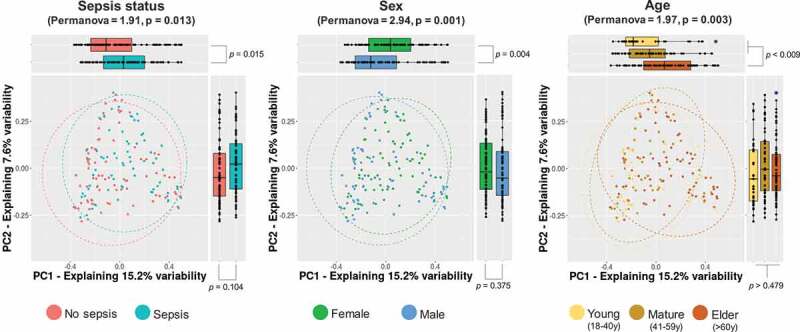
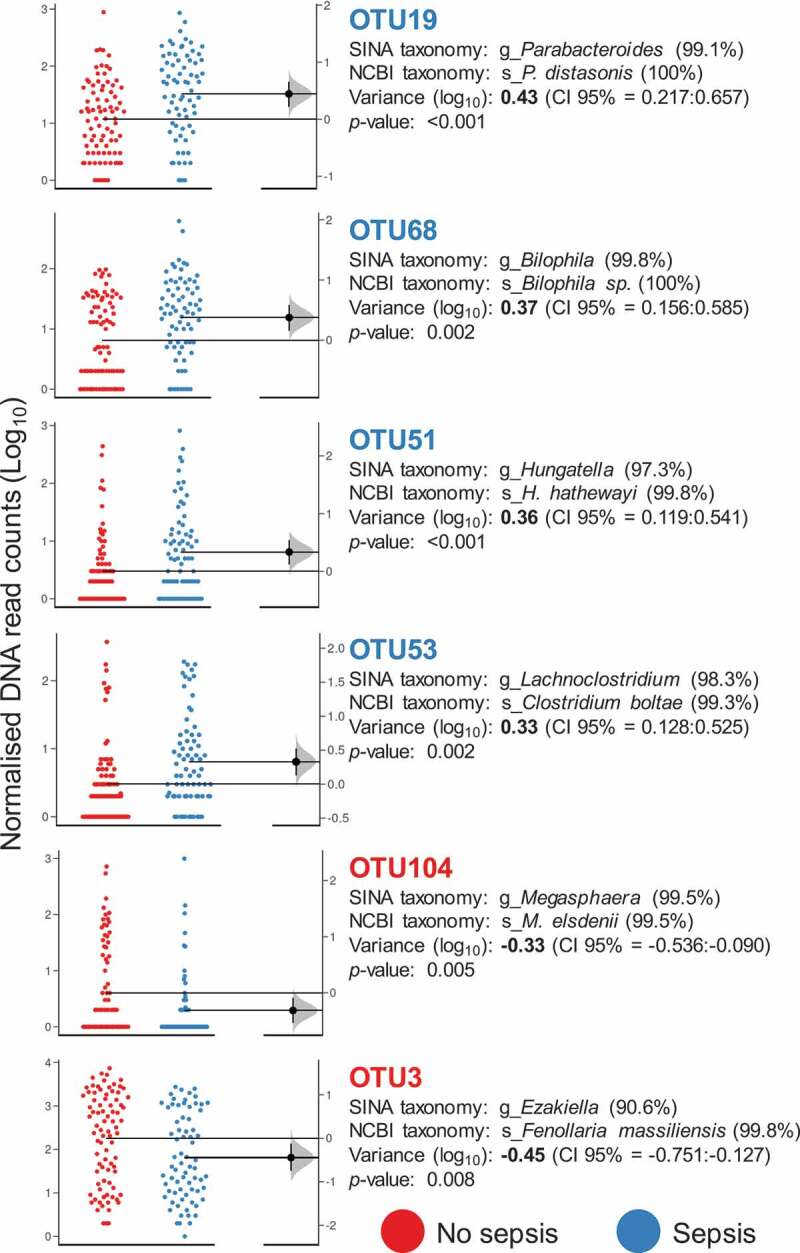
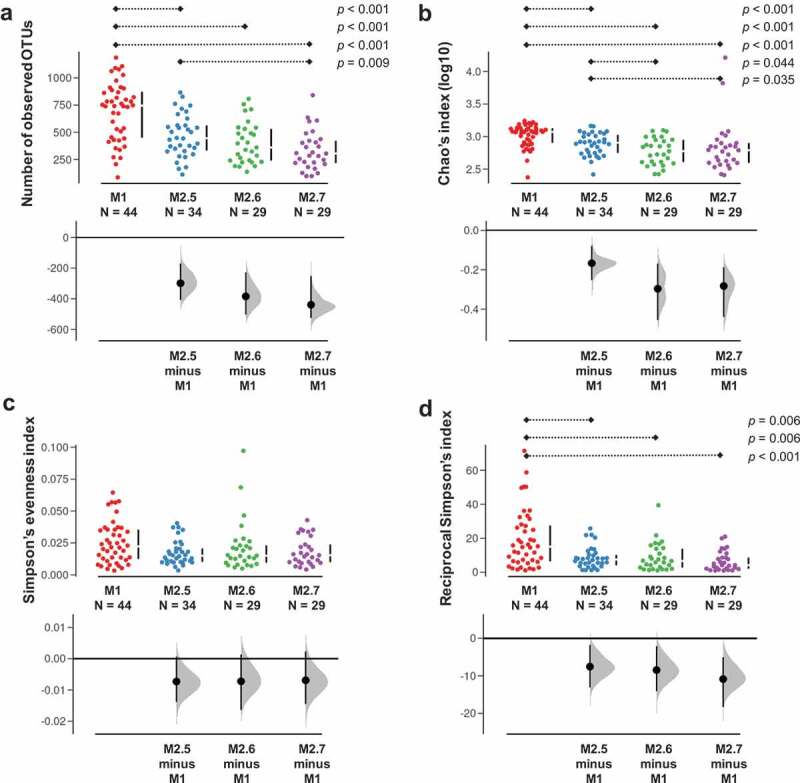
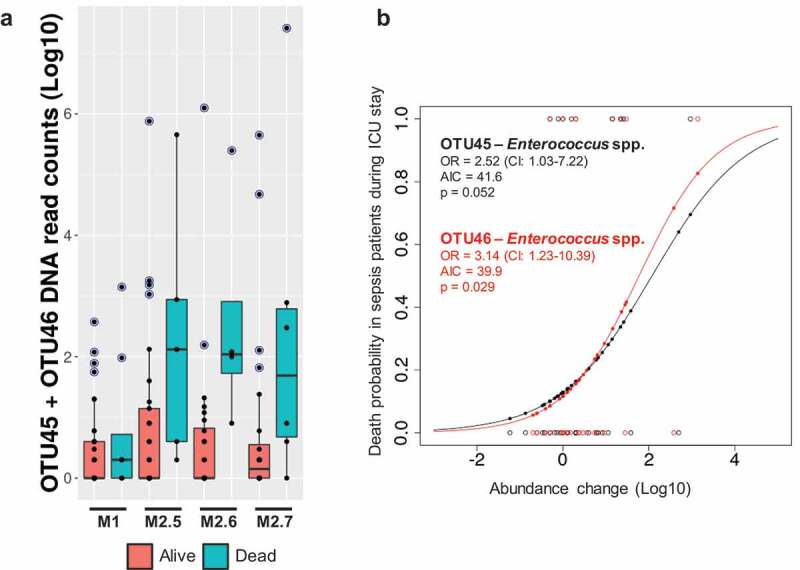
Critically ill patients are physiologically unstable and recent studies indicate that the intestinal microbiota could be involved in the health decline of such patients during ICU stays. This study aims to assess the intestinal microbiota in critically ill patients with and without sepsis and to determine its impact on outcome variables, such as medical complications, ICU stay time, and mortality. A multi-center study was conducted with a total of 250 peri-rectal swabs obtained from 155 patients upon admission and during ICU stays. Intestinal microbiota was assessed by sequencing the V3-V4 hypervariable regions of the 16S rRNA gene. Linear mixed models were used to integrate microbiota data with more than 40 clinical and demographic variables to detect covariates and minimize the effect of confounding factors. We found that the microbiota of ICU patients with sepsis has an increased abundance of microbes tightly associated with inflammation, such as Parabacteroides, Fusobacterium and Bilophila species. Female sex and aging would represent an increased risk for sepsis possibly because of some of their microbiota features. We also evidenced a remarkable loss of microbial diversity, during the ICU stay. Concomitantly, we detected that the abundance of pathogenic species, such as Enterococcus spp., was differentially increased in sepsis patients who died, indicating these species as potential biomarkers for monitoring during ICU stay. We concluded that particular intestinal microbiota signatures could predict sepsis development in ICU patients. We propose potential biomarkers for evaluation in the clinical management of ICU patients.
Overview
The claims and statistics of this paper haven’t been checked yet.
Run the check — free, no account needed. It reads the open-access text and checks the sources it cites.
Integrity signals
Registry
Cites
Statistics
Figures
Verification
Claims the paper makes
The claims and statistics of this paper haven’t been checked yet.
Run the check — free, no account needed. It reads the open-access text and checks the sources it cites.
Claims other papers make about this one
Each is checked against this paper’s own text: does it say what the citing paper says it does?
In the citing paper
“Induction of gut dysbiosis in septic patients has been previously reported (25, 26).”
From Sepsis-Induced Gut Dysbiosis Mediates the Susceptibility to Sepsis-Associated Encephalopathy in Mice (2022) · cites this paper as [25]
Self-check
Percentages, sums and reported differences re-computed from the paper’s own numbers.
The self-check needs the paper’s full text.
Citations
Cites
QIIME allows analysis of high-throughput community sequencing data
Caporaso, J. G., Kuczynski, J., Stombaugh, J., Bittinger, K., Bushman, F. D., Costello, E. K., Fierer, N., Peña, A. G., Goodrich, J. K., Gordon, J. I., et al. (2010) · Nature Methods · doi:10.1038/nmeth.f.303 · Cited by 34,887
The SILVA ribosomal RNA gene database project: improved data processing and web-based tools
Quast, C., Pruesse, E., Yilmaz, P., Gerken, J., Schweer, T., Yarza, P., Peplies, J., & Glöckner, F. O. (2012) · Nucleic Acids Research · doi:10.1093/nar/gks1219 · Cited by 33,055
The third international consensus definitions for sepsis and septic shock (Sepsis-3).
Singer, M., Deutschman, C. S., Seymour, C. W., Shankar-Hari, M., Annane, D., Bauer, M., Bellomo, R., Bernard, G. R., Chiche, J.-D., Coopersmith, C. M., et al. (2016) · JAMA · doi:10.1001/jama.2016.0287 · Cited by 28,250
Search and clustering orders of magnitude faster than BLAST
Edgar, R. C. (2010) · Bioinformatics · doi:10.1093/bioinformatics/btq461 · Cited by 21,098
Schloss, P. D., Westcott, S. L., Ryabin, T., Hall, J. R., Hartmann, M., Hollister, E. B., Lesniewski, R. A., Oakley, B. B., Parks, D. H., Robinson, C. J., et al. (2009) · Applied and Environmental Microbiology · doi:10.1128/aem.01541-09 · Cited by 19,549
FLASH: fast length adjustment of short reads to improve genome assemblies
Magoč, T., & Salzberg, S. L. (2011) · Bioinformatics · doi:10.1093/bioinformatics/btr507 · Cited by 15,366
UCHIME improves sensitivity and speed of chimera detection
Edgar, R. C., Haas, B. J., Clemente, J. C., Quince, C., & Knight, R. (2011) · Bioinformatics · doi:10.1093/bioinformatics/btr381 · Cited by 15,114
Klindworth, A., Pruesse, E., Schweer, T., Peplies, J., Quast, C., Horn, M., & Glöckner, F. O. (2013) · Nucleic Acids Research · doi:10.1093/nar/gks808 · Cited by 8,850
The Human Intestinal Microbiome in Health and Disease
Lynch, S. V., & Pedersen, O. (2016) · New England Journal of Medicine · doi:10.1056/nejmra1600266 · Cited by 3,637
Bacteroides : the Good, the Bad, and the Nitty-Gritty
Wexler, H. M. (2007) · Clinical Microbiology Reviews · doi:10.1128/cmr.00008-07 · Cited by 2,388
Potential of fecal microbiota for early-stage detection of colorectal cancer
Zeller, G., Tap, J., Voigt, A. Y., Sunagawa, S., Kultima, J. R., Costea, P. I., Amiot, A., Böhm, J., Brunetti, F., Habermann, N., et al. (2014) · Molecular Systems Biology · doi:10.15252/msb.20145645 · Cited by 1,375
Wirbel, J., Pyl, P. T., Kartal, E., Zych, K., Kashani, A., Milanese, A., Fleck, J. S., Voigt, A. Y., Palleja, A., Ponnudurai, R., et al. (2019) · Nature Medicine · doi:10.1038/s41591-019-0406-6 · Cited by 1,373
The ecology, epidemiology and virulence of Enterococcus
Fisher, K., & Phillips, C. A. (2009) · Microbiology · doi:10.1099/mic.0.026385-0 · Cited by 1,231
Schneeberger, M., Everard, A., Gómez-Valadés, A. G., Matamoros, S., Ramírez, S., Delzenne, N. M., Gomis, R., Claret, M., & Cani, P. D. (2015) · Scientific Reports · doi:10.1038/srep16643 · Cited by 798
Intestinal Microbiota Is Influenced by Gender and Body Mass Index
Haro, C., Rangel-Zúñiga, O. A., Alcalá-Díaz, J. F., Gómez-Delgado, F., Pérez-Martínez, P., Delgado-Lista, J., Quintana-Navarro, G. M., Landa, B. B., Navas-Cortés, J. A., Tena-Sempere, M., et al. (2016) · PLOS ONE · doi:10.1371/journal.pone.0154090 · Cited by 671 · cited 2×
“However, a disparate IM between men and women has been previously reported, as well as its covariation with BMI.(23,24) Interestingly, this IM dissimilarity between men and women is proposed to underlie the gender-specific response to dietary interventions(25) and to potentially modulate disease onset.”
BackgroundThe role of the gut microbiome in the healthy adult status
D’Argenio, V., & Salvatore, F. (2015) · Clinica Chimica Acta · doi:10.1016/j.cca.2015.01.003 · Cited by 492
The microbiome and critical illness
Dickson, R. P. (2016) · The Lancet Respiratory Medicine · doi:10.1016/s2213-2600(15)00427-0 · Cited by 460
Extreme Dysbiosis of the Microbiome in Critical Illness
McDonald, D., Ackermann, G., Khailova, L., Baird, C., Heyland, D., Kozar, R., Lemieux, M., Derenski, K., King, J., Vis-Kampen, C., et al. (2016) · mSphere · doi:10.1128/msphere.00199-16 · Cited by 426
Composition and temporal stability of the gut microbiota in older persons
Jeffery, I. B., Lynch, D. B., & O’Toole, P. W. (2016) · The ISME Journal · doi:10.1038/ismej.2015.88 · Cited by 421
Age- and Sex-Dependent Patterns of Gut Microbial Diversity in Human Adults
de la Cuesta‐Zuluaga, J., Kelley, S. T., Chen, Y., Escobar, J. S., Mueller, N. T., Ley, R. E., McDonald, D. T., Huang, S. W., Swafford, A. D.-E., Knight, R. D., et al. (2019) · mSystems · doi:10.1128/msystems.00261-19 · Cited by 413
Hooks, K. B., & O’Malley, M. A. (2017) · mBio · doi:10.1128/mbio.01492-17 · Cited by 404
Filippis, F. D., Pasolli, E., Tett, A., Tarallo, S., Naccarati, A., Angelis, M. D., Neviani, E., Cocolin, L., Gobbetti, M., Segata, N., et al. (2019) · Cell Host & Microbe · doi:10.1016/j.chom.2019.01.004 · Cited by 403
The role of the gut microbiota in sepsis
Haak, B. W., & Wiersinga, W. J. (2017) · The Lancet. Gastroenterology & hepatology · doi:10.1016/s2468-1253(16)30119-4 · Cited by 392
Zaborin, A., Smith, D., Garfield, K., Quensen, J., Shakhsheer, B., Kade, M., Tirrell, M., Tiedje, J., Gilbert, J. A., Zaborina, O., et al. (2014) · mBio · doi:10.1128/mbio.01361-14 · Cited by 367
Functional metagenomic profiling of intestinal microbiome in extreme ageing
Rampelli, S., Candela, M., Turroni, S., Biagi, E., Collino, S., Franceschi, C., O'Toole, P. W., & Brigidi, P. (2013) · Aging · doi:10.18632/aging.100623 · Cited by 359
Kverka, M., Zakostelska, Z. J., Klimešová, K. (., Sokol, D., Hudcovic, T., Hrnčíř, T., Rossmann, P., Mrázek, J., Kopečný, J., Verdu, E. F., et al. (2010) · Clinical & Experimental Immunology · doi:10.1111/j.1365-2249.2010.04286.x · Cited by 350
Redefining the gut as the motor of critical illness
Mittal, R., & Coopersmith, C. M. (2013) · Trends in Molecular Medicine · doi:10.1016/j.molmed.2013.08.004 · Cited by 350
Specific gut microbiota features and metabolic markers in postmenopausal women with obesity
Brahe, L. K., Chatelier, E. L., Prifti, E., Pons, N., Kennedy, S., Hansen, T. F., Pedersen, O. B., Astrup, A. V., Ehrlich, S. D., & Larsen, L. H. (2015) · Nutrition and Diabetes · doi:10.1038/nutd.2015.9 · Cited by 307
Altered gut flora and environment in patients with severe SIRS
Shimizu, K., Ogura, H., Goto, M., Asahara, T., Nomoto, K., Morotomi, M., Yoshiya, K., Matsushima, A., Sumi, Y., Kuwagata, Y., et al. (2006) · The Journal of Trauma: Injury, Infection, and Critical Care · doi:10.1097/01.ta.0000197374.99755.fe · Cited by 257
Shimizu, K., Yamada, T., Ogura, H., Mohri, T., Kiguchi, T., Fujimi, S., Asahara, T., Yamada, T., Ojima, M., Ikeda, M., et al. (2018) · Critical Care · doi:10.1186/s13054-018-2167-x · Cited by 237
Race-dependent association of sulfidogenic bacteria with colorectal cancer
Yazici, C., Wolf, P. G., Kim, H., Cross, T.-W. L., Vermillion, K., Carroll, T., Augustus, G. J., Mutlu, E., Tussing-Humphreys, L., Braunschweig, C., et al. (2017) · Gut · doi:10.1136/gutjnl-2016-313321 · Cited by 215
Shimizu, K., Ogura, H., Hamasaki, T., Goto, M., Tasaki, O., Asahara, T., Nomoto, K., Morotomi, M., Matsushima, A., Kuwagata, Y., et al. (2011) · Digestive Diseases and Sciences · doi:10.1007/s10620-010-1418-8 · Cited by 213
Body Mass Index Differences in the Gut Microbiota Are Gender Specific
Gao, X., Zhang, M., Xue, J., Huang, J., Zhuang, R., Zhou, X., Zhang, H., Fu, Q., & Hao, Y. (2018) · Frontiers in Microbiology · doi:10.3389/fmicb.2018.01250 · Cited by 200
The intestinal microenvironment in sepsis
Fay, K. T., Ford, M. L., & Coopersmith, C. M. (2017) · Biochimica et Biophysica Acta (BBA) - Molecular Basis of Disease · doi:10.1016/j.bbadis.2017.03.005 · Cited by 196
Zhou, F., Long, W., Hao, B., Ding, D., Ma, X., Zhao, L., & Pang, X. (2017) · Gut Pathogens · doi:10.1186/s13099-017-0208-7 · Cited by 178
Links between environment, diet, and the hunter-gatherer microbiome
Fragiadakis, G. K., Smits, S. A., Sonnenburg, E. D., Treuren, W. V., Reid, G., Knight, R. D., Manjurano, A. M., Changalucha, J. M., Domínguez-Bello, M. G., Leach, J. D., et al. (2018) · Gut Microbes · doi:10.1080/19490976.2018.1494103 · Cited by 168
(2015) · PubMed · Cited by 152
Howard, B. M., Kornblith, L. Z., Christie, S. A., Conroy, A. S., Nelson, M. F., Campion, E. M., Callcut, R. A., Calfee, C. S., LaMere, B. J., Fadrosh, D. W., et al. (2017) · Trauma Surgery & Acute Care Open · doi:10.1136/tsaco-2017-000108 · Cited by 121
The stress response and critical illness
Cuesta, J., & Singer, M. (2012) · Critical Care Medicine · doi:10.1097/ccm.0b013e31826567eb · Cited by 118
The European Nucleotide Archive in 2018
Harrison, P. W., Alako, B., Amid, C., Cerdeño-Tárraga, A. M., Cleland, I., Holt, S., Hussein, A., Jayathilaka, S., Kay, S., Keane, T., et al. (2018) · Nucleic Acids Research · doi:10.1093/nar/gky1078 · Cited by 115
Microbial dysbiosis and mortality during mechanical ventilation: a prospective observational study
for the PROSPECT Investigators, Lamarche, D., Canadian Critical Care Trials Group, Canadian Critical Care Translational Biology Group, Johnstone, J., Zytaruk, N. L., Clarke, F. J., Hand, L. E., Loukov, D., Szamosi, J. C., et al. (2018) · Respiratory Research · doi:10.1186/s12931-018-0950-5 · Cited by 100
Heneghan, A. F., Pierre, J. F., Tandee, K., Shanmuganayagam, D., Wang, X., Reed, J. D., Steele, J. L., & Kudsk, K. A. (2013) · Journal of Parenteral and Enteral Nutrition · doi:10.1177/0148607113497514 · Cited by 73
Livanos, A. E., Snider, E. J., Whittier, S., Chong, D. H., Wang, T. C., Abrams, J. A., & Freedberg, D. E. (2018) · PLoS ONE · doi:10.1371/journal.pone.0200322 · Cited by 71
The emerging role of the microbiota in the ICU
Wolff, N. S., Hugenholtz, F., & Wiersinga, W. J. (2018) · Critical Care · doi:10.1186/s13054-018-1999-8 · Cited by 63
Microbiota-targeted therapies on the intensive care unit
Haak, B. W., Levi, M. M., & Wiersinga, W. J. (2017) · Current Opinion in Critical Care · doi:10.1097/mcc.0000000000000389 · Cited by 60
Gut microbiota and host defense in critical illness
Jacobs, M. C., Haak, B. W., Hugenholtz, F., & Wiersinga, W. J. (2017) · Current Opinion in Critical Care · doi:10.1097/mcc.0000000000000424 · Cited by 60
Probiotic and synbiotic therapy in the critically ill: State of the art
Davison, J. M., & Wischmeyer, P. E. (2018) · Nutrition · doi:10.1016/j.nut.2018.07.017 · Cited by 54
Hess, A. L., Benítez‐Páez, A., Blædel, T., Larsen, L. H., Iglesias, J. R., Madera, C., Sanz, Y., & Larsen, T. M. (2019) · European Journal of Nutrition · doi:10.1007/s00394-019-02099-x · Cited by 54
Impact of human aging and modern lifestyle on gut microbiota
Gottlieb, M. G. V., Closs, V. E., Junges, V. M., & Schwanke, C. H. A. (2017) · Critical Reviews in Food Science and Nutrition · doi:10.1080/10408398.2016.1269054 · Cited by 52
Should fecal microbial transplantation be used in the ICU?
McClave, S. A., Patel, J. J., & Bhutiani, N. (2018) · Current Opinion in Critical Care · doi:10.1097/mcc.0000000000000489 · Cited by 50
Age and sex-dependent patterns of gut microbial diversity in human adultsPreprint
de la Cuesta‐Zuluaga, J., Kelley, S. T., Chen, Y., Escobar, J. S., Mueller, N. T., Ley, R. E., McDonald, D. T., Huang, S. W., Swafford, A. D.-E., Knight, R. D., et al. (2019) · bioRxiv (Cold Spring Harbor Laboratory) · doi:10.1101/544270 · Cited by 46
Gut Microbiota Disruption in Septic Shock Patients: A Pilot Study
Wan, Y., Zhu, R., Wu, Z., Lyu, S., Zhao, L., Du, Z., & Pan, X. (2018) · Medical Science Monitor · doi:10.12659/msm.911768 · Cited by 43
Gut microbiota trajectory in patients with severe burn: A time series study
Wang, X., Yang, J., Tian, F., Zhang, L., Lei, Q., Jiang, T., Zhou, J., Yuan, S., Wang, J., Feng, Z., et al. (2017) · Journal of Critical Care · doi:10.1016/j.jcrc.2017.08.020 · Cited by 39
McClanahan, D. R., Yeh, A., Firek, B., Zettle, S., Rogers, M. B., Cheek, R. C., Nguyen, M. V. L., Gayer, C. P., Wendell, S. G., Mullett, S. J., et al. (2019) · Journal of Parenteral and Enteral Nutrition · doi:10.1002/jpen.1504 · Cited by 37
Maki, J. J., & Looft, T. P. (2018) · INTERNATIONAL JOURNAL OF SYSTEMATIC AND EVOLUTIONARY MICROBIOLOGY · doi:10.1099/ijsem.0.002991 · Cited by 32
The gut microbiota of critically ill patients: first steps in an unexplored world
Ruppé, É., Lisboa, T. C., & Barbier, F. (2018) · Intensive Care Medicine · doi:10.1007/s00134-018-5309-3 · Cited by 29
Hamid, Z., Basit, A., Pontis, S., Piras, F., Assogna, F., Bossù, P., Pontieri, F. E., Stefani, A., Spalletta, G., Franceschi, P., et al. (2019) · Metabolomics · doi:10.1007/s11306-019-1536-z · Cited by 10
Research works printed but not linked: 5
- Konturek PC, 2015, J Physiol Pharmacol, 66, 483
- de la Cuesta-zuluaga J, 2019, mSystems, 4:e00261–19
- 10.1002/jpen.v43.7 · DOI
- Hooks KB, O’Malley MA, 2017, MBio, 8, e01492
- McDonald D, 2016, mSphere, 1:e00199–16
Cited by
Sorted by citations
The Firmicutes/Bacteroidetes Ratio: A Relevant Marker of Gut Dysbiosis in Obese Patients?
Magne, F., Gotteland, M., Gauthier, L., Zazueta, A., Pesoa, S., Navarrete, P., & Balamurugan, R. (2020) · Nutrients · doi:10.3390/nu12051474 · Cited by 2,335
Gut bacterial profiles in Parkinson's disease: A systematic review
Li, Z., Liang, H., Lu, L., Lu, L., Zheng, C., Fan, Y., Wu, B., Zou, T., Luo, X., Xinchun, Z., et al. (2022) · CNS Neuroscience & Therapeutics · doi:10.1111/cns.13990 · Cited by 224
Gut-Lung Crosstalk in Sepsis-Induced Acute Lung Injury
Zhou, X., & Liao, Y. (2021) · Frontiers in Microbiology · doi:10.3389/fmicb.2021.779620 · Cited by 153
“Concomitantly, researchers have detected an increased abundance of Enterococcus and other pathogenic bacteria in sepsis patients who died, suggesting that these bacteria may be potential biomarkers for ICU care (Agudelo-Ochoa et al., 2020).”
BackgroundSrdić, T., Đurašević, S., Lakic, I. V., Ružičić, A., Vujovic, P. Z., Jevdjovic, T. V., Dakic, T. B., Đorđević, J., Tosti, T. B., Glumac, S., et al. (2024) · International Journal of Molecular Sciences · doi:10.3390/ijms25147770 · Cited by 162
An Update on Sepsis Biomarkers
Kim, M.-H., & Choi, J. (2020) · Infection and Chemotherapy · doi:10.3947/ic.2020.52.1.1 · Cited by 117
Metadata
- Authors
- Agudelo-Ochoa, G. M., Valdés-Duque, B. E., Giraldo-Giraldo, N. A., Jaillier-Ramírez, A. M., Giraldo-Villa, A., Acevedo-Castaño, I., Yepes-Molina, M. A., Barbosa-Barbosa, J., & Benítez-Paéz, A.
- Affiliations
- Food and Human Nutrition Research Group, Universidad de Antioquia (UdeA), Medellín, Colombia
- Institución Universitaria Colegio Mayor de Antioquia (CO)
- Hospital Universitario de San Vicente Fundación (CO)
- Department of Nutrition, Hospital Pablo Tobón Uribe, Medellín, Colombia
- Department of Nutrition, Hospital General, Medellín, Colombia
- Department of Nutrition, Clínica Las Américas, Medellín, Colombia
- Microbial Ecology, Nutrition and Health Research Unit, Institute of Agrochemistry and Food Technology. Spanish National Research Council (IATA-CSIC), Paterna-Valencia, Spain
- ORCID
- Venue
- Gut Microbes
- Publisher
- Informa UK Limited
- Published
- 2020-01-10
- Volume
- 12
- Issue
- 1
- Pages
- 1707610
- ISSN
- 1949-0976 (ISSN-L)
- 1949-0984
- PMC
- PMC7524144
- OpenAlex
- W3000570416
- Cited by
- 166
- References
- 57
- Citations by year
- 2026: 20 · 2025: 27 · 2024: 26 · 2023: 41 · 2022: 29 · 2021: 20 · 2020: 3
- FWCI
- 7.53
- Type
- journal article
- Language
- en
- Open access
- gold
- doi.org
- Licence
- Locations
- Gut Microbes (publishedVersion, cc-by-nc-nd)
- PubMed Central (publishedVersion, cc-by-nc-nd)
- PubMed (publishedVersion)
- Institutional Repository University of Antioquia (University of Antioquia) (publishedVersion, cc-by-nc-nd)
- DIGITAL.CSIC (Spanish National Research Council (CSIC)) (submittedVersion, cc-by-nc-nd)
- DOAJ (DOAJ: Directory of Open Access Journals) (submittedVersion, cc-by-sa)
- Funders
- Universidad de Antioquia (N/A)
- Instituto de Nutrición y Salud Kellogg´s (N/A)
- Institución Universitaria Colegio Mayor de Antioquia (N/A)
- Topics
- Life Sciences › Biochemistry, Genetics and Molecular Biology › Molecular Biology › Gut microbiota and health
- Health Sciences › Medicine › Critical Care and Intensive Care Medicine › Sepsis Diagnosis and Treatment
- Health Sciences › Medicine › Infectious Diseases › Clostridium difficile and Clostridium perfringens research
- Keywords
- gut microbiota, sepsis, critically ill patients, intensive care unit, sepsis biomarkers, microbial diversity, Enterococcus, Parabacteroides, Fusobacterium, Bilophila, sex differences, aging, mortality, inflammation, risk factors
- MeSH terms
- Gastrointestinal Microbiome, Adult, Bacteria, Critical Care, Female, Humans, Inflammation, Intestines, Male, Middle Aged, RNA, Ribosomal, 16S, Biomarkers, Case-Control Studies, Critical Illness, Sepsis, APACHE, Young Adult
About these checks
Registry, retraction, Cites and statistics results are computed, not judged, with one exception: a printed reference that no index lists is read once by a model before it counts as a citation error. Claims are extracted by a model and kept only when their quote appears verbatim in the text; each cited source is then checked, with a model’s help, for whether it says what the claim relies on. Those verdicts can be wrong — read the claim’s quote and the cited source before relying on one.
Statistics and arithmetic are recomputed, not judged.
Confidence bands are shown only for fields calibrated on our annotated test set. None is calibrated yet, so no band is shown.
What counts as a claim ›How we measure confidence ›How we check this ›
Are you an author, or do you see a problem with this page? Request a review
