

Mammary tumor-derived CCL2 enhances pro-metastatic systemic inflammation through upregulation of IL1β in tumor-associated macrophages
Open accessThe DOI matches its Crossref record; 49 of the 49 references it cites were found in a registry or an index.
Abstract
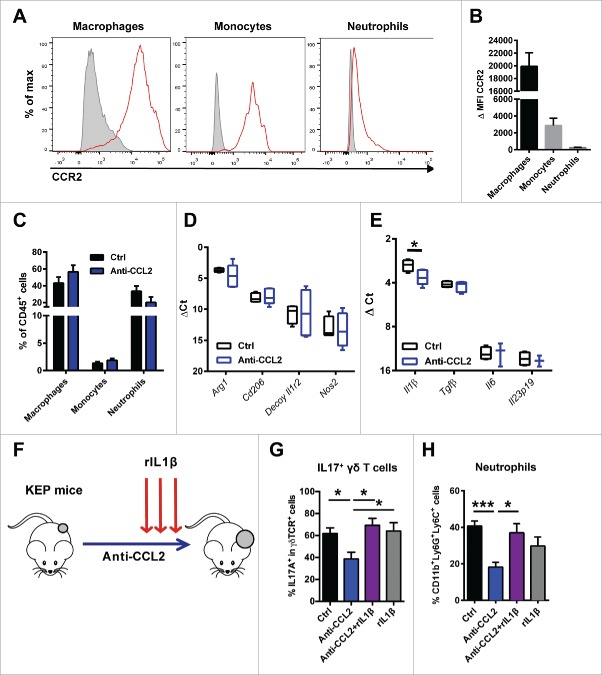
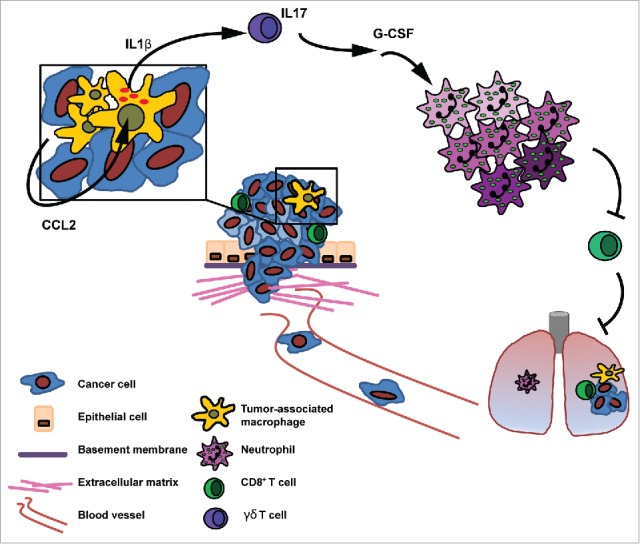
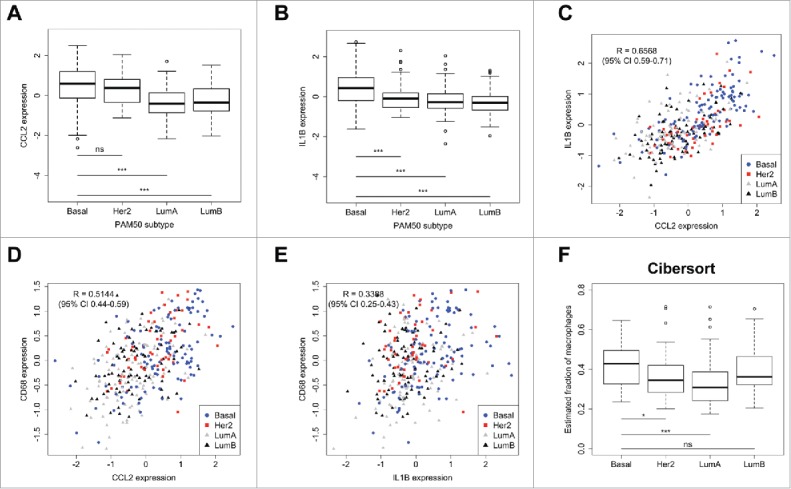
Patients with primary solid malignancies frequently exhibit signs of systemic inflammation. Notably, elevated levels of neutrophils and their associated soluble mediators are regularly observed in cancer patients, and correlate with reduced survival and increased metastasis formation. Recently, we demonstrated a mechanistic link between mammary tumor-induced IL17-producing γδ T cells, systemic expansion of immunosuppressive neutrophils and metastasis formation in a genetically engineered mouse model for invasive breast cancer. How tumors orchestrate this systemic inflammatory cascade to facilitate dissemination remains unclear. Here we show that activation of this cascade relies on CCL2-mediated induction of IL1β in tumor-associated macrophages. In line with these findings, expression of CCL2 positively correlates with IL1Β and macrophage markers in human breast tumors. We demonstrate that blockade of CCL2 in mammary tumor-bearing mice results in reduced IL17 production by γδ T cells, decreased neutrophil expansion and enhanced CD8+ T cell activity. These results highlight a new role for CCL2 in facilitating the breast cancer-induced pro-metastatic systemic inflammatory γδ T cell – IL17 – neutrophil axis.
Overview
The claims and statistics of this paper haven’t been checked yet.
Free: it reads the open-access text and checks the first 5 claims that cite a source we can check. Create a free account to check every claim.
Integrity signals
Registry
Cites
Statistics
Figures
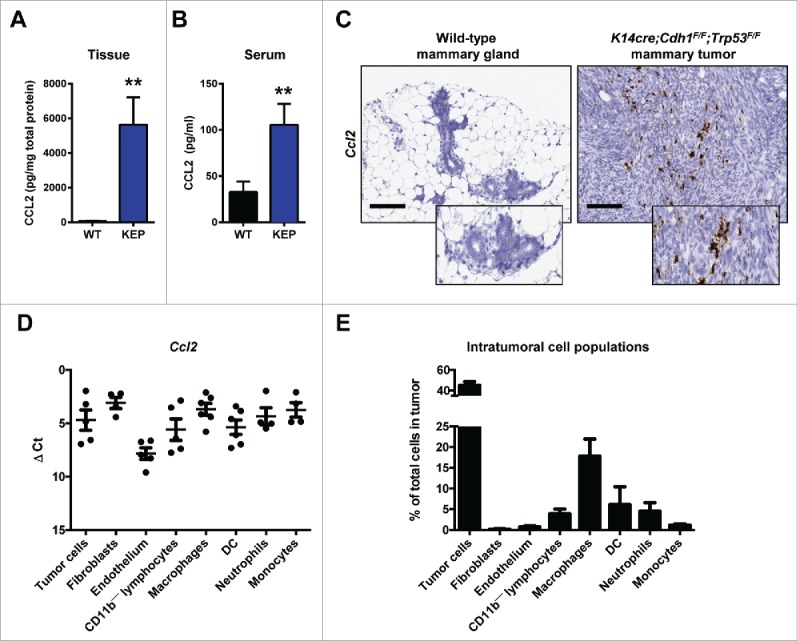
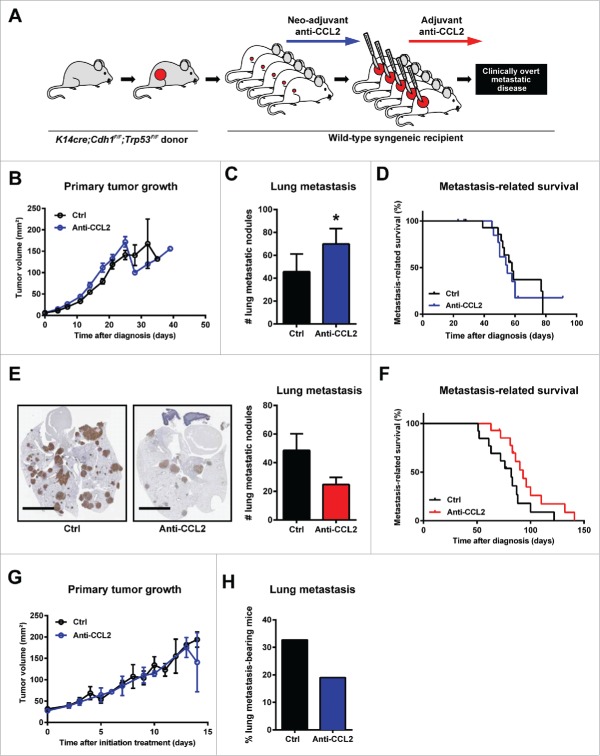
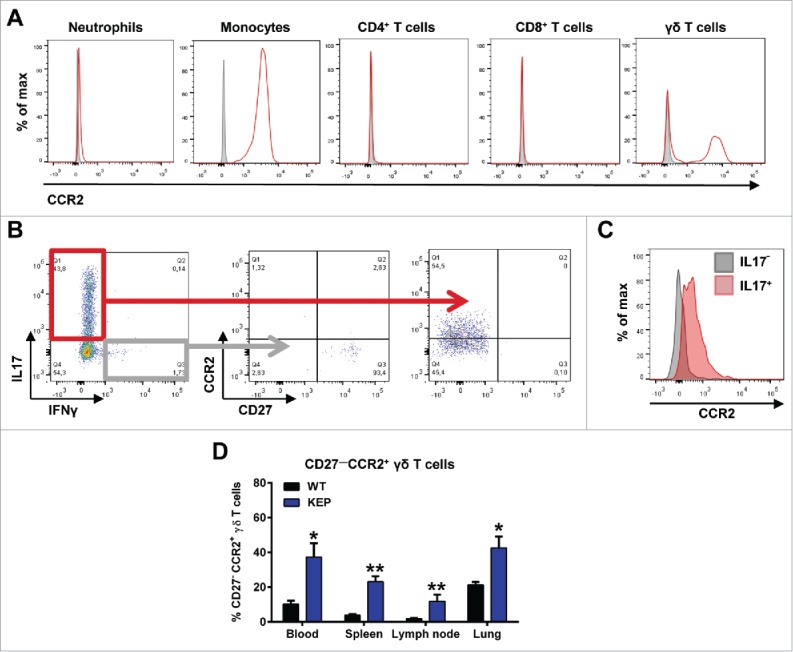
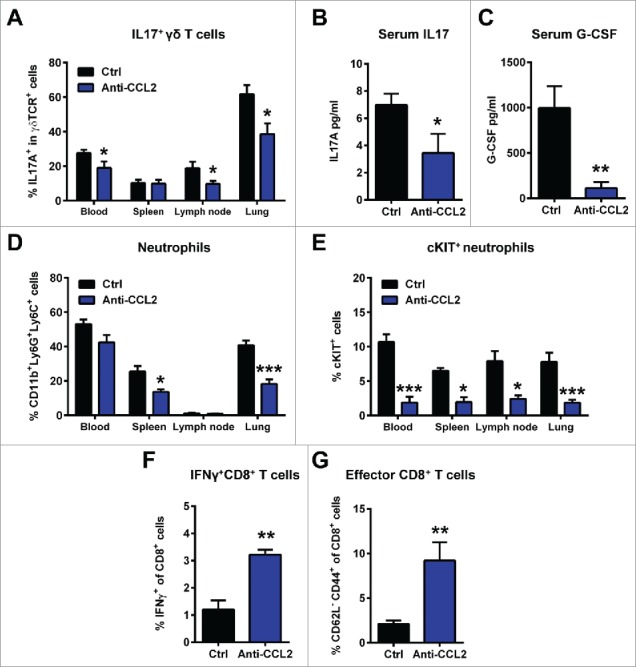
Verification
Claims the paper makes
The claims and statistics of this paper haven’t been checked yet.
Free: it reads the open-access text and checks the first 5 claims that cite a source we can check. Create a free account to check every claim.
Claims other papers make about this one
Each is checked against this paper’s own text: does it say what the citing paper says it does?
The cited source says what the claim attributes to it.
In the citing paper
“For example, IL-17 released by δγ-T cells that is induced by IL-1β secreted by TAMs, promotes metastasis environment in breast cancer (73, 74).”
From Tumor-Induced Inflammatory Cytokines and the Emerging Diagnostic Devices for Cancer Detection and Prognosis (2021) · cites this paper as [73]
Self-check
Percentages, sums and reported differences re-computed from the paper’s own numbers.
The self-check needs the paper’s full text.
Citations
Cites
Robust enumeration of cell subsets from tissue expression profiles
Newman, A. M., Liu, C. L., Green, M. R., Gentles, A. J., Feng, W., Xu, Y., Hoang, C. D., Diehn, M., & Alizadeh, A. A. (2015) · Nature Methods · doi:10.1038/nmeth.3337 · Cited by 13,224
The chemokine system in diverse forms of macrophage activation and polarization
MANTOVANI, A., SICA, A., SOZZANI, S., ALLAVENA, P., VECCHI, A., & LOCATI, M. (2004) · Trends in Immunology · doi:10.1016/j.it.2004.09.015 · Cited by 6,534 · cited 4×
“Therefore, we sorted TAMs from anti-CCL2- treated and control KEP tumors and examined the expression of several genes that have been associated with the polarization of TAMs.19 We found no significant changes in gene expression of Arg1, Cd206, Decoy Il1r2 and Nos2 in TAMs upon CCL2 blockade compared to controls (Fig.”
ResultInfluentialA Gene-Expression Signature as a Predictor of Survival in Breast Cancer
van de Vijver, M. J., He, Y. D., van 't Veer, L. J., Dai, H., Hart, A. A. M., Voskuil, D. W., Schreiber, G. J., Peterse, J. L., Roberts, C., Marton, M. J., et al. (2002) · New England Journal of Medicine · doi:10.1056/nejmoa021967 · Cited by 6,488
The genomic and transcriptomic architecture of 2,000 breast tumours reveals novel subgroups
METABRIC Group, Curtis, C., Shah, S. P., Chin, S.-F., Turashvili, G., Rueda, O. M., Dunning, M. J., Speed, D., Lynch, A. G., Samarajiwa, S., et al. (2012) · Nature · doi:10.1038/nature10983 · Cited by 6,097
The prognostic landscape of genes and infiltrating immune cells across human cancers
Gentles, A. J., Newman, A. M., Liu, C. L., Bratman, S. V., Feng, W., Kim, D., Nair, V. S., Xu, Y., Khuong, A., Hoang, C. D., et al. (2015) · Nature Medicine · doi:10.1038/nm.3909 · Cited by 3,118
CCL2 recruits inflammatory monocytes to facilitate breast-tumour metastasis
Qian, B.-Z., Li, J., Zhang, H., Kitamura, T., Zhang, J., Campion, L. R., Kaiser, E. A., Snyder, L. A., & Pollard, J. W. (2011) · Nature · doi:10.1038/nature10138 · Cited by 2,874
(2012) · doi:10.1016/j.jmoldx.2011.08.002 · Cited by 2,567
Breast cancer metastasis: markers and models
Weigelt, B., Peterse, J. L., & van't Veer, L. J. (2005) · Nature Reviews Cancer · doi:10.1038/nrc1670 · Cited by 2,232
Neutrophils in cancer: Neutral no more
Coffelt, S. B., Wellenstein, M. D., & de Visser, K. E. (2016) · Nature reviews. Cancer · doi:10.1038/nrc.2016.52 · Cited by 1,830
Self-citationIL-17-producing γδ T cells and neutrophils conspire to promote breast cancer metastasis
Coffelt, S. B., Kersten, K., Doornebal, C. W., Weiden, J., Vrijland, K., Hau, C.-S., Verstegen, N. J. M., Ciampricotti, M., Hawinkels, L. J. A. C., Jonkers, J., et al. (2015) · Nature · doi:10.1038/nature14282 · Cited by 1,703
Self-citationAssociation of macrophage infiltration with angiogenesis and prognosis in invasive breast carcinoma.
Leek, R., Lewis, C. E., Whitehouse, R. M., Greenall, M. J., Clarke, J., & Harris, A. L. (1996) · PubMed · Cited by 1,187
Immune cell promotion of metastasis
Kitamura, T., Qian, B.-Z., & Pollard, J. W. (2015) · Nature Reviews Immunology · doi:10.1038/nri3789 · Cited by 1,158
Regulation of Cutaneous Malignancy by γδ T Cells
Girardi, M., Oppenheim, D. E., Steele, C. R., Lewis, J. M., Glusac, E., Filler, R., Hobby, P., Sutton, B., Tigelaar, R. E., & Hayday, A. C. (2001) · Science · doi:10.1126/science.1063916 · Cited by 1,004
The tumour-induced systemic environment as a critical regulator of cancer progression and metastasis
McAllister, S. S., & Weinberg, R. A. (2014) · Nature Cell Biology · doi:10.1038/ncb3015 · Cited by 966
Mitchem, J. B., Brennan, D. J., Knolhoff, B. L., Belt, B. A., Zhu, Y., Sanford, D. E., Belaygorod, L., Carpenter, D., Collins, L., Piwnica-Worms, D., et al. (2013) · Cancer Research · doi:10.1158/0008-5472.can-12-2731 · Cited by 943
Nywening, T. M., Wang-Gillam, A., Sanford, D. E., Belt, B. A., Panni, R. Z., Cusworth, B. M., Toriola, A. T., Nieman, R. K., Worley, L. A., Yano, M., et al. (2016) · The Lancet Oncology · doi:10.1016/s1470-2045(16)00078-4 · Cited by 807
Tumor entrained neutrophils inhibit seeding in the premetastatic lung
Granot, Z., Henke, E., Comen, E. A., King, T. A., Norton, L., & Benezra, R. (2011) · Cancer Cell · doi:10.1016/j.ccr.2011.08.012 · Cited by 782
Li, X., Yao, W., Yuan, Y., Chen, P., Li, B., Li, J., Chu, R., Song, H., Xie, D., Jiang, X., et al. (2017) · Gut · doi:10.1136/gutjnl-2015-310514 · Cited by 737
(2000) · PubMed · Cited by 706
Cessation of CCL2 inhibition accelerates breast cancer metastasis by promoting angiogenesis
Bonapace, L., Coissieux, M.-M., Wyckoff, J., Mertz, K. D., Varga, Z., Junt, T., & Bentires-Alj, M. (2014) · Nature · doi:10.1038/nature13862 · Cited by 665
Kitamura, T., Qian, B.-Z., Soong, D., Cassetta, L., Noy, R., Sugano, G., Kato, Y., Li, J., & Pollard, J. W. (2015) · Journal of Experimental Medicine · doi:10.1084/jem.20141836 · Cited by 651
Ribot, J. C., deBarros, A., Pang, D. J., Neves, J. F., Peperzak, V., Roberts, S. J., Girardi, M., Borst, J., Hayday, A. C., Pennington, D. J., et al. (2009) · Nature Immunology · doi:10.1038/ni.1717 · Cited by 628
Derksen, P. W. B., Liu, X., Saridin, F., van der Gulden, H., Zevenhoven, J., Evers, B., van Beijnum, J. R., Griffioen, A. W., Vink, J., Krimpenfort, P., et al. (2006) · Cancer Cell · doi:10.1016/j.ccr.2006.09.013 · Cited by 591 · cited 1×
“The generation of K14cre;Cdh1;Trp53 (KEP) mice has been described in detail.(45) KEP mice were backcrossed to the FVB/N background.”
MethodChun, E., Lavoie, S., Michaud, M., Gallini, C. A., Kim, J., Soucy, G., Odze, R., Glickman, J. N., & Garrett, W. S. (2015) · Cell Reports · doi:10.1016/j.celrep.2015.06.024 · Cited by 402 · cited 1×
“In line with our finding, it was reported that CCL2 promotes the accumulation and immunosuppressive properties of polymorphonuclear-myeloid-derived suppressor cells (PMN-MDSCs), which share many features with neutrophils, in a mouse model for colorectal carcinogenesis.(32)”
BackgroundFuentes, M. E., Durham, S. K., Swerdel, M. R., Lewin, A. C., Barton, D. S., Megill, J. R., Bravo, R., & Lira, S. A. (1995) · The Journal of Immunology · doi:10.4049/jimmunol.155.12.5769 · Cited by 384
Seo, S.-U., Kamada, N., Muñoz-Planillo, R., Kim, Y.-G., Kim, D., Koizumi, Y., Hasegawa, M., Himpsl, S. D., Browne, H. P., Lawley, T. D., et al. (2015) · Immunity · doi:10.1016/j.immuni.2015.03.004 · Cited by 318 · cited 1×
“In a model for microbiota-induced intestinal inflammation, CCR2 signaling mediates NLRP3 inflammasome-dependent release of IL1b from monocytes triggering inflammation upon epithelial injury.(33) Whether CCL2-induced IL1b production in TAMs in the KEP model requires the NLRP3 inflammasome remains to be investigated.”
BackgroundSaji, H., Koike, M., Yamori, T., Saji, S., Seiki, M., Matsushima, K., & Toi, M. (2001) · Cancer · doi:10.1002/1097-0142(20010901)92:5<1085::aid-cncr1424>3.0.co;2-k · Cited by 288
Colony stimulating factors and myeloid cell biology in health and disease
Hamilton, J. A., & Achuthan, A. (2013) · Trends in Immunology · doi:10.1016/j.it.2012.08.006 · Cited by 285 · cited 1×
“The systemic expansion and polarization of these immunosuppressive neutrophils is elicited by tumor-associated macrophage (TAM)-derived interleukin (IL) 1b that activates IL17-producing gd T cells leading to increased systemic levels of G-CSF, a cytokine known for its role in granulopoiesis.(6) However, the mediators…”
BackgroundIL-17/IL-17 receptor system in autoimmune disease: mechanisms and therapeutic potential
Zhu, S., & Qian, Y. (2012) · Clinical Science · doi:10.1042/cs20110496 · Cited by 282
Lu, X., & Kang, Y. (2009) · Journal of Biological Chemistry · doi:10.1074/jbc.m109.035899 · Cited by 257
Noh, H., Eomm, M., & Han, A. (2013) · Journal of Breast Cancer · doi:10.4048/jbc.2013.16.1.55 · Cited by 217
Tumor-Infiltrating γδ T Lymphocytes Predict Clinical Outcome in Human Breast Cancer
Ma, C., Zhang, Q., Ye, J., Wang, F., Zhang, Y., Wevers, E., Schwartz, T., Hunborg, P., Varvares, M. A., Hoft, D. F., et al. (2012) · The Journal of Immunology · doi:10.4049/jimmunol.1201892 · Cited by 214
Lança, T., Costa, M. F., Gonçalves-Sousa, N., Rei, M., Grosso, A. R., Penido, C., & Silva-Santos, B. (2013) · The Journal of Immunology · doi:10.4049/jimmunol.1300434 · Cited by 168
GLUT-1 expression in ovarian carcinoma: Association with survival and response to chemotherapy
Cantuaria, G., Fagotti, A., Ferrandina, G., Magalhaes, A., Nadji, M., Angioli, R., Penalver, M., Mancuso, S., & Scambia, G. (2001) · Cancer · doi:10.1002/1097-0142(20010901)92:5<1144::aid-cncr1432>3.0.co;2-t · Cited by 166
CCL2 is critical for immunosuppression to promote cancer metastasis
Kudo‐Saito, C., Shirako, H., Ohike, M., Tsukamoto, N., & Kawakami, Y. (2012) · Clinical & Experimental Metastasis · doi:10.1007/s10585-012-9545-6 · Cited by 159
Fridlender, Z. G., Kapoor, V., Buchlis, G., Cheng, G., Sun, J., Wang, L.-C. S., Singhal, S., Snyder, L. A., & Albelda, S. M. (2011) · American Journal of Respiratory Cell and Molecular Biology · doi:10.1165/rcmb.2010-0080oc · Cited by 147
Chen, W., Lai, Y., Chen, H., Guo, H., Su, I., & Chen, H. H. W. (2013) · Histopathology · doi:10.1111/his.12156 · Cited by 139
A role for CCL2 in both tumor progression and immunosurveillance
Li, M., Knight, D. A., Snyder, L. A., Smyth, M. J., & Stewart, T. J. (2013) · OncoImmunology · doi:10.4161/onci.25474 · Cited by 125
Akitsu, A., Ishigame, H., Kakuta, S., Chung, S.-H., Ikeda, S., Shimizu, K., Kubo, S., Liu, Y., Umemura, M., Matsuzaki, G., et al. (2015) · Nature Communications · doi:10.1038/ncomms8464 · Cited by 121
Chemotherapy response of spontaneous mammary tumors is independent of the adaptive immune system
Ciampricotti, M., Hau, C., Doornebal, C. W., Jonkers, J., & de Visser, K. E. (2012) · Nature Medicine · doi:10.1038/nm.2652 · Cited by 118
Self-citationYoshimura, T., Howard, O. M. Z., Ito, T., Kuwabara, M., Matsukawa, A., Chen, K., Liu, Y., Liu, M., Oppenheim, J. J., & Wang, J. M. (2013) · PLoS ONE · doi:10.1371/journal.pone.0058791 · Cited by 108
A Preclinical Mouse Model of Invasive Lobular Breast Cancer Metastasis
Doornebal, C. W., Klarenbeek, S., Braumuller, T. M., Klijn, C. N., Ciampricotti, M., Hau, C.-S., Hollmann, M. W., Jonkers, J., & de Visser, K. E. (2013) · Cancer Research · doi:10.1158/0008-5472.can-11-4208 · Cited by 71
Self-citationde Ronde, J. J., Lips, E. H., Mulder, L., Vincent, A. D., Wesseling, J., Nieuwland, M., Kerkhoven, R. M., Peeters, M.-J. T. F. D. V., Sonke, G. S., Rodenhuis, S., et al. (2012) · Breast Cancer Research and Treatment · doi:10.1007/s10549-012-2340-x · Cited by 68
Self-citationThe significant role of telomerase activity in human brain tumors
Nakatani, K., Yoshimi, N., Mori, H., Yoshimura, S.-I., Sakai, H., Shinoda, J., & Sakai, N. (1997) · Cancer · doi:10.1002/(sici)1097-0142(19970801)80:3<421::aid-cncr10>3.0.co;2-z · Cited by 50
Lavender, N., Yang, J., Chen, S., Sai, J., Johnson, C. A., Owens, P., Ayers, G. D., & Richmond, A. J. (2017) · BMC Cancer · doi:10.1186/s12885-017-3074-2 · Cited by 44
Penido, C., Costa, M. F. D. S., de Souza, M. C., Costa, K. A., Candéa, A. L. P., Benjamim, C. F., & Henriques, M. D. G. (2007) · International Immunology · doi:10.1093/intimm/dxm128 · Cited by 39
de Souza Costa, M. F., Bastos Trigo de Negreiros, C., Ugarte Bornstein, V., Hemmi Valente, R., Mengel, J., Henriques, M. D. G., Farias Benjamim, C., & Penido, C. (2015) · BMC Immunology · doi:10.1186/s12865-015-0098-8 · Cited by 35
Cattin, S., Fellay, B., Pradervand, S., Trojan, A., Ruhstaller, T., Rüegg, C., & Fürstenberger, G. (2016) · Oncotarget · doi:10.18632/oncotarget.7097 · Cited by 18
Battle over CCL2 for control of the metastatic niche: neutrophils versus monocytes
Mitchem, J. B., & DeNardo, D. G. (2012) · Breast Cancer Research · doi:10.1186/bcr3149 · Cited by 16
Cited by
Inflammation and cancer: triggers, mechanisms, and consequences
Greten, F. R., & Grivennikov, S. I. (2019) · Immunity · doi:10.1016/j.immuni.2019.06.025 · Cited by 3,806
“The process of adhesion and extravasation can be further aided by inflammatory cells, such as monocytes and neutrophils (Kersten et al., 2017), which would precipitate the adherence of metastatic seeds, form complexes with cancer cells and mediate their adhesion and translocation throughout the…”
BackgroundHiam-Galvez, K. J., Allen, B. M., & Spitzer, M. H. (2021) · Nature Reviews Cancer · doi:10.1038/s41568-021-00347-z · Cited by 1,400
More Than Just Attractive: How CCL2 Influences Myeloid Cell Behavior Beyond Chemotaxis
Gschwandtner, M., Derler, R., & Midwood, K. S. (2019) · Frontiers in Immunology · doi:10.3389/fimmu.2019.02759 · Cited by 611
Loss of p53 triggers WNT-dependent systemic inflammation to drive breast cancer metastasis
Wellenstein, M. D., Coffelt, S. B., Duits, D. E. M., van Miltenburg, M. H., Slagter, M., de Rink, I., Henneman, L., Kas, S. M., Prekovic, S., Hau, C.-S., et al. (2019) · Nature · doi:10.1038/s41586-019-1450-6 · Cited by 500
Self-citationKaplanov, I., Carmi, Y., Kornetsky, R., Shemesh, A., Shurin, G. V., Shurin, M. R., Dinarello, C. A., Voronov, E., & Apte, R. N. (2019) · Proceedings of the National Academy of Sciences · doi:10.1073/pnas.1812266115 · Cited by 445
Metadata
- Authors
- Kersten, K., Coffelt, S. B., Hoogstraat, M., Verstegen, N. J. M., Vrijland, K., Ciampricotti, M., Doornebal, C. W., Hau, C.-S., Wellenstein, M. D., Salvagno, C., Doshi, P., Lips, E. H., Wessels, L. F. A., & de Visser, K. E.
- Affiliations
- The Netherlands Cancer Institute (NL)
- Amsterdam UMC Location University of Amsterdam (NL)
- Janssen Research and Development, Spring House, PA, USA
- Corresponding author
- de Visser, Karin E.
- ORCID
- Venue
- OncoImmunology
- Publisher
- Informa UK Limited
- Published
- 2017-06-19
- Volume
- 6
- Issue
- 8
- Pages
- e1334744
- ISSN
- 2162-4011 (ISSN-L)
- 2162-402X
- PMC
- PMC5593698
- OpenAlex
- W2711510694
- Cited by
- 109
- References
- 48
- Citations by year
- 2026: 8 · 2025: 8 · 2024: 8 · 2023: 16 · 2022: 10 · 2021: 25 · 2020: 12 · 2019: 13 · 2018: 9
- FWCI
- 4.21
- Type
- journal article
- Language
- en
- Open access
- gold
- doi.org
- Licence
- Locations
- OncoImmunology (publishedVersion, cc-by-nc-nd)
- PubMed Central (publishedVersion, cc-by-nc-nd)
- PubMed (publishedVersion)
- Pure Amsterdam UMC (publishedVersion, other-oa)
- ENLIGHTEN (Jurnal Bimbingan dan Konseling Islam) (acceptedVersion)
- Data Archiving and Networked Services (DANS) (submittedVersion)
- DOAJ (DOAJ: Directory of Open Access Journals) (submittedVersion, cc-by-sa)
- Research Repository (Delft University of Technology) (submittedVersion, cc-by-nc-nd)
- Data Archiving and Networked Services (DANS) (submittedVersion, other-oa)
- Funders
- Cancer Research UK (22311)
- European Commission (317445)
- Nederlandse Organisatie voor Wetenschappelijk Onderzoek (917.96.307)
- FP7 Ideas: European Research Council (615300)
- Topics
- Life Sciences › Immunology and Microbiology › Immunology › Immune cells in cancer
- Health Sciences › Medicine › Oncology › Chemokine receptors and signaling
- Health Sciences › Medicine › Oncology › Cancer Immunotherapy and Biomarkers
- Keywords
- MCP-1, IL-1β, tumor-associated macrophages, breast cancer metastasis, systemic inflammation, γδ T cells, IL-17, neutrophils, CD8+ T cells, mammary tumors
About these checks
Registry, retraction, Cites and statistics results are computed, not judged, with one exception: a printed reference that no index lists is read once by a model before it counts as a citation error. Claims are extracted by a model and kept only when their quote appears verbatim in the text; each cited source is then checked, with a model’s help, for whether it says what the claim relies on. Those verdicts can be wrong — read the claim’s quote and the cited source before relying on one.
Statistics and arithmetic are recomputed, not judged.
Confidence bands are shown only for fields calibrated on our annotated test set. None is calibrated yet, so no band is shown.
What counts as a claim ›How we measure confidence ›How we check this ›
Are you an author, or do you see a problem with this page? Request a review
Data sources
Bibliographic data: Semantic Scholar, OpenAlex, Crossref.
Contains information from the Semantic Scholar Academic Graph Datasets, made available under the ODC Attribution License (ODC-BY 1.0).
Semantic Scholar’s data is described in: Kinney, R., et al. (2023). The Semantic Scholar Open Data Platform. arXiv:2301.10140.
