

Systemic autophagy in the therapeutic response to anthracycline-based chemotherapy
Open accessThe DOI matches its Crossref record; 38 of the 42 references it cites were found in a registry or an index.
Abstract
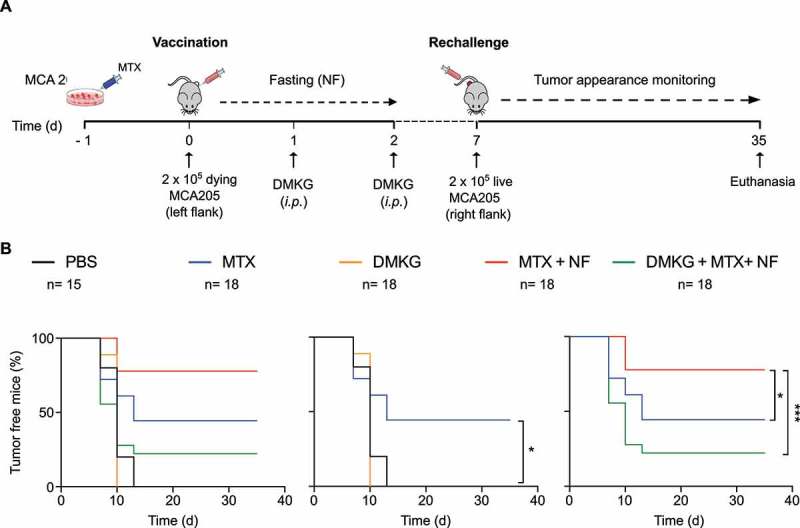
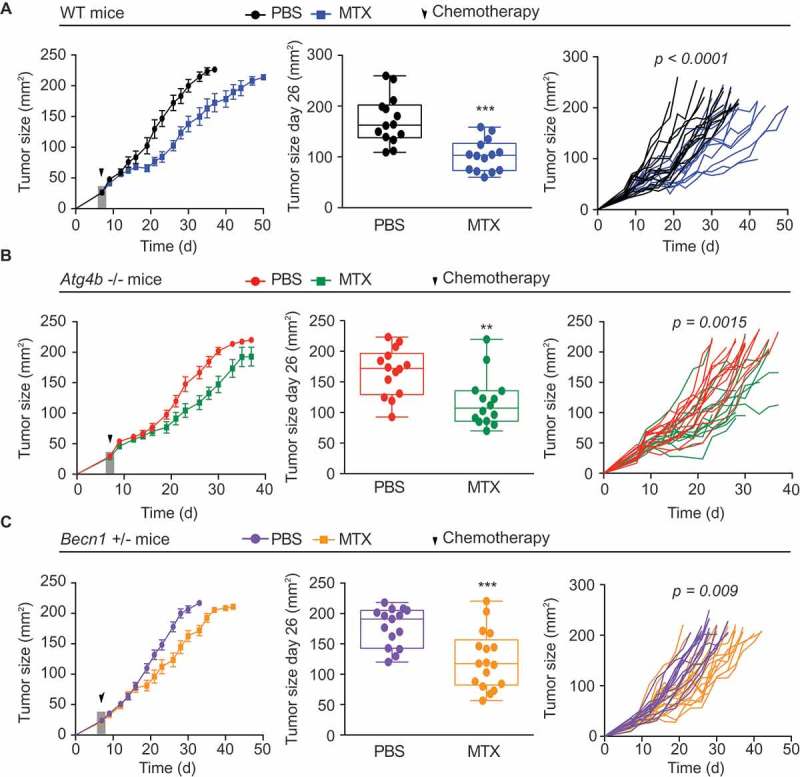
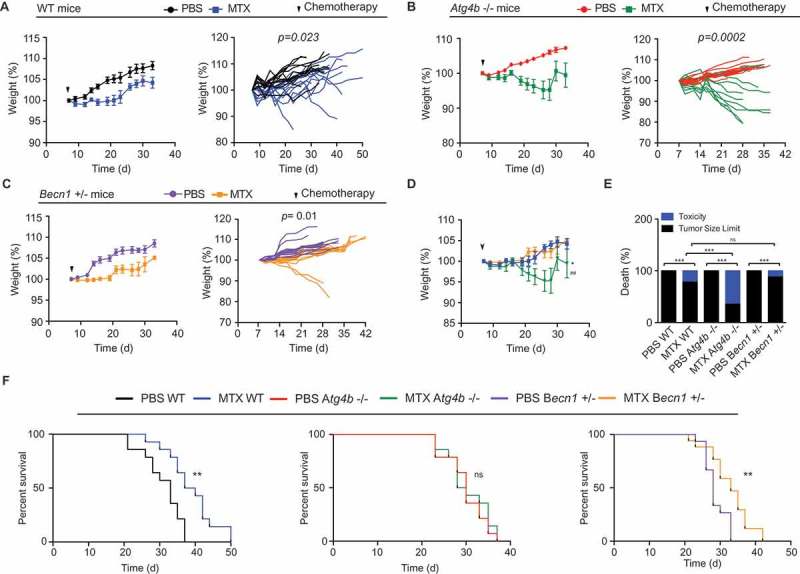
The success of chemotherapy largely depends on the anticancer immune response triggered by tumor cells that succumb to immunogenic cell death (ICD). One of the hallmarks of ICD is premortem autophagy that facilitates the release of adenosine triphosphate from dying cancer cells and acts as a chemoattractant for dendritic cell precursors. Here, we show that the immune response induced by inoculation of cancer cells undergoing ICD in response to the anthracycline mitoxantrone (MTX) can be improved by a short-term fasting regimen (48 hours of starvation) and that this effect is reversed by systemic administration of the autophagy inhibitor dimethyl α-ketoglutarate. Tumor growth reduction by MTX treatment is known to depend on autophagy induction in cancer cells as well as on an intact immune system. We compared the antitumor effects of MTX on autophagy-competent cancers implanted in wild type (WT) or partially autophagy-deficient (Becn1± or Atg4b−/-) mice. While there was no difference in the tumor growth reducing effects of MTX on tumors evolving in WT, Becn1+/- and Atg4b−/- mice, we observed an increase in the toxicity of MTX on Atg4b−/- mice. These results suggest that autophagy in cancer cells (but less so in host cells) is rate-limiting for therapeutically relevant anticancer immune responses, yet has a major role in blunting the life-threatening toxicity of chemotherapy.
Overview
The claims and statistics of this paper haven’t been checked yet.
Free: it reads the open-access text and checks the first 5 claims that cite a source we can check. Create a free account to check every claim.
Integrity signals
Registry
Cites
Statistics
Figures
Verification
Claims the paper makes
The claims and statistics of this paper haven’t been checked yet.
Free: it reads the open-access text and checks the first 5 claims that cite a source we can check. Create a free account to check every claim.
Claims other papers make about this one
Each is checked against this paper’s own text: does it say what the citing paper says it does?
In the citing paper
“Of note, overactivation of autophagy by time‐restricted fasting or fasting mimetic agents potentiates the anticancer activity of immunogenic cell death inducers when used as a standalone regimen (Pietrocola et al, 2016; Galluzzi et al, 2017b; Castoldi et al, 2019) or in combination with antibodies targeting CTLA4 (cytotoxic T lymphocyte‐associated protein 4) or the immunosuppressive molecule CD274”
From Autophagy in major human diseases (2021) · cites this paper as Castoldi et al, 2019
Self-check
Percentages, sums and reported differences re-computed from the paper’s own numbers.
The self-check needs the paper’s full text.
Citations
Cites
Autophagy in the Pathogenesis of Disease
Levine, B., & Kroemer, G. (2008) · Cell · doi:10.1016/j.cell.2007.12.018 · Cited by 7,069 · cited 1×
“Major interventions on whole body physiology such as starvation or chemotherapy may impact on the autophagy system that – in teleological terms – aims at increasing the resilience of the organism against metabolic and toxic challenges.(30) In the context of cancer, autophagy induction may have oncopreventive and impro…”
BackgroundSelf-citationImmunogenic cell death in cancer and infectious disease
Galluzzi, L., Buqué, A., Kepp, O., Zitvogel, L., & Kroemer, G. (2017) · Nature Reviews Immunology · doi:10.1038/nri.2016.107 · Cited by 3,119
Self-citationThe role of autophagy during the early neonatal starvation period
Kuma, A., Hatano, M., Matsui, M., Yamamoto, A., Nakaya, H., Yoshimori, T., Ohsumi, Y., Tokuhisa, T., & Mizushima, N. (2004) · Nature · doi:10.1038/nature03029 · Cited by 2,865 · cited 1×
“Starvation of mice for 48h causes a ~ 20% weight loss associated with a massive autophagic response in multiple distinct nucleated cell types.(16,23) We tested the effect of fasting on the capacity of mice to mount a protective immune response against cancer cells succumbing to ICD induced by mitoxantrone (MTX) in vit…”
BackgroundThe immune contexture in cancer prognosis and treatment
Fridman, W. H., Zitvogel, L., Sautès–Fridman, C., & Kroemer, G. (2017) · Nature Reviews Clinical Oncology · doi:10.1038/nrclinonc.2017.101 · Cited by 2,263
Self-citationCaspase-dependent immunogenicity of doxorubicin-induced tumor cell death
Casares, N., Pequignot, M. O., Tesniere, A., Ghiringhelli, F., Roux, S., Chaput, N., Schmitt, E., Hamai, A., Hervas-Stubbs, S., Obeid, M., et al. (2005) · The Journal of Experimental Medicine · doi:10.1084/jem.20050915 · Cited by 1,512 · cited 1×
“In mouse models, tumor growth reduction by chemotherapeutic agents often is dependent on T lymphocytes, meaning that tumors evolving in mice that lack T cells do not decrease their progression upon injection of cytotoxicants.(1,2) One efficient way to stimulate such therapeutically relevant antitumor immune responses…”
BackgroundSelf-citationAutophagy-Dependent Anticancer Immune Responses Induced by Chemotherapeutic Agents in Mice
Michaud, M., Martins, I., Sukkurwala, A. Q., Adjemian, S., Ma, Y., Pellegatti, P., Shen, S., Kepp, O., Scoazec, M., Mignot, G., et al. (2011) · Science · doi:10.1126/science.1208347 · Cited by 1,377 · cited 4×
“This latter phenomenon is linked to autophagy, which is required for optimal release of ATP from dying cancer cells.(3) For this reason, autophagy-deficient cancer cells fail to release ATP in response to chemotherapy and thus are unable to recruit DCs into the tumor bed and to elicit an anti-tumor immune response.”
BackgroundInfluentialSelf-citationPharmacological modulation of autophagy: therapeutic potential and persisting obstacles
Galluzzi, L., Bravo-San Pedro, J. M., Levine, B., Green, D. R., & Kroemer, G. (2017) · Nature Reviews Drug Discovery · doi:10.1038/nrd.2017.22 · Cited by 842 · cited 1×
“Apparently such partial autophagy defects do not cause a major immunosuppressive effect, supporting the idea that autophagy in the tumor cells (rather than autophagy in immune effectors) is relevant to the therapeutic outcome of immunogenic chemotherapy.(36,37) As a caveat, we must insist on the fact that the systemic…”
BackgroundSelf-citationFasting Cycles Retard Growth of Tumors and Sensitize a Range of Cancer Cell Types to Chemotherapy
Lee, C., Raffaghello, L., Brandhorst, S., Safdie, F. M., Bianchi, G., Martin-Montalvo, A., Pistoia, V., Wei, M., Hwang, S., Merlino, A., et al. (2012) · Science Translational Medicine · doi:10.1126/scitranslmed.3003293 · Cited by 715 · cited 1×
“In addition, starvation, which is one of the best-known inducers of autophagy, increases the resistance of mice against the toxic effects of anthracyclinebased chemotherapy at the same time that it improves tumor growth reduction.(20,34) This autophagy- or starvationmediated improvement of chemotherapeutic responses h…”
BackgroundMa, Y., Adjemian, S., Mattarollo, S. R., Yamazaki, T., Aymeric, L., Yang, H., Portela Catani, J. P., Hannani, D., Duret, H., Steegh, K., et al. (2013) · Immunity · doi:10.1016/j.immuni.2013.03.003 · Cited by 699 · cited 1×
“ATP is normally confined to the intracellular space, yet can be released from stressed and dying cells into the extracellular compartment where it interacts with purinergic receptors, in particular P2Y2 purinergic receptors to attract myeloid cells including dendritic cell (DC) precursors into the tumor bed.(13,14) Th…”
BackgroundSelf-citationAutophagy and autophagy-related proteins in the immune system
Shibutani, S. T., Saitoh, T., Nowag, H., Münz, C., & Yoshimori, T. (2015) · Nature Immunology · doi:10.1038/ni.3273 · Cited by 582 · cited 1×
“Indeed, knockout of non-redundant autophagy genes (such as Atg5 or Atg7) in the hematopoietic lineage (or more specifically in myeloid or lymphoid subsets) has a strong immunosuppressive effect due to the loss of stem cell functions and an irreversible loss of cellular fitness precluding in-depth analyses of such phen…”
BackgroundAutophagy, Inflammation, and Immunity: A Troika Governing Cancer and Its Treatment
Zhong, Z., Sanchez-Lopez, E., & Karin, M. (2016) · Cell · doi:10.1016/j.cell.2016.05.051 · Cited by 576 · cited 1×
“Prior studies in which essential autophagy genes were knocked down (as shown for Atg5, Atg7, Atg10, Atg12, Bcln1, phosphatidylinositol 3-kinase catalytic subunit type 3 (Pik3c3)) or knocked out (as shown for Atg5) in malignant cells demonstrated that autophagy induction in cancer cells was a requisite for the recognit…”
BackgroundMolecular mechanisms of ATP secretion during immunogenic cell death
Martins, I., Wang, Y., Michaud, M., Ma, Y., Sukkurwala, A. Q., Shen, S., Kepp, O., Métivier, D., Galluzzi, L., Perfettini, J.-L., et al. (2014) · Cell Death & Differentiation · doi:10.1038/cdd.2013.75 · Cited by 563 · cited 1×
“The release of ATP can be passive (as a result of plasma membrane permeabilization during primary or secondary necrosis) or active via lysosomal secretion.(15) This latter phenomenon is linked to autophagy, which is required for optimal release of ATP from dying cancer cells.”
BackgroundSelf-citationThe Role of Autophagy in the Heart
Sciarretta, S., Maejima, Y., Zablocki, D., & Sadoshima, J. (2018) · Annual Review of Physiology · doi:10.1146/annurev-physiol-021317-121427 · Cited by 547
Caloric restriction mimetics enhance anticancer immunosurveillance
Pietrocola, F., Pol, J., Vacchelli, E., Rao, S., Enot, D. P., Baracco, E. E., Levesque, S., Castoldi, F., Jacquelot, N., Yamazaki, T., et al. (2016) · Cancer Cell · doi:10.1016/j.ccell.2016.05.016 · Cited by 542 · cited 4×
“These results confirm that starvation can mediate immunostimulatory effects.(9,19,20) However, they do not resolve the question whether autophagy and its modulation by DMKG impact the cancer cells or the immune system of the host.”
BackgroundResultInfluentialSelf-citationRegulation of autophagy by cytosolic acetyl-coenzyme A
Mariño, G., Pietrocola, F., Eisenberg, T., Kong, Y., Malik, S. A., Andryushkova, A., Schroeder, S., Pendl, T., Harger, A., Niso-Santano, M., et al. (2014) · Molecular Cell · doi:10.1016/j.molcel.2014.01.016 · Cited by 500
Self-citationChemotherapy-induced antitumor immunity requires formyl peptide receptor 1
Vacchelli, E., Ma, Y., Baracco, E. E., Sistigu, A., Enot, D. P., Pietrocola, F., Yang, H., Adjemian, S., Chaba, K., Semeraro, M., et al. (2015) · Science · doi:10.1126/science.aad0779 · Cited by 452
Self-citationAutophagy and cellular immune responses
Ma, Y., Galluzzi, L., Zitvogel, L., & Kroemer, G. (2013) · Immunity · doi:10.1016/j.immuni.2013.07.017 · Cited by 447 · cited 1×
“ATP is normally confined to the intracellular space, yet can be released from stressed and dying cells into the extracellular compartment where it interacts with purinergic receptors, in particular P2Y2 purinergic receptors to attract myeloid cells including dendritic cell (DC) precursors into the tumor bed.(13,14) Th…”
BackgroundSelf-citationA dual role for autophagy in a murine model of lung cancer
Rao, S., Tortola, L., Perlot, T., Wirnsberger, G., Novatchkova, M., Nitsch, R., Sykacek, P., Frank, L., Schramek, D., Komnenovic, V., et al. (2014) · Nature Communications · doi:10.1038/ncomms4056 · Cited by 442
Self-citationAn Immunosurveillance Mechanism Controls Cancer Cell Ploidy
Senovilla, L., Vitale, I., Martins, I., Tailler, M., Pailleret, C., Michaud, M., Galluzzi, L., Adjemian, S., Kepp, O., Niso-Santano, M., et al. (2012) · Science · doi:10.1126/science.1224922 · Cited by 436
Self-citationFasting-Mimicking Diet Reduces HO-1 to Promote T Cell-Mediated Tumor Cytotoxicity
Di Biase, S., Lee, C., Brandhorst, S., Manes, B., Buono, R., Cheng, C.-W., Cacciottolo, M., Martin-Montalvo, A., de Cabo, R., Wei, M., et al. (2016) · Cancer Cell · doi:10.1016/j.ccell.2016.06.005 · Cited by 404
Lee, C., Safdie, F. M., Raffaghello, L., Wei, M., Madia, F., Parrella, E., Hwang, D., Cohen, P., Bianchi, G., & Longo, V. D. (2010) · Cancer Research · doi:10.1158/0008-5472.can-09-3228 · Cited by 324
Activating autophagy to potentiate immunogenic chemotherapy and radiation therapy
Galluzzi, L., Bravo-San Pedro, J. M., Demaria, S., Formenti, S. C., & Kroemer, G. (2017) · Nature Reviews Clinical Oncology · doi:10.1038/nrclinonc.2016.183 · Cited by 314 · cited 1×
“Conversely, manipulations that increase autophagy in cancer cells stimulate ATP release, enhance the recruitment of immune cells into the tumor bed and improve anticancer immunosurveillance either in baseline conditions or after chemotherapy with ICD inducers.(16,17) Autophagy induction can be achieved by starvation (…”
BackgroundSelf-citationNatural and therapy-induced immunosurveillance in breast cancer
Kroemer, G., Senovilla, L., Galluzzi, L., André, F., & Zitvogel, L. (2015) · Nature Medicine · doi:10.1038/nm.3944 · Cited by 310
Self-citationTrial Watch: Immunogenic cell death inducers for anticancer chemotherapy
Pol, J., Vacchelli, E., Aranda, F., Castoldi, F., Eggermont, A., Cremer, I., Sautès-Fridman, C., Fucikova, J., Galon, J., Spisek, R., et al. (2015) · OncoImmunology · doi:10.1080/2162402x.2015.1008866 · Cited by 305
Self-citationEnhanced autophagy ameliorates cardiac proteinopathy
Bhuiyan, M. S., Pattison, J. S., Osinska, H., James, J., Gulick, J., McLendon, P. M., Hill, J. A., Sadoshima, J., & Robbins, J. (2013) · Journal of Clinical Investigation · doi:10.1172/jci70877 · Cited by 298
Extracellular vesicle-mediated transfer of functional RNA in the tumor microenvironment
Ridder, K., Sevko, A., Heide, J., Dams, M., Rupp, A.-K., Macas, J., Starmann, J., Tjwa, M., Plate, K. H., Sültmann, H., et al. (2015) · OncoImmunology · doi:10.1080/2162402x.2015.1008371 · Cited by 276
Trial watch: Immunogenic cell death induction by anticancer chemotherapeutics
Garg, A. D., More, S., Rufo, N., Mece, O., Sassano, M. L., Agostinis, P., Zitvogel, L., Kroemer, G., & Galluzzi, L. (2017) · OncoImmunology · doi:10.1080/2162402x.2017.1386829 · Cited by 276 · cited 1×
“These results confirm that starvation can mediate immunostimulatory effects.(9,19,20) However, they do not resolve the question whether autophagy and its modulation by DMKG impact the cancer cells or the immune system of the host.”
ResultSelf-citationCaloric restriction mimetics: towards a molecular definition
Madeo, F., Pietrocola, F., Eisenberg, T., & Kroemer, G. (2014) · Nature Reviews Drug Discovery · doi:10.1038/nrd4391 · Cited by 245
Self-citationEcto‐calreticulin in immunogenic chemotherapy
Obeid, M., Tesniere, A., Panaretakis, T., Tufi, R., Joza, N., Van Endert, P., Ghiringhelli, F., Apetoh, L., Chaput, N., Flament, C., et al. (2007) · Immunological Reviews · doi:10.1111/j.1600-065x.2007.00567.x · Cited by 202
Self-citationCavity-free plasmonic nanolasing enabled by dispersionless stopped light
Pickering, T., Hamm, J. M., Page, A. F., Wuestner, S., & Hess, O. (2014) · Nature Communications · doi:10.1038/ncomms5972 · Cited by 184
Immunological Mechanisms Underneath the Efficacy of Cancer Therapy
Galluzzi, L., Zitvogel, L., & Kroemer, G. (2016) · Cancer Immunology Research · doi:10.1158/2326-6066.cir-16-0197 · Cited by 175 · cited 1×
“Apparently such partial autophagy defects do not cause a major immunosuppressive effect, supporting the idea that autophagy in the tumor cells (rather than autophagy in immune effectors) is relevant to the therapeutic outcome of immunogenic chemotherapy.(36,37) As a caveat, we must insist on the fact that the systemic…”
BackgroundSelf-citationScreening of novel immunogenic cell death inducers within the NCI Mechanistic Diversity Set
Sukkurwala, A. Q., Adjemian, S., Senovilla, L., Michaud, M., Spaggiari, S., Vacchelli, E., Baracco, E. E., Galluzzi, L., Zitvogel, L., Kepp, O., et al. (2014) · OncoImmunology · doi:10.4161/onci.28473 · Cited by 140
Self-citationTumGrowth: An open-access web tool for the statistical analysis of tumor growth curves
Enot, D. P., Vacchelli, E., Jacquelot, N., Zitvogel, L., & Kroemer, G. (2018) · OncoImmunology · doi:10.1080/2162402x.2018.1462431 · Cited by 124
Self-citationLadoire, S., Enot, D., Senovilla, L., Ghiringhelli, F., Poirier-Colame, V., Chaba, K., Semeraro, M., Chaix, M., Penault-Llorca, F., Arnould, L., et al. (2016) · Autophagy · doi:10.1080/15548627.2016.1154244 · Cited by 117
Self-citationCaloric restriction mimetics: natural/physiological pharmacological autophagy inducers
Mariño, G., Pietrocola, F., Madeo, F., & Kroemer, G. (2014) · Autophagy · doi:10.4161/auto.36413 · Cited by 107
Self-citationAutophagy in natural and therapy-driven anticancer immunosurveillance
Pietrocola, F., Bravo-San Pedro, J. M., Galluzzi, L., & Kroemer, G. (2017) · Autophagy · doi:10.1080/15548627.2017.1310356 · Cited by 73 · cited 2×
“Starvation of mice for 48h causes a ~ 20% weight loss associated with a massive autophagic response in multiple distinct nucleated cell types.(16,23) We tested the effect of fasting on the capacity of mice to mount a protective immune response against cancer cells succumbing to ICD induced by mitoxantrone (MTX) in vit…”
BackgroundSelf-citationDimethyl α-ketoglutarate inhibits maladaptive autophagy in pressure overload-induced cardiomyopathy
Mariño, G., Pietrocola, F., Kong, Y., Eisenberg, T., Hill, J. A., Madeo, F., & Kroemer, G. (2014) · Autophagy · doi:10.4161/auto.28235 · Cited by 57
Self-citationBasal autophagy protects cardiomyocytes from doxorubicin-induced toxicity
Pizarro, M., Troncoso, R., Martínez, G. J., Chiong, M., Castro, P., & Lavandero, S. (2016) · Toxicology · doi:10.1016/j.tox.2016.09.011 · Cited by 49
UVRAG Deficiency Exacerbates Doxorubicin-Induced Cardiotoxicity
An, L. K., Hu, X., Zhang, S., Hu, X., Song, Z., Naz, A., Zi, Z., Wu, J., Li, C., Zou, Y., et al. (2017) · Scientific Reports · doi:10.1038/srep43251 · Cited by 39
Baracco, E. E., Pietrocola, F., Buqué, A., Bloy, N., Senovilla, L., Zitvogel, L., Vacchelli, E., & Kroemer, G. (2016) · OncoImmunology · doi:10.1080/2162402x.2016.1139275 · Cited by 29
Self-citationFasting improves anticancer immunosurveillance via autophagy induction in malignant cells
Pietrocola, F., Pol, J. G., & Kroemer, G. (2016) · Cell Cycle · doi:10.1080/15384101.2016.1224797 · Cited by 19
Self-citationPositive impact of autophagy in human breast cancer cells on local immunosurveillance
Ladoire, S., Enot, D. P., Senovilla, L., Chaix, M., Zitvogel, L., & Kroemer, G. (2016) · OncoImmunology · doi:10.1080/2162402x.2016.1174801 · Cited by 13
Self-citation
Cited by
Autophagy in major human diseases
Klionsky, D. J., Petroni, G., Amaravadi, R. K., Baehrecke, E. H., Ballabio, A., Boya, P., Bravo‐San Pedro, J. M., Cadwell, K., Cecconi, F., Choi, A. M. K., et al. (2021) · The EMBO Journal · doi:10.15252/embj.2021108863 · Cited by 1,585
Self-citationLin, Y.-X., Wang, Y., Ding, J., Jiang, A., Wang, J., Yu, M., Blake, S., Liu, S., Bieberich, C. J., Farokhzad, O. C., et al. (2021) · Science Translational Medicine · doi:10.1126/scitranslmed.aba9772 · Cited by 250
“Autophagy-deficient mice fail to increase ATP release and cannot elicit antitumor immunity activation (63).”
BackgroundTrial watch: dendritic cell vaccination for cancer immunotherapy
Sprooten, J., Ceusters, J., Coosemans, A., Agostinis, P., De Vleeschouwer, S., Zitvogel, L., Kroemer, G., Galluzzi, L., & Garg, A. D. (2019) · OncoImmunology · doi:10.1080/2162402x.2019.1638212 · Cited by 146
Self-citationLévesque, S., Le Naour, J., Pietrocola, F., Paillet, J., Kremer, M., Castoldi, F., Baracco, E. E., Wang, Y., Vacchelli, E., Stoll, G., et al. (2019) · OncoImmunology · doi:10.1080/2162402x.2019.1657375 · Cited by 86
Self-citationJiang, T., Chen, X., Ren, X., Yang, J., & Cheng, Y. (2021) · Drug Resistance Updates · doi:10.1016/j.drup.2021.100752 · Cited by 74
Metadata
- Authors
- Castoldi, F., Vacchelli, E., Zitvogel, L., Maiuri, M. C., Pietrocola, F., & Kroemer, G.
- Affiliations
- Université Paris-Sud (FR)
- Inserm (FR)
- Karolinska University Hospital (SE)
- Corresponding author
- Pietrocola, Federico
- ORCID
- Venue
- OncoImmunology
- Publisher
- Informa UK Limited
- Published
- 2018-10
- Volume
- 8
- Issue
- 1
- Pages
- e1498285-e1498285
- ISSN
- 2162-4011 (ISSN-L)
- 2162-402X
- PMC
- PMC6287785
- OpenAlex
- W2894877625
- Cited by
- 33
- References
- 42
- Citations by year
- 2026: 1 · 2025: 2 · 2024: 3 · 2023: 5 · 2022: 4 · 2021: 7 · 2020: 6 · 2019: 5
- FWCI
- 3.51
- Type
- journal article
- Language
- en
- Open access
- gold
- doi.org
- Licence
- Locations
- OncoImmunology (publishedVersion, cc-by-nc-nd)
- Europe PMC (PubMed Central) (publishedVersion, cc-by-nc-nd)
- PubMed Central (publishedVersion, cc-by-nc-nd)
- PubMed (publishedVersion)
- HAL (submittedVersion, cc-by-nc-nd)
- DOAJ (DOAJ: Directory of Open Access Journals) (submittedVersion, cc-by-sa)
- Funders
- Association pour la Recherche sur le Cancer
- Seerave Foundation
- E-Rare
- European Commission
- Agence Nationale de la Recherche (ANR-17-CE14-0030, ANR-16-RHUS-0008)
- Fondation Leducq
- Institut National de la Santé et de la Recherche Médicale
- Fondation pour la Recherche Médicale
- Ligue Contre le Cancer
- Institut Universitaire de France
- Institut National Du Cancer
- European Research Area Network on Cardiovascular Diseases
- Labex Immuno-Oncology
- Topics
- Life Sciences › Biochemistry, Genetics and Molecular Biology › Cell Biology › Autophagy in Disease and Therapy
- Life Sciences › Immunology and Microbiology › Immunology › Immunotherapy and Immune Responses
- Health Sciences › Medicine › Oncology › Cancer Immunotherapy and Biomarkers
- Keywords
- autophagy, immunogenic cell death, anthracycline chemotherapy, mitoxantrone, fasting, Beclin-1, ATG4B, chemotherapy toxicity, dendritic cells, tumor immunology, antitumor immunity
About these checks
Registry, retraction, Cites and statistics results are computed, not judged, with one exception: a printed reference that no index lists is read once by a model before it counts as a citation error. Claims are extracted by a model and kept only when their quote appears verbatim in the text; each cited source is then checked, with a model’s help, for whether it says what the claim relies on. Those verdicts can be wrong — read the claim’s quote and the cited source before relying on one.
Statistics and arithmetic are recomputed, not judged.
Confidence bands are shown only for fields calibrated on our annotated test set. None is calibrated yet, so no band is shown.
What counts as a claim ›How we measure confidence ›How we check this ›
Are you an author, or do you see a problem with this page? Request a review
Data sources
Bibliographic data: Semantic Scholar, OpenAlex, Crossref.
Contains information from the Semantic Scholar Academic Graph Datasets, made available under the ODC Attribution License (ODC-BY 1.0).
Semantic Scholar’s data is described in: Kinney, R., et al. (2023). The Semantic Scholar Open Data Platform. arXiv:2301.10140.
