

Microtubule stabilization specifies initial neuronal polarization
Open accessThe DOI matches its Crossref record; 56 of the 56 references it cites were found in a registry or an index.
Abstract
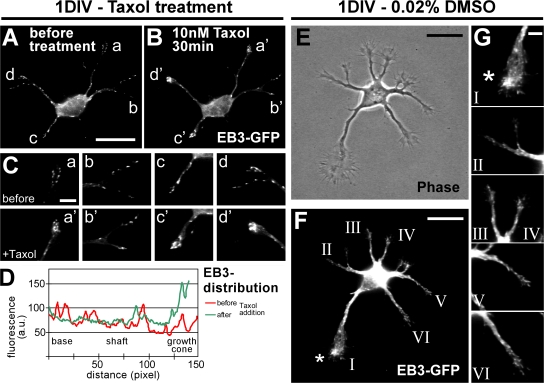
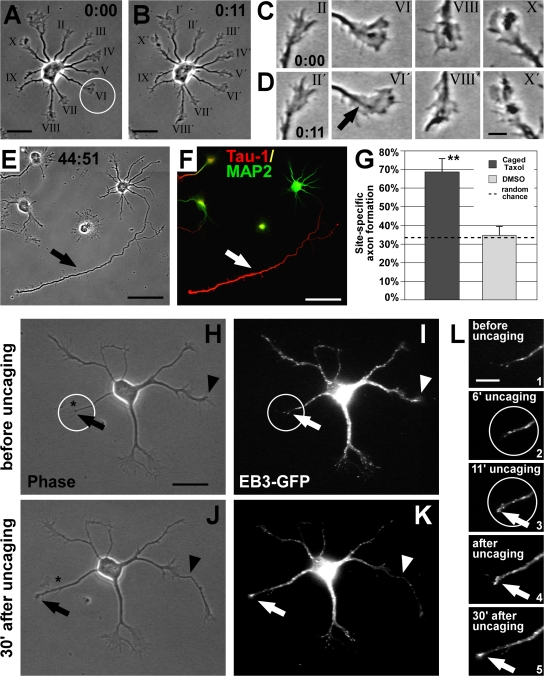
Axon formation is the initial step in establishing neuronal polarity. We examine here the role of microtubule dynamics in neuronal polarization using hippocampal neurons in culture. We see increased microtubule stability along the shaft in a single neurite before axon formation and in the axon of morphologically polarized cells. Loss of polarity or formation of multiple axons after manipulation of neuronal polarity regulators, synapses of amphids defective (SAD) kinases, and glycogen synthase kinase-3β correlates with characteristic changes in microtubule turnover. Consistently, changing the microtubule dynamics is sufficient to alter neuronal polarization. Application of low doses of the microtubule-destabilizing drug nocodazole selectively reduces the formation of future dendrites. Conversely, low doses of the microtubule-stabilizing drug taxol shift polymerizing microtubules from neurite shafts to process tips and lead to the formation of multiple axons. Finally, local stabilization of microtubules using a photoactivatable analogue of taxol induces axon formation from the activated area. Thus, local microtubule stabilization in one neurite is a physiological signal specifying neuronal polarization.
Overview
The claims and statistics of this paper haven’t been checked yet.
Free: it reads the open-access text and checks the first 5 claims that cite a source we can check. Create a free account to check every claim.
Integrity signals
Registry
Cites
Statistics
Figures


Verification
Claims the paper makes
The claims and statistics of this paper haven’t been checked yet.
Free: it reads the open-access text and checks the first 5 claims that cite a source we can check. Create a free account to check every claim.
Claims other papers make about this one
Each is checked against this paper’s own text: does it say what the citing paper says it does?
The source backs part of the claim, not all of it — or backs it for a different population, condition or comparison.
In the citing paper
“Restricted expression of acetylated tubulin near the centrosome defines a stable location for axon growth [77].”
From Abnormal accumulation of extracellular vesicles in hippocampal dystrophic axons and regulation by the primary cilia in Alzheimer's disease (2023) · cites this paper as [77]
Experimental — accuracy not yet measuredIn the citing paper
“Selective microtubule stabilization in one minor process determines axon specification (19) and only after this event, the dendritic microtubule network polarity becomes progressively mixed (18).”
From Axonal transport: Driving synaptic function (2019) · cites this paper as [19]
Self-check
Percentages, sums and reported differences re-computed from the paper’s own numbers.
The self-check needs the paper’s full text.
Citations
Cites
‘Green mice’ as a source of ubiquitous green cells
Okabe, M., Ikawa, M., Kominami, K., Nakanishi, T., & Nishimune, Y. (1997) · FEBS Letters · doi:10.1016/s0014-5793(97)00313-x · Cited by 2,581
GSK-3: tricks of the trade for a multi-tasking kinase
Doble, B. W., & Woodgett, J. R. (2003) · Journal of Cell Science · doi:10.1242/jcs.00384 · Cited by 2,084 · cited 5×
“The online version of this paper contains supplemental material.”
InfluentialThe establishment of polarity by hippocampal neurons in culture.
Dotti, C., Sullivan, C., & Banker, G. (1988) · The Journal of Neuroscience · doi:10.1523/jneurosci.08-04-01454.1988 · Cited by 1,862
The multifaceted roles of glycogen synthase kinase 3β in cellular signaling
Grimes, C. A., & Jope, R. S. (2001) · Progress in Neurobiology · doi:10.1016/s0301-0082(01)00011-9 · Cited by 1,423 · cited 2×
“Taxol-treated 2005 ; Yoshimura et al., 2005 ), which are known modulators of MT stability, yet they have various other cellular functions including the regulation of metabolism, signaling, gene transcription, and endocytosis ( Crump et al., 2001 ; Grimes and Jope, 2001 ).”
Microtubule Acetylation Promotes Kinesin-1 Binding and Transport
Reed, N. A., Cai, D., Blasius, T. L., Jih, G. T., Meyhofer, E., Gaertig, J., & Verhey, K. J. (2006) · Current Biology · doi:10.1016/j.cub.2006.09.014 · Cited by 919 · cited 1×
“…unpolymerized tubulin subunits, cells were simultaneously fi xed and permeabilized in PHEM buffer (60 mM Pipes, 25 mM Hepes, 5 mM EGTA, and 1 mM MgCl) containing 0.25% glutaraldehyde, 3.7% paraformaldehyde, 3.7% sucrose, and 0.1% Triton X-100 (adapted from Smith, 1994 ) and quenched as above.”
InfluentialGSK-3β Regulates Phosphorylation of CRMP-2 and Neuronal Polarity
Yoshimura, T., Kawano, Y., Arimura, N., Kawabata, S., Kikuchi, A., & Kaibuchi, K. (2005) · Cell · doi:10.1016/j.cell.2004.11.012 · Cited by 875 · cited 7×
“The online version of this paper contains supplemental material.”
InfluentialCdc42 regulates GSK-3β and adenomatous polyposis coli to control cell polarity
Etienne-Manneville, S., & Hall, A. (2003) · Nature · doi:10.1038/nature01423 · Cited by 835
CRMP-2 binds to tubulin heterodimers to promote microtubule assembly
Fukata, Y., Itoh, T. J., Kimura, T., Ménager, C., Nishimura, T., Shiromizu, T., Watanabe, H., Inagaki, N., Iwamatsu, A., Hotani, H., et al. (2002) · Nature Cell Biology · doi:10.1038/ncb825 · Cited by 761
Post-translational modifications regulate microtubule function
Westermann, S., & Weber, K. (2003) · Nature Reviews Molecular Cell Biology · doi:10.1038/nrm1260 · Cited by 717 · cited 2×
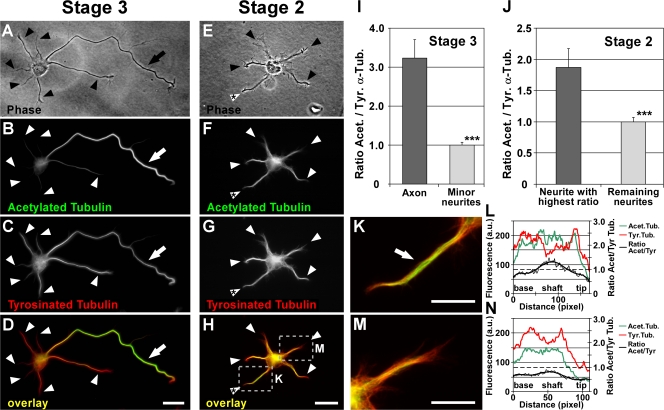
“On average from all stage 3 neurons, the axonal shaft showed a 3.2 ± 0.5-fold ratio increase of the fl uorescence intensities of acetylated versus tyrosinated MTs compared with the shafts of minor neurites (P < 0.001 by t test; Fig.”
InfluentialStepanova, T., Slemmer, J., Hoogenraad, C. C., Lansbergen, G., Dortland, B., De Zeeuw, C. I., Grosveld, F., van Cappellen, G., Akhmanova, A., & Galjart, N. (2003) · The Journal of Neuroscience · doi:10.1523/jneurosci.23-07-02655.2003 · Cited by 698 · cited 2×
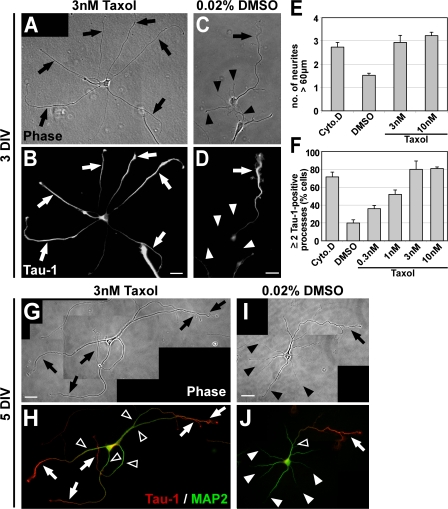
“Taxol application rapidly stabilizes MTs and shifts dynamic MTs to the tips of processes To assess MT dynamics during axon formation, polymerizing MT plus ends were visualized by transfecting neurons with the GFP-tagged MT plus end – binding protein 3 (EB3; Stepanova et al., 2003 ).”
Research works printed but not linked: 3
- 1991, J. Cell Sci. Suppl., 15, 75
- 2005, Cell., 120, 123
- 2003, Nat. Rev. Mol. Cell Biol., 4, 938
Cited by
Items 301–400 of 593
The role of the membrane-associated periodic skeleton in axons
Costa, A. R., & Sousa, M. M. (2021) · Cellular and Molecular Life Sciences · doi:10.1007/s00018-021-03867-x · Cited by 23
Microtubule polarity is instructive for many aspects of neuronal polarity
Thyagarajan, P., Feng, C., Lee, D., Shorey, M., & Rolls, M. M. (2022) · Developmental Biology · doi:10.1016/j.ydbio.2022.03.009 · Cited by 23
Microtubule stabilization targeting regenerative chondrocyte cluster for cartilage regeneration
Li, J., Fan, C., Lv, Z., Sun, Z., Han, J., Wang, M., Jiang, H., Sun, K., Tan, G., Guo, H., et al. (2023) · Theranostics · doi:10.7150/thno.85077 · Cited by 24
“This protein is found in long-lived, stable MTs with a low turnover rate [17].”
Cytoskeletal Dynamics in Caenorhabditis elegans Axon Regeneration
Chisholm, A. D. (2013) · Annual Review of Cell and Developmental Biology · doi:10.1146/annurev-cellbio-101512-122311 · Cited by 27
“In developing neurons, selective MT stabilization is a key step in the formation of a single axon among multiple neurites (Witte et al. 2008).”
BackgroundRozés‐Salvador, V., Heredia, F., Berardo, A., Palandri, A., Wojnacki, J., Vivinetto, A. L., Sheikh, K. A., Cáceres, A., & López, P. H. H. (2016) · Experimental Neurology · doi:10.1016/j.expneurol.2016.01.016 · Cited by 23
“The lamellipodia area was defined as Area lamellipodia= Area F-actin – Area beta-III-tubulin (Laishram et al., 2009); the tubulin ratio was defined as acetylated tubulin area/tyrosinated tubulin area (Witte et al., 2008).”
Intrinsic Mechanisms Regulating Axon Regeneration
Eva, R., Andrews, M. R., Franssen, E. H. P., & Fawcett, J. W. (2012) · International review of neurobiology · doi:10.1016/b978-0-12-407178-0.00004-1 · Cited by 24
Mino, R. E., Rogers, S. L., Risinger, A. L., Rohena, C. C., Banerjee, S., & Bhat, M. A. (2016) · Journal of Cell Science · doi:10.1242/jcs.187294 · Cited by 24
Distinct Functions for Mammalian CLASP1 and -2 During Neurite and Axon Elongation
Sayas, C. L., Basu, S., van der Reijden, M. I. J. A., Bustos‐Morán, E., Liz, M. A., Sousa, M. M., van IJcken, W. F. J., Ávila, J., & Galjart, N. (2019) · Frontiers in Cellular Neuroscience · doi:10.3389/fncel.2019.00005 · Cited by 24
Tonazzini, I., van Woerden, G. M., Masciullo, C., Mientjes, E., Elgersma, Y., & Cecchini, M. G. (2019) · Molecular Autism · doi:10.1186/s13229-019-0293-1 · Cited by 24
Regulation of Neurogenesis by FGF Signaling and Neurogenin in the Invertebrate Chordate Ciona
Kim, K., Gibboney, S., Razy‐Krajka, F., Lowe, E. K., Wang, W., & Stolfi, A. (2020) · Frontiers in Cell and Developmental Biology · doi:10.3389/fcell.2020.00477 · Cited by 23
“Microtubule stabilization has been shown to be essential for axon specification (Witte et al., 2008), though the mechanisms underlying its local control remain largely unknown (Kapitein and Hoogenraad, 2015).”
BackgroundDorrego-Rivas, A., Ezan, J., Moreau, M. M., Poirault‐Chassac, S., Aubailly, N., Neve, J. D., Blanchard, C., Castets, F., Freal, A., Battefeld, A., et al. (2022) · Science Advances · doi:10.1126/sciadv.abo6333 · Cited by 22
“Low doses of the MT-stabilizing drug Taxol also leads to supernumerary axons, similar to what we describe in this study ( 13 , 45 , 55 ).”
Emerging roles of the centrosome in neuronal development
Meka, D. P., Scharrenberg, R., & de Anda, F. C. (2020) · Cytoskeleton · doi:10.1002/cm.21593 · Cited by 24
“…cone and more microtubules that are eventually more stable, develops as an axon, whereas the remaining neurites become dendrites (Bradke & Dotti, 1999; Geraldo, Khanzada, Parsons, Chilton, & Gordon-Weeks, 2008; Neukirchen & Bradke, 2011; Witte et al., 2008; Yu & Baas, 1994; Zhao et al., 2017).”
BackgroundInfluentialThe tubulin code specializes neuronal cilia for extracellular vesicle release
Akella, J. S., & Barr, M. M. (2020) · Developmental Neurobiology · doi:10.1002/dneu.22787 · Cited by 22
“Regulating the stability and biochemical properties of neuronal MTs is important for processes including axon specification, neuronal polarity, neuronal transport, and neuronal functions (Nakata & Hirokawa, 2003; Nirschl et al., 2017; Witte et al., 2008).”
MethodβPix-d promotes tubulin acetylation and neurite outgrowth through a PAK/Stathmin1 signaling pathway
Kwon, Y., Jeon, Y., Kwon, M., Cho, Y., Park, D., & Shin, J. E. (2020) · PLoS ONE · doi:10.1371/journal.pone.0230814 · Cited by 21
“In addition, microtubule stability is involved in not only neuronal morphogenesis [53] but also normal cognitive function [54].”
BackgroundInherited apicobasal polarity defines the key features of axon-dendrite polarity in a sensory neuron
Lee, J., Magescas, J., Fetter, R. D., Feldman, J. L., & Shen, K. (2021) · Current Biology · doi:10.1016/j.cub.2021.06.039 · Cited by 21
Tubulin modifying enzymes as target for the treatment of tau-related diseases
Rogowski, K., Hached, K., Crozet, C., & van der Laan, S. (2020) · Pharmacology & Therapeutics · doi:10.1016/j.pharmthera.2020.107681 · Cited by 22
“photoactivatable paclitaxel analogue showing that the local MT stabilisation in a neurite results in the differentiation of that projection into an axon, while the others become dendrites (Witte et al., 2008).”
BackgroundDifferential Distribution of Posttranslationally Modified Microtubules in Osteoclasts
Akisaka, T., Yoshida, H., & Takigawa, T. (2011) · Journal of Histochemistry & Cytochemistry · doi:10.1369/0022155411405334 · Cited by 22
“Acetylated microtubules were first observed in long-lived, stable microtubule populations and seem to be markers for more stable microtubular forms (LeDizet and Piperno 1986; Gundersen et al. 1987; Witte et al. 2008).”
BackgroundThe microtubule skeleton and the evolution of neuronal complexity in vertebrates
Trushina, N. I., Mulkidjanian, A. Y., & Brandt, R. (2019) · Biological Chemistry · doi:10.1515/hsz-2019-0149 · Cited by 21
Jang, J., Yeo, S., Baek, S., Jung, H. J., Lee, M. S., Choi, S. H., & Choe, Y. (2023) · Acta Neuropathologica Communications · doi:10.1186/s40478-023-01637-3 · Cited by 20
“Restricted expression of acetylated tubulin near the centrosome defines a stable location for axon growth [77].”
BackgroundHoff, K. J., Aiken, J., Gutierrez, M. A., Franco, S. J., & Moore, J. K. (2022) · eLife · doi:10.7554/elife.76189 · Cited by 22
Au, N. P. B., Wu, T., Chen, X., Gao, F., Li, Y. Y. T., Tam, W. Y., Yu, K. N., Geschwind, D. H., Coppola, G., Wang, X., et al. (2023) · Neuron · doi:10.1016/j.neuron.2023.11.011 · Cited by 20
NGL-2 Is a New Partner of PAR Complex in Axon Differentiation
Xu, G., Wang, R., Wang, Z., Lei, Q., Yu, Z., Liu, C., Li, P., Yang, Z.-J., Cheng, X., Li, G., et al. (2015) · Journal of Neuroscience · doi:10.1523/jneurosci.4726-14.2015 · Cited by 20
“NGL-2 controls the spatial polarization of stabilized microtubules to promote axon differentiation by aPKC /MARK2 signaling pathway Previous studies (Witte et al., 2008; Chen et al., 2013) have shown that microtubules are preferentially stabilized in the designated future axon, and this polarized microtubule stability…”
BackgroundInfluentialMechanisms for axon maintenance and plasticity in motoneurons: alterations in motoneuron disease
Jablonka, S., Dombert, B., Asan, E., & Sendtner, M. (2013) · Journal of Anatomy · doi:10.1111/joa.12097 · Cited by 22
“Axons normally contain stable, long-living microtubules that are acetylated (Witte et al. 2008).”
BackgroundSpastin regulates VAMP7-containing vesicles trafficking in cortical neurons
Plaud, C., Joshi, V., Marinello, M., Pastré, D., Galli, T., Curmi, P. A., & Burgo, A. (2017) · Biochimica et Biophysica Acta (BBA) - Molecular Basis of Disease · doi:10.1016/j.bbadis.2017.04.007 · Cited by 21
Vargas, E. J. M., Matamoros, A. J., Qiu, J., Jan, C. H., Wang, Q., Gorczyca, D., Han, T. W., Weissman, J. S., Jan, L. Y., Banerjee, S., et al. (2020) · Genes & Development · doi:10.1101/gad.331330.119 · Cited by 26
“…are essential for neuronal function and are paramount to an axon’s ability to respond to guidance cues, transport proteins and organelles, grow, survive, and regenerate (Baas et al. 1991; Tanaka et al. 1995; Buck and Zheng 2002; Witte et al. 2008; Matamoros and Baas 2016; Hilton and Bradke 2017).”
BackgroundRehabilitation enhances epothilone-induced locomotor recovery after spinal cord injury
Griffin, J. M., Hingorani Jai Prakash, S., Bockemühl, T., Benner, J. M., Schaffran, B., Moreno-Manzano, V., Büschges, A., & Bradke, F. (2022) · Brain Communications · doi:10.1093/braincomms/fcad005 · Cited by 19
“stabilization of microtubules coaxing growth cone formation and protrusion.(22,23) Microtubule stabilization also restricts the polarization and migration of scar-forming fibroblasts.”
BackgroundSelf-citationKase, Y., Sato, T., Okano, Y., & Okano, H. (2022) · iScience · doi:10.1016/j.isci.2022.104089 · Cited by 20
Tsai, R., Cheng, Y., & Wong, C. (2015) · Journal of the Formosan Medical Association · doi:10.1016/j.jfma.2014.12.004 · Cited by 22
Phototriggerable 2′,7-Caged Paclitaxel
Gropeanu, R. A., Baumann, H., Ritz, S., Mailänder, V., Surrey, T., & del Campo, A. (2012) · PLoS ONE · doi:10.1371/journal.pone.0043657 · Cited by 19
“growth [26–27].”
Protocol for Evaluating Neuronal Polarity in Murine Models
Wilson, C., Rozés‐Salvador, V., & Cáceres, A. (2020) · STAR Protocols · doi:10.1016/j.xpro.2020.100114 · Cited by 21
Vuong, J. K., Ergin, V., Chen, L., & Zheng, S. (2022) · Nature Communications · doi:10.1038/s41467-022-29786-4 · Cited by 21
Nejatbakhsh, N., Guo, C., Lu, T. Z., Pei, L., Smit, A. B., Sun, H.-S., van Kesteren, R. E., & Feng, Z. (2011) · Journal of Neuroscience · doi:10.1523/jneurosci.2516-11.2011 · Cited by 19
“Stabilization and continuous restructuring of the cytoskeleton plays an important role in the processes of neurite formation and regeneration, allowing growth cone formation, vesicle accumulation, and neurite elongation (Spira et al., 2001; Witte et al., 2008).”
BackgroundNeurons with Multiple Axons Have Functional Axon Initial Segments
Guo, Y., Liu, Z., Chen, Y., Chai, Z., Zhou, C. Y., & Zhang, Y. (2017) · Neuroscience Bulletin · doi:10.1007/s12264-017-0169-3 · Cited by 21
“These factors act on the neuronal cytoskeletal system to alter microtubule stability, which is the initial event in neuronal polarization [6].”
BackgroundNakamura, T., Yasuda, S., Nagai, H., Koinuma, S., Morishita, S., Goto, A., Kinashi, T., & Wada, N. (2013) · Genes to Cells · doi:10.1111/gtc.12097 · Cited by 18
“Furthermore, as shown in this study and in a number of studies from other groups (Peterson et al. 1996; Wolthuis et al. 1998; He et al. 2006), Rap1 can activate RalA.”
ResultEstablishing neuronal polarity: microtubule regulation during neurite initiation
Higgs, V. E., & Das, R. M. (2022) · Oxford Open Neuroscience · doi:10.1093/oons/kvac007 · Cited by 19
“Microtubule stabilization with low-dose paclitaxel enhances axon growth in dissociated hippocampal neurons by enhancing polymerization at neurite tips (Witte et al., 2008; Flynn et al., 2012).”
BackgroundShin, G. J.-E. (2022) · Experimental Neurology · doi:10.1016/j.expneurol.2022.114258 · Cited by 20
Ruiz-Reig, N., Hakanen, J., & Tissir, F. (2023) · Neural Regeneration Research · doi:10.4103/1673-5374.375298 · Cited by 20
“MT stabilization using the drug Taxol induces the formation of multiple axons in neurons (Witte et al., 2008).”
Symmetry breaking and functional incompleteness in biological systems
Korenić, A., Perović, S., Ćirković, M. M., & Miquel, P.-A. (2019) · Progress in Biophysics and Molecular Biology · doi:10.1016/j.pbiomolbio.2019.02.001 · Cited by 18
A systematic analysis of microtubule-destabilizing factors during dendrite pruning in Drosophila
Bu, S., Yong, W. L., Lim, B. J. W., Kondo, S., & Yu, F. (2021) · EMBO Reports · doi:10.15252/embr.202152679 · Cited by 18
“The samples were then quenched by 50 mM ammonium chloride for 5 min (Witte et al , 2008).”
Meo, D. D., Ravindran, P., Sadhanasatish, T., Dhumale, P., & Püschel, A. W. (2021) · Cell Reports · doi:10.1016/j.celrep.2021.110141 · Cited by 18
Neuronal protein trafficking: Emerging consequences of endoplasmic reticulum dynamics
Valenzuela, J. I., Jaureguiberry-Bravo, M., & Couve, A. (2011) · Molecular and Cellular Neuroscience · doi:10.1016/j.mcn.2011.07.001 · Cited by 19
Cellular and subcellular imaging of motor protein-based behavior in embryonic rat brain
Baffet, A. D., Carabalona, A., Dantas, T. J., Doobin, D. J., Hu, D. J.-K., & Vallee, R. B. (2015) · Methods in cell biology · doi:10.1016/bs.mcb.2015.06.013 · Cited by 20
Wildonger, J., Jan, L. Y., & Jan, Y. N. (2008) · Genes & Development · doi:10.1101/gad.1724108 · Cited by 23
Photocontrolling Microtubule Dynamics with Photoswitchable Chemical Reagents
Thorn‐Seshold, O., & Meiring, J. C. M. (2022) · Methods in molecular biology · doi:10.1007/978-1-0716-1983-4_26 · Cited by 17
Hypergravity Attenuates Reactivity in Primary Murine Astrocytes
Lichterfeld, Y., Kalinski, L., Schunk, S., Schmakeit, T., Feles, S., Frett, T., Herrmann, H. O., Hemmersbach, R., & Liemersdorf, C. (2022) · Biomedicines · doi:10.3390/biomedicines10081966 · Cited by 17
Hanson, K., Tian, N., Vickers, J. C., & King, A. E. (2018) · Frontiers in Neuroscience · doi:10.3389/fnins.2018.00872 · Cited by 18
“In contrast to acetylation, which is associated with long-lived microtubules, tyrosination is present in highly dynamic microtubules at the proximal end of the axon (Witte et al., 2008), and has been reported as a destabilizing microtubule PTM (Kreis, 1987; Khawaja et al., 1988).”
BackgroundMicrotubule-Tau Interaction as a Therapeutic Target for Alzheimer’s Disease
Ivashko‐Pachima, Y., Zhou, L.-Y., Lei, P., & Gozes, I. (2016) · Journal of Molecular Neuroscience · doi:10.1007/s12031-016-0715-x · Cited by 17
He, L., van Beem, L., Snel, B., Hoogenraad, C. C., & Harterink, M. (2022) · PLOS Biology · doi:10.1371/journal.pbio.3001855 · Cited by 16
“Indeed, the artificial stabilization of microtubules using drugs leads to the induction of multiple axons [15,16], and the formation of axons in cultured hippocampal neurons requires the TRIM46 protein that stabilizes and bundles the microtubules in a parallel plus-end out fashion in the proximal…”
Role of tubulin post-translational modifications in peripheral neuropathy
Pero, M. E., Chowdhury, F., & Bartolini, F. (2022) · Experimental Neurology · doi:10.1016/j.expneurol.2022.114274 · Cited by 16
Zocchi, R., Compagnucci, C., Bertini, E., & Sferra, A. (2023) · International Journal of Molecular Sciences · doi:10.3390/ijms24032781 · Cited by 18
“To break neuron symmetry and specify axon formation, MTs also need to be stabilized [177].”
BackgroundInfluentialFalconieri, A., Folino, P., Palmata, L. D., & Raffa, V. (2024) · Frontiers in Molecular Neuroscience · doi:10.3389/fnmol.2024.1340958 · Cited by 15
“Compared to 2D cultures, whole ganglia present additional barriers to the penetration of MNPs, being characterised by similar features and complexity to in Nano-pulling stimulates the activation of local translation.”
BackgroundThe RNA-binding protein EIF4A3 promotes axon development by direct control of the cytoskeleton
Alsina, F. C., Lupan, B. M., Lin, L. J., Musso, C. M., Mosti, F., Newman, C. R., Wood, L. M., Suzuki, A., Agostino, M., Moore, J. K., et al. (2024) · Cell Reports · doi:10.1016/j.celrep.2024.114666 · Cited by 16
“41,42 Indeed, axonal length was enhanced using two different concentrations of paclitaxel, 1.5 nM and 10 nM (Figures 5J and 5K).”
InfluentialGoldberg–Shprintzen syndrome protein KIF1BP is a CITK interactor implicated in cytokinesis
Pallavicini, G., Gai, M., Iegiani, G., Berto, G. E., Adrait, A., Couté, Y., & Cunto, F. D. (2021) · Journal of Cell Science · doi:10.1242/jcs.250902 · Cited by 15
Dual leucine zipper kinase regulates expression of axon guidance genes in mouse neuronal cells
Blondeau, A., Lucier, J., Matteau, D., Dumont, L., Rodrigue, S., Jacques, P., & Blouin, R. (2016) · Neural Development · doi:10.1186/s13064-016-0068-8 · Cited by 15
“These results implicate DLK as a key regulator of microtubule stabilization, a required event for axon formation [65, 66].”
BackgroundMicrotubule‐regulating proteins and cAMP‐dependent signaling in neuroblastoma differentiation
Muñoz-LLancao, P., Gregorio, C. D., Heras, M. L., Meinohl, C., Noorman, K., Boddeke, E., Cheng, X., Lezoualc’h, F., Schmidt, M., & González-Billault, C. E. (2017) · Cytoskeleton · doi:10.1002/cm.21355 · Cited by 15
“MAPs are key factors involved in microtubule stabilization (Witte et al., 2008).”
BackgroundResultInfluentialLi, R., Tao, X., Huang, M., Peng, Y., Liang, J., Wu, Y., & Jiang, Y. (2021) · Oxidative Medicine and Cellular Longevity · doi:10.1155/2021/5481228 · Cited by 15
“Microtubule stability needs to undergo frequent bouts of assembly and disassembly, which can be reflected by the relative ratio of acetylated and tyrosinated tubulins (A/T ratio) [27].”
BackgroundKinesin-1 sorting in axons controls the differential retraction of arbor terminals
Seno, T., Ikeno, T., Mennya, K., Kurishita, M., Narumi, S., Sato, M., Takada, H., & Konishi, Y. (2016) · Journal of Cell Science · doi:10.1242/jcs.183806 · Cited by 15
“Neurons were then simultaneously fixed and permeabilized as described previously (Witte et al., 2008) in a solution containing 60 mM Pipes pH 6.”
BackgroundMethodMicrotubule-dependent subcellular organisation of pluripotent cells
Hawdon, A., Aberkane, A., & Zenker, J. (2021) · Development · doi:10.1242/dev.199909 · Cited by 13
Lysophosphatidic acid influences initial neuronal polarity establishment
Yamane, M., Furuta, D., & Fukushima, N. (2010) · Neuroscience Letters · doi:10.1016/j.neulet.2010.06.031 · Cited by 13
Crucial polarity regulators in axon specification
Lalli, G. (2012) · Essays in Biochemistry · doi:10.1042/bse0530055 · Cited by 13
“Indeed, modest pharmacological microtubule stabilization that prevents catastrophe without completely blocking microtubule growth produces supernumerary axons in vitro [15].”
BackgroundMicrotubule Organization and Microtubule-Associated Proteins (MAPs)
Tortosa, E., Kapitein, L. C., & Hoogenraad, C. C. (2016) · Springer eBooks · doi:10.1007/978-4-431-56050-0_3 · Cited by 17
“The different MT posttranslational modifications show a polarized distribution in neurons (Hammond et al. 2010; Kollins et al. 2009; Witte et al. 2008).”
Schneider, B., Alleaume‐Butaux, A., Dakowski, C., Pietri, M., Mouillet‐Richard, S., Launay, J., & Kellerman, O. (2013) · Cell Health and Cytoskeleton · doi:10.2147/chc.s28081 · Cited by 13
“The acquisition of neuronal polarity depends on deep modifications of the neuroblast cytoskeleton characterized by the remodeling and activation of focal adhesions (FAs) and localized destabilization of the actin network in the neuronal sphere.(1,3,4) Actin instability in unpolarized neurons allows neurite sprouting,…”
Headless Myo10 is a regulator of microtubule stability during neuronal development
Yu, H., Sun, D., Wang, N., Wang, M., Lan, Y., Fan, W., Zhao, Y., Guo, W., & Zhu, X. (2015) · Journal of Neurochemistry · doi:10.1111/jnc.13238 · Cited by 12
“Since previous studies suggested that microtubule stability specified initial neuronal polarization (Witte et al. 2008), we selected neurites with the highest ratio as the future axons for further assay.”
BackgroundMethodResultInfluentialCollective effects of yeast cytoplasmic dynein based microtubule transport
Jain, K., Khetan, N., & Athale, C. A. (2019) · Soft Matter · doi:10.1039/c8sm01434e · Cited by 12
Microtubule and auditory function – an underestimated connection
Bieniussa, L., Jain, I., Bosch, M., Juergens, L., Hagen, R., Janke, C., & Rak, K. (2022) · Seminars in Cell and Developmental Biology · doi:10.1016/j.semcdb.2022.02.004 · Cited by 12
Centrosome-dependent microtubule modifications set the conditions for axon formation
Meka, D. P., Kobler, O., Hong, S., Friedrich, C. M., Wuesthoff, S., Henis, M., Schwanke, B., Krisp, C., Schmuelling, N., Rueter, R., et al. (2022) · Cell Reports · doi:10.1016/j.celrep.2022.110686 · Cited by 14
Involvement of SARA in Axon and Dendrite Growth
Arias, C., Siri, S. O., & Conde, C. B. (2015) · PLoS ONE · doi:10.1371/journal.pone.0138792 · Cited by 12
“Low doses of the microtubule-stabilizing drug taxol shift polymerizing microtubules from neurite shafts to process tips and lead to the formation of multiple axons [63].”
BackgroundAlvarez, J. R., Asselin, L., Tilly, P., Benoit, R., Batisse, C., Richert, L., Batisse, J., Morlet, B., Levet, F., Schwaller, N., et al. (2023) · Cell Reports · doi:10.1016/j.celrep.2023.112744 · Cited by 12
Shakhbazau, A., Danilkovich, N., Seviaryn, I., Ermilova, T. I., & Kosmacheva, S. M. (2018) · Molecular Biology Reports · doi:10.1007/s11033-018-4552-6 · Cited by 11
Cdc42 Facilitates Axonogenesis by Enhancing Microtubule Stabilization in Primary Hippocampal Neurons
Li, A., Zhu, H.-M., Chen, Y., Yan, F., Liu, Z., Li, Z.-L., Dong, W.-R., Zhang, L., & Wang, H. (2021) · Cellular and Molecular Neurobiology · doi:10.1007/s10571-021-01051-0 · Cited by 13
Ma, C., Wang, J., Tu, Q., Bo, W., Hu, Z., Zhuo, R., Wu, R., Dong, Z., Qiang, L., Liu, Y., et al. (2023) · Neural Regeneration Research · doi:10.4103/1673-5374.373716 · Cited by 12
“Tyr-MTs are enriched at axonal ends and low doses of taxol leads to EB3 accumulation at the tips of neurites (Witte et al., 2008).”
BackgroundMicrotubules as a signal hub for axon growth in response to mechanical force
Falconieri, A., Coppini, A., & Raffa, V. (2023) · Biological Chemistry · doi:10.1515/hsz-2023-0173 · Cited by 11
Impact of microchannel width on axons for brain-on-chip applications
Vulić, K., Amos, G., Ruff, T., Kasm, R., Ihle, S. J., Küchler, J., Vörös, J., & Weaver, S. (2024) · Lab on a Chip · doi:10.1039/d4lc00440j · Cited by 11
Tubulin posttranslational modifications induced by cadmium in the sponge Clathrina clathrus
Ledda, F. D., Ramoino, P., Ravera, S., Perino, E., Bianchini, P., Diaspro, A., Gallus, L., Pronzato, R., & Manconi, R. (2013) · Aquatic Toxicology · doi:10.1016/j.aquatox.2013.05.013 · Cited by 12
Morphological and quantitative analysis on α-tubulin modifications in glioblastoma cells
Gadau, S. D. (2018) · Neuroscience Letters · doi:10.1016/j.neulet.2018.09.044 · Cited by 11
The cytoskeleton as a modulator of tension driven axon elongation
Sousa, S., & Sousa, M. M. (2020) · Developmental Neurobiology · doi:10.1002/dneu.22747 · Cited by 11
Chew, L. Y., He, J., Wong, J. J. L., Li, S., & Yu, F. (2022) · Development · doi:10.1242/dev.200536 · Cited by 11
Cytoskeletal dynamics during in vitro neurogenesis of induced pluripotent stem cells (iPSCs)
Compagnucci, C., Piermarini, E., Sferra, A., Borghi, R., Niceforo, A., Petrini, S., Piemonte, F., & Bertini, E. (2016) · Molecular and Cellular Neuroscience · doi:10.1016/j.mcn.2016.10.002 · Cited by 11
Mechanisms of axon polarization in pyramidal neurons
Arikkath, J. (2020) · Molecular and Cellular Neuroscience · doi:10.1016/j.mcn.2020.103522 · Cited by 12
Mautone, L., Cordella, F., Soloperto, A., Ghirga, S., Gennaro, G. D., Gigante, Y., & Angelantonio, S. D. (2025) · Acta Neuropathologica Communications · doi:10.1186/s40478-024-01920-x · Cited by 10
Polarity reversal of stable microtubules during neuronal development
Iwanski, M. K., Serweta, A. K., van Schelt, J., Verwei, H. N., Donders, B. C., & Kapitein, L. C. (2025) · Journal of Cell Science · doi:10.1242/jcs.264152 · Cited by 11
The Rise of Molecules Able To Regenerate the Central Nervous System
da Silva, V. B. R., Porcionatto, M. A., & Ribas, V. T. (2019) · Journal of Medicinal Chemistry · doi:10.1021/acs.jmedchem.9b00863 · Cited by 10
Low-Dose Taxol Promotes Neuronal Axons Extension and Functional Recovery after Spinal Cord Injury
Liu, B., Liu, S., & Sun, D. (2023) · Mediators of Inflammation · doi:10.1155/2023/5604103 · Cited by 12
“Axonal growth occurs mainly within the growth cones, and dynamic microtubules within the growth cones play an important role in the structural adjustment and growth of axons [22].”
BackgroundPuri, D., Sharma, S., Samaddar, S., Ravivarma, S., Banerjee, S., & Ghosh‐Roy, A. (2023) · PLoS Genetics · doi:10.1371/journal.pgen.1010885 · Cited by 12
“Similarly, in vertebrate dendrites, microtubules are relatively unstable compared to the axon and display random orientation [3,10].”
BackgroundNeuronal polarity in C. elegans
Ou, C.-Y., & Shen, K. (2010) · Developmental Neurobiology · doi:10.1002/dneu.20858 · Cited by 15
“Local pharmacological treatment that destabilizes actin or stabilizes microtubules favors the nearby neurite to become an axon (Bradke and Dotti, 1999; Witte et al., 2008).”
BackgroundBu, H., Li, Z., Lu, Y., Zhuang, Z., Zhen, Y., & Zhang, L. (2023) · European Journal of Medicinal Chemistry · doi:10.1016/j.ejmech.2023.115404 · Cited by 10
Meehan, C. F., MacDermid, V. E., Montague, S. J., Neuber‐Hess, M. S., & Rose, P. K. (2011) · Journal of Neuroscience · doi:10.1523/jneurosci.5377-10.2011 · Cited by 11
“In vitro manipulations of intracellular signaling cascades responsible for the development/maintenance of neuronal polarity result in single neurons with multiple axons (Inagaki et al., 2001; Jiang et al., 2005; Yoshimura et al., 2005; Witte et al., 2008).”
BackgroundYang, G., Liang, B., Zhu, J. Y., & Luo, Z. (2010) · Journal of Biological Chemistry · doi:10.1074/jbc.m110.196568 · Cited by 10
Rasal1 regulates calcium dependent neuronal maturation by modifying microtubule dynamics
Deurloo, M., Eide, S., Turlova, E., Li, Q., Spijker, S., Sun, H., Groffen, A. J. A., & Feng, Z. (2024) · Cell & Bioscience · doi:10.1186/s13578-024-01193-w · Cited by 11
“Kinases of the extra-cellular signal-related kinase (ERK) pathway phosphorylate microtubule-associated proteins (MAPs) and regulate microtubule stability and proliferation [23, 24], thereby affecting key factors for neuronal polarization [25].”
BackgroundDual spatio-temporal regulation of axon growth and microtubule dynamics by RhoA signaling pathways
Wojnacki, J., Quassollo, G., Bordenave, M. D., Unsain, N., Martínez, G. F., Szalai, A. M., Pertz, O. C., Gundersen, G. G., Bartolini, F., Stefani, F. D., et al. (2024) · Journal of Cell Science · doi:10.1242/jcs.261970 · Cited by 11
Vidal, R. L., Fuentes, P., Valenzuela, J. I., Alvarado-Díaz, C. P., Ramírez, O. A., Manuel Kukuljan, P., & Couve, A. (2012) · Molecular and Cellular Neuroscience · doi:10.1016/j.mcn.2012.07.007 · Cited by 10
Dynamic balance between vesicle transport and microtubule growth enables neurite outgrowth
Yadaw, A. S., Siddiq, M. M., Rabinovich, V., Tolentino, R. E., Hansen, J., & Iyengar, R. (2019) · PLoS Computational Biology · doi:10.1371/journal.pcbi.1006877 · Cited by 10
Alfadil, E., Bradke, F., & Dupraz, S. (2021) · Journal of Visualized Experiments · doi:10.3791/63068 · Cited by 10
Self-citationImplication of Wnt signaling in neuronal polarization
Yang, G., & Luo, Z. (2010) · Developmental Neurobiology · doi:10.1002/dneu.20851 · Cited by 13
“Microtubule assembly is also actively involved in neuronal polarization (Witte et al., 2008).”
BackgroundMicrotubules in the axon are GDP bound but adopt a stable GTP-like expanded state
Zehr, E. A., Sun, S., Sarbanes, S. L., & Roll-Mecak, A. (2026) · Nature Structural & Molecular Biology · doi:10.1038/s41594-026-01787-7 · Cited by 8
“Interestingly, Taxol treatment of hippocampal neurons induces the formation of multiple axon-like processes 66 and promotes axonal regrowth after injury 67 .”
Unveiling the cell biology of hippocampal neurons with dendritic axon origin
Han, Y., Hacker, D., Donders, B. C., Parperis, C., Thuenauer, R., Leterrier, C., Grünewald, K., & Mikhaylova, M. (2024) · The Journal of Cell Biology · doi:10.1083/jcb.202403141 · Cited by 8
Wu, K., Yue, J., Shen, K., He, J., Zhu, G., Liu, S., Zhang, C., & Yang, H. (2020) · Brain Research Bulletin · doi:10.1016/j.brainresbull.2020.11.023 · Cited by 8
Oksdath, M., Guil, A. F. N., Grassi, D., Sosa, L. J., & Quiroga, S. (2016) · Molecular Neurobiology · doi:10.1007/s12035-016-0144-4 · Cited by 9
“accumulation of stable microtubules in all the neurites [8]”
BackgroundInfluentialPrecursor types predict the stability of neuronal branches
Fuchs, J., & Eickholt, B. J. (2021) · Journal of Cell Science · doi:10.1242/jcs.258983 · Cited by 8
Pletto, D. R., Capra, S., Finardi, A., Colciaghi, F., Nobili, P., Battaglia, G. S., Locatelli, D., & Cagnoli, C. M. (2018) · PLoS ONE · doi:10.1371/journal.pone.0199105 · Cited by 8
Metadata
- Authors
- Witte, H., Neukirchen, D., & Bradke, F.
- Affiliations
- Max Planck Institute of Neurobiology (DE)
- Max Planck Society (DE)
- Venue
- The Journal of Cell Biology
- Publisher
- Rockefeller University Press
- Published
- 2008-02-11
- Volume
- 180
- Issue
- 3
- Pages
- 619-632
- ISSN
- 0021-9525 (ISSN-L)
- 1540-8140
- PMC
- PMC2234250
- OpenAlex
- W2084158780
- Cited by
- 564
- References
- 54
- Citations by year
- 2026: 22 · 2025: 21 · 2024: 19 · 2023: 25 · 2022: 35 · 2021: 36 · 2020: 49 · 2019: 27 · 2018: 27 · 2017: 29 · 2016: 38 · 2015: 38 · 2014: 24 · 2013: 24 · 2012: 39
- FWCI
- 15.86
- Type
- journal article
- Language
- en
- Open access
- green
- www.ncbi.nlm.nih.gov
- Licence
- cc-by-nc-sa
- Locations
- The Journal of Cell Biology (publishedVersion)
- PubMed Central (publishedVersion, cc-by-nc-sa)
- PubMed (publishedVersion)
- Max Planck Institute for Plasma Physics (submittedVersion)
- Max Planck Digital Library (submittedVersion)
- MPG.PuRe (Max Planck Society) (submittedVersion)
- Topics
- Life Sciences › Neuroscience › Cellular and Molecular Neuroscience › Axon Guidance and Neuronal Signaling
- Life Sciences › Neuroscience › Developmental Neuroscience › Neurogenesis and neuroplasticity mechanisms
- Life Sciences › Biochemistry, Genetics and Molecular Biology › Cell Biology › Microtubule and mitosis dynamics
- Keywords
- neuronal polarity, axon formation, microtubule stabilization, microtubule dynamics, hippocampal neurons, glycogen synthase kinase-3β, nocodazole, paclitaxel, dendrite formation
- MeSH terms
- Glycogen Synthase Kinase 3 beta, Animals, Cell Differentiation, Cells, Cultured, Central Nervous System, Hippocampus, Microtubules, Neurons, Nocodazole, Neurites, Cell Polarity, Paclitaxel, Protein Serine-Threonine Kinases, Mice, Knockout, Growth Cones, Intercellular Signaling Peptides and Proteins, Glycogen Synthase Kinase 3, Tubulin Modulators, Mice, Rats
About these checks
Registry, retraction, Cites and statistics results are computed, not judged, with one exception: a printed reference that no index lists is read once by a model before it counts as a citation error. Claims are extracted by a model and kept only when their quote appears verbatim in the text; each cited source is then checked, with a model’s help, for whether it says what the claim relies on. Those verdicts can be wrong — read the claim’s quote and the cited source before relying on one.
Statistics and arithmetic are recomputed, not judged.
Confidence bands are shown only for fields calibrated on our annotated test set. None is calibrated yet, so no band is shown.
What counts as a claim ›How we measure confidence ›How we check this ›
Are you an author, or do you see a problem with this page? Request a review
Data sources
Bibliographic data: Semantic Scholar, OpenAlex, Crossref.
Contains information from the Semantic Scholar Academic Graph Datasets, made available under the ODC Attribution License (ODC-BY 1.0).
Semantic Scholar’s data is described in: Kinney, R., et al. (2023). The Semantic Scholar Open Data Platform. arXiv:2301.10140.
