

Microtubule stabilization specifies initial neuronal polarization
Open accessThe DOI matches its Crossref record; 56 of the 56 references it cites were found in a registry or an index.
Abstract
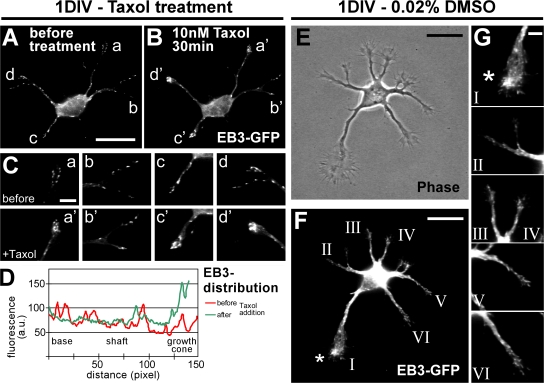
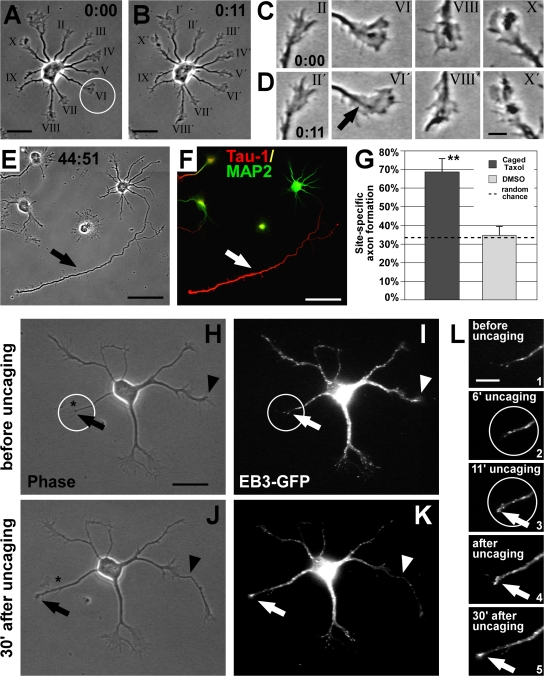
Axon formation is the initial step in establishing neuronal polarity. We examine here the role of microtubule dynamics in neuronal polarization using hippocampal neurons in culture. We see increased microtubule stability along the shaft in a single neurite before axon formation and in the axon of morphologically polarized cells. Loss of polarity or formation of multiple axons after manipulation of neuronal polarity regulators, synapses of amphids defective (SAD) kinases, and glycogen synthase kinase-3β correlates with characteristic changes in microtubule turnover. Consistently, changing the microtubule dynamics is sufficient to alter neuronal polarization. Application of low doses of the microtubule-destabilizing drug nocodazole selectively reduces the formation of future dendrites. Conversely, low doses of the microtubule-stabilizing drug taxol shift polymerizing microtubules from neurite shafts to process tips and lead to the formation of multiple axons. Finally, local stabilization of microtubules using a photoactivatable analogue of taxol induces axon formation from the activated area. Thus, local microtubule stabilization in one neurite is a physiological signal specifying neuronal polarization.
Overview
The claims and statistics of this paper haven’t been checked yet.
Free: it reads the open-access text and checks the first 5 claims that cite a source we can check. Create a free account to check every claim.
Integrity signals
Registry
Cites
Statistics
Figures


Verification
Claims the paper makes
The claims and statistics of this paper haven’t been checked yet.
Free: it reads the open-access text and checks the first 5 claims that cite a source we can check. Create a free account to check every claim.
Claims other papers make about this one
Each is checked against this paper’s own text: does it say what the citing paper says it does?
The source backs part of the claim, not all of it — or backs it for a different population, condition or comparison.
In the citing paper
“Restricted expression of acetylated tubulin near the centrosome defines a stable location for axon growth [77].”
From Abnormal accumulation of extracellular vesicles in hippocampal dystrophic axons and regulation by the primary cilia in Alzheimer's disease (2023) · cites this paper as [77]
Experimental — accuracy not yet measuredIn the citing paper
“Selective microtubule stabilization in one minor process determines axon specification (19) and only after this event, the dendritic microtubule network polarity becomes progressively mixed (18).”
From Axonal transport: Driving synaptic function (2019) · cites this paper as [19]
Self-check
Percentages, sums and reported differences re-computed from the paper’s own numbers.
The self-check needs the paper’s full text.
Citations
Cites
‘Green mice’ as a source of ubiquitous green cells
Okabe, M., Ikawa, M., Kominami, K., Nakanishi, T., & Nishimune, Y. (1997) · FEBS Letters · doi:10.1016/s0014-5793(97)00313-x · Cited by 2,581
GSK-3: tricks of the trade for a multi-tasking kinase
Doble, B. W., & Woodgett, J. R. (2003) · Journal of Cell Science · doi:10.1242/jcs.00384 · Cited by 2,084 · cited 5×
“The online version of this paper contains supplemental material.”
InfluentialThe establishment of polarity by hippocampal neurons in culture.
Dotti, C., Sullivan, C., & Banker, G. (1988) · The Journal of Neuroscience · doi:10.1523/jneurosci.08-04-01454.1988 · Cited by 1,862
The multifaceted roles of glycogen synthase kinase 3β in cellular signaling
Grimes, C. A., & Jope, R. S. (2001) · Progress in Neurobiology · doi:10.1016/s0301-0082(01)00011-9 · Cited by 1,423 · cited 2×
“Taxol-treated 2005 ; Yoshimura et al., 2005 ), which are known modulators of MT stability, yet they have various other cellular functions including the regulation of metabolism, signaling, gene transcription, and endocytosis ( Crump et al., 2001 ; Grimes and Jope, 2001 ).”
Microtubule Acetylation Promotes Kinesin-1 Binding and Transport
Reed, N. A., Cai, D., Blasius, T. L., Jih, G. T., Meyhofer, E., Gaertig, J., & Verhey, K. J. (2006) · Current Biology · doi:10.1016/j.cub.2006.09.014 · Cited by 919 · cited 1×
“…unpolymerized tubulin subunits, cells were simultaneously fi xed and permeabilized in PHEM buffer (60 mM Pipes, 25 mM Hepes, 5 mM EGTA, and 1 mM MgCl) containing 0.25% glutaraldehyde, 3.7% paraformaldehyde, 3.7% sucrose, and 0.1% Triton X-100 (adapted from Smith, 1994 ) and quenched as above.”
InfluentialGSK-3β Regulates Phosphorylation of CRMP-2 and Neuronal Polarity
Yoshimura, T., Kawano, Y., Arimura, N., Kawabata, S., Kikuchi, A., & Kaibuchi, K. (2005) · Cell · doi:10.1016/j.cell.2004.11.012 · Cited by 875 · cited 7×
“The online version of this paper contains supplemental material.”
InfluentialCdc42 regulates GSK-3β and adenomatous polyposis coli to control cell polarity
Etienne-Manneville, S., & Hall, A. (2003) · Nature · doi:10.1038/nature01423 · Cited by 835
CRMP-2 binds to tubulin heterodimers to promote microtubule assembly
Fukata, Y., Itoh, T. J., Kimura, T., Ménager, C., Nishimura, T., Shiromizu, T., Watanabe, H., Inagaki, N., Iwamatsu, A., Hotani, H., et al. (2002) · Nature Cell Biology · doi:10.1038/ncb825 · Cited by 761
Post-translational modifications regulate microtubule function
Westermann, S., & Weber, K. (2003) · Nature Reviews Molecular Cell Biology · doi:10.1038/nrm1260 · Cited by 717 · cited 2×
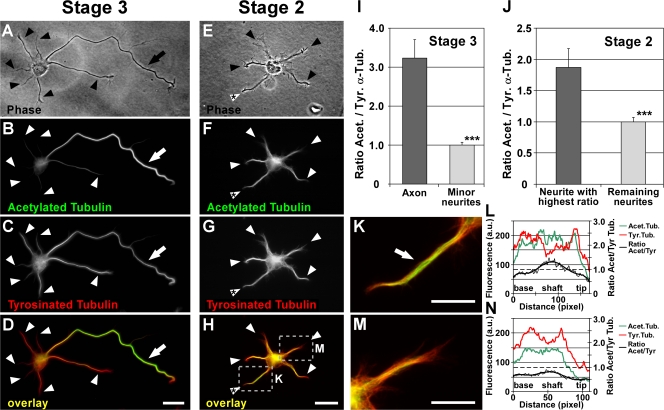
“On average from all stage 3 neurons, the axonal shaft showed a 3.2 ± 0.5-fold ratio increase of the fl uorescence intensities of acetylated versus tyrosinated MTs compared with the shafts of minor neurites (P < 0.001 by t test; Fig.”
InfluentialStepanova, T., Slemmer, J., Hoogenraad, C. C., Lansbergen, G., Dortland, B., De Zeeuw, C. I., Grosveld, F., van Cappellen, G., Akhmanova, A., & Galjart, N. (2003) · The Journal of Neuroscience · doi:10.1523/jneurosci.23-07-02655.2003 · Cited by 698 · cited 2×
“Taxol application rapidly stabilizes MTs and shifts dynamic MTs to the tips of processes To assess MT dynamics during axon formation, polymerizing MT plus ends were visualized by transfecting neurons with the GFP-tagged MT plus end – binding protein 3 (EB3; Stepanova et al., 2003 ).”
Research works printed but not linked: 3
- 1991, J. Cell Sci. Suppl., 15, 75
- 2005, Cell., 120, 123
- 2003, Nat. Rev. Mol. Cell Biol., 4, 938
Cited by
Kinesin superfamily motor proteins and intracellular transport
Hirokawa, N., Noda, Y., Tanaka, Y., & Niwa, S. (2009) · Nature Reviews Molecular Cell Biology · doi:10.1038/nrm2774 · Cited by 1,859
“, and the inhibition of microtubule dynamics in developing neurons affects neuronal polarit”
BackgroundMicrotubule assembly, organization and dynamics in axons and dendrites
Conde, C., & Cáceres, A. (2009) · Nature Reviews Neuroscience · doi:10.1038/nrn2631 · Cited by 1,086
GSK3 signalling in neural development
Hur, E.-M., & Zhou, F.-Q. (2010) · Nature Reviews Neuroscience · doi:10.1038/nrn2870 · Cited by 838
Building the Neuronal Microtubule Cytoskeleton
Kapitein, L. C., & Hoogenraad, C. C. (2015) · Neuron · doi:10.1016/j.neuron.2015.05.046 · Cited by 650
Actin–microtubule crosstalk in cell biology
Dogterom, M., & Koenderink, G. H. (2019) · Nature Reviews Molecular Cell Biology · doi:10.1038/s41580-018-0067-1 · Cited by 574
Microtubule Stabilization Reduces Scarring and Causes Axon Regeneration After Spinal Cord Injury
Hellal, F., Hurtado, A., Ruschel, J., Flynn, K. C., Laskowski, C. J., Umlauf, M., Kapitein, L. C., Strikis, D., Lemmon, V., Bixby, J., et al. (2011) · Science · doi:10.1126/science.1201148 · Cited by 588
Self-citationMicrotubules in Cell Migration
Etienne-Manneville, S. (2013) · Annual Review of Cell and Developmental Biology · doi:10.1146/annurev-cellbio-101011-155711 · Cited by 508
“Microtubule stabilization may also contribute, and treatment with paclitaxel (taxol) to induce a global stabilization of the microtubule network induces axogenesis (Hammond et al. 2010, Witte et al. 2008).”
Establishment of axon-dendrite polarity in developing neurons.
Barnes, A. P., & Polleux, F. (2009) · Annual Review of Neuroscience · doi:10.1146/annurev.neuro.31.060407.125536 · Cited by 523
“The apical domain of cortical progenitors is also closely associated with the cadherin-based AJ and the centrosome, microtubule organizing center (MTOC) (Chenn et al. 1998, Rasin et al. 2007, Xie et al. 2007).”
BackgroundMEC-17 is an α-tubulin acetyltransferase
Akella, J. S., Wloga, D., Kim, J., Starostina, N. G., Lyons-Abbott, S., Morrissette, N. S., Dougan, S. T., Kipreos, E. T., & Gaertig, J. (2010) · Nature · doi:10.1038/nature09324 · Cited by 489
Crosstalk between small GTPases and polarity proteins in cell polarization
Iden, S., & Collard, J. G. (2008) · Nature Reviews Molecular Cell Biology · doi:10.1038/nrm2521 · Cited by 451
“The specific stabilization of microtubules in the shaft of the prospective axon seems to be essential for axon developmen”
BackgroundSystemic administration of epothilone B promotes axon regeneration after spinal cord injury
Ruschel, J., Hellal, F., Flynn, K. C., Dupraz, S., Elliott, D. A., Tedeschi, A., Bates, M., Sliwinski, C., Brook, G., Dobrindt, K., et al. (2015) · Science · doi:10.1126/science.aaa2958 · Cited by 432
Self-citationThe axon initial segment and the maintenance of neuronal polarity
Rasband, M. N. (2010) · Nature Reviews Neuroscience · doi:10.1038/nrn2852 · Cited by 442
“, their stabilization promotes the formation of multiple axons in vitro”
BackgroundBeyond polymer polarity: how the cytoskeleton builds a polarized cell
Li, R., & Gundersen, G. G. (2008) · Nature Reviews Molecular Cell Biology · doi:10.1038/nrm2522 · Cited by 379
“In a recent study of hippocampal neurons, quantification of the ratio of acetylated tubulin to total tubulin showed an elevated ratio in axons compared with undifferentiated neurite”
BackgroundTubulin tyrosination navigates the kinesin-1 motor domain to axons
Konishi, Y., & Setou, M. (2009) · Nature Neuroscience · doi:10.1038/nn.2314 · Cited by 389
Regulation of microtubule dynamics, mechanics and function through the growing tip
Gudimchuk, N. B., & McIntosh, J. R. (2021) · Nature Reviews Molecular Cell Biology · doi:10.1038/s41580-021-00399-x · Cited by 369
Axonal transport: Driving synaptic function
Guedes-Dias, P., & Holzbaur, E. L. F. (2019) · Science · doi:10.1126/science.aaw9997 · Cited by 355
“Selective microtubule stabilization in one minor process determines axon specification (19), and only after this event does the dendritic microtubule network polarity become progressively mixed (18).”
BackgroundJanke, C., & Kneussel, M. (2010) · Trends in Neurosciences · doi:10.1016/j.tins.2010.05.001 · Cited by 335
Brunden, K. R., Zhang, B., Carroll, J., Yao, Y., Potuzak, J. S., Hogan, A.-M. L., Iba, M., James, M. J., Xie, S. X., Ballatore, C., et al. (2010) · The Journal of Neuroscience · doi:10.1523/jneurosci.3059-10.2010 · Cited by 320
“The 3 mg/kg EpoD PS19 group also displayed significantly attenuated axonal dystrophy, although the magnitude of effect was smaller in this treatment group, perhaps due to overstabilization of MTs (Ertürk et al., 2007; Witte et al., 2008).”
BackgroundInfluentialSingle molecule imaging reveals differences in microtubule track selection between Kinesin motors
Cai, D., McEwen, D. P., Martens, J. R., Meyhofer, E., & Verhey, K. J. (2009) · PLoS Biology · doi:10.1371/journal.pbio.1000216 · Cited by 300
“Stable microtubules are critical for morphogenesis during diverse biological events such as cytokinesis, cell motility, and neuronal polarity [10,13,52,53].”
BackgroundCoordinating Neuronal Actin–Microtubule Dynamics
Coles, C. H., & Bradke, F. (2015) · Current Biology · doi:10.1016/j.cub.2015.06.020 · Cited by 284
Self-citationPost-translational modifications of microtubules
Wloga, D., & Gaertig, J. (2010) · Journal of Cell Science · doi:10.1242/jcs.063727 · Cited by 266
“In mammalian cells, experimental stabilization of microtubules with paclitaxel increases the levels of tubulin acetylation and detyrosination (Gundersen et al., 1987; Hammond et al., 2010; Piperno et al., 1987; Witte et al., 2008).”
BackgroundPosttranslational modifications of tubulin and the polarized transport of kinesin-1 in neurons
Hammond, J. W., Huang, C.-F., Kaech, S., Jacobson, C., Banker, G., & Verhey, K. J. (2010) · Molecular Biology of the Cell · doi:10.1091/mbc.e09-01-0044 · Cited by 281
Interplay between microtubule dynamics and intracellular organization
de Forges, H., Bouissou, A., & Perez, F. (2012) · The International Journal of Biochemistry & Cell Biology · doi:10.1016/j.biocel.2011.11.009 · Cited by 253
Tubulin acetylation: responsible enzymes, biological functions and human diseases
Li, L., & Yang, X.-J. (2015) · Cellular and Molecular Life Sciences · doi:10.1007/s00018-015-2000-5 · Cited by 256
“Microtubule stabilization by Taxol promotes initial neuronal polarization [124].”
Local and Long-Range Reciprocal Regulation of cAMP and cGMP in Axon/Dendrite Formation
Shelly, M., Lim, B. K., Cancedda, L., Heilshorn, S. C., Gao, H., & Poo, M.-M. (2010) · Science · doi:10.1126/science.1179735 · Cited by 251
The paradox of paclitaxel neurotoxicity: Mechanisms and unanswered questions
Gornstein, E., & Schwarz, T. L. (2014) · Neuropharmacology · doi:10.1016/j.neuropharm.2013.08.016 · Cited by 252
Which way to go? Cytoskeletal organization and polarized transport in neurons
Kapitein, L. C., & Hoogenraad, C. C. (2011) · Molecular and Cellular Neuroscience · doi:10.1016/j.mcn.2010.08.015 · Cited by 244
Growth Cone Travel in Space and Time: the Cellular Ensemble of Cytoskeleton, Adhesion, and Membrane
Vitriol, E. A., & Zheng, J. Q. (2012) · Neuron · doi:10.1016/j.neuron.2012.03.005 · Cited by 228
“Finally, spatiotemporally regulated dynamics of these MTs may play an important role in specifying axonal and dendritic polarization (Witte et al., 2008).”
Developmental mechanism of the periodic membrane skeleton in axons
Zhong, G., He, J., Zhou, R., Lorenzo, D., Babcock, H. P., Bennett, V., & Zhuang, X. (2014) · eLife · doi:10.7554/elife.04581 · Cited by 238
“On the other hand, when microtubules were stabilized with taxol (5 nM for 3 days), a treatment that is known to induce multiple axon-like processes in neurons (Witte et al., 2008), we found that βII spectrin exhibited a periodic pattern in all of these axon-like processes (Figure 6C).”
BackgroundGaliano, M. R., Jha, S., Ho, T. S.-Y., Zhang, C., Ogawa, Y., Chang, K.-J., Stankewich, M. C., Mohler, P. J., & Rasband, M. N. (2012) · Cell · doi:10.1016/j.cell.2012.03.039 · Cited by 242
The role of the cytoskeleton during neuronal polarization
Witte, H., & Bradke, F. (2008) · Current Opinion in Neurobiology · doi:10.1016/j.conb.2008.09.019 · Cited by 224
Self-citationLi, R., Li, Y., Wu, Y., Zhao, Y., Chen, H., Yuan, Y., Xu, K., Zhang, H., Lu, Y., Wang, J., et al. (2018) · Biomaterials · doi:10.1016/j.biomaterials.2018.03.044 · Cited by 231
“The ratio of Ace-tubulin/tubulin represent the stability of dynamic MTs [43].”
BackgroundMicrotubule Minus-End Binding Protein CAMSAP2 Controls Axon Specification and Dendrite Development
Yau, K. W., van Beuningen, S. F. B., Cunha-Ferreira, I., Cloin, B. M. C., van Battum, E. Y., Will, L., Schätzle, P., Tas, R. P., van Krugten, J., Katrukha, E. A., et al. (2014) · Neuron · doi:10.1016/j.neuron.2014.04.019 · Cited by 218
Therapeutic repair for spinal cord injury: combinatory approaches to address a multifaceted problem
Griffin, J. M., & Bradke, F. (2020) · EMBO Molecular Medicine · doi:10.15252/emmm.201911505 · Cited by 224
“Microtubules underlie the formation of retraction bulbs and are a major contributor to the failure of axonal regeneration; stabilisation of microtubules specifies growth cone formation and protrusion (Erturk et al, 2007; Witte et al, 2008).”
Self-citationvan Beuningen, S. F. B., Will, L., Harterink, M., Chazeau, A., van Battum, E. Y., Frias, C. P., Franker, M. A. M., Katrukha, E. A., Stucchi, R., Vocking, K., et al. (2015) · Neuron · doi:10.1016/j.neuron.2015.11.012 · Cited by 225
The ins and outs of tubulin acetylation: More than just a post-translational modification?
Perdiz, D., Mackeh, R., Poüs, C., & Baillet, A. (2011) · Cellular Signalling · doi:10.1016/j.cellsig.2010.10.014 · Cited by 208
Wu, Q.-F., Yang, L., Li, S., Wang, Q., Yuan, X.-B., Gao, X., Bao, L., & Zhang, X. (2012) · Cell · doi:10.1016/j.cell.2012.04.046 · Cited by 205
“Increased MT stabilization induces the formation of a single axon from multipolar cortical neurons (Witte et al., 2008).”
BackgroundInfluentialAxon Regeneration in the Central Nervous System: Facing the Challenges from the Inside
Curcio, M., & Bradke, F. (2018) · Annual Review of Cell and Developmental Biology · doi:10.1146/annurev-cellbio-100617-062508 · Cited by 210
Self-citationMechanisms of distal axonal degeneration in peripheral neuropathies
Cashman, C. R., & Höke, A. (2015) · Neuroscience Letters · doi:10.1016/j.neulet.2015.01.048 · Cited by 199
“Paclitaxel enhances all three posttranslational modifications, thereby disrupting axon/soma/dendrite polarity [117,276].”
Tubulin-related cortical dysgeneses: microtubule dysfunction underlying neuronal migration defects
Jaglin, X. H., & Chelly, J. (2009) · Trends in Genetics · doi:10.1016/j.tig.2009.10.003 · Cited by 190
ADF/Cofilin-Mediated Actin Retrograde Flow Directs Neurite Formation in the Developing Brain
Flynn, K. C., Hellal, F., Neukirchen, D., Jacob, S., Tahirovic, S., Dupraz, S., Stern, S., Garvalov, B. K., Gurniak, C., Shaw, A. E., et al. (2012) · Neuron · doi:10.1016/j.neuron.2012.09.038 · Cited by 201
“Moderate microtubule stabilization by low doses of taxol, which induces supernumary axons in neurons already containing neurites (Witte et al., 2008), did not augment neurite formation (Figures S2A and S2B).”
Self-citationYau, K. W., Schätzle, P., Tortosa, E., Pagès, S., Holtmaat, A., Kapitein, L. C., & Hoogenraad, C. C. (2016) · The Journal of Neuroscience · doi:10.1523/jneurosci.2430-15.2016 · Cited by 199
“Thus, in addition to microtubule stabilization (Witte et al., 2008), the axon-inducing effect of taxol appears to be linked to the selective formation of uniform plus-end-out microtubules.”
BackgroundMethodResultInfluentialThe Role of the Microtubule Cytoskeleton in Neurodevelopmental Disorders
Lasser, M., Tiber, J., & Lowery, L. A. (2018) · Frontiers in Cellular Neuroscience · doi:10.3389/fncel.2018.00165 · Cited by 201
“Reduction of spastin function in zebrafish caused severe defects in motor axon outgrowth, as well as abnormalities in neuronal connectivity (Wood et al., 2006).”
BackgroundInitiating and Growing an Axon
Polleux, F., & Snider, W. (2010) · Cold Spring Harbor Perspectives in Biology · doi:10.1101/cshperspect.a001925 · Cited by 187
Tahirovic, S., & Bradke, F. (2009) · Cold Spring Harbor Perspectives in Biology · doi:10.1101/cshperspect.a001644 · Cited by 183
“Axonal microtubules are more stable in comparison to minor neurites and pharmacological stabilization of microtubules is sufficient to induce axon formation (Witte et al. 2008).”
BackgroundSelf-citationCellular and molecular mechanisms underlying axon formation, growth, and branching
Lewis, T. L., Courchet, J., & Polleux, F. (2013) · Journal of Cell Biology · doi:10.1083/jcb.201305098 · Cited by 181
Sánchez-Huertas, C., Freixo, F., Viais, R., Lacasa, C., Soriano, E., & Lüders, J. (2016) · Nature Communications · doi:10.1038/ncomms12187 · Cited by 195
New insights into glial scar formation after spinal cord injury
Tran, A. P., Warren, P. M., & Silver, J. (2022) · Cell and Tissue Research · doi:10.1007/s00441-021-03477-w · Cited by 182
Post‐translational modifications of tubulin in the nervous system
Fukushima, N., Furuta, D., Hidaka, Y., Moriyama, R., & Tsujiuchi, T. (2009) · Journal of Neurochemistry · doi:10.1111/j.1471-4159.2009.06013.x · Cited by 193
“Recently, a quantitative study has demonstrated that the axon in polarized neurons and the future axon in unpolarized neurons show highest ratio of Ac-T versus Tyr-T compared with other neurites (Witte et al. 2008).”
BackgroundNeurodegeneration and microtubule dynamics: death by a thousand cuts
Dubey, J., Ratnakaran, N., & Koushika, S. P. (2015) · Frontiers in Cellular Neuroscience · doi:10.3389/fncel.2015.00343 · Cited by 182
“…by being involved in axon specification, an important early Frontiers in Cellular Neuroscience | www.frontiersin.org 2 September 2015 | Volume 9 | Article 343 event in establishing neuronal polarity (Burton and Paige, 1981; Heidemann et al., 1981; Witte et al., 2008; Hoogenraad and Bradke, 2009).”
BackgroundInfluentialCytoskeleton dynamics in axon regeneration
Blanquie, O., & Bradke, F. (2018) · Current Opinion in Neurobiology · doi:10.1016/j.conb.2018.02.024 · Cited by 189
Self-citationBartolini, F., & Gundersen, G. G. (2010) · Biochimica et Biophysica Acta (BBA) - Molecular Cell Research · doi:10.1016/j.bbamcr.2009.07.006 · Cited by 180
“A recent study used local activation of photoactivatable taxol to show that increasing MT stability alone was sufficient to enhance axon formation and outgrowth from one of the undifferentiated minor neurites of hippocampal cells [61].”
BackgroundRac1 Regulates Neuronal Polarization through the WAVE Complex
Tahirovic, S., Hellal, F., Neukirchen, D., Hindges, R., Garvalov, B. K., Flynn, K. C., Stradal, T. E., Chrostek-Grashoff, A., Brakebusch, C., & Bradke, F. (2010) · The Journal of Neuroscience · doi:10.1523/jneurosci.5395-09.2010 · Cited by 188
Self-citationAutophagy induction stabilizes microtubules and promotes axon regeneration after spinal cord injury
He, M., Ding, Y., Chu, C., Tang, J., Xiao, Q., & Luo, Z.-G. (2016) · Proceedings of the National Academy of Sciences · doi:10.1073/pnas.1611282113 · Cited by 177
“The ratio of acetylated to tyrosinated α-tubulin (A/T ratio) was used to measure the relative ratio of stable to dynamic MTs (48).”
MethodThe nano-architecture of the axonal cytoskeleton
Leterrier, C., Dubey, P., & Roy, S. (2017) · Nature Reviews Neuroscience · doi:10.1038/nrn.2017.129 · Cited by 166
Neuronal polarization: The cytoskeleton leads the way
Stiess, M., & Bradke, F. (2011) · Developmental Neurobiology · doi:10.1002/dneu.20849 · Cited by 167
“Consistently, moderate stabilization of microtubules in such a way that they are still dynamic, but undergo less catastrophe events, is sufficient to transform a minor neurite into an axon (Witte et al., 2008; Hammond et al., 2010).”
BackgroundInfluentialSelf-citationControl of neuronal polarity and plasticity – a renaissance for microtubules?
Hoogenraad, C. C., & Bradke, F. (2009) · Trends in Cell Biology · doi:10.1016/j.tcb.2009.08.006 · Cited by 173
Self-citationLipka, J., Kapitein, L. C., Jaworski, J., & Hoogenraad, C. C. (2016) · The EMBO Journal · doi:10.15252/embj.201592929 · Cited by 172
“Axon selectivity appears mediated by specific properties of stabilized axonal microtubules, as treatment with the microtubule stabilizing agent paclitaxel results in non-polarized targeting to both axons and dendrites (Nakata & Hirokawa, 2003; Witte et al , 2008; Kapitein et al , 2010a).”
Reelin and Stk25 Have Opposing Roles in Neuronal Polarization and Dendritic Golgi Deployment
Matsuki, T., Matthews, R. T., Cooper, J. A., van der Brug, M. P., Cookson, M. R., Hardy, J. A., Olson, E. C., & Howell, B. W. (2010) · Cell · doi:10.1016/j.cell.2010.10.029 · Cited by 166
“Indeed, microtubule stabilization has been shown to enhance axon formation (Witte et al., 2008), and inhibiting post-Golgi trafficking disrupts axo-dendritic polarization (Bisbal et al., 2008; Yin et al., 2008).”
BackgroundManiar, T. A., Kaplan, M., Wang, G. J., Shen, K., Wei, L., Shaw, J. E., Koushika, S. P., & Bargmann, C. I. (2012) · Nature Neuroscience · doi:10.1038/nn.2970 · Cited by 168
“Pharmacological manipulation of microtubule stability alters the number of axons per neuron and biases the selection of one process as the future axo”
BackgroundHuman β-Tubulin Isotypes Can Regulate Microtubule Protofilament Number and Stability
Ti, S.-C., Alushin, G. M., & Kapoor, T. M. (2018) · Developmental Cell · doi:10.1016/j.devcel.2018.08.014 · Cited by 158
“, 1995), and microtubule stabilization can specify the position of axons during neuronal polarization (Witte et al., 2008).”
BackgroundElasticity Maps of Living Neurons Measured by Combined Fluorescence and Atomic Force Microscopy
Spedden, E., White, J. D., Naumova, E. N., Kaplan, D. L., & Staii, C. (2012) · Biophysical Journal · doi:10.1016/j.bpj.2012.08.005 · Cited by 162
“Taxol is a well-studied drug with known microtubule stabilizing effects in neurons (40,41).”
BackgroundPoulain, F. E., & Sobel, A. (2009) · Molecular and Cellular Neuroscience · doi:10.1016/j.mcn.2009.07.012 · Cited by 193
“The essential role of microtubule stabilization in specifying neuronal polarity has only been recently demonstrated (Witte et al., 2008).”
Promoting optic nerve regeneration
Fischer, D., & Leibinger, M. (2012) · Progress in Retinal and Eye Research · doi:10.1016/j.preteyeres.2012.06.005 · Cited by 161
“ment overcomes growth inhibition of RGC axons by myelin and CSPG in vitro (Sengottuvel et al., 2011; Witte et al., 2008).”
BackgroundCentrosomes, microtubules and neuronal development
Kuijpers, M., & Hoogenraad, C. C. (2011) · Molecular and Cellular Neuroscience · doi:10.1016/j.mcn.2011.05.004 · Cited by 168
“…are preferentially oriented towards the leading edge and can directly control polarized trafficking in motile cells (Miller et al., 2009), similarly to the proposed specific microtubuledependent membrane traffic pathway during axon specification (Hoogenraad and Bradke, 2009; Witte et al., 2008).”
BackgroundMethodInfluentialGhosh‐Roy, A., Goncharov, A., Jin, Y., & Chisholm, A. D. (2012) · Developmental Cell · doi:10.1016/j.devcel.2012.08.010 · Cited by 151
“In early neuronal development, MT stabilization plays an instructive role in selection of a single neurite as the future axon (Witte et al., 2008).”
BackgroundGornstein, E. L., & Schwarz, T. L. (2016) · Experimental Neurology · doi:10.1016/j.expneurol.2016.11.015 · Cited by 156
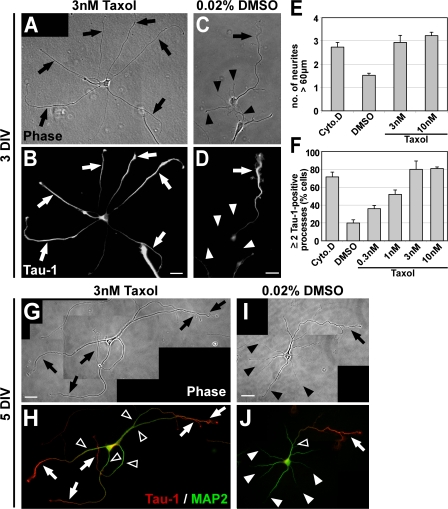
“Previous work on younger hippocampal cultures has shown thatmicrotubule stabilization causes neurons to form multiple axons when far lower doses of paclitaxel (3 nM) are applied (Witte et al., 2008).”
BackgroundThe cytoskeleton and neurite initiation
Flynn, K. C. (2013) · BioArchitecture · doi:10.4161/bioa.26259 · Cited by 172
“Studies focused on axonogenesis suggested that microtubules exert a “pushing” force that facilitates the rapid growth of the axon.(28) Microtubules can theoretically produce force by concerted polymerization and/or by microtubule motors such as kinesin or dynein.”
BackgroundInfluentialAn assay to image neuronal microtubule dynamics in mice
Kleele, T., Marinković, P., Williams, P. R., Stern, S., Weigand, E. E., Engerer, P., Naumann, R., Hartmann, J., Karl, R. M., Bradke, F., et al. (2014) · Nature Communications · doi:10.1038/ncomms5827 · Cited by 145
Self-citationHDAC signaling in neuronal development and axon regeneration
Cho, Y., & Cavalli, V. (2014) · Current Opinion in Neurobiology · doi:10.1016/j.conb.2014.03.008 · Cited by 143
Subramanian, A., Kanzaki, L. F., Galloway, J. L., & Schilling, T. F. (2018) · eLife · doi:10.7554/elife.38069 · Cited by 147
“Cellular filopodia and neuronal axons require either F-actin and MTs or both in the formation and maintenance of projections, and new classes of cellular projections are emerging from recent studies such as cytonemes and airinemes (Bornschlögl, 2013; Eom et al., 2015; Huang and Kornberg, 2015; Witte et al., 2008).”
Plasticity of Polarization: Changing Dendrites into Axons in Neurons Integrated in Neuronal Circuits
Gomis-Rüth, S., Wierenga, C. J., & Bradke, F. (2008) · Current Biology · doi:10.1016/j.cub.2008.06.026 · Cited by 144
Self-citationKim, G.-W., Li, L., Gorbani, M., You, L., & Yang, X.-J. (2013) · Journal of Biological Chemistry · doi:10.1074/jbc.m113.464792 · Cited by 141
Centrosome Motility Is Essential for Initial Axon Formation in the Neocortex
de Anda, F. C., Meletis, K., Ge, X., Rei, D., & Tsai, L. (2010) · Journal of Neuroscience · doi:10.1523/jneurosci.0381-10.2010 · Cited by 142
“7E) (Witte et al., 2008) (n 46 neurons from 3 brains).”
BackgroundMethodInfluentialCan injured adult CNS axons regenerate by recapitulating development?
Hilton, B. J., & Bradke, F. (2017) · Development · doi:10.1242/dev.148312 · Cited by 146
“Since microtubule stabilization drives axon outgrowth during development (GomisRüth et al., 2008; Witte et al., 2008), these studies highlight how regeneration can be achieved by activating developmental processes.”
BackgroundSelf-citationThe Oriented Emergence of Axons from Retinal Ganglion Cells Is Directed by Laminin Contact In Vivo
Randlett, O., Poggi, L., Zolessi, F. R., & Harris, W. A. (2011) · Neuron · doi:10.1016/j.neuron.2011.03.013 · Cited by 140
“In this model, localized actin destabilization in the preaxonal neurite leads to increased microtubule penetration and stabilization in this neurite, which as a result, makes it grow faster than the other neurites and so become the axon (Bradke and Dotti, 1999; Witte et al., 2008).”
Nelson, A. D., & Jenkins, P. M. (2017) · Frontiers in Cellular Neuroscience · doi:10.3389/fncel.2017.00136 · Cited by 147
“There is strong evidence that microtubule-based motor proteins influence the selective filtering of cargo transport into axons and dendrites, but the mechanisms underlying this process is not well understood (Witte et al., 2008; Hoogenraad and Bradke, 2009).”
BackgroundThe DLK signalling pathway—a double‐edged sword in neural development and regeneration
Tedeschi, A., & Bradke, F. (2013) · EMBO Reports · doi:10.1038/embor.2013.64 · Cited by 132
“Continuous remodelling of the actin-based cytoskeleton, together with changes in microtubule stability, influence neuronal polarization [31–33].”
Self-citationLgl1 Activation of Rab10 Promotes Axonal Membrane Trafficking Underlying Neuronal Polarization
Wang, T., Liu, Y., Xu, X., Deng, C.-Y., Wu, K.-Y., Zhu, J., Fu, X.-Q., He, M., & Luo, Z. (2011) · Developmental Cell · doi:10.1016/j.devcel.2011.07.007 · Cited by 144
“Many of these molecules are believed to exert their action by regulating cytoskeleton organization (Barnes et al., 2007; Bradke and Dotti, 1999; Chen et al., 2006; Jiang et al., 2005; Kishi et al., 2005; Schwamborn and Püschel, 2004; Shelly et al., 2007; Witte et al., 2008; Yoshimura et al., 2005).”
BackgroundCellular responses to extracellular guidance cues
Berzat, A. C., & Hall, A. (2010) · The EMBO Journal · doi:10.1038/emboj.2010.170 · Cited by 136
“…with taxol, or destabilization of actin filaments, with cytochalasin, at the tip of one neurite is sufficient to induce axon formation, suggesting that the microtubule and actin cytoskeletons generate counteracting forces to inhibit neurite elongation (Bradke and Dotti, 1999; Witte et al, 2008).”
BackgroundSIRT2-mediated protein deacetylation: An emerging key regulator in brain physiology and pathology
Harting, K., & Knöll, B. (2009) · European Journal of Cell Biology · doi:10.1016/j.ejcb.2009.11.006 · Cited by 135
Chen, C.-Y., Lin, C.-W., Chang, C.-Y., Jiang, S., & Hsueh, Y. (2011) · The Journal of Cell Biology · doi:10.1083/jcb.201008050 · Cited by 127
“reagent Taxol induces multiple axon formation (Witte et al., 2008).”
InfluentialTortosa, E., Adolfs, Y., Fukata, M., Pasterkamp, R. J., Kapitein, L. C., & Hoogenraad, C. C. (2017) · Neuron · doi:10.1016/j.neuron.2017.04.042 · Cited by 122
“We performed shRNA knockdowns of several MAPs in polarized hippocampal neurons and used paclitaxel to induce the formation of new axons (Gomis-R € uth et al., 2008; Witte et al., 2008).”
Neuronal polarization: From spatiotemporal signaling to cytoskeletal dynamics
Schelski, M., & Bradke, F. (2017) · Molecular and Cellular Neuroscience · doi:10.1016/j.mcn.2017.03.008 · Cited by 137
“Destabilizing actin (Bradke and Dotti, 1999) or stabilizingmicrotubules (Witte et al., 2008) in a single neurite, or stretching a neurite with mechanical force (Lamoureux et al., 2002), induces axonal specification of this neurite.”
InfluentialSelf-citationαTAT1 catalyses microtubule acetylation at clathrin-coated pits
Montagnac, G., Meas‐Yedid, V., Irondelle, M., Castro-Castro, A., Franco, M., Shida, T., Nachury, M. V., Benmerah, A., Olivo‐Marín, J., & Chavrier, P. (2013) · Nature · doi:10.1038/nature12571 · Cited by 127
Neuritogenesis: the prion protein controls β1 integrin signaling activity
Loubet, D., Dakowski, C., Pietri, M., Pradines, E., Bernard, S., Callebert, J., Ardila-Osorio, H., Mouillet‐Richard, S., Launay, J., Kellermann, O., et al. (2011) · The FASEB Journal · doi:10.1096/fj.11-185579 · Cited by 119
“Local microtubule stabilization was also reported to specify initial neuronal polarization in hippocampal neurons (3).”
BackgroundRhoA Controls Axon Extension Independent of Specification in the Developing Brain
Dupraz, S., Hilton, B. J., Husch, A., Santos, T. E., Coles, C. H., Stern, S., Brakebusch, C., & Bradke, F. (2019) · Current Biology · doi:10.1016/j.cub.2019.09.040 · Cited by 120
Self-citationMicrotubule dynamics in neuronal morphogenesis
Sakakibara, A., Ando, R., Sapir, T., & Tanaka, T. (2013) · Open Biology · doi:10.1098/rsob.130061 · Cited by 133
Role of GSK3 Signaling in Neuronal Morphogenesis
Kim, Y. T., Hur, E., Snider, W. D., & Zhou, F. (2011) · Frontiers in Molecular Neuroscience · doi:10.3389/fnmol.2011.00048 · Cited by 122
“In addition, the microtubules in the future axon are preferentially stabilized (Witte et al., 2008).”
Immune synapse: conductor of orchestrated organelle movement
Martin-Cofreces, N. B., Baixauli, F., & Sánchez‐Madrid, F. (2013) · Trends in Cell Biology · doi:10.1016/j.tcb.2013.09.005 · Cited by 122
Molecular layers underlying cytoskeletal remodelling during cortical development
Heng, J. I., Chariot, A., & Nguyen, L. (2009) · Trends in Neurosciences · doi:10.1016/j.tins.2009.09.003 · Cited by 120
Jaulin, F., & Kreitzer, G. E. (2010) · The Journal of Cell Biology · doi:10.1083/jcb.201006044 · Cited by 118
Tubulin post‐translational modifications control neuronal development and functions
Moutin, M., Bosc, C., Peris, L., & Andrieux, A. (2020) · Developmental Neurobiology · doi:10.1002/dneu.22774 · Cited by 114
CLIP-170 and IQGAP1 Cooperatively Regulate Dendrite Morphology
Swiech, L. J., Błażejczyk, M., Urbańska, M., Pietruszka, P., Dortland, B. R., Malik, A. R., Wulf, P. S., Hoogenraad, C. C., & Jaworski, J. (2011) · Journal of Neuroscience · doi:10.1523/jneurosci.6582-10.2011 · Cited by 117
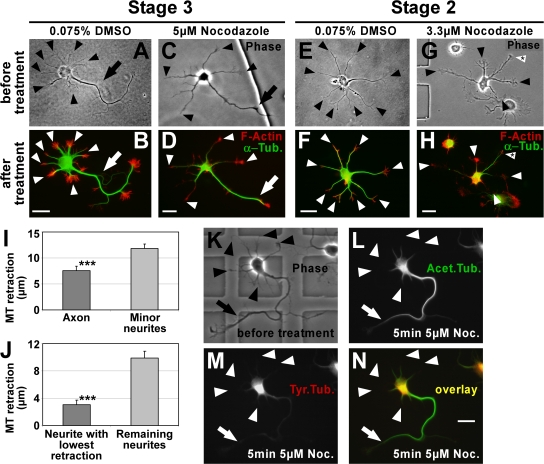
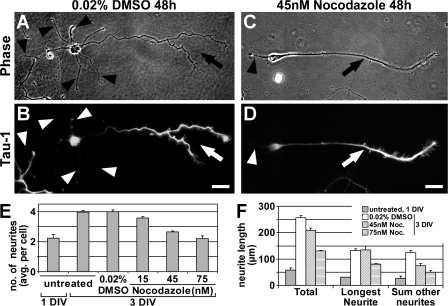
“However, inhibition of microtubule dynamics with low doses of nocodazole has been shown to severely impair the formation of primary dendrites (Witte et al., 2008).”
BackgroundCunha‐Ferreira, I., Chazeau, A., Buijs, R. R., Stucchi, R., Will, L., Pan, X., Adolfs, Y., van der Meer, C., Wolthuis, J. C., Kahn, O. I., et al. (2018) · Cell Reports · doi:10.1016/j.celrep.2018.06.093 · Cited by 112
“Furthermore, the MT-stabilizing drug Taxol was shown to induce the formation of supernumerary axons (Witte et al., 2008).”
BackgroundNovel multi-drug delivery hydrogel using scar-homing liposomes improves spinal cord injury repair
Wang, Q., Zhang, H., Xu, H., Zhao, Y., Li, Z., Li, J., Wang, H., Zhuge, D., Guo, X., Xu, H., et al. (2018) · Theranostics · doi:10.7150/thno.26717 · Cited by 107
“Various drugs, including anti-CSPGs and Nogo-A inhibitors such as ChABC, IN-1, and 7B12, have been used to reduce scarring and inhibitory molecules [36, 56, 57].”
BackgroundLin, P.-C., Chan, P. M., Hall, C., & Manser, E. (2011) · Journal of Biological Chemistry · doi:10.1074/jbc.m111.283580 · Cited by 107
Microtubule-targeting drugs rescue axonal swellings in cortical neurons from spastin knock-out mice
Fassier, C., Couturier‐Tarrade, A., Peris, L., Courageot, S., Mailly, P., Dalard, C., Delga, S., Roblot, N., Lefevre, J., Job, D., et al. (2012) · Disease Models & Mechanisms · doi:10.1242/dmm.008946 · Cited by 106
“…network, we used tubulin/microtubule-targeting drugs at nanomolar concentrations, which are known to only modify microtubule dynamic instability (Jordan and Wilson, 1990; Jordan et al., 1991; Toso et al., 1993; Jordan et al., 1993; Tanaka et al., 1995; Vasquez et al., 1997, Witte et al., 2008).”
Extracellular and Intracellular Signaling for Neuronal Polarity
Namba, T., Funahashi, Y., Nakamuta, S., Xu, C., Takano, T., & Kaibuchi, K. (2015) · Physiological Reviews · doi:10.1152/physrev.00025.2014 · Cited by 111
Lafourcade, C., Ramírez, J. P., Luarte, A., Fernández, A., & Wyneken, Ú. (2016) · Journal of Experimental Neuroscience · doi:10.4137/jen.s39916 · Cited by 117
Metadata
- Authors
- Witte, H., Neukirchen, D., & Bradke, F.
- Affiliations
- Max Planck Institute of Neurobiology (DE)
- Max Planck Society (DE)
- Venue
- The Journal of Cell Biology
- Publisher
- Rockefeller University Press
- Published
- 2008-02-11
- Volume
- 180
- Issue
- 3
- Pages
- 619-632
- ISSN
- 0021-9525 (ISSN-L)
- 1540-8140
- PMC
- PMC2234250
- OpenAlex
- W2084158780
- Cited by
- 564
- References
- 54
- Citations by year
- 2026: 22 · 2025: 21 · 2024: 19 · 2023: 25 · 2022: 35 · 2021: 36 · 2020: 49 · 2019: 27 · 2018: 27 · 2017: 29 · 2016: 38 · 2015: 38 · 2014: 24 · 2013: 24 · 2012: 39
- FWCI
- 15.86
- Type
- journal article
- Language
- en
- Open access
- green
- www.ncbi.nlm.nih.gov
- Licence
- cc-by-nc-sa
- Locations
- The Journal of Cell Biology (publishedVersion)
- PubMed Central (publishedVersion, cc-by-nc-sa)
- PubMed (publishedVersion)
- Max Planck Institute for Plasma Physics (submittedVersion)
- Max Planck Digital Library (submittedVersion)
- MPG.PuRe (Max Planck Society) (submittedVersion)
- Topics
- Life Sciences › Neuroscience › Cellular and Molecular Neuroscience › Axon Guidance and Neuronal Signaling
- Life Sciences › Neuroscience › Developmental Neuroscience › Neurogenesis and neuroplasticity mechanisms
- Life Sciences › Biochemistry, Genetics and Molecular Biology › Cell Biology › Microtubule and mitosis dynamics
- Keywords
- neuronal polarity, axon formation, microtubule stabilization, microtubule dynamics, hippocampal neurons, glycogen synthase kinase-3β, nocodazole, paclitaxel, dendrite formation
- MeSH terms
- Glycogen Synthase Kinase 3 beta, Animals, Cell Differentiation, Cells, Cultured, Central Nervous System, Hippocampus, Microtubules, Neurons, Nocodazole, Neurites, Cell Polarity, Paclitaxel, Protein Serine-Threonine Kinases, Mice, Knockout, Growth Cones, Intercellular Signaling Peptides and Proteins, Glycogen Synthase Kinase 3, Tubulin Modulators, Mice, Rats
About these checks
Registry, retraction, Cites and statistics results are computed, not judged, with one exception: a printed reference that no index lists is read once by a model before it counts as a citation error. Claims are extracted by a model and kept only when their quote appears verbatim in the text; each cited source is then checked, with a model’s help, for whether it says what the claim relies on. Those verdicts can be wrong — read the claim’s quote and the cited source before relying on one.
Statistics and arithmetic are recomputed, not judged.
Confidence bands are shown only for fields calibrated on our annotated test set. None is calibrated yet, so no band is shown.
What counts as a claim ›How we measure confidence ›How we check this ›
Are you an author, or do you see a problem with this page? Request a review
Data sources
Bibliographic data: Semantic Scholar, OpenAlex, Crossref.
Contains information from the Semantic Scholar Academic Graph Datasets, made available under the ODC Attribution License (ODC-BY 1.0).
Semantic Scholar’s data is described in: Kinney, R., et al. (2023). The Semantic Scholar Open Data Platform. arXiv:2301.10140.
