

Microtubule stabilization specifies initial neuronal polarization
Open accessThe DOI matches its Crossref record; 56 of the 56 references it cites were found in a registry or an index.
Abstract
Axon formation is the initial step in establishing neuronal polarity. We examine here the role of microtubule dynamics in neuronal polarization using hippocampal neurons in culture. We see increased microtubule stability along the shaft in a single neurite before axon formation and in the axon of morphologically polarized cells. Loss of polarity or formation of multiple axons after manipulation of neuronal polarity regulators, synapses of amphids defective (SAD) kinases, and glycogen synthase kinase-3β correlates with characteristic changes in microtubule turnover. Consistently, changing the microtubule dynamics is sufficient to alter neuronal polarization. Application of low doses of the microtubule-destabilizing drug nocodazole selectively reduces the formation of future dendrites. Conversely, low doses of the microtubule-stabilizing drug taxol shift polymerizing microtubules from neurite shafts to process tips and lead to the formation of multiple axons. Finally, local stabilization of microtubules using a photoactivatable analogue of taxol induces axon formation from the activated area. Thus, local microtubule stabilization in one neurite is a physiological signal specifying neuronal polarization.
Overview
The claims and statistics of this paper haven’t been checked yet.
Free: it reads the open-access text and checks the first 5 claims that cite a source we can check. Create a free account to check every claim.
Integrity signals
Registry
Cites
Statistics
Figures


Verification
Claims the paper makes
The claims and statistics of this paper haven’t been checked yet.
Free: it reads the open-access text and checks the first 5 claims that cite a source we can check. Create a free account to check every claim.
Claims other papers make about this one
Each is checked against this paper’s own text: does it say what the citing paper says it does?
The source backs part of the claim, not all of it — or backs it for a different population, condition or comparison.
In the citing paper
“Restricted expression of acetylated tubulin near the centrosome defines a stable location for axon growth [77].”
From Abnormal accumulation of extracellular vesicles in hippocampal dystrophic axons and regulation by the primary cilia in Alzheimer's disease (2023) · cites this paper as [77]
Experimental — accuracy not yet measuredIn the citing paper
“Selective microtubule stabilization in one minor process determines axon specification (19) and only after this event, the dendritic microtubule network polarity becomes progressively mixed (18).”
From Axonal transport: Driving synaptic function (2019) · cites this paper as [19]
Self-check
Percentages, sums and reported differences re-computed from the paper’s own numbers.
The self-check needs the paper’s full text.
Citations
Cites
‘Green mice’ as a source of ubiquitous green cells
Okabe, M., Ikawa, M., Kominami, K., Nakanishi, T., & Nishimune, Y. (1997) · FEBS Letters · doi:10.1016/s0014-5793(97)00313-x · Cited by 2,581
GSK-3: tricks of the trade for a multi-tasking kinase
Doble, B. W., & Woodgett, J. R. (2003) · Journal of Cell Science · doi:10.1242/jcs.00384 · Cited by 2,084 · cited 5×
“The online version of this paper contains supplemental material.”
InfluentialThe establishment of polarity by hippocampal neurons in culture.
Dotti, C., Sullivan, C., & Banker, G. (1988) · The Journal of Neuroscience · doi:10.1523/jneurosci.08-04-01454.1988 · Cited by 1,862
The multifaceted roles of glycogen synthase kinase 3β in cellular signaling
Grimes, C. A., & Jope, R. S. (2001) · Progress in Neurobiology · doi:10.1016/s0301-0082(01)00011-9 · Cited by 1,423 · cited 2×
“Taxol-treated 2005 ; Yoshimura et al., 2005 ), which are known modulators of MT stability, yet they have various other cellular functions including the regulation of metabolism, signaling, gene transcription, and endocytosis ( Crump et al., 2001 ; Grimes and Jope, 2001 ).”
Microtubule Acetylation Promotes Kinesin-1 Binding and Transport
Reed, N. A., Cai, D., Blasius, T. L., Jih, G. T., Meyhofer, E., Gaertig, J., & Verhey, K. J. (2006) · Current Biology · doi:10.1016/j.cub.2006.09.014 · Cited by 919 · cited 1×
“…unpolymerized tubulin subunits, cells were simultaneously fi xed and permeabilized in PHEM buffer (60 mM Pipes, 25 mM Hepes, 5 mM EGTA, and 1 mM MgCl) containing 0.25% glutaraldehyde, 3.7% paraformaldehyde, 3.7% sucrose, and 0.1% Triton X-100 (adapted from Smith, 1994 ) and quenched as above.”
InfluentialGSK-3β Regulates Phosphorylation of CRMP-2 and Neuronal Polarity
Yoshimura, T., Kawano, Y., Arimura, N., Kawabata, S., Kikuchi, A., & Kaibuchi, K. (2005) · Cell · doi:10.1016/j.cell.2004.11.012 · Cited by 875 · cited 7×
“The online version of this paper contains supplemental material.”
InfluentialCdc42 regulates GSK-3β and adenomatous polyposis coli to control cell polarity
Etienne-Manneville, S., & Hall, A. (2003) · Nature · doi:10.1038/nature01423 · Cited by 835
CRMP-2 binds to tubulin heterodimers to promote microtubule assembly
Fukata, Y., Itoh, T. J., Kimura, T., Ménager, C., Nishimura, T., Shiromizu, T., Watanabe, H., Inagaki, N., Iwamatsu, A., Hotani, H., et al. (2002) · Nature Cell Biology · doi:10.1038/ncb825 · Cited by 761
Post-translational modifications regulate microtubule function
Westermann, S., & Weber, K. (2003) · Nature Reviews Molecular Cell Biology · doi:10.1038/nrm1260 · Cited by 717 · cited 2×
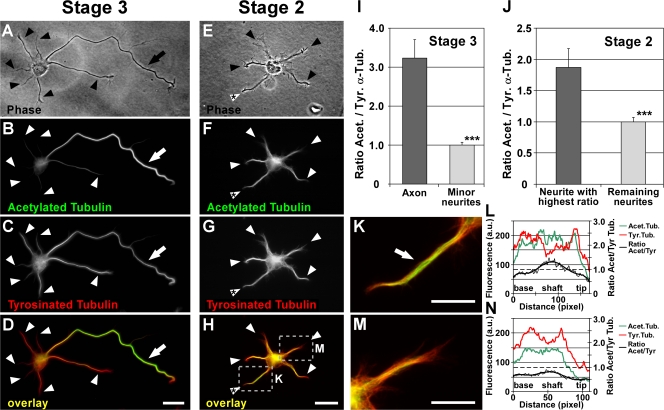
“On average from all stage 3 neurons, the axonal shaft showed a 3.2 ± 0.5-fold ratio increase of the fl uorescence intensities of acetylated versus tyrosinated MTs compared with the shafts of minor neurites (P < 0.001 by t test; Fig.”
InfluentialStepanova, T., Slemmer, J., Hoogenraad, C. C., Lansbergen, G., Dortland, B., De Zeeuw, C. I., Grosveld, F., van Cappellen, G., Akhmanova, A., & Galjart, N. (2003) · The Journal of Neuroscience · doi:10.1523/jneurosci.23-07-02655.2003 · Cited by 698 · cited 2×
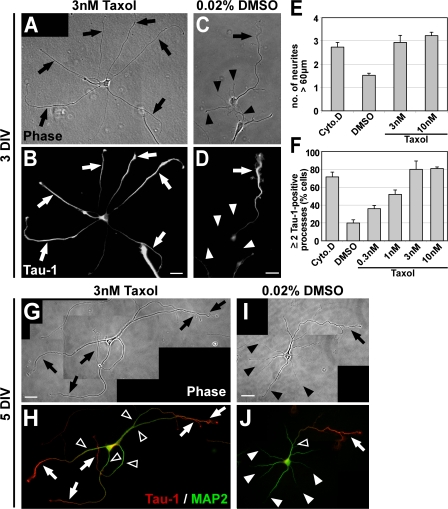
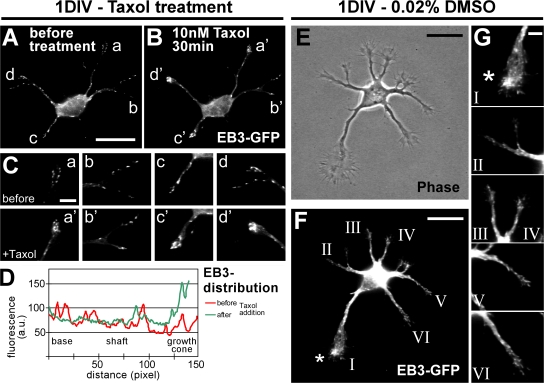
“Taxol application rapidly stabilizes MTs and shifts dynamic MTs to the tips of processes To assess MT dynamics during axon formation, polymerizing MT plus ends were visualized by transfecting neurons with the GFP-tagged MT plus end – binding protein 3 (EB3; Stepanova et al., 2003 ).”
Craig, A. M., & Banker, G. (1994) · Annual Review of Neuroscience · doi:10.1146/annurev.ne.17.030194.001411 · Cited by 676
Neuronal polarity: from extracellular signals to intracellular mechanisms.
Arimura, N., & Kaibuchi, K. (2007) · Nature Reviews Neuroscience · doi:10.1038/nrn2056 · Cited by 655
Uses for JNK: the Many and Varied Substrates of the c-Jun N-Terminal Kinases
Bogoyevitch, M. A., & Kobe, B. (2006) · Microbiology and Molecular Biology Reviews · doi:10.1128/mmbr.00025-06 · Cited by 573 · cited 3×
“Interestingly, the local MT stabilization in morphologically unpolarized neurons, which we observe, also offers an explanation for the increased membrane traffi c that precedes axon formation ( Bradke and Dotti, 1997 ).”
EB1 and APC bind to mDia to stabilize microtubules downstream of Rho and promote cell migration
Wen, Y., Eng, C. H., Schmoranzer, J., Cabrera-Poch, N., Morris, E. J. S., Chen, M., Wallar, B. J., Alberts, A. S., & Gundersen, G. G. (2004) · Nature Cell Biology · doi:10.1038/ncb1160 · Cited by 560
Inhibition of neurite polarity by tau antisense oligonucleotides in primary cerebellar neurons
Caceres, A., & Kosik, K. S. (1990) · Nature · doi:10.1038/343461a0 · Cited by 559 · cited 2×
“The online version of this paper contains supplemental material.”
CRMP-2 induces axons in cultured hippocampal neurons
Inagaki, N., Chihara, K., Arimura, N., Ménager, C., Kawano, Y., Matsuo, N., Nishimura, T., Amano, M., & Kaibuchi, K. (2001) · Nature Neuroscience · doi:10.1038/90476 · Cited by 543
The Role of Local Actin Instability in Axon Formation
Bradke, F., & Dotti, C. G. (1999) · Science · doi:10.1126/science.283.5409.1931 · Cited by 532 · cited 1×
“It has been postulated that this selection is triggered by a positive feedback loop that allows sustained growth of the future axon (for reviews see Bradke and Dotti, 2000 ; Arimura and Kaibuchi, 2007 ).”
Self-citationAsymmetric CLASP-Dependent Nucleation of Noncentrosomal Microtubules at the trans-Golgi Network
Efimov, A., Kharitonov, A., Efimova, N., Loncarek, J., Miller, P. M., Andreyeva, N., Gleeson, P., Galjart, N., Maia, A. R. R., McLeod, I. X., et al. (2007) · Developmental Cell · doi:10.1016/j.devcel.2007.04.002 · Cited by 496 · cited 1×
“Alternatively, a bias could come from CLIP-associated protein (CLASP) – mediated nucleation of noncentrosomal MTs at the Golgi network ( Efi mov et al., 2007 ) or other localized MT-stabilizing factors including EB1 or EB3, adenomatous polyposis coli protein, and mDia ( Nakagawa et al., 2000 ; Wen…”
Both the Establishment and the Maintenance of Neuronal Polarity Require Active Mechanisms
Jiang, H., Guo, W., Liang, X., & Rao, Y. (2005) · Cell · doi:10.1016/j.cell.2004.12.033 · Cited by 494 · cited 5×
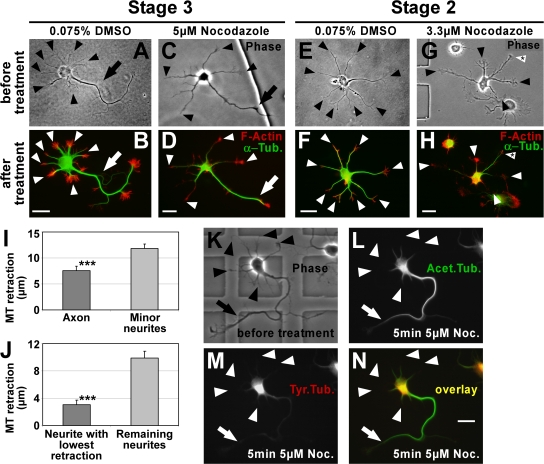
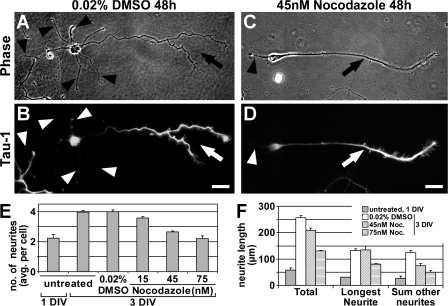
“Moderate MT destabilization selectively reduces the formation of minor neurites SAD kinases and GSK-3 can act upstream of MT dynamics by controlling the affi nity of MAPs ( Jiang et al., 2005 ; Kishi et al., the axon of stage 3 neurons and one minor neurite of a subpopulation of stage 2 neurons.”
InfluentialNanomolar concentrations of nocodazole alter microtubule dynamic instability in vivo and in vitro.
Vasquez, R. J., Howell, B., Yvon, A. M., Wadsworth, P., & Cassimeris, L. (1997) · Molecular Biology of the Cell · doi:10.1091/mbc.8.6.973 · Cited by 490
Experimental observations on the development of polarity by hippocampal neurons in culture.
Goslin, K., & Banker, G. (1989) · The Journal of cell biology · doi:10.1083/jcb.108.4.1507 · Cited by 415
Ertürk, A., Hellal, F., Enes, J., & Bradke, F. (2007) · The Journal of Neuroscience · doi:10.1523/jneurosci.0612-07.2007 · Cited by 413 · cited 1×
“Interestingly, we recently showed that MT organization is a crucial factor for the formation of the two distinct structures after axonal lesioning: actively protruding growth cones and nongrowing retraction bulbs ( Ert ü rk et al., 2007 ).”
Self-citationThe role of microtubule dynamics in growth cone motility and axonal growth.
Tanaka, E., Ho, T., & Kirschner, M. W. (1995) · The Journal of cell biology · doi:10.1083/jcb.128.1.139 · Cited by 367
Mammalian SAD Kinases Are Required for Neuronal Polarization
Kishi, M., Pan, Y. A., Crump, J. G., & Sanes, J. R. (2005) · Science · doi:10.1126/science.1107403 · Cited by 340
Centrosome localization determines neuronal polarity
de Anda, F. C., Pollarolo, G., Da Silva, J. S., Camoletto, P. G., Feiguin, F., & Dotti, C. G. (2005) · Nature · doi:10.1038/nature03811 · Cited by 337 · cited 2×
“Presumably, either an environmental cue ( Adler et al., 2006 ) or an internal signal like centrosome localization ( Zmuda and Rivas, 1998 ; de Anda et al., 2005 ) could initiate a local imbalance inside the MT network.”
Substoichiometric Binding of Taxol Suppresses Microtubule Dynamics
Derry, W. B., Wilson, L., & Jordan, M. A. (1995) · Biochemistry · doi:10.1021/bi00007a014 · Cited by 335 · cited 4×
“Moderate inhibition of GSK-3 , for example, reduces phosphorylationdependent inactivation of specifi c MAPs (for review see Doble and Woodgett, 2003 ; Kim et al., 2006 ), leading to a stabilization of MTs by increased MAP binding.”
InfluentialNakata, T., & Hirokawa, N. (2003) · The Journal of Cell Biology · doi:10.1083/jcb.200302175 · Cited by 313
Bito, H., Furuyashiki, T., Ishihara, H., Shibasaki, Y., Ohashi, K., Mizuno, K., Maekawa, M., Ishizaki, T., & Narumiya, S. (2000) · Neuron · doi:10.1016/s0896-6273(00)81175-7 · Cited by 292 · cited 2×
“…response mediator protein 2; DIV, days in vitro; EB3, end-binding protein 3; GSK-3 , glycogen synthase kinase-3 ; MAP, microtubule-associated protein; MT, microtubule; PAR-1, partitioning defective-1; PI3K, phosphoinositide 3-kinase; SAD, synapses of amphids defective; TSA, trichostatin A.”
Kinesin Is a Candidate for Cross-bridging Microtubules and Intermediate Filaments
Liao, G., & Gundersen, G. G. (1998) · Journal of Biological Chemistry · doi:10.1074/jbc.273.16.9797 · Cited by 287 · cited 1×
“MT-dependent motor proteins show a higher affi nity toward stabilized MTs ( Liao and Gundersen, 1998 ; Reed et al., 2006 ), which is in line with enhanced vesicle transport on stable MTs ( Lin et al., 2002 ; Nakata and Hirokawa, 2003 ).”
Growth Cone Turning Induced by Direct Local Modification of Microtubule Dynamics
Buck, K. B., & Zheng, J. Q. (2002) · The Journal of Neuroscience · doi:10.1523/jneurosci.22-21-09358.2002 · Cited by 285 · cited 2×
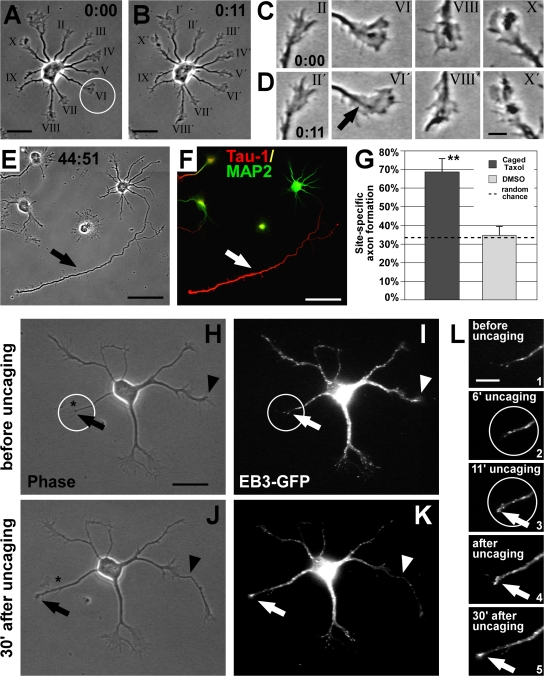
“…, arrowhead). randomly chosen and a membrane-permeable, photoactivatable (caged) form of taxol (1 – 10 nM paclitaxel,2 -[4,5-dimethoxy-2nitrobenzyl]carbonate; Buck and Zheng, 2002 ) was locally activated by applying UV pulses to the selected growth cone or the region directly adjacent to it ( Fig.”
Goold, R. G., Owen, R., & Gordon-Weeks, P. R. (1999) · Journal of Cell Science · doi:10.1242/jcs.112.19.3373 · Cited by 281
Jacobson, C., Schnapp, B., & Banker, G. A. (2006) · Neuron · doi:10.1016/j.neuron.2006.02.005 · Cited by 278 · cited 1×
“Consistent with our fi ndings, the overexpressed kinesin-1 motor domain, which preferably binds to MTs containing markers of lower turnover ( Reed et al., 2006 ), accumulates in the future axon before morphological polarization occurs ( Jacobson et al., 2006 ).”
UNC-6/Netrin induces neuronal asymmetry and defines the site of axon formation
Adler, C. E., Fetter, R. D., & Bargmann, C. I. (2006) · Nature Neuroscience · doi:10.1038/nn1666 · Cited by 274 · cited 2×
“Presumably, either an environmental cue ( Adler et al., 2006 ) or an internal signal like centrosome localization ( Zmuda and Rivas, 1998 ; de Anda et al., 2005 ) could initiate a local imbalance inside the MT network.”
Cdc42 regulates cofilin during the establishment of neuronal polarity.
Garvalov, B. K., Flynn, K. C., Neukirchen, D., Meyn, L., Teusch, N., Wu, X., Brakebusch, C., Bamburg, J. R., & Bradke, F. (2007) · The Journal of Neuroscience · doi:10.1523/jneurosci.3322-07.2007 · Cited by 262 · cited 2×
“The online version of this paper contains supplemental material.”
Self-citationNeuronal Polarity: Vectorial Cytoplasmic Flow Precedes Axon Formation
Bradke, F., & Dotti, C. G. (1997) · Neuron · doi:10.1016/s0896-6273(00)80410-9 · Cited by 239 · cited 3×
“Interestingly, the local MT stabilization in morphologically unpolarized neurons, which we observe, also offers an explanation for the increased membrane traffi c that precedes axon formation ( Bradke and Dotti, 1997 ).”
Self-citationKim, W.-Y., Zhou, F.-Q., Zhou, J., Yokota, Y., Wang, Y.-M., Yoshimura, T., Kaibuchi, K., Woodgett, J. R., Anton, E. S., & Snider, W. D. (2006) · Neuron · doi:10.1016/j.neuron.2006.10.031 · Cited by 235 · cited 4×
“Moderate inhibition of GSK-3 , for example, reduces phosphorylationdependent inactivation of specifi c MAPs (for review see Doble and Woodgett, 2003 ; Kim et al., 2006 ), leading to a stabilization of MTs by increased MAP binding.”
InfluentialEstablishing cell polarity in development
Wodarz, A. (2002) · Nature Cell Biology · doi:10.1038/ncb0202-e39 · Cited by 219 · cited 2×
“Another example is the SAD kinases, homologues of the conserved partitioning defective-1 (PAR-1) serine/threonine kinase, which acts in a variety of polarity events in species ranging from nematodes and fl ies to mammals ( Wodarz, 2002 ).”
PIP3 is involved in neuronal polarization and axon formation
Ménager, C., Arimura, N., Fukata, Y., & Kaibuchi, K. (2004) · Journal of Neurochemistry · doi:10.1046/j.1471-4159.2004.02302.x · Cited by 211 · cited 1×
“…CLIP-associated protein (CLASP) – mediated nucleation of noncentrosomal MTs at the Golgi network ( Efi mov et al., 2007 ) or other localized MT-stabilizing factors including EB1 or EB3, adenomatous polyposis coli protein, and mDia ( Nakagawa et al., 2000 ; Wen et al., 2004 ; Votin et al., 2005 ).”
The Rac Activator DOCK7 Regulates Neuronal Polarity through Local Phosphorylation of Stathmin/Op18
Watabe-Uchida, M., John, K. A., Janas, J. A., Newey, S. E., & Van Aelst, L. (2006) · Neuron · doi:10.1016/j.neuron.2006.07.020 · Cited by 208 · cited 1×
“For instance, overexpression of the Rac activator dedicator of cytokinesis 7 (DOCK7) induces multiple axons, which may be caused by DOCK7-mediated down-regulation of the MT-depolymerizing activity of stathmin ( Watabe-Uchida et al., 2006 ).”
Establishment of neuronal polarity: lessons from cultured hippocampal neurons
Bradke, F., & Dotti, C. G. (2000) · Current Opinion in Neurobiology · doi:10.1016/s0959-4388(00)00124-0 · Cited by 207 · cited 2×
“…, arrowhead). randomly chosen and a membrane-permeable, photoactivatable (caged) form of taxol (1 – 10 nM paclitaxel,2 -[4,5-dimethoxy-2nitrobenzyl]carbonate; Buck and Zheng, 2002 ) was locally activated by applying UV pulses to the selected growth cone or the region directly adjacent to it ( Fig.”
Self-citationEvidence for the Involvement of Tiam1 in Axon Formation
Kunda, P., Paglini, G., Quiroga, S., Kosik, K., & Cáceres, A. (2001) · The Journal of Neuroscience · doi:10.1523/jneurosci.21-07-02361.2001 · Cited by 192 · cited 2×
“The online version of this paper contains supplemental material.”
The SAD-1 Kinase Regulates Presynaptic Vesicle Clustering and Axon Termination
Crump, J. G., Zhen, M., Jin, Y., & Bargmann, C. I. (2001) · Neuron · doi:10.1016/s0896-6273(01)00184-2 · Cited by 186 · cited 2×
“Presumably, either an environmental cue ( Adler et al., 2006 ) or an internal signal like centrosome localization ( Zmuda and Rivas, 1998 ; de Anda et al., 2005 ) could initiate a local imbalance inside the MT network.”
Dehmelt, L., Smart, F. M., Ozer, R. S., & Halpain, S. (2003) · The Journal of Neuroscience · doi:10.1523/jneurosci.23-29-09479.2003 · Cited by 172 · cited 1×
“Thus, netrin-induced axon formation may function, at least in part, via regulation of MT dynamics, which is in line with the netrin turning response depending on MTs ( Buck and Zheng, 2002 ) and MAP1B ( Del Rio et al., 2004 ).”
Activated c-Jun N-Terminal Kinase Is Required for Axon Formation
Oliva, A. A., Atkins, C. M., Copenagle, L., & Banker, G. A. (2006) · The Journal of Neuroscience · doi:10.1523/jneurosci.2625-06.2006 · Cited by 158
Lin, S. X. H., Gundersen, G. G., & Maxfield, F. R. (2002) · Molecular Biology of the Cell · doi:10.1091/mbc.01-05-0224 · Cited by 154
Zmuda, J. F., & Rivas, R. J. (1998) · Cell Motility and the Cytoskeleton · doi:10.1002/(sici)1097-0169(1998)41:1<18::aid-cm2>3.0.co;2-b · Cited by 136 · cited 2×
“Presumably, either an environmental cue ( Adler et al., 2006 ) or an internal signal like centrosome localization ( Zmuda and Rivas, 1998 ; de Anda et al., 2005 ) could initiate a local imbalance inside the MT network.”
MAP1B Is Required for Netrin 1 Signaling in Neuronal Migration and Axonal Guidance
del Río, J. A., González-Billault, C. E., Ureña, J. M., Jiménez, E. M., Barallobre, M. J., Pascual, M., Pujadas, L., Simó, S., Torre, A. L., Wandosell, F. G., et al. (2004) · Current Biology · doi:10.1016/j.cub.2004.04.046 · Cited by 135 · cited 2×
“When we treated neurons with very low concentrations of taxol that favor MT polymerization yet do not block MT dynamics completely ( Derry et al., 1995 ), we found that MT stabilization itself is suffi cient to induce axon formation.”
Nakagawa, H., Koyama, K., Murata, Y., Monden, M., Akiyama, T., & Nakamura, Y. (2000) · Oncogene · doi:10.1038/sj.onc.1203308 · Cited by 134 · cited 1×
“…CLIP-associated protein (CLASP) – mediated nucleation of noncentrosomal MTs at the Golgi network ( Efi mov et al., 2007 ) or other localized MT-stabilizing factors including EB1 or EB3, adenomatous polyposis coli protein, and mDia ( Nakagawa et al., 2000 ; Wen et al., 2004 ; Votin et al., 2005 ).”
Zmuda, J. F., & Rivas, R. J. (1998) · Cell Motility and the Cytoskeleton · doi:10.1002/(sici)1097-0169(1998)41:1<1::aid-cm1>3.0.co;2-j · Cited by 126
The PI3K‐Akt pathway promotes microtubule stabilization in migrating fibroblasts
Onishi, K., Higuchi, M., Asakura, T., Masuyama, N., & Gotoh, Y. (2007) · Genes to Cells · doi:10.1111/j.1365-2443.2007.01071.x · Cited by 101 · cited 1×
“Interestingly, asymmetrical PI3K signaling itself plays an important role in neuronal polarization ( Menager et al., 2004 ) and promotes MT stabilization in migrating fi broblasts ( Onishi et al., 2007 ).”
Neurite outgrowth involves adenomatous polyposis coli protein and β-catenin
Votin, V., Nelson, W. J., & Barth, A. I. M. (2005) · Journal of Cell Science · doi:10.1242/jcs.02679 · Cited by 101 · cited 1×
“…CLIP-associated protein (CLASP) – mediated nucleation of noncentrosomal MTs at the Golgi network ( Efi mov et al., 2007 ) or other localized MT-stabilizing factors including EB1 or EB3, adenomatous polyposis coli protein, and mDia ( Nakagawa et al., 2000 ; Wen et al., 2004 ; Votin et al., 2005 ).”
Smith, C. (1994) · Journal of Neuroscience · doi:10.1523/jneurosci.14-01-00384.1994 · Cited by 85 · cited 2×
“Taxol application rapidly stabilizes MTs and shifts dynamic MTs to the tips of processes To assess MT dynamics during axon formation, polymerizing MT plus ends were visualized by transfecting neurons with the GFP-tagged MT plus end – binding protein 3 (EB3; Stepanova et al., 2003 ).”
Shaping the actin cytoskeleton using microtubule tips
Basu, R., & Chang, F. (2006) · Current Opinion in Cell Biology · doi:10.1016/j.ceb.2006.12.012 · Cited by 82 · cited 1×
“…cytoskeleton and its modulators, including Rho, Cdc42, profi lin, cofi lin, and T-lymphoma and metastasis 1 protein, which perform an important regulatory function in the process of neuronal polarization ( Bradke and Dotti, 1999 ; Bito et al., 2000 ; Kunda et al., 2001 ; Garvalov et al., 2007 ).”
Intracellular organization of hippocampal neurons during the development of neuronal polarity
Dotti, C. G., & Banker, G. A. (1991) · Journal of Cell Science · doi:10.1242/jcs.1991.supplement_15.11 · Cited by 77 · cited 10×
“In contrast, in vehicle (DMSO)-treated cells, UV pulses did not infl uence randomized axon formation (32.1 ± 7.8% observed vs. 34.9 ± 1.7% D ow nloaded from http://rupress.org/jcb/article-pdf/180/3/619/1334998/jcb_200707042.pdf by guest on 07 M arch 2022 JCB • VOLUME 180 • NUMBER 3 • 2008 626 Axon formation correlates…”
InfluentialOinuma, I., Katoh, H., & Negishi, M. (2006) · Journal of Biological Chemistry · doi:10.1074/jbc.m607979200 · Cited by 68 · cited 1×
“Interestingly, the small GTPase R-Ras, which can inhibit GSK-3 via PI3K and Akt-kinase, is selectively localized to a single neurite of unpolarized neurons ( Oinuma et al., 2007 ) and might therefore account for local GSK-3 inactivation.”
Arregui, C. O., Busciglio, J. A., Cáceres, A., & Barra, H. S. (1991) · Journal of Neuroscience Research · doi:10.1002/jnr.490280204 · Cited by 56 · cited 3×
“Earlier studies have yielded divergent results concerning the distribution of stabilized MTs in developing neuronal cells ( Arregui et al., 1991 ; Dotti and Banker, 1991 ).”
Research works printed but not linked: 3
- 1991, J. Cell Sci. Suppl., 15, 75
- 2005, Cell., 120, 123
- 2003, Nat. Rev. Mol. Cell Biol., 4, 938
Cited by
Kinesin superfamily motor proteins and intracellular transport
Hirokawa, N., Noda, Y., Tanaka, Y., & Niwa, S. (2009) · Nature Reviews Molecular Cell Biology · doi:10.1038/nrm2774 · Cited by 1,859
“, and the inhibition of microtubule dynamics in developing neurons affects neuronal polarit”
BackgroundMicrotubule assembly, organization and dynamics in axons and dendrites
Conde, C., & Cáceres, A. (2009) · Nature Reviews Neuroscience · doi:10.1038/nrn2631 · Cited by 1,086
GSK3 signalling in neural development
Hur, E.-M., & Zhou, F.-Q. (2010) · Nature Reviews Neuroscience · doi:10.1038/nrn2870 · Cited by 838
Building the Neuronal Microtubule Cytoskeleton
Kapitein, L. C., & Hoogenraad, C. C. (2015) · Neuron · doi:10.1016/j.neuron.2015.05.046 · Cited by 650
Actin–microtubule crosstalk in cell biology
Dogterom, M., & Koenderink, G. H. (2019) · Nature Reviews Molecular Cell Biology · doi:10.1038/s41580-018-0067-1 · Cited by 574
Metadata
- Authors
- Witte, H., Neukirchen, D., & Bradke, F.
- Affiliations
- Max Planck Institute of Neurobiology (DE)
- Max Planck Society (DE)
- Venue
- The Journal of Cell Biology
- Publisher
- Rockefeller University Press
- Published
- 2008-02-11
- Volume
- 180
- Issue
- 3
- Pages
- 619-632
- ISSN
- 0021-9525 (ISSN-L)
- 1540-8140
- PMC
- PMC2234250
- OpenAlex
- W2084158780
- Cited by
- 564
- References
- 54
- Citations by year
- 2026: 22 · 2025: 21 · 2024: 19 · 2023: 25 · 2022: 35 · 2021: 36 · 2020: 49 · 2019: 27 · 2018: 27 · 2017: 29 · 2016: 38 · 2015: 38 · 2014: 24 · 2013: 24 · 2012: 39
- FWCI
- 15.86
- Type
- journal article
- Language
- en
- Open access
- green
- www.ncbi.nlm.nih.gov
- Licence
- cc-by-nc-sa
- Locations
- The Journal of Cell Biology (publishedVersion)
- PubMed Central (publishedVersion, cc-by-nc-sa)
- PubMed (publishedVersion)
- Max Planck Institute for Plasma Physics (submittedVersion)
- Max Planck Digital Library (submittedVersion)
- MPG.PuRe (Max Planck Society) (submittedVersion)
- Topics
- Life Sciences › Neuroscience › Cellular and Molecular Neuroscience › Axon Guidance and Neuronal Signaling
- Life Sciences › Neuroscience › Developmental Neuroscience › Neurogenesis and neuroplasticity mechanisms
- Life Sciences › Biochemistry, Genetics and Molecular Biology › Cell Biology › Microtubule and mitosis dynamics
- Keywords
- neuronal polarity, axon formation, microtubule stabilization, microtubule dynamics, hippocampal neurons, glycogen synthase kinase-3β, nocodazole, paclitaxel, dendrite formation
- MeSH terms
- Glycogen Synthase Kinase 3 beta, Animals, Cell Differentiation, Cells, Cultured, Central Nervous System, Hippocampus, Microtubules, Neurons, Nocodazole, Neurites, Cell Polarity, Paclitaxel, Protein Serine-Threonine Kinases, Mice, Knockout, Growth Cones, Intercellular Signaling Peptides and Proteins, Glycogen Synthase Kinase 3, Tubulin Modulators, Mice, Rats
About these checks
Registry, retraction, Cites and statistics results are computed, not judged, with one exception: a printed reference that no index lists is read once by a model before it counts as a citation error. Claims are extracted by a model and kept only when their quote appears verbatim in the text; each cited source is then checked, with a model’s help, for whether it says what the claim relies on. Those verdicts can be wrong — read the claim’s quote and the cited source before relying on one.
Statistics and arithmetic are recomputed, not judged.
Confidence bands are shown only for fields calibrated on our annotated test set. None is calibrated yet, so no band is shown.
What counts as a claim ›How we measure confidence ›How we check this ›
Are you an author, or do you see a problem with this page? Request a review
Data sources
Bibliographic data: Semantic Scholar, OpenAlex, Crossref.
Contains information from the Semantic Scholar Academic Graph Datasets, made available under the ODC Attribution License (ODC-BY 1.0).
Semantic Scholar’s data is described in: Kinney, R., et al. (2023). The Semantic Scholar Open Data Platform. arXiv:2301.10140.
