

The DOI matches its Crossref record; 1 of the 1 references it cites were found in a registry or an index.
Activated Ras Signals Developmental Progression of Recombinase-activating Gene (RAG)-deficient Pro-B Lymphocytes
Abstract
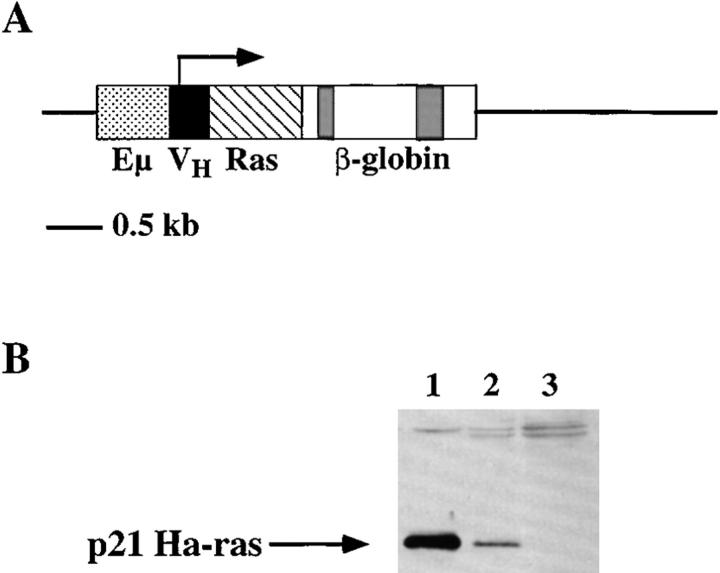
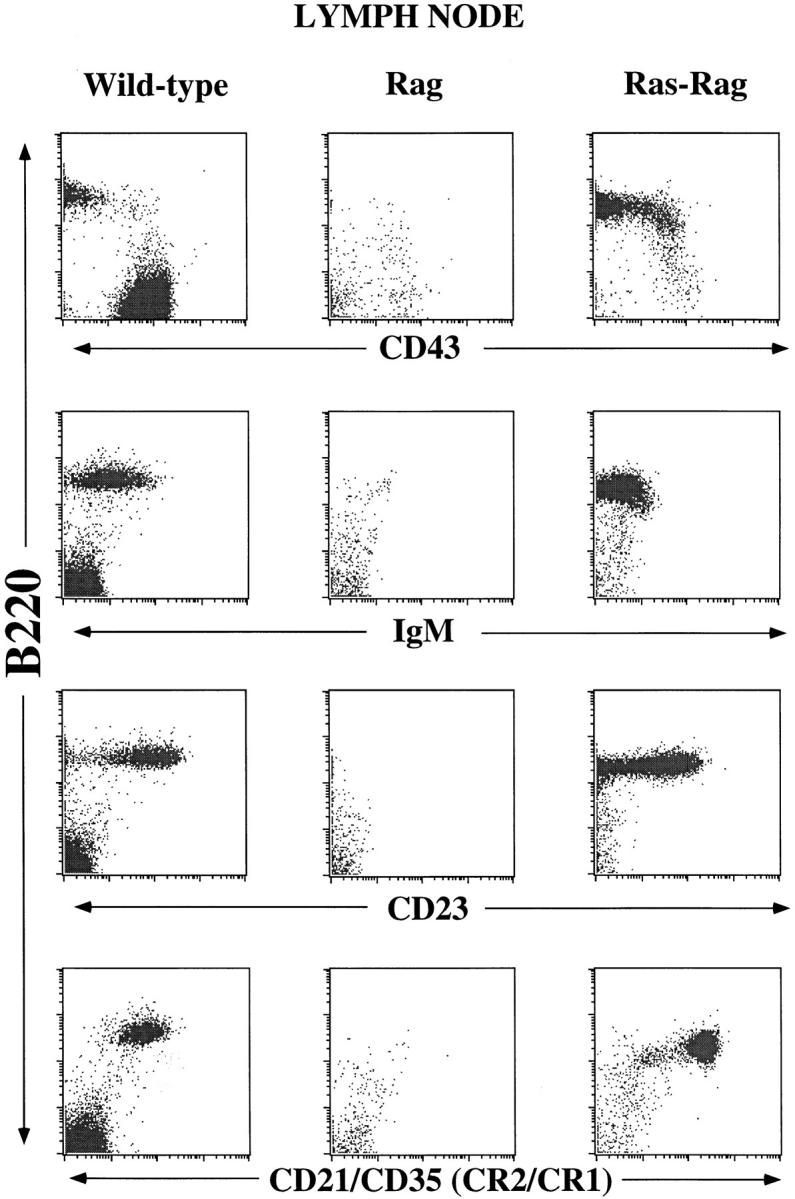
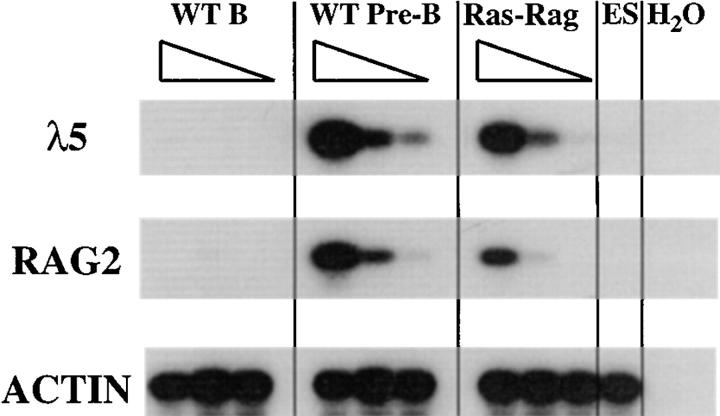
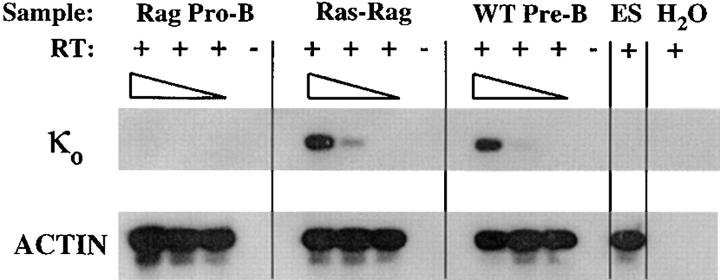
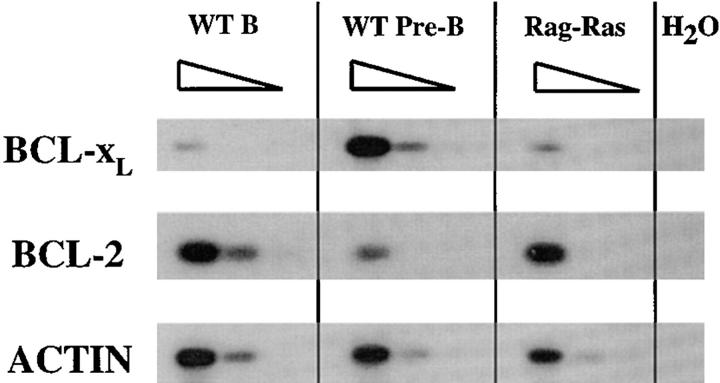
To elucidate the intracellular pathways that mediate early B cell development, we directed expression of activated Ras to the B cell lineage in the context of the recombination-activating gene 1 (RAG1)-deficient background (referred to as Ras–RAG). Similar to the effects of an immunoglobulin (Ig) μ heavy chain (HC) transgene, activated Ras caused progression of RAG1–deficient progenitor (pro)-B cells to cells that shared many characteristics with precursor (pre)-B cells, including downregulation of surface CD43 expression plus expression of λ5, RAG2, and germline κ locus transcripts. However, these Ras–RAG pre-B cells also upregulated surface markers characteristic of more mature B cell stages and populated peripheral lymphoid tissues, with an overall phenotype reminiscent of B lineage cells generated in a RAG- deficient background as a result of expression of an Ig μ HC together with a Bcl-2 transgene. Taken together, these findings suggest that activated Ras signaling in pro-B cells induces developmental progression by activating both differentiation and survival signals.
Overview
The claims and statistics of this paper haven’t been checked yet.
Run the check — free, no account needed. It reads the open-access text and checks the sources it cites.
Integrity signals
Registry
Cites
Statistics
Figures
Verification
Claims the paper makes
The claims and statistics of this paper haven’t been checked yet.
Run the check — free, no account needed. It reads the open-access text and checks the sources it cites.
Claims other papers make about this one
Each is checked against this paper’s own text: does it say what the citing paper says it does?
The cited source doesn’t support the claim as written.
In the citing paper
“The Rag-1−/− mutant B cells lack Ig H chain genes but display extensive light chain rearrangement (87”
From AKT Induces Transcriptional Activity of PU.1 through Phosphorylation-mediated Modifications within Its Transactivation Domain (2001) · cites this paper as [87]
Checked by a reasoning model — may be wrong.
Experimental — accuracy not yet measuredThe cited source says what the claim attributes to it.
In the citing paper
“In fact, activated Ras signals are sufficient to promote the differentiation of Rag-1−/−mutant pro-B cells to B cells.”
From AKT Induces Transcriptional Activity of PU.1 through Phosphorylation-mediated Modifications within Its Transactivation Domain (2001) · cites this paper as [87]
Self-check
Percentages, sums and reported differences re-computed from the paper’s own numbers.
The self-check needs the paper’s full text.
Citations
Cites
Phosphatidylinositol-3-OH kinase direct target of Ras
Rodriguez-Viciana, P., Warne, P. H., Dhand, R., Vanhaesebroeck, B., Gout, I., Fry, M. J., Waterfield, M. D., & Downward, J. (1994) · Nature · doi:10.1038/370527a0 · Cited by 1,954
Research works printed but not linked: 51
- Willerford, 1996, Developmental regulation of V(D)J recombination and lymphocyte differentiation, Curr Opin Genet Dev, 6, 603, 10.1016/S0959-437X(96)80090-6 · DOI
- Karasuyama, 1996, Surrogate light chain in B cell development, Adv Immunol, 63, 1, 10.1016/S0065-2776(08)60853-6 · DOI
- Kitamura, 1991, A B cell-deficient mouse by targeted disruption of the membrane exon of the immunoglobulin μ gene, Nature, 350, 423, 10.1038/350423a0 · DOI · Paper page
- Shinkai, 1992, RAG-2-deficient mice lack mature lymphocytes owing to inability to initiate V(D)J rearrangement, Cell, 68, 855, 10.1016/0092-8674(92)90029-C · DOI
- Mombaerts, 1992, RAG-1-deficient mice have no mature B and T lymphocytes, Cell, 68, 869, 10.1016/0092-8674(92)90030-G · DOI
- Young, 1994, Influence of immunoglobulin heavy- and light-chain expression on B-cell differentiation, Genes Dev, 8, 1043, 10.1101/gad.8.9.1043 · DOI
- Spanopoulou, 1994, Functional immunoglobulin transgenes guide ordered B-cell differentiation in Rag-1-deficient mice, Genes Dev, 8, 1030, 10.1101/gad.8.9.1030 · DOI
- Reth, 1989, Antigen receptor tail clue, Nature, 338, 383, 10.1038/338383b0 · DOI
- Gong, 1996, Regulation of an early developmental checkpoint in the B cell pathway by Igβ, Science, 272, 411, 10.1126/science.272.5260.411 · DOI · Paper page
- Torres, 1996, Aberrant B cell development and immune response in mice with a compromised BCR complex, Science, 272, 1804, 10.1126/science.272.5269.1804 · DOI · Paper page
- Cheng, 1995, Syk tyrosine kinase required for mouse viability and B-cell development, Nature, 378, 303, 10.1038/378303a0 · DOI · Paper page
- Turner, 1995, Perinatal lethality and blocked B-cell development in mice lacking the tyrosine kinase Syk, Nature, 378, 298, 10.1038/378298a0 · DOI · Paper page
- DeFranco, 1997, The complexity of signaling pathways activated by the BCR, Curr Opin Immunol, 9, 296, 10.1016/S0952-7915(97)80074-X · DOI · Paper page
- Boguski, 1993, Proteins regulating Ras and its relatives, Nature, 366, 643, 10.1038/366643a0 · DOI
- Kazlauskas, 1994, Receptor tyrosine kinases and their targets, Curr Opin Genet Dev, 4, 5, 10.1016/0959-437X(94)90085-X · DOI
- Swat, 1996, Activated Ras signals differentiation and expansion of CD4+8+thymocytes, Proc Natl Acad Sci USA, 93, 4683, 10.1073/pnas.93.10.4683 · DOI
- Lazarus, 1993, Antigen-induced B lymphocyte activation involves the p21rasand ras GAP signaling pathway, J Exp Med, 178, 1765, 10.1084/jem.178.5.1765 · DOI
- Harwood, 1993, B cell antigen receptor cross-linking triggers rapid protein kinase C independent activation of p21ras1, J Immunol, 151, 4513, 10.4049/jimmunol.151.9.4513 · DOI
- Blankenstein, 1988, A retroviral expression vector containing murine immunoglobulin heavy chain promoter/enhancer, Nucleic Acids Res, 16, 10939, 10.1093/nar/16.22.10939 · DOI
- Shibuya, 1992, Oncogenic Ras triggers the activation of 42-kDa mitogen-activated protein kinase in extracts of quiescent Xenopus oocytes, Proc Natl Acad Sci USA, 89, 9831, 10.1073/pnas.89.20.9831 · DOI
- Chen, 1993, RAG-2-deficient blastocyst complementation: an assay of gene function in lymphocyte development, Proc Natl Acad Sci USA, 90, 4528, 10.1073/pnas.90.10.4528 · DOI
- Young, 1997, Constitutive Bcl-2 expression during immunoglobulin heavy chain-promoted B cell differentiation expands novel precursor B cells, Immunity, 6, 23, 10.1016/S1074-7613(00)80239-3 · DOI
- Li, 1993, The regulated expression of B lineage associated genes during B cell differentiation in bone marrow and fetal liver, J Exp Med, 178, 951, 10.1084/jem.178.3.951 · DOI
- Schneider, 1997, Bcl-x protects primary B cells against Fas-mediated apoptosis, J Immunol, 159, 4834, 10.4049/jimmunol.159.10.4834 · DOI
- Schlissel, 1989, Activation of immunoglobulin kappa gene rearrangement correlates with induction of germline kappa gene transcription, Cell, 58, 1001, 10.1016/0092-8674(89)90951-3 · DOI
- Gorman, 1996, The Igκ 3′ enhancer influences the ratio of Igκ versus Igλ B lymphocytes, Immunity, 5, 241, 10.1016/S1074-7613(00)80319-2 · DOI
- Leon, 1987, Differential expression of the ras gene family in mice, Mol Cell Biol, 7, 1535
- Grawunder, 1995, Down-regulation of RAG1 and RAG2 gene expression in preB cells after functional immunoglobulin heavy chain rearrangement, Immunity, 3, 601, 10.1016/1074-7613(95)90131-0 · DOI
- Alt, 1981, Organization and reorganization of immunoglobulin genes in A-MuLV-transformed cells: rearrangement of heavy but not light chain genes, Cell, 27, 381, 10.1016/0092-8674(81)90421-9 · DOI
- Ritchie, 1984, Allelic exclusion and control of endogenous immunoglobulin gene rearrangement in κ transgenic mice, Nature, 312, 517, 10.1038/312517a0 · DOI
- Reth, 1985, Regulated progression of a cultured pre-B cell line to the B cell stage, Nature, 317, 353, 10.1038/317353a0 · DOI
- Reth, 1987, Activation of V kappa gene rearrangement in pre-B cells follows the expression of membrane-bound immunoglobulin heavy chains, EMBO (Eur Mol Biol Organ) J, 6, 3299, 10.1002/j.1460-2075.1987.tb02649.x · DOI
- Nussenzweig, 1987, Allelic exclusion in transgenic mice that express the membrane form of immunoglobulin μ, Science, 236, 816, 10.1126/science.3107126 · DOI
- Tedder, 1997, CD22, a B lymphocyte-specific adhesion molecule that regulates antigen receptor signaling, Annu Rev Immunol, 15, 481, 10.1146/annurev.immunol.15.1.481 · DOI
- Tedder, 1997, The CD19-CD21 complex regulates signal transduction thresholds governing humoral immunity and autoimmunity, Immunity, 6, 107, 10.1016/S1074-7613(00)80418-5 · DOI
- Tarlinton, 1997, Continued differentiation during B lymphopoiesis requires signals in addition to cell survival, Int Immunol, 9, 1481, 10.1093/intimm/9.10.1481 · DOI
- Merino, 1994, Developmental regulation of the Bcl-2 protein and susceptibility to cell death in B lymphocytes, EMBO (Eur Mol Biol Organ) J, 13, 683, 10.1002/j.1460-2075.1994.tb06307.x · DOI
- Choi, 1996, Expression of bcl-x during mouse B cell differentiation and following activation by various stimuli, Eur J Immunol, 26, 676, 10.1002/eji.1830260325 · DOI
- Hikida, 1996, Reexpression of RAG-1 and RAG-2 genes in activated mature mouse B cells, Science, 274, 2092, 10.1126/science.274.5295.2092 · DOI
- Han, 1996, Neoteny in lymphocytes: Rag1 and Rag2 expression in germinal center B cells, Science, 274, 2094, 10.1126/science.274.5295.2094 · DOI
- Han, 1997, V(D)J recombinase activity in a subset of germinal center B lymphocytes, Science, 278, 301, 10.1126/science.278.5336.301 · DOI
- Kelsoe, 1995, In situ studies of the germinal center reaction, Adv Immunol, 60, 267, 10.1016/S0065-2776(08)60587-8 · DOI
- Marshall, 1995, Specificity of receptor tyrosine kinase signaling: transient versus sustained extracellular signal-regulated kinase activation, Cell, 80, 179, 10.1016/0092-8674(95)90401-8 · DOI · Paper page
- Su, 1996, Mitogen-activated protein kinase cascades and regulation of gene expression, Curr Opin Immunol, 8, 402, 10.1016/S0952-7915(96)80131-2 · DOI · Paper page
- Rodriguez-Viciana, 1996, Activation of phosphoinositide 3-kinase by interaction with Ras and by point mutation, EMBO (Eur Mol Biol Organ) J, 15, 2442, 10.1002/j.1460-2075.1996.tb00602.x · DOI
- Reif, 1998, Networking Rho family GTPases in lymphocytes, Immunity, 8, 395, 10.1016/S1074-7613(00)80545-2 · DOI
- Iritani, 1997, Control of B cell development by Ras-mediated activation of Raf, EMBO (Eur Mol Biol Organ) J, 16, 7019, 10.1093/emboj/16.23.7019 · DOI
- Crompton, 1996, The MAP kinase pathway controls differentiation from double-negative to double-positive thymocyte, Cell, 86, 243, 10.1016/S0092-8674(00)80096-3 · DOI
- Swan, 1995, Involvement of p21ras distinguishes positive and negative selection in thymocytes, EMBO (Eur Mol Biol Organ) J, 14, 276, 10.1002/j.1460-2075.1995.tb07001.x · DOI
- Alberola-Ila, 1995, Selective requirement for MAP kinase activation in thymocyte differentiation, Nature, 373, 620, 10.1038/373620a0 · DOI
- Kisielow, 1995, Development and selection of T cells: facts and puzzles, Adv Immunol, 58, 87, 10.1016/S0065-2776(08)60620-3 · DOI
Cited by
Sorted by citations
Oh-hora, M., Johmura, S., Hashimoto, A., Hikida, M., & Kurosaki, T. (2003) · The Journal of Experimental Medicine · doi:10.1084/jem.20031547 · Cited by 113
Aiba, Y., Oh-hora, M., Kiyonaka, S., Kimura, Y., Hijikata, A., Mori, Y., & Kurosaki, T. (2004) · Proceedings of the National Academy of Sciences · doi:10.1073/pnas.0407468101 · Cited by 79
Rieske, P., & Pongubala, J. R. (2001) · Journal of Biological Chemistry · doi:10.1074/jbc.m007482200 · Cited by 54
Metadata
- Authors
- Shaw, A. C., Swat, W., Ferrini, R., Davidson, L., & Alt, F. W.
- Affiliations
- From the *Howard Hughes Medical Institute, Boston, Massachusetts 02115; ‡The Children's Hospital, Boston, Massachusetts 02115; the §Center for Blood Research and the ‖Department of Genetics, Harvard Medical School, Boston, Massachusetts 02115; and the ¶Infectious Disease Unit, Massachusetts General Hospital, Boston, Massachusetts 02114
- Venue
- The Journal of Experimental Medicine
- Publisher
- Rockefeller University Press
- Published
- 1999-01-04
- Volume
- 189
- Issue
- 1
- Pages
- 123-129
- ISSN
- 0022-1007
- 1540-9538
- PMC
- PMC1887686
- Cited by
- 75
- References
- 1
- Language
- en
About these checks
Registry, retraction, Cites and statistics results are computed, not judged, with one exception: a printed reference that no index lists is read once by a model before it counts as a citation error. Claims are extracted by a model and kept only when their quote appears verbatim in the text; each cited source is then checked, with a model’s help, for whether it says what the claim relies on. Those verdicts can be wrong — read the claim’s quote and the cited source before relying on one.
Statistics and arithmetic are recomputed, not judged.
Confidence bands are shown only for fields calibrated on our annotated test set. None is calibrated yet, so no band is shown.
What counts as a claim ›How we measure confidence ›How we check this ›
Are you an author, or do you see a problem with this page? Request a review
