

The DOI matches its Crossref record; 41 of the 41 references it cites were found in a registry or an index.
Broadly targeted human cytomegalovirus-specific CD4 + and CD8 + T cells dominate the memory compartments of exposed subjects
Open accessAbstract
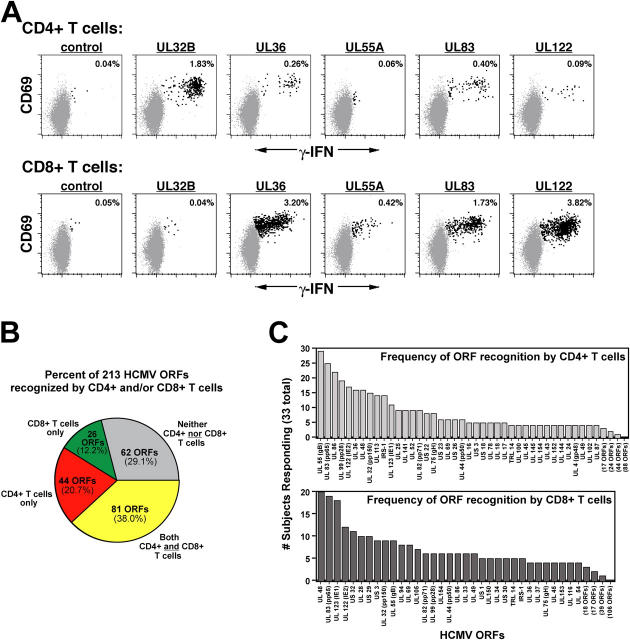
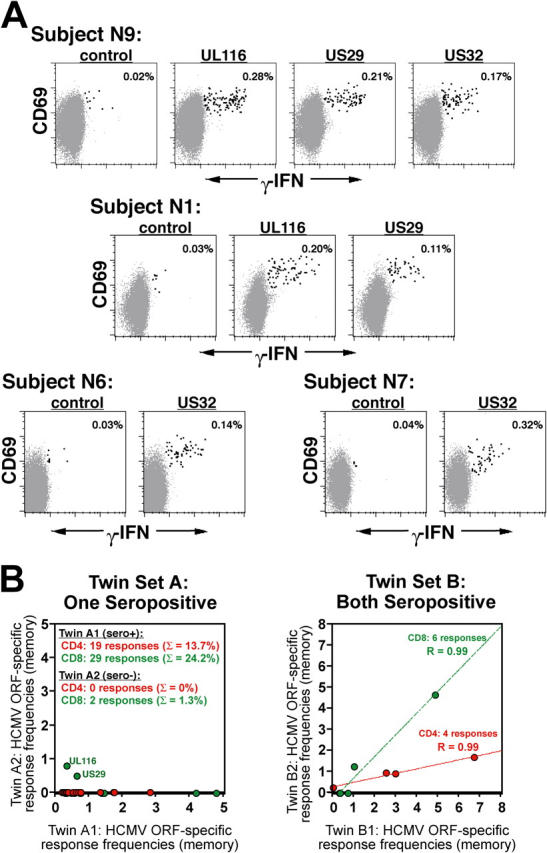
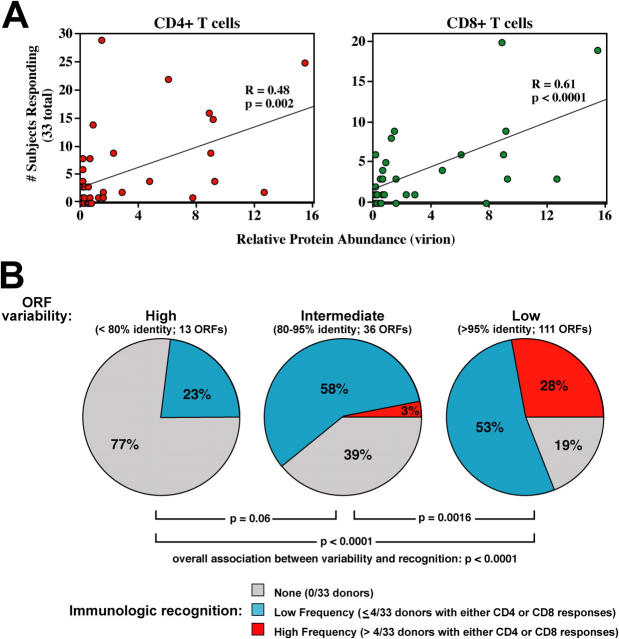
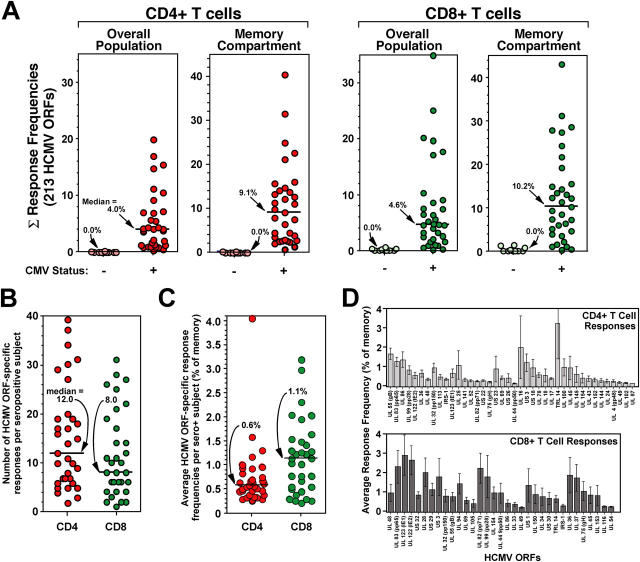
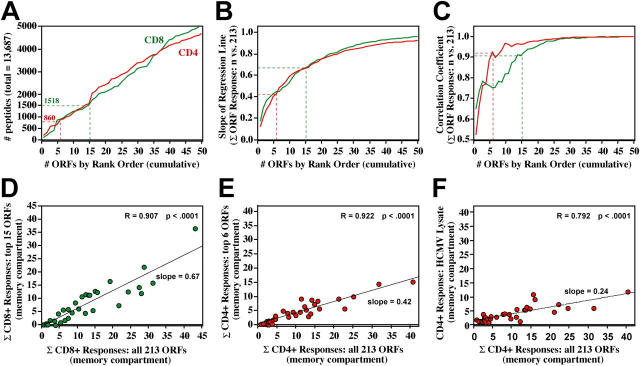
Human cytomegalovirus (HCMV) infections of immunocompetent hosts are characterized by a dynamic, life-long interaction in which host immune responses, particularly of T cells, restrain viral replication and prevent disease but do not eliminate the virus or preclude transmission. Because HCMV is among the largest and most complex of known viruses, the T cell resources committed to maintaining this balance have never been characterized completely. Here, using cytokine flow cytometry and 13,687 overlapping 15mer peptides comprising 213 HCMV open reading frames (ORFs), we found that 151 HCMV ORFs were immunogenic for CD4+ and/or CD8+ T cells, and that ORF immunogenicity was influenced only modestly by ORF expression kinetics and function. We further documented that total HCMV-specific T cell responses in seropositive subjects were enormous, comprising on average ∼10% of both the CD4+ and CD8+ memory compartments in blood, whereas cross-reactive recognition of HCMV proteins in seronegative individuals was limited to CD8+ T cells and was rare. These data provide the first glimpse of the total human T cell response to a complex infectious agent and will provide insight into the rules governing immunodominance and cross-reactivity in complex viral infections of humans.
Overview
The claims and statistics of this paper haven’t been checked yet.
Run the check — free, no account needed. It reads the open-access text and checks the sources it cites.
Integrity signals
Registry
Cites
Statistics
Figures
Verification
Claims the paper makes
The claims and statistics of this paper haven’t been checked yet.
Run the check — free, no account needed. It reads the open-access text and checks the sources it cites.
Claims other papers make about this one
Each is checked against this paper’s own text: does it say what the citing paper says it does?
In the citing paper
“Infection with CMV causes a large accumulation of virus-specific memory T cells, so that approximately 10 % of the CD4+ and CD8+ T cell pool becomes specific for this virus (Sylwester et al. 2005).”
From Is immunosenescence influenced by our lifetime “dose” of exercise? (2016) · cites this paper as Sylwester et al. 2005
In the citing paper
“It is therefore currently unknown whether values such as 10 % of the CD4+ and CD8+ T cell pool being specific for CMV is above, or below, the ideal threshold (Sylwester et al. 2005).”
From Is immunosenescence influenced by our lifetime “dose” of exercise? (2016) · cites this paper as Sylwester et al. 2005
Self-check
Percentages, sums and reported differences re-computed from the paper’s own numbers.
The self-check needs the paper’s full text.
Citations
Cites
Duration of antiviral immunity after smallpox vaccination
Hammarlund, E., Lewis, M. W., Hansen, S. G., Strelow, L. I., Nelson, J. A., Sexton, G. J., Hanifin, J. M., & Slifka, M. K. (2003) · Nature Medicine · doi:10.1038/nm917 · Cited by 946
Self-citationKhan, N., Shariff, N., Cobbold, M., Bruton, R., Ainsworth, J. A., Sinclair, A. J., Nayak, L., & Moss, P. A. H. (2002) · The Journal of Immunology · doi:10.4049/jimmunol.169.4.1984 · Cited by 754
Pitcher, C. J., Quittner, C., Peterson, D. M., Connors, M., Koup, R. A., Maino, V. C., & Picker, L. J. (1999) · Nature Medicine · doi:10.1038/8400 · Cited by 746
Self-citationEinsele, H., Roosnek, E. E., Rufer, N., Sinzger, C., Riegler, S., Löffler, J., Grigoleit, U., Moris, A., Rammensee, H., Kanz, L., et al. (2002) · Blood · doi:10.1182/blood.v99.11.3916 · Cited by 699
Betts, M. R., Ambrozak, D. R., Douek, D. C., Bonhoeffer, S., Brenchley, J. M., Casazza, J. P., Koup, R. A., & Picker, L. J. (2001) · Journal of Virology · doi:10.1128/jvi.75.24.11983-11991.2001 · Cited by 684 · cited 1×
“, Herpes simplex, Herpes zoster [9, 11, 15, 28–30]) and are comparable with frequencies of HIV-specific T cells in active HIV infection (31).”
ResultSelf-citationHuman cytomegalovirus clinical isolates carry at least 19 genes not found in laboratory strains
Cha, T. A., Tom, E., Kemble, G. W., Duke, G. M., Mocarski, E. S., & Spaete, R. R. (1996) · Journal of Virology · doi:10.1128/jvi.70.1.78-83.1996 · Cited by 607 · cited 1×
“merous ORFs compared with other CMV strains (44), so we added added”
BackgroundIdentification of Proteins in Human Cytomegalovirus (HCMV) Particles: the HCMV Proteome
Varnum, S. M., Streblow, D. N., Monroe, M. E., Smith, P., Auberry, K. J., Paša-Tolić, L., Wang, D., Camp, D. G., Rodland, K., Wiley, S., et al. (2004) · Journal of Virology · doi:10.1128/jvi.78.20.10960-10966.2004 · Cited by 598 · cited 2×
“in highly purified HCMV virions, as determined by proteomic analysis (22),”
BackgroundSelf-citationWaldrop, S. L., Pitcher, C. J., Peterson, D. M., Maino, V. C., & Picker, L. J. (1997) · Journal of Clinical Investigation · doi:10.1172/jci119338 · Cited by 539 · cited 3×
“We found no evidence of CD4 T cell reactivity with HCMV epitopes in HCMV-seronegative subjects, extending previous work that demonstrated a lack of reactivity to HCMV whole viral preparations in such subjects (9, 39).”
BackgroundResultSelf-citationCoding potential of laboratory and clinical strains of human cytomegalovirus
Murphy, E. A., Yu, D. L., Grimwood, J., Schmutz, J., Dickson, M. C., Jarvis, M. A., Hahn, G., Nelson, J. A., Myers, R., & Shenk, T. E. (2003) · Proceedings of the National Academy of Sciences · doi:10.1073/pnas.2136652100 · Cited by 499 · cited 1×
“At the time of this writing, sequence data for six different HCMV strains—two laboratory strains (AD169 and Towne) and four clinical strains (Toledo, FIX, PH, and TR)—were available for 160 ORFs (23).”
BackgroundSelf-citationGamadia, L. E., Remmerswaal, E. B. M., Weel, J. F. L., Bemelman, F. J., van Lier, R. A. W., & ten Berge, I. J. M. (2003) · Blood · doi:10.1182/blood-2002-08-2502 · Cited by 423
Research works printed but not linked: 1
- 2004, Blood., 104, 1075
Cited by
Sorted by citations
Items 901–999 of 999
Identification of novel CD8+ T cell epitopes in human herpesvirus 6B U11 and U90
Halawi, M., Khan, N., & BLAKE, N. W. (2015) · Immunity Inflammation and Disease · doi:10.1002/iid3.55 · Cited by 10
“These antigens were chosen to represent antigens expressed immediately upon infection (U90) or present as part of the virion (tegument proteins U11 and U54, and viral glycoprotein U39), and being functional homologues of immunogenic HCMV antigens (IE1, pp150, pp65 and gB, respectively) [15, 27].”
BackgroundPaine, A., Oelke, M., Tischer, S., Heuft, H., Blasczyk, R., & Eiz‐Vesper, B. (2009) · Journal of Immunotherapy · doi:10.1097/cji.0b013e3181b56dcc · Cited by 10
“Immunogenic epitopes were also described derived from IE-1 (UL123), virion envelope glycoprotein B, and matrix protein pp150.(20,23,24,26,27,36) To consider all possible peptides, which can be generated from the target protein, a great number of overlapping peptides must be designed and tested.”
BackgroundCross‐presentation of HCMV chimeric protein enables generation and measurement of polyclonal T cells
Nguyen, T. H. O., Sullivan, L. C., Kotsimbos, T. C., Schwarer, A. P., & Mifsud, N. A. (2010) · Immunology and Cell Biology · doi:10.1038/icb.2010.20 · Cited by 10
Frankenberg, N., Lischka, P., Pepperl‐Klindworth, S., Stamminger, T., & Plachter, B. (2012) · Medical Microbiology and Immunology · doi:10.1007/s00430-012-0269-7 · Cited by 10
Becerra‐Artiles, A., Domínguez-Amorocho, O. A., Stern, L. J., & Calvo‐Calle, J. M. (2015) · PLoS ONE · doi:10.1371/journal.pone.0142871 · Cited by 10
“Relative to approaches in which the full set of virus-encoded gene products are screened using either recombinant proteins [60,61,63] or overlapping peptide series [17,62], our method focuses epitope identification work on the subset of proteins that induce strong responses.”
MethodKoldehoff, M., Lindemann, M., Ross, S. R., & Elmaagacli, A. H. (2018) · PLoS ONE · doi:10.1371/journal.pone.0191482 · Cited by 10
Hoji, A., Popescu, I., Pipeling, M. R., Shah, P. D., Winters, S. A., & McDyer, J. F. (2019) · The Journal of Immunology · doi:10.4049/jimmunol.1900399 · Cited by 9
“Although our studies focused on T cell responses to pp65, we acknowledge that the total effector response is significantly broader, including CD4 T cells (50).”
Proteome-Wide Zika Virus CD4 T Cell Epitope and HLA Restriction Determination
Campbell, V. L., Nguyen, L. P., Snoey, E., McClurkan, C. L., Laing, K. J., Dong, L., Sette, A., Arlehamn, C. S. L., Altmann, D. M., Boyton, R. J., et al. (2020) · ImmunoHorizons · doi:10.4049/immunohorizons.2000068 · Cited by 11
“Strategies to mitigate this include preliminary epitope mapping using large PBMC harvests from consenting, immune donors and creation of large peptide pools (“megapools”) from accreted, documented peptide epitopes (30, 31).”
BackgroundGiest, S., McWhinnie, A., Lefranc, M., Little, A., Grace, S., Mackinnon, S., Madrigal, J. A., & Travers, P. J. (2011) · Immunology · doi:10.1111/j.1365-2567.2011.03508.x · Cited by 10
Krishnan, A., Wang, Z., SRIVASTAVA, T., Rawal, R. K., MANCHANDA, P., Diamond, D. J., & LaRosa, C. A. (2008) · Immunology Letters · doi:10.1016/j.imlet.2008.07.010 · Cited by 10
“In contrast, unbiased pools of peptide libraries covering full-length CMV proteins have been successfully used for studying both CMV-specific CD4+ and CD8+ T-cell response ex-vivo and after IVS procedure with human PBMC [12;16;21;22;34].”
BackgroundMethodInfluentialProvenzano, M., Sais, G., Bracci, L., Egli, A., Anselmi, M., Viehl, C. T., Schaub, S., Hirsch, H. H., Stroncek, D. F., Marincola, F. M., et al. (2008) · Journal of Cellular and Molecular Medicine · doi:10.1111/j.1582-4934.2008.00531.x · Cited by 10
Factors influencing immunodominance hierarchies in TCD8+-mediated antiviral responses
Irvine, K. R., & Bennink, J. R. (2006) · Expert Review of Clinical Immunology · doi:10.1586/1744666x.2.1.135 · Cited by 10
Link, E. K., Brandmüller, C., Suezer, Y., Ameres, S., Volz, A., Moosmann, A., Sutter, G., & Lehmann, M. H. (2017) · Vaccine · doi:10.1016/j.vaccine.2017.08.019 · Cited by 10
“The immediate early protein-1 (IE1) and the tegument phosphoprotein pp65 mobilize strong T cell responses [11,12], and multiple immunodominant epitopes from these antigens have been characterized [13].”
BackgroundT-cell aging in end-stage renal disease: an evolving story with CMV
Yang, T. O., Chuang, Y., & Chiu, Y. (2019) · Medical Microbiology and Immunology · doi:10.1007/s00430-019-00596-8 · Cited by 10
Genome-Wide Approach to the CD4 T-Cell Response to Human Herpesvirus 6B
Hanson, D. J., Tsvetkova, O., Rerolle, G. F., Greninger, A. L., Sette, A., Jing, L., Campbell, V. L., & Koelle, D. M. (2019) · Journal of Virology · doi:10.1128/jvi.00321-19 · Cited by 10
“05%, while others have found CMV-specific frequencies of up to 10% or higher (42).”
BackgroundHuman cytomegalovirus UL18 prevents priming of MHC-E– and MHC-II–restricted CD8 + T cells
Malouli, D., Taher, H., Mansouri, M., Iyer, R. F., Reed, J. S., Papen, C. R., Schell, J. B., Beechwood, T., Martinson, T., Morrow, D., et al. (2024) · Science Immunology · doi:10.1126/sciimmunol.adp5216 · Cited by 9
Self-citationOtero, C. E., Petkova, S., Ebermann, M., Taher, H., John, N., Hoffmann, K., Davalos, A., Moström, M. J., Gilbride, R. M., Papen, C. R., et al. (2025) · Nature Communications · doi:10.1038/s41467-025-56419-3 · Cited by 9
Khodamoradi, S., Khodaei, F., Mohammadian, T., Ferdousi, A., & Rafiee, F. (2025) · Virology Journal · doi:10.1186/s12985-025-02786-8 · Cited by 11
Scheer, I., Becker, I., Schmitter, C., Semrau, S., Fietkau, R., Gaipl, U. S., Frey, B., & Donaubauer, A.-J. (2023) · Cells · doi:10.3390/cells12040516 · Cited by 11
“It has been shown that a high proportion of CD4+ and CD8+ T cells in the peripheral blood of CMV seropositive individuals responds specifically to CMV [24].”
BackgroundCytomegalovirus and the immune system in old age
Herndler‐Brandstetter, D., Almanzar, G., & Grubeck‐Loebenstein, B. (2006) · Clinical and Applied Immunology Reviews · doi:10.1016/j.cair.2006.06.002 · Cited by 9
Immunobiology and host response.
Koelle, D. M. (2007) · Cambridge University Press eBooks · Cited by 9
Ballegaard, V., Pedersen, K. K., Brændstrup, P., Kirkby, N. S., Stryhn, A., Ryder, L. P., Gerstoft, J., & Nielsen, S. D. (2020) · PLoS ONE · doi:10.1371/journal.pone.0226182 · Cited by 10
“Although the CD4+ and CD8+ T-cell responses are linked, it is a well-known feature of CMV immunity in both PLHIV and HIV-uninfected, that the CMV-specific CD8 + T-cell compartment is expanded in comparence to the CD4+ T-cell compartment[14,44,45] but we were not able to further address the mechanism behind these obser…”
BackgroundPursell, T. A., Clinton, J. L. S., Tan, J., Peng, R., & Ling, P. D. (2022) · PLoS ONE · doi:10.1371/journal.pone.0265424 · Cited by 9
Case Report: Fatal cytomegalovirus pneumonia after CAR-T cell therapy in the long-term follow-up
Cheng, J., Huang, J., Cao, W., Huang, L., Mao, X., Chen, L., Zhou, J., & Wang, N. (2023) · Frontiers in Immunology · doi:10.3389/fimmu.2023.1226148 · Cited by 9
“It is well established that CMV-speci fi c CD4 + T cells and CD8 + T cells play a pivotal role in controlling the replication and reactivation of CMV through a cytotoxic mechanism, like the secretion of IFN-g ( In the setting of anti-CD19/22 CAR-T therapy, the impaired immune functions caused by multiple lines of chemo…”
BackgroundExploiting viral natural history for vaccine development
Barry, P. A. (2015) · Medical Microbiology and Immunology · doi:10.1007/s00430-015-0406-1 · Cited by 9
“[9], in which the T cell response to the HCMV proteome was quantified, revealed that there is an extraordinarily large devotion of the T cell repertoire (~10 % of both memory CD4+ and CD8+ T cells) to a single pathogen.”
BackgroundBovenschen, N., Spijkers, S., Wensink, A. C., Schellens, I. M. M., van Domselaar, R., & van Baarle, D. (2013) · Clinical Immunology · doi:10.1016/j.clim.2013.11.005 · Cited by 9
Bourgeade‐Delmas, S., Brousset, P., Clément, D., Roy, E. L., & Davignon, J. (2007) · Journal of General Virology · doi:10.1099/vir.0.82958-0 · Cited by 9
“This suggests that, besides inducing one of the most intense immune reactions of all pathogens (Sylwester et al., 2005), HCMV has also evolved to keep a balance between the intensity of the host’s response and its own capacity to resist the immune system.”
BackgroundHuman cytomegalovirus phosphoproteins are hypophosphorylated and intrinsically disordered
Rieder, F. J. J., Kastner, M.-T., Hartl, M., Puchinger, M. G., Schneider, M., Majdic, O., Britt, W. J., Djinović‐Carugo, K., & Steininger, C. (2016) · Journal of General Virology · doi:10.1099/jgv.0.000675 · Cited by 9
“Remarkably, most of these phosphoproteins are highly immunogenic despite their ostensibly extensive phosphorylations, which might limit immune recognition of these proteins [6, 22].”
Association of Cytomegalovirus DNA and Immunologic Markers of Cardiovascular Disease
Garg, A., Gianella, S., Nakazawa, M., Trout, R. N., & Spector, S. A. (2019) · Open Forum Infectious Diseases · doi:10.1093/ofid/ofz113 · Cited by 9
Facing the Facts: The Indirect Effects of Cytomegalovirus
Emery, V. C. (2007) · Transplantation · doi:10.1097/01.tp.0000280543.68747.67 · Cited by 9
“CD8 T lymphocytes are important for the control of CMV replication and while the pp65 CMV protein is the dominant CD8 cytotoxic T lymphocyte (CTL) epitope, as many as 150 other viral proteins are also recognized by CMV-specific CTL (5).”
BackgroundInfluentialRollman, T. B., Berkebile, Z. W., Hicks, D. M., Hatfield, J. S., Chauhan, P., Pravetoni, M., Schleiss, M. R., Milligan, G. N., Morgan, T. K., & Bierle, C. J. (2024) · PLoS Pathogens · doi:10.1371/journal.ppat.1012515 · Cited by 8
Nonhuman primate models of pediatric viral diseases
Kandiyil, V. V. K., & Paris, K. D. (2024) · Frontiers in Cellular and Infection Microbiology · doi:10.3389/fcimb.2024.1493885 · Cited by 8
Targeting MHC-E as a new strategy for vaccines and immunotherapeutics
Frueh, K., Borrow, P., Gillespie, G. M. A., McMichael, A. J., & Picker, L. J. (2025) · Nature reviews. Immunology · doi:10.1038/s41577-025-01218-6 · Cited by 8
Self-citationNot just leukemia: CMV may protect against lymphoma recurrence after allogeneic transplant
Peled, J. U., & Jenq, R. R. (2016) · Leukemia & lymphoma/Leukemia and lymphoma · doi:10.1080/10428194.2016.1239265 · Cited by 8
“ory T cells in healthy seropositive individuals.[23] PostHCT, T-cell responses to CMV can lead to gaps in the”
BackgroundFarrell, H. E., Bruce, K. L., & Stevenson, P. G. (2021) · Journal of Virology · doi:10.1128/jvi.01264-21 · Cited by 8
“what a vaccine to an immune-evasive virus like HCMV should mimic (10).”
Multimodal HLA-I genotype regulation by human cytomegalovirus US10 and resulting surface patterning
Gerke, C., Bauersfeld, L., Schirmeister, I., Mireisz, C. N., Oberhardt, V., Mery, L., Wu, D., Jürges, C., Spaapen, R. M., Mussolino, C., et al. (2024) · eLife · doi:10.7554/elife.85560 · Cited by 7
“These cytotoxic immune effector cells are crucial for HCMV control ( Sylwester et al., 2005 ; Venema et al., 1994 ).”
Roxby, A. C., Liu, A. Y., Drake, A. L., Kiarie, J. N., Richardson, B. A., Lohman-Payne, B. L., John-Stewart, G. C., Wald, A., Rosa, S. C. D., & Farquhar, C. (2012) · AIDS Research and Human Retroviruses · doi:10.1089/aid.2012.0071 · Cited by 8
Thomas, S., & Herr, W. (2011) · Immunotherapy · doi:10.2217/imt.11.47 · Cited by 8
Common Presentations and Diagnostic Approaches
Rezaei, N., de Vries, E., Gambineri, E., & Haddad, É. (2014) · Elsevier eBooks · doi:10.1016/b978-0-12-405546-9.00001-7 · Cited by 8
Hart, B. A. ‘., & Kap, Y. S. (2017) · Multiple Sclerosis Journal - Experimental Translational and Clinical · doi:10.1177/2055217317690184 · Cited by 8
“It is therefore tempting to speculate whether the autoaggressive CTL originate from the sizeable repertoire of anti-CMV effector memory T cells that expands with aging.(20) In the established MS lesion, similar types of CTL have been detected in the proximity of HLA-E expressing oligodendrocytes indicating that they m…”
BackgroundUppuluri, R., Subburaj, D., Jayaraman, D., Swaminathan, V. V., Mullanfiroze, K., Vaidhyanathan, L., & Raj, R. (2017) · Pediatric Blood & Cancer · doi:10.1002/pbc.26639 · Cited by 8
Huang, H., Rückborn, M. U., Le‐Trilling, V. T. K., Zhu, D. Y., Yang, S., Zhou, W., Yang, X., Feng, X., Lu, Y., Lu, M., et al. (2020) · European Journal of Immunology · doi:10.1002/eji.202048780 · Cited by 8
Zhang, W., Bream, J. H., Leng, S. X., & Margolick, J. B. (2021) · Analytical Chemistry · doi:10.1021/acs.analchem.0c02890 · Cited by 8
Jackson, S. E., Sedikides, G. X., Romashova, V., Okecha, G., Remmerswaal, E. B. M., Bemelman, F. J., Sinclair, J. H., & Wills, M. R. (2022) · Pathogens · doi:10.3390/pathogens11121530 · Cited by 8
“It is well established that CD8+ T cells play a key role in controlling initial infection and subsequent reactivation events [9]; indeed, HCMV-specific CD8+ T cell responses to the proteins pp65 and IE1 often dominate the CD8+ T cell repertoire [10,11].”
BackgroundCMV infected or not CMV infected: That is the question
Emery, V. C. (2013) · European Journal of Immunology · doi:10.1002/eji.201343466 · Cited by 8
Kopycinski, J. T., Osman, M., Griffiths, P., & Emery, V. C. (2009) · Journal of Medical Virology · doi:10.1002/jmv.21668 · Cited by 8
“Nevertheless, the HLA A*0201 restricted peptide in ppUL83 (amino acids 495–503) is particularly immunodominant eliciting responses of between 1% and 5% in normal healthy individuals and in some patients with active replication, responses can reach 50% of the total CD8 T-cell population [Sylwester et al., 2005; Raeisza…”
BackgroundMouse CMV infection delays antibody class switch upon an unrelated virus challenge
Marandu, T. F., Finsterbusch, K., Kröger, A., & Čičin‐Šain, L. (2014) · Experimental Gerontology · doi:10.1016/j.exger.2014.01.017 · Cited by 8
“INTRODUCTION Cytomegalovirus (CMV) is a ubiquitous beta-herpesvirus, characterized by its ability to latently persist in the host (Pass, 2001) and mount extremely powerful immune response (Sylwester et al., 2005).”
Aicheler, R., Wang, E. C. Y., Tomašec, P., Wilkinson, G. W. G., & Stanton, R. J. (2013) · Antibodies · doi:10.3390/antib2040617 · Cited by 8
“Healthy HCMV seropositive individuals have large clonal expansions of CD8 T-cells, and bone marrow transplantation studies demonstrate a strong correlation between the recovery of the CD8 T-cell population and protection from HCMV disease [6–10].”
BackgroundAn Evolutionary View of the Arms Race between Protein Kinase R and Large DNA Viruses
Carpentier, K. S., & Geballe, A. P. (2016) · Journal of Virology · doi:10.1128/jvi.01996-15 · Cited by 8
HIV , HCMV and mycobacterial antibody levels: a cross‐sectional study in a rural Ugandan cohort
Stockdale, L. K., Nash, S., Nalwoga, A., Gibson, L., Painter, H., Raynes, J. G., Asiki, G., Newton, R., & Fletcher, H. A. (2018) · Tropical Medicine & International Health · doi:10.1111/tmi.13188 · Cited by 9
“disease; however, it poses a huge burden on the immune system, with maintenance of up to 30% of both CD4 and CD8 circulating memory T cells being specific to HCMV [38].”
BackgroundRahmel, T., Nowak, H., Frisenda, S., Rump, K., Koos, B., Schenker, P., Viebahn, R., Adamzik, M., & Bergmann, L. (2019) · Frontiers in Immunology · doi:10.3389/fimmu.2019.02871 · Cited by 8
“In addition, the sustained control of CMV infection is largely driven by adaptive immunity, involving broadly targeted CMV-specific T-cells to achieve viral control (27).”
BackgroundCytokine gene polymorphisms affect reactivation of cytomegalovirus in patients with cancer
Cano, P., Han, F. S., Wang, H.-L., Fernández-Viña, M., & Han, X. Y. (2012) · Cytokine · doi:10.1016/j.cyto.2012.07.018 · Cited by 8
“A recent study of peptides that span the entire CMV proteome and cytokine flow cytometry found that the human immune system dedicates approximately 10% of CD4+ and CD8+ T cell memory repertoire to keeping the virus in check [2].”
BackgroundMethodCytomegalovirus Infection After Stem Cell Transplantation
Hakki, M., & Ljungman, P. T. (2016) · Springer eBooks · doi:10.1007/978-3-319-28797-3_24 · Cited by 8
Mehta, P. H., Trollope, G. S., Leung, P., Chinni, S. S., Iasinskaia, A., Harrison, A. J., Hughes‐Parry, H. E., Jenkins, M. R., Kershaw, M. H., Jaworowski, A., et al. (2024) · Clinical & Translational Immunology · doi:10.1002/cti2.70016 · Cited by 7
Ota, Y., Takeshita, M., Kondo, Y., Saito, S., Kikuchi, J., Hanaoka, H., Takeuchi, T., & Kaneko, Y. (2025) · Clinical Rheumatology · doi:10.1007/s10067-025-07609-3 · Cited by 7
Cytomegalovirus in HIV: A Modifiable Driver of Inflammation, Frailty, and Aging
Cabello-Úbeda, A., Erlandson, K. M., Freeman, M. L., Letendre, S. L., Wanjalla, C. N., Koethe, J. R., Corley, M. J., Hunt, P. W., & Gianella, S. (2026) · Current HIV/AIDS Reports · doi:10.1007/s11904-026-00775-2 · Cited by 9
Late-rising CD4 T cells resolve mouse cytomegalovirus persistent replication in the salivary gland
Brunel, S., Picarda, G. G. A., Gupta, A., Ghosh, R., McDonald, B., Morabiti, R. E., Jiang, W., Greenbaum, J., Adler, B., Seumois, G., et al. (2024) · PLoS Pathogens · doi:10.1371/journal.ppat.1011852 · Cited by 7
T cell responses and clinical symptoms among infants with congenital cytomegalovirus infection
Medoro, A. K., Dhital, R., Sánchez, P. J., Flint, K. A., Graber, B., Pifer, T., Crisan, R., Ray, W. C., Phelps, C. C., Honegger, J. R., et al. (2024) · JCI Insight · doi:10.1172/jci.insight.171029 · Cited by 7
Microbial Cryptotopes are Prominent Targets of B-cell Immunity
Rieder, F. J. J., Biebl, J., Kastner, M.-T., Schneider, M., Jungbauer, C., Redlberger‐Fritz, M., Britt, W. J., Kundi, M., & Steininger, C. (2016) · Scientific Reports · doi:10.1038/srep31657 · Cited by 7
Nazari, P. M. S., Berghoff, A. S., Preusser, M., Moik, F., Posch, F., Ricken, G., Riedl, J., Hell, L., Marosi, C., Hainfellner, J. A., et al. (2020) · ESMO Open · doi:10.1136/esmoopen-2019-000647 · Cited by 7
“38 Of particular note, we did not systematically record the application of corticosteroids in our study population, which could have affected systemic lymphocyte and neutrophil levels as well.”
Rump, K., Rahmel, T., Rustige, A.-M., Unterberg, M., Nowak, H., Koos, B., Schenker, P., Viebahn, R., Adamzik, M., & Bergmann, L. (2020) · Cells · doi:10.3390/cells9061421 · Cited by 7
“Patients with delayed emergence of CMV-specific CD4+ T-helper cells are more likely to develop a CMV infection [47].”
BackgroundRecent Approaches and Strategies in the Generation of Anti-human Cytomegalovirus Vaccines
Boppana, S. B., & Britt, W. J. (2021) · Methods in molecular biology · doi:10.1007/978-1-0716-1111-1_19 · Cited by 7
Rousselière, A., Gérard, N., Bouchet‐Delbos, L., Guérif, P., Giral, M., Bressollette‐Bodin, C., & Charreau, B. L. (2022) · Frontiers in Immunology · doi:10.3389/fimmu.2022.1063690 · Cited by 7
“A total of 151 HCMV open reading frames (ORFs) out of the 213 HCMV ORFs, were found to be immunogenic for CD4 and/or CD8T cells (9).”
BackgroundHepatitis C Viremia Is Associated with Cytomegalovirus IgG Antibody Levels in HIV-Infected Women
Kuniholm, M. H., Parrinello, C. M., Anastos, K., Augenbraun, M. H., Plankey, M. W., Nowicki, M. J., Peters, M. G., Golub, E. T., Lurain, N. S., LANDAY, A. L., et al. (2013) · PLoS ONE · doi:10.1371/journal.pone.0061973 · Cited by 7
“Control of CMV replication, however, requires significant investment of immune resources and a large fraction of the circulating T-cell population is CMVspecific in CMV-infected individuals [3,4].”
BackgroundRodríguez‐Caballero, A., García‐Montero, A. C., Almeida, J., Balanzategui, A., Muñoz-Criado, S., & Órfão, A. (2007) · Cytometry Part B Clinical Cytometry · doi:10.1002/cyto.b.20187 · Cited by 7
“Interestingly, although the HLA haplotypes of the CMV-seropositive individuals were highly variable (37,39,40), in the present study we found a significant association between some HLA Class II and Class I haplotypes and the presence of specific TCR-Vb clones of anti-hCMV CD4þ and CD8þ T-cells, respectively.”
BackgroundResultWeinberg, A., Spritzler, J., Nokta, M. A., Schrier, R. D., LANDAY, A. L., Brown, D., & Pollard, R. B. (2008) · Clinical and Vaccine Immunology · doi:10.1128/cvi.00479-07 · Cited by 7
“, who showed that multiple CMV peptides contain T-cell epitopes (33).”
BackgroundHudnall, S. D., Stanberry, L. R., & Griffiths, P. D. (2011) · Elsevier eBooks · doi:10.1016/b978-0-7020-3935-5.00056-2 · Cited by 7
Safdar, A., & Armstrong, D. (2019) · Springer eBooks · doi:10.1007/978-1-4939-9034-4_37 · Cited by 7
Choi, K. Y., El‐Hamdi, N. S., & McGregor, A. (2022) · Viruses · doi:10.3390/v14040760 · Cited by 7
“In addition to neutralizing antibodies, convalescent HCMV patients produce T cell responses to additional viral antigens including pp65 tegument protein and IE1 nonstructural protein which are also thought to contribute to convalescent immunity [7,43].”
BackgroundCohen, J. I. (2010) · Mandell, Douglas, and Bennett's Principles and Practice of Infectious Diseases · doi:10.1016/b978-0-443-06839-3.00135-1 · Cited by 7
Effets du cytomégalovirus en transplantation et place de la prophylaxie antivirale
Wéclawiak, H., Mengelle, C., Mohamed, A. O., Izopet, J., Rostaing, L. P. E., & Kamar, N. (2010) · Néphrologie & Thérapeutique · doi:10.1016/j.nephro.2010.06.003 · Cited by 7
Santos‐Peral, A., Zaucha, M., Nikolova, E., Yaman, E., Puzek, B., Winheim, E., Goresch, S., Scheck, M. K., Lehmann, L., Dahlström, F., et al. (2025) · Cell Reports Medicine · doi:10.1016/j.xcrm.2025.101946 · Cited by 7
Hansen, S. G., Schell, J. B., Marshall, E. E., Ojha, S., Feltham, S., Morrow, D., Hughes, C. M., Gilbride, R. M., Ford, J. C., Cleveland-Rubeor, H. C., et al. (2025) · The Journal of Immunology · doi:10.1093/jimmun/vkaf104 · Cited by 6
Self-citationDynamics of virus-specific CD8+ T cells in the human nasal cavity
Lim, J. M. E., Ottolini, S., Hang, S. K., Qui, M., Chia, A., Low, J. G. H., Bert, N. L., Tan, A. T., & Bertoletti, A. (2025) · Mucosal Immunology · doi:10.1016/j.mucimm.2025.07.007 · Cited by 7
Cell Biology of Human Cytomegalovirus Latency: Implications for Pathogenesis and Treatment
Reeves, M. B. (2025) · Reviews in Medical Virology · doi:10.1002/rmv.70063 · Cited by 6
“T cells that recognise latency‐associated antigens have been reported in a number of studies [105, 106, 111] although, interestingly, the T cells that recognise latent antigens are more likely to display an immune‐suppressive T cell phenotype [111].”
Jackson, S. E., Noor, M., Lim, E. Y., & Wills, M. R. (2025) · Philosophical Transactions of the Royal Society B Biological Sciences · doi:10.1098/rstb.2024.0408 · Cited by 8
“Notably, CD4 + T cells preferentially recognized immediate-early (IE) gene products in addition to viral immune evasion proteins, viral tegument proteins and glycoproteins [97].”
InfluentialImmunophenotyping of Rhesus CMV ‐Specific CD8 T‐Cell Populations
Pomplun, N., Vosler, L. J., Weisgrau, K. L., Furlott, J. R., Weiler, A. M., Abdelaal, H. M., Evans, D. T., Watkins, D. I., Matano, T., Skinner, P. J., et al. (2020) · Cytometry Part A · doi:10.1002/cyto.a.24197 · Cited by 6
“demonstrated that hCMV-specific CD8 T cells against immediate early genes are close to two times more frequent than the ones against late genes (42).”
Bai, G., Cui, N., Wang, H., Cheng, W., Han, W., Chen, J., Guo, Y., & Wang, F. (2022) · Immunology and Cell Biology · doi:10.1111/imcb.12586 · Cited by 6
“It has been reported that approximately 30% of CD8 T cells in healthy adults are CMV reactive.(17) After the invasion of CMV, CD8 na€ıve T cells are rapidly amplified and differentiate into different effector cells upon recognition of CMV-specific polypeptides such as CMV tegument protein 65 (pp65) and immediateearly…”
BackgroundCytomegalovirus at the crossroads of immunosenescence and oncogenesis
Bouezzedine, F., Baba, R. E., Morot-Bizot, S., Diab‐Assaf, M., & Herbein, G. (2023) · Exploration of Immunology · doi:10.37349/ei.2023.00086 · Cited by 7
“Akt: protein kinase B CMV: cytomegalovirus DCs: dendritic cells EMT: epithelial-to-mesenchymal transition EZH2: enhancer of zeste homolog 2 HCMV: human cytomegalovirus HMECs: human mammary epithelial cells IE1: immediate early 1”
BackgroundInfluentialOverall avidity declines in TCR repertoires during latent CMV but not EBV infection
Couturaud, B., Doix, B., Carretero-Iglesia, L., Allard, M., Pradervand, S., Hebeisen, M., & Rufer, N. (2023) · Frontiers in Immunology · doi:10.3389/fimmu.2023.1293090 · Cited by 7
Cytomegalovirus Cell-mediated Immunity Assays in Pediatric Transplantation
Otto, W. R., Vora, S. B., & Dulek, D. E. (2024) · Journal of the Pediatric Infectious Diseases Society · doi:10.1093/jpids/piae005 · Cited by 6
Ye, X., Shih, D. J. H., Ku, Z., Hong, J., Barrett, D. F., Rupp, R. E., Zhang, N., Fu, T., Zheng, W. J., & An, Z. (2024) · npj Vaccines · doi:10.1038/s41541-024-00860-w · Cited by 6
Coelho, A. V. C., de Moura, R. R., Guimarães, R. L., Brandão, L. A. C., & Crovella, S. (2018) · The Brazilian Journal of Infectious Diseases · doi:10.1016/j.bjid.2018.09.002 · Cited by 6
Bewarder, M., Held, G., Thurner, L., Stilgenbauer, S., Smola, S., Preuss, K., Carbon, G., Bette, B., Christofyllakis, K., Bittenbring, J. T., et al. (2020) · Cancer Immunology Immunotherapy · doi:10.1007/s00262-020-02564-1 · Cited by 6
“Accordingly, they are the most targeted antigens of HCMV by CD8+ T cells [16, 17].”
BackgroundQuan, H., Kim, J., Na, Y. R., Kim, J. H., Kim, B.-J., Kim, B., Hong, J. J., Hwang, E. S., & Seok, S. H. (2020) · Frontiers in Immunology · doi:10.3389/fimmu.2020.518605 · Cited by 6
“The general absence of HCMV disease imposes an extraordinarily large immunological burden on its infected host (2).”
BackgroundFreitag, K., Hamdan, S., Reddehase, M. J., & Holtappels, R. (2021) · Pathogens · doi:10.3390/pathogens10080956 · Cited by 6
“Epitopes corresponding to reported antigenic peptides presented by MHC class-I molecules Kd, Dd, and Ld are derived from the mCMV open reading frames (ORFs) m04, m18, M45, M83, M84, M105, m123/IE1, m145, and m164 (listed in [31,56]; for an update see [60]).”
BackgroundInfluentialCMV antiviral stewardship: navigating obstacles to facilitate target attainment
Jorgenson, M. R., Descourouez, J. L., Schulz, L. T., Saddler, C. M., & Smith, J. A. (2022) · Current Opinion in Organ Transplantation · doi:10.1097/mot.0000000000001032 · Cited by 6
Virus-specific T cells for therapy – Approaches, problems, solutions
Moosmann, A., Hammerschmidt, W., & Kolb, H. (2011) · European Journal of Cell Biology · doi:10.1016/j.ejcb.2011.04.001 · Cited by 6
Mechanisms modulating immune clearance during human cytomegalovirus latency
Slobedman, B., & Mocarski, E. S. (2012) · Proceedings of the National Academy of Sciences · doi:10.1073/pnas.1212245109 · Cited by 6
A Cytomegalovirus Vaccine for Transplantation: Are We Closer?
Go, V., & Pollard, R. B. (2008) · The Journal of Infectious Diseases · doi:10.1086/588386 · Cited by 6
The Role of CMV in Immunosenescence
Müller, L., Hamprecht, K., & Pawelec, G. (2016) · Springer eBooks · doi:10.1007/978-3-319-43365-3_4 · Cited by 6
Portevin, D., Moukambi, F., Mpina, M., Bauer, A. P., Haraka, F., Chachage, M., Metzger, P., Saathoff, E., Clowes, P., Ntinginya, N. E., et al. (2015) · PLoS ONE · doi:10.1371/journal.pone.0126716 · Cited by 6
Liu, X., Lin, K., Huang, X., Xie, W., Xiang, D., Ding, N., Hu, C., Shen, X., Xue, X., & Huang, Y. (2020) · Journal of Cancer Research and Clinical Oncology · doi:10.1007/s00432-019-03092-x · Cited by 6
The avid competitors of memory inflation
Abassi, L., & Čičin‐Šain, L. (2020) · Current Opinion in Virology · doi:10.1016/j.coviro.2020.08.007 · Cited by 6
“may exceed 10% of the memory compartments [10], indicating that a strong T-cell response may be necessary to prevent virus reactivation.”
BackgroundCMV Infection and Frailty: Immunologic Consequences and Disease Pathogenesis
Wang, G. C., & Walston, J. D. (2009) · Springer eBooks · doi:10.1007/978-1-4020-9063-9_63 · Cited by 6
Interferon-γ and T-bet expression in a patient with toxoplasmic lymphadenopathy
Jöhrens, K., Moos, V., Schneider, T., Stein, H., & Anagnostopoulos, I. (2010) · Human Immunology · doi:10.1016/j.humimm.2010.01.005 · Cited by 6
The Contribution of Human Herpes Viruses to γδ T Cell Mobilisation in Co-Infections
Martini, F., & Champagne, É. (2021) · Viruses · doi:10.3390/v13122372 · Cited by 6
“T cell responses against CMV can mobilise a large part of T cells present in the elderly, and CMV in particular is known to shape the memory T cell compartment [8].”
BackgroundRousselière, A., Bouchet‐Delbos, L., Bressollette‐Bodin, C., Berthaume, M., & Charreau, B. L. (2021) · International Journal of Molecular Sciences · doi:10.3390/ijms23010263 · Cited by 6
Common presentations and diagnostic approaches
Rezaei, N., de Vries, E., Gambineri, E., Meyts, I., & Haddad, É. (2020) · Elsevier eBooks · doi:10.1016/b978-0-12-816768-7.00001-6 · Cited by 5
Metadata
- Authors
- Sylwester, A. W., Mitchell, B. L., Edgar, J. B., Taormina, C., Pelte, C., Ruchti, F., Sleath, P. R., Grabstein, K. H., Hosken, N. A., Kern, F., Nelson, J. A., & Picker, L. J.
- Affiliations
- Oregon National Primate Research Center (US)
- Corixa Corporation (US)
- Stiftung Charité (DE)
- Venue
- The Journal of Experimental Medicine
- Publisher
- Rockefeller University Press
- Published
- 2005-09-05
- Volume
- 202
- Issue
- 5
- Pages
- 673-685
- ISSN
- 0022-1007 (ISSN-L)
- 1540-9538
- PMC
- PMC2212883
- OpenAlex
- W2103849595
- Cited by
- 1,339
- References
- 41
- Citations by year
- 2026: 39 · 2025: 53 · 2024: 56 · 2023: 41 · 2022: 56 · 2021: 70 · 2020: 67 · 2019: 81 · 2018: 71 · 2017: 86 · 2016: 74 · 2015: 77 · 2014: 56 · 2013: 83 · 2012: 64
- FWCI
- 38.39
- Type
- journal article
- Language
- en
- Open access
- bronze
- doi.org
- Locations
- The Journal of Experimental Medicine (publishedVersion)
- Europe PMC (PubMed Central) (publishedVersion, cc-by-nc-sa)
- PubMed Central (publishedVersion, cc-by-nc-sa)
- PubMed (publishedVersion)
- Funders
- National Institutes of Health (RR 00163, AI21640)
- National Institute of Allergy and Infectious Diseases (R01AI047606, AI 47606, R01AI021640)
- National Center for Research Resources (P51RR000163, M01RR000334)
- Topics
- Health Sciences › Medicine › Epidemiology › Cytomegalovirus and herpesvirus research
- Life Sciences › Immunology and Microbiology › Immunology › T-cell and B-cell Immunology
- Life Sciences › Biochemistry, Genetics and Molecular Biology › Molecular Biology › vaccines and immunoinformatics approaches
- Keywords
- human cytomegalovirus, CD4+ T cells, CD8+ T cells, immunodominance, seropositive individuals, viral persistence
- MeSH terms
- Adult, Cytomegalovirus Infections, Cytomegalovirus, Female, Flow Cytometry, Humans, Immunogenetics, Immunologic Memory, Male, Middle Aged, Peptides, Serologic Tests, CD4-Positive T-Lymphocytes, Open Reading Frames, CD8-Positive T-Lymphocytes
About these checks
Registry, retraction, Cites and statistics results are computed, not judged, with one exception: a printed reference that no index lists is read once by a model before it counts as a citation error. Claims are extracted by a model and kept only when their quote appears verbatim in the text; each cited source is then checked, with a model’s help, for whether it says what the claim relies on. Those verdicts can be wrong — read the claim’s quote and the cited source before relying on one.
Statistics and arithmetic are recomputed, not judged.
Confidence bands are shown only for fields calibrated on our annotated test set. None is calibrated yet, so no band is shown.
What counts as a claim ›How we measure confidence ›How we check this ›
Are you an author, or do you see a problem with this page? Request a review
