

The DOI matches its Crossref record; 41 of the 41 references it cites were found in a registry or an index.
Broadly targeted human cytomegalovirus-specific CD4 + and CD8 + T cells dominate the memory compartments of exposed subjects
Open accessAbstract
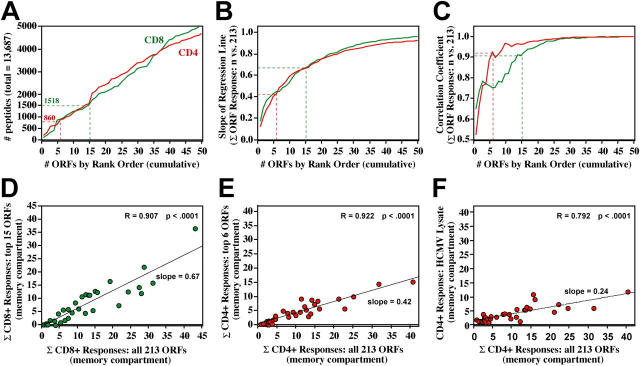
Human cytomegalovirus (HCMV) infections of immunocompetent hosts are characterized by a dynamic, life-long interaction in which host immune responses, particularly of T cells, restrain viral replication and prevent disease but do not eliminate the virus or preclude transmission. Because HCMV is among the largest and most complex of known viruses, the T cell resources committed to maintaining this balance have never been characterized completely. Here, using cytokine flow cytometry and 13,687 overlapping 15mer peptides comprising 213 HCMV open reading frames (ORFs), we found that 151 HCMV ORFs were immunogenic for CD4+ and/or CD8+ T cells, and that ORF immunogenicity was influenced only modestly by ORF expression kinetics and function. We further documented that total HCMV-specific T cell responses in seropositive subjects were enormous, comprising on average ∼10% of both the CD4+ and CD8+ memory compartments in blood, whereas cross-reactive recognition of HCMV proteins in seronegative individuals was limited to CD8+ T cells and was rare. These data provide the first glimpse of the total human T cell response to a complex infectious agent and will provide insight into the rules governing immunodominance and cross-reactivity in complex viral infections of humans.
Overview
The claims and statistics of this paper haven’t been checked yet.
Run the check — free, no account needed. It reads the open-access text and checks the sources it cites.
Integrity signals
Registry
Cites
Statistics
Figures
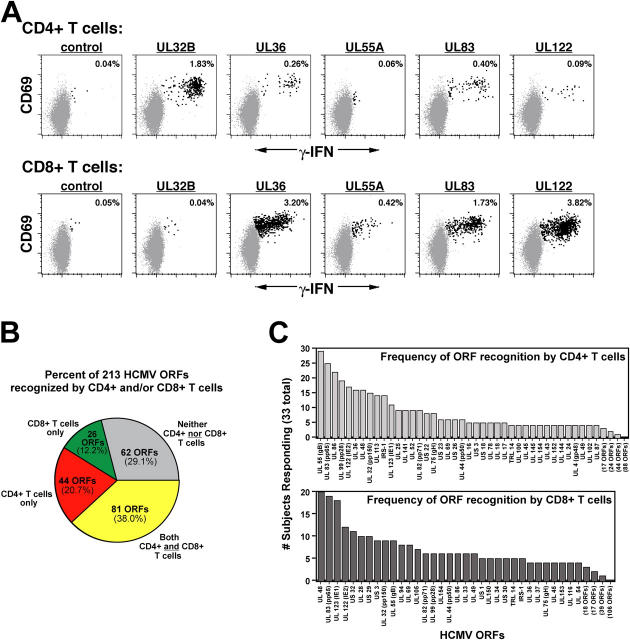
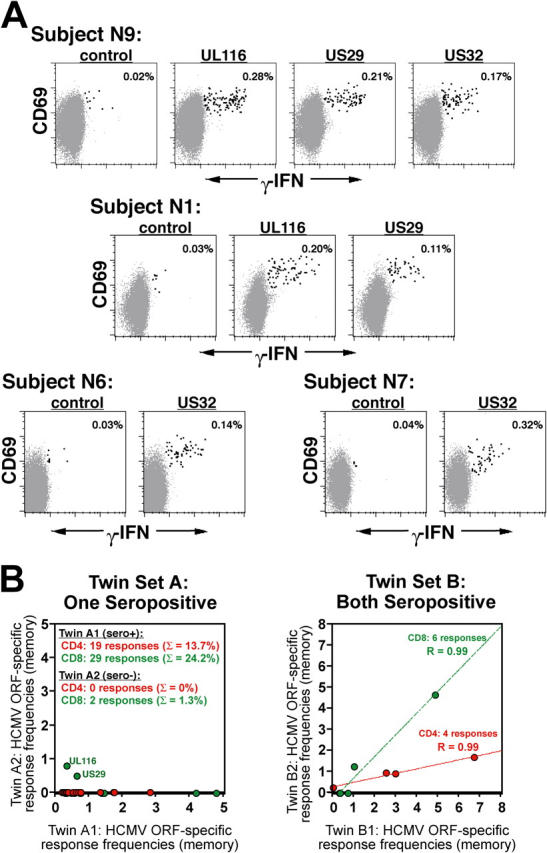
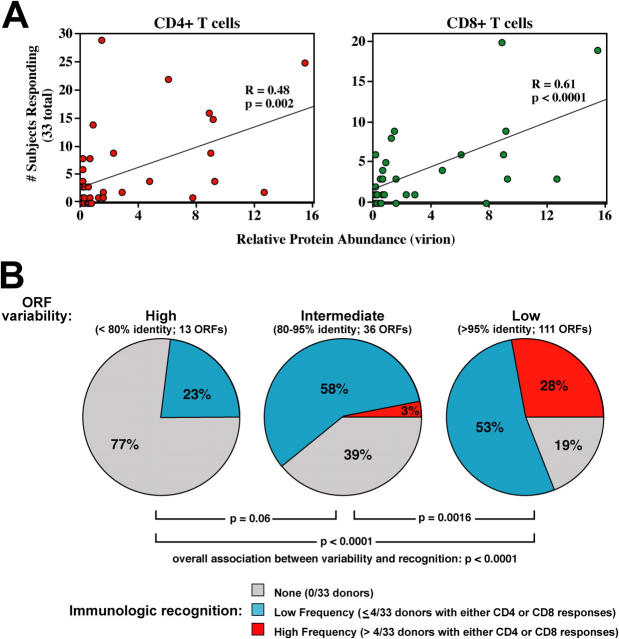
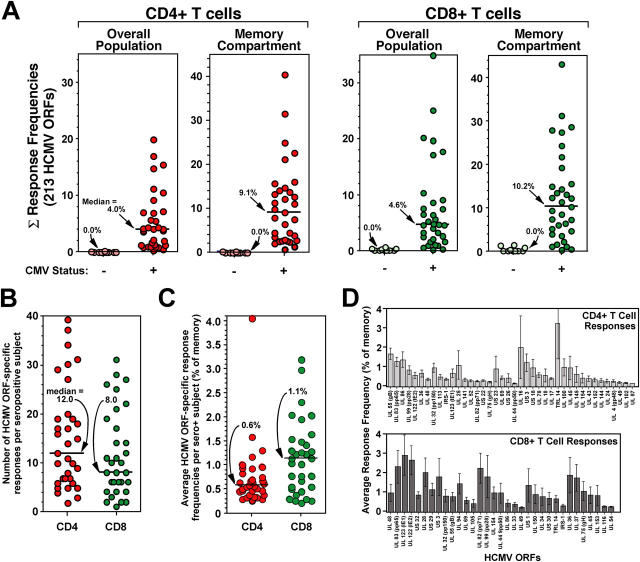
Verification
Claims the paper makes
The claims and statistics of this paper haven’t been checked yet.
Run the check — free, no account needed. It reads the open-access text and checks the sources it cites.
Claims other papers make about this one
Each is checked against this paper’s own text: does it say what the citing paper says it does?
The source backs part of the claim, not all of it — or backs it for a different population, condition or comparison.
In the citing paper
“Infection with CMV causes a large accumulation of virus-specific memory T cells, so that approximately 10 % of the CD4+ and CD8+ T cell pool becomes specific for this virus (Sylwester et al. 2005).”
From Is immunosenescence influenced by our lifetime “dose” of exercise? (2016) · cites this paper as Sylwester et al. 2005
Experimental — accuracy not yet measuredIn the citing paper
“It is therefore currently unknown whether values such as 10 % of the CD4+ and CD8+ T cell pool being specific for CMV is above, or below, the ideal threshold (Sylwester et al. 2005).”
From Is immunosenescence influenced by our lifetime “dose” of exercise? (2016) · cites this paper as Sylwester et al. 2005
Self-check
Percentages, sums and reported differences re-computed from the paper’s own numbers.
The self-check needs the paper’s full text.
Citations
Cites
Duration of antiviral immunity after smallpox vaccination
Hammarlund, E., Lewis, M. W., Hansen, S. G., Strelow, L. I., Nelson, J. A., Sexton, G. J., Hanifin, J. M., & Slifka, M. K. (2003) · Nature Medicine · doi:10.1038/nm917 · Cited by 946
Self-citationKhan, N., Shariff, N., Cobbold, M., Bruton, R., Ainsworth, J. A., Sinclair, A. J., Nayak, L., & Moss, P. A. H. (2002) · The Journal of Immunology · doi:10.4049/jimmunol.169.4.1984 · Cited by 754
Pitcher, C. J., Quittner, C., Peterson, D. M., Connors, M., Koup, R. A., Maino, V. C., & Picker, L. J. (1999) · Nature Medicine · doi:10.1038/8400 · Cited by 746
Self-citationEinsele, H., Roosnek, E. E., Rufer, N., Sinzger, C., Riegler, S., Löffler, J., Grigoleit, U., Moris, A., Rammensee, H., Kanz, L., et al. (2002) · Blood · doi:10.1182/blood.v99.11.3916 · Cited by 699
Betts, M. R., Ambrozak, D. R., Douek, D. C., Bonhoeffer, S., Brenchley, J. M., Casazza, J. P., Koup, R. A., & Picker, L. J. (2001) · Journal of Virology · doi:10.1128/jvi.75.24.11983-11991.2001 · Cited by 684 · cited 1×
“, Herpes simplex, Herpes zoster [9, 11, 15, 28–30]) and are comparable with frequencies of HIV-specific T cells in active HIV infection (31).”
ResultSelf-citationHuman cytomegalovirus clinical isolates carry at least 19 genes not found in laboratory strains
Cha, T. A., Tom, E., Kemble, G. W., Duke, G. M., Mocarski, E. S., & Spaete, R. R. (1996) · Journal of Virology · doi:10.1128/jvi.70.1.78-83.1996 · Cited by 607 · cited 1×
“merous ORFs compared with other CMV strains (44), so we added added”
BackgroundIdentification of Proteins in Human Cytomegalovirus (HCMV) Particles: the HCMV Proteome
Varnum, S. M., Streblow, D. N., Monroe, M. E., Smith, P., Auberry, K. J., Paša-Tolić, L., Wang, D., Camp, D. G., Rodland, K., Wiley, S., et al. (2004) · Journal of Virology · doi:10.1128/jvi.78.20.10960-10966.2004 · Cited by 598 · cited 2×
“in highly purified HCMV virions, as determined by proteomic analysis (22),”
BackgroundSelf-citationWaldrop, S. L., Pitcher, C. J., Peterson, D. M., Maino, V. C., & Picker, L. J. (1997) · Journal of Clinical Investigation · doi:10.1172/jci119338 · Cited by 539 · cited 3×
“We found no evidence of CD4 T cell reactivity with HCMV epitopes in HCMV-seronegative subjects, extending previous work that demonstrated a lack of reactivity to HCMV whole viral preparations in such subjects (9, 39).”
BackgroundResultSelf-citationCoding potential of laboratory and clinical strains of human cytomegalovirus
Murphy, E. A., Yu, D. L., Grimwood, J., Schmutz, J., Dickson, M. C., Jarvis, M. A., Hahn, G., Nelson, J. A., Myers, R., & Shenk, T. E. (2003) · Proceedings of the National Academy of Sciences · doi:10.1073/pnas.2136652100 · Cited by 499 · cited 1×
“At the time of this writing, sequence data for six different HCMV strains—two laboratory strains (AD169 and Towne) and four clinical strains (Toledo, FIX, PH, and TR)—were available for 160 ORFs (23).”
BackgroundSelf-citationGamadia, L. E., Remmerswaal, E. B. M., Weel, J. F. L., Bemelman, F. J., van Lier, R. A. W., & ten Berge, I. J. M. (2003) · Blood · doi:10.1182/blood-2002-08-2502 · Cited by 423
Research works printed but not linked: 1
- 2004, Blood., 104, 1075
Cited by
Sorted by citations
Kotton, C. N., Kumar, D., Caliendo, A. M., Åsberg, A., Chou, S., Snydman, D. R., Allen, U., & Humar, A. (2010) · Transplantation · doi:10.1097/tp.0b013e3181cee42f · Cited by 1,560
The twilight of immunity: emerging concepts in aging of the immune system
Nikolich-Žugich, J. (2018) · Nature Immunology · doi:10.1038/s41590-017-0006-x · Cited by 1,240
Variation in the Human Immune System Is Largely Driven by Non-Heritable Influences
Brodin, P., Jojic, V., Gao, T., Bhattacharya, S., Angel, C. J. L., Furman, D., Shen-Orr, S., Dekker, C. L., Swan, G. E., Butte, A. J., et al. (2015) · Cell · doi:10.1016/j.cell.2014.12.020 · Cited by 1,065
“As an example, the lifelong need to control CMV seems to cause a broad shift in the magnitude and complexity of many cell subsets (Chidrawar et al., 2009; Wills et al., 2011), and 10% of all T cells in CMV+ individuals can be directed against this virus (Sylwester et al., 2005).”
BackgroundInfluentialThe “Silent” Global Burden of Congenital Cytomegalovirus
Manicklal, S., Emery, V. C., Lazzarotto, T., Boppana, S. B., & Gupta, R. K. (2013) · Clinical Microbiology Reviews · doi:10.1128/cmr.00062-12 · Cited by 1,030
“immune system (181), major targets include the pp65 tegument”
BackgroundProal, A. D., & VanElzakker, M. B. (2021) · Frontiers in Microbiology · doi:10.3389/fmicb.2021.698169 · Cited by 921
“In a separate study, Sylwester et al. (2005) found that approximately 10% of CD4+ and CD8+ memory T cells in CMV seropositive subjects can be directed against the virus.”
BackgroundSystemic Effects of Inflammation on Health during Chronic HIV Infection
Deeks, S. G., Tracy, R. P., & Douek, D. C. (2013) · Immunity · doi:10.1016/j.immuni.2013.10.001 · Cited by 910
“CMV infection, for example, is a chronic inflammatory infection that dramatically reshapes the adaptive immune system (Sylwester et al., 2005) but has no appreciable effect on health in the young and middle-aged.”
Kotton, C. N., Kumar, D., Caliendo, A. M., Åsberg, A., Chou, S., Danziger‐Isakov, L. A., & Humar, A. (2013) · Transplantation · doi:10.1097/tp.0b013e31829df29d · Cited by 755
“T-cell reactivity is directed toward a wide range of CMV antigens such as pp65, pp50, IE-1, gB, and others (57, 77).”
Immune activation and inflammation in HIV‐1 infection: causes and consequences
Appay, V., & Sauce, D. (2007) · The Journal of Pathology · doi:10.1002/path.2276 · Cited by 780
“The anti-CMV response appears to monopolize a significant fraction of the whole T cell repertoire [97], so that it might compromise the response to other antigens by shrinking the remaining T cell repertoire and reducing T cell diversity.”
BackgroundBrodin, P., & Davis, M. M. (2017) · Nature reviews. Immunology · doi:10.1038/nri.2016.125 · Cited by 730
Campbell, J. P., & Turner, J. E. (2018) · Frontiers in Immunology · doi:10.3389/fimmu.2018.00648 · Cited by 736
“Infection with Cytomegalovirus results in approximately 10% of the CD4+ and CD8+ T cell pool becoming specific for this virus (229), although large inter-individual differences exist.”
BackgroundHansen, S. G., Vieville, C., Whizin, N., Coyne-Johnson, L., Siess, D. C., Drummond, D. D., Legasse, A. W., Jarvis, M. A., Oswald, K. A., Trubey, C. M., et al. (2009) · Nature Medicine · doi:10.1038/nm.1935 · Cited by 674
“CMV infections are associated with lifelong, high-frequency and highly T EM -biased CD4 + and CD8 + T cell responses that protect against disease development but do not eliminate the CMV infection or prevent CMV superinfectio”
Self-citationRibosome Profiling Reveals Pervasive Translation Outside of Annotated Protein-Coding Genes
Ingolia, N. T., Brar, G. A., Stern‐Ginossar, N., Harris, M. S., Talross, G. J. S., Jackson, S. E., Wills, M. R., & Weissman, J. S. (2014) · Cell Reports · doi:10.1016/j.celrep.2014.07.045 · Cited by 670
“We reasoned that, if humans with a history of CMV infection displayed T cell responses against novel peptides, as they do against canonical CMV proteins (Sylwester et al., 2005), it would indicate that these peptides were produced in the course of the normal viral life cycle in a human host.”
BackgroundImmunobiology of Human Cytomegalovirus: from Bench to Bedside
Crough, T., & Khanna, R. (2009) · Clinical Microbiology Reviews · doi:10.1128/cmr.00034-08 · Cited by 647
Pathogenesis of human cytomegalovirus in the immunocompromised host
Griffiths, P. D., & Reeves, M. B. (2021) · Nature Reviews Microbiology · doi:10.1038/s41579-021-00582-z · Cited by 615
T cell responses to cytomegalovirus
Klenerman, P., & Oxenius, A. (2016) · Nature Reviews Immunology · doi:10.1038/nri.2016.38 · Cited by 483
T cell subset-specific susceptibility to aging
Czesnikiewicz-Guzik, M., Lee, W.-W., Cui, D., Hiruma, Y., Lamar, D. L., Yang, Z.-Z., Ouslander, J. G., Weyand, C. M., & Goronzy, J. J. (2008) · Clinical Immunology · doi:10.1016/j.clim.2007.12.002 · Cited by 478
Hadrup, S. R., Strindhall, J., Køllgaard, T., Seremet, T., Johansson, B. E. A., Pawelec, G., Straten, P. T., & Wikby, A. (2006) · The Journal of Immunology · doi:10.4049/jimmunol.176.4.2645 · Cited by 471
“very well be engaged in the natural reactivity against CMV (37).”
BackgroundAgeing and life-long maintenance of T-cell subsets in the face of latent persistent infections.
Nikolich-Žugich, J. (2008) · Nature reviews. Immunology · doi:10.1038/nri2318 · Cited by 463
Cytomegalovirus Vectors Violate CD8 + T Cell Epitope Recognition Paradigms
Hansen, S. G., Sacha, J. B., Hughes, C. M., Ford, J. C., Burwitz, B. J., Scholz, I., Gilbride, R. M., Lewis, M. S., Gilliam, A. N., Ventura, A. B., et al. (2013) · Science · doi:10.1126/science.1237874 · Cited by 430
“Although, theoretically, viral evasion of CD8 T cell responses might occur at both the afferent and effector phases of the response, the fact that CMV-specific CD8 T cells constitute 10% or more of the circulating memory compartment in more than half of CMV individuals (38) would support the conclusion that the strate…”
ResultSelf-citationLatency and reactivation of human cytomegalovirus
Sinclair, J. H., & Sissons, P. (2006) · Journal of General Virology · doi:10.1099/vir.0.81891-0 · Cited by 423
“This recognition is dominated by a relatively small number of major viral peptide epitopes, several of them derived from viral structural proteins, suggesting that the immune response to HCMV is subject to regular restimulation, with consequent focusing of the CTL response on a limited number of epitopes (McLaughlin-T…”
InfluentialCytomegalovirus in Hematopoietic Stem Cell Transplant Recipients
Ljungman, P. T., Hakki, M., & Boeckh, M. (2011) · Hematology/Oncology Clinics of North America · doi:10.1016/j.hoc.2010.11.011 · Cited by 422
HIV and Inflammation: Mechanisms and Consequences
Hunt, P. W. (2012) · Current HIV/AIDS Reports · doi:10.1007/s11904-012-0118-8 · Cited by 431
“The most notable of these chronic viral infections is cytomegalovirus (CMV), which is responsible for approximately 10% of the entire circulating memory T cell repertoire in healthy asymptomatic HIV-uninfected CMV-seropositive individuals [62], and is highly prevalent in the setting of HIV infection.”
From “truly naïve” to “exhausted senescent” T cells: When markers predict functionality
Larbi, A., & Fulop, T. (2014) · Cytometry Part A · doi:10.1002/cyto.a.22351 · Cited by 359
“A new paradigm has now emerged (based primarily on the OCTO and NONA longitudinal studies conducted in Sweden), to suggest that the age-related changes observed in T cell phenotypes and functions are highly influenced by CMV leading to increased frequency in CD81 TEMRA cells, with specificity for CMV (29).”
BackgroundMethodConfronting Complexity: Real-World Immunodominance in Antiviral CD8+ T Cell Responses
Yewdell, J. W. (2006) · Immunity · doi:10.1016/j.immuni.2006.09.005 · Cited by 365
Human T Cell Aging and the Impact of Persistent Viral Infections
Fülöp, T., Larbi, A., & Pawelec, G. (2013) · Frontiers in Immunology · doi:10.3389/fimmu.2013.00271 · Cited by 347
“WHAT MIGHT THEN CAUSE THESE CHANGES IN ADAPTIVE IMMUNITY WITH AGE? Recently a new paradigm emerged, mainly following these longitudinal studies, to explain the changes with age in T cell phenotypes and functions characterized by more and more differentiated CD4+ and CD8+ T cells: CMV seropositivity determines the incr…”
ResultCytomegalovirus: pathogen, paradigm, and puzzle
Boeckh, M., & Geballe, A. P. (2011) · Journal of Clinical Investigation · doi:10.1172/jci45449 · Cited by 358
Manifestations of Human Cytomegalovirus Infection: Proposed Mechanisms of Acute and Chronic Disease
Britt, W. J. (2008) · Current topics in microbiology and immunology · doi:10.1007/978-3-540-77349-8_23 · Cited by 346
The Yellow Fever Virus Vaccine Induces a Broad and Polyfunctional Human Memory CD8+ T Cell Response
Akondy, R. S., Monson, N. D., Miller, J. D., Edupuganti, S., Teuwen, D. E., Wu, H. G., Quyyumi, F. F., Garg, S., Altman, J. D., del Rı́o, C., et al. (2009) · The Journal of Immunology · doi:10.4049/jimmunol.0803903 · Cited by 345
“We have also begun to understand the differences between the properties of poor and high quality memory CD8+ T cells based on their cytotoxicity, cytokine production, homeostatic turnover, and proliferative potential (6-17).”
Hunt, P. W., Martin, J. N., Sinclair, E., Epling, L., Teague, J., Jacobson, M. Z., Tracy, R. P., Corey, L., & Deeks, S. G. (2011) · The Journal of Infectious Diseases · doi:10.1093/infdis/jir060 · Cited by 344
“Because asymptomatic chronic CMV infection elicits massive immune responses in HIV-uninfected individuals [20] and even higher responses in HIV-infected individuals receiving antiretroviral therapy [21], we suspect that the valganciclovirmediated reductions in T cell activation that we observed were largely mediated b…”
BackgroundCasazza, J. P., Betts, M. R., Price, D. A., Precopio, M., Ruff, L. E., Brenchley, J. M., Hill, B. J., Roederer, M., Douek, D. C., & Koup, R. A. (2006) · The Journal of Experimental Medicine · doi:10.1084/jem.20052246 · Cited by 338
Cytomegalovirus infection enhances the immune response to influenza
Furman, D., Jojic, V., Sharma, S., Shen-Orr, S. S., L. Angel, C. J., Onengut-Gumuscu, S., Kidd, B. A., Maecker, H. T., Concannon, P., Dekker, C. L., et al. (2015) · Science Translational Medicine · doi:10.1126/scitranslmed.aaa2293 · Cited by 332
Snyder, C. M., Cho, K. S., Bonnett, E. L., van Dommelen, S. L. H., SHELLAM, G. R., & Hill, A. B. (2008) · Immunity · doi:10.1016/j.immuni.2008.07.017 · Cited by 300
“The T cell response to CMV in humans and mice is astonishingly large, comprising up to 10% of all CD8 T cells (Gillespie et al., 2000; Karrer et al., 2003; Lang et al., 2002; Munks et al., 2006a; Sylwester et al., 2005).”
BackgroundCho, Y., Yang, C., & Chu, C. (2017) · International Journal of Molecular Sciences · doi:10.3390/ijms18061243 · Cited by 286
“Several studies have shown that CMV-specific T cells constitute the major proportion of the memory T cell repertoire in patients with latent CMV infection (10–40% of the CD4+ T cell repertoire and up to 10% of the CD8+ T cell repertoire) and that the number of these CMV-specific T cells increases with age [104,105].”
BackgroundEvidence of premature immune aging in patients thymectomized during early childhood
Sauce, D., Larsen, M., Fastenackels, S., Duperrier, A., Keller, M., Grubeck-Loebenstein, B., Ferrand, C., Debré, P., Sidi, D., & Appay, V. (2009) · Journal of Clinical Investigation · doi:10.1172/jci39269 · Cited by 278
“We then measured the magnitude of IFN-γ–producing pp65- or IE1-specific T cells in all YATECs in order to get a relative picture of the total frequency of CMV-specific T cells (31).”
BackgroundMethodKumar, D., Chernenko, S., Moussa, G., Cobas, I., Manuel, O., Preiksaitis, J. K., Venkataraman, S., & Humar, A. (2009) · American Journal of Transplantation · doi:10.1111/j.1600-6143.2009.02618.x · Cited by 268
Evasion of CD8 + T Cells Is Critical for Superinfection by Cytomegalovirus
Hansen, S. G., Powers, C. J., Richards, R. M., Ventura, A. B., Ford, J. C., Siess, D. C., Jarvis, M. A., Nelson, J. A., Jarvis, M. A., Picker, L. J., et al. (2010) · Science · doi:10.1126/science.1185350 · Cited by 266
Self-citationHuman cytomegalovirus immunity and immune evasion
Jackson, S. E., Mason, G. M., & Wills, M. R. (2010) · Virus Research · doi:10.1016/j.virusres.2010.10.031 · Cited by 260
“The total CD8 T cell response to HCMV is large, an estimation of bout 10% of the peripheral CD8 memory T cells are directed against CMV determined by screening all the HCMV ORFs in multiple indiiduals, this group included young to middle aged individuals but ot old individuals (Sylwester et al., 2005).”
InfluentialOh, S. J., Lee, J. K., & Shin, O. S. (2019) · Immune Network · doi:10.4110/in.2019.19.e37 · Cited by 264
“In fact, previous evidences suggest that CMV-specific memory T cells gradually increase in numbers in the elderly, and in fact, 50% of the entire memory CD8+ T cell population is occupied by CMV-specific cells (71,98,99).”
Aging of the T Cell Compartment in Mice and Humans: From No Naive Expectations to Foggy Memories
Nikolich-Žugich, J. (2014) · The Journal of Immunology · doi:10.4049/jimmunol.1401174 · Cited by 259
“CMV induces strong (56, 57) and absolute inflation of both the EM CD8 and EM CD4 subsets (40, 58, 59), likely via direct stimulation of a wide repertoire of responding T cells with its complex peptides (60).”
BackgroundHuman Cytomegalovirus Drives Epigenetic Imprinting of the IFNG Locus in NKG2Chi Natural Killer Cells
Luetke-Eversloh, M. V., Hammer, Q., Durek, P., Nordström, K. J. V., Gasparoni, G., Pink, M., Hamann, A., Walter, J., Chang, H., Dong, J., et al. (2014) · PLoS Pathogens · doi:10.1371/journal.ppat.1004441 · Cited by 266
“Similarly, clinically silent reactivation of HCMV or of other herpesviruses also stimulates HCMV-specific T cells and dramatically shapes the T cell repertoire [52,53].”
BackgroundStanton, R. J., Baluchova, K., Dargan, D. J., Cunningham, C., Sheehy, O., Seirafian, S., McSharry, B. P., Neale, M. L., Davies, J. A., Tomašec, P., et al. (2010) · Journal of Clinical Investigation · doi:10.1172/jci42955 · Cited by 256
“In support of this, when CD4+ T cell responses to HCMV were measured, RL13 was one of the top 5 most immunogenic HCMV ORFs (73).”
Four Distinct Patterns of Memory CD8 T Cell Responses to Chronic Murine Cytomegalovirus Infection
Munks, M. W., Cho, K. S., Pinto, A. K., Sierro, S. R., Klenerman, P., & Hill, A. B. (2006) · The Journal of Immunology · doi:10.4049/jimmunol.177.1.450 · Cited by 254
“6% of CD8 T cells from seropositive adults are HCMV specific (1).”
BackgroundPrevention of tuberculosis in rhesus macaques by a cytomegalovirus-based vaccine
Hansen, S. G., Zak, D. E., Xu, G., Ford, J. C., Marshall, E. E., Malouli, D., Gilbride, R. M., Hughes, C. M., Ventura, A. B., Ainslie, E., et al. (2018) · Nature Medicine · doi:10.1038/nm.4473 · Cited by 249
Self-citationChidrawar, S. M., Khan, N., Wei, W., McLarnon, A., Smith, N., Nayak, L., & Moss, P. A. H. (2009) · Clinical & Experimental Immunology · doi:10.1111/j.1365-2249.2008.03785.x · Cited by 244
Cytomegalovirus Infection: A Driving Force in Human T Cell Immunosenescence
KOCH, S., LARBI, A., ÖZCELIK, D., SOLANA, R., GOUTTEFANGEAS, C., ATTIG, S., WIKBY, A., STRINDHALL, J., FRANCESCHI, C., & PAWELEC, G. (2007) · Annals of the New York Academy of Sciences · doi:10.1196/annals.1396.043 · Cited by 242
Blyth, E., Clancy, L. E., Simms, R. M., Chun, K. K., Burgess, J. S., Deo, S. S., Byth, K., Dubosq, M., Shaw, P. J., Micklethwaite, K. P., et al. (2013) · Blood · doi:10.1182/blood-2012-08-448977 · Cited by 234
“52 ALL 7 (14) 8 (14) 24 (19) CML — — 5 (4) MDS 2 (4) 3 (6) 4 (3) NHL 5 (10) 6 (11) 15 (12) HD 1 (2) — 1 (1) MM 2 (4) 2 (4) 3 (2) Other 3 (6) 4 (7) 12 (9) Stage of disease CR1 18 (36) 19 (35) 50 (39) .”
BackgroundInfluentialKharfan‐Dabaja, M. A., Boeckh, M., Wilck, M. B., Langston, A. A., Chu, A. H., Wloch, M. K., Guterwill, D. F., Smith, L. R., Rolland, A. P., & Kenney, R. T. (2012) · The Lancet Infectious Diseases · doi:10.1016/s1473-3099(11)70344-9 · Cited by 231
John, S., Yuzhakov, O., Woods, A., Deterling, J., Hassett, K., Shaw, C. A., & Ciaramella, G. (2018) · Vaccine · doi:10.1016/j.vaccine.2018.01.029 · Cited by 229
“T cell responses in CMV seropositive individuals predominantly target epitopes within the pp65 and IE1 antigens [42-44].”
Pitard, V., Roumanes, D., Lafarge, X., Couzi, L., Garrigue, I., Lafon, M., Merville, P., Moreau, J., & Déchanet‐Merville, J. (2008) · Blood · doi:10.1182/blood-2008-01-136713 · Cited by 228
“CMVseronegative (n 80) and CMV-seropositive (n 106) donor groups had comparable mean ages (mean [range] 40 [19-60] years vs 41 [19-59] years, respectively, P .”
BackgroundWhite, K. D., Chung, W., Chung, W., Mallal, S. A., & Phillips, E. J. (2015) · Journal of Allergy and Clinical Immunology · doi:10.1016/j.jaci.2015.05.050 · Cited by 229
“Multiple studies have demonstrated that CMVspecific CD4(1) and CD8(1) T cells account for a major proportion of the total memory T-cell repertoire in CMV-seropositive adults and that this proportion increases with aging (estimated to be 10% to 40% of the total CD4(1) repertoire and up to 10% of the total CD8(1) repert…”
BackgroundPeggs, K. S., Thomson, K. J., Samuel, E. R., Dyer, G., Armoogum, J., Chakraverty, R. K., Pang, K., Mackinnon, S., & Lowdell, M. W. (2010) · Clinical Infectious Diseases · doi:10.1093/cid/ciq042 · Cited by 225
Human Cytomegalovirus Latency: Approaching the Gordian Knot
Goodrum, F. D. (2016) · Annual Review of Virology · doi:10.1146/annurev-virology-110615-042422 · Cited by 226
“The expansion of CMV-specific T cells likely reflects the broad repertoire of responding T cells (23), low-level, repeated antigen exposure from frequent viral reactivation, and superinfection (27).”
BackgroundLiu, L. L., Landskron, J., Ask, E. H., Enqvist, M., Sohlberg, E., Traherne, J. A., Hammer, Q., Goodridge, J. P., Larsson, S., Jayaraman, J., et al. (2016) · Cell Reports · doi:10.1016/j.celrep.2016.04.005 · Cited by 230
“HCMV-specific T cells have a terminally differentiated phenotype and can represent up to 40% of the total T cell memory pool (Sylwester et al., 2005; van Lier et al., 2003).”
BackgroundBiomarkers of human immunosenescence: impact of cytomegalovirus infection
Derhovanessian, E., Larbi, A., & Pawelec, G. (2009) · Current Opinion in Immunology · doi:10.1016/j.coi.2009.05.012 · Cited by 220
Bernstein, D. I., Reap, E. A., Katen, K., Watson, A., Smith, K., Norberg, P., Olmsted, R. A., Hoeper, A., Morris, J., Negri, S., et al. (2009) · Vaccine · doi:10.1016/j.vaccine.2009.09.135 · Cited by 212
Role of CMV in immune senescence.
Pawelec, G., & Derhovanessian, E. (2011) · Virus Research · doi:10.1016/j.virusres.2010.09.010 · Cited by 201
Neidleman, J., Luo, X., Frouard, J., Xie, G., Gill, G., Stein, E. S., McGregor, M., Ma, T., George, A. F., Kosters, A., et al. (2020) · Cell Reports Medicine · doi:10.1016/j.xcrm.2020.100081 · Cited by 188
Molecular profiling of cytomegalovirus-induced human CD8+ T cell differentiation
Hertoghs, K. M. L., Moerland, P. D., van Stijn, A., Remmerswaal, E. B. M., Yong, S. L., van de Berg, P. J. E. J., van Ham, S. M., Baas, F., ten Berge, I. J. M., & van Lier, R. A. W. (2010) · Journal of Clinical Investigation · doi:10.1172/jci42758 · Cited by 198
Extensive Genome-Wide Variability of Human Cytomegalovirus in Congenitally Infected Infants
Renzette, N., Bhattacharjee, B., Jensen, J. D., Gibson, L. L., & Kowalik, T. F. (2011) · PLoS Pathogens · doi:10.1371/journal.ppat.1001344 · Cited by 200
“[52] to further investigate the patterns of intrahost diversity (Figures 4 and S6).”
BackgroundSoroceanu, L., & Cobbs, C. (2010) · Virus Research · doi:10.1016/j.virusres.2010.10.026 · Cited by 198
“Indeed, recurrent viral reactivation appears to result in a chronic immune response to the virus often characterized by a specific anti-HCMV T lymphocyte response of over 10% of circulating lymphocytes in immunocompetent individuals (Sylwester et al., 2005).”
BackgroundImmunomic Analysis of the Repertoire of T-Cell Specificities for Influenza A Virus in Humans
Assarsson, E., Bui, H., Sidney, J., Zhang, Q., Glenn, J., Oseroff, C., Mbawuike, I. N., Alexander, J., Newman, M. J., Grey, H. M., et al. (2008) · Journal of Virology · doi:10.1128/jvi.01563-08 · Cited by 193
“This observation is in agreement with results for the vaccinia virus and cytomegalovirus systems, where a remarkably diverse pattern of immune recognition has been described in humans (18, 19, 29 ).”
BackgroundResultInfluentialHIV as a Cause of Immune Activation and Immunosenescence
Sokoya, T., Steel, H. C., Nieuwoudt, M., & Rossouw, T. M. (2017) · Mediators of Inflammation · doi:10.1155/2017/6825493 · Cited by 198
Naeger, D. M., Martin, J. N., Sinclair, E., Hunt, P. W., Bangsberg, D. R., Hecht, F. M., Hsue, P. Y., McCune, J. M., & Deeks, S. G. (2010) · PLoS ONE · doi:10.1371/journal.pone.0008886 · Cited by 190
“We favor an indirect effect of CMV on outcome via the strong proinflammatory role that CMV appears to have in vivo [28].”
BackgroundMethodResultInfluentialImmunosenescence and Immunogenetics of Human Longevity
Ostan, R., Bucci, L., Capri, M., Salvioli, S., Scurti, M., Pini, E., Monti, D., & Franceschi, C. (2008) · NeuroImmunoModulation · doi:10.1159/000156466 · Cited by 189
“underlining the importance of CMV infection in human immunosenescence.Sylwester et al. [”
BackgroundMechanisms Underlying T Cell Immunosenescence: Aging and Cytomegalovirus Infection
Tu, W., & Rao, S. (2016) · Frontiers in Microbiology · doi:10.3389/fmicb.2016.02111 · Cited by 192
The Immune Response to Human CMV
Rosa, C. L., & Diamond, D. J. (2012) · Future Virology · doi:10.2217/fvl.12.8 · Cited by 190
The impact of differential antiviral immunity in children and adults
Prendergast, A. J., Klenerman, P., & Goulder, P. (2012) · Nature reviews. Immunology · doi:10.1038/nri3277 · Cited by 197
Aspects of Human Cytomegalovirus Latency and Reactivation
Reeves, M. B., & Sinclair, J. H. (2008) · Current topics in microbiology and immunology · doi:10.1007/978-3-540-77349-8_17 · Cited by 187
“This may be the reason for the unprecedented number of memory T cells that recognise lytic HCMV antigens from healthy carriers in vivo (Riddell et al. 1991; McLaughlin-Taylor et al. 1994; Wills et al. 1996; Sylwester et al. 2005 ).”
BackgroundLichtner, M., Cicconi, P., Vita, S., Cozzi‐Lepri, A., Galli, M., Caputo, S. L., Saracino, A., Luca, A. D., Moioli, M. C., Maggiolo, F., et al. (2014) · The Journal of Infectious Diseases · doi:10.1093/infdis/jiu417 · Cited by 194
“antigen-specific T cells [48, 49], it is also associated with a higher frequency of subclinical atherosclerosis in HIV-infected women and men [9, 13].”
BackgroundDerhovanessian, E., Maier, A. B., Hähnel, K., Beck, R., de Craen, A. J. M., Slagboom, P. E., Westendorp, R. G. J., & Pawelec, G. (2011) · Journal of General Virology · doi:10.1099/vir.0.036004-0 · Cited by 186
“In the case of human cytomegalovirus (CMV), a high proportion of both CD4 and CD8 T-cells in the peripheral blood of asymptomatic infected individuals respond specifically to different antigens derived from this single virus (Sylwester et al., 2005).”
BackgroundZaunders, J. J., Munier, C. M. L., Seddiki, N., Pett, S. L., Ip, S., Bailey, M., Xu, Y., Brown, K., Dyer, W. B., Kim, M., et al. (2009) · The Journal of Immunology · doi:10.4049/jimmunol.0803548 · Cited by 184
“It should be noted that in one study investigating the total response to CMV, 10% of memory CD4 T cells responded to all available antigenic peptides (29).”
BackgroundSimon, C. O., Holtappels, R., Tervo, H.-M., Böhm, V., Däubner, T., Oehrlein-Karpi, S. A., Kühnapfel, B., Renzaho, A., Strand, D., Podlech, J., et al. (2006) · Journal of Virology · doi:10.1128/jvi.01248-06 · Cited by 182
“Likewise, by testing the response of 33 latently infected, healthy volunteers covering a wide range of MHC (HLA) alleles, a genome-wide analysis of antigenic open reading frames (ORFs) of hCMV has shown great variance between individuals, ranging from 1 ORF to 32 ORFs recognized by CD8 T cells of an individual (89).”
BackgroundInfluentialCMV and Immunosenescence: from basics to clinics
Solana, R., Tarazona, R., Aiello, A. E., Akbar, A. N., Appay, V., Beswick, M., Bosch, J. A., Campos, C., Cantisán, S., Čičin‐Šain, L., et al. (2012) · Immunity & Ageing · doi:10.1186/1742-4933-9-23 · Cited by 187
“Kern (Brighton, UK) presented an analysis of T cell response to 19 different CMV targets previously identified to be the most relevant CD4 and CD8 T-cell target antigens in the CMV proteome [9].”
MethodSelf-citationPangrazzi, L., & Weinberger, B. (2020) · Experimental Gerontology · doi:10.1016/j.exger.2020.110887 · Cited by 188
Hersperger, A. R., Martin, J. N., Shin, L. Y., Sheth, P. M., Kovacs, C. M., Cosma, G. L., Makedonas, G., Pereyra, F., Walker, B. D., Kaul, R., et al. (2011) · Blood · doi:10.1182/blood-2010-12-322727 · Cited by 180
Vescovini, R., Biasini, C., Fagnoni, F. F., Telera, A. R., Zanlari, L., Pedrazzoni, M., Bucci, L., Monti, D., Medici, M. C., Chezzi, C., et al. (2007) · The Journal of Immunology · doi:10.4049/jimmunol.179.6.4283 · Cited by 173
“Indeed, both Ags induced production of IFN- and TNFby a number of circulating T cells several times greater in old and very old subjects than in younger donors.”
BackgroundInfluentialEx vivo monitoring of human cytomegalovirus‐specific CD8+ T‐cell responses using QuantiFERON®‐CMV
Walker, S., Fazou, C., Crough, T., Holdsworth, R. F., Kiely, P., Veale, M. C., Bell, S. C., Gailbraith, A., McNeil, K., Jones, S., et al. (2007) · Transplant Infectious Disease · doi:10.1111/j.1399-3062.2006.00199.x · Cited by 173
“... function in suppressing HCMV replication is also highlighted by the fact that adoptive transfer or reconstitution of CD8 1 HCMV-specific cytotoxicT lymphocytes (CTLs) can protect against virus-associated pathogenesis (2, 6, 7 ). Recent studies have shown that the enumeration of CD81HCMV-specific T cells in immunos…”
BackgroundGain and loss of T cell subsets in old age: age-related reshaping of the T cell repertoire.
Arnold, C. R., Wolf, J., Brunner, S., Herndler-Brandstetter, D., & Grubeck-Loebenstein, B. (2011) · Journal of Clinical Immunology · doi:10.1007/s10875-010-9499-x · Cited by 170
“Persistent infection with CMV and the consequent accumulation of pro-inflammatory CD8+CD28- T cells have also been associated with an enhanced risk of coronary heart disease and impaired vascular function [104–106].”
BackgroundInfluentialSuessmuth, Y., Mukherjee, R., Watkins, B. K., Koura, D. T., Finstermeier, K., Desmarais, C., Stempora, L., Horan, J., Langston, A. A., Qayed, M. D., et al. (2015) · Blood · doi:10.1182/blood-2015-03-631853 · Cited by 169
Does intra-individual major histocompatibility complex diversity keep a golden mean?
Woelfing, B., Traulsen, A., Milinski, M., & Boehm, T. L. J. (2008) · Philosophical Transactions of the Royal Society B Biological Sciences · doi:10.1098/rstb.2008.0174 · Cited by 170
Appay, V., Fastenackels, S., Katlama, C., Aït-Mohand, H., Schneider, L., Guihot, A., Keller, M., Grubeck‐Loebenstein, B., Simon, A., Lambotte, O., et al. (2011) · AIDS · doi:10.1097/qad.0b013e32834640e6 · Cited by 171
Cevenini, E., Caruso, C., Candore, G., Capri, M., Nuzzo, D., Duro, G., Rizzo, C., Colonna‐Romano, G., Lio, D., Carlo, D., et al. (2010) · Current Pharmaceutical Design · doi:10.2174/138161210790883840 · Cited by 168
“Healthy seropositive subjects aged 19-55 years are able to maintain CMV under control by broadly targeting the overall CMV proteome with about 10% of both CD4 + and CD8 + peripheral T cells which produce intracellular interferon (IFN)- [19]; however a much larger percentage (2050%) of T cells are involved in protectin…”
BackgroundThe role of oxidative and inflammatory stress and persistent viral infections in immunosenescence
Bauer, M. E., & la Fuente, M. D. (2016) · Mechanisms of Ageing and Development · doi:10.1016/j.mad.2016.01.001 · Cited by 173
Antigen-driven clonal selection shapes the persistence of HIV-1–infected CD4+ T cells in vivo
Simonetti, F. R., Zhang, H., Soroosh, G., Duan, J., Rhodehouse, K., Hill, A. L., Beg, S. A., McCormick, K., Raymond, H. E., Nobles, C. L., et al. (2020) · Journal of Clinical Investigation · doi:10.1172/jci145254 · Cited by 166
Hallmark Features of Immunosenescence Are Absent in Familial Longevity
Derhovanessian, E., Maier, A. B., Beck, R., Jahn, G., Hähnel, K., Slagboom, P. E., de Craen, A. J. M., Westendorp, R. G. J., & Pawelec, G. (2010) · The Journal of Immunology · doi:10.4049/jimmunol.1001629 · Cited by 164
“is committed to controlling the virus (even up to as much as 30% of CD4 and CD8 memory responses in some individuals) (5).”
BackgroundImmunosenenescence: role of cytomegalovirus
Pawelec, G. (2014) · Experimental Gerontology · doi:10.1016/j.exger.2013.11.010 · Cited by 163
“010 peripheral CD4+ and CD8+ T cell repertoire to recognizing many different antigens from CMV (Sylwester et al., 2005).”
InfluentialDetection of Intracellular Cytokines by Flow Cytometry
Yin, Y., Mitson‐Salazar, A., & Prussin, C. (2015) · Current Protocols in Immunology · doi:10.1002/0471142735.im0624s110 · Cited by 162
“…activation are contained in this unit; however, these protocols will work with any number of stimuli including anti-CD3, lectin, antigens (Waldrop et al., 1997; Kagina et al., 2015), peptide antigens (Maecker et al., 2001; Sylwester et al., 2005; McDermott et al., 2014), allergens…”
BackgroundCytomegalovirus in Hematopoietic Stem Cell Transplant Recipients
Ljungman, P. T., Hakki, M., & Boeckh, M. (2010) · Infectious Disease Clinics of North America · doi:10.1016/j.idc.2010.01.008 · Cited by 161
Immunodominant Tuberculosis CD8 Antigens Preferentially Restricted by HLA-B
Lewinsohn, D. A., Winata, E., Swarbrick, G. M., Tanner, K. E., Cook, M. S., Null, M. D., Cansler, M. E., Sette, A., Sidney, J., & Lewinsohn, D. M. (2007) · PLoS Pathogens · doi:10.1371/journal.ppat.0030127 · Cited by 154
“]. Finally, given the very high-frequency responses that we and others have observed to Mtb-infected DCs and to single antigens, it appears that the immune response to Mtb occupies a sizable fraction of the host's immunological activity, similar to that previously observed for infection with CMV [”
ResultKumar, D., Mian, M. F., Singer, L. G., & Humar, A. (2017) · American Journal of Transplantation · doi:10.1111/ajt.14347 · Cited by 159
“Duration of prophylaxis (months); median (range) 3 (1-12) 3 (2-9) 0.”
BackgroundCytomegalovirus Infection Reduces Telomere Length of the Circulating T Cell Pool
van de Berg, P. J. E. J., Griffiths, S. J., Yong, S.-L., Macaulay, R., Bemelman, F. J., Jackson, S., Henson, S. M., ten Berge, I. J. M., Akbar, A. N., & van Lier, R. A. W. (2010) · The Journal of Immunology · doi:10.4049/jimmunol.0903442 · Cited by 157
“reading frames of CMV have shown that both CD4 and CD8 responses occupy an unprecedented part of the T cell response (32).”
BackgroundImmune modulation during latent herpesvirus infection
White, D. W., Beard, R. S., & Barton, E. S. (2011) · Immunological Reviews · doi:10.1111/j.1600-065x.2011.01074.x · Cited by 155
“Approximately 10–20% of circulating memory CD4 and CD8 T cells in healthy adults is specific for HCMV antigens (16).”
BackgroundNew advances in CMV and immunosenescence
Sansoni, P., Vescovini, R., Fagnoni, F. F., Akbar, A., Arens, R., Chiu, Y.-L., Čičin-Šain, L., Dechanet-Merville, J., Derhovanessian, E., Ferrando-Martinez, S., et al. (2014) · Experimental Gerontology · doi:10.1016/j.exger.2014.03.020 · Cited by 150
“In a recent study, F.Kern (Brighton, UK), reported on a large T cell response dataset from short-term ex-vivo HCMV antigen stimulation (measured by IFN-γ secretion) (Sylwester et al., 2005).”
BackgroundSelf-citationDay, E., Carmichael, A., ten Berge, I. J. M., Waller, E. C. P., Sissons, J. G. P., & Wills, M. R. (2007) · The Journal of Immunology · doi:10.4049/jimmunol.179.5.3203 · Cited by 153
Age-related changes in CD8 T cell homeostasis and immunity to infection
Nikolich‐Žugich, J., Li, G., Uhrlaub, J. L., Renkema, K. R., & Smithey, M. J. (2012) · Seminars in Immunology · doi:10.1016/j.smim.2012.04.009 · Cited by 155
Egli, A., Humar, A., & Kumar, D. (2012) · Clinical Infectious Diseases · doi:10.1093/cid/cis818 · Cited by 152
“In one study, 151 CMV open reading frames (ORFs) were immunogenic for CD4 and/or CD8 T cells, sharing 8 of 15 top recognized ORFs [22].”
Cytomegalovirus: Shape-Shifting the Immune System
Picarda, G. G. A., & Benedict, C. A. (2018) · The Journal of Immunology · doi:10.4049/jimmunol.1800171 · Cited by 152
“As in mice, CMV induces a broad CD8 and CD4 T cell response that typically comprises 10–20% of all circulating T cells in CMV persons (79).”
BackgroundZhou, W., Longmate, J., Lacey, S. F., Palmer, J. M., Gallez-Hawkins, G. M., Thao, L., Spielberger, R. T., Nakamura, R., Forman, S. J., Zaia, J. A., et al. (2009) · Blood · doi:10.1182/blood-2009-02-203307 · Cited by 151
Bakker, A., Hoppes, R., Linnemann, C., Toebes, M., Rodenko, B., Berkers, C. R., Hadrup, S. R., van Esch, W. J. E., Heemskerk, M. H. M., Ovaa, H., et al. (2008) · Proceedings of the National Academy of Sciences · doi:10.1073/pnas.0709717105 · Cited by 151
Novel viral vectors in infectious diseases
Humphreys, I. R., & Sebastian, S. (2017) · Immunology · doi:10.1111/imm.12829 · Cited by 145
Metadata
- Authors
- Sylwester, A. W., Mitchell, B. L., Edgar, J. B., Taormina, C., Pelte, C., Ruchti, F., Sleath, P. R., Grabstein, K. H., Hosken, N. A., Kern, F., Nelson, J. A., & Picker, L. J.
- Affiliations
- Oregon National Primate Research Center (US)
- Corixa Corporation (US)
- Stiftung Charité (DE)
- Venue
- The Journal of Experimental Medicine
- Publisher
- Rockefeller University Press
- Published
- 2005-09-05
- Volume
- 202
- Issue
- 5
- Pages
- 673-685
- ISSN
- 0022-1007 (ISSN-L)
- 1540-9538
- PMC
- PMC2212883
- OpenAlex
- W2103849595
- Cited by
- 1,339
- References
- 41
- Citations by year
- 2026: 39 · 2025: 53 · 2024: 56 · 2023: 41 · 2022: 56 · 2021: 70 · 2020: 67 · 2019: 81 · 2018: 71 · 2017: 86 · 2016: 74 · 2015: 77 · 2014: 56 · 2013: 83 · 2012: 64
- FWCI
- 38.39
- Type
- journal article
- Language
- en
- Open access
- bronze
- doi.org
- Locations
- The Journal of Experimental Medicine (publishedVersion)
- Europe PMC (PubMed Central) (publishedVersion, cc-by-nc-sa)
- PubMed Central (publishedVersion, cc-by-nc-sa)
- PubMed (publishedVersion)
- Funders
- National Institutes of Health (RR 00163, AI21640)
- National Institute of Allergy and Infectious Diseases (R01AI047606, AI 47606, R01AI021640)
- National Center for Research Resources (P51RR000163, M01RR000334)
- Topics
- Health Sciences › Medicine › Epidemiology › Cytomegalovirus and herpesvirus research
- Life Sciences › Immunology and Microbiology › Immunology › T-cell and B-cell Immunology
- Life Sciences › Biochemistry, Genetics and Molecular Biology › Molecular Biology › vaccines and immunoinformatics approaches
- Keywords
- human cytomegalovirus, CD4+ T cells, CD8+ T cells, immunodominance, seropositive individuals, viral persistence
- MeSH terms
- Adult, Cytomegalovirus Infections, Cytomegalovirus, Female, Flow Cytometry, Humans, Immunogenetics, Immunologic Memory, Male, Middle Aged, Peptides, Serologic Tests, CD4-Positive T-Lymphocytes, Open Reading Frames, CD8-Positive T-Lymphocytes
About these checks
Registry, retraction, Cites and statistics results are computed, not judged, with one exception: a printed reference that no index lists is read once by a model before it counts as a citation error. Claims are extracted by a model and kept only when their quote appears verbatim in the text; each cited source is then checked, with a model’s help, for whether it says what the claim relies on. Those verdicts can be wrong — read the claim’s quote and the cited source before relying on one.
Statistics and arithmetic are recomputed, not judged.
Confidence bands are shown only for fields calibrated on our annotated test set. None is calibrated yet, so no band is shown.
What counts as a claim ›How we measure confidence ›How we check this ›
Are you an author, or do you see a problem with this page? Request a review
