

The DOI matches its Crossref record; 41 of the 41 references it cites were found in a registry or an index.
Broadly targeted human cytomegalovirus-specific CD4 + and CD8 + T cells dominate the memory compartments of exposed subjects
Open accessAbstract
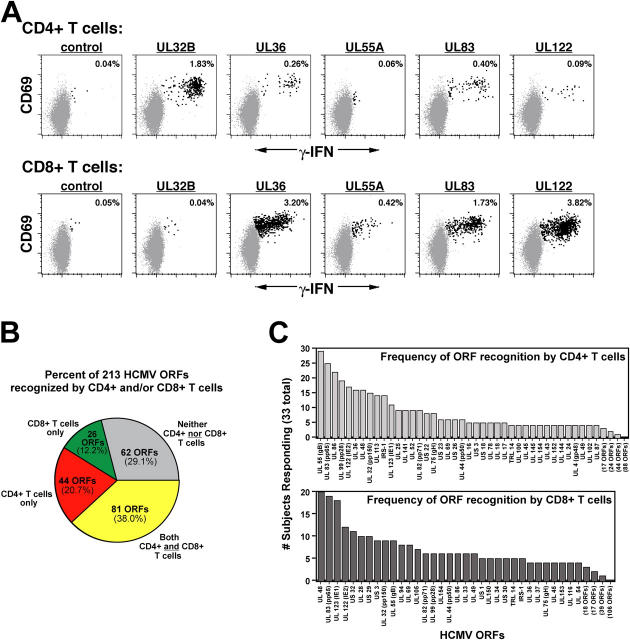
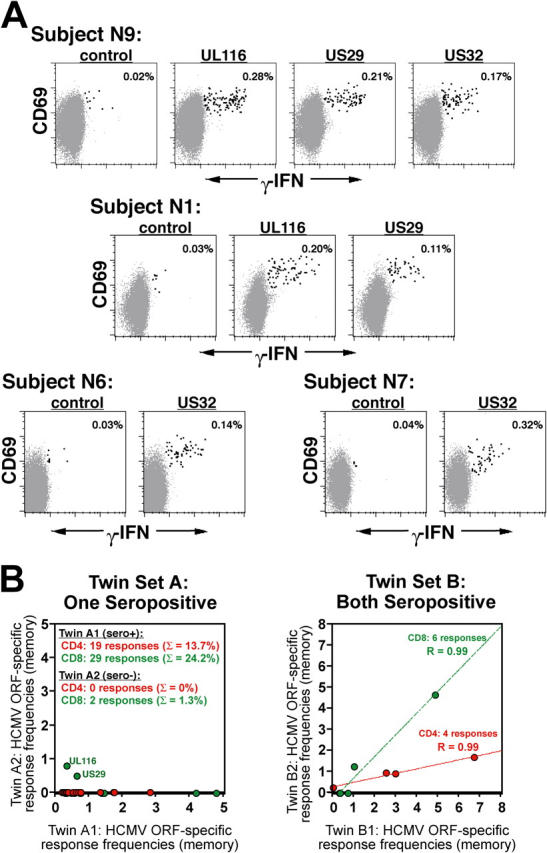
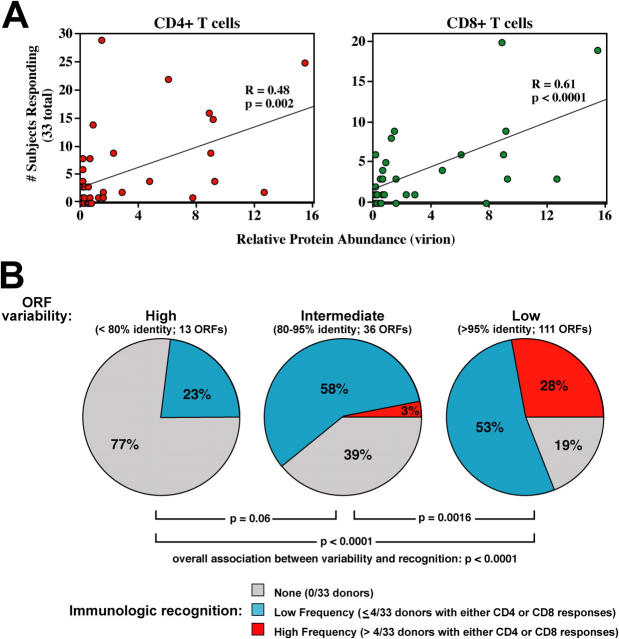
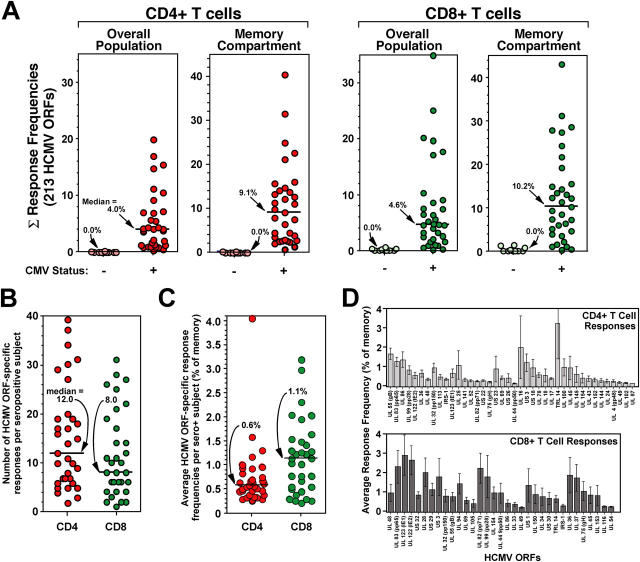
Human cytomegalovirus (HCMV) infections of immunocompetent hosts are characterized by a dynamic, life-long interaction in which host immune responses, particularly of T cells, restrain viral replication and prevent disease but do not eliminate the virus or preclude transmission. Because HCMV is among the largest and most complex of known viruses, the T cell resources committed to maintaining this balance have never been characterized completely. Here, using cytokine flow cytometry and 13,687 overlapping 15mer peptides comprising 213 HCMV open reading frames (ORFs), we found that 151 HCMV ORFs were immunogenic for CD4+ and/or CD8+ T cells, and that ORF immunogenicity was influenced only modestly by ORF expression kinetics and function. We further documented that total HCMV-specific T cell responses in seropositive subjects were enormous, comprising on average ∼10% of both the CD4+ and CD8+ memory compartments in blood, whereas cross-reactive recognition of HCMV proteins in seronegative individuals was limited to CD8+ T cells and was rare. These data provide the first glimpse of the total human T cell response to a complex infectious agent and will provide insight into the rules governing immunodominance and cross-reactivity in complex viral infections of humans.
Overview
The claims and statistics of this paper haven’t been checked yet.
Run the check — free, no account needed. It reads the open-access text and checks the sources it cites.
Integrity signals
Registry
Cites
Statistics
Figures
Verification
Claims the paper makes
The claims and statistics of this paper haven’t been checked yet.
Run the check — free, no account needed. It reads the open-access text and checks the sources it cites.
Claims other papers make about this one
Each is checked against this paper’s own text: does it say what the citing paper says it does?
The source backs part of the claim, not all of it — or backs it for a different population, condition or comparison.
In the citing paper
“Infection with CMV causes a large accumulation of virus-specific memory T cells, so that approximately 10 % of the CD4+ and CD8+ T cell pool becomes specific for this virus (Sylwester et al. 2005).”
From Is immunosenescence influenced by our lifetime “dose” of exercise? (2016) · cites this paper as Sylwester et al. 2005
Experimental — accuracy not yet measuredIn the citing paper
“It is therefore currently unknown whether values such as 10 % of the CD4+ and CD8+ T cell pool being specific for CMV is above, or below, the ideal threshold (Sylwester et al. 2005).”
From Is immunosenescence influenced by our lifetime “dose” of exercise? (2016) · cites this paper as Sylwester et al. 2005
Self-check
Percentages, sums and reported differences re-computed from the paper’s own numbers.
The self-check needs the paper’s full text.
Citations
Cites
Duration of antiviral immunity after smallpox vaccination
Hammarlund, E., Lewis, M. W., Hansen, S. G., Strelow, L. I., Nelson, J. A., Sexton, G. J., Hanifin, J. M., & Slifka, M. K. (2003) · Nature Medicine · doi:10.1038/nm917 · Cited by 946
Self-citationKhan, N., Shariff, N., Cobbold, M., Bruton, R., Ainsworth, J. A., Sinclair, A. J., Nayak, L., & Moss, P. A. H. (2002) · The Journal of Immunology · doi:10.4049/jimmunol.169.4.1984 · Cited by 754
Pitcher, C. J., Quittner, C., Peterson, D. M., Connors, M., Koup, R. A., Maino, V. C., & Picker, L. J. (1999) · Nature Medicine · doi:10.1038/8400 · Cited by 746
Self-citationEinsele, H., Roosnek, E. E., Rufer, N., Sinzger, C., Riegler, S., Löffler, J., Grigoleit, U., Moris, A., Rammensee, H., Kanz, L., et al. (2002) · Blood · doi:10.1182/blood.v99.11.3916 · Cited by 699
Betts, M. R., Ambrozak, D. R., Douek, D. C., Bonhoeffer, S., Brenchley, J. M., Casazza, J. P., Koup, R. A., & Picker, L. J. (2001) · Journal of Virology · doi:10.1128/jvi.75.24.11983-11991.2001 · Cited by 684 · cited 1×
“, Herpes simplex, Herpes zoster [9, 11, 15, 28–30]) and are comparable with frequencies of HIV-specific T cells in active HIV infection (31).”
ResultSelf-citationHuman cytomegalovirus clinical isolates carry at least 19 genes not found in laboratory strains
Cha, T. A., Tom, E., Kemble, G. W., Duke, G. M., Mocarski, E. S., & Spaete, R. R. (1996) · Journal of Virology · doi:10.1128/jvi.70.1.78-83.1996 · Cited by 607 · cited 1×
“merous ORFs compared with other CMV strains (44), so we added added”
BackgroundIdentification of Proteins in Human Cytomegalovirus (HCMV) Particles: the HCMV Proteome
Varnum, S. M., Streblow, D. N., Monroe, M. E., Smith, P., Auberry, K. J., Paša-Tolić, L., Wang, D., Camp, D. G., Rodland, K., Wiley, S., et al. (2004) · Journal of Virology · doi:10.1128/jvi.78.20.10960-10966.2004 · Cited by 598 · cited 2×
“in highly purified HCMV virions, as determined by proteomic analysis (22),”
BackgroundSelf-citationWaldrop, S. L., Pitcher, C. J., Peterson, D. M., Maino, V. C., & Picker, L. J. (1997) · Journal of Clinical Investigation · doi:10.1172/jci119338 · Cited by 539 · cited 3×
“We found no evidence of CD4 T cell reactivity with HCMV epitopes in HCMV-seronegative subjects, extending previous work that demonstrated a lack of reactivity to HCMV whole viral preparations in such subjects (9, 39).”
BackgroundResultSelf-citationCoding potential of laboratory and clinical strains of human cytomegalovirus
Murphy, E. A., Yu, D. L., Grimwood, J., Schmutz, J., Dickson, M. C., Jarvis, M. A., Hahn, G., Nelson, J. A., Myers, R., & Shenk, T. E. (2003) · Proceedings of the National Academy of Sciences · doi:10.1073/pnas.2136652100 · Cited by 499 · cited 1×
“At the time of this writing, sequence data for six different HCMV strains—two laboratory strains (AD169 and Towne) and four clinical strains (Toledo, FIX, PH, and TR)—were available for 160 ORFs (23).”
BackgroundSelf-citationGamadia, L. E., Remmerswaal, E. B. M., Weel, J. F. L., Bemelman, F. J., van Lier, R. A. W., & ten Berge, I. J. M. (2003) · Blood · doi:10.1182/blood-2002-08-2502 · Cited by 423
Research works printed but not linked: 1
- 2004, Blood., 104, 1075
Cited by
Sorted by citations
Items 401–500 of 999
Li, F., Freed, D. C., Tang, A., Rustandi, R. R., Troutman, M. C., Espeseth, A. S., Zhang, N., An, Z., McVoy, M. A., Zhu, H., et al. (2017) · npj Vaccines · doi:10.1038/s41541-017-0038-0 · Cited by 46
HCMV Antivirals and Strategies to Target the Latent Reservoir
Perera, M. R., Wills, M. R., & Sinclair, J. H. (2021) · Viruses · doi:10.3390/v13050817 · Cited by 46
“One biological property of HCMV that makes this type of strategy so attractive is the knowledge that in healthy seropositive virus carriers, up to 10% of circulating peripheral blood resident cytotoxic T lymphocytes (CTLs) are HCMV lytic antigen specific and potently target lytically infected cells [100].”
BackgroundProgramming cytomegalovirus as an HIV vaccine
Picker, L. J., Lifson, J. D., Gale, M., Hansen, S. G., & Früh, K. (2023) · Trends in Immunology · doi:10.1016/j.it.2023.02.001 · Cited by 46
Self-citationLang, A. M., Brien, J. D., Messaoudi, I., & Nikolich‐Žugich, J. (2008) · The Journal of Immunology · doi:10.4049/jimmunol.180.7.4848 · Cited by 45
“11), a response that is unusual in its strength, breadth, and complexity (12, 13).”
BackgroundPotential Vaccines and Post-Exposure Treatments for Filovirus Infections
Friedrich, B. M., Trefry, J. C., Biggins, J. E., Hensley, L. E., Honko, A. N., Smith, D. R., & Olinger, G. G. (2012) · Viruses · doi:10.3390/v4091619 · Cited by 46
“CMV, a member of the family Betaherpesvirinae, induces a high "effector" memory T-cell (T EM ) response before establishing a low-level persistent infection [104] [105] [106] .”
BackgroundProgress on human cytomegalovirus vaccines for prevention of congenital infection and disease
Wang, D., & Fu, T. (2014) · Current Opinion in Virology · doi:10.1016/j.coviro.2014.02.004 · Cited by 47
Terrazzini, N., Bajwa, M., Vita, S., Cheek, E., Thomas, D. W., Seddiki, N., Smith, H. E., & Kern, F. (2013) · The Journal of Infectious Diseases · doi:10.1093/infdis/jit576 · Cited by 46
“Finally, to explore the protein specificity of CMV-specific iTregs, we studied their responsiveness to the 6 most dominant target antigens of conventional CD4+ T cells: UL55, UL86, UL83, UL32, UL99, and UL153 (Figure 3A and 3B) [28, 30].”
InfluentialSelf-citationPro-inflammatory and anti-inflammatory T cells in giant cell arteritis
Watanabe, R., Hosgur, E., Zhang, H., Wen, Z., Berry, G. J., Goronzy, J. J., & Weyand, C. M. (2016) · Joint Bone Spine · doi:10.1016/j.jbspin.2016.07.005 · Cited by 47
Hosie, L., Pachnio, A., Zuo, J., Pearce, H., Riddell, S. R., & Moss, P. A. H. (2017) · Frontiers in Immunology · doi:10.3389/fimmu.2017.01776 · Cited by 46
From Infections to Anthropogenic Inflicted Pathologies: Involvement of Immune Balance
Lee, F., & Lawrence, D. A. (2017) · Journal of Toxicology and Environmental Health Part B · doi:10.1080/10937404.2017.1412212 · Cited by 45
“However, investigators found a significant amount of CMV-specific T cell proliferation that overburdens an older individual’s immune repertoire, demonstrating that more than 5% of T cells are trying to keep CMV at bay (Khan et al. 2002; Sylwester et al. 2005).”
BackgroundChanouzas, D., Sagmeister, M. S., Faustini, S. E., Nightingale, P., Richter, A. G., Ferro, C. J., Morgan, M. D., Moss, P. A. H., & Harper, L. (2018) · The Journal of Infectious Diseases · doi:10.1093/infdis/jiy493 · Cited by 45
“The virus profoundly modulates the immune system with up to 10% of the CD4 and 40% of the CD8 compartments being comprised of CMV-specific T cells [29, 30].”
BackgroundImmune Correlates of Protection Against Human Cytomegalovirus Acquisition, Replication, and Disease.
Nelson, C. S., Baraniak, I., Lilleri, D., Reeves, M., Griffiths, P., & Permar, S. (2020) · Journal of Infectious Diseases · doi:10.1093/infdis/jiz428 · Cited by 42
“The most common epitopes targeted by HCMV-specific cell-mediated immunity are pp65, IE-1, and UL148, though T cells have been detected against peptides encoded by 151 unique HCMV ORFs [5].”
BackgroundEhlinger, E. P., Webster, E., Kang, H. H., Cangialose, A., Simmons, A. C., Barbas, K. H., Burchett, S. K., Gregory, M. L., Puopolo, K. M., & Permar, S. R. (2011) · The Journal of Infectious Diseases · doi:10.1093/infdis/jir632 · Cited by 45
Souquette, A. H., Frere, J. J., Smithey, M. J., Sauce, D., & Thomas, P. G. (2017) · GeroScience · doi:10.1007/s11357-017-9982-x · Cited by 44
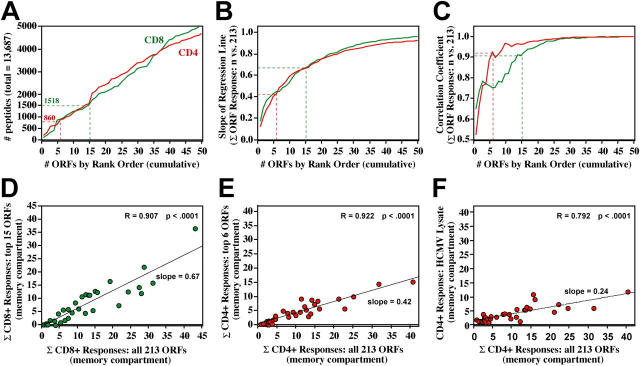
“The full size of the response to CMV in humans (represented by 213 protein-spanning peptide pools) can be extrapolated from the responses to 19 proteins, including 6 dominant CD4 and 15 dominant CD8 Tcell targets (Sylwester et al. 2005).”
BackgroundChoi, Y. J., Kim, S. B., Kim, J. H., Park, S., Park, M. S., Kim, J. M., Han, S. H., & Shin, E. (2017) · Experimental & Molecular Medicine · doi:10.1038/emm.2017.146 · Cited by 44
Margolick, J. B., Bream, J. H., Nilles, T. L., Li, H., Langan, S. J., Deng, S., Wang, R., Wada, N., & Leng, S. X. (2018) · The Journal of Infectious Diseases · doi:10.1093/infdis/jiy005 · Cited by 44
Gliga, S., Korth, J., Krawczyk, A., Wilde, B., Horn, P. A., Witzke, O., Lindemann, M., & Fiedler, M. (2018) · Journal of Clinical Virology · doi:10.1016/j.jcv.2018.06.009 · Cited by 44
Reap, E. A., Dryga, S. A., Morris, J., Rivers, B., Norberg, P. K., Olmsted, R. A., & Chulay, J. D. (2007) · Clinical and Vaccine Immunology · doi:10.1128/cvi.00037-07 · Cited by 44
“Although recent studies indicate that T-cell epitopes from a large number of CMV proteins are recognized by peripheral blood mononuclear cells from naturally infected individuals, pp65 and IE1 are two of the three proteins recognized by CD8 T cells from the majority of CMV-infected individuals (38), and evidence from…”
ResultLacey, S. F., Rosa, C. L., Zhou, W., Sharma, M. C., Martinez, J., Krishnan, A., Gallez-Hawkins, G. M., Thao, L., Longmate, J., Spielberger, R. T., et al. (2006) · The Journal of Infectious Diseases · doi:10.1086/508495 · Cited by 44
“007734 The lower frequencies of IE1-specific CD4 T cells is similar to data regarding both healthy adults [9] and SOT recipients”
BackgroundResultInfluentialSepsis and cytomegalovirus: foes or conspirators?
Mansfield, S. A., Grießl, M., Gutknecht, M. F., & Cook, C. H. (2015) · Medical Microbiology and Immunology · doi:10.1007/s00430-015-0407-0 · Cited by 43
Pipeling, M. R., John, E. R., Orens, J. B., Lechtzin, N., & McDyer, J. F. (2011) · The Journal of Infectious Diseases · doi:10.1093/infdis/jir624 · Cited by 43
“T-cell effector response, as has been reported elsewhere [41, 42].”
Cell-mediated immunity to human CMV infection: a brief overview
Terrazzini, N., & Kern, F. (2014) · F1000Prime Reports · doi:10.12703/p6-28 · Cited by 42
“following in vitro stimulation with HCMV antigens (in particular, protein-spanning peptide pools) or infected cells [23-27].”
BackgroundInfluentialSelf-citationBetjes, M. G. H., Meijers, R. W. J., de Wit, L. E. A., & Litjens, N. H. R. (2011) · Journal of Nephrology · doi:10.5301/jn.5000057 · Cited by 43
Ben‐Smith, A., Gorak‐Stolinska, P., Floyd, S., Weir, R. E., Lalor, M. K., Mvula, H., Crampin, A. C., Wallace, D. L., Beverley, P. C. L., Fine, P., et al. (2008) · BMC Infectious Diseases · doi:10.1186/1471-2334-8-139 · Cited by 43
“In a study of adults (aged 19–55 years old), in seropositive individuals the percentage of human CMV specific T cells within the peripheral memory compartment was in the region of 10% for both CD4+ and CD8+ T cells while in seronegative individuals human CMV-specific T cells were very rare [39] suggesting human CMV is…”
BackgroundAndersen, M. H. (2016) · Seminars in Immunopathology · doi:10.1007/s00281-016-0593-x · Cited by 43
“Cytomegalovirus (CMV) is likely one of the most immunedominant antigens encountered by the human immune system [51].”
BackgroundSchleiss, M. R., Berka, U., Watson, E. M., Aistleithner, M., Kiefmann, B., Mangeat, B., Swanson, E. C., Gillis, P. A., Hernandez-Alvarado, N., Fernández-Alarcón, C., et al. (2016) · Clinical and Vaccine Immunology · doi:10.1128/cvi.00300-16 · Cited by 43
Groves, I. J., Jackson, S. E., Poole, E. L., Nachshon, A., Rozman, B., Schwartz, M., Prinjha, R. K., Tough, D. F., Sinclair, J. H., & Wills, M. R. (2021) · Proceedings of the National Academy of Sciences · doi:10.1073/pnas.2023025118 · Cited by 43
“3 G ), including many surface glycoproteins (e.g., gN, gM) and tegument proteins (e.g., pp150, pp28) that are immunogenic T cell targets (33).”
InfluentialFunctional Killer Ig-Like Receptors on Human Memory CD4+ T Cells Specific for Cytomegalovirus
van Bergen, J., Kooy-Winkelaar, E. M. C., van Dongen, H., van Gaalen, F. A., Thompson, A., Huizinga, T. W. J., Feltkamp, M. C. W., Toes, R. E. M., & Koning, F. (2009) · The Journal of Immunology · doi:10.4049/jimmunol.0800455 · Cited by 43
“total memory T cell population responds to CMV Ags in vitro (15).”
BackgroundCrompton, L. J., Khan, N., Khanna, R., Nayak, L., & Moss, P. (2008) · Blood · doi:10.1182/blood-2007-04-079863 · Cited by 51
T Cell Susceptibility to HIV Influences Outcome of Opportunistic Infections
Saharia, K., & Koup, R. A. (2013) · Cell · doi:10.1016/j.cell.2013.09.045 · Cited by 45
Jouand, N., Bressollette‐Bodin, C., Gérard, N., Giral, M., Guérif, P., Rodallec, A., Oger, R., Parrot, T., Allard, M., Cesbron‐Gautier, A., et al. (2018) · PLoS Pathogens · doi:10.1371/journal.ppat.1007041 · Cited by 44
“Conventional T-cell responses to HCMV peptides, such as dominant responses to the pp65 and IE epitopes presented by HLA-A 02 and HLA-B 07, can regularly reach 5–10% of total CD8 T cells in the blood of healthy adults and even greater with up to 30% of total CD8 T cells are reported in some studies [9, 10, 39].”
BackgroundCytomegalovirus as an immunomodulator across the lifespan
Semmes, E. C., Hurst, J. H., Walsh, K. M., & Permar, S. R. (2020) · Current Opinion in Virology · doi:10.1016/j.coviro.2020.07.013 · Cited by 43
“Latent HCMV infection has a profound effect on the adult host immune system, likely resulting from an evolutionarily negotiated balance between viral persistence and immunologic control [13,14,40].”
BackgroundOptimizing peptide matrices for identifying T‐cell antigens
Precopio, M., Butterfield, T. R., Casazza, J. P., Little, S. J., Richman, D. D., Koup, R. A., & Roederer, M. (2008) · Cytometry Part A · doi:10.1002/cyto.a.20646 · Cited by 42
Regulatory function of cytomegalovirus-specific CD4+CD27−CD28− T cells
Tovar-Salazar, A., Patterson‐Bartlett, J., Jesser, R. D., & Weinberg, A. (2009) · Virology · doi:10.1016/j.virol.2009.11.038 · Cited by 42
“Other investigators described a negative association between the frequency of CD27− and/or CD28− circulating T cells and the immune repertoire of CMV-seropositive hosts (Almanzar et al., 2005; Sylwester et al., 2005; Vescovini et al., 2007).”
The specific targeting of immune regulation: T-cell responses against Indoleamine 2,3-dioxygenase
Andersen, M. H. (2012) · Cancer Immunology Immunotherapy · doi:10.1007/s00262-012-1234-4 · Cited by 41
“CMV is the most immune dominant antigen to be encountered by the human immune system [43].”
BackgroundMcGoldrick, S. M., Bleakley, M., Guerrero, A., Turtle, C. J., Yamamoto, T. N., Pereira, S. E., Delaney, C. S., & Riddell, S. R. (2013) · Blood · doi:10.1182/blood-2012-09-453720 · Cited by 42
Dasari, V., Smith, C., & Khanna, R. (2013) · Expert Review of Vaccines · doi:10.1586/erv.13.46 · Cited by 41
Miles, D. J. C., van der Sande, M. A. B., Jeffries, D. J., Kaye, S., Ojuola, O. O., Sanneh, M., Cox, M., Palmero, M. S., Touray, E. S., Waight, P., et al. (2008) · PLoS ONE · doi:10.1371/journal.pone.0002905 · Cited by 41
Siedner, M. J. (2016) · Open Forum Infectious Diseases · doi:10.1093/ofid/ofw032 · Cited by 41
“A combination of immune activation due to HIV and coinfections [17–19],direct HIV infection of vasculature smooth muscle [20, 21], and profound and irreversible depletion of gut T-lymphocytes with resulting microbial translocation [22–24] are thought to combine to pre-”
BackgroundBanas, B., Böger, C. A., Lückhoff, G., Krüger, B., Barabas, S., Batzilla, J., Schemmerer, M., Köstler, J., Bendfeldt, H., Rascle, A., et al. (2017) · BMC Immunology · doi:10.1186/s12865-017-0194-z · Cited by 41
Cytomegalovirus Exposure in the Elderly Does Not Reduce CD8 T Cell Repertoire Diversity
Lindau, P., Mukherjee, R., Gutschow, M. V., Vignali, M., Warren, E. H., Riddell, S. R., Makar, K. W., Turtle, C. J., & Robins, H. S. (2018) · The Journal of Immunology · doi:10.4049/jimmunol.1800217 · Cited by 42
“CMV infection sustains large CMV-specific clones in the circulating T cell repertoire (41, 46).”
BackgroundResultHansen, S. G., Womack, J. L., Scholz, I., Renner, A., Edgel, K. A., Xu, G., Ford, J. C., Grey, M., Laurent, B. S., Turner, J. M., et al. (2019) · PLoS ONE · doi:10.1371/journal.pone.0210252 · Cited by 41
“Both HCMV and RhCMV maintain life-long T EM that average 10% of the total circulating memory T cell population [22].”
Self-citationVirus-Like Particles and Nanoparticles for Vaccine Development against HCMV
Perotti, M., & Perez, L. H. (2019) · Viruses · doi:10.3390/v12010035 · Cited by 41
“Although the HCMV-specific T cell response is very broad, the vast majority of the results points toward antigens that are highly conserved among different HCMV strains, such as the 65 kDa phosphoprotein (pp65) and the immediate early 1 (IE1) proteins, which are recognized by more than 50% of seropositive individuals…”
BackgroundQuantification of T-cell dynamics during latent cytomegalovirus infection in humans
van den Berg, S. P. H., Derksen, L. Y., Drylewicz, J., Nanlohy, N. M., Beckers, L., Lanfermeijer, J., Gessel, S., Vos, M. W., Otto, S. A., de Boer, R. J., et al. (2021) · PLoS Pathogens · doi:10.1371/journal.ppat.1010152 · Cited by 40
Neuroendocrine and viral correlates of premature immunosenescence
Bauer, M. E., Wieck, A., Petersen, L. E., & Baptista, T. S. A. (2015) · Annals of the New York Academy of Sciences · doi:10.1111/nyas.12786 · Cited by 43
Cytomegalovirus-based cancer vaccines expressing TRP2 induce rejection of melanoma in mice
Xu, G., Smith, T. A., Grey, F. E., & Hill, A. B. (2013) · Biochemical and Biophysical Research Communications · doi:10.1016/j.bbrc.2013.06.068 · Cited by 40
“In healthy humans, CMV-specific T cells permanently comprise an average of 5% of total CD4 and CD8 T cell compartments [2]; high T cell responses are also seen in experimentally infected mice [3–5].”
Report from the second cytomegalovirus and immunosenescence workshop
Wills, M. R., Akbar, A. N., Beswick, M., Bosch, J. A., Caruso, C., Colonna‐Romano, G., Dutta, A., Franceschi, C., Fülöp, T., Gkrania‐Klotsas, E., et al. (2011) · Immunity & Ageing · doi:10.1186/1742-4933-8-10 · Cited by 40
“[7] to be the most important target proteins) in approx.”
BackgroundSelf-citationHLA-E: exploiting pathogen-host interactions for vaccine development
Sharpe, H., Bower, G., Brackenridge, S., & Lambe, T. (2019) · Clinical & Experimental Immunology · doi:10.1111/cei.13292 · Cited by 40
Schnittman, S. R., & Hunt, P. W. (2021) · Current Opinion in HIV and AIDS · doi:10.1097/coh.0000000000000678 · Cited by 39
Pothast, C. R., Dijkland, R. C., Thaler, M., Hagedoorn, R. S., Kester, M. G. D., Wouters, A. K., Hiemstra, P. S., van Hemert, M. J., Gras, S., Falkenburg, J. H. F., et al. (2022) · eLife · doi:10.7554/elife.82050 · Cited by 40
“high T cell frequencies, making CMV a potential trigger for crossreactive SARS- CoV2specific T cells (Sylwester et al., 2005; Zuhair et al., 2019).”
Chan, K. S., & Kaur, A. (2007) · Journal of Immunological Methods · doi:10.1016/j.jim.2007.05.011 · Cited by 40
“Unlike humans in whom both pp65 and IE are immunodominant, (Sylwester et al., 2005) the rhCMV-specific CD8+ T lymphocyte response is characterized by a dominant response to the IE1 and IE2 proteins, with pp65 being recognized to a lesser degree both in terms of magnitude and frequency of responders…”
BackgroundCytomegalovirus Cell-Mediated Immunity: Ready for Routine Use?
Bestard, O., Kaminski, H., Couzi, L., Fernández‐Ruiz, M., & Manuel, O. (2023) · Transplant International · doi:10.3389/ti.2023.11963 · Cited by 39
Revisiting the effects of CMV on long-term transplant outcome
Baron, C., Forconi, C. S., & Lebranchu, Y. (2010) · Current Opinion in Organ Transplantation · doi:10.1097/mot.0b013e32833bd3b5 · Cited by 38
Cytomegalovirus in pregnancy and the neonate
Emery, V. C., & Lazzarotto, T. (2017) · F1000Research · doi:10.12688/f1000research.10276.1 · Cited by 39
“To assess the risk of transmission to the foetus, prenatal testing of amniotic fluid at 20–21 weeks of gestation by real-time polymerase chain reaction (PCR) has also been investigated 33–40 .”
BackgroundMethodForrest, C., Hislop, A. D., Rickinson, A. B., & Zuo, J. (2018) · PLoS Pathogens · doi:10.1371/journal.ppat.1007110 · Cited by 39
The complex biology of human cytomegalovirus latency
Goodrum, F. D. (2022) · Advances in virus research · doi:10.1016/bs.aivir.2022.01.001 · Cited by 39
Zhong, J., Rist, M., Cooper, L. T., Smith, C., & Khanna, R. (2008) · PLoS ONE · doi:10.1371/journal.pone.0003256 · Cited by 39
“In recent years, increasing evidence has shown that HCMVspecific immune responses are not restricted to gB, pp65 and IE-1 antigens as previously understood, but are directed towards more than 70% of the HCMV reading frames [12,13, 14 ,15].”
BackgroundResultInfluentialBihl, F. K., Narayan, M., Chisholm, J. V., Henry, L. M., Suscovich, T. J., Brown, E. E., Welzel, T. M., Kaufmann, D., Zaman, T., Dollard, S. C., et al. (2007) · Journal of Virology · doi:10.1128/jvi.02509-06 · Cited by 39
“Although technically demanding and cost intensive, this would ideally be based on studies similar to analyses performed for cytomegalovirus (CMV), where responses to the entire viral proteome were measured using a comprehensive set of overlapping peptides ( 28 ).”
MethodVaccine strategies against human cytomegalovirus infection
Zhong, J., & Khanna, R. (2007) · Expert Review of Anti-infective Therapy · doi:10.1586/14787210.5.3.449 · Cited by 39
Cytomegalovirus pp65 limits dissemination but is dispensable for persistence
Malouli, D., Hansen, S. G., Nakayasu, E. S., Marshall, E. E., Hughes, C. M., Ventura, A. B., Gilbride, R. M., Lewis, M. S., Xu, G., Kreklywich, C. N., et al. (2014) · Journal of Clinical Investigation · doi:10.1172/jci67420 · Cited by 38
“T cells from HCMV-infected individuals recognize a broad spectrum of viral ORFs that are highly variable between individuals (15).”
Self-citationClinical Development of a Cytomegalovirus DNA Vaccine: From Product Concept to Pivotal Phase 3 Trial
Smith, L. R., Wloch, M. K., Chaplin, J., Gerber, M., & Rolland, A. P. (2013) · Vaccines · doi:10.3390/vaccines1040398 · Cited by 38
“characterized in 33 CMV + normal, healthy subjects; the results further supported the prevalent recognition of these antigens [23].”
ResultParameters determining the efficacy of adoptive CD8 T-cell therapy of cytomegalovirus infection
Ebert, S., Podlech, J., Gillert-Marien, D., Gergely, K. M., Büttner, J. K., Fink, A., Freitag, K., Thomas, D., Reddehase, M. J., & Holtappels, R. (2012) · Medical Microbiology and Immunology · doi:10.1007/s00430-012-0258-x · Cited by 38
Human Cytomegalovirus Manipulation of Latently Infected Cells
Sinclair, J. H., & Reeves, M. B. (2013) · Viruses · doi:10.3390/v5112803 · Cited by 38
“The CTL response to HCMV is dominated by two abundant viral antigens—pp65 and IE72 [47], although CTLs which recognise most, if not all, lytic antigens have been detected [93].”
BackgroundNon-linear patterns in age-related DNA methylation may reflect CD4+ T cell differentiation
Johnson, N. D., Wiener, H. W., Smith, A. K., Nishitani, S., Absher, D., Arnett, D. K., Aslibekyan, S. W., & Conneely, K. N. (2017) · Epigenetics · doi:10.1080/15592294.2017.1314419 · Cited by 37
“Moreover, a substantial portion of peripheral blood CD4C T cell and CD8C T cell responses has been observed in CMV-seropositive individuals comprising approximately 10% of T cell memory compartments.(41) Our investigation found a significant quadrilinear effect between DNAm and age at cg07955995 and cg22285878 in peri…”
BackgroundTCR repertoire evolution during maintenance of CMV ‐specific T‐cell populations
Schober, K., Buchholz, V. R., & Busch, D. H. (2018) · Immunological Reviews · doi:10.1111/imr.12654 · Cited by 43
Pipeling, M., West, E., Osborne, C. M., Whitlock, A., Dropulic, L., Willett, M. H., Forman, M., Valsamakis, A., Orens, J., Moller, D., et al. (2008) · Journal of Immunology · doi:10.4049/jimmunol.181.1.546 · Cited by 39
Robey, R. C., Lagos, D., Gratrix, F., Henderson, S. R., Matthews, N. C., Vart, R. J., Bower, M., Boshoff, C., & Gotch, F. M. (2009) · PLoS ONE · doi:10.1371/journal.pone.0005890 · Cited by 38
“Likewise, 86% of CD8 and 90% of CD4 T-cell responses against human cytomegalovirus (HCMV; a b-herpesvirus) target early and late lytic gene products [46].”
BackgroundRomania, P., Cifaldi, L., Pignoloni, B., Starc, N., D’Alicandro, V., Melaiu, O., Pira, G. L., Giorda, E., Carrozzo, R., Bergvall, M., et al. (2017) · Cell Reports · doi:10.1016/j.celrep.2017.06.084 · Cited by 37
“This asymptomatic coexistence is reflected by a prompt response of HCMV-specific T cells that dominate the memory compartment of exposed in- dividuals, accounting for approximately 10% of total CD8+ T cells (Sylwester et al., 2005).”
BackgroundOng, D. S. Y., Chong, G. M., Chemaly, R. F., & Cremer, O. L. (2022) · Clinical Microbiology and Infection · doi:10.1016/j.cmi.2022.05.034 · Cited by 40
The interplay between immune maturation, age, chronic viral infection and environment
Oxford, K. L., Pena-Ponce, M. G. D., Jensen, K., Eberhardt, M. K., Spinner, A., Rompay, K. K. A. V., Rigdon, J., Mollan, K. R., Krishnan, V., Hudgens, M. G., et al. (2015) · Immunity & Ageing · doi:10.1186/s12979-015-0030-3 · Cited by 37
“quantified the CD4 and CD8 T cell responses to the HCMV proteome in 32 healthy long-term HCMVinfected individuals [16].”
Cichocki, F. M., Verneris, M. R., Cooley, S., Bachanová, V., Brunstein, C. G., Blazar, B. R., Wagner, J. E., Schlums, H., Bryceson, Y. T., Weisdorf, D. J., et al. (2015) · Current topics in microbiology and immunology · doi:10.1007/82_2015_445 · Cited by 38
“Infections are generally mild or asymptomatic in healthy individuals, as they are well controlled by T cell and NK cell responses (Quinnan et al. 1982; Biron et al. 1989; Sylwester et al. 2005).”
BackgroundNatural Killer Cell Evasion Is Essential for Infection by Rhesus Cytomegalovirus
Sturgill, E. R., Malouli, D., Hansen, S. G., Burwitz, B. J., Seo, S., Schneider, C. L., Womack, J. L., Verweij, M. C., Ventura, A. B., Bhusari, A., et al. (2016) · PLoS Pathogens · doi:10.1371/journal.ppat.1005868 · Cited by 37
“C) UL16-specific T cell responses were measured on day 70 in one RM using a previously described peptide pool (UL16 peptide pool) or co-stimulation alone (no peptide) [39].”
MethodInfluentialSelf-citationBanas, B., Steubl, D., Renders, L., Chittka, D., Banas, M. C., Wekerle, T., Koch, M., Witzke, O., Mühlfeld, A., Sommerer, C., et al. (2017) · Transplant International · doi:10.1111/tri.13110 · Cited by 38
Chiuppesi, F., Nguyen, J., Park, S., Contreras, H., Kha, M., Meng, Z., Kaltcheva, T. I., Iniguez, A., Martinez, J., Rosa, C. L., et al. (2018) · Journal of Virology · doi:10.1128/jvi.01012-18 · Cited by 37
“Interestingly, although the PC subunits are not known as dominant T cell targets (73), mice immunized with MVAB-7Ag1 and all PCexpressing control vectors showed exceptionally high and comparable levels of”
BackgroundResultInfluentialZheng, X., Oduro, J. D., Boehme, J. D., Borkner, L., Ebensen, T., Heise, U., Gereke, M., Pils, M. C., Krmpotić, A., Guzmán, C. A., et al. (2019) · PLoS Pathogens · doi:10.1371/journal.ppat.1008036 · Cited by 39
Bühler, S., Bettens, F., Dantin, C., Ferrari‐Lacraz, S., Ansari, M., Mamez, A., Masouridi‐Levrat, S., Chalandon, Y., & Villard, J. (2019) · Leukemia · doi:10.1038/s41375-019-0654-y · Cited by 37
“In agreement with our data, T-cell response to CMV is substantial and directed toward multiple antigens [54, 55].”
ResultChen, B., Morris, S. R., Panigrahi, S., Michaelson, G. M., Wyrick, J. M., Komissarov, A. A., Potashnikova, D. M., Lebedeva, А., Younes, S., Harth, K. C., et al. (2020) · The Journal of Immunology · doi:10.4049/jimmunol.1900734 · Cited by 37
Clancy, L. E., Blyth, E., Simms, R. M., Micklethwaite, K. P., Chun-Kei, K., Burgess, J. S., Antonenas, V., Shaw, P. J., & Gottlieb, D. J. (2013) · Transplantation and Cellular Therapy · doi:10.1016/j.bbmt.2013.01.021 · Cited by 37
T Cell Memory in the Context of Persistent Herpes Viral Infections
Torti, N., & Oxenius, A. (2012) · Viruses · doi:10.3390/v4071116 · Cited by 38
“CMV seropositivity in humans is associated with a massive pool of CMV-specific memory CD8 T cells, especially in the elderly, occupying ~10% of the circulating memory compartment [67].”
BackgroundNilsson, C. A., Larsson, A.-K., Montgomery, S., Sverremark‐Ekström, E., Linde, A., Lilja, G., & Blomberg, M. T. (2008) · Clinical & Experimental Allergy · doi:10.1111/j.1365-2222.2008.03147.x · Cited by 37
Lúcia, M., Crespo, E., Cruzado, J. M., Grinyo, J. M., & Bestard, O. (2014) · Transplant International · doi:10.1111/tri.12318 · Cited by 40
Adoptive T cell immunotherapy for cytomegalovirus
Peggs, K. S. (2009) · Expert Opinion on Biological Therapy · doi:10.1517/14712590902967588 · Cited by 36
“More extensive analysis of the totality of responses to overlapping 15-mer peptides covering the entire virion suggest that both CD4+ and CD8+ CMV-reactive populations comprise 9 – 10% of their respective memory repertoires [11].”
BackgroundSellar, R. S., Vargas, F. A., Henry, J. Y., Verfuerth, S., Charrot, S., Beaton, B., Chakraverty, R. K., Quezada, S. A., Mackinnon, S., Thomson, K. J., et al. (2014) · Blood · doi:10.1182/blood-2014-07-589150 · Cited by 36
Quinn, M. A., Turula, H., Tandon, M., Deslouches, B., Moghbeli, T., & Snyder, C. M. (2015) · The Journal of Immunology · doi:10.4049/jimmunol.1402757 · Cited by 36
Christensen-Quick, A., Massanella, M., Frick, A., Rawlings, S. A., Spina, C. A., Vargas, M. V., Schrier, R. D., Nakazawa, M., Anderson, C. M., & Gianella, S. (2019) · Journal of Virology · doi:10.1128/jvi.00179-19 · Cited by 36
Noble, J., Jouvé, T., Malvezzi, P., Süsal, C., & Rostaing, L. P. E. (2020) · Frontiers in Immunology · doi:10.3389/fimmu.2019.03142 · Cited by 35
“In healthy donors, using CMV peptides–HLA tetrameric complexes, it has been shown that this subpopulation may reach 10% of CD8 T-cell compartment (48, 49).”
MethodGatault, P., Halimi, J., Forconi, C. S., Thibault, G., Barbet, C., Merieau, É., Gaudy‐Graffin, C., Marlière, J.-F., Goudeau, A., Bruyere, F., et al. (2013) · American Journal of Transplantation · doi:10.1111/ajt.12298 · Cited by 35
“CMV infection stimulates a tremendous number of CMV-specific T cells (8).”
BackgroundCrumpler, M., Choi, K. Y., McVoy, M. A., & Schleiss, M. R. (2009) · Vaccine · doi:10.1016/j.vaccine.2009.04.036 · Cited by 36
Gibson, L. L., Dooley, S., Trzmielina, S., Somasundaran, M., Fisher, D. J., Revello, M. G., & Luzuriaga, K. (2007) · The Journal of Infectious Diseases · doi:10.1086/518042 · Cited by 36
“[37] have suggested that analysis of the total CMV-specific T cell response could be accomplished using PBMCs, this number of cells 6 15 10 is rarely available for studies involving infants.”
BackgroundMethodGenomic Sequencing and Characterization of Cynomolgus Macaque Cytomegalovirus
Marsh, A. K., Willer, D. O., Ambagala, A. P. N., Dzamba, M., Chan, J. K., Pilon, R., Fournier, J., Sandstrom, P. A., Brudno, M., & MacDonald, K. S. (2011) · Journal of Virology · doi:10.1128/jvi.05840-11 · Cited by 36
“CMV elicits a strong cellular immune response, and the CMV-specific T cells of some individuals can account for greater than 10% of the total T-cell population (16, 22, 64).”
BackgroundJing, L., Chong, T. M., Byrd, B., McClurkan, C. L., Huang, J., Story, B. T., Dunkley, K. M., Aldaz-Carroll, L., Eisenberg, R. J., Cohen, G. H., et al. (2007) · The Journal of Immunology · doi:10.4049/jimmunol.178.10.6374 · Cited by 37
“Complete sets of synthetic peptides can detect both CD4 and CD8 T cell responses (79).”
BackgroundMeijers, R. W. J., Litjens, N. H. R., de Wit, E. A., Langerak, A. W., van der Spek, A., Baan, C. C., Weimar, W., & Betjes, M. G. H. (2013) · Clinical & Experimental Immunology · doi:10.1111/cei.12188 · Cited by 36
Gerna, G., Lilleri, D., Furione, M., & Baldanti, F. (2011) · PubMed · Cited by 35
Snyder, C. M. (2011) · Immunologic Research · doi:10.1007/s12026-011-8251-9 · Cited by 35
Romero, P. P., Blanco-Lobo, P., Giménez, E., Solano, C., & Navarro, D. (2015) · Future Virology · doi:10.2217/fvl.14.102 · Cited by 35
Morabito, K. M., Ruckwardt, T. J., Bar‐Haim, E., Nair, D., Moin, S. M., REDWOOD, A. J., Price, D. A., & Graham, B. S. (2018) · Frontiers in Immunology · doi:10.3389/fimmu.2018.01861 · Cited by 35
Cytomegalovirus memory inflation and immune protection
Čičin‐Šain, L. (2019) · Medical Microbiology and Immunology · doi:10.1007/s00430-019-00607-8 · Cited by 35
Moss, P. A. H. (2019) · Medical Microbiology and Immunology · doi:10.1007/s00430-019-00612-x · Cited by 35
Rethinking human cytomegalovirus latency reservoir
Schwartz, M., & Stern‐Ginossar, N. (2023) · Annals of the New York Academy of Sciences · doi:10.1111/nyas.14994 · Cited by 35
UV-Induced Ligand Exchange in MHC Class I Protein Crystals
Celie, P. H. N., Toebes, M., Rodenko, B., Ovaa, H., Anastassis Perrakis, A., & Schumacher, T. N. (2009) · Journal of the American Chemical Society · doi:10.1021/ja9037559 · Cited by 35
Metadata
- Authors
- Sylwester, A. W., Mitchell, B. L., Edgar, J. B., Taormina, C., Pelte, C., Ruchti, F., Sleath, P. R., Grabstein, K. H., Hosken, N. A., Kern, F., Nelson, J. A., & Picker, L. J.
- Affiliations
- Oregon National Primate Research Center (US)
- Corixa Corporation (US)
- Stiftung Charité (DE)
- Venue
- The Journal of Experimental Medicine
- Publisher
- Rockefeller University Press
- Published
- 2005-09-05
- Volume
- 202
- Issue
- 5
- Pages
- 673-685
- ISSN
- 0022-1007 (ISSN-L)
- 1540-9538
- PMC
- PMC2212883
- OpenAlex
- W2103849595
- Cited by
- 1,339
- References
- 41
- Citations by year
- 2026: 39 · 2025: 53 · 2024: 56 · 2023: 41 · 2022: 56 · 2021: 70 · 2020: 67 · 2019: 81 · 2018: 71 · 2017: 86 · 2016: 74 · 2015: 77 · 2014: 56 · 2013: 83 · 2012: 64
- FWCI
- 38.39
- Type
- journal article
- Language
- en
- Open access
- bronze
- doi.org
- Locations
- The Journal of Experimental Medicine (publishedVersion)
- Europe PMC (PubMed Central) (publishedVersion, cc-by-nc-sa)
- PubMed Central (publishedVersion, cc-by-nc-sa)
- PubMed (publishedVersion)
- Funders
- National Institutes of Health (RR 00163, AI21640)
- National Institute of Allergy and Infectious Diseases (R01AI047606, AI 47606, R01AI021640)
- National Center for Research Resources (P51RR000163, M01RR000334)
- Topics
- Health Sciences › Medicine › Epidemiology › Cytomegalovirus and herpesvirus research
- Life Sciences › Immunology and Microbiology › Immunology › T-cell and B-cell Immunology
- Life Sciences › Biochemistry, Genetics and Molecular Biology › Molecular Biology › vaccines and immunoinformatics approaches
- Keywords
- human cytomegalovirus, CD4+ T cells, CD8+ T cells, immunodominance, seropositive individuals, viral persistence
- MeSH terms
- Adult, Cytomegalovirus Infections, Cytomegalovirus, Female, Flow Cytometry, Humans, Immunogenetics, Immunologic Memory, Male, Middle Aged, Peptides, Serologic Tests, CD4-Positive T-Lymphocytes, Open Reading Frames, CD8-Positive T-Lymphocytes
About these checks
Registry, retraction, Cites and statistics results are computed, not judged, with one exception: a printed reference that no index lists is read once by a model before it counts as a citation error. Claims are extracted by a model and kept only when their quote appears verbatim in the text; each cited source is then checked, with a model’s help, for whether it says what the claim relies on. Those verdicts can be wrong — read the claim’s quote and the cited source before relying on one.
Statistics and arithmetic are recomputed, not judged.
Confidence bands are shown only for fields calibrated on our annotated test set. None is calibrated yet, so no band is shown.
What counts as a claim ›How we measure confidence ›How we check this ›
Are you an author, or do you see a problem with this page? Request a review
