

The DOI matches its Crossref record; 48 of the 48 references it cites were found in a registry or an index.
PD-1 is a regulator of virus-specific CD8+ T cell survival in HIV infection
Open accessAbstract
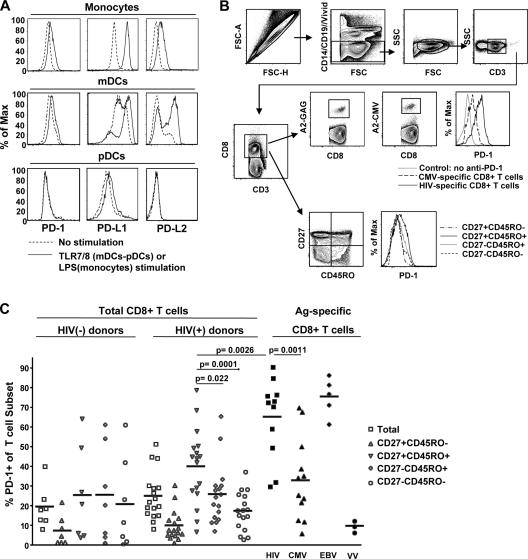
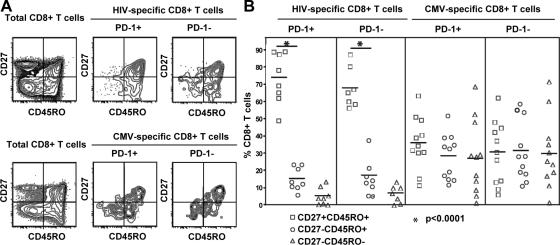
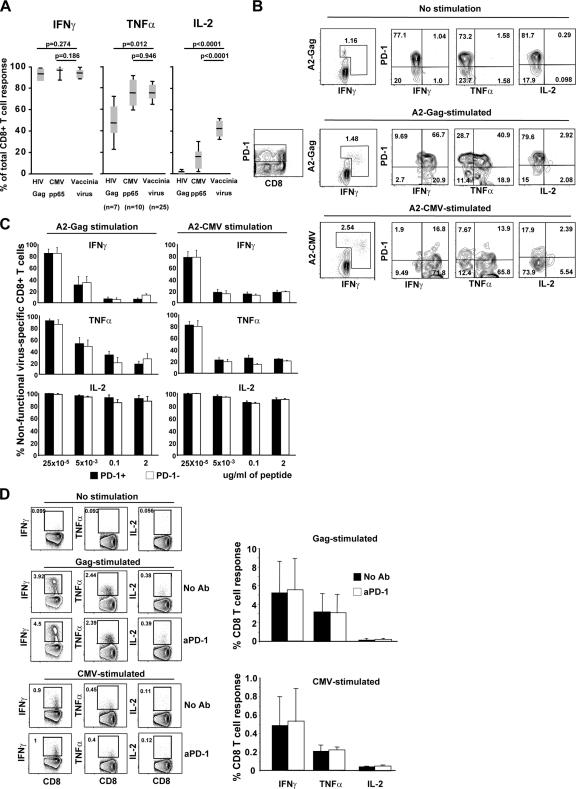
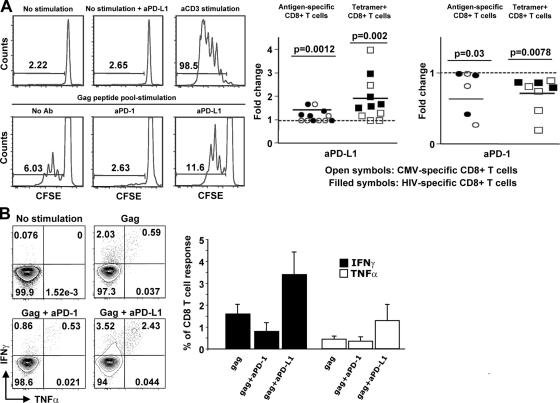
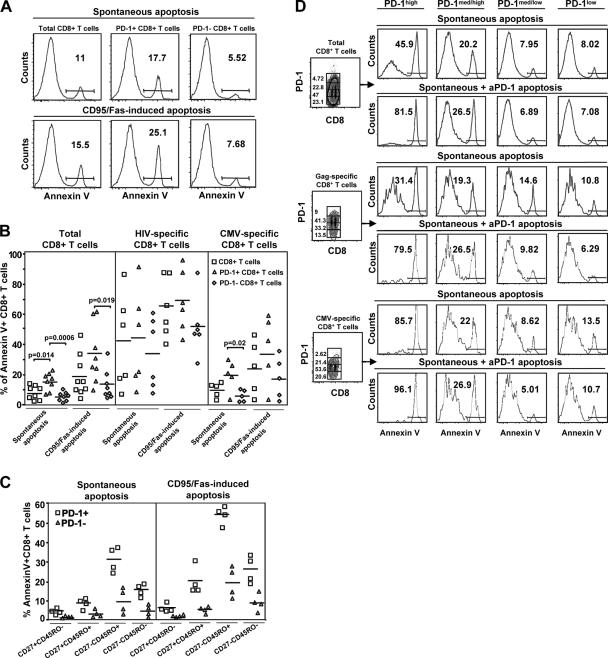
Here, we report on the expression of programmed death (PD)-1 on human virus-specific CD8+ T cells and the effect of manipulating signaling through PD-1 on the survival, proliferation, and cytokine function of these cells. PD-1 expression was found to be low on naive CD8+ T cells and increased on memory CD8+ T cells according to antigen specificity. Memory CD8+ T cells specific for poorly controlled chronic persistent virus (HIV) more frequently expressed PD-1 than memory CD8+ T cells specific for well-controlled persistent virus (cytomegalovirus) or acute (vaccinia) viruses. PD-1 expression was independent of maturational markers on memory CD8+ T cells and was not directly associated with an inability to produce cytokines. Importantly, the level of PD-1 surface expression was the primary determinant of apoptosis sensitivity of virus-specific CD8+ T cells. Manipulation of PD-1 led to changes in the ability of the cells to survive and expand, which, over several days, affected the number of cells expressing cytokines. Therefore, PD-1 is a major regulator of apoptosis that can impact the frequency of antiviral T cells in chronic infections such as HIV, and could be manipulated to improve HIV-specific CD8+ T cell numbers, but possibly not all functions in vivo.
Overview
The claims and statistics of this paper haven’t been checked yet.
Run the check — free, no account needed. It reads the open-access text and checks the sources it cites.
Integrity signals
Registry
Cites
Statistics
Figures
Verification
Claims the paper makes
The claims and statistics of this paper haven’t been checked yet.
Run the check — free, no account needed. It reads the open-access text and checks the sources it cites.
Claims other papers make about this one
Each is checked against this paper’s own text: does it say what the citing paper says it does?
In the citing paper
“The view that many of these late-stage differentiated cells are not dysfunctional or senescent is supported by studies showing that the inhibitory molecule programmed death-1 (PD-1) is expressed on very few CMV-specific cells and at low levels (Petrovas et al. 2006; Trautmann et al. 2006).”
From Is immunosenescence influenced by our lifetime “dose” of exercise? (2016) · cites this paper as Petrovas et al. 2006
Self-check
Percentages, sums and reported differences re-computed from the paper’s own numbers.
The self-check needs the paper’s full text.
Citations
Cites
Freeman, G. J., Long, A. J., Iwai, Y., Bourque, K., Chernova, T., Nishimura, H., Fitz, L. J., Malenkovich, N., Okazaki, T., Byrne, M. C., et al. (2000) · The Journal of Experimental Medicine · doi:10.1084/jem.192.7.1027 · Cited by 5,294
Tumor-associated B7-H1 promotes T-cell apoptosis: A potential mechanism of immune evasion
Dong, H., Strome, S. E., Salomao, D. R., Tamura, H., Hirano, F., Flies, D. B., Roche, P. C., Lu, J., Zhu, G., Tamada, K., et al. (2002) · Nature Medicine · doi:10.1038/nm730 · Cited by 5,025
Restoring function in exhausted CD8 T cells during chronic viral infection
Barber, D. L., Wherry, E. J., Masopust, D., Zhu, B., Allison, J. P., Sharpe, A. H., Freeman, G. J., & Ahmed, R. (2005) · Nature · doi:10.1038/nature04444 · Cited by 4,057
Ishida, Y., Agata, Y., Shibahara, K., & Honjo, T. (1992) · The EMBO Journal · doi:10.1002/j.1460-2075.1992.tb05481.x · Cited by 3,259
PD-L2 is a second ligand for PD-1 and inhibits T cell activation
Latchman, Y., Wood, C. R., Chernova, T., Chaudhary, D., Borde, M., Chernova, I., Iwai, Y., Long, A. J., Brown, J. A., Nunes, R., et al. (2001) · Nature Immunology · doi:10.1038/85330 · Cited by 2,955
PD-1 expression on HIV-specific T cells is associated with T-cell exhaustion and disease progression
Day, C. L., Kaufmann, D. E., Kiepiela, P., Brown, J. A., Moodley, E. S., Reddy, S., Mackey, E. W., Miller, J. D., Leslie, A. J., DePierres, C., et al. (2006) · Nature · doi:10.1038/nature05115 · Cited by 2,680
Koup, R. A., Safrit, J. T., Cao, Y., Andrews, C. A., McLeod, G. X., Borkowsky, W., Farthing, C., & Ho, D. D. (1994) · Journal of Virology · doi:10.1128/jvi.68.7.4650-4655.1994 · Cited by 2,494
Self-citationGreenwald, R. J., Freeman, G. J., & Sharpe, A. H. (2005) · Annual Review of Immunology · doi:10.1146/annurev.immunol.23.021704.115611 · Cited by 2,318
CTLA-4 and PD-1 Receptors Inhibit T-Cell Activation by Distinct Mechanisms
Parry, R. V., Chemnitz, J. M., Frauwirth, K. A., Lanfranco, A. R., Braunstein, I., Kobayashi, S. V., Linsley, P. S., Thompson, C. B., & Riley, J. L. (2005) · Molecular and Cellular Biology · doi:10.1128/mcb.25.21.9543-9553.2005 · Cited by 1,931
HIV nonprogressors preferentially maintain highly functional HIV-specific CD8+ T cells
Betts, M. R. (2006) · Blood · doi:10.1182/blood-2005-12-4818 · Cited by 1,812
Cited by
Sorted by citations
Items 201–300 of 889
Stem, Effector, and Hybrid States of Memory CD8+ T Cells
Lugli, E., Galletti, G., Boi, S. K., & Youngblood, B. (2019) · Trends in Immunology · doi:10.1016/j.it.2019.11.004 · Cited by 107
Upregulation of PD-L1 on monocytes and dendritic cells by HIV-1 derived TLR ligands
Meier, A., Bagchi, A., Sidhu, H. K., Alter, G., Suscovich, T. J., Kavanagh, D. G., Streeck, H., Brockman, M. A., Gall, S. L., Hellman, J., et al. (2008) · AIDS · doi:10.1097/qad.0b013e3282f4de23 · Cited by 105
Gastrointestinal toxicity of immune checkpoint inhibitors: From mechanisms to management
Samaan, M. A., Pavlidis, P., Papa, S., Powell, N., & Irving, P. M. (2018) · Nature Reviews Gastroenterology & Hepatology · doi:10.1038/nrgastro.2018.14 · Cited by 100
Wang, S., Zhang, Q., Hui, H., Agrawal, K., Karris, M., & Rana, T. M. (2020) · Emerging Microbes & Infections · doi:10.1080/22221751.2020.1826361 · Cited by 103
Enhanced Anti-HIV Functional Activity Associated with Gag-Specific CD8 T-Cell Responses
Jülg, B. D., Williams, K. L., Reddy, S., Bishop, K. S., Qi, Y., Carrington, M. N., Goulder, P., Ndung’u, T., & Walker, B. D. (2010) · Journal of Virology · doi:10.1128/jvi.02031-09 · Cited by 102
Success and failure of the cellular immune response against HIV-1
Migueles, S. A., & Connors, M. (2015) · Nature Immunology · doi:10.1038/ni.3161 · Cited by 100
Radziewicz, H., Ibegbu, C., Hon, H., Osborn, M. K., Obideen, K. M., Wehbi, M. A., Freeman, G. J., Lennox, J. L., Workowski, K., Hanson, H. L., et al. (2008) · Journal of Virology · doi:10.1128/jvi.01075-08 · Cited by 102
Vali, B., Jones, R. B., Sakhdari, A., Sheth, P. M., Clayton, K., Yue, F., Gyenes, G. T., Wong, D., Klein, M. B., Saeed, S., et al. (2010) · European Journal of Immunology · doi:10.1002/eji.201040340 · Cited by 101
Yue, F. Y., Lo, C. C., Sakhdari, A., Lee, E. Y., Kovacs, C. M., Benko, E., Liu, J., Song, H., Jones, R. B., Sheth, P. M., et al. (2010) · The Journal of Immunology · doi:10.4049/jimmunol.0903915 · Cited by 101
CD8+ T-Cell Response to HIV Infection in the Era of Antiretroviral Therapy
Perdomo-Celis, F., Taborda, N. A., & Rugeles, M. T. (2019) · Frontiers in Immunology · doi:10.3389/fimmu.2019.01896 · Cited by 103
Moll, M., Kuylenstierna, C., Gonzalez, V. D., Andersson, S. K., Bosnjak, L., Sönnerborg, A. B., Quigley, M. F., & Sandberg, J. K. (2009) · European Journal of Immunology · doi:10.1002/eji.200838780 · Cited by 101
Mujib, S., Jones, R. B., Lo, C. C., Aidarus, N., Clayton, K., Sakhdari, A., Benko, E., Kovacs, C. M., & Ostrowski, M. (2012) · The Journal of Immunology · doi:10.4049/jimmunol.1102609 · Cited by 105
Ng, C. T., Snell, L. M., Brooks, D. G., & Oldstone, M. B. A. (2013) · Cell Host & Microbe · doi:10.1016/j.chom.2013.05.014 · Cited by 103
PD-1, gender, and autoimmunity
Dinesh, R. K., Hahn, B. H., & Singh, R. P. (2010) · Autoimmunity Reviews · doi:10.1016/j.autrev.2010.04.003 · Cited by 100
Ferrari, G., Korber, B., Goonetilleke, N. P., Liu, M. K. P., Turnbull, E. L., Salazar-Gonzalez, J. F., Hawkins, N. R., Self, S. G., Watson, S., Betts, M. R., et al. (2011) · PLoS Pathogens · doi:10.1371/journal.ppat.1001273 · Cited by 95
Self-citationEdwards, E. S. J., Bier, J., Cole, T. S., Wong, M., Hsu, P. S., Berglund, L. J., Boztuǧ, K., Lau, A., Emma Gostick, D., Price, D. A., et al. (2018) · Journal of Allergy and Clinical Immunology · doi:10.1016/j.jaci.2018.04.030 · Cited by 98
Self-citationMattes, F. M., Vargas, A., Kopycinski, J., Hainsworth, E. G., Sweny, P., Nebbia, G., Bazeos, A., Lowdell, M. W., Klenerman, P., Phillips, R. E., et al. (2008) · American Journal of Transplantation · doi:10.1111/j.1600-6143.2008.02191.x · Cited by 97
How chronic viral infections impact on antigen‐specific T‐cell responses
Frebel, H., Richter, K., & Oxenius, A. (2010) · European Journal of Immunology · doi:10.1002/eji.200940102 · Cited by 97
Alloantigen expression on non-hematopoietic cells reduces graft-versus-leukemia effects in mice
Asakura, S., Hashimoto, D., Takashima, S., Sugiyama, H., Maeda, Y., Akashi, K., Tanimoto, M., & Teshima, T. (2010) · Journal of Clinical Investigation · doi:10.1172/jci39165 · Cited by 96
Breton, G., Chomont, N., Takata, H., Fromentin, R., Ahlers, J. D., Filali-Mouhim, A., Riou, C., Boulassel, M., Routy, J., Yassine‐Diab, B., et al. (2013) · The Journal of Immunology · doi:10.4049/jimmunol.1200646 · Cited by 95
PD-1 Blockade in Chronically HIV-1-Infected Humanized Mice Suppresses Viral Loads
Seung, E., Dudek, T. E., Allen, T. M., Freeman, G. J., Luster, A. D., & Tager, A. M. (2013) · PLoS ONE · doi:10.1371/journal.pone.0077780 · Cited by 94
Positive and Negative Regulation of Cellular Immune Responses in Physiologic Conditions and Diseases
Viganó, S., Perreau, M., Pantaleo, G., & Harari, A. (2012) · Clinical and Developmental Immunology · doi:10.1155/2012/485781 · Cited by 96
Kinetics of Expansion of Epitope-Specific T Cell Responses during Primary HIV-1 Infection
Turnbull, E. L., Wong, M., Wang, S., Wei, X., Jones, N., Conrod, K. E., Aldam, D., Turner, J., Pellegrino, P., Keele, B. F., et al. (2009) · The Journal of Immunology · doi:10.4049/jimmunol.0803658 · Cited by 95
Martinez, O. M., & Krams, S. M. (2017) · Transplantation · doi:10.1097/tp.0000000000001767 · Cited by 95
PD-1/PD-L1 pathway and T-cell exhaustion in chronic hepatitis virus infection
Watanabe, T., Bertoletti, A., & Tan, A. T. (2010) · Journal of Viral Hepatitis · doi:10.1111/j.1365-2893.2010.01313.x · Cited by 95
Tim-3 Negatively Regulates Cytotoxicity in Exhausted CD8+ T Cells in HIV Infection
Sakhdari, A., Mujib, S., Vali, B., Yue, F. Y., MacParland, S. A., Clayton, K., Jones, R. B., Liu, J., Lee, E. Y., Benko, E., et al. (2012) · PLoS ONE · doi:10.1371/journal.pone.0040146 · Cited by 94
The contextual role of TNFR family members in CD 8+ T‐cell control of viral infections
Wortzman, M. E., Clouthier, D., McPherson, A. J., Lin, G. H. Y., & Watts, T. H. (2013) · Immunological Reviews · doi:10.1111/imr.12086 · Cited by 99
Immunological approaches to HIV cure
Ward, A. R., Mota, T. M., & Jones, R. B. (2020) · Seminars in Immunology · doi:10.1016/j.smim.2020.101412 · Cited by 95
Zwijnenburg, A. J., Pokharel, J., Varnaitė, R., Zheng, W., Hoffer, E., Shryki, I., Comet, N. R., Ehrström, M., Gredmark‐Russ, S., Eidsmo, L., et al. (2023) · Immunity · doi:10.1016/j.immuni.2023.06.025 · Cited by 92
Clayton, K., Douglas-Vail, M. B., Rahman, A. K. M. N.-U., Medcalf, K. E., Xie, I. Y., Chew, G. M., Tandon, R., Lanteri, M. C., Norris, P. J., Deeks, S. G., et al. (2015) · Journal of Virology · doi:10.1128/jvi.00006-15 · Cited by 92
Benedict, C. A., Loewendorf, A. I., Garcia, Z., Blazar, B. R., & Janssen, E. M. (2008) · The Journal of Immunology · doi:10.4049/jimmunol.180.7.4836 · Cited by 94
Shimauchi, T., Kabashima, K., Nakashima, D., Sugita, K., Yamada, Y., Hino, R., & TOKURA, Y. (2007) · International Journal of Cancer · doi:10.1002/ijc.23042 · Cited by 94
Ha, S., West, E. E., Araki, K., Smith, K. A., & Ahmed, R. (2008) · Immunological Reviews · doi:10.1111/j.1600-065x.2008.00638.x · Cited by 90
Martinson, J., Montoya, C. J., Úsuga, X., Ronquillo, R., LANDAY, A. L., & Desai, S. N. (2009) · Antimicrobial Agents and Chemotherapy · doi:10.1128/aac.01246-09 · Cited by 96
Day, C. L., Abrahams, D. A., Bunjun, R., Stone, L., de Kock, M., Walzl, G., Wilkinson, R. J., Burgers, W. A., & Hanekom, W. A. (2018) · Frontiers in Immunology · doi:10.3389/fimmu.2018.01995 · Cited by 91
T cell exhaustion in protozoan disease
Gigley, J. P., Bhadra, R., Moretto, M. M., & Khan, I. A. (2012) · Trends in Parasitology · doi:10.1016/j.pt.2012.07.001 · Cited by 89
T-cell exhaustion in HIV infection
Far, M. E., Halwani, R., Said, E. A., Trautmann, L., Doroudchi, M., Janbazian, L., Fonseca, S. G., van Grevenynghe, J., Yassine‐Diab, B., Sékaly, R., et al. (2008) · Current HIV/AIDS Reports · doi:10.1007/s11904-008-0003-7 · Cited by 87
Trabattoni, D., Saresella, M., Pacei, M., Marventano, I., Mendozzi, L., Rovaris, M., Caputo, D., Borelli, M., & Clerici, M. (2009) · The Journal of Immunology · doi:10.4049/jimmunol.0901038 · Cited by 93
Smyk‐Pearson, S., Tester, I. A., Klarquist, J. S., Palmer, B. E., Pawlotsky, J., Golden‐Mason, L., & Rosen, H. R. (2007) · Journal of Virology · doi:10.1128/jvi.01581-07 · Cited by 87
Vranjkovic, A., Crawley, A. M., Gee, K., Kumar, A., & Angel, J. B. (2007) · International Immunology · doi:10.1093/intimm/dxm102 · Cited by 85
Sckisel, G. D., Mirsoian, A., Minnar, C. M., Crittenden, M. R., Curti, B. D., Chen, J. Q., Blazar, B. R., Borowsky, A. D., Monjazeb, A. M., & Murphy, W. J. (2017) · Journal for ImmunoTherapy of Cancer · doi:10.1186/s40425-017-0235-4 · Cited by 84
CD8 T-Cell Memory Differentiation during Acute and Chronic Viral Infections
Kalia, V., Sarkar, S., & Ahmed, R. (2010) · Advances in experimental medicine and biology · doi:10.1007/978-1-4419-6451-9_7 · Cited by 86
Dendritic cell‐based human immunodeficiency virus vaccine
Rinaldo, C. R. (2008) · Journal of Internal Medicine · doi:10.1111/j.1365-2796.2008.02047.x · Cited by 90
Living in a house of cards: re‐evaluating CD8+ T‐cell immune correlates against HIV
Makedonas, G., & Betts, M. R. (2010) · Immunological Reviews · doi:10.1111/j.1600-065x.2010.00968.x · Cited by 82
Landscape of Exhausted Virus-Specific CD8 T Cells in Chronic LCMV Infection
Sandu, I., Cerletti, D., Oetiker, N., Borsa, M., Wagen, F., Spadafora, I., Welten, S. P. M., Stolz, U., Oxenius, A., & Claassen, M. (2020) · Cell Reports · doi:10.1016/j.celrep.2020.108078 · Cited by 78
and the CAPRISA 002 Acute Infection Study Team, Burgers, W. A., Riou, C., Mlotshwa, M., Maenetje, P. W., Rosa, D. D. A., Brenchley, J. M., Mlisana, K. P., Douek, D. C., Koup, R. A., et al. (2009) · The Journal of Immunology · doi:10.4049/jimmunol.0803801 · Cited by 82
Self-citationWang, C., Wen, T., Routy, J., Bernard, N. F., Sékaly, R., & Watts, T. H. (2007) · The Journal of Immunology · doi:10.4049/jimmunol.179.12.8252 · Cited by 81
Costimulation Signals for Memory CD8+ T Cells During Viral Infections
Duttagupta, P. A., Boesteanu, A. C., & Katsikis, P. D. (2009) · Critical Reviews in Immunology · doi:10.1615/critrevimmunol.v29.i6.20 · Cited by 80
Muthumani, K., Choo, A. Y., Shedlock, D. J., Laddy, D. J., Sundaram, S. G., Hirao, L. A., Wu, L., Thieu, K. P., Chung, C. W., Lankaraman, K. M., et al. (2008) · Journal of Virology · doi:10.1128/jvi.00485-08 · Cited by 85
CD160-Associated CD8 T-Cell Functional Impairment Is Independent of PD-1 Expression
Viganó, S., Banga, R., Bellanger, F., Pellaton, C., Farina, A., Comte, D., Harari, A., & Perreau, M. (2014) · PLoS Pathogens · doi:10.1371/journal.ppat.1004380 · Cited by 76
Lehner, T. (2007) · Immunology · doi:10.1111/j.1365-2567.2007.02780.x · Cited by 76
Update on hepatitis B virus infection
You, C. R. (2014) · World Journal of Gastroenterology · doi:10.3748/wjg.v20.i37.13293 · Cited by 78
Virus‐specific CD8 T cells: activation, differentiation and memory formation
Wiesel, M., Walton, S. M., Richter, K., & Oxenius, A. (2009) · Apmis · doi:10.1111/j.1600-0463.2009.02459.x · Cited by 80
Phares, T. W., Ramakrishna, C., Parra, G. I., Epstein, A. L., Chen, L., Atkinson, R., Stohlman, S. A., & Bergmann, C. C. (2009) · The Journal of Immunology · doi:10.4049/jimmunol.0803557 · Cited by 81
Good cell, bad cell: Flow cytometry reveals T‐cell subsets important in HIV disease
Chattopadhyay, P. K., & Roederer, M. (2010) · Cytometry Part A · doi:10.1002/cyto.a.20905 · Cited by 78
Self-citationCoinhibitory receptors and CD8 T cell exhaustion in chronic infections
Kuchroo, V. K., Anderson, A. C., & Petrovas, C. (2014) · Current Opinion in HIV and AIDS · doi:10.1097/coh.0000000000000088 · Cited by 76
Self-citationSierro, S. R., Donda, A., Perret, R., Guillaume, P., Yagita∥, H., Lévy, F., & Romero, P. J. (2011) · European Journal of Immunology · doi:10.1002/eji.201041235 · Cited by 74
Regulatory T cells in HIV infection: pathogenic or protective participants in the immune response?
Groth, B. F. D. S., & LANDAY, A. L. (2008) · AIDS · doi:10.1097/qad.0b013e3282f466da · Cited by 73
T Cell Dysfunction by Hepatitis C Virus Core Protein Involves PD-1/PDL-1 Signaling
Yao, Z. Q., King, E., Prayther, D., Yin, D., & Moorman, J. P. (2007) · Viral Immunology · doi:10.1089/vim.2006.0096 · Cited by 72
CD8+ T cells in preventing HIV infection and disease
McDermott, A. B., & Koup, R. A. (2012) · AIDS · doi:10.1097/qad.0b013e328353bcaf · Cited by 73
Self-citationWebster, W. S., Thompson, R. H., Harris, K. J., Frigola, X., Kuntz, S. M., Inman, B. A., & Dong, H. (2007) · The Journal of Immunology · doi:10.4049/jimmunol.179.5.2860 · Cited by 73
HIV Infection Functionally Impairs Mycobacterium tuberculosis-Specific CD4 and CD8 T-Cell Responses
Amelio, P., Portevin, D., Hella, J., Reither, K., Kamwela, L., Lweno, O., Tumbo, A., Geoffrey, L. S., Ohmiti, K., Ding, S.-W., et al. (2018) · Journal of Virology · doi:10.1128/jvi.01728-18 · Cited by 76
B7-H1 (PD-L1) on T cells is required for T-cell-mediated conditioning of dendritic cell maturation
Talay, O., Shen, C.-H., Chen, L., & Chen, J. (2009) · Proceedings of the National Academy of Sciences · doi:10.1073/pnas.0813367106 · Cited by 72
Intrahepatic levels of PD-1/PD-L correlate with liver inflammation in chronic hepatitis B
Chen, J., Wang, X., Wu, X., Wang, Y., Zhao, H., Shen, B., & Wang, G. (2010) · Inflammation Research · doi:10.1007/s00011-010-0233-1 · Cited by 72
Zelinskyy, G., Myers, L. M., Dietze, K. K., Sutter, K., Roggendorf, M., Liu, J., Lu, M., Kraft, A. R. M., Teichgräber, V., Hasenkrug, K. J., et al. (2011) · The Journal of Immunology · doi:10.4049/jimmunol.1101612 · Cited by 72
Tauriainen, J., Scharf, L., Frederiksen, J., Naji, A., Ljunggren, H., Sönnerborg, A. B., Lund, O., Reyes‐Terán, G., Hecht, F. M., Deeks, S. G., et al. (2017) · Scientific Reports · doi:10.1038/srep40354 · Cited by 71
Wang, C., McPherson, A. J., Jones, R. B., Kawamura, K. S., Lin, G. H. Y., Lang, P. A., Ambagala, T., Pellegrini, M., Calzascia, T., Aidarus, N., et al. (2011) · The Journal of Experimental Medicine · doi:10.1084/jem.20110675 · Cited by 73
PD-1 coinhibitory signals: the link between pathogenesis and protection
Kulpa, D. A., Lawani, M., Cooper, A., Peretz, Y., Ahlers, J., & Sékaly, R.-P. (2013) · Seminars in Immunology · doi:10.1016/j.smim.2013.02.002 · Cited by 70
CD 8+ T‐cell effector function and transcriptional regulation during HIV pathogenesis
Demers, K., Reuter, M. A., & Betts, M. R. (2013) · Immunological Reviews · doi:10.1111/imr.12069 · Cited by 78
Boasso, A., Hardy, A. W., LANDAY, A. L., Martinson, J., Anderson, S. A., Dolan, M. J., Clerici, M., & Shearer, G. M. (2008) · Clinical Immunology · doi:10.1016/j.clim.2008.05.009 · Cited by 70
Serriari, N., Gondois‐Rey, F., Guillaume, Y., Remmerswaal, E. B. M., Pastor, S., Messal, N., Truneh, A., Hirsch, I., van Lier, R. A. W., & Olive, D. (2010) · The Journal of Immunology · doi:10.4049/jimmunol.0902487 · Cited by 71
Metabolic regulation by PD-1 signaling promotes long-lived quiescent CD8 T cell memory in mice
Kalia, V., Yuzefpolskiy, Y., Vegaraju, A., Xiao, H., Baumann, F. M., Jatav, S., Church, C. D., Prlic, M., Jha, A., Nghiem, P., et al. (2021) · Science Translational Medicine · doi:10.1126/scitranslmed.aba6006 · Cited by 71
Ngumbela, K. C., Day, C. L., Mncube, Z., Nair, K., Ramduth, D., Thobakgale, C., Moodley, E. S., Reddy, S., de Pierres, C., Mkhwanazi, N. P., et al. (2008) · AIDS Research and Human Retroviruses · doi:10.1089/aid.2007.0124 · Cited by 68
Cumont, M., Monceaux, V., Viollet, L., Lay, S., Parker, R., Hurtrel, B., & Estaquier, J. (2007) · Cell Death and Differentiation · doi:10.1038/sj.cdd.4402192 · Cited by 73
The role of antagonists of the PD-1:PD-L1/PD-L2 axis in head and neck cancer treatment
Pai, S. I., Zandberg, D. P., & Strome, S. E. (2016) · Oral Oncology · doi:10.1016/j.oraloncology.2016.08.001 · Cited by 70
Manipulation of Costimulatory Molecules by Intracellular Pathogens: Veni, Vidi, Vici!!
Khan, N., Gowthaman, U., Pahari, S., & Agrewala, J. N. (2012) · PLoS Pathogens · doi:10.1371/journal.ppat.1002676 · Cited by 67
Acutely dysregulated, chronically disabled by the enemy within: T‐cell responses to HIV‐1 infection
Munier, C. M. L., & Kelleher, A. D. (2006) · Immunology and Cell Biology · doi:10.1038/sj.icb.7100015 · Cited by 73
CD8 T cell persistence in treated HIV infection
Mudd, J. C., & Lederman, M. M. (2014) · Current Opinion in HIV and AIDS · doi:10.1097/coh.0000000000000086 · Cited by 68
A brief history of CD8 T cells
Masopust, D., Vezys, V., Wherry, E. J., & Ahmed, R. (2007) · European Journal of Immunology · doi:10.1002/eji.200737584 · Cited by 70
Onlamoon, N., Rogers, K. A., Mayne, A. E., Pattanapanyasat, K., Mori, K., Villinger, F. J., & Ansari, A. A. (2008) · Immunology · doi:10.1111/j.1365-2567.2007.02766.x · Cited by 65
The T cell repertoire in infection and vaccination: implications for control of persistent viruses
Davenport, M. P., Price, D. A., & McMichael, A. J. (2007) · Current Opinion in Immunology · doi:10.1016/j.coi.2007.04.001 · Cited by 65
Self-citationHighly multiplexed quantitation of gene expression on single cells
Dominguez, M. H., Chattopadhyay, P. K., Ma, S., Lamoreaux, L., McDavid, A., Finak, G., Gottardo, R., Koup, R. A., & Roederer, M. (2013) · Journal of Immunological Methods · doi:10.1016/j.jim.2013.03.002 · Cited by 66
Self-citationDysregulation of CD8+ lymphocyte apoptosis, chronic disease, and immune regulation
Karen, L. W. (2009) · Frontiers in bioscience · doi:10.2741/3487 · Cited by 65
Amancha, P. K., Hong, J. J., Rogers, K. A., Ansari, A. A., & Villinger, F. J. (2013) · The Journal of Immunology · doi:10.4049/jimmunol.1302044 · Cited by 64
Hassan, S. S., Akram, M., King, E. C., Dockrell, H. M., & Cliff, J. M. (2015) · PLoS ONE · doi:10.1371/journal.pone.0137646 · Cited by 64
PD-1–Mediated Attrition of Polyfunctional Memory CD8+ T Cells in Chronic Toxoplasma Infection
Bhadra, R., Gigley, J. P., & Khan, I. A. (2012) · The Journal of Infectious Diseases · doi:10.1093/infdis/jis304 · Cited by 63
Rosa, C. L., Krishnan, A., Longmate, J., Martinez, J., Manchanda, P., Lacey, S. F., Limaye, A. P., & Diamond, D. J. (2007) · The Journal of Infectious Diseases · doi:10.1086/523652 · Cited by 66
Immune Memory and Exhaustion: Clinically Relevant Lessons from the LCMV Model
Zehn, D., & Wherry, E. J. (2015) · Advances in experimental medicine and biology · doi:10.1007/978-3-319-15774-0_10 · Cited by 60
Regulatory T cells differentially modulate the maturation and apoptosis of human CD8+ T-cell subsets
Nikolova, M. H., Lelièvre, J., Carrière, M., Bensussan, A., & Lévy, Y. (2009) · Blood · doi:10.1182/blood-2008-04-151407 · Cited by 61
Mechanism of T cell exhaustion in a chronic environment
Jin, H.-T., Jeong, Y. H., Park, H.-J., & Ha, S. (2011) · BMB Reports · doi:10.5483/bmbrep.2011.44.4.217 · Cited by 62
Immune Checkpoint Blockade Restores HIV-Specific CD4 T Cell Help for NK Cells
Porichis, F., Hart, M. G., Massa, A. L., Everett, H. L., Morou, A., Richard, J., Brassard, N., Veillette, M., Hassan, M., Ly, N. L., et al. (2018) · The Journal of Immunology · doi:10.4049/jimmunol.1701551 · Cited by 61
Camelliti, S., Noci, V. L., Bianchi, F., Moscheni, C., Arnaboldi, F., Gagliano, N., Balsari, A., Garassino, M. C., Tagliabue, E., Sfondrini, L., et al. (2020) · Journal of Experimental & Clinical Cancer Research · doi:10.1186/s13046-020-01721-9 · Cited by 61
Wu, M., Xia, X., Hu, J., Fowlkes, N. W., & Li, S. (2021) · Nature Communications · doi:10.1038/s41467-021-23864-9 · Cited by 61
Rowe, J. H., Johanns, T. M., Ertelt, J. M., & Way, S. S. (2008) · The Journal of Immunology · doi:10.4049/jimmunol.180.11.7553 · Cited by 60
New insights on the role of apoptosis and autophagy in HIV pathogenesis
Gougeon, M., & Piacentini, M. (2009) · APOPTOSIS · doi:10.1007/s10495-009-0314-1 · Cited by 62
He, R., Yang, X., Liu, C., Chen, X., Wang, L., Xiao, M., Ye, J., Wu, Y., & Ye, L. (2017) · Cellular and Molecular Immunology · doi:10.1038/cmi.2017.3 · Cited by 60
Immune-Checkpoint Inhibitors in B-Cell Lymphoma
Armengol, M., Santos, J. C., Fernández-Serrano, M., Profitós-Pelejà, N., Ribeiro, M. L., & Roué, G. (2021) · Cancers · doi:10.3390/cancers13020214 · Cited by 61
Rodrigue‐Gervais, I. G., Rigsby, H., Jouan, L., Sauvé, D., Sékaly, R., Willems, B. E., & Lamarre, D. (2010) · The Journal of Immunology · doi:10.4049/jimmunol.0902522 · Cited by 58
Barbosa, R. R., Silva, S. P., Silva, S. L., Rego, R. T., Melo, A. C., Pedro, E., Barbosa, M. P., Santos, M. C. P., Victorino, R. M. M., & Sousa, A. E. (2012) · Clinical & Experimental Immunology · doi:10.1111/j.1365-2249.2012.04620.x · Cited by 59
Wang, X., Zhang, Z., Zhang, S., Fu, J., Yao, J., Jiao, Y., Wu, H., & Wang, F. (2008) · European Journal of Immunology · doi:10.1002/eji.200838285 · Cited by 59
Metadata
- Authors
- Petrovas, C., Casazza, J. P., Brenchley, J. M., Price, D. A., Gostick, E., Adams, W. C., Precopio, M. L., Schacker, T., Roederer, M., Douek, D. C., & Koup, R. A.
- Affiliations
- 1Immunology Laboratory
- 2Human Immunology Section,
- John Radcliffe Hospital (GB)
- 3Nuffield Department of Clinical Medicine, John Radcliffe Hospital, University of Oxford, Oxford OX3 9DU, UK
- University of Minnesota (US)
- National Institutes of Health (US)
- ORCID
- Venue
- The Journal of Experimental Medicine
- Publisher
- Rockefeller University Press
- Published
- 2006-09-05
- Volume
- 203
- Issue
- 10
- Pages
- 2281-2292
- ISSN
- 0022-1007 (ISSN-L)
- 1540-9538
- PMC
- PMC2118095
- OpenAlex
- W2119146367
- Cited by
- 889
- References
- 48
- Citations by year
- 2026: 13 · 2025: 16 · 2024: 19 · 2023: 18 · 2022: 29 · 2021: 35 · 2020: 45 · 2019: 39 · 2018: 36 · 2017: 33 · 2016: 35 · 2015: 33 · 2014: 44 · 2013: 48 · 2012: 48
- FWCI
- 30.78
- Type
- journal article
- Language
- en
- Open access
- bronze
- doi.org
- Locations
- The Journal of Experimental Medicine (publishedVersion)
- Europe PMC (PubMed Central) (publishedVersion, cc-by-nc-sa)
- PubMed Central (publishedVersion, cc-by-nc-sa)
- PubMed (publishedVersion)
- ORCA Online Research @Cardiff (Cardiff University) (acceptedVersion)
- Funders
- National Institute of Allergy and Infectious Diseases (P01AI074340)
- Topics
- Life Sciences › Immunology and Microbiology › Immunology › T-cell and B-cell Immunology
- Life Sciences › Immunology and Microbiology › Virology › HIV Research and Treatment
- Health Sciences › Medicine › Oncology › Cancer Immunotherapy and Biomarkers
- Keywords
- PD-1, HIV infection, CD8+ T cells, virus-specific T cells, T cell survival, apoptosis, memory T cells, cytomegalovirus, vaccinia virus, T cell proliferation, cytokine production, chronic viral infection, antiviral immunity
- MeSH terms
- Cell Survival, Flow Cytometry, Humans, HIV Infections, Antigens, CD, Apoptosis, CD8-Positive T-Lymphocytes, Apoptosis Regulatory Proteins, Programmed Cell Death 1 Receptor
About these checks
Registry, retraction, Cites and statistics results are computed, not judged, with one exception: a printed reference that no index lists is read once by a model before it counts as a citation error. Claims are extracted by a model and kept only when their quote appears verbatim in the text; each cited source is then checked, with a model’s help, for whether it says what the claim relies on. Those verdicts can be wrong — read the claim’s quote and the cited source before relying on one.
Statistics and arithmetic are recomputed, not judged.
Confidence bands are shown only for fields calibrated on our annotated test set. None is calibrated yet, so no band is shown.
What counts as a claim ›How we measure confidence ›How we check this ›
Are you an author, or do you see a problem with this page? Request a review
