

The DOI matches its Crossref record; 48 of the 48 references it cites were found in a registry or an index.
PD-1 is a regulator of virus-specific CD8+ T cell survival in HIV infection
Open accessAbstract
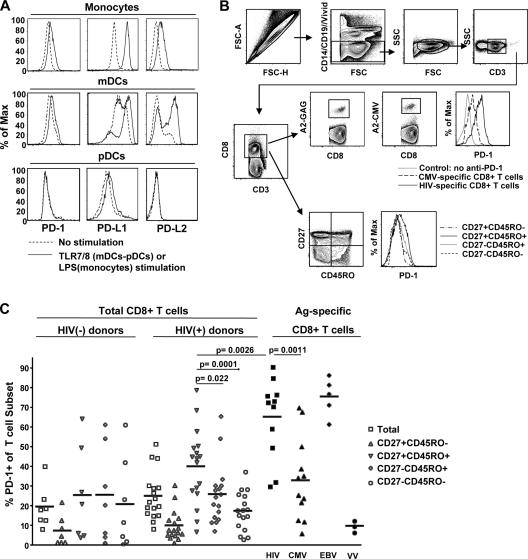
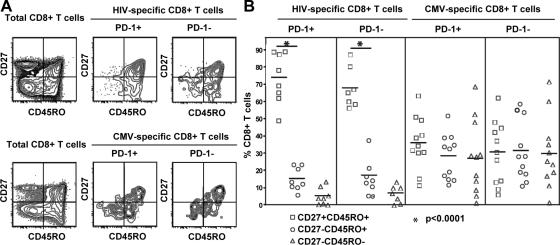
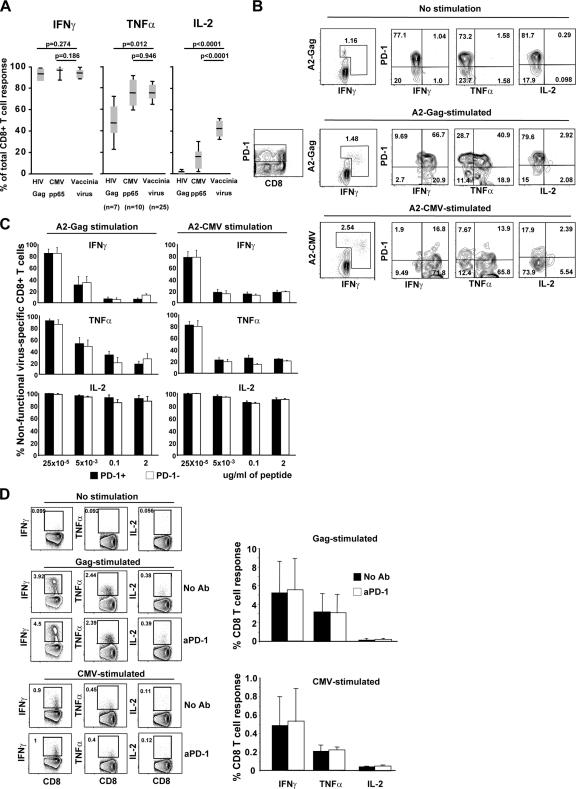
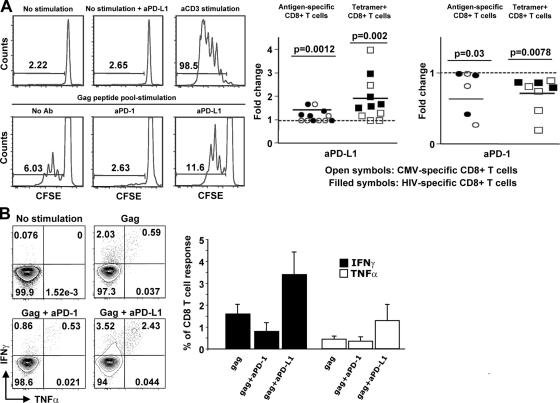
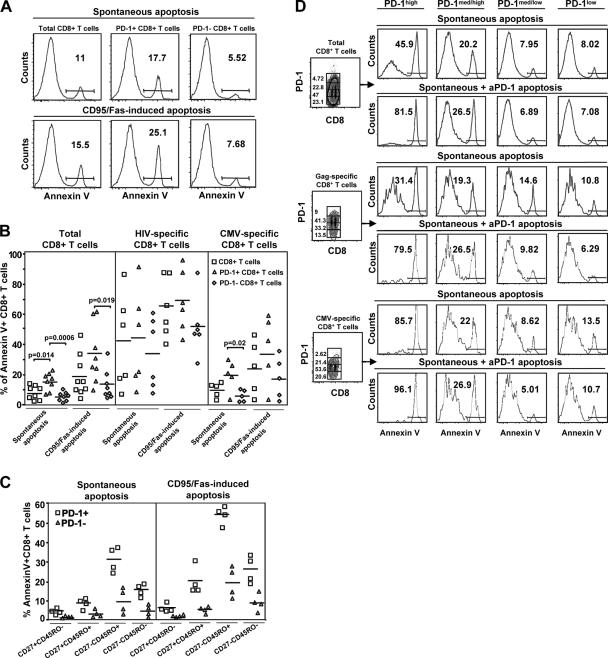
Here, we report on the expression of programmed death (PD)-1 on human virus-specific CD8+ T cells and the effect of manipulating signaling through PD-1 on the survival, proliferation, and cytokine function of these cells. PD-1 expression was found to be low on naive CD8+ T cells and increased on memory CD8+ T cells according to antigen specificity. Memory CD8+ T cells specific for poorly controlled chronic persistent virus (HIV) more frequently expressed PD-1 than memory CD8+ T cells specific for well-controlled persistent virus (cytomegalovirus) or acute (vaccinia) viruses. PD-1 expression was independent of maturational markers on memory CD8+ T cells and was not directly associated with an inability to produce cytokines. Importantly, the level of PD-1 surface expression was the primary determinant of apoptosis sensitivity of virus-specific CD8+ T cells. Manipulation of PD-1 led to changes in the ability of the cells to survive and expand, which, over several days, affected the number of cells expressing cytokines. Therefore, PD-1 is a major regulator of apoptosis that can impact the frequency of antiviral T cells in chronic infections such as HIV, and could be manipulated to improve HIV-specific CD8+ T cell numbers, but possibly not all functions in vivo.
Overview
The claims and statistics of this paper haven’t been checked yet.
Run the check — free, no account needed. It reads the open-access text and checks the sources it cites.
Integrity signals
Registry
Cites
Statistics
Figures
Verification
Claims the paper makes
The claims and statistics of this paper haven’t been checked yet.
Run the check — free, no account needed. It reads the open-access text and checks the sources it cites.
Claims other papers make about this one
Each is checked against this paper’s own text: does it say what the citing paper says it does?
In the citing paper
“The view that many of these late-stage differentiated cells are not dysfunctional or senescent is supported by studies showing that the inhibitory molecule programmed death-1 (PD-1) is expressed on very few CMV-specific cells and at low levels (Petrovas et al. 2006; Trautmann et al. 2006).”
From Is immunosenescence influenced by our lifetime “dose” of exercise? (2016) · cites this paper as Petrovas et al. 2006
Self-check
Percentages, sums and reported differences re-computed from the paper’s own numbers.
The self-check needs the paper’s full text.
Citations
Cites
Freeman, G. J., Long, A. J., Iwai, Y., Bourque, K., Chernova, T., Nishimura, H., Fitz, L. J., Malenkovich, N., Okazaki, T., Byrne, M. C., et al. (2000) · The Journal of Experimental Medicine · doi:10.1084/jem.192.7.1027 · Cited by 5,294
Tumor-associated B7-H1 promotes T-cell apoptosis: A potential mechanism of immune evasion
Dong, H., Strome, S. E., Salomao, D. R., Tamura, H., Hirano, F., Flies, D. B., Roche, P. C., Lu, J., Zhu, G., Tamada, K., et al. (2002) · Nature Medicine · doi:10.1038/nm730 · Cited by 5,025
Restoring function in exhausted CD8 T cells during chronic viral infection
Barber, D. L., Wherry, E. J., Masopust, D., Zhu, B., Allison, J. P., Sharpe, A. H., Freeman, G. J., & Ahmed, R. (2005) · Nature · doi:10.1038/nature04444 · Cited by 4,057
Ishida, Y., Agata, Y., Shibahara, K., & Honjo, T. (1992) · The EMBO Journal · doi:10.1002/j.1460-2075.1992.tb05481.x · Cited by 3,259
PD-L2 is a second ligand for PD-1 and inhibits T cell activation
Latchman, Y., Wood, C. R., Chernova, T., Chaudhary, D., Borde, M., Chernova, I., Iwai, Y., Long, A. J., Brown, J. A., Nunes, R., et al. (2001) · Nature Immunology · doi:10.1038/85330 · Cited by 2,955
PD-1 expression on HIV-specific T cells is associated with T-cell exhaustion and disease progression
Day, C. L., Kaufmann, D. E., Kiepiela, P., Brown, J. A., Moodley, E. S., Reddy, S., Mackey, E. W., Miller, J. D., Leslie, A. J., DePierres, C., et al. (2006) · Nature · doi:10.1038/nature05115 · Cited by 2,680
Koup, R. A., Safrit, J. T., Cao, Y., Andrews, C. A., McLeod, G. X., Borkowsky, W., Farthing, C., & Ho, D. D. (1994) · Journal of Virology · doi:10.1128/jvi.68.7.4650-4655.1994 · Cited by 2,494
Self-citationGreenwald, R. J., Freeman, G. J., & Sharpe, A. H. (2005) · Annual Review of Immunology · doi:10.1146/annurev.immunol.23.021704.115611 · Cited by 2,318
CTLA-4 and PD-1 Receptors Inhibit T-Cell Activation by Distinct Mechanisms
Parry, R. V., Chemnitz, J. M., Frauwirth, K. A., Lanfranco, A. R., Braunstein, I., Kobayashi, S. V., Linsley, P. S., Thompson, C. B., & Riley, J. L. (2005) · Molecular and Cellular Biology · doi:10.1128/mcb.25.21.9543-9553.2005 · Cited by 1,931
HIV nonprogressors preferentially maintain highly functional HIV-specific CD8+ T cells
Betts, M. R. (2006) · Blood · doi:10.1182/blood-2005-12-4818 · Cited by 1,812
Cited by
Sorted by citations
PD-1 and Its Ligands in Tolerance and Immunity
Keir, M. E., Butte, M. J., Freeman, G. J., & Sharpe, A. H. (2008) · Annual Review of Immunology · doi:10.1146/annurev.immunol.26.021607.090331 · Cited by 5,378
Wherry, E. J. (2011) · Nature Immunology · doi:10.1038/ni.2035 · Cited by 4,062
Molecular Signature of CD8+ T Cell Exhaustion during Chronic Viral Infection
Wherry, E. J., Ha, S.-J., Kaech, S. M., Haining, W. N., Sarkar, S., Kalia, V., Subramaniam, S., Blattman, J. N., Barber, D. L., & Ahmed, R. (2007) · Immunity · doi:10.1016/j.immuni.2007.09.006 · Cited by 2,103
Blackburn, S. D., Shin, H., Haining, W. N., Zou, T., Workman, C. J., Polley, A., Betts, M. R., Freeman, G. J., Vignali, D. A. A., & Wherry, E. J. (2009) · Nature Immunology · doi:10.1038/ni.1679 · Cited by 2,062
Targeting Tim-3 and PD-1 pathways to reverse T cell exhaustion and restore anti-tumor immunity
Sakuishi, K., Apetoh, L., Sullivan, J. M., Blazar, B. R., Kuchroo, V. K., & Anderson, A. C. (2010) · Journal of Experimental Medicine · doi:10.1084/jem.20100643 · Cited by 2,072
CD8 T Cell Exhaustion During Chronic Viral Infection and Cancer
McLane, L. M., Abdel-Hakeem, M. S., & Wherry, E. J. (2019) · Annual Review of Immunology · doi:10.1146/annurev-immunol-041015-055318 · Cited by 2,054
Inhibitory B7-family molecules in the tumour microenvironment
Zou, W., & Chen, L. (2008) · Nature Reviews Immunology · doi:10.1038/nri2326 · Cited by 1,608
The function of programmed cell death 1 and its ligands in regulating autoimmunity and infection
Sharpe, A. H., Wherry, E. J., Ahmed, R., & Freeman, G. J. (2007) · Nature Immunology · doi:10.1038/ni1443 · Cited by 1,559
PD-1 and PD-1 ligands: from discovery to clinical application
Okazaki, T., & Honjo, T. (2007) · International Immunology · doi:10.1093/intimm/dxm057 · Cited by 1,310
Fourcade, J., Sun, Z., Benallaoua, M., Guillaume, P., Luescher, I. F., Sander, C., Kirkwood, J. M., Kuchroo, V., & Zarour, H. M. (2010) · Journal of Experimental Medicine · doi:10.1084/jem.20100637 · Cited by 1,307
Control of peripheral T‐cell tolerance and autoimmunity via the CTLA‐4 and PD‐1 pathways
Fife, B. T., & Bluestone, J. A. (2008) · Immunological Reviews · doi:10.1111/j.1600-065x.2008.00662.x · Cited by 1,081
Effector and Memory CTL Differentiation
Williams, M. A., & Bevan, M. J. (2006) · Annual Review of Immunology · doi:10.1146/annurev.immunol.25.022106.141548 · Cited by 980
Characterization of Hepatitis B Virus (HBV)-Specific T-Cell Dysfunction in Chronic HBV Infection
Boni, C., Fisicaro, P., Valdatta, C., Amadei, B., Di Vincenzo, P., Giuberti, T., Laccabue, D., Zerbini, A., Cavalli, A., Missale, G., et al. (2007) · Journal of Virology · doi:10.1128/jvi.02844-06 · Cited by 920
Regulatory mechanisms of PD-1/PD-L1 in cancers
Lin, X., Kang, K., Chen, P., Zeng, Z., Li, G., Xiong, W., Yi, M., & Xiang, B. (2024) · Molecular Cancer · doi:10.1186/s12943-024-02023-w · Cited by 909
PD-1 signaling in primary T cells
Riley, J. L. (2009) · Immunological Reviews · doi:10.1111/j.1600-065x.2009.00767.x · Cited by 778
Cellular responses to viral infection in humans: lessons from Epstein–Barr virus
Hislop, A. D., Taylor, G. S., Sauce, D., & Rickinson, A. B. (2007) · Annual Review of Immunology · doi:10.1146/annurev.immunol.25.022106.141553 · Cited by 766
Enhancing SIV-specific immunity in vivo by PD-1 blockade
Velu, V., Titanji, K., Zhu, B., Husain, S., Pladevega, A., Lai, L., Vanderford, T. H., Chennareddi, L. S., Silvestri, G., Freeman, G. J., et al. (2008) · Nature · doi:10.1038/nature07662 · Cited by 765
Deeks, S. G., & Walker, B. D. (2007) · Immunity · doi:10.1016/j.immuni.2007.08.010 · Cited by 756
Jones, R. B., Ndhlovu, L. C., Barbour, J. D., Sheth, P. M., Jha, A. R., Long, B. R., Wong, J. C. Y., Satkunarajah, M., Schweneker, M., Chapman, J. M., et al. (2008) · The Journal of Experimental Medicine · doi:10.1084/jem.20081398 · Cited by 768
Phenotype and function of human T lymphocyte subsets: Consensus and issues
Appay, V., van Lier, R. A. W., Sallusto, F., & Roederer, M. (2008) · Cytometry Part A · doi:10.1002/cyto.a.20643 · Cited by 729
“T cell regulation is also dependent on antigenic stimulation, as seen with PD-1, which is upregulated on the surface of CD8 T cells undergoing activation (24), as a likely mechanism to control the proliferation and apoptosis of activated cells (51).”
BackgroundSelf-citationTolerance and exhaustion: defining mechanisms of T cell dysfunction
Schietinger, A., & Greenberg, P. D. (2013) · Trends in Immunology · doi:10.1016/j.it.2013.10.001 · Cited by 704
T‐cell exhaustion: characteristics, causes and conversion
Yi, J. S., Cox, M. A., & Zajac, A. J. (2010) · Immunology · doi:10.1111/j.1365-2567.2010.03255.x · Cited by 675
Kaech, S. M., & Wherry, E. J. (2007) · Immunity · doi:10.1016/j.immuni.2007.08.007 · Cited by 649
Clinical blockade of PD1 and LAG3 — potential mechanisms of action
Nguyen, L. T., & Ohashi, P. S. (2014) · Nature reviews. Immunology · doi:10.1038/nri3790 · Cited by 634
Emerging Concepts in the Immunopathogenesis of AIDS
Douek, D. C., Roederer, M., & Koup, R. A. (2008) · Annual Review of Medicine · doi:10.1146/annurev.med.60.041807.123549 · Cited by 633
Self-citationThe PD1:PD-L1/2 Pathway from Discovery to Clinical Implementation
Bardhan, K., Anagnostou, T., & Boussiotis, V. A. (2016) · Frontiers in Immunology · doi:10.3389/fimmu.2016.00550 · Cited by 606
Migueles, S. A., Osborne, C. M., Royce, C., Compton, A. A., Joshi, R. P., Weeks, K. A., Rood, J. E., Berkley, A. M., Sacha, J. B., Cogliano-Shutta, N. A., et al. (2008) · Immunity · doi:10.1016/j.immuni.2008.10.010 · Cited by 586
Liu, J., Hamrouni, A., Wołowiec, D., Coiteux, V., Kuliczkowski, K., Hétuin, D., Saudemont, A., & Quesnel, B. (2007) · Blood · doi:10.1182/blood-2006-10-051482 · Cited by 580
Selective expansion of a subset of exhausted CD8 T cells by αPD-L1 blockade
Blackburn, S. D., Shin, H., Freeman, G. J., & Wherry, E. J. (2008) · Proceedings of the National Academy of Sciences · doi:10.1073/pnas.0801497105 · Cited by 593
Thompson, R. H., Dong, H., Lohse, C. M., Leibovich, B. C., Blute, M. L., Cheville, J. C., & Kwon, E. D. (2007) · Clinical Cancer Research · doi:10.1158/1078-0432.ccr-06-2599 · Cited by 569
Immune checkpoint blockade in infectious diseases
Wykes, M., & Lewin, S. R. (2017) · Nature reviews. Immunology · doi:10.1038/nri.2017.112 · Cited by 585
Second messenger role for Mg2+ revealed by human T-cell immunodeficiency
Li, F.-Y., Chaigne-Delalande, B., Kanellopoulou, C., Davis, J. C., Matthews, H. F., Douek, D. C., Cohen, J. I., Uzel, G., Su, H. C., & Lenardo, M. J. (2011) · Nature · doi:10.1038/nature10246 · Cited by 579
Self-citationCoinhibitory Pathways in the B7-CD28 Ligand-Receptor Family
Schildberg, F. A., Klein, S. R., Freeman, G. J., & Sharpe, A. H. (2016) · Immunity · doi:10.1016/j.immuni.2016.05.002 · Cited by 560
Immune checkpoints and their inhibition in cancer and infectious diseases
Dyck, L., & Mills, K. H. G. (2017) · European Journal of Immunology · doi:10.1002/eji.201646875 · Cited by 553
Patsoukis, N., Brown, J., Petkova, V., Liu, F., Li, L., & Boussiotis, V. A. (2012) · Science Signaling · doi:10.1126/scisignal.2002796 · Cited by 529
Kaufmann, D., Kavanagh, D. G., Pereyra, F., Zaunders, J., Mackey, E. W., Miura, T., Palmer, S., Brockman, M. A., Rathod, A., Trocha, A. K., et al. (2007) · Nature Immunology · doi:10.1038/ni1515 · Cited by 523
Quigley, M. M., Pereyra, F., Nilsson, B., Porichis, F., Fonseca, C., Eichbaum, Q. G., Jülg, B. D., Jesneck, J. L., Brosnahan, K., Imam, S., et al. (2010) · Nature Medicine · doi:10.1038/nm.2232 · Cited by 527
Kinter, A. L., Godbout, E. J., McNally, J. P., Sereti, I., Roby, G. A., O’Shea, M. A., & Fauci, A. S. (2008) · The Journal of Immunology · doi:10.4049/jimmunol.181.10.6738 · Cited by 513
Blank, C. U., & Mackensen, A. (2006) · Cancer Immunology Immunotherapy · doi:10.1007/s00262-006-0272-1 · Cited by 516
Fisicaro, P., Valdatta, C., Massari, M., Loggi, E., Biasini, E., Sacchelli, L., Cavallo, M. C., Silini, E. M., Andreoné, P., Missale, G., et al. (2009) · Gastroenterology · doi:10.1053/j.gastro.2009.09.052 · Cited by 508
Are senescence and exhaustion intertwined or unrelated processes that compromise immunity?
Akbar, A. N., & Henson, S. M. (2011) · Nature Reviews Immunology · doi:10.1038/nri2959 · Cited by 474
Radziewicz, H., Ibegbu, C., Fernandez, M. L., Workowski, K., Obideen, K. M., Wehbi, M. A., Hanson, H. L., Steinberg, J. P., Masopust, D., Wherry, E. J., et al. (2006) · Journal of Virology · doi:10.1128/jvi.02021-06 · Cited by 495
Said, E. A., Dupuy, F. P., Trautmann, L., Zhang, Y., Shi, Y., Far, M. E., Hill, B. J., Noto, A., Ancuța, P., Peretz, Y., et al. (2010) · Nature Medicine · doi:10.1038/nm.2106 · Cited by 490
Self-citationGenetic absence of PD-1 promotes accumulation of terminally differentiated exhausted CD8+ T cells
Odorizzi, P. M., Pauken, K. E., Paley, M., Sharpe, A. H., & Wherry, E. J. (2015) · The Journal of Experimental Medicine · doi:10.1084/jem.20142237 · Cited by 480
Ageing and life-long maintenance of T-cell subsets in the face of latent persistent infections.
Nikolich-Žugich, J. (2008) · Nature reviews. Immunology · doi:10.1038/nri2318 · Cited by 463
Pathogenic Mechanisms of HIV Disease
Moir, S. L., Chun, T., & Fauci, A. S. (2011) · Annual Review of Pathology Mechanisms of Disease · doi:10.1146/annurev-pathol-011110-130254 · Cited by 520
Impact of MHC class I diversity on immune control of immunodeficiency virus replication
Goulder, P., & Watkins, D. I. (2008) · Nature reviews. Immunology · doi:10.1038/nri2357 · Cited by 453
Immune activation and HIV persistence: implications for curative approaches to HIV infection
Klatt, N. R., Chomont, N., Douek, D. C., & Deeks, S. G. (2013) · Immunological Reviews · doi:10.1111/imr.12065 · Cited by 449
Self-citationPD-1 and its ligands in T-cell immunity
Keir, M. E., Francisco, L. M., & Sharpe, A. H. (2007) · Current Opinion in Immunology · doi:10.1016/j.coi.2007.04.012 · Cited by 444
T‐cell exhaustion in HIV infection
Fenwick, C. W., Joo, V., Jacquier, P., Noto, A., Banga, R., Perreau, M., & Pantaleo, G. (2019) · Immunological Reviews · doi:10.1111/imr.12823 · Cited by 429
CD4+ T Cells Expressing PD-1, TIGIT and LAG-3 Contribute to HIV Persistence during ART
Fromentin, R., Bakeman, W., Lawani, M. B., Khoury, G., Hartogensis, W., DaFonseca, S., Killian, M. L., Epling, L., Hoh, R., Sinclair, E., et al. (2016) · PLoS Pathogens · doi:10.1371/journal.ppat.1005761 · Cited by 418
IFN-γ and TNF-α differentially regulate immunomodulation by murine mesenchymal stem cells
English, K., Barry, F., Field-Corbett, C., & Mahon, B. P. (2007) · Immunology Letters · doi:10.1016/j.imlet.2007.04.001 · Cited by 417
NFATc1 Regulates PD-1 Expression upon T Cell Activation
Oestreich, K. J., Yoon, H., Ahmed, R., & Boss, J. M. (2008) · The Journal of Immunology · doi:10.4049/jimmunol.181.7.4832 · Cited by 416
Zumla, A. I., Rao, M., Wallis, R. S., Kaufmann, S. H. E., Rustomjee, R., Mwaba, P., Vilaplana, C., Yeboah‐Manu, D., Chakaya, J. M., Ippolito, G., et al. (2016) · The Lancet Infectious Diseases · doi:10.1016/s1473-3099(16)00078-5 · Cited by 423
PD-1–PD-1 ligand interaction contributes to immunosuppressive microenvironment of Hodgkin lymphoma
Yamamoto, R., Nishikori, M., Kitawaki, T., Sakai, T., Hishizawa, M., Tashima, M., Kondo, T., Ohmori, K., Kurata, M., Hayashi, T., et al. (2008) · Blood · doi:10.1182/blood-2007-05-085159 · Cited by 398
Reinvigorating exhausted HIV-specific T cells via PD-1–PD-1 ligand blockade
Freeman, G. J., Wherry, E. J., Ahmed, R., & Sharpe, A. H. (2006) · The Journal of Experimental Medicine · doi:10.1084/jem.20061800 · Cited by 406
CD39 Expression Identifies Terminally Exhausted CD8+ T Cells
Gupta, P., Godec, J., Wolski, D., Adland, E., Yates, K. B., Pauken, K. E., Cosgrove, C., Ledderose, C., JUNGER, W. G., Robson, S. C., et al. (2015) · PLoS Pathogens · doi:10.1371/journal.ppat.1005177 · Cited by 384
PD-1 expression on tumor-specific T cells: Friend or foe for immunotherapy?
Simon, S., & Labarrière, N. (2017) · OncoImmunology · doi:10.1080/2162402x.2017.1364828 · Cited by 420
Baessler, A., & Vignali, D. A. A. (2024) · Annual Review of Immunology · doi:10.1146/annurev-immunol-090222-110914 · Cited by 420
CD8+ T cell efficacy in vaccination and disease
Appay, V., Douek, D. C., & Price, D. A. (2008) · Nature Medicine · doi:10.1038/nm.f.1774 · Cited by 393
Self-citationNakamoto, N., Cho, H., Shaked, A., Olthoff, K., Valiga, M. E., Kaminski, M., Gostick, E., Price, D. A., Freeman, G. J., Wherry, E. J., et al. (2009) · PLoS Pathogens · doi:10.1371/journal.ppat.1000313 · Cited by 380
Self-citationFourcade, J., Sun, Z., Pagliano, O., Guillaume, P., Luescher, I. F., Sander, C., Kirkwood, J. M., Olive, D., Kuchroo, V., & Zarour, H. M. (2012) · Cancer Research · doi:10.1158/0008-5472.can-11-2637 · Cited by 372
Golden‐Mason, L., Palmer, B. E., Klarquist, J. S., Mengshol, J. A., Castelblanco, N., & Rosen, H. R. (2007) · Journal of Virology · doi:10.1128/jvi.00409-07 · Cited by 371
Pollack, R. A., Jones, R. B., Pertea, M., Bruner, K. M., Martin, A. R., Thomas, A. S., Capoferri, A. A., Beg, S. A., Huang, S.-H., Karandish, S., et al. (2017) · Cell Host & Microbe · doi:10.1016/j.chom.2017.03.008 · Cited by 370
Liu, Y., Cheng, Y., Xu, Y., Wang, Z., Du, X., Li, C., Peng, J., Gao, L., Liang, X., & Ma, C. (2017) · Oncogene · doi:10.1038/onc.2017.209 · Cited by 367
Saeidi, A., Zandi, K., Cheok, Y. Y., Saeidi, H., Wong, W. F., Lee, C. Y. Q., Cheong, H. C., Yong, Y. K., Larsson, M., & Shankar, E. M. (2018) · Frontiers in Immunology · doi:10.3389/fimmu.2018.02569 · Cited by 361
CD8 T cell dysfunction during chronic viral infection
Shin, H., & Wherry, E. J. (2007) · Current Opinion in Immunology · doi:10.1016/j.coi.2007.06.004 · Cited by 346
Targeting the Latent Reservoir for HIV-1
Sengupta, S., & Siliciano, R. F. (2018) · Immunity · doi:10.1016/j.immuni.2018.04.030 · Cited by 352
Muenst, S. E., Soysal, S. D., Gao, F., Obermann, E. C., Oertli, D., & Gillanders, W. E. (2013) · Breast Cancer Research and Treatment · doi:10.1007/s10549-013-2581-3 · Cited by 338
CD4 T Cells Promote Rather than Control Tuberculosis in the Absence of PD-1–Mediated Inhibition
Barber, D. L., Mayer-Barber, K. D., Feng, C. G., Sharpe, A. H., & Sher, A. (2010) · The Journal of Immunology · doi:10.4049/jimmunol.1003304 · Cited by 333
Guignant, C., Lepape, A., Huang, X., Kherouf, H., Denis, L., Poitevin, F., Malcus, C., Gouél‐Cheron, A., Allaouchiche, B., Gueyffier, F., et al. (2011) · Critical Care · doi:10.1186/cc10112 · Cited by 337
T cell exhaustion during persistent viral infections
Kahan, S. M., Wherry, E. J., & Zajac, A. J. (2015) · Virology · doi:10.1016/j.virol.2014.12.033 · Cited by 327
Role of Different Subpopulations of CD8+ T Cells during HIV Exposure and Infection
González, S. M., Taborda, N. A., & Rugeles, M. T. (2017) · Frontiers in Immunology · doi:10.3389/fimmu.2017.00936 · Cited by 323
Early Events in Sexual Transmission of HIV and SIV and Opportunities for Interventions
Haase, A. T. (2010) · Annual Review of Medicine · doi:10.1146/annurev-med-080709-124959 · Cited by 322
Kurachi, M. (2019) · Seminars in Immunopathology · doi:10.1007/s00281-019-00744-5 · Cited by 329
Role of PD-1 in Regulating T-Cell Immunity
Jin, H., Ahmed, R., & Okazaki, T. (2010) · Current topics in microbiology and immunology · doi:10.1007/82_2010_116 · Cited by 310
Strength of PD-1 signaling differentially affects T-cell effector functions
Wei, F., Zhong, S., Ma, Z., Kong, H., Medvec, A. R., Ahmed, R., Freeman, G. J., Krogsgaard, M., & Riley, J. L. (2013) · Proceedings of the National Academy of Sciences · doi:10.1073/pnas.1305394110 · Cited by 306
Weber, J. S. (2010) · Seminars in Oncology · doi:10.1053/j.seminoncol.2010.09.005 · Cited by 309
Brahmamdam, P., Inoue, S., Unsinger, J., Chang, K. C., McDunn, J. E., & Hotchkiss, R. S. (2010) · Journal of Leukocyte Biology · doi:10.1189/jlb.0110037 · Cited by 303
CD8+ T cells in HIV control, cure and prevention
Collins, D. R., Gaiha, G. D., & Walker, B. D. (2020) · Nature reviews. Immunology · doi:10.1038/s41577-020-0274-9 · Cited by 305
Zhang, J., Zhang, Z., Wang, X., Fu, J., Yao, J., Jiao, Y., Chen, L., Zhang, H., Wei, J., Jin, L., et al. (2007) · Blood · doi:10.1182/blood-2006-09-044826 · Cited by 309
PD-L1 blockade synergizes with IL-2 therapy in reinvigorating exhausted T cells
West, E. E., Jin, H., Rasheed, A. U., Penaloza‐MacMaster, P., Ha, S., Tan, W. G., Youngblood, B., Freeman, G. J., Smith, K. A., & Ahmed, R. (2013) · Journal of Clinical Investigation · doi:10.1172/jci67008 · Cited by 300
Buggert, M., Tauriainen, J., Yamamoto, T., Frederiksen, J., Ivarsson, M. A., Michaëlsson, J., Lund, O., Hejdeman, B., Jansson, M., Sönnerborg, A. B., et al. (2014) · PLoS Pathogens · doi:10.1371/journal.ppat.1004251 · Cited by 293
Self-citationFeatures of responding T cells in cancer and chronic infection
Kim, P. S., & Ahmed, R. (2010) · Current Opinion in Immunology · doi:10.1016/j.coi.2010.02.005 · Cited by 304
Brainard, D. M., Seung, E., Frahm, N., Cariappa, A., Bailey, C. C., Hart, W. K., Shin, H., Brooks, S. F., Knight, H., Eichbaum, Q. G., et al. (2009) · Journal of Virology · doi:10.1128/jvi.02207-08 · Cited by 285
Boasso, A., Herbeuval, J., Hardy, A. W., Anderson, S. A., Dolan, M. J., Fuchs, D., & Shearer, G. M. (2006) · Blood · doi:10.1182/blood-2006-07-034785 · Cited by 303
Brockman, M. A., Kwon, D. S., Tighe, D. P., Pavlik, D. F., Rosato, P. C., Sela, J., Porichis, F., Gall, S. L., Waring, M. T., Moss, K., et al. (2009) · Blood · doi:10.1182/blood-2008-12-191296 · Cited by 285
Penna, A., Pilli, M., Zerbini, A., Orlandini, A., Mezzadri, S., Sacchelli, L., Missale, G., & Ferrari, C. I. (2007) · Hepatology · doi:10.1002/hep.21541 · Cited by 287
The growth and potential of human antiviral monoclonal antibody therapeutics
Marasco, W. A., & Sui, J. (2007) · Nature Biotechnology · doi:10.1038/nbt1363 · Cited by 294
The PD-1/PD-L1 Axis and Virus Infections: A Delicate Balance
Schönrich, G., & Raftery, M. J. (2019) · Frontiers in Cellular and Infection Microbiology · doi:10.3389/fcimb.2019.00207 · Cited by 279
Tinoco, R., Alcalde, V., Yang, Y., Sauer, K., & Zúñiga, E. I. (2009) · Immunity · doi:10.1016/j.immuni.2009.06.015 · Cited by 260
D’Souza, M., Fontenot, A. P., Mack, D. G., Lozupone, C., Dillon, S. M., Meditz, A. L., Wilson, C. C., Connick, E., & Palmer, B. E. (2007) · The Journal of Immunology · doi:10.4049/jimmunol.179.3.1979 · Cited by 268
Emerging Tim-3 functions in antimicrobial and tumor immunity
Sakuishi, K., Jayaraman, P., Behar, S. M., Anderson, A. C., & Kuchroo, V. K. (2011) · Trends in Immunology · doi:10.1016/j.it.2011.05.003 · Cited by 270
Zhang, Y., Li, J., Lou, J., Zhou, Y., Bo, L., Zhu, J., Zhu, K., Wan, X., Cai, Z., & Deng, X. (2011) · Critical Care · doi:10.1186/cc10059 · Cited by 258
Jurado, J. O., Alvarez, I. B., Pasquinelli, V., Martínez, G., Quiroga, M. F., Abbate, E. H., Musella, R. M., Chuluyán, E., & García, V. (2008) · The Journal of Immunology · doi:10.4049/jimmunol.181.1.116 · Cited by 261
Costimulatory and Coinhibitory Receptor Pathways in Infectious Disease
Attanasio, J., & Wherry, E. J. (2016) · Immunity · doi:10.1016/j.immuni.2016.04.022 · Cited by 267
Liu, J., Zhang, E., Ma, Z., Wu, W., Kosinska, A. D., Zhang, X., Möller, I., Seiz, P. L., Glebe, D., Wang, B., et al. (2014) · PLoS Pathogens · doi:10.1371/journal.ppat.1003856 · Cited by 257
Duraiswamy, J., Ibegbu, C., Masopust, D., Miller, J. D., Araki, K., Doho, G., Tata, P., Sk, G., Zilliox, M. J., Nakaya, H. I., et al. (2011) · The Journal of Immunology · doi:10.4049/jimmunol.1001783 · Cited by 246
PD-1 Regulates Self-Reactive CD8+ T Cell Responses to Antigen in Lymph Nodes and Tissues
Keir, M. E., Freeman, G. J., & Sharpe, A. H. (2007) · The Journal of Immunology · doi:10.4049/jimmunol.179.8.5064 · Cited by 243
Streeck, H., Brumme, Z. L., Anastario, M. P., Cohen, K. W., Jolin, J. S., Meier, A., Brumme, C. J., Rosenberg, E. S., Alter, G., Allen, T. M., et al. (2008) · PLoS Medicine · doi:10.1371/journal.pmed.0050100 · Cited by 241
Metadata
- Authors
- Petrovas, C., Casazza, J. P., Brenchley, J. M., Price, D. A., Gostick, E., Adams, W. C., Precopio, M. L., Schacker, T., Roederer, M., Douek, D. C., & Koup, R. A.
- Affiliations
- 1Immunology Laboratory
- 2Human Immunology Section,
- John Radcliffe Hospital (GB)
- 3Nuffield Department of Clinical Medicine, John Radcliffe Hospital, University of Oxford, Oxford OX3 9DU, UK
- University of Minnesota (US)
- National Institutes of Health (US)
- ORCID
- Venue
- The Journal of Experimental Medicine
- Publisher
- Rockefeller University Press
- Published
- 2006-09-05
- Volume
- 203
- Issue
- 10
- Pages
- 2281-2292
- ISSN
- 0022-1007 (ISSN-L)
- 1540-9538
- PMC
- PMC2118095
- OpenAlex
- W2119146367
- Cited by
- 889
- References
- 48
- Citations by year
- 2026: 13 · 2025: 16 · 2024: 19 · 2023: 18 · 2022: 29 · 2021: 35 · 2020: 45 · 2019: 39 · 2018: 36 · 2017: 33 · 2016: 35 · 2015: 33 · 2014: 44 · 2013: 48 · 2012: 48
- FWCI
- 30.78
- Type
- journal article
- Language
- en
- Open access
- bronze
- doi.org
- Locations
- The Journal of Experimental Medicine (publishedVersion)
- Europe PMC (PubMed Central) (publishedVersion, cc-by-nc-sa)
- PubMed Central (publishedVersion, cc-by-nc-sa)
- PubMed (publishedVersion)
- ORCA Online Research @Cardiff (Cardiff University) (acceptedVersion)
- Funders
- National Institute of Allergy and Infectious Diseases (P01AI074340)
- Topics
- Life Sciences › Immunology and Microbiology › Immunology › T-cell and B-cell Immunology
- Life Sciences › Immunology and Microbiology › Virology › HIV Research and Treatment
- Health Sciences › Medicine › Oncology › Cancer Immunotherapy and Biomarkers
- Keywords
- PD-1, HIV infection, CD8+ T cells, virus-specific T cells, T cell survival, apoptosis, memory T cells, cytomegalovirus, vaccinia virus, T cell proliferation, cytokine production, chronic viral infection, antiviral immunity
- MeSH terms
- Cell Survival, Flow Cytometry, Humans, HIV Infections, Antigens, CD, Apoptosis, CD8-Positive T-Lymphocytes, Apoptosis Regulatory Proteins, Programmed Cell Death 1 Receptor
About these checks
Registry, retraction, Cites and statistics results are computed, not judged, with one exception: a printed reference that no index lists is read once by a model before it counts as a citation error. Claims are extracted by a model and kept only when their quote appears verbatim in the text; each cited source is then checked, with a model’s help, for whether it says what the claim relies on. Those verdicts can be wrong — read the claim’s quote and the cited source before relying on one.
Statistics and arithmetic are recomputed, not judged.
Confidence bands are shown only for fields calibrated on our annotated test set. None is calibrated yet, so no band is shown.
What counts as a claim ›How we measure confidence ›How we check this ›
Are you an author, or do you see a problem with this page? Request a review
