

The DOI matches its Crossref record; 82 of the 82 references it cites were found in a registry or an index.
Inflammatory monocytes recruited after skeletal muscle injury switch into antiinflammatory macrophages to support myogenesis
Open accessAbstract
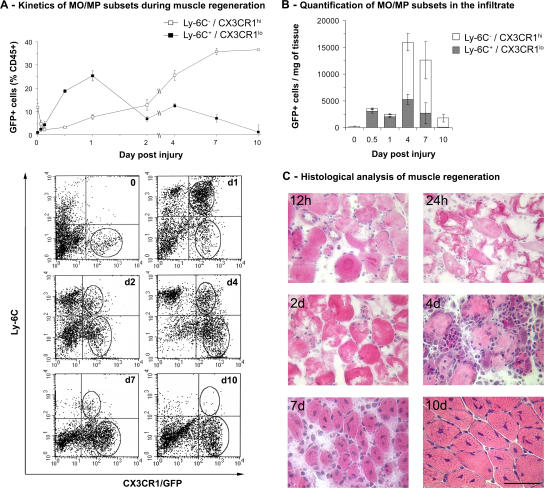
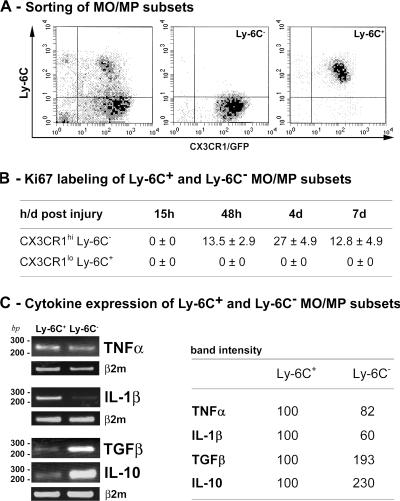
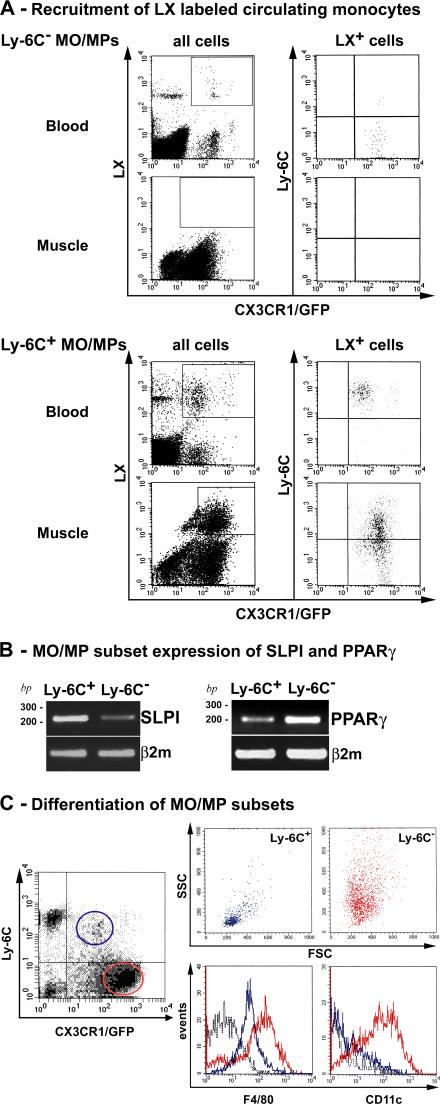
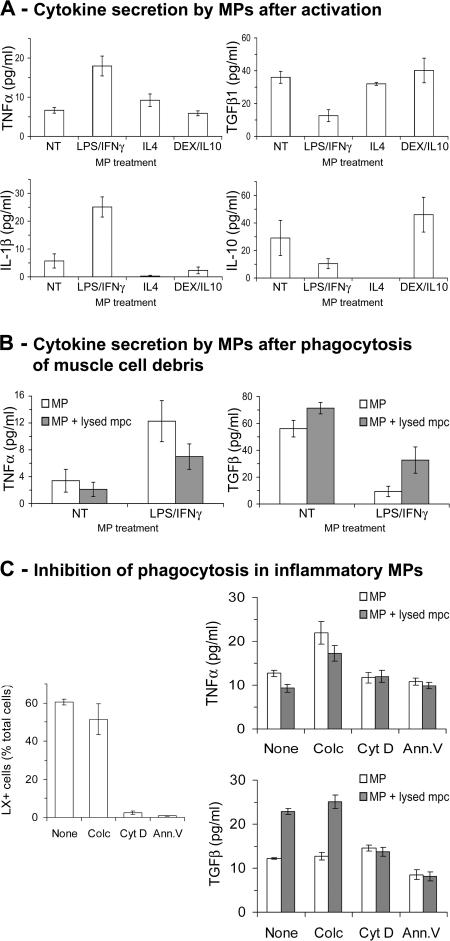
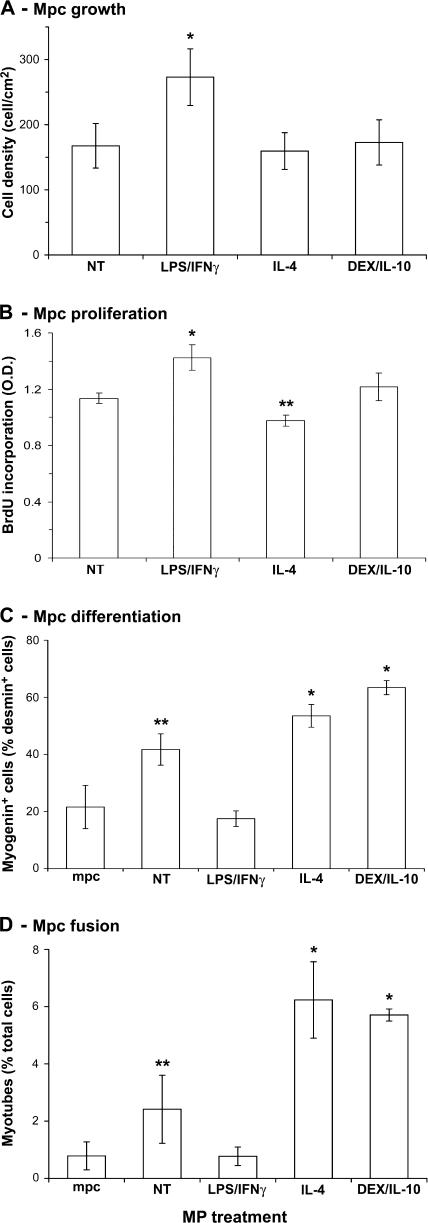
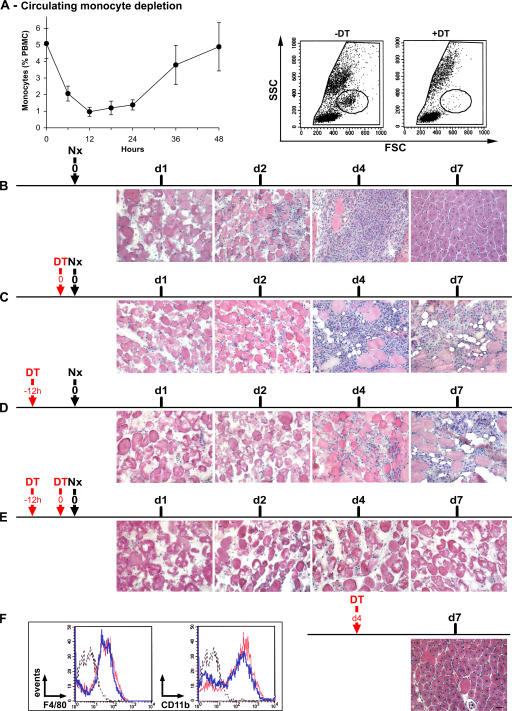
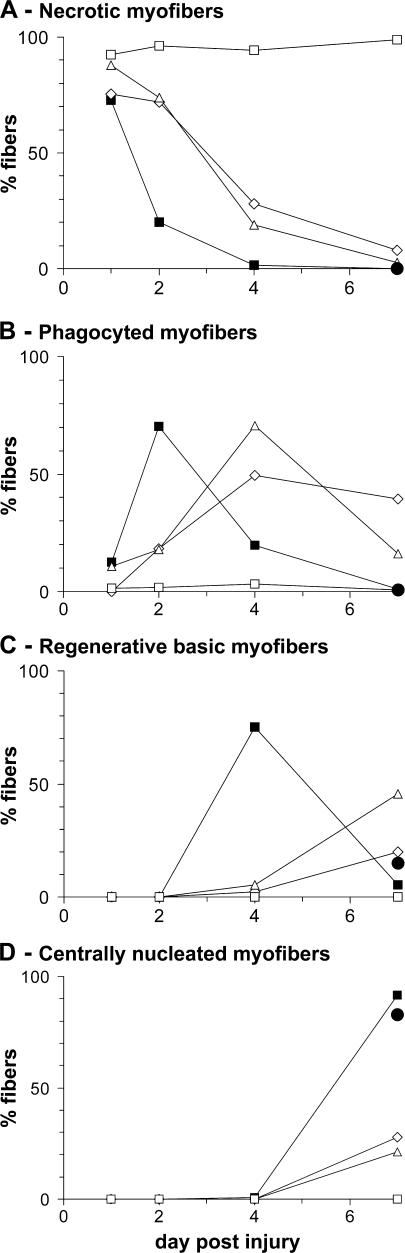
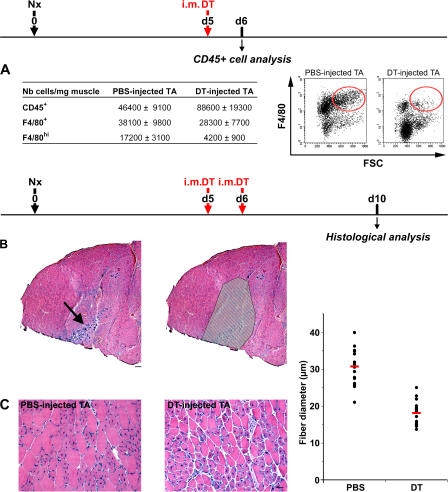
Macrophages (MPs) are important for skeletal muscle regeneration in vivo and may exert beneficial effects on myogenic cell growth through mitogenic and antiapoptotic activities in vitro. However, MPs are highly versatile and may exert various, and even opposite, functions depending on their activation state. We studied monocyte (MO)/MP phenotypes and functions during skeletal muscle repair. Selective labeling of circulating MOs by latex beads in CX3CR1GFP/+ mice showed that injured muscle recruited only CX3CR1lo/Ly-6C+ MOs from blood that exhibited a nondividing, F4/80lo, proinflammatory profile. Then, within muscle, these cells switched their phenotype to become proliferating antiinflammatory CX3CR1hi/Ly-6C− cells that further differentiated into F4/80hi MPs. In vitro, phagocytosis of muscle cell debris induced a switch of proinflammatory MPs toward an antiinflammatory phenotype releasing transforming growth factor β1. In co-cultures, inflammatory MPs stimulated myogenic cell proliferation, whereas antiinflammatory MPs exhibited differentiating activity, assessed by both myogenin expression and fusion into myotubes. Finally, depletion of circulating MOs in CD11b–diphtheria toxin receptor mice at the time of injury totally prevented muscle regeneration, whereas depletion of intramuscular F4/80hi MPs at later stages reduced the diameter of regenerating fibers. In conclusion, injured skeletal muscle recruits MOs exhibiting inflammatory profiles that operate phagocytosis and rapidly convert to antiinflammatory MPs that stimulate myogenesis and fiber growth.
Overview
The claims and statistics of this paper haven’t been checked yet.
Run the check — free, no account needed. It reads the open-access text and checks the sources it cites.
Integrity signals
Registry
Cites
Statistics
Figures
Verification
Claims the paper makes
The claims and statistics of this paper haven’t been checked yet.
Run the check — free, no account needed. It reads the open-access text and checks the sources it cites.
Claims other papers make about this one
Each is checked against this paper’s own text: does it say what the citing paper says it does?
In the citing paper
“A number of studies have shown that reduction of the number of monocytes available to participate in the response following muscle injury via depletion of circulating cells results in slowed removal of cellular debris and delayed muscle tissue remodeling [112–114].”
From Macrophage polarization: an opportunity for improved outcomes in biomaterials and regenerative medicine (2012) · cites this paper as [112]
In the citing paper
“For example, IL-10 secreted by M2 macrophages is known both to drive a transition from an M1 to an M2 phenotype as well as to promote the fusion and maturation of myotubes [112,125].”
From Macrophage polarization: an opportunity for improved outcomes in biomaterials and regenerative medicine (2012) · cites this paper as [112]
In the citing paper
“These studies showed that the timing of inflammatory responses can have profound effects on the kinetics and extent of regeneration69, findings confirmed by experiments using antibodies to block inflammatory cytokines70,71.”
From The central role of muscle stem cells in regenerative failure with aging (2015) · cites this paper as [69]
In the citing paper
“Accumulating evidence indicates that Mp are critical orchestrators in healing of many tissues, including skin (3,4,7,48).”
From Sustained Inflammasome Activity in Macrophages Impairs Wound Healing in Type 2 Diabetic Humans and Mice (2014) · cites this paper as [3]
Self-check
Percentages, sums and reported differences re-computed from the paper’s own numbers.
The self-check needs the paper’s full text.
Citations
Cites
Alternative activation of macrophages
Gordon, S. (2003) · Nature Reviews Immunology · doi:10.1038/nri978 · Cited by 6,189
Monocyte and macrophage heterogeneity
Gordon, S., & Taylor, P. R. (2005) · Nature Reviews Immunology · doi:10.1038/nri1733 · Cited by 5,190
Cytokine-mediated regulation of CXCR4 expression in human neutrophils
Nagase, H., Miyamasu, M., Yamaguchi, M., Imanishi, M., Tsuno, N. H., Matsushima, K., Yamamoto, K., Morita, Y., & Hirai, K. (2002) · Journal of Leukocyte Biology · doi:10.1189/jlb.71.4.711 · Cited by 4,713
Obesity induces a phenotypic switch in adipose tissue macrophage polarization
Lumeng, C. N., Bodzin, J. L., & Saltiel, A. R. (2007) · Journal of Clinical Investigation · doi:10.1172/jci29881 · Cited by 4,664
The peroxisome proliferator-activated receptor-γ is a negative regulator of macrophage activation
Ricote, M., Li, A. C., Willson, T. M., Kelly, C. J., & Glass, C. K. (1998) · Nature · doi:10.1038/34178 · Cited by 3,525
Blood Monocytes Consist of Two Principal Subsets with Distinct Migratory Properties
Geissmann, F., Jung, S., & Littman, D. R. (2003) · Immunity · doi:10.1016/s1074-7613(03)00174-2 · Cited by 3,504
Points of control in inflammation
Nathan, C. (2002) · Nature · doi:10.1038/nature01320 · Cited by 2,738
Resolution of inflammation: the beginning programs the end
Serhan, C. N., & Savill, J. (2005) · Nature Immunology · doi:10.1038/ni1276 · Cited by 2,552
Stein, M., Keshav, S., Harris, N., & Gordon, S. (1992) · The Journal of experimental medicine · doi:10.1084/jem.176.1.287 · Cited by 1,960
van Rooijen, N., & Sanders, A. (1994) · Journal of Immunological Methods · doi:10.1016/0022-1759(94)90012-4 · Cited by 1,763
Research works printed but not linked: 5
- 1996, J. Anat., 188, 17
- 2006, J. Leukoc. Biol., 81, 775
- 2004, FASEB J., 19, 413
- 2006, Nat. Immunol., 7, 265
- 2004, Proc. Natl. Acad. Sci. USA., 102, 99
Cited by
Sorted by citations
Items 501–600 of 1,001
The journey from stem cell to macrophage
Pittet, M. J., Nahrendorf, M., & Świrski, F. K. (2014) · Annals of the New York Academy of Sciences · doi:10.1111/nyas.12393 · Cited by 89
Role of interstitial inflammation in the pathogenesis of polycystic kidney disease
Ta, M. H. T., Harris, D. C. H., & Rangan, G. K. (2013) · Nephrology · doi:10.1111/nep.12045 · Cited by 86
Nielsen, J. L., Aagaard, P., Prokhorova, T. A., Nygaard, T., Bech, R. D., Suetta, C., & Frandsen, U. (2017) · The Journal of Physiology · doi:10.1113/jp273907 · Cited by 84
Deng, M., Tan, J., Hu, C., Hou, T., Peng, W. G., Liu, J., Yu, B., Dai, Q., Zhou, J., Yang, Y., et al. (2020) · Advanced Healthcare Materials · doi:10.1002/adhm.202000353 · Cited by 87
Macrophages in tumor: An inflammatory perspective
Goswami, K. K., Bose, A., & Baral, R. (2021) · Clinical Immunology · doi:10.1016/j.clim.2021.108875 · Cited by 88
Specific Contributions of CSF-1 and GM-CSF to the Dynamics of the Mononuclear Phagocyte System
Louis, C., Cook, A. D., Lacey, D. C., Fleetwood, A. J., Vlahos, R., Anderson, G. P., & Hamilton, J. A. (2015) · The Journal of Immunology · doi:10.4049/jimmunol.1500369 · Cited by 88
Acquisition of Antigen-Presenting Functions by Neutrophils Isolated from Mice with Chronic Colitis
Ostanin, D. V., Kurmaeva, E., Furr, K., Bao, R., Hoffman, J. M., Berney, S. M., & Grisham, M. B. (2012) · The Journal of Immunology · doi:10.4049/jimmunol.1102296 · Cited by 88
Núñez‐Álvarez, Y., & Suelves, M. (2021) · FEBS Journal · doi:10.1111/febs.15895 · Cited by 85
Langston, P. K., Sun, Y., Ryback, B. A., Mueller, A. L., Spiegelman, B. M., Benoist, C. O., & Mathis, D. J. (2023) · Science Immunology · doi:10.1126/sciimmunol.adi5377 · Cited by 82
Lukjanenko, L., Brachat, S., Pierrel, E., Lach‐Trifilieff, E., & Feige, J. N. (2013) · PLoS ONE · doi:10.1371/journal.pone.0071084 · Cited by 84
Bernasconi, E., Favre, L., Maillard, M. H., Bachmann, D., Pythoud, C., Bouzourène, H., Croze, E., Velichko, S., Parkinson, J. F., Michetti, P., et al. (2009) · Inflammatory Bowel Diseases · doi:10.1002/ibd.21072 · Cited by 80
Duchesne, É., Dufresne, S. S., & Dumont, N. A. (2017) · Physical Therapy · doi:10.1093/ptj/pzx056 · Cited by 85
The Cardiac Microenvironment Instructs Divergent Monocyte Fates and Functions in Myocarditis
Hou, X., Chen, G., Bracamonte-Baran, W., Choi, H. S., Diny, N. L., Sung, J., Hughes, D., Won, T., Wood, M. K., Talor, M. V., et al. (2019) · Cell Reports · doi:10.1016/j.celrep.2019.06.007 · Cited by 83
Schwartz, M., & Baruch, K. (2014) · Journal of Autoimmunity · doi:10.1016/j.jaut.2014.08.002 · Cited by 85
Modulators of Macrophage Polarization Influence Healing of the Infarcted Myocardium
ter Horst, E. N., Hakimzadeh, N., van der Laan, A. M., Krijnen, P. A. J., Niessen, H. W. M., & Piek, J. J. (2015) · International Journal of Molecular Sciences · doi:10.3390/ijms161226187 · Cited by 83
The Host Immune Response to Tissue-Engineered Organs: Current Problems and Future Directions
Wiles, K., Fishman, J. M., Coppi, P. D., & Birchall, M. (2015) · Tissue Engineering Part B Reviews · doi:10.1089/ten.teb.2015.0376 · Cited by 80
Cellular interplay in skeletal muscle regeneration and wasting: insights from animal models
Henrot, P., Blervaque, L., Dupin, I., Zysman, M., Estèves, P., Gouzi, F., Hayot, M., Pomiès, P., & Berger, P. (2023) · Journal of Cachexia Sarcopenia and Muscle · doi:10.1002/jcsm.13103 · Cited by 88
IL-33–mediated IL-13 secretion by ST2+ Tregs controls inflammation after lung injury
Liu, Q., Dwyer, G. K., Zhao, Y., Li, H., Mathews, L. R., Chakka, A. B., Chandran, U. R., Demetris, J. A., Alcorn, J. F., Robinson, K. M., et al. (2019) · JCI Insight · doi:10.1172/jci.insight.123919 · Cited by 80
Tissue-specific parameters for the design of ECM-mimetic biomaterials
Tonti, O. R., Larson, H., Lipp, S. N., Luetkemeyer, C. M., Makam, M., Vargas, D., Wilcox, S. M., & Calve, S. (2021) · Acta Biomaterialia · doi:10.1016/j.actbio.2021.04.017 · Cited by 84
Neubauer, O., Sabapathy, S., Ashton, K., Desbrow, B., Peake, J., Lazarus, R., Wessner, B., Cameron-Smith, D., Wagner, K., Haseler, L., et al. (2014) · Journal of applied physiology · doi:10.1152/japplphysiol.00909.2013 · Cited by 83
Characteristics of primary rat microglia isolated from mixed cultures using two different methods
Lin, L., Desai, R., Wang, X., Lo, E. H., & Xing, C. (2017) · Journal of Neuroinflammation · doi:10.1186/s12974-017-0877-7 · Cited by 80
Zoledronic acid exacerbates inflammation through M1 macrophage polarization
Kaneko, J., Okinaga, T., Hikiji, H., Ariyoshi, W., Yoshiga, D., Habu, M., Tominaga, K., & Nishihara, T. (2018) · Inflammation and Regeneration · doi:10.1186/s41232-018-0074-9 · Cited by 83
Immunohistochemical Identification of Human Skeletal Muscle Macrophages.
Kosmac, K., Peck, B. D., Walton, R. G., Mula, J., Kern, P., Bamman, M., Dennis, R., Jacobs, C., Lattermann, C., Johnson, D. L., et al. (2018) · Bio-protocol · doi:10.21769/bioprotoc.2883 · Cited by 63
Endogenous Protection from Ischemic Brain Injury by Preconditioned Monocytes
García‐Bonilla, L., Brea, D., Benakis, C., Lane, D., Murphy, M., Moore, J. M. R., Racchumi, G., Jiang, X., Iadecola, C., & Anrather, J. (2018) · Journal of Neuroscience · doi:10.1523/jneurosci.0324-18.2018 · Cited by 83
Calcaterra, V., Regalbuto, C., Porri, D., Pelizzo, G., Mazzon, E., Vinci, F., Zuccotti, G., Fabiano, V., & Cena, H. (2020) · Biomolecules · doi:10.3390/biom10091324 · Cited by 84
Resolvin-D2 targets myogenic cells and improves muscle regeneration in Duchenne muscular dystrophy
Dort, J., Orfi, Z., Fabre, P., Molina, T., Conte, T. C., Greffard, K., Pellerito, O., Bilodeau, J., & Dumont, N. A. (2021) · Nature Communications · doi:10.1038/s41467-021-26516-0 · Cited by 81
Nawaz, A., Bilal, M., Fujisaka, S., Kado, T., Aslam, M. R., Ahmed, S., Okabe, K., Igarashi, Y., Watanabe, Y., Kuwano, T., et al. (2022) · Nature Communications · doi:10.1038/s41467-022-34191-y · Cited by 81
Macrophages – sensors and effectors coordinating skin damage and repair
Willenborg, S., & Eming, S. A. (2014) · JDDG Journal der Deutschen Dermatologischen Gesellschaft · doi:10.1111/ddg.12290 · Cited by 81
Macrophages Modulate Engineered Human Tissues for Enhanced Vascularization and Healing
Spiller, K. L., Freytes, D. O., & Vunjak‐Novakovic, G. (2014) · Annals of Biomedical Engineering · doi:10.1007/s10439-014-1156-8 · Cited by 80
James, G., Sluka, K., Blomster, L. V., Hall, L. M., Schmid, A., Shu, C. C., Little, C., Melrose, J., & Hodges, P. (2018) · European spine journal · doi:10.1007/s00586-018-5652-7 · Cited by 72
Forcina, L., Miano, C., Scicchitano, B. M., & Musarò, A. (2019) · Cells · doi:10.3390/cells8030232 · Cited by 82
Biomaterials in orthopaedics: the past and future with immune modulation
Im, G. (2020) · Biomaterials Research · doi:10.1186/s40824-020-0185-7 · Cited by 83
Chousterman, B. G., Boissonnas, A., Poupel, L., de Chanville, C. B., Adam, J., Tabibzadeh, N., Licata, F., Lukaszewicz, A., Lombès, A., Déterre, P., et al. (2015) · Journal of the American Society of Nephrology · doi:10.1681/asn.2015010009 · Cited by 85
Macrophages potentiate STAT3 signaling in skeletal muscles and regulate pancreatic cancer cachexia
Shukla, S. K., Markov, S. D., Attri, K. S., Vernucci, E., King, R. J., Dasgupta, A., Grandgenett, P. M., Hollingsworth, M. A., Singh, P. K., Yu, F., et al. (2020) · Cancer Letters · doi:10.1016/j.canlet.2020.04.017 · Cited by 81
Arnold, L., Henry, A., Poron, F., Baba‐Amer, Y., van Rooijen, N., Plonquet, A., Gherardi, R. K., & Chazaud, B. (2007) · The Journal of Cell Biology · doi:10.1083/jcb1774oia7 · Cited by 77
Self-citationReidy, P. T., McKenzie, A. I., Mahmassani, Z. S., Petrocelli, J. J., Nelson, D. B., Lindsay, C. C., Gardner, J. E., Morrow, V. R., Keefe, A., Huffaker, T. B., et al. (2019) · American Journal of Physiology-Endocrinology and Metabolism · doi:10.1152/ajpendo.00422.2018 · Cited by 80
Gheller, B. J. F., Blum, J., Fong, E. H. H., Malysheva, O., Cosgrove, B. D., & Thalacker‐Mercer, A. E. (2020) · Cell Death Discovery · doi:10.1038/s41420-020-00328-5 · Cited by 77
Stem Cell and Macrophage Roles in Skeletal Muscle Regenerative Medicine
Scala, P., Rehak, L., Giudice, V., Ciaglia, E., Puca, A. A., Selleri, C., Porta, G. D., & Maffulli, N. (2021) · International Journal of Molecular Sciences · doi:10.3390/ijms221910867 · Cited by 77
Peng, X., Zhang, J., Xiao, Z., Dong, Y., & Du, J. (2015) · The Journal of Immunology · doi:10.4049/jimmunol.1403209 · Cited by 76
Rajan, R., Sabnani, M. K., Mavinkurve, V., Shmeeda, H., Mansouri, H., Bonkoungou, S., Le, A. D., Wood, L. M., Gabizón, A., & La-Beck, N. M. (2017) · Journal of Controlled Release · doi:10.1016/j.jconrel.2017.12.023 · Cited by 76
Role of the immune system in regeneration and its dynamic interplay with adult stem cells
Abnave, P., & Ghigo, É. (2018) · Seminars in Cell and Developmental Biology · doi:10.1016/j.semcdb.2018.04.002 · Cited by 85
Resolvin D1 supports skeletal myofiber regeneration via actions on myeloid and muscle stem cells
Markworth, J. F., Brown, L. A., Lim, E. Y., Floyd, C., Larouche, J. A., Castor‐Macias, J. A., Sugg, K. B., Sarver, D. C., Macpherson, P. C. D., Davis, C. S., et al. (2020) · JCI Insight · doi:10.1172/jci.insight.137713 · Cited by 79
The Elusive Antifibrotic Macrophage
Adhyatmika, A., Putri, K. S. S., Beljaars, L., & Melgert, B. N. (2015) · Frontiers in Medicine · doi:10.3389/fmed.2015.00081 · Cited by 77
Vezzoli, M., Castellani, P., Corna, G., Castiglioni, A., Bosurgi, L., Monno, A., Brunelli, S., Manfredi, A. A., Rubartelli, A., & Rovere, P. Q. (2011) · Antioxidants and Redox Signaling · doi:10.1089/ars.2010.3341 · Cited by 76
Bréchot, N., Perdiguero, E. G., Bignon, M., Khallou‐Laschet, J., Dussiot, M., Cazes, A., Alanio, C., Durand, M., Philippe, J., Silvestre, J., et al. (2008) · PLoS ONE · doi:10.1371/journal.pone.0003950 · Cited by 84
Self-citationO'Dea, K. P., Wilson, M. R., Dokpesi, J. O., Wakabayashi, K., Tatton, L., van Rooijen, N., & Takata, M. (2009) · The Journal of Immunology · doi:10.4049/jimmunol.182.2.1155 · Cited by 73
Klar, A. S., Michalak-Micka, K., Biedermann, T., Simmen-Meuli, C., Reichmann, E., & Meuli, M. (2018) · Pediatric surgery international (Print) · doi:10.1007/s00383-017-4179-z · Cited by 61
Induction of Acute Skeletal Muscle Regeneration by Cardiotoxin Injection
Guardiola, O., Andolfi, G., Tirone, M., Iavarone, F., Brunelli, S., & Minchiotti, G. (2017) · Journal of Visualized Experiments · doi:10.3791/54515 · Cited by 73
Graça, F. A., Stephan, A., Minden‐Birkenmaier, B. A., Shirinifard, A., Wang, Y., Demontis, F., & Labelle, M. (2023) · Nature Communications · doi:10.1038/s41467-023-38624-0 · Cited by 82
Secondary muscle pathology and metabolic dysregulation in adults with cerebral palsy
Peterson, M. D., Gordon, P. M., Hurvitz, E. A., & Burant, C. (2012) · American Journal of Physiology-Endocrinology and Metabolism · doi:10.1152/ajpendo.00338.2012 · Cited by 74
Lech, M., Gröbmayr, R., Weidenbusch, M. J., & Anders, H. (2012) · Mediators of Inflammation · doi:10.1155/2012/951390 · Cited by 76
The role of satellite and other functional cell types in muscle repair and regeneration
Chen, B., & Shan, T. (2019) · Journal of Muscle Research and Cell Motility · doi:10.1007/s10974-019-09511-3 · Cited by 77
Petrocelli, J. J., McKenzie, A. I., de Hart, N. M. M. P., Reidy, P. T., Mahmassani, Z. S., Keeble, A. R., Kaput, K. L., Wahl, M., Rondina, M. T., Marcus, R. L., et al. (2023) · Aging Cell · doi:10.1111/acel.13936 · Cited by 73
CCL2 and CCR2 polymorphisms are associated with markers of exercise-induced skeletal muscle damage
Hubal, M. J., Devaney, J. M., Hoffman, E. P., Zambraski, E. J., Gordish‐Dressman, H., Kearns, A. K., Larkin, J. S., Adham, K., Patel, R. R., & Clarkson, P. M. (2010) · Journal of Applied Physiology · doi:10.1152/japplphysiol.00361.2009 · Cited by 72
Hyaluronic acid, HAS1, and HAS2 are significantly upregulated during muscle hypertrophy
Calve, S., Isaac, J., Gumucio, J. P., & Mendias, C. L. (2012) · American Journal of Physiology-Cell Physiology · doi:10.1152/ajpcell.00057.2012 · Cited by 72
Sterile post‐traumatic immunosuppression
Islam, M. N., BRADLEY, B. A., & Ceredig, R. (2016) · Clinical & Translational Immunology · doi:10.1038/cti.2016.13 · Cited by 73
Increased levels of interleukin-6 exacerbate the dystrophic phenotype in mdx mice
Pelosi, L., Berardinelli, M. G., Forcina, L., Spelta, E., Rizzuto, E., Nicoletti, C., Camilli, C., Testa, E., Catizone, A., Benedetti, F. D., et al. (2015) · Human Molecular Genetics · doi:10.1093/hmg/ddv323 · Cited by 72
Piccoli, M., Urbani, L., Fallas, M. E. A., Franzin, C., Dedja, A., Bertin, E., Zuccolotto, G., Rosato, A., Pavan, P. G., Elvassore, N., et al. (2015) · Biomaterials · doi:10.1016/j.biomaterials.2015.10.005 · Cited by 71
uPA deficiency exacerbates muscular dystrophy in MDX mice
Suelves, M., Vidal, B., Serrano, A. L., Tjwa, M., Roma, J. M., López‐Alemany, R., Luttun, A., de Lagrán, M. M., Díaz, M. À., Jardı́, M., et al. (2007) · The Journal of Cell Biology · doi:10.1083/jcb.200705127 · Cited by 70
CX3CR1 deficiency promotes muscle repair and regeneration by enhancing macrophage ApoE production
Arnold, L., Perrin, H., de Chanville, C. B., Saclier, M., Hermand, P., Poupel, L., Guyon, E., Licata, F., Carpentier, W., Vilar, J., et al. (2015) · Nature Communications · doi:10.1038/ncomms9972 · Cited by 78
Self-citationα-smooth muscle actin is not a marker of fibrogenic cell activity in skeletal muscle fibrosis
Zhao, W., Wang, X., Sun, K.-H., & Zhou, L. (2018) · PLoS ONE · doi:10.1371/journal.pone.0191031 · Cited by 73
Klimczak, A., Kozłowska, U., & Kurpisz, M. K. (2018) · Archivum Immunologiae et Therapiae Experimentalis · doi:10.1007/s00005-018-0509-7 · Cited by 72
Macrophages: The Potent Immunoregulatory Innate Immune Cells
Kumar, V. (2019) · IntechOpen eBooks · doi:10.5772/intechopen.88013 · Cited by 76
O’Brien, E. M., & Spiller, K. L. (2021) · Journal of Leukocyte Biology · doi:10.1002/jlb.3a0520-338r · Cited by 75
Beneficial Effects of αB-Crystallin in Spinal Cord Contusion Injury
Klopstein, A., Santos-Nogueira, E., Francos-Quijorna, I., Redensek, A., David, S., Navarro, X., & López‐Vales, R. (2012) · Journal of Neuroscience · doi:10.1523/jneurosci.0923-12.2012 · Cited by 74
Fernández-Velasco, M., González-Ramos, S., & Boscá, L. (2014) · Biochemical Journal · doi:10.1042/bj20131501 · Cited by 70
Zordan, P., Rigamonti, E., Freudenberg, K., Conti, V., Azzoni, E., Rovere, P. Q., & Brunelli, S. (2014) · Cell Death and Disease · doi:10.1038/cddis.2013.558 · Cited by 74
Dumont, N. A., Bouchard, P., & Frenette, J. (2008) · American Journal of Physiology-Regulatory, Integrative and Comparative Physiology · doi:10.1152/ajpregu.90318.2008 · Cited by 72
Yu, T., Wang, W., Nassiri, S., Kwan, T. D., Dang, C., Liu, W. X., & Spiller, K. L. (2016) · Journal of Biomaterials Science Polymer Edition · doi:10.1080/09205063.2016.1155881 · Cited by 70
Santuchi, M. D. C., Dutra, M. F., Vago, J. P., Lima, K. M., Galvão, I., Souza-Neto, F., Silva, M. M., Oliveira, A. C. D. S., de Oliveira, F. C. B., Gonçalves, R., et al. (2019) · Mediators of Inflammation · doi:10.1155/2019/2401081 · Cited by 70
Dammone, G., Karaz, S., Lukjanenko, L., Winkler, C., Sizzano, F., Jacot, G. E., Migliavacca, E., Palini, A. G., Desvergne, B., Gilardi, F., et al. (2018) · International Journal of Molecular Sciences · doi:10.3390/ijms19072044 · Cited by 66
Sharma, P. M., Kumar, A., Dey, A. D., Behl, T., & Chadha, S. (2021) · Life Sciences · doi:10.1016/j.lfs.2020.118932 · Cited by 70
TLR4 is a regulator of trained immunity in a murine model of Duchenne muscular dystrophy
Bhattarai, S., Li, Q., Ding, J., Liang, F., Gusev, E., Lapohos, O., Fonseca, G. J., Kaufmann, E., Divangahi, M., & Petrof, B. J. (2022) · Nature Communications · doi:10.1038/s41467-022-28531-1 · Cited by 72
Immune response after central nervous system injury
Salvador, A. F., & Kipnis, J. (2022) · Seminars in Immunology · doi:10.1016/j.smim.2022.101629 · Cited by 71
D'Souza, D. M., Trajcevski, K., Al‐Sajee, D., Wang, D. C., Thomas, M. M., Anderson, J. E., & Hawke, T. (2015) · Physiological Reports · doi:10.14814/phy2.12506 · Cited by 62
Transcriptomic Network Support Distinct Roles of Classical and Non-Classical Monocytes in Human
Anbazhagan, K., Duroux-Richard, I., Jørgensen, C., & Apparailly, F. (2014) · International Reviews of Immunology · doi:10.3109/08830185.2014.902453 · Cited by 74
Pollari, E., Savchenko, E., Jaronen, M., Kanninen, K. M., Malm, T., Wojciechowski, S., Ahtoniemi, T., Goldsteins, G., Giniatullina, R., Giniatullin, R. A., et al. (2011) · Journal of Neuroinflammation · doi:10.1186/1742-2094-8-74 · Cited by 69
Zhu, H., Xiao, F., Wang, G., Wei, X., Jiang, L., Chen, Y., Zhu, L., Wang, H., Diao, Y., Wang, H., et al. (2016) · Cell Reports · doi:10.1016/j.celrep.2016.07.041 · Cited by 68
Linard, C., Brachet, M., L’Homme, B., Strup-Perrot, C., Busson, É., Bonneau, M., Lataillade, J., Bey, É., & Benderitter, M. (2018) · Stem Cell Research & Therapy · doi:10.1186/s13287-018-1051-6 · Cited by 73
Blanc, R. S., Kallenbach, J. G., Bachman, J. F., Mitchell, A., Paris, N. D., & Chakkalakal, J. V. (2020) · Nature Communications · doi:10.1038/s41467-020-17620-8 · Cited by 71
Macrophage Activities in Myocardial Infarction and Heart Failure
Duncan, S. E., Gao, S., Michael, S., Coffie, J. W., Linhua, D., Bao, X., Zhang, J., Li, S., Guo, R., Su, J., et al. (2020) · Cardiology Research and Practice · doi:10.1155/2020/4375127 · Cited by 72
Influence of low oxygen tensions on macrophage polarization
Escribese, M. M., Casas, M., & Corbí, A. L. (2012) · Immunobiology · doi:10.1016/j.imbio.2012.07.002 · Cited by 69
Forkhead Box M1 Transcription Factor Is Required for Macrophage Recruitment during Liver Repair
Ren, X., Zhang, Y., Snyder, J. E., Cross, E. R., Shah, T. A., Kalin, T. V., & Kalinichenko, V. V. (2010) · Molecular and Cellular Biology · doi:10.1128/mcb.00876-10 · Cited by 68
Nagaraja, S., Wallqvist, A., Jaques Reifman, A., & Mitrophanov, A. Y. (2014) · The Journal of Immunology · doi:10.4049/jimmunol.1302481 · Cited by 73
Chimma, P., Roussilhon, C., Sratongno, P., Ruangveerayuth, R., Pattanapanyasat, K., Pérignon, J., Roberts, D. J., & Druilhe, P. (2009) · PLoS Pathogens · doi:10.1371/journal.ppat.1000631 · Cited by 68
Joshi, J. C., Joshi, B., Rochford, I., Rayees, S., Akhter, M. Z., Baweja, S., Chava, K. R., Tauseef, M., Abdelkarim, H., Natarajan, V., et al. (2020) · Cell Reports · doi:10.1016/j.celrep.2020.02.112 · Cited by 68
CX3CL1—a macrophage chemoattractant induced by a single bout of exercise in human skeletal muscle
Strömberg, A., Olsson, K., Dijksterhuis, J. P., Rullman, E., Schulte, G., & Gustafsson, T. (2016) · American Journal of Physiology-Regulatory, Integrative and Comparative Physiology · doi:10.1152/ajpregu.00236.2015 · Cited by 67
Human and mouse skeletal muscle stem and progenitor cells in health and disease
Mierzejewski, B., Archacka, K., Grabowska, I., Florkowska, A., Ciemerych, M. A., & Brzóska, E. (2020) · Seminars in Cell and Developmental Biology · doi:10.1016/j.semcdb.2020.01.004 · Cited by 70
Placental-Derived Biomaterials and Their Application to Wound Healing: A Review
Protzman, N. M., Mao, Y., Long, D., Sivalenka, R., Gosiewska, A., Hariri, R., & Brigido, S. A. (2023) · Bioengineering · doi:10.3390/bioengineering10070829 · Cited by 63
Desgeorges, T., Galle, E., Zhang, J., von Meyenn, F., & Bock, K. D. (2024) · Molecular Metabolism · doi:10.1016/j.molmet.2024.101923 · Cited by 69
Macrophages decide between regeneration and fibrosis in muscle
Muñoz‐Cánoves, P., & Serrano, A. L. (2015) · Trends in Endocrinology and Metabolism · doi:10.1016/j.tem.2015.07.005 · Cited by 67
Jung, S., & Schwartz, M. (2012) · Frontiers in Immunology · doi:10.3389/fimmu.2012.00089 · Cited by 69
Selective M2 Macrophage Depletion Leads to Prolonged Inflammation in Surgical Wounds
Klinkert, K., Whelan, D., Clover, A. J. P., Leblond, A., Kumar, A. H. S., & Caplice, N. M. (2017) · European Surgical Research · doi:10.1159/000451078 · Cited by 67
The Repair of Skeletal Muscle Requires Iron Recycling through Macrophage Ferroportin
Corna, G., Caserta, I., Monno, A., Apostoli, P., Manfredi, A. A., Camaschella, C., & Rovere-Querini, P. (2016) · The Journal of Immunology · doi:10.4049/jimmunol.1501417 · Cited by 63
Tidball, J. G., Flores, I., Welc, S. S., Wehling-Henricks, M., & Ochi, E. (2021) · Experimental Gerontology · doi:10.1016/j.exger.2020.111200 · Cited by 66
Tendon healing in presence of chronic low-level inflammation: a systematic review
Chisari, E., Rehak, L., Khan, W. S., & Maffulli, N. (2019) · British Medical Bulletin · doi:10.1093/bmb/ldz035 · Cited by 68
Li, J., Sun, Z., Luo, G., Wang, S., Cui, H., Yao, Z., Xiong, H., He, Y., Qian, Y., & Fan, C. (2021) · Frontiers in Immunology · doi:10.3389/fimmu.2021.649285 · Cited by 68
Inflammation during post-injury skeletal muscle regeneration.
Panci, G., & Chazaud, B. (2021) · Seminars in Cell and Developmental Biology · doi:10.1016/j.semcdb.2021.05.031 · Cited by 58
Self-citationStem cell aging in the skeletal muscle: The importance of communication
Hong, X., Campanario, S., Ramírez‐Pardo, I., Grima-Terrén, M., Isern, J., & Muñoz‐Cánoves, P. (2021) · Ageing Research Reviews · doi:10.1016/j.arr.2021.101528 · Cited by 73
Herrero, L. J., Foo, S., Sheng, K., Chen, W., Forwood, M. R., Bucala, R., & Mahalingam, S. (2015) · Journal of Virology · doi:10.1128/jvi.00224-15 · Cited by 70
Metadata
- Authors
- Arnold, L., Henry, A., Poron, F., Baba-Amer, Y., van Rooijen, N., Plonquet, A., Gherardi, R. K., & Chazaud, B.
- Affiliations
- Inserm (FR)
- Université Paris-Est Créteil (FR)
- 1Institut National de la Santé et de la Recherche Médicale, Unité 841, Institut Mondor de Recherche Biomédicale, “Cell Interactions in the Neuromuscular System” Team, Université Paris 12 Val-de-Marne, 94000 Créteil, France
- Vrije Universiteit Amsterdam (NL)
- Assistance Publique – Hôpitaux de Paris (FR)
- Venue
- The Journal of Experimental Medicine
- Publisher
- Rockefeller University Press
- Published
- 2007-05-07
- Volume
- 204
- Issue
- 5
- Pages
- 1057-1069
- ISSN
- 0022-1007 (ISSN-L)
- 1540-9538
- PMC
- PMC2118577
- OpenAlex
- W2108723188
- Cited by
- 2,002
- References
- 82
- Citations by year
- 2026: 87 · 2025: 83 · 2024: 100 · 2023: 119 · 2022: 124 · 2021: 151 · 2020: 144 · 2019: 134 · 2018: 131 · 2017: 147 · 2016: 119 · 2015: 127 · 2014: 120 · 2013: 101 · 2012: 89
- FWCI
- 20.15
- Type
- journal article
- Language
- en
- Open access
- green
- europepmc.org
- Licence
- cc-by-nc-sa
- Locations
- The Journal of Experimental Medicine (publishedVersion)
- Europe PMC (PubMed Central) (publishedVersion, cc-by-nc-sa)
- PubMed Central (publishedVersion, cc-by-nc-sa)
- PubMed (publishedVersion)
- HAL (submittedVersion, other-oa)
- Funders
- Institut National de la Santé et de la Recherche Médicale
- Topics
- Life Sciences › Biochemistry, Genetics and Molecular Biology › Molecular Biology › Muscle Physiology and Disorders
- Health Sciences › Medicine › Surgery › Wound Healing and Treatments
- Life Sciences › Immunology and Microbiology › Immunology › Immune cells in cancer
- Keywords
- inflammatory monocytes, macrophage polarization, skeletal muscle regeneration, myogenesis, CX3CR1, Ly6C, F4/80, TGF-β1, myotube formation, monocyte depletion, muscle damage
- MeSH terms
- CX3C Chemokine Receptor 1, Animals, Cell Differentiation, Humans, Immunohistochemistry, Macrophages, Mice, Mutant Strains, Microspheres, Monocytes, Phagocytosis, DNA Primers, Muscle, Skeletal, Receptors, Chemokine, Reverse Transcriptase Polymerase Chain Reaction, Muscle Development, CD11b Antigen, Green Fluorescent Proteins, Mice
About these checks
Registry, retraction, Cites and statistics results are computed, not judged, with one exception: a printed reference that no index lists is read once by a model before it counts as a citation error. Claims are extracted by a model and kept only when their quote appears verbatim in the text; each cited source is then checked, with a model’s help, for whether it says what the claim relies on. Those verdicts can be wrong — read the claim’s quote and the cited source before relying on one.
Statistics and arithmetic are recomputed, not judged.
Confidence bands are shown only for fields calibrated on our annotated test set. None is calibrated yet, so no band is shown.
What counts as a claim ›How we measure confidence ›How we check this ›
Are you an author, or do you see a problem with this page? Request a review
