

Quantum simulator of an open quantum system using superconducting qubits: exciton transport in photosynthetic complexes
Open accessThe DOI matches its Crossref record; 76 of the 76 references it cites were found in a registry or an index.
Abstract
Open quantum system approaches are widely used in the description of physical, chemical and biological systems. A famous example is electronic excitation transfer in the initial stage of photosynthesis, where harvested energy is transferred with remarkably high efficiency to a reaction center. This transport is affected by the motion of a structured vibrational environment, which makes simulations on a classical computer very demanding. Here we propose an analog quantum simulator of complex open system dynamics with a precisely engineered quantum environment. Our setup is based on superconducting circuits, a well established technology. As an example, we demonstrate that it is feasible to simulate exciton transport in the Fenna–Matthews–Olson photosynthetic complex. Our approach allows for a controllable single-molecule simulation and the investigation of energy transfer pathways as well as non-Markovian noise-correlation effects.
Overview
The claims and statistics of this paper haven’t been checked yet.
Free: it reads the open-access text and checks the first 5 claims that cite a source we can check. Create a free account to check every claim.
Integrity signals
Registry
Cites
Statistics
Figures


Verification
Claims the paper makes
The claims and statistics of this paper haven’t been checked yet.
Free: it reads the open-access text and checks the first 5 claims that cite a source we can check. Create a free account to check every claim.
Claims other papers make about this one
Each is checked against this paper’s own text: does it say what the citing paper says it does?
The source backs part of the claim, not all of it — or backs it for a different population, condition or comparison.
In the citing paper
“Consequently, trapped ions can be exploited to solve dynamical problems involving linearly or non-linearly coupled oscillators, e.g., spin-boson models4142, that are difficult to solve either analytically or numerically with a classical computer.”
From From transistor to trapped-ion computers for quantum chemistry (2014) · cites this paper as [42]
Experimental — accuracy not yet measured
Self-check
Percentages, sums and reported differences re-computed from the paper’s own numbers.
The self-check needs the paper’s full text.
Citations
Cites
Quantum Computation and Quantum Information
Nielsen, M. A., Chuang, I., & Grover, L. K. (2002) · American Journal of Physics · doi:10.1119/1.1463744 · Cited by 21,895
Quantum computation and quantum information
Law, J. (2001) · ACM SIGSOFT Software Engineering Notes · doi:10.1145/505482.505499 · Cited by 18,842
Simulating physics with computers
Feynman, R. P. (1982) · International Journal of Theoretical Physics · doi:10.1007/bf02650179 · Cited by 7,691
The Theory of Open Quantum Systems
Breuer, H.-P., & Petruccione, F. (2007) · doi:10.1093/acprof:oso/9780199213900.001.0001 · Cited by 5,938
Theory of open quantum systems
Xu, R., & Yan, Y. (2002) · The Journal of Chemical Physics · doi:10.1063/1.1474579 · Cited by 5,922 · cited 1×
“From a system–bath model like equation (1), one can derive a master equation for the density matrix by using, for example, Redfield theory with the secular approximation [64].”
MethodDynamics of the dissipative two-state system
Leggett, A. J., Chakravarty, S., Dorsey, A. T., Fisher, M. P. A., Garg, A., & Zwerger, W. (1987) · Reviews of Modern Physics · doi:10.1103/revmodphys.59.1 · Cited by 5,109 · cited 1×
“It is known that complete information about the effect of the environment on a quantum system is determined by the spectral density (SD) function [34], which is de-fined by for site j .”
BackgroundEvidence for wavelike energy transfer through quantum coherence in photosynthetic systems
Engel, G. S., Calhoun, T. R., Read, E. L., Ahn, T.-K., Mančal, T., Cheng, Y.-C., Blankenship, R. E., & Fleming, G. R. (2007) · Nature · doi:10.1038/nature05678 · Cited by 3,315 · cited 1×
“The recent observations [11, 12] of quantum beatings and long-lived quantum coherence in several photosynthetic light-harvesting complexes, such as the FMO complex in the green sulfur bacterium Chlorobium tepidum or the reaction center of the purple bacterium Rhodobacter sphaeroides , suggest…”
BackgroundIrreversibility and Generalized Noise
Callen, H. B., & Welton, T. A. (1951) · Physical Review · doi:10.1103/physrev.83.34 · Cited by 3,051 · cited 2×
“[47] H.”
BackgroundClarke, J., & Wilhelm, F. K. (2008) · Nature · doi:10.1038/nature07128 · Cited by 2,076 · cited 2×
“, for the observation of Rabi oscillations in a flux qubit [43, 45].”
BackgroundA Continued-Fraction Representation of the Time-Correlation Functions
Mori, H. (1965) · Progress of Theoretical Physics · doi:10.1143/ptp.34.399 · Cited by 1,799 · cited 1×
“To avoid this, the parallel combination of resonators used to implement the desired spectral density can be mapped, for example, to a linear chain of oscillators [55–57], such that only a single resonator would need to be coupled directly to each qubit, see Figure S2 in the Supporting Information.”
Feynman, R. P. (1986) · Foundations of Physics · doi:10.1007/bf01886518 · Cited by 1,770
Quantum computation and quantum-state engineering driven by dissipation
Verstraete, F., Wolf, M. M., & Ignacio Cirac, J. (2009) · Nature Physics · doi:10.1038/nphys1342 · Cited by 1,570
Simulated Quantum Computation of Molecular Energies
Aspuru-Guzik, A., Dutoi, A. D., Love, P. J., & Head-Gordon, M. (2005) · Science · doi:10.1126/science.1113479 · Cited by 1,418
Self-citationTwo-dimensional spectroscopy of electronic couplings in photosynthesis
Brixner, T., Stenger, J., Vaswani, H. M., Cho, M., Blankenship, R. E., & Fleming, G. R. (2005) · Nature · doi:10.1038/nature03429 · Cited by 1,241
Coherent Quantum Dynamics of a Superconducting Flux Qubit
Chiorescu, I., Nakamura, Y., Harmans, C. J. P. M., & Mooij, J. E. (2003) · Science · doi:10.1126/science.1081045 · Cited by 1,215 · cited 2×
“The technique has been used extensively, e.g., for the observation of Rabi oscillations in a flux qubit [43, 45].”
BackgroundMethodAn open-system quantum simulator with trapped ions
Barreiro, J. T., Müller, M., Schindler, P., Nigg, D., Monz, T., Chwalla, M., Hennrich, M., Roos, C. F., Zoller, P., & Blatt, R. (2011) · Nature · doi:10.1038/nature09801 · Cited by 1,100 · cited 2×
“[25] J.”
BackgroundCoherence Dynamics in Photosynthesis: Protein Protection of Excitonic Coherence
Lee, H., Cheng, Y.-C., & Fleming, G. R. (2007) · Science · doi:10.1126/science.1142188 · Cited by 1,081
Long-lived quantum coherence in photosynthetic complexes at physiological temperature
Panitchayangkoon, G., Hayes, D., Fransted, K. A., Caram, J. R., Harel, E., Wen, J., Blankenship, R. E., & Engel, G. S. (2010) · Proceedings of the National Academy of Sciences · doi:10.1073/pnas.1005484107 · Cited by 1,072
Charge and Energy Transfer Dynamics in Molecular Systems
Kühn, O., & May, V. (2023) · Wiley eBooks · doi:10.1002/9783527696277 · Cited by 946
Theoretical examination of quantum coherence in a photosynthetic system at physiological temperature
Ishizaki, A., & Fleming, G. R. (2009) · Proceedings of the National Academy of Sciences · doi:10.1073/pnas.0908989106 · Cited by 891 · cited 2×
“[13, 14, 20] With simple classical noise a prototypical experiment of ENAQT can be performed [16], see Figure 3.”
BackgroundBuluta, I., & Nori, F. (2009) · Science · doi:10.1126/science.1177838 · Cited by 876 · cited 1×
“(1) (main article), one can derive a master equation for the density matrix by using, for example, Redfield theory with the secular approximation [5].”
BackgroundEnvironment-assisted quantum transport
Rebentrost, P., Mohseni, M., Kassal, I., Lloyd, S., & Aspuru-Guzik, A. (2009) · New Journal of Physics · doi:10.1088/1367-2630/11/3/033003 · Cited by 817 · cited 3×
“A prototypical experiment of environment-assisted quantum transport (ENAQT) can be performed [16].”
BackgroundSelf-citationHow Proteins Trigger Excitation Energy Transfer in the FMO Complex of Green Sulfur Bacteria
Adolphs, J., & Renger, T. (2006) · Biophysical Journal · doi:10.1529/biophysj.105.079483 · Cited by 717 · cited 5×
“The magnitudes of the coupling strengths between the chlorophyll molecules are smaller than 120 cm [14].”
BackgroundMethodInfluentialCaruso, F., Chin, A. W., Datta, A., Huelga, S. F., & Plenio, M. B. (2009) · The Journal of Chemical Physics · doi:10.1063/1.3223548 · Cited by 655 · cited 2×
“[18] F.”
BackgroundQuantum entanglement in photosynthetic light-harvesting complexes
Sarovar, M., Ishizaki, A., Fleming, G. R., & Whaley, K. B. (2010) · Nature Physics · doi:10.1038/nphys1652 · Cited by 644
Realization of three-qubit quantum error correction with superconducting circuits
Reed, M. D., DiCarlo, L., Nigg, S. E., Sun, L., Frunzio, L., Girvin, S. M., & Schoelkopf, R. J. (2012) · Nature · doi:10.1038/nature10786 · Cited by 585
Charge and Energy Transfer Dynamics in Molecular Systems
May, V., & Kühn, O. (2003) · doi:10.1002/9783527602575 · Cited by 531
Environment-Assisted Quantum Transport
Rebentrost, P., Mohseni, M., Kassal, I., Lloyd, S., & Aspuru‐Guzik, A. (2008) · Digital Access to Scholarship at Harvard (DASH) (Harvard University) · Cited by 512
Self-citationEfficient Simulation of Strong System-Environment Interactions
Prior, J., Chin, A. W., Huelga, S. F., & Plenio, M. B. (2010) · Physical Review Letters · doi:10.1103/physrevlett.105.050404 · Cited by 480 · cited 1×
“To avoid this, the parallel combination of resonators used to implement the desired spectral density can be mapped, for example, to a linear chain of oscillators [55–57], such that only a single resonator would need to be coupled directly to each qubit, see Figure S2 in the Supporting Information.”
An exactly solvable model for coherent and incoherent exciton motion
Haken, H., & Strobl, G. (1973) · Zeitschrift für Physik A Hadrons and nuclei · doi:10.1007/bf01399723 · Cited by 477
Exciton Analysis in 2D Electronic Spectroscopy
Cho, M., Vaswani, H. M., Brixner, T., Stenger, J., & Fleming, G. R. (2005) · The Journal of Physical Chemistry B · doi:10.1021/jp050788d · Cited by 433 · cited 1×
“[13, 14, 20] With simple classical noise a prototypical experiment of ENAQT can be performed [16], see Figure 3.”
Quantum Coherent Tunable Coupling of Superconducting Qubits
Niskanen, A. O., Harrabi, K., Yoshihara, F., Nakamura, Y., Lloyd, S., & Tsai, J. S. (2007) · Science · doi:10.1126/science.1141324 · Cited by 426 · cited 5×
“[27, 44].”
BackgroundMethodInfluentialDecoherence of Flux Qubits due to1/fFlux Noise
Yoshihara, F., Harrabi, K., Niskanen, A. O., Nakamura, Y., & Tsai, J. S. (2006) · Physical Review Letters · doi:10.1103/physrevlett.97.167001 · Cited by 393
Haken, H., & Reineker, P. (1972) · Zeitschrift f�r Physik · doi:10.1007/bf01400230 · Cited by 366 · cited 1×
“This is the basis of the often employed Haken-Strobl-Reineker (HSR) model for excitation transfer [37].”
MethodRole of Quantum Coherence and Environmental Fluctuations in Chromophoric Energy Transport
Rebentrost, P., Mohseni, M., & Aspuru-Guzik, A. (2009) · The Journal of Physical Chemistry B · doi:10.1021/jp901724d · Cited by 357 · cited 3×
“[17] P.”
BackgroundSelf-citationSimulating Chemistry Using Quantum Computers
Kassal, I., Whitfield, J. D., Perdomo-Ortiz, A., Yung, M.-H., & Aspuru-Guzik, A. (2011) · Annual Review of Physical Chemistry · doi:10.1146/annurev-physchem-032210-103512 · Cited by 352 · cited 3×
“Understanding strongly interacting quantum systems with many degrees of freedom is one of the big challenges in physics and chemistry [1].”
BackgroundInfluentialSelf-citationDephasing of a Superconducting Qubit Induced by Photon Noise
Bertet, P., Chiorescu, I., Burkard, G., Semba, K., Harmans, C. J. P. M., DiVincenzo, D. P., & Mooij, J. E. (2005) · Physical Review Letters · doi:10.1103/physrevlett.95.257002 · Cited by 313 · cited 2×
“[52] P.”
MethodComputing prime factors with a Josephson phase qubit quantum processor
Lucero, E., Barends, R., Chen, Y., Kelly, J., Mariantoni, M., Megrant, A., O’Malley, P., Sank, D., Vainsencher, A., Wenner, J., et al. (2012) · Nature Physics · doi:10.1038/nphys2385 · Cited by 311
Quantum Dynamics and Vibrational Relaxation
Egorov, S. A., Everitt, K. F., & Skinner, J. L. (1999) · The Journal of Physical Chemistry A · doi:10.1021/jp9919314 · Cited by 256 · cited 3×
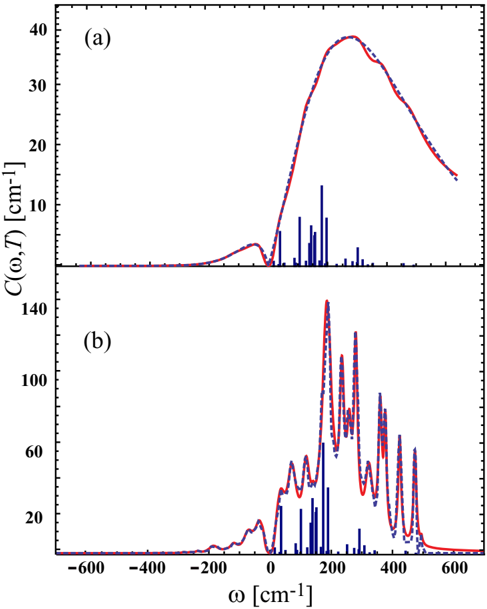
“To account for finite temperature, we transform the spectral density [35, 36] Cj(ω, T ) = {1 + coth [~ω/(2kBT )]}JA j (ω), where the subscript “A” denotes the antisymmetric spectral density J j (ω) = Jj(ω) if ω ≥ 0 ; and J j (ω) = −Jj(−ω) if ω < 0 .”
BackgroundMethodSolid-State Qubits with Current-Controlled Coupling
Hime, T., Reichardt, P. A., Plourde, B. L. T., Robertson, T. L., Wu, C.-E., Ustinov, A. V., & Clarke, J. (2006) · Science · doi:10.1126/science.1134388 · Cited by 228 · cited 5×
“[28] and the coupling geometries and methods of Refs.”
MethodInfluentialAtomistic Study of the Long-Lived Quantum Coherences in the Fenna-Matthews-Olson Complex
Shim, S., Rebentrost, P., Valleau, S., & Aspuru-Guzik, A. (2012) · Biophysical Journal · doi:10.1016/j.bpj.2011.12.021 · Cited by 219 · cited 2×
“This is motivated by recent results obtained for the FMO complex [32, 33].”
BackgroundResultSelf-citationThe Eighth Bacteriochlorophyll Completes the Excitation Energy Funnel in the FMO Protein
Schmidt am Busch, M., Müh, F., El-Amine Madjet, M., & Renger, T. (2011) · The Journal of Physical Chemistry Letters · doi:10.1021/jz101541b · Cited by 211 · cited 3×
“There is a remarkable amount of recent theoretical research related to the question of the molecular structure, vibrational environment, the origin and the role of long-lived quantum coherences [13–23].”
BackgroundLong-Lived Electronic Coherence in Dissipative Exciton Dynamics of Light-Harvesting Complexes
Kreisbeck, C., & Kramer, T. (2012) · University of Regensburg Publication Server (University of Regensburg) · Cited by 210
α-Helices direct excitation energy flow in the Fenna–Matthews–Olson protein
Müh, F., Madjet, M. E.-A., Adolphs, J., Abdurahman, A., Rabenstein, B., Ishikita, H., Knapp, E.-W., & Renger, T. (2007) · Proceedings of the National Academy of Sciences · doi:10.1073/pnas.0708222104 · Cited by 198 · cited 4×
“Different local electrostatic fields of the protein at different sites shift the electronic transition energies [15], resulting in a complicated energy landscape.”
BackgroundInfluentialWendling, M., Pullerits, T., Przyjalgowski, M. A., Vulto, S. I. E., Aartsma, T. J., van Grondelle, R., & van Amerongen, H. (2000) · The Journal of Physical Chemistry B · doi:10.1021/jp000077+ · Cited by 185 · cited 1×
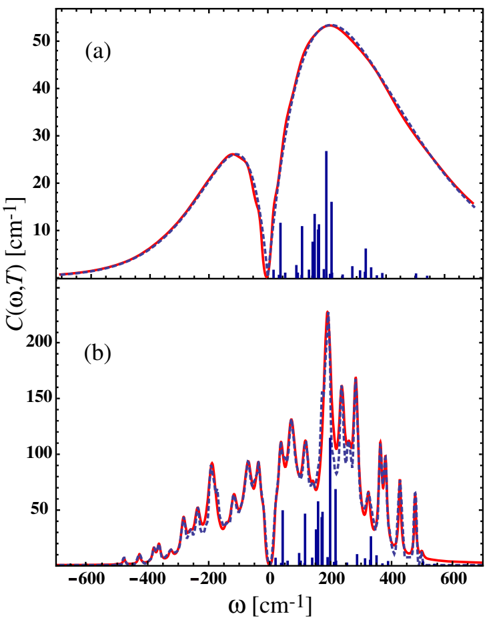
“Second, the experimental spectral density [14, 38] shown by blue dashed line in Figure 4 (b).”
BackgroundVenegas-Andraca, S. E., Gómez-Muñoz, J. L., Lanzagorta, M. O., & Uhlmann, J. K. (2013) · Cited by 183
Kreisbeck, C., Kramer, T., Rodríguez, M., & Hein, B. (2011) · Journal of Chemical Theory and Computation · doi:10.1021/ct200126d · Cited by 181 · cited 2×
“[41] C.”
BackgroundTuning the Gap of a Superconducting Flux Qubit
Paauw, F. G., Fedorov, A., Harmans, C. J. P. M., & Mooij, J. E. (2009) · Physical Review Letters · doi:10.1103/physrevlett.102.090501 · Cited by 176 · cited 3×
“[28] and the coupling geometries and methods of Refs.”
BackgroundMethodLight harvesting complex II B850 excitation dynamics
Strümpfer, J., & Schulten, K. (2009) · The Journal of Chemical Physics · doi:10.1063/1.3271348 · Cited by 166 · cited 2×
“[40] J.”
BackgroundQuest for Spatially Correlated Fluctuations in the FMO Light-Harvesting Complex
Olbrich, C., Strümpfer, J., Schulten, K., & Kleinekathöfer, U. (2011) · The Journal of Physical Chemistry B · doi:10.1021/jp1099514 · Cited by 144 · cited 2×
“This is motivated by recent results obtained for the FMO complex [32, 33].”
BackgroundResultHughes, K. H., Christ, C. D., & Burghardt, I. (2009) · The Journal of Chemical Physics · doi:10.1063/1.3159671 · Cited by 134
Single-Qubit Lasing and Cooling at the Rabi Frequency
Hauss, J., Fedorov, A., Hutter, C., Shnirman, A., & Schön, G. (2008) · Physical Review Letters · doi:10.1103/physrevlett.100.037003 · Cited by 130 · cited 2×
“[51] J.”
MethodLindblad equations for strongly coupled populations and coherences in photosynthetic complexes
Palmieri, B., Abramavicius, D., & Mukamel, S. (2009) · The Journal of Chemical Physics · doi:10.1063/1.3142485 · Cited by 125 · cited 2×
“[19] B.”
BackgroundHigh-Coherence Hybrid Superconducting Qubit
Steffen, M., Kumar, S., DiVincenzo, D. P., Rozen, J. R., Keefe, G. A., Rothwell, M. B., & Ketchen, M. B. (2010) · Physical Review Letters · doi:10.1103/physrevlett.105.100502 · Cited by 116 · cited 1×
“The energy relaxation time ( T 1 ) of a single qubit has been found [45, 54] to be on the order of a few µ s, being a few orders of magnitude larger than the required exciton transfer time.”
BackgroundValleau, S., Eisfeld, A., & Aspuru‐Guzik, A. (2012) · MPG.PuRe (Max Planck Society) · Cited by 106
Self-citationRebentrost, P., & Aspuru-Guzik, A. (2011) · The Journal of Chemical Physics · doi:10.1063/1.3563617 · Cited by 102 · cited 2×
“[22] P.”
BackgroundSelf-citationRitschel, G., Roden, J., Strunz, W. T., & Eisfeld, A. (2011) · New Journal of Physics · doi:10.1088/1367-2630/13/11/113034 · Cited by 88
Self-citationUsing superconducting qubit circuits to engineer exotic lattice systems
Tsomokos, D. I., Ashhab, S., & Nori, F. (2010) · Physical Review A · doi:10.1103/physreva.82.052311 · Cited by 88 · cited 1×
“[5–10], can be a more viable alternative to an all-purpose quantum computer.”
BackgroundSelf-citationInterqubit coupling mediated by a high-excitation-energy quantum object
Ashhab, S., Niskanen, A. O., Harrabi, K., Nakamura, Y., Picot, T., de Groot, P. C., Harmans, C. J. P. M., Mooij, J. E., & Nori, F. (2008) · Physical Review B · doi:10.1103/physrevb.77.014510 · Cited by 78 · cited 3×
“A tunable transverse interaction between flux qubits equivalent to that in Hel can be realized using additional ‘coupler’ qubits [27, 44].”
BackgroundSeibt, J., Winkler, T., Renziehausen, K., Dehm, V., Würthner, F., Meyer, H., & Engel, V. (2009) · The Journal of Physical Chemistry A · doi:10.1021/jp904892v · Cited by 64 · cited 1×
“It is challenging to simulate the open quantum system described in the previous section on conventional computers [20, 36, 39], even using modern parallel processing units [40–42].”
BackgroundLong-range coupling and scalable architecture for superconducting flux qubits
Fowler, A. G., Thompson, W. F., Yan, Z., Stephens, A. M., Plourde, B. L. T., & Wilhelm, F. K. (2007) · Physical Review B · doi:10.1103/physrevb.76.174507 · Cited by 52 · cited 1×
“We focus here on flux qubits, where two-qubit coupling was shown to be sign-and magnitude-tunable [27, 28] and methods of scaling to a moderate number of qubits have been discussed in Refs [29, 30].”
MethodVibration-enhanced quantum transport
Semião, F. L., Furuya, K., & Milburn, G. J. (2010) · New Journal of Physics · doi:10.1088/1367-2630/12/8/083033 · Cited by 49 · cited 1×
“Similar ideas of simulating ENAQT have been pursued in [49, 50].”
BackgroundClassical master equation for excitonic transport under the influence of an environment
Eisfeld, A., & Briggs, J. S. (2012) · Physical Review E · doi:10.1103/physreve.85.046118 · Cited by 47
Self-citationDephasing of a flux-qubit coupled to a harmonic oscillatorPreprint
Bertet, P., Chiorescu, I., Harmans, C. J. P. M., & Mooij, J. E. (2005) · arXiv (Cornell University) · doi:10.48550/arxiv.cond-mat/0507290 · Cited by 45 · cited 1×
“The spectral density of a single oscillator coupled to a flux qubit can be derived by using a quantum Langevin equation approach [52, 53] and following the detailed balance condition [35] The temperature for both spectral densities is 300 K.”
MethodHigh-Fidelity Quantum Operations on Superconducting Qubits in the Presence of Noise
Kerman, A. J., & Oliver, W. D. (2008) · Physical Review Letters · doi:10.1103/physrevlett.101.070501 · Cited by 43
Self-citationMetastable Superconducting Qubit
Kerman, A. J. (2010) · Physical Review Letters · doi:10.1103/physrevlett.104.027002 · Cited by 35
Self-citationQuantum Simulator for the Ising Model with Electrons Floating on a Helium Film
Mostame, S., & Schützhold, R. (2008) · Physical Review Letters · doi:10.1103/physrevlett.101.220501 · Cited by 35
Self-citationSimulation of noise-assisted transport via optical cavity networks
Caruso, F., Spagnolo, N., Vitelli, C., Sciarrino, F., & Plenio, M. B. (2011) · Physical Review A · doi:10.1103/physreva.83.013811 · Cited by 29 · cited 2×
“[49] F.”
BackgroundExternal momentum, volume effects, and the nucleon magnetic moment
Tiburzi, B. C. (2008) · Physical review. D. Particles, fields, gravitation, and cosmology/Physical review. D. Particles and fields · doi:10.1103/physrevd.77.014510 · Cited by 24
Quantum Simulation of Molecular Collisions with Superconducting QubitsPreprint
Pritchett, E., Benjamin, C., Galiautdinov, A., Geller, M. R., Sornborger, A. T., Stancil, P. C., & Martinis, J. M. (2010) · arXiv (Cornell University) · doi:10.48550/arxiv.1008.0701 · Cited by 21 · cited 1×
“[5–10], can be a more viable alternative to an all-purpose quantum computer.”
BackgroundSuperconducting Qubits II: Decoherence
Wilhelm, F. K., Storcz, M. J., Hartmann, U., & Geller, M. R. (2007) · NATO science series. Series II, Mathematics, physics and chemistry · doi:10.1007/978-1-4020-6137-0_6 · Cited by 16 · cited 1×
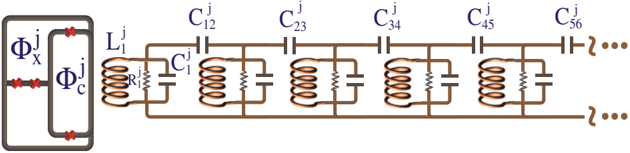
“The bath spectrum J(ω) of the noise seen by the qubit can be related to the real part of the impedance Z(ω) [48]: J(ω) = K ωRe [Z(ω)] , with K being a constant depending on the self-inductance of the environment loop and its coupling strength to the flux qubit.”
BackgroundQuantum simulator for the O(3) nonlinear sigma model
Schützhold, R., & Mostame, S. (2005) · Journal of Experimental and Theoretical Physics Letters · doi:10.1134/1.2130906 · Cited by 14 · cited 1×
“Increasing the dephasing rate such that γ ≈ Λ is expected [7] to lead to an increased population at the target site.”
BackgroundSelf-citationNoise-induced quantum coherence and persistent Rabi oscillations in a Josephson flux qubit
Omelyanchouk, A. N., Savel'ev, S. E., Zagoskin, A. M., Il’ichev, E. V., & Nori, F. (2009) · Physical Review B · doi:10.1103/physrevb.80.212503 · Cited by 13 · cited 1×
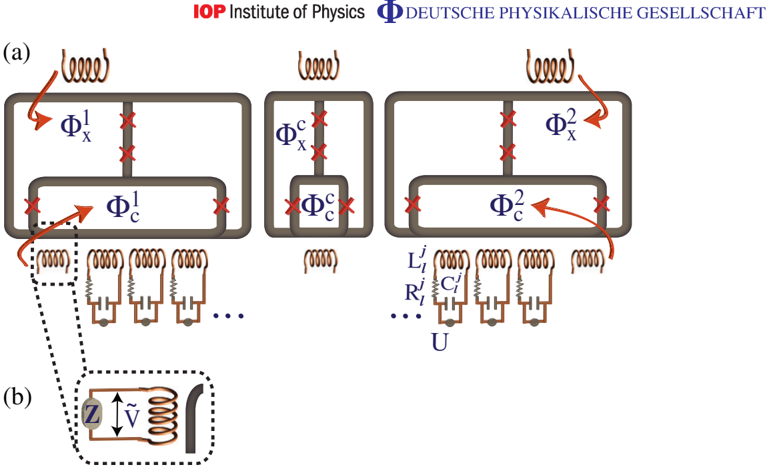
“On one hand, the noise can be actively created and send to the qubit by a time-dependent voltage ˜ V applied to a control loop [46].”
BackgroundSimulation of the spin-boson model with superconducting phase qubit coupled to a transmission line
Yu, L.-B., Tong, N.-H., Xue, Z., Wang, Z., & Zhu, S.-L. (2012) · Science China Physics Mechanics and Astronomy · doi:10.1007/s11433-012-4863-x · Cited by 13 · cited 2×
“[26] L.”
BackgroundSimulation of the spin-boson model with superconducting phase qubit coupled to a transmission linePreprint
Yu, L.-B., Tong, N.-H., Xue, Z., et al. (2010) · arXiv (Cornell University) · doi:10.48550/arxiv.1012.5764 · Cited by 1 · cited 2×
“[26] L.”
BackgroundThe Physical Implementation of Quantum Computation
DiVincenzo, D. P. (2000) · Fortschritte der Physik · doi:10.1002/1521-3978(200009)48:9/11<771::aid-prop771>3.0.co;2-e · cited 2×
“, decoherence [4].”
Research works printed but not linked: 1
- Kreisbeck C and Kramer T 2012 arXiv:1203.1485 · arXiv
Cited by
Superconducting Qubits: Current State of Play
Kjaergaard, M., Schwartz, M. E., Braumüller, J., Krantz, P., Wang, J. I.-J., Gustavsson, S., & Oliver, W. D. (2020) · Annual Review of Condensed Matter Physics · doi:10.1146/annurev-conmatphys-031119-050605 · Cited by 1,544
Superconducting Qubits: Current State of PlayPreprint
Kjærgaard, M., Schwartz, M. E., Braumüller, J., Krantz, P., Wang, J. I.-J., Gustavsson, S., & Oliver, W. D. (2020) · DSpace@MIT (Massachusetts Institute of Technology) · Cited by 1,192
Ultrastrong coupling regimes of light-matter interaction
Forn-Díaz, P., Lamata, L., Rico, E., Kono, J., & Solano, E. (2019) · Reviews of Modern Physics · doi:10.1103/revmodphys.91.025005 · Cited by 1,086
“A theoretical proposal of such a quantum simulator was already put forward (Mostame et al., 2012) using superconducting flux qubits.”
MethodQuantum information processing with superconducting circuits: a review
Wendin, G. (2017) · Reports on Progress in Physics · doi:10.1088/1361-6633/aa7e1a · Cited by 890
Can one trust quantum simulators?
Hauke, P., Cucchietti, F. M., Tagliacozzo, L., Deutsch, I., & Lewenstein, M. (2012) · Reports on Progress in Physics · doi:10.1088/0034-4885/75/8/082401 · Cited by 315
Metadata
- Authors
- Mostame, S., Rebentrost, P., Eisfeld, A., Kerman, A. J., Tsomokos, D. I., & Aspuru-Guzik, A.
- Affiliations
- Harvard University (US)
- MIT Lincoln Laboratory (US)
- University of London (GB)
- Venue
- New Journal of Physics
- Publisher
- IOP Publishing
- Published
- 2012-10-10
- Volume
- 14
- Issue
- 10
- Pages
- 105013
- ISSN
- 1367-2630 (ISSN-L)
- OpenAlex
- W2095928421
- Cited by
- 104
- References
- 74
- Citations by year
- 2026: 2 · 2025: 7 · 2024: 3 · 2023: 4 · 2022: 7 · 2021: 2 · 2020: 10 · 2019: 11 · 2018: 15 · 2017: 13 · 2016: 5 · 2015: 9 · 2014: 9 · 2013: 4 · 2012: 2
- FWCI
- 7.56
- Type
- journal article
- Language
- en
- Open access
- gold
- doi.org
- Licence
- cc-by
- Locations
- New Journal of Physics (publishedVersion, cc-by)
- arXiv (Cornell University) (submittedVersion)
- Funders
- U.S. Department of Energy (DESC0001088)
- Engineering and Physical Sciences Research Council (EP/G045771/1)
- Topics
- Physical Sciences › Physics and Astronomy › Atomic and Molecular Physics, and Optics › Quantum Information and Cryptography
- Physical Sciences › Physics and Astronomy › Atomic and Molecular Physics, and Optics › Quantum Mechanics and Applications
- Physical Sciences › Physics and Astronomy › Atomic and Molecular Physics, and Optics › Spectroscopy and Quantum Chemical Studies
- Keywords
- open quantum systems, quantum simulation, superconducting qubits, exciton transport, photosynthesis, Fenna-Matthews-Olson complex, non-Markovian noise, energy transfer pathways, quantum circuits
About these checks
Registry, retraction, Cites and statistics results are computed, not judged, with one exception: a printed reference that no index lists is read once by a model before it counts as a citation error. Claims are extracted by a model and kept only when their quote appears verbatim in the text; each cited source is then checked, with a model’s help, for whether it says what the claim relies on. Those verdicts can be wrong — read the claim’s quote and the cited source before relying on one.
Statistics and arithmetic are recomputed, not judged.
Confidence bands are shown only for fields calibrated on our annotated test set. None is calibrated yet, so no band is shown.
What counts as a claim ›How we measure confidence ›How we check this ›
Are you an author, or do you see a problem with this page? Request a review
Data sources
Bibliographic data: Semantic Scholar, OpenAlex, Crossref.
Contains information from the Semantic Scholar Academic Graph Datasets, made available under the ODC Attribution License (ODC-BY 1.0).
Semantic Scholar’s data is described in: Kinney, R., et al. (2023). The Semantic Scholar Open Data Platform. arXiv:2301.10140.
