

Surface code quantum computing by lattice surgery
Open accessThe DOI matches its Crossref record; 34 of the 34 references it cites were found in a registry or an index.
Abstract
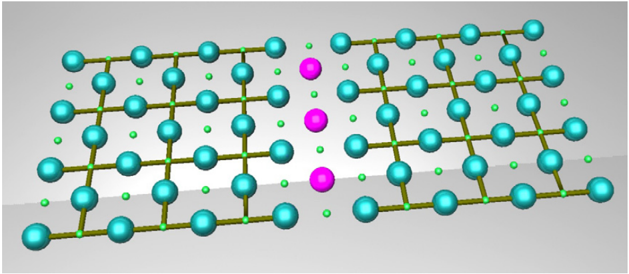
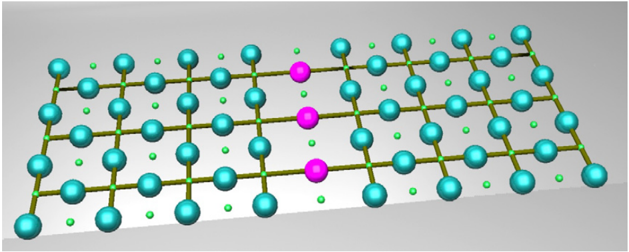
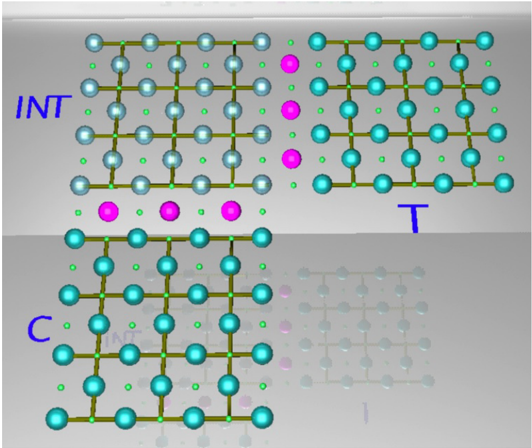
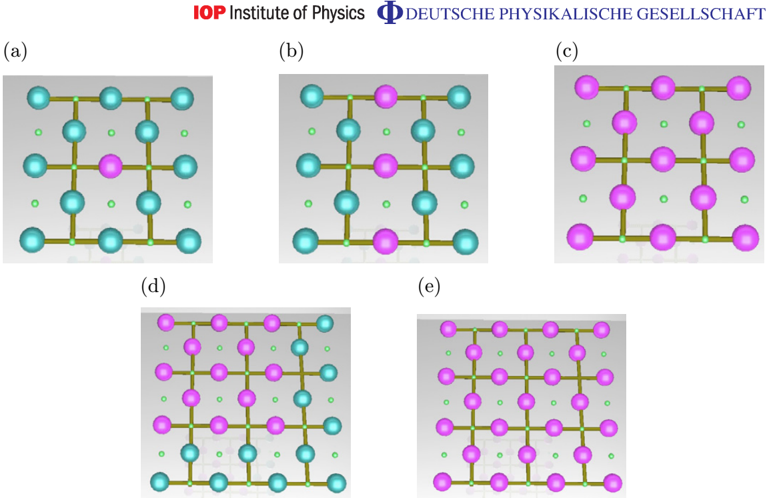
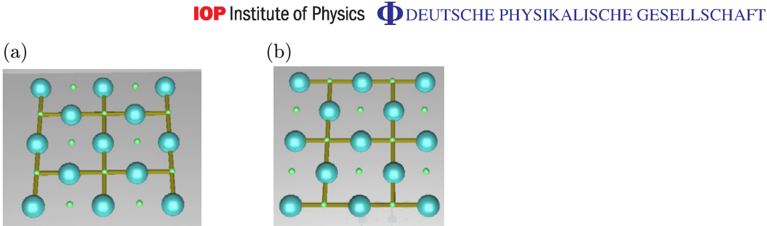
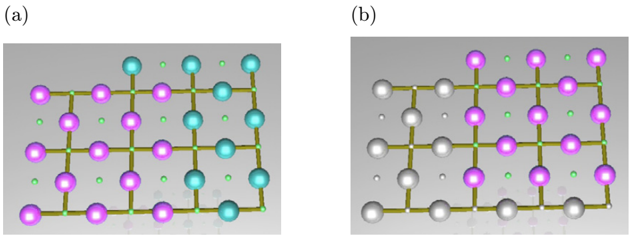
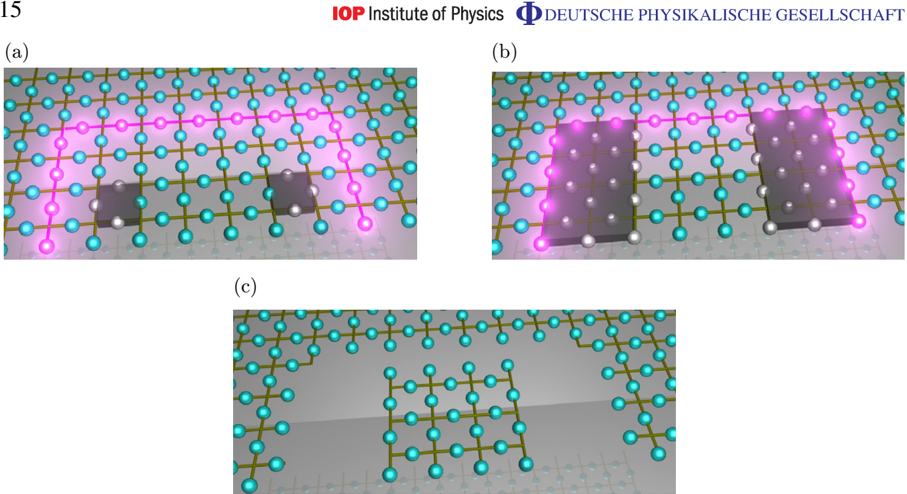
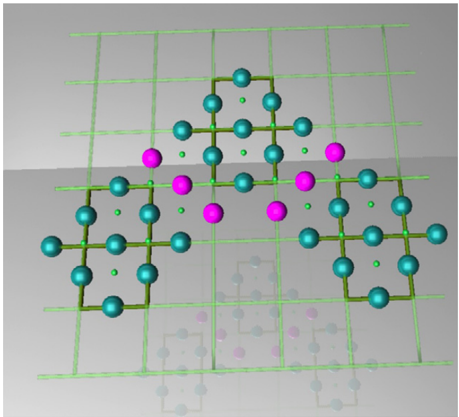
In recent years, surface codes have become a leading method for quantum error correction in theoretical large-scale computational and communications architecture designs. Their comparatively high fault-tolerant thresholds and their natural two-dimensional nearest-neighbour (2DNN) structure make them an obvious choice for large scale designs in experimentally realistic systems. While fundamentally based on the toric code of Kitaev, there are many variants, two of which are the planar- and defect-based codes. Planar codes require fewer qubits to implement (for the same strength of error correction), but are restricted to encoding a single qubit of information. Interactions between encoded qubits are achieved via transversal operations, thus destroying the inherent 2DNN nature of the code. In this paper we introduce a new technique enabling the coupling of two planar codes without transversal operations, maintaining the 2DNN of the encoded computer. Our lattice surgery technique comprises splitting and merging planar code surfaces, and enables us to perform universal quantum computation (including magic state injection) while removing the need for braided logic in a strictly 2DNN design, and hence reduces the overall qubit resources for logic operations. Those resources are further reduced by the use of a rotated lattice for the planar encoding. We show how lattice surgery allows us to distribute encoded GHZ states in a more direct (and overhead friendly) manner, and how a demonstration of an encoded CNOT between two distance-3 logical states is possible with 53 physical qubits, half of that required in any other known construction in 2D.
Overview
The claims and statistics of this paper haven’t been checked yet.
Free: it reads the open-access text and checks the first 5 claims that cite a source we can check. Create a free account to check every claim.
Integrity signals
Registry
Cites
Statistics
Figures





Verification
Claims the paper makes
The claims and statistics of this paper haven’t been checked yet.
Free: it reads the open-access text and checks the first 5 claims that cite a source we can check. Create a free account to check every claim.
Claims other papers make about this one
Each is checked against this paper’s own text: does it say what the citing paper says it does?
The cited source says what the claim attributes to it.
In the citing paper
“Lattice surgery22,39,43,56 enables the efficient realization of multi-qubit fault-tolerant operations, such as the CNOT gate, with only nearest-neighbour interactions.”
From Scaling and logic in the colour code on a superconducting quantum processor (2025) · cites this paper as [22]
The cited source says what the claim attributes to it.
In the citing paper
“Finally, we teleport logical states between colour codes using lattice surgery22.”
From Scaling and logic in the colour code on a superconducting quantum processor (2025) · cites this paper as [22]
Self-check
Percentages, sums and reported differences re-computed from the paper’s own numbers.
The self-check needs the paper’s full text.
Citations
Cites
Fault-tolerant quantum computation by anyons
Kitaev, A. Y. (2003) · Annals of Physics · doi:10.1016/s0003-4916(02)00018-0 · Cited by 7,238 · cited 2×
“Surface codes were first introduced by Kitaev [9] in the context of anyonic quantum computing.”
Edmonds, J. (1965) · Canadian Journal of Mathematics · doi:10.4153/cjm-1965-045-4 · Cited by 2,428 · cited 1×
“[19, 20, 21].”
Dennis, E., Kitaev, A., Landahl, A., & Preskill, J. (2002) · Journal of Mathematical Physics · doi:10.1063/1.1499754 · Cited by 1,768 · cited 1×
“The general procedure was given for the planar code in [2], and a worked example for general surface codes in [4, section VI(C)].”
MethodMaximum matching and a polyhedron with 0,1-vertices
Edmonds, J. (1965) · Journal of Research of the National Bureau of Standards Section B Mathematics and Mathematical Physics · doi:10.6028/jres.069b.013 · Cited by 1,712 · cited 1×
“A pattern of chains of corrective operations highly likely to maintain the correct logical state can be inferred using Edmonds’ minimum weight perfect matching algorithm [21, 22, 23].”
MethodUniversal quantum computation with ideal Clifford gates and noisy ancillas
Bravyi, S., & Kitaev, A. (2005) · Physical Review A · doi:10.1103/physreva.71.022316 · Cited by 1,525 · cited 1×
“This allows for both state preparation and also arbitrary single-qubit rotations, in accordance with standard techniques [29].”
ResultPreskill, J. (1998) · Proceedings of the Royal Society of London. Series A: Mathematical, Physical and Engineering Sciences · doi:10.1098/rspa.1998.0167 · Cited by 994 · cited 1×
“As long as physical errors are below the threshold value, increasing the number of physical qubits can exponentially suppress error on the logical qubits [1].”
BackgroundFault-Tolerant Quantum Computation with High Threshold in Two Dimensions
Raussendorf, R., & Harrington, J. (2007) · Physical Review Letters · doi:10.1103/physrevlett.98.190504 · Cited by 812 · cited 2×
“By contrast, in the defect-based code there are no transversal operations, and the CNOT is performed by braiding defects: extending a defect by measuring out qubits in a line, and passing this extended defect around the second logical qubit defect [3].”
BackgroundMethodTopological fault-tolerance in cluster state quantum computation
Raussendorf, R., Harrington, J., & Goyal, K. (2007) · New Journal of Physics · doi:10.1088/1367-2630/9/6/199 · Cited by 617
High-threshold universal quantum computation on the surface code
Fowler, A. G., Stephens, A. M., & Groszkowski, P. (2009) · Physical Review A · doi:10.1103/physreva.80.052312 · Cited by 486 · cited 1×
“The price of maintaining NN interactions is over three times the number of physical qubits per logical qubit [3, 4].”
BackgroundSelf-citationBlossom V: a new implementation of a minimum cost perfect matching algorithm
Kolmogorov, V. (2009) · Mathematical Programming Computation · doi:10.1007/s12532-009-0002-8 · Cited by 414
Research works printed but not linked: 2
- 12. Bravyi S B and Kitaev A Y 2001 Quantum Comp. Comput. 2 43-48 (transl.)
- 28. Rotman J 1998 An Introduction to Algebraic Topology (Berlin: Springer)
Cited by
Items 401–500 of 604
Methodology for bus layout for topological quantum error correcting codes
Wosnitzka, M., Pedrocchi, F. L., & Divincenzo, D. P. (2016) · EPJ Quantum Technology · doi:10.1140/epjqt/s40507-016-0042-8 · Cited by 6
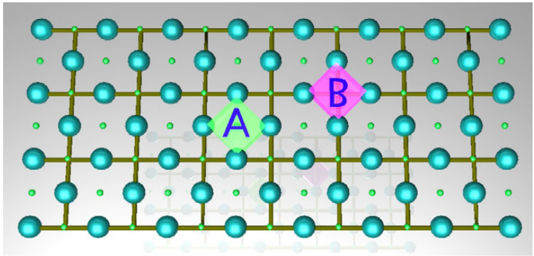
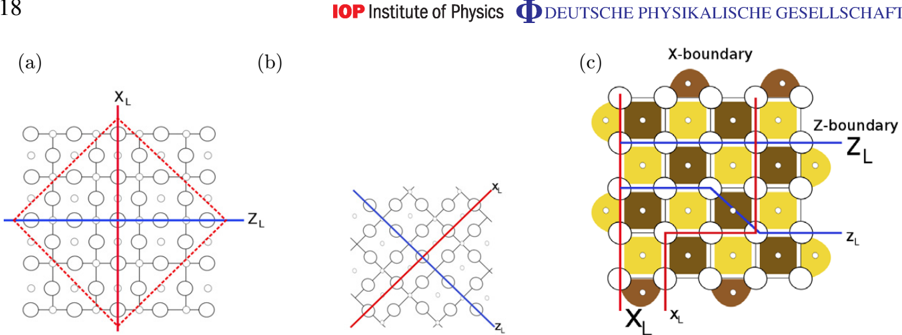
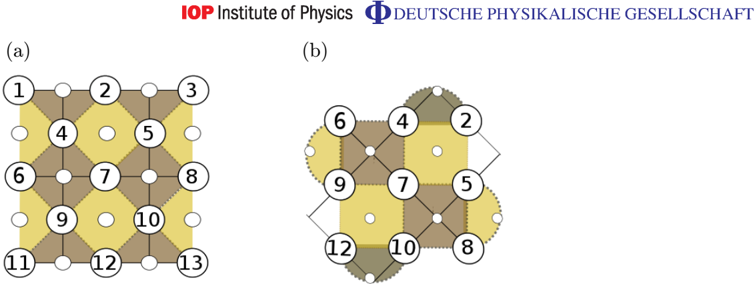
“The rotated surface code [30] contains all the qubits inside the solid square as well as the ancillary qubits surrounded by a black line.”
BackgroundVirtual Logical Qubits: A Compact Architecture for Fault-Tolerant Quantum Computing
Baker, J. M., Duckering, C., Schuster, D., & Chong, F. T. (2021) · IEEE Micro · doi:10.1109/mm.2021.3072789 · Cited by 4
“There are a number of promising error correction schemes which have been proposed such as the surface code.(2,3) The surface code is a particularly appealing candidate because of its low overhead, high error threshold, and its reliance on few nearest-neighbor interactions in a 2-D array of qubits, a common feature of…”
BackgroundMethodCompiler Management of Communication and Parallelism for Quantum Computation
Heckey, J., Patil, S. R., Javadi-Abhari, A., Holmes, A. A., Kudrow, D., Brown, K. R., Franklin, D. M., Chong, F. T., & Martonosi, M. (2015) · ACM SIGPLAN Notices · doi:10.1145/2775054.2694357 · Cited by 4
End-to-end resource analysis for quantum interior point methods and portfolio optimizationPreprint
Dalzell, A. M., Clader, B. D., Salton, G., Berta, M., Lin, C. Y.-Y., Bader, D. A., Stamatopoulos, N., Schuetz, M. J. A., Brandão, F. G. S. L., Katzgraber, H. G., et al. (2022) · arXiv (Cornell University) · doi:10.48550/arxiv.2211.12489 · Cited by 3
“We justify the focus on T gates by pointing out that, in many prominent approaches to fault-tolerant quantum computation (such as lattice surgery [27–30]), quantum circuits are decomposed into Clifford gates and T gates and the cost of implementing the circuit is dominated by the number and depth of…”
BackgroundResearch on Quantum Materials and Quantum Technology at RIKEN
Ishibashi, K., Yorozu, S., Arima, T., Kawamura, M., Tokura, Y., Karube, K., Yu, X., Taguchi, Y., Hanaguri, T., Machida, T., et al. (2025) · ACS Nano · doi:10.1021/acsnano.4c15409 · Cited by 4
Prospects for NMR spectral prediction on fault-tolerant quantum computers
Elenewski, J. E., Camara, C. M., & Kalev, A. (2026) · Physical Review Research · doi:10.1103/km66-ltpl · Cited by 3
“Our physical resource estimates are based on lattice surgery with the rotated surface code [33, 108].”
Effects of quantum noise on Shor’s algorithm
Huang, T.-L., Wu, Y.-Z., Ni, M., Wang, S., & Ye, Y.-J. (2024) · Acta Physica Sinica · doi:10.7498/aps.73.20231414 · Cited by 2
Mitigating fabrication errors by recovering defective syndrome qubits in surface code
Heng, S., Kim, D., & Han, Y. (2024) · Physical Review A · doi:10.1103/physreva.109.012420 · Cited by 3
Bosonic Pauli+: Efficient Simulation of Concatenated Gottesman-Kitaev-Preskill Codes
Hopfmueller, F., Tremblay, M., St-Jean, P., Royer, B., & Lemonde, M.-A. (2024) · Quantum · doi:10.22331/q-2024-11-26-1539 · Cited by 11
“We apply the BP+ method to simulate a rotated surface code [34, 35].”
A 3D lattice defect and efficient computations in topological MBQC
Tournaire, G., Schwiering, M., Raussendorf, R., & Bachmann, S. (2026) · Quantum · doi:10.22331/q-2026-02-06-1997 · Cited by 4
“For instance, in circuit based, a transversal Hadamard is applied on every physical qubit of the patch followed by the patch rotation to recover the initial stabilizer structure[29].”
A memristive neural decoder for cryogenic fault-tolerant quantum error correction
Yon, V., Marcotte, F., Mouny, P.-A., Dagnew, G. A., Kulchytskyy, B., Rochette, S., Beilliard, Y., Drouin, D., & Ronagh, P. (2025) · Quantum Science and Technology · doi:10.1088/2058-9565/adc3ba · Cited by 11
Feasibility of logical Bell state generation in memory assisted quantum networks
Galetsky, V., Vyas, N., Comin, A., & Nötzel, J. (2025) · Physical Review Research · doi:10.1103/rsrk-c7yg · Cited by 5
SWIPER: Minimizing Fault-Tolerant Quantum Program Latency via Speculative Window Decoding
Viszlai, J., Chadwick, J. D., Joshi, S., Ravi, G. S., Li, Y., & Chong, F. T. (2025) · Proceedings - International Symposium on Computer Architecture/Proceedings · doi:10.1145/3695053.3731022 · Cited by 16
“Operations on the surface code are typically formulated as lattice surgery [36], in which adjacent surface code patches are merged and split to perform logical operations.”
CaliQEC: In-situ Qubit Calibration for Surface Code Quantum Error Correction
Fang, X., Yin, K., Zhu, Y., Ruan, J., Tullsen, D. M., Liang, Z., Sornborger, A. T., Li, A., Humble, T. S., Ding, Y., et al. (2025) · Proceedings - International Symposium on Computer Architecture/Proceedings · doi:10.1145/3695053.3731042 · Cited by 14
“3(e)(f)) via lattice surgery and code deformation [10, 14, 29, 31, 67].”
Quantum error correction with Kolmogorov–Arnold network for rotated surface codes decoding
Fan, Z.-C., Tian, C., Xiao, B., Guo, X., & Ma, H. (2025) · Quantum Information Processing · doi:10.1007/s11128-025-04826-2 · Cited by 3
“2 depicts a rotated surface code generated by 45 ◦ rotation of a distance-5 ( d = 5 ) surface code [35].”
Quantum Resource Estimates for Computing Binary Elliptic Curve Discrete Logarithms
Garn, M., & Kan, A. (2025) · IEEE Transactions on Quantum Engineering · doi:10.1109/tqe.2025.3586541 · Cited by 8
Universal Fault-Tolerant Quantum Computation in 2D without Getting Tied in Knots
Davydova, M. D., Bauer, A., de la Fuente, J. C. M., Webster, M., Williamson, D. J., & Brown, B. J. (2026) · Physical Review X · doi:10.1103/vrty-qs5h · Cited by 63
Planar Fault-Tolerant Circuits for Non-Clifford Gates on the 2D Color Code
Bauer, A., & de la Fuente, J. C. M. (2026) · PRX Quantum · doi:10.1103/p7c9-x1m9 · Cited by 29
Sunami, S., Hirano, Y., Hinokuma, T., & Yamasaki, H. (2026) · PRX Quantum · doi:10.1103/tz8f-6xwk · Cited by 16
“More concretely, we simulate logical Bell pair generation via the splitting of a merged patch [40], where the inter-patch remote physical CNOT gates are implemented by gate teleportation, and the resource state is the input physical Bell pairs with error rates 𝑝 Bell [25, 26].”
Scalable Decoding Protocols for Fast Transversal Logic in the Surface Code
Turner, M. L., Campbell, E. T., Crawford, O., Gillespie, N. I., & Camps, J. (2026) · PRX Quantum · doi:10.1103/nx6p-hjqy · Cited by 28
Surface Code Error Correction with Crosstalk Noise
Zhou, Z., Ji, A., & Ding, Y. (2025) · IEEE International Conference on Quantum Computing and Engineering (QCE) · doi:10.1109/qce65121.2025.00074 · Cited by 28
“Our primary focus is the rotated surface code, which has been well studied both theoretically and numerically [1], [2], [41], [42], and has been demonstrated on hardware platforms with exponential error suppression capabilities [43]–[45].”
Opportunities in full-stack design of low-overhead fault-tolerant quantum computation
Zhou, H., Cain, M., & Lukin, M. D. (2025) · Nature Computational Science · doi:10.1038/s43588-025-00895-6 · Cited by 15
“Neighboring surface code patches can be entangled via lattice surgery (Box 1), effectively realizing a joint logical Pauli product measurement between two codes using ancilla stabilizer measurements at their boundaries 19,21,25 (Fig.”
InfluentialResilience of the surface code to error bursts
Tan, S. J. S., Pattison, C. A., McEwen, M., & Preskill, J. P. (2026) · Physical Review A · doi:10.1103/vwtl-hwfx · Cited by 22
“We consider the rotated surface code [23] subjected to a memory experiment of duration T = 2 d syndrome extraction cycles where a single error burst occurs at time T / 2 and d is the surface code distance.”
Demonstration of measurement-free universal logical quantum computation
Butt, F., Pogorelov, I., Freund, R., Steiner, A., Meyer, M., Monz, T., & Müller, M. (2026) · Nature Communications · doi:10.1038/s41467-026-68533-x · Cited by 2
“A standard approach for teleporting a state between registers is based on lattice surgery 45,46 , which is illustrated in Fig.”
Chen, Z., Chen, M.-C., Lu, C., & Pan, J.-W. (2026) · Physical Review Letters · doi:10.1103/m7tq-9v3g · Cited by 46
Gupta, N., Punia, D., Gautam, K., Sikka, G., Sharma, A. K., & Farouk, A. (2026) · Computer Science Review · doi:10.1016/j.cosrev.2026.100942 · Cited by 4
Parallel Logical Measurements via Quantum Code Surgery
Cowtan, A., He, Z., Williamson, D. J., & Yoder, T. J. (2026) · PRX Quantum · doi:10.1103/gj8x-n5gg · Cited by 80
“For topological codes, particularly surface codes [9], methods for logical computation are well-studied [10–12].”
Characterising the failure mechanisms of error-corrected quantum logic gates
Harper, R., Lainé, C., Hockings, E. T., McLauchlan, C., Nixon, G. M., Brown, B. J., & Bartlett, S. D. (2026) · Nature Communications · doi:10.1038/s41467-026-71773-6 · Cited by 25
qSIEVE: Efficient qLDPC Memory via Systolic Movement in Atom Arrays
Viszlai, J., Yang, W., Lin, S. F., Liu, J., Nottingham, N., Baker, J. M., & Chong, F. T. (2026) · ACM Transactions on Quantum Computing · doi:10.1145/3779066 · Cited by 47
“CNOT requires a 𝑍𝑍 measurement followed by a 𝑋𝑋 measurement which takes 2 logical cycles when implemented using lattice surgery [28, 36] or 1 logical cycle when implemented using a transversal CNOT [11].”
Compiling a Simple Chemistry Application to Quantum Error Correction Primitives
Blunt, N. S., Gehér, G. P., & Moylett, A. E. (2023) · IEEE International Conference on Quantum Computing and Engineering (QCE) · doi:10.1109/qce57702.2023.10247 · Cited by 3
“We consider two ways of implementing logical gates on the surface code: directly implementing Clifford and T gates using lattice surgery primitives [13]; or removing Clifford gates from the circuit so that only Pauli ( π/ 4) rotations need to be implemented [14].”
MethodStructure design and logical CNOT implementation of multi-logical-qubits surface code
Quan, D., Lü, X.-J., & Zhang, W.-F. (2023) · Acta Physica Sinica · doi:10.7498/aps.73.20231138 · Cited by 2
Superconducting qubits in the millions: The potential and limitations of modularity
Saadatmand, S. N., Wilson, T. L., Hodson, M. J., Field, M., Devitt, S. J., Vijayan, M. K., Robertson, A., Le, T. P., Ruh, J., Paler, A., et al. (2026) · Physical Review Applied · doi:10.1103/k3d5-v43c · Cited by 22
“This architecture can be distributed across multiple modules, provided they are coherently connected via the auxiliary bus and each module consumes local T -states. o perations or MPPOs — a process based on the lattice surgery [10, 24–27].”
InfluentialSelf-citationUniversal terminal for cloud quantum computing
Khazali, M. (2024) · Scientific Reports · doi:10.1038/s41598-024-65899-0 · Cited by 7
Optimal number of stabilizer measurement rounds in an idling surface code patch
Márton, Á., & Asbóth, J. K. (2025) · Quantum · doi:10.22331/q-2025-06-12-1767 · Cited by 9
“In other words, our goal in this work is to find the optimal strategy for protecting logical quantum information encoded in idling surface code patches while some other patches may undergo logical operations by any of the proposed approaches [31, 32, 33, 34, 35, 36].”
Harris, V. G., & Andalib, P. (2024) · Frontiers in Materials · doi:10.3389/fmats.2024.1343005 · Cited by 2
Optimal execution of logical Hadamard with low‐space overhead in rotated surface code
Lee, S., Jin, K., Oh, S., On, J., & Cha, G. (2024) · ETRI Journal · doi:10.4218/etrij.2024-0129 · Cited by 3
“The rotated surface code is a variant of the surface code, an extensively employed QEC code in quantum computing [15, 23, 26 – 31, 35, 36].”
Magic state injection on IBM quantum processors above the distillation threshold
Kim, Y., Sevior, M. E., & Usman, M. (2026) · Scientific Reports · doi:10.1038/s41598-026-40381-1 · Cited by 21
“Furthermore, increasing the size of the logical magic states and implementing lattice surgery would be another promising avenue for future work [36, 37].”
Averting Multi-Qubit Burst Errors in Surface Code Magic State Factories
Chadwick, J. D., Kang, C., Viszlai, J., Lin, S. F., & Chong, F. T. (2024) · IEEE International Conference on Quantum Computing and Engineering (QCE) · doi:10.1109/qce60285.2024.00128 · Cited by 10
“The surface code can fault-tolerantly perform quantum operations in the Clifford group (such as X, Z, H, S, and CNOT) using lattice surgery [49]–[52], which involves creating, growing, merging, and measuring patches of surface code (example in Figure 2d).”
MethodMultiplexed Quantum Communication with Surface and Hypergraph Product Codes
Nishio, S., Connolly, N., Piparo, N. L., Munro, W. J., Scruby, T. R., & Nemoto, K. (2025) · Quantum · doi:10.22331/q-2025-01-28-1613 · Cited by 5
“For instance, fault-tolerant logic with surface codes [24] has been very well studied [25, 26], while quantum Reed-Solomon codes [27] provide efficient and loss-tolerant protection for transmission through optical channels, but it is not clear how to interface or switch between these two families…”
Low-density parity-check representation of fault-tolerant quantum circuits
Li, Y. (2025) · Physical Review Research · doi:10.1103/physrevresearch.7.013115 · Cited by 8
“In the context of the surface code, effective methods for operating logical qubits include defect braiding [42–45], twist operation [46–49] and lattice surgery [50–52].”
Incoherent approximation of leakage in quantum error correction
Marshall, J., & Kafri, D. (2025) · Physical Review Applied · doi:10.1103/physrevapplied.23.054025 · Cited by 7
“This scaling is essential to allow for simulations of a distance 5 rotated surface code [28, 29].”
Ha, J., Kang, Y., Lee, J., & Heo, J. (2025) · Quantum Information Processing · doi:10.1007/s11128-025-04789-4 · Cited by 3
“The two primary methods of lattice surgery are merging and splitting [29].”
Implementation of magic state injection within heavy-hexagon architectures
Kim, H., Choi, W., & Kwon, Y. (2025) · Quantum Information Processing · doi:10.1007/s11128-025-05004-0 · Cited by 5
“To perform quantum computing, logical operators implementing arbitrary unitary operations that transform prepared logical states into other desired logical states are required [17–19].”
Modal Analysis on Quantum Computers via Qubitization
Lee, Y., & Kanno, K. (2025) · IEEE International Conference on Quantum Computing and Engineering (QCE) · doi:10.1109/qce65121.2025.00237 · Cited by 9
“One of the popular schemes used in previous resource estimation literature is the surface code [29], [30], [31] based on the lattice surgery [32], as it achieves relatively high threshold error rates using only local interactions between nearest-neighbor qubits on an array, allowing it to possess…”
Optimal local unitary encoding circuits for the surface code
Higgott, O., Wilson, M., Hefford, J., Dborin, J., Hanif, F., Burton, S., & Browne, D. E. (2021) · UCL Discovery (University College London) · Cited by 2
Color codes with twists: Construction and universal-gate-set implementation
Gowda, M. G., & Sarvepalli, P. K. (2021) · Physical Review A · doi:10.1103/physreva.104.012603 · Cited by 2
Implementation of Hybridly Protected Quantum Gates
Wu, C., Sun, C., Wang, G., Feng, X., & Yi, X. X. (2022) · Physical Review Applied · doi:10.1103/physrevapplied.17.034003 · Cited by 2
Algebraic aspects of boundaries in the Kitaev quantum double model
Cowtan, A., & Majid, S. (2023) · Journal of Mathematical Physics · doi:10.1063/5.0127285 · Cited by 8
Duplij, S. A., & Vogl, R. (2023) · Institute of Physics eBooks · doi:10.1088/978-0-7503-5281-9 · Cited by 1
Ha, J., Lee, J., & Heo, J. (2024) · Scientific Reports · doi:10.1038/s41598-024-54434-w · Cited by 6
Surface Codes Based Quantum Networking
Djordjević, I. B. (2020) · International Conference on Transparent Optical Networks · doi:10.1109/icton51198.2020.9203146 · Cited by 2
“In surface codes this corresponds to the lattice surgery [13], in which we change the configuration as shown in Fig.”
MethodQuantum convolutional codes concatenated with the GKP code for correcting continuous errors
Xiao, H., & Chen, X. (2022) · Quantum Information Processing · doi:10.1007/s11128-022-03545-2 · Cited by 1
“The surface code requires only nearest-neighbour interactions so that it has comparatively high threshold [5, 6].”
BackgroundOn Variable Strength Quantum ECC
Resch, S., & Karpuzcu, U. R. (2022) · IEEE Computer Architecture Letters · doi:10.1109/lca.2022.3200204 · Cited by 2
“This is referred to as lattice surgery, and represents the state of the art [6], [10].”
Evaluation of the Classical Hardware Requirements for Large-Scale Quantum Computations
Camps, D., Rrapaj, E., Klymko, K., Austin, B. M., & Wright, N. J. (2024) · ISC High Performance (ISC) · doi:10.23919/isc.2024.10528937 · Cited by 9
A Case for Elastic Quantum Error Correction Decoders
Maurya, S., Molavi, A., Albarghouthi, A., & Tannu, S. (2026) · European Conference on Computer Systems · doi:10.1145/3767295.3803584 · Cited by 23
“In the surface code, the leading method is lattice surgery (LS) [23, 35, 40], which consists of two primitives (Figure 2(d)): merge , which combines multiple logical qubit patches into one, and split , which divides a patch into two.”
Type-Based Verification of Connectivity Constraints in Lattice Surgery
Wakizaka, R., Suzuki, Y., & Igarashi, A. (2024) · Lecture notes in computer science · doi:10.1007/978-981-97-8943-6_11 · Cited by 2
“Several methods [17,23] have been proposed to realize logical operations on topological codes, and lattice surgery [23] in particular has attracted attention as a method that can efficiently implement multi-qubit logical operations.”
MethodScalable Connection of Qubits to Quantum Error Correction Systems Using Ethernet
Wichmann, J.-E. R., & Sano, K. (2024) · IEEE International Conference on Cluster Computing Workshops (CLUSTER Workshops) · doi:10.1109/clusterworkshops61563.2024.00042 · Cited by 1
“Processing multiple logical qubits in the same BEU is necessary to perform 2-qubit gates with logical qubits via lattice surgery and enables universal fault tolerant quantum computing [5].”
MethodError-mitigated initialization of surface codes with non-Pauli stabilizers
He, Z.-C., & Xue, Z. (2024) · Physical Review A · doi:10.1103/physreva.110.052441 · Cited by 1
“…logical operator Z L is a simple product of Z P L and Z Q L , we can map the two logical state to the new logical state of Performing the mapping, we get the final state of the lattice merging, with X P L ⊗ X Q L boundary, as, where we employ the symbol m ⃝ to label lattice merging operation [21].”
Multi-FPGA System for Quantum Error Correction with Lattice Surgery
Liyanage, N., Wu, Y., Houghton, E., & Zhong, L. (2024) · IEEE International Conference on Quantum Computing and Engineering (QCE) · doi:10.1109/qce60285.2024.10435 · Cited by 4
High-fidelity initialization of a logical qubit with multiple injections
He, Z., & Xue, Z. (2025) · Physical Review A · doi:10.1103/physreva.111.052419 · Cited by 4
“However, using a surface code or most stabilizer codes, these algorithms require a significant number of non-Clifford quantum gates, which is challenging in practical implementations [30–36].”
PowerMove: Optimizing Compilation for Neutral Atom Quantum Computers with Zoned Architecture
Ruan, J., Fang, X., Zhang, H., Li, A., Humble, T. S., & Ding, Y. (2025) · International Conference on Architectural Support for Programming Languages and Operating Systems (ASPLOS) · doi:10.1145/3676642.3736128 · Cited by 23
“We formalize this extension using surface codes [23, 27, 30], the leading QEC code for FTQC, demonstrating how logical operations align with and can be optimized by PowerMove (see Sec.”
A mixed-precision quantum-classical algorithm for solving linear systems
Koska, O., Baboulin, M., & Gazda, A. (2025) · IEEE International Symposium on Parallel & Distributed Processing, Workshops and Phd Forum · doi:10.1109/ipdpsw66978.2025.00081 · Cited by 6
“The classical cost is expressed in floating-point operations (flops) and the quantum cost is expressed in number of T-gates, because the depth of the circuit requires to use a fault-tolerant quantum computer [21].”
String Diagrams for Defect-Based Surface Code Computing
Kupper, M., Horsman, D. C., Heunen, C., & de Beaudrap, N. (2025) · Electronic Proceedings in Theoretical Computer Science · doi:10.4204/eptcs.426.6 · Cited by 3
“Planar and defect-based qubits can even be interconverted, by judiciously increasing or measuring out the stabilised surface [27, §5].”
Self-citationZhu, M., Fu, H., Song, H., Wu, J., Zhang, C., Xie, W., & Li, X. (2025) · ACM Transactions on Architecture and Code Optimization · doi:10.1145/3760783 · Cited by 7
“Depending on the method of constructing logical qubits, surface code can be divided into the double defect model [12] and the lattice surgery model [20] with different logical operation implementation strategies.”
Understanding Quantum Computing: From Qubits to Quantum Algorithms
Kumar, V., Joshi, A., Thakur, G., Chauhan, N., & Singh, R. K. (2025) · Information systems engineering and management · doi:10.1007/978-3-031-99786-0_6 · Cited by 2
Layer Codes as Partially Self-Correcting Quantum Memories
Gu, S., Caha, L., Choe, S. H., He, Z., Kubica, A., & Tang, E. (2026) · Physical Review Letters · doi:10.1103/x4z2-f4gg · Cited by 12
“Intuitively, L ( C ) can be viewed as a concatenation of C with the surface code, where parity checks of C are implemented via lattice surgery [HFDM12].”
Network requirements for distributed quantum computation
Jacinto, H., Gouzien, É., & Sangouard, N. (2026) · Physical Review Research · doi:10.1103/v9ln-c4v2 · Cited by 34
“The layout is designed for a fault-tolerant implementation of gates on the rotated surface code leveraging lattice surgery [39] and magic state injection.”
Distributed-HISQ: A Distributed Quantum Control Architecture
Zhao, Y., Zhao, K., Zhou, P., Liu, D., Luo, T., Zheng, Y., Luo, P., Hu, S., Lin, J., Guo, C., et al. (2025) · IEEE/ACM International Symposium on Microarchitecture (MICRO) · doi:10.1145/3725843.3756048 · Cited by 9
“We construct and validate logical 𝑇 gates using lattice surgery [19] with Stim [15], then convert these circuits into HISQ programs.”
Kim, J., Cho, J., Jeong, H., Min, D., Choi, J., Hong, J., & Kim, J. (2025) · IEEE/ACM International Symposium on Microarchitecture (MICRO) · doi:10.1145/3725843.3756026 · Cited by 1
“In this section, we provide an overview of FTQC with surface code and lattice surgery, one of the prominent quantum error correction (QEC) and logical quantum operation, respectively [26, 38, 54, 55].”
Unfolded distillation: very low-cost magic state preparation for biased-noise qubits
Ruiz, D., Guillaud, J., Vuillot, C., & Mirrahimi, M. (2026) · npj Quantum Information · doi:10.1038/s41534-026-01197-z · Cited by 20
“In the surface code architecture, these rotations are performed via lattice surgery using ancillary qubit buses [48–50].”
Effect of multiqubit correlated noise on surface-code thresholds
Wang, S., Yan, Y., Xia, Z., & Wang, X. (2025) · Physical Review A · doi:10.1103/hjqn-lyh2 · Cited by 4
Chandra, N. K., Kaur, E., & Seshadreesan, K. P. (2025) · IEEE International Conference on Trust, Privacy and Security in Intelligent Systems and Applications (TPS-ISA) · doi:10.1109/tps-isa67132.2025.00068 · Cited by 8
decoder-bench: Benchmarking Decoders for Quantum Error Correction
Maurya, S., Viszlai, J., Raveendran, N., Das, P., & Tannu, S. (2025) · IEEE International Symposium on Workload Characterization · doi:10.1109/iiswc66894.2025.00032 · Cited by 8
Fault-tolerant quantum computation without distillation on a 2D device
Scruby, T. R., Nemoto, K., & Cai, Z. (2025) · npj Quantum Information · doi:10.1038/s41534-025-01133-7 · Cited by 8
“Analternatewaytode fi ne a 2D surface code is to place qubits on the vertices of a 2D square lattice and assign X and Z stabilisers to alternate faces 15 .”
Lattice Surgery Compilation Beyond the Surface Code
Herzog, L. S., Berent, L., Kubica, A., & Wille, R. (2025) · IEEE International Conference on Quantum Computing and Engineering (QCE) · doi:10.1109/qce65121.2025.00061 · Cited by 13
“A standard technique to address this issue is lattice surgery [17]– [19], where logical qubits are made to interact by performing measurements of additional ancilla qubits placed in the region connecting the surface code patches that encode these logical qubits.”
Online Job Scheduler for Fault-Tolerant Quantum Multiprogramming
Wakizaka, R., Nishio, S., Sakuma, D., Ueno, Y., & Suzuki, Y. (2025) · IEEE International Conference on Quantum Computing and Engineering (QCE) · doi:10.1109/qce65121.2025.00090 · Cited by 5
“Moreover, they support multi-qubit logical gate implementations within the 2D constraints, using techniques such as lattice surgery [9] and defect braiding [23].”
Noise-Agnostic Unbiased Quantum Error Mitigation for Logical Qubits
Xie, H., Yoshioka, N., Tsubouchi, K., & Li, Y. (2026) · Physical Review Letters · doi:10.1103/2n23-4qg8 · Cited by 9
“For the surface code, the code distance can be increased and decreased using lattice surgery operations [38–40].”
OneAdapt: Resource-Adaptive Compilation of Measurement-Based Quantum Computing for Photonic Hardware
Zhang, H., Ruan, J., Tullsen, D. M., Ding, Y., Li, A., & Humble, T. (2025) · IEEE/ACM International Symposium on Microarchitecture (MICRO) · doi:10.1145/3725843.3756100 · Cited by 3
“As a lattice surgery [34, 44, 71] between two patches only involves operations on the patch boundaries (Fig.”
InfluentialAbout Implementation of Magic State Injection in Heavy-Hexagon Structure
Kim, H., Choi, W., & Kwon, Y. (2025) · Mathematics · doi:10.3390/math13233874 · Cited by 2
Quantum Error Correction for Second-Generation Quantum Repeaters
Jiao, D., Bayanifar, M., Ashikhmin, A., & Tirkkonen, O. (2025) · IEEE Transactions on Quantum Engineering · doi:10.1109/tqe.2025.3649561 · Cited by 1
Improved decoding algorithms for surface codes under independent bit-flip and phase-flip errors
Bazzi, L. M. J. (2026) · IEEE International Symposium on Information Theory (ISIT) · doi:10.1109/isit62367.2026.11654095 · Cited by 1
“Among these, the planar surface code [7], [9] and its rotated variant [10], [11] are the most basic and serve as canonical examples in the literature.”
Generating Compilers for Qubit Mapping and Routing
Molavi, A., Xu, A., Cecchetti, E., Tannu, S., & Albarghouthi, A. (2026) · Proceedings of the ACM on Programming Languages · doi:10.1145/3776720 · Cited by 12
Fault-tolerant universal quantum computation via surface code conversion
Dongxiao, Q., Zhenli, W., & Longxiang, C. (2026) · Acta Physica Sinica · doi:10.7498/aps.75.20251344 · Cited by 1
A Short Introduction to Quantum Error Correction
Guedes, T. (2026) · Brazilian Journal of Physics · doi:10.1007/s13538-026-02007-9 · Cited by 2
“A rotated version of the surface code renders it a [[ L 2 , 1 , L ]] code [ 63].”
Trochatos, T., Kang, C., Wang, A., Chong, F. T., & Szefer, J. M. (2026) · IEEE International Symposium on High-Performance Computer Architecture (HPCA) · doi:10.1109/hpca68181.2026.11408545 · Cited by 7
“On surface codes, two-qubit gates are effected via lattice surgery [12], [16].”
AlphaSyndrome: Tackling the Syndrome Measurement Circuit Scheduling Problem for QEC Codes
Liu, Y., Ping, S., Zhou, J., Decker, E., Kalloor, J., Weiden, M., Chen, K., Shi, Y., Javadi-Abhari, A., Iancu, C., et al. (2026) · International Conference on Architectural Support for Programming Languages and Operating Systems (ASPLOS) · doi:10.1145/3779212.3790123 · Cited by 17
“For example, [17, 27, 51] examined circuit scheduling for surface code.”
InfluentialEfficient Simulation of Logical Magic State Preparation Protocols
Surti, S., Daguerre, L., & Kim, I. H. (2026) · PRX Quantum · doi:10.1103/fby6-xjbm · Cited by 27
“Because the [[4 , 2 , 2]] code has a nontrivial transversal logical Clifford gate, we can envision a similar protocol using the same template.”
InfluentialReal‐Time Decoding For Surface Code
Li, J.-N., Tian-hao, W. E. I., Mei, Z.-H., Zhou, Q., Kong, W.-C., Zhang, J., Wu, Y.-C., & Guo, G. (2026) · Advanced Quantum Technologies · doi:10.1002/qute.202500806 · Cited by 1
“The logical CNOT gate is implemented via lattice surgery [ 43, 44 ]. b.”
On the Fault‐Tolerance Threshold for Surface Codes with General Noise
Chai, J. H., & Ng, H. K. (2022) · Advanced Quantum Technologies · doi:10.1002/qute.202200008 · Cited by 2
Logical qubit behavior model and fast simulation for surface code
Oh, S., & Cha, G. (2023) · Quantum Information Processing · doi:10.1007/s11128-023-04044-8 · Cited by 1
“The Z boundary merge of two logical qubits |ψ〉L and |ψ ′〉L is expressed as (16) [16].”
BackgroundMethodInfluentialExistence of Pauli-like stabilizers for every quantum error-correcting code
Kao, J.-Y., & Goan, H. (2023) · Physical Review A · doi:10.1103/physreva.108.032414 · Cited by 2
Testing the Accuracy of Surface Code Decoders
Maan, A. S., & Paler, A. (2023) · IEEE International Conference on Rebooting Computing (ICRC) · doi:10.1109/icrc60800.2023.10386986 · Cited by 4
“The patches can be interacted by lattice surgery [24].”
BackgroundLattice surgery-based logical operations in a fault-tolerant quantum software framework
Kim, Y., Oh, S., Lee, S., Jin, K., & Cha, G. (2023) · International Conference on Information and Communication Technology Convergence (ICTC) · doi:10.1109/ictc58733.2023.10393193 · Cited by 1
“There is much research on QEC to support fault tolerance with topological codes, especially surface codes [2], [4].”
BackgroundMethodRobust hybrid qubit plane architecture for enhancing lattice-surgery-based surface codes
Heng, S., Heng, S., Kim, D., & Han, Y. (2024) · Physical Review A · doi:10.1103/physreva.109.022440 · Cited by 1
RESCUED: Robust Quantum Error Correction with Surface Code in Noisy Channels Using Ensemble Decoder
Barua, S., Shubha, S. E. U., Rahman, M., Uchash, A. J., & Mahdy, M. R. C. (2023) · IEEE International Conference on Telecommunications and Photonics (ICTP) · doi:10.1109/ictp60248.2023.10490966 · Cited by 3
“Horsman et al. [7] present a novel technique for coupling two planar codes while preserving the two-dimensional nearest-neighbor (2DNN) structure of the encoded computer.”
MethodSurface code stabilizer measurements for Rydberg atoms
Jandura, S., Pecorari, L., & Pupillo, G. (2026) · Physical Review Research · doi:10.1103/2jk3-wdfz · Cited by 20
“We consider a rotated surface code [32] of distance d made of 2 d 2 − 1 stationary atoms arranged in a square lattice [Fig.”
MethodSrikara, S., Greentree, A. D., & Devitt, S. J. (2025) · Physical Review Research · doi:10.1103/physrevresearch.7.023160 · Cited by 3
“QEC cycles [42].”
Self-citationAssessing the Requirements for Industry Relevant Quantum Computation
Krol, A. M., Erdmann, M., Munro, E., Luckow, A., & Al-Ars, Z. (2024) · IEEE International Conference on Quantum Computing and Engineering (QCE) · doi:10.1109/qce60285.2024.10280 · Cited by 2
“The resulting quantum state is subsequently extended across multiple physical qubits to yield a logical qubit encoding the desired information [28].”
Chatterjee, A., Das, S. K., & Ghosh, S. (2025) · Sensors · doi:10.3390/s25061854 · Cited by 10
“This challenge is addressed by lattice surgery [19], a technique that enables interactions between multiple encoded qubits without compromising their error-correcting properties while keeping the increase in overhead manageable.”
Feasibility of Logical Bell State Generation in Memory-Assisted Quantum Networks
Galetsky, V., Vyas, N., Comin, A., & Nötzel, J. (2025) · International Conference on Quantum Communications, Networking, and Computing (QCNC) · doi:10.1109/qcnc64685.2025.00113 · Cited by 1
“A more in-depth explanation can be found in [11], [13] but in summary d auxiliary data qubits are initialized in the basis of the lattice surgery either | 0 ⟩ or | + ⟩ , during d QEC cycles the merging operation occurs.”
Metadata
- Authors
- Horsman, D., Fowler, A. G., Devitt, S., & Meter, R. V.
- Affiliations
- The University of Melbourne (AU)
- National Institute of Informatics (JP)
- Keio University (JP)
- Venue
- New Journal of Physics
- Publisher
- IOP Publishing
- Published
- 2012-12-01
- Volume
- 14
- Issue
- 12
- Pages
- 123011
- ISSN
- 1367-2630 (ISSN-L)
- OpenAlex
- W1985315536
- Semantic Scholar
- c375e28f31864920ca0b867664e3819a577c87f7
- Cited by
- 598
- References
- 30
- Citations by year
- 2026: 79 · 2025: 144 · 2024: 82 · 2023: 61 · 2022: 53 · 2021: 30 · 2020: 31 · 2019: 24 · 2018: 25 · 2017: 35 · 2016: 12 · 2015: 12 · 2014: 4 · 2013: 6
- FWCI
- 6.93
- Type
- journal article
- Language
- en
- Open access
- gold
- doi.org
- Licence
- cc-by-nc-sa
- creativecommons.org/licenses/by-nc-sa/3.0/ (vor, 6 d)
- iopscience.iop.org/info/page/text-and-data-mining (tdm, 6 d)
- Locations
- New Journal of Physics (publishedVersion, cc-by-nc-sa)
- arXiv (Cornell University) (publishedVersion)
- DOAJ (DOAJ: Directory of Open Access Journals) (submittedVersion)
- arXiv (Cornell University)
- Funders
- National Security Agency (W911NF-08-1-0527)
- Ministry of Education, Culture, Sports, Science and Technology
- Japan Society for the Promotion of Science
- Centre of Excellence for Quantum Computation and Communication Technology, Australian Research Council (CE110001027)
- Army Research Office (W911NF-08-1, W911NF-08-1- 0527, W911NF)
- Topics
- Physical Sciences › Computer Science › Artificial Intelligence › Quantum Computing Algorithms and Architecture
- Physical Sciences › Physics and Astronomy › Atomic and Molecular Physics, and Optics › Quantum Information and Cryptography
- Physical Sciences › Physics and Astronomy › Atomic and Molecular Physics, and Optics › Quantum many-body systems
- Keywords
- surface code, lattice surgery, toric code, quantum error correction, fault-tolerant quantum computing
About these checks
Registry, retraction, Cites and statistics results are computed, not judged, with one exception: a printed reference that no index lists is read once by a model before it counts as a citation error. Claims are extracted by a model and kept only when their quote appears verbatim in the text; each cited source is then checked, with a model’s help, for whether it says what the claim relies on. Those verdicts can be wrong — read the claim’s quote and the cited source before relying on one.
Statistics and arithmetic are recomputed, not judged.
Confidence bands are shown only for fields calibrated on our annotated test set. None is calibrated yet, so no band is shown.
What counts as a claim ›How we measure confidence ›How we check this ›
Are you an author, or do you see a problem with this page? Request a review
Data sources
Bibliographic data: Semantic Scholar, OpenAlex, Crossref.
Contains information from the Semantic Scholar Academic Graph Datasets, made available under the ODC Attribution License (ODC-BY 1.0).
Semantic Scholar’s data is described in: Kinney, R., et al. (2023). The Semantic Scholar Open Data Platform. arXiv:2301.10140.
