

Surface code quantum computing by lattice surgery
Open accessThe DOI matches its Crossref record; 34 of the 34 references it cites were found in a registry or an index.
Abstract
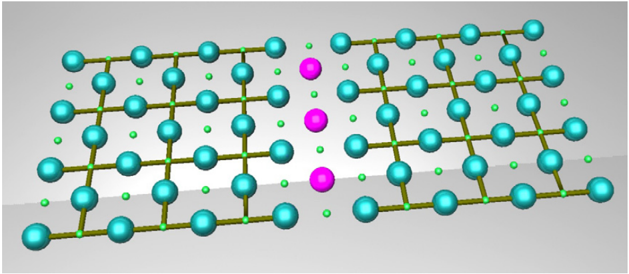
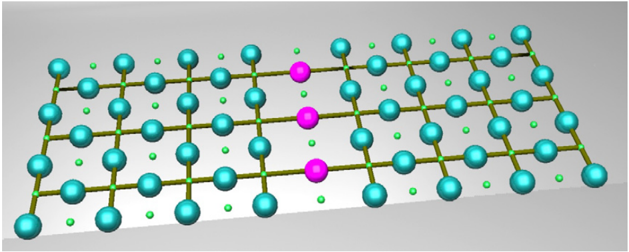
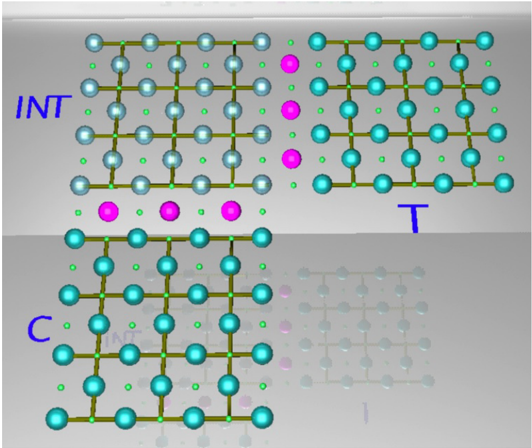
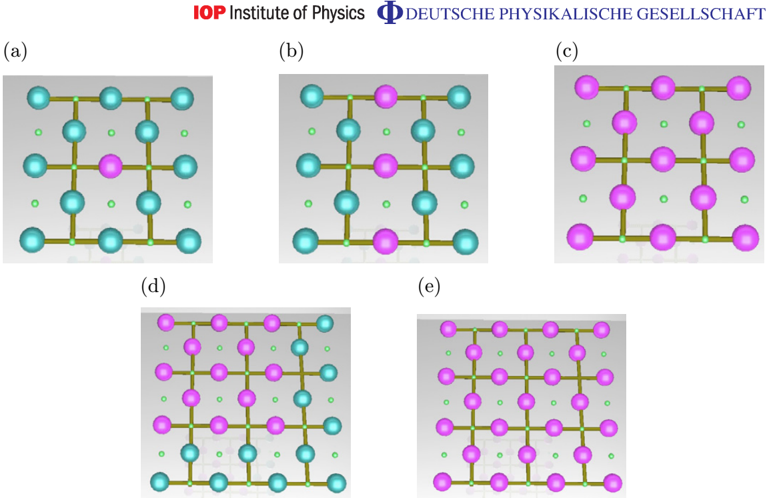
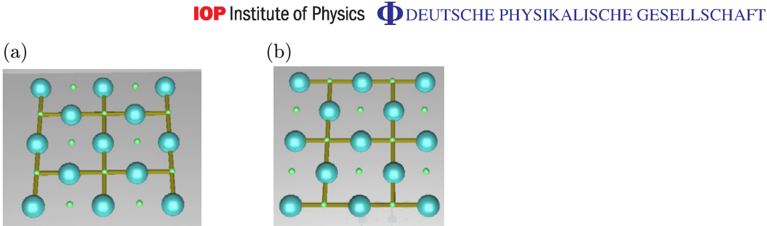
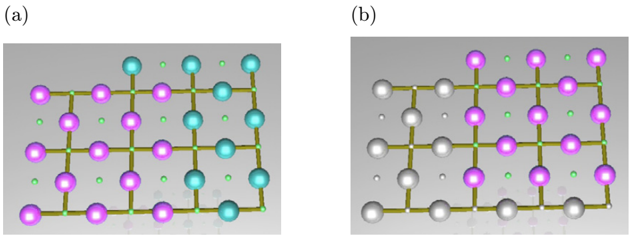
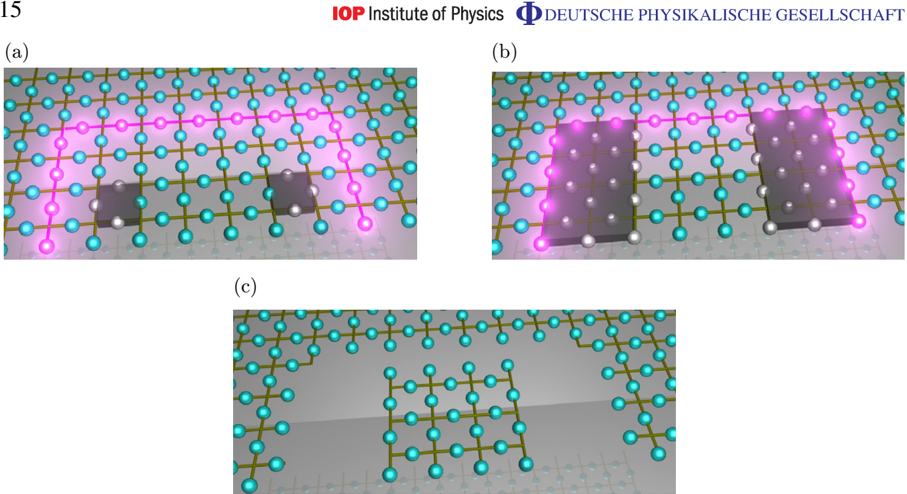
In recent years, surface codes have become a leading method for quantum error correction in theoretical large-scale computational and communications architecture designs. Their comparatively high fault-tolerant thresholds and their natural two-dimensional nearest-neighbour (2DNN) structure make them an obvious choice for large scale designs in experimentally realistic systems. While fundamentally based on the toric code of Kitaev, there are many variants, two of which are the planar- and defect-based codes. Planar codes require fewer qubits to implement (for the same strength of error correction), but are restricted to encoding a single qubit of information. Interactions between encoded qubits are achieved via transversal operations, thus destroying the inherent 2DNN nature of the code. In this paper we introduce a new technique enabling the coupling of two planar codes without transversal operations, maintaining the 2DNN of the encoded computer. Our lattice surgery technique comprises splitting and merging planar code surfaces, and enables us to perform universal quantum computation (including magic state injection) while removing the need for braided logic in a strictly 2DNN design, and hence reduces the overall qubit resources for logic operations. Those resources are further reduced by the use of a rotated lattice for the planar encoding. We show how lattice surgery allows us to distribute encoded GHZ states in a more direct (and overhead friendly) manner, and how a demonstration of an encoded CNOT between two distance-3 logical states is possible with 53 physical qubits, half of that required in any other known construction in 2D.
Overview
The claims and statistics of this paper haven’t been checked yet.
Free: it reads the open-access text and checks the first 5 claims that cite a source we can check. Create a free account to check every claim.
Integrity signals
Registry
Cites
Statistics
Figures





Verification
Claims the paper makes
The claims and statistics of this paper haven’t been checked yet.
Free: it reads the open-access text and checks the first 5 claims that cite a source we can check. Create a free account to check every claim.
Claims other papers make about this one
Each is checked against this paper’s own text: does it say what the citing paper says it does?
The cited source says what the claim attributes to it.
In the citing paper
“Lattice surgery22,39,43,56 enables the efficient realization of multi-qubit fault-tolerant operations, such as the CNOT gate, with only nearest-neighbour interactions.”
From Scaling and logic in the colour code on a superconducting quantum processor (2025) · cites this paper as [22]
The cited source says what the claim attributes to it.
In the citing paper
“Finally, we teleport logical states between colour codes using lattice surgery22.”
From Scaling and logic in the colour code on a superconducting quantum processor (2025) · cites this paper as [22]
Self-check
Percentages, sums and reported differences re-computed from the paper’s own numbers.
The self-check needs the paper’s full text.
Citations
Cites
Fault-tolerant quantum computation by anyons
Kitaev, A. Y. (2003) · Annals of Physics · doi:10.1016/s0003-4916(02)00018-0 · Cited by 7,238 · cited 2×
“Surface codes were first introduced by Kitaev [9] in the context of anyonic quantum computing.”
Edmonds, J. (1965) · Canadian Journal of Mathematics · doi:10.4153/cjm-1965-045-4 · Cited by 2,428 · cited 1×
“[19, 20, 21].”
Dennis, E., Kitaev, A., Landahl, A., & Preskill, J. (2002) · Journal of Mathematical Physics · doi:10.1063/1.1499754 · Cited by 1,768 · cited 1×
“The general procedure was given for the planar code in [2], and a worked example for general surface codes in [4, section VI(C)].”
MethodMaximum matching and a polyhedron with 0,1-vertices
Edmonds, J. (1965) · Journal of Research of the National Bureau of Standards Section B Mathematics and Mathematical Physics · doi:10.6028/jres.069b.013 · Cited by 1,712 · cited 1×
“A pattern of chains of corrective operations highly likely to maintain the correct logical state can be inferred using Edmonds’ minimum weight perfect matching algorithm [21, 22, 23].”
MethodUniversal quantum computation with ideal Clifford gates and noisy ancillas
Bravyi, S., & Kitaev, A. (2005) · Physical Review A · doi:10.1103/physreva.71.022316 · Cited by 1,525 · cited 1×
“This allows for both state preparation and also arbitrary single-qubit rotations, in accordance with standard techniques [29].”
ResultPreskill, J. (1998) · Proceedings of the Royal Society of London. Series A: Mathematical, Physical and Engineering Sciences · doi:10.1098/rspa.1998.0167 · Cited by 994 · cited 1×
“As long as physical errors are below the threshold value, increasing the number of physical qubits can exponentially suppress error on the logical qubits [1].”
BackgroundFault-Tolerant Quantum Computation with High Threshold in Two Dimensions
Raussendorf, R., & Harrington, J. (2007) · Physical Review Letters · doi:10.1103/physrevlett.98.190504 · Cited by 812 · cited 2×
“By contrast, in the defect-based code there are no transversal operations, and the CNOT is performed by braiding defects: extending a defect by measuring out qubits in a line, and passing this extended defect around the second logical qubit defect [3].”
BackgroundMethodTopological fault-tolerance in cluster state quantum computation
Raussendorf, R., Harrington, J., & Goyal, K. (2007) · New Journal of Physics · doi:10.1088/1367-2630/9/6/199 · Cited by 617
High-threshold universal quantum computation on the surface code
Fowler, A. G., Stephens, A. M., & Groszkowski, P. (2009) · Physical Review A · doi:10.1103/physreva.80.052312 · Cited by 486 · cited 1×
“The price of maintaining NN interactions is over three times the number of physical qubits per logical qubit [3, 4].”
BackgroundSelf-citationBlossom V: a new implementation of a minimum cost perfect matching algorithm
Kolmogorov, V. (2009) · Mathematical Programming Computation · doi:10.1007/s12532-009-0002-8 · Cited by 414
Research works printed but not linked: 2
- 12. Bravyi S B and Kitaev A Y 2001 Quantum Comp. Comput. 2 43-48 (transl.)
- 28. Rotman J 1998 An Introduction to Algebraic Topology (Berlin: Springer)
Cited by
Quantum error correction for quantum memories
Terhal, B. M. (2015) · Reviews of Modern Physics · doi:10.1103/revmodphys.87.307 · Cited by 1,354
“This rotation þ chopping, while leaving the distance unchanged, can be done for arbitrary-sized lattices (Horsman et al. , 2012). with the check operators, their minimum weight is L .”
InfluentialLogical quantum processor based on reconfigurable atom arrays
Bluvstein, D., Evered, S. J., Geim, A. A., Li, S. H., Zhou, H., Manovitz, T., Ebadi, S., Cain, M., Kalinowski, M., Hangleiter, D., et al. (2024) · Nature · doi:10.1038/s41586-023-06927-3 · Cited by 1,119
“Logic operations are implemented by changing stabilizer measurement patterns, enabling realization of techniques such as braiding 24 and lattice surgery 89 .”
MethodSuppressing quantum errors by scaling a surface code logical qubit
Google Quantum, A. I., Acharya, R., Aleiner, I., Allen, R., Andersen, T. I., Ansmann, M., Arute, F., Arya, K., Asfaw, A., Atalaya, J., et al. (2023) · Nature · doi:10.1038/s41586-022-05434-1 · Cited by 1,103
“Most surface code logical gates can be implemented by maintaining logical memory and executing different sequences of measurements on the code boundary [37, 38].”
Self-citationHow to factor 2048 bit RSA integers in 8 hours using 20 million noisy qubits
Gidney, C., & Ekerå, M. (2021) · Quantum · doi:10.22331/q-2021-04-15-433 · Cited by 830
“We assume distance-d logical qubits are stored using square patches of 2(d+1) physical qubits (see Figure 8) and are operated on via lattice surgery [12, 29] (see Figure 9).”
Realizing repeated quantum error correction in a distance-three surface code
Krinner, S., Lacroix, N., Remm, A., Di Paolo, A., Genois, E., Leroux, C., Hellings, C., Lazar, S., Swiadek, F., Herrmann, J., et al. (2022) · Nature · doi:10.1038/s41586-022-04566-8 · Cited by 686
“The number of required cycles scales in general with d in planar architectures and in architectures allowing for transversal execution of logical two-qubit gates [5, 6, 23, 52, 53].”
BackgroundInfluentialA Survey on quantum computing technology
Gyongyosi, L., & Imre, S. (2019) · Computer Science Review · doi:10.1016/j.cosrev.2018.11.002 · Cited by 646
Building logical qubits in a superconducting quantum computing system
Gambetta, J. M., Chow, J. M., & Steffen, M. (2017) · npj Quantum Information · doi:10.1038/s41534-016-0004-0 · Cited by 622
Roads towards fault-tolerant universal quantum computation
Campbell, E. T., Terhal, B. M., & Vuillot, C. (2017) · Nature · doi:10.1038/nature23460 · Cited by 596
Data for "Realizing topologically ordered states on a quantum processor"
Satzinger, K. J. (2021) · Zenodo (CERN European Organization for Nuclear Research) · doi:10.5281/zenodo.5570481 · Cited by 423
Self-citationA Game of Surface Codes: Large-Scale Quantum Computing with Lattice Surgery
Litinski, D. (2019) · Quantum · doi:10.22331/q-2019-03-05-128 · Cited by 408
“Qubit initialization has no time cost, since, in case of X and Z eigenstates, it can be done simultaneously with the following lattice surgery [9, 12].”
BackgroundStim: a fast stabilizer circuit simulator
Gidney, C. (2021) · Quantum · doi:10.22331/q-2021-07-06-497 · Cited by 415
“Figure 1: Delay until one thousandth sample on d × d × d surface code memory circuits [15].”
BackgroundExponential suppression of bit or phase errors with cyclic error correction
Google Quantum, A. I., Chen, Z., Satzinger, K. J., Atalaya, J., Korotkov, A. N., Dunsworth, A., Sank, D., Quintana, C., McEwen, M., Barends, R., et al. (2021) · Nature · doi:10.1038/s41586-021-03588-y · Cited by 393
Self-citationEncoding Electronic Spectra in Quantum Circuits with Linear T Complexity
Babbush, R., Gidney, C., Berry, D. W., Wiebe, N., McClean, J., Paler, A., Fowler, A., & Neven, H. (2018) · Physical Review X · doi:10.1103/physrevx.8.041015 · Cited by 383
“For example, the logical qubit representation used in lattice surgery [110] requires fewer physical qubits than the double-defect representation used in the estimates of this paper.”
MethodSelf-citationFusion-based quantum computation
Bartolucci, S., Birchall, P., Bombín, H., Cable, H., Dawson, C., Gimeno-Segovia, M., Johnston, E., Kieling, K., Nickerson, N., Pant, M., et al. (2023) · Nature Communications · doi:10.1038/s41467-023-36493-1 · Cited by 371
“Boundaries can be used to create patches on which lattice surgery can be performed [60].”
BackgroundQuantum error correction: an introductory guide
Roffe, J. (2019) · Contemporary Physics · doi:10.1080/00107514.2019.1667078 · Cited by 356
“Figure 8(a) shows the five-qubit surface code formed by tiling together four four-cycles in a square lattice [55].”
BackgroundBlueprint for a Scalable Photonic Fault-Tolerant Quantum Computer
Bourassa, J. E., Alexander, R. N., Vasmer, M., Patil, A., Tzitrin, I., Matsuura, T., Su, D., Baragiola, B. Q., Guha, S., Dauphinais, G., et al. (2021) · Quantum · doi:10.22331/q-2021-02-04-392 · Cited by 302
“The scheme we choose and review here is based on lattice surgery for the surface code [125–128], particularly its measurement-based version [88, 129].”
MethodBuilding a Fault-Tolerant Quantum Computer Using Concatenated Cat Codes
Chamberland, C., Noh, K., Arrangoiz-Arriola, P., Campbell, E. T., Hann, C. T., Iverson, J., Putterman, H., Bohdanowicz, T. C., Flammia, S. T., Keller, A., et al. (2022) · PRX Quantum · doi:10.1103/prxquantum.3.010329 · Cited by 281
Low-distance surface codes under realistic quantum noise
Tomita, Y., & Svore, K. M. (2014) · Physical Review A · doi:10.1103/physreva.90.062320 · Cited by 281
Halving the cost of quantum addition
Gidney, C. (2018) · Quantum · doi:10.22331/q-2018-06-18-74 · Cited by 279
“For example, qubits that are idle can be compressed into an inactive “memory” form that covers six times fewer physical qubits than the double-defect form [13].”
BackgroundA crossbar network for silicon quantum dot qubits
Li, R., Petit, L., Franke, D. P., Dehollain, J. P., Helsen, J., Steudtner, M., Thomas, N. K., Yoscovits, Z. R., Singh, K. J., Wehner, S., et al. (2018) · Science Advances · doi:10.1126/sciadv.aar3960 · Cited by 274
Bonilla Ataides, J. P., Tuckett, D. K., Bartlett, S. D., Flammia, S. T., & Brown, B. J. (2021) · Nature Communications · doi:10.1038/s41467-021-22274-1 · Cited by 262
Quantum error correction : an introductory guide
Roffe, J. (2019) · White Rose Research Online (University of Leeds, The University of Sheffield, University of York) · Cited by 256
A game of surface codes: Large-scale quantum computing with lattice surgery
Litinski, D. (2019) · Refubium (Universitätsbibliothek der Freien Universität Berlin) · doi:10.17169/refubium-4067 · Cited by 252
A crossbar network for silicon quantum dot qubits
Li, R., Petit, L., Franke, D. P., Dehollain, J. P., Helsen, J., Steudtner, M., Thomas, N. K., Yoscovits, Z. R., Singh, K. J., Wehner, S., et al. (2018) · Leiden Repository (Leiden University) · Cited by 234
Blueprint for a scalable photonic fault-tolerant quantum computer
Bourassa, J. E., Alexander, R. N., Baragiola, B. Q., & Menicucci, N. C. (2024) · Figshare · Cited by 222
Nickerson, N. H., Li, Y., & Benjamin, S. C. (2013) · Nature Communications · doi:10.1038/ncomms2773 · Cited by 222
“However it is generally accepted that the threshold for full computation will be very similar to that for successful information storage, because the stabilizer measurements required for simple preservation of the encoded state are very similar to those required for computation 3,20 .”
Nickerson, N. H., Fitzsimons, J. F., & Benjamin, S. C. (2014) · Physical Review X · doi:10.1103/physrevx.4.041041 · Cited by 187
“…from errors: certain operations between encoded logical qubits can be performed merely by altering the patterns of parity measurements [22, 24] and together with a technique such as magic state distillation [25], all the operations required for universal quantum computation can be…”
BackgroundMagic State Distillation: Not as Costly as You Think
Litinski, D. (2019) · Quantum · doi:10.22331/q-2019-12-02-205 · Cited by 220
“The simplest protocol [27] starts with a physical state |ψ〉, i.”
BackgroundInfluentialVirtual Distillation for Quantum Error Mitigation
Huggins, W. J., McArdle, S., O’Brien, T. E., Lee, J., Rubin, N. C., Boixo, S., Whaley, K. B., Babbush, R., & McClean, J. R. (2021) · Physical Review X · doi:10.1103/physrevx.11.041036 · Cited by 205
“[55] Clare Horsman, Austin G Fowler, Simon Devitt, and Rodney Van Meter, “Surface code quantum computing by lattice surgery,” New J.”
BackgroundErasure conversion for fault-tolerant quantum computing in alkaline earth Rydberg atom arrays
Wu, Y., Kolkowitz, S., Puri, S., & Thompson, J. D. (2022) · Nature Communications · doi:10.1038/s41467-022-32094-6 · Cited by 196
Ataides, J. P. B., Tuckett, D. K., Bartlett, S. D., Flammia, S. T., & Brown, B. J. (2021) · RePEc: Research Papers in Economics · Cited by 201
Scalable Quantum Circuit and Control for a Superconducting Surface Code
Versluis, R., Poletto, S., Khammassi, N., Tarasinski, B., Haider, N., Michalak, D. J., Bruno, A., Bertels, K., & DiCarlo, L. (2017) · Physical Review Applied · doi:10.1103/physrevapplied.8.034021 · Cited by 193
“Our scheme allows changing the weight of stabilizer measurements by simple on-off masking of detuning pulses, making it applicable to both defect-based and planar logical qubits [10], including lattice surgery [29].”
BackgroundMethodInfluentialKubica, A., Yoshida, B., & Pastawski, F. (2015) · New Journal of Physics · doi:10.1088/1367-2630/17/8/083026 · Cited by 148
Quantum State Preparation with Optimal Circuit Depth: Implementations and Applications
Zhang, X.-M., Li, T., & Yuan, X. (2022) · Physical Review Letters · doi:10.1103/physrevlett.129.230504 · Cited by 173
Kivlichan, I. D., Gidney, C., Berry, D. W., Wiebe, N., McClean, J., Sun, W., Jiang, Z., Rubin, N., Fowler, A., Aspuru-Guzik, A., et al. (2020) · Quantum · doi:10.22331/q-2020-07-16-296 · Cited by 173
“We will use lattice surgery [49, 50, 80, 84] to protect our computations, and will make use of distillation to produce | CCZ (cid:105) states and catalyzation to efficiently produce | T (cid:105) states.”
BackgroundMethodSelf-citationAssessing the Progress of Trapped-Ion Processors Towards Fault-Tolerant Quantum Computation
Bermudez, A., Xu, X., Nigmatullin, R., O’Gorman, J., Negnevitsky, V., Schindler, P., Monz, T., Poschinger, U. G., Hempel, C., Home, J., et al. (2017) · Physical Review X · doi:10.1103/physrevx.7.041061 · Cited by 165
“nine-qubit surface code of distance 3 [84].”
Single-Shot Fault-Tolerant Quantum Error Correction
Bombín, H. (2015) · Physical Review X · doi:10.1103/physrevx.5.031043 · Cited by 161
Reducing the number of non-Clifford gates in quantum circuits
Kissinger, A., & van de Wetering, J. (2020) · Physical Review A · doi:10.1103/physreva.102.022406 · Cited by 149
“Circuits consisting only of Clifford gates can be efficiently classically simulated [1], and can be implemented in a fault-tolerant manner with relative ease within many quantum error correcting codes [2,3].”
BackgroundConstant-overhead fault-tolerant quantum computation with reconfigurable atom arrays
Xu, Q., Bonilla Ataides, J. P., Pattison, C. A., Raveendran, N., Bluvstein, D., Wurtz, J., Vasić, B., Lukin, M. D., Jiang, L., & Zhou, H. (2024) · Nature Physics · doi:10.1038/s41567-024-02479-z · Cited by 157
“4b), where the prescribed logical measurements are implemented using lattice surgery 18,46–48 .”
Quantum computation with realistic magic-state factories
O'Gorman, J., & Campbell, E. T. (2017) · Physical Review A · doi:10.1103/physreva.95.032338 · Cited by 158
Efficient magic state factories with a catalyzed | C C Z ⟩ to 2 | T ⟩ transformation
Gidney, C., & Fowler, A. G. (2019) · Quantum · doi:10.22331/q-2019-04-30-135 · Cited by 152
“Over the past decade, thanks to techniques such as block codes [4, 16], bridge compression [14], and many others [19, 8, 9, 25], the cost of magic state distillation has steadily decreased.”
BackgroundMethodSelf-citationMachine-learning-assisted correction of correlated qubit errors in a topological code
Baireuther, P., O'Brien, T. E., Tarasinski, B., & Beenakker, C. W. J. (2018) · Quantum · doi:10.22331/q-2018-01-29-48 · Cited by 142
Quantum Error Correction with the Gottesman-Kitaev-Preskill Code
Grimsmo, A. L., & Puri, S. (2021) · PRX Quantum · doi:10.1103/prxquantum.2.020101 · Cited by 132
“An attractive feature of the surface code is that all logical Clifford operations can be implemented via lattice surgery requiring only (single or two-qubit) logical Pauli measurements [16, 79, 80].”
Fault-tolerant quantum computation with few qubits
Chao, R., & Reichardt, B. W. (2018) · npj Quantum Information · doi:10.1038/s41534-018-0085-z · Cited by 137
Robust 2-Qubit Gates in a Linear Ion Crystal Using a Frequency-Modulated Driving Force
Leung, P. H., Landsman, K. A., Figgatt, C., Linke, N. M., Monroe, C., & Brown, K. R. (2018) · Physical Review Letters · doi:10.1103/physrevlett.120.020501 · Cited by 135
Entangling logical qubits with lattice surgery
Erhard, A., Poulsen Nautrup, H., Meth, M., Postler, L., Stricker, R., Stadler, M., Negnevitsky, V., Ringbauer, M., Schindler, P., Briegel, H. J., et al. (2021) · Nature · doi:10.1038/s41586-020-03079-6 · Cited by 134
Suzuki, Y., Endo, S., Fujii, K., & Tokunaga, Y. (2022) · PRX Quantum · doi:10.1103/prxquantum.3.010345 · Cited by 125
“Note that while we can reduce the number of physical qubits by using rotated surface codes [6], we used the surface codes shown in Fig.”
MethodConstructions and Noise Threshold of Hyperbolic Surface Codes
Breuckmann, N. P., & Terhal, B. M. (2016) · IEEE Transactions on Information Theory · doi:10.1109/tit.2016.2555700 · Cited by 122
“The most efficient use of the surface code (in which the lattice is chopped off at the boundaries, see [30]) has parameters[[d(2), 1, d]] (instead of[[d2+(d−1)2, 1, d]]).”
MethodPoking Holes and Cutting Corners to Achieve Clifford Gates with the Surface Code
Brown, B. J., Laubscher, K., Kesselring, M. S., & Wootton, J. R. (2017) · Physical Review X · doi:10.1103/physrevx.7.021029 · Cited by 121
“Z̄CZ̄A operator and the X̄AX̄T operator shown in red and blue, respectively, that are used to perform entangling gates via lattice surgery [29].”
BackgroundQuantum Computing 40 Years Later
Preskill, J. P. (2023) · CRC Press eBooks · doi:10.1201/9781003358817-7 · Cited by 190
Yoder, T. J., & Kim, I. H. (2017) · Quantum · doi:10.22331/q-2017-04-25-2 · Cited by 98
“Standard lattice surgery [23] suffices for performing CNOT gates between the surface code patches.”
BackgroundMethodInfluentialFault-Tolerant Thresholds for the Surface Code in Excess of 5% Under Biased Noise
Tuckett, D. K., Bartlett, S. D., Flammia, S. T., & Brown, B. J. (2020) · Physical Review Letters · doi:10.1103/physrevlett.124.130501 · Cited by 118
Neutral atom quantum computing hardware: performance and end-user perspective
Wintersperger, K., Dommert, F., Ehmer, T., Hoursanov, A., Klepsch, J., Mauerer, W., Reuber, G., Strohm, T., Yin, M., & Luber, S. (2023) · EPJ Quantum Technology · doi:10.1140/epjqt/s40507-023-00190-1 · Cited by 117
“Depending on the scheme being used, typically between 7 [55] and 9 [56–58] physical qubits are needed to represent the state of one qubit.”
MethodEncoding a magic state with beyond break-even fidelity
Gupta, R. S., Sundaresan, N., Alexander, T., Wood, C. J., Merkel, S. T., Healy, M. B., Hillenbrand, M., Jochym-O’Connor, T., Wootton, J. R., Yoder, T. J., et al. (2024) · Nature · doi:10.1038/s41586-023-06846-3 · Cited by 115
Gate-based superconducting quantum computing
Kwon, S., Tomonaga, A., Bhai, G. L., Devitt, S. J., & Tsai, J.-S. (2021) · Journal of Applied Physics · doi:10.1063/5.0029735 · Cited by 147
“127 for the logical CNOT gate and Refs.”
BackgroundSelf-citationFault-Tolerant Resource Estimation of Quantum Random-Access Memories
Matteo, O. D., Gheorghiu, V., & Mosca, M. (2020) · IEEE Transactions on Quantum Engineering · doi:10.1109/tqe.2020.2965803 · Cited by 144
“Lattice surgery has recently been shown to yield a decrease in resource estimates, in some cases, lowering the number of physical qubits by a factor of 4 to 5 [28]–[30].”
BackgroundEfficient classical simulation of noisy random quantum circuits in one dimension
Noh, K., Jiang, L., & Fefferman, B. (2020) · Quantum · doi:10.22331/q-2020-09-11-318 · Cited by 174
Design and analysis of communication protocols for quantum repeater networks
Jones, C., Kim, D., Rakher, M. T., Kwiat, P. G., & Ladd, T. D. (2016) · New Journal of Physics · doi:10.1088/1367-2630/18/8/083015 · Cited by 98
Entangling logical qubits with lattice surgery
Erhard, A., Nautrup, H. P., Meth, M., Postler, L., Stricker, R., Stadler, M., Negnevitsky, V., Ringbauer, M., Schindler, P., Briegel, H. J., et al. (2021) · RePEc: Research Papers in Economics · Cited by 103
The engineering challenges in quantum computing
Almudéver, C. G., Lao, L., Fu, X., Khammassi, N., Ashraf, I., Iorga, D., Varsamopoulos, S., Eichler, C., Wallraff, A. J., Geck, L., et al. (2017) · Design, Automation, and Test in Europe · doi:10.23919/date.2017.7927104 · Cited by 136
“However, it is not possible to implement such a transversal gate in a 2D array requiring techniques such as lattice surgery [60] where planar-based SC qubits still need to be placed next to each other.”
BackgroundFault-Tolerant Continuous-Variable Measurement-based Quantum Computation Architecture
Larsen, M. V., Chamberland, C., Noh, K., Neergaard-Nielsen, J. S., & Andersen, U. L. (2021) · PRX Quantum · doi:10.1103/prxquantum.2.030325 · Cited by 99
“In the surface code, Clifford gates can be implemented by braiding [25] or lattice surgery [81] implemented by regulating the surface code syndrome measurements, while non-Clifford gates may be realized using magic states distilled from GKP qubits prepared in a magic state [78, 79] and injected into…”
BackgroundLow-overhead fault-tolerant quantum computing using long-range connectivity
Cohen, L. Z., Kim, I. H., Bartlett, S. D., & Brown, B. J. (2022) · Science Advances · doi:10.1126/sciadv.abn1717 · Cited by 98
“Our method is a form of code deformation, in which we transform our code into a new code and in doing so obtain logical information about our original code [5, 13, 30, 41–43].”
BackgroundMethodInfluentialKim, I. H., Liu, Y.-H., Pallister, S., Pol, W., Roberts, S., & Lee, E. (2022) · Physical Review Research · doi:10.1103/physrevresearch.4.023019 · Cited by 96
“The fault-tolerant operations we consider are based on lattice surgery [25, 44], noisy magic state preparation [21, 45, 46], along with magic state distillation [26, 47–49].”
BackgroundSpiderweb Array: A Sparse Spin-Qubit Array
Boter, J. M., Dehollain, J. P., van Dijk, J. P. G., Xu, Y., Hensgens, T., Versluis, R., Naus, H. W. L., Clarke, J. S., Veldhorst, M., Sebastiano, F., et al. (2022) · Physical Review Applied · doi:10.1103/physrevapplied.18.024053 · Cited by 125
“The other implementation, known as lattice surgery [37], divides the array into patches, separated by an idle row of interstitial data qubits.”
BackgroundDensity-matrix simulation of small surface codes under current and projected experimental noise
O’Brien, T. E., Tarasinski, B., & DiCarlo, L. (2017) · npj Quantum Information · doi:10.1038/s41534-017-0039-x · Cited by 94
A magic state’s fidelity can be superior to the operations that created it
Li, Y. (2015) · New Journal of Physics · doi:10.1088/1367-2630/17/2/023037 · Cited by 88
Reinforcement learning decoders for fault-tolerant quantum computation
Sweke, R., Kesselring, M. S., van Nieuwenburg, E. P. L., & Eisert, J. (2021) · Machine Learning: Science and Technology · doi:10.1088/2632-2153/abc609 · Cited by 71
Comparing Neural Network Based Decoders for the Surface Code
Varsamopoulos, S., Bertels, K., & Almudever, C. G. (2020) · IEEE Transactions on Computers · doi:10.1109/tc.2019.2948612 · Cited by 76
“The smallest surface code created is known as the rotated surface code [30] and it is presented in Fig.”
BackgroundLattice Surgery with a Twist: Simplifying Clifford Gates of Surface Codes
Litinski, D., & Oppen, F. V. (2018) · Quantum · doi:10.22331/q-2018-05-04-62 · Cited by 86
“These physical states can be converted into logical faulty magic states | e m i via state injection [19].”
BackgroundMethodInfluentialDistribution of entanglement in large-scale quantum networks
Perseguers, S., Lapeyre, G. J., Cavalcanti, D., Lewenstein, M., & Acín, A. (2013) · Reports on Progress in Physics · doi:10.1088/0034-4885/76/9/096001 · Cited by 87
“operations can be applied simultaneously, so that no quantum memory is needed. 4.3.2. Surface codes Surface codes have been used to implement error correction in quantum computation and communication [89, 90, 91, 92, 93, 94]. Here, we review three ways in which the surface code is used to generate entanglement over la…”
MethodInfluentialHyperbolic and semi-hyperbolic surface codes for quantum storage
Breuckmann, N. P., Vuillot, C., Campbell, E., Krishna, A., & Terhal, B. M. (2017) · Quantum Science and Technology · doi:10.1088/2058-9565/aa7d3b · Cited by 87
Simulating the performance of a distance-3 surface code in a linear ion trap
Trout, C. J., Li, M., Gutiérrez, M., Wu, Y., Wang, S.-T., Duan, L., & Brown, K. R. (2018) · New Journal of Physics · doi:10.1088/1367-2630/aab341 · Cited by 77
Logical Qubit in a Linear Array of Semiconductor Quantum Dots
Jones, C., Fogarty, M. A., Morello, A., Gyure, M. F., Dzurak, A. S., & Ladd, T. D. (2018) · Physical Review X · doi:10.1103/physrevx.8.021058 · Cited by 115
“Although the codes in this proposal are not topological, the stabilizer-measurement circuits are similarly compact; they use one- or two-qubit ancillas for low-weight measurements, as in surface codes [8, 64, 76, 78, 116, 117, 127] and Bacon-Shor codes [67–69].”
BackgroundMethodImproved Decoding of Circuit Noise and Fragile Boundaries of Tailored Surface Codes
Higgott, O., Bohdanowicz, T. C., Kubica, A., Flammia, S. T., & Campbell, E. T. (2023) · Physical Review X · doi:10.1103/physrevx.13.031007 · Cited by 82
“Temporal boundaries also arise during lattice surgery [37–40] and so these operations are also vulnerable.”
The ZX calculus is a language for surface code lattice surgery
de Beaudrap, N., & Horsman, D. (2020) · Quantum · doi:10.22331/q-2020-01-09-218 · Cited by 83
Self-citationError Mitigation for Universal Gates on Encoded Qubits
Piveteau, C., Sutter, D., Bravyi, S., Gambetta, J. M., & Temme, K. (2021) · Physical Review Letters · doi:10.1103/physrevlett.127.200505 · Cited by 81
“It also includes a logical CNOT gate which may require more logical qubits for certain implementations [17].”
BackgroundParallel window decoding enables scalable fault tolerant quantum computation
Skoric, L., Browne, D. E., Barnes, K. M., Gillespie, N. I., & Campbell, E. T. (2023) · Nature Communications · doi:10.1038/s41467-023-42482-1 · Cited by 80
“When performing computation by lattice surgery, during merge operations the code temporally has an extended size [6, 42, 48, 49], and windowing in the spatial direction will become necessary to prevent the window decode time τW from significantly increasing.”
MethodA silicon-based surface code quantum computer
O’Gorman, J., Nickerson, N. H., Ross, P., Morton, J. J., & Benjamin, S. C. (2016) · npj Quantum Information · doi:10.1038/npjqi.2015.19 · Cited by 79
“When we wish to perform a gate operation between two logical qubits, we begin making parity measurements at their mutual boundary, according to the lattice surgery approach.(13) If a region of the overall array contains multiple damaged or missing data qubits, we simply opt not to use it (red patches).”
BackgroundUniversal Quantum Computing with Twist-Free and Temporally Encoded Lattice Surgery
Chamberland, C., & Campbell, E. T. (2022) · PRX Quantum · doi:10.1103/prxquantum.3.010331 · Cited by 80
Restless Tuneup of High-Fidelity Qubit Gates
Rol, M. A., Bultink, C. C., O’Brien, T. E., de Jong, S. R., Theis, L. S., Fu, X., Luthi, F., Vermeulen, R. F. L., de Sterke, J. C., Bruno, A., et al. (2017) · Physical Review Applied · doi:10.1103/physrevapplied.7.041001 · Cited by 80
“Concurrently, a convincing demonstration of quantum fault tolerance using the 17- and 49-qubit surface-code encoding [3,4] under development by several groups worldwide requires gate errors one order of magnitude below the ∼10−2 threshold of surface code [5,6].”
BackgroundAn integrated microwave-to-optics interface for scalable quantum computing
Weaver, M. J., Duivestein, P., Bernasconi, A. C., Scharmer, S., Lemang, M., van Thiel, T. C., Hijazi, F., Hensen, B., Gröblacher, S., & Stockill, R. (2023) · Nature Nanotechnology · doi:10.1038/s41565-023-01515-y · Cited by 117
“Distributed quantum computation will probably require many transducers in parallel to allow for fully remote gates between error-corrected qubits 28,29 , which necessitates an integrated system with many transducers on a single chip.”
Relaxing Hardware Requirements for Surface Code Circuits using Time-dynamics
McEwen, M., Bacon, D., & Gidney, C. (2023) · Quantum · doi:10.22331/q-2023-11-07-1172 · Cited by 78
A fault-tolerant non-Clifford gate for the surface code in two dimensions
Brown, B. J. (2020) · Science Advances · doi:10.1126/sciadv.aay4929 · Cited by 77
“We might accomplish this with lattice surgery ( 10 , 40 ).”
Applying quantum algorithms to constraint satisfaction problems
Campbell, E., Khurana, A., & Montanaro, A. (2019) · Quantum · doi:10.22331/q-2019-07-18-167 · Cited by 76
“There is potential to cut these numbers in half by using the rotated surface code [59] but it is currently unknown whether the error suppression still obeys ∼ d (100 p g ) ( d +1) / 2 so we instead opt for a conservative, well-supported estimate.”
BackgroundThree-dimensional surface codes: Transversal gates and fault-tolerant architectures
Vasmer, M., & Browne, D. E. (2019) · Physical Review A · doi:10.1103/physreva.100.012312 · Cited by 76
Overwater, R. W. J., Babaie, M., & Sebastiano, F. (2022) · IEEE Transactions on Quantum Engineering · doi:10.1109/tqe.2022.3174017 · Cited by 75
QURE: Qubit Re-allocation in Noisy Intermediate-Scale Quantum Computers
Ash-Saki, A., Alam, M., & Ghosh, S. (2019) · Proceedings of the 56th Annual Design Automation Conference 2019 · doi:10.1145/3316781.3317888 · Cited by 73
“However, there are still some grounds to break The second approach is Quantum Error Correction ( QEC ) (e.g., Shor code, Steane code, Surface code) However, QECs have substantially large qubit overhead (e.g., 18X extra qubit in surface code [7]).”
BackgroundLattice Surgery with a Twist: Simplifying Clifford Gates of Surface Codes
Litinski, D., & von Oppen, F. (2018) · Refubium (Universitätsbibliothek der Freien Universität Berlin) · doi:10.17169/refubium-70 · Cited by 73
Quantum computing with Majorana fermion codes
Litinski, D., & von Oppen, F. (2018) · Physical review. B./Physical review. B · doi:10.1103/physrevb.97.205404 · Cited by 98
“There exist several protocols to inject an arbitrary state into a surface code [42,47,48].”
BackgroundMethodBenchmarking quantum computers
Proctor, T., Young, K., Baczewski, A. D., & Blume-Kohout, R. (2025) · Nature Reviews Physics · doi:10.1038/s42254-024-00796-z · Cited by 67
Langrock, V., Krzywda, J. A., Focke, N., Seidler, I., Schreiber, L. R., & Cywiński, Ł. (2023) · PRX Quantum · doi:10.1103/prxquantum.4.020305 · Cited by 97
“Simple two-qubit gates require an overlap of the electron wave-function [13–15], which would require a very dense two-dimensional qubit matrix, in which topological quantum error correction can be realized [16, 17].”
BackgroundHigh-Threshold Codes for Neutral-Atom Qubits with Biased Erasure Errors
Sahay, K., Jin, J., Claes, J., Thompson, J. D., & Puri, S. (2023) · Physical Review X · doi:10.1103/physrevx.13.041013 · Cited by 65
“While in this work we focus on thresholds for quantum memory, we can apply Clifford gates using standard techniques such as braiding [52,53], lattice surgery [67,68], or other code deformations [69].”
Anyon Condensation and the Color Code
Kesselring, M. S., Magdalena de la Fuente, J. C., Thomsen, F., Eisert, J., Bartlett, S. D., & Brown, B. J. (2024) · PRX Quantum · doi:10.1103/prxquantum.5.010342 · Cited by 62
Pica, G., Lovett, B. W., Bhatt, R. N., Schenkel, T., & Lyon, S. A. (2016) · Physical review. B./Physical review. B · doi:10.1103/physrevb.93.035306 · Cited by 66
Choi, H., Pant, M., Guha, S., & Englund, D. R. (2019) · npj Quantum Information · doi:10.1038/s41534-019-0215-2 · Cited by 81
Floquet Codes without Parent Subsystem Codes
Davydova, M. D., Tantivasadakarn, N., & Balasubramanian, S. (2023) · PRX Quantum · doi:10.1103/prxquantum.4.020341 · Cited by 114
“Furthermore, other methods that allow one to overcome the Eastin-Knill nogo theorem [9, 10], such as lattice surgery and code deformation [11, 12], can be unified into the framework of gauge fixing [13].”
MethodSurface Code Compilation via Edge-Disjoint Paths
Beverland, M. E., Kliuchnikov, V., & Schoute, E. (2022) · PRX Quantum · doi:10.1103/prxquantum.3.020342 · Cited by 128
Code deformation and lattice surgery are gauge fixing
Vuillot, C., Lao, L., Criger, B., García Almudéver, C., Bertels, K., & Terhal, B. M. (2019) · New Journal of Physics · doi:10.1088/1367-2630/ab0199 · Cited by 56
Logical Blocks for Fault-Tolerant Topological Quantum Computation
Bombín, H., Dawson, C., Mishmash, R. V., Nickerson, N., Pastawski, F., & Roberts, S. (2023) · PRX Quantum · doi:10.1103/prxquantum.4.020303 · Cited by 59
“Examples of fault-tolerant instruments that are included within this model are transversal gates, code deformations, gauge fixing, and lattice surgeries [4, 5, 17, 18, 20, 24, 64, 65].”
BackgroundMethodQuantum Coding with Low-Depth Random Circuits
Gullans, M. J., Krastanov, S., Huse, D. A., Jiang, L., & Flammia, S. T. (2021) · Physical Review X · doi:10.1103/physrevx.11.031066 · Cited by 76
“[55] C.”
Background
Metadata
- Authors
- Horsman, D., Fowler, A. G., Devitt, S., & Meter, R. V.
- Affiliations
- The University of Melbourne (AU)
- National Institute of Informatics (JP)
- Keio University (JP)
- Venue
- New Journal of Physics
- Publisher
- IOP Publishing
- Published
- 2012-12-01
- Volume
- 14
- Issue
- 12
- Pages
- 123011
- ISSN
- 1367-2630 (ISSN-L)
- OpenAlex
- W1985315536
- Cited by
- 598
- References
- 30
- Citations by year
- 2026: 79 · 2025: 144 · 2024: 82 · 2023: 61 · 2022: 53 · 2021: 30 · 2020: 31 · 2019: 24 · 2018: 25 · 2017: 35 · 2016: 12 · 2015: 12 · 2014: 4 · 2013: 6
- FWCI
- 6.93
- Type
- journal article
- Language
- en
- Open access
- gold
- doi.org
- Licence
- cc-by-nc-sa
- creativecommons.org/licenses/by-nc-sa/3.0/ (vor, 6 d)
- iopscience.iop.org/info/page/text-and-data-mining (tdm, 6 d)
- Locations
- New Journal of Physics (publishedVersion, cc-by-nc-sa)
- arXiv (Cornell University) (publishedVersion)
- DOAJ (DOAJ: Directory of Open Access Journals) (submittedVersion)
- arXiv (Cornell University)
- Funders
- National Security Agency (W911NF-08-1-0527)
- Ministry of Education, Culture, Sports, Science and Technology
- Japan Society for the Promotion of Science
- Centre of Excellence for Quantum Computation and Communication Technology, Australian Research Council (CE110001027)
- Army Research Office (W911NF-08-1, W911NF-08-1- 0527, W911NF)
- Topics
- Physical Sciences › Computer Science › Artificial Intelligence › Quantum Computing Algorithms and Architecture
- Physical Sciences › Physics and Astronomy › Atomic and Molecular Physics, and Optics › Quantum Information and Cryptography
- Physical Sciences › Physics and Astronomy › Atomic and Molecular Physics, and Optics › Quantum many-body systems
- Keywords
- surface code, lattice surgery, toric code, quantum error correction, fault-tolerant quantum computing
About these checks
Registry, retraction, Cites and statistics results are computed, not judged, with one exception: a printed reference that no index lists is read once by a model before it counts as a citation error. Claims are extracted by a model and kept only when their quote appears verbatim in the text; each cited source is then checked, with a model’s help, for whether it says what the claim relies on. Those verdicts can be wrong — read the claim’s quote and the cited source before relying on one.
Statistics and arithmetic are recomputed, not judged.
Confidence bands are shown only for fields calibrated on our annotated test set. None is calibrated yet, so no band is shown.
What counts as a claim ›How we measure confidence ›How we check this ›
Are you an author, or do you see a problem with this page? Request a review
Data sources
Bibliographic data: Semantic Scholar, OpenAlex, Crossref.
Contains information from the Semantic Scholar Academic Graph Datasets, made available under the ODC Attribution License (ODC-BY 1.0).
Semantic Scholar’s data is described in: Kinney, R., et al. (2023). The Semantic Scholar Open Data Platform. arXiv:2301.10140.
