

Surface code quantum computing by lattice surgery
Open accessThe DOI matches its Crossref record; 34 of the 34 references it cites were found in a registry or an index.
Abstract
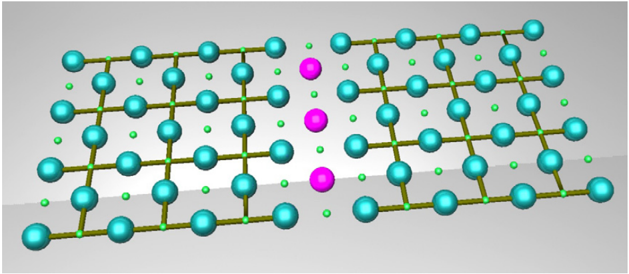
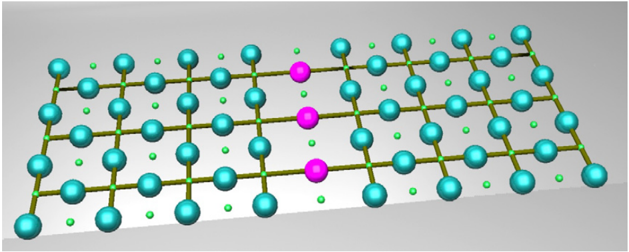
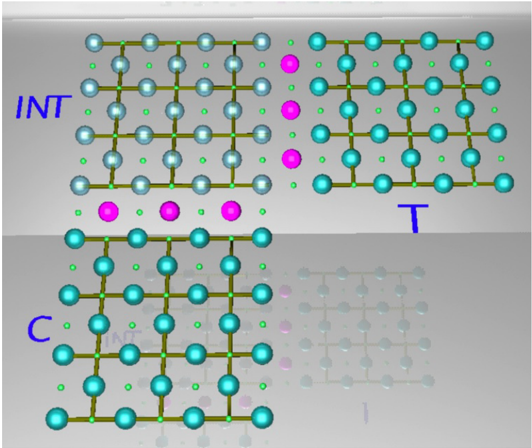
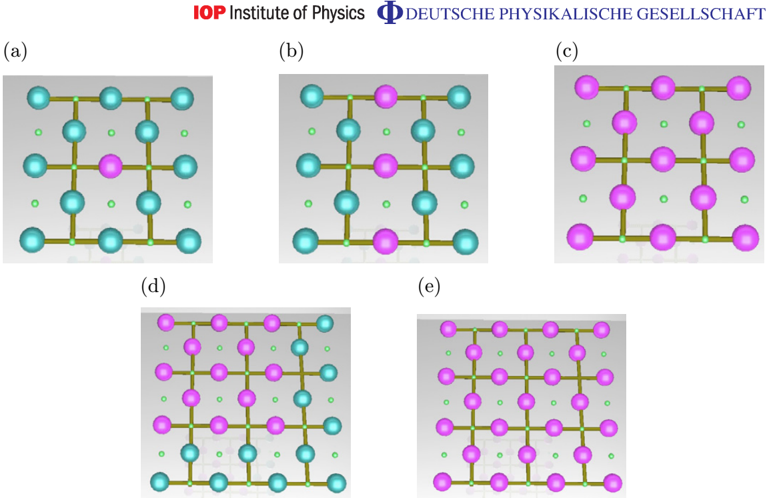
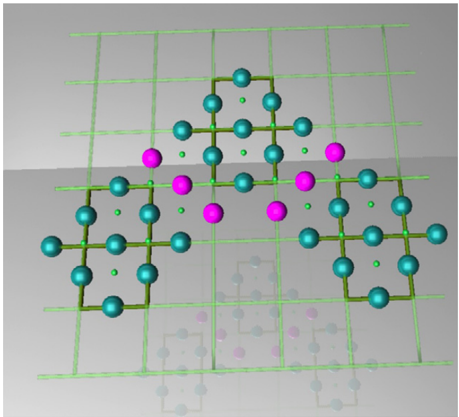
In recent years, surface codes have become a leading method for quantum error correction in theoretical large-scale computational and communications architecture designs. Their comparatively high fault-tolerant thresholds and their natural two-dimensional nearest-neighbour (2DNN) structure make them an obvious choice for large scale designs in experimentally realistic systems. While fundamentally based on the toric code of Kitaev, there are many variants, two of which are the planar- and defect-based codes. Planar codes require fewer qubits to implement (for the same strength of error correction), but are restricted to encoding a single qubit of information. Interactions between encoded qubits are achieved via transversal operations, thus destroying the inherent 2DNN nature of the code. In this paper we introduce a new technique enabling the coupling of two planar codes without transversal operations, maintaining the 2DNN of the encoded computer. Our lattice surgery technique comprises splitting and merging planar code surfaces, and enables us to perform universal quantum computation (including magic state injection) while removing the need for braided logic in a strictly 2DNN design, and hence reduces the overall qubit resources for logic operations. Those resources are further reduced by the use of a rotated lattice for the planar encoding. We show how lattice surgery allows us to distribute encoded GHZ states in a more direct (and overhead friendly) manner, and how a demonstration of an encoded CNOT between two distance-3 logical states is possible with 53 physical qubits, half of that required in any other known construction in 2D.
Overview
The claims and statistics of this paper haven’t been checked yet.
Free: it reads the open-access text and checks the first 5 claims that cite a source we can check. Create a free account to check every claim.
Integrity signals
Registry
Cites
Statistics
Figures





Verification
Claims the paper makes
The claims and statistics of this paper haven’t been checked yet.
Free: it reads the open-access text and checks the first 5 claims that cite a source we can check. Create a free account to check every claim.
Claims other papers make about this one
Each is checked against this paper’s own text: does it say what the citing paper says it does?
The cited source says what the claim attributes to it.
In the citing paper
“Lattice surgery22,39,43,56 enables the efficient realization of multi-qubit fault-tolerant operations, such as the CNOT gate, with only nearest-neighbour interactions.”
From Scaling and logic in the colour code on a superconducting quantum processor (2025) · cites this paper as [22]
The cited source says what the claim attributes to it.
In the citing paper
“Finally, we teleport logical states between colour codes using lattice surgery22.”
From Scaling and logic in the colour code on a superconducting quantum processor (2025) · cites this paper as [22]
Self-check
Percentages, sums and reported differences re-computed from the paper’s own numbers.
The self-check needs the paper’s full text.
Citations
Cites
Fault-tolerant quantum computation by anyons
Kitaev, A. Y. (2003) · Annals of Physics · doi:10.1016/s0003-4916(02)00018-0 · Cited by 7,238 · cited 2×
“Surface codes were first introduced by Kitaev [9] in the context of anyonic quantum computing.”
Edmonds, J. (1965) · Canadian Journal of Mathematics · doi:10.4153/cjm-1965-045-4 · Cited by 2,428 · cited 1×
“[19, 20, 21].”
Dennis, E., Kitaev, A., Landahl, A., & Preskill, J. (2002) · Journal of Mathematical Physics · doi:10.1063/1.1499754 · Cited by 1,768 · cited 1×
“The general procedure was given for the planar code in [2], and a worked example for general surface codes in [4, section VI(C)].”
MethodMaximum matching and a polyhedron with 0,1-vertices
Edmonds, J. (1965) · Journal of Research of the National Bureau of Standards Section B Mathematics and Mathematical Physics · doi:10.6028/jres.069b.013 · Cited by 1,712 · cited 1×
“A pattern of chains of corrective operations highly likely to maintain the correct logical state can be inferred using Edmonds’ minimum weight perfect matching algorithm [21, 22, 23].”
MethodUniversal quantum computation with ideal Clifford gates and noisy ancillas
Bravyi, S., & Kitaev, A. (2005) · Physical Review A · doi:10.1103/physreva.71.022316 · Cited by 1,525 · cited 1×
“This allows for both state preparation and also arbitrary single-qubit rotations, in accordance with standard techniques [29].”
ResultPreskill, J. (1998) · Proceedings of the Royal Society of London. Series A: Mathematical, Physical and Engineering Sciences · doi:10.1098/rspa.1998.0167 · Cited by 994 · cited 1×
“As long as physical errors are below the threshold value, increasing the number of physical qubits can exponentially suppress error on the logical qubits [1].”
BackgroundFault-Tolerant Quantum Computation with High Threshold in Two Dimensions
Raussendorf, R., & Harrington, J. (2007) · Physical Review Letters · doi:10.1103/physrevlett.98.190504 · Cited by 812 · cited 2×
“By contrast, in the defect-based code there are no transversal operations, and the CNOT is performed by braiding defects: extending a defect by measuring out qubits in a line, and passing this extended defect around the second logical qubit defect [3].”
BackgroundMethodTopological fault-tolerance in cluster state quantum computation
Raussendorf, R., Harrington, J., & Goyal, K. (2007) · New Journal of Physics · doi:10.1088/1367-2630/9/6/199 · Cited by 617
High-threshold universal quantum computation on the surface code
Fowler, A. G., Stephens, A. M., & Groszkowski, P. (2009) · Physical Review A · doi:10.1103/physreva.80.052312 · Cited by 486 · cited 1×
“The price of maintaining NN interactions is over three times the number of physical qubits per logical qubit [3, 4].”
BackgroundSelf-citationBlossom V: a new implementation of a minimum cost perfect matching algorithm
Kolmogorov, V. (2009) · Mathematical Programming Computation · doi:10.1007/s12532-009-0002-8 · Cited by 414
Research works printed but not linked: 2
- 12. Bravyi S B and Kitaev A Y 2001 Quantum Comp. Comput. 2 43-48 (transl.)
- 28. Rotman J 1998 An Introduction to Algebraic Topology (Berlin: Springer)
Cited by
Items 101–200 of 604
Decoding algorithms for surface codes
deMarti iOlius, A., Fuentes, P., Orús, R., Crespo, P. M., & Etxezarreta Martinez, J. (2024) · Quantum · doi:10.22331/q-2024-10-10-1498 · Cited by 60
“Usually, it is considered that a distance 𝑑 surface code requires O(𝑑) syndrome extraction rounds per decoding round (Chamberland and Campbell, 2022; Higgott et al., 2023; Horsman et al., 2012) in order to preserve the distance property32.”
BackgroundOptimized surface code communication in superconducting quantum computers
Javadi-Abhari, A., Gokhale, P., Holmes, A., Franklin, D., Brown, K. R., Martonosi, M., & Chong, F. T. (2017) · Proceedings of the 50th Annual IEEE/ACM International Symposium on Microarchitecture · doi:10.1145/3123939.3123949 · Cited by 54
“While this paper has discussed teleportation and braiding as two main communication methods, recent work has investigated lattice surgery [38] as a hybrid scheme that combines the low qubit overheads of the planar code with nearestneighbor-only interactions.”
BackgroundKesselring, M. S., Pastawski, F., Eisert, J., & Brown, B. J. (2018) · Quantum · doi:10.22331/q-2018-10-19-101 · Cited by 58
“This is similar to how merging and splitting codes using lattice surgery changes the number of logical qubits [42].”
MethodResultHigh-Rate and High-Fidelity Modular Interconnects between Neutral Atom Quantum Processors
Li, Y., & Thompson, J. D. (2024) · PRX Quantum · doi:10.1103/prxquantum.5.020363 · Cited by 97
“For a distance d surface code, a gate operation be-tween remote logical qubits can be implemented via lattice surgery [68], consuming d 2 physical Bell pairs to tele-port CNOT gates along the code boundary [69].”
Mapping of lattice surgery-based quantum circuits on surface code architectures
Lao, L., van Wee, B., Ashraf, I., van Someren, J., Khammassi, N., Bertels, K., & Almudéver, C. G. (2018) · Quantum Science and Technology · doi:10.1088/2058-9565/aadd1a · Cited by 94
“wo planar qubits can be performed transversally, which is an over-optimistic assumption given the limited connectivity in current quantum technologies. Fortunately, a technique called lattice surgery [37, 38] can be used to perform a two-qubit gate between two planar qubits in a 2D NN architecture. Nevertheless, the m…”
BackgroundMethodInfluentialKesselring, M. S., Pastawski, F., Eisert, J., & Brown, B. J. (2018) · Refubium (Universitätsbibliothek der Freien Universität Berlin) · doi:10.17169/refubium-1727 · Cited by 56
Methods for Simulating String-Net States and Anyons on a Digital Quantum Computer
Liu, Y.-J., Shtengel, K., Smith, A., & Pollmann, F. (2022) · PRX Quantum · doi:10.1103/prxquantum.3.040315 · Cited by 78
Time-Efficient Constant-Space-Overhead Fault-Tolerant Quantum Computation
Yamasaki, H., & Koashi, M. (2024) · Nature Physics · doi:10.1038/s41567-023-02325-8 · Cited by 132
“Indeed, the surface code has well-established procedures for implementing logical operations for universal quantum computation 79,80 .”
A heterogeneous quantum computer architecture
Fu, X., Riesebos, L., Lao, L., Almudéver, C. G., Sebastiano, F., Versluis, R., Charbon, E., & Bertels, K. (2016) · ACM International Conference on Computing Frontiers (CF) · doi:10.1145/2903150.2906827 · Cited by 74
Oreg, Y., & von Oppen, F. (2019) · Annual Review of Condensed Matter Physics · doi:10.1146/annurev-conmatphys-031218-013618 · Cited by 58
Rotta, D., Sebastiano, F., Charbon, E., & Prati, E. (2017) · npj Quantum Information · doi:10.1038/s41534-017-0023-5 · Cited by 67
Universal fault-tolerant measurement-based quantum computation
Brown, B. J., & Roberts, S. (2020) · Physical Review Research · doi:10.1103/physrevresearch.2.033305 · Cited by 89
High-fidelity teleportation of a logical qubit using transversal gates and lattice surgery
Ryan-Anderson, C., Brown, N. C., Baldwin, C. H., Dreiling, J. M., Foltz, C., Gaebler, J. P., Gatterman, T. M., Hewitt, N., Holliman, C., Horst, C. V., et al. (2024) · Science · doi:10.1126/science.adp6016 · Cited by 52
Scaling and logic in the colour code on a superconducting quantum processor
Lacroix, N., Bourassa, A., Heras, F. J. H., Zhang, L. M., Bausch, J., Senior, A. W., Edlich, T., Shutty, N., Sivak, V., Bengtsson, A., et al. (2025) · Nature · doi:10.1038/s41586-025-09061-4 · Cited by 51
“Lattice surgery [27, 46, 50, 75] enables the efficient realization of multi-qubit fault-tolerant operations, such as the CNOT-gate, with only nearest-neighbor interactions.”
Self-citationGutiérrez, M., Müller, M., & Bermúdez, A. (2019) · Physical Review A · doi:10.1103/physreva.99.022330 · Cited by 49
“Therefore, we also discuss below an alternative strategy based on lattice surgery [74] with color codes [66].”
BackgroundMethodSubsystem codes with high thresholds by gauge fixing and reduced qubit overhead
Higgott, O., & Breuckmann, N. P. (2021) · Physical Review X · doi:10.1103/physrevx.11.031039 · Cited by 48
“[33] that the techniques of lattice surgery [53] and code deformation [54] can be interpreted as switching between different gauge fixes of a subsystem code.”
BackgroundExploiting degeneracy in belief propagation decoding of quantum codes
Kuo, K.-Y., & Lai, C. (2022) · npj Quantum Information · doi:10.1038/s41534-022-00623-2 · Cited by 85
“In this subsection we consider the surface codes with a 45◦ rotation [57].”
BackgroundMethodInfluentialStacked codes: Universal fault-tolerant quantum computation in a two-dimensional layout
Jochym-O'Connor, T., & Bartlett, S. D. (2016) · Physical Review A · doi:10.1103/physreva.93.022323 · Cited by 46
“Their construction is inspired by lattice surgery methods for the implementation of joint logical measurements between two copies of 2D color codes [13, 14].”
MethodTransversal Clifford gates on folded surface codes
Moussa, J. E. (2016) · Physical Review A · doi:10.1103/physreva.94.042316 · Cited by 46
Braiding by Majorana tracking and long-range CNOT gates with color codes
Litinski, D., & von Oppen, F. (2017) · Physical review. B./Physical review. B · doi:10.1103/physrevb.96.205413 · Cited by 55
“Moving Majoranas was also necessary for lattice surgery [31,32] and magic state distillation [33], which are required to complete the universal gate set.”
BackgroundMethodBlueprint for fault-tolerant quantum computation with Rydberg atoms
Auger, J. M., Bergamini, S., & Browne, D. E. (2017) · Physical Review A · doi:10.1103/physreva.96.052320 · Cited by 45
Fault-tolerant connection of error-corrected qubits with noisy links
Ramette, J., Sinclair, J., Breuckmann, N. P., & Vuletić, V. (2024) · npj Quantum Information · doi:10.1038/s41534-024-00855-4 · Cited by 111
“Forlogicalcomputationacrossmodules,itthensuf fi cestoconnect the edges of two distinct surface code patches and perform parity checks spanning the modules which merge the two patches into a single larger surface code straddling the modules 45 .”
Distribution of entanglement in large-scale quantum networks
Perseguers, S., Lapeyre Jr., G., Cavalcanti, D., Lewenstein, M., & Acín, A. (2013) · MPG.PuRe (Max Planck Society) · Cited by 58
Fault-tolerant quantum gates with defects in topological stabilizer codes
Webster, P., & Bartlett, S. D. (2020) · Physical Review A · doi:10.1103/physreva.102.022403 · Cited by 46
“By contrast, note that processes that involve discontinuous deformations, such as lattice surgery [51], are not included as braiding.”
BackgroundFault-tolerant interface between quantum memories and quantum processors
Poulsen Nautrup, H., Friis, N., & Briegel, H. J. (2017) · Nature Communications · doi:10.1038/s41467-017-01418-2 · Cited by 40
Akahoshi, Y., Maruyama, K., Oshima, H., Sato, S., & Fujii, K. (2024) · PRX Quantum · doi:10.1103/prxquantum.5.010337 · Cited by 121
Decoding surface code with a distributed neural network–based decoder
Varsamopoulos, S., Bertels, K., & Almudever, C. G. (2020) · Quantum Machine Intelligence · doi:10.1007/s42484-020-00015-9 · Cited by 39
Compiler Management of Communication and Parallelism for Quantum Computation
Heckey, J., Patil, S., JavadiAbhari, A., Holmes, A., Kudrow, D., Brown, K. R., Franklin, D., Chong, F. T., & Martonosi, M. (2015) · Proceedings of the Twentieth International Conference on Architectural Support for Programming Languages and Operating Systems · doi:10.1145/2694344.2694357 · Cited by 40
“The encoding we assume is some form of concatenated code for QECC [17, 42, 43].”
BackgroundMethodInfluentialLogic Synthesis for Established and Emerging Computing
Testa, E., Soeken, M., Amar, L. G., & Micheli, G. D. (2018) · Proceedings of the IEEE · doi:10.1109/jproc.2018.2869760 · Cited by 43
“3) Logic Synthesis Algorithms: Quantum compilation requires several different steps, such as decomposing arbitrary unitary operations into a given gate set [106]–[108], optimizing low-level quantum circuits [109]–[112], mapping quantum circuits while respecting architectural constraints [113], [114], and applying erro…”
BackgroundDing, Y., Wu, X.-C., Holmes, A., Wiseth, A., Franklin, D., Martonosi, M., & Chong, F. T. (2020) · Proceedings - International Symposium on Computer Architecture/Proceedings · doi:10.1109/isca45697.2020.00054 · Cited by 67
“1The focus of this study is on braiding, but other schemes such as lattice surgery [35], [36] exists for resolving two-qubit interactions on surface code, which may expose different communication tradeoffs.”
BackgroundMulti-qubit parity measurement in circuit quantum electrodynamics
DiVincenzo, D. P., & Solgun, F. (2013) · New Journal of Physics · doi:10.1088/1367-2630/15/7/075001 · Cited by 40
“Many architectural details of a quantum computer employing the surface code have been worked out [24], and the outlook seems quite favorable [20, 25, 26].”
BackgroundFault-tolerance thresholds for the surface code with fabrication errors
Auger, J. M., Anwar, H., Gimeno-Segovia, M., Stace, T. M., & Browne, D. E. (2017) · Physical Review A · doi:10.1103/physreva.96.042316 · Cited by 75
“The scheme we present does not require anything that is not already necessary to perform computation by code deformation [23, 24] or lattice surgery [25].”
BackgroundSurface code error correction on a defective lattice
Nagayama, S., Fowler, A. G., Horsman, D., Devitt, S. J., & Meter, R. V. (2017) · New Journal of Physics · doi:10.1088/1367-2630/aa5918 · Cited by 38
Self-citationEstimating Quantum Speedups for Lattice Sieves
Albrecht, M. R., Gheorghiu, V., Postlethwaite, E. W., & Schanck, J. M. (2020) · Lecture notes in computer science · doi:10.1007/978-3-030-64834-3_20 · Cited by 61
Leakage suppression in the toric code
Suchara, M., Cross, A. W., & Gambetta, J. M. (2015) · 2015 IEEE International Symposium on Information Theory (ISIT) · doi:10.1109/isit.2015.7282629 · Cited by 38
Correlated Decoding of Logical Algorithms with Transversal Gates
Cain, M., Zhao, C., Zhou, H., Meister, N., Ataides, J. P. B., Jaffe, A., Bluvstein, D., & Lukin, M. D. (2024) · Physical Review Letters · doi:10.1103/physrevlett.133.240602 · Cited by 37
Protecting quantum memories using coherent parity check codes
Roffe, J., Headley, D., Chancellor, N., Horsman, D., & Kendon, V. (2018) · Quantum Science and Technology · doi:10.1088/2058-9565/aac64e · Cited by 37
Self-citationProtecting quantum memories using coherent parity check codes
Roffe, J., Headley, D., Chancellor, N., Horsman, D. C., & Kendon, V. M. (2018) · Strathprints: The University of Strathclyde institutional repository (University of Strathclyde) · Cited by 36
Self-citationStability Experiments: The Overlooked Dual of Memory Experiments
Gidney, C. (2022) · Quantum · doi:10.22331/q-2022-08-24-786 · Cited by 66
Gouzien, É., Ruiz, D., Régent, F.-M. L., Guillaud, J., & Sangouard, N. (2023) · Physical Review Letters · doi:10.1103/physrevlett.131.040602 · Cited by 85
“[77, 83]), an attractive feature of using lattice surgery to implement logical multi-qubit measurements is that decoding algorithms used to interpret the error syndromes extend naturally over these protocols [25, 78, 86].”
BackgroundQuantum Computer Architecture Toward Full-Stack Quantum Accelerators
Bertels, K., Sarkar, A., Hubregtsen, T., Serrao, M., Mouedenne, A. A., Yadav, A., Krol, A. M., Ashraf, I., & Almudéver, C. G. (2020) · IEEE Transactions on Quantum Engineering · doi:10.1109/tqe.2020.2981074 · Cited by 52
“D array requiring techniques such as lattice surgery [31] where planar-based SC qubits still need to be placed next to each other.”
BackgroundDistributed Quantum Error Correction for Chip-Level Catastrophic Errors
Xu, Q., Seif, A., Yan, H., Mannucci, N., Sane, B. O., Meter, R. V., Cleland, A. N., & Jiang, L. (2022) · Physical Review Letters · doi:10.1103/physrevlett.129.240502 · Cited by 67
Self-citationQuantum Resources Required to Block-Encode a Matrix of Classical Data
Clader, B. D., Dalzell, A. M., Stamatopoulos, N., Salton, G., Berta, M., & Zeng, W. J. (2022) · IEEE Transactions on Quantum Engineering · doi:10.1109/tqe.2022.3231194 · Cited by 90
“Indeed, the motivating model for our work is the one in which the logical quantum circuits we describe are carried out with lattice surgery [22], [23], [24], [25] on many physical qubits encoded with the surface code.”
BackgroundGauge color codes in two dimensions
Jones, C., Brooks, P., & Harrington, J. (2016) · Physical Review A · doi:10.1103/physreva.93.052332 · Cited by 33
Fault-tolerant quantum error correction on near-term quantum processors using flag and bridge qubits
Lao, L., & Almudéver, C. G. (2020) · Physical Review A · doi:10.1103/physreva.101.032333 · Cited by 50
XQsim: modeling cross-technology control processors for 10+K qubit quantum computers
Byun, I., Kim, J., Min, D., Nagaoka, I., Fukumitsu, K., Ishikawa, I., Tanimoto, T., Tanaka, M., Inoue, K., & Kim, J. (2022) · Proceedings - International Symposium on Computer Architecture/Proceedings · doi:10.1145/3470496.3527417 · Cited by 46
“, surface code with lattice surgery [25]), we design the detailed microarchitecture of the necessary hardware units and ISA to support them.”
MethodFault-tolerant one-bit addition with the smallest interesting color code
Wang, Y., Simsek, S., Gatterman, T. M., Gerber, J. A., Gilmore, K., Gresh, D., Hewitt, N., Horst, C. V., Matheny, M., Mengle, T., et al. (2024) · Science Advances · doi:10.1126/sciadv.ado9024 · Cited by 64
Low-overhead transversal fault tolerance for universal quantum computation
Zhou, H., Zhao, C., Cain, M., Bluvstein, D., Maskara, N., Duckering, C., Hu, H.-Y., Wang, S.-T., Kubica, A., & Lukin, M. D. (2025) · Nature · doi:10.1038/s41586-025-09543-5 · Cited by 197
“We now contrast our approach with lattice surgery in a single SE round setting 10,11,44,45 .”
Fault-Tolerant One-Bit Addition with the Smallest Interesting Colour Code
Wang, Y., Simsek, S., Gatterman, T. M., Gerber, J. A., Gilmore, K., Gresh, D., Hewitt, N., Horst, C. V., Matheny, M., Mengle, T., et al. (2023) · arXiv · doi:10.48550/arxiv.2309.09893 · Cited by 32
Optimization of lattice surgery is NP-hard
Herr, D., Nori, F., & Devitt, S. J. (2017) · npj Quantum Information · doi:10.1038/s41534-017-0035-1 · Cited by 58
“Many square patches which encode individual qubits [15] are aligned on a 2D lattice.”
BackgroundMethodInfluentialSelf-citationQuantum error-correction failure distributions: Comparison of coherent and stochastic error models
Barnes, J. P., Trout, C. J., Lucarelli, D. G., & Clader, B. D. (2017) · Physical Review A · doi:10.1103/physreva.95.062338 · Cited by 45
Quantum computation for periodic solids in second quantization
Ivanov, A. V., Sünderhauf, C., Holzmann, N., Ellaby, T., Kerber, R. N., Jones, G. A., & Camps, J. (2023) · Physical Review Research · doi:10.1103/physrevresearch.5.013200 · Cited by 49
“This scheme operates the surface code [66] with lattice surgery [56, 67], and compiles logical quantum circuits down to just multi-qubit T gates and multi-qubit measurements—all Clifford gates are commuted past the end of the circuit.”
Gidney, C., Newman, M., Brooks, P., & Jones, C. (2025) · Nature Communications · doi:10.1038/s41467-025-59714-1 · Cited by 85
“Originally, lattice surgery was thought of as being built out of parity measurements 26,31 , but another useful perspective is to view lattice surgery as an instantiation of the ZX calculus 32 .”
Quantum Computing is Scalable on a Planar Array of Qubits with Fabrication Defects
Strikis, A., Benjamin, S. C., & Brown, B. J. (2023) · Physical Review Applied · doi:10.1103/physrevapplied.19.064081 · Cited by 57
“Lattice surgery [33] was introduced to perform entangling operations between surface codes by parity measurements.”
MethodSimple scheme for encoding and decoding a qubit in unknown state for various topological codes
Łodyga, J., Mazurek, P., Grudka, A., & Horodecki, M. (2015) · Scientific Reports · doi:10.1038/srep08975 · Cited by 44
“In [11, 12], authors present a way of encoding an unknown state into the Kitaev topological code by gradually enlarging the system of code qubits in a series of local CNOT operations.”
BackgroundQuantum origami: Transversal gates for quantum computation and measurement of topological order
Zhu, G., Hafezi, M., & Barkeshli, M. (2020) · Physical Review Research · doi:10.1103/physrevresearch.2.013285 · Cited by 41
“One can use lattice surgery ideas [67] to split the code into individual patches, perform the previously mentioned modular transformations transversally, and afterwards merge the code.”
BackgroundSurface code error correction on a defective lattice
Nagayama, S., Fowler, A., Horsman, D., Devitt, S. J., & Meter, R. (2017) · UTS ePRESS (University of Technology Sydney) · Cited by 30
Self-citationCreating Entangled Logical Qubits in the Heavy-Hex Lattice with Topological Codes
Hetényi, B., & Wootton, J. R. (2024) · PRX Quantum · doi:10.1103/prxquantum.5.040334 · Cited by 71
“Even lattice surgery, which has a modest qubit overhead, would require ∼ 150 physical qubits to implement a logical CX gate between two distance-5 logical qubits in the surface code [10, 11].”
Lattice surgery translation for quantum computation
Herr, D., Nori, F., & Devitt, S. J. (2017) · New Journal of Physics · doi:10.1088/1367-2630/aa5709 · Cited by 51
“Combining this with stateinjection [34] allows for the realization of a universal set of quantum gates [33].”
BackgroundMethodInfluentialSelf-citationHyperbolic and semi-hyperbolic surface codes for quantum storage
Breuckmann, N., Vuillot, C., Campbell, E. T., Krishna, A., & Terhal, B. (2017) · UCL Discovery (University College London) · Cited by 29
Quantum-enabled microwave-to-optical transduction via silicon nanomechanics
Zhao, H. X., Chen, W. D., Kejriwal, A., & Mirhosseini, M. (2025) · Nature Nanotechnology · doi:10.1038/s41565-025-01874-8 · Cited by 67
“In addition, large numbers of transducers are likely to be needed for operations between remote logical qubits 10 , necessitating scalable integration within a cryogenic system.”
Direct measurement of Bacon-Shor code stabilizers
Li, M., Miller, D., & Brown, K. R. (2018) · Physical Review A · doi:10.1103/physreva.98.050301 · Cited by 32
Mukai, H., Sakata, K., Devitt, S. J., Wang, R., Zhou, Y., Nakajima, Y., & Tsai, J.-S. (2020) · New Journal of Physics · doi:10.1088/1367-2630/ab7d7d · Cited by 34
Self-citationEffective Compression of Quantum Braided Circuits Aided by ZX-Calculus
Hanks, M., Estarellas, M. P., Munro, W. J., & Nemoto, K. (2020) · Physical Review X · doi:10.1103/physrevx.10.041030 · Cited by 43
“[10] Clare Horsman, Austin G Fowler, Simon Devitt, and Rodney Van Meter.”
BackgroundInfluentialFault-Tolerant Qubit from a Constant Number of Components
Wan, K., Choi, S., Kim, I. H., Shutty, N., & Hayden, P. M. (2021) · PRX Quantum · doi:10.1103/prxquantum.2.040345 · Cited by 34
Fault-tolerant optical interconnects for neutral-atom arrays
Sinclair, J., Ramette, J., Grinkemeyer, B., Bluvstein, D., Lukin, M. D., & Vuletić, V. (2025) · Physical Review Research · doi:10.1103/physrevresearch.7.013313 · Cited by 68
“Interfacing logical qubits in this way allows logical CNOT gates between modules, for example via lattice surgery CNOT gate [29].”
A High Performance Compiler for Very Large Scale Surface Code Computations
Watkins, G., Nguyen, H. M., Watkins, K., Pearce, S., Lau, H.-K., & Paler, A. (2024) · Quantum · doi:10.22331/q-2024-05-22-1354 · Cited by 89
“We omit the details of stabilizers and data qubits that make up patches, and instead represent distance-independent features.”
BackgroundMethodInfluentialLDPC-cat codes for low-overhead quantum computing in 2D
Ruiz, D., Guillaud, J., Leverrier, A., Mirrahimi, M., & Vuillot, C. (2025) · Nature Communications · doi:10.1038/s41467-025-56298-8 · Cited by 91
“…more recent works propose to use state preparation and injection [34, 81] or, more efficiently, to adapt the lattice surgery techniques [37, 41] developed for the surface code [78], where operations are carried out through stabilizer measurements, or to perform code deformation methods [35, 36].”
Advancements in superconducting quantum computing
Jiang, Y.-Y., Deng, C., Fan, H., Li, B.-Y., Sun, L., Tan, X., Wang, W., Xue, G., Yan, F., Yu, H., et al. (2025) · National Science Review · doi:10.1093/nsr/nwaf246 · Cited by 85
Quantum Accelerated Computer Architectures
Riesebos, L., Fu, X., Mouedenne, A. A., Lao, L., Varsamopoulos, S., Ashraf, I., van Someren, J., Khammassi, N., Almudéver, C. G., & Bertels, K. (2019) · IEEE International Symposium on Circuits and Systems proceedings · doi:10.1109/iscas.2019.8702488 · Cited by 31
“A popular QEC code is the surface code [6]–[9].”
BackgroundRobust Teleportation of a Surface Code and Cascade of Topological Quantum Phase Transitions
Eckstein, F., Han, B., Trebst, S., & Zhu, G. (2024) · PRX Quantum · doi:10.1103/prxquantum.5.040313 · Cited by 49
“As the Ising evolution gate can be decomposed into a single-body rotation sandwiched by CNOT gates: e − iαX ⊗ X e − iαX = , the 2-body coherent error t can result from the single-body rotation.”
BackgroundCircuit-level protocol and analysis for twist-based lattice surgery
Chamberland, C., & Campbell, E. T. (2022) · Physical Review Research · doi:10.1103/physrevresearch.4.023090 · Cited by 43
“Logical operations in two-dimensional surface code architectures can be performed by code deformation where the code stabilizers change over time, such as through braiding [2, 9] or lattice surgery [10–12], with the latter being more resource efficient [13, 14].”
BackgroundQULATIS: A Quantum Error Correction Methodology toward Lattice Surgery
Ueno, Y., Kondo, M., Tanaka, M., Suzuki, Y., & Tabuchi, Y. (2022) · IEEE International Symposium on High-Performance Computer Architecture (HPCA) · doi:10.1109/hpca53966.2022.00028 · Cited by 48
Inplace Access to the Surface Code Y Basis
Gidney, C. (2024) · Quantum · doi:10.22331/q-2024-04-08-1310 · Cited by 97
A Fault-Tolerant Million Qubit-Scale Distributed Quantum Computer
Kim, J., Min, D., Cho, J., Jeong, H., Byun, I., Choi, J., Hong, J., & Kim, J. (2024) · International Conference on Architectural Support for Programming Languages and Operating Systems (ASPLOS) · doi:10.1145/3620665.3640388 · Cited by 45
“We target fault-tolerant quantum computing (FTQC) based on the surface code with lattice surgery, one of the prominent quantum error correction (QEC) protocols [26, 37, 62, 63].”
MethodElsharkawy, A., To, X.-T. M., Seitz, P., Chen, Y., Stade, Y., Geiger, M., Huang, Q., Guo, X., Ansari, M. A., Mendl, C. B., et al. (2025) · ACM Transactions on Quantum Computing · doi:10.1145/3743149 · Cited by 63
“Notable examples include various types of stabilizer codes, such as the ubiquitous surface codes [46, 69] and Calderbank-Shor-Steane ( CSS ) codes [135]; other important families are quantum Low-Density Parity-Check ( LDPC ) codes [116] and Locally Recoverable Codes ( LRCs ) [56, 96].”
High-speed quantum networking by ship
Devitt, S. J., Greentree, A. D., Stephens, A. M., & Meter, R. V. (2016) · Scientific Reports · doi:10.1038/srep36163 · Cited by 47
“The entangling operation is achieved with a lattice-surgery approach [33], requiring an external interface to each container to access a fraction of the physical qubits in every quantum memory (see the Appendix).”
MethodSelf-citationLooped Pipelines Enabling Effective 3D Qubit Lattices in a Strictly 2D Device
Cai, Z., Siegel, A. C., & Benjamin, S. C. (2023) · PRX Quantum · doi:10.1103/prxquantum.4.020345 · Cited by 41
“Therefore instead, people turn to defect-based methods [23, 24] or lattice surgeries [43, 44].”
A Spin-Optical Quantum Computing Architecture
de Gliniasty, G., Hilaire, P., Emeriau, P.-E., Wein, S. C., Salavrakos, A., & Mansfield, S. (2024) · Quantum · doi:10.22331/q-2024-07-24-1423 · Cited by 57
“Quantum logic gates can be implemented fault-tolerantly using different strategies depending on the QEC code being used, such as magic state distillation [35], lattice surgery [36], or code switching [37].”
MethodSchwerdt, D., Peleg, L., Shapira, Y., Priel, N., Florshaim, Y., Gross, A., Zalic, A., Afek, G., Akerman, N., Stern, A., et al. (2024) · Physical Review X · doi:10.1103/physrevx.14.041017 · Cited by 47
“Entanglement between two logical qubits, implemented on independent surface codes, can be achieved, for example, using ‘lattice surgery’ [52, 53].”
BackgroundDemonstration of dynamic surface codes
Eickbusch, A., McEwen, M., Sivak, V., Bourassa, A., Atalaya, J., Claes, J., Kafri, D., Gidney, C., Warren, C. W., Gross, J., et al. (2025) · Nature Physics · doi:10.1038/s41567-025-03070-w · Cited by 34
“The surface code 2–4 is a preeminent example, capable of suppressing physical errors below a relatively high threshold and providing excellent capabilities for logical computation 5,6 .”
Self-citationQuon 3D language for quantum information
Liu, Z., Wozniakowski, A., & Jaffe, A. M. (2017) · Proceedings of the National Academy of Sciences · doi:10.1073/pnas.1621345114 · Cited by 37
“[1, 21, 2, 22, 23, 24, 25], we believe that our present work is the first to combine charged strings with 3D manifolds.”
BackgroundQuantum Topological Error Correction Codes: The Classical-to-Quantum Isomorphism Perspective
Chandra, D., Babar, Z., Nguyen, H. V., Alanis, D., Botsinis, P., Ng, S. X., & Hanzo, L. (2017) · IEEE Access · doi:10.1109/access.2017.2784417 · Cited by 27
“14 for colour codes [25], for rotated surface codes [31], for surface codes [24] and for toric codes [22].”
BackgroundGraphical structures for design and verification of quantum error correction
Chancellor, N., Kissinger, A., Zohren, S., Roffe, J., & Horsman, D. C. (2023) · Quantum Science and Technology · doi:10.1088/2058-9565/acf157 · Cited by 86
“However, this added efficiency comes at the expense of losing the high-level structure which makes topological codes so appealing, such as localised stabiliser measurements, efficient decoding algorithms, and the ability to implement fault-tolerant computations via topolgical manipulations [4, 11, 20, 24].”
BackgroundSelf-citationLattice surgery translation for quantum computation
Herr, D., Nori, F., & Devitt, S. J. (2017) · UTS ePRESS (University of Technology Sydney) · doi:10.3929/ethz-b-000128588 · Cited by 24
Self-citationHandbook for Quantifying Robustness of Magic
Hamaguchi, H., Hamada, K., & Yoshioka, N. (2024) · Quantum · doi:10.22331/q-2024-09-05-1461 · Cited by 59
“Universal fault-tolerant quantum computation is often formulated such that the elementary gates consist of both classically simulatable gates and costful gates, such as in the most well-known Clifford+ T formalism of the magic state model [1, 2, 3, 4, 5, 6].”
BackgroundHolonomic Quantum Computation in Surface Codes
Wu, C., Wang, Y., Feng, X., & Chen, J. (2020) · Physical Review Applied · doi:10.1103/physrevapplied.13.014055 · Cited by 21
Systems Architecture for Quantum Random Access Memory
Xu, S., Hann, C. T., Foxman, B., Girvin, S. M., & Ding, Y. (2023) · IEEE/ACM International Symposium on Microarchitecture (MICRO) · doi:10.1145/3613424.3614270 · Cited by 51
“Logical gates and qubit routing can be accomplished via lattice surgery [27].”
BackgroundOptimization of lattice surgery is NP-hard
Herr, D., Nori, F., & Devitt, S. J. (2017) · OPUS - Open Publications of UTS Scholars (University of Technology Sydney) · doi:10.3929/ethz-b-000191303 · Cited by 22
Self-citationLow overhead Clifford gates from joint measurements in surface, color, and hyperbolic codes
Lavasani, A., & Barkeshli, M. (2018) · Physical Review A · doi:10.1103/physreva.98.052319 · Cited by 22
Practical Quantum Advantage on Partially Fault-Tolerant Quantum Computer
Toshio, R., Akahoshi, Y., Fujisaki, J., Oshima, H., Sato, S., & Fujii, K. (2025) · Physical Review X · doi:10.1103/physrevx.15.021057 · Cited by 76
A synthesis framework for stitching surface code with superconducting quantum devices
Wu, A., Li, G., Zhang, H., Guerreschi, G. G., Ding, Y., & Xie, Y. (2022) · Proceedings - International Symposium on Computer Architecture/Proceedings · doi:10.1145/3470496.3527381 · Cited by 35
VACSEN : A V isualization A pproa c h for Noi s e Awaren e ss in Qua n tum Computing
Ruan, S., Wang, Y., Jiang, W., Mao, Y., & Guan, Q. (2022) · IEEE Transactions on Visualization and Computer Graphics · doi:10.1109/tvcg.2022.3209455 · Cited by 42
Machine-Learning-Based Qubit Allocation for Error Reduction in Quantum Circuits
LeCompte, T., Qi, F., Yuan, X., Tzeng, N.-F., Najafi, M. H., & Peng, L. (2023) · IEEE Transactions on Quantum Engineering · doi:10.1109/tqe.2023.3301899 · Cited by 26
“Quantum error correction (QEC) methods do exist but many are not feasible on NISQ systems [5], [9], [16], [21], [43].”
MethodFault-tolerant quantum computation for singlet-triplet qubits with leakage errors
Mehl, S., Bluhm, H., & Divincenzo, D. P. (2015) · Physical Review B · doi:10.1103/physrevb.91.085419 · Cited by 25
Chandra, D., Babar, Z., Nguyen, H. V., Alanis, D., Botsinis, P., Ng, S. X., & Hanzo, L. (2017) · IEEE Access · doi:10.1109/access.2017.2716367 · Cited by 22
Concatenate codes, save qubits
Yoshida, S., Tamiya, S., & Yamasaki, H. (2025) · npj Quantum Information · doi:10.1038/s41534-025-01035-8 · Cited by 67
“For the surface code, we use the lattice surgery 31,32 to implement logical CNOT gates, which includes the error correction.”
Hierarchical memories: Simulating quantum LDPC codes with local gates
Pattison, C. A., Krishna, A., & Preskill, J. P. (2025) · Quantum · doi:10.22331/q-2025-05-05-1728 · Cited by 74
Quantum error correction in crossbar architectures
Helsen, J., Steudtner, M., Veldhorst, M., & Wehner, S. (2018) · Quantum Science and Technology · doi:10.1088/2058-9565/aab8b0 · Cited by 21
Resource analysis of quantum computing with noisy qubits for Shor’s factoring algorithms
Ha, J., Lee, J., & Heo, J. (2022) · Quantum Information Processing · doi:10.1007/s11128-021-03398-1 · Cited by 28
“[6] Rotated planar surface code [13] All-to-all O’Gorman [6] X X([12]) Hwang et al .”
BackgroundMethodInfluential
Metadata
- Authors
- Horsman, D., Fowler, A. G., Devitt, S., & Meter, R. V.
- Affiliations
- The University of Melbourne (AU)
- National Institute of Informatics (JP)
- Keio University (JP)
- Venue
- New Journal of Physics
- Publisher
- IOP Publishing
- Published
- 2012-12-01
- Volume
- 14
- Issue
- 12
- Pages
- 123011
- ISSN
- 1367-2630 (ISSN-L)
- OpenAlex
- W1985315536
- Semantic Scholar
- c375e28f31864920ca0b867664e3819a577c87f7
- Cited by
- 598
- References
- 30
- Citations by year
- 2026: 79 · 2025: 144 · 2024: 82 · 2023: 61 · 2022: 53 · 2021: 30 · 2020: 31 · 2019: 24 · 2018: 25 · 2017: 35 · 2016: 12 · 2015: 12 · 2014: 4 · 2013: 6
- FWCI
- 6.93
- Type
- journal article
- Language
- en
- Open access
- gold
- doi.org
- Licence
- cc-by-nc-sa
- creativecommons.org/licenses/by-nc-sa/3.0/ (vor, 6 d)
- iopscience.iop.org/info/page/text-and-data-mining (tdm, 6 d)
- Locations
- New Journal of Physics (publishedVersion, cc-by-nc-sa)
- arXiv (Cornell University) (publishedVersion)
- DOAJ (DOAJ: Directory of Open Access Journals) (submittedVersion)
- arXiv (Cornell University)
- Funders
- National Security Agency (W911NF-08-1-0527)
- Ministry of Education, Culture, Sports, Science and Technology
- Japan Society for the Promotion of Science
- Centre of Excellence for Quantum Computation and Communication Technology, Australian Research Council (CE110001027)
- Army Research Office (W911NF-08-1, W911NF-08-1- 0527, W911NF)
- Topics
- Physical Sciences › Computer Science › Artificial Intelligence › Quantum Computing Algorithms and Architecture
- Physical Sciences › Physics and Astronomy › Atomic and Molecular Physics, and Optics › Quantum Information and Cryptography
- Physical Sciences › Physics and Astronomy › Atomic and Molecular Physics, and Optics › Quantum many-body systems
- Keywords
- surface code, lattice surgery, toric code, quantum error correction, fault-tolerant quantum computing
About these checks
Registry, retraction, Cites and statistics results are computed, not judged, with one exception: a printed reference that no index lists is read once by a model before it counts as a citation error. Claims are extracted by a model and kept only when their quote appears verbatim in the text; each cited source is then checked, with a model’s help, for whether it says what the claim relies on. Those verdicts can be wrong — read the claim’s quote and the cited source before relying on one.
Statistics and arithmetic are recomputed, not judged.
Confidence bands are shown only for fields calibrated on our annotated test set. None is calibrated yet, so no band is shown.
What counts as a claim ›How we measure confidence ›How we check this ›
Are you an author, or do you see a problem with this page? Request a review
Data sources
Bibliographic data: Semantic Scholar, OpenAlex, Crossref.
Contains information from the Semantic Scholar Academic Graph Datasets, made available under the ODC Attribution License (ODC-BY 1.0).
Semantic Scholar’s data is described in: Kinney, R., et al. (2023). The Semantic Scholar Open Data Platform. arXiv:2301.10140.
