

Surface code quantum computing by lattice surgery
Open accessThe DOI matches its Crossref record; 34 of the 34 references it cites were found in a registry or an index.
Abstract
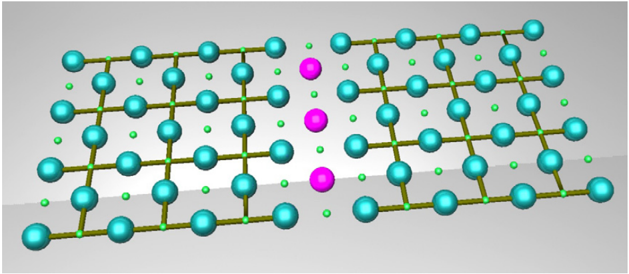
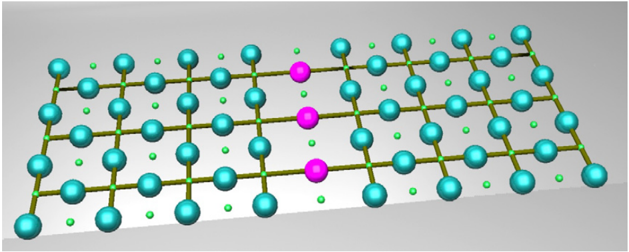
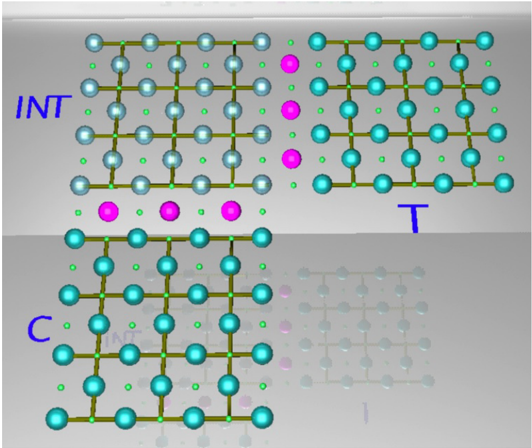
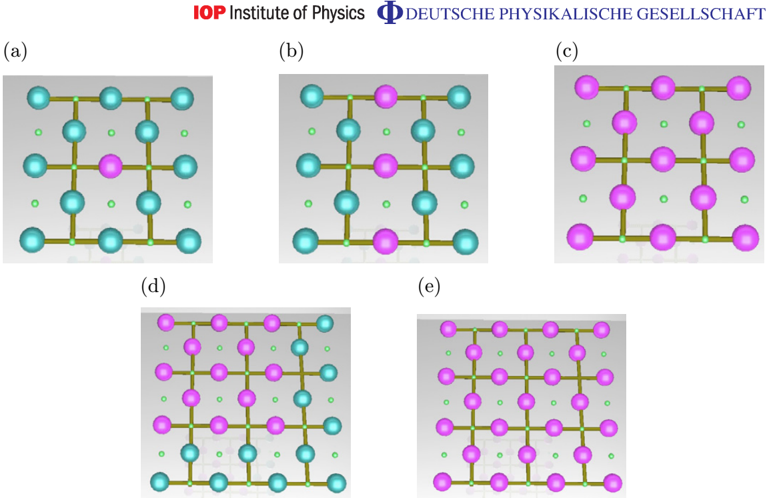
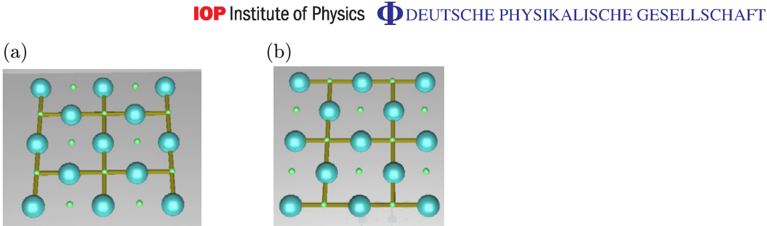
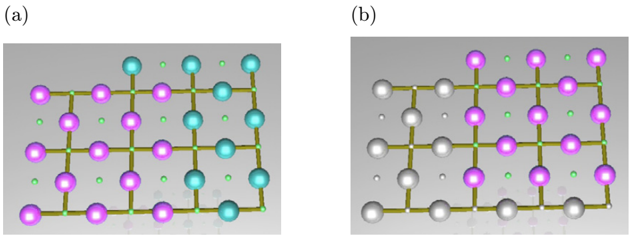
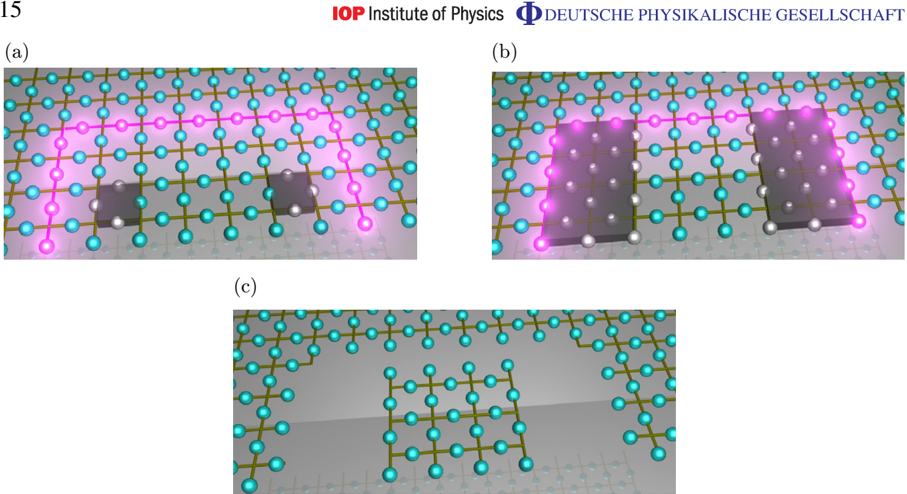
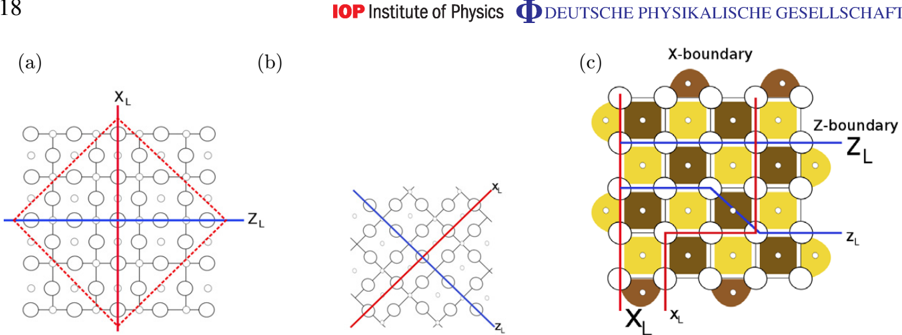
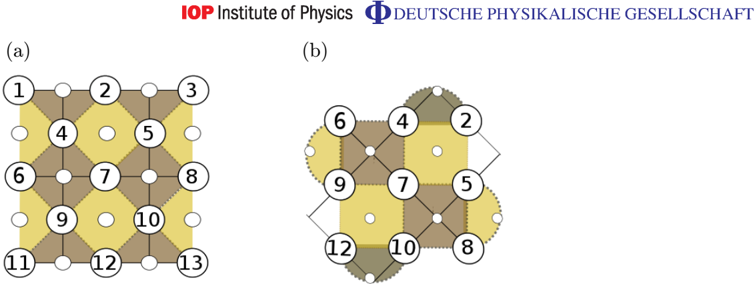
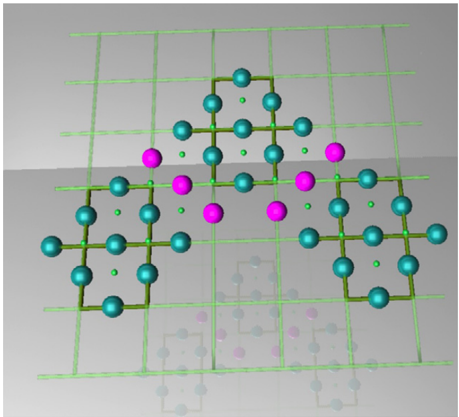
In recent years, surface codes have become a leading method for quantum error correction in theoretical large-scale computational and communications architecture designs. Their comparatively high fault-tolerant thresholds and their natural two-dimensional nearest-neighbour (2DNN) structure make them an obvious choice for large scale designs in experimentally realistic systems. While fundamentally based on the toric code of Kitaev, there are many variants, two of which are the planar- and defect-based codes. Planar codes require fewer qubits to implement (for the same strength of error correction), but are restricted to encoding a single qubit of information. Interactions between encoded qubits are achieved via transversal operations, thus destroying the inherent 2DNN nature of the code. In this paper we introduce a new technique enabling the coupling of two planar codes without transversal operations, maintaining the 2DNN of the encoded computer. Our lattice surgery technique comprises splitting and merging planar code surfaces, and enables us to perform universal quantum computation (including magic state injection) while removing the need for braided logic in a strictly 2DNN design, and hence reduces the overall qubit resources for logic operations. Those resources are further reduced by the use of a rotated lattice for the planar encoding. We show how lattice surgery allows us to distribute encoded GHZ states in a more direct (and overhead friendly) manner, and how a demonstration of an encoded CNOT between two distance-3 logical states is possible with 53 physical qubits, half of that required in any other known construction in 2D.
Overview
The claims and statistics of this paper haven’t been checked yet.
Free: it reads the open-access text and checks the first 5 claims that cite a source we can check. Create a free account to check every claim.
Integrity signals
Registry
Cites
Statistics
Figures





Verification
Claims the paper makes
The claims and statistics of this paper haven’t been checked yet.
Free: it reads the open-access text and checks the first 5 claims that cite a source we can check. Create a free account to check every claim.
Claims other papers make about this one
Each is checked against this paper’s own text: does it say what the citing paper says it does?
The cited source says what the claim attributes to it.
In the citing paper
“Lattice surgery22,39,43,56 enables the efficient realization of multi-qubit fault-tolerant operations, such as the CNOT gate, with only nearest-neighbour interactions.”
From Scaling and logic in the colour code on a superconducting quantum processor (2025) · cites this paper as [22]
The cited source says what the claim attributes to it.
In the citing paper
“Finally, we teleport logical states between colour codes using lattice surgery22.”
From Scaling and logic in the colour code on a superconducting quantum processor (2025) · cites this paper as [22]
Self-check
Percentages, sums and reported differences re-computed from the paper’s own numbers.
The self-check needs the paper’s full text.
Citations
Cites
Fault-tolerant quantum computation by anyons
Kitaev, A. Y. (2003) · Annals of Physics · doi:10.1016/s0003-4916(02)00018-0 · Cited by 7,238 · cited 2×
“Surface codes were first introduced by Kitaev [9] in the context of anyonic quantum computing.”
Edmonds, J. (1965) · Canadian Journal of Mathematics · doi:10.4153/cjm-1965-045-4 · Cited by 2,428 · cited 1×
“[19, 20, 21].”
Dennis, E., Kitaev, A., Landahl, A., & Preskill, J. (2002) · Journal of Mathematical Physics · doi:10.1063/1.1499754 · Cited by 1,768 · cited 1×
“The general procedure was given for the planar code in [2], and a worked example for general surface codes in [4, section VI(C)].”
MethodMaximum matching and a polyhedron with 0,1-vertices
Edmonds, J. (1965) · Journal of Research of the National Bureau of Standards Section B Mathematics and Mathematical Physics · doi:10.6028/jres.069b.013 · Cited by 1,712 · cited 1×
“A pattern of chains of corrective operations highly likely to maintain the correct logical state can be inferred using Edmonds’ minimum weight perfect matching algorithm [21, 22, 23].”
MethodUniversal quantum computation with ideal Clifford gates and noisy ancillas
Bravyi, S., & Kitaev, A. (2005) · Physical Review A · doi:10.1103/physreva.71.022316 · Cited by 1,525 · cited 1×
“This allows for both state preparation and also arbitrary single-qubit rotations, in accordance with standard techniques [29].”
ResultPreskill, J. (1998) · Proceedings of the Royal Society of London. Series A: Mathematical, Physical and Engineering Sciences · doi:10.1098/rspa.1998.0167 · Cited by 994 · cited 1×
“As long as physical errors are below the threshold value, increasing the number of physical qubits can exponentially suppress error on the logical qubits [1].”
BackgroundFault-Tolerant Quantum Computation with High Threshold in Two Dimensions
Raussendorf, R., & Harrington, J. (2007) · Physical Review Letters · doi:10.1103/physrevlett.98.190504 · Cited by 812 · cited 2×
“By contrast, in the defect-based code there are no transversal operations, and the CNOT is performed by braiding defects: extending a defect by measuring out qubits in a line, and passing this extended defect around the second logical qubit defect [3].”
BackgroundMethodTopological fault-tolerance in cluster state quantum computation
Raussendorf, R., Harrington, J., & Goyal, K. (2007) · New Journal of Physics · doi:10.1088/1367-2630/9/6/199 · Cited by 617
High-threshold universal quantum computation on the surface code
Fowler, A. G., Stephens, A. M., & Groszkowski, P. (2009) · Physical Review A · doi:10.1103/physreva.80.052312 · Cited by 486 · cited 1×
“The price of maintaining NN interactions is over three times the number of physical qubits per logical qubit [3, 4].”
BackgroundSelf-citationBlossom V: a new implementation of a minimum cost perfect matching algorithm
Kolmogorov, V. (2009) · Mathematical Programming Computation · doi:10.1007/s12532-009-0002-8 · Cited by 414
Research works printed but not linked: 2
- 12. Bravyi S B and Kitaev A Y 2001 Quantum Comp. Comput. 2 43-48 (transl.)
- 28. Rotman J 1998 An Introduction to Algebraic Topology (Berlin: Springer)
Cited by
Items 201–300 of 604
Advances in Quantum Computation and Quantum Technologies: A Design Automation Perspective
Micheli, G. D., Jiang, J.-H. R., Rand, R. W., Smith, K. N., & Soeken, M. (2022) · IEEE Journal on Emerging and Selected Topics in Circuits and Systems · doi:10.1109/jetcas.2022.3205174 · Cited by 27
“A universal set of quantum computing operations can be implemented on top of the surface code, e.g., through lattice surgery [149].”
BackgroundFault-tolerant interface between quantum memories and quantum processors
Nautrup, H. P., Friis, N., & Briegel, H. J. (2017) · RePEc: Research Papers in Economics · Cited by 20
Hierarchical memories: Simulating quantum LDPC codes with local gates
Pattison, C. A., Krishna, A., & Preskill, J. (2023) · arXiv · doi:10.48550/arxiv.2303.04798 · Cited by 20
High-fidelity magic-state preparation with a biased-noise architecture
Singh, S., Darmawan, A. S., Brown, B. J., & Puri, S. (2022) · Physical Review A · doi:10.1103/physreva.105.052410 · Cited by 34
Fault-Tolerant Postselection for Low-Overhead Magic State Preparation
Bombín, H., Pant, M., Roberts, S., & Seetharam, K. (2024) · PRX Quantum · doi:10.1103/prxquantum.5.010302 · Cited by 70
Compilation of algorithm-specific graph states for quantum circuits
Vijayan, M. K., Paler, A., Gavriel, J., Myers, C. R., Rohde, P. P., & Devitt, S. J. (2024) · Quantum Science and Technology · doi:10.1088/2058-9565/ad1f39 · Cited by 48
Self-citationAdiabatic topological quantum computing
Cesare, C., Landahl, A. J., Bacon, D., Flammia, S. T., & Neels, A. (2015) · Physical Review A · doi:10.1103/physreva.92.012336 · Cited by 31
“This procedure amounts to a simulation of the measurement-based process of code deformation employed in the first class of architectures [8–14].”
MethodVirtualized Logical Qubits: A 2.5D Architecture for Error-Corrected Quantum Computing
Duckering, C., Baker, J. M., Schuster, D., & Chong, F. T. (2020) · IEEE/ACM International Symposium on Microarchitecture (MICRO) · doi:10.1109/micro50266.2020.00026 · Cited by 30
A Pair Measurement Surface Code on Pentagons
Gidney, C. (2023) · Quantum · doi:10.22331/q-2023-10-25-1156 · Cited by 46
“(b) The ZX graph produced by replacing each CNOT with a lattice surgery CNOT [15].”
MethodInfluentialCodesign of quantum error-correcting codes and modular chiplets in the presence of defects
Lin, S. F., Viszlai, J., Smith, K. N., Ravi, G. S., Yuan, C., Chong, F. T., & Brown, B. J. (2024) · International Conference on Architectural Support for Programming Languages and Operating Systems (ASPLOS) · doi:10.1145/3620665.3640362 · Cited by 44
“One can use lattice surgery to perform entangling operations [8, 22, 26] and magic state distillation [5, 17] to perform non-Clifford gates.”
MethodCaesura, A., Cortes, C. L., Pol, W., Sim, S., Steudtner, M., Anselmetti, G.-L., Degroote, M., Moll, N., Santagati, R., Streif, M., et al. (2025) · PRX Quantum · doi:10.1103/yngp-5fpm · Cited by 63
One-dimensional quantum computing with a ‘segmented chain’ is feasible with today’s gate fidelities
Li, Y., & Benjamin, S. C. (2018) · npj Quantum Information · doi:10.1038/s41534-018-0074-2 · Cited by 22
“5, which is based on the lattice surgery.(30) Details of the protocol are given in the Appendix.”
BackgroundFault-tolerant fermionic quantum computation based on color code
Li, Y. (2018) · Physical Review A · doi:10.1103/physreva.98.012336 · Cited by 27
“The lattice surgery is a type of protocols for performing fault-tolerant operations on logical qubits in topological codes [46, 47].”
A control microarchitecture for fault-tolerant quantum computing
Fu, X., Lao, L., Bertels, K., & Almudéver, C. G. (2019) · Microprocessors and Microsystems · doi:10.1016/j.micpro.2019.06.011 · Cited by 23
Quantum resource estimation for large scale quantum algorithms
Gheorghiu, V., & Mosca, M. (2024) · Future Generation Computer Systems · doi:10.1016/j.future.2024.107480 · Cited by 31
High-performance fault-tolerant quantum computing with many-hypercube codes
Goto, H. (2024) · Science Advances · doi:10.1126/sciadv.adp6388 · Cited by 72
Blueprint for fault-tolerant quantum computation with topological qubit arrays
Aasen, D., Aghaee, M., Alam, Z., Andrzejczuk, M., Antipov, A., Astafev, M., Avilovas, L., Barzegar, A., Bauer, B., Becker, J., et al. (2025) · Physical Review Research · doi:10.1103/qx36-4rv1 · Cited by 110
Optimal local unitary encoding circuits for the surface code
Higgott, O., Wilson, M., Hefford, J., Dborin, J., Hanif, F., Burton, S., & Browne, D. E. (2021) · Quantum · doi:10.22331/q-2021-08-05-517 · Cited by 33
“coders have been found that use stabiliser measurements [26, 33, 36] or local dissipative evolution [30], and it has been shown that local dissipative evolution cannot be used to beat the Ω(L) lower bound for local unitary encoders [31].”
BackgroundMagic state injection on the rotated surface code
Lao, L., & Criger, B. (2022) · ACM International Conference on Computing Frontiers (CF) · doi:10.1145/3528416.3530237 · Cited by 52
“In the surface code, the 𝐻 and cnot gates can be implemented fault-tolerantly by using techniques such as lattice surgery and code deformation [30, 31, 35].”
BackgroundMethodInfluentialConvolutional neural network based decoders for surface codes
Bordoni, S., & Giagu, S. (2023) · Quantum Information Processing · doi:10.1007/s11128-023-03898-2 · Cited by 22
“As all the stabilizers commute, after a measurement cycle the system collapses into an eigenstate of all the stabilizers [10, 11].”
End-To-End Resource Analysis for Quantum Interior-Point Methods and Portfolio Optimization
Dalzell, A. M., Clader, B. D., Salton, G., Berta, M., Lin, C. Y.-Y., Bader, D. A., Stamatopoulos, N., Schuetz, M. J. A., Brandão, F. G. S. L., Katzgraber, H. G., et al. (2023) · PRX Quantum · doi:10.1103/prxquantum.4.040325 · Cited by 43
“We justify the focus on T gates by pointing out that, in many prominent approaches to fault-tolerant quantum computation (such as lattice surgery [27–30]), quantum circuits are decomposed into Clifford gates and T gates and the cost of implementing the circuit is dominated by the number and depth of…”
BackgroundKatsuda, M., Mitarai, K., & Fujii, K. (2024) · Physical Review Research · doi:10.1103/physrevresearch.6.013024 · Cited by 26
“By using the rotated surface code [9], we can make one logical qubit with code distance d using only 2d(2) − 1 qubits.”
MethodLattice surgery on the Raussendorf lattice
Herr, D., Paler, A., Devitt, S. J., & Nori, F. (2018) · Quantum Science and Technology · doi:10.1088/2058-9565/aac450 · Cited by 24
Self-citationTarget-generating quantum error correction coding scheme based on generative confrontation network
Wang, H., Song, Z., Wang, Y., Tian, Y., & Ma, H. (2022) · Quantum Information Processing · doi:10.1007/s11128-022-03616-4 · Cited by 20
“For example, for a 5X5 grid, we define the stable Pauli operator set S = I , X , Y , Z to represent the code as { 000 , 001 , 010 , 011 } , map the surface code to a binary matrix [19, 20] and randomly generate the error matrix as shown in Fig.”
MethodError-corrected Hadamard gate simulated at the circuit level
Gehér, G. P., McLauchlan, C., Campbell, E. T., Moylett, A. E., & Crawford, O. (2024) · Quantum · doi:10.22331/q-2024-07-02-1394 · Cited by 47
“Horsman et al. [14] discussed the logical Hadamard gate for the unrotated planar surface code and highlighted that it is not sufficient to perform a transversal Hadamard gate; we quote, “Performing a Hadamard gate transversally by Hadamard operations on each individual qubit will leave us with a…”
BackgroundInfluentialA sparse spin qubit array with integrated control electronics
Boter, J. M., Dehollain, J. P., van Dijk, J. P. G., Hensgens, T., Versluis, R., Clarke, J. S., Veldhorst, M., Sebastiano, F., & Vandersypen, L. M. K. (2019) · TNO Repository · Cited by 16
Error rates and resource overheads of encoded three-qubit gates
Takagi, R., Yoder, T. J., & Chuang, I. L. (2017) · Physical Review A · doi:10.1103/physreva.96.042302 · Cited by 19
Low-overhead quantum computing with the color code
Thomsen, F., Kesselring, M. S., Bartlett, S. D., & Brown, B. J. (2024) · Physical Review Research · doi:10.1103/physrevresearch.6.043125 · Cited by 15
Logical Error Rates of XZZX and Rotated Quantum Surface Codes
Forlivesi, D., Valentini, L., & Chiani, M. (2024) · IEEE Journal on Selected Areas in Communications · doi:10.1109/jsac.2024.3380088 · Cited by 23
“These codes are obtained starting from standard surface codes by removing ( d − 1) 2 codeword qubits [16].”
BackgroundMethodLong-range-enhanced surface codes
Hong, Y., Marinelli, M., Kaufman, A. M., & Lucas, A. (2024) · Physical Review A · doi:10.1103/physreva.110.022607 · Cited by 33
“Since the error must grow across multiple patches to constitute a logical, we must inevitably flip more checks during the formation of the logical error, implying that it is easier to detect.”
BackgroundTo reset, or not to reset—that is the question
Gehér, G. P., Jastrzebski, M., Campbell, E. T., & Crawford, O. (2025) · npj Quantum Information · doi:10.1038/s41534-025-00998-y · Cited by 43
Li, Y. (2016) · Physical Review Letters · doi:10.1103/physrevlett.117.120403 · Cited by 19
Classification of small triorthogonal codes
Nezami, S., & Haah, J. (2022) · Physical Review A · doi:10.1103/physreva.106.012437 · Cited by 36
Coecke, B., Horsman, D. C., Kissinger, A., & Wang, Q. (2021) · Theoretical Computer Science · doi:10.1016/j.tcs.2021.07.024 · Cited by 28
Self-citationFault-Tolerant Continuous-Variable Measurement-based Quantum Computation Architecture
Larsen, M. V., Chamberland, C., Noh, K., Neergaard-Nielsen, J. S., & Andersen, U. L. (2021) · Technical University of Denmark, DTU Orbit (Technical University of Denmark, DTU) · Cited by 13
Comparative study of quantum error correction strategies for the heavy-hexagonal lattice
Benito, C., López, E., Peropadre, B., & Bermúdez, A. (2025) · Quantum · doi:10.22331/q-2025-02-06-1623 · Cited by 37
Lowering Connectivity Requirements for Bivariate Bicycle Codes Using Morphing Circuits
Shaw, M. H., & Terhal, B. M. (2025) · Physical Review Letters · doi:10.1103/physrevlett.134.090602 · Cited by 66
Error Correction of Transversal cnot Gates for Scalable Surface-Code Computation
Sahay, K., Lin, Y., Huang, S., Brown, K. R., & Puri, S. (2025) · PRX Quantum · doi:10.1103/prxquantum.6.020326 · Cited by 46
“1, this requires applying physical CNOT gates be-tween every corresponding data qubit of the control and target SC states [28].”
Compare the pair: Rotated versus unrotated surface codes at equal logical error rates
O'Rourke, A. R., & Devitt, S. J. (2025) · Physical Review Research · doi:10.1103/physrevresearch.7.033074 · Cited by 45
Self-citationA sparse spin qubit array with integrated control electronics
Boter, J. M., Dehollain, J. P., van Dijk, J. P. G., Hensgens, T., Versluis, R., Clarke, J. S., Veldhorst, M., Sebastiano, F., & Vandersypen, L. M. K. (2019) · Technical digest - International Electron Devices Meeting/Technical digest · doi:10.1109/iedm19573.2019.8993570 · Cited by 14
Compiler Management of Communication and Parallelism for Quantum Computation
Heckey, J., Patil, S. R., Javadi-Abhari, A., Holmes, A. A., Kudrow, D., Brown, K. R., Franklin, D. M., Chong, F. T., & Martonosi, M. (2015) · ACM SIGARCH Computer Architecture News · doi:10.1145/2786763.2694357 · Cited by 20
Holmes, A. A., Ding, Y., Javadi-Abhari, A., Franklin, D. M., Martonosi, M., & Chong, F. T. (2019) · Microprocessors and Microsystems · doi:10.1016/j.micpro.2019.02.007 · Cited by 22
“More precisely, one CNOT braid takes T cnot = 2 d + 2 cycles to be performed fault tolerantly [3, 11].”
BackgroundERASER: Towards Adaptive Leakage Suppression for Fault-Tolerant Quantum Computing
Vittal, S., Das, P., & Qureshi, M. K. (2023) · IEEE/ACM International Symposium on Microarchitecture (MICRO) · doi:10.1145/3613424.3614251 · Cited by 17
“Rotated codes have lower resource overheads (2 𝑑 2 − 1 qubits) compared to the unrotated codes ( ( 2 𝑑 − 1 ) 2 ) [35, 65] and, therefore, have been used in recent QEC studies and real-system demonstrations [1, 53].”
BackgroundModeling the performance of early fault-tolerant quantum algorithms
Liang, Q., Zhou, Y., Dalal, A., & Johnson, P. D. (2024) · Physical Review Research · doi:10.1103/physrevresearch.6.023118 · Cited by 25
CSS code surgery as a universal construction
Cowtan, A., & Burton, S. (2024) · Quantum · doi:10.22331/q-2024-05-14-1344 · Cited by 64
“by following precisely the same logic as for traditional lattice surgery [23].”
BackgroundLeBlond, T., Dean, C., Watkins, G., & Bennink, R. S. (2024) · ACM Transactions on Quantum Computing · doi:10.1145/3689826 · Cited by 44
“[4, 13, 21, 29, 41] for different protocols); the optimal choice will be similarly interdependent with choices of layout and hardware constraints.”
BackgroundMethodFault-tolerant hyperbolic Floquet quantum error correcting codes
Fahimniya, A., Dehghani, H., Bharti, K., Mathew, S., Kollár, A. J., Gorshkov, A. V., & Gullans, M. J. (2025) · Quantum · doi:10.22331/q-2025-09-05-1849 · Cited by 45
Quantum Information Protection Scheme Based on Reinforcement Learning for Periodic Surface Codes
Xue, Y.-J., Wang, H., Tian, Y., Wang, Y., Wang, Y., & Wang, S. (2022) · Quantum Engineering · doi:10.1155/2022/7643871 · Cited by 15
“To solve the problem of spatial correlation [11, 12] of the surface codes, we adopt a confrontation network structure of the reinforcement learning mechanism, which is an improvement of the neural network in the deep Q network (DQN) [13], which can help us better to find the best correction chain.”
MethodInfluentialPauli Fusion: a Computational Model to Realise Quantum Transformations from ZX Terms
de Beaudrap, N., Duncan, R., Horsman, D., & Perdrix, S. (2020) · Electronic Proceedings in Theoretical Computer Science · doi:10.4204/eptcs.318.6 · Cited by 41
“These fundamental elements very closely model those found in lattice surgery [20], and in operations of optical fusion gates that have similar effects [27] (see Appendix A).”
BackgroundSelf-citationFacilitating practical fault-tolerant quantum computing based on color codes
Zhang, J., Wu, Y.-C., & Guo, G.-P. (2024) · Physical Review Research · doi:10.1103/physrevresearch.6.033086 · Cited by 12
“Lattice surgery [13, 18–21] is a measurement-based scheme allowing for efficient implementation of universal gate sets by fault-tolerant logical multi-body Pauli operator measurements.”
BackgroundParity-controlled gate in a two-dimensional neutral-atom array
Guo, F.-Q., Su, S., Li, W., & Shao, X. (2025) · Physical Review A · doi:10.1103/physreva.111.022420 · Cited by 16
Chandra, D., Babar, Z., Nguyen, H. V., Alanis, D., Botsinis, P., Ng, S. X., & Hanzo, L. (2019) · IEEE Access · doi:10.1109/access.2019.2936795 · Cited by 14
“Hence, one can ask the judicious question: “Can we still use the two-dimensional QTECCs of [32]–[35] for achieving fault-tolerant quantum computation despite relying only on a single stabilizer measurement for each of the stabilizer operators?” Arguably, the answer is yes, provided that certain conditions are satisfie…”
BackgroundMethodInfluentialGoto, H., Ho, Y., & Kanao, T. (2023) · Physical Review Research · doi:10.1103/physrevresearch.5.043137 · Cited by 13
“In this paper, we propose an efficient fault-tolerant logical zero-state encoding method for the nine-qubit surface code [19, 20], which is another small distance-three code.”
BackgroundMethodLayout Synthesis for Topological Quantum Circuits With 1-D and 2-D Architectures
Lin, Y., Yu, B., Li, M., & Pan, D. Z. (2017) · IEEE Transactions on Computer-Aided Design of Integrated Circuits and Systems · doi:10.1109/tcad.2017.2760511 · Cited by 14
“Error correction scheme like lattice surgery [36] removes the need of braiding by splitting and merging planar code surfaces; architecture like Multi-SIMD [37] scheme creates a circuit with distributed regions connected by teleportation networks, while each region only consists of small number of qubits.”
BackgroundPauli Fusion : a computational model to realise quantum transformations from ZX terms
de Beaudrap, N., Duncan, R., Horsman, D. C., & Perdrix, S. (2019) · Strathprints: The University of Strathclyde institutional repository (University of Strathclyde) · Cited by 12
Self-citationEfficient fault-tolerant code switching via one-way transversal CNOT gates
Heußen, S., & Hilder, J. (2025) · Quantum · doi:10.22331/q-2025-09-03-1846 · Cited by 12
“Transversal CNOT gates are appealing because they do not require a repetition overhead to respect fault tolerance such as, e.g., implementations via lattice surgery [30–32].”
Local clustering decoder as a fast and adaptive hardware decoder for the surface code
Ziad, A. B., Zalawadiya, A., Topal, C., Camps, J., Gehér, G. P., Stafford, M. P., & Turner, M. L. (2025) · Nature Communications · doi:10.1038/s41467-025-66773-x · Cited by 50
“To translate this accuracy gain into qubit savings, consider a target error probability of 10 − 6 for a d × d × d window—a proxy of a fundamental unit of logic in lattice surgery [38].”
Optimal Hadamard Gate Count for Clifford+ T Synthesis of Pauli Rotations Sequences
Vandaele, V., Martiel, S., Perdrix, S., & Vuillot, C. (2023) · ACM Transactions on Quantum Computing · doi:10.1145/3639062 · Cited by 20
“In contrast, Clifford operations can typically be implemented at little expense in most common quantum error correcting codes via transversal operations, code deformation [14] or lattice surgery [15].”
Tangling Schedules Eases Hardware Connectivity Requirements for Quantum Error Correction
Gehér, G. P., Crawford, O., & Campbell, E. T. (2024) · PRX Quantum · doi:10.1103/prxquantum.5.010348 · Cited by 20
Compilation of a simple chemistry application to quantum error correction primitives
Blunt, N. S., Gehér, G. P., & Moylett, A. E. (2024) · Physical Review Research · doi:10.1103/physrevresearch.6.013325 · Cited by 20
“Other gates within the Clifford group can be implemented on the surface code via lattice surgery operations such as patch deformation [9], but non-Clifford gates such as the T gate cannot be implemented in an error-corrected fashion.”
BackgroundMethodInfluentialTan, D. B., Niu, M. Y., & Gidney, C. (2024) · Proceedings - International Symposium on Computer Architecture/Proceedings · doi:10.1109/isca59077.2024.00032 · Cited by 67
“We opt for lattice surgery [8], [10], [11] because it has a much lower resource overhead compared to alternative schemes like braiding [7], [12].”
BackgroundAkahoshi, Y., Fujisaki, J., Oshima, H., Sato, S., & Fujii, K. (2024) · IEEE International Conference on Quantum Computing and Engineering (QCE) · doi:10.1109/qce60285.2024.10335 · Cited by 12
Akahoshi, Y., Toshio, R., Fujisaki, J., Oshima, H., Sato, S., & Fujii, K. (2025) · PRX Quantum · doi:10.1103/93zr-1ykb · Cited by 49
Designing fault-tolerant circuits using detector error models
Derks, P.-J. H. S., Townsend-Teague, A., Burchards, A. G., & Eisert, J. (2025) · Quantum · doi:10.22331/q-2025-11-06-1905 · Cited by 95
“The most efficient known way to perform fault-tolerant computations using surface codes on a 2D grid of qubits with nearest-neighbor connectivity is lattice surgery [43, 44].”
Improving Threshold for Fault-Tolerant Color-Code Quantum Computing by Flagged Weight Optimization
Takada, Y., & Fujii, K. (2024) · PRX Quantum · doi:10.1103/prxquantum.5.030352 · Cited by 10
Toward scalable fault-tolerant photonic quantum computers
AbuGhanem, M. (2026) · The Journal of Supercomputing · doi:10.1007/s11227-025-08132-7 · Cited by 17
Homomorphic Logical Measurements
Huang, S., Jochym-O’Connor, T., & Yoder, T. J. (2023) · PRX Quantum · doi:10.1103/prxquantum.4.030301 · Cited by 38
A Classical Architecture for Digital Quantum Computers
Zhang, F., Zhu, X., Chao, R., Huang, C., Kong, L., Chen, G., Ding, D., Feng, H., Gao, Y., Ni, X., et al. (2023) · ACM Transactions on Quantum Computing · doi:10.1145/3626199 · Cited by 22
“Specifically, patches of logical qubits are arranged on a large grid, with additional physical qubits positioned in the “routing space” [8] between them.”
BackgroundIsing model formulation for highly accurate topological color codes decoding
Takada, Y., Takeuchi, Y., & Fujii, K. (2024) · Physical Review Research · doi:10.1103/physrevresearch.6.013092 · Cited by 10
Recurrent neural network decoding of rotated surface codes based on distributed strategy
李, F. 帆. L., Li, A.-Q., Qi-Di, G. A. N., & 马, H.-Y. 鸿. M. (2024) · Chinese Physics B · doi:10.1088/1674-1056/ad2bef · Cited by 10
Fault-Tolerant Logical Measurements via Homological Measurement
Ide, B., Gowda, M. G., Nadkarni, P. J., & Dauphinais, G. (2025) · Physical Review X · doi:10.1103/physrevx.15.021088 · Cited by 65
“While lattice surgery techniques have been widely studied for topological codes [44–47], relatively little work has focused on more general qLDPC codes.”
InfluentialHybrid Cat-Transmon Architecture for Scalable, Hardware-Efficient Quantum Error Correction
Hann, C. T., Noh, K., Putterman, H., Matheny, M. H., Iverson, J. K., Fang, M. T., Chamberland, C., Painter, O. J., & Brandão, F. G. S. L. (2025) · PRX Quantum · doi:10.1103/75x7-5ysv · Cited by 24
Stabilizer Entanglement Distillation and Efficient Fault-Tolerant Encoders
Shi, Y. B., Patil, A., & Guha, S. (2025) · PRX Quantum · doi:10.1103/prxquantum.6.010339 · Cited by 26
Clifford Gate Optimisation and T Gate Scheduling: Using Queueing Models for Topological Assemblies
Paler, A., & Basmadjian, R. (2019) · IEEE/ACM International Symposium on Nanoscale Architectures (NANOARCH) · doi:10.1109/nanoarch47378.2019.181305 · Cited by 11
“braiding, lattice surgery [2]).”
Limitations on Transversal Gates for Hypergraph Product Codes
Burton, S., & Browne, D. E. (2021) · IEEE Transactions on Information Theory · doi:10.1109/tit.2021.3131043 · Cited by 20
“To reach universality with these codes we can do so via braiding [15], lattice surgery [16], [17], [18], or twists [19].”
BackgroundPosition Papers for the ASCR Workshop on Basic Research Needs in Quantum Computing and Networking
Lougovski, P., Parekh, O., Broz, J., Byrd, M., Chembo, Y. K., de Jong, W. A., Figueroa, E. V., Humble, T. S., Larson, J. M., Quiroz, G., et al. (2023) · OSTI OAI (U.S. Department of Energy Office of Scientific and Technical Information) · doi:10.2172/2283320 · Cited by 11
Magic state cultivation: growing T states as cheap as CNOT gates
Gidney, C., Shutty, N., & Jones, C. (2024) · arXiv · doi:10.48550/arxiv.2409.17595 · Cited by 9
Magic state distillation and cost analysis in fault-tolerant universal quantum computation
Liu, Y., Ma, Z., Luo, L., Du, C., Fei, Y., Wang, H., Duan, Q., & Yang, J. (2023) · Quantum Science and Technology · doi:10.1088/2058-9565/ace6ca · Cited by 11
“It achieved a quadratic reduction in the error rate compared with more conventional approaches for state preparation [41, 73, 148].”
Williamson, D. J., & Baspin, N. (2024) · Nature Communications · doi:10.1038/s41467-024-53881-3 · Cited by 44
“Fortunately, lattice surgery [107] can address both of these issues.”
BackgroundLattice surgery realized on two distance-three repetition codes with superconducting qubits
Besedin, I. S., Kerschbaum, M., Knoll, J., Hesner, I., Bödeker, L., Colmenárez, L., Hofele, L., Lacroix, N., Hellings, C., Swiadek, F., et al. (2026) · Nature Physics · doi:10.1038/s41567-025-03090-6 · Cited by 67
“Lattice surgery [16] is a powerful technique which extends topological codes to multiple logical qubits, enabling fault-tolerant gate operations while maintaining a two-dimensional arrangement of physical qubits.”
Demonstrating quantum error mitigation on logical qubits
Zhang, A., Xie, H., Gao, Y., Yang, J., Bao, Z., Zhu, Z., Chen, J., Wang, N., Zhang, C., Zhong, J., et al. (2025) · Nature Communications · doi:10.1038/s41467-025-67768-4 · Cited by 53
“…which is a prerequisite for feedback operations in FTQC circuits, we can still achieve a median readout fi delity of 0.991 on Processor I within 0.5 μ s, as demonstrated in our repetition code experiment by allowing repetitive measurements on the syndrome qubits up to M =4 rounds (see next).”
Influentialde la Fuente, J. C. M., Old, J., Townsend-Teague, A., Rispler, M., Eisert, J., & Müller, M. (2025) · PRX Quantum · doi:10.1103/prxquantum.6.010360 · Cited by 32
Lee, S.-H., & Jeong, H. (2022) · Physical Review Research · doi:10.1103/physrevresearch.4.013010 · Cited by 12
Gavriel, J., Herr, D., Shaw, A., Bremner, M. J., Paler, A., & Devitt, S. J. (2023) · Physical Review Research · doi:10.1103/physrevresearch.5.033019 · Cited by 17
Self-citationSimulation and Design of Quantum Circuits
Zulehner, A., & Wille, R. (2020) · Lecture notes in computer science · doi:10.1007/978-3-030-47361-7_3 · Cited by 13
“…codes where each logical qubit in a computation is realised by several (up to several hundreds) of physical qubits—eventually resulting in fault-tolerant devices that are capable of conducting very deep computations on a large number of qubits and with perfect accuracy [13,14].”
BackgroundComparison of 2D topological codes and their decoding performances
Kuo, K.-Y., & Lai, C. (2022) · IEEE International Symposium on Information Theory (ISIT) · doi:10.1109/isit50566.2022.9834489 · Cited by 13
“Similarly, a family of [[L(2), 1, L]] rotated surface codes for odd L ≥ 3 has higher efficiency c = 1 [12], [13], as shown in Fig.”
BackgroundInfluentialDjordjević, I. B. (2022) · Elsevier eBooks · doi:10.1016/b978-0-12-822942-2.00001-7 · Cited by 10
Robust sparse IQP sampling in constant depth
Paletta, L., Leverrier, A., Sarlette, A., Mirrahimi, M., & Vuillot, C. (2024) · Quantum · doi:10.22331/q-2024-05-06-1337 · Cited by 8
“As briefly mentioned in subsection 1.2.1, a tetrahe-lix code is obtained by merging tetrahedral codes in lattice surgery terms [29, 30, 36].”
BackgroundMethodInfluentialLeone, H., Srikara, S., Rohde, P. P., & Devitt, S. J. (2023) · Physical Review Research · doi:10.1103/physrevresearch.5.043302 · Cited by 8
“We chose the surface code as our logical qubit encoding due to its high physical error tolerance, inexpensive two qubit operations via lattice surgery [14], and because it is the preferred encoding method for current hardware [15] [16].”
BackgroundMethodSelf-citationDecoherence-Protected Implementation of Quantum Gates
Wu, C., Sun, C., Chen, J., & Yi, X. X. (2023) · Physical Review Applied · doi:10.1103/physrevapplied.19.034069 · Cited by 8
A Tree-Approach Pauli Decomposition Algorithm with Application to Quantum Computing
Koska, O., Baboulin, M., & Gazda, A. (2024) · ISC High Performance (ISC) · doi:10.23919/isc.2024.10528938 · Cited by 27
“In this context, the complexity of the quantum circuit depends mainly on the number of T gates (because the Clifford gates are considered as having no cost on these devices [9], [14]).”
BackgroundSurf-Deformer: Mitigating Dynamic Defects on Surface Code via Adaptive Deformation
Yin, K., Fang, X., Humble, T. S., Li, A., Shi, Y., & Ding, Y. (2024) · IEEE/ACM International Symposium on Microarchitecture (MICRO) · doi:10.1109/micro61859.2024.00061 · Cited by 18
“Current implementations of surface code logical operations are mainly based on the Lattice Surgery (LS) method [39], which provides an instruction set to expand and connect surface code patches to update and entangle logical states [52].”
Near-Term Spin-Qubit Architecture Design via Multipartite Maximally Entangled States
Paraskevopoulos, N., Steinberg, M., Undseth, B., Sarkar, A., Vandersypen, L. M. K., Xue, X., & Feld, S. (2025) · PRX Quantum · doi:10.1103/prxquantum.6.020307 · Cited by 11
“…logical quantum computation [75, 76], owing to their resilience against many varieties of noise, the development of lattice-surgery techniques [82], ease of experimental implementation via a planar layout [75], and magic-state distillation protocols [83] which provide for universal logical…”
Emerging Technologies for Quantum Computing
Baker, J. M., & Chong, F. T. (2021) · IEEE Micro · doi:10.1109/mm.2021.3099139 · Cited by 9
Benchmarking quantum error-correcting codes on quasi-linear and central-spin processors
Finsterhoelzl, R., & Burkard, G. (2022) · Quantum Science and Technology · doi:10.1088/2058-9565/aca21f · Cited by 14
TISCC: A Surface Code Compiler and Resource Estimator for Trapped-Ion Processors
LeBlond, T., Bennink, R. S., Lietz, J. G., & Seck, C. M. (2023) · International Conference for High Performance Computing, Networking, Storage and Analysis (SC) · doi:10.1145/3624062.3624214 · Cited by 28
“As a case in point, a protocol to implement CNOT operations between diagonally adjacent tiles, using a third tile between them, was presented in [14].”
BackgroundMethodInfluentialContinuous-variable topological codes
Morimae, T. (2013) · Physical Review A · doi:10.1103/physreva.88.042311 · Cited by 9
Remote cross-resonance gate between superconducting fixed-frequency qubits
Ohfuchi, M., & Sato, S. (2024) · Quantum Science and Technology · doi:10.1088/2058-9565/ad3f47 · Cited by 10
Resource Analysis of Low-Overhead Transversal Architectures for Reconfigurable Atom Arrays
Zhou, H., Duckering, C., Zhao, C., Bluvstein, D., Cain, M., Kubica, A., Wang, S.-T., & Lukin, M. D. (2025) · Proceedings - International Symposium on Computer Architecture/Proceedings · doi:10.1145/3695053.3731039 · Cited by 75
“There are multiple methods to perform logical operations in the surfacecode,basedon codedeformation[45,129],latticesurgery[69], or transversal gates [34] (Fig.”
Verifying Fault-Tolerance of Quantum Error Correction Codes
Chen, K., Liu, Y., Fang, W. S., Paykin, J., Wu, X.-C., Schmitz, A. T., Zdancewic, S., & Li, G. (2025) · Lecture notes in computer science · doi:10.1007/978-3-031-98685-7_1 · Cited by 26
“We perform our verification tool on the fault-tolerant quantum gadgets over the color code [8,43], rotated surface code [7,25], and the toric code [29].”
Metadata
- Authors
- Horsman, D., Fowler, A. G., Devitt, S., & Meter, R. V.
- Affiliations
- The University of Melbourne (AU)
- National Institute of Informatics (JP)
- Keio University (JP)
- Venue
- New Journal of Physics
- Publisher
- IOP Publishing
- Published
- 2012-12-01
- Volume
- 14
- Issue
- 12
- Pages
- 123011
- ISSN
- 1367-2630 (ISSN-L)
- OpenAlex
- W1985315536
- Semantic Scholar
- c375e28f31864920ca0b867664e3819a577c87f7
- Cited by
- 598
- References
- 30
- Citations by year
- 2026: 79 · 2025: 144 · 2024: 82 · 2023: 61 · 2022: 53 · 2021: 30 · 2020: 31 · 2019: 24 · 2018: 25 · 2017: 35 · 2016: 12 · 2015: 12 · 2014: 4 · 2013: 6
- FWCI
- 6.93
- Type
- journal article
- Language
- en
- Open access
- gold
- doi.org
- Licence
- cc-by-nc-sa
- creativecommons.org/licenses/by-nc-sa/3.0/ (vor, 6 d)
- iopscience.iop.org/info/page/text-and-data-mining (tdm, 6 d)
- Locations
- New Journal of Physics (publishedVersion, cc-by-nc-sa)
- arXiv (Cornell University) (publishedVersion)
- DOAJ (DOAJ: Directory of Open Access Journals) (submittedVersion)
- arXiv (Cornell University)
- Funders
- National Security Agency (W911NF-08-1-0527)
- Ministry of Education, Culture, Sports, Science and Technology
- Japan Society for the Promotion of Science
- Centre of Excellence for Quantum Computation and Communication Technology, Australian Research Council (CE110001027)
- Army Research Office (W911NF-08-1, W911NF-08-1- 0527, W911NF)
- Topics
- Physical Sciences › Computer Science › Artificial Intelligence › Quantum Computing Algorithms and Architecture
- Physical Sciences › Physics and Astronomy › Atomic and Molecular Physics, and Optics › Quantum Information and Cryptography
- Physical Sciences › Physics and Astronomy › Atomic and Molecular Physics, and Optics › Quantum many-body systems
- Keywords
- surface code, lattice surgery, toric code, quantum error correction, fault-tolerant quantum computing
About these checks
Registry, retraction, Cites and statistics results are computed, not judged, with one exception: a printed reference that no index lists is read once by a model before it counts as a citation error. Claims are extracted by a model and kept only when their quote appears verbatim in the text; each cited source is then checked, with a model’s help, for whether it says what the claim relies on. Those verdicts can be wrong — read the claim’s quote and the cited source before relying on one.
Statistics and arithmetic are recomputed, not judged.
Confidence bands are shown only for fields calibrated on our annotated test set. None is calibrated yet, so no band is shown.
What counts as a claim ›How we measure confidence ›How we check this ›
Are you an author, or do you see a problem with this page? Request a review
Data sources
Bibliographic data: Semantic Scholar, OpenAlex, Crossref.
Contains information from the Semantic Scholar Academic Graph Datasets, made available under the ODC Attribution License (ODC-BY 1.0).
Semantic Scholar’s data is described in: Kinney, R., et al. (2023). The Semantic Scholar Open Data Platform. arXiv:2301.10140.
