

Surface code quantum computing by lattice surgery
Open accessThe DOI matches its Crossref record; 34 of the 34 references it cites were found in a registry or an index.
Abstract
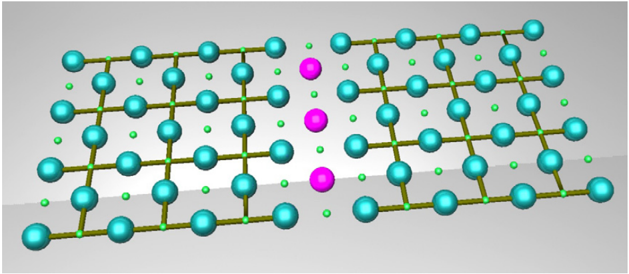
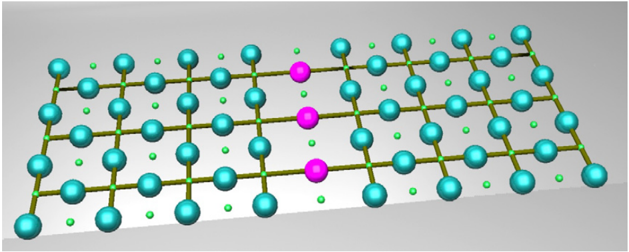
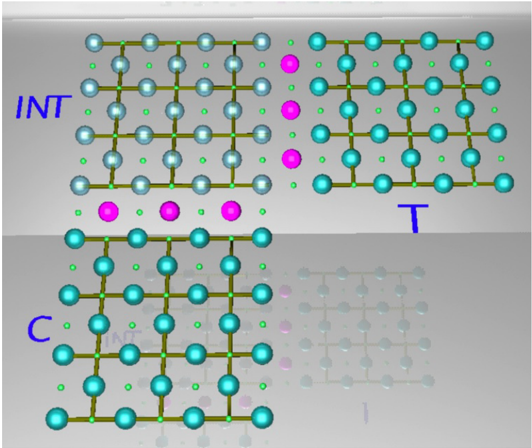
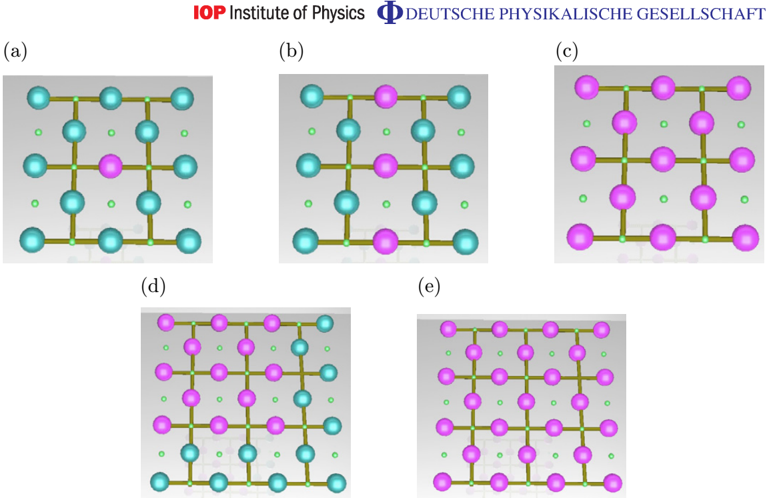
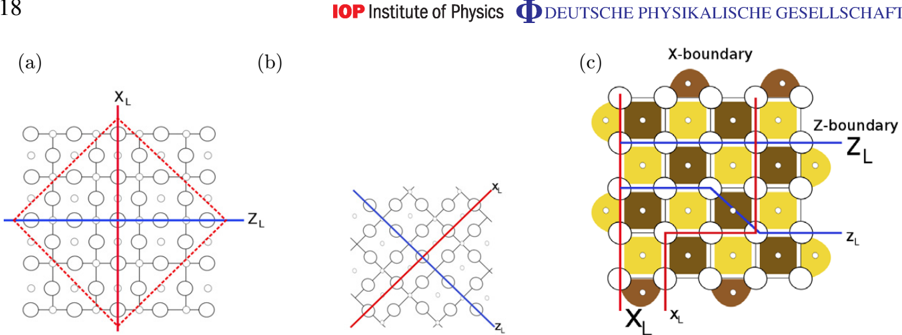
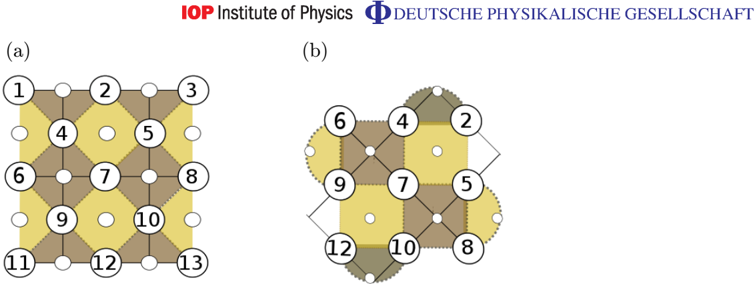
In recent years, surface codes have become a leading method for quantum error correction in theoretical large-scale computational and communications architecture designs. Their comparatively high fault-tolerant thresholds and their natural two-dimensional nearest-neighbour (2DNN) structure make them an obvious choice for large scale designs in experimentally realistic systems. While fundamentally based on the toric code of Kitaev, there are many variants, two of which are the planar- and defect-based codes. Planar codes require fewer qubits to implement (for the same strength of error correction), but are restricted to encoding a single qubit of information. Interactions between encoded qubits are achieved via transversal operations, thus destroying the inherent 2DNN nature of the code. In this paper we introduce a new technique enabling the coupling of two planar codes without transversal operations, maintaining the 2DNN of the encoded computer. Our lattice surgery technique comprises splitting and merging planar code surfaces, and enables us to perform universal quantum computation (including magic state injection) while removing the need for braided logic in a strictly 2DNN design, and hence reduces the overall qubit resources for logic operations. Those resources are further reduced by the use of a rotated lattice for the planar encoding. We show how lattice surgery allows us to distribute encoded GHZ states in a more direct (and overhead friendly) manner, and how a demonstration of an encoded CNOT between two distance-3 logical states is possible with 53 physical qubits, half of that required in any other known construction in 2D.
Overview
The claims and statistics of this paper haven’t been checked yet.
Free: it reads the open-access text and checks the first 5 claims that cite a source we can check. Create a free account to check every claim.
Integrity signals
Registry
Cites
Statistics
Figures





Verification
Claims the paper makes
The claims and statistics of this paper haven’t been checked yet.
Free: it reads the open-access text and checks the first 5 claims that cite a source we can check. Create a free account to check every claim.
Claims other papers make about this one
Each is checked against this paper’s own text: does it say what the citing paper says it does?
The cited source says what the claim attributes to it.
In the citing paper
“Lattice surgery22,39,43,56 enables the efficient realization of multi-qubit fault-tolerant operations, such as the CNOT gate, with only nearest-neighbour interactions.”
From Scaling and logic in the colour code on a superconducting quantum processor (2025) · cites this paper as [22]
The cited source says what the claim attributes to it.
In the citing paper
“Finally, we teleport logical states between colour codes using lattice surgery22.”
From Scaling and logic in the colour code on a superconducting quantum processor (2025) · cites this paper as [22]
Self-check
Percentages, sums and reported differences re-computed from the paper’s own numbers.
The self-check needs the paper’s full text.
Citations
Cites
Fault-tolerant quantum computation by anyons
Kitaev, A. Y. (2003) · Annals of Physics · doi:10.1016/s0003-4916(02)00018-0 · Cited by 7,238 · cited 2×
“Surface codes were first introduced by Kitaev [9] in the context of anyonic quantum computing.”
Edmonds, J. (1965) · Canadian Journal of Mathematics · doi:10.4153/cjm-1965-045-4 · Cited by 2,428 · cited 1×
“[19, 20, 21].”
Dennis, E., Kitaev, A., Landahl, A., & Preskill, J. (2002) · Journal of Mathematical Physics · doi:10.1063/1.1499754 · Cited by 1,768 · cited 1×
“The general procedure was given for the planar code in [2], and a worked example for general surface codes in [4, section VI(C)].”
MethodMaximum matching and a polyhedron with 0,1-vertices
Edmonds, J. (1965) · Journal of Research of the National Bureau of Standards Section B Mathematics and Mathematical Physics · doi:10.6028/jres.069b.013 · Cited by 1,712 · cited 1×
“A pattern of chains of corrective operations highly likely to maintain the correct logical state can be inferred using Edmonds’ minimum weight perfect matching algorithm [21, 22, 23].”
MethodUniversal quantum computation with ideal Clifford gates and noisy ancillas
Bravyi, S., & Kitaev, A. (2005) · Physical Review A · doi:10.1103/physreva.71.022316 · Cited by 1,525 · cited 1×
“This allows for both state preparation and also arbitrary single-qubit rotations, in accordance with standard techniques [29].”
ResultPreskill, J. (1998) · Proceedings of the Royal Society of London. Series A: Mathematical, Physical and Engineering Sciences · doi:10.1098/rspa.1998.0167 · Cited by 994 · cited 1×
“As long as physical errors are below the threshold value, increasing the number of physical qubits can exponentially suppress error on the logical qubits [1].”
BackgroundFault-Tolerant Quantum Computation with High Threshold in Two Dimensions
Raussendorf, R., & Harrington, J. (2007) · Physical Review Letters · doi:10.1103/physrevlett.98.190504 · Cited by 812 · cited 2×
“By contrast, in the defect-based code there are no transversal operations, and the CNOT is performed by braiding defects: extending a defect by measuring out qubits in a line, and passing this extended defect around the second logical qubit defect [3].”
BackgroundMethodTopological fault-tolerance in cluster state quantum computation
Raussendorf, R., Harrington, J., & Goyal, K. (2007) · New Journal of Physics · doi:10.1088/1367-2630/9/6/199 · Cited by 617
High-threshold universal quantum computation on the surface code
Fowler, A. G., Stephens, A. M., & Groszkowski, P. (2009) · Physical Review A · doi:10.1103/physreva.80.052312 · Cited by 486 · cited 1×
“The price of maintaining NN interactions is over three times the number of physical qubits per logical qubit [3, 4].”
BackgroundSelf-citationBlossom V: a new implementation of a minimum cost perfect matching algorithm
Kolmogorov, V. (2009) · Mathematical Programming Computation · doi:10.1007/s12532-009-0002-8 · Cited by 414
Research works printed but not linked: 2
- 12. Bravyi S B and Kitaev A Y 2001 Quantum Comp. Comput. 2 43-48 (transl.)
- 28. Rotman J 1998 An Introduction to Algebraic Topology (Berlin: Springer)
Cited by
Items 301–400 of 604
Unlocking early fault-tolerant quantum computing with mitigated magic dilution
Luthra, S., Moylett, A. E., Browne, D. E., & Campbell, E. T. (2025) · Quantum Science and Technology · doi:10.1088/2058-9565/ae0aef · Cited by 14
“In contrast, when using the gate synthesis approach, we require either Hadamard gates that take a long time to execute [57, 58], or a fast data block structure that comes with an additional qubit overhead compared to compact lay-outs [46].”
Fault-Tolerant Stabilizer Measurements in Surface Codes with Three-Qubit Gates
Old, J., Tasler, S., Hartmann, M. J., & Müller, M. (2025) · Physical Review Letters · doi:10.1103/sblg-fbq4 · Cited by 16
“[33, 34], without reduction of the code distance.”
A Multilevel Framework for Partitioning Quantum Circuits
Burt, F., Chen, K., & Leung, K. K. (2026) · Quantum · doi:10.22331/q-2026-01-22-1984 · Cited by 24
“In such cases, we can either replace the state and gate teleportation primitives with their transversal, logical, equivalents [77, 78], or use non-local variations of lattice surgery [79].”
Bulk-to-boundary anyon fusion from microscopic models
de la Fuente, J. C. M., Eisert, J., & Bauer, A. (2023) · Journal of Mathematical Physics · doi:10.1063/5.0147335 · Cited by 12
“This includes lattice surgery [20, 48] schemes in Abelian topological codes and allows for systematic study of the computational possibilities of a given code via anyon condensation [18].”
BackgroundOld, J., Rispler, M., & Müller, M. (2024) · Quantum Science and Technology · doi:10.1088/2058-9565/ad5eb6 · Cited by 19
Time-Efficient Logical Operations on Quantum Low-Density Parity Check Codes
Zhang, G., & Li, Y. (2025) · Physical Review Letters · doi:10.1103/physrevlett.134.070602 · Cited by 56
“A promising method for implementing logical operations on qLDPC codes is lattice surgery [13–15].”
Scalable quantum processors empowered by the Fermi scattering of Rydberg electrons
Khazali, M., & Lechner, W. (2023) · Communications Physics · doi:10.1038/s42005-023-01174-4 · Cited by 11
Huang, T.-H., Hu, T.-A., & Ueng, Y.-L. (2023) · IEEE Transactions on Quantum Engineering · doi:10.1109/tqe.2023.3279379 · Cited by 9
“First, the [[25,1,5]] surface code that is rotated by 45 ◦ is considered [48].”
BackgroundEcmas: Efficient Circuit Mapping and Scheduling for Surface Code
Zhu, M., Fu, H., Wu, J., Zhang, C., Xie, W., & Li, X. (2024) · Proceedings of the CGO/Proceedings of the ... CGO · doi:10.1109/cgo57630.2024.10444874 · Cited by 14
“Depending on the method of constructing logical qubits, surface code can be divided into double defect [10] and lattice surgery [16] with different logical operation implementation strategies.”
MethodLow-overhead fault-tolerant quantum computation by gauging logical operators
Williamson, D. J., & Yoder, T. J. (2026) · Nature Physics · doi:10.1038/s41567-026-03220-8 · Cited by 139
Spatially parallel decoding for multi-qubit lattice surgery
Lin, S. F., Peterson, E., Sankar, K., & Sivarajah, P. (2025) · Quantum Science and Technology · doi:10.1088/2058-9565/adc6b6 · Cited by 24
“For surface codes, lattice surgery [17], [22] is the most efficient way to perform multi-qubit logical operations.”
MethodLearning to decode logical circuits
Zhou, Y., Wan, C., Xu, Y., Zhou, J. P., Weinberger, K. Q., & Kim, E.-A. (2025) · Nature Computational Science · doi:10.1038/s43588-025-00897-4 · Cited by 15
“The syndromes of control and target qubit are correlated, and both reflect the original physical X error in the control qubit.”
Zhang, J., Chen, Z., Wang, Y., Lu, B.-H., Zhang, H., Li, J., Duan, P., Wu, Y.-C., & Guo, G. (2025) · npj Quantum Information · doi:10.1038/s41534-025-01118-6 · Cited by 17
“Second, on superconducting platforms with planar nearest-neighbor connectivity, lattice surgery is the mainstream method for logical operations 56 – 58 .”
Universal Adapters between Quantum Low-Density Parity Check Codes
Swaroop, E., Jochym-O'Connor, T., & Yoder, T. J. (2026) · PRX Quantum · doi:10.1103/1g44-jp62 · Cited by 103
Fault-tolerant quantum computing with the parity code and biased-noise qubits
Messinger, A., Torggler, V., Klaver, B., Fellner, M., & Lechner, W. (2025) · Physical Review Applied · doi:10.1103/physrevapplied.23.044032 · Cited by 13
“Extensive research has been conducted on fault-tolerant quantum computation using the surface code [12–14].”
Trade-off between gradient measurement efficiency and expressivity in deep quantum neural networks
Chinzei, K., Yamano, S., Tran, Q. H., Endo, Y., & Oshima, H. (2025) · npj Quantum Information · doi:10.1038/s41534-025-01036-7 · Cited by 26
“This stabilizer code establishes the foundation of fault-tolerant quantum computation based on promising quantum error-correcting codes, including the surface code 59,60 and more general quantum low-density parity-check codes 61 .”
Snakes and Ladders: Adapting the Surface Code to Defects
Leroux, C., Lin, S. F., Bienias, P., Sankar, K., Benhemou, A., Kubica, A., & Iverson, J. K. (2025) · PRX Quantum · doi:10.1103/815q-xjrb · Cited by 31
“Consequently, SnL reduces the qubit overhead of memory storage and fault-tolerant computation via lattice surgery with the surface code [16, 17] in the presence of defective components.”
OpenSurgery for Topological Assemblies
Paler, A., & Fowler, A. G. (2020) · IEEE Globecom Workshops (GC Wkshps) · doi:10.1109/gcwkshps50303.2020.9367489 · Cited by 13
“A detailed introduction to surface codes and lattice surgery is available in [1] and [2].”
BackgroundSelf-citationLattice surgery-based Surface Code architecture using remote logical CNOT operation
Lee, J., Kang, Y., Ha, J., & Heo, J. (2022) · Quantum Information Processing · doi:10.1007/s11128-022-03556-z · Cited by 9
“Logical operation methods, such as braiding [13] and lattice surgery [14], enable quantum computing with topologically encoded qubits and have been studied for quantum computation.”
BackgroundMethodHardness of Braided Quantum Circuit Optimization in the Surface Code
Wasa, K., Nishio, S., Suetsugu, K., Hanks, M., Stephens, A. M., Yokoi, Y., & Nemoto, K. (2023) · IEEE Transactions on Quantum Engineering · doi:10.1109/tqe.2023.3251358 · Cited by 8
Multilayered logical qubits and synthesized quantum bits
Jin, K., & Cha, G. (2023) · Quantum Science and Technology · doi:10.1088/2058-9565/accec5 · Cited by 6
“Shor’s demonstration of the quantum-error resilience has driven the development of numerous QEC codes [12–16], among which the surface code [17–24] stands as the most promising QEC algorithm so far.”
BackgroundMethodPerformance Analysis of Quantum Error-Correcting Surface Codes over Asymmetric Channels
Valentini, L., Forlivesi, D., & Chiani, M. (2023) · International Conference on Communications · doi:10.1109/icc45041.2023.10279096 · Cited by 9
“In this structure, logical qubits are defined using spare degrees of freedom in the lattice [30].”
BackgroundEfficient fault-tolerant implementations of non-Clifford gates with reconfigurable atom arrays
Wang, Y., Wang, Y., Chen, Y.-A., Zhang, W., Zhang, T., Hu, J., Chen, W., Gu, Y., & Liu, Z.-W. (2024) · npj Quantum Information · doi:10.1038/s41534-024-00945-3 · Cited by 30
“Even if lattice surgery techniques 22 are used to implement logical CNOT gate locally between adjacent code blocks, the non-locality in the distillation circuit still requires the additional logical swaps, each using 3 CNOT gates by lattice surgery, making the overhead much larger.”
Design automation for quantum architectures
Roetteler, M., Svore, K. M., Wecker, D., & Wiebe, N. (2017) · Design, Automation, and Test in Europe · doi:10.23919/date.2017.7927196 · Cited by 10
Surface-Codes-Based Quantum Communication Networks
Djordjević, I. B. (2020) · Entropy · doi:10.3390/e22091059 · Cited by 7
“In surface codes, this corresponds to the lattice surgery [14,15], in which we change the configuration as shown in Figure 3 (right) by introducing the patches with dark-red edges; after that, Z⊗Z measurement”
MethodMethodology for bus layout for topological quantum error correcting codes
Wosnitzka, M., Pedrocchi, F. L., & Divincenzo, D. P. (2016) · RWTH Publications (RWTH Aachen) · Cited by 6
Quantum Codes From Classical Graphical Models
Roffe, J., Zohren, S., Horsman, D., & Chancellor, N. (2019) · IEEE Transactions on Information Theory · doi:10.1109/tit.2019.2938751 · Cited by 11
“For example, the surface code [13], [28]–[30] – currently the favoured experimental quantum error correction protocol – requires a minimum of 13 qubits 1 to encode a single logical qubit [31].”
BackgroundSelf-citationComputer-aided design for quantum computation
Wille, R., Fowler, A. G., & Naveh, Y. (2018) · doi:10.1145/3240765.3267469 · Cited by 8
“This chip has only nearest-neighbor interactions but is large enough to handle, one day, a distance 5 surface code [14] in two different positions – enabling alternation between these two positions to facilitate the suppression of leakage [10, 9].”
BackgroundSelf-citationQuantum codes from classical graphical models
Roffe, J., Zohren, S., Horsman, D. C., & Chancellor, N. (2020) · White Rose Research Online (University of Leeds, The University of Sheffield, University of York) · Cited by 6
Self-citationAnyon Condensation and the Color CodePreprint
Kesselring, M. S., de la Fuente, J. C. M., Thomsen, F., Eisert, J., Bartlett, S. D., & Brown, B. J. (2022) · arXiv (Cornell University) · doi:10.17169/refubium-43259 · Cited by 6
Guedes, T. L. M., Mena Marugán, G. A., Müller, M., & Vidotto, F. (2025) · Physical Review D · doi:10.1103/hjdk-kdhk · Cited by 5
How to factor 2048 bit RSA integers with less than a million noisy qubits
Gidney, C. (2025) · arXiv · Cited by 7
Generalized Quantum Data-Syndrome Codes and Belief Propagation Decoding for Phenomenological Noise
Kuo, K.-Y., & Lai, C. (2025) · IEEE Transactions on Information Theory · doi:10.1109/tit.2025.3529773 · Cited by 11
“In our simulations, we will focus on the family of [[ n = L 2 , k = 2 , d = L ]] rotated toric codes for even integers L (as defined in [67], [68]).”
Exact Decoding of Quantum Error-Correcting Codes
Cao, H., Zhao, S. J., Feng, D., Shen, Z., Yan, H., Su, T., Sun, W., Xu, H., Pan, F. P., Yu, H., et al. (2025) · Physical Review Letters · doi:10.1103/physrevlett.134.190603 · Cited by 21
Hu, Y.-T., Li, M.-Y., & Ye, P. (2025) · Physical review. B./Physical review. B · doi:10.1103/d8gs-fnwt · Cited by 9
Error Mitigation and Circuit Division for Early Fault-Tolerant Quantum Phase Estimation
Dutkiewicz, A., Polla, S., Scheurer, M., Gogolin, C., Huggins, W. J., & O’Brien, T. E. (2025) · PRX Quantum · doi:10.1103/mlmy-yskj · Cited by 34
“We consider a quantum computer using a two-dimensional rotated surface code [8], that performs fault-tolerant Clifford gates using lattice surgery [80] and uses CCZ magic state injection and distillation to implement Toffoli gates [11].”
Quantum Snakes on a Plane: Mobile, Low-Dimensional Logical Qubits on a 2D Surface
Siegel, A., Cai, Z., Jnane, H., Koczor, B., Pexton, S., Strikis, A., & Benjamin, S. C. (2026) · PRX Quantum · doi:10.1103/494s-jd8h · Cited by 32
“These are obtained by successively growing and cutting the original snake via lattice surgery [48].”
Progressive-Proximity Bit-Flipping for Decoding Surface Codes
Pacenti, M., Flanagan, M. F., Chytas, D., & Vasic, B. V. (2024) · IEEE Transactions on Communications · doi:10.1109/tcomm.2024.3454029 · Cited by 5
“Although there are several types of surface codes, in this paper we focus on the rotated planar codes [19], with parameters J L 2 , 1 , L K ( L being the size of the lattice) for the description of the decoder.”
BackgroundQuantum Codes for Asymmetric Channels: ZZZY Surface Codes
Forlivesi, D., Valentini, L., & Chiani, M. (2024) · IEEE Communications Letters · doi:10.1109/lcomm.2024.3454804 · Cited by 6
“These have qubits arranged on a plane and require only local interaction between qubits [17], [18], [19], [20], [21].”
BackgroundVittal, S., Javadi-Abhari, A., Cross, A. W., Bishop, L. S., & Qureshi, M. K. (2024) · IEEE/ACM International Symposium on Microarchitecture (MICRO) · doi:10.1109/micro61859.2024.00059 · Cited by 18
“The most common implementation of the planar surface code is the rotated surface code [28, 44], which is shown in Figure 2(a).”
Leveraging Zero-Level Distillation to Generate High-Fidelity Magic States
Hirano, Y., Itogawa, T., & Fujii, K. (2024) · IEEE International Conference on Quantum Computing and Engineering (QCE) · doi:10.1109/qce60285.2024.00104 · Cited by 29
“Implementing Clifford gates on the surface codes in a fault-tolerant manner can be done relatively efficiently by using the lattice surgery [8], [9].”
Neural Network-Based Frequency Optimization for Superconducting Quantum Chips
Lu, B.-H., Li, Q.-S., Wang, P., Chen, Z., Wu, Y.-C., & Guo, G. (2025) · Chinese Physics Letters · doi:10.1088/0256-307x/42/3/030204 · Cited by 8
“To achieve fault-tolerant quantum computing, [1,2] superconducting quantum processors must scale beyond the limitations of noisy intermediate-scale quantum (NISQ) chips.”
Single-shot and measurement-based quantum error correction via fault complexes
Hillmann, T., Dauphinais, G., Tzitrin, I., & Vasmer, M. (2025) · Physical Review A · doi:10.1103/cjb4-l57n · Cited by 44
“— Lattice surgery [39] is the leading technique for performing logical operations on topological codes [40, 41], and stability experiments [25] estimate the logical error during a lattice surgery operation.”
Distributed Quantum Error Correction Based on Hyperbolic Floquet Codes
Sutcliffe, E., Jonnadula, B., Gall, C. L., Moylett, A. E., & Westoby, C. M. (2025) · IEEE International Conference on Quantum Computing and Engineering (QCE) · doi:10.1109/qce65121.2025.00076 · Cited by 52
“Efficiently implementing logical quantum operations on the surface code is also well-understood using techniques such as lattice surgery [13]–[16].”
Advances in quantum error correction based on superconducting quantum systems
Chen, Z.-J., Pan, X., Hua, Z., Wang, W., Ma, Y., Li, M., Zou, X., Sun, L., & Zou, C. (2022) · Acta Physica Sinica · doi:10.7498/aps.71.20221824 · Cited by 5
Tiurev, K., Pesah, A. C., Derks, P.-J. H. S., Roffe, J., Eisert, J., Kesselring, M. S., & Reiner, J.-M. (2024) · Physical Review Letters · doi:10.1103/physrevlett.133.110601 · Cited by 19
Bauer, A. (2025) · Physical Review A · doi:10.1103/physreva.111.032413 · Cited by 17
Bubble Clustering Decoder for Quantum Topological Codes
Forlivesi, D., Valentini, L., & Chiani, M. (2025) · IEEE Transactions on Communications · doi:10.1109/tcomm.2025.3558012 · Cited by 12
“Surfacecodes represent a significant category of CSS stabilizer codes, notable for arranging qubits on a planar sheet [14], [43], [44], [45].”
State injection, lattice surgery, and dense packing of the deformation-based surface code
Nagayama, S., Satoh, T., & Meter, R. V. (2017) · Physical Review A · doi:10.1103/physreva.95.012321 · Cited by 8
Self-citationNon-Pauli errors in the three-dimensional surface code
Scruby, T. R., Vasmer, M., & Browne, D. E. (2022) · Physical Review Research · doi:10.1103/physrevresearch.4.043052 · Cited by 7
A multilayered Pauli tracking architecture for lattice surgery‐based logical qubits
On, J., Kim, C., Oh, S., Lee, S., & Cha, G. (2022) · ETRI Journal · doi:10.4218/etrij.2022-0037 · Cited by 9
“This study proposes an efficient Pauli frame management architecture targeting the lattice surgery-based surface code [19].”
BackgroundMethodOn Belief Propagation Decoding of Quantum Codes with Quaternary Reliability Statistics
Kung, C.-F., Kuo, K.-Y., & Lai, C. (2023) · International Symposium on Turbo Codes and Iterative Information Processing · doi:10.1109/istc57237.2023.10273527 · Cited by 10
Constant Depth Code Deformations in the Parity Architecture
Messinger, A., Fellner, M., & Lechner, W. (2023) · IEEE International Conference on Quantum Computing and Engineering (QCE) · doi:10.1109/qce57702.2023.00022 · Cited by 9
“In this work, we have presented a novel way to encode and decode information in the parity encoding using a measurement-based technique, similar to the concept of lattice surgery in the surface code [14].”
MethodMcLauchlan, C., & Béri, B. (2024) · Quantum · doi:10.22331/q-2024-07-10-1400 · Cited by 11
“For MSCs, previous proposals have suggested replacing Clifford gates with measurements, which can be performed fault-tolerantly via “lattice surgery” [37, 58, 61].”
BackgroundMethodResultVolcano architecture for scalable quantum processor units
Ma, D.-Q., Jie, Q.-X., Hu, Y., Zhu, W., Zhang, Y., Fan, H.-J., Zhong, X.-K., Chen, G.-J., Zhang, Y., Zhang, T., et al. (2025) · Science China Physics Mechanics and Astronomy · doi:10.1007/s11433-025-2804-2 · Cited by 8
Locality-Aware Pauli-Based Computation for Local Magic State Preparation
Hirano, Y., & Fujii, K. (2025) · IEEE International Conference on Quantum Computing and Engineering (QCE) · doi:10.1109/qce65121.2025.00078 · Cited by 23
“3) Quantum ISA : A set of fundamental operations (e.g., lattice surgery [21]) that implement quantum IR instructions.”
A Substrate Scheduler for Compiling Arbitrary Fault-Tolerant Graph States
Liu, S., Benchasattabuse, N., Morgan, D. Q., Hajdušek, M., Devitt, S. J., & Meter, R. V. (2023) · IEEE International Conference on Quantum Computing and Engineering (QCE) · doi:10.1109/qce57702.2023.00101 · Cited by 13
“The Substrate Scheduler is based on the surface code [13]–[15], one of the most promising quantum error correction codes, with lattice surgery [16], using the rules introduced by Litinski’s paper, “A Game of Surface Codes”, called GoSC [17] (see Section II).”
BackgroundMethodSelf-citationLi, A.-Q., 田, C.-W. 策. T., Xu, X., Ma, H., & Liang, J. (2025) · Chinese Physics B · doi:10.1088/1674-1056/adab63 · Cited by 8
LSQCA: Resource-Efficient Load/Store Architecture for Limited-Scale Fault-Tolerant Quantum Computing
Kobori, T., Suzuki, Y., Ueno, Y., Tanimoto, T., Todo, S., & Tokunaga, Y. (2025) · IEEE International Symposium on High-Performance Computer Architecture (HPCA) · doi:10.1109/hpca61900.2025.00033 · Cited by 26
“For instance, lattice surgery can be used for performing two-body logical Pauli measurements [41], [66].”
Architecture for a quantum repeater based on Rydberg-atom quantum processors
Zhang, Y., Jie, Q., Li, M., Wu, S.-H., Wang, Z.-B., Zou, X., Zhang, P., Li, G., Zhang, T., Guo, G.-C., et al. (2025) · Physical Review Applied · doi:10.1103/8rss-rqr2 · Cited by 7
A universal framework for the quantum simulation of Yang–Mills theory
Halimeh, J. C., Hanada, M., Matsuura, S., Nori, F., Rinaldi, E., & Schäfer, A. (2026) · Communications Physics · doi:10.1038/s42005-025-02421-6 · Cited by 43
“They can often be implemented ef fi ciently through techniques like code deformation and lattice surgery 57,58 .”
Characterization of errors in a CNOT between surface code patches
Domokos, B., Márton, Á., & Asbóth, J. K. (2024) · Quantum · doi:10.22331/q-2024-12-27-1577 · Cited by 9
“Lattice surgery [15, 38, 39] is one of the leading approaches to fault-tolerant quantum computation us-ing surface code patches.”
Faster computation of nonstabilizerness
Hamaguchi, H., Hamada, K., Marumo, N., & Yoshioka, N. (2025) · Physical Review Applied · doi:10.1103/physrevapplied.23.014069 · Cited by 5
Synchronization for Fault-Tolerant Quantum Computers
Maurya, S., & Tannu, S. (2025) · Proceedings - International Symposium on Computer Architecture/Proceedings · doi:10.1145/3695053.3730991 · Cited by 20
“Lattice Surgery has emerged as the most promising candidate for facilitating universal error-corrected quantum computing using the surface code [31, 38, 54, 56].”
Joo, J., Alba, E., García‐Ripoll, J. J., & Spiller, T. P. (2013) · Physical Review A · doi:10.1103/physreva.88.012328 · Cited by 7
Fault-tolerant quaternary belief propagation decoding based on a neural network
Ji, N., Zhao, C., Qu, Y., Bao, R., Yang, X. Z., & Wang, S. (2023) · Frontiers in Physics · doi:10.3389/fphy.2023.1164567 · Cited by 6
“We are focused on rotated surface codes [29,30].”
MethodSurface code for low-density qubit array
Tomaru, T., Yoshimura, C., & Mizuno, H. (2022) · Scientific Reports · doi:10.1038/s41598-022-17090-6 · Cited by 6
Quantum computation with generalized dislocation codes
Gowda, M. G., & Sarvepalli, P. K. (2020) · Physical Review A · doi:10.1103/physreva.102.042616 · Cited by 5
A Lower Bound on the Space Overhead of Fault-Tolerant Quantum Computation
Fawzi, O., Müller‐Hermes, A., & Shayeghi, A. (2022) · DROPS (Schloss Dagstuhl – Leibniz Center for Informatics) · doi:10.4230/lipics.itcs.2022.68 · Cited by 16
“Moreover, topological properties of surface codes allow for simpler and more efficient implementation of fault-tolerant gadgets for elementary locations [20, 17, 30, 13].”
BackgroundGlisic, S., & Lorenzo, B. (2022) · Wiley eBooks · doi:10.1002/9781119790327.ch10 · Cited by 5
Introduction to quantum error correction with stabilizer codes
Bradshaw, Z. P., Dale, J. J., & Evans, E. N. (2026) · Annals of Physics · doi:10.1016/j.aop.2026.170353 · Cited by 4
Threshold for Fault-tolerant Quantum Advantage with the Quantum Approximate Optimization Algorithm
Omanakuttan, S., He, Z., Zhang, Z., Hao, T., Babakhani, A., Boulebnane, S., Chakrabarti, S., Herman, D., Sullivan, J., Perlin, M. A., et al. (2025) · arXiv · doi:10.48550/arxiv.2504.01897 · Cited by 3
“To evaluate the runtime of these components, we consider their fault-tolerant implementation in a surface code architecture with a Clifford+ T +CCZ gate set that is realized with lattice surgery [59] and resource-state factories [39].”
Interleaved Logical Qubits in Atom Arrays
Viszlai, J., Lin, S. F., Dangwal, S., Bradley, C. E., Ramesh, V., Baker, J. M., Bernien, H., & Chong, F. T. (2025) · IEEE International Symposium on High-Performance Computer Architecture (HPCA) · doi:10.1109/hpca61900.2025.00030 · Cited by 9
“To realize a CNOT between two qubits, we can use a measurement-based protocol that consists of a ZZ and XX measurement [32] as shown in Figure 5.”
InfluentialResource overheads and attainable rates for trapped-ion lattice surgery
Leone, H., Le, T. P., Srikara, S., & Devitt, S. J. (2025) · Physical Review Research · doi:10.1103/physrevresearch.7.023088 · Cited by 12
“An easier alternative is lattice surgery which, unlike transversal gates, can be implemented with only nearest neighbor interactions [12].”
Self-citationConstant-Rate Entanglement Distillation for Fast Quantum Interconnects
Pattison, C. A., Baranes, G., Ataides, J. P. B., Lukin, M. D., & Zhou, H. (2025) · Proceedings - International Symposium on Computer Architecture/Proceedings · doi:10.1145/3695053.3731069 · Cited by 20
Logical entanglement distribution between distant two-dimensional array qubits
Maeda, Y., Suzuki, Y., Kobayashi, T., Yamamoto, T., Tokunaga, Y., & Fujii, K. (2026) · Physical Review Research · doi:10.1103/m9gc-n3dl · Cited by 4
“[12, 39, 40] investigate methods based on remote lattice surgery, which performs lattice surgery [41] be-tween two distant code blocks by linking them through physical remote CNOTs consuming physical Bell pairs.”
Magic State Injection with Erasure Qubits
Jacoby, S., Vaknin, Y., Retzker, A., & Grimsmo, A. L. (2025) · PRX Quantum · doi:10.1103/5q1v-ry3y · Cited by 15
“Magic state injection protocols have been improved over a series of works [2, 5–11].”
Network-Integrated Decoding System for Real-Time Quantum Error Correction with Lattice Surgery
Liyanage, N., Wu, Y., Houghton, E., & Zhong, L. (2025) · IEEE International Conference on Quantum Computing and Engineering (QCE) · doi:10.1109/qce65121.2025.00129 · Cited by 20
“Lattice Surgery [3] is a popular approach for implementing logical operations with logical qubits in surface codes.”
InfluentialBehrends, J., & Béri, B. (2025) · PRX Quantum · doi:10.1103/psf5-b6j2 · Cited by 29
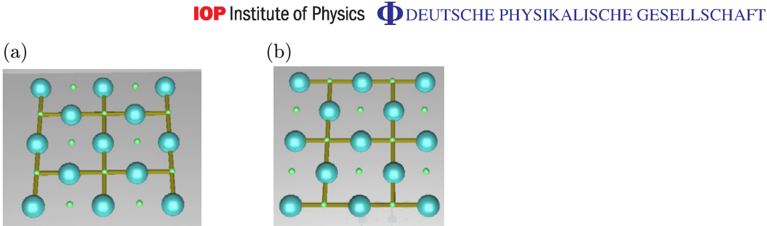
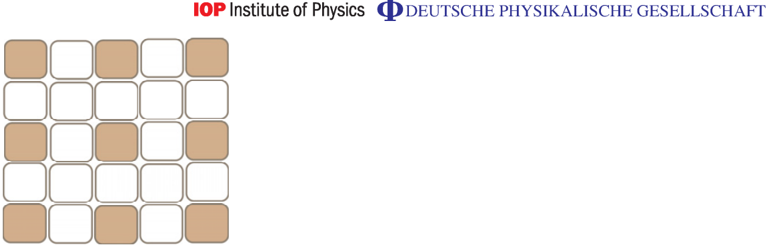
“The stabilizers form a checkerboard pattern on the faces of the lattice [94, 95].”
Efficient Magic State Cultivation on R P 2
Chen, Z.-H., Chen, M.-C., Lu, C., & Pan, J.-W. (2026) · PRX Quantum · doi:10.1103/9kys-3whh · Cited by 65
Using copies can improve precision in continuous-time quantum computing
Bennett, J., Callison, A., O’Leary, T., West, M., Chancellor, N., & Kendon, V. M. (2023) · Quantum Science and Technology · doi:10.1088/2058-9565/acdcb5 · Cited by 7
“These error correction methods have also been adapted to measurement-based quantum computing [9] using techniques such as lattice surgery [10].”
MethodLeakage mobility in superconducting qubits as a leakage reduction unit
Camps, J., Crawford, O., Gehér, G. P., Gramolin, A. V., Stafford, M. P., & Turner, M. L. (2026) · Physica Scripta · doi:10.1088/1402-4896/ae4dc0 · Cited by 17
“Furthermore, logical gate implementations are well understood, presenting a clear path to fault-tolerant quantum computation [33–36].”
BackgroundMethodCylindrical and Möbius Quantum Codes for Asymmetric Pauli Errors
Valentini, L., Forlivesi, D., & Chiani, M. (2025) · IEEE Transactions on Information Theory · doi:10.1109/tit.2025.3546769 · Cited by 6
“In fact, despite the increased overhead associated with CSS codes compared to their non-CSS counterparts, their use simplifies the design of fault-tolerant quantum computing procedures [19], [20].”
Thirty years of quantum computing
Divincenzo, D. P. (2025) · Quantum Science and Technology · doi:10.1088/2058-9565/ade0e4 · Cited by 7
Lattice surgery-based logical state teleportation via noisy links
Márton, Á., Colmenárez, L., Bödeker, L., & Müller, M. (2025) · Physical Review Research · doi:10.1103/ppng-vbqj · Cited by 14
“Next, a joint Z L Z L measurement is performed via lattice surgery [17], and finally the logical qubit at the initial position is measured in the X L basis.”
Single-shot preparation of hypergraph product codes via dimension jump
Hong, Y.-F. (2024) · Quantum · doi:10.22331/q-2025-10-07-1879 · Cited by 11
Surface code continuous quantum error correction using feedback
Nguyen, T., Hill, C. D., Hollenberg, L. C. L., & James, M. R. (2015) · IEEE Conference on Decision and Control (CDC) · doi:10.1109/cdc.2015.7403339 · Cited by 4
“When using the optimal lattice structure [8], an N × N (data qubit) lattice forms a code of distance N .”
MethodTseng, W.-H., & Chang, Y. (2022) · ACM/IEEE Design Automation Conference (DAC) · doi:10.1145/3489517.3530483 · Cited by 3
“According to different encoding methods of logical qubits in the surface code, there are two primary type operations: braiding (defect-based encoding) [5] and lattice surgery (planar-based encoding) [9].”
Entering the error-corrected quantum era
Chen, Z., Sun, L., & Zou, C. (2023) · 中国科学通报:英文版 · doi:10.1016/j.scib.2023.04.039 · Cited by 5
T-depth-optimized quantum search with quantum data-access machine
Park, J. J., Baek, K., Kim, M. S., Nha, H., Kim, J., & Bang, J. (2023) · Quantum Science and Technology · doi:10.1088/2058-9565/ad04e5 · Cited by 4
Fight or Flight: Cosmic Ray-Induced Phonons and the Quantum Surface Code*
Sane, B. O., Meter, R. V., & Hajdušek, M. (2023) · IEEE International Conference on Quantum Computing and Engineering (QCE) · doi:10.1109/qce57702.2023.00156 · Cited by 7
“…can take several forms: a single, independent block (in which logical gates can be executed either transversally or using lattice surgery [25]), a block with a single “hole” cut into it (made by simply not measuring the stabilizers inside of the area, creating a new boundary for the…”
BackgroundSelf-citationFault-tolerant quantum computation using low-cost joint measurements
Kang, Y., Lee, J., Ha, J., & Heo, J. (2024) · Quantum Information Processing · doi:10.1007/s11128-024-04389-8 · Cited by 4
“In [14], the boundaries are not aligned in subsequent joint measurements because physical Hadamards change the stabilizers and boundaries.”
InfluentialOptimizing Quantum Fourier Transformation (QFT) Kernels for Modern NISQ and FT Architectures
Jin, Y., Gao, X., Guo, M., Chen, H., Hua, F., Zhang, C., & Zhang, E. Z. (2024) · International Conference for High Performance Computing, Networking, Storage and Analysis (SC) · doi:10.1109/sc41406.2024.00074 · Cited by 10
“The lattice surgery [15] is one of the modes of the surface code FTQC.”
Kadomoto, J., Kasamura, T., & Irie, H. (2024) · IEEE International Conference on Quantum Computing and Engineering (QCE) · doi:10.1109/qce60285.2024.10437 · Cited by 3
“This architecture is designed for quantum computation utilizing the rotated planar code and lattice surgery [7], [8].”
Magic Mirror on the Wall, How to Benchmark Quantum Error Correction Codes, Overall?
Chatterjee, A., & Ghosh, S. (2024) · IEEE International Conference on Quantum Computing and Engineering (QCE) · doi:10.1109/qce60285.2024.00050 · Cited by 8
“The toric, surface, 3D color, and heavy-hexagon codes utilize lattice surgery [39].”
Constant Overhead Entanglement Distillation via Scrambling
Gu, A., Leone, L., Goodenough, K., & Khatri, S. (2026) · Physical Review Letters · doi:10.1103/3q4z-llv8 · Cited by 13
A 22-nm Surface Code Decoder Using Greedy Algorithm
Kadomoto, J., Aoyama, R., & Kobayashi, K. (2025) · IEEE International Symposium on Circuits and Systems proceedings · doi:10.1109/iscas56072.2025.11044096 · Cited by 6
Benchmarking the Ability of a Controller to Execute Quantum Error Corrected Non-Clifford Circuits
Kurman, Y., Ella, L., Szmuk, R., Wertheim, O., Dorschner, B., Stanwyck, S., & Cohen, Y. (2025) · IEEE Transactions on Quantum Engineering · doi:10.1109/tqe.2025.3608053 · Cited by 11
“Many aspects of the surface code have been developed in detail, including fault-tolerant computation techniques [30], [31], [32], [33], high-fidelity magic state preparation techniques [34], [35], decoding algorithms [25], [26], [36], [37], [38], [39], [40], [41], simulation tools [42],…”
Well-tempered ZX and ZH Calculi
de Beaudrap, N. (2021) · Electronic Proceedings in Theoretical Computer Science · doi:10.4204/eptcs.340.2 · Cited by 11
“This distinction is important in principle in describing the effect of teleportation [24], measurement-based computations [25–27], surface-code lattice surgery [28, 16] in different computational branches; and to distinguish what can be achieved efficiently, as opposed to what can be achieved through postselection [29…”
BackgroundSong, W., Lim, Y., Jeong, K., Lee, J., Park, J. J., Kim, M. S., & Bang, J. (2022) · New Journal of Physics · doi:10.1088/1367-2630/ac94ef · Cited by 4
Metadata
- Authors
- Horsman, D., Fowler, A. G., Devitt, S., & Meter, R. V.
- Affiliations
- The University of Melbourne (AU)
- National Institute of Informatics (JP)
- Keio University (JP)
- Venue
- New Journal of Physics
- Publisher
- IOP Publishing
- Published
- 2012-12-01
- Volume
- 14
- Issue
- 12
- Pages
- 123011
- ISSN
- 1367-2630 (ISSN-L)
- OpenAlex
- W1985315536
- Semantic Scholar
- c375e28f31864920ca0b867664e3819a577c87f7
- Cited by
- 598
- References
- 30
- Citations by year
- 2026: 79 · 2025: 144 · 2024: 82 · 2023: 61 · 2022: 53 · 2021: 30 · 2020: 31 · 2019: 24 · 2018: 25 · 2017: 35 · 2016: 12 · 2015: 12 · 2014: 4 · 2013: 6
- FWCI
- 6.93
- Type
- journal article
- Language
- en
- Open access
- gold
- doi.org
- Licence
- cc-by-nc-sa
- creativecommons.org/licenses/by-nc-sa/3.0/ (vor, 6 d)
- iopscience.iop.org/info/page/text-and-data-mining (tdm, 6 d)
- Locations
- New Journal of Physics (publishedVersion, cc-by-nc-sa)
- arXiv (Cornell University) (publishedVersion)
- DOAJ (DOAJ: Directory of Open Access Journals) (submittedVersion)
- arXiv (Cornell University)
- Funders
- National Security Agency (W911NF-08-1-0527)
- Ministry of Education, Culture, Sports, Science and Technology
- Japan Society for the Promotion of Science
- Centre of Excellence for Quantum Computation and Communication Technology, Australian Research Council (CE110001027)
- Army Research Office (W911NF-08-1, W911NF-08-1- 0527, W911NF)
- Topics
- Physical Sciences › Computer Science › Artificial Intelligence › Quantum Computing Algorithms and Architecture
- Physical Sciences › Physics and Astronomy › Atomic and Molecular Physics, and Optics › Quantum Information and Cryptography
- Physical Sciences › Physics and Astronomy › Atomic and Molecular Physics, and Optics › Quantum many-body systems
- Keywords
- surface code, lattice surgery, toric code, quantum error correction, fault-tolerant quantum computing
About these checks
Registry, retraction, Cites and statistics results are computed, not judged, with one exception: a printed reference that no index lists is read once by a model before it counts as a citation error. Claims are extracted by a model and kept only when their quote appears verbatim in the text; each cited source is then checked, with a model’s help, for whether it says what the claim relies on. Those verdicts can be wrong — read the claim’s quote and the cited source before relying on one.
Statistics and arithmetic are recomputed, not judged.
Confidence bands are shown only for fields calibrated on our annotated test set. None is calibrated yet, so no band is shown.
What counts as a claim ›How we measure confidence ›How we check this ›
Are you an author, or do you see a problem with this page? Request a review
Data sources
Bibliographic data: Semantic Scholar, OpenAlex, Crossref.
Contains information from the Semantic Scholar Academic Graph Datasets, made available under the ODC Attribution License (ODC-BY 1.0).
Semantic Scholar’s data is described in: Kinney, R., et al. (2023). The Semantic Scholar Open Data Platform. arXiv:2301.10140.
