

Surface code quantum computing by lattice surgery
Open accessThe DOI matches its Crossref record; 34 of the 34 references it cites were found in a registry or an index.
Abstract
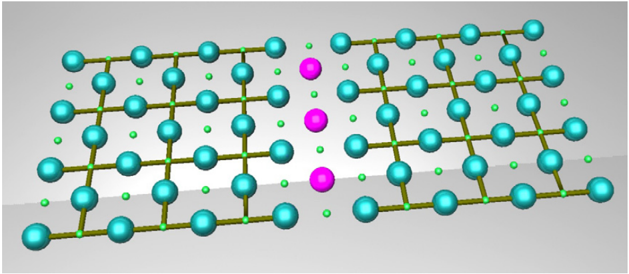
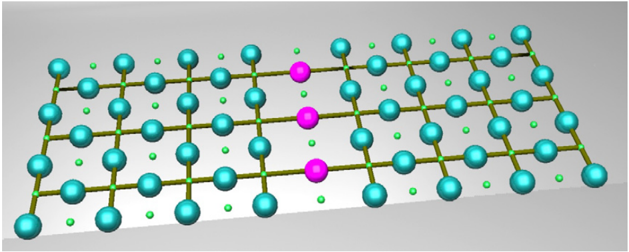
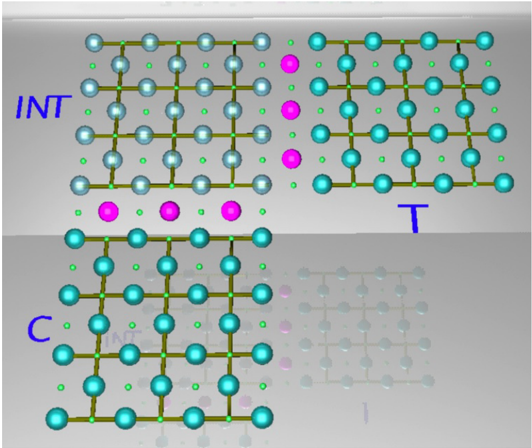
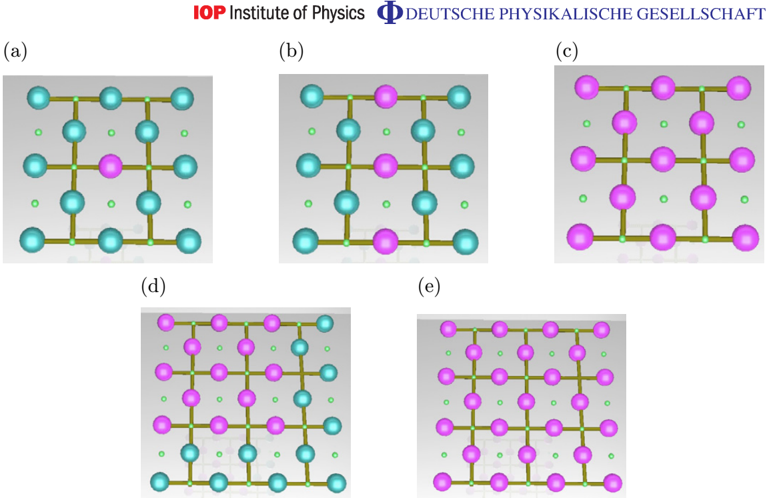
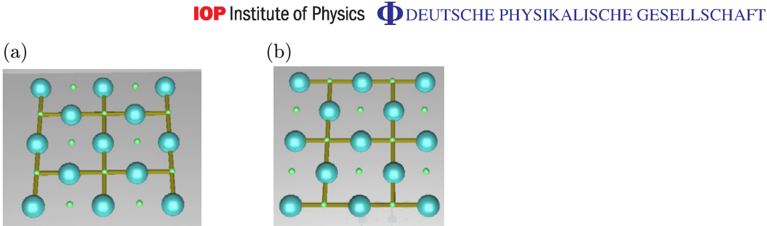
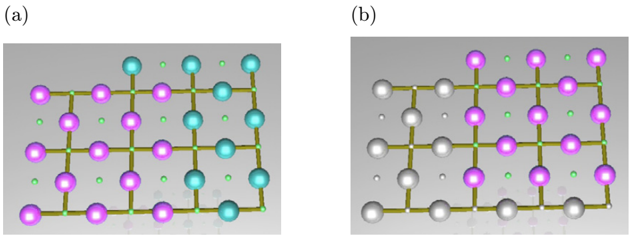
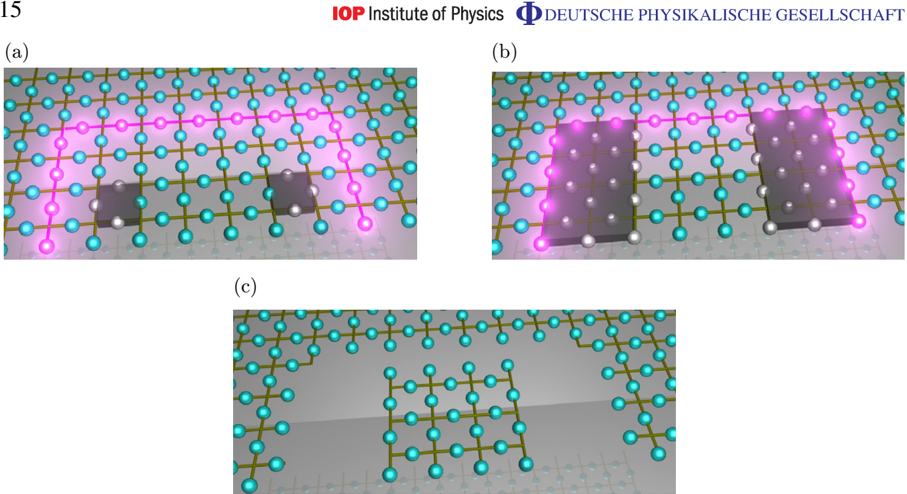
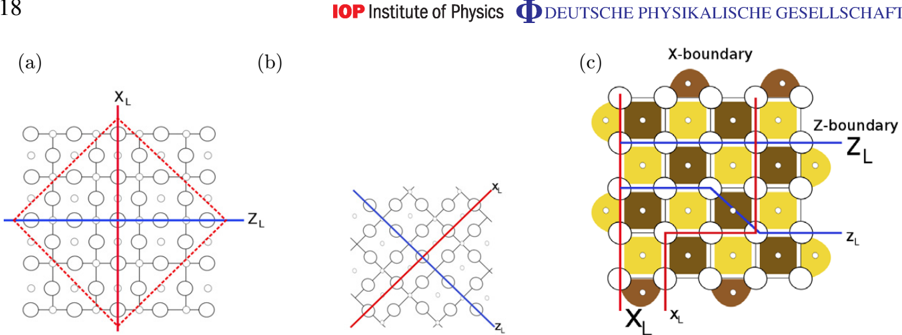
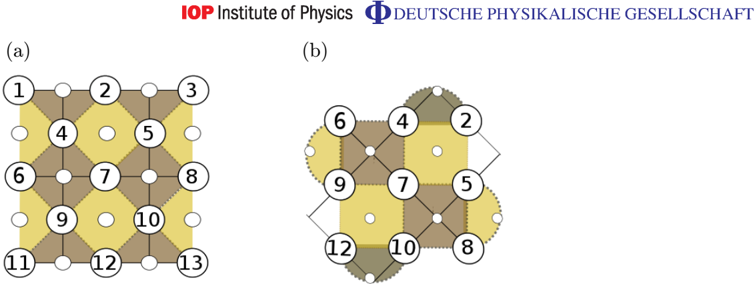
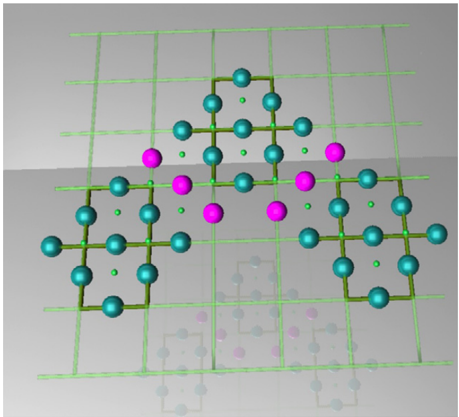
In recent years, surface codes have become a leading method for quantum error correction in theoretical large-scale computational and communications architecture designs. Their comparatively high fault-tolerant thresholds and their natural two-dimensional nearest-neighbour (2DNN) structure make them an obvious choice for large scale designs in experimentally realistic systems. While fundamentally based on the toric code of Kitaev, there are many variants, two of which are the planar- and defect-based codes. Planar codes require fewer qubits to implement (for the same strength of error correction), but are restricted to encoding a single qubit of information. Interactions between encoded qubits are achieved via transversal operations, thus destroying the inherent 2DNN nature of the code. In this paper we introduce a new technique enabling the coupling of two planar codes without transversal operations, maintaining the 2DNN of the encoded computer. Our lattice surgery technique comprises splitting and merging planar code surfaces, and enables us to perform universal quantum computation (including magic state injection) while removing the need for braided logic in a strictly 2DNN design, and hence reduces the overall qubit resources for logic operations. Those resources are further reduced by the use of a rotated lattice for the planar encoding. We show how lattice surgery allows us to distribute encoded GHZ states in a more direct (and overhead friendly) manner, and how a demonstration of an encoded CNOT between two distance-3 logical states is possible with 53 physical qubits, half of that required in any other known construction in 2D.
Overview
The claims and statistics of this paper haven’t been checked yet.
Free: it reads the open-access text and checks the first 5 claims that cite a source we can check. Create a free account to check every claim.
Integrity signals
Registry
Cites
Statistics
Figures





Verification
Claims the paper makes
The claims and statistics of this paper haven’t been checked yet.
Free: it reads the open-access text and checks the first 5 claims that cite a source we can check. Create a free account to check every claim.
Claims other papers make about this one
Each is checked against this paper’s own text: does it say what the citing paper says it does?
The cited source says what the claim attributes to it.
In the citing paper
“Lattice surgery22,39,43,56 enables the efficient realization of multi-qubit fault-tolerant operations, such as the CNOT gate, with only nearest-neighbour interactions.”
From Scaling and logic in the colour code on a superconducting quantum processor (2025) · cites this paper as [22]
The cited source says what the claim attributes to it.
In the citing paper
“Finally, we teleport logical states between colour codes using lattice surgery22.”
From Scaling and logic in the colour code on a superconducting quantum processor (2025) · cites this paper as [22]
Self-check
Percentages, sums and reported differences re-computed from the paper’s own numbers.
The self-check needs the paper’s full text.
Citations
Cites
Fault-tolerant quantum computation by anyons
Kitaev, A. Y. (2003) · Annals of Physics · doi:10.1016/s0003-4916(02)00018-0 · Cited by 7,238 · cited 2×
“Surface codes were first introduced by Kitaev [9] in the context of anyonic quantum computing.”
Edmonds, J. (1965) · Canadian Journal of Mathematics · doi:10.4153/cjm-1965-045-4 · Cited by 2,428 · cited 1×
“[19, 20, 21].”
Dennis, E., Kitaev, A., Landahl, A., & Preskill, J. (2002) · Journal of Mathematical Physics · doi:10.1063/1.1499754 · Cited by 1,768 · cited 1×
“The general procedure was given for the planar code in [2], and a worked example for general surface codes in [4, section VI(C)].”
MethodMaximum matching and a polyhedron with 0,1-vertices
Edmonds, J. (1965) · Journal of Research of the National Bureau of Standards Section B Mathematics and Mathematical Physics · doi:10.6028/jres.069b.013 · Cited by 1,712 · cited 1×
“A pattern of chains of corrective operations highly likely to maintain the correct logical state can be inferred using Edmonds’ minimum weight perfect matching algorithm [21, 22, 23].”
MethodUniversal quantum computation with ideal Clifford gates and noisy ancillas
Bravyi, S., & Kitaev, A. (2005) · Physical Review A · doi:10.1103/physreva.71.022316 · Cited by 1,525 · cited 1×
“This allows for both state preparation and also arbitrary single-qubit rotations, in accordance with standard techniques [29].”
ResultPreskill, J. (1998) · Proceedings of the Royal Society of London. Series A: Mathematical, Physical and Engineering Sciences · doi:10.1098/rspa.1998.0167 · Cited by 994 · cited 1×
“As long as physical errors are below the threshold value, increasing the number of physical qubits can exponentially suppress error on the logical qubits [1].”
BackgroundFault-Tolerant Quantum Computation with High Threshold in Two Dimensions
Raussendorf, R., & Harrington, J. (2007) · Physical Review Letters · doi:10.1103/physrevlett.98.190504 · Cited by 812 · cited 2×
“By contrast, in the defect-based code there are no transversal operations, and the CNOT is performed by braiding defects: extending a defect by measuring out qubits in a line, and passing this extended defect around the second logical qubit defect [3].”
BackgroundMethodTopological fault-tolerance in cluster state quantum computation
Raussendorf, R., Harrington, J., & Goyal, K. (2007) · New Journal of Physics · doi:10.1088/1367-2630/9/6/199 · Cited by 617
High-threshold universal quantum computation on the surface code
Fowler, A. G., Stephens, A. M., & Groszkowski, P. (2009) · Physical Review A · doi:10.1103/physreva.80.052312 · Cited by 486 · cited 1×
“The price of maintaining NN interactions is over three times the number of physical qubits per logical qubit [3, 4].”
BackgroundSelf-citationBlossom V: a new implementation of a minimum cost perfect matching algorithm
Kolmogorov, V. (2009) · Mathematical Programming Computation · doi:10.1007/s12532-009-0002-8 · Cited by 414
Research works printed but not linked: 2
- 12. Bravyi S B and Kitaev A Y 2001 Quantum Comp. Comput. 2 43-48 (transl.)
- 28. Rotman J 1998 An Introduction to Algebraic Topology (Berlin: Springer)
Cited by
Items 501–600 of 604
Optimal quantum overlapping tomography: Theory and experiment
Wei, C., Yang, K., Che, L., Xu, F., Song, J., & Xin, T. (2025) · Physical Review Applied · doi:10.1103/z2d4-3r8z · Cited by 5
Quantum Subspace Verification for Error Correction Codes
Chen, J., Zeng, P., Zhao, Q., Ma, X., & Zhou, Y. (2025) · PRX Quantum · doi:10.1103/fyw6-lq1l · Cited by 8
Martínez, J. E., Schnabl, P., del Moral, J. O., Dastbasteh, R., Crespo, P. M., & Otxoa, R. M. (2026) · Physical Review Applied · doi:10.1103/q7w6-nljp · Cited by 10
“Note that the results of memory experiments are also applicable to understand logical operations performed by means of lattice surgery [48, 98].”
Fault-Tolerant Quantum Error Correction and Fault-Tolerant Quantum Computing
Djordjević, I. B. (2021) · Elsevier eBooks · doi:10.1016/b978-0-12-821982-9.00017-4 · Cited by 3
Zulehner, A., & Wille, R. (2020) · Springer eBooks · doi:10.1007/978-3-030-41753-6_2 · Cited by 1
Characterization and implementation of robust quantum information processing
Fernandez, D. (2020) · Cronfa (Swansea University) · doi:10.23889/suthesis.56913 · Cited by 1
The XZZX surface codePreprint
Ataides, J. P. B., Tuckett, D. K., Bartlett, S. D., Flammia, S. T., & Brown, B. J. (2020) · Research Square · doi:10.21203/rs.3.rs-90087/v1 · Cited by 6
Bulk-to-boundary anyon fusion from microscopic modelsPreprint
de la Fuente, J. C. M., Eisert, J., & Bauer, A. (2023) · arXiv (Cornell University) · doi:10.17169/refubium-42011 · Cited by 1
Dataset for "Unlocking early fault-tolerant quantum computing with mitigated magic dilution"
Luthra, S., Moylett, A. E., Browne, D. E., & Campbell, E. T. (2025) · Zenodo (CERN European Organization for Nuclear Research) · doi:10.5281/zenodo.15427988 · Cited by 1
Devitt, S. J. (2014) · doi:10.1364/cleo_qels.2014.ftu3a.7
Self-citationWork sharing of qubits in topological error corrections
Tanamoto, T., & Goto, H. (2017) · Physical Review A · doi:10.1103/physreva.96.022324
Superconducting quantum computer: a hint for building architectures
Tabuchi, Y., Tamate, S., & Yorozu, S. (2021) · Symposium on VLSI Circuits · doi:10.23919/vlsicircuits52068.2021.9492416
Quantum Stabilizer Codes and Beyond
Djordjević, I. B. (2021) · Elsevier eBooks · doi:10.1016/b978-0-12-821982-9.00011-3 · Cited by 1
Meter, R. V. (2014) · Wiley eBooks · doi:10.1002/9781118648919.biblio
Self-citationStancil, D. D., & Byrd, G. T. (2022) · Wiley eBooks · doi:10.1002/9781119750758.biblio
Zulehner, A., & Wille, R. (2020) · Springer eBooks · doi:10.1007/978-3-030-41753-6_1
Fault-tolerant quantum error correction
Djordjević, I. B. (2022) · Elsevier eBooks · doi:10.1016/b978-0-12-822942-2.00009-1 · Cited by 1
Quantum stabilizer codes and beyond
Djordjević, I. B. (2022) · Elsevier eBooks · doi:10.1016/b978-0-12-822942-2.00006-6
Analysis of surface code under the restricted number of CNOT gates
Lee, J., Ha, J., Kang, Y., & Heo, J. (2022) · IEEE VTS Asia Pacific Wireless Communications Symposium (APWCS) · doi:10.1109/apwcs55727.2022.9906509
“The concatenated codes such as Shor code, Steane code and RM codes [2]– [4] and topological codes such as toric code, planar code, and color code [5]–[8] have been developed to protect the quantum states.”
MethodState Injection and Syndrome Decoding for Rotated Surface Code in Quantum Computing
Oh, S., & Cha, G. (2022) · International Conference on Information and Communication Technology Convergence (ICTC) · doi:10.1109/ictc55196.2022.9952852
“In particular, rotated surface code[2] has an advantage in that the number of physical qubits used is smaller than that of the existing planar surface code.”
BackgroundMethodTangling schedules eases hardware connectivity requirements for quantum error correctionPreprint
Gehér, G. P., Crawford, O., & Campbell, E. T. (2023) · arXiv (Cornell University) · doi:10.48550/arxiv.2307.10147 · Cited by 3
Zulehner, A., & Wille, R. (2023) · Springer eBooks · doi:10.1007/978-3-031-36751-9_1
Zulehner, A., & Wille, R. (2023) · Springer eBooks · doi:10.1007/978-3-031-36751-9_2
Evaluation of $\vert\mathrm{Y} >$ Magic State Distillation Circuit
Kim, Y., Oh, S., Lee, S., Jin, K., & Cha, G. (2024) · International Conference on Advanced Communications Technology (ICACT) · doi:10.23919/icact60172.2024.10471972
“Various techniques, such as braiding [1], lattice surgery [2][3], and twist [4], can implement logical operations between logical qubits protected by surface code.”
BackgroundKikuchi, I., & Kikuchi, A. (2024) · OSF Preprints (OSF Preprints) · doi:10.31219/osf.io/5vp4z · Cited by 1
Snowflake: A Distributed Streaming Decoder
Chan, T. (2026) · Quantum · doi:10.22331/q-2026-03-20-2033 · Cited by 7
“We consider this per d measurement rounds as each logical operation lasts O ( d ) rounds using lattice surgery [61], the best known technique for universal computation with the surface code when the quantum device has local connectivity [62, 63].”
Tseng, W.-H., & Chang, Y. (2024) · ACM Transactions on Design Automation of Electronic Systems · doi:10.1145/3695252
High-fidelity remote entanglement between superconducting fixed-frequency qubits
Ohfuchi, M., & Sato, S. (2024) · New Journal of Physics · doi:10.1088/1367-2630/ad8954 · Cited by 1
Flexible fault-tolerant gate gadgets
Kubischta, E., & Teixeira, I. (2026) · Physical Review A · doi:10.1103/v37p-4yth
“2 to shrink the number of time steps from m to as few as d time steps (if the A 1 code supports an implementation of Z using a Z -type operator of weight d like the [[7 , 1 , 3]] code).”
A Simple Method for Compiling Quantum Stabilizer Circuits
Reid, B. (2024) · IEEE International Conference on Quantum Computing and Engineering (QCE) · doi:10.1109/qce60285.2024.00135 · Cited by 1
“…logical gates, as well as the fundamental operations of the target error correction scheme (e.g. in the case of the surface code, lattice surgery operations such as growth, merge, split etc. [2]) all require a number of rounds of syndrome extraction to ensure errors are caught and accounted for.”
Poster, M., Sethi, S., & Baker, J. M. (2024) · IEEE International Conference on Quantum Computing and Engineering (QCE) · doi:10.1109/qce60285.2024.00125 · Cited by 1
“While neither is definitively superior, a large portion of architecture studies have focused on the prior [3], [13].”
FPGA-Based Quantum Emulator for Surface Code
Kim, Y., & Cha, G. (2024) · International Conference on Information and Communication Technology Convergence (ICTC) · doi:10.1109/ictc62082.2024.10827261
“Various methods, such as braiding [2], lattice surgery [14], [15], and twist [16], can implement logical operations between logical qubits protected by a surface.”
Increasing the distance of topological codes with time vortex defects
Kishony, G., & Berg, E. (2026) · Quantum · doi:10.22331/q-2026-02-23-2006 · Cited by 4
“This can be done by partitioning the plane into disjoint patches, each hosting O (1) logical qubits [36], or by creating punctures (regions in which the measurement sequence is disabled) within the fully connected plane [3].”
A Novel Approach for Quantum Simulation Software Framework
Jin, K., On, J., & Cha, G. (2025) · International Conference on Consumer Electronics · doi:10.1109/icce63647.2025.10930073
RESCQ: Realtime Scheduling for Continuous Angle Quantum Error Correction Architectures
Sethi, S., & Baker, J. M. (2025) · International Conference on Architectural Support for Programming Languages and Operating Systems (ASPLOS) · doi:10.1145/3676641.3716018 · Cited by 14
Hualei, 尹. Y., Xuyang, 卢. L., Qinghang, 张. Z., & Zengbing, 陈. C. (2025) · Laser & Optoelectronics Progress · doi:10.3788/lop250774
Fault-tolerant Quantum Computing
Suzuki, Y. (2022) · The Journal of The Institute of Image Information and Television Engineers · doi:10.3169/itej.76.703
Analysis of two dimensional measurement-free surface code under idling patch
Min, G., & Heo, J. (2025) · IEEE VTS Asia Pacific Wireless Communications Symposium (APWCS) · doi:10.1109/apwcs67981.2025.11151932
Color Code with a Logical Control- S Gate Using Transversal T Rotations
Brown, B. J. (2025) · Physical Review Letters · doi:10.1103/lwxd-fdlb · Cited by 6
Weighted Range-Constrained Ising-Model Decoder for Quantum Error Correction
Guo, X., Awano, H., & Sato, T. G. (2025) · ACM/IEEE Design Automation Conference (DAC) · doi:10.1109/dac63849.2025.11133309
“However, the proposed decoder is also applicable to other surface codes, such as the rotated surface code [30], [31] and the color code [32].”
Optimizing windowed arithmetic for quantum attacks against RSA-2048
Luongo, A., Narasimhachar, V., & Sireesh, A. (2025) · ACM/IEEE Design Automation Conference (DAC) · doi:10.1109/dac63849.2025.11132436 · Cited by 4
“Our analysis targets a superconducting qubit architecture, with computations encoded in rotated surface codes and logical operations performed using lattice surgery [19], [20].”
Hierarchical Quantum Error Correction with Hypergraph Product Code and Rotated Surface Code
Haruna, J., & Fujii, K. (2025) · Progress of Theoretical and Experimental Physics · doi:10.1093/ptep/ptaf130 · Cited by 1
“When the surface code is used as the lower layer in concatenated codes, the lattice surgery technique [2, 30, 31] can be used to perform logical operations.”
Ai, H., Zhu, G.-Z., & Liu, Y.-X. (2025) · Physical Review A · doi:10.1103/tvsg-cm8p · Cited by 1
iSwitch: QEC on Demand via In-Situ Encoding of Bare Qubits for Ion Trap Architectures
Yin, K., Fang, X., Chen, Z., Hayes, D., Kaur, E., Nejabati, R., Häffner, H., Campbell, W. C., Hudson, E. R., Palsberg, J., et al. (2026) · International Conference on Architectural Support for Programming Languages and Operating Systems (ASPLOS) · doi:10.1145/3779212.3790177 · Cited by 14
“Surface codes are a leading candidate for FTQC due to their 2D local structure, efficient decoding algorithms [49], [68], [69], and high threshold ( ∼ 1”
Partition-based Surface Code Compilation
Xu, H., Liu, X., Kulshrestha, A., & Ushijima‐Mwesigwa, H. (2025) · IEEE High Performance Extreme Computing Conference · doi:10.1109/hpec67600.2025.11196604
“The encoded logical qubits are protected even for relatively high noise rates [4] and quantum gates can also be implemented in a fault-tolerant and universal manner through lattice surgery [5] and magic state distillation [6].”
Transversal Architecture for Megaquop-Scale Quantum Simulation with Neutral Atoms
Ismail, R., Chen, I.-C., Zhao, C., Weiss, R., Liu, F., Zhou, H., Wang, S.-T., Sornborger, A. T., & Kornjača, M. (2026) · PRX Quantum · doi:10.1103/j2fw-ccmy · Cited by 35
“Three such circuits are considered: (i) Conventional syndrome extraction, corresponding to the standard rotated surface-code circuit [36], in which only ancilla qubits are measured each round.”
Unified framework for quantum code embedding
Yuan, A. C. (2026) · Physical Review A · doi:10.1103/gtlz-3q9d · Cited by 15
“This research also connects closely to fault-tolerant logical measurements [WY24, IGND25, CHRY24, HFDVM12].”
Symmetry-Accelerated Classical Simulation of Clifford-Dominated Circuits
Camillo, G., Peres, F. C. R., Heinrich, M., & Bermejo-Vega, J. (2026) · PRX Quantum · doi:10.1103/nnzz-481j · Cited by 2
“Real and symmetric gates further appear commonly in fault tolerant quantum architectures, as transversal or fault-tolerant gates, e.g., while doing error correction with surface codes [31, 60, 61].”
Báscones, D., García-Herrero, F., & Valls, J. (2025) · EPJ Quantum Technology · doi:10.1140/epjqt/s40507-025-00446-y · Cited by 15
Guo, X., Miao, G., Nishizawa, S., Awano, H., Kimura, S., & Sato, T. (2025) · doi:10.1109/iccad66269.2025.11240965
“However, the proposed decoder is also applicable to other surface codes, such as the rotated surface code [34], [35] and the color code [36].”
Surface Code Entanglement Ejection
Soon, K. S., Kobayashi, F., Benchasattabuse, N., & Nagayama, S. (2025) · IEEE International Conference on Quantum Computing and Engineering (QCE) · doi:10.1109/qce65121.2025.10489 · Cited by 2
“2) Perform a lattice surgery split operation [7] measuring out the data qubits on the second-to-the-rightmost column in the patch.”
Fault Tolerant Quantum Simulation via Symplectic Transvections
Chen, Z., Weinberg, J. O., & Rengaswamy, N. (2025) · IEEE International Conference on Quantum Computing and Engineering (QCE) · doi:10.1109/qce65121.2025.00027 · Cited by 11
“The standard meth-ods for these realizations are transversal or fold-transversal gates [1], code automorphisms [2], [3], lattice surgery [4], code switching [5], gauge fixing [6], and magic state distillation [7].”
Evaluation of Noise and Crosstalk in Neutral Atom Quantum Computers
Sharma, P., Tan, Y., Papadopoulos, K., & Szefer, J. M. (2025) · IEEE International Conference on Quantum Computing and Engineering (QCE) · doi:10.1109/qce65121.2025.10335
“These atoms are first confined in a magneto-optical trap, and are then loaded into optical tweezers [1], which are used to move the atoms around for computation by exploiting the Rydberg blockade effect [2].”
Dynamic circuit for the honeycomb Floquet code
Claes, J. (2025) · Physical Review A · doi:10.1103/qklt-4jnj · Cited by 5
“To understand the logical error rate and spacetime overhead per logical operation, we must also consider the timelike distance d t , since a braiding [7, 23–25] or lattice surgery [26–28] operation requires d t ≈ d .”
Quantum stabilizer and quantum LDPC codes
Djordjević, I. B. (2025) · Elsevier eBooks · doi:10.1016/b978-0-443-40568-6.00005-7
Djordjević, I. B. (2025) · Elsevier eBooks · doi:10.1016/b978-0-443-40568-6.00013-6
Fault-tolerant quantum error correction
Djordjević, I. B. (2025) · Elsevier eBooks · doi:10.1016/b978-0-443-40568-6.00002-1
FPGA-Accelerated Early-Exit Neural Decoder for Quantum Error Correction
Huo, R., & Nunez-Yanez, J. L. (2025) · Euromicro Conference on Digital System Design (DSD) · doi:10.1109/dsd67783.2025.00090 · Cited by 1
“In this study, we choose rotated surface code (RSC) because it can represent a logical qubit with the least number of physical qubits compared to other surface codes [26].”
Suppressing measurement noise in logical qubits through measurement scheduling
Xu, X.-Y., Ding, C., & Bao, W.-S. (2026) · Physical Review A · doi:10.1103/rs1b-mnyc
Accelerating Fault-Tolerant Quantum Computation with Good Quantum Low-Density Parity-Check Codes
Zhang, G., Zhu, Y., & Li, Y. (2026) · PRX Quantum · doi:10.1103/3fj5-gn1h · Cited by 9
Simulation of thermal-relaxation noise for quantum error correction
Garner, S. R., Myers, N. M., Wang, M., Stein, S., Liu, C., & Li, A. (2026) · Physical Review Research · doi:10.1103/hgnj-v4j7 · Cited by 2
Space‐Efficient Logical Qubit Architecture with a Bus for Magic State Consumption
Kang, Y., Chung, Y., & Heo, J. (2025) · Advanced Quantum Technologies · doi:10.1002/qute.202500505
“In A logical CNOT is implemented using joint 𝑍 𝐿 𝑍 𝐿 and 𝑋 𝐿 𝑋 𝐿 measurements with an ancilla qubit in | 0 .”
Generalized code distance through rotated logical states in quantum error correction
Nyirahafashimana, V., Shah, N. M., Halim, U. A., & Othman, M. (2026) · Theoretical Computer Science · doi:10.1016/j.tcs.2026.115795
“The authors specifically implemented the rotated surface code [17,18], demonstrating that the rotated surface code requires approximately half the number of physical qubits compared to the unrotated surface code [19] while maintaining the same error correction distance.”
Logical Accreditation: A Framework for Efficient Certification of Fault-Tolerant Computations
Mills, J. K., Sireesh, A., Leichtle, D., Roffe, J., & Kashefi, E. (2026) · PRX Quantum · doi:10.1103/7pj4-gcbq · Cited by 7
“To run this circuit using surface code logical qubits, each high-weight logical Pauli rotation gate may be performed via lattice surgery techniques [26], with each non-Clifford Pauli rotation requiring the consumption of a single magic state.”
Hyperbolic Lattices Derived From Denser Tessellations
Queiroz, C. R. D. O. Q., Vieira, V. L., Guardia, G. G. L., de Albuquerque, C. D., de Oliveira, A. J., de Lima, L. B., & Palazzo, R. (2025) · IEEE Access · doi:10.1109/access.2025.3599469
“The relevance of this class of codes is directly linked to their ability to correct physical errors below a relatively high threshold [25], [26], which allows for reliable quantum operations.”
Quantum error mitigation based on the Z -mixed-expression of the amplitude damping channel
李, T. 汀. L., Zhang, H., 征, L. 玲. Z., & 李, F. 飞. L. (2025) · Chinese Physics B · doi:10.1088/1674-1056/ae067c · Cited by 1
Runtime reduction in lattice surgery utilizing timelike soft information
Akahoshi, Y., Toshio, R., Fujisaki, J., Oshima, H., Sato, S., & Fujii, K. (2026) · Physical Review Research · doi:10.1103/wz3p-sgdq · Cited by 15
Design of an Online Surface Code Decoder Using Union-Find Algorithm
Kasamura, T., Kadomoto, J., & Irie, H. (2025) · IEEE International Conference on Computer Design: VLSI in Computers and Processors (ICCD) · doi:10.1109/iccd65941.2025.00121 · Cited by 2
“It is designed for implementing lattice surgery [14]–[16]—a method for performing logical operations between qubits encoded by the surface code— on prospective quantum computers.”
From NISQ to Scalable Architectures: Challenges and Prospects for Practical Quantum Computing
Galappaththi, K. (2025) · International Conference on Advancements in Computing (ICAC) · doi:10.1109/icac69156.2025.11361428
Zhang, J., Tian-hao, W. E. I., Zhuang, X., Chen, Z., Kong, W., Wu, Y.-C., & Guo, G. (2026) · Physical Review Letters · doi:10.1103/mjsj-hxyj · Cited by 3
Space-Time Optimisations for Early Fault-Tolerant Quantum Computation
Sharma, S., & Murali, P. (2026) · Proceedings of the CGO/Proceedings of the ... CGO · doi:10.1109/cgo68049.2026.11395205 · Cited by 2
“Lattice surgery is the standard approach for implementing operations on the surface code [15].”
Fujiu, K., Nagayama, S., Nishio, S., Kawaguchi, H., & Satoh, T. (2026) · Physical Review A · doi:10.1103/7lm4-3bnh · Cited by 8
“For fault-tolerant quantum computation with the surface code in two-dimensional architectures, logical gate implementation techniques such as lattice surgery [13] and defect braiding [12] have been proposed.”
Accelerating Computation in Quantum LDPC Code
Cho, J., Jeong, H., Kim, J., Choi, J., Hong, J., & Kim, J. (2026) · International Conference on Architectural Support for Programming Languages and Operating Systems (ASPLOS) · doi:10.1145/3779212.3790122 · Cited by 1
“Lattice surgery applies a PPM on logical qubits stored in square lattices of physical qubits (i.e., LQ patches) by connecting them to an ancilla patch [26, 32].”
Efficient fault-tolerant quantum protocol for differential privacy in the shuffle model
Asghar, H. J., Mukherjee, A., & Brennen, G. K. (2026) · Quantum Information Processing · doi:10.1007/s11128-026-05087-3 · Cited by 2
Fault-tolerant manipulation of quantum information with LDPC stabilizer codes
Guernut, A. (2025) · theses.fr (ABES) · doi:10.70675/5ce1a846zc6a5z4918z83a4z8da52185d637 · Cited by 1
Non-Clifford quantum gate teleportation with generalized lattice surgery
Wang, Y., & Gu, Y. (2026) · Physical Review A · doi:10.1103/1xq4-856m · Cited by 5
Wang, X., Huang, C., & Fan, X. (2026) · Applied Sciences · doi:10.3390/app16115409
Note on Logical Gates by Gauge Field Formalism of Quantum Error Correction
Haruna, J. (2026) · Progress of Theoretical and Experimental Physics · doi:10.1093/ptep/ptag105 · Cited by 5
“Existing approaches such as transversal gates [20–22], lattice surgery [23–25], code deformation [26], and magic-state distillation [27, 28] provide powerful tools but typically apply only to specific code families or rely on particular geometric structures.”
Ultra-Low Logical Depth Fault-Tolerant Quantum Circuit Synthesis via Lattice Surgery
Kuo, C.-T., Tsai, C.-E., & Huang, C.-Y. R. (2026) · Design, Automation, and Test in Europe · doi:10.23919/date69613.2026.11539371 · Cited by 1
“Logical operations in the surface code can be efficiently executed via lattice surgery, a scheme that realizes quantum gates by merging and splitting logical qubit patches [9], [10].”
No-Go Theorem on Fault Tolerant Gadgets for Multiple Logical Qubits
Anonymous, & Gottesman, D. (2026) · PRX Quantum · doi:10.1103/y14y-7kp3 · Cited by 26
“As a result it becomes important to explore other pathways to universal fault tolerant computation including code switching [17, 33–35], flag fault tolerance [36–38], lattice surgery [39, 40] etc.”
Constant-Depth Clifford-Hierarchy Gates via Non-Abelian Surface Codes
Anonymous, & Schäfer‐Nameki, S. (2026) · PRX Quantum · doi:10.1103/kfxl-rv7c · Cited by 27
“Another one, known as “hybrid lattice surgery” [7] generalizes the standard lattice surgery involving the same code patches [8–10] to merge and split operations between Abelian and non-Abelian phases.”
Anonymous, van der Meer, S. L. M., Serra-Peralta, M., Vroomans, T. H. F., Finkel, M. I., Veen, H. M., Beekman, M., & DiCarlo, L. (2026) · PRX Quantum · doi:10.1103/y66v-988s · Cited by 11
Boundary Criticality at the Nishimori Multicritical Point
Anonymous, Sun, X., & Jian, S.-K. (2026) · Physical Review Letters · doi:10.1103/khwm-xzvw
Simple, Efficient, and Generic Postselection Decoding for qLDPC Codes
Anonymous, Yoshioka, N., Tsubouchi, K., & Li, Y. (2026) · Physical Review Letters · doi:10.1103/sv11-f78l · Cited by 20
“We apply the method to a range of decoders, including MWPM and three variants of BP, and test it on rotated surface codes [28] as well as instances from the bivariate bicycle (BB) code family [10].”
In Situ Benchmarking of Fault-Tolerant Quantum Circuits: Clifford Circuits
Anonymous, Hangleiter, D., Bluvstein, D., Lukin, M. D., & Gullans, M. J. (2026) · PRX Quantum · doi:10.1103/ghn4-8y96 · Cited by 13
O3LS: Optimizing Lattice Surgery via Automatic Layout Searching and Loose Scheduling
Zhu, C., Wu, X., Chen, J., He, K., Wu, J., Wang, X., & Lao, L. (2026) · Proceedings - International Symposium on Computer Architecture/Proceedings · doi:10.1109/isca66397.2026.00149 · Cited by 7
“A prominent technique for achieving universal quantum computation on 2D nearest-neighbor devices is lattice surgery, which implements logical multi-qubit gates by merging and splitting planar code patches [26], [34].”
Chen, J., Zhu, C., Bai, G., & Wang, X. (2026) · Proceedings - International Symposium on Computer Architecture/Proceedings · doi:10.1109/isca66397.2026.00069 · Cited by 3
“Lattice surgery [30] is a leading approach for implementing logical operations in surface code architectures.”
A Streaming Architecture for Quantum Error Syndrome Compression at 4 Kelvin
Papanikolaou, P., Hou, R., Volk, J. E., & Tzimpragos, G. (2026) · Proceedings - International Symposium on Computer Architecture/Proceedings · doi:10.1109/isca66397.2026.00071 · Cited by 2
“Lattice surgery: We extend our analysis to lattice surgery, a method for performing logical gates by merging and splitting adjacent patches through measurements on ancilla qubits along their shared boundaries (intermediate qubits) [30].”
Noise-Symmetry Optimization of Quantum Error-Corrected Metrology
Anonymous, & Pang, S. (2026) · Physical Review Letters · doi:10.1103/9xmv-s7wp
Theory of spin qubits and the path to scalability
McIntyre, Z. M., Sarkar, A., & Loss, D. (2026) · New Journal of Physics · doi:10.1088/1367-2630/ae973f · Cited by 6
Naito, S., Suzuki, Y., & Tokunaga, Y. (2026) · IEEE Transactions on Quantum Engineering · doi:10.1109/tqe.2026.3722428 · Cited by 8
“3(b)] applies a gate between qubits at different nodes by consuming a preshared Bell pair and exchanging classical bits, again without physically moving either qubit between nodes.”
Optimal logical Bell measurements on stabilizer codes with linear optics
Anonymous, & van Loock, P. (2026) · Physical Review A · doi:10.1103/qj8s-j274 · Cited by 8
Learning logical operations for arbitrary quantum error correction codes
Anonymous, Mutschler, C., Seuß, D., Maier, A., & Scherer, D. D. (2026) · Physical Review A · doi:10.1103/qj2x-3l6n · Cited by 1
“…propagation within a code block [3, 10], but they are constrained both by hardware connectivity—often requiring more elaborate constructions such as lattice surgery [11]—and by the Eastin–Knill theorem, which rules out a universal set of purely transversal gates for any finite-distance code [10].”
Scalable accuracy gains from postselection in quantum error correcting codes
Anonymous, Xu, D., Sommers, G. M., Huse, D. A., Thompson, J. D., & Gopalakrishnan, S. (2026) · Physical Review A · doi:10.1103/mfyk-5j3x · Cited by 16
Barreto, A. D. H., Vargas-Galarza, Z., Estudillo, J. L. P., & Escobar, K. Y. M. (2026) · IEEE International Conference on Quantum Control, Computing and Learning (qCCL) · doi:10.1109/qccl70331.2026.11668550
“Among the various QEC schemes, surface codes are considered the most promising candidates due to their high fault-tolerance threshold and the requirement of only nearest-neighbor interactions on a two-dimensional lattice [5], [6].”
Kumar, S., & Biswal, P. K. (2026) · Physica Scripta · doi:10.1088/1402-4896/aea656
S2PAR: Scalable Surface Code Ancilla Routing Card for Distributed Fault-Tolerant Quantum Computing
Stein, S., Kan, S., Guinn, C. R., Tureci, E., Avis, G., Liu, C., Du, Z., Martonosi, M., Krastanov, S., Mao, Y., et al. (2026) · Proceedings of the International Conference on Parallel Processing · doi:10.1145/3832810.3832924 · Cited by 1
“The rotated surface code [24] is a leading QEC protocol, particularly for superconducting platforms, due to its high error threshold and reliance on only nearest-neighbor interactions.”
InfluentialDefect-adaptive lattice surgery on irregular boundary surface-code patches
Anonymous, Chung, Y., Kang, Y., & Heo, J. (2026) · Physical Review A · doi:10.1103/6hyc-6rwl · Cited by 1
Kulkarni, R. (2026) · Quantum Reports · doi:10.3390/quantum8030098
Kiryu, S., Chin, Y., Takeoka, M., & Fukui, K. (2026) · Physical Review A · doi:10.1103/92yt-xgf3 · Cited by 3
“Discrete-variable quantum error correction codes typically require many physical qubits to realize a single logical qubit, which leads to substantial overhead in both resource scaling and logical operations [3].”
Metadata
- Authors
- Horsman, D., Fowler, A. G., Devitt, S., & Meter, R. V.
- Affiliations
- The University of Melbourne (AU)
- National Institute of Informatics (JP)
- Keio University (JP)
- Venue
- New Journal of Physics
- Publisher
- IOP Publishing
- Published
- 2012-12-01
- Volume
- 14
- Issue
- 12
- Pages
- 123011
- ISSN
- 1367-2630 (ISSN-L)
- OpenAlex
- W1985315536
- Semantic Scholar
- c375e28f31864920ca0b867664e3819a577c87f7
- Cited by
- 598
- References
- 30
- Citations by year
- 2026: 79 · 2025: 144 · 2024: 82 · 2023: 61 · 2022: 53 · 2021: 30 · 2020: 31 · 2019: 24 · 2018: 25 · 2017: 35 · 2016: 12 · 2015: 12 · 2014: 4 · 2013: 6
- FWCI
- 6.93
- Type
- journal article
- Language
- en
- Open access
- gold
- doi.org
- Licence
- cc-by-nc-sa
- creativecommons.org/licenses/by-nc-sa/3.0/ (vor, 6 d)
- iopscience.iop.org/info/page/text-and-data-mining (tdm, 6 d)
- Locations
- New Journal of Physics (publishedVersion, cc-by-nc-sa)
- arXiv (Cornell University) (publishedVersion)
- DOAJ (DOAJ: Directory of Open Access Journals) (submittedVersion)
- arXiv (Cornell University)
- Funders
- National Security Agency (W911NF-08-1-0527)
- Ministry of Education, Culture, Sports, Science and Technology
- Japan Society for the Promotion of Science
- Centre of Excellence for Quantum Computation and Communication Technology, Australian Research Council (CE110001027)
- Army Research Office (W911NF-08-1, W911NF-08-1- 0527, W911NF)
- Topics
- Physical Sciences › Computer Science › Artificial Intelligence › Quantum Computing Algorithms and Architecture
- Physical Sciences › Physics and Astronomy › Atomic and Molecular Physics, and Optics › Quantum Information and Cryptography
- Physical Sciences › Physics and Astronomy › Atomic and Molecular Physics, and Optics › Quantum many-body systems
- Keywords
- surface code, lattice surgery, toric code, quantum error correction, fault-tolerant quantum computing
About these checks
Registry, retraction, Cites and statistics results are computed, not judged, with one exception: a printed reference that no index lists is read once by a model before it counts as a citation error. Claims are extracted by a model and kept only when their quote appears verbatim in the text; each cited source is then checked, with a model’s help, for whether it says what the claim relies on. Those verdicts can be wrong — read the claim’s quote and the cited source before relying on one.
Statistics and arithmetic are recomputed, not judged.
Confidence bands are shown only for fields calibrated on our annotated test set. None is calibrated yet, so no band is shown.
What counts as a claim ›How we measure confidence ›How we check this ›
Are you an author, or do you see a problem with this page? Request a review
Data sources
Bibliographic data: Semantic Scholar, OpenAlex, Crossref.
Contains information from the Semantic Scholar Academic Graph Datasets, made available under the ODC Attribution License (ODC-BY 1.0).
Semantic Scholar’s data is described in: Kinney, R., et al. (2023). The Semantic Scholar Open Data Platform. arXiv:2301.10140.
