

Deep learning for electroencephalogram (EEG) classification tasks: a review
Open accessThe DOI matches its Crossref record; 123 of the 123 references it cites were found in a registry or an index.
Abstract
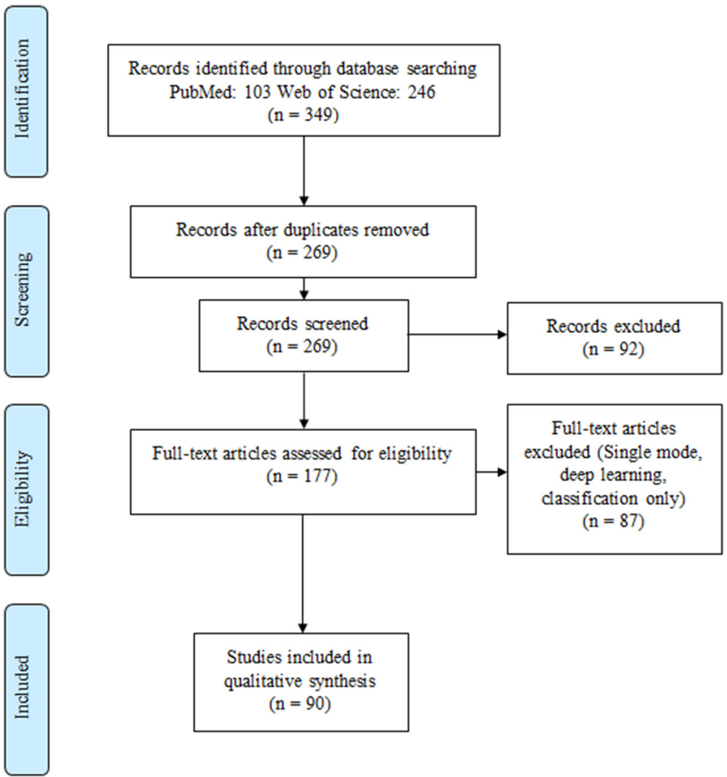
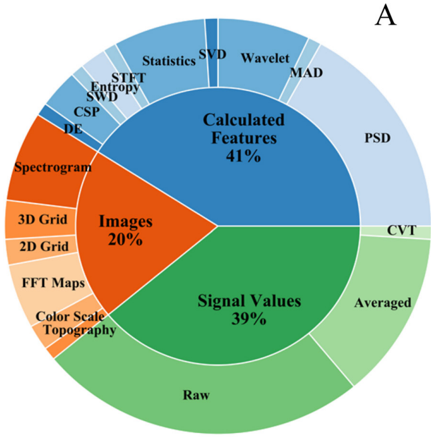
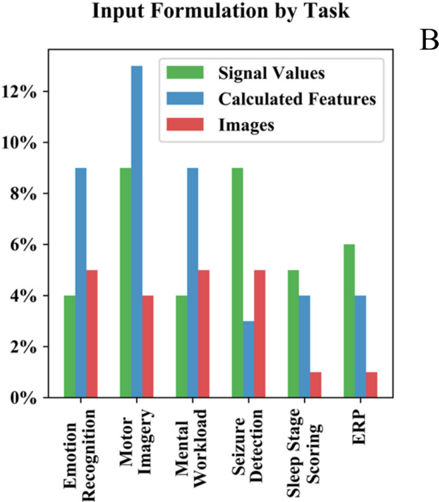
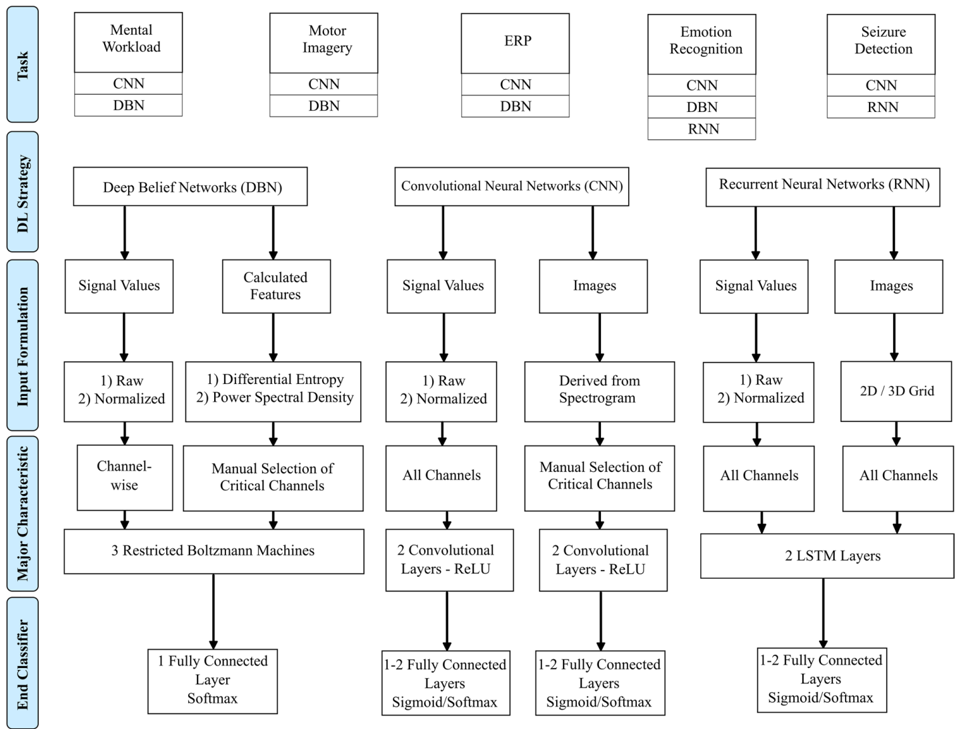
OBJECTIVE: Electroencephalography (EEG) analysis has been an important tool in neuroscience with applications in neuroscience, neural engineering (e.g. Brain-computer interfaces, BCI's), and even commercial applications. Many of the analytical tools used in EEG studies have used machine learning to uncover relevant information for neural classification and neuroimaging. Recently, the availability of large EEG data sets and advances in machine learning have both led to the deployment of deep learning architectures, especially in the analysis of EEG signals and in understanding the information it may contain for brain functionality. The robust automatic classification of these signals is an important step towards making the use of EEG more practical in many applications and less reliant on trained professionals. Towards this goal, a systematic review of the literature on deep learning applications to EEG classification was performed to address the following critical questions: (1) Which EEG classification tasks have been explored with deep learning? (2) What input formulations have been used for training the deep networks? (3) Are there specific deep learning network structures suitable for specific types of tasks? APPROACH: A systematic literature review of EEG classification using deep learning was performed on Web of Science and PubMed databases, resulting in 90 identified studies. Those studies were analyzed based on type of task, EEG preprocessing methods, input type, and deep learning architecture. MAIN RESULTS: For EEG classification tasks, convolutional neural networks, recurrent neural networks, deep belief networks outperform stacked auto-encoders and multi-layer perceptron neural networks in classification accuracy. The tasks that used deep learning fell into five general groups: emotion recognition, motor imagery, mental workload, seizure detection, event related potential detection, and sleep scoring. For each type of task, we describe the specific input formulation, major characteristics, and end classifier recommendations found through this review. SIGNIFICANCE: This review summarizes the current practices and performance outcomes in the use of deep learning for EEG classification. Practical suggestions on the selection of many hyperparameters are provided in the hope that they will promote or guide the deployment of deep learning to EEG datasets in future research.
Overview
The claims and statistics of this paper haven’t been checked yet.
Free: it reads the open-access text and checks the first 5 claims that cite a source we can check. Create a free account to check every claim.
Integrity signals
Registry
Cites
Statistics
Figures
Verification
Claims the paper makes
The claims and statistics of this paper haven’t been checked yet.
Free: it reads the open-access text and checks the first 5 claims that cite a source we can check. Create a free account to check every claim.
Claims other papers make about this one
Each is checked against this paper’s own text: does it say what the citing paper says it does?
The source backs part of the claim, not all of it — or backs it for a different population, condition or comparison.
In the citing paper
“The difficulty of EEG signal processing is to extract high-dimensional features from non-stationary time series with low signal-to-noise ratio [18].”
From IENet: a robust convolutional neural network for EEG based brain-computer interfaces (2022) · cites this paper as [18]
Experimental — accuracy not yet measuredThe source backs part of the claim, not all of it — or backs it for a different population, condition or comparison.
In the citing paper
“Convolutional neural networks (CNN), a leading deep learning structure for data on Euclidean space, outperform the above machine learning algorithms in classification accuracy (Craik et al., 2019).”
From Spatial–temporal graph convolutional network for Alzheimer classification based on brain functional connectivity imaging of electroencephalogram (2022) · cites this paper as Craik et al., 2019
Experimental — accuracy not yet measuredThe cited source says what the claim attributes to it.
In the citing paper
“As for the structures of deep leaning models, convolutional neural networks (CNNs) are the most prevalent architectures in EEG classification tasks [18].”
From IENet: a robust convolutional neural network for EEG based brain-computer interfaces (2022) · cites this paper as [18]
Self-check
Percentages, sums and reported differences re-computed from the paper’s own numbers.
The self-check needs the paper’s full text.
Citations
Cites
Hochreiter, S., & Schmidhuber, J. (1997) · Neural Computation · doi:10.1162/neco.1997.9.8.1735 · Cited by 102,318 · cited 1×
“LSTM is a popular extension of the standard RNN module [83].”
BackgroundLeCun, Y., Bengio, Y., & Hinton, G. (2015) · Nature · doi:10.1038/nature14539 · Cited by 84,126
Preferred reporting items for systematic reviews and meta-analyses: The PRISMA statement
Moher, D., Liberati, A., Tetzlaff, J., & Altman, D. G. (2010) · International Journal of Surgery · doi:10.1016/j.ijsu.2010.02.007 · Cited by 12,156
(1982) · Trends in Neurosciences · doi:10.1016/0166-2236(82)90076-5 · Cited by 9,089
Speech recognition with deep recurrent neural networks
Graves, A., Mohamed, A.-R., & Hinton, G. (2013) · 2013 IEEE International Conference on Acoustics, Speech and Signal Processing · doi:10.1109/icassp.2013.6638947 · Cited by 8,893 · cited 1×
“Indeed, it significantly improved performance in a wide range of traditionally challenging domains, such as images [10], videos [11], speech [12], and text [13].”
BackgroundLearning long-term dependencies with gradient descent is difficult
Bengio, Y., Simard, P., & Frasconi, P. (1994) · IEEE Transactions on Neural Networks · doi:10.1109/72.279181 · Cited by 8,542 · cited 1×
“Neural networks did not immediately receive the high attention seen today in neural classification applications because of practical issues, such as very long computation time and problems with the vanishing/exploding gradients [8].”
BackgroundLarge-Scale Video Classification with Convolutional Neural Networks
Karpathy, A., Toderici, G., Shetty, S., Leung, T., Sukthankar, R., & Fei-Fei, L. (2014) · 2014 IEEE Conference on Computer Vision and Pattern Recognition · doi:10.1109/cvpr.2014.223 · Cited by 6,354 · cited 1×
“Indeed, it significantly improved performance in a wide range of traditionally challenging domains, such as images [10], videos [11], speech [12], and text [13].”
EEGNet: a compact convolutional neural network for EEG-based brain-computer interfaces
Lawhern, V. J., Solon, A. J., Waytowich, N. R., Gordon, S. M., Hung, C. P., & Lance, B. J. (2018) · Journal of Neural Engineering · doi:10.1088/1741-2552/aace8c · Cited by 5,115 · cited 1×
“1 FC 20 h 2 OUT [94] CNN ELU (conv) SV P300(1) N/A P300(1) P300(1) 3 conv Softmax (FC) All (64/56/22) 1–40 Hz P300(2) 1–40 Hz MI 4–40 Hz 15 93% 1 FC 0.”
EEGNet: A Compact Convolutional Network for EEG-based Brain-Computer Interfaces
Lawhern, V. J., Solon, A. J., Waytowich, N. R., Gordon, S. M., Hung, C. P., & Lance, B. J. (2016) · arXiv · doi:10.48550/arxiv.1611.08024 · Cited by 5,105 · cited 1×
“1 FC 20 h 2 OUT [94] CNN ELU (conv) SV P300(1) N/A P300(1) P300(1) 3 conv Softmax (FC) All (64/56/22) 1–40 Hz P300(2) 1–40 Hz MI 4–40 Hz 15 93% 1 FC 0.”
DEAP: A Database for Emotion Analysis ;Using Physiological Signals
Koelstra, S., Muhl, C., Soleymani, M., Lee, J.-S., Yazdani, A., Ebrahimi, T., Pun, T., Nijholt, A., & Patras, I. (2012) · IEEE Transactions on Affective Computing · doi:10.1109/t-affc.2011.15 · Cited by 5,093 · cited 3×
“The datasets that are used in more than one study within this review include an emotion recognition dataset ([56], various subsets used in ten studies), a mental workload dataset ([57], used in four studies), two motor imagery datasets from the same BCI competition ([58], one dataset used in six studies and the second…”
BackgroundMethodDeep learning with convolutional neural networks for EEG decoding and visualization
Schirrmeister, R. T., Springenberg, J. T., Fiederer, L. D. J., Glasstetter, M., Eggensperger, K., Tangermann, M., Hutter, F., Burgard, W., & Ball, T. (2017) · Human Brain Mapping · doi:10.1002/hbm.23730 · Cited by 3,751 · cited 1×
“Schirrmeister et al [80] compared a shallow two convolutional layer CNN versus a deep four convolutional CNN and found that the deep CNN consistently outperformed the shallow CNN.”
MethodHenry, M. A. (1995) · The Journal of the American Dental Association · doi:10.14219/jada.archive.1995.0108 · Cited by 3,416
End to End Learning for Self-Driving Cars
Bojarski, M., Del Testa, D., Dworakowski, D., Firner, B., Flepp, B., Goyal, P., Jackel, L. D., Monfort, M., Muller, U., Zhang, J., et al. (2016) · arXiv · doi:10.48550/arxiv.1604.07316 · Cited by 3,198 · cited 1×
“Neural networks promise to automatically learn complicated features from large amounts of data, prompting the idea of end-to-end learning [51].”
BackgroundAndrzejak, R. G., Lehnertz, K., Mormann, F., Rieke, C., David, P., & Elger, C. E. (2001) · Physical Review E · doi:10.1103/physreve.64.061907 · Cited by 3,032 · cited 3×
“The datasets that are used in more than one study within this review include an emotion recognition dataset ([56], various subsets used in ten studies), a mental workload dataset ([57], used in four studies), two motor imagery datasets from the same BCI competition ([58], one dataset used in six studies and the second…”
BackgroundMethodZheng, W.-L., & Lu, B.-L. (2015) · IEEE Transactions on Autonomous Mental Development · doi:10.1109/tamd.2015.2431497 · Cited by 2,595 · cited 2×
“Zheng and Lu [76] found that classification accuracies were higher when calculating features from set of manually selected critical channels rather than from all channels.”
BackgroundMotor imagery and direct brain-computer communication
Pfurtscheller, G., & Neuper, C. (2001) · Proceedings of the IEEE · doi:10.1109/5.939829 · Cited by 1,990 · cited 2×
“Motor imagery tasks involve having the subject imagine certain muscle movements on limbs and/or the tongue [29].”
BackgroundMethodGenerating Text with Recurrent Neural Networks
Sutskever, I., Martens, J., & Hinton, G. E. (2011) · International Conference on Machine Learning · Cited by 1,783
Delorme, A., Sejnowski, T., & Makeig, S. (2007) · NeuroImage · doi:10.1016/j.neuroimage.2006.11.004 · Cited by 1,759
Greenspan, H., van Ginneken, B., & Summers, R. M. (2016) · IEEE Transactions on Medical Imaging · doi:10.1109/tmi.2016.2553401 · Cited by 1,700
Acharya, U. R., Oh, S. L., Hagiwara, Y., Tan, J. H., & Adeli, H. (2018) · Computers in Biology and Medicine · doi:10.1016/j.compbiomed.2017.09.017 · Cited by 1,647 · cited 2×
“[78] CNN ReLU (conv) N SV (1) N/A MR SD 88.”
Background(2002) · Cited by 1,481
DeepSleepNet: a model for automatic sleep stage scoring based on raw single-channel EEG
Supratak, A., Dong, H., Wu, C., & Guo, Y. (2017) · IEEE Transactions on Neural Systems and Rehabilitation Engineering · doi:10.1109/tnsre.2017.2721116 · Cited by 1,376
Review of the BCI Competition IV
Tangermann, M., Müller, K.-R., Aertsen, A., Birbaumer, N., Braun, C., Brunner, C., Leeb, R., Mehring, C., Miller, K. J., Müller-Putz, G. R., et al. (2012) · Frontiers in Neuroscience · doi:10.3389/fnins.2012.00055 · Cited by 1,288
EEG signal classification using PCA, ICA, LDA and support vector machines
Subasi, A., & Ismail Gursoy, M. (2010) · Expert Systems with Applications · doi:10.1016/j.eswa.2010.06.065 · Cited by 1,209 · cited 1×
“3 analysis (PCA) and local Fisher’s discriminant analysis (LFDA) are typically used to reduce dimensionality of the features [5]; classic supervised learning methods such as linear discriminant analysis (LDA), support vector machines (SVM), and decision trees are common in neural classification [6, 7]; and canonical c…”
MethodAnalysis of a sleep-dependent neuronal feedback loop: the slow-wave microcontinuity of the EEG
Kemp, B., Zwinderman, A. H., Tuk, B., Kamphuisen, H. A. C., & Oberye, J. J. L. (2000) · IEEE Transactions on Biomedical Engineering · doi:10.1109/10.867928 · Cited by 953
A novel deep learning approach for classification of EEG motor imagery signals
Tabar, Y. R., & Halici, U. (2017) · Journal of Neural Engineering · doi:10.1088/1741-2560/14/1/016003 · Cited by 859 · cited 2×
“Tabar and Halici [43] compared the accuracies between a CNN/SAE architecture against a CNN and an SAE and found that the hybrid architecture significantly outperformed against the rest.”
BackgroundMethodLearning Representations from EEG with Deep Recurrent-Convolutional Neural Networks
Bashivan, P., Rish, I., Yeasin, M., & Codella, N. (2015) · arXiv · doi:10.48550/arxiv.1511.06448 · Cited by 836 · cited 1×
“Toical R eiew (2)2 [113] Hybrid ReLU (conv) C2I—Spect 4–30 Hz MR MW 91.”
Learning Temporal Information for Brain-Computer Interface Using Convolutional Neural Networks
Sakhavi, S., Guan, C., & Yan, S. (2018) · IEEE Transactions on Neural Networks and Learning Systems · doi:10.1109/tnnls.2018.2789927 · Cited by 656
Automated EEG-based screening of depression using deep convolutional neural network
Acharya, U. R., Oh, S. L., Hagiwara, Y., Tan, J. H., Adeli, H., & Subha, D. P. (2018) · Computer Methods and Programs in Biomedicine · doi:10.1016/j.cmpb.2018.04.012 · Cited by 650 · cited 2×
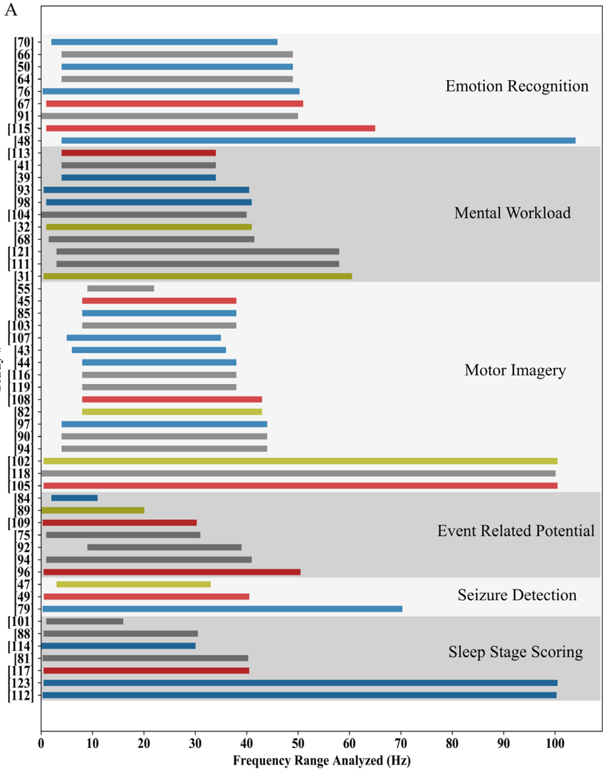
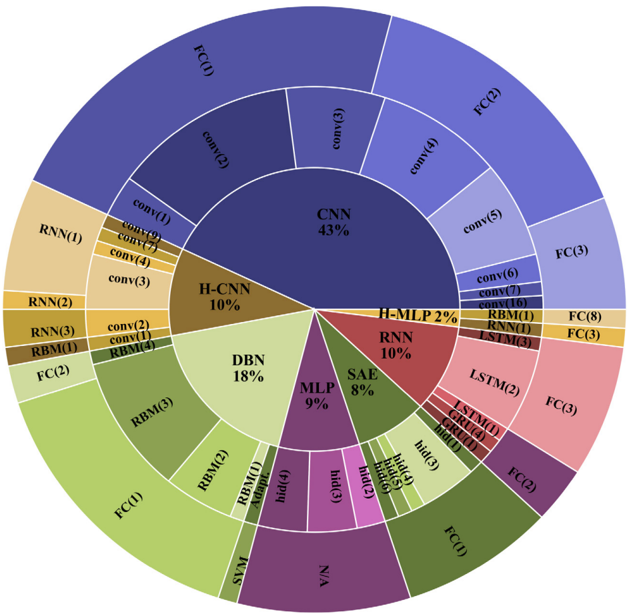
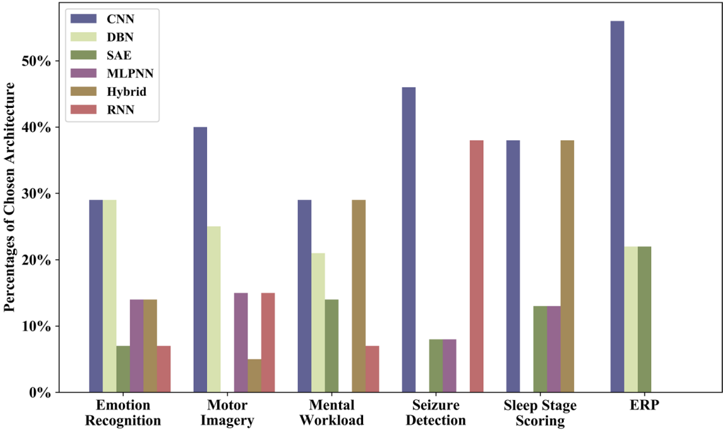
“The tasks presented within these studies fell into six groups: emotion recognition (16%), motor imagery (22%), mental workload (16%), seizure detection (14%), and sleep stage scoring (9%), event related potential detection (10%), and other studies (13%), which include Alzheimer’s classification [16–18], bullying indic…”
BackgroundDiscrete Emotions or Dimensions? The Role of Valence Focus and Arousal Focus
Barrett, L. F. (1998) · Cognition & Emotion · doi:10.1080/026999398379574 · Cited by 645
Emotion Recognition based on EEG using LSTM Recurrent Neural Network
Alhagry, S., Aly, A., & A., R. (2017) · International Journal of Advanced Computer Science and Applications · doi:10.14569/ijacsa.2017.081046 · Cited by 645
Tsiouris, Κ. Μ., Pezoulas, V. C., Zervakis, M., Konitsiotis, S., Koutsouris, D. D., & Fotiadis, D. I. (2018) · Computers in Biology and Medicine · doi:10.1016/j.compbiomed.2018.05.019 · Cited by 632
An automated system for epilepsy detection using EEG brain signals based on deep learning approach
Ullah, I., Hussain, M., Qazi, E.-U.-H., & Aboalsamh, H. (2018) · Expert Systems with Applications · doi:10.1016/j.eswa.2018.04.021 · Cited by 622
Jirayucharoensak, S., Pan-Ngum, S., & Israsena, P. (2014) · The Scientific World Journal · doi:10.1155/2014/627892 · Cited by 486
A Deep Learning Scheme for Motor Imagery Classification based on Restricted Boltzmann Machines
Lu, N., Li, T., Ren, X., & Miao, H. (2017) · IEEE Transactions on Neural Systems and Rehabilitation Engineering · doi:10.1109/tnsre.2016.2601240 · Cited by 419 · cited 1×
“1 FC 140 trials 2 OUT [105] DBN Softmax (FC) f—WD 0.”
BackgroundAn end-to-end deep learning approach to MI-EEG signal classification for BCIs
Dose, H., Møller, J. S., Iversen, H. K., & Puthusserypady, S. (2018) · Expert Systems with Applications · doi:10.1016/j.eswa.2018.08.031 · Cited by 382
Interpretable deep neural networks for single-trial EEG classification
Sturm, I., Lapuschkin, S., Samek, W., & Müller, K.-R. (2016) · Journal of Neuroscience Methods · doi:10.1016/j.jneumeth.2016.10.008 · Cited by 374
LSTM-Based EEG Classification in Motor Imagery Tasks
Wang, P., Jiang, A., Liu, X., Shang, J., & Zhang, L. (2018) · IEEE Transactions on Neural Systems and Rehabilitation Engineering · doi:10.1109/tnsre.2018.2876129 · Cited by 358 · cited 2×
“In [82], the authors also compared performances while varying the number of LSTM layers and found that there was significant improvement when using two layers versus one layer, whereas accuracy essentially remained even with the introduction of a third LSTM layer.”
BackgroundO'Reilly, C., Gosselin, N., Carrier, J., & Nielsen, T. (2014) · Journal of Sleep Research · doi:10.1111/jsr.12169 · Cited by 356 · cited 1×
“The datasets that are used in more than one study within this review include an emotion recognition dataset ([56], various subsets used in ten studies), a mental workload dataset ([57], used in four studies), two motor imagery datasets from the same BCI competition ([58], one dataset used in six studies and the second…”
MethodSupporting user-oriented analysis for multi-view domain-specific visual languages
Guerra, E., de Lara, J., Malizia, A., & Díaz, P. (2009) · Information and Software Technology · doi:10.1016/j.infsof.2008.09.005 · Cited by 322
Automatic Sleep Stage Scoring Using Time-Frequency Analysis and Stacked Sparse Autoencoders
Tsinalis, O., Matthews, P. M., & Guo, Y. (2016) · Annals of Biomedical Engineering · doi:10.1007/s10439-015-1444-y · Cited by 322 · cited 1×
“Toical R eiew 24 [123] SAE Sigmoid (AE) f—WD 0.”
BackgroundWagner, J., Solis-Escalante, T., Grieshofer, P., Neuper, C., Müller-Putz, G., & Scherer, R. (2012) · NeuroImage · doi:10.1016/j.neuroimage.2012.08.019 · Cited by 301
Single-trial EEG classification of motor imagery using deep convolutional neural networks
Tang, Z., Li, C., & Sun, S. (2017) · Optik · doi:10.1016/j.ijleo.2016.10.117 · Cited by 299 · cited 1×
“[85] CNN Tanh (conv) N/A SV All (28) 8–30 Hz N/A MI 86.”
Mixed Neural Network Approach for Temporal Sleep Stage Classification
Dong, H., Supratak, A., Pan, W., Wu, C., Matthews, P. M., & Guo, Y. (2018) · IEEE Transactions on Neural Systems and Rehabilitation Engineering · doi:10.1109/tnsre.2017.2733220 · Cited by 295 · cited 1×
“1 h 1 FC 1 LSTM layer 1 FC 4 OUT [114] Hybrid ReLU (FC) f—PSD 0.”
BackgroundEmotion recognition from multi-channel EEG data through Convolutional Recurrent Neural Network
Li, X., Song, D., Zhang, P., Yu, G., Hou, Y., & Hu, B. (2016) · 2016 IEEE International Conference on Bioinformatics and Biomedicine (BIBM) · doi:10.1109/bibm.2016.7822545 · Cited by 283
Fahimi, F., Zhang, Z., Goh, W. B., Lee, T.-S., Ang, K. K., & Guan, C. (2019) · Journal of Neural Engineering · doi:10.1088/1741-2552/aaf3f6 · Cited by 264
Signal processing techniques applied to human sleep EEG signals—A review
Motamedi-Fakhr, S., Moshrefi-Torbati, M., Hill, M., Hill, C. M., & White, P. R. (2014) · Biomedical Signal Processing and Control · doi:10.1016/j.bspc.2013.12.003 · Cited by 263 · cited 1×
“brain computer interfaces, BCI) [1]; sleep analysis [2]; and seizure detection [3]) because of its high temporal resolution, non-invasiveness, and relatively low financial cost.”
BackgroundHussein, R., Palangi, H., Ward, R. K., & Wang, Z. J. (2019) · Clinical Neurophysiology · doi:10.1016/j.clinph.2018.10.010 · Cited by 263
Waytowich, N., Lawhern, V. J., Garcia, J. O., Cummings, J., Faller, J., Sajda, P., & Vettel, J. M. (2018) · Journal of Neural Engineering · doi:10.1088/1741-2552/aae5d8 · Cited by 262 · cited 1×
“3 h 1 OUT [92] CNN ELU (conv) SV 9–30 Hz N/A ERP—RSVP 80.”
BackgroundEEG-Based Emotion Recognition using 3D Convolutional Neural Networks
Salama, E. S., A.El-Khoribi, R., E.Shoman, M., & A.Wahby, M. (2018) · International Journal of Advanced Computer Science and Applications · doi:10.14569/ijacsa.2018.090843 · Cited by 249 · cited 8×
“References [29, 67, 75] all achieved higher classification accuracies when using three RBM’s as opposed to one, two, or four RBM’s.”
BackgroundMethodInfluentialDeep learning based on Batch Normalization for P300 signal detection
Liu, M., Wu, W., Gu, Z., Yu, Z., Qi, F., & Li, Y. (2018) · Neurocomputing · doi:10.1016/j.neucom.2017.08.039 · Cited by 230
Deep Convolutional Neural Networks for mental load classification based on EEG data
Jiao, Z., Gao, X., Wang, Y., Li, J., & Xu, H. (2018) · Pattern Recognition · doi:10.1016/j.patcog.2017.12.002 · Cited by 227 · cited 3×
“Hajinoroozi et al [69] reported that the standard DBN significantly outperformed standard CNN (although less accurately than hybrid models), whereas [41] found several variations of CNN’s able to outperform when compared against a standard DBN.”
BackgroundInfluentialBrain–machine interfaces for controlling lower-limb powered robotic systems
He, Y., Eguren, D., Azorín, J. M., Grossman, R. G., Luu, T. P., & Contreras-Vidal, J. L. (2018) · Journal of Neural Engineering · doi:10.1088/1741-2552/aaa8c0 · Cited by 224 · cited 3×
“The datasets that are used in more than one study within this review include an emotion recognition dataset ([56], various subsets used in ten studies), a mental workload dataset ([57], used in four studies), two motor imagery datasets from the same BCI competition ([58], one dataset used in six studies and the second…”
BackgroundSelf-citationEEG classification of driver mental states by deep learning
Zeng, H., Yang, C., Dai, G., Qin, F., Zhang, J., & Kong, W. (2018) · Cognitive Neurodynamics · doi:10.1007/s11571-018-9496-y · Cited by 215 · cited 1×
“[98] CNN ReLU (conv) N SV 1–40 Hz MR MW 93.”
BackgroundEEG-based prediction of driver's cognitive performance by deep convolutional neural network
Hajinoroozi, M., Mao, Z., Jung, T.-P., Lin, C.-T., & Huang, Y. (2016) · Signal Processing: Image Communication · doi:10.1016/j.image.2016.05.018 · Cited by 210
Isolating gait-related movement artifacts in electroencephalography during human walking
Kline, J. E., Huang, H. J., Snyder, K. L., & Ferris, D. P. (2015) · Journal of Neural Engineering · doi:10.1088/1741-2560/12/4/046022 · Cited by 204
Li, Y., Huang, J., Zhou, H., & Zhong, N. (2017) · Applied Sciences · doi:10.3390/app7101060 · Cited by 185
A robust adaptive denoising framework for real-time artifact removal in scalp EEG measurements
Kilicarslan, A., Grossman, R. G., & Contreras-Vidal, J. L. (2016) · Journal of Neural Engineering · doi:10.1088/1741-2560/13/2/026013 · Cited by 184
Self-citationPredicting sex from brain rhythms with deep learning
van Putten, M. J. A. M., Olbrich, S., & Arns, M. (2018) · Scientific Reports · doi:10.1038/s41598-018-21495-7 · Cited by 169
Automatic EEG seizure detection using dual-tree complex wavelet-Fourier features
Chen, G. (2014) · Expert Systems with Applications · doi:10.1016/j.eswa.2013.09.037 · Cited by 166 · cited 1×
“brain computer interfaces, BCI) [1]; sleep analysis [2]; and seizure detection [3]) because of its high temporal resolution, non-invasiveness, and relatively low financial cost.”
BackgroundCross-session classification of mental workload levels using EEG and an adaptive deep learning model
Yin, Z., & Zhang, J. (2017) · Biomedical Signal Processing and Control · doi:10.1016/j.bspc.2016.11.013 · Cited by 163
Deep convolutional neural networks for interpretable analysis of EEG sleep stage scoring
Vilamala, A., Madsen, K. H., & Hansen, L. K. (2017) · 2017 IEEE 27th International Workshop on Machine Learning for Signal Processing (MLSP) · doi:10.1109/mlsp.2017.8168133 · Cited by 162
Luo, T.-J., Zhou, C.-L., & Chao, F. (2018) · BMC Bioinformatics · doi:10.1186/s12859-018-2365-1 · Cited by 161
Moon, S.-E., Jang, S., & Lee, J. (2018) · IEEE International Conference on Acoustics Speech and Signal Processing · doi:10.1109/icassp.2018.8461315 · Cited by 160
Automatic seizure detection using three-dimensional CNN based on multi-channel EEG
Wei, X., Zhou, L., Chen, Z., Zhang, L., & Zhou, Y. (2018) · BMC Medical Informatics and Decision Making · doi:10.1186/s12911-018-0693-8 · Cited by 159
Hefron, R. G., Borghetti, B. J., Christensen, J. C., & Kabban, C. M. S. (2017) · Pattern Recognition Letters · doi:10.1016/j.patrec.2017.05.020 · Cited by 154
Automatic Human Sleep Stage Scoring Using Deep Neural Networks
Malafeev, A., Laptev, D., Bauer, S., Omlin, X., Wierzbicka, A., Wichniak, A., Jernajczyk, W., Riener, R., Buhmann, J., & Achermann, P. (2018) · Frontiers in Neuroscience · doi:10.3389/fnins.2018.00781 · Cited by 151 · cited 1×
“There were only three SAE studies that discussed activation functions and these did not form a consensus, with [52, 53] employing sigmoid activation functions for non-classifier AE layers, while [54] instead using ReLU.”
BackgroundMorabito, F. C., Campolo, M., Ieracitano, C., Ebadi, J. M., Bonanno, L., Bramanti, A., Desalvo, S., Mammone, N., & Bramanti, P. (2016) · 2016 IEEE 2nd International Forum on Research and Technologies for Society and Industry Leveraging a better tomorrow (RTSI) · doi:10.1109/rtsi.2016.7740576 · Cited by 145
Classification of Human Emotions from Electroencephalogram (EEG) Signal using Deep Neural Network
Al-Nafjan, A., Hosny, M., Al‐Wabil, A., & Al-Ohali, Y. (2017) · International Journal of Advanced Computer Science and Applications · doi:10.14569/ijacsa.2017.080955 · Cited by 144 · cited 3×
“[64] MLPNN 4 hidden layers PSD features All channels 82”
BackgroundMethodNegligible Motion Artifacts in Scalp Electroencephalography (EEG) During Treadmill Walking
Nathan, K., & Contreras-Vidal, J. L. (2016) · Frontiers in Human Neuroscience · doi:10.3389/fnhum.2015.00708 · Cited by 143
Self-citationA brain-controlled exoskeleton with cascaded event-related desynchronization classifiers
Lee, K., Liu, D., Perroud, L., Chavarriaga, R., & Millán, J. D. R. (2016) · Robotics and Autonomous Systems · doi:10.1016/j.robot.2016.10.005 · Cited by 142 · cited 1×
“3 analysis (PCA) and local Fisher’s discriminant analysis (LFDA) are typically used to reduce dimensionality of the features [5]; classic supervised learning methods such as linear discriminant analysis (LDA), support vector machines (SVM), and decision trees are common in neural classification [6, 7]; and canonical c…”
MethodDeep learning for epileptic intracranial EEG data
Antoniades, A., Spyrou, L., Took, C. C., & Sanei, S. (2016) · 2016 IEEE 26th International Workshop on Machine Learning for Signal Processing (MLSP) · doi:10.1109/mlsp.2016.7738824 · Cited by 129 · cited 1×
“[87] CNN 2 conv 1 FC 2 OUT N/A AA SV N/A N/A SD 87.”
BackgroundParallel convolutional-linear neural network for motor imagery classification
Sakhavi, S., Guan, C., & Yan, S. (2015) · 2015 23rd European Signal Processing Conference (EUSIPCO) · doi:10.1109/eusipco.2015.7362882 · Cited by 128
Cognitive Analysis of Working Memory Load from Eeg, by a Deep Recurrent Neural Network
Kuanar, S., Athitsos, V., Pradhan, N., Mishra, A., & Rao, K. R. (2018) · 2018 IEEE International Conference on Acoustics, Speech and Signal Processing (ICASSP) · doi:10.1109/icassp.2018.8462243 · Cited by 127 · cited 1×
“5 h 2 FC 4 OUT [39] Hybrid ReLU (conv) C2I—Spect 4–30 Hz ALI MW 93.”
BackgroundHuman Brain Electrophysiology: Evoked Potentials and Evoked Magnetic Fields in Science and Medicine
Galloway, N. R. (1990) · British Journal of Ophthalmology · doi:10.1136/bjo.74.4.255-a · Cited by 115
Recurrent Deep Neural Networks for Real-Time Sleep Stage Classification From Single Channel EEG
Bresch, E., Großekathöfer, U., & Garcia‐Molina, G. (2018) · Frontiers in Computational Neuroscience · doi:10.3389/fncom.2018.00085 · Cited by 112
Antoniades, A., Spyrou, L., Martín-López, D., Valentín, A., Alarcón, G., Sanei, S., & Took, C. C. (2017) · IEEE Transactions on Neural Systems and Rehabilitation Engineering · doi:10.1109/tnsre.2017.2755770 · Cited by 99 · cited 2×
“Antoniades et al [79] found that accuracy peaked with four convolutional layers and trended downwards as convolutional layers increased.”
BackgroundZhang, J., Yin, Z., & Wang, R. (2015) · IEEE Transactions on Human-Machine Systems · doi:10.1109/thms.2014.2366914 · Cited by 97 · cited 1×
“The datasets that are used in more than one study within this review include an emotion recognition dataset ([56], various subsets used in ten studies), a mental workload dataset ([57], used in four studies), two motor imagery datasets from the same BCI competition ([58], one dataset used in six studies and the second…”
MethodImproving EEG-Based Motor Imagery Classification via Spatial and Temporal Recurrent Neural Networks
Ma, X., Qiu, S., Du, C., Xing, J., & He, H. (2018) · 2018 40th Annual International Conference of the IEEE Engineering in Medicine and Biology Society (EMBC) · doi:10.1109/embc.2018.8512590 · Cited by 97 · cited 1×
“1 FC 10 h 2 OUT [122] RNN—LSTM N/A SV N/A ALI MI 68.”
BackgroundDeep Learning and Insomnia: Assisting Clinicians With Their Diagnosis
Shahin, M., Ahmed, B., Hamida, S. T.-B., Mulaffer, F. L., Glos, M., & Penzel, T. (2017) · IEEE Journal of Biomedical and Health Informatics · doi:10.1109/jbhi.2017.2650199 · Cited by 96
Deep recurrent neural network for seizure detection
Vidyaratne, L., Glandon, A., Alam, M., & Iftekharuddin, K. M. (2016) · International Joint Conference on Neural Networks (IJCNN) · doi:10.1109/ijcnn.2016.7727334 · Cited by 94 · cited 2×
“44 h [47] RNN N/A C2I—2D 3–30 Hz AR 100.”
MethodDeep learninig of EEG signals for emotion recognition
Gao, Y., Lee, H. J., & Mehmood, R. M. (2015) · 2015 IEEE International Conference on Multimedia & Expo Workshops (ICMEW) · doi:10.1109/icmew.2015.7169796 · Cited by 91
Affective states classification using EEG and semi-supervised deep learning approaches
Xu, H., & Plataniotis, K. N. (2016) · 2016 IEEE 18th International Workshop on Multimedia Signal Processing (MMSP) · doi:10.1109/mmsp.2016.7813351 · Cited by 86 · cited 7×
“PSD features, the most prevalent choice for DBN input formulation, was used in [50], which was the highest performing study within the common emotion recognition dataset.”
BackgroundMethodInfluentialDeep Learning Enabled Automatic Abnormal EEG Identification
Roy, S., Kiral-Kornek, I., & Harrer, S. (2018) · Annual International Conference of the IEEE Engineering in Medicine and Biology Society (EMBC) · doi:10.1109/embc.2018.8512756 · Cited by 85 · cited 1×
“[25] Hybrid N/A SV N/A N/A ND — 550 h 82.”
Wang, Z., Cao, L., Zhang, Z., Gong, X., Sun, Y., & Wang, H. (2018) · Concurrency and Computation: Practice and Experience · doi:10.1002/cpe.4413 · Cited by 83 · cited 4×
“Wang et al [45] compared the performance of a CNN against a pure LSTM RNN network, finding the CNN architecture to significantly outperform the RNN.”
BackgroundMethodInfluentialQuiet sleep detection in preterm infants using deep convolutional neural networks
Ansari, A. H., Wel, O. D., Lavanga, M., Caicedo, A., Dereymaeker, A., Jansen, K., Vervisch, J., Vos, M. D., Naulaers, G., & Huffel, S. V. (2018) · Journal of Neural Engineering · doi:10.1088/1741-2552/aadc1f · Cited by 78 · cited 1×
“[101] CNN ReLU (conv) N SV 1–15 Hz N/A SS 92.”
BackgroundDeep Classification of Epileptic Signals
Ahmedt-Aristizabal, D., Fookes, C., Nguyen, K., & Sridharan, S. (2018) · 2018 40th Annual International Conference of the IEEE Engineering in Medicine and Biology Society (EMBC) · doi:10.1109/embc.2018.8512249 · Cited by 77
Spatio–Spectral Representation Learning for Electroencephalographic Gait-Pattern Classification
Goh, S. K., Abbass, H. A., Tan, K. C., Al-Mamun, A., Thakor, N. V., Bezerianos, A., & Li, J. (2018) · IEEE Transactions on Neural Systems and Rehabilitation Engineering · doi:10.1109/tnsre.2018.2864119 · Cited by 77
Deep Learning in the EEG Diagnosis of Alzheimer’s Disease
Zhao, Y., & He, L. (2015) · Lecture notes in computer science · doi:10.1007/978-3-319-16628-5_25 · Cited by 76
Detection of Early Stage Alzheimer’s Disease using EEG Relative Power with Deep Neural Network
Kim, D., & Kim, K. (2018) · 2018 40th Annual International Conference of the IEEE Engineering in Medicine and Biology Society (EMBC) · doi:10.1109/embc.2018.8512231 · Cited by 76
A hierarchical semi-supervised extreme learning machine method for EEG recognition
She, Q., Hu, B., Luo, Z., Nguyen, T. P., & Zhang, Y. (2018) · Medical & Biological Engineering & Computing · doi:10.1007/s11517-018-1875-3 · Cited by 74 · cited 1×
“2 OUT — [116] MLPNN N/A f—CSP 8–30 Hz N/A MI 85.”
Classification of Epileptic EEG Signals with Stacked Sparse Autoencoder Based on Deep Learning
Lin, Q., Ye, S.-Q., Huang, X., Li, S.-Y., Zhang, M., Xue, Y., & Chen, W.-S. (2016) · Lecture notes in computer science · doi:10.1007/978-3-319-42297-8_74 · Cited by 73 · cited 3×
“3 h 2 OUT [53] SAE Sigmoid (AE) SV N/A MR SD 96.”
BackgroundMethodDetecting abnormal electroencephalograms using deep convolutional networks
van Leeuwen, K. G., Sun, H., Tabaeizadeh, M., Struck, A. F., van Putten, M. J. A. M., & Westover, M. B. (2018) · Clinical Neurophysiology · doi:10.1016/j.clinph.2018.10.012 · Cited by 68
Automated EEG-Based Epileptic Seizure Detection Using Deep Neural Networks
Birjandtalab, J., Heydarzadeh, M., & Nourani, M. (2017) · IEEE International Conference on Healthcare Informatics (ICHI) · doi:10.1109/ichi.2017.55 · Cited by 63
A Decoding Scheme for Incomplete Motor Imagery EEG With Deep Belief Network
Chu, Y., Zhao, X., Zou, Y., Xu, W., Han, J., & Zhao, Y. (2018) · Frontiers in Neuroscience · doi:10.3389/fnins.2018.00680 · Cited by 62
Yin, Z., & Zhang, J. (2017) · Neurocomputing · doi:10.1016/j.neucom.2017.05.002 · Cited by 61 · cited 1×
“[110] DBN N/A f—Entropy N/A AR—IC MW 77.”
Complex-valued unsupervised convolutional neural networks for sleep stage classification
Zhang, J., & Wu, Y. (2018) · Computer Methods and Programs in Biomedicine · doi:10.1016/j.cmpb.2018.07.015 · Cited by 61 · cited 1×
“[88] CNN Split Tanh (conv) N/A CVT SV .”
BackgroundPrediction of driver's drowsy and alert states from EEG signals with deep learning
Hajinoroozi, M., Mao, Z., & Huang, Y. (2015) · 2015 IEEE 6th International Workshop on Computational Advances in Multi-Sensor Adaptive Processing (CAMSAP) · doi:10.1109/camsap.2015.7383844 · Cited by 59
Single-trial classification of gait and point movement preparation from human EEG
Velu, P. D., & de Sa, V. R. (2013) · Frontiers in Neuroscience · doi:10.3389/fnins.2013.00084 · Cited by 58 · cited 2×
“For example, independent component analysis (ICA) is commonly used for artifact removal [5]; principle comp onent J.”
MethodStacked Autoencoders for the P300 Component Detection
Vařeka, L., & Mautner, P. (2017) · Frontiers in Neuroscience · doi:10.3389/fnins.2017.00302 · Cited by 55 · cited 2×
“8 h [74] SAE N/A f—Stats N/A MR ERP—P300 69.”
ResultNeonatal seizure detection using convolutional neural networks
O'Shea, A., Lightbody, G., Boylan, G., & Temko, A. (2017) · 2017 IEEE 27th International Workshop on Machine Learning for Signal Processing (MLSP) · doi:10.1109/mlsp.2017.8168193 · Cited by 55 · cited 1×
“[99] CNN ReLU (conv) SV N/A ALI SD AUC 97.”
BackgroundHefron, R., Borghetti, B., Schubert Kabban, C., Christensen, J., & Estepp, J. (2018) · Sensors · doi:10.3390/s18051339 · Cited by 50 · cited 1×
“[111] Hybrid ReLU (conv) f—PSD 3–55 Hz MR MW 87.”
BackgroundVrbančič, G., & Podgorelec, V. (2018) · Elektronika ir Elektrotechnika · doi:10.5755/j01.eie.24.4.21469 · Cited by 45
DeepMI: Deep Learning for Multiclass Motor Imagery Classification
Abbas, W., & Khan, N. A. (2018) · Annual International Conference of the IEEE Engineering in Medicine and Biology Society (EMBC) · doi:10.1109/embc.2018.8512271 · Cited by 45
Recognition of persisting emotional valence from EEG using convolutional neural networks
Yanagimoto, M., & Sugimoto, C. (2016) · 2016 IEEE 9th International Workshop on Computational Intelligence and Applications (IWCIA) · doi:10.1109/iwcia.2016.7805744 · Cited by 43 · cited 6×
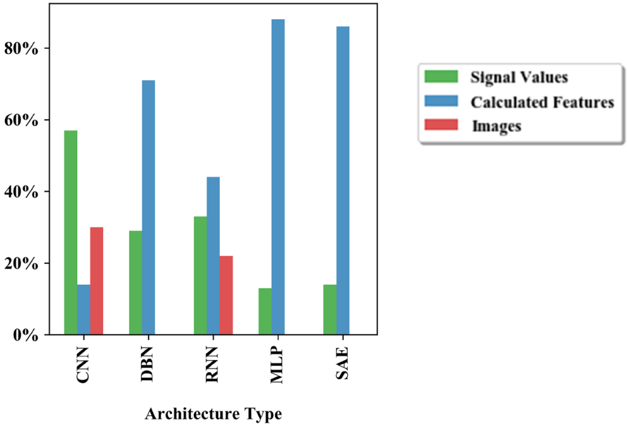
“For example, [63] achieved higher accuracy with raw signal values from all channels than other studies that required extensive effort creating inputs using the same dataset (table 1).”
BackgroundMethodInfluentialA novel deep-learning based framework for multi-subject emotion recognition
Qiao, R., Qing, C., Zhang, T., Xing, X., & Xu, X. (2017) · 2017 4th International Conference on Information, Cybernetics and Computational Social Systems (ICCSS) · doi:10.1109/iccss.2017.8091408 · Cited by 41
A Robust Low-Cost EEG Motor Imagery-Based Brain-Computer Interface
Yohanandan, S. A. C., Kiral-Kornek, I., Tang, J., Mshford, B. S., Asif, U., & Harrer, S. (2018) · Annual International Conference of the IEEE Engineering in Medicine and Biology Society (EMBC) · doi:10.1109/embc.2018.8513429 · Cited by 40
Deep learning EEG response representation for brain computer interface
Jingwei, L., Yin, C., & Weidong, Z. (2015) · 2015 34th Chinese Control Conference (CCC) · doi:10.1109/chicc.2015.7260182 · Cited by 37 · cited 1×
“sets 1 FC (3 of 62) 4 OUT [95] CNN N/A N SV N/A ALI MI 100.”
Single-trial EEG RSVP classification using convolutional neural networks
Shamwell, J., Lee, H., Kwon, H., Marathe, A. R., Lawhern, V., & Nothwang, W. (2016) · SPIE Proceedings · doi:10.1117/12.2224172 · Cited by 34 · cited 1×
“2 FC 6 h total 4 OUT [96] CNN ReLU (conv) Softmax (FC) SV 0.”
BackgroundA deep learning scheme for mental workload classification based on restricted Boltzmann machines
Zhang, J., & Li, S. (2017) · Cognition Technology & Work · doi:10.1007/s10111-017-0430-6 · Cited by 33
Baltatzis, V., Bintsi, K.-M., Apostolidis, G. K., & Hadjileontiadis, L. J. (2017) · Scientific Reports · doi:10.1038/s41598-017-17562-0 · Cited by 32 · cited 2×
“[19] CNN 1 conv 1 FC 2 OUT ReLU (conv) Softmax (FC) f—SWD CC (256) 0.”
BackgroundDeep learning for EEG-Based preference classification
Teo, J., Chew, L. H., & Mountstephens, J. (2017) · AIP conference proceedings · doi:10.1063/1.5005474 · Cited by 31 · cited 1×
“[115] MLPNN ReLU f—STFT 1–64 Hz MR ER 64.”
Deep Models for Engagement Assessment With Scarce Label Information
Li, F., Zhang, G., Wang, W., Xu, R., Schnell, T., Wen, J., McKenzie, F. D., & Li, J. (2016) · IEEE Transactions on Human-Machine Systems · doi:10.1109/thms.2016.2608933 · Cited by 30 · cited 1×
“There were many methods used to categorize the levels of mental workload, including driving simulation studies [30], live pilot studies [31], and responsibility tasks [32].”
MethodRecognition of Cognitive Task Load levels using single channel EEG and Stacked Denoising Autoencoder
Yin, Z., & Zhang, J. (2016) · Chinese Control Conference (CCC) · doi:10.1109/chicc.2016.7553961 · Cited by 26
Emotion classification using deep neural networks and emotional patches
Huang, J., Xu, X., & Zhang, T. (2017) · IEEE International Conference on Bioinformatics and Biomedicine (BIBM) · doi:10.1109/bibm.2017.8217786 · Cited by 25
Deep belief networks and stacked autoencoders for the P300 Guilty Knowledge Test
Kulasingham, J. P., Vibujithan, V., & Silva, A. C. D. (2016) · IEEE-EMBS Conference on Biomedical Engineering and Sciences · doi:10.1109/iecbes.2016.7843428 · Cited by 20 · cited 3×
“Kulasingham et al [75] specifically compared performances between DBN’s and SAE’s and found that DBN’s had a slight advantage in classification accuracy.”
BackgroundMethodKobler, R. J., & Scherer, R. (2016) · 2016 IEEE International Conference on Systems, Man, and Cybernetics (SMC) · doi:10.1109/smc.2016.7844284 · Cited by 20 · cited 1×
“Toical R eiew 19 [102] DBN Softmax (FC) N SV 0.”
BackgroundA Multichannel Deep Belief Network for the Classification of EEG Data
Al-Kaysi, A. M., Al-Ani, A., & Boonstra, T. W. (2015) · Lecture notes in computer science · doi:10.1007/978-3-319-26561-2_5 · Cited by 19
Deceit Identification Test on EEG Data Using Deep Belief Network
Bablani, A., Edla, D. R., & Kuppili, V. (2018) · International Conference on Computing, Communication and Networking Technologies (ICCCNT) · doi:10.1109/icccnt.2018.8494124 · Cited by 16
A novel motor imagery EEG recognition method based on deep learning
Li, M., Zhang, M., & Sun, Y. (2016) · International Forum on Management, Education and Information Technology Application (IFMEITA) · doi:10.2991/ifmeita-16.2016.133 · Cited by 12 · cited 1×
“60 h 2 RBM 2 FC 3 OUT [77] DBN Softmax (FC) f—WD N/A N/A MI 93.”
BackgroundMulti-class motor imagery classification by singular value decomposition and deep boltzmann machine
Yu, Z., & Song, J. (2017) · IEEE Information Technology and Mechatronics Engineering Conference (ITOEC) · doi:10.1109/itoec.2017.8122319 · Cited by 11
Pereira, A. E., Padden, D., Jantz, J. J., Lin, K., & Alcaide-Aguirre, R. E. (2018) · HAL · doi:10.13140/rg.2.2.16257.10086 · Cited by 9
Muhie, Y. S., Chris, B., Ljiljana, M., Sefket, S., & Holzinger, A. (2015) · Lecture Notes in Computer Science · doi:10.1007/978-3-319-23344-4 · Cited by 4
Research works printed but not linked: 24
- He Y, 2018, J. Neural Eng., 15
- Karpathy A, 2014, Proc. IEEE Computer Society Conf. Computer Vision Pattern Recognition, 1725
- Sutskever I, 2011, Proc. of the 28th Int. Conf. on Machine Learning, 1017
- Zhao Y, 2014, 2014 Asian Conf. Computer Visison, 1
- Roy S, 2018, 40th Annu. Int. Conf. IEEE Eng. Med. Biol. Soc. (EMBC), 2756
- Teplan M, 2002, Meas. Sci., 2, 1
- Pfurtscheller G, 2001, 89, 1123
- Kuanar S, 2018 IEEE Int. Conf. on Acoustics, Speech and Signal Processing (ICASSP), 352
- Abbas W, 2018, 40th Annu. Int. Conf. IEEE Eng. Med. Biol. Soc. (EMBC), 219
- Wei X, 2018, 18, 111
- Xu H, 2016, 2016 IEEE 18th Int. Workshop Multimedia Signal Processing, 1
- Vareka L, 2017, Application of Stacked Autoencoders to P300 Experimental Data (Int. Conf. on Artificial Intelligence and Soft Computing)
- Yuen T C, 2009, Int. J. Integr. Eng., 1, 71
- Alhagry S, 2017, Emotion, 8, 8
- Yin Z, 2016, Chinese Control Conf. CCC, 2016, 3907
- Pereira A, 2018, Preprint
- Ang K K, 2019, J. Neural Eng., 16
- Liu J, 2015, Chinese Control Conf. CCC, 2015, 3518
- Ansari M L A, 2018, J. Neural Eng., 15
- Kobler R J, 2016, 2016 IEEE Int. Conf. Syst. Man, Cybernetics SMC 2016—Conf. Proc., 469
- An X, 2014, Int. Conf. on Intelligent Computing, 203
- Gao Y, 2015, 2015 IEEE Int. Conf. Multimedia Expo Workshops ICMEW 2015, 2, 1
- Bablani A, 2018, 2018 9th Int. Conf. Computing Communication Networking Technologies, 1
- Luo T, 2018, Bioinformatics, 19, 344
Cited by
Altaheri, H., Muhammad, G., Alsulaiman, M., Amin, S. U., Altuwaijri, G. A., Abdul, W., Bencherif, M. A., & Faisal, M. (2023) · Neural Computing and Applications · doi:10.1007/s00521-021-06352-5 · Cited by 590
“[37] specifically investigated the DLbased techniques.”
EEG-Based Emotion Recognition via Channel-Wise Attention and Self Attention
Tao, W., Li, C., Song, R., Cheng, J., Liu, Y., Wan, F., & Chen, X. (2023) · IEEE Transactions on Affective Computing · doi:10.1109/taffc.2020.3025777 · Cited by 581
“puters better understand the current emotional state of the user [21].”
BackgroundRashid, M., Sulaiman, N., P. P. Abdul Majeed, A., Musa, R. M., Ab. Nasir, A. F., Bari, B. S., & Khatun, S. (2020) · Frontiers in Neurorobotics · doi:10.3389/fnbot.2020.00025 · Cited by 506
“The ability to acquire a robust automatic classification of EEG signals is an essential step toward making the use of EEG more practical in many applications and less reliant on trained professionals (Alexander et al., 2018).”
BackgroundEEG Based Emotion Recognition: A Tutorial and Review
Li, X., Zhang, Y., Tiwari, P., Song, D., Hu, B., Yang, M., Zhao, Z., Kumar, N., & Marttinen, P. (2023) · ACM Computing Surveys · doi:10.1145/3524499 · Cited by 508
“[29] focuses on introducing the Deep Learning-based methodologies applied to EEG modeling.”
MethodEpileptic Seizures Detection Using Deep Learning Techniques: A Review
Shoeibi, A., Khodatars, M., Ghassemi, N., Jafari, M., Moridian, P., Alizadehsani, R., Panahiazar, M., Khozeimeh, F., Zare, A., Hosseini-Nejad, H., et al. (2021) · International Journal of Environmental Research and Public Health · doi:10.3390/ijerph18115780 · Cited by 459
“DL models, unlike conventional machine learning techniques, require huge data in the training phase [29].”
BackgroundMethod
Metadata
- Authors
- Craik, A., He, Y., & Contreras-Vidal, J. L.
- Affiliations
- University of Houston (US)
- Corresponding author
- Craik, Alexander
- Venue
- Journal of Neural Engineering
- Publisher
- IOP Publishing
- Published
- 2019-04-09
- Volume
- 16
- Issue
- 3
- Pages
- 031001
- ISSN
- 1741-2552 (ISSN-L)
- 1741-2560
- OpenAlex
- W2915893085
- Cited by
- 1,758
- References
- 122
- Citations by year
- 2026: 308 · 2025: 287 · 2024: 273 · 2023: 290 · 2022: 246 · 2021: 213 · 2020: 116 · 2019: 23
- FWCI
- 18.93
- Type
- journal article
- Language
- en
- Open access
- hybrid
- doi.org
- Licence
- cc-by
- iopscience.iop.org/info/page/text-and-data-mining (tdm)
- creativecommons.org/licenses/by/3.0/ (vor)
- Locations
- Journal of Neural Engineering (publishedVersion, cc-by)
- PubMed (publishedVersion)
- Funders
- Center for Advanced Computing and Data Science
- Topics
- Life Sciences › Neuroscience › Cognitive Neuroscience › EEG and Brain-Computer Interfaces
- Physical Sciences › Computer Science › Artificial Intelligence › Emotion and Mood Recognition
- Health Sciences › Medicine › Cardiology and Cardiovascular Medicine › ECG Monitoring and Analysis
- Keywords
- EEG, EEG classification, deep learning, convolutional neural networks, recurrent neural networks, deep belief network, stacked autoencoder, motor imagery, emotion recognition, mental workload, seizure detection, sleep stage classification, EEG preprocessing
- MeSH terms
- Deep Learning, Animals, Brain, Electroencephalography, Humans, Psychomotor Performance, Neural Networks, Computer, Brain-Computer Interfaces
About these checks
Registry, retraction, Cites and statistics results are computed, not judged, with one exception: a printed reference that no index lists is read once by a model before it counts as a citation error. Claims are extracted by a model and kept only when their quote appears verbatim in the text; each cited source is then checked, with a model’s help, for whether it says what the claim relies on. Those verdicts can be wrong — read the claim’s quote and the cited source before relying on one.
Statistics and arithmetic are recomputed, not judged.
Confidence bands are shown only for fields calibrated on our annotated test set. None is calibrated yet, so no band is shown.
What counts as a claim ›How we measure confidence ›How we check this ›
Are you an author, or do you see a problem with this page? Request a review
Data sources
Bibliographic data: Semantic Scholar, OpenAlex, Crossref.
Contains information from the Semantic Scholar Academic Graph Datasets, made available under the ODC Attribution License (ODC-BY 1.0).
Semantic Scholar’s data is described in: Kinney, R., et al. (2023). The Semantic Scholar Open Data Platform. arXiv:2301.10140.
