

An index-based framework for assessing patterns and trends in river fragmentation and flow regulation by global dams at multiple scales
Open accessThe DOI matches its Crossref record; 86 of the 86 references it cites were found in a registry or an index.
Abstract
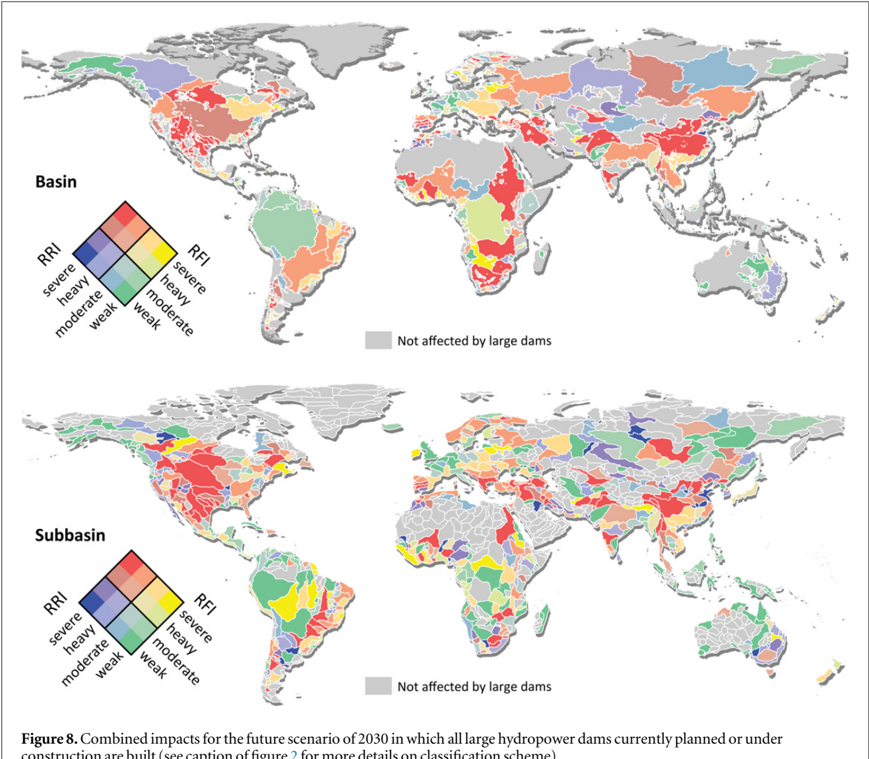
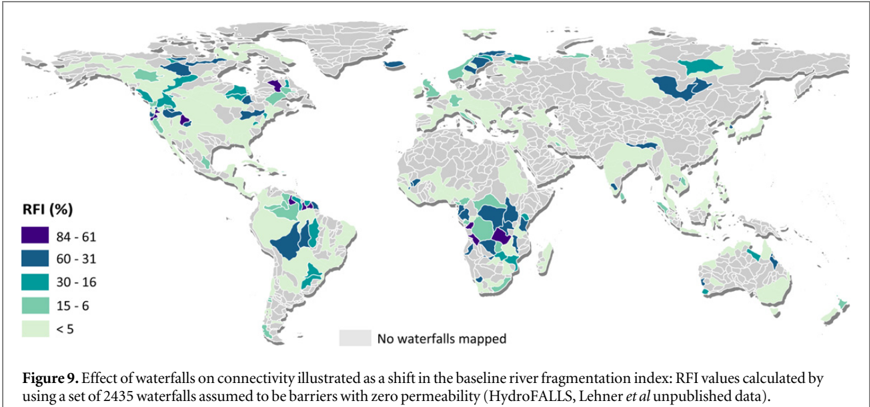
The global number of dam constructions has increased dramatically over the past six decades and is forecast to continue to rise, particularly in less industrialized regions. Identifying development pathways that can deliver the benefits of new infrastructure while also maintaining healthy and productive river systems is a great challenge that requires understanding the multifaceted impacts of dams at a range of scales. New approaches and advanced methodologies are needed to improve predictions of how future dam construction will affect biodiversity, ecosystem functioning, and fluvial geomorphology worldwide, helping to frame a global strategy to achieve sustainable dam development. Here, we respond to this need by applying a graph-based river routing model to simultaneously assess flow regulation and fragmentation by dams at multiple scales using data at high spatial resolution. We calculated the cumulative impact of a set of 6374 large existing dams and 3377 planned or proposed dams on river connectivity and river flow at basin and subbasin scales by fusing two novel indicators to create a holistic dam impact matrix for the period 1930–2030. Static network descriptors such as basin area or channel length are of limited use in hierarchically nested and dynamic river systems, so we developed the river fragmentation index and the river regulation index, which are based on river volume. These indicators are less sensitive to the effects of network configuration, offering increased comparability among studies with disparate hydrographies as well as across scales. Our results indicate that, on a global basis, 48% of river volume is moderately to severely impacted by either flow regulation, fragmentation, or both. Assuming completion of all dams planned and under construction in our future scenario, this number would nearly double to 93%, largely due to major dam construction in the Amazon Basin. We provide evidence for the importance of considering small to medium sized dams and for the need to include waterfalls to establish a baseline of natural fragmentation. Our versatile framework can serve as a component of river fragmentation and connectivity assessments; as a standardized, easily replicable monitoring framework at global and basin scales; and as part of regional dam planning and management strategies.
Overview
The claims and statistics of this paper haven’t been checked yet.
Free: it reads the open-access text and checks the first 5 claims that cite a source we can check. Create a free account to check every claim.
Integrity signals
Registry
Cites
Statistics
Figures
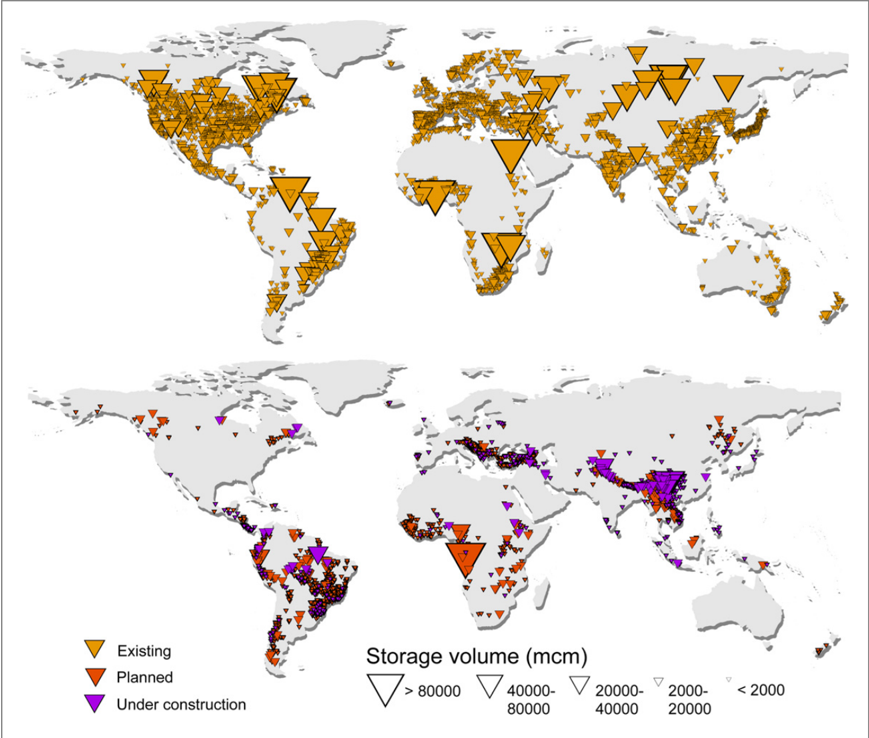
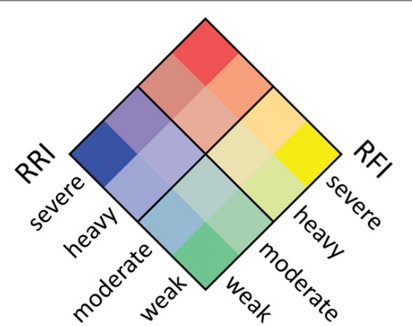
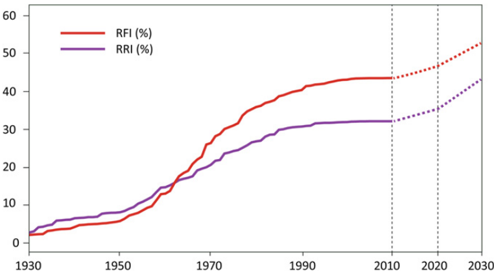
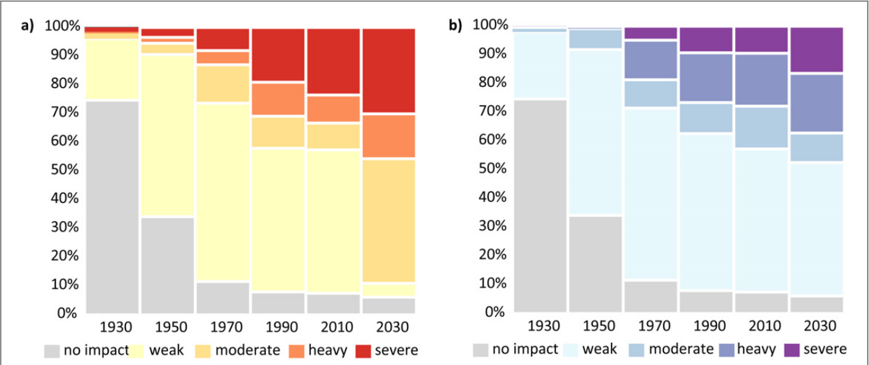
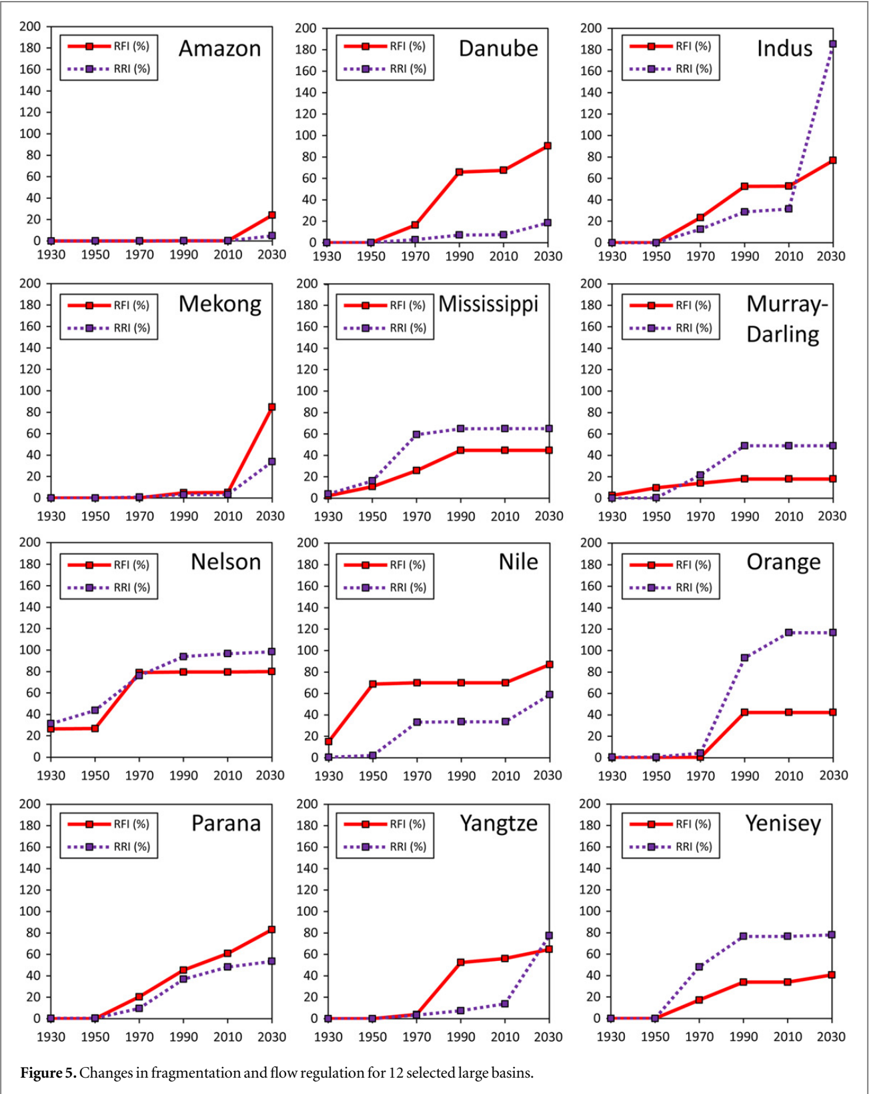
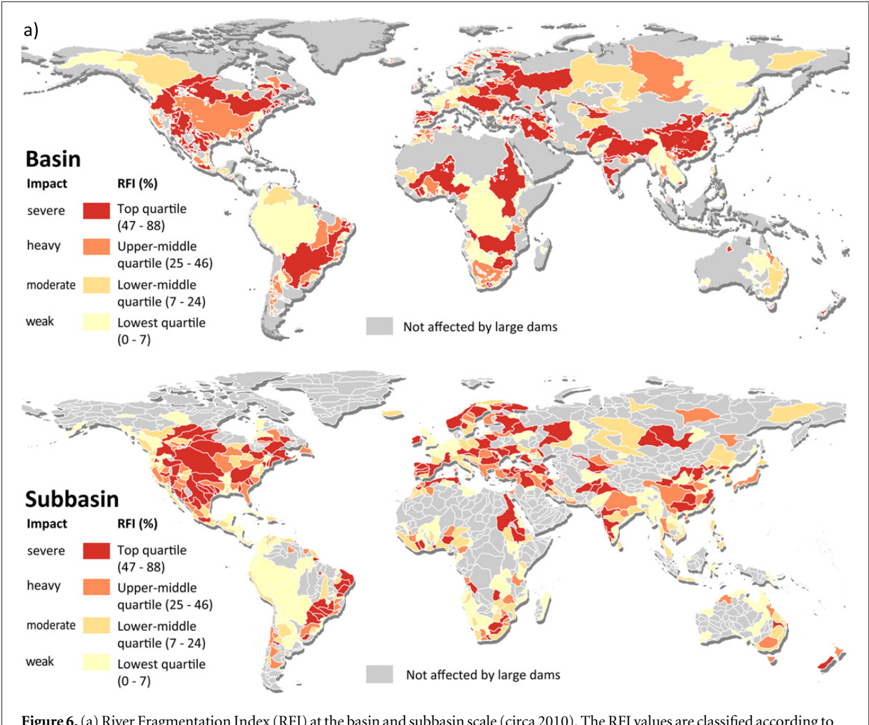
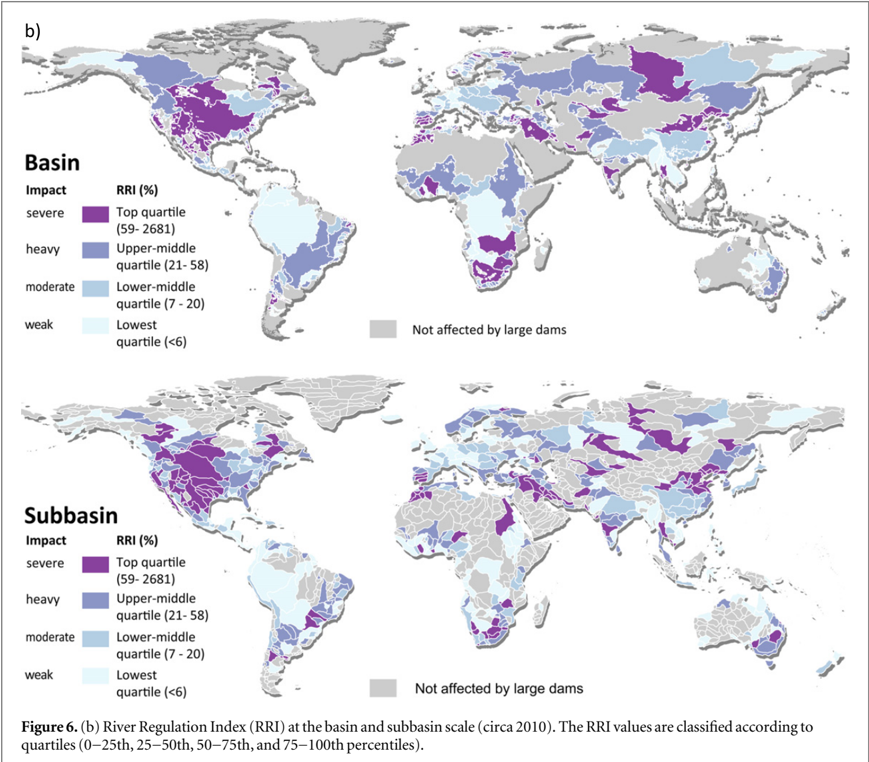
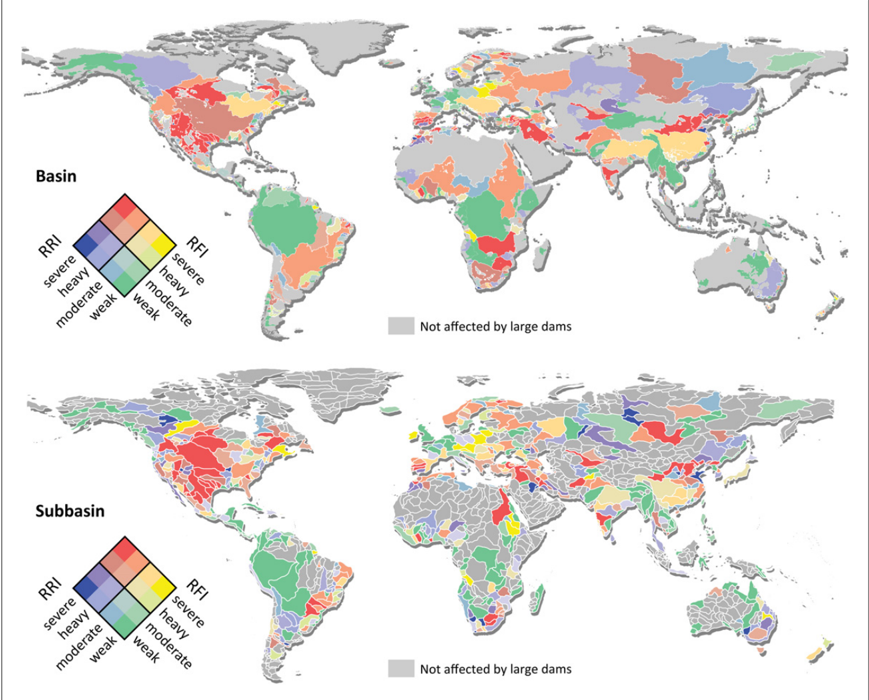
Verification
Claims the paper makes
The claims and statistics of this paper haven’t been checked yet.
Free: it reads the open-access text and checks the first 5 claims that cite a source we can check. Create a free account to check every claim.
Claims other papers make about this one
Each is checked against this paper’s own text: does it say what the citing paper says it does?
In the citing paper
“HydroSHEDS is a hydrographic mapping product that provides river and catchment information for regional and global-scale applications in a consistent format ( 26 ), including catchment areas and discharge estimates.”
From Mapping the world’s free-flowing rivers (2019) · cites this paper as [26]
Self-check
Percentages, sums and reported differences re-computed from the paper’s own numbers.
The self-check needs the paper’s full text.
Citations
Cites
Vannote, R. L., Minshall, G. W., Cummins, K. W., Sedell, J. R., & Cushing, C. E. (1980) · Canadian Journal of Fisheries and Aquatic Sciences · doi:10.1139/f80-017 · Cited by 9,984 · cited 2×
“Following Ward (1989), connectivity has a longitudinal aspect that connects upstream and downstream ecosystems (Vannote et al 1980), a lateral dimension by linking riverine systems with wetlands and floodplains (Tockner et al 1999), and a vertical component that connects surface water with…”
InfluentialGlobal threats to human water security and river biodiversity
Vörösmarty, C. J., McIntyre, P. B., Gessner, M. O., Dudgeon, D., Prusevich, A., Green, P., Glidden, S., Bunn, S. E., Sullivan, C. A., Liermann, C. R., et al. (2010) · Nature · doi:10.1038/nature09440 · Cited by 7,582
Poff, N. L., Allan, J. D., Bain, M. B., Karr, J. R., Prestegaard, K. L., Richter, B. D., Sparks, R. E., & Stromberg, J. C. (1997) · BioScience · doi:10.2307/1313099 · Cited by 6,500 · cited 1×
“…ecological functioning (Ward and Stanford 1995, Pringle et al 2000, Carlisle et al 2011), e.g., by reducing sediment delivery to floodplains and deltas (Syvitski et al 2009), altering thermal regimes (Poole and Berman 2001), or by disrupting life cycles of freshwater species (Poff et al 1997).”
Mackay, A. (2008) · Journal of Environmental Quality · doi:10.2134/jeq2008.0015br · Cited by 5,591
Fragmentation and Flow Regulation of the World's Large River Systems
Nilsson, C., Reidy, C. A., Dynesius, M., & Revenga, C. (2005) · Science · doi:10.1126/science.1107887 · Cited by 3,509 · cited 7×
“The DOR has in one form or another been a key component of seminal studies on flow regulation (e.g., Nilsson et al 2005) or has been analyzed in terms of the hydrologically equivalent ‘change in residence time’ or ‘water aging’ (e.g., Vörösmarty et al 1997).”
InfluentialBasic Principles and Ecological Consequences of Altered Flow Regimes for Aquatic Biodiversity
BUNN, S. E., & ARTHINGTON, A. H. (2002) · Environmental Management · doi:10.1007/s00267-002-2737-0 · Cited by 3,379
Parry, M. L., Canziani, O. F., de Strihou, J.-P. V. Y., & Palutikof, J. P. (2007) · Cited by 2,783
High‐resolution mapping of the world's reservoirs and dams for sustainable river‐flow management
Lehner, B., Liermann, C. R., Revenga, C., Vörösmarty, C., Fekete, B., Crouzet, P., Döll, P., Endejan, M., Frenken, K., Magome, J., et al. (2011) · Frontiers in Ecology and the Environment · doi:10.1890/100125 · Cited by 2,515 · cited 7×
“In order to compare our volumetric results to Lehner et al (2011)who focussed on river length, we calculated the volume of all reaches with DOR values ⩾2%, a threshold previously used to distinguish ‘affected’ rivers (Dynesius and Nilsson 1994, Nilsson et al 2005, Lehner et al 2011).”
InfluentialSelf-citationSinking deltas due to human activities
Syvitski, J. P. M., Kettner, A. J., Overeem, I., Hutton, E. W. H., Hannon, M. T., Brakenridge, G. R., Day, J., Vörösmarty, C., Saito, Y., Giosan, L., et al. (2009) · Nature Geoscience · doi:10.1038/ngeo629 · Cited by 2,465
A Method for Assessing Hydrologic Alteration within Ecosystems
Richter, B. D., Baumgartner, J. V., Powell, J., & Braun, D. P. (1996) · Conservation Biology · doi:10.1046/j.1523-1739.1996.10041163.x · Cited by 2,463 · cited 2×
“We believe that the proposed method and indicators can be applied inmultiple ways: as a standardized, easily replicable monitoring tool that provides comparable global and basin-scale indicators of changes and trends in support of international initiatives such as the Millennium Development Goals, the Global Biodivers…”
Method
Research works printed but not linked: 3
- ICPDR, 2009, Danube River Basin District Management Plan. Part A—Basin-wide overview.
- Ostroff A, Wieferich D, Cooper A and Infante D M 2013 National Anthropogenic Barrier Dataset (NABD) (Denver, CO: United States Geological Service (USGS) Aquatic GAP Program)
- Vörösmarty C J, 1997, AMBIO: J. Hum. Environ., 26, 210
Cited by
Items 401–500 of 739
Kaushal, N., Babu, S., Mishra, A., Bajpai, R., Sinha, P. K., Arya, R. K., Tickner, D., & Linstead, C. (2022) · Water · doi:10.3390/w14182894 · Cited by 7
“…with Sustainable Development Goal 6 (SDG 6) [1] which calls for “ensuring availability and sustainable management of water and sanitation for all” Grill et al. 2015 [2] concluded that, globally, 48% of river volume is moderately to severely impacted by either flow regulation, fragmentation, or…”
BackgroundYang, W., Xiao, C., Zhang, Z., Li, M., & Liang, X. (2021) · Hydrological Sciences Journal · doi:10.1080/02626667.2021.1906426 · Cited by 7
“© 2021 IAHS (Grill et al. 2015).”
Shahab, A., Bohnett, E., Ahmad, B., Rashid, A., Hayat, M., & Alam, N. (2023) · River Research and Applications · doi:10.1002/rra.4131 · Cited by 7
“…research demonstrates that flow regulation, fragmentation, or both have moderate to severe negative influence on 48% of worldwide river volume (Grill et al., 2015), causing some global river systems run dry before reaching the coast, posing widespread threats to hydrological integrity, flow,…”
BackgroundXu, N., Liang, X., Zhang, T., Dong, J., Wang, Y., & Qu, Y. (2023) · Sustainability · doi:10.3390/su15064952 · Cited by 7
Gao, Y., Xiong, W. H., & Wang, C. (2023) · Water · doi:10.3390/w15101962 · Cited by 7
Sofi, M. S., Bhat, S. U., & Muslim, M. (2023) · Ecohydrology · doi:10.1002/eco.2575 · Cited by 7
“The Global Reservoir and Dam Database (GRanD) was used in previous studies (Barbarossa et al., 2020; Grill et al., 2015, 2019; Lehner et al., 2011).”
InfluentialSpatiotemporal analysis of precipitation variability based on entropy over Iran
Darand, M., & Pazhoh, F. (2024) · Journal of Water and Climate Change · doi:10.2166/wcc.2024.440 · Cited by 7
van der Laan, E., Hazenberg, P., & Weerts, A. (2024) · The Science of The Total Environment · doi:10.1016/j.scitotenv.2024.172678 · Cited by 7
Diversity in the observed functionality of dams and reservoirs
Kam, J. (2021) · Environmental Research Infrastructure and Sustainability · doi:10.1088/2634-4505/ac3f3f · Cited by 7
Liu, L., Mei-lin, Y., Luo, J., Hu, Z., Li, X., Miao, H., Chu, Y., Xu, P., Chen, X., & Wang, F. (2022) · Environmental Science and Pollution Research · doi:10.1007/s11356-022-20515-4 · Cited by 7
“Globally, a total of 16 million artificial reservoirs are in use today, with more than 50,000 of those having dams taller than 15 m, and there are still many dams being built (Chao et al. 2008; Grill et al. 2015; Maavara et al. 2020).”
BackgroundFabris, L., Buddendorf, W. B., & Soulsby, C. (2019) · The Science of The Total Environment · doi:10.1016/j.scitotenv.2019.133857 · Cited by 7
Lukovich, J. V., Tefs, A., Jafarikhasragh, S., Pennelly, C., Myers, P. G., Stadnyk, T., Sydor, K., Wong, K., Vieira, M. J. F., Landry, D., et al. (2021) · Elementa Science of the Anthropocene · doi:10.1525/elementa.2020.00126 · Cited by 7
Grill, G., Lehner, B., Lumsdon, A. E., MacDonald, G. K., Zarfl, C., & Liermann, C. R. (2017) · Environmental Research Letters · doi:10.1088/1748-9326/aa60cb · Cited by 7
Self-citationPerturbations to nutrient and carbon cycles by river damming
Maavara, T. (2017) · UWSpace (University of Waterloo) · Cited by 8
Rana, A., Singh, S., Bhagat, N. K., Singh, M. M., Jadaun, G. P., & Singh, P. K. (2021) · Renewable Energy · doi:10.1016/j.renene.2021.04.060 · Cited by 6
Drivers of Anaerobic Methanogenesis in Sub-Tropical Reservoir Sediments
Grinham, A. R., O’Sullivan, C. A., Dunbabin, M. D., Sturm, K., Gale, D., Clarke, W. P., & Albert, S. (2022) · Frontiers in Environmental Science · doi:10.3389/fenvs.2022.852344 · Cited by 6
Electricity mix from renewable energies can avoid further fragmentation of African rivers
Peters, R., Berlekamp, J., Tockner, K., & Zarfl, C. (2024) · Sustainable Energy Research · doi:10.1186/s40807-024-00110-6 · Cited by 6
“The proposed hydropower dams would further increase river fragmentation of large river basins such as the Nile [River fragmentation index (RFI) of 90%, calculated according to a methodology from Grill et al. (2015)], Zambezi (RFI 87%), and Niger (RFI 90%).”
MethodSelf-citationCosta, G. D. S., Albuquerque, B. W., & Piedade, M. T. F. (2024) · Neotropical Ichthyology · doi:10.1590/1982-0224-2023-0009 · Cited by 6
Group swimming significantly decreases time to passage success for a galaxiid species
Crawford, R. M. B., Gee, E. M., Hicks, B. J., & Franklin, P. A. (2025) · Journal of Fish Biology · doi:10.1111/jfb.70040 · Cited by 6
“Globally, millions of instream structures create fragmentation in river networks, acting as impediments to fish movements (Belletti et al., 2020; Grill et al., 2015; Franklin et al., 2022).”
Yin, Y., Wen, Z., You, W., Guo, A., & Xu, Q. (2025) · Journal of Environmental Management · doi:10.1016/j.jenvman.2025.125847 · Cited by 7
Hirko, O., Hylander, S., Tack, A. J. M., Nemomissa, S., Ghajarnia, N., Mayamey, F. V., Tadesse, D., Senbeta, F., & Hylander, K. (2025) · Landscape Ecology · doi:10.1007/s10980-025-02255-1 · Cited by 7
“…migration and fishing opportunities due to changes of stream channel morphology, sediment transportation, and connectivity (Nilsson et al. 2005; Grill et al. 2015; Doretto et al. 2020; Zhang and Gu 2023) and the draining of wetlands interrupts denitrification and reduces downstream baseflows…”
Butterfield, B. J., Palmquist, E. C., & Yackulic, C. B. (2022) · River Research and Applications · doi:10.1002/rra.4067 · Cited by 6
“Developing predictive models of riparian habitat suitability is particularly urgent given the compounding demands being placed on rivers by anthropogenic alteration and climate change (Grill et al., 2015; Perry, Andersen, Reynolds, Nelson, & Shafroth, 2012).”
BackgroundRiver Conservation and Water Resource Management
Sheeja, J. L. P., Priyanka, N. A., & Bhaskaran, G. (2024) · Geotechnologies and the environment · doi:10.1007/978-3-031-52561-2_2 · Cited by 6
Wei, X., Liu, M., Pan, H., Yao, H., & Ren, Y. (2024) · Water · doi:10.3390/w16121642 · Cited by 6
“There are over 70,000 large dams, and the total volume of reservoirs is seven times that of natural rivers [11].”
BackgroundHiggisson, W., Gleeson, D. M., Broadhurst, L., & Dyer, F. J. (2020) · Australian Journal of Botany · doi:10.1071/bt20074 · Cited by 6
Wang, S., Hou, W., Jiang, H., Dong, H., Huang, L., Chen, S., Wang, B., Chen, Y., Lin, B., & Deng, Y. (2021) · Frontiers in Ecology and Evolution · doi:10.3389/fevo.2021.624476 · Cited by 6
Friday, M., & Haxton, T. J. (2021) · Journal of Fish Biology · doi:10.1111/jfb.14900 · Cited by 6
Lu, Y., Zhao, W., Zhang, P., Liu, H., & Yuan, S. (2024) · Applied Geochemistry · doi:10.1016/j.apgeochem.2024.105949 · Cited by 6
Miro, M. E., Marlier, M. E., & Girven, R. S. (2019) · RAND Corporation eBooks · doi:10.7249/rr2715 · Cited by 6
Dams reshape the world's rivers
(2015) · Nature · doi:10.1038/517530a · Cited by 6
Maheu, A. (2015) · EspaceINRS (National Institute for Scientific Research (Canada)) · Cited by 6
Fixing the fluid : Making resources and ordering hydrosocial relations in the Mekong Region
Käkönen, M. (2020) · Helda - University of Helsinki Institutional Repository · Cited by 6
Hoeinghaus, D. J. (2017) · Elsevier eBooks · doi:10.1016/b978-0-12-809665-9.09826-8 · Cited by 6
River-to-sea ecosystem management
Couto, T. B. A., & Sethi, S. A. (2023) · Nature Sustainability · doi:10.1038/s41893-023-01239-w · Cited by 6
Phytoplankton responses to the dynamics of large cascading neotropical reservoirs
da Silva, I. G., Rodrigues, L. C., Crossetti, L. O., & Dunck, B. (2025) · Hydrobiologia · doi:10.1007/s10750-024-05793-y · Cited by 5
“The installation of these dams has fragmented 56% of the rivers in the river basin (Grill et al., 2015).”
Ma, X., Ma, Y., Qi, J., Li, J., Chen, J., Liu, J., Chen, L., Shi, C., & Xie, R. (2025) · Ecotoxicology and Environmental Safety · doi:10.1016/j.ecoenv.2025.118464 · Cited by 6
Deep Learning and Remote‐Sensed Observations Reveal Global Underestimation of River Obstructions
He, M., Niu, J., Riley, W. J., Shen, C., Zheng, Y., Melack, J. M., Dongwei, G. U. I., Qiu, H., Xie, M., Sun, L., et al. (2025) · Water Resources Research · doi:10.1029/2024wr039692 · Cited by 5
Lowland rivers: Geomorphology, human impacts, and management
Hudson, P. F., & Park, E. (2022) · Earth Surface Processes and Landforms · doi:10.1002/esp.5517 · Cited by 6
“An important point about many engineered rivers is that they are impacted by upstream land use and engineering, especially dams and reservoirs (Grill et al., 2015; Zarfl et al., 2019).”
BackgroundLandscape Reading for Alpine Rivers: A Case Study from the river Biya
Schmalfuss, L., Hauer, C., Yanygina, L. V., & Schletterer, M. (2023) · GEOGRAPHY ENVIRONMENT SUSTAINABILITY · doi:10.24057/2071-9388-2022-046 · Cited by 5
Midpoint characterization factors to assess impacts of turbine water use from hydropower production
Dorber, M., Scherer, L., & Verones, F. (2024) · The International Journal of Life Cycle Assessment · doi:10.1007/s11367-024-02354-2 · Cited by 5
“In addition, Grill et al. (2015) estimated that, currently, 48% of the global river volume is impacted by dams.”
InfluentialGilbert, E. I., Diver, T. A., Mussmann, S. M., Saltzgiver, M. J., Knight, W. K., Durst, S. L., Farrington, M. A., Barkalow, S. L. C., Tobler, M., & Franssen, N. R. (2024) · Molecular Ecology · doi:10.1111/mec.17588 · Cited by 5
“As future water demands are projected to rise, the challenge of conserving riverine ecosystems will increase (Lehner et al. 2011; Grill et al. 2015).”
The Initiation of Motion and Formation of Armor Layers
Ockelford, A., Yager, E. M., & Smith, H. J. (2020) · Elsevier eBooks · doi:10.1016/b978-0-12-818234-5.00005-5 · Cited by 5
Souza-Shibatta, L., Ferreira, D. G., de Assumpção, L., Shibatta, O. A., Sofia, S. H., Pini, S. F. R., da Silva, P. S., Makrakis, S., & Makrakis, M. C. (2021) · Diversity · doi:10.3390/d14010016 · Cited by 5
Dhivert, E., Dendievel, A., Desmet, M., Devillers, B., & Grosbois, C. A. (2022) · CATENA · doi:10.1016/j.catena.2022.106122 · Cited by 5
Dong, W., Zhang, Y., Zhang, L., Chen, N., Zou, Y., Du, Y., & Liu, J. (2022) · Water · doi:10.3390/w14071052 · Cited by 5
Spatiotemporal use of a tributary by lake sturgeon over a 10-year period
McDonald, L., & Haxton, T. J. (2022) · Environmental Biology of Fishes · doi:10.1007/s10641-022-01384-9 · Cited by 5
“Their potential as major source of energy through the development of hydroelectric dams was realized during the late 1880s and subsequently underwent massive alterations through largescale hydroelectric development during World War II and the decades following (Dynesius and Nilsson 1994; Rosenberg et al. 2000; Grill e…”
BackgroundElements and omega-3 fatty acids in fishes along a large, dammed river
Velichka, J., Kidd, K. A., Munkittrick, K. R., Shanmuganathan, M., Britz‐McKibbin, P., & Curry, R. A. (2023) · Environmental Pollution · doi:10.1016/j.envpol.2023.122375 · Cited by 5
Identifying intermittent river sections with similar hydrology using remotely sensed metrics
Tayer, T. C., Beesley, L., Douglas, M. M., Bourke, S. A., Meredith, K., & McFarlane, D. (2023) · Journal of Hydrology · doi:10.1016/j.jhydrol.2023.130266 · Cited by 5
Foote, K. J., Biron, P. M., & Grant, J. W. A. (2024) · Environmental Management · doi:10.1007/s00267-023-01927-5 · Cited by 5
“Flow regulation and/or river fragmentation affects almost half of the world ’ s rivers (Grill et al. 2015) and is a major threat to river integrity and fi sh populations, particularly diadromous species such as salmonids (Fullerton et al. 2010; Liermann et al. 2012; Rodeles et al. 2019; Hayes et al.…”
Zhao, W., Li, D., Wang, Y., Jiang, E., Liu, Y., Li, J., & Wang, Q. (2024) · Ecological Indicators · doi:10.1016/j.ecolind.2024.111547 · Cited by 5
Yamada, T., Urabe, H., & Nakamura, F. (2024) · Freshwater Biology · doi:10.1111/fwb.14217 · Cited by 5
Zhu, J., Song, C., Ke, L., Liu, K., & Chen, T. (2021) · Water · doi:10.3390/w13091307 · Cited by 5
Palmquist, E. C., Ogle, K., Whitham, T. G., Allan, G. J., Shafroth, P. B., & Butterfield, B. J. (2023) · American Journal of Botany · doi:10.1002/ajb2.16115 · Cited by 5
Focus on water storage for managing climate extremes and change
Scanlon, B. R., & Smakhtin, V. (2016) · Environmental Research Letters · doi:10.1088/1748-9326/11/12/120208 · Cited by 5
“Development and application of an index based framework for evaluating river fragmentation and flow regulation indicated that, ‘on a global basis, 48% of river volume is moderately to severely impacted by either flow regulation, fragmentation, or both’ (Grill et al 2015).”
BackgroundMcLeod, A. M., Leroux, S., Rizzuto, M., Leibold, M. A., & Schiesari, L. (2024) · Ecosphere · doi:10.1002/ecs2.4739 · Cited by 5
Assireu, A. T., Sperber, C. F., Alcântara, E., Fernandes, G. W., & Hughes, R. M. (2022) · Frontiers in Environmental Science · doi:10.3389/fenvs.2022.1032628 · Cited by 5
“There was a significant improvement in most water quality parameters, moderate improvement in the physical habitat and macroinvertebrate indicators, and the residents’ social perceptions indicated increased appreciation of the environmental improvements over 10 years Currently, 41% of global irrigation water use occur…”
BackgroundVonderbank, L., Stadnyk, T., & Black, K. (2025) · Sustainable Water Resources Management · doi:10.1007/s40899-025-01286-5 · Cited by 4
Zhang, F., Dong, L., Wang, L., Wu, W., Li, Y., & Lin, L. (2026) · Journal of Environmental Sciences · doi:10.1016/j.jes.2026.01.030 · Cited by 4
Gomes, P. V. O., Figueiredo, F. T., Fambrini, G. L., Pupim, F. D. N., Grohmann, C. H., Vedana, L. A., & Franco, L. S. (2024) · Earth Surface Processes and Landforms · doi:10.1002/esp.6003 · Cited by 4
“Damming processes reduced the number of high peak flows (Best, 2019; Grill et al., 2015; Lehner et al., 2011; Roman, 2017; Souza Filho et al., 2004; Wang et al., 2021), sediment load (Heimann et al., 2011; Jacobson et al., 2009; Williams & Wolman, 1984) and the river ’ s natural flow capacity to…”
Constance, J. M., García, E. A., Rangers, Y. M., Davies, C.-L., & Kyne, P. M. (2024) · Animals · doi:10.3390/ani14223306 · Cited by 4
Participated Planning of Large Water Infrastructures through Virtual Prototyping Technologies
Ros, A., Giuliani, M., Scurati, G. W., Graziosi, S., Ferrise, F., & Bordegoni, M. (2018) · Technologies · doi:10.3390/technologies6030068 · Cited by 4
“At the same time, dams may potentially negatively impact on other water-related interest, including ecosystem services [9], water quality [10], habitat fragmentation [11], or sediment transport and dynamics [12].”
BackgroundHaxton, T. J. (2021) · River Research and Applications · doi:10.1002/rra.3912 · Cited by 4
Potential Impact of Waterway Development on Cultural Landscape Values: The Case of the Lower Vistula
Golędzinowska, A. (2023) · Urban Planning · doi:10.17645/up.v8i3.6902 · Cited by 4
Numerical modelling for ecologically successful spawning-site restoration in Chin-sha River, China
Xi, Y., Li, P., Pang, X., Han, Y., Lin, J., Wang, Q., Li, Y., & Yao, W. (2023) · Marine and Freshwater Research · doi:10.1071/mf23100 · Cited by 4
Predicting soil erosion and sediment delivery in large, data‐sparse, mountainous basins
Tan, Y., Liu, H., & Lu, Y. (2024) · Earth Surface Processes and Landforms · doi:10.1002/esp.5797 · Cited by 4
“The growing demand for water, electricity, and flood mitigation over the past six decades has led to a worldwide surge in dam construction (Grill et al., 2015).”
BackgroundComputational approaches improve evidence synthesis and inform broad fisheries trends
Stokes, G. L., Lynch, A. J., Flores, J., Wong, J. P., Morang, C. A., Romulo, C. L., Funge‐Smith, S., Valbo‐Jørgensen, J., & Smidt, S. J. (2024) · Conservation Science and Practice · doi:10.1111/csp2.13167 · Cited by 4
“This may be due to all three drivers having known landscape-level impacts and cascading spatial effects (effects both up and downstream, not just at the site of the dam or pumping) (Barbarossa et al., 2020; Grill et al., 2015).”
Lehtonen, T. K., & Veneranta, L. (2024) · Journal of Fish Biology · doi:10.1111/jfb.15923 · Cited by 4
Dang, L., Ma, C., & Wang, H. F. (2024) · Journal of Hydrology · doi:10.1016/j.jhydrol.2024.132317 · Cited by 4
Li, J., He, X., Wei, J., Tang, Q., Bao, Y., Gao, X., Mao, Z., Tang, X., Huang, P., & Wu, S. (2025) · Environmental Research · doi:10.1016/j.envres.2025.122490 · Cited by 4
“The amount of sediment trapped by dams may increase in the near future due to the global proliferation of dam construction (Daniel Hanks, 2020; Grill et al., 2015).”
OBSOLETE: Dams and river fragmentation
Hoeinghaus, D. J. (2017) · Elsevier eBooks · doi:10.1016/b978-0-12-409548-9.09826-2 · Cited by 4
Effects of dam construction on the main-stream river, a lesson from Ba Lai dam, Ben Tre province
Thái, T. T., Tran, Y. T. M., Tran, G. H., Hoài, P. N., Tran, T., Ngo, T. T., Lam, T. M., Quảng, N. X., Vanreusel, A., & Bijeesh, V. K. (2021) · Science and Technology Development Journal - Natural Sciences · doi:10.32508/stdjns.v5i2.835 · Cited by 4
Jossie, E., Seaborn, T., Baxter, C. V., & Burnham, M. (2023) · Ecological Applications · doi:10.1002/eap.2915 · Cited by 4
Allan, J. D., Castillo, M. M., & Capps, K. A. (2021) · Springer eBooks · doi:10.1007/978-3-030-61286-3_1 · Cited by 5
Mobilité du phosphore sédimentaire en contexte de retenues de barrage hydroélectrique
Rapin, A. (2017) · theses.fr (ABES) · doi:10.70675/9792a66az59dbz4740z9cafzeddb6bff192f · Cited by 5
Eschenroeder, J. C., Lee, D., Ounboundisane, S., Chea, S., Seat, L., Robinson, W. A., Thorncraft, G., Pomorin, K., NING, N. S. P., Thiem, J. D., et al. (2025) · Fisheries Management and Ecology · doi:10.1111/fme.12806 · Cited by 3
Zitek, A., Gessl, W., Mehlmauer, P., Ratschan, C., Schletterer, M., & Schneider, J. (2026) · Scientific Reports · doi:10.1038/s41598-025-32670-y · Cited by 3
Fu, S., Zhang, C., Xiao, X., Wang, P., Peng, C. H., Zhengmiao, D. E. N. G., Li, P., Zou, Z., Tang, J., & Zhou, X. (2026) · Hydrological Processes · doi:10.1002/hyp.70410 · Cited by 3
“Since the mid-20th century, the increasing demand for hydropower has led to widespread dam construction, with nearly two-thirds of the world's rivers now regulated (Grill et al. 2015, 2019; Maavara et al. 2020; Zhu et al. 2021).”
A review of biodiversity threats and conservation strategies for Himalayan snow trout
Wanjari, R. N., Rashid, I., Abass, Z., RAMTEKE, K. K., Somasundharam, I., & Gul, S. (2026) · Discover Animals · doi:10.1007/s44338-025-00151-1 · Cited by 3
“The expansion of hydropower infrastructure, with approximately 3700 dams planned or under construction worldwide, fragments rivers and disrupts habitats critical for snow trout survival, particularly for species such as S. biddulphi [85, 86, 271].”
Zhao, H., Guo, M., Wang, H., Wang, F., & Yang, H. (2026) · Sustainability · doi:10.3390/su18052515 · Cited by 3
Forecast on Africa’s power production up to 2030 with related water use and CO2 emissions
Vaca, S., Gerbens-Leenes, P. W., Holmatov, B., Vanham, R., & Vanham, D. (2026) · Nature Communications · doi:10.1038/s41467-026-72692-2 · Cited by 3
“Hydropower is one of the major causes of the decline in fresh-water biodiversity 36, 37 .”
An analysis of threats to endangered animal taxa in California's freshwater systems
Qin, G., Anderson, K. E., Cassady, A., Rodriguez, L., Syed, E., & Regan, H. M. (2023) · Aquatic Conservation Marine and Freshwater Ecosystems · doi:10.1002/aqc.4057 · Cited by 3
Habitat loss and fragmentation
Sievers, M., Swearer, S. E., & Hale, R. (2024) · Oxford University Press eBooks · doi:10.1093/oso/9780192858979.003.0008 · Cited by 3
Suriyawong, P., Thapanya, D., Bergey, E. A., & Chantaramongkol, P. (2018) · ScienceAsia · doi:10.2306/scienceasia1513-1874.2018.44.292 · Cited by 3
Hennig, T., & Magee, D. (2021) · International political economy series · doi:10.1007/978-3-030-59361-2_2 · Cited by 3
Dam periodic storage drives the spatial pattern of vegetation towards banded evolution
Jiang, W., Zhou, Y., Xiao, N., & Xiao, H. (2023) · Ecological Indicators · doi:10.1016/j.ecolind.2023.110937 · Cited by 3
Ma, R., Wei, Y., Zhao, Q., Zhao, S., Yang, Z., Shangguan, F., Li, J., Wu, Z., Shen, Z., Zhang, W., et al. (2024) · International Journal of Applied Earth Observation and Geoinformation · doi:10.1016/j.jag.2024.103792 · Cited by 3
The forest loss within small reservoirs surpasses that of large reservoirs across the tropics
Feng, Y., Qin, Y., Xu, R., Deng, L., & Zeng, Z. (2024) · Environmental Research Letters · doi:10.1088/1748-9326/ad5dce · Cited by 3
“…livelihoods, greenhouse gas emissions, hydromorphology, hydrology, sediment dynamics, and fisheries (Lehner et al 2011, Finer and Jenkins 2012, McCluney et al 2014, Benchimol and Peres 2015, Grill et al 2015, Fearnside 2016, Winemiller et al 2016, Jones and Bull 2020, Chong et al 2021).”
Khiavi, A. N., Mostafazadeh, R., Esmali, A., Ghafarzadeh, O., & Golshan, M. (2019) · Journal of watershed management research · doi:10.29252/jwmr.10.19.85 · Cited by 3
The influence of cascade reservoir construction on water chemistry distribution in Karst area
Wang, W., Jun, Z., Li, C., Yi, Y., Sainan, C., Shuai, C., Yunchao, L., & Li, S. (2020) · Journal of Lake Sciences · doi:10.18307/2020.0311 · Cited by 3
Hepp, M., Pálsson, E., Thomsen, S. K., & Green, D. J. (2021) · PLoS ONE · doi:10.1371/journal.pone.0247318 · Cited by 3
“Dams created for hydroelectric power generation, flood control and domestic water use have modified over 50% of the world’s rivers [3].”
BackgroundA Holistic and Globally Applicable Indication System for Regional Electric-Energy-Water Security
Landwehr, T., Schomberg, A. C., & Pahl‐Wostl, C. (2021) · Ecosystem Health and Sustainability · doi:10.1080/20964129.2021.1901611 · Cited by 3
Identifying monitoring information needs that support the management of fish in large rivers
Counihan, T. D., Bouska, K. L., Brewer, S. K., Jacobson, R. B., Casper, A. F., Chapman, C. G., Waite, I. R., Sheehan, K. R., Pyron, M., Irwin, E. R., et al. (2022) · PLoS ONE · doi:10.1371/journal.pone.0267113 · Cited by 3
“For example, fragmentation of river systems resulting from altered hydrologic and/or hydraulic regimes caused by dams, weirs, levees, and other factors are frequently cited sources of stress to large-river fishes [37].”
BackgroundBarnett, Z. C., Ochs, C. A., Easson, G., & Adams, S. B. (2023) · River Research and Applications · doi:10.1002/rra.4149 · Cited by 3
“Dams and impoundments are one of the most prevalent and extreme alterations to lotic systems (Grill et al., 2015) and cause changes to a river's hydrological regime, temperature regime, chemistry, channel geomorphology, and floodplain connectivity (Baxter, 1977; Chu et al., 2015; Graf, 2006; Helms…”
BackgroundSoft Cliffs Retreat Under the Shadow of Three Ports on the Southern Romanian Coast
Constantinescu, Ș. (2016) · Springer geography · doi:10.1007/978-3-319-32589-7_24 · Cited by 3
Quantifying riverine macroinvertebrate community responses to water resource management operations
White, J. C. (2018) · Loughborough University Institutional Repository (Loughborough University) · Cited by 3
Diversity and risk patterns of freshwater megafauna: A global perspective
He, F. (2019) · doi:10.17169/refubium-3399 · Cited by 3
Riverconn: An R Package to Assess River Network FragmentationPreprint
Baldan, D., Cunillera‐Montcusí, D., Funk, A., & Hein, T. I. A. (2022) · SSRN Electronic Journal · doi:10.2139/ssrn.4096555 · Cited by 3
Movement ecology of white sturgeon in the regulated upper Columbia River
Jetter, C. N. (2022) · doi:10.24124/2022/59296 · Cited by 3
Canada’s water governance and management systems threaten the country’s water supply
Stadnyk, T. (2025) · The Conversation · doi:10.64628/aam.jkjyhgd6j · Cited by 3
Chong, X. Y. (2023) · Nottingham ePrints (University of Nottingham) · Cited by 3
Metadata
- Authors
- Grill, G., Lehner, B., Lumsdon, A. E., MacDonald, G. K., Zarfl, C., & Reidy Liermann, C.
- Affiliations
- McGill University (CA)
- Leibniz Institute of Freshwater Ecology and Inland Fisheries (DE)
- University of Minnesota (US)
- Venue
- Environmental Research Letters
- Publisher
- IOP Publishing
- Published
- 2015-01-01
- Volume
- 10
- Issue
- 1
- Pages
- 015001
- ISSN
- 1748-9326 (ISSN-L)
- OpenAlex
- W2098921456
- Semantic Scholar
- e33c1b1aab65d6db9b2cac33ab424a011f8b3258
- Cited by
- 646
- References
- 86
- Citations by year
- 2026: 37 · 2025: 46 · 2024: 68 · 2023: 66 · 2022: 100 · 2021: 107 · 2020: 75 · 2019: 48 · 2018: 40 · 2017: 28 · 2016: 20 · 2015: 11
- FWCI
- 34.21
- Type
- journal article
- Language
- en
- Open access
- gold
- doi.org
- Licence
- cc-by
- iopscience.iop.org/info/page/text-and-data-mining (tdm, 5 d)
- creativecommons.org/licenses/by/3.0/ (vor, 5 d)
- Locations
- Environmental Research Letters (publishedVersion, cc-by)
- DOAJ (DOAJ: Directory of Open Access Journals) (submittedVersion)
- Refubium (Universitätsbibliothek der Freien Universität Berlin) (submittedVersion, cc-by)
- Universitätsbibliothek der FU Berlin Hochschulschriftenstelle u. Dokumentenserver (cc-by)
- Funders
- Gordon and Betty Moore Foundation
- World Wildlife Fund
- McGill University
- Nature Conservancy
- WWF International
- Natural Sciences and Engineering Research Council of Canada
- Topics
- Physical Sciences › Environmental Science › Nature and Landscape Conservation › Fish Ecology and Management Studies
- Physical Sciences › Earth and Planetary Sciences › Earth-Surface Processes › Hydrology and Sediment Transport Processes
- Physical Sciences › Environmental Science › Water Science and Technology › Water resources management and optimization
- Keywords
- dam impacts, river fragmentation, flow regulation, river connectivity, dam planning, Amazon basin, waterfalls
About these checks
Registry, retraction, Cites and statistics results are computed, not judged, with one exception: a printed reference that no index lists is read once by a model before it counts as a citation error. Claims are extracted by a model and kept only when their quote appears verbatim in the text; each cited source is then checked, with a model’s help, for whether it says what the claim relies on. Those verdicts can be wrong — read the claim’s quote and the cited source before relying on one.
Statistics and arithmetic are recomputed, not judged.
Confidence bands are shown only for fields calibrated on our annotated test set. None is calibrated yet, so no band is shown.
What counts as a claim ›How we measure confidence ›How we check this ›
Are you an author, or do you see a problem with this page? Request a review
Data sources
Bibliographic data: Semantic Scholar, OpenAlex, Crossref.
Contains information from the Semantic Scholar Academic Graph Datasets, made available under the ODC Attribution License (ODC-BY 1.0).
Semantic Scholar’s data is described in: Kinney, R., et al. (2023). The Semantic Scholar Open Data Platform. arXiv:2301.10140.
