

An index-based framework for assessing patterns and trends in river fragmentation and flow regulation by global dams at multiple scales
Open accessThe DOI matches its Crossref record; 86 of the 86 references it cites were found in a registry or an index.
Abstract
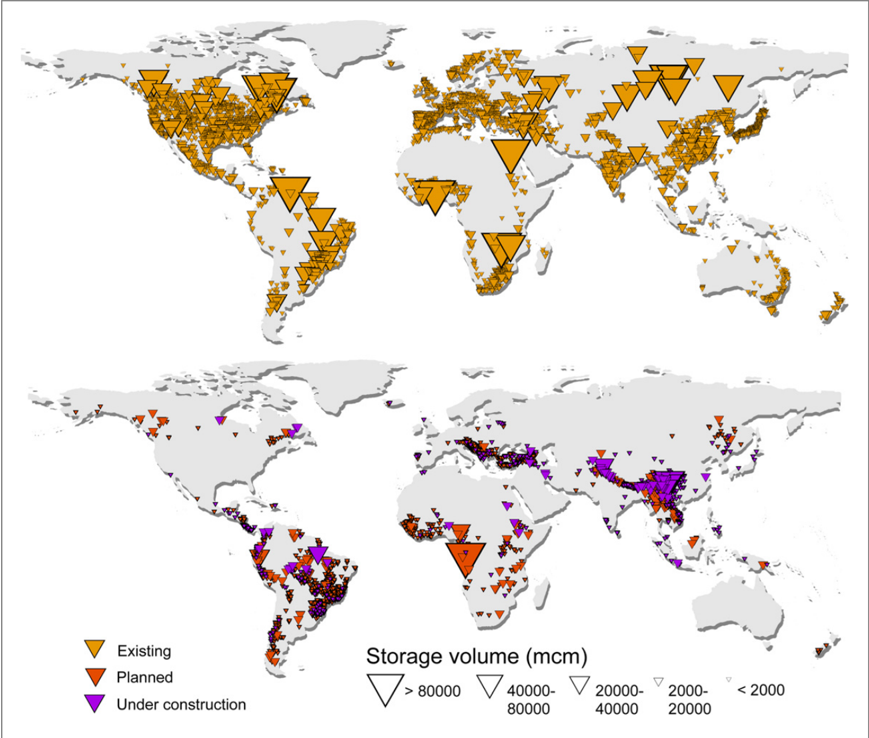
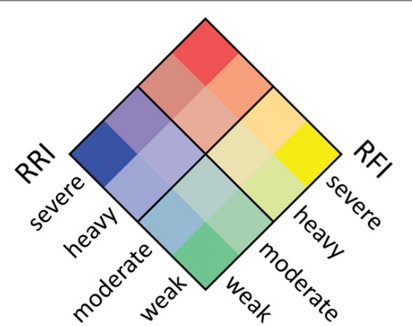
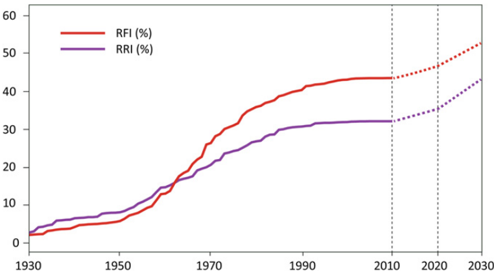
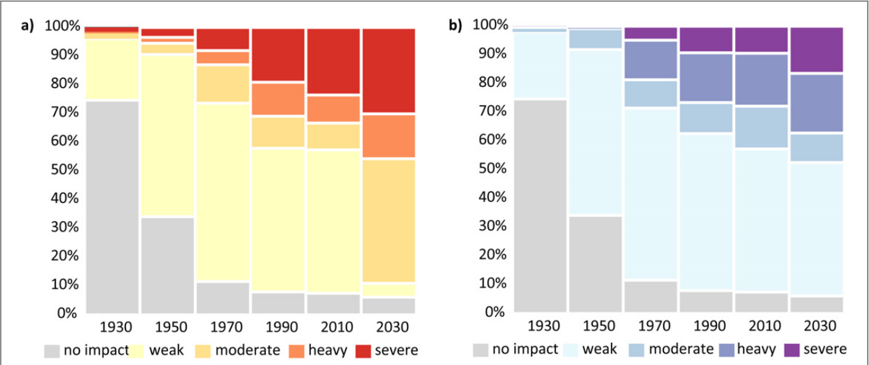
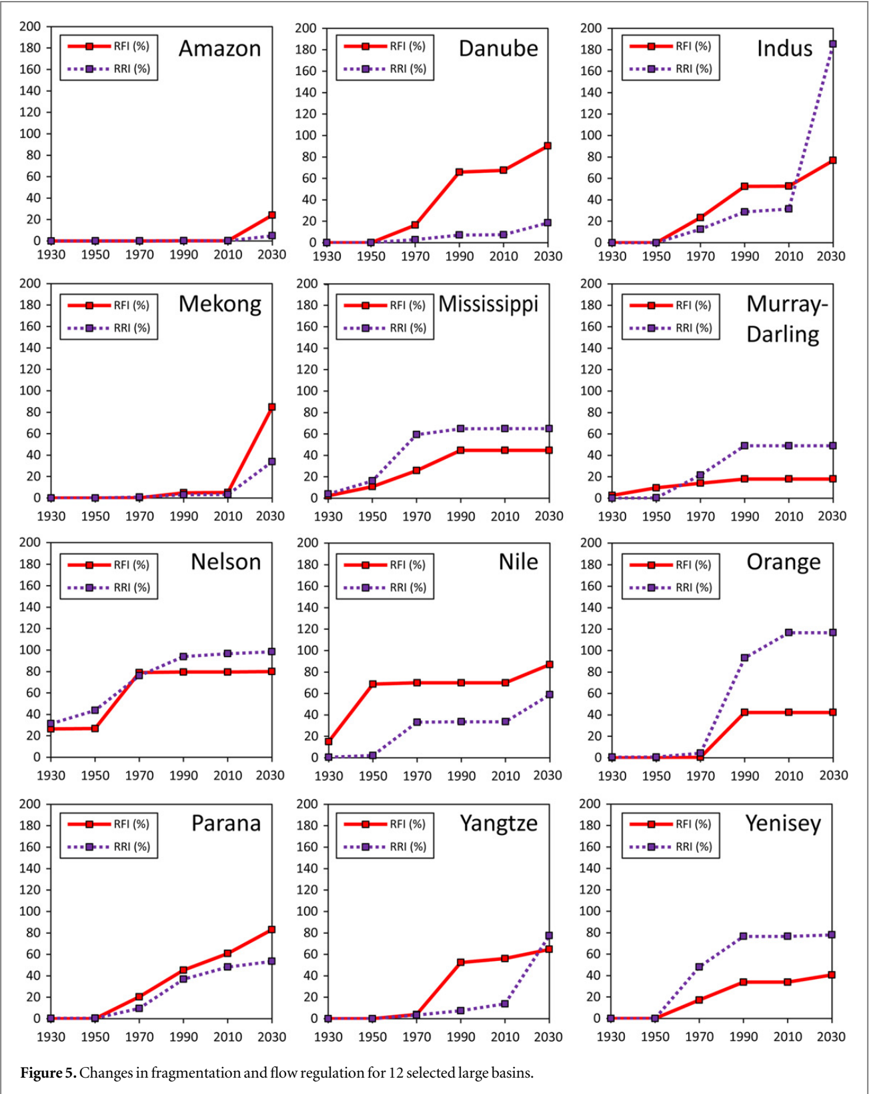
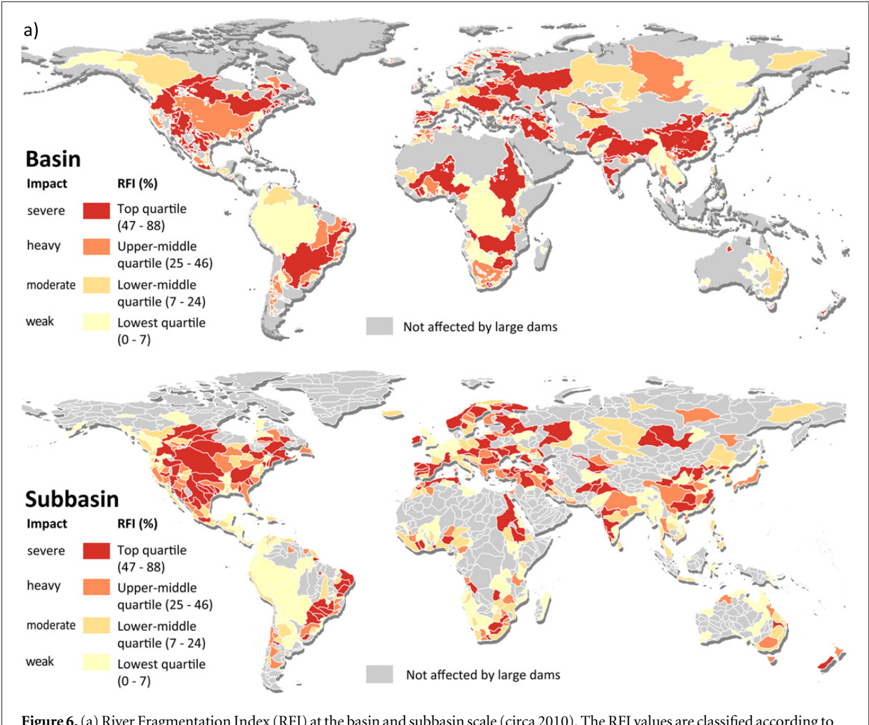
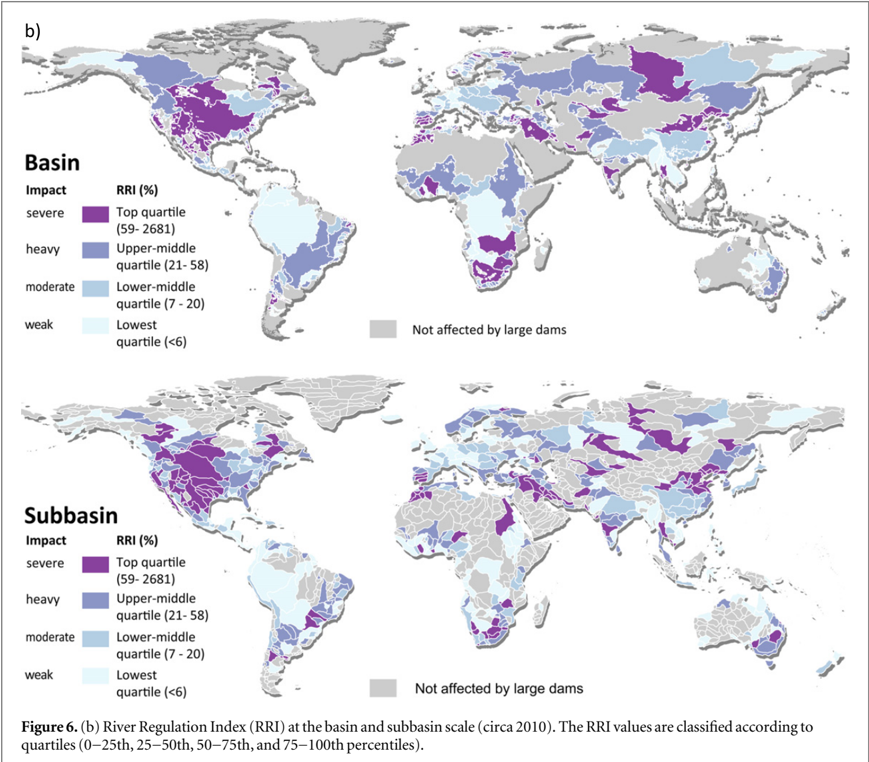
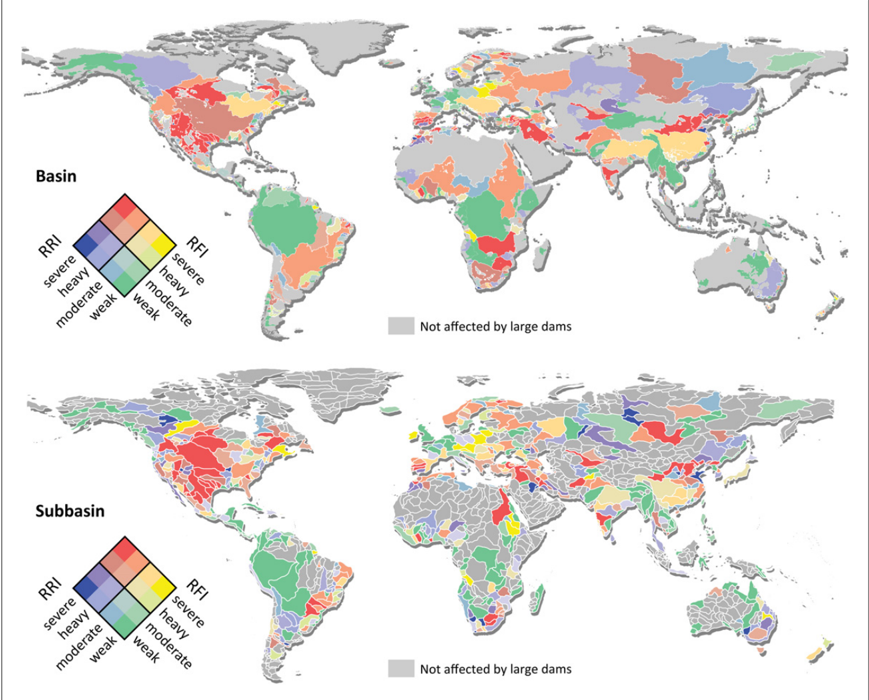
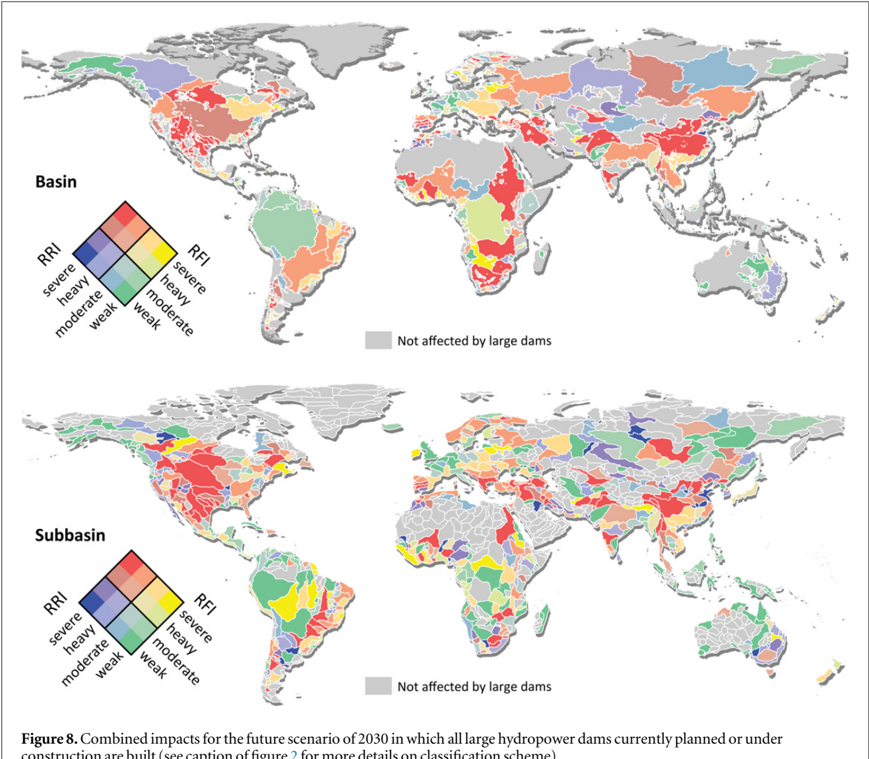
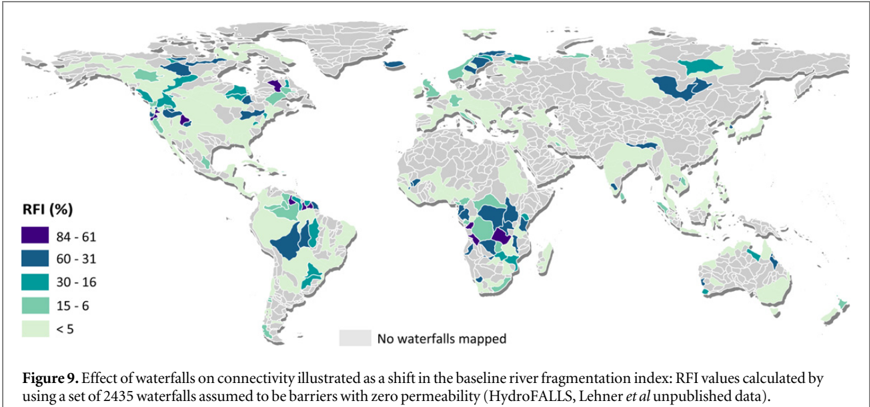
The global number of dam constructions has increased dramatically over the past six decades and is forecast to continue to rise, particularly in less industrialized regions. Identifying development pathways that can deliver the benefits of new infrastructure while also maintaining healthy and productive river systems is a great challenge that requires understanding the multifaceted impacts of dams at a range of scales. New approaches and advanced methodologies are needed to improve predictions of how future dam construction will affect biodiversity, ecosystem functioning, and fluvial geomorphology worldwide, helping to frame a global strategy to achieve sustainable dam development. Here, we respond to this need by applying a graph-based river routing model to simultaneously assess flow regulation and fragmentation by dams at multiple scales using data at high spatial resolution. We calculated the cumulative impact of a set of 6374 large existing dams and 3377 planned or proposed dams on river connectivity and river flow at basin and subbasin scales by fusing two novel indicators to create a holistic dam impact matrix for the period 1930–2030. Static network descriptors such as basin area or channel length are of limited use in hierarchically nested and dynamic river systems, so we developed the river fragmentation index and the river regulation index, which are based on river volume. These indicators are less sensitive to the effects of network configuration, offering increased comparability among studies with disparate hydrographies as well as across scales. Our results indicate that, on a global basis, 48% of river volume is moderately to severely impacted by either flow regulation, fragmentation, or both. Assuming completion of all dams planned and under construction in our future scenario, this number would nearly double to 93%, largely due to major dam construction in the Amazon Basin. We provide evidence for the importance of considering small to medium sized dams and for the need to include waterfalls to establish a baseline of natural fragmentation. Our versatile framework can serve as a component of river fragmentation and connectivity assessments; as a standardized, easily replicable monitoring framework at global and basin scales; and as part of regional dam planning and management strategies.
Overview
The claims and statistics of this paper haven’t been checked yet.
Free: it reads the open-access text and checks the first 5 claims that cite a source we can check. Create a free account to check every claim.
Integrity signals
Registry
Cites
Statistics
Figures
Verification
Claims the paper makes
The claims and statistics of this paper haven’t been checked yet.
Free: it reads the open-access text and checks the first 5 claims that cite a source we can check. Create a free account to check every claim.
Claims other papers make about this one
Each is checked against this paper’s own text: does it say what the citing paper says it does?
In the citing paper
“HydroSHEDS is a hydrographic mapping product that provides river and catchment information for regional and global-scale applications in a consistent format ( 26 ), including catchment areas and discharge estimates.”
From Mapping the world’s free-flowing rivers (2019) · cites this paper as [26]
Self-check
Percentages, sums and reported differences re-computed from the paper’s own numbers.
The self-check needs the paper’s full text.
Citations
Cites
Vannote, R. L., Minshall, G. W., Cummins, K. W., Sedell, J. R., & Cushing, C. E. (1980) · Canadian Journal of Fisheries and Aquatic Sciences · doi:10.1139/f80-017 · Cited by 9,984 · cited 2×
“Following Ward (1989), connectivity has a longitudinal aspect that connects upstream and downstream ecosystems (Vannote et al 1980), a lateral dimension by linking riverine systems with wetlands and floodplains (Tockner et al 1999), and a vertical component that connects surface water with…”
InfluentialGlobal threats to human water security and river biodiversity
Vörösmarty, C. J., McIntyre, P. B., Gessner, M. O., Dudgeon, D., Prusevich, A., Green, P., Glidden, S., Bunn, S. E., Sullivan, C. A., Liermann, C. R., et al. (2010) · Nature · doi:10.1038/nature09440 · Cited by 7,582
Poff, N. L., Allan, J. D., Bain, M. B., Karr, J. R., Prestegaard, K. L., Richter, B. D., Sparks, R. E., & Stromberg, J. C. (1997) · BioScience · doi:10.2307/1313099 · Cited by 6,500 · cited 1×
“…ecological functioning (Ward and Stanford 1995, Pringle et al 2000, Carlisle et al 2011), e.g., by reducing sediment delivery to floodplains and deltas (Syvitski et al 2009), altering thermal regimes (Poole and Berman 2001), or by disrupting life cycles of freshwater species (Poff et al 1997).”
Mackay, A. (2008) · Journal of Environmental Quality · doi:10.2134/jeq2008.0015br · Cited by 5,591
Fragmentation and Flow Regulation of the World's Large River Systems
Nilsson, C., Reidy, C. A., Dynesius, M., & Revenga, C. (2005) · Science · doi:10.1126/science.1107887 · Cited by 3,509 · cited 7×
“The DOR has in one form or another been a key component of seminal studies on flow regulation (e.g., Nilsson et al 2005) or has been analyzed in terms of the hydrologically equivalent ‘change in residence time’ or ‘water aging’ (e.g., Vörösmarty et al 1997).”
InfluentialBasic Principles and Ecological Consequences of Altered Flow Regimes for Aquatic Biodiversity
BUNN, S. E., & ARTHINGTON, A. H. (2002) · Environmental Management · doi:10.1007/s00267-002-2737-0 · Cited by 3,379
Parry, M. L., Canziani, O. F., de Strihou, J.-P. V. Y., & Palutikof, J. P. (2007) · Cited by 2,783
High‐resolution mapping of the world's reservoirs and dams for sustainable river‐flow management
Lehner, B., Liermann, C. R., Revenga, C., Vörösmarty, C., Fekete, B., Crouzet, P., Döll, P., Endejan, M., Frenken, K., Magome, J., et al. (2011) · Frontiers in Ecology and the Environment · doi:10.1890/100125 · Cited by 2,515 · cited 7×
“In order to compare our volumetric results to Lehner et al (2011)who focussed on river length, we calculated the volume of all reaches with DOR values ⩾2%, a threshold previously used to distinguish ‘affected’ rivers (Dynesius and Nilsson 1994, Nilsson et al 2005, Lehner et al 2011).”
InfluentialSelf-citationSinking deltas due to human activities
Syvitski, J. P. M., Kettner, A. J., Overeem, I., Hutton, E. W. H., Hannon, M. T., Brakenridge, G. R., Day, J., Vörösmarty, C., Saito, Y., Giosan, L., et al. (2009) · Nature Geoscience · doi:10.1038/ngeo629 · Cited by 2,465
A Method for Assessing Hydrologic Alteration within Ecosystems
Richter, B. D., Baumgartner, J. V., Powell, J., & Braun, D. P. (1996) · Conservation Biology · doi:10.1046/j.1523-1739.1996.10041163.x · Cited by 2,463 · cited 2×
“We believe that the proposed method and indicators can be applied inmultiple ways: as a standardized, easily replicable monitoring tool that provides comparable global and basin-scale indicators of changes and trends in support of international initiatives such as the Millennium Development Goals, the Global Biodivers…”
Method
Research works printed but not linked: 3
- ICPDR, 2009, Danube River Basin District Management Plan. Part A—Basin-wide overview.
- Ostroff A, Wieferich D, Cooper A and Infante D M 2013 National Anthropogenic Barrier Dataset (NABD) (Denver, CO: United States Geological Service (USGS) Aquatic GAP Program)
- Vörösmarty C J, 1997, AMBIO: J. Hum. Environ., 26, 210
Cited by
Items 501–600 of 739
The use of riparian forests as ecological corridors: by passerine birds in the south of Portugal
Mendes, A. I. D. S. (2016) · Portuguese National Funding Agency for Science, Research and Technology (RCAAP Project by FCT) · Cited by 3
Allan, J. D., Castillo, M. M., & Capps, K. A. (2021) · Springer eBooks · doi:10.1007/978-3-030-61286-3_2 · Cited by 2
Dam-induced impacts on the water temperature of the Charef River (north-eastern Algeria)
Ziouch, O. R., Dali, N., Zebsa, R., Daifallah, T., Laskri, H., Ziani, C., Nouar, R., & Bensakhri, Z. (2025) · Marine and Freshwater Research · doi:10.1071/mf24219 · Cited by 2
Tian, G. U. O., Zheng, Z., Peng, L. I. A. O., Jingan, C. H. E. N., & Wen, G. U. O. (2025) · EARTH AND ENVIRONMENT · doi:10.3724/ee.1672-9250.2025.53.016 · Cited by 2
Li, J., He, P., He, X., Wei, J., Tang, Q., Tang, X., Gao, X., Mao, Z., Huang, P., & Wu, S. (2025) · CATENA · doi:10.1016/j.catena.2025.109672 · Cited by 2
Monk, W. A., Lento, J., Demma, M., MacKinnon, R., Kerr, G., & Curry, R. (2025) · Ecology and Society · doi:10.5751/es-16589-300440 · Cited by 2
Novel Tube Fishway successfully attracts and lifts wild fish
Kammanankada, H. R., Martino, J. C., Roberts, D. T., Slavich, E., & Felder, S. (2025) · Journal of Ecohydraulics · doi:10.1080/24705357.2025.2595957 · Cited by 2
Gupta, G., Pawar, S. D., Littleboy, C., Bunnefeld, N., Dickie, J., & Jones, I. L. (2025) · Energy Research & Social Science · doi:10.1016/j.erss.2025.104521 · Cited by 2
Lin, H., Lin, P., & Zheng, K. (2026) · Sustainable Horizons · doi:10.1016/j.horiz.2025.100174 · Cited by 2
Too many dams: habitat fragmentation threatens the future of the Japanese giant salamander
Duret, C., Kumar, O. A. S., Okada, S., TAGUCHI, Y., Takahashi, M. K., Kishida, O., & Denoël, M. (2026) · Journal for Nature Conservation · doi:10.1016/j.jnc.2026.127294 · Cited by 2
Chen, G., Zhang, Y., Guo, Z., Zhang, R., Hatano, Y., Fujii, M., & Yoshimura, C. (2026) · ACS ES&T Water · doi:10.1021/acsestwater.6c00563 · Cited by 2
Nian, X., Cohen, M. C. L., Zhang, W., Bertassoli, D. J., Muriel‐Cunha, J., Sawakuchi, H. O., & Sawakuchi, A. O. (2024) · Springer eBooks · doi:10.1007/978-981-97-7259-9_2 · Cited by 2
Dietary changes could compensate for potential yield reductions upon global river flow protection
Braun, J., Stenzel, F., Bodirsky, B. L., Jalava, M., & Gerten, D. (2022) · Global Sustainability · doi:10.1017/sus.2022.12 · Cited by 2
Bibliometrics-based Research Hotspots and Development Trends in Eco-hydrology of Dammed Rivers
Chen, Y., Feng, M., Shi, G., Jiang, M., & Jiang, M. (2023) · Chinese Geographical Science · doi:10.1007/s11769-023-1395-4 · Cited by 2
“It is estimated that 93% of the world’s rivers will be affected by dams by 2030 (Grill et al., 2015).”
BackgroundDevelopment of Underwater Acoustic Deterrents for Invasive Species Control
Woodley, C. M., Barkowski, N. A., Urbanczyk, A. C., & Zuercher, J. K. (2023) · Springer eBooks · doi:10.1007/978-3-031-10417-6_184-1 · Cited by 2
Barnett, Z. C., & Garrick, R. C. (2024) · PeerJ · doi:10.7717/peerj.18006 · Cited by 2
Lu, Y., Liu, Q., Li, Y., Jiao, Y., Cheng, B., Sun, G., Wu, Z., Zhang, Z., Tian, X., Tan, X., et al. (2025) · Ecohydrology · doi:10.1002/eco.70090 · Cited by 2
“Currently, most of the commonly used connectivity indices and models employ river segment length as a metric for assessing river habitat availability (Cote et al. 2009; Grill, Lehner, Lumsdon, et al. 2015; Isaak et al. 2007; S. K. McKay et al. 2013).”
Society and Geomorphology: Addressing the (Mis-)Use of Aggregate Resources
Soyez, D. (2016) · Advances in geographical and environmental sciences · doi:10.1007/978-4-431-56000-5_3 · Cited by 2
Ali, R., Abubaker, S., & Islam, S. (2019) · International Journal of Hydrology · doi:10.15406/ijh.2019.03.00185 · Cited by 2
Wang, J., Wu, T., LI, Q., & Wang, S. (2021) · Applied Ecology and Environmental Research · doi:10.15666/aeer/1906_45834597 · Cited by 2
“…of river is facing moderate and severe fragmentation by increasingly intensive anthropogenic activities (e.g. dam construction) on a global basis (Grill et al., 2015), and causes drastic change of land use types in the basin, which could lead to biodiversity loss, habitat degradation, and…”
BackgroundMilton, R., Finlayson, C. M., & Davidson, N. C. (2023) · Elsevier eBooks · doi:10.1016/b978-0-12-817803-4.00008-5 · Cited by 4
Piping fish upstream past weirs
Peirson, W. L., & Harris, J. H. (2025) · Journal of Ecohydraulics · doi:10.1080/24705357.2025.2500666 · Cited by 2
“Better records exist of dam location because of their large size (e.g. Grill et al. 2015).”
Ecological state of tropical wetlands under different human disturbances (Lake Tana, Ethiopia)
Mehari, A. K. (2023) · VUBIR (Vrije Universiteit Brussel) · Cited by 2
Restoration of Physical Integrity of Rivers
Polvi, L. E., & Baker, D. W. (2016) · Oxford University Press eBooks · doi:10.1093/obo/9780199363445-0059 · Cited by 2
Carpenter‐Bundhoo, L. (2020) · Griffith Research Online · doi:10.25904/1912/266 · Cited by 2
Glacier retreat and fluvial landscape response
Goss, G. (2021) · doi:10.11575/prism/39086 · Cited by 2
Electronic Tagging and Tracking of Animals in Inland Waters
Cooke, S. J., Brooks, J. L., Raby, G. D., Thorstad, E. B., Brownscombe, J. W., Vandergoot, C. S., Lennox, R. J., Bulté, G., Bino, G., & Thiem, J. D. (2022) · Elsevier eBooks · doi:10.1016/b978-0-12-819166-8.00061-x · Cited by 2
Loaiza, J. P. (2023) · RiuNet (Universitat Politècnica de València) · doi:10.4995/thesis/10251/192461 · Cited by 2
Winton, R. S., López‐Casas, S., Valencia‐Rodríguez, D., Bernal-Forero, C., Delgado, J., Wehrli, B., & Jiménez-Segura, L. F. (2023) · doi:10.1590/scielopreprints.5549 · Cited by 2
Kreibich, J., Glamore, W. C., Zheng, H., Chiew, F. H. S., Bino, G., & Kingsford, R. T. (2025) · EarthArXiv (California Digital Library) · doi:10.31223/x5d441 · Cited by 2
Zubick, P. (2024) · cIRcle (University of British Columbia) · doi:10.14288/1.0438637 · Cited by 2
Jaulin, E. (2025) · theses.fr (ABES) · doi:10.70675/bf27d800z91fcz4f54zbbd2z18424f5c947f · Cited by 2
Guerrero‐Lemus, R., & Shephard, L. E. (2017) · Lecture notes in energy · doi:10.1007/978-3-319-52311-8_8 · Cited by 1
Global Endangerment of Freshwater Biodiversity
Dudgeon, D. L. (2020) · Cambridge University Press eBooks · doi:10.1017/9781139032759.002 · Cited by 1
Quiroga, F. G. (2021) · Observatorio Medioambiental · doi:10.5209/obmd.79518 · Cited by 1
“En las últimas seis décadas, el número global de presas ha crecido cuantiosamente y se pronostica que continuará incrementando su número en las regiones menos desarrolladas (Grill et al., 2015).”
BackgroundHow Will Climate Change Affect Freshwater Biodiversity?
Dudgeon, D. L. (2020) · Cambridge University Press eBooks · doi:10.1017/9781139032759.007 · Cited by 1
Westphal, A. M., Green, D. J., Arndt, J. E., Darvill, R., & Drever, M. C. (2023) · Journal of Wildlife Management · doi:10.1002/jwmg.22455 · Cited by 1
Exploring Remote Sensing - Methods and Applications
Abdalla, R. M. (2024) · IntechOpen eBooks · doi:10.5772/intechopen.1003547 · Cited by 1
Assimilation of Satellite-Derived Reservoir Storage Data to Improve Global Hydrodynamic Modeling
Liu, P., Ran, Y., Zhao, Y., Lu, Z., Hao, S., Wang, S., & Tian, F. (2024) · Water · doi:10.3390/w16202927 · Cited by 1
Wentong, Z., He, W., Xianfu, Z., Chen, F., Zhang, J., Xiaowei, J., Feng, M., & Li, Z. (2025) · Journal of Lake Sciences · doi:10.18307/2025.0141 · Cited by 1
Martínez, B. G., Vélez-García, E., & Campos, A. P. (2025) · Physical Geography · doi:10.1080/02723646.2025.2456159 · Cited by 1
“The obtained values were grouped into the four categories proposed by Grill et al. (2015) by quartile ranges: mild (0.25), moderate (25–50), high (50–75) and severe (75–100).”
InfluentialConsequences of a drying reservoir: Positive or negative effects on riverine fish?
Rogowski, D. L., Fonken, D. R., Rogers, R. J., & Albrecht, B. (2025) · Transactions of the American Fisheries Society · doi:10.1093/tafafs/vnaf004 · Cited by 1
Liang, E., Tang, H., Liu, Y., Liu, S., Wu, J., Pan, W., Shang, Y., & Yin, S. (2025) · Renewable and Sustainable Energy Reviews · doi:10.1016/j.rser.2025.115723 · Cited by 1
Cao, Y., Xia, J., Cheng, Y., Chen, J., & Shanshan, D. E. N. G. (2025) · Earth Surface Processes and Landforms · doi:10.1002/esp.70187 · Cited by 1
“These dams have significantly altered downstream flow-sediment transport dynamics, with the global water volume of rivers moderately to severely affected by dam operation expected to increase from 48% at the beginning of the 21th century to over 90% by 2030 (Grill et al., 2015).”
Zhang, X., Qu, Y., Cai, Q., & Ye, L. (2025) · Aquatic Ecology · doi:10.1007/s10452-025-10246-2 · Cited by 1
“…elements like biological invasions (Scheffers et al. 2016) and climatic change (Gallardo et al. 2016), reservoir construction of hydroelectric dams (Grill et al. 2015), microplastic pollution (Lechner et al. 2014), and various external threatening factors, facing Abstract Understanding how…”
Hao, X., Hao, Y., Sun, X., & Tang, L. (2025) · Water · doi:10.3390/w18010068 · Cited by 1
Akhyar, A., Abdullah, A. F., & Hassan, Z. (2026) · Biodiversity and Conservation · doi:10.1007/s10531-026-03286-z · Cited by 1
“…create absolute barriers that fragment river networks, severing connectivity for fish migration and isolating populations, where a process acutely detrimental to non-diadromous primary freshwater species (Barbarossa et al. 2020 ; Chan et al. 2025 ; Reidy Liermann et al. 2012 ; Grill et al. 2015).”
Prajapati, R., Gardner, J., & Prum, P. (2026) · Scientific Reports · doi:10.1038/s41598-026-47267-2 · Cited by 1
“The temporal Degree of Regulation index (DOR) was used to quantify the extent of human influence on river discharge through dam regulation over time 58 .”
Gurjazkaitė, K., Akstinas, V., Meilutytė-Lukauskienė, D., & Jakimavičius, D. (2026) · International Journal of Environmental Science and Technology · doi:10.1007/s13762-026-07156-7 · Cited by 1
“Both large-and small-scale HPPs consistently modify flow regimes, suppress natural flood events, extend low-flow periods, and alter natural sediment regimes (Grill et al. 2015).”
Patterns of River Flow Regulation Across the World's Climate Regions
Chong, X. Y., Gibbins, C., & Batalla, R. J. (2026) · Hydrological Processes · doi:10.1002/hyp.70562 · Cited by 1
“…that are dammed, the number of large dams worldwide, and the degree to which dams are fragmenting rivers (Nilsson et al. 2005; Poff et al. 2007; Grill et al. 2015, 2019; Spinti et al. 2023) are powerful metrics that are commonly cited by those advocating protection of rivers and their…”
Decoding benthic macroinvertebrate communities in freshwater ecosystems leveraging environmental DNA
Zhang, Y., Yang, H., Liang, X., Zhang, M., Zhu, W., Yang, H., Fan, W., Ping, Y., & Li, K. (2026) · Water Research X · doi:10.1016/j.wroa.2026.100550 · Cited by 1
Morley, S. A., Duda, J. J., Coe, H. J., Peters, R. J., Liermann, M. C., Pess, G. R., McHenry, M. L., & Miller, A. R. (2026) · Frontiers in Ecology and Evolution · doi:10.3389/fevo.2026.1914975 · Cited by 1
Spatial and sectoral water demand assessment for the African continent
Vanham, D., Gunathilake, D., Gunasekara, B., Tilahun, S., Brouziyne, Y., Zimale, F. A., Rawat, M., Vanham, R., Hafyani, M. E., Thowfeek, A., et al. (2026) · Nature · doi:10.1038/s41586-026-11199-8 · Cited by 1
Sustainable or senseless? Global lessons from dam building
Fleming, D. (2017) · Dams and Reservoirs · doi:10.1680/jdare.17.00004 · Cited by 1
Survey of Water Managers for Twenty-First Century Challenges
Hossain, F., Arnold, J. R., Niyogi, D., Pielke, R. A., Chen, J., Wegner, D., Mitra, A., Burian, S. J., Beighley, R. E., Brown, C., et al. (2019) · Springer eBooks · doi:10.1007/978-3-030-26432-1_2 · Cited by 1
Macrobenthos Responses to Dam Removal and Habitat Restoration in the West River, Connecticut
Sheridan, R. W. (2019) · Digital Commons - New Heaven (University of New Haven) · Cited by 1
Vanishing Lakes and Threats to Lacustrine Biodiversity
Dudgeon, D. L. (2020) · Cambridge University Press eBooks · doi:10.1017/9781139032759.006 · Cited by 1
Dudgeon, D. L. (2020) · Cambridge University Press eBooks · doi:10.1017/9781139032759.003 · Cited by 1
Water–Energy–Food Security Nexus in Large Asian River Basins
Keskinen, M., Jalilov, S., & Varis, O. (2017) · MDPI eBooks · doi:10.3390/books978-3-03842-345-4 · Cited by 1
Silica Uptake, Assimilation, and Metabolism: Making Cell Walls
Glibert, P. M. (2024) · Springer eBooks · doi:10.1007/978-3-031-53897-1_14 · Cited by 1
Yuste, J. A. F., & Santa-María, C. M. (2024) · The urban book series · doi:10.1007/978-3-031-62641-8_5 · Cited by 1
Gilbert, E. I., Turner, T. F., Moses, M. E., & Webster, A. J. (2024) · Journal of Hydrology · doi:10.1016/j.jhydrol.2024.132000 · Cited by 1
Development of Underwater Acoustic Deterrents for Invasive Species Control
Woodley, C. M., Barkowski, N. A., Urbanczyk, A. C., & Zuercher, J. K. (2024) · Springer eBooks · doi:10.1007/978-3-031-50256-9_184 · Cited by 1
An agenda for conservation of South American rivers
Graça, M. A. S., Wantzen, K. M., de Mello, F. T., Callisto, M., & Rodríguez‐Olarte, D. (2024) · Elsevier eBooks · doi:10.1016/b978-0-12-823429-7.00025-2 · Cited by 1
Nagel-Myers, J., Walrath, K. A., & Bowdish, M. C. (2024) · Journal of Molluscan Studies · doi:10.1093/mollus/eyae041 · Cited by 1
Investigation of the hyporheic zone of two gravel-bed rivers after reservoir draining
Zagmajster, M., Mori, N., Bračko, G., Brancelj, A., Borko, Š., Delić, T., Fišer, Ž., Koselj, K., Prevorčnik, S., Zakšek, V., et al. (2024) · Fundamental and Applied Limnology / Archiv für Hydrobiologie · doi:10.1127/fal/2024/1504 · Cited by 1
Schneider, C. (2015) · Kobra (Universitätsbibliothek Kassel) · Cited by 1
Global development, acoustic and emissive consequences of hydropower
Lumsdon, A. E. (2016) · Universitätsbibliothek der FU Berlin Hochschulschriftenstelle u. Dokumentenserver · doi:10.15168/11572_368932 · Cited by 1
Self-citationSpecies richness and composition of avifaunal communities in a complex Amazonian landscape
Gilmore, B. (2020) · University of Salford Institutional Repository (University of Salford) · Cited by 1
dos Santos, N. C. L. (2016) · LA Referencia (Red Federada de Repositorios Institucionales de Publicaciones Científicas) · Cited by 1
Debt for nature swaps – which nature, how much and who pays?Preprint
Nedophil, C., Yue, M., & Hughes, A. C. (2021) · Research Square · doi:10.21203/rs.3.rs-1037851/v1 · Cited by 1
Hamilton, S. K. (2022) · Elsevier eBooks · doi:10.1016/b978-0-12-819166-8.00091-8 · Cited by 1
Editorial: Dams and Wetland Biodiversity: Impacts and Mitigating Measures
Wu, H., Zhou, Y., & Zhang, H. (2022) · Frontiers in Ecology and Evolution · doi:10.3389/fevo.2021.837271 · Cited by 1
“While about 50% of the river around the world is currently changed by dam, this percentage is expected to increase to 93% because of the pending construction of about 3,700 major hydropower dams (Grill et al., 2015).”
BackgroundClimate Change Exacerbates the Impacts of Small Hydropower Projects
Riggins, B. A. (2022) · doi:10.46569/20.500.12680/2r36v4677 · Cited by 1
Wannasin, C. (2023) · doi:10.18174/584572 · Cited by 1
Interconnected Disaster Risks Technical Report: Chinese Paddlefish Extinction
Narvaez, L., Janzen, S., & Sebesvári, Z. (2021) · UNU Collections (United Nations University) · doi:10.53324/alyr1854 · Cited by 1
The effects of low-head milldams on stream nitrogen processes
Hripto, J. (2022) · Library, Museums and Press - UDSpace (University of Delaware) · doi:10.58088/pb7z-x655 · Cited by 1
Using palaeolimnology to inform lake restoration in Madagascar
Unger, L. E. (2023) · UCL Discovery (University College London) · Cited by 1
Hwang, J. (2021) · CUNY Academic Works (City University of New York) · Cited by 1
de Azevedo, R. F. (2015) · LA Referencia (Red Federada de Repositorios Institucionales de Publicaciones Científicas) · Cited by 1
The effect of manipulated flows on fish kinematics and behaviour at migratory barriers
Sorisio, G. S. (2024) · ORCA Online Research @Cardiff (Cardiff University) · Cited by 1
Adaptation pathways to reconcile hydropower generation and aquatic ecosystems restoration
Dalcin, A. P. (2023) · Lume (Universidade Federal do Rio Grande do Sul) · Cited by 1
Caractérisation et stabilité de la matière organique des sédiments des grandes retenues
Bascle, S. (2020) · theses.fr (ABES) · doi:10.70675/8adaa690ze762z4a26zae01z36b3c3e5bad6 · Cited by 1
Sadki, M. (2023) · theses.fr (ABES) · doi:10.70675/3d83f357z3eb9z4b8czb59ez17a850e64504 · Cited by 1
Turgeon, K., Turpin, C., & Gregory‐Eaves, I. (2017) · bioRxiv (Cold Spring Harbor Laboratory) · doi:10.1101/129403
“In response to this demand, many large dams are currently in operation, or are being constructed in developing economies to provide hydroelectricity (Grill et al. 2015, Winemiller et al. 2016).”
BackgroundBerton, R. (2017) · Syracuse University Libraries (Syracuse University)
Schiffer, H. P., & Hennig, T. (2017) · Springer eBooks · doi:10.1007/978-3-658-09416-4_39
Genetic And Demographic Consequences Of Lake And River Habitat Fragmentation On Fishes In Vermont
Euclide, P. T. (2018) · ScholarWorks -A service of University of Vermont Libraries (University of Vermont)
Souza, D. R. D. G. (2014) · LA Referencia (Red Federada de Repositorios Institucionales de Publicaciones Científicas)
Drake, L. (2018) · Illinois Digital Environment for Access to Learning and Scholarship (University of Illinois at Urbana-Champaign)
Restoring hydro-impacted wetlands for secretive marsh birds
Westphal, A. M. (2019) · Summit (Simon Fraser University)
Prediction of sedimentation and bank erosion due to the construction of Kahang Dam
Nda, M. (2020) · UTHM Institutional Repository (Universiti Tun Hussein Onn Malaysia)
Teschlade, D. (2020) · DuEPublico (University of Duisburg-Essen) · doi:10.17185/duepublico/71411
Simonović, P. D. (2020) · Digital Archive of SASA (Serbian Academy of Sciences and Arts)
Ecosystem Services and Incentivizing Conservation of Freshwater Biodiversity
Dudgeon, D. L. (2020) · Cambridge University Press eBooks · doi:10.1017/9781139032759.008
Conservation of Freshwater Biodiversity: Opportunities and Initiatives
Dudgeon, D. L. (2020) · Cambridge University Press eBooks · doi:10.1017/9781139032759.009
Multi-scale assessment of environmental changes impact on subarctic glacierized watersheds hydrology
Chesnokova, A. (2020) · Espace ÉTS (ETS)
Metadata
- Authors
- Grill, G., Lehner, B., Lumsdon, A. E., MacDonald, G. K., Zarfl, C., & Reidy Liermann, C.
- Affiliations
- McGill University (CA)
- Leibniz Institute of Freshwater Ecology and Inland Fisheries (DE)
- University of Minnesota (US)
- Venue
- Environmental Research Letters
- Publisher
- IOP Publishing
- Published
- 2015-01-01
- Volume
- 10
- Issue
- 1
- Pages
- 015001
- ISSN
- 1748-9326 (ISSN-L)
- OpenAlex
- W2098921456
- Semantic Scholar
- e33c1b1aab65d6db9b2cac33ab424a011f8b3258
- Cited by
- 646
- References
- 86
- Citations by year
- 2026: 37 · 2025: 46 · 2024: 68 · 2023: 66 · 2022: 100 · 2021: 107 · 2020: 75 · 2019: 48 · 2018: 40 · 2017: 28 · 2016: 20 · 2015: 11
- FWCI
- 34.21
- Type
- journal article
- Language
- en
- Open access
- gold
- doi.org
- Licence
- cc-by
- iopscience.iop.org/info/page/text-and-data-mining (tdm, 5 d)
- creativecommons.org/licenses/by/3.0/ (vor, 5 d)
- Locations
- Environmental Research Letters (publishedVersion, cc-by)
- DOAJ (DOAJ: Directory of Open Access Journals) (submittedVersion)
- Refubium (Universitätsbibliothek der Freien Universität Berlin) (submittedVersion, cc-by)
- Universitätsbibliothek der FU Berlin Hochschulschriftenstelle u. Dokumentenserver (cc-by)
- Funders
- Gordon and Betty Moore Foundation
- World Wildlife Fund
- McGill University
- Nature Conservancy
- WWF International
- Natural Sciences and Engineering Research Council of Canada
- Topics
- Physical Sciences › Environmental Science › Nature and Landscape Conservation › Fish Ecology and Management Studies
- Physical Sciences › Earth and Planetary Sciences › Earth-Surface Processes › Hydrology and Sediment Transport Processes
- Physical Sciences › Environmental Science › Water Science and Technology › Water resources management and optimization
- Keywords
- dam impacts, river fragmentation, flow regulation, river connectivity, dam planning, Amazon basin, waterfalls
About these checks
Registry, retraction, Cites and statistics results are computed, not judged, with one exception: a printed reference that no index lists is read once by a model before it counts as a citation error. Claims are extracted by a model and kept only when their quote appears verbatim in the text; each cited source is then checked, with a model’s help, for whether it says what the claim relies on. Those verdicts can be wrong — read the claim’s quote and the cited source before relying on one.
Statistics and arithmetic are recomputed, not judged.
Confidence bands are shown only for fields calibrated on our annotated test set. None is calibrated yet, so no band is shown.
What counts as a claim ›How we measure confidence ›How we check this ›
Are you an author, or do you see a problem with this page? Request a review
Data sources
Bibliographic data: Semantic Scholar, OpenAlex, Crossref.
Contains information from the Semantic Scholar Academic Graph Datasets, made available under the ODC Attribution License (ODC-BY 1.0).
Semantic Scholar’s data is described in: Kinney, R., et al. (2023). The Semantic Scholar Open Data Platform. arXiv:2301.10140.
