

An index-based framework for assessing patterns and trends in river fragmentation and flow regulation by global dams at multiple scales
Open accessThe DOI matches its Crossref record; 86 of the 86 references it cites were found in a registry or an index.
Abstract
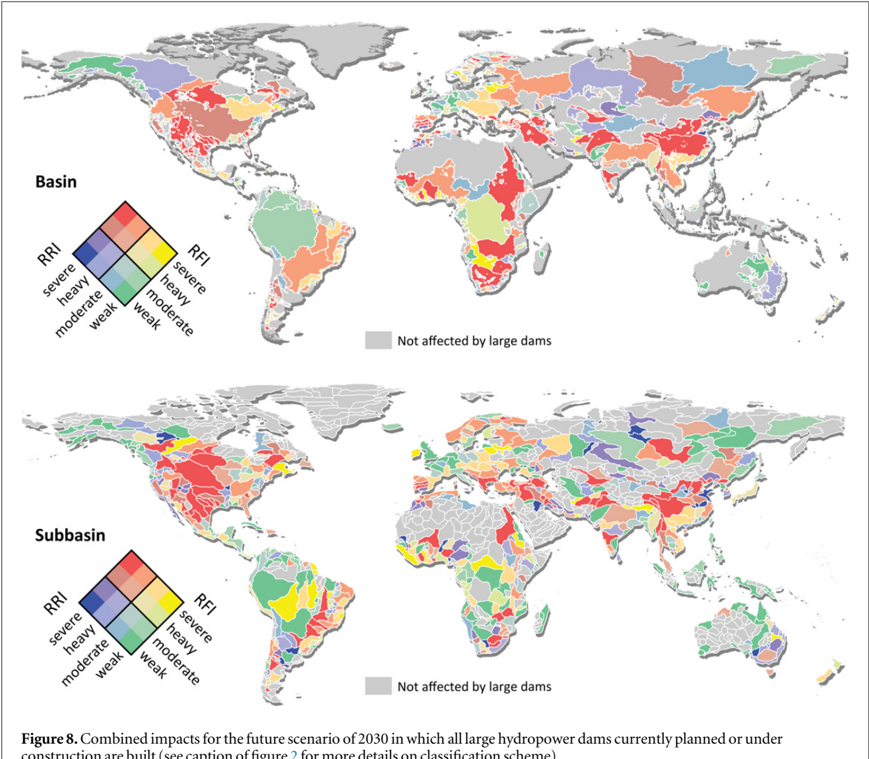
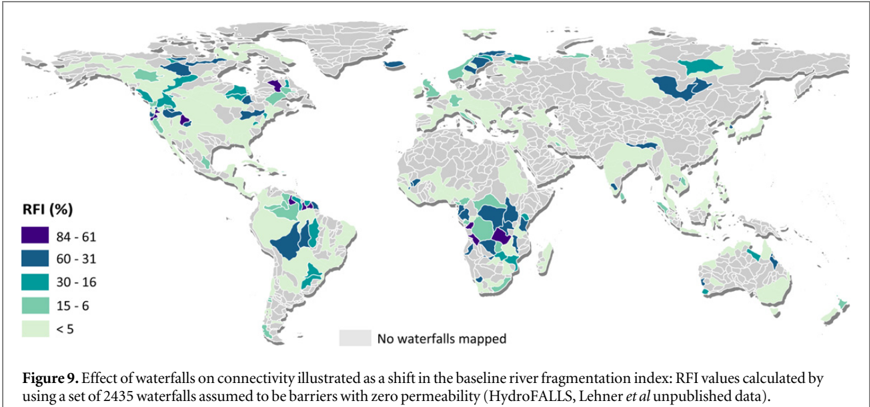
The global number of dam constructions has increased dramatically over the past six decades and is forecast to continue to rise, particularly in less industrialized regions. Identifying development pathways that can deliver the benefits of new infrastructure while also maintaining healthy and productive river systems is a great challenge that requires understanding the multifaceted impacts of dams at a range of scales. New approaches and advanced methodologies are needed to improve predictions of how future dam construction will affect biodiversity, ecosystem functioning, and fluvial geomorphology worldwide, helping to frame a global strategy to achieve sustainable dam development. Here, we respond to this need by applying a graph-based river routing model to simultaneously assess flow regulation and fragmentation by dams at multiple scales using data at high spatial resolution. We calculated the cumulative impact of a set of 6374 large existing dams and 3377 planned or proposed dams on river connectivity and river flow at basin and subbasin scales by fusing two novel indicators to create a holistic dam impact matrix for the period 1930–2030. Static network descriptors such as basin area or channel length are of limited use in hierarchically nested and dynamic river systems, so we developed the river fragmentation index and the river regulation index, which are based on river volume. These indicators are less sensitive to the effects of network configuration, offering increased comparability among studies with disparate hydrographies as well as across scales. Our results indicate that, on a global basis, 48% of river volume is moderately to severely impacted by either flow regulation, fragmentation, or both. Assuming completion of all dams planned and under construction in our future scenario, this number would nearly double to 93%, largely due to major dam construction in the Amazon Basin. We provide evidence for the importance of considering small to medium sized dams and for the need to include waterfalls to establish a baseline of natural fragmentation. Our versatile framework can serve as a component of river fragmentation and connectivity assessments; as a standardized, easily replicable monitoring framework at global and basin scales; and as part of regional dam planning and management strategies.
Overview
The claims and statistics of this paper haven’t been checked yet.
Free: it reads the open-access text and checks the first 5 claims that cite a source we can check. Create a free account to check every claim.
Integrity signals
Registry
Cites
Statistics
Figures
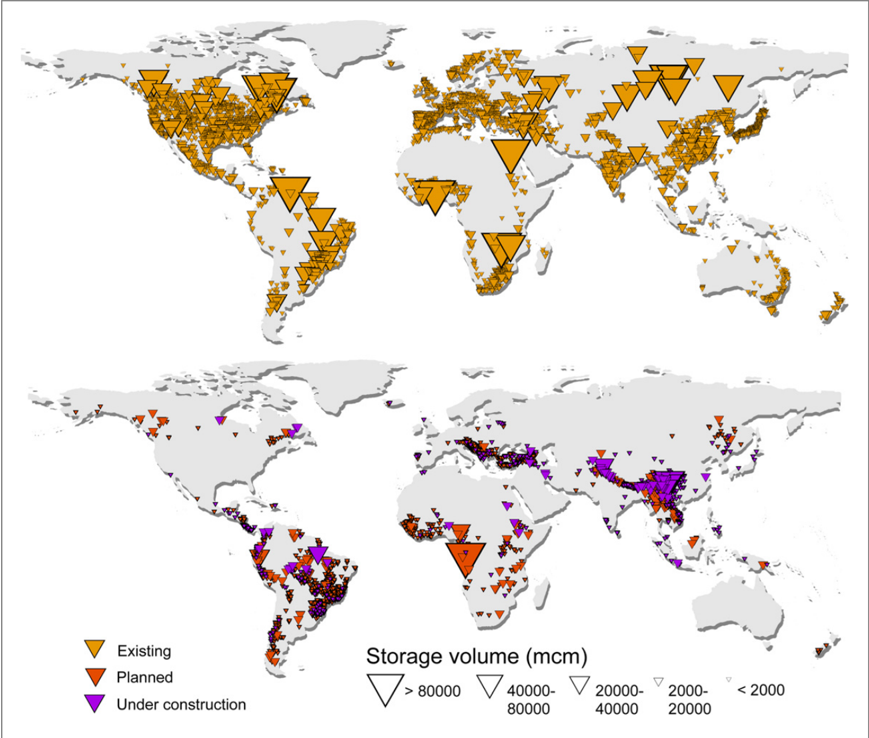
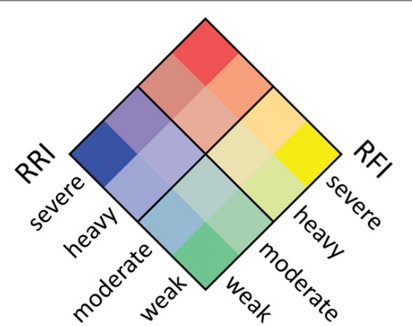
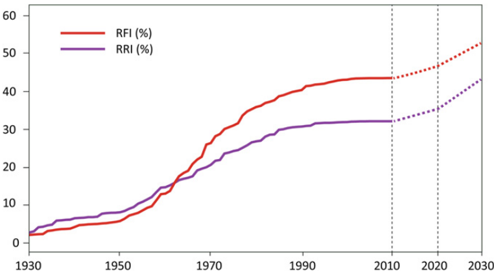
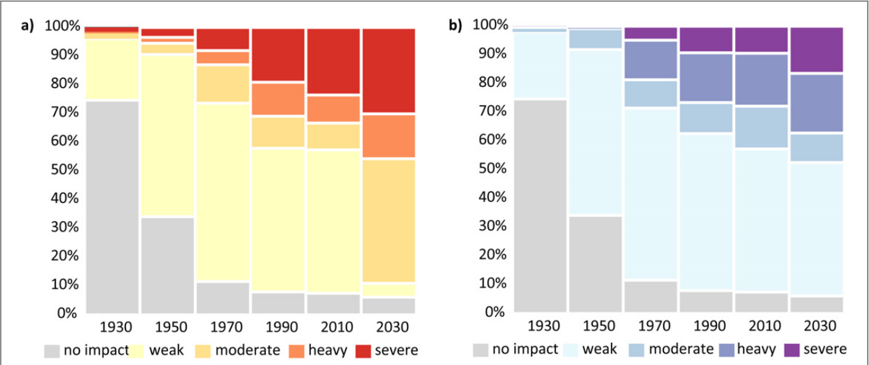
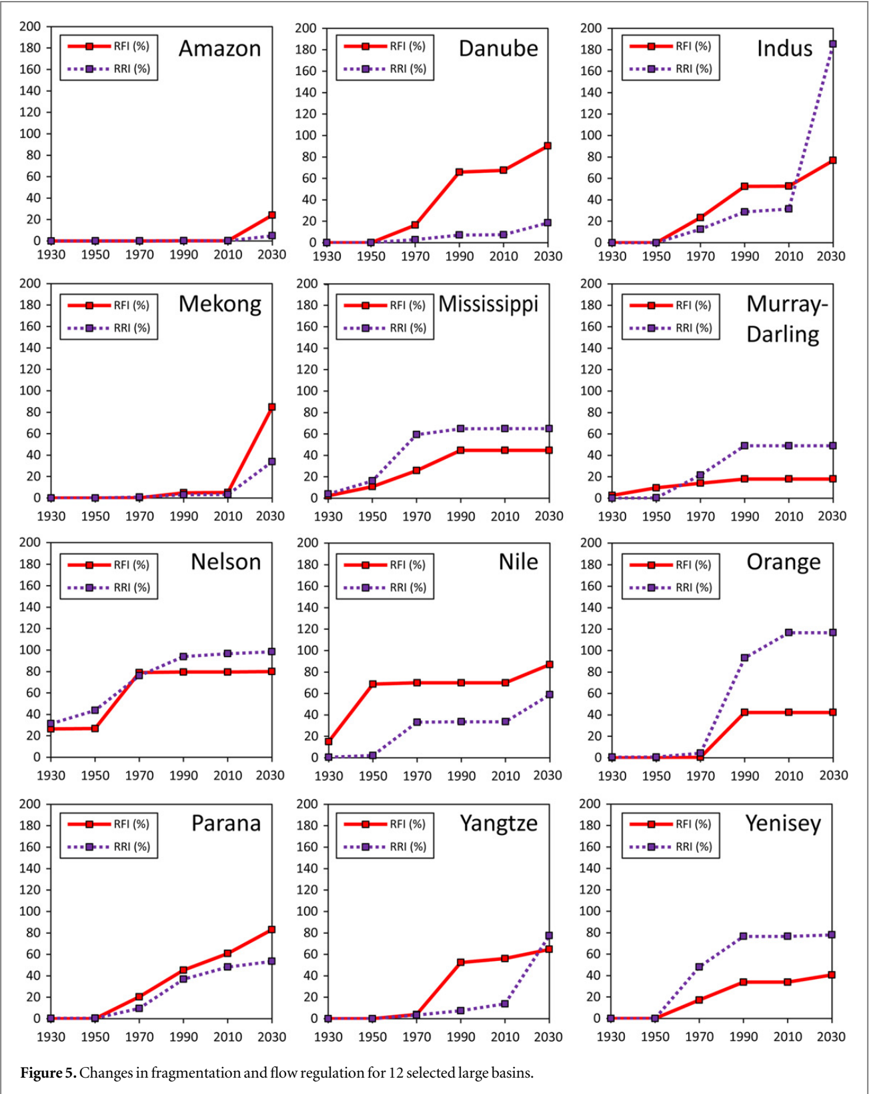
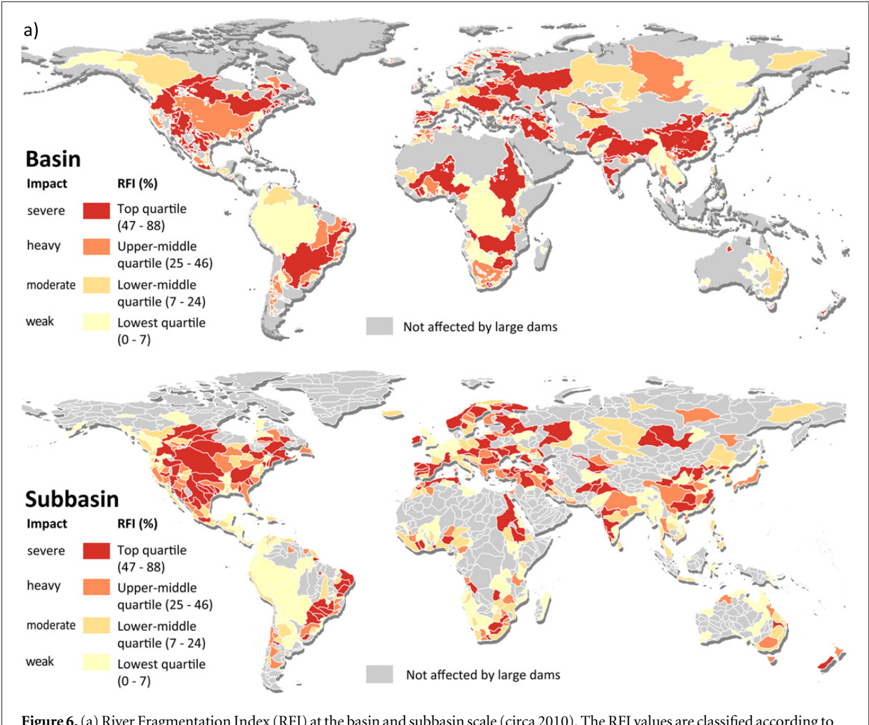
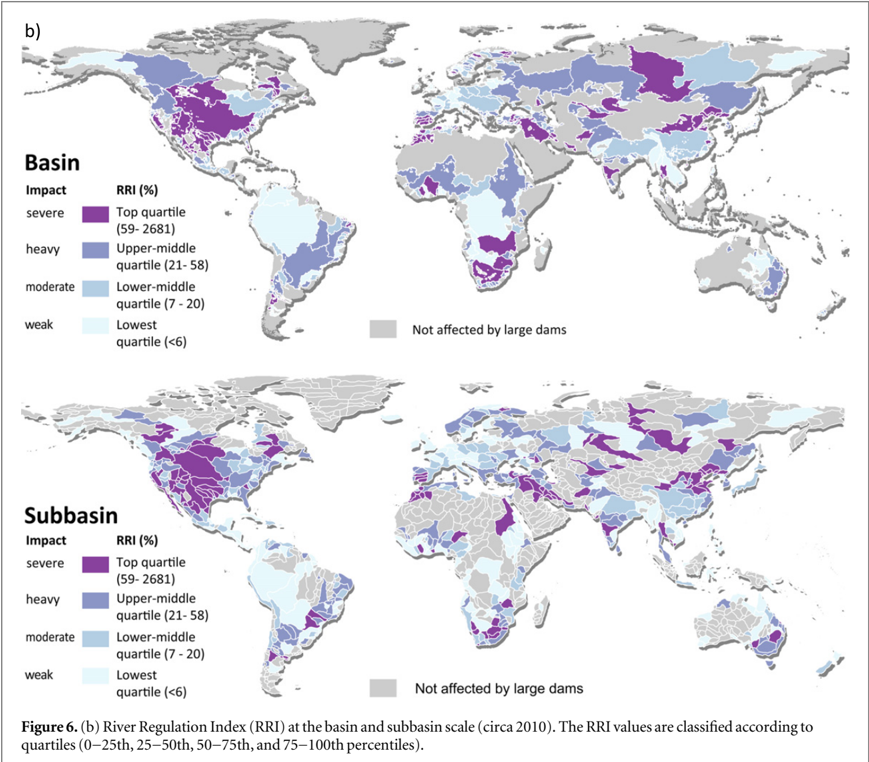
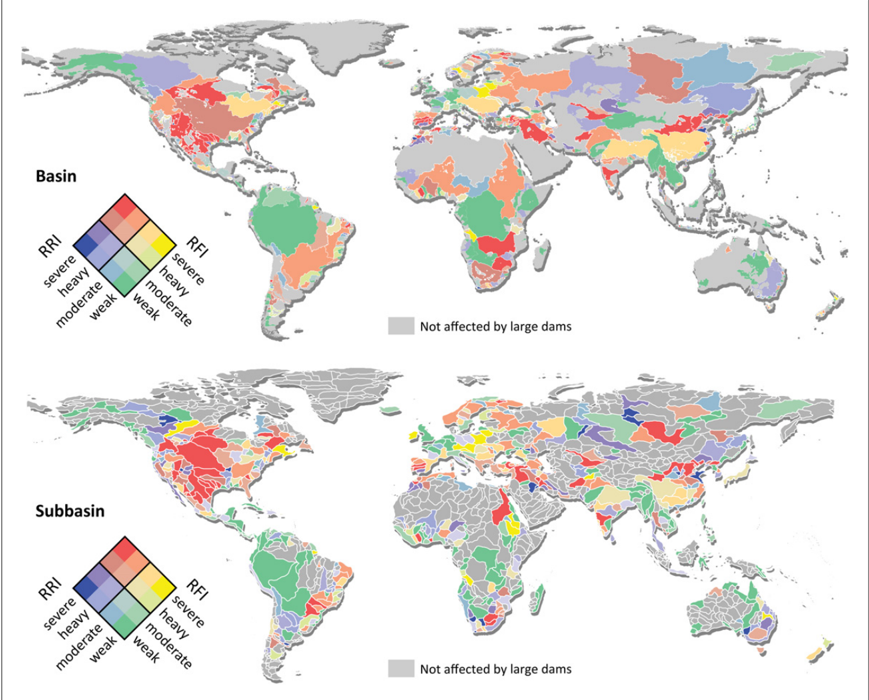
Verification
Claims the paper makes
The claims and statistics of this paper haven’t been checked yet.
Free: it reads the open-access text and checks the first 5 claims that cite a source we can check. Create a free account to check every claim.
Claims other papers make about this one
Each is checked against this paper’s own text: does it say what the citing paper says it does?
In the citing paper
“HydroSHEDS is a hydrographic mapping product that provides river and catchment information for regional and global-scale applications in a consistent format ( 26 ), including catchment areas and discharge estimates.”
From Mapping the world’s free-flowing rivers (2019) · cites this paper as [26]
Self-check
Percentages, sums and reported differences re-computed from the paper’s own numbers.
The self-check needs the paper’s full text.
Citations
Cites
Vannote, R. L., Minshall, G. W., Cummins, K. W., Sedell, J. R., & Cushing, C. E. (1980) · Canadian Journal of Fisheries and Aquatic Sciences · doi:10.1139/f80-017 · Cited by 9,984 · cited 2×
“Following Ward (1989), connectivity has a longitudinal aspect that connects upstream and downstream ecosystems (Vannote et al 1980), a lateral dimension by linking riverine systems with wetlands and floodplains (Tockner et al 1999), and a vertical component that connects surface water with…”
InfluentialGlobal threats to human water security and river biodiversity
Vörösmarty, C. J., McIntyre, P. B., Gessner, M. O., Dudgeon, D., Prusevich, A., Green, P., Glidden, S., Bunn, S. E., Sullivan, C. A., Liermann, C. R., et al. (2010) · Nature · doi:10.1038/nature09440 · Cited by 7,582
Poff, N. L., Allan, J. D., Bain, M. B., Karr, J. R., Prestegaard, K. L., Richter, B. D., Sparks, R. E., & Stromberg, J. C. (1997) · BioScience · doi:10.2307/1313099 · Cited by 6,500 · cited 1×
“…ecological functioning (Ward and Stanford 1995, Pringle et al 2000, Carlisle et al 2011), e.g., by reducing sediment delivery to floodplains and deltas (Syvitski et al 2009), altering thermal regimes (Poole and Berman 2001), or by disrupting life cycles of freshwater species (Poff et al 1997).”
Mackay, A. (2008) · Journal of Environmental Quality · doi:10.2134/jeq2008.0015br · Cited by 5,591
Fragmentation and Flow Regulation of the World's Large River Systems
Nilsson, C., Reidy, C. A., Dynesius, M., & Revenga, C. (2005) · Science · doi:10.1126/science.1107887 · Cited by 3,509 · cited 7×
“The DOR has in one form or another been a key component of seminal studies on flow regulation (e.g., Nilsson et al 2005) or has been analyzed in terms of the hydrologically equivalent ‘change in residence time’ or ‘water aging’ (e.g., Vörösmarty et al 1997).”
InfluentialBasic Principles and Ecological Consequences of Altered Flow Regimes for Aquatic Biodiversity
BUNN, S. E., & ARTHINGTON, A. H. (2002) · Environmental Management · doi:10.1007/s00267-002-2737-0 · Cited by 3,379
Parry, M. L., Canziani, O. F., de Strihou, J.-P. V. Y., & Palutikof, J. P. (2007) · Cited by 2,783
High‐resolution mapping of the world's reservoirs and dams for sustainable river‐flow management
Lehner, B., Liermann, C. R., Revenga, C., Vörösmarty, C., Fekete, B., Crouzet, P., Döll, P., Endejan, M., Frenken, K., Magome, J., et al. (2011) · Frontiers in Ecology and the Environment · doi:10.1890/100125 · Cited by 2,515 · cited 7×
“In order to compare our volumetric results to Lehner et al (2011)who focussed on river length, we calculated the volume of all reaches with DOR values ⩾2%, a threshold previously used to distinguish ‘affected’ rivers (Dynesius and Nilsson 1994, Nilsson et al 2005, Lehner et al 2011).”
InfluentialSelf-citationSinking deltas due to human activities
Syvitski, J. P. M., Kettner, A. J., Overeem, I., Hutton, E. W. H., Hannon, M. T., Brakenridge, G. R., Day, J., Vörösmarty, C., Saito, Y., Giosan, L., et al. (2009) · Nature Geoscience · doi:10.1038/ngeo629 · Cited by 2,465
A Method for Assessing Hydrologic Alteration within Ecosystems
Richter, B. D., Baumgartner, J. V., Powell, J., & Braun, D. P. (1996) · Conservation Biology · doi:10.1046/j.1523-1739.1996.10041163.x · Cited by 2,463 · cited 2×
“We believe that the proposed method and indicators can be applied inmultiple ways: as a standardized, easily replicable monitoring tool that provides comparable global and basin-scale indicators of changes and trends in support of international initiatives such as the Millennium Development Goals, the Global Biodivers…”
Method
Research works printed but not linked: 3
- ICPDR, 2009, Danube River Basin District Management Plan. Part A—Basin-wide overview.
- Ostroff A, Wieferich D, Cooper A and Infante D M 2013 National Anthropogenic Barrier Dataset (NABD) (Denver, CO: United States Geological Service (USGS) Aquatic GAP Program)
- Vörösmarty C J, 1997, AMBIO: J. Hum. Environ., 26, 210
Cited by
Items 701–739 of 739
Determinants and consequences of current and future freshwater fish invasions in China
Xiang, T. (2023) · theses.fr (ABES) · doi:10.70675/e0e2884azb67az4f20z86f8z0fd60e46cf9b
Zhang, L., Huang, H. Q., Li, H., Jin, Z., Guo, C., Yang, P., Wang, Y., & Qian, T. (2026) · Geomorphology · doi:10.1016/j.geomorph.2026.110333
Using Trail Cameras to Monitor Culvert Connectivity in Wadeable Streams
Twiner, L., Hanks, R. D., & Peoples, B. K. (2026) · River Research and Applications · doi:10.1002/rra.70145
A Method to Implement Natural Flow Regimes for Regulated Rivers
Som, N. A., & Naman, S. W. (2026) · Water Resources Research · doi:10.1029/2025wr041095
Ye, F., Lu, K., Li, Q., Tu, S., Yu, H., & Gao, H. (2026) · Spectrochimica Acta Part A Molecular and Biomolecular Spectroscopy · doi:10.1016/j.saa.2026.128092
Zhong, H., Jiang, G., Guo, X., Li, Y., Li, M., Zhang, W., & Zhang, P. (2026) · Journal of Environmental Management · doi:10.1016/j.jenvman.2026.130216
Integrated impact quantification of proposed hydropower plants in Africa
Peters, R., Berlekamp, J., Tockner, K., & Zarfl, C. (2026) · Scientific Reports · doi:10.1038/s41598-026-59624-2
“RePP Africa includes information on reservoir areas for HPPs only; therefore, we additionally used data on existing dams and reservoirs with main purposes other than electricity generation from the Global Reservoir and Dam Database (GRanD)) 43 .”
Self-citationYao, Y., Yu, G., Han, L., Li, P., Chen, Z., Yan, Z., & Liu, C. (2026) · Journal of Geophysical Research Oceans · doi:10.1029/2025jc023391
Who dams, who bears: transboundary responsibility and inequality of global river damming
Li, Y. (2026) · Environmental Research Letters · doi:10.1088/1748-9326/ae93e2
“The global dam boom [7] has thus not only fragmented and regulated most large rivers [4, 9–11], with consequences for sediment supply, deltas and freshwater biodiversity [12–16], but redistributed water security between nations, underlying disputes over the Nile, the Mekong, the Tigris–Euphrates…”
Cavallini, E., Naldi, M., Viaroli, P., Longhi, D., Ferroni, G., & Nizzoli, D. (2026) · SSRN Electronic Journal · doi:10.2139/ssrn.7231388
Somorin, T., Yadav, S., Zemadim, B., Xie, H., Ringler, C., Kettle, C. J., Jones, S., Beillouin, D., & Gebrezgabher, S. (2025) · Agritrop (Cirad)
Wetlands and water quality: ecological functions, threats, and conservation strategies
Rawat, G., Miglani, R., Kumar, A., Parveen, N., Siddiqui, U., Dewali, S., Bisht, S. S., BISHT, H. C. S., & Tyagi, I. (2026) · Elsevier eBooks · doi:10.1016/b978-0-443-34222-6.00011-5
Li, J., He, X., Wei, J., Bao, Y., Tang, Q., Tang, X., Gao, X., Mao, Z., Zhu, K., Huang, P., et al. (2026) · International Soil and Water Conservation Research · doi:10.1016/j.iswcr.2026.100713
Southern Great Plains River Ecology: A Story of Anthropogenic Ecological Change
Lindemann-Mitchell, A., Fisher, J., Fenner, D., Brown, C., Abramson, C. I., d’Isa, R., & Wells, H. (2026) · Conservation · doi:10.3390/conservation6030104
Cai, Y. Z., Feng, M. L., Xie, T., Ning, Z. H., Liu, Q., Gao, F., Li, J., Li, X., & Cui, B. S. (2026) · Water Resources Research · doi:10.1029/2025wr042155
“…river–sea connectivity in the GBA is directionally consistent with previous studies documenting progressive fragmentation and reduced longitudinal connectivity under intensified regulation (Belletti et al., 2020; Grill et al., 2015; Lehner et al., 2011; Liermann et al., 2012; Nilsson et al., 2005).”
Yamada, T., Urabe, H., & Nakamura, F. (2026) · Animal Conservation · doi:10.1111/acv.70098
Trade-offs between hydropower production and metapopulation persistence in dendritic river networksPreprint
Falke, P., Viviroli, D., Schwemmle, R., Lange, K., Melián, C. J., & Schmid, M. (2026) · SSRN Electronic Journal · doi:10.2139/ssrn.7442475
da Silva, P. S., Makrakis, S., de Assumpção, L., Cavaretto, R. C., Neves, M. P., Dias, J. H. P., Keckeis, H., & Makrakis, M. C. (2026) · Diversity · doi:10.3390/d18100624
Loiseau, M.-V. (2025) · Sémaphore (Université du Québec à Rimouski)
Graph theory-based framework for Diagnosing River fragmentation and connectivity
Shin, J. H., & Song, C.-M. (2026) · Ecological Indicators · doi:10.1016/j.ecolind.2026.115528
Inverted trophic pyramids and transient fish community reorganization in large reservoirsPreprint
Sepúlveda-Correa, A., Rodríguez, M. A., & Turgeon, K. (2026) · bioRxiv (Cold Spring Harbor Laboratory) · doi:10.64898/2026.09.21.753197
Vulnerability to Dams of the Last Undammed Large Rivers of Southeast Asia
Gruel, C.-R., & Latrubesse, E. M. (2026) · River Research and Applications · doi:10.1002/rra.70189
A River Wave framework to unify river ecosystem concepts and predict ecological change
Hansen, H. H., Erickson, J., Lindmark, M., McPhan, L. M., Humphries, P., & Bergman, E. (2026) · Nature Water · doi:10.1038/s44221-026-00721-x
“Furthermore, it is unclear how to interpret and apply these concepts when most river flow patterns around the world are altered by dams 11–14 .”
Ibrahim, A. H., & Abo, A. A. (2026) · Water Practice & Technology · doi:10.2166/wpt.2026.470
Landscape alterations modify Silicon exports from land to sea
Sethna, L. R., Puppe, D., & Carey, J. C. (2026) · Oxford University Press eBooks · doi:10.1093/9780197766552.003.0010
Liu, P., Tang, L., & Sun, X. (2026) · Journal of Hydrology · doi:10.1016/j.jhydrol.2026.136648
Chea, R., Chrea, S., & Tudesque, L. (2026) · Limnologica · doi:10.1016/j.limno.2026.126394
Nemes-Kókai, Z., Bozóki, T., Lukács, Á., Bácsi, I., Sindler, A., Vaszkó, C., Borics, G., & B‐Béres, V. (2026) · Hydrobiologia · doi:10.1007/s10750-026-06444-0
Ζιώγας, Β.-Ά. Γ. (2026) · University of Thessaly Institutional Repository (University of Thessaly)
Twiner, L., Hoenke, K., & Peoples, B. K. (2026) · Aquatic Conservation Marine and Freshwater Ecosystems · doi:10.1002/aqc.70486
Chong, X. Y., Vericat, D., Batalla, R. J., Cavalli, M., Crema, S., Lee, K. S. P., & Gibbins, C. N. (2026) · Geomorphology · doi:10.1016/j.geomorph.2026.110606
Qiao, S., Su, B., Xu, D., Li, F., & Yang, Y. (2026) · Journal of Geophysical Research Oceans · doi:10.1029/2026jc024499
Richmond, T., Rahim, K. A. A., Gibbins, C. N., Creer, S., Hartikainen, H., & Zieritz, A. (2026) · Freshwater Biology · doi:10.1111/fwb.70342
Liu, S., Tian, X., Xu, F., Friberg, N. R., Jiang, S., Ren, L., & Shi, H. (2026) · Biology · doi:10.3390/biology15222065
Supporting information 1 of Drivers of Anaerobic Methanogenesis in Sub-Tropical Reservoir Sediments
Grinham, A., O’Sullivan, C., Dunbabin, M., Sturm, K., Gale, D., Clarke, W., & Albert, S. (2022) · doi:10.3389/fenvs.2022.852344.s001
Wang, F., Lu, Z., Wang, Y., Yan, R., & Chen, N. (2023) · doi:10.3389/fmars.2023.1206776.s001
Metadata
- Authors
- Grill, G., Lehner, B., Lumsdon, A. E., MacDonald, G. K., Zarfl, C., & Reidy Liermann, C.
- Affiliations
- McGill University (CA)
- Leibniz Institute of Freshwater Ecology and Inland Fisheries (DE)
- University of Minnesota (US)
- Venue
- Environmental Research Letters
- Publisher
- IOP Publishing
- Published
- 2015-01-01
- Volume
- 10
- Issue
- 1
- Pages
- 015001
- ISSN
- 1748-9326 (ISSN-L)
- OpenAlex
- W2098921456
- Semantic Scholar
- e33c1b1aab65d6db9b2cac33ab424a011f8b3258
- Cited by
- 646
- References
- 86
- Citations by year
- 2026: 37 · 2025: 46 · 2024: 68 · 2023: 66 · 2022: 100 · 2021: 107 · 2020: 75 · 2019: 48 · 2018: 40 · 2017: 28 · 2016: 20 · 2015: 11
- FWCI
- 34.21
- Type
- journal article
- Language
- en
- Open access
- gold
- doi.org
- Licence
- cc-by
- iopscience.iop.org/info/page/text-and-data-mining (tdm, 5 d)
- creativecommons.org/licenses/by/3.0/ (vor, 5 d)
- Locations
- Environmental Research Letters (publishedVersion, cc-by)
- DOAJ (DOAJ: Directory of Open Access Journals) (submittedVersion)
- Refubium (Universitätsbibliothek der Freien Universität Berlin) (submittedVersion, cc-by)
- Universitätsbibliothek der FU Berlin Hochschulschriftenstelle u. Dokumentenserver (cc-by)
- Funders
- Gordon and Betty Moore Foundation
- World Wildlife Fund
- McGill University
- Nature Conservancy
- WWF International
- Natural Sciences and Engineering Research Council of Canada
- Topics
- Physical Sciences › Environmental Science › Nature and Landscape Conservation › Fish Ecology and Management Studies
- Physical Sciences › Earth and Planetary Sciences › Earth-Surface Processes › Hydrology and Sediment Transport Processes
- Physical Sciences › Environmental Science › Water Science and Technology › Water resources management and optimization
- Keywords
- dam impacts, river fragmentation, flow regulation, river connectivity, dam planning, Amazon basin, waterfalls
About these checks
Registry, retraction, Cites and statistics results are computed, not judged, with one exception: a printed reference that no index lists is read once by a model before it counts as a citation error. Claims are extracted by a model and kept only when their quote appears verbatim in the text; each cited source is then checked, with a model’s help, for whether it says what the claim relies on. Those verdicts can be wrong — read the claim’s quote and the cited source before relying on one.
Statistics and arithmetic are recomputed, not judged.
Confidence bands are shown only for fields calibrated on our annotated test set. None is calibrated yet, so no band is shown.
What counts as a claim ›How we measure confidence ›How we check this ›
Are you an author, or do you see a problem with this page? Request a review
Data sources
Bibliographic data: Semantic Scholar, OpenAlex, Crossref.
Contains information from the Semantic Scholar Academic Graph Datasets, made available under the ODC Attribution License (ODC-BY 1.0).
Semantic Scholar’s data is described in: Kinney, R., et al. (2023). The Semantic Scholar Open Data Platform. arXiv:2301.10140.
