

Known unknowns: indirect energy effects of information and communication technology
Open accessThe DOI matches its Crossref record; 93 of the 94 references it cites were found in a registry or an index.
Abstract
Background. There has been sustained and growing interest in characterizing the net energy impact of information and communication technology (ICT), which results from indirect effects offsetting (or amplifying) the energy directly consumed by ICT equipment. These indirect effects may be either positive or negative, and there is considerable disagreement as to the direction of this sign as well as the effect magnitude. Literature in this area ranges from studies focused on a single service (such as e-commerce versus traditional retail) to macroeconomic studies attempting to characterize the overall impact of ICT. Methods. We review the literature on the indirect energy effect of ICT found via Google Scholar, our own research, and input from other researchers in the field. The various studies are linked to an effect taxonomy, which is synthesized from several different hierarchies present in the literature. References are further grouped according to ICT service (e.g., e-commerce, telework) and summarized by scope, method, and quantitative and qualitative findings. Review results. Uncertainty persists in understanding the net energy effects of ICT. Results of indirect energy effect studies are highly sensitive to scoping decisions and assumptions made by the analyst. Uncertainty increases as the impact scope broadens, due to complex and interconnected effects. However, there is general agreement that ICT has large energy savings potential, but that the realization of this potential is highly dependent on deployment details and user behavior. Discussion. While the overall net effect of ICT is likely to remain unknown, this review suggests several guidelines for improving research quality in this area, including increased data collection, enhancing traditional modeling studies with sensitivity analysis, greater care in scoping, less confidence in characterizing aggregate impacts, more effort on understanding user behavior, and more contextual integration across the different levels of the effect taxonomy.
Overview
The claims and statistics of this paper haven’t been checked yet.
Free: it reads the open-access text and checks the first 5 claims that cite a source we can check. Create a free account to check every claim.
Integrity signals
Registry
Cites
Statistics
Figures
Verification
Claims the paper makes
The claims and statistics of this paper haven’t been checked yet.
Free: it reads the open-access text and checks the first 5 claims that cite a source we can check. Create a free account to check every claim.
Claims other papers make about this one
Each is checked against this paper’s own text: does it say what the citing paper says it does?
The source backs part of the claim, not all of it — or backs it for a different population, condition or comparison.
In the citing paper
“Given that AI pervades many different areas of society and economic sectors, it is more difficult to enumerate all of the possible indirect impacts and rebound effects that it can have, which would involve considering the different interactions at play within every sector and between them [23, 53].”
From From Efficiency Gains to Rebound Effects: The Problem of Jevons' Paradox in AI's Polarized Environmental Debate (2025) · cites this paper as [53]
Experimental — accuracy not yet measuredThe cited source says what the claim attributes to it.
In the citing paper
“Other studies on energy savings in e-commerce also show ambiguities, e.g., [144-146].”
From Digitalization and the Decoupling Debate: Can ICT Help to Reduce Environmental Impacts While the Economy Keeps Growing? (2020) · cites this paper as [144]
Self-check
Percentages, sums and reported differences re-computed from the paper’s own numbers.
The self-check needs the paper’s full text.
Citations
Cites
Demand Side Management: Demand Response, Intelligent Energy Systems, and Smart Loads
Palensky, P., & Dietrich, D. (2011) · IEEE Transactions on Industrial Informatics · doi:10.1109/tii.2011.2158841 · Cited by 2,927
Energy efficiency and consumption—The rebound effect—A survey
A. Greening, L., Greene, D. L., & Difiglio, C. (2000) · Energy Policy · doi:10.1016/s0301-4215(00)00021-5 · Cited by 2,077 · cited 1×
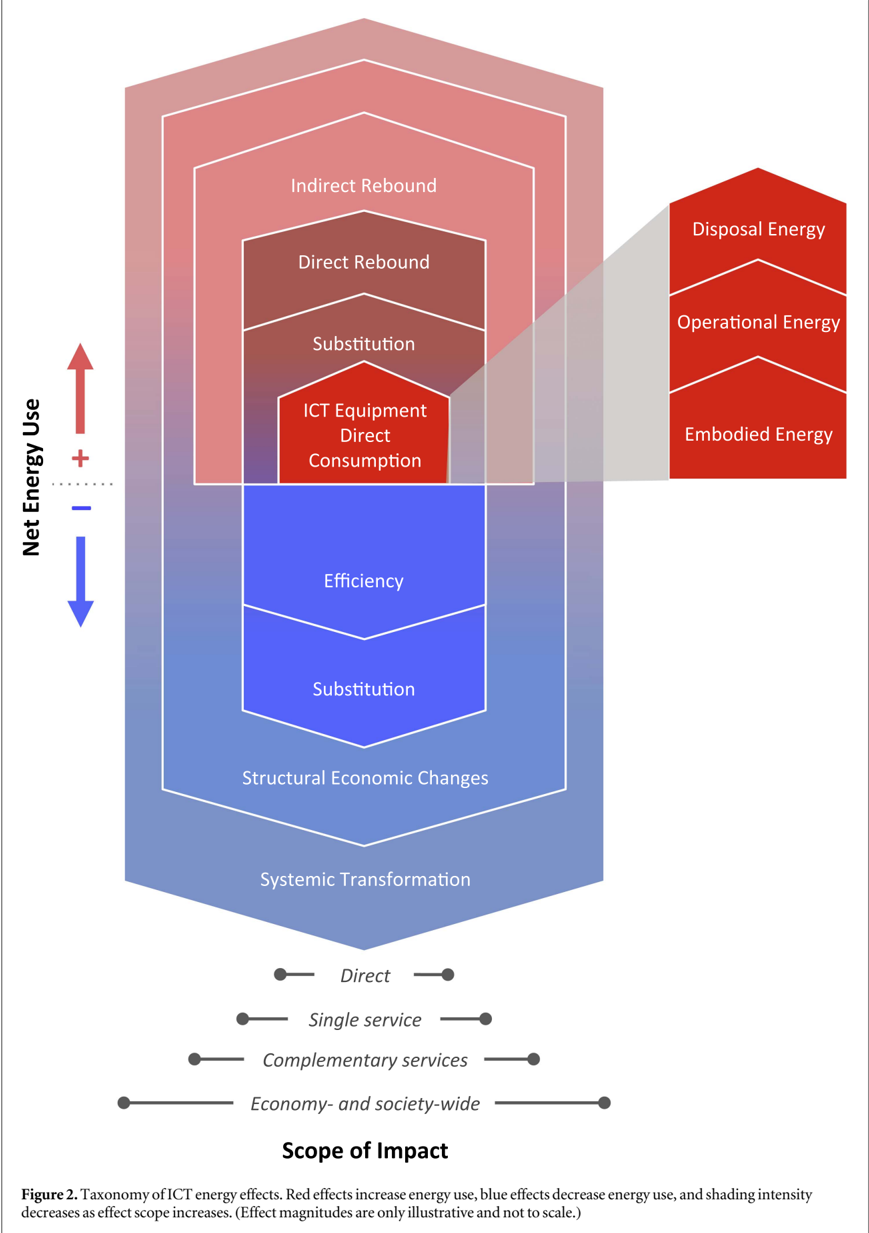
“Finally, transformational effects refer to the altering of human preferences and economic and social institutions caused in part by the development of ICT (Greening et al 2000, Plepys 2002).”
BackgroundTowards energy and resource efficient manufacturing: A processes and systems approach
Duflou, J. R., Sutherland, J. W., Dornfeld, D., Herrmann, C., Jeswiet, J., Kara, S., Hauschild, M., & Kellens, K. (2012) · CIRP Annals · doi:10.1016/j.cirp.2012.05.002 · Cited by 1,164
Multidisciplinary aerospace design optimization: survey of recent developments
Sobieszczanski-Sobieski, J., & Haftka, R. T. (1997) · Structural Optimization · doi:10.1007/bf01197554 · Cited by 1,052
Worldwide electricity used in data centers
Koomey, J. G. (2008) · Environmental Research Letters · doi:10.1088/1748-9326/3/3/034008 · Cited by 972
Jevons’ Paradox revisited: The evidence for backfire from improved energy efficiency
Sorrell, S. (2009) · Energy Policy · doi:10.1016/j.enpol.2008.12.003 · Cited by 801 · cited 1×
“Themodel in Erdmann et al (2004) presumes a priori that this phenomenon of actually increasing energy use via large rebound—known as backfire (Sorrell 2009)— will exist for intelligent transportation systems.”
BackgroundSmart manufacturing, manufacturing intelligence and demand-dynamic performance
Davis, J., Edgar, T., Porter, J., Bernaden, J., & Sarli, M. (2012) · Computers & Chemical Engineering · doi:10.1016/j.compchemeng.2012.06.037 · Cited by 762
Bunse, K., Vodicka, M., Schönsleben, P., Brülhart, M., & Ernst, F. O. (2011) · Journal of Cleaner Production · doi:10.1016/j.jclepro.2010.11.011 · Cited by 748
Basbagill, J., Flager, F., Lepech, M., & Fischer, M. (2013) · Building and Environment · doi:10.1016/j.buildenv.2012.11.009 · Cited by 615
Occupancy-driven energy management for smart building automation
Agarwal, Y., Balaji, B., Gupta, R., Lyles, J., Wei, M., & Weng, T. (2010) · Proceedings of the 2nd ACM Workshop on Embedded Sensing Systems for Energy-Efficiency in Building · doi:10.1145/1878431.1878433 · Cited by 570
Research works printed but not linked: 9
- Gillingham K, Rapson D and Wagner G 2015 The rebound effect and energy efficiency policy (http://papers.ssrn.com/sol3/ papers.cfm?abstract_id=2550710)
- Green K P and Mathur A 2008 Measuring and reducing Americans' indirect energy use AEI Energy and Environment Outlook (http://aei.org/wp-content/uploads/2011/10/20081204_ EEONo2g.pdf)
- Henderson P and Waitner M 2013 Real-Time Energy Management: A Case Study of Three Large Commercial Buildings in Washington, D.C. (Washington, DC: Natural Resources Defense Council) (http://nrdc.org/business/casestudies/ files/tower-companies-case-study.pdf)
- Koomey J G 2011 Growth in Data Center Electricity Use 2005 to 2010 (Oakland, CA: Analytics) (http://mediafire.com/file/ zzqna34282frr2f/koomeydatacenterelectuse2011finalve rsion.pdf)
- Rejeski D W 1999 Electronic impact Environ. Forum 16 32-8 (https://www.eli.org/the-environmental-forum/ electronic-impact)
- Roberts S 2009 Measuring the Relationship between ICT and the Environment (http://oecd-ilibrary.org/science-and- technology/measuring-the-relationship-between-ict-and- the-environment_221687775423)
- Roth K W, Goldstein F and Kleinman J 2002 Energy Consumption by Office and Telecommunications Equipment in Commercial Buildings Volume I: Energy Consumption Baseline (Cambridge, MA: Arthur D. Little, Inc.) (http://biblioite. ethz.ch/downloads/Roth_ADL_1.pdf)
- Schmidt J H and Pizzol M 2014 Critical Review of Four Comparative Lifecycle Assessments of Printed and Electronic Communication Aolborg, Denmark (http://lca-net.com/files/Review_of_ four_LCAs_on_printed_versus_electronic_media.pdf)
- Smart Manufacturing Leadership Coalition 2011 Implementing 21st Century Smart Manufacturing, Workshop Summary Report (Smart Manufacturing Leadership Coalition) (https:// smartmanufacturingcoalition.org/sites/default/files/ implementing_21st_century_smart_manufacturing_report_ 2011_0.pdf)
Cited by
Digitalization and energy consumption. Does ICT reduce energy demand?
Lange, S., Pohl, J., & Santarius, T. (2020) · Ecological Economics · doi:10.1016/j.ecolecon.2020.106760 · Cited by 1,132
United States Data Center Energy Usage Report
Lawrence Berkeley National Laboratory (LBNL), B., Shehabi, A., USDOE, Smith, S., Sartor, D., Brown, R., Herrlin, M., Koomey, J., Masanet, E., Horner, N., et al. (2016) · doi:10.2172/1372902 · Cited by 1,040
Self-citationAligning artificial intelligence with climate change mitigation
Kaack, L. H., Donti, P. L., Strubell, E., Kamiya, G., Creutzig, F., & Rolnick, D. (2022) · Nature Climate Change · doi:10.1038/s41558-022-01377-7 · Cited by 570
Del Río Castro, G., González Fernández, M. C., & Uruburu Colsa, Á. (2021) · Journal of Cleaner Production · doi:10.1016/j.jclepro.2020.122204 · Cited by 569
Smart home technologies in Europe: A critical review of concepts, benefits, risks and policies
Sovacool, B. K., & Furszyfer Del Rio, D. D. (2020) · Renewable and Sustainable Energy Reviews · doi:10.1016/j.rser.2019.109663 · Cited by 471
Taiebat, M., Brown, A. L., Safford, H. R., Qu, S., & Xu, M. (2018) · Environmental Science & Technology · doi:10.1021/acs.est.8b00127 · Cited by 334
A systematic review of the energy and climate impacts of teleworking
Hook, A., Court, V., Sovacool, B. K., & Sorrell, S. (2020) · Environmental Research Letters · doi:10.1088/1748-9326/ab8a84 · Cited by 297
Mitigation Pathways Compatible with Long-term Goals
(2023) · Climate Change 2022 - Mitigation of Climate Change · doi:10.1017/9781009157926.005 · Cited by 288
Morley, J., Widdicks, K., & Hazas, M. (2018) · Energy Research & Social Science · doi:10.1016/j.erss.2018.01.018 · Cited by 257
Madurai Elavarasan, R., Pugazhendhi, R., Irfan, M., Mihet-Popa, L., Khan, I. A., & Campana, P. E. (2022) · Renewable and Sustainable Energy Reviews · doi:10.1016/j.rser.2022.112204 · Cited by 202
Ligozat, A.-L., Lefevre, J., Bugeau, A., & Combaz, J. (2022) · Sustainability · doi:10.3390/su14095172 · Cited by 192
Zhou, X., Zhou, D., & Wang, Q. (2018) · Energy · doi:10.1016/j.energy.2018.03.115 · Cited by 190
A framework to analyze carbon impacts of digital economy: The case of China
Zhou, X., Zhou, D., Zhao, Z., & Wang, Q. (2022) · Sustainable Production and Consumption · doi:10.1016/j.spc.2022.03.002 · Cited by 170
Digital sufficiency: conceptual considerations for ICTs on a finite planet
Santarius, T., Bieser, J. C. T., Frick, V., Höjer, M., Gossen, M., Hilty, L. M., Kern, E., Pohl, J., Rohde, F., & Lange, S. (2022) · Annals of Telecommunications · doi:10.1007/s12243-022-00914-x · Cited by 171
Digitalization and Sustainability: A Call for a Digital Green Deal
Santarius, T., Dencik, L., Díez, T., Ferreboeuf, H., Jankowski, P., Hankey, S., Hilbeck, A., Hilty, L. M., Höjer, M., Kleine, D., et al. (2023) · Environmental Science & Policy · doi:10.1016/j.envsci.2023.04.020 · Cited by 168
Pohl, J., Hilty, L. M., & Finkbeiner, M. (2019) · Journal of Cleaner Production · doi:10.1016/j.jclepro.2019.02.018 · Cited by 164
Wei, X., Jiang, F., & Yang, L. (2023) · Environmental Impact Assessment Review · doi:10.1016/j.eiar.2023.107143 · Cited by 155
Bieser, J. C. T., & Hilty, L. M. (2018) · Sustainability · doi:10.3390/su10082662 · Cited by 152
Fouquet, R., & Hippe, R. (2022) · Energy Research & Social Science · doi:10.1016/j.erss.2022.102736 · Cited by 152
The energy rebound effect of digital development: Evidence from 285 cities in China
Peng, H.-R., Zhang, Y., & Liu, J. (2023) · Energy · doi:10.1016/j.energy.2023.126837 · Cited by 135
Santarius, T., Pohl, J., & Lange, S. (2020) · Sustainability · doi:10.3390/su12187496 · Cited by 132
Ma, R., & Lin, B. (2023) · Humanities and Social Sciences Communications · doi:10.1057/s41599-023-01839-z · Cited by 129
Williams, L., Sovacool, B. K., & Foxon, T. J. (2022) · Renewable and Sustainable Energy Reviews · doi:10.1016/j.rser.2021.112033 · Cited by 128
Green Cloud? An Empirical Analysis of Cloud Computing and Energy Efficiency
Park, J., Han, K., & Lee, B. (2022) · Management Science · doi:10.1287/mnsc.2022.4442 · Cited by 123
Rio, D. D. F. D., Sovacool, B. K., & Griffiths, S. (2021) · Energy and Climate Change · doi:10.1016/j.egycc.2021.100035 · Cited by 124
Digital economy development, corporate social responsibility and low‐carbon innovation
Chen, W. (2023) · Corporate Social Responsibility and Environmental Management · doi:10.1002/csr.2443 · Cited by 120
Critically reviewing smart home technology applications and business models in Europe
Rio, D. D. F. D., Sovacool, B. K., Bergman, N. M., & Makuch, Z. (2020) · Energy Policy · doi:10.1016/j.enpol.2020.111631 · Cited by 114
Bieser, J. C. T., Hintemann, R., Hilty, L. M., & Beucker, S. (2023) · Environmental Impact Assessment Review · doi:10.1016/j.eiar.2022.107033 · Cited by 113
Chen, J., Guo, Z., & Lei, Z. (2024) · Journal of Cleaner Production · doi:10.1016/j.jclepro.2024.141817 · Cited by 113
Digitalization and the Anthropocene
Creutzig, F., Acemoglu, D., Bai, X., Edwards, P. N., Hintz, M. J., Kaack, L. H., Kilkis, S., Kunkel, S., Luers, A., Milojevic-Dupont, N., et al. (2022) · Annual Review of Environment and Resources · doi:10.1146/annurev-environ-120920-100056 · Cited by 112
Court, V., & Sorrell, S. (2020) · Environmental Research Letters · doi:10.1088/1748-9326/ab6788 · Cited by 112
How does digitization enable green innovation? Evidence from Chinese listed companies
Chen, W., Zhu, C., Cheung, Q., Wu, S., Zhang, J., & Cao, J. (2024) · Business Strategy and the Environment · doi:10.1002/bse.3672 · Cited by 108
Pihkola, H., Hongisto, M., Apilo, O., & Lasanen, M. (2018) · Sustainability · doi:10.3390/su10072494 · Cited by 108
Lyu, K., Yang, S., Zheng, K., & Zhang, Y. (2023) · Energies · doi:10.3390/en16020761 · Cited by 100
Zhao, L., Rao, X., & Lin, Q. (2023) · The Science of The Total Environment · doi:10.1016/j.scitotenv.2023.166544 · Cited by 99
Supply chain digitalization, green technology innovation and corporate energy efficiency
Li, Z., Hu, B., Bao, Y., & Wang, Y. (2024) · Energy Economics · doi:10.1016/j.eneco.2024.108153 · Cited by 96
Wang, L., Wang, H., Cao, Z., He, Y., Dong, Z., & Wang, S. (2022) · Technological Forecasting and Social Change · doi:10.1016/j.techfore.2022.121969 · Cited by 96
Lin, B., & Huang, C. (2023) · Energy · doi:10.1016/j.energy.2023.127601 · Cited by 85
Li, X., Lepour, D., Heymann, F., & Maréchal, F. (2023) · Energy · doi:10.1016/j.energy.2023.127992 · Cited by 80
Powering green digitalization: Evidence from 5G network infrastructure in China
Guo, J., Wang, L., Zhou, W., & Chu, W. (2022) · Resources Conservation and Recycling · doi:10.1016/j.resconrec.2022.106286 · Cited by 79
Yang, G., Wang, F., Deng, F., & Xiang, X. (2023) · International Journal of Environmental Research and Public Health · doi:10.3390/ijerph20032178 · Cited by 73
Luccioni, A. S., Strubell, E., & Crawford, K. (2025) · Proceedings of the 2025 ACM Conference on Fairness, Accountability, and Transparency · doi:10.1145/3715275.3732007 · Cited by 71
ICT Development and Sustainable Energy Consumption: A Perspective of Energy Productivity
Yan, Z., Shi, R., & Yang, Z. (2018) · Sustainability · doi:10.3390/su10072568 · Cited by 70
The Routledge Handbook of Ecomedia Studies
López, A., Ivakhiv, A. J., Rust, S., Tola, M., Chang, A. Y., & Chu, K.-W. (2023) · Routledge eBooks · doi:10.4324/9781003176497 · Cited by 72
Impact of Teleworking on Travel Behaviour During the COVID-19 Era: The Case Of Sicily, Italy
Campisi, T., Tesoriere, G., Trouva, M., Papas, T., & Basbas, S. (2022) · Transportation research procedia · doi:10.1016/j.trpro.2021.12.033 · Cited by 68
Understanding the Environmental Impact of Generative AI Services
Berthelot, A., Caron, E., Jay, M., & Lefèvre, L. (2025) · Communications of the ACM · doi:10.1145/3725984 · Cited by 56
A field experiment on workplace norms and electric vehicle charging etiquette
Asensio, O. I., Apablaza, C., Lawson, M. C., & Walsh, S. E. (2021) · Journal of Industrial Ecology · doi:10.1111/jiec.13116 · Cited by 57
Jiang, H., He, B., Mubarik, M. S., & Shi, S. (2024) · Journal of Environmental Management · doi:10.1016/j.jenvman.2024.122689 · Cited by 56
Drivers and effects of digitalization on energy demand in low-carbon scenarios
Bergman, N. M., & Foxon, T. J. (2022) · Climate Policy · doi:10.1080/14693062.2022.2145260 · Cited by 55
A Survey on Energy Consumption and Environmental Impact of Video StreamingPreprint
Afzal, S., Mehran, N., Azimi, Z., Tashtarian, F., Amirpour, H., Prodan, R., & Timmerer, C. (2024) · arXiv (Cornell University) · doi:10.48550/arxiv.2401.09854 · Cited by 54
Hübner, N., Caspers, J., Coroamă, V. C., & Finkbeiner, M. (2024) · Journal of Industrial Ecology · doi:10.1111/jiec.13528 · Cited by 53
The twin innovation transitions of European regions
Fazio, G., Maioli, S., & Rujimora, N. (2024) · Regional Studies · doi:10.1080/00343404.2024.2309176 · Cited by 53
Wang, J., & Xu, T. (2021) · Environmental Impact Assessment Review · doi:10.1016/j.eiar.2021.106590 · Cited by 52
Huang, J., Chen, X., & Zhao, X. (2024) · Journal of the Knowledge Economy · doi:10.1007/s13132-024-01895-z · Cited by 51
Shen, N., Zhang, G., Zhou, J., Zhang, L., Wu, L., Zhang, J., & Shang, X. (2024) · Journal of Environmental Management · doi:10.1016/j.jenvman.2024.123296 · Cited by 51
Axenbeck, J., Berner, A., & Kneib, T. (2024) · Journal of Environmental Management · doi:10.1016/j.jenvman.2024.122317 · Cited by 50
India in 2 °C and well below 2 °C worlds: Opportunities and challenges
Vishwanathan, S. S., GARG, A. K., Tiwari, V., & Shukla, P. R. (2018) · Carbon Management · doi:10.1080/17583004.2018.1476588 · Cited by 49
A long road ahead: a review of the state of knowledge of the environmental effects of digitization
Roussilhe, G., Ligozat, A., & Quinton, S. (2023) · Current Opinion in Environmental Sustainability · doi:10.1016/j.cosust.2023.101296 · Cited by 45
Shifts in the smart research agenda? 100 priority questions to accelerate sustainable energy futures
Robison, R., Skjølsvold, T. M., Hargreaves, T., Renström, S., Wolsink, M., Judson, E., Pechancová, V., Kaplan, M. D., March, H., Lehne, J., et al. (2023) · Journal of Cleaner Production · doi:10.1016/j.jclepro.2023.137946 · Cited by 44
Patsavellas, J., & Salonitis, K. (2019) · Procedia CIRP · doi:10.1016/j.procir.2019.04.026 · Cited by 44
Impacts of remote work on vehicle miles traveled and transit ridership in the USA
Zheng, Y., Wang, S., Liu, L., Aloisi, J., & Zhao, J. (2024) · Nature Cities · doi:10.1038/s44284-024-00057-1 · Cited by 42
Evaluating the effects of ICT core elements on CO2 emissions: Recent evidence from OECD countries
Briglauer, W., Köppl–Turyna, M., Schwarzbauer, W., & Bittó, V. (2023) · Telecommunications Policy · doi:10.1016/j.telpol.2023.102581 · Cited by 42
Twin Transition: Digital Transformation Pathways for Sustainable Innovation
Youssef, A. B. (2025) · Sustainability · doi:10.3390/su17219491 · Cited by 41
Innovation, Technology Development and Transfer
Change, I. P. O. C. (2023) · Cambridge University Press eBooks · doi:10.1017/9781009157926.018 · Cited by 41
Electricity consumption in the digital era: Micro evidence from Chinese households
Qin, P., Liu, M., Su, L., Fei, Y., & Tan‐Soo, J. (2022) · Resources Conservation and Recycling · doi:10.1016/j.resconrec.2022.106297 · Cited by 40
Digitalization as a trigger for a rebound effect of electricity use
Peng, H.-R., & Qin, X.-F. (2024) · Energy · doi:10.1016/j.energy.2024.131585 · Cited by 39
Information and communication technology in shaping urban low carbon development pathways
Jacob, P. (2018) · Current Opinion in Environmental Sustainability · doi:10.1016/j.cosust.2018.05.015 · Cited by 32
Wang, K., Chen, B., & Li, Y. (2024) · Economic Change and Restructuring · doi:10.1007/s10644-024-09598-w · Cited by 31
A Review on Energy-Efficient Smart Home Load Forecasting Techniques
Jaaz, Z. A., Rusli, M. E., Rahmat, N. A., Khudhair, I. Y., Barazanchi, I. I. A., & Mehdy, H. S. (2021) · Proceeding of the Electrical Engineering Computer Science and Informatics · doi:10.23919/eecsi53397.2021.9624274 · Cited by 30
Examining the long-term reduction in commuting emissions from working from home
Stefaniec, A., Brazil, W., Whitney, W., Zhang, W., Colleary, B., & Caulfield, B. M. (2024) · Transportation Research Part D Transport and Environment · doi:10.1016/j.trd.2024.104063 · Cited by 30
Jia, S., Chen, X., & Jin, J. (2024) · Energy · doi:10.1016/j.energy.2024.131542 · Cited by 29
Smart working and flexible work arrangements: opportunities and risks for sustainable communities
Roberto, R., Penna, M., Felici, B., & Rao, M. (2023) · Intelligent Environments · doi:10.1016/b978-0-12-820247-0.00001-1 · Cited by 28
The effect of the digital economy on carbon emissions: an empirical study in China
Wang, C., Qi, F., Liu, P., Ibrahim, H., & Wang, X. (2023) · Environmental Science and Pollution Research · doi:10.1007/s11356-023-27742-3 · Cited by 28
Towards a conceptual framework of direct and indirect environmental effects of co-working
Vaddadi, B., Pohl, J., Bieser, J. C. T., & Kramers, A. (2020) · International Conference on ICT for Sustainability (ICT4S) · doi:10.1145/3401335.3401619 · Cited by 28
Cloud Energy Micro-Moment Data Classification: A Platform Study
Alsalemi, A., Al‐Kababji, A., Himeur, Y., Bensaali, F., & Amira, A. (2020) · IEEE/ACM International Conference on Utility and Cloud Computing (UCC) · doi:10.1109/ucc48980.2020.00066 · Cited by 27
Wohlschlager, D., Bluhm, H., Beucker, S., Pohl, J., & Fröhling, M. (2023) · Journal of Cleaner Production · doi:10.1016/j.jclepro.2023.138584 · Cited by 27
Han, Y., Du, X., Zhang, H., Ni, J., & Fan, F. (2023) · Energy · doi:10.1016/j.energy.2023.129890 · Cited by 27
The net climate effect of digitalization, differentiating between firms and households
Kopp, T., Nabernegg, M., & Lange, S. (2023) · Energy Economics · doi:10.1016/j.eneco.2023.106941 · Cited by 25
Zhao, K., Wu, C., & Liu, J. (2024) · Sustainability · doi:10.3390/su16177574 · Cited by 25
Wohlschlager, D., Haas, S., & Regett, A. (2022) · Procedia CIRP · doi:10.1016/j.procir.2022.02.097 · Cited by 25
Digital Economy, Green Finance, and Carbon Emissions: Evidence from China
Jin, W., Wang, Y., Yan, Y., Zhou, H., Xu, L., Zhang, Y., Xu, Y., & Zhang, Y. (2025) · Sustainability · doi:10.3390/su17125625 · Cited by 25
Stermieri, L., Kober, T., Schmidt, T. J., McKenna, R., & Panos, E. (2023) · Energy Research & Social Science · doi:10.1016/j.erss.2023.102961 · Cited by 24
Vanishing weekly hydropeaking cycles in American and Canadian rivers
Déry, S. J., Hernández‐Henríquez, M. A., Stadnyk, T., & Troy, T. J. (2021) · Nature Communications · doi:10.1038/s41467-021-27465-4 · Cited by 24
Desroches, C., Chauvin, M., Ladan, L., Vateau, C., Gosset, S., & Cordier, P. (2026) · Scientific Reports · doi:10.48550/arxiv.2501.14334 · Cited by 23
Pohl, J., Frick, V., Finkbeiner, M., & Santarius, T. (2022) · Sustainable Production and Consumption · doi:10.1016/j.spc.2022.04.003 · Cited by 23
Zhang, X., Yang, Y., & Wen, J. A. (2023) · Journal of Cleaner Production · doi:10.1016/j.jclepro.2023.139262 · Cited by 22
The environmental impact of data-driven precision medicine initiatives
Samuel, G. N., & Lucassen, A. (2022) · Cambridge Prisms Precision Medicine · doi:10.1017/pcm.2022.1 · Cited by 21
Digitisation and Low-Carbon Energy Transitions
Sareen, S., & Müller, K. (2022) · Springer eBooks · doi:10.1007/978-3-031-16708-9 · Cited by 21
Bornes, L., Letondal, C., & Vingerhoeds, R. A. (2024) · Designing Interactive Systems Conference · doi:10.1145/3643834.3661618 · Cited by 20
Zhu, B., Chen, G., & Wang, P. (2025) · Energy Economics · doi:10.1016/j.eneco.2025.108797 · Cited by 20
Direkte und indirekte Umwelteffekte der Informations- und Kommunikationstechnologie
Bieser, J. C. T., & Coroamă, V. C. (2020) · NachhaltigkeitsManagementForum | Sustainability Management Forum · doi:10.1007/s00550-020-00502-4 · Cited by 21
Wang, Y., Yuan, Y., Qian, X., & Chi, Y. (2024) · Frontiers in Environmental Science · doi:10.3389/fenvs.2024.1438927 · Cited by 19
Zhang, J., Yu, S., Xiong, X., & Hu, X. (2023) · Energy Economics · doi:10.1016/j.eneco.2023.107190 · Cited by 19
EKCHAJZER, D., Bornes, L., Combaz, J., Letondal, C., & Vingerhoeds, R. A. (2024) · International Conference on ICT for Sustainability (ICT4S) · doi:10.1109/ict4s64576.2024.00013 · Cited by 18
Seidel, A., May, N., Guenther, E., & Ellinger, F. (2021) · Telematics and Informatics · doi:10.1016/j.tele.2021.101686 · Cited by 18
Skill rebound: On an unintended effect of digitalization
Coroamă, V. C., & Pargman, D. (2020) · Proceedings of the 7th International Conference on ICT for Sustainability · doi:10.1145/3401335.3401362 · Cited by 17
Collapse Informatics and the Environmental Impact of Information and Communication Technologies
Marks, L. U. (2023) · Routledge eBooks · doi:10.4324/9781003176497-14 · Cited by 16
Giusta transizione ecologica: l'impatto delle tecnologie digitali
Verdolini, E., & Belpietro, C. (2022) · GIORNALE DI DIRITTO DEL LAVORO E DI RELAZIONI INDUSTRIALI · doi:10.3280/gdl2022-174002 · Cited by 16
Bluhm, H., & Gährs, S. (2022) · Journal of Energy Storage · doi:10.1016/j.est.2022.106487 · Cited by 16
Guo, Z., Ho, C. S., Ling, G. H. T., & Rashid, M. F. (2025) · Environment Development and Sustainability · doi:10.1007/s10668-025-06013-w · Cited by 16
Metadata
- Authors
- Horner, N. C., Shehabi, A., & Azevedo, I. L.
- Affiliations
- Carnegie Mellon University (US)
- Lawrence Berkeley National Laboratory (US)
- Venue
- Environmental Research Letters
- Publisher
- IOP Publishing
- Published
- 2016-10-01
- Volume
- 11
- Issue
- 10
- Pages
- 103001
- ISSN
- 1748-9326 (ISSN-L)
- OpenAlex
- W2528922409
- Semantic Scholar
- 0a4fd940579f439d9d0674fbfb7f24bfba174a55
- Cited by
- 177
- References
- 94
- Citations by year
- 2026: 7 · 2025: 28 · 2024: 35 · 2023: 38 · 2022: 31 · 2021: 9 · 2020: 14 · 2019: 4 · 2018: 10 · 2016: 1
- FWCI
- 2.30
- Type
- journal article
- Language
- en
- Open access
- gold
- doi.org
- Licence
- cc-by
- iopscience.iop.org/info/page/text-and-data-mining (tdm, 4 d)
- creativecommons.org/licenses/by/3.0/ (vor, 4 d)
- Locations
- Environmental Research Letters (publishedVersion, cc-by)
- eScholarship (California Digital Library) (submittedVersion)
- OSTI OAI (U.S. Department of Energy Office of Scientific and Technical Information) (submittedVersion)
- DOAJ (DOAJ: Directory of Open Access Journals) (submittedVersion)
- Funders
- National Science Foundation (1463492, DEAC02-05CH11231, 0949710)
- U.S. Department of Energy (-AC02-05CH11231, 05CH11231, DE AC02 05CH11231, DE-AC02-)
- Carnegie Mellon University (SES-0949710, SES–1463492)
- Lawrence Berkeley National Laboratory (AC02‐05CH11231, DE-AC02-05CH11231, 05CH11231)
- Topics
- Physical Sciences › Engineering › Electrical and Electronic Engineering › Green IT and Sustainability
- Physical Sciences › Environmental Science › Environmental Engineering › Environmental Impact and Sustainability
- Physical Sciences › Computer Science › Hardware and Architecture › Energy Efficiency in Computing
- Keywords
- information and communication technologies, e-commerce, remote work, energy saving potential, user behavior, uncertainty, ICT energy consumption
About these checks
Registry, retraction, Cites and statistics results are computed, not judged, with one exception: a printed reference that no index lists is read once by a model before it counts as a citation error. Claims are extracted by a model and kept only when their quote appears verbatim in the text; each cited source is then checked, with a model’s help, for whether it says what the claim relies on. Those verdicts can be wrong — read the claim’s quote and the cited source before relying on one.
Statistics and arithmetic are recomputed, not judged.
Confidence bands are shown only for fields calibrated on our annotated test set. None is calibrated yet, so no band is shown.
What counts as a claim ›How we measure confidence ›How we check this ›
Are you an author, or do you see a problem with this page? Request a review
Data sources
Bibliographic data: Semantic Scholar, OpenAlex, Crossref.
Contains information from the Semantic Scholar Academic Graph Datasets, made available under the ODC Attribution License (ODC-BY 1.0).
Semantic Scholar’s data is described in: Kinney, R., et al. (2023). The Semantic Scholar Open Data Platform. arXiv:2301.10140.
