

All is not lost: deriving a top-down mass budget of plastic at sea
Open accessThe DOI matches its Crossref record; 35 of the 35 references it cites were found in a registry or an index.
Abstract
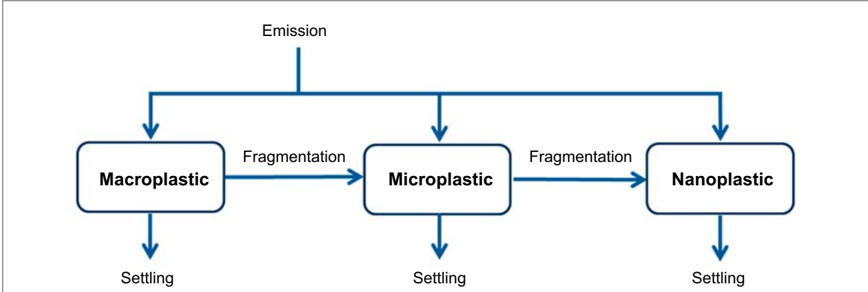
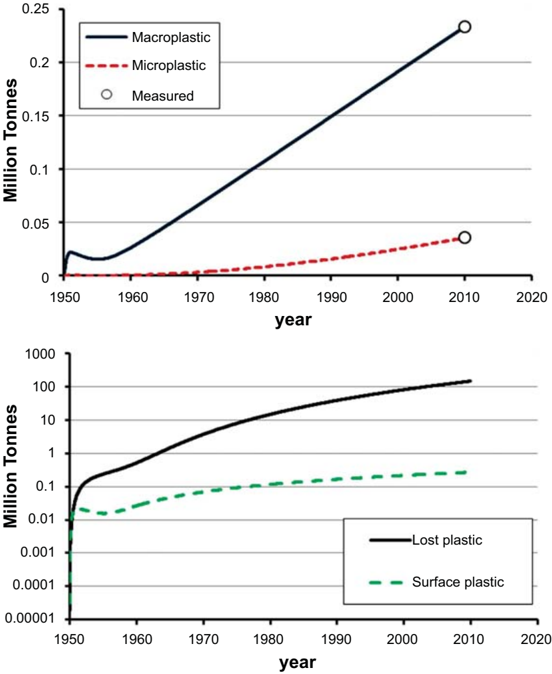
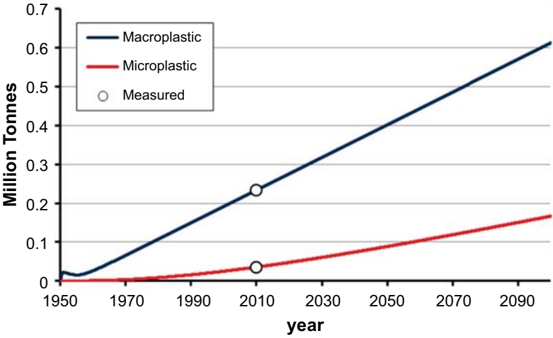
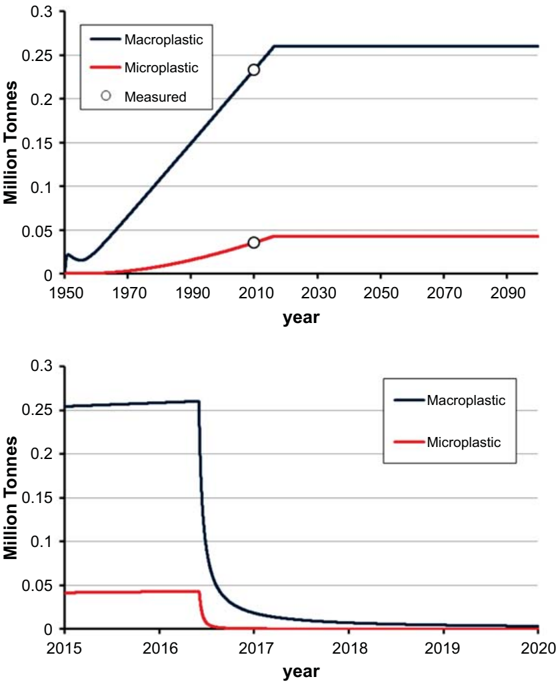
Understanding the global mass inventory is one of the main challenges in present research on plastic marine debris. Especially the fragmentation and vertical transport processes of oceanic plastic are poorly understood. However, whereas fragmentation rates are unknown, information on plastic emissions, concentrations of plastics in the ocean surface layer (OSL) and fragmentation mechanisms is available. Here, we apply a systems engineering analytical approach and propose a tentative 'whole ocean' mass balance model that combines emission data, surface area-normalized plastic fragmentation rates, estimated concentrations in the OSL, and removal from the OSL by sinking. We simulate known plastic abundances in the OSL and calculate an average whole ocean apparent surface area-normalized plastic fragmentation rate constant, given representative radii for macroplastic and microplastic. Simulations show that 99.8% of the plastic that had entered the ocean since 1950 had settled below the OSL by 2016, with an additional 9.4 million tons settling per year. In 2016, the model predicts that of the 0.309 million tons in the OSL, an estimated 83.7% was macroplastic, 13.8% microplastic, and 2.5% was < 0.335 mm 'nanoplastic'. A zero future emission simulation shows that almost all plastic in the OSL would be removed within three years, implying a fast response time of surface plastic abundance to changes in inputs. The model complements current spatially explicit models, points to future experiments that would inform critical model parameters, and allows for further validation when more experimental and field data become available.
Overview
The claims and statistics of this paper haven’t been checked yet.
Free: it reads the open-access text and checks the first 5 claims that cite a source we can check. Create a free account to check every claim.
Integrity signals
Registry
Cites
Statistics
Figures
Verification
Claims the paper makes
The claims and statistics of this paper haven’t been checked yet.
Free: it reads the open-access text and checks the first 5 claims that cite a source we can check. Create a free account to check every claim.
Self-check
Percentages, sums and reported differences re-computed from the paper’s own numbers.
The self-check needs the paper’s full text.
Citations
Cites
Lost at sea: where is all the plastic?
Thompson, R. C., Olsen, Y., Mitchell, R. P., Davis, A., Rowland, S. J., John, A. W. G., McGonigle, D., & Russell, A. E. (2004) · Science · doi:10.1126/science.1094559 · Cited by 7,765 · cited 3×
“This approach complements recent studies that estimate the global inventory from the bottomup using ocean measurements (Thompson et al 2004, Eriksen et al 2014, Cózar et al 2014, van Sebille et al 2015).”
BackgroundEriksen, M., Lebreton, L. C. M., Carson, H. S., Thiel, M., Moore, C. J., Borerro, J. C., Galgani, F., Ryan, P. G., & Reisser, J. (2014) · PLoS ONE · doi:10.1371/journal.pone.0111913 · Cited by 4,710 · cited 7×
“There is much uncertainty in the limited data on abundance of plastic debris in the oceans (Eriksen et al 2014, Cózar et al 2014, Van Sebille et al 2015).”
BackgroundMethodInfluential(2015) · Springer eBooks · doi:10.1007/978-3-319-16510-3 · Cited by 3,502
de Boyer Montégut, C., Madec, G., Fischer, A. S., Lazar, A., & Iudicone, D. (2004) · Journal of Geophysical Research: Oceans · doi:10.1029/2004jc002378 · Cited by 3,182 · cited 1×
“A range of 10– 100 m applies to the vast majority of locations in the world oceans (de Boyer Montégut et al 2004).”
BackgroundPlastic debris in the open ocean
Cózar, A., Echevarría, F., González-Gordillo, J. I., Irigoien, X., Úbeda, B., Hernández-León, S., Palma, Á. T., Navarro, S., García-de-Lomas, J., Ruiz, A., et al. (2014) · Proceedings of the National Academy of Sciences · doi:10.1073/pnas.1314705111 · Cited by 3,133 · cited 5×
“There is much uncertainty in the limited data on abundance of plastic debris in the oceans (Eriksen et al 2014, Cózar et al 2014, Van Sebille et al 2015).”
BackgroundInfluentialMicroplastic ingestion by zooplankton
Cole, M., Lindeque, P., Fileman, E., Halsband, C., Goodhead, R., Moger, J., & Galloway, T. S. (2013) · Environmental Science & Technology · doi:10.1021/es400663f · Cited by 2,763 · cited 1×
“Cole et al 2013, Choy and Drazen 2013, Van Franeker et al 2011b) and return to the OSL, which would result in a time-delay in the OSL abundance that can be assumed tobe small and relatively constant in time.”
BackgroundA global inventory of small floating plastic debris
van Sebille, E., Wilcox, C., Lebreton, L., Maximenko, N., Hardesty, B. D., van Franeker, J. A., Eriksen, M., Siegel, D., Galgani, F., & Law, K. L. (2015) · Environmental Research Letters · doi:10.1088/1748-9326/10/12/124006 · Cited by 1,713 · cited 6×
“There is much uncertainty in the limited data on abundance of plastic debris in the oceans (Eriksen et al 2014, Cózar et al 2014, Van Sebille et al 2015).”
BackgroundInfluentialSelf-citationKoelmans, A. A., Bakir, A., Burton, G. A., & Janssen, C. R. (2016) · Environmental Science & Technology · doi:10.1021/acs.est.5b06069 · Cited by 1,599 · cited 1×
“The BAU scenario assumes that annual plastic production and leakage/emission continue to increase according to the polynomial parameters derived from 1950–2013 data (PlasticsEurope 2013, Koelmans et al 2016).”
Self-citationIngestion of Microplastics by Zooplankton in the Northeast Pacific Ocean
Desforges, J.-P. W., Galbraith, M., & Ross, P. S. (2015) · Archives of Environmental Contamination and Toxicology · doi:10.1007/s00244-015-0172-5 · Cited by 1,019
Ups and Downs in the Ocean: Effects of Biofouling on Vertical Transport of Microplastics
Kooi, M., Nes, E. H. V., Scheffer, M., & Koelmans, A. A. (2017) · Environmental Science & Technology · doi:10.1021/acs.est.6b04702 · Cited by 977 · cited 4×
“Furthermore, it is known that chemical degradation of polymers results in weakening and fragmentation, and that biological colonization and aggregation can induce sinking of buoyant polymers (Kooi et al 2017).”
BackgroundResultInfluentialSelf-citation
Research works printed but not linked: 2
- Plastics—the Facts, 2013, An Analysis of European Latest Plastics Production Demand and Waste Data
- Van Franeker J A, 2011, NOAA Technical Memorandum
Cited by
Items 101–200 of 424
Reef‐building corals act as long‐term sink for microplastic
Reichert, J., Arnold, A. L., Hammer, N., Miller, I. B., Rades, M., Schubert, P., Ziegler, M., & Wilke, T. (2021) · Global Change Biology · doi:10.1111/gcb.15920 · Cited by 92
Daily, J., & Hoffman, M. J. (2020) · Marine Pollution Bulletin · doi:10.1016/j.marpolbul.2020.111024 · Cited by 91
Xia, B., Zhang, J., Zhao, X., Feng, J., Teng, Y., Chen, B., Sun, X., Zhu, L., Sun, X., & Qu, K. (2019) · Environmental Pollution · doi:10.1016/j.envpol.2019.113657 · Cited by 87
Life cycle impact assessment of microplastics as one component of marine plastic debris
Saling, P. R., Gyuzeleva, L., Wittstock, K., Wessolowski, V., & Grießhammer, R. (2020) · The International Journal of Life Cycle Assessment · doi:10.1007/s11367-020-01802-z · Cited by 86
“The model assumes that fragmentation is a surface area–based process, due to evidence in the literature (Andrady 2011; Andrady 2015; Koelmans et al. 2017).”
BackgroundMethodInfluentialSinking characteristics of microplastics in the marine environment
Karkanorachaki, K., Syranidou, E., & Kalogerakis, N. E. (2021) · The Science of The Total Environment · doi:10.1016/j.scitotenv.2021.148526 · Cited by 87
Basin-scale sources and pathways of microplastic that ends up in the Galápagos Archipelago
van Sebille, E., Delandmeter, P., Schofield, J., Hardesty, B. D., Jones, J., & Donnelly, A. (2019) · Ocean science · doi:10.5194/os-15-1341-2019 · Cited by 100
Organic pollutants in deep sea: Occurrence, fate, and ecological implications
Sanganyado, E., Chingono, K. E., Gwenzi, W., Chaukura, N., & Liu, W. (2021) · Water Research · doi:10.1016/j.watres.2021.117658 · Cited by 83
The transport and fate of marine plastics in South Africa and adjacent oceans
Ryan, P. G. (2020) · South African Journal of Science · doi:10.17159/sajs.2020/7677 · Cited by 95
Kaandorp, M., Dijkstra, H. A., & van Sebille, E. (2021) · Environmental Research Letters · doi:10.1088/1748-9326/abe9ea · Cited by 89
“This is a much longer time scale than given by the conceptual model in Koelmans et al. (2017), where for a similar stop of new plastics, almost all plastic mass was removed from the ocean surface layer within three years.”
ResultEnvironmental impact of microplastics and potential health hazards
Megha, K. B., Anvitha, D., Parvathi, S., Agnihotri, N., Sonia, J., & Mohanan, P. V. (2024) · Critical Reviews in Biotechnology · doi:10.1080/07388551.2024.2344572 · Cited by 90
Les difficultés inhérentes à la mesure de la pollution plastique
Billard, G., & Boucher, J. (2019) · ArODES (HES-SO (https://www.hes-so.ch/)) · Cited by 79
Gebhardt, C., & Förster, S. (2018) · Environmental Pollution · doi:10.1016/j.envpol.2018.07.090 · Cited by 83
Masry, M., Rossignol, S., Temime‐Roussel, B., Bourgogne, D., Bussière, P., R’Mili, B., & Wong‐Wah‐Chung, P. (2021) · Environmental Pollution · doi:10.1016/j.envpol.2021.116949 · Cited by 75
Alfonso, M. B., Arias, A. H., Menéndez, M. C., Ronda, A. C., Harte, A., Píccolo, M. C., & Marcovecchio, J. E. (2021) · Ocean & Coastal Management · doi:10.1016/j.ocecoaman.2021.105613 · Cited by 77
Ryan, P. G., Weideman, E. A., Perold, V., & Moloney, C. L. (2020) · Frontiers in Marine Science · doi:10.3389/fmars.2020.575395 · Cited by 79
“Kusui and Noda (2003) conducted perhaps the best study to date, but it is unclear how comparative their area-based approach is, given sampling at very different scales for differentlysized litter items (100 m2 quadrats for surface macro-litter and Frontiers in Marine Science | www.frontiersin.org 2…”
BackgroundInfluentialInteractive effects of microplastic pollution and heat stress on reef-building corals
Reichert, J., Tirpitz, V., Anand, R., Bach, K., Knopp, J., Schubert, P., Wilke, T., & Ziegler, M. (2021) · Environmental Pollution · doi:10.1016/j.envpol.2021.118010 · Cited by 75
Domercq, P., Praetorius, A., & MacLeod, M. (2021) · Environmental Modelling & Software · doi:10.1016/j.envsoft.2021.105291 · Cited by 75
“…the processes that transport or retain plastics in rivers and river catchments areas (Siegfried et al., 2017; Unice et al., 2019; Besseling et al., 2017), and to study the fate of plastic in the ocean (Sebille et al., 2015; Lebreton et al., 2012; Liubartseva et al., 2016; Koelmans et al., 2017).”
Ferreira, G. V. B., Justino, A. K. S., Eduardo, L. N., Lenoble, V., Fauvelle, V., Schmidt, N., Junior, T. V., Frédou, T., & Lucena‐Frédou, F. (2022) · Marine Pollution Bulletin · doi:10.1016/j.marpolbul.2021.113309 · Cited by 80
Predicting the global environmental distribution of plastic polymers
Hoseini, M., & Bond, T. (2022) · Environmental Pollution · doi:10.1016/j.envpol.2022.118966 · Cited by 75
Phan, S., & Luscombe, C. K. (2023) · Journal of Applied Physics · doi:10.1063/5.0126358 · Cited by 78
Kong, X., & Koelmans, A. A. (2019) · Environmental Science & Technology · doi:10.1021/acs.est.9b03905 · Cited by 70
Self-citationCasabianca, S., Bellingeri, A., Capellacci, S., Sbrana, A., Russo, T., Corsi, I., & Penna, A. (2021) · Environmental Pollution · doi:10.1016/j.envpol.2021.118101 · Cited by 72
Plastic debris forms: Rock analogues emerging from marine pollution
Santos, F. A., Diório, G. R., Guedes, C. C. F., Fernandino, G., Giannini, P. C. F., Angulo, R. J., de Souza, M. C., César‐Oliveira, M. A. F., & Oliveira, A. R. D. S. (2022) · Marine Pollution Bulletin · doi:10.1016/j.marpolbul.2022.114031 · Cited by 75
Justino, A. K. S., Ferreira, G. V. B., Fauvelle, V., Schmidt, N., Lenoble, V., Pelage, L., Martins, K., Travassos, P., & Lucena‐Frédou, F. (2023) · Environmental Pollution · doi:10.1016/j.envpol.2023.121532 · Cited by 76
“Considerable amounts of continental plastic materials are improperly managed and transported by riverine discharges into marine ecosystems (Koelmans et al., 2017; Meijer et al., 2021).”
Baxter, L., Lucas, Z. N., & Walker, T. R. (2022) · Marine Pollution Bulletin · doi:10.1016/j.marpolbul.2022.113460 · Cited by 69
The sea urchin Paracentrotus lividus as a bioeroder of plastic
Porter, A., Smith, K. E., & Lewis, C. N. (2019) · The Science of The Total Environment · doi:10.1016/j.scitotenv.2019.133621 · Cited by 73
In search for the sources of plastic marine litter that contaminates the Easter Island Ecoregion
van Gennip, S. J., Dewitte, B., Garcon, V. C., Thiel, M., Popova, E. E., Drillet, Y., Ramos, M., Yannicelli, B., Bravo, L., Ory, N. C., et al. (2019) · Scientific Reports · doi:10.1038/s41598-019-56012-x · Cited by 74
Li, C., Zhu, L., Wang, X., Liu, K., & Li, D. (2021) · The Science of The Total Environment · doi:10.1016/j.scitotenv.2021.150243 · Cited by 74
Sonke, J. E., Koenig, A. M., Yakovenko, N., Hagelskjær, O., Margenat, H., Hansson, S. V., Vleeschouwer, F. D., Magand, O., Roux, G. L., & Thomas, J. L. (2022) · Microplastics and Nanoplastics · doi:10.1186/s43591-022-00048-w · Cited by 67
“Solutions to this issue have been proposed in the transfer of marine plastics to the deep ocean [13, 14], to coastal environments, via beaching [15, 16], to marine sediments by sinking [17, 18], and to marine emission of microplastics to the atmosphere [19, 20].”
BackgroundMethodMicroplastic-specific biofilm growth determines the vertical transport of plastics in freshwater
Vercauteren, M., Lambert, S., Hoogerwerf, E., Janssen, C., & Asselman, J. (2023) · The Science of The Total Environment · doi:10.1016/j.scitotenv.2023.168399 · Cited by 67
“One of the knowledge gaps is named the “missing plastic paradox”, referring to the discrepancy between estimated ocean plastic input and the concentrations found in the ocean surface layers (Isobe & Iwasaki, 2022; Koelmans et al., 2017).”
BackgroundWeideman, E. A., Perold, V., Arnold, G., & Ryan, P. G. (2020) · The Science of The Total Environment · doi:10.1016/j.scitotenv.2020.138310 · Cited by 66
Vega-Moreno, D., Abaroa-Pérez, B., Rein-Loring, P. D., Presas˗Navarro, C., Fraile‐Nuez, E., & Machín, F. (2021) · The Science of The Total Environment · doi:10.1016/j.scitotenv.2021.147802 · Cited by 68
“Outputs from models focused on evaluating the plastic intake from land to the ocean present amisfit with respect to experimental data collected at the different oceans, unveiling an important unaccounted amount of MP in the oceans (Jambeck et al., 2015; Koelmans et al., 2017).”
Sources of marine debris for Seychelles and other remote islands in the western Indian Ocean
Vogt-Vincent, N., Burt, A., Kaplan, D. M., Mitarai, S., Turnbull, L. A., & Johnson, H. L. (2023) · Marine Pollution Bulletin · doi:10.1016/j.marpolbul.2022.114497 · Cited by 67
Sustainable management of plastic wastes in COVID-19 pandemic: The biochar solution
Igalavithana, A. D., Yuan, X., Attanayake, C. P., Wang, S., You, S., Tsang, D. C. W., Nzihou, A., & Ok, Y. S. (2022) · Environmental Research · doi:10.1016/j.envres.2022.113495 · Cited by 60
“From the plastics in surface layer of oceans, 83.7% are macroplastics (> 5 mm), 13.8% are microplastics (335 µm−5 mm), and 2.5% are nanoplastics ( 0.335 mm) 26 .”
InfluentialDeposition of environmentally relevant nanoplastic models in sand during transport experiments
Pradel, A., Hadri, H. E., Desmet, C., Ponti, J., Reynaud, S., Grassl, B., & Gigault, J. (2020) · Chemosphere · doi:10.1016/j.chemosphere.2020.126912 · Cited by 61
Mitigation strategies to reverse the rising trend of plastics in Polar Regions
Eriksen, M., Borgogno, F., Villarrubia-Gómez, P., Anderson, E., Box, C., & Trenholm, N. (2020) · Environment International · doi:10.1016/j.envint.2020.105704 · Cited by 62
Biofilms of Pseudomonas and Lysinibacillus Marine Strains on High-Density Polyethylene
Oliveira, M. M., Proenca, A. M., Moreira-Silva, E., de Castro, A. M., dos Santos, F. M., Marconatto, L., & Medina‐Silva, R. (2021) · Microbial Ecology · doi:10.1007/s00248-020-01666-8 · Cited by 59
A Multimedia Model for Microplastic Particles
Quik, J. T. K., Meesters, J. A. J., & Koelmans, A. A. (2022) · The Science of The Total Environment · doi:10.1016/j.scitotenv.2023.163437 · Cited by 59
Self-citationFluid dynamics challenges in predicting plastic pollution transport in the ocean: A perspective
SUTHERLAND, B. R., DiBenedetto, M. H., Kaminski, A., & van den Bremer, T. S. (2023) · Physical Review Fluids · doi:10.1103/physrevfluids.8.070701 · Cited by 65
Causes of coastal waters pollution with nutrients, chemicals and plastics worldwide
Micella, I., Kroeze, C., Bak, M. P., & Strokal, M. (2023) · Marine Pollution Bulletin · doi:10.1016/j.marpolbul.2023.115902 · Cited by 61
Journey to the deep: plastic pollution in the hadal of deep-sea trenches.
Abel, S. M., Wu, F., Primpke, S., Gerdts, G., & Brandt, A. (2022) · Environmental Pollution · doi:10.1016/j.envpol.2023.122078 · Cited by 57
Micro and Nano-Plastics in the Environment: Research Priorities for the Near Future
Vighi, M., Bayo, J., Fernández‐Piñas, F., Gago, J., Gómez, M., Hernández‐Borges, J., Herrera, A., Landaburu‐Aguirre, J., Muniategui‐Lorenzo, S., Muñoz, A., et al. (2021) · Reviews of Environmental Contamination and Toxicology · doi:10.1007/398_2021_69 · Cited by 67
Guerrini, F., Mari, L., & Casagrandi, R. (2021) · The Science of The Total Environment · doi:10.1016/j.scitotenv.2021.145944 · Cited by 62
Justino, A. K. S., Ferreira, G. V. B., Schmidt, N., Eduardo, L. N., Fauvelle, V., Lenoble, V., Sempéré, R., Panagiotopoulos, C., Mincarone, M. M., Frédou, T., et al. (2022) · Environmental Pollution · doi:10.1016/j.envpol.2022.118988 · Cited by 58
Khanna, R., Chandra, A. P., Sen, S., Konyukhov, Y., Fuentes, E., Burmistrov, I. N., & Kravchenko, M. (2024) · Sustainability · doi:10.3390/su16198704 · Cited by 57
Nakajima, R., Tsuchiya, M., Yabuki, A., Masuda, S., Kitahashi, T., Nagano, Y., Ikuta, T., Isobe, N., Nakata, H., Ritchie, H., et al. (2021) · Marine Pollution Bulletin · doi:10.1016/j.marpolbul.2021.112188 · Cited by 55
Gouin, T. (2021) · Microplastics and Nanoplastics · doi:10.1186/s43591-021-00016-w · Cited by 56
“The objective should be towards screening and prioritizing which combination of properties of MPs relative to mode of entry to the environment and environmental fate processes most strongly influence their potential mobility [91].”
BackgroundEscobar-Sánchez, G., Markfort, G., Berghald, M., Ritzenhofen, L., & Schernewski, G. (2022) · Environmental Monitoring and Assessment · doi:10.1007/s10661-022-10519-5 · Cited by 55
“In this sense, coastal surface waters mainly serve as temporary sinks and transition areas of ML, while the seafloor is likely a permanent sink (Koelmans et al., 2017; Lebreton et al., 2017; van Sebille et al., 2020).”
BackgroundCourtene‐Jones, W., van Gennip, S. J., Pénicaud, J., Penn, E., & Thompson, R. C. (2022) · Marine Pollution Bulletin · doi:10.1016/j.marpolbul.2022.114371 · Cited by 55
Microplastic Contamination Has Limited Effects on Coral Fertilisation and Larvae
Berry, K., Epstein, H. E., Lewis, P. J., Hall, N., & Negri, A. P. (2019) · Diversity · doi:10.3390/d11120228 · Cited by 57
“Experimental exposures tested a range of microplastic sizes and concentrations, up to 200 particles L−1, which is a conservative estimate for future (2100) ocean surface water contamination levels [31,55].”
BackgroundTaking a mass-balance approach to assess marine plastics in the South China Sea
Harris, P. T., Tamelander, J., Lyons, Y. L., Neo, M. L., & Maes, T. (2021) · Marine Pollution Bulletin · doi:10.1016/j.marpolbul.2021.112708 · Cited by 56
Risk characterization of microplastics in San Francisco Bay, California
Coffin, S., Weisberg, S. B., Rochman, C. M., Kooi, M., & Koelmans, A. A. (2022) · Microplastics and Nanoplastics · doi:10.1186/s43591-022-00037-z · Cited by 54
Self-citationKong, X., Liu, W., He, W., Xu, F., Koelmans, A. A., & Mooij, W. M. (2018) · Environmental Pollution · doi:10.1016/j.envpol.2018.02.026 · Cited by 49
“This method has shown its feasibility and reliability and has been extensively applied in contaminant fate modeling (Koelmans et al., 2000, 2017; Tao et al., 2006).”
MethodSelf-citationThe Story of Plastic Pollution: From the Distant Ocean Gyres to the Global Policy Stage
Rochman, C. M. (2020) · Oceanography · doi:10.5670/oceanog.2020.308 · Cited by 60
“Ultimately, the benthos is predicted to be a sink, and several studies predict most plastic debris will be transported from the surface to the deeper ocean and seafloor (Kooi et al., 2017; Koelmans et al., 2017; Kvale et al. 2020).”
Moodley, T., Abunama, T., Kumari, S., Amoah, I. D., & Seyam, M. (2024) · Environmental Monitoring and Assessment · doi:10.1007/s10661-024-12731-x · Cited by 53
“However, in studies by Unice et al. (2019) who modelled the fate and transport of tyre and road wear particles, Koelmans et al. (2017) who investigated plastic removal processes from the near-surface ocean, and Domercq et al. (2022) who modelled the transport and fate of nano-and microplastics, it…”
BackgroundA model for the size distribution of marine microplastics: A statistical mechanics approach
Aoki, K., & Furue, R. (2021) · PLoS ONE · doi:10.1371/journal.pone.0259781 · Cited by 51
Monitoring Plastic Beach Litter by Number or by Weight: The Implications of Fragmentation
Smith, L. M., & Turrell, W. R. (2021) · Frontiers in Marine Science · doi:10.3389/fmars.2021.702570 · Cited by 49
Kang, P., Zhao, Y., Zuo, C., Cai, Y., Shen, C., Ji, B., & Wei, T. (2023) · The Science of The Total Environment · doi:10.1016/j.scitotenv.2023.163028 · Cited by 51
Rohais, S., Armitage, J., Romero‐Sarmiento, M., Pierson, J.-L., Télès, V., Bauer, D., Cassar, C., Sebag, D., Klopffer, M., & Pelerin, M. (2024) · Earth-Science Reviews · doi:10.1016/j.earscirev.2024.104822 · Cited by 51
Ecotoxicological effects of organic micro-pollutants on the environment
Gautam, K., & Anbumani, S. (2020) · Elsevier eBooks · doi:10.1016/b978-0-12-819594-9.00019-x · Cited by 52
A meta-analysis of potential biomarkers associated with microplastic ingestion in marine fish
Compa, M., Capó, X., Alomar, C., Deudero, S., & Sureda, A. (2024) · Environmental Toxicology and Pharmacology · doi:10.1016/j.etap.2024.104414 · Cited by 48
Khatmullina, L., & Chubarenko, I. (2021) · Environmental Pollution · doi:10.1016/j.envpol.2021.117714 · Cited by 48
The Microplastic Cycle: An Introduction to a Complex Issue
Bank, M. S., & Hansson, S. V. (2021) · Environmental contamination remediation and management · doi:10.1007/978-3-030-78627-4_1 · Cited by 61
Turner, A., & Filella, M. (2020) · Marine Pollution Bulletin · doi:10.1016/j.marpolbul.2020.111352 · Cited by 46
“Some authors attribute their presence here to an increase in density and settling velocity through chemical or biological fouling or to incorporation of fragments into sinking biological aggregates like faecal material (Long et al., 2015; Cole et al., 2016; Koelmans et al., 2017).”
BackgroundMicroplastics in the Mediterranean: Variability From Observations and Model Analysis
Tsiaras, K. P., Costa, E., Morgana, S., Gambardella, C., Piazza, V., Faimali, M., Minetti, R., Zeri, C., Thyssen, M., Ismail, S. B., et al. (2022) · Frontiers in Marine Science · doi:10.3389/fmars.2022.784937 · Cited by 49
“…while the anti-cyclonic (eastward) predominant circulation, known Frontiers in Marine Science | www.frontiersin.org 7 March 2022 | Volume 9 | Article 784937 also from observations (Kontoyiannis, 2010) results in the southward advection of particles from the Northern coastal areas to South Aegean.”
BackgroundDirect Evidence That Microplastics Are Transported to the Deep Sea by Turbidity Currents
Chen, P., Kane, I., Clare, M. A., Soutter, E., Mienis, F., Wogelius, R. A., & Keavney, E. (2025) · Environmental Science & Technology · doi:10.1021/acs.est.4c12007 · Cited by 47
Cordova, M. R., Ulumuddin, Y. I., Purbonegoro, T., Puspitasari, R., Afianti, N. F., Rositasari, R., Yogaswara, D., Hafizt, M., Iswari, M. Y., Fitriya, N., et al. (2022) · Marine Pollution Bulletin · doi:10.1016/j.marpolbul.2022.113926 · Cited by 47
Nanoplastics: Status and Knowledge Gaps in the Finalization of Environmental Risk Assessments
Masseroni, A., Rizzi, C., Urani, C., & Villa, S. (2022) · Toxics · doi:10.3390/toxics10050270 · Cited by 46
Do nanoplastics impact the ability of the polychaeta Hediste diversicolor to regenerate?
Silva, M. S. S., Oliveira, M., Lopéz, D., Martins, M. A., Figueira, E. M. D. A. P., & Pires, A. (2019) · Ecological Indicators · doi:10.1016/j.ecolind.2019.105921 · Cited by 42
Bioplastic accumulates antibiotic and metal resistance genes in coastal marine sediments
Cesare, A. D., Pinnell, L. J., Brambilla, D., Elli, G., Sabatino, R., Sathicq, M. B., Corno, G., O’Donnell, C. A., & Turner, J. W. (2021) · Environmental Pollution · doi:10.1016/j.envpol.2021.118161 · Cited by 44
A review of current and emerging approaches for Quaternary marine sediment dating
Li, W., Li, X., Mei, X., Zhang, F., Xu, J., Liu, C., Wei, C., & Liu, Q. (2021) · The Science of The Total Environment · doi:10.1016/j.scitotenv.2021.146522 · Cited by 45
Zeri, C., Adamopoulou, A., Koi, A. M., Koutsikos, N., Lytras, E., & Dimitriou, E. (2021) · Sustainability · doi:10.3390/su13105328 · Cited by 41
Microplastics in mussels from the Boka Kotorska Bay (Adriatic Sea) and impact on human health
Bošković, N., Joksimović, D., & Bajt, O. (2023) · Food and Chemical Toxicology · doi:10.1016/j.fct.2023.113641 · Cited by 42
Cordova, M. R., Ulumuddin, Y. I., Lubis, A. A., Kaisupy, M. T., Wibowo, S. P. A., Subandi, R., Yogaswara, D., Purbonegoro, T., Renyaan, J., Nurdiansah, D., et al. (2023) · Marine Pollution Bulletin · doi:10.1016/j.marpolbul.2023.115517 · Cited by 45
Rios-Fuster, B., Compa, M., Alomar, C., Fagiano, V., Ventero, A., Iglesias, M., & Deudero, S. (2022) · Estuarine Coastal and Shelf Science · doi:10.1016/j.ecss.2022.107741 · Cited by 39
Turrell, W. R. (2019) · Marine Pollution Bulletin · doi:10.1016/j.marpolbul.2019.110725 · Cited by 41
“Koelmans et al. (2017) attempted a whole-ocean mass balance for marine plastic, and used this to suggest the importance of mechanical breakdown of plastic followed by sinking as the ultimate fate of most marine plastic.”
BackgroundRochman, C. M., Bucci, K., Langenfeld, D., McNamee, R. A., Veneruzzo, C., Covernton, G. A., Gao, G. H. Y., Ghosh, M., Cable, R. N., Hermabessière, L., et al. (2024) · Environmental Science & Technology · doi:10.1021/acs.est.3c08990 · Cited by 38
Seuront, L., Zardi, G. I., Uguen, M., Bouchet, V. M. P., Delaeter, C., Henry, S., Spilmont, N., & Nicastro, K. R. (2022) · The Science of The Total Environment · doi:10.1016/j.scitotenv.2022.157187 · Cited by 41
“…of actual concentration measurements, which are typically upscaled in model simulations (Cózar et al., 2014; Eriksen et al., 2014; Lau et al., 2020; Koelmans et al., 2017), and (ii) further complicated by the uneven distributions of debris (Halsband and Herzke, 2019; Lacerda et al., 2019; van…”
BackgroundLiu, P., Shao, L., Guo, Z., Zhang, Y., Cao, Y., Ma, X., & Morawska, L. (2023) · Journal of Environmental Sciences · doi:10.1016/j.jes.2023.09.027 · Cited by 37
Plastic Pollution in the Coastal Oceans: Characterization and Modeling
Lermusiaux, P. F. J., Doshi, M. M., Kulkarni, C. S., Gupta, A., Haley, P. J., Mirabito, C., Trotta, F., Levang, S. J., Flierl, G. R., Marshall, J. C., et al. (2019) · MTS/IEEE OCEANS Conference (OCEANS) · doi:10.23919/oceans40490.2019.8962786 · Cited by 40
Gilman, E. L., Antonelis, K., Drinkwin, J., Gorgin, S., Suuronen, P., Thomas, S. N., & Wilson, J. R. (2023) · Marine Policy · doi:10.1016/j.marpol.2023.105738 · Cited by 38
Resolution dependency of sinking Lagrangian particles in ocean general circulation models
Nooteboom, P., Delandmeter, P., van Sebille, E., Bijl, P. K., Dijkstra, H. A., & von der Heydt, A. S. (2020) · PLoS ONE · doi:10.1371/journal.pone.0238650 · Cited by 33
“4-50 m day [8], for single dinoflaggellate cysts wf ranges from 6−11 m day [45], and the sinking speed can become several hundreds of meters per day for marine snow aggregates (e.”
Russell, C. E., Pohl, F., & Fernández, R. (2024) · Earth-Science Reviews · doi:10.1016/j.earscirev.2024.104994 · Cited by 35
Behavior and distribution of polystyrene foams on the shore of Tuul River in Mongolia
Battulga, B., Kawahigashi, M., & Oyuntsetseg, B. (2020) · Environmental Pollution · doi:10.1016/j.envpol.2020.113979 · Cited by 31
Bošković, N., Joksimović, D., & Bajt, O. (2022) · The Science of The Total Environment · doi:10.1016/j.scitotenv.2022.158074 · Cited by 31
Ilechukwu, I., Das, R. R., & Reimer, J. D. (2023) · Marine Pollution Bulletin · doi:10.1016/j.marpolbul.2023.114922 · Cited by 32
Daele, M. V., Bastelaere, B. V., Clercq, J. D., Meyer, I., Vercauteren, M., & Asselman, J. (2024) · Communications Earth & Environment · doi:10.1038/s43247-024-01613-2 · Cited by 33
Singh, S., Gray, A. B., Murphy-Hagan, C., Hapich, H., Cowger, W., Perna, J., Le, T., Nogi, H., Badwal, B., McLaughlin, K., et al. (2025) · Environmental Research · doi:10.1016/j.envres.2025.120866 · Cited by 32
Spirito, F. D., Folliero, V., Palo, M. P. D., Benedetto, G. D., Aulisio, L., Martina, S., Rinaldi, L., & Franci, G. (2025) · Journal of Functional Biomaterials · doi:10.3390/jfb16090332 · Cited by 30
“Ingestion represents the most prominent route and is supported by the detection of MPs/NPs in drinking water [34], bottled water, seafood [35,36], commercial salts [37–39], tea bags and coffee [40], dairy products [41], fruits, vegetables, and honey [38,42,43].”
Rochman, C. M., Grbic, J., Earn, A., Helm, P. A., Hasenmueller, E. A., Trice, M., Munno, K., De Frond, H., Djuric, N., Santoro, S., et al. (2022) · Environmental Science & Technology · doi:10.1021/acs.est.2c00926 · Cited by 29
A trawl survey of seafloor macrolitter on the South African continental shelf
Ryan, P. G., Weideman, E. A., Perold, V., Durholtz, D., & Fairweather, T. P. (2019) · Marine Pollution Bulletin · doi:10.1016/j.marpolbul.2019.110741 · Cited by 29
Song, K. S., Jung, J., Lee, S. H., & Park, S.-H. (2021) · Marine Pollution Bulletin · doi:10.1016/j.marpolbul.2021.112466 · Cited by 32
From inshore to offshore: distribution of microplastics in three Italian seawaters
Sbrana, A., Valente, T., Bianchi, J., Franceschini, S., Piermarini, R., Saccomandi, F., de Lucia, A. G., Camedda, A., Matiddi, M., & Silvestri, C. (2022) · Environmental Science and Pollution Research · doi:10.1007/s11356-022-23582-9 · Cited by 31
“Globally, in 2010, the accumulation of macro-and microplastics in the ocean surface layer was 4210 tons and 1130 tons per year, respectively (Koelmans et al. 2017).”
BackgroundChae, B., Oh, S., & Lee, D. G. (2023) · Marine Pollution Bulletin · doi:10.1016/j.marpolbul.2023.115591 · Cited by 29
Kaandorp, M., Ypma, S., Boonstra, M., Dijkstra, H. A., & van Sebille, E. (2022) · Ocean science · doi:10.5194/os-18-269-2022 · Cited by 31
Sources and Circulation of Microplastics in the Aerosphere – Atmospheric Transport of Microplastics
Sathyamohan, G., Arachchige, M. S. A., Ambade, B., & Vithanage, M. S. (2023) · Wiley eBooks · doi:10.1002/9781119879534.ch8 · Cited by 30
Franceschini, S., Cau, A., D’Andrea, L., Follesa, M. C., & Russo, T. (2021) · Frontiers in Marine Science · doi:10.3389/fmars.2021.682616 · Cited by 26
“All particles retrieved on membranes were sorted under a stereo-microscope (x64), photographed, categorized according to shape (fragments; film; pellet/beads; filaments) and measured (maximum length, in mm) through the CPCe software (Kohler and Gill, 2006).”
MethodInteractions of Microplastics and Methane Seepage in the Deep-Sea Environment
Feng, J., Yang, Z., Zhou, W., Feng, X., Wei, F., Li, B., Ma, C., Zhang, S., Xia, L., Cai, Y., et al. (2022) · Engineering · doi:10.1016/j.eng.2022.08.009 · Cited by 28
Holes on surfaces of the weathered plastic fragments from coastal beaches
Zheng, Y., Hamed, M., De-la-Torre, G. E., Frias, J. P. G. L., Jong, M., Kolandhasamy, P., Chavanich, S. A., Su, L., Deng, H., Zhao, W., et al. (2023) · Marine Pollution Bulletin · doi:10.1016/j.marpolbul.2023.115180 · Cited by 25
Islam, M. S., Kekre, K. M., Shah, T., Tsai, P., Ponnusamy, V. K., & Andaluri, G. (2025) · Journal of Hazardous Materials Advances · doi:10.1016/j.hazadv.2025.100621 · Cited by 39
Metadata
- Authors
- Koelmans, A. A., Kooi, M., Law, K. L., & van Sebille, E.
- Affiliations
- Wageningen Marine Research (NL)
- Wageningen University & Research (NL)
- Sea Education Association (US)
- Corresponding author
- Koelmans, Albert A
- Venue
- Environmental Research Letters
- Publisher
- IOP Publishing
- Published
- 2017-11-01
- Volume
- 12
- Issue
- 11
- Pages
- 114028
- ISSN
- 1748-9326 (ISSN-L)
- OpenAlex
- W2767179800
- Cited by
- 396
- References
- 35
- Citations by year
- 2026: 31 · 2025: 47 · 2024: 58 · 2023: 48 · 2022: 55 · 2021: 58 · 2020: 50 · 2019: 32 · 2018: 16
- FWCI
- 12.07
- Type
- journal article
- Language
- en
- Open access
- gold
- doi.org
- Licence
- cc-by
- iopscience.iop.org/info/page/text-and-data-mining (tdm, 9 d)
- creativecommons.org/licenses/by/3.0/ (vor, 9 d)
- Locations
- Environmental Research Letters (publishedVersion, cc-by)
- Socio-Environmental Systems Modeling (acceptedVersion, cc-by)
- DOAJ (DOAJ: Directory of Open Access Journals) (submittedVersion)
- Utrecht University Repository (Utrecht University) (submittedVersion, other-oa)
- Spiral (Imperial College London) (submittedVersion, cc-by)
- Data Archiving and Networked Services (DANS) (submittedVersion, cc-by)
- Funders
- National Science Foundation (OCE-1260403)
- European Research Council (grant agreement No 715386)
- Topics
- Physical Sciences › Environmental Science › Pollution › Microplastics and Plastic Pollution
- Physical Sciences › Earth and Planetary Sciences › Oceanography › Marine Plankton and Biogeochemistry
- Physical Sciences › Environmental Science › Pollution › Oil Spill Detection and Mitigation
- Keywords
- marine plastic debris, mass balance, ocean surface layer, vertical transport, plastic emissions
About these checks
Registry, retraction, Cites and statistics results are computed, not judged, with one exception: a printed reference that no index lists is read once by a model before it counts as a citation error. Claims are extracted by a model and kept only when their quote appears verbatim in the text; each cited source is then checked, with a model’s help, for whether it says what the claim relies on. Those verdicts can be wrong — read the claim’s quote and the cited source before relying on one.
Statistics and arithmetic are recomputed, not judged.
Confidence bands are shown only for fields calibrated on our annotated test set. None is calibrated yet, so no band is shown.
What counts as a claim ›How we measure confidence ›How we check this ›
Are you an author, or do you see a problem with this page? Request a review
Data sources
Bibliographic data: Semantic Scholar, OpenAlex, Crossref.
Contains information from the Semantic Scholar Academic Graph Datasets, made available under the ODC Attribution License (ODC-BY 1.0).
Semantic Scholar’s data is described in: Kinney, R., et al. (2023). The Semantic Scholar Open Data Platform. arXiv:2301.10140.
