

All is not lost: deriving a top-down mass budget of plastic at sea
Open accessThe DOI matches its Crossref record; 35 of the 35 references it cites were found in a registry or an index.
Abstract
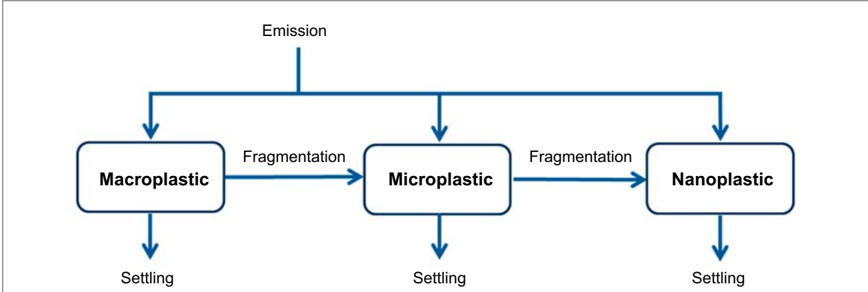
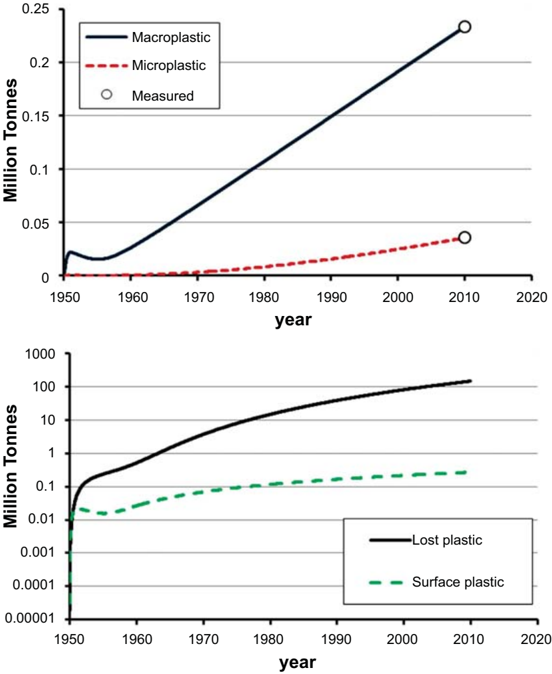
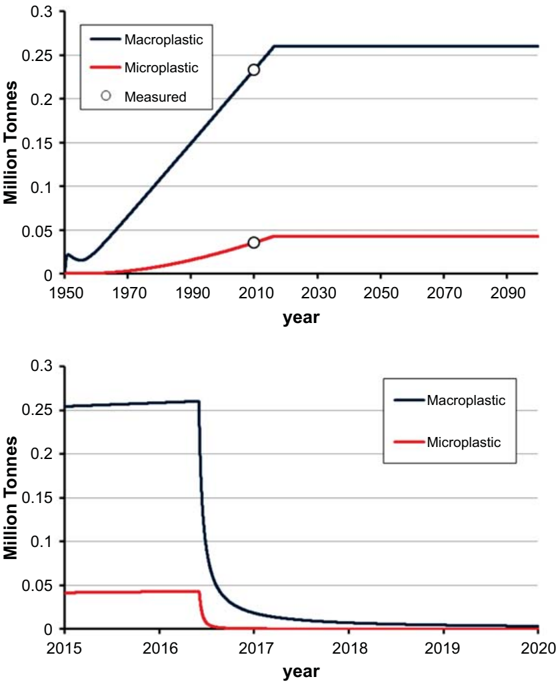
Understanding the global mass inventory is one of the main challenges in present research on plastic marine debris. Especially the fragmentation and vertical transport processes of oceanic plastic are poorly understood. However, whereas fragmentation rates are unknown, information on plastic emissions, concentrations of plastics in the ocean surface layer (OSL) and fragmentation mechanisms is available. Here, we apply a systems engineering analytical approach and propose a tentative 'whole ocean' mass balance model that combines emission data, surface area-normalized plastic fragmentation rates, estimated concentrations in the OSL, and removal from the OSL by sinking. We simulate known plastic abundances in the OSL and calculate an average whole ocean apparent surface area-normalized plastic fragmentation rate constant, given representative radii for macroplastic and microplastic. Simulations show that 99.8% of the plastic that had entered the ocean since 1950 had settled below the OSL by 2016, with an additional 9.4 million tons settling per year. In 2016, the model predicts that of the 0.309 million tons in the OSL, an estimated 83.7% was macroplastic, 13.8% microplastic, and 2.5% was < 0.335 mm 'nanoplastic'. A zero future emission simulation shows that almost all plastic in the OSL would be removed within three years, implying a fast response time of surface plastic abundance to changes in inputs. The model complements current spatially explicit models, points to future experiments that would inform critical model parameters, and allows for further validation when more experimental and field data become available.
Overview
The claims and statistics of this paper haven’t been checked yet.
Free: it reads the open-access text and checks the first 5 claims that cite a source we can check. Create a free account to check every claim.
Integrity signals
Registry
Cites
Statistics
Figures
Verification
Claims the paper makes
The claims and statistics of this paper haven’t been checked yet.
Free: it reads the open-access text and checks the first 5 claims that cite a source we can check. Create a free account to check every claim.
Self-check
Percentages, sums and reported differences re-computed from the paper’s own numbers.
The self-check needs the paper’s full text.
Citations
Cites
Lost at sea: where is all the plastic?
Thompson, R. C., Olsen, Y., Mitchell, R. P., Davis, A., Rowland, S. J., John, A. W. G., McGonigle, D., & Russell, A. E. (2004) · Science · doi:10.1126/science.1094559 · Cited by 7,765 · cited 3×
“This approach complements recent studies that estimate the global inventory from the bottomup using ocean measurements (Thompson et al 2004, Eriksen et al 2014, Cózar et al 2014, van Sebille et al 2015).”
BackgroundEriksen, M., Lebreton, L. C. M., Carson, H. S., Thiel, M., Moore, C. J., Borerro, J. C., Galgani, F., Ryan, P. G., & Reisser, J. (2014) · PLoS ONE · doi:10.1371/journal.pone.0111913 · Cited by 4,710 · cited 7×
“There is much uncertainty in the limited data on abundance of plastic debris in the oceans (Eriksen et al 2014, Cózar et al 2014, Van Sebille et al 2015).”
BackgroundMethodInfluential(2015) · Springer eBooks · doi:10.1007/978-3-319-16510-3 · Cited by 3,502
de Boyer Montégut, C., Madec, G., Fischer, A. S., Lazar, A., & Iudicone, D. (2004) · Journal of Geophysical Research: Oceans · doi:10.1029/2004jc002378 · Cited by 3,182 · cited 1×
“A range of 10– 100 m applies to the vast majority of locations in the world oceans (de Boyer Montégut et al 2004).”
BackgroundPlastic debris in the open ocean
Cózar, A., Echevarría, F., González-Gordillo, J. I., Irigoien, X., Úbeda, B., Hernández-León, S., Palma, Á. T., Navarro, S., García-de-Lomas, J., Ruiz, A., et al. (2014) · Proceedings of the National Academy of Sciences · doi:10.1073/pnas.1314705111 · Cited by 3,133 · cited 5×
“There is much uncertainty in the limited data on abundance of plastic debris in the oceans (Eriksen et al 2014, Cózar et al 2014, Van Sebille et al 2015).”
BackgroundInfluentialMicroplastic ingestion by zooplankton
Cole, M., Lindeque, P., Fileman, E., Halsband, C., Goodhead, R., Moger, J., & Galloway, T. S. (2013) · Environmental Science & Technology · doi:10.1021/es400663f · Cited by 2,763 · cited 1×
“Cole et al 2013, Choy and Drazen 2013, Van Franeker et al 2011b) and return to the OSL, which would result in a time-delay in the OSL abundance that can be assumed tobe small and relatively constant in time.”
BackgroundA global inventory of small floating plastic debris
van Sebille, E., Wilcox, C., Lebreton, L., Maximenko, N., Hardesty, B. D., van Franeker, J. A., Eriksen, M., Siegel, D., Galgani, F., & Law, K. L. (2015) · Environmental Research Letters · doi:10.1088/1748-9326/10/12/124006 · Cited by 1,713 · cited 6×
“There is much uncertainty in the limited data on abundance of plastic debris in the oceans (Eriksen et al 2014, Cózar et al 2014, Van Sebille et al 2015).”
BackgroundInfluentialSelf-citationKoelmans, A. A., Bakir, A., Burton, G. A., & Janssen, C. R. (2016) · Environmental Science & Technology · doi:10.1021/acs.est.5b06069 · Cited by 1,599 · cited 1×
“The BAU scenario assumes that annual plastic production and leakage/emission continue to increase according to the polynomial parameters derived from 1950–2013 data (PlasticsEurope 2013, Koelmans et al 2016).”
Self-citationIngestion of Microplastics by Zooplankton in the Northeast Pacific Ocean
Desforges, J.-P. W., Galbraith, M., & Ross, P. S. (2015) · Archives of Environmental Contamination and Toxicology · doi:10.1007/s00244-015-0172-5 · Cited by 1,019
Ups and Downs in the Ocean: Effects of Biofouling on Vertical Transport of Microplastics
Kooi, M., Nes, E. H. V., Scheffer, M., & Koelmans, A. A. (2017) · Environmental Science & Technology · doi:10.1021/acs.est.6b04702 · Cited by 977 · cited 4×
“Furthermore, it is known that chemical degradation of polymers results in weakening and fragmentation, and that biological colonization and aggregation can induce sinking of buoyant polymers (Kooi et al 2017).”
BackgroundResultInfluentialSelf-citation
Research works printed but not linked: 2
- Plastics—the Facts, 2013, An Analysis of European Latest Plastics Production Demand and Waste Data
- Van Franeker J A, 2011, NOAA Technical Memorandum
Cited by
The global threat from plastic pollution
MacLeod, M., Arp, H. P. H., Tekman, M. B., & Jahnke, A. (2021) · Science · doi:10.1126/science.abg5433 · Cited by 2,951
Hartmann, N. B., Hüffer, T., Thompson, R. C., Hassellöv, M., Verschoor, A., Daugaard, A. E., Rist, S., Karlsson, T., Brennholt, N., Cole, M., et al. (2019) · Environmental Science & Technology · doi:10.1021/acs.est.8b05297 · Cited by 2,881
Marine microplastic debris: An emerging issue for food security, food safety and human health
Barboza, L. G. A., Dick Vethaak, A., Lavorante, B. R. B. O., Lundebye, A.-K., & Guilhermino, L. (2018) · Marine Pollution Bulletin · doi:10.1016/j.marpolbul.2018.05.047 · Cited by 1,591
Qi, Y., Yang, X., Pelaez, A. M., Huerta Lwanga, E., Beriot, N., Gertsen, H., Garbeva, P., & Geissen, V. (2018) · Science of The Total Environment · doi:10.1016/j.scitotenv.2018.07.229 · Cited by 1,216
“, 2016b; Rillig, 2012; Zubris and Richards, 2005), most of the research done so far has been focused on microplastics in the aquatic ecosystem (Auta et al., 2017; Cole et al., 2011; Duis and Coors, 2016; Eerkes-Medrano et al., 2015; Koelmans et al., 2014; Koelmans et al., 2017; Nizzetto et al., 2016b).”
BackgroundRisk assessment of microplastic particles
Koelmans, A. A., Redondo-Hasselerharm, P. E., Nor, N. H. M., de Ruijter, V. N., Mintenig, S. M., & Kooi, M. (2022) · Nature Reviews Materials · doi:10.1038/s41578-021-00411-y · Cited by 1,140
Self-citationPlastic Teabags Release Billions of Microparticles and Nanoparticles into Tea
Hernandez, L. M., Xu, E. G., Larsson, H. C. E., Tahara, R., Maisuria, V. B., & Tufenkji, N. (2019) · Environmental Science & Technology · doi:10.1021/acs.est.9b02540 · Cited by 1,112
Seafloor microplastic hotspots controlled by deep-sea circulation
Kane, I. A., Clare, M. A., Miramontes, E., Wogelius, R., Rothwell, J. J., Garreau, P., & Pohl, F. (2020) · Science · doi:10.1126/science.aba5899 · Cited by 810
Schwarz, A. E., Ligthart, T. N., Boukris, E., & van Harmelen, T. (2019) · Marine Pollution Bulletin · doi:10.1016/j.marpolbul.2019.04.029 · Cited by 652
“On the other hand, modeling studies show that biofouling processes lead to the sedimentation of these plastics within three years (Koelmans et al., 2017).”
BackgroundQuantifying ecological risks of aquatic micro- and nanoplastic
Besseling, E., Redondo-Hasselerharm, P., Foekema, E. M., & Koelmans, A. A. (2019) · Critical Reviews in Environmental Science and Technology · doi:10.1080/10643389.2018.1531688 · Cited by 564
“Based on Koelmans et al. (2017).”
ResultSelf-citationA global mass budget for positively buoyant macroplastic debris in the ocean
Lebreton, L., Egger, M., & Slat, B. (2019) · Scientific Reports · doi:10.1038/s41598-019-49413-5 · Cited by 563
Environmental occurrences, fate, and impacts of microplastics
Wu, P., Huang, J., Zheng, Y., Yang, Y., Zhang, Y., He, F., Chen, H., Quan, G., Yan, J., Li, T., et al. (2019) · Ecotoxicology and Environmental Safety · doi:10.1016/j.ecoenv.2019.109612 · Cited by 515
Microplastics and nanoplastics in the environment: Macroscopic transport and effects on creatures
Huang, D., Tao, J., Cheng, M., Deng, R., Chen, S., Yin, L., & Li, R. (2021) · Journal of Hazardous Materials · doi:10.1016/j.jhazmat.2020.124399 · Cited by 494
Marine Microbial Assemblages on Microplastics: Diversity, Adaptation, and Role in Degradation
Oberbeckmann, S., & Labrenz, M. (2020) · Annual Review of Marine Science · doi:10.1146/annurev-marine-010419-010633 · Cited by 471
The Minderoo-Monaco Commission on Plastics and Human Health
Landrigan, P. J., Raps, H., Cropper, M., Bald, C., Brunner, M., Canonizado, E. M., Charles, D., Chiles, T. C., Donohue, M. J., Enck, J., et al. (2023) · Annals of Global Health · doi:10.5334/aogh.4056 · Cited by 471
Self-citationExamination of the ocean as a source for atmospheric microplastics
Allen, S., Allen, D., Moss, K., Le Roux, G., Phoenix, V. R., & Sonke, J. E. (2020) · PLOS ONE · doi:10.1371/journal.pone.0232746 · Cited by 471
Sangkham, S., Faikhaw, O., Munkong, N., Sakunkoo, P., Arunlertaree, C., Chavali, M., Mousazadeh, M., & Tiwari, A. (2022) · Marine Pollution Bulletin · doi:10.1016/j.marpolbul.2022.113832 · Cited by 465
Eriksen, M., Cowger, W., Erdle, L. M., Coffin, S., Villarrubia-Gómez, P., Moore, C. J., Carpenter, E. J., Day, R. H., Thiel, M., & Wilcox, C. (2023) · PLOS ONE · doi:10.1371/journal.pone.0281596 · Cited by 427
“Older macroplastics adrift or stranded on shorelines or in rivers [4] continue to degrade and fragment and contribute to increases in the abundance of microplastics [15].”
BackgroundRole of Marine Snows in Microplastic Fate and Bioavailability
Porter, A., Lyons, B. P., Galloway, T. S., & Lewis, C. (2018) · Environmental Science & Technology · doi:10.1021/acs.est.8b01000 · Cited by 419
The fate of microplastic in marine sedimentary environments: A review and synthesis
Harris, P. T. (2020) · Marine Pollution Bulletin · doi:10.1016/j.marpolbul.2020.111398 · Cited by 409
Dai, Z., Zhang, H., Zhou, Q., Tian, Y., Chen, T., Tu, C., Fu, C., & Luo, Y. (2018) · Environmental Pollution · doi:10.1016/j.envpol.2018.07.131 · Cited by 376
Mintenig, S. M., Bäuerlein, P. S., Koelmans, A. A., Dekker, S. C., & van Wezel, A. P. (2018) · Environmental Science: Nano · doi:10.1039/c8en00186c · Cited by 340
Self-citationKumar, M., Chen, H., Sarsaiya, S., Qin, S., Liu, H., Awasthi, M. K., Kumar, S., Singh, L., Zhang, Z., Bolan, N. S., et al. (2021) · Journal of Hazardous Materials · doi:10.1016/j.jhazmat.2020.124967 · Cited by 340
Transport and Burial of Microplastics in Deep-Marine Sediments by Turbidity Currents
Pohl, F., Eggenhuisen, J. T., Kane, I. A., & Clare, M. A. (2020) · Environmental Science & Technology · doi:10.1021/acs.est.9b07527 · Cited by 333
Microplastic Pollution in Deep-Sea Sediments From the Great Australian Bight
Barrett, J., Chase, Z., Zhang, J., Holl, M. M. B., Willis, K., Williams, A., Hardesty, B. D., & Wilcox, C. (2020) · Frontiers in Marine Science · doi:10.3389/fmars.2020.576170 · Cited by 328
Magrì, D., Sánchez-Moreno, P., Caputo, G., Gatto, F., Veronesi, M., Bardi, G., Catelani, T., Guarnieri, D., Athanassiou, A., Pompa, P. P., et al. (2018) · ACS Nano · doi:10.1021/acsnano.8b01331 · Cited by 323
The occurrence and transport of microplastics: The state of the science
Petersen, F., & Hubbart, J. A. (2021) · Science of The Total Environment · doi:10.1016/j.scitotenv.2020.143936 · Cited by 312
Toward the Integrated Marine Debris Observing System
Maximenko, N., Corradi, P., Law, K. L., Van Sebille, E., Garaba, S. P., Lampitt, R. S., Galgani, F., Martinez-Vicente, V., Goddijn-Murphy, L., Veiga, J. M., et al. (2019) · Frontiers in Marine Science · doi:10.3389/fmars.2019.00447 · Cited by 306
“As the major part of marine debris is submerged in the ocean or buried in marine sediments (e.g., van Sebille et al., 2015; Koelmans et al., 2017; Chubarenko et al., 2018), direct measurements remain critical for comprehensive monitoring.”
BackgroundSelf-citationAccumulation of Plastic Debris and Associated Contaminants in Aquatic Food Webs
Diepens, N. J., & Koelmans, A. A. (2018) · Environmental Science & Technology · doi:10.1021/acs.est.8b02515 · Cited by 303
Self-citationGlobal mass of buoyant marine plastics dominated by large long-lived debris
Kaandorp, M. L. A., Lobelle, D., Kehl, C., Dijkstra, H. A., & van Sebille, E. (2023) · Nature Geoscience · doi:10.1038/s41561-023-01216-0 · Cited by 297
Waldschläger, K., Lechthaler, S., Stauch, G., & Schüttrumpf, H. (2020) · Science of The Total Environment · doi:10.1016/j.scitotenv.2020.136584 · Cited by 291
Wu, P., Tang, Y., Dang, M., Wang, S., Jin, H., Liu, Y., Jing, H., Zheng, C., Yi, S., & Cai, Z. (2020) · Science of The Total Environment · doi:10.1016/j.scitotenv.2019.135187 · Cited by 280
A scientific perspective on microplastics in nature and society: Evidence review report
Koelmans, B., Pahl, S., Backhaus, T., Bessa, F., CALSTER, G. V., Contzen, N., Cronin, R. J. F., Galloway, T. S., Hart, A., Henderson, L., et al. (2019) · RUCforsk (Roskilde University) · doi:10.26356/microplastics · Cited by 279
“Koelmans et al. (2017a) provided a first template, employing adverse outcome pathways and tiered hazard assessment strategies to systematise the issues at hand, but practical experiences are still missing.”
BackgroundInfluentialVan Melkebeke, M., Janssen, C., & De Meester, S. (2020) · Environmental Science & Technology · doi:10.1021/acs.est.9b07378 · Cited by 277
Bond, T., Ferrandiz-Mas, V., Felipe-Sotelo, M., & van Sebille, E. (2018) · Critical Reviews in Environmental Science and Technology · doi:10.1080/10643389.2018.1483155 · Cited by 276
“Another theoretical simulation estimated that 99.8% of the plastic that had entered the ocean since 1950 had settled below the surface layer by 2016 (Koelmans et al., 2017).”
BackgroundInfluentialGlobal environmental losses of plastics across their value chains
Ryberg, M. W., Hauschild, M. Z., Wang, F., Averous-Monnery, S., & Laurent, A. (2019) · Resources, Conservation and Recycling · doi:10.1016/j.resconrec.2019.104459 · Cited by 274
Microplastic in the gastrointestinal tract of fishes along the Saudi Arabian Red Sea coast
Baalkhuyur, F. M., Bin Dohaish, E.-J. A., Elhalwagy, M. E. A., Alikunhi, N. M., AlSuwailem, A. M., Røstad, A., Coker, D. J., Berumen, M. L., & Duarte, C. M. (2018) · Marine Pollution Bulletin · doi:10.1016/j.marpolbul.2018.04.040 · Cited by 269
Modelling global river export of microplastics to the marine environment: Sources and future trends
van Wijnen, J., Ragas, A. M. J., & Kroeze, C. (2019) · Science of The Total Environment · doi:10.1016/j.scitotenv.2019.04.078 · Cited by 261
Toxic Chemicals and Persistent Organic Pollutants Associated with Micro-and Nanoplastics Pollution
Okoye, C. O., Addey, C. I., Oderinde, O., Okoro, J. O., Uwamungu, J. Y., Ikechukwu, C. K., Okeke, E. S., Ejeromedoghene, O., & Odii, E. C. (2022) · Chemical Engineering Journal Advances · doi:10.1016/j.ceja.2022.100310 · Cited by 256
Micro(nano)plastics sources, fate, and effects: What we know after ten years of research
Allen, S., Allen, D., Karbalaei, S., Maselli, V., & Walker, T. R. (2022) · Journal of Hazardous Materials Advances · doi:10.1016/j.hazadv.2022.100057 · Cited by 247
Role of fungi in bioremediation of emerging pollutants
Vaksmaa, A., Guerrero-Cruz, S., Ghosh, P., Zeghal, E., Hernando-Morales, V., & Niemann, H. (2023) · Frontiers in Marine Science · doi:10.3389/fmars.2023.1070905 · Cited by 236
“Global calculations of floating marine plastic debris only account for a few percent of the expected amount that has entered the ocean (Thompson et al., 2004; Van Sebille et al., 2015; Koelmans et al., 2017).”
BackgroundLearning from natural sediments to tackle microplastics challenges: A multidisciplinary perspective
Waldschläger, K., Brückner, M. Z. M., Carney Almroth, B., Hackney, C. R., Adyel, T. M., Alimi, O. S., Belontz, S. L., Cowger, W., Doyle, D., Gray, A., et al. (2022) · Earth-Science Reviews · doi:10.1016/j.earscirev.2022.104021 · Cited by 229
“…for plastics to enter a river and subsequently the ocean based on geographically distributed data on plastic waste, land use, wind and precipitation (Meijer et al., 2021), or models that simulates fragmentation and settling on a whole-ocean scale (Jambeck et al., 2015; Koelmans et al., 2017).”
BackgroundSelf-citationHorton, A. A., & Barnes, D. K. A. (2020) · Science of The Total Environment · doi:10.1016/j.scitotenv.2020.140349 · Cited by 226
“%) likely to have sunk away from the surface and towards the ocean depths (Egger et al., 2020; Koelmans et al., 2017).”
BackgroundEstimating the size distribution of plastics ingested by animals
Jâms, I. B., Windsor, F. M., Poudevigne-Durance, T., Ormerod, S. J., & Durance, I. (2020) · Nature Communications · doi:10.1038/s41467-020-15406-6 · Cited by 223
Fragmentation of plastic objects in a laboratory seawater microcosm
Gerritse, J., Leslie, H. A., de Tender, C. A., Devriese, L. I., & Vethaak, A. D. (2020) · Scientific Reports · doi:10.1038/s41598-020-67927-1 · Cited by 220
Accumulation, transformation and transport of microplastics in estuarine fronts
Wang, T., Zhao, S., Zhu, L., McWilliams, J. C., Galgani, L., Amin, R. M., Nakajima, R., Jiang, W., & Chen, M. (2022) · Nature Reviews Earth & Environment · doi:10.1038/s43017-022-00349-x · Cited by 209
Gouin, T. (2020) · Environmental Toxicology and Chemistry · doi:10.1002/etc.4718 · Cited by 208
“Processes such as fragmentation and settling have been suggested as potentially fundamental in explaining the rapid removal of buoyant plastic debris from the ocean surface layer; increasing settling rates have been shown to be correlated with biofilm formation and decreasing particle size following fragmentation (Koe…”
BackgroundMerga, L. B., Redondo-Hasselerharm, P. E., Van den Brink, P. J., & Koelmans, A. A. (2020) · Science of The Total Environment · doi:10.1016/j.scitotenv.2020.140527 · Cited by 206
“, 2017; SAPEA, 2019), which may enhance sinking of the buoyant polymers (Koelmans et al., 2017).”
BackgroundSelf-citationKarlsson, T. M., Kärrman, A., Rotander, A., & Hassellöv, M. (2020) · Environmental Science and Pollution Research · doi:10.1007/s11356-019-07274-5 · Cited by 206
“Additionally, a majority of plastic pollutants are expected to sediment (Woodall et al. 2014; Koelmans et al. 2017) or beach for periods of time.”
BackgroundMicroplastic materials in the environment: Problem and strategical solutions
Tian, W., Song, P., Zhang, H., Duan, X., Wei, Y., Wang, H., & Wang, S. (2023) · Progress in Materials Science · doi:10.1016/j.pmatsci.2022.101035 · Cited by 201
Zhang, M., & Xu, L. (2022) · Critical Reviews in Environmental Science and Technology · doi:10.1080/10643389.2020.1845531 · Cited by 198
“The results showed that 99.8% of the plastic that had entered the oceans since 1950 had settled below the surface layer by 2016, with an additional 9.4 million tons settling per year (Koelmans et al., 2017).”
MethodResultInfluentialThe Way of Macroplastic through the Environment
Lechthaler, S., Waldschläger, K., Stauch, G., & Schüttrumpf, H. (2020) · Environments · doi:10.3390/environments7100073 · Cited by 191
“(2017) [57], 99% are already sedimented on the seafloor, this amounts to 386,001 million items and about 231,125 tons of MaP on the seafloor worldwide under the assumption of 57 [56].”
BackgroundInfluentialImpacts of microplastics on growth and health of hermatypic corals are species-specific
Reichert, J., Arnold, A. L., Hoogenboom, M. O., Schubert, P., & Wilke, T. (2019) · Environmental Pollution · doi:10.1016/j.envpol.2019.113074 · Cited by 184
Microplastic accumulation in deep-sea sediments from the Rockall Trough
Courtene-Jones, W., Quinn, B., Ewins, C., Gary, S. F., & Narayanaswamy, B. E. (2020) · Marine Pollution Bulletin · doi:10.1016/j.marpolbul.2020.111092 · Cited by 183
Exposure of coastal environments to river-sourced plastic pollution
Harris, P. T., Westerveld, L., Nyberg, B., Maes, T., Macmillan-Lawler, M., & Appelquist, L. R. (2021) · Science of The Total Environment · doi:10.1016/j.scitotenv.2021.145222 · Cited by 177
“Models for the global mass inventory of plastics in the oceans are currently hindered by lack of information on fragmentation and dispersal (Koelmans et al., 2017).”
BackgroundSeagrasses provide a novel ecosystem service by trapping marine plastics
Sanchez-Vidal, A., Canals, M., de Haan, W. P., Romero, J., & Veny, M. (2021) · Scientific Reports · doi:10.1038/s41598-020-79370-3 · Cited by 177
Brunner, I., Fischer, M., Rüthi, J., Stierli, B., & Frey, B. (2018) · PLOS ONE · doi:10.1371/journal.pone.0202047 · Cited by 175
The why and how of micro(nano)plastic research
Oliveira, M., & Almeida, M. (2019) · TrAC Trends in Analytical Chemistry · doi:10.1016/j.trac.2019.02.023 · Cited by 175
Thacharodi, A., Hassan, S., Meenatchi, R., Bhat, M. A., Hussain, N., Arockiaraj, J., Ngo, H. H., Sharma, A. K., Nguyen, H. T. D., & Pugazhendhi, A. (2024) · Journal of Environmental Management · doi:10.1016/j.jenvman.2023.119988 · Cited by 182
Global Modeled Sinking Characteristics of Biofouled Microplastic
Lobelle, D., Kooi, M., Koelmans, A. A., Laufkötter, C., Jongedijk, C. E., Kehl, C., & van Sebille, E. (2021) · Journal of Geophysical Research: Oceans · doi:10.1029/2020jc017098 · Cited by 154
“, 2020), the water column (Choy et al., 2019; Koelmans et al., 2017; Ye & Andrady, 1991), the shorelines (Lebreton et al.”
BackgroundSelf-citationThe global biological microplastic particle sink
Kvale, K., Prowe, A. E. F., Chien, C., Landolfi, A., & Oschlies, A. (2020) · Scientific Reports · doi:10.1038/s41598-020-72898-4 · Cited by 168
Canals, M., Pham, C. K., Bergmann, M., Gutow, L., Hanke, G., van Sebille, E., Angiolillo, M., Buhl-Mortensen, L., Cau, A., Ioakeimidis, C., et al. (2020) · Environmental Research Letters · doi:10.1088/1748-9326/abc6d4 · Cited by 163
“Models on marine litter come in many varieties, from very simple budget-style mathematical equations (Koelmans et al 2017, Lebreton et al 2019) to full-blown simulations of plastic dispersion based on fine-resolution outputs from OGCMs (Lebreton et al 2018, Mountford and Morales Maqueda 2019, Onink…”
BackgroundAtmospheric micro (nano) plastics: future growing concerns for human health
Bhat, M. A., Gedik, K., & Gaga, E. O. (2023) · Air Quality, Atmosphere & Health · doi:10.1007/s11869-022-01272-2 · Cited by 161
“This hypothesis is further strengthened by different experimental modeling and field studies (Koelmans et al. 2017; Lambert and Wagner 2016a; Song et al. 2017; Ter Halle et al. 2017).”
ResultPolyvinyl Chloride Microplastics Leach Phthalates into the Aquatic Environment over Decades
Henkel, C., Hüffer, T., & Hofmann, T. (2022) · Environmental Science & Technology · doi:10.1021/acs.est.2c05108 · Cited by 159
Plastics in the Indian Ocean – sources, transport, distribution, and impacts
Pattiaratchi, C. B., van der Mheen, M., Schlundt, C., Narayanaswamy, B. E., Sura, A., Hajbane, S., White, R., Nimit, K., Fernandes, M., & Wijeratne, S. (2022) · Ocean science · doi:10.5194/os-18-1-2022 · Cited by 168
“Sinking and settling of plastics on the seafloor due to fragmentation and biofouling may be a major sink of plastic debris in the ocean (Koelmans et al., 2017).”
BackgroundInfluentialPrinz, N., & Korez, Š. (2020) · YOUMARES 9 - The Oceans: Our Research, Our Future · doi:10.1007/978-3-030-20389-4_6 · Cited by 113
Characterization of microplastics in mangrove sediment of Muara Angke Wildlife Reserve, Indonesia
Cordova, M. R., Ulumuddin, Y. I., Purbonegoro, T., & Shiomoto, A. (2021) · Marine Pollution Bulletin · doi:10.1016/j.marpolbul.2021.112012 · Cited by 161
Scott, N., Porter, A., Santillo, D. J., Simpson, H., Lloyd-Williams, S., & Lewis, C. N. (2019) · Marine Pollution Bulletin · doi:10.1016/j.marpolbul.2019.05.041 · Cited by 158
“, 2017) leading to the recent understanding that most plastic eventually sinks to the benthos (Koelmans et al., 2017).”
BackgroundThe long-term legacy of plastic mass production
Hohn, S., Acevedo‐Trejos, E., Abrams, J. F., de Moura, J. F., Spranz, R., & Merico, A. (2020) · The Science of The Total Environment · doi:10.1016/j.scitotenv.2020.141115 · Cited by 148
The fate of missing ocean plastics: Are they just a marine environmental problem?
Isobe, A., & Iwasaki, S. (2022) · The Science of The Total Environment · doi:10.1016/j.scitotenv.2022.153935 · Cited by 147
Nanoplastics and ultrafine microplastic in the dutch Wadden Sea - the hidden plastics debris?
Materić, D., Holzinger, R., & Niemann, H. (2022) · Science of The Total Environment · doi:10.1016/j.scitotenv.2022.157371 · Cited by 134
Uzun, P., Farazande, S., & Güven, B. (2021) · Chemosphere · doi:10.1016/j.chemosphere.2021.132517 · Cited by 141
Microplastic in the stomachs of open-ocean and deep-sea fishes of the North-East Atlantic
Pereira, J. M., Rodríguez, Y., Blasco-Monleon, S., Porter, A., Lewis, C., & Pham, C. K. (2020) · Environmental Pollution · doi:10.1016/j.envpol.2020.115060 · Cited by 121
“Biofouling can start within hours of plastics entering the marine environment (Ye and Andrady, 1991) and this will eventually act to alter the particles density and cause it to sink (Gregory, 2009; Kooi et al., 2017).”
BackgroundCourtene-Jones, W., Quinn, B., Ewins, C., Gary, S. F., & Narayanaswamy, B. E. (2019) · Environmental Pollution · doi:10.1016/j.envpol.2018.10.090 · Cited by 118
Gouin, T., Becker, R. A., Collot, A.-G., Davis, J. W., Howard, B. E., Inawaka, K., Lampi, M. A., Ramón, B. S., Shi, J., & Hopp, P. W. (2019) · Environmental Toxicology and Chemistry · doi:10.1002/etc.4529 · Cited by 133
“Moreover, species sensitivity distributions that account for biological traits may help to define appropriate species and endpoints to include within toxicity test systems (Koelmans et al. 2017a).”
InfluentialMicroplastics in the Food Chain: Food Safety and Environmental Aspects
Lehel, J., & Murphy, S. (2021) · Reviews of Environmental Contamination and Toxicology · doi:10.1007/398_2021_77 · Cited by 170
Eo, S., Hong, S. H., Song, Y. K., Han, G. M., Seo, S., & Shim, W. J. (2021) · Water Research · doi:10.1016/j.watres.2021.117238 · Cited by 130
Limited long-distance transport of plastic pollution by the Orange-Vaal River system, South Africa
Weideman, E. A., Perold, V., & Ryan, P. G. (2020) · The Science of The Total Environment · doi:10.1016/j.scitotenv.2020.138653 · Cited by 135
(Micro) plastic fluxes and stocks in Lake Geneva basin
Boucher, J., Faure, F., Pompini, O., Plummer, Z., Wieser, O., & Felippe de Alencastro, L. (2019) · TrAC Trends in Analytical Chemistry · doi:10.1016/j.trac.2018.11.037 · Cited by 107
Plastic pollution impacts on marine carbon biogeochemistry
Galgani, L., & Loiselle, S. (2020) · Environmental Pollution · doi:10.1016/j.envpol.2020.115598 · Cited by 123
Porter, A., Godbold, J. A., Lewis, C. N., Savage, G., Solan, M., & Galloway, T. S. (2023) · Nature Communications · doi:10.1038/s41467-023-43788-w · Cited by 122
Pradel, A., Ferreres, S., Veclin, C., Hadri, H. E., Gautier, M., Grassl, B., & Gigault, J. (2021) · ACS ES&T Water · doi:10.1021/acsestwater.0c00283 · Cited by 119
Pfohl, P. M., Santizo, K. Y., Sipe, J. M., Wiesner, M. R., Harrison, S., Svendsen, C., & Wohlleben, W. (2025) · Microplastics and Nanoplastics · doi:10.1186/s43591-025-00118-9 · Cited by 123
Sui, Q., Zhang, L., Xia, B., Chen, B., Sun, X., Zhu, L., Wang, R., & Qu, K. (2020) · The Science of The Total Environment · doi:10.1016/j.scitotenv.2020.138064 · Cited by 117
Liu, S., Huang, Y., Luo, D., Wang, X., Wang, Z., Ji, X., Chen, Z., Dahlgren, R. A., Zhang, M., & Shang, X. (2022) · Water Research · doi:10.1016/j.watres.2022.118656 · Cited by 112
Galgani, L., Goßmann, I., Scholz‐Böttcher, B. M., Jiang, X., Liu, Z., Scheidemann, L., Schlundt, C., & Engel, A. (2022) · Environmental Science & Technology · doi:10.1021/acs.est.2c04712 · Cited by 104
A marine plastic cloud - Global mass balance assessment of oceanic plastic pollution
Harris, P. T., Maes, T., Raubenheimer, K., & Walsh, J. P. (2023) · Continental Shelf Research · doi:10.1016/j.csr.2023.104947 · Cited by 111
Alexy, P., Anklam, E., Emans, T., Furfari, A., Galgani, F., Hanke, G., Koelmans, A. A., Pant, R., Saveyn, H. G. M., & Kluettgen, B. S. (2019) · Food Additives & Contaminants Part A · doi:10.1080/19440049.2019.1673905 · Cited by 104
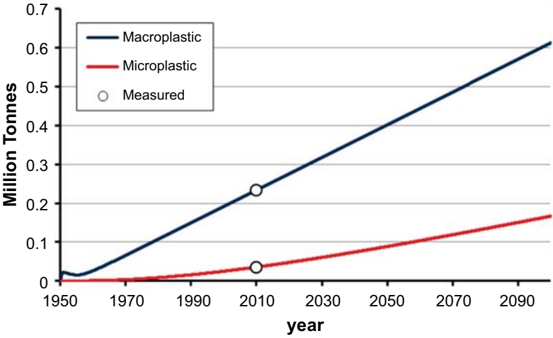
“Furthermore, simulation of future concentrations of MPs indicates an increase (Koelmans et al. 2017), therefore the fraction of sites ‘at risk’ will increase over time.”
BackgroundSelf-citationModeling the Pathways and Accumulation Patterns of Micro- and Macro-Plastics in the Mediterranean
Tsiaras, K. P., Hatzonikolakis, Y., Kalaroni, S., Pollani, A., & Triantafyllou, G. (2021) · Frontiers in Marine Science · doi:10.3389/fmars.2021.743117 · Cited by 102
Future Projections of Global Plastic Pollution: Scenario Analyses and Policy Implications
Yan, H., Cordier, M., & Uehara, T. (2024) · Sustainability · doi:10.3390/su16020643 · Cited by 107
Zhao, M., Zhang, T., Yang, X., Liu, X., Zhu, D., & Chen, W. (2021) · Water Research · doi:10.1016/j.watres.2021.117100 · Cited by 96
Kvale, K., Prowe, A. E. F., & Oschlies, A. (2020) · Frontiers in Marine Science · doi:10.3389/fmars.2019.00808 · Cited by 94
“These estimates are faster than the removal rate approximation of about 3 years from both Koelmans et al. (2017) and Isobe et al. (2019), who prescribed rates of removal not explicitly based on biology.”
BackgroundInfluentialVázquez, O. A., & Rahman, M. S. (2021) · Environmental Toxicology and Pharmacology · doi:10.1016/j.etap.2021.103615 · Cited by 99
Transport of marine microplastic particles: why is it so difficult to predict?
Khatmullina, L., & Chubarenko, I. (2019) · Anthropocene Coasts · doi:10.1139/anc-2018-0024 · Cited by 106
“…floating plastic litter at the ocean surface (0.27 million tonnes (Eriksen et al. 2014)) is explained by the presence of effective removal processes (Koelmans et al. 2017), such as settling due to biofouling, beaching, incorporation to the ice, etc., which are not specifically considered in the…”
BackgroundInfluentialAkanyange, S. N., Zhang, Y., Zhao, X., Adom‐Asamoah, G., Ature, A.-R. A., Anning, C., Chen, T., Zhao, H., Lyu, X., & Crittenden, J. C. (2022) · Sustainable Production and Consumption · doi:10.1016/j.spc.2022.06.020 · Cited by 102
Kim, S., Kim, J., Kim, S. Y., Song, N.-S., La, H. S., & Yang, E. J. (2023) · Science Advances · doi:10.1126/sciadv.add2348 · Cited by 101
Occurrence, Fate and Fluxes of Plastics and Microplastics in Terrestrial and Freshwater Ecosystems
Schell, T., Rico, A., & Vighi, M. (2020) · Reviews of Environmental Contamination and Toxicology · doi:10.1007/398_2019_40 · Cited by 110
Microplastic pollution in surface seawater of Sanggou Bay, China: Occurrence, source and inventory
Xia, B., Sui, Q., Sun, X., Zhu, L., Wang, R., Cai, M., Chen, B., & Qu, K. (2020) · Marine Pollution Bulletin · doi:10.1016/j.marpolbul.2020.111899 · Cited by 90
Goudriaan, M., Morales, V. H., van der Meer, M. T. J., Mets, A., Ndhlovu, R. T., van Heerwaarden, J., Simon, S., Heuer, V. B., Hinrichs, K.-U., & Niemann, H. (2023) · Marine Pollution Bulletin · doi:10.1016/j.marpolbul.2022.114369 · Cited by 88
Microplastics increase the marine production of particulate forms of organic matter
Galgani, L., Tsapakis, M., Pitta, P., Tsiola, A., Tzempelikou, E., Kalantzi, I., Esposito, C., Loiselle, A., Tsotskou, A., Živanović, S., et al. (2019) · Environmental Research Letters · doi:10.1088/1748-9326/ab59ca · Cited by 90
Generation of nanoplastics during the photoageing of low-density polyethylene
Sorasan, C., Edo, C., González-Pleiter, M., Fernández‐Piñas, F., Leganés, F., Rodríguez, A., & Rosal, R. (2021) · Environmental Pollution · doi:10.1016/j.envpol.2021.117919 · Cited by 94
Metadata
- Authors
- Koelmans, A. A., Kooi, M., Law, K. L., & van Sebille, E.
- Affiliations
- Wageningen Marine Research (NL)
- Wageningen University & Research (NL)
- Sea Education Association (US)
- Corresponding author
- Koelmans, Albert A
- Venue
- Environmental Research Letters
- Publisher
- IOP Publishing
- Published
- 2017-11-01
- Volume
- 12
- Issue
- 11
- Pages
- 114028
- ISSN
- 1748-9326 (ISSN-L)
- OpenAlex
- W2767179800
- Cited by
- 396
- References
- 35
- Citations by year
- 2026: 31 · 2025: 47 · 2024: 58 · 2023: 48 · 2022: 55 · 2021: 58 · 2020: 50 · 2019: 32 · 2018: 16
- FWCI
- 12.07
- Type
- journal article
- Language
- en
- Open access
- gold
- doi.org
- Licence
- cc-by
- iopscience.iop.org/info/page/text-and-data-mining (tdm, 9 d)
- creativecommons.org/licenses/by/3.0/ (vor, 9 d)
- Locations
- Environmental Research Letters (publishedVersion, cc-by)
- Socio-Environmental Systems Modeling (acceptedVersion, cc-by)
- DOAJ (DOAJ: Directory of Open Access Journals) (submittedVersion)
- Utrecht University Repository (Utrecht University) (submittedVersion, other-oa)
- Spiral (Imperial College London) (submittedVersion, cc-by)
- Data Archiving and Networked Services (DANS) (submittedVersion, cc-by)
- Funders
- National Science Foundation (OCE-1260403)
- European Research Council (grant agreement No 715386)
- Topics
- Physical Sciences › Environmental Science › Pollution › Microplastics and Plastic Pollution
- Physical Sciences › Earth and Planetary Sciences › Oceanography › Marine Plankton and Biogeochemistry
- Physical Sciences › Environmental Science › Pollution › Oil Spill Detection and Mitigation
- Keywords
- marine plastic debris, mass balance, ocean surface layer, vertical transport, plastic emissions
About these checks
Registry, retraction, Cites and statistics results are computed, not judged, with one exception: a printed reference that no index lists is read once by a model before it counts as a citation error. Claims are extracted by a model and kept only when their quote appears verbatim in the text; each cited source is then checked, with a model’s help, for whether it says what the claim relies on. Those verdicts can be wrong — read the claim’s quote and the cited source before relying on one.
Statistics and arithmetic are recomputed, not judged.
Confidence bands are shown only for fields calibrated on our annotated test set. None is calibrated yet, so no band is shown.
What counts as a claim ›How we measure confidence ›How we check this ›
Are you an author, or do you see a problem with this page? Request a review
Data sources
Bibliographic data: Semantic Scholar, OpenAlex, Crossref.
Contains information from the Semantic Scholar Academic Graph Datasets, made available under the ODC Attribution License (ODC-BY 1.0).
Semantic Scholar’s data is described in: Kinney, R., et al. (2023). The Semantic Scholar Open Data Platform. arXiv:2301.10140.
