

The energy balance model of obesity: beyond calories in, calories out
Open accessThe DOI matches its Crossref record; 152 of the 154 references it cites were found in a registry or an index.
Abstract
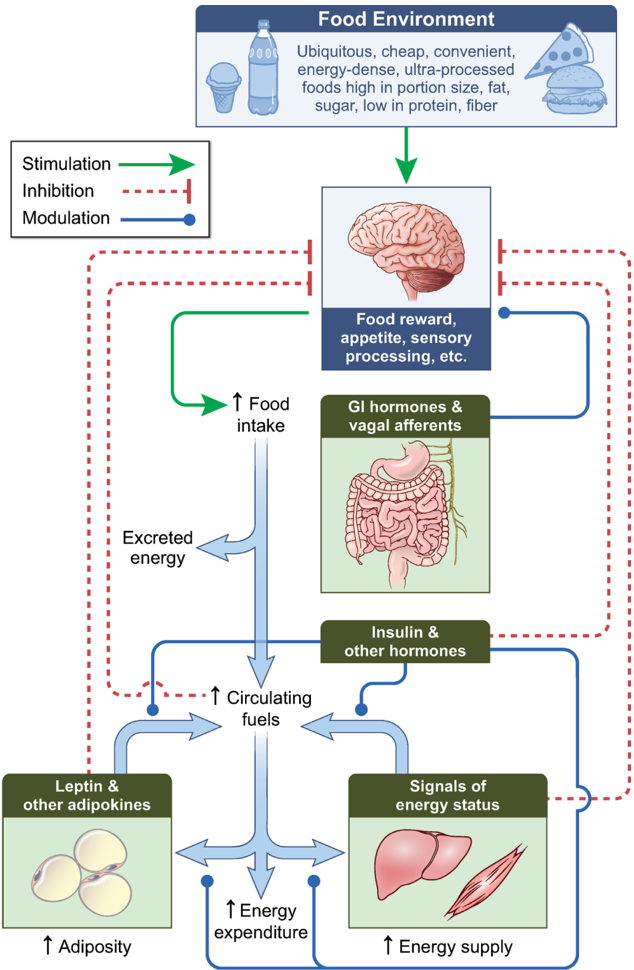
A recent Perspective article described the "carbohydrate-insulin model (CIM)" of obesity, asserting that it "better reflects knowledge on the biology of weight control" as compared with what was described as the "dominant energy balance model (EBM)," which fails to consider "biological mechanisms that promote weight gain." Unfortunately, the Perspective conflated and confused the principle of energy balance, a law of physics that is agnostic as to obesity mechanisms, with the EBM as a theoretical model of obesity that is firmly based on biology. In doing so, the authors presented a false choice between the CIM and a caricature of the EBM that does not reflect modern obesity science. Here, we present a more accurate description of the EBM where the brain is the primary organ responsible for body weight regulation operating mainly below our conscious awareness via complex endocrine, metabolic, and nervous system signals to control food intake in response to the body's dynamic energy needs as well as environmental influences. We also describe the recent history of the CIM and show how the latest "most comprehensive formulation" abandons a formerly central feature that required fat accumulation in adipose tissue to be the primary driver of positive energy balance. As such, the new CIM can be considered a special case of the more comprehensive EBM but with a narrower focus on diets high in glycemic load as the primary factor responsible for common obesity. We review data from a wi…
Overview
The claims and statistics of this paper haven’t been checked yet.
Free: it reads the open-access text and checks the first 5 claims that cite a source we can check. Create a free account to check every claim.
Integrity signals
Registry
Cites
Statistics
Figures
Verification
Claims the paper makes
The claims and statistics of this paper haven’t been checked yet.
Free: it reads the open-access text and checks the first 5 claims that cite a source we can check. Create a free account to check every claim.
Claims other papers make about this one
Each is checked against this paper’s own text: does it say what the citing paper says it does?
The cited source doesn’t support the claim as written.
In the citing paper
“Fat tissue reduction is only possible under negative energy balance, when the energy expended exceeds, the energy supplied from food.”
From Dietary and Behavioral Strategies for Weight Loss and Weight Loss Maintenance: A Narrative Review (2025) · cites this paper as [17]
Checked by a reasoning model — may be wrong.
Experimental — accuracy not yet measuredThe source backs part of the claim, not all of it — or backs it for a different population, condition or comparison.
In the citing paper
“Furthermore, variations in dietary macronutrient composition impact fat loss and individual responses to diet due to complex, multifaceted interactions between metabolism, energy partitioning, and genetic factors.”
From Beyond Calories: Individual Metabolic and Hormonal Adaptations Driving Variability in Weight Management—A State-of-the-Art Narrative Review (2024) · cites this paper as [80]
Experimental — accuracy not yet measuredThe source backs part of the claim, not all of it — or backs it for a different population, condition or comparison.
In the citing paper
“Furthermore, diets emphasizing whole grains, nuts, and vegetables—regardless of carbohydrate content—have shown associations with better weight maintenance compared to those high in refined sugars and saturated fats [80].”
From Beyond Calories: Individual Metabolic and Hormonal Adaptations Driving Variability in Weight Management—A State-of-the-Art Narrative Review (2024) · cites this paper as [80]
Experimental — accuracy not yet measuredThe cited source says what the claim attributes to it.
In the citing paper
“The key factor in successful weight loss is the introduction of a controlled calorie deficit, in line with the basic principles of thermodynamics.”
From Dietary and Behavioral Strategies for Weight Loss and Weight Loss Maintenance: A Narrative Review (2025) · cites this paper as [17]
The cited source says what the claim attributes to it.
In the citing paper
“While the carbohydrate–insulin model posits that high-carbohydrate diets drive insulin secretion, leading to fat storage and weight gain, studies have challenged this by showing that weight loss success depends on broader factors beyond just carbohydrate intake [80].”
From Beyond Calories: Individual Metabolic and Hormonal Adaptations Driving Variability in Weight Management—A State-of-the-Art Narrative Review (2024) · cites this paper as [80]
4 more claims about this paper
Create a free account to see every claim other papers make about this one.
Self-check
Percentages, sums and reported differences re-computed from the paper’s own numbers.
The self-check needs the paper’s full text.
Citations
Cites
Genetic studies of body mass index yield new insights for obesity biology
Study, T. L. C., Locke, A. E., The ADIPOGen Consortium, The AGEN-BMI Working Group, The CARDIOGRAMplusC4D Consortium, The CKDGen Consortium, The, G. L. G. C., The, I. C. B. P., The MAGIC Investigators, The MuTHER Consortium, et al. (2015) · Nature · doi:10.1038/nature14177 · Cited by 4,534
Global nutrition transition and the pandemic of obesity in developing countries
Popkin, B. M., Adair, L. S., & Ng, S. W. (2012) · Nutrition Reviews · doi:10.1111/j.1753-4887.2011.00456.x · Cited by 4,313
Finucane, M. M., Stevens, G. A., Cowan, M. J., Danaei, G., Lin, J. K., Paciorek, C. J., Singh, G. M., Gutierrez, H. R., Lu, Y., Bahalim, A. N., et al. (2011) · The Lancet · doi:10.1016/s0140-6736(10)62037-5 · Cited by 4,050
Changes in diet and lifestyle and long-term weight gain in women and men
Mozaffarian, D., Hao, T., Rimm, E. B., Willett, W. C., & Hu, F. B. (2011) · New England Journal of Medicine · doi:10.1056/nejmoa1014296 · Cited by 2,527
Dynamics of fat cell turnover in humans
Spalding, K. L., Arner, E., Westermark, P. O., Bernard, S., Buchholz, B. A., Bergmann, O., Blomqvist, L., Hoffstedt, J., Näslund, E., Britton, T., et al. (2008) · Nature · doi:10.1038/nature06902 · Cited by 2,357
Role of Brain Insulin Receptor in Control of Body Weight and Reproduction
Brüning, J. C., Gautam, D., Burks, D. J., Gillette, J., Schubert, M., Orban, P. C., Klein, R., Krone, W., Müller-Wieland, D., & Kahn, C. R. (2000) · Science · doi:10.1126/science.289.5487.2122 · Cited by 2,235
Hall, K. D., Ayuketah, A., Brychta, R., Cai, H., Cassimatis, T., Chen, K. Y., Chung, S. T., Costa, E., Courville, A., Darcey, V., et al. (2019) · Cell Metabolism · doi:10.1016/j.cmet.2019.05.008 · Cited by 1,971
Self-citationUltra‐processed products are becoming dominant in the global food system
Monteiro, C. A., Moubarac, J. ‐., Cannon, G., Ng, S. W., & Popkin, B. (2013) · Obesity Reviews · doi:10.1111/obr.12107 · Cited by 1,827
Ludwig (2002) · doi:10.1001/jama.287.18.2414 · Cited by 1,775
Angiogenesis and Inflammation in Peritoneal Dialysis: The Role of Adipocytes
Shi, J., Yu, M., & Sheng, M. (2017) · Kidney and Blood Pressure Research · doi:10.1159/000476017 · Cited by 1,403
Research works printed but not linked: 2
- 46. Hall KD. Predicted impact of adipose insulin resistance on long-term human body composition. Obesity 2006;14(S9):A212.
- 144. Pennington AW. Obesity. Med Times 1952;80(7):389-98.
Cited by
Items 301–395 of 395
Aging reveals divergent responses of AgRP/NPY neurons to diet in male and female micePreprint
Brothers, T., Wei, W., Korgan, A. C., Bridges, Z., & O’Connell, K. M. S. (2025) · bioRxiv (Cold Spring Harbor Laboratory) · doi:10.1101/2025.11.20.689576
Tang, Y., Ruan, S., Zhou, X., Chen, J., Wu, X., & Zhu, Q. (2025) · Healthcare · doi:10.3390/healthcare13233027
“While we observed this pattern, we found that contrasting findings exist [30,31].”
Aji, G. K., Hariyanto, B., Pangestu, A., Kusumasmarawati, A. D., & Cahyana, P. T. (2025) · Amerta Nutrition · doi:10.20473/amnt.v9i4.2025.576-585
Kyriacou, M., Kosmas, P., & Andreev, H. (2025) · E3S Web of Conferences · doi:10.1051/e3sconf/202566905006
Putra, E. S., Irfan, A., Rahmad, A. H. A., & Dahliansyah, D. (2025) · Jurnal SAGO Gizi dan Kesehatan · doi:10.30867/gikes.v6i3.2837
Taiyeb, A. M., & Saru, A. A. A. (2025) · Journal of Scientific Insights · doi:10.69930/jsi.v2i6.595
Hany, M., Eldeeb, M. K., Elmongui, E., Abouelnasr, A. A., ElBanna, N. A., Omer, S., Shaker, S. A., & El-Tahan, R. A. (2025) · Obesity Surgery · doi:10.1007/s11695-025-08399-y
“Obesity is a chronic, relapsing disease of energy dysregulation, resulting from sustained caloric intake exceeding individual metabolic requirements [1].”
Neuroscience of Obesity: Pathogenesis of a Disease Influenced by the Environment
Adroja, Y. (2022) · Scholarly Research In Progress · doi:10.64057/001c.142182
Fallah‐Fini, S., Rezaei, T., De Ridder, K., & Vandevijvere, S. (2023) · Figshare · doi:10.6084/m9.figshare.23250692
Effects of carbohydrate restriction and exogenous ketosis on cardiometabolic health
Falkenhain, K. (2024) · cIRcle (University of British Columbia) · doi:10.14288/1.0434186
de Mello, G. T., Minatto, G., Costa, R. M., Leech, R. M., Cao, Y., Lee, R. E., & Silva, K. S. (2024) · Figshare · doi:10.6084/m9.figshare.26708714
Objective dietary intake and appetite sensations across the menstrual cycle
Smith, M. E. (2024) · cIRcle (University of British Columbia) · doi:10.14288/1.0445186
Omuso, B. (2025) · Liverpool John Moores University · doi:10.24377/ljmu.t.00026537
Miguel-Albarreal, A. D. (2024) · Deposito de Investigacion Universidad de Sevilla (University of Seville)
Ballin, M. (2023) · DiVA at Umeå University (Umeå University)
Mirzadeh, P. (2023) · YorkSpace (York University)
The Potential Role of Periodised Resistance Training During Cancer Treatment
Metcalfe, J. (2025) · Repository@Hull (Worktribe) (University of Hull)
García-Beltrán, A. (2024) · Institutional Repository of the University of Granada (University of Granada)
Preserving muscle with GLP-1 weight loss drugs: Big deal or nothing to worry about?
Phillips, S. (2025) · The Conversation · doi:10.64628/aam.7kun953gf
Alogaiel, D. (2025) · Nottingham ePrints (University of Nottingham)
Kjellman, A. (2024) · Doria (University of Helsinki)
Prabowo, N. D., Dewi, Y. I. K., & Sakina, M. W. R. (2025) · Transformatif Jurnal Pengabdian Masyarakat · doi:10.22515/tranformatif.v6i2.10488
da Rosa, R. M. (2023) · LA Referencia (Red Federada de Repositorios Institucionales de Publicaciones Científicas)
Smaniotto, F. A. (2022) · LA Referencia (Red Federada de Repositorios Institucionales de Publicaciones Científicas)
Thompson, T., Shin, A. C., Decourt, B., Wang, Y., Vigil, B. Z., Solodukhina, A. A., Ranasinghe, S., Young, R. S., Hegde, V. K., & Moustaïd‐Moussa, N. (2026) · Frontiers in Nutrition · doi:10.3389/fnut.2025.1673533
Quantitative Foundations of Energy Balance Are Not Empirically Reliable Under Ideal ConditionsPreprint
Arencibia‐Albite, F. (2026) · Research Square · doi:10.21203/rs.3.rs-8595271/v1
Editorial: Exercise, diet, cytokines and obesity, volume II
Huang, J., Yan, X., Shen, B., Xie, L., & Kuo, C.-H. (2026) · Frontiers in Endocrinology · doi:10.3389/fendo.2026.1774325
Kiss1-FASN participates fatty acid synthesis via high-fat diet in PgVAT of female mice
Li, X., Liang, C., Song, G., Lin, Y., Chen, Y., Zhao, J., Sui, H., Pan, X., Sun, L., Chen, J., et al. (2026) · Journal of Lipid Research · doi:10.1016/j.jlr.2026.100986
Choi, H., Lee, Y. J., Park, S.-H., Park, J., Park, K. H., Baek, K.-S., Kim, J., Jung, H., Kim, J., & Jun, W. (2026) · International Journal of Molecular Sciences · doi:10.3390/ijms27042014
“Obesity is a chronic metabolic disorder characterized by a persistent positive energy balance, with excess energy stored as triglycerides (TGs) in adipose tissue [1].”
Chudamani, S. K., Bahinipati, J., Mohapatra, R. G. A., Padhee, S., & Mahapatra, S. (2026) · International Journal of Research in Medical Sciences · doi:10.18203/2320-6012.ijrms20260621
Cognitive reappraisal of food and emotion cues involves common and unique neural contributionsPreprint
Laing, J. M., Savage, C. R., Tomaso, C. C., Neta, M., Nelson, T. D., & Schultz, D. H. (2026) · bioRxiv (Cold Spring Harbor Laboratory) · doi:10.64898/2026.03.09.710570
Sartorius, A. M., Deilhaug, E., Kang, H., Dufour, D., Walle, K. M., Eddy, K. T., van der Meer, D., Westlye, L. T., Andreassen, O. A., Lawson, E. A., et al. (2026) · medRxiv · doi:10.64898/2026.03.25.26349278
Strategies for Improving Clean and Healthy Living Behavior in Families: Daily Practices
Azzahra, F. I., Gumilang, H. A., Hikmal, M., Virdas, M., Fadhlulariibah, N. S., & Muslikah, S. (2026) · Hanifiya Jurnal Studi Agama-Agama · doi:10.15575/hanifiya.v9i1.54806
Étude des effets de l'hippurate et de ses cibles sur la biologie des cellules bêta et hépatiques
Deslande, M. (2024) · theses.fr (ABES) · doi:10.70675/65318bb4zba06z40c3za36aze387c87034be
Breniere, T. (2024) · theses.fr (ABES) · doi:10.70675/cfe2e686z0941z4328za854z25766dff2527
Decoding molecular and cellular mechanisms of POMC-lineage neuron programming in maternal obesity
Lee, H. Y. T. (2025) · theses.fr (ABES) · doi:10.70675/8c37a24dzb8cez483ez8eabz2173315e4530
Grover, M., Eastman, E., Rybka, J., Semet, E., & Zdanowicz, L. (2026) · Research Square · doi:10.21203/rs.3.rs-9003742/v1
Sun, X., Zhang, B., Cui, S., Zhao, L., Wang, G., & Zhao, J. (2026) · Food Bioscience · doi:10.1016/j.fbio.2026.108894
Araoye, M. I., Awotundun, T. A., Oladipo, I. C., & Olanbiwoninu, A. A. (2026) · Food Safety and Risk · doi:10.1186/s40550-026-00144-2
“Fat content is a crucial parameter that reflects the energy density and nutritional value of food products, helping to determine caloric contribution and overall dietary balance (Hall et al. 2022).”
Gil, T., Ryu, S., Kim, H.-Y., Park, Y.-J., Ju, C.-Y., Baek, J.-S., & An, H. (2026) · Journal of Functional Foods · doi:10.1016/j.jff.2026.107298
HARYTA, F. S., Listyawati, S., & Indarto, D. (2026) · Jurnal Kesehatan Masyarakat · doi:10.15294/kemas.v21i3.29957
Effects of a dynamically adjusted exercise prescription in adults with overweight and obesity
Zhang, Z. K., Peng, W., Zhang, F. W., Lu, P. X., Huang, L., & Sun, S. M. (2026) · Science & Sports · doi:10.1016/j.scispo.2026.02.003
Diet Protocols and Weight Management Products: An Evidence-Based Narrative Review
Peracchia, A., Rustichelli, C., & Avallone, R. (2026) · Dietetics · doi:10.3390/dietetics5020026
Pereira, L. J., de Souza, A., Alves, Á. E., Oliveira, F. F. F., Lima, K. R., Alcântara, S. F. M., Rezende, M. D. F., Rodrigues, R. C., Pereira, C. V., & Andrade, E. F. (2026) · Nutrire · doi:10.1186/s41110-026-00476-1
“Excessive weight gain, in particular, results from a complex interplay of genetic, environmental, and social factors [14], which collectively lead to an energy intake that exceeds energy expenditure, thereby promoting a positive energy balance [15].”
POLA MAKAN DAN AKTIVITAS FISIK SEBAGAI FAKTOR TERHADAP KEJADIAN OBESITAS PADA REMAJA
Selvia, A., Noviyanti, L. K., Hartanti, S., & Taslim, M. A. (2026) · PREPOTIF Jurnal Kesehatan Masyarakat · doi:10.31004/prepotif.v10i1.53677
Ahsan, R., Ashiq, K., Shah, S. A., Ahsan, M. Z., Shafiullah, Ashraf, M., & Bukhari, I. (2026) · PubMed Central · doi:10.22038/ajp.2025.26441
“In addition, increased BMI is associated with many health problems resulting in deteriorating quality of life (QoL) (Hasani-Ranjbar et al. 2013; Hall et al. 2022).”
Zhang, Y., Kim, S., & Wang, J. (2026) · Journal of Sports Science and Medicine · doi:10.52082/jssm.2026.459
“Effective long-term management therefore requires sustainable strategies, especially regular physical activity (Hall et al., 2022; Khera et al., 2016; Petridou et al., 2019; Verboven and Hansen, 2021).”
Reilly, R. R. (2026) · Strength and conditioning journal · doi:10.1519/ssc.0000000000000964
Aakiti, D. R., Natarajan, A., Kastwar, V., Shankar, K., kishore, J., Sherpa, M., Meghanatham, Y., Gupta, V., Khanna, R., Singh, J., et al. (2026) · International Journal of Diabetes and Technology · doi:10.4103/ijdt.ijdt_29_26
ФЕНОМЕН «МЕТАБОЛИЧЕСКИ ЗДОРОВОГО ОЖИРЕНИЯ» КАК СОСТОЯНИЕ ЛАТЕНТНОГО РИСКА ЗДОРОВЬЮ
Ксенева, С. И., Trifonova, O. Y., Золотарев, А. А., Пыхтунова, Е. А., & Удут, В. Н. (2026) · Health Risk Analysis
Misha, M. S. (2024) · theses.fr (ABES) · doi:10.70675/7a024061z9752z4705za544zb782b2cc4f60
The role of physical activity in the management of obesity
Creel, D. B. (2026) · Advances in pharmacology · doi:10.1016/bs.apha.2026.06.006
A conceptual framework integrating mechanisms linking nut consumption and energy balance
Cassettari, T., Starck, C. S., Beckett, E., & Fayet‐Moore, F. (2026) · Frontiers in Nutrition · doi:10.3389/fnut.2026.1834816
“Energy balance abides by thermodynamic principles but is increasingly understood as a dynamic system shaped by feedback loops between intake and expenditure, including adjustments in appetite and metabolic rate (35).”
Zhang, W., Feng, Y., Gao, C., Zhong, L., Wang, W., Xu, M., Zheng, B., Zhang, Y., Wang, S., Yi, S., et al. (2026) · International Journal of Obesity · doi:10.1038/s41366-026-02153-9
Ben‐Dor, M., & Klement, R. J. (2026) · International Journal for Vitamin and Nutrition Research · doi:10.31083/ijvnr48814
Leyva‐Soto, A., Chávez-Santoscoy, R. A., Ramírez-Rodríguez, A. A., Rhein, S. O., Bolatto, C., & Tobar, N. (2026) · Food Bioscience · doi:10.1016/j.fbio.2026.109446
Samudio-Cruz, M. A., Cabrera-Ruiz, E., Cerqueda‐García, D., Rodríguez-Sobrino, P. D., Luna‐Angulo, A. B., Landa‐Solís, C., Canizales‐Quinteros, S., Valencia-León, J. F., López-Contreras, B. E., Carrillo‐Mora, P., et al. (2026) · Nutrients · doi:10.3390/nu18142308
Wicaksono, A., Kartini, A., & Fatimah, S. (2026) · International Archives of Medical Sciences and Public Health · doi:10.53806/iamsph.v7i1.1486
Żurawski, T., & Bartosiewicz, A. (2026) · Nutrients · doi:10.3390/nu18152525
“Although its development is associated with a sustained positive energy balance [3,4], the course of the disease also depends on interactions among biological, environmental, and behavioral factors [5,6].”
Protection against diet-induced weight gain by a single-point mutation in Kir2.1 channels
Beverley, K., MUNOZ, M. D., Ahn, S. J., Granados, S. T., Master, E. L., Phillips, S. A., Fancher, I. S., Xu, P., & Levitan, I. (2026) · Scientific Reports · doi:10.1038/s41598-026-62892-7
EFEITOS METABÓLICOS E CARDIOMETABÓLICOS DO JEJUM INTERMITENTE: UMA REVISÃO NARRATIVA
do Nascimento, O. V., Braga, S. N. G. D. S., & de Jesus, I. F. (2026) · Revista Saúde dos Vales · doi:10.66104/dsgcag63
Carr, K. A., Hite, M. J., Dobiesz, O. J., Gailor, M., Paluch, R. A., Wang, L., Quattrin, T., Anzman‐Frasca, S., & Epstein, L. H. (2026) · JMIR Research Protocols · doi:10.2196/99962
BENEFÍCIOS DO JEJUM INTERMITENTE: UMA REVISÃO NARRATIVA
do Nascimento, O. V., & de Jesus, I. F. (2026) · Editora Científica Digital eBooks · doi:10.37885/260722437
Rodzeń, Ł., Rodzeń, M., Dyńka, D., Łojko, D., Karakuła‐Juchnowicz, H., Kraszewski, S., Fazio, S., Unwin, D., & Bikman, B. T. (2026) · Nutrients · doi:10.3390/nu18162666
“According to this model, diets rich in high-glycemic-index carbohydrates promote postprandial hyperinsulinemia, which preferentially directs calories toward adipose tissue rather than oxidation in lean tissues, thereby facilitating fat accumulation [44,45].”
The adipose organ–capacitor model of preclinical and clinical obesity
Nisoli, E. (2026) · Trends Open · doi:10.1016/j.treopn.2026.07.013
Ashtary‐Larky, D. (2026) · Current Obesity Reports · doi:10.1007/s13679-026-00751-2
“In contrast, the model advanced by Hall et al. places primary emphasis on the control of food intake, while assigning a comparatively less prominent causal role to diet-induced differences in EE [ 15].”
Temporal association between body weight and type 2 diabetes at the population level
Huangfu, Y., Sørensen, T. I. A., Beltrán‐Sánchez, H., Guo, H., Aldea, N., García-Aguirre, A., Lund, M., Muñoz, I. G., & Palloni, A. (2026) · Communications Medicine · doi:10.1038/s43856-026-01853-7
IRON STUDY OF TYPE 2 DIABETIC PATIENTS ASSOCIATED WITH ALCOHOLISM
Shahatha, S. S., Alqaderi, F. A., & Sadeq, A. H. (2026) · Journal of Medical Genetics and Clinical Biology · doi:10.61796/jmgcb.v3i7.1850
SHAMIMA, A. (2026) · Institutional Repositories DataBase (IRDB) · doi:10.24729/0002016317
Inherited Environments: Modeling the Cultural and Genetic Pathways of Childhood ObesityPreprint
García-Aguirre, A., Aldea, N., McEniry, M., Huangfu, Y., Beltrán‐Sánchez, H., Muñoz, I. G., Lund, M., Sørensen, T. I. A., & Palloni, A. (2026) · SSRN Electronic Journal · doi:10.2139/ssrn.7394223
Hidén, A., Björkman, S., Kjölhede, E. A., Eliasson, B., & Larsson, I. (2026) · Obesity Science & Practice · doi:10.1002/osp4.70196
“Highly palatable foods such as sweets, choco-late, baked goods, and ice cream are typically high in fat and sugar and contribute substantially to total energy intake [40], potentially enhancing their appetite‐stimulating properties [5].”
Ko, J. W. Y. (2026) · eScholarship (California Digital Library)
Rice, S. M., Buchanan, L., Calkins, M. W., Cucuzzella, M. T., Cywes, R., Devine, P. L., Kalamian, M., Kalayjian, T., Reynolds, D. B., & Westman, E. C. (2026) · Journal of Metabolic Health · doi:10.4102/jmh.v9i1.152
Isolation And Identification Of Fatty Acids In Serum Of People With Obesity
Al-Jader, N. S. M., & Al-Jawadi, Z. A. M. (2025) · International Journal of Environmental Sciences · doi:10.64252/8m3r3137
Herdiani, N., Zamzam, M., Wijaya, S., Biladi, M. A., & Tazkiyah, F. (2024) · Community Development Journal Jurnal Pengabdian Masyarakat
INFLUENCE OF SELF-WEIGHING BEHAVIOR ON WEIGHT LOSS AND MAINTENANCE IN THE ADULT MALE POPULATION
Al-Ghazo, J. M., Al-Saadi, R. K. A., Aljaffali, N. M., Al-Adgham, S. R., ALBadareen, B. O., Qudaisat, A. M. F., Abdelbaset, M. G. R., Kutama, S. R., Manlungat, R. J., Shekh, H. H. E., et al. (2026) · World Journal of Advanced Research and Reviews · doi:10.30574/wjarr.2026.32.1.2354
Arencibia‐Albite, F. (2026) · Biology · doi:10.3390/biology15201817
“…interpretations differ substantially regarding the mechanisms responsible for changes in food intake, expenditure, and body composition, these debates generally operate within an underlying framework in which the energetic accounting relationships themselves are taken as the starting point [39,40].”
Obesity as an emergent attractor state in a multiscale regulatory network: a hypothesis
Ghorbani, A. (2026) · Medical Hypotheses · doi:10.1016/j.mehy.2026.112206
Sukarsono, A., Sriwiyati, K., & Rachmawan, Y. P. (2026) · SEHAT Jurnal Kesehatan Terpadu · doi:10.31004/s-jkt.v5i3.60653
Common questions and misconceptions about diets: what does the scientific evidence really show?
António, J., Antonio, B. B., Aragon, A. A., Arent, S. M., Campbell, B. I., Candow, D. G., Eberhardt, H. K., Escalante, G., Evans, C., Forbes, S. C., et al. (2026) · Journal of the International Society of Sports Nutrition · doi:10.1080/15502783.2026.2707252
“Hall et al. [90] noted that the energy balance model (i.e. CICO) allows one to undertake various eating patterns and macronutrient composition while ultimately sustaining a reduction in calories, which is the main driver of weight loss.”
Inthachat, W., Pitchakarn, P., Phochantachinda, S., Laowanitwattana, T., Buacheen, P., Chimasangkanan, J., Kemsawasd, V., Kittibunchakul, S., Suttisansanee, U., Chantong, B., et al. (2026) · Journal of Functional Foods · doi:10.1016/j.jff.2026.107546
Research progress in neural regulatory mechanisms and targeted therapy of obesity (Review)
Kang, D., Li, X., Zhang, Y., Sun, Y., Li, Y., Yao, Z., & Li, Y. (2026) · Molecular Medicine Reports · doi:10.3892/mmr.2026.14052
“…nutrient and endocrine signals to coordinate feeding behaviour and meta‑ bolic activity through both neuroendocrine and neuronal pathways (5). as the primary integrative hub for peripheral metabolic inputs, the arc possesses an incomplete BBB, enabling direct sensing of circulating…”
Burguera, B. G. (2026) · Advances in pharmacology · doi:10.1016/bs.apha.2026.09.002
CAI, W.-J., Kong, P., Huang, B., Xue, W., Zhang, C., Lan, Z., Chen, A. J., & Xian, Y. (2026) · Metabolites · doi:10.3390/metabo16110832
Obesity Education for Occupational Therapy Students: A Missing Piece?
Stocksborough, L., & Masterson-Ng, S. (2026) · Journal of Occupational Therapy Education · doi:10.26681/jote.2026.100405
Knorr, D. A., & Pontzer, H. (2026) · Annals of Human Biology · doi:10.1080/03014460.2026.2748535
Apriliawan, B., Retnaningsih, C., Widianarko, B., & Nugrahedi, R. P. Y. (2026) · ARMADA Jurnal Penelitian Multidisiplin · doi:10.55681/armada.v4i10.4346
Su, Z., Zhang, Y., Li, S., Liu, G., & Wang, S. (2026) · Science China Life Sciences · doi:10.1007/s11427-026-3560-6
Descôteaux, S. (2026) · Le dépôt institutionnel (Université du Québec à Trois-Rivières)
Ahrens, M., Baugh, M. E., Hutelin, Z., Fazzino, T. L., LaFata, E. M., Sonneville, K. R., Gearhardt, A. N., & DiFeliceantonio, A. G. (2026) · Journal of the Academy of Nutrition and Dietetics · doi:10.1016/j.jand.2026.156925
Zhang, Y., Jia, X.-B., Liu, Y.-C., Yu, W.-Q., Si, Y.-H., & Guo, S.-D. (2022) · doi:10.3389/fnut.2022.971581.s001
Hernandez, P., Herrera-Cuenca, M., Ferrari, G., Almeida, R. Y., García, M. C. Y., Cáceres, M. V., Sanabria, L. Y. C., Sifontes, Y., Landaeta-Jimenez, M., Gómez, G., et al. (2024) · doi:10.3389/fnut.2024.1380315.s001
Sukupuolierot sosioekonomisen aseman ja painon yhteydessä ja eroja selittävät tekijät
Järvensivu, E. (2026) · Helda - University of Helsinki Institutional Repository
Metadata
- Authors
- Hall, K. D., Farooqi, I. S., Friedman, J. M., Klein, S., Loos, R. J., Mangelsdorf, D. J., O’Rahilly, S., Ravussin, E., Redman, L. M., Ryan, D. H., Speakman, J. R., & Tobias, D. K.
- Affiliations
- National Institutes of Health (US)
- University of Cambridge (GB)
- Rockefeller University (US)
- Washington University in St. Louis (US)
- University of Copenhagen (DK)
- The University of Texas Southwestern Medical Center (US)
- Pennington Biomedical Research Center (US)
- University of Aberdeen (GB)
- Brigham and Women's Hospital (US)
- Corresponding author
- Hall, Kevin D
- ORCID
- Venue
- The American Journal of Clinical Nutrition
- Publisher
- Elsevier BV
- Published
- 2022-05
- Volume
- 115
- Issue
- 5
- Pages
- 1243-1254
- ISSN
- 0002-9165 (ISSN-L)
- PMC
- PMC9071483
- OpenAlex
- W4210770895
- Cited by
- 315
- References
- 154
- Citations by year
- 2026: 56 · 2025: 71 · 2024: 66 · 2023: 75 · 2022: 46
- FWCI
- 34.03
- Type
- journal article
- Language
- en
- Open access
- bronze
- doi.org
- Licence
- www.elsevier.com/tdm/userlicense/1.0/ (tdm)
- www.elsevier.com/open-access/userlicense/1.0/ (vor, 365 d)
- Locations
- American Journal of Clinical Nutrition (publishedVersion)
- PubMed Central (publishedVersion)
- Research at the University of Copenhagen (University of Copenhagen) (publishedVersion, other-oa)
- PubMed (publishedVersion)
- Civil War Book Review (submittedVersion)
- Funders
- National Institutes of Health
- National Institute of Diabetes and Digestive and Kidney Diseases
- Topics
- Life Sciences › Neuroscience › Endocrine and Autonomic Systems › Regulation of Appetite and Obesity
- Health Sciences › Medicine › Public Health, Environmental and Occupational Health › Obesity, Physical Activity, Diet
- Health Sciences › Medicine › Endocrinology, Diabetes and Metabolism › Adipokines, Inflammation, and Metabolic Diseases
- Keywords
- obesity, energy balance model, body weight regulation, glycemic load, energy balance, obesity mechanisms
- MeSH terms
- Body Weight, Energy Intake, Energy Metabolism, Humans, Insulin, Obesity
About these checks
Registry, retraction, Cites and statistics results are computed, not judged, with one exception: a printed reference that no index lists is read once by a model before it counts as a citation error. Claims are extracted by a model and kept only when their quote appears verbatim in the text; each cited source is then checked, with a model’s help, for whether it says what the claim relies on. Those verdicts can be wrong — read the claim’s quote and the cited source before relying on one.
Statistics and arithmetic are recomputed, not judged.
Confidence bands are shown only for fields calibrated on our annotated test set. None is calibrated yet, so no band is shown.
What counts as a claim ›How we measure confidence ›How we check this ›
Are you an author, or do you see a problem with this page? Request a review
Data sources
Bibliographic data: Semantic Scholar, OpenAlex, Crossref.
Contains information from the Semantic Scholar Academic Graph Datasets, made available under the ODC Attribution License (ODC-BY 1.0).
Semantic Scholar’s data is described in: Kinney, R., et al. (2023). The Semantic Scholar Open Data Platform. arXiv:2301.10140.
