

The energy balance model of obesity: beyond calories in, calories out
Open accessThe DOI matches its Crossref record; 152 of the 154 references it cites were found in a registry or an index.
Abstract
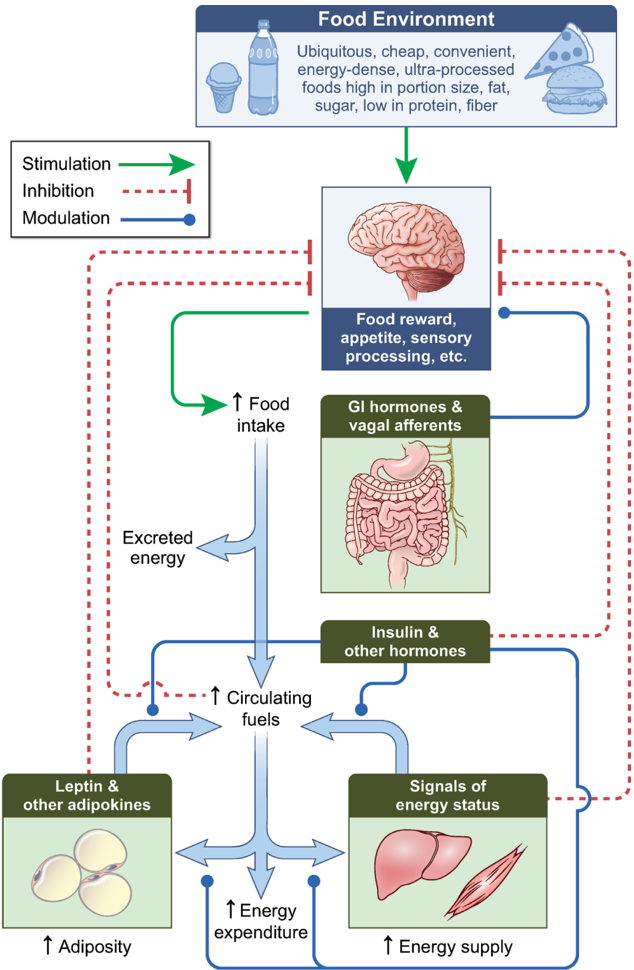
A recent Perspective article described the "carbohydrate-insulin model (CIM)" of obesity, asserting that it "better reflects knowledge on the biology of weight control" as compared with what was described as the "dominant energy balance model (EBM)," which fails to consider "biological mechanisms that promote weight gain." Unfortunately, the Perspective conflated and confused the principle of energy balance, a law of physics that is agnostic as to obesity mechanisms, with the EBM as a theoretical model of obesity that is firmly based on biology. In doing so, the authors presented a false choice between the CIM and a caricature of the EBM that does not reflect modern obesity science. Here, we present a more accurate description of the EBM where the brain is the primary organ responsible for body weight regulation operating mainly below our conscious awareness via complex endocrine, metabolic, and nervous system signals to control food intake in response to the body's dynamic energy needs as well as environmental influences. We also describe the recent history of the CIM and show how the latest "most comprehensive formulation" abandons a formerly central feature that required fat accumulation in adipose tissue to be the primary driver of positive energy balance. As such, the new CIM can be considered a special case of the more comprehensive EBM but with a narrower focus on diets high in glycemic load as the primary factor responsible for common obesity. We review data from a wi…
Overview
The claims and statistics of this paper haven’t been checked yet.
Free: it reads the open-access text and checks the first 5 claims that cite a source we can check. Create a free account to check every claim.
Integrity signals
Registry
Cites
Statistics
Figures
Verification
Claims the paper makes
The claims and statistics of this paper haven’t been checked yet.
Free: it reads the open-access text and checks the first 5 claims that cite a source we can check. Create a free account to check every claim.
Claims other papers make about this one
Each is checked against this paper’s own text: does it say what the citing paper says it does?
The cited source doesn’t support the claim as written.
In the citing paper
“Fat tissue reduction is only possible under negative energy balance, when the energy expended exceeds, the energy supplied from food.”
From Dietary and Behavioral Strategies for Weight Loss and Weight Loss Maintenance: A Narrative Review (2025) · cites this paper as [17]
Checked by a reasoning model — may be wrong.
Experimental — accuracy not yet measuredThe source backs part of the claim, not all of it — or backs it for a different population, condition or comparison.
In the citing paper
“Furthermore, variations in dietary macronutrient composition impact fat loss and individual responses to diet due to complex, multifaceted interactions between metabolism, energy partitioning, and genetic factors.”
From Beyond Calories: Individual Metabolic and Hormonal Adaptations Driving Variability in Weight Management—A State-of-the-Art Narrative Review (2024) · cites this paper as [80]
Experimental — accuracy not yet measuredThe source backs part of the claim, not all of it — or backs it for a different population, condition or comparison.
In the citing paper
“Furthermore, diets emphasizing whole grains, nuts, and vegetables—regardless of carbohydrate content—have shown associations with better weight maintenance compared to those high in refined sugars and saturated fats [80].”
From Beyond Calories: Individual Metabolic and Hormonal Adaptations Driving Variability in Weight Management—A State-of-the-Art Narrative Review (2024) · cites this paper as [80]
Experimental — accuracy not yet measuredThe cited source says what the claim attributes to it.
In the citing paper
“The key factor in successful weight loss is the introduction of a controlled calorie deficit, in line with the basic principles of thermodynamics.”
From Dietary and Behavioral Strategies for Weight Loss and Weight Loss Maintenance: A Narrative Review (2025) · cites this paper as [17]
The cited source says what the claim attributes to it.
In the citing paper
“While the carbohydrate–insulin model posits that high-carbohydrate diets drive insulin secretion, leading to fat storage and weight gain, studies have challenged this by showing that weight loss success depends on broader factors beyond just carbohydrate intake [80].”
From Beyond Calories: Individual Metabolic and Hormonal Adaptations Driving Variability in Weight Management—A State-of-the-Art Narrative Review (2024) · cites this paper as [80]
4 more claims about this paper
Create a free account to see every claim other papers make about this one.
Self-check
Percentages, sums and reported differences re-computed from the paper’s own numbers.
The self-check needs the paper’s full text.
Citations
Cites
Genetic studies of body mass index yield new insights for obesity biology
Study, T. L. C., Locke, A. E., The ADIPOGen Consortium, The AGEN-BMI Working Group, The CARDIOGRAMplusC4D Consortium, The CKDGen Consortium, The, G. L. G. C., The, I. C. B. P., The MAGIC Investigators, The MuTHER Consortium, et al. (2015) · Nature · doi:10.1038/nature14177 · Cited by 4,534
Global nutrition transition and the pandemic of obesity in developing countries
Popkin, B. M., Adair, L. S., & Ng, S. W. (2012) · Nutrition Reviews · doi:10.1111/j.1753-4887.2011.00456.x · Cited by 4,313
Finucane, M. M., Stevens, G. A., Cowan, M. J., Danaei, G., Lin, J. K., Paciorek, C. J., Singh, G. M., Gutierrez, H. R., Lu, Y., Bahalim, A. N., et al. (2011) · The Lancet · doi:10.1016/s0140-6736(10)62037-5 · Cited by 4,050
Changes in diet and lifestyle and long-term weight gain in women and men
Mozaffarian, D., Hao, T., Rimm, E. B., Willett, W. C., & Hu, F. B. (2011) · New England Journal of Medicine · doi:10.1056/nejmoa1014296 · Cited by 2,527
Dynamics of fat cell turnover in humans
Spalding, K. L., Arner, E., Westermark, P. O., Bernard, S., Buchholz, B. A., Bergmann, O., Blomqvist, L., Hoffstedt, J., Näslund, E., Britton, T., et al. (2008) · Nature · doi:10.1038/nature06902 · Cited by 2,357
Role of Brain Insulin Receptor in Control of Body Weight and Reproduction
Brüning, J. C., Gautam, D., Burks, D. J., Gillette, J., Schubert, M., Orban, P. C., Klein, R., Krone, W., Müller-Wieland, D., & Kahn, C. R. (2000) · Science · doi:10.1126/science.289.5487.2122 · Cited by 2,235
Hall, K. D., Ayuketah, A., Brychta, R., Cai, H., Cassimatis, T., Chen, K. Y., Chung, S. T., Costa, E., Courville, A., Darcey, V., et al. (2019) · Cell Metabolism · doi:10.1016/j.cmet.2019.05.008 · Cited by 1,971
Self-citationUltra‐processed products are becoming dominant in the global food system
Monteiro, C. A., Moubarac, J. ‐., Cannon, G., Ng, S. W., & Popkin, B. (2013) · Obesity Reviews · doi:10.1111/obr.12107 · Cited by 1,827
Ludwig (2002) · doi:10.1001/jama.287.18.2414 · Cited by 1,775
Angiogenesis and Inflammation in Peritoneal Dialysis: The Role of Adipocytes
Shi, J., Yu, M., & Sheng, M. (2017) · Kidney and Blood Pressure Research · doi:10.1159/000476017 · Cited by 1,403
Research works printed but not linked: 2
- 46. Hall KD. Predicted impact of adipose insulin resistance on long-term human body composition. Obesity 2006;14(S9):A212.
- 144. Pennington AW. Obesity. Med Times 1952;80(7):389-98.
Cited by
Ahmed, S. K., & Mohammed, R. A. (2025) · Metabolism Open · doi:10.1016/j.metop.2025.100375 · Cited by 432
Masood, B., & Moorthy, M. (2023) · Clinical Medicine · doi:10.7861/clinmed.2023-0168 · Cited by 252
Host-diet-gut microbiome interactions influence human energy balance: a randomized clinical trial
Corbin, K. D., Carnero, E. A., Dirks, B., Igudesman, D., Yi, F., Marcus, A., Davis, T. L., Pratley, R. E., Rittmann, B. E., Krajmalnik-Brown, R., et al. (2023) · Nature Communications · doi:10.1038/s41467-023-38778-x · Cited by 177
“However, the regulation of body energy stores involves neural circuits in the hind-brain and hypothalamus, proximal and distal gut hormone secretions and adipose tissue neural and endocrine signals to the brain 44 .”
The Impact of Free Sugar on Human Health—A Narrative Review
Gillespie, K. M., Kemps, E., White, M. J., & Bartlett, S. E. (2023) · Nutrients · doi:10.3390/nu15040889 · Cited by 163
“The ongoing debate remains primarily focused on whether the cause of overweight and obesity is excess sugar, excess fat, or an excess total calorie intake (the “Energy Balance Model”) [88,89].”
BackgroundBajaj, M. S., McCoy, R. G., Balapattabi, K., Bannuru, R. R., Bellini, N. J., Bennett, A. K., Beverly, E. A., Early, K. B., ChallaSivaKanaka, S., Echouffo-Tcheugui, J. B., et al. (2025) · Diabetes Care · doi:10.2337/dc26-s008 · Cited by 168
Competing paradigms of obesity pathogenesis: energy balance versus carbohydrate-insulin models
Ludwig, D. S., Apovian, C. M., Aronne, L. J., Astrup, A., Cantley, L. C., Ebbeling, C. B., Heymsfield, S. B., Johnson, J. D., King, J. C., Krauss, R. M., et al. (2022) · European Journal of Clinical Nutrition · doi:10.1038/s41430-022-01179-2 · Cited by 111
“[9] interpret the central anorectic effects of insulin following nasal injection in humans as evidence against the CIM.”
BackgroundInfluentialObesity, Dietary Patterns, and Hormonal Balance Modulation: Gender-Specific Impacts
Mazza, E., Troiano, E., Ferro, Y., Lisso, F., Tosi, M., Turco, E., Pujia, R., & Montalcini, T. (2024) · Nutrients · doi:10.3390/nu16111629 · Cited by 131
“The glands constituting the endocrine system include the pituitary, thyroid, parathyroid, adrenal, thymus, and pineal, as well as the pancreas, ovaries, and testes [1,2].”
BackgroundObesogens: a unifying theory for the global rise in obesity
Heindel, J. J., Lustig, R. H., Howard, S. G., & Corkey, B. E. (2024) · International Journal of Obesity · doi:10.1038/s41366-024-01460-3 · Cited by 128
“However, the precise mechanisms still need to be resolved [19].”
BackgroundEngineered commensals for targeted nose-to-brain drug delivery
Shen, H., Aggarwal, N., Cui, B., Foo, G. W., He, Y., Srivastava, S. K., Li, S., Seah, M. Z. X., Wun, K. S., Ling, H., et al. (2025) · Cell · doi:10.1016/j.cell.2025.01.017 · Cited by 127
“28 Appetite-regulating hormones act on the CNS and play a crucial role in maintaining energy balance.”
Childhood Obesity, Diabetes, and Cardiovascular Disease Risk
Salama, M., Balagopal, B., Fennoy, I., & Kumar, S. (2023) · The Journal of Clinical Endocrinology & Metabolism · doi:10.1210/clinem/dgad361 · Cited by 114
McGowan, B., Ciudin, A., Baker, J. L., Busetto, L., Dicker, D., Frühbeck, G., Goossens, G. H., Monami, M., Sbraccia, P., Martinez-Tellez, B., et al. (2025) · Nature Medicine · doi:10.1038/s41591-025-03978-z · Cited by 100
Embracing complexity: making sense of diet, nutrition, obesity and type 2 diabetes
Forouhi, N. G. (2023) · Diabetologia · doi:10.1007/s00125-023-05873-z · Cited by 98
Popp, C. J., Hu, L., Kharmats, A. Y., Curran, M., Berube, L. T., Wang, C., Pompeii, M. L., Illiano, P., St‐Jules, D. E., Mottern, M., et al. (2022) · JAMA Network Open · doi:10.1001/jamanetworkopen.2022.33760 · Cited by 93
Reytor-González, C., Simancas-Racines, D., Román-Galeano, N. M., Annunziata, G., Galasso, M., Zambrano-Villacres, R., Verde, L., Muscogiuri, G., Frias-Toral, E., & Barrea, L. (2025) · Nutrients · doi:10.3390/nu17132135 · Cited by 88
“The energy balance model posits that weight gain results from an imbalance between energy intake and expenditure regulated by brain response (internal signals to control food intake) to external signals from food [27,28].”
On the pathogenesis of obesity: causal models and missing pieces of the puzzle
Magkos, F., Sørensen, T. I. A., Raubenheimer, D., Dhurandhar, N. V., Loos, R. J. F., Bosy‐Westphal, A., Clemmensen, C., Hjorth, M. F., Allison, D. B., Taubes, G., et al. (2024) · Nature Metabolism · doi:10.1038/s42255-024-01106-8 · Cited by 87
Self-citationMartelli, D., & Brooks, V. L. (2023) · International Journal of Molecular Sciences · doi:10.3390/ijms24032684 · Cited by 86
Beyond ultra-processed: considering the future role of food processing in human health
Forde, C. G. (2023) · Proceedings of The Nutrition Society · doi:10.1017/s0029665123003014 · Cited by 81
The interrelationship between sleep, diet, and glucose metabolism
St-Onge, M.-P., Cherta-Murillo, A., Darimont, C., Mantantzis, K., Martin, F. P., & Owen, L. (2023) · Sleep Medicine Reviews · doi:10.1016/j.smrv.2023.101788 · Cited by 79
He, L., Su, Z., & Wang, S. (2024) · Frontiers in Nutrition · doi:10.3389/fnut.2024.1393575 · Cited by 75
“An excess of energy intake over energy expenditure is typically regarded as signifying obesity (11).”
Ketogenic Diet and Weight Loss: Is There an Effect on Energy Expenditure?
Basolo, A., Magno, S., Santini, F., & Ceccarini, G. (2022) · Nutrients · doi:10.3390/nu14091814 · Cited by 70
“This model has been disputed [8] since it claims the exclusivity of the insulin and carbohydrate role in the development of obesity.”
From dearth to excess: the rise of obesity in an ultra-processed food system
Hall, K. D. (2023) · Philosophical Transactions of the Royal Society B Biological Sciences · doi:10.1098/rstb.2022.0214 · Cited by 67
Self-citationGilbert, O., Gulati, M., Gluckman, T. J., Kittleson, M. M., Rikhi, R., Saseen, J. J., & Tchang, B. G. (2025) · JACC · doi:10.1016/j.jacc.2025.05.024 · Cited by 65
Zhao, R., Zhao, L., Gao, X., Yang, F., Yang, Y., Fang, H., Ju, L., Xu, X., Guo, Q., Li, S., et al. (2022) · Nutrients · doi:10.3390/nu14193949 · Cited by 64
Weight Reduction with GLP-1 Agonists and Paths for Discontinuation While Maintaining Weight Loss
Reiss, A. B., Gulkarov, S., Lau, R., Klek, S. P., Srivastava, A., Renna, H. A., & De Leon, J. (2025) · Biomolecules · doi:10.3390/biom15030408 · Cited by 58
“The drivers for weight regain are hypometabolism and hyperphagia in the weight-reduced state [229–231].”
Wang, X., Ai, X., Zhu, Z., Zhang, M., Pan, F., Yang, Z., Wang, O., Zhao, L., & Zhao, L. (2022) · International Journal of Biological Macromolecules · doi:10.1016/j.ijbiomac.2022.09.259 · Cited by 58
Review of the Relationships Between Human Gut Microbiome, Diet, and Obesity
Patloka, O., Komprda, T., & Franke, G. (2024) · Nutrients · doi:10.3390/nu16233996 · Cited by 55
“According to the EBM model, the brain (hypothalamus) regulates body weight via controlling food intake through complex internal endocrine, metabolic, and nervous system signals from peripheral organs alongside external signals from the food environment [115].”
Brain control of energy homeostasis: implications for anti-obesity pharmacotherapy
Johansen, V. B. I., Petersen, J., Lund, J., Mathiesen, C. V., Fenselau, H., & Clemmensen, C. (2025) · Cell · doi:10.1016/j.cell.2025.06.010 · Cited by 53
Zhao, Z., Yang, R., Li, M., Bao, M.-H., Huo, D.-L., Cao, J., & Speakman, J. R. (2022) · Molecular Metabolism · doi:10.1016/j.molmet.2022.101551 · Cited by 53
“Obesity results from an imbalance between energy intake and expenditure [5] the causes of which remain disputed [6,7].”
Self-citationWali, J. A., Ni, D., Facey, H. J. W., Dodgson, T., Pulpitel, T., Senior, A. M., Raubenheimer, D., Macia, L., & Simpson, S. J. (2023) · Nature Communications · doi:10.1038/s41467-023-40039-w · Cited by 52
“The EBM suggests that because of their high energy density, hedonic properties and effects on appetite signalling, dietary fats promote obesity 9,14 .”
InfluentialTrapped fat: Obesity pathogenesis as an intrinsic disorder in metabolic fuel partitioning
Friedman, M. I., Sørensen, T. I. A., Taubes, G., Lund, J. T., & Ludwig, D. S. (2024) · Obesity Reviews · doi:10.1111/obr.13795 · Cited by 53
“…of this theory to dietary drivers of the obesity epidemic, the carbohydrate-insulin model, has recently generated considerable discussion and debate in relation to the energy balance view, 4 – 8 this paper does not engage in this debate nor explore diet-related factors in the obesity epidemic.”
Jarvis, S. E., Nguyen, M., & Malik, V. (2022) · Applied Physiology, Nutrition, and Metabolism · doi:10.1139/apnm-2022-0059 · Cited by 52
Neuro-Vulnerability in Energy Metabolism Regulation: A Comprehensive Narrative Review
Clemente‐Suárez, V. J., Beltrán-Velasco, A. I., Redondo-Flórez, L., Martín-Rodríguez, A., Sepulveda, R. A. Y., & Tornero-Aguilera, J. F. (2023) · Nutrients · doi:10.3390/nu15143106 · Cited by 50
Neurotransmitters in Type 2 Diabetes and the Control of Systemic and Central Energy Balance
Al-Sayyar, A., Hammad, M. M., Williams, M. R., Al‐Onaizi, M., Abubaker, J. A., & Alzaïd, F. (2023) · Metabolites · doi:10.3390/metabo13030384 · Cited by 50
“A chronic positive energy balance leads to obesity, which increases the risk of developing insulin resistance and T2D [5].”
BackgroundEating, diet, and nutrition for the treatment of non-alcoholic fatty liver disease
Semmler, G., Datz, C., & Trauner, M. (2022) · Clinical and Molecular Hepatology · doi:10.3350/cmh.2022.0364 · Cited by 46
“Specifically, the brain regulates body weight in response to external signals from our food environment that stipulate hormonal signals controlling food intake, but also energy partitioning within the body.(49) Importantly, proponents of this model argue against the simplistic approach of the carbohydrate-insulin-mode…”
Anti‐obesity peptides from food: Production, evaluation, sources, and commercialization
Hajfathalian, M., Ghelichi, S., & Jacobsen, C. (2025) · Comprehensive Reviews in Food Science and Food Safety · doi:10.1111/1541-4337.70158 · Cited by 45
“This balance is regulated by intricate mechanisms involving the central nervous system, peripheral tissues, and endocrine signals (Hall et al., 2022).”
Theodorakis, N., Kreouzi, M., Pappas, A., & Nikolaou, M. (2024) · International Journal of Molecular Sciences · doi:10.3390/ijms252413438 · Cited by 43
Diet composition and energy intake in humans
Stubbs, R. J., Horgan, G. W., Robinson, E., Hopkins, M., Dakin, C. A., & Finlayson, G. (2023) · Philosophical Transactions of the Royal Society B Biological Sciences · doi:10.1098/rstb.2022.0449 · Cited by 44
de Mello, G. T., Minatto, G., da Costa, R. M., Leech, R. M., Cao, Y., Lee, R. E., & da Silva, K. S. (2024) · BMC Public Health · doi:10.1186/s12889-024-18364-6 · Cited by 43
“The 24-hour movement behaviors (i.e., physical activ-ity—PA, sedentary behavior—SB, and sleep) and diet are referred to as energy balance-related behaviors (EBRBs) and mutually moderate each other’s health impacts [1, 2].”
BackgroundHenney, A. E., Gillespie, C. S., Alam, U., Hydes, T., Boyland, E. J., & Cuthbertson, D. J. (2024) · Obesity Reviews · doi:10.1111/obr.13682 · Cited by 47
“49,70 Weight gain promotes NAFLD through visceral adipose tissue (VAT) and ectopic fat (liver and fat) expansion as proposed by the twin cycle hypothesis with consequent insulin resistance and impaired insulin secretion.”
BackgroundTranslational potential of mouse models of human metabolic disease
Farooqi, I. S., & Xu, Y. (2024) · Cell · doi:10.1016/j.cell.2024.07.011 · Cited by 40
“61 62–64 The contribution of these environmental factors is often challenging to quantify, but more research is needed given the potential to modify these risk factors and reduce the prevalence of obesity and its complications.”
Self-citationFactors of Obesity and Metabolically Healthy Obesity in Asia
Mathis, B. J., Tanaka, K., & Hiramatsu, Y. (2022) · Medicina · doi:10.3390/medicina58091271 · Cited by 39
“, the inability of brains affected by leptin resistance to respond properly to leptin signaling [13].”
BackgroundInfluentialSung, H.-K., Youn, S. J., Choi, Y., Eun, S., & Shin, S. M. (2022) · Nutrients · doi:10.3390/nu15010028 · Cited by 38
Obesity, Chronic Stress, and Stress Reduction
Goens, D., Virzi, N. E., Jung, S. E., Rutledge, T. R., & Zarrinpar, A. (2023) · Gastroenterology Clinics of North America · doi:10.1016/j.gtc.2023.03.009 · Cited by 38
Al-Samerria, S., & Radovick, S. (2023) · International Journal of Molecular Sciences · doi:10.3390/ijms24119556 · Cited by 38
Food insecurity as a cause of adiposity: evolutionary and mechanistic hypotheses
Bateson, M., & Pepper, G. V. (2023) · Philosophical Transactions of the Royal Society B Biological Sciences · doi:10.1098/rstb.2022.0228 · Cited by 38
“Any account of FI-induced weight gain must explain why energy intake exceeds energy expenditure [63].”
BackgroundFatty Acids Increase GDF15 and Reduce Food Intake Through a GFRAL Signaling Axis
Wang, D., Jabile, M. J. T., Lu, J., Townsend, L. K., Valvano, C. M., Gautam, J., Batchuluun, B., Tsakiridis, E. E., Lally, J., & Steinberg, G. R. (2023) · Diabetes · doi:10.2337/db23-0495 · Cited by 36
Effects of ketone bodies on energy expenditure, substrate utilization, and energy intake in humans
Fernández‐Verdejo, R., Mey, J. T., & Ravussin, É. (2023) · Journal of Lipid Research · doi:10.1016/j.jlr.2023.100442 · Cited by 34
Association of meal timing with body composition and cardiometabolic risk factors in young adults
Dote‐Montero, M., Acosta, F. M., Sánchez‐Delgado, G., Merchán-Ramírez, E., Amaro‐Gahete, F. J., Labayen, I., & Ruiz, J. R. (2023) · European Journal of Nutrition · doi:10.1007/s00394-023-03141-9 · Cited by 34
“Body weight regulation and obesity are highly influenced by several factors such as genetics, physiology, and socioeconomic factors [3].”
BackgroundXu, Y., Yang, D., Wang, L., Król, E., Mazidi, M., Li, L., Huang, Y., Niu, C., Liu, X., Lam, S. M., et al. (2023) · Advanced Science · doi:10.1002/advs.202305472 · Cited by 33
Self-citationGut microbiome and metabolic health: mechanisms and precision interventions
Li, Z., Samui, S., Liu, J. S., Yang, Y., Liu, X., Chen, Q. W., Li, J. N., Gopinath, D., Luo, P., & Shan, D. (2026) · Gut Microbes · doi:10.1080/19490976.2026.2644677 · Cited by 36
Soltani, S., Jayedi, A., Abdollahi, S., Vasmehjani, A. A., Meshkini, F., & Shab-Bidar, S. (2023) · Frontiers in Nutrition · doi:10.3389/fnut.2023.1287987 · Cited by 32
Diet and Exercise in Cancer Metabolism
Locasale, J. W. (2022) · Cancer Discovery · doi:10.1158/2159-8290.cd-22-0096 · Cited by 31
“Although it has been challenged, generally speaking, the consensus among scientists and the public is that this is the underlying factor contributing to weight gain and loss (11, 12).”
Moderating “the great debate”: The carbohydrate-insulin vs. the energy balance models of obesity
Flier, J. S. (2023) · Cell Metabolism · doi:10.1016/j.cmet.2023.03.020 · Cited by 30
Kohl, J., Brame, J., Centner, C., Wurst, R., Fuchs, R., Sehlbrede, M., Tinsel, I., Maiwald, P., Fichtner, U. A., Armbruster, C., et al. (2023) · Journal of Medical Internet Research · doi:10.2196/43426 · Cited by 29
“These external signals influence the neural regulation of energy balance unconsciously, and a mere recommendation to reduce food intake is thus ineffective for long-term weight loss [11].”
The (dys)regulation of energy storage in obesity
Levin, B. E., Geary, N., & Lutz, T. A. (2025) · Physiological Reviews · doi:10.1152/physrev.00002.2024 · Cited by 29
Low carbohydrate availability impairs hypertrophy and anaerobic performance
Margolis, L. M., & Pasiakos, S. M. (2023) · Current Opinion in Clinical Nutrition & Metabolic Care · doi:10.1097/mco.0000000000000934 · Cited by 29
“Emerging evidence shows consuming a low carbohydrate diet can promote weight loss and reductions in body fat [1,2].”
BackgroundDietary control of peripheral adipose storage capacity through membrane lipid remodelling
Tol, M. J., Shimanaka, Y., Bedard, A. H., Sapia, J. L., Cui, L., Colaço-Gaspar, M., Hofer, P., Ferrari, A., Qian, K., Kennelly, J. P., et al. (2025) · Nature Metabolism · doi:10.1038/s42255-025-01320-y · Cited by 28
Zhang, X., Yamada, Y., Sagayama, H., Ainslie, P. N., Blaak, E. E., Buchowski, M. S., Close, G. L., Cooper, J. A., Das, S. K., Dugas, L. R., et al. (2022) · iScience · doi:10.1016/j.isci.2022.104682 · Cited by 27
Self-citationHu, S., Zhang, X., Stamatiou, M., Hambly, C., Huang, Y., Ma, J., Li, Y., & Speakman, J. R. (2022) · Cell Metabolism · doi:10.1016/j.cmet.2022.05.012 · Cited by 26
Self-citationHengist, A., Davies, R. G., Rogers, P. J., Brunstrom, J. M., van Loon, L. J. C., Walhin, J., Thompson, D., Koumanov, F., Betts, J. A., & Gonzalez, J. T. (2022) · European Journal of Nutrition · doi:10.1007/s00394-022-03048-x · Cited by 26
“Ketogenic diets have become popular as a method of reducing body mass, and there is current discourse on the mechanisms by which carbohydrate restriction may alter body mass or composition [6, 7].”
MethodHow can physical activity facilitate a sustainable future? Reducing obesity and chronic disease
Stensel, D. J. (2023) · Proceedings of The Nutrition Society · doi:10.1017/s0029665123002203 · Cited by 26
Carbohydrate-insulin model: does the conventional view of obesity reverse cause and effect?
Ludwig, D. S. (2023) · Philosophical Transactions of the Royal Society B Biological Sciences · doi:10.1098/rstb.2022.0211 · Cited by 25
“Although recent formulations of the EBM have highlighted calorie-independent effects of food on the brain [4]—a notion that has not been much in dispute—these are proposed to act exclusively on pathways related to energy intake (e.”
BackgroundRamineedu, K., Sankaran, K. R., Mallepogu, V., Prasad, R. D., Ramesh, G., Gandham, S., Md, S. I., & Meriga, B. (2023) · 3 Biotech · doi:10.1007/s13205-023-03847-x · Cited by 24
“In simple terms, obesity is the result of a chronic mismatch between energy intake and energy expenditure and the excess energy is stored as triglycerides primarily in adipose, muscle and liver tissues (Hall et al. 2022).”
Obesity‐ and diet‐induced plasticity in systems that control eating and energy balance
Ferrario, C. R., Muenzberg, H., Rinaman, L., Betley, J. N., Borgland, S. L., Dus, M., Fadool, D. A., Medler, K. F., Morton, G. J., Sandoval, D. A., et al. (2024) · Obesity · doi:10.1002/oby.24060 · Cited by 26
“…of these factors and others, e.g., those proposed in the carbohydrate-insulin model (see Ludwig and Ebbeling and Hall et al. for discussion [162, 163]), ultimately establishes a revised homeostatic balance that can progress to metabolic dysregulation in humans and in the animals we feed,…”
The role of FGF19 in metabolic regulation: insights from preclinical models to clinical trials
de Carvalho, M. B., Jorge, G. M. C. P., Zanardo, L. W., Hamada, L. M., Izabel, L. D. S., Santoro, S., & Magdalon, J. (2024) · American Journal of Physiology-Endocrinology and Metabolism · doi:10.1152/ajpendo.00156.2024 · Cited by 24
Zhang, Y., Jia, X.-B., Liu, Y.-C., Yu, W., Si, Y., & Guo, S. (2022) · Frontiers in Nutrition · doi:10.3389/fnut.2022.971581 · Cited by 26
Gagnon, É., Mitchell, P. L., & Arsenault, B. J. (2022) · The Journal of Clinical Endocrinology & Metabolism · doi:10.1210/clinem/dgac758 · Cited by 23
Philosophically, is obesity really a disease?
Steele, M., & Finucane, F. M. (2023) · Obesity Reviews · doi:10.1111/obr.13590 · Cited by 24
Allen, B. (2023) · PLoS ONE · doi:10.1371/journal.pone.0292341 · Cited by 24
Negi, A., Asokkumar, R., Ravi, R., López-Nava, G., & Bautista-Castaño, I. (2022) · Nutrients · doi:10.3390/nu14163450 · Cited by 23
“As per the carbohydrate-insulin model of obesity, carbohydrates elevate insulin secretion leading to fat storage in adipose tissue; therefore, we advise our patients to limit processed foods, carbonated beverages, fruit juices and added sugars to less than 10% of daily calorie intake [31].”
BackgroundThe fructose survival hypothesis as a mechanism for unifying the various obesity hypotheses
Johnson, R. J., Sánchez‐Lozada, L. G., & Lanaspa, M. A. (2023) · Obesity · doi:10.1002/oby.23920 · Cited by 22
“The energy balance hypothesis proposes that obesity is driven by excessive energy intake compared with expenditure, such that the excess energy is then stored as fat [14] (Table 1).”
BackgroundPoverty and Childhood Obesity: Current Evidence and Methodologies for Future Research
Liang, R., Goto, R., Okubo, Y., Rehkopf, D. H., & Inoue, K. (2025) · Current Obesity Reports · doi:10.1007/s13679-025-00627-x · Cited by 21
“The most prominent model for concep-tualizing the pathogenesis of obesity is the energy balance model, which implicates dysregulation of energy intake and expenditure in the development of obesity [ 28 ].”
Predictive Equation for Basal Metabolic Rate in Normal-Weight Chinese Adults
Wang, X., Mao, D., Xu, Z., Wang, Y., Yang, X., Zhuo, Q., Tian, Y., Huan, Y., & Li, Y. (2023) · Nutrients · doi:10.3390/nu15194185 · Cited by 21
“Numerous studies have demonstrated that people have increased energy intake and decreased energy expenditure due to changes in lifestyle and the way people work, such as being sedentary and consuming a high-energy diet [1–3].”
Nutrigenomics in the context of evolution
Carlberg, C. (2023) · Redox Biology · doi:10.1016/j.redox.2023.102656 · Cited by 20
“Therefore, an increasing proportion of the worldwide population receives a positive energy balance, which is the main reason for the worldwide epidemic of overweight and obesity [102].”
BackgroundMehta, N. K. (2023) · Milbank Quarterly · doi:10.1111/1468-0009.12635 · Cited by 20
Labels Affect Food Choices, but in What Ways?
Kühne, S. J., Reijnen, E., Granja, G., & Hansen, R. S. (2022) · Nutrients · doi:10.3390/nu14153204 · Cited by 21
“For weight loss, a reduction in calorie intake is crucial [19,20].”
BackgroundSpermidine activates adipose tissue thermogenesis through autophagy and fibroblast growth factor 21
Ni, Y., Zheng, L., Zhang, L., Li, J., Pan, Y., Du, H., Wang, Z., & Fu, Z. (2024) · The Journal of Nutritional Biochemistry · doi:10.1016/j.jnutbio.2024.109569 · Cited by 19
The physiology of experimental overfeeding in animals
Ranea‐Robles, P., Lund, J. T., & Clemmensen, C. (2022) · Molecular Metabolism · doi:10.1016/j.molmet.2022.101573 · Cited by 19
Aldamarany, W. A. S., Taocui, H., Liling, D., Mei, H., Zhao, Y., & Zhong, G. (2023) · European Journal of Nutrition · doi:10.1007/s00394-023-03155-3 · Cited by 19
Dietary and Behavioral Strategies for Weight Loss and Weight Loss Maintenance: A Narrative Review
Żurawski, T., & Bartosiewicz, A. (2025) · Nutrients · doi:10.3390/nu18010012 · Cited by 18
“Existing evidence indicates that the magnitude of the energy deficit remains the primary factor associated with changes in body weight [17].”
InfluentialEpigenetic Changes Associated With Obesity-related Metabolic Comorbidities
Sandovici, I., Morais, T., Constância, M., & Monteiro, M. P. (2025) · Journal of the Endocrine Society · doi:10.1210/jendso/bvaf129 · Cited by 19
“The positive energy balance model proposes that obesity arises when energy intake consistently and chronically exceeds energy expenditure, leading to excessive fat storage [2, 3].”
Martín, A. Á., Vaillant, F. E., & Moreno‐Castellanos, N. (2024) · Nutrients · doi:10.3390/nu16030365 · Cited by 18
Dole, N. S., Betancourt-Torres, A., Kaya, S., Obata, Y., Schurman, C. A., Yoon, J., Yee, C. S., Khanal, V., Luna, C. A., Carroll, M. D., et al. (2024) · JCI Insight · doi:10.1172/jci.insight.175103 · Cited by 18
“Obesity develops from excess caloric intake relative to expenditure, from elevated fats, carbohydrates, or other nutrient sources (7–10).”
Dargenio, V. N., Sgarro, N., Grasta, G. L., Begucci, M., Castellaneta, S. P., Dargenio, C., Paulucci, L., Francavilla, R., & Cristofori, F. (2025) · Nutrients · doi:10.3390/nu17223601 · Cited by 17
“This model emphasizes the consumption of energy-dense foods, particularly those rich in fats and sugars, as the main determinant of sustained adiposity [46].”
Yılmaz, H. Ö., Meriç, Ç. S., Bülbül, K., & Türkkan, T. (2024) · Journal of Health Psychology · doi:10.1177/13591053241249542 · Cited by 16
Gaweł, E., Hall, B., Siatkowski, S., Grabowska, A., & Zwierzchowska, A. (2024) · Nutrients · doi:10.3390/nu16030355 · Cited by 16
“Nutrients 2024 , 16 , 355 2 of 15 A sedentary lifestyle and reduced physical activity in conjunction with unhealthy hypercaloric diet [12], rich in glycaemic (digestible) carbohydrates (CHO) such as sugar and refined CHO [13,14] and fat [14] and genetic, endocrine, metabolic and environmental…”
BackgroundDietary oleic acid drives obesogenic adipogenesis via modulation of LXRα signaling
Wing, A., Jeffery, E. C., CHURCH, C. D., Goodell, J., Saavedra-Peña, R. D. M., Saha, M., Holtrup, B., Voisin, M., Alavi, N. S., Floody, M., et al. (2025) · Cell Reports · doi:10.1016/j.celrep.2025.115527 · Cited by 15
Feng, L. B. (2025) · HORMONES · doi:10.1007/s42000-025-00661-3 · Cited by 17
Soto-Mota, A., Pereira, M. A., Ebbeling, C. B., Aronica, L., & Ludwig, D. S. (2023) · American Journal of Clinical Nutrition · doi:10.1016/j.ajcnut.2022.12.014 · Cited by 15
Energy homeostasis from Lavoisier to control theory
Geary, N. (2023) · Philosophical Transactions of the Royal Society B Biological Sciences · doi:10.1098/rstb.2022.0201 · Cited by 15
Talay, L., & Vickers, M. (2024) · Behavioral Sciences · doi:10.3390/bs14060480 · Cited by 15
“…eras as a simple matter of individuals failing to control their eating behaviours and maintaining a balance between caloric intake and expenditure [8], there is now general acceptance of the significant impact of social, economic, environmental, and biological factors on weight management [9–11].”
Fiorenza, M., Checa, A., Sandsdal, R. M., Jensen, S. B. K., Juhl, C. R., Noer, M. H., Bogh, N. P., Lundgren, J. R., Janus, C., Stallknecht, B. M., et al. (2024) · Cell Reports Medicine · doi:10.1016/j.xcrm.2024.101629 · Cited by 14
“According to the energy balance model, energy expenditure and food intake are the key features of body weight regulation 4 and, thus, determinants of weight-loss maintenance.”
Xie, J., Nie, P., Sun, M., Chen, X., Xu, T., Shi, Z., Lu, C., & Wang, Y. (2024) · Obesity · doi:10.1002/oby.24134 · Cited by 14
“Traditional population-level determinants and individual-level risk factors for overweight and obesity prevalence in China have been well studied [6].”
Ghrelin-induced neuronal NPY promotes brain metastasis in lung cancer patients with low BMI
Tyagi, A., Wu, S.-Y., Kim, J.-W., Deshpande, R. P., Wu, K., Smith, E. C., Banna, G. L., & Watabe, K. (2025) · Nature Communications · doi:10.1038/s41467-025-60730-4 · Cited by 15
Obesity and climate change: co-crises with common solutions
Behrens, P., Champagne, C. M., Halford, J. C. G., Moodie, M., Proietto, J., Rutter, G. A., Samaras, K., & Holly, J. M. P. (2025) · Frontiers in Science · doi:10.3389/fsci.2025.1613595 · Cited by 14
“There are several theories for the obesity epidemic, including the energy storage model (74), the developmental origins of obesity model (75), the energy balance model (76), and the carbohydrate-insulin model (77).”
“Humanizing” mouse environments: Humidity, diurnal cycles and thermoneutrality
Kasza, I., Cuncannan, C., Michaud, J., Nelson, D., Yen, C. E., Jain, R., Simcox, J., MacDougald, O. A., Parks, B. W., & Alexander, C. M. (2022) · Biochimie · doi:10.1016/j.biochi.2022.10.015 · Cited by 14
Lim, J. Y., & Kim, E. (2023) · Metabolites · doi:10.3390/metabo13090979 · Cited by 14
Nwosu, E. C., Makwambeni, P. R., Herstad, S. H., Etsebeth, H., Hendricks, G., Aguiar, A., Alaba, O. A., Blanchard, L., Fismen, A., Lien, N., et al. (2023) · Obesity Reviews · doi:10.1111/obr.13629 · Cited by 14
“Multiple behaviors contribute to the energy balance 7,8 and are referred to as energy balance-related behaviors (EBRBs).”
BackgroundSundram, T. K. M., Tan, E. S. S., Lim, H. S., Amini, F., Bustami, N. A., Tan, P. Y., Rehman, N., Ho, Y. B., & Tan, C. K. (2022) · Nutrients · doi:10.3390/nu14224858 · Cited by 13
Appetite, Energy Expenditure, and the Regulation of Energy Balance
Rosenbaum, M. (2023) · Gastroenterology Clinics of North America · doi:10.1016/j.gtc.2023.03.004 · Cited by 13
Metadata
- Authors
- Hall, K. D., Farooqi, I. S., Friedman, J. M., Klein, S., Loos, R. J., Mangelsdorf, D. J., O’Rahilly, S., Ravussin, E., Redman, L. M., Ryan, D. H., Speakman, J. R., & Tobias, D. K.
- Affiliations
- National Institutes of Health (US)
- University of Cambridge (GB)
- Rockefeller University (US)
- Washington University in St. Louis (US)
- University of Copenhagen (DK)
- The University of Texas Southwestern Medical Center (US)
- Pennington Biomedical Research Center (US)
- University of Aberdeen (GB)
- Brigham and Women's Hospital (US)
- Corresponding author
- Hall, Kevin D
- ORCID
- Venue
- The American Journal of Clinical Nutrition
- Publisher
- Elsevier BV
- Published
- 2022-05
- Volume
- 115
- Issue
- 5
- Pages
- 1243-1254
- ISSN
- 0002-9165 (ISSN-L)
- PMC
- PMC9071483
- OpenAlex
- W4210770895
- Cited by
- 315
- References
- 154
- Citations by year
- 2026: 56 · 2025: 71 · 2024: 66 · 2023: 75 · 2022: 46
- FWCI
- 34.03
- Type
- journal article
- Language
- en
- Open access
- bronze
- doi.org
- Licence
- www.elsevier.com/tdm/userlicense/1.0/ (tdm)
- www.elsevier.com/open-access/userlicense/1.0/ (vor, 365 d)
- Locations
- American Journal of Clinical Nutrition (publishedVersion)
- PubMed Central (publishedVersion)
- Research at the University of Copenhagen (University of Copenhagen) (publishedVersion, other-oa)
- PubMed (publishedVersion)
- Civil War Book Review (submittedVersion)
- Funders
- National Institutes of Health
- National Institute of Diabetes and Digestive and Kidney Diseases
- Topics
- Life Sciences › Neuroscience › Endocrine and Autonomic Systems › Regulation of Appetite and Obesity
- Health Sciences › Medicine › Public Health, Environmental and Occupational Health › Obesity, Physical Activity, Diet
- Health Sciences › Medicine › Endocrinology, Diabetes and Metabolism › Adipokines, Inflammation, and Metabolic Diseases
- Keywords
- obesity, energy balance model, body weight regulation, glycemic load, energy balance, obesity mechanisms
- MeSH terms
- Body Weight, Energy Intake, Energy Metabolism, Humans, Insulin, Obesity
About these checks
Registry, retraction, Cites and statistics results are computed, not judged, with one exception: a printed reference that no index lists is read once by a model before it counts as a citation error. Claims are extracted by a model and kept only when their quote appears verbatim in the text; each cited source is then checked, with a model’s help, for whether it says what the claim relies on. Those verdicts can be wrong — read the claim’s quote and the cited source before relying on one.
Statistics and arithmetic are recomputed, not judged.
Confidence bands are shown only for fields calibrated on our annotated test set. None is calibrated yet, so no band is shown.
What counts as a claim ›How we measure confidence ›How we check this ›
Are you an author, or do you see a problem with this page? Request a review
Data sources
Bibliographic data: Semantic Scholar, OpenAlex, Crossref.
Contains information from the Semantic Scholar Academic Graph Datasets, made available under the ODC Attribution License (ODC-BY 1.0).
Semantic Scholar’s data is described in: Kinney, R., et al. (2023). The Semantic Scholar Open Data Platform. arXiv:2301.10140.
