

The energy balance model of obesity: beyond calories in, calories out
Open accessThe DOI matches its Crossref record; 152 of the 154 references it cites were found in a registry or an index.
Abstract
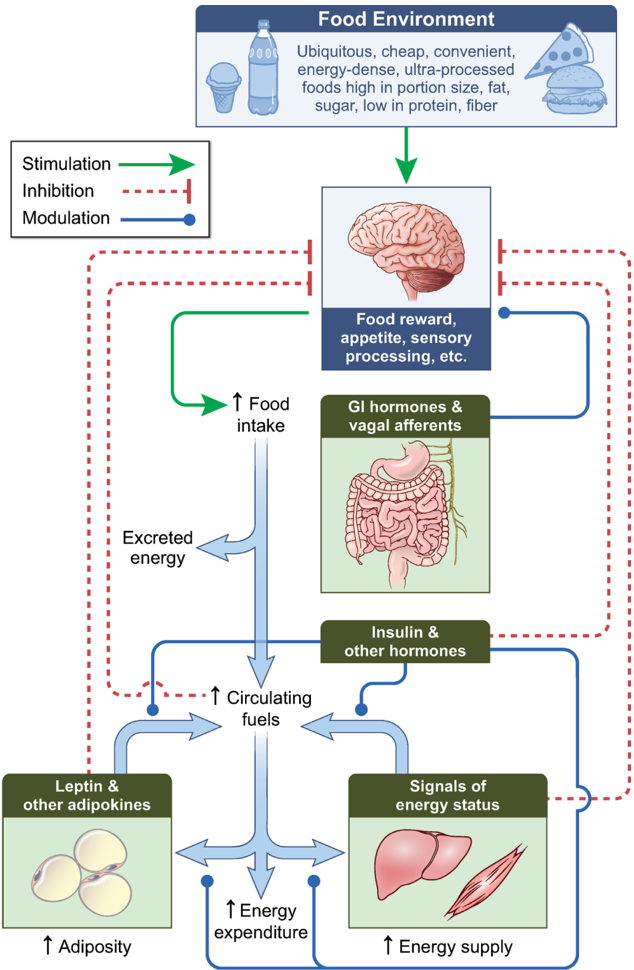
A recent Perspective article described the "carbohydrate-insulin model (CIM)" of obesity, asserting that it "better reflects knowledge on the biology of weight control" as compared with what was described as the "dominant energy balance model (EBM)," which fails to consider "biological mechanisms that promote weight gain." Unfortunately, the Perspective conflated and confused the principle of energy balance, a law of physics that is agnostic as to obesity mechanisms, with the EBM as a theoretical model of obesity that is firmly based on biology. In doing so, the authors presented a false choice between the CIM and a caricature of the EBM that does not reflect modern obesity science. Here, we present a more accurate description of the EBM where the brain is the primary organ responsible for body weight regulation operating mainly below our conscious awareness via complex endocrine, metabolic, and nervous system signals to control food intake in response to the body's dynamic energy needs as well as environmental influences. We also describe the recent history of the CIM and show how the latest "most comprehensive formulation" abandons a formerly central feature that required fat accumulation in adipose tissue to be the primary driver of positive energy balance. As such, the new CIM can be considered a special case of the more comprehensive EBM but with a narrower focus on diets high in glycemic load as the primary factor responsible for common obesity. We review data from a wi…
Overview
The claims and statistics of this paper haven’t been checked yet.
Free: it reads the open-access text and checks the first 5 claims that cite a source we can check. Create a free account to check every claim.
Integrity signals
Registry
Cites
Statistics
Figures
Verification
Claims the paper makes
The claims and statistics of this paper haven’t been checked yet.
Free: it reads the open-access text and checks the first 5 claims that cite a source we can check. Create a free account to check every claim.
Claims other papers make about this one
Each is checked against this paper’s own text: does it say what the citing paper says it does?
The cited source doesn’t support the claim as written.
In the citing paper
“Fat tissue reduction is only possible under negative energy balance, when the energy expended exceeds, the energy supplied from food.”
From Dietary and Behavioral Strategies for Weight Loss and Weight Loss Maintenance: A Narrative Review (2025) · cites this paper as [17]
Checked by a reasoning model — may be wrong.
Experimental — accuracy not yet measuredThe source backs part of the claim, not all of it — or backs it for a different population, condition or comparison.
In the citing paper
“Furthermore, variations in dietary macronutrient composition impact fat loss and individual responses to diet due to complex, multifaceted interactions between metabolism, energy partitioning, and genetic factors.”
From Beyond Calories: Individual Metabolic and Hormonal Adaptations Driving Variability in Weight Management—A State-of-the-Art Narrative Review (2024) · cites this paper as [80]
Experimental — accuracy not yet measuredThe source backs part of the claim, not all of it — or backs it for a different population, condition or comparison.
In the citing paper
“Furthermore, diets emphasizing whole grains, nuts, and vegetables—regardless of carbohydrate content—have shown associations with better weight maintenance compared to those high in refined sugars and saturated fats [80].”
From Beyond Calories: Individual Metabolic and Hormonal Adaptations Driving Variability in Weight Management—A State-of-the-Art Narrative Review (2024) · cites this paper as [80]
Experimental — accuracy not yet measuredThe cited source says what the claim attributes to it.
In the citing paper
“The key factor in successful weight loss is the introduction of a controlled calorie deficit, in line with the basic principles of thermodynamics.”
From Dietary and Behavioral Strategies for Weight Loss and Weight Loss Maintenance: A Narrative Review (2025) · cites this paper as [17]
The cited source says what the claim attributes to it.
In the citing paper
“While the carbohydrate–insulin model posits that high-carbohydrate diets drive insulin secretion, leading to fat storage and weight gain, studies have challenged this by showing that weight loss success depends on broader factors beyond just carbohydrate intake [80].”
From Beyond Calories: Individual Metabolic and Hormonal Adaptations Driving Variability in Weight Management—A State-of-the-Art Narrative Review (2024) · cites this paper as [80]
4 more claims about this paper
Create a free account to see every claim other papers make about this one.
Self-check
Percentages, sums and reported differences re-computed from the paper’s own numbers.
The self-check needs the paper’s full text.
Citations
Cites
Genetic studies of body mass index yield new insights for obesity biology
Study, T. L. C., Locke, A. E., The ADIPOGen Consortium, The AGEN-BMI Working Group, The CARDIOGRAMplusC4D Consortium, The CKDGen Consortium, The, G. L. G. C., The, I. C. B. P., The MAGIC Investigators, The MuTHER Consortium, et al. (2015) · Nature · doi:10.1038/nature14177 · Cited by 4,534
Global nutrition transition and the pandemic of obesity in developing countries
Popkin, B. M., Adair, L. S., & Ng, S. W. (2012) · Nutrition Reviews · doi:10.1111/j.1753-4887.2011.00456.x · Cited by 4,313
Finucane, M. M., Stevens, G. A., Cowan, M. J., Danaei, G., Lin, J. K., Paciorek, C. J., Singh, G. M., Gutierrez, H. R., Lu, Y., Bahalim, A. N., et al. (2011) · The Lancet · doi:10.1016/s0140-6736(10)62037-5 · Cited by 4,050
Changes in diet and lifestyle and long-term weight gain in women and men
Mozaffarian, D., Hao, T., Rimm, E. B., Willett, W. C., & Hu, F. B. (2011) · New England Journal of Medicine · doi:10.1056/nejmoa1014296 · Cited by 2,527
Dynamics of fat cell turnover in humans
Spalding, K. L., Arner, E., Westermark, P. O., Bernard, S., Buchholz, B. A., Bergmann, O., Blomqvist, L., Hoffstedt, J., Näslund, E., Britton, T., et al. (2008) · Nature · doi:10.1038/nature06902 · Cited by 2,357
Role of Brain Insulin Receptor in Control of Body Weight and Reproduction
Brüning, J. C., Gautam, D., Burks, D. J., Gillette, J., Schubert, M., Orban, P. C., Klein, R., Krone, W., Müller-Wieland, D., & Kahn, C. R. (2000) · Science · doi:10.1126/science.289.5487.2122 · Cited by 2,235
Hall, K. D., Ayuketah, A., Brychta, R., Cai, H., Cassimatis, T., Chen, K. Y., Chung, S. T., Costa, E., Courville, A., Darcey, V., et al. (2019) · Cell Metabolism · doi:10.1016/j.cmet.2019.05.008 · Cited by 1,971
Self-citationUltra‐processed products are becoming dominant in the global food system
Monteiro, C. A., Moubarac, J. ‐., Cannon, G., Ng, S. W., & Popkin, B. (2013) · Obesity Reviews · doi:10.1111/obr.12107 · Cited by 1,827
Ludwig (2002) · doi:10.1001/jama.287.18.2414 · Cited by 1,775
Angiogenesis and Inflammation in Peritoneal Dialysis: The Role of Adipocytes
Shi, J., Yu, M., & Sheng, M. (2017) · Kidney and Blood Pressure Research · doi:10.1159/000476017 · Cited by 1,403
The genetics of obesity: From discovery to biology
Loos, R. J. F., & Yeo, G. S. H. (2022) · Nature Reviews Genetics · doi:10.1038/s41576-021-00414-z · Cited by 1,291
Self-citationFinucane, H. K., Reshef, Y. A., Anttila, V., Slowikowski, K., Gusev, A., Byrnes, A., Gazal, S., Loh, P.-R., Lareau, C., Shoresh, N., et al. (2018) · Nature Genetics · doi:10.1038/s41588-018-0081-4 · Cited by 1,097
Stunkard, A. J. (1986) · JAMA: The Journal of the American Medical Association · doi:10.1001/jama.1986.03380010055024 · Cited by 912
Mayer, J. (1955) · Annals of the New York Academy of Sciences · doi:10.1111/j.1749-6632.1955.tb36543.x · Cited by 858
Diets with high or low protein content and glycemic index for weight-loss maintenance
Larsen, T. M., Dalskov, S.-M., van Baak, M., Jebb, S. A., Papadaki, A., Pfeiffer, A. F. H., Martinez, J. A., Handjieva-Darlenska, T., Kunešová, M., Pihlsgård, M., et al. (2010) · New England Journal of Medicine · doi:10.1056/nejmoa1007137 · Cited by 843
Sweetening of the global diet, particularly beverages: patterns, trends, and policy responses
Popkin, B. M., & Hawkes, C. (2016) · The Lancet Diabetes & Endocrinology · doi:10.1016/s2213-8587(15)00419-2 · Cited by 737
Rising rural body-mass index is the main driver of the global obesity epidemic in adults
NCD Risk Factor Collaboration (NCD-RisC), Bixby, H., Bentham, J., Zhou, B., Di Cesare, M., Paciorek, C. J., Bennett, J. E., Taddei, C., Stevens, G. A., Rodriguez-Martinez, A., et al. (2019) · Nature · doi:10.1038/s41586-019-1171-x · Cited by 735
Obesity Pathogenesis: An Endocrine Society Scientific Statement
Schwartz, M. W., Seeley, R. J., Zeltser, L. M., Drewnowski, A., Ravussin, E., Redman, L. M., & Leibel, R. L. (2017) · Endocrine Reviews · doi:10.1210/er.2017-00111 · Cited by 727
Self-citationTen Putative Contributors to the Obesity Epidemic
McAllister, E. J., Dhurandhar, N. V., Keith, S. W., Aronne, L. J., Barger, J., Baskin, M., Benca, R. M., Biggio, J., Boggiano, M. M., Eisenmann, J. C., et al. (2009) · Critical Reviews in Food Science and Nutrition · doi:10.1080/10408390903372599 · Cited by 710
Gardner, C. D., Trepanowski, J. F., Del Gobbo, L. C., Hauser, M. E., Rigdon, J., Ioannidis, J. P. A., Desai, M., & King, A. C. (2018) · JAMA · doi:10.1001/jama.2018.0245 · Cited by 709
Variability in the Heritability of Body Mass Index: A Systematic Review and Meta-Regression
Elks, C. E., den Hoed, M., Zhao, J. H., Sharp, S. J., Wareham, N. J., Loos, R. J. F., & Ong, K. K. (2012) · Frontiers in Endocrinology · doi:10.3389/fendo.2012.00029 · Cited by 694
Self-citationDietary Intake Among US Adults, 1999-2012
Rehm, C. D., Peñalvo, J. L., Afshin, A., & Mozaffarian, D. (2016) · JAMA · doi:10.1001/jama.2016.7491 · Cited by 677
Glucostatic Mechanism of Regulation of Food Intake
Mayer, J. (1953) · New England Journal of Medicine · doi:10.1056/nejm195307022490104 · Cited by 666
Popkin, B. M., & Ng, S. W. (2022) · Obesity Reviews · doi:10.1111/obr.13366 · Cited by 637
EPIC-InterAct Consortium, Lotta, L. A., Cambridge FPLD1 Consortium, Gulati, P., Day, F. R., Payne, F., Ongen, H., van de Bunt, M., Gaulton, K. J., Eicher, J. D., et al. (2017) · Nature Genetics · doi:10.1038/ng.3714 · Cited by 585
Self-citationTrends in Dietary Carbohydrate, Protein, and Fat Intake and Diet Quality Among US Adults, 1999-2016
Shan, Z., Rehm, C. D., Rogers, G., Ruan, M., Wang, D. D., Hu, F. B., Mozaffarian, D., Zhang, F. F., & Bhupathiraju, S. N. (2019) · JAMA · doi:10.1001/jama.2019.13771 · Cited by 556
Dietary glycemic index and obesity
Ludwig, D. S. (2000) · The Journal of Nutrition · doi:10.1093/jn/130.2.280s · Cited by 521
GLP-1 physiology informs the pharmacotherapy of obesity
Drucker, D. J. (2022) · Molecular Metabolism · doi:10.1016/j.molmet.2021.101351 · Cited by 510
Hyperinsulinemia Drives Diet-Induced Obesity Independently of Brain Insulin Production
Mehran, A. E., Templeman, N. M., Brigidi, G. S., Lim, G. E., Chu, K.-Y., Hu, X., Botezelli, J. D., Asadi, A., Hoffman, B. G., Kieffer, T. J., et al. (2012) · Cell Metabolism · doi:10.1016/j.cmet.2012.10.019 · Cited by 498
Lefèvre, C., Jobard, F., Caux, F., Bouadjar, B., Karaduman, A., Heilig, R., Lakhdar, H., Wollenberg, A., Verret, J.-L., Weissenbach, J., et al. (2001) · The American Journal of Human Genetics · doi:10.1086/324121 · Cited by 468
Integrative physiology of human adipose tissue
Frayn, K. N., Karpe, F., Fielding, B. A., Macdonald, I. A., & Coppack, S. W. (2003) · International Journal of Obesity · doi:10.1038/sj.ijo.0802326 · Cited by 467
The Carbohydrate-Insulin Model of Obesity: Beyond “Calories In, Calories Out”
Ludwig, D. S., & Ebbeling, C. B. (2018) · JAMA Internal Medicine · doi:10.1001/jamainternmed.2018.2933 · Cited by 440
Ge, L., Sadeghirad, B., Ball, G. D. C., da Costa, B. R., Hitchcock, C. L., Svendrovski, A., Kiflen, R., Quadri, K., Kwon, H. Y., Karamouzian, M., et al. (2020) · BMJ · doi:10.1136/bmj.m696 · Cited by 426
He, K., Hu, F. B., Colditz, G. A., Manson, J. E., Willett, W. C., & Liu, S. (2004) · International Journal of Obesity · doi:10.1038/sj.ijo.0802795 · Cited by 422
Why is the developed world obese?
Bleich, S. N., Cutler, D., Murray, C., & Adams, A. (2008) · Annual Review of Public Health · doi:10.1146/annurev.publhealth.29.020907.090954 · Cited by 404
Dynamics of human adipose lipid turnover in health and metabolic disease
Arner, P., Bernard, S., Salehpour, M., Possnert, G., Liebl, J., Steier, P., Buchholz, B. A., Eriksson, M., Arner, E., Hauner, H., et al. (2011) · Nature · doi:10.1038/nature10426 · Cited by 400
Relation between Caloric Intake, Body Weight, and Physical Work
MAYER, J., ROY, P., & MITRA, K. P. (1956) · The American Journal of Clinical Nutrition · doi:10.1093/ajcn/4.2.169 · Cited by 378
Tobias, D. K., Chen, M., Manson, J. E., Ludwig, D. S., Willett, W., & Hu, F. B. (2015) · The Lancet Diabetes & Endocrinology · doi:10.1016/s2213-8587(15)00367-8 · Cited by 373
Self-citationSchlesinger, S., Neuenschwander, M., Schwedhelm, C., Hoffmann, G., Bechthold, A., Boeing, H., & Schwingshackl, L. (2019) · Advances in Nutrition · doi:10.1093/advances/nmy092 · Cited by 372
Obesity energetics: body weight regulation and the effects of diet composition
Hall, K. D., & Guo, J. (2017) · Gastroenterology · doi:10.1053/j.gastro.2017.01.052 · Cited by 367
Self-citationDietary energy density in the treatment of obesity: a year-long trial comparing 2 weight-loss diets
Ello-Martin, J. A., Roe, L. S., Ledikwe, J. H., Beach, A. M., & Rolls, B. J. (2007) · The American Journal of Clinical Nutrition · doi:10.1093/ajcn/85.6.1465 · Cited by 356
Failure of dietary fat intake to promote fat oxidation: a factor favoring the development of obesity
Schutz, Y., Flatt, J. P., & Jéquier, E. (1989) · The American Journal of Clinical Nutrition · doi:10.1093/ajcn/50.2.307 · Cited by 349
Three Pillars for the Neural Control of Appetite
Sternson, S. M., & Eiselt, A.-K. (2017) · Annual Review of Physiology · doi:10.1146/annurev-physiol-021115-104948 · Cited by 343
The physiological psychology of hunger: a physiological perspective
Friedman, M. I., & Stricker, E. M. (1976) · Psychological Review · doi:10.1037/0033-295x.83.6.409 · Cited by 334
Das, S. K., Gilhooly, C. H., Golden, J. K., Pittas, A. G., Fuss, P. J., Cheatham, R. A., Tyler, S., Tsay, M., McCrory, M. A., Lichtenstein, A. H., et al. (2007) · The American Journal of Clinical Nutrition · doi:10.1093/ajcn/85.4.1023 · Cited by 314
The carbohydrate-insulin model: A physiological perspective on the obesity pandemic
Ludwig, D. S., Aronne, L. J., Astrup, A., de Cabo, R., Cantley, L. C., Friedman, M. I., Heymsfield, S. B., Johnson, J. D., King, J. C., Krauss, R. M., et al. (2021) · The American Journal of Clinical Nutrition · doi:10.1093/ajcn/nqab270 · Cited by 292
Effects of a Low–Glycemic Load vs Low-Fat Diet in Obese Young Adults: A Randomized Trial
Ebbeling, C. B., Leidig, M. M., Feldman, H. A., Lovesky, M. M., & Ludwig, D. S. (2007) · JAMA · doi:10.1001/jama.297.19.2092 · Cited by 284
Hall, K. D., Bemis, T., Brychta, R., Chen, K. Y., Courville, A., Crayner, E. J., Goodwin, S., Guo, J., Howard, L., Knuth, N. D., et al. (2015) · Cell Metabolism · doi:10.1016/j.cmet.2015.07.021 · Cited by 280
Self-citationSchwingshackl, L., & Hoffmann, G. (2013) · Nutrition, Metabolism and Cardiovascular Diseases · doi:10.1016/j.numecd.2013.04.008 · Cited by 271
Dietary Fat, but Not Protein or Carbohydrate, Regulates Energy Intake and Causes Adiposity in Mice
Hu, S., Wang, L., Yang, D., Li, L., Togo, J., Wu, Y., Liu, Q., Li, B., Li, M., Wang, G., et al. (2018) · Cell Metabolism · doi:10.1016/j.cmet.2018.06.010 · Cited by 271
Self-citationde Araujo, I. E., Schatzker, M., & Small, D. M. (2020) · Annual Review of Psychology · doi:10.1146/annurev-psych-122216-011643 · Cited by 262
A fall in blood glucose level precedes meal onset in free-feeding rats
Louis-Sylvestre, J., & Le Magnen, J. (1980) · Neuroscience & Biobehavioral Reviews · doi:10.1016/0149-7634(80)90041-x · Cited by 249
Profiling cellular diversity in sponges informs animal cell type and nervous system evolution
Musser, J. M., Schippers, K. J., Nickel, M., Mizzon, G., Kohn, A. B., Pape, C., Ronchi, P., Papadopoulos, N., Tarashansky, A. J., Hammel, J. U., et al. (2021) · Science · doi:10.1126/science.abj2949 · Cited by 242
Hall, K. D., Guo, J., Courville, A. B., Boring, J., Brychta, R., Chen, K. Y., Darcey, V., Forde, C. G., Gharib, A. M., Gallagher, I., et al. (2021) · Nature Medicine · doi:10.1038/s41591-020-01209-1 · Cited by 238
Self-citationLeptin and Insulin Action in the Central Nervous System
Porte, D., Baskin, D. G., & Schwartz, M. W. (2002) · Nutrition Reviews · doi:10.1301/002966402320634797 · Cited by 228
Did the Food Environment Cause the Obesity Epidemic?
Hall, K. D. (2018) · Obesity · doi:10.1002/oby.22073 · Cited by 220
Self-citationPolidori, D., Sanghvi, A., Seeley, R. J., & Hall, K. D. (2016) · Obesity · doi:10.1002/oby.21653 · Cited by 209
Self-citationUse and storage of carbohydrate and fat
Flatt, J. (1995) · The American Journal of Clinical Nutrition · doi:10.1093/ajcn/61.4.952s · Cited by 206
Ledikwe, J. H., Rolls, B. J., Smiciklas-Wright, H., Mitchell, D. C., Ard, J. D., Champagne, C., Karanja, N., Lin, P.-H., Stevens, V. J., & Appel, L. J. (2007) · The American Journal of Clinical Nutrition · doi:10.1093/ajcn/85.5.1212 · Cited by 204
Role of fat oxidation in the long-term stabilization of body weight in obese women
Schutz, Y., Tremblay, A., Weinsier, R., & Nelson, K. (1992) · The American Journal of Clinical Nutrition · doi:10.1093/ajcn/55.3.670 · Cited by 197
Importance of nutrient balance in body weight regulation
Flatt, J. P. (1988) · Diabetes/Metabolism Reviews · doi:10.1002/dmr.5610040603 · Cited by 195
Short-term energy balance: relationship with protein, carbohydrate, and fat balances
Abbott, W. G., Howard, B. V., Christin, L., Freymond, D., Lillioja, S., Boyce, V. L., Anderson, T. E., Bogardus, C., & Ravussin, E. (1988) · American Journal of Physiology-Endocrinology and Metabolism · doi:10.1152/ajpendo.1988.255.3.e332 · Cited by 186
Food intake and energy expenditure of army recruits
Edholm, O. G., Adam, J. M., Healy, M. J. R., Wolff, H. S., Goldsmith, R., & Best, T. W. (1970) · British Journal of Nutrition · doi:10.1079/bjn19700112 · Cited by 185
High-fat food biases hypothalamic and mesolimbic expression of consummatory drives
Mazzone, C. M., Liang-Guallpa, J., Li, C., Wolcott, N. S., Boone, M. H., Southern, M., Kobzar, N. P., Salgado, I. D. A., Reddy, D. M., Sun, F., et al. (2020) · Nature Neuroscience · doi:10.1038/s41593-020-0684-9 · Cited by 185
Hypothalamic detection of macronutrients via multiple gut-brain pathways
Goldstein, N., McKnight, A. D., Carty, J. R. E., Arnold, M., Betley, J. N., & Alhadeff, A. L. (2021) · Cell Metabolism · doi:10.1016/j.cmet.2020.12.018 · Cited by 181
The ‘Fat Mass and Obesity Related’ (FTO) gene: Mechanisms of Impact on Obesity and Energy Balance
Speakman, J. R. (2015) · Current Obesity Reports · doi:10.1007/s13679-015-0143-1 · Cited by 176
Self-citationA causal role for hyperinsulinemia in obesity
Templeman, N. M., Skovsø, S., Page, M. M., Lim, G. E., & Johnson, J. D. (2017) · Journal of Endocrinology · doi:10.1530/joe-16-0449 · Cited by 168
The physiological control of eating: signals, neurons, and networks
Watts, A. G., Kanoski, S. E., Sanchez-Watts, G., & Langhans, W. (2022) · Physiological Reviews · doi:10.1152/physrev.00028.2020 · Cited by 168
Human eating: evidence for a physiological basis using a modified paradigm
Campfield, L. A., Smith, F. J., Rosenbaum, M., & Hirsch, J. (1996) · Neuroscience & Biobehavioral Reviews · doi:10.1016/0149-7634(95)00043-e · Cited by 167
Effect of insulin and glucose on feeding behavior
Rodin, J., Wack, J., Ferrannini, E., & DeFronzo, R. A. (1985) · Metabolism · doi:10.1016/0026-0495(85)90106-4 · Cited by 162
Lustig, R. H. (2006) · Nature Clinical Practice Endocrinology & Metabolism · doi:10.1038/ncpendmet0220 · Cited by 160
Provision of Foods Differing in Energy Density Affects Long‐Term Weight Loss
Rolls, B. J., Roe, L. S., Beach, A. M., & Kris‐Etherton, P. M. (2005) · Obesity Research · doi:10.1038/oby.2005.123 · Cited by 159
Increasing Adiposity: Consequence or Cause of Overeating?
Ludwig, D. S., & Friedman, M. I. (2014) · JAMA · doi:10.1001/jama.2014.4133 · Cited by 151
Fuel partitioning and food intake
Friedman, M. I. (1998) · American Journal of Clinical Nutrition · doi:10.1093/ajcn/67.3.513s · Cited by 148
Nutritional regulation of insulin secretion: implications for diabetes.
Newsholme, P., & Krause, M. D. S. (2012) · Europe PMC (PubMed Central) · Cited by 145
Blood Glucose Dynamics and Control of Meal Initiation: A Pattern Detection and Recognition Theory
Campfield, L. A., & Smith, F. J. (2003) · Physiological Reviews · doi:10.1152/physrev.00019.2002 · Cited by 144
Hall, K. D., Butte, N. F., Swinburn, B. A., & Chow, C. C. (2013) · The Lancet Diabetes & Endocrinology · doi:10.1016/s2213-8587(13)70051-2 · Cited by 138
Self-citationMelby, C., Paris, H., Foright, R., & Peth, J. (2017) · Nutrients · doi:10.3390/nu9050468 · Cited by 136
Alhadeff, A. L., Goldstein, N., Park, O., Klima, M. L., Vargas, A., & Betley, J. N. (2019) · Neuron · doi:10.1016/j.neuron.2019.05.050 · Cited by 136
Dulloo, A. G., Jacquet, J., Miles-Chan, J. L., & Schutz, Y. (2017) · European Journal of Clinical Nutrition · doi:10.1038/ejcn.2016.256 · Cited by 128
Aller, E. E. J. G., Larsen, T. M., Claus, H., Lindroos, A. K., Kafatos, A., Pfeiffer, A., Martinez, J. A., Handjieva-Darlenska, T., Kunesova, M., Stender, S., et al. (2014) · International Journal of Obesity · doi:10.1038/ijo.2014.52 · Cited by 121
The drive to eat in homo sapiens: Energy expenditure drives energy intake
Blundell, J. E., Gibbons, C., Beaulieu, K., Casanova, N., Duarte, C., Finlayson, G., Stubbs, R. J., & Hopkins, M. (2020) · Physiology & Behavior · doi:10.1016/j.physbeh.2020.112846 · Cited by 115
Chapman, I. M., Goble, E. A., Wittert, G. A., Morley, J. E., & Horowitz, M. (1998) · American Journal of Physiology-Regulatory, Integrative and Comparative Physiology · doi:10.1152/ajpregu.1998.274.3.r596 · Cited by 115
Postprandial glycaemic dips predict appetite and energy intake in healthy individuals
Wyatt, P., Berry, S. E., Finlayson, G., O’Driscoll, R., Hadjigeorgiou, G., Drew, D. A., Khatib, H. A., Nguyen, L. H., Linenberg, I., Chan, A. T., et al. (2021) · Nature Metabolism · doi:10.1038/s42255-021-00383-x · Cited by 114
Impact of fat mass and distribution on lipid turnover in human adipose tissue
Spalding, K. L., Bernard, S., Näslund, E., Salehpour, M., Possnert, G., Appelsved, L., Fu, K.-Y., Alkass, K., Druid, H., Thorell, A., et al. (2017) · Nature Communications · doi:10.1038/ncomms15253 · Cited by 112
FTO genotype impacts food intake and corticolimbic activation
Melhorn, S. J., Askren, M. K., Chung, W. K., Kratz, M., Bosch, T. A., Tyagi, V., Webb, M. F., Leon, M. R. B. D., Grabowski, T. J., Leibel, R. L., et al. (2018) · American Journal of Clinical Nutrition · doi:10.1093/ajcn/nqx029 · Cited by 109
Carpentier, A. C. (2021) · American Journal of Physiology-Endocrinology and Metabolism · doi:10.1152/ajpendo.00620.2020 · Cited by 108
Church, T., & Martin, C. K. (2018) · Obesity · doi:10.1002/oby.22072 · Cited by 104
Lotfi, K., Saneei, P., Hajhashemy, Z., & Esmaillzadeh, A. (2022) · Advances in Nutrition · doi:10.1093/advances/nmab092 · Cited by 101
McCollum Award Lecture, 1995: diet, lifestyle, and weight maintenance
Flatt, J. (1995) · American Journal of Clinical Nutrition · doi:10.1093/ajcn/62.4.820 · Cited by 99
The phenotypic spectrum of neutral lipid storage myopathy due to mutations in the PNPLA2 gene
Reilich, P., Horváth, R., Krause, S., Schramm, N., Turnbull, D. M., Trenell, M. I., Hollingsworth, K. G., Gorman, G. S., Hans, V., Reimann, J., et al. (2011) · Journal of Neurology · doi:10.1007/s00415-011-6055-4 · Cited by 99
Learning of food preferences: mechanisms and implications for obesity & metabolic diseases
Berthoud, H., Morrison, C. D., Ackroff, K., & Sclafani, A. J. (2021) · International Journal of Obesity · doi:10.1038/s41366-021-00894-3 · Cited by 95
Mirza, N. M., Palmer, M., Sinclair, K. B., McCarter, R., He, J., Ebbeling, C. B., Ludwig, D. S., & Yanovski, J. A. (2012) · American Journal of Clinical Nutrition · doi:10.3945/ajcn.112.042630 · Cited by 94
Changes in Types of Dietary Fats Influence Long-term Weight Change in US Women and Men
Liu, X., Li, Y., Tobias, D. K., Wang, D. D., Manson, J. E., Willett, W. C., & Hu, F. B. (2018) · Journal of Nutrition · doi:10.1093/jn/nxy183 · Cited by 86
Self-citationMaki, K. C., Palacios, O. M., Koecher, K. J., Sawicki, C. M., Livingston, K. A., Bell, M., Cortes, H. N., & McKeown, N. M. (2019) · Nutrients · doi:10.3390/nu11061245 · Cited by 84
Weight gain and insulin treatment
Larger, É. (2005) · Diabetes & Metabolism · doi:10.1016/s1262-3636(05)88268-0 · Cited by 82
Modeling Metabolic Adaptations and Energy Regulation in Humans
Hall, K. D. (2012) · Annual Review of Nutrition · doi:10.1146/annurev-nutr-071811-150705 · Cited by 81
Self-citationBody composition, respiratory quotient, and weight maintenance
Flatt, J. (1995) · The American Journal of Clinical Nutrition · doi:10.1093/ajcn/62.5.1107s · Cited by 80
An energy sensor for control of energy intake
Friedman, M. I. (1997) · Proceedings of the Nutrition Society · doi:10.1079/pns19970008 · Cited by 78
Appetite, feeding behaviour and energy balance in human subjects
Stubbs, R. J. (1998) · Proceedings of The Nutrition Society · doi:10.1079/pns19980052 · Cited by 77
Togo, J., Hu, S., Li, M., Niu, C., & Speakman, J. R. (2019) · Molecular Metabolism · doi:10.1016/j.molmet.2019.05.010 · Cited by 77
Self-citationAdipocyte triglyceride turnover and lipolysis in lean and overweight subjects
Rydén, M., Andersson, D. P., Bernard, S., Spalding, K. L., & Arner, P. (2013) · Journal of Lipid Research · doi:10.1194/jlr.m040345 · Cited by 75
Corrective responses in human food intake identified from an analysis of 7-d food-intake records
Bray, G. A., Flatt, J.-P., Volaufova, J., DeLany, J. P., & Champagne, C. M. (2008) · The American Journal of Clinical Nutrition · doi:10.3945/ajcn.2008.26289 · Cited by 72
Body fat and the metabolic control of food intake.
Friedman, M. I. (1990) · PubMed · Cited by 70
Carbohydrates, insulin, and obesity
Speakman, J. R., & Hall, K. D. (2021) · Science · doi:10.1126/science.aav0448 · Cited by 64
Self-citationLow glycaemic index diets as an intervention for obesity: a systematic review and meta‐analysis
Zafar, M. I., Mills, K. E., Zheng, J., Peng, M. M., Ye, X., & Chen, L. L. (2019) · Obesity Reviews · doi:10.1111/obr.12791 · Cited by 63
A model for the prediction of energy balance and body weight
Payne, P. R., & Dugdale, A. E. (1977) · Annals of Human Biology · doi:10.1080/03014467700002521 · Cited by 62
Effects of an oral and intravenous fat load on adipose tissue and forearm lipid metabolism
Evans, K., Clark, M. L., & Frayn, K. N. (1999) · American Journal of Physiology-Endocrinology and Metabolism · doi:10.1152/ajpendo.1999.276.2.e241 · Cited by 62
Personalized dietary management of overweight and obesity based on measures of insulin and glucose
Hjorth, M. F., Zohar, Y., Hill, J. O., & Astrup, A. (2018) · Annual Review of Nutrition · doi:10.1146/annurev-nutr-082117-051606 · Cited by 60
What Regulates Basal Insulin Secretion and Causes Hyperinsulinemia?
Corkey, B. E., Deeney, J. T., & Merrins, M. J. (2021) · Diabetes · doi:10.2337/dbi21-0009 · Cited by 60
ASTWOOD, E. B. (1962) · Endocrinology · doi:10.1210/endo-71-2-337 · Cited by 58
Hyperinsulinemia and its impact on obesity and insulin resistance.
Cusin, I., Rohner‐Jeanrenaud, F., Terrettaz, J., & Jeanrenaud, B. (1992) · PubMed · Cited by 57
Weight loss diet studies: we need help not hype
Freedhoff, Y., & Hall, K. D. (2016) · The Lancet · doi:10.1016/s0140-6736(16)31338-1 · Cited by 56
Self-citationPennington, A. W. (1953) · New England Journal of Medicine · doi:10.1056/nejm195306042482301 · Cited by 56
Reducing insulin via conditional partial gene ablation in adults reverses diet‐induced weight gain
Page, M. M., Skovs, S., Cen, H., Chiu, A. P., Dionne, D. A., Hutchinson, D. F., Lim, G. E., Szabat, M., Flibotte, S., Sinha, S., et al. (2018) · The FASEB Journal · doi:10.1096/fj.201700518r · Cited by 55
MECHANISMS FOR THE CONTROL OF BODY-WEIGHT
Payne, P., & Dugdale, A. E. (1977) · The Lancet · doi:10.1016/s0140-6736(77)92010-4 · Cited by 54
Improving fruit and vegetable intake attenuates the genetic association with long-term weight gain
Wang, T., Heianza, Y., Sun, D., Zheng, Y., Huang, T., Ma, W., Rimm, E. B., Manson, J. E., Hu, F. B., Willett, W. C., et al. (2019) · American Journal of Clinical Nutrition · doi:10.1093/ajcn/nqz136 · Cited by 54
The energy balance hypothesis of obesity: do the laws of thermodynamics explain excessive adiposity?
Torres-Carot, V., Suárez-González, A., & Lobato-Foulques, C. (2022) · European Journal of Clinical Nutrition · doi:10.1038/s41430-021-01064-4 · Cited by 52
Saquib, N., Natarajan, L., Rock, C. L., Flatt, S. W., Madlensky, L., Kealey, S., & Pierce, J. P. (2007) · Nutrition and Cancer · doi:10.1080/01635580701621320 · Cited by 52
Lowe, M. R., Butryn, M. L., Thomas, J. G., & Coletta, M. C. (2013) · Obesity · doi:10.1002/oby.20582 · Cited by 44
(2008) · Choice Reviews Online · doi:10.5860/choice.45-3827 · Cited by 40
Insulin Therapy Does Not Itself Induce Weight Gain in Patients With Type 2 Diabetes
Larger, E., Rufat, P., Dubois-Laforgue, D., & Ledoux, S. (2001) · Diabetes Care · doi:10.2337/diacare.24.10.1849 · Cited by 39
Karl, J. P., Roberts, S. B., Schaefer, E. J., Gleason, J. A., Fuss, P., Rasmussen, H., Saltzman, E., & Das, S. K. (2015) · Obesity · doi:10.1002/oby.21268 · Cited by 39
Buga, A., Kackley, M. L., Crabtree, C. D., Sapper, T. N., Mccabe, L., Fell, B., LaFountain, R. A., Hyde, P. N., Martini, E. R., Bowman, J., et al. (2021) · Frontiers in Nutrition · doi:10.3389/fnut.2021.618520 · Cited by 38
Insulin increases body fat despite control of food intake and physical activity
Torbay, N., Bracco, E. F., Geliebter, A., Stewart, I. M., & Hashim, S. A. (1985) · American Journal of Physiology-Regulatory, Integrative and Comparative Physiology · doi:10.1152/ajpregu.1985.248.1.r120 · Cited by 37
Gaesser, G. A., Miller Jones, J., & Angadi, S. S. (2021) · Advances in Nutrition · doi:10.1093/advances/nmab093 · Cited by 37
Short and long-term energy intake patterns and their implications for human body weight regulation
Chow, C. C., & Hall, K. D. (2014) · Physiology & Behavior · doi:10.1016/j.physbeh.2014.02.044 · Cited by 36
Self-citationShimy, K. J., Feldman, H. A., Klein, G. L., Bielak, L., Ebbeling, C. B., & Ludwig, D. S. (2020) · Journal of the Endocrine Society · doi:10.1210/jendso/bvaa062 · Cited by 35
An Alternate Approach to THE PROBLEM OF OBESITY
Pennington, A. W. (1953) · American Journal of Clinical Nutrition · doi:10.1093/ajcn/1.2.100 · Cited by 31
Jordan, P. N., & Hall, K. D. (2008) · American Journal of Clinical Nutrition · doi:10.1093/ajcn/87.3.692 · Cited by 31
Self-citationHow adaptations of substrate utilization regulate body composition
Hall, K. D., Bain, H., & Chow, C. C. (2007) · International Journal of Obesity · doi:10.1038/sj.ijo.0803608 · Cited by 30
Self-citationMakimura, H., Stanley, T. L., Suresh, C., Sousa‐Coelho, A. L. D., Frontera, W. R., Syu, S., Braun, L. R., Looby, S. E. D., Feldpausch, M. N., Torriani, M., et al. (2015) · The Journal of Clinical Endocrinology & Metabolism · doi:10.1210/jc.2015-3696 · Cited by 30
Schutz, Y. (1993) · PubMed · Cited by 29
Hjorth, M. F., Astrup, A., Zohar, Y., Urban, L. E., Sayer, R. D., Patterson, B. W., Herring, S. J., Klein, S., Zemel, B. S., Foster, G. D., et al. (2019) · International Journal of Obesity · doi:10.1038/s41366-018-0298-4 · Cited by 29
Self-citationPhysiological regulation of macronutrient balance.
Frayn, K. N. (1995) · PubMed · Cited by 27
Insulin selectively reduces mitochondrial uncoupling in brown adipose tissue in mice
Dallon, B. W., Parker, B. A., Hodson, A. E., Tippetts, T. S., Harrison, M. E., Appiah, M. M. A., Witt, J. E., Gibbs, J. L., Gray, H. M., Sant, T. M., et al. (2018) · Biochemical Journal · doi:10.1042/bcj20170736 · Cited by 27
Peripheral fat metabolism during infusion of an exogeneous triacylglycerol emulsion
Samra, J. S., Giles, S., Summers, L. K. M., Evans, R., Arner, P., Humphreys, S. M., Clark, M., & Frayn, K. N. (1998) · International Journal of Obesity · doi:10.1038/sj.ijo.0800664 · Cited by 21
Determining the Glycaemic Index of Standard and High-Sugar Rodent Diets in C57BL/6 Mice
Campbell, G. J., Belobrajdic, D. P., & Bell-Anderson, K. S. (2018) · Nutrients · doi:10.3390/nu10070856 · Cited by 21
How NOT to Approach the Obesity Problem
Flatt, J. P. (1997) · Obesity Research · doi:10.1002/j.1550-8528.1997.tb00585.x · Cited by 20
Hu, S., Wang, L., Togo, J., Yang, D., Xu, Y., Wu, Y., Douglas, A., & Speakman, J. R. (2020) · Molecular Metabolism · doi:10.1016/j.molmet.2019.11.010 · Cited by 20
Self-citationOBESITY: ITS PATHOGENESIS, ETIOLOGY AND TREATMENT
Bauer, J. (1941) · Archives of Internal Medicine · doi:10.1001/archinte.1941.00200050076006 · Cited by 19
Objective versus self-reported energy intake changes during low-carbohydrate and low-fat diets
Guo, J., Robinson, J. L., Gardner, C. D., & Hall, K. D. (2019) · Obesity · doi:10.1002/oby.22389 · Cited by 18
Self-citationLudwig, D. S., Ebbeling, C. B., Bikman, B. T., & Johnson, J. D. (2020) · Molecular Metabolism · doi:10.1016/j.molmet.2020.02.003 · Cited by 18
Astrup, A., & Hjorth, M. F. (2018) · European Journal of Clinical Nutrition · doi:10.1038/s41430-018-0227-6 · Cited by 18
Turning over our fat stores: the key to metabolic health Blaxter Award Lecture 2018
Frayn, K. N. (2018) · Proceedings of The Nutrition Society · doi:10.1017/s0029665118002598 · Cited by 17
Henquin, J. (2021) · Metabolism · doi:10.1016/j.metabol.2021.154821 · Cited by 16
Due, A., Larsen, T. M., Mu, H., Hermansen, K., Stender, S., Toubro, S., Allison, D. B., & Astrup, A. (2017) · European Journal of Nutrition · doi:10.1007/s00394-015-1116-6 · Cited by 13
Pennington, A. W. (1954) · The American Journal of Digestive Diseases · doi:10.1007/bf02880977 · Cited by 13
Obesity: Overnutrition or disease of metabolism?
Pennington, A. W. (1953) · The American Journal of Digestive Diseases · doi:10.1007/bf02881331 · Cited by 12
Edens, M. A., van Dijk, P. R., Hak, E., & Bilo, H. J. G. (2020) · Endocrinology Diabetes & Metabolism · doi:10.1002/edm2.212 · Cited by 7
Spetter, M. S. (2018) · Current Opinion in Clinical Nutrition & Metabolic Care · doi:10.1097/mco.0000000000000493 · Cited by 6
Pennington, A. W. (1952) · PubMed · Cited by 6
Research works printed but not linked: 2
- 46. Hall KD. Predicted impact of adipose insulin resistance on long-term human body composition. Obesity 2006;14(S9):A212.
- 144. Pennington AW. Obesity. Med Times 1952;80(7):389-98.
Cited by
Ahmed, S. K., & Mohammed, R. A. (2025) · Metabolism Open · doi:10.1016/j.metop.2025.100375 · Cited by 432
Masood, B., & Moorthy, M. (2023) · Clinical Medicine · doi:10.7861/clinmed.2023-0168 · Cited by 252
Host-diet-gut microbiome interactions influence human energy balance: a randomized clinical trial
Corbin, K. D., Carnero, E. A., Dirks, B., Igudesman, D., Yi, F., Marcus, A., Davis, T. L., Pratley, R. E., Rittmann, B. E., Krajmalnik-Brown, R., et al. (2023) · Nature Communications · doi:10.1038/s41467-023-38778-x · Cited by 177
“However, the regulation of body energy stores involves neural circuits in the hind-brain and hypothalamus, proximal and distal gut hormone secretions and adipose tissue neural and endocrine signals to the brain 44 .”
The Impact of Free Sugar on Human Health—A Narrative Review
Gillespie, K. M., Kemps, E., White, M. J., & Bartlett, S. E. (2023) · Nutrients · doi:10.3390/nu15040889 · Cited by 163
“The ongoing debate remains primarily focused on whether the cause of overweight and obesity is excess sugar, excess fat, or an excess total calorie intake (the “Energy Balance Model”) [88,89].”
BackgroundBajaj, M. S., McCoy, R. G., Balapattabi, K., Bannuru, R. R., Bellini, N. J., Bennett, A. K., Beverly, E. A., Early, K. B., ChallaSivaKanaka, S., Echouffo-Tcheugui, J. B., et al. (2025) · Diabetes Care · doi:10.2337/dc26-s008 · Cited by 168
Metadata
- Authors
- Hall, K. D., Farooqi, I. S., Friedman, J. M., Klein, S., Loos, R. J., Mangelsdorf, D. J., O’Rahilly, S., Ravussin, E., Redman, L. M., Ryan, D. H., Speakman, J. R., & Tobias, D. K.
- Affiliations
- National Institutes of Health (US)
- University of Cambridge (GB)
- Rockefeller University (US)
- Washington University in St. Louis (US)
- University of Copenhagen (DK)
- The University of Texas Southwestern Medical Center (US)
- Pennington Biomedical Research Center (US)
- University of Aberdeen (GB)
- Brigham and Women's Hospital (US)
- Corresponding author
- Hall, Kevin D
- ORCID
- Venue
- The American Journal of Clinical Nutrition
- Publisher
- Elsevier BV
- Published
- 2022-05
- Volume
- 115
- Issue
- 5
- Pages
- 1243-1254
- ISSN
- 0002-9165 (ISSN-L)
- PMC
- PMC9071483
- OpenAlex
- W4210770895
- Cited by
- 315
- References
- 154
- Citations by year
- 2026: 56 · 2025: 71 · 2024: 66 · 2023: 75 · 2022: 46
- FWCI
- 34.03
- Type
- journal article
- Language
- en
- Open access
- bronze
- doi.org
- Licence
- www.elsevier.com/tdm/userlicense/1.0/ (tdm)
- www.elsevier.com/open-access/userlicense/1.0/ (vor, 365 d)
- Locations
- American Journal of Clinical Nutrition (publishedVersion)
- PubMed Central (publishedVersion)
- Research at the University of Copenhagen (University of Copenhagen) (publishedVersion, other-oa)
- PubMed (publishedVersion)
- Civil War Book Review (submittedVersion)
- Funders
- National Institutes of Health
- National Institute of Diabetes and Digestive and Kidney Diseases
- Topics
- Life Sciences › Neuroscience › Endocrine and Autonomic Systems › Regulation of Appetite and Obesity
- Health Sciences › Medicine › Public Health, Environmental and Occupational Health › Obesity, Physical Activity, Diet
- Health Sciences › Medicine › Endocrinology, Diabetes and Metabolism › Adipokines, Inflammation, and Metabolic Diseases
- Keywords
- obesity, energy balance model, body weight regulation, glycemic load, energy balance, obesity mechanisms
- MeSH terms
- Body Weight, Energy Intake, Energy Metabolism, Humans, Insulin, Obesity
About these checks
Registry, retraction, Cites and statistics results are computed, not judged, with one exception: a printed reference that no index lists is read once by a model before it counts as a citation error. Claims are extracted by a model and kept only when their quote appears verbatim in the text; each cited source is then checked, with a model’s help, for whether it says what the claim relies on. Those verdicts can be wrong — read the claim’s quote and the cited source before relying on one.
Statistics and arithmetic are recomputed, not judged.
Confidence bands are shown only for fields calibrated on our annotated test set. None is calibrated yet, so no band is shown.
What counts as a claim ›How we measure confidence ›How we check this ›
Are you an author, or do you see a problem with this page? Request a review
Data sources
Bibliographic data: Semantic Scholar, OpenAlex, Crossref.
Contains information from the Semantic Scholar Academic Graph Datasets, made available under the ODC Attribution License (ODC-BY 1.0).
Semantic Scholar’s data is described in: Kinney, R., et al. (2023). The Semantic Scholar Open Data Platform. arXiv:2301.10140.
