

Time-restricted feeding plus resistance training in active females: a randomized trial
Open accessThe DOI matches its Crossref record; 56 of the 56 references it cites were found in a registry or an index.
Abstract
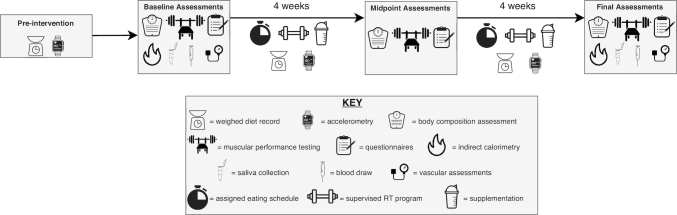
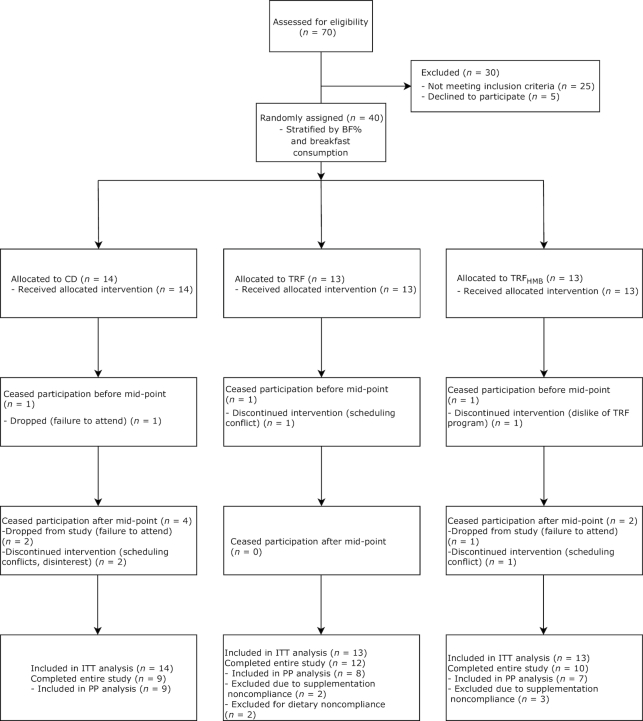
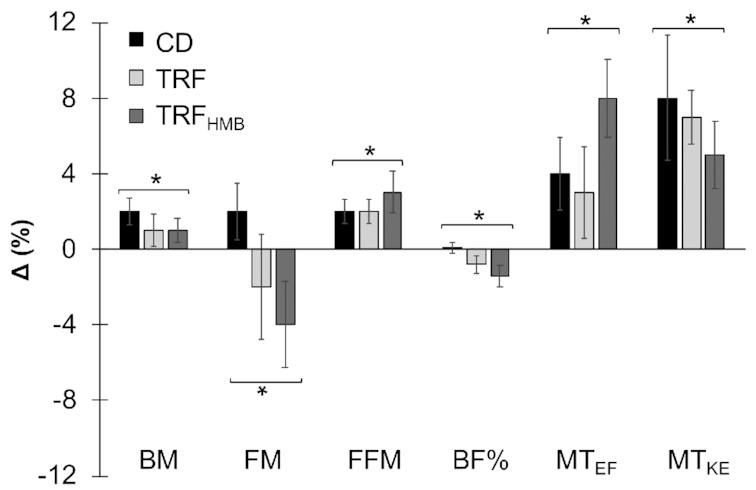
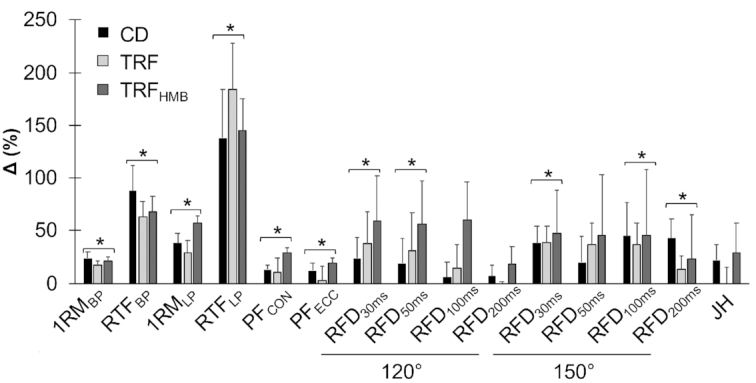
BACKGROUND: A very limited amount of research has examined intermittent fasting (IF) programs, such as time-restricted feeding (TRF), in active populations. OBJECTIVE: Our objective was to examine the effects of TRF, with or without β-hydroxy β-methylbutyrate (HMB) supplementation, during resistance training (RT). METHODS: This study employed a randomized, placebo-controlled, reduced factorial design and was double-blind with respect to supplementation in TRF groups. Resistance-trained females were randomly assigned to a control diet (CD), TRF, or TRF plus 3 g/d HMB (TRFHMB). TRF groups consumed all calories between 1200 h and 2000 h, whereas the CD group ate regularly from breakfast until the end of the day. All groups completed 8 wk of supervised RT and consumed supplemental whey protein. Body composition, muscular performance, dietary intake, physical activity, and physiological variables were assessed. Data were analyzed prior to unblinding using mixed models and both intention-to-treat (ITT) and per protocol (PP) frameworks. RESULTS: Forty participants were included in ITT, and 24 were included in PP. Energy and protein intake (1.6 g/kg/d) did not differ between groups despite different feeding durations (TRF and TRFHMB: ∼7.5 h/d; CD: ∼13 h/d). Comparable fat-free mass (FFM) accretion (+2% to 3% relative to baseline) and skeletal muscle hypertrophy occurred in all groups. Differential effects on fat mass (CD: +2%; TRF: -2% to -4%; TRFHMB: -4% to -7%) were statistically significant in the PP analysis, but not ITT. Muscular performance improved without differences between groups. No changes in physiological variables occurred in any group, and minimal side effects were reported. CONCLUSIONS: IF, in the form of TRF, did not attenuate RT adaptations in resistance-trained females. Similar FFM accretion, skeletal muscle hypertrophy, and muscular performance improvements can be achieved with dramatically different feeding programs that contain similar energy and protein content during RT. Supplemental HMB during fasting periods of TRF did not definitively improve outcomes. This study was prospectively registered at clinicaltrials.gov as NCT03404271.
Overview
The claims and statistics of this paper haven’t been checked yet.
Free: it reads the open-access text and checks the first 5 claims that cite a source we can check. Create a free account to check every claim.
Integrity signals
Registry
Cites
Statistics
Figures
Verification
Claims the paper makes
The claims and statistics of this paper haven’t been checked yet.
Free: it reads the open-access text and checks the first 5 claims that cite a source we can check. Create a free account to check every claim.
Claims other papers make about this one
Each is checked against this paper’s own text: does it say what the citing paper says it does?
The source backs part of the claim, not all of it — or backs it for a different population, condition or comparison.
In the citing paper
“Some studies have explored combining fasting with exercise, including resistance training, reporting the effectiveness of preserving [32, 85, 86] or even increasing [73] lean body mass while achieving weight loss simultaneously”
From Comparing caloric restriction regimens for effective weight management in adults: a systematic review and network meta-analysis (2024) · cites this paper as [73]
Experimental — accuracy not yet measuredThe cited source says what the claim attributes to it.
In the citing paper
“Among them, four trials [34, 35, 57, 73] documented no adverse events throughout the intervention period.”
From Comparing caloric restriction regimens for effective weight management in adults: a systematic review and network meta-analysis (2024) · cites this paper as [73]
In the citing paper
“This may explain why time-restricted feeding patterns do not seem to compromise muscle mass maintenance.44,45,46”
From The anabolic response to protein ingestion during recovery from exercise has no upper limit in magnitude and duration in vivo in humans (2023) · cites this paper as [46]
Self-check
Percentages, sums and reported differences re-computed from the paper’s own numbers.
The self-check needs the paper’s full text.
Citations
Cites
The Pittsburgh Sleep Quality Index: a new instrument for psychiatric practice and research
Buysse, D. J., Reynolds, C. F., Monk, T. H., Berman, S. R., & Kupfer, D. J. (1989) · Psychiatry Research · doi:10.1016/0165-1781(89)90047-4 · Cited by 35,234 · cited 1×
“Additionally, participants completed the Mood and Feelings Questionnaire (49), the Pittsburgh Sleep Quality Index (50), the Three-Factor Eating Questionnaire Revised 18-item version (51), and a menstrual cycle questionnaire at each morning laboratory assessment session.”
MethodFriedewald, W. T., Levy, R. I., & Fredrickson, D. S. (1972) · Clinical Chemistry · doi:10.1093/clinchem/18.6.499 · Cited by 32,423 · cited 1×
“Total cholesterol, triglycerides, and HDL cholesterol were assessed using enzymatic colorimetric assays (40–42), and VLDL and non-HDL cholesterol were calculated (VLDL = triglycerides/5 (43); non-HDL = total cholesterol – HDL).”
Method‘Small Changes' to Diet and Physical Activity Behaviors for Weight Management
Hills, A. P., Byrne, N. M., Lindstrom, R., & Hill, J. O. (2013) · Obesity Facts · doi:10.1159/000345030 · Cited by 9,493
Physical Activity in the United States Measured by Accelerometer
TROIANO, R. P., BERRIGAN, D., DODD, K. W., MÂSSE, L. C., TILERT, T., & MCDOWELL, M. (2008) · Medicine & Science in Sports & Exercise · doi:10.1249/mss.0b013e31815a51b3 · Cited by 7,638 · cited 1×
“, no movement), with an allowance ≤2 min of interruption with activity counts <100 per minute (21).”
BackgroundAntihyperlipidemic and Biochemical Activities of Mcy Protein in Streptozotocin Induced Diabetic Rats
Marella, S., Maddirela, D. R., Badri, K. R., Jyothi Kumar, M. V., & Chippada, A. (2015) · Cellular Physiology and Biochemistry · doi:10.1159/000373954 · Cited by 5,938
Calibration of the Computer Science and Applications, Inc. accelerometer
FREEDSON, P. S., MELANSON, E., & SIRARD, J. (1998) · Medicine & Science in Sports & Exercise · doi:10.1097/00005768-199805000-00021 · Cited by 3,825 · cited 1×
“Physical activity energy expenditure (PAEE; kcal/min) was estimated for each minute of wear time using the Freedson’s prediction equation (22) for activity counts >1951 counts/min and the Williams Work-Energy equation for activity counts ≤1951 counts/min (23).”
MethodAdjustment for total energy intake in epidemiologic studies
Willett, W., Howe, G., & Kushi, L. (1997) · The American Journal of Clinical Nutrition · doi:10.1093/ajcn/65.4.1220s · Cited by 3,758 · cited 1×
“wear time for each participant using a least-square adjustment method (24) due to the possibility of misclassification influencing daily PAEE.”
MethodBioelectrical impedance analysis?part I: review of principles and methods
KYLE, U. (2004) · Clinical Nutrition · doi:10.1016/j.clnu.2004.06.004 · Cited by 3,200 · cited 1×
“, bioelectrical impedance analysis (30)].”
(1995) · International Journal of Methods in Psychiatric Research · Cited by 1,847
Essentials of Strength Training and Conditioning
Baechle, T. R., & Earle, R. (1994) · Cited by 1,535
Research works printed but not linked: 1
- Hanai T Electrical Properties of Emulsions, Emulsion Science. London; New York: Academic Press; 1968.
Cited by
Items 101–200 of 234
Aragon, A. A., & Schoenfeld, B. J. (2022) · Nutrients · doi:10.3390/nu14235022 · Cited by 18
“[38] conducted a single study in the review that showed a statistically significant increase in lean mass (0.”
BackgroundPérez‐Montilla, J. J., Cuevas-Cervera, M., Gonzalez-Muñoz, A., Ríos, M. D. C. G., & Ledesma, S. N. (2022) · International Journal of Environmental Research and Public Health · doi:10.3390/ijerph19074240 · Cited by 21
“stated that there was no significant difference in the improvements of the groups [36,38].”
BackgroundResultIntermittent Fasting and Fat Mass: What Is the Clinical Magnitude?
Santos, H. O. (2022) · Obesities · doi:10.3390/obesities2010001 · Cited by 19
“, 2019 [40] 13 resistance-trained females, 22 ± 3 y Time-restricted feeding (16/8) with calorie intake (~1500 kcal/day) between 12 p.”
Nie, Z., Xu, J., Cheng, Y., Li, Z., Zhang, R., Zhang, W., & Zhao, L. (2023) · Diabetology & Metabolic Syndrome · doi:10.1186/s13098-023-01190-y · Cited by 21
“Unexpectedly, the outcomes of TRE in humans seem to be influenced by the time of day the eating window is [12–16].”
BackgroundMethodYu, Z., & Ueda, T. (2025) · Nutrients · doi:10.3390/nu17061022 · Cited by 18
“Notably, compared with conventional caloric restriction, TRE does not appear to significantly compromise the skeletal muscle during weight loss; in some cases, it may even facilitate the preservation of or a slight increase in lean mass [28,30–33].”
Wang, H., Dai, Y., Huang, S., Rong, S., Qi, Y., & Li, B. (2023) · Frontiers in Public Health · doi:10.3389/fpubh.2023.1133614 · Cited by 18
The Clinical Impact of Time-restricted Eating on Cancer: A Systematic Review
Stringer, E., Cloke, R. W. G., der Meer, L. V., Murphy, R. A., Macpherson, N. A., & Lum, J. J. (2024) · Nutrition Reviews · doi:10.1093/nutrit/nuae105 · Cited by 17
“45 TRE in other populations, such as overweight or obese adults, 70,71 healthy adults, 72,73 and athletes, 74,75 demonstrate a similar trend of TRE reducing overall body weight, yet maintaining lean body mass.”
Jenkins, N. D. M., Rogers, E. M., Banks, N. F., Muddle, T. W. D., & Colquhoun, R. J. (2020) · European Journal of Sport Science · doi:10.1080/17461391.2020.1836262 · Cited by 18
“5% increase in MVIT in the EX group after 8-weeks are in agreement with the significant 7–10% increases in VL muscle size (Botton et al., 2016; Loenneke et al., 2017; Stefanaki, Dzulkarnain, & Gray, 2019; Tinsley et al., 2019) and 10– 20% increases in isometric knee extensor muscle strength (Botton et al.”
BackgroundResultLynch, S., Johnston, J. D., & Robertson, M. D. (2020) · Nutrition Bulletin · doi:10.1111/nbu.12479 · Cited by 18
Harney, D., Cielesh, M., Roberts, G. E., Vila, I. K., Viengkhou, B., Hofer, M. J., Laguette, N., & Larance, M. (2023) · Cell Reports · doi:10.1016/j.celrep.2023.112559 · Cited by 17
Chen, Y.-E., Tsai, H.-L., Tu, Y., & Chen, L. (2026) · BMJ Medicine · doi:10.1136/bmjmed-2024-001071 · Cited by 23
A detective story of intermittent fasting effect on immunity
Ma, R. (2024) · Immunology · doi:10.1111/imm.13829 · Cited by 16
“However, it should be noted that some studies have reported no significant change in blood pressure following IF [24, 25].”
Ho, Y., Hou, X., Sun, F., Wong, S. H., & Zhang, X. (2024) · Nutrients · doi:10.3390/nu16183066 · Cited by 14
Miladi, S., Driss, T., Ameur, R., Miladi, S. C., Miladi, S. J., Najjar, M. F., Neffati, F., & Hammouda, O. (2025) · Nutrients · doi:10.3390/nu17010169 · Cited by 14
“Conversely, no significant differences were observed after TRE (16/8) in aerobic [73–76], anaerobic [71,76], as well as strength and power [68,69,74,76–78].”
Sepúlveda, B., Marín, A., Burrows, R. A., Sepúlveda-Peñaloza, A., & Chamorro, R. (2024) · Current Nutrition Reports · doi:10.1007/s13668-024-00532-0 · Cited by 16
“Fat loss percentage was higher in the group with TRE and HMB supplementation than in the TRE group without HMB supplementation and the control group with caloric restriction [56].”
Intermittent fasting as a treatment for obesity in young people: a scoping review
Bakhsh, J. A., Salvy, S., & Vidmar, A. P. (2024) · npj Metabolic Health and Disease · doi:10.1038/s44324-024-00041-2 · Cited by 15
“In contrast, research examining the combination of time-restricted eating with resistance training offers a dif-ferentperspective 99,100 .”
Kazeminasab, F., Sharafifard, F., Kerchi, A. B., Bagheri, R., Carteri, R. B., Kirwan, R., Santos, H. O., & Dutheil, F. (2025) · Nutrients · doi:10.3390/nu17121992 · Cited by 13
“Randomized controlled trials (RCTs) have shown that resistance training combined with TRF compared to a standard diet over 8 weeks, can preserve fat-free mass (FFM) while reducing fat mass (FM), without compromising muscle strength [22–24].”
Short-term fasting reshapes fat tissue
Mao, T., Wei, Q., Zhao, F. J., & Zhang, C. (2021) · Endocrine Journal · doi:10.1507/endocrj.ej20-0405 · Cited by 13
“Adipose tissue plays an important role in whole-body metabolism [30]; and improvements in metabolism from energy restriction, especially IF, have been widely studied [5-7, 31-34].”
BackgroundWan, K., Dai, Z.-H., Ho, R. S. T., Yajun, H., & Wong, S. H. (2024) · BMJ Open Sport & Exercise Medicine · doi:10.1136/bmjsem-2023-001831 · Cited by 16
Ma, Y., Sun, L., & Mu, Z. (2024) · International Journal of Obesity · doi:10.1038/s41366-023-01416-z · Cited by 12
“…alternate-day fasting (ADF) [20], the 5:2 diet [21], and time-restricted eating (TRE) (de fi ned as a strategy that involves restricting one ’ s eating to a certain number of hours each day and substituting the rest of the time with fasting or drinking just water or other calorie-free liquids) [22].”
Derron, N., Güntner, A. T., Weber, I. C., Braun, J., Koska, İ. Ö., Othman, A., Mönch, L., von Eckardstein, A., Puhan, M. A., Beuschlein, F., et al. (2025) · Clinical Nutrition · doi:10.1016/j.clnu.2025.08.033 · Cited by 12
Carrillo, B. J., Sivasengh, R., Johnstone, A. M., & Gabriel, B. M. (2024) · Proceedings of The Nutrition Society · doi:10.1017/s0029665124007493 · Cited by 13
Mao, Z., Grant, H., Kritchevsky, S. B., Newman, A. B., & Farsijani, S. (2025) · Aging Cell · doi:10.1111/acel.70230 · Cited by 12
“These categories, < 8.00 h (Carlson et al. 2007; Sutton et al. 2018; Cienfuegos et al. 2020), 8.0–9.99 h (Lowe et al. 2020; Moro et al. 2016; Tinsley et al. 2019; Chow et al. 2020), 10.0–10.99 h (Wilkinson et al. 2020), 11.0–11.99 h (Gill and Panda 2015), 12.0–12.99 h (Farsijani et al. 2023;…”
InfluentialJan, Y. C., Chiang, S.-W., & Hsieh, T. C. (2023) · Appetite · doi:10.1016/j.appet.2023.106979 · Cited by 12
Clayton, D. J., Mode, W. J. A., & Slater, T. (2020) · Nutrition Bulletin · doi:10.1111/nbu.12467 · Cited by 14
“Despite breakfast skipping acutely reducing energy intake, some evidence suggests that 6 to 16 weeks of routine morning fasting does not significantly improve anthropometric measurements compared to morning meal consumption in either lean adults (Betts et al. 2014; Tinsley et al. 2019), or adults living with obesity (…”
BackgroundBillingsley, H. (2023) · Diabetes/Metabolism Research and Reviews · doi:10.1002/dmrr.3633 · Cited by 12
“64,69 Physical activity did not change after 2 weeks of TRE relative to isoenergetic control in 16 healthy males.”
BackgroundInfluentialZaman, A., Grau, L., Jeffers, R., Steinke, S. C., Catenacci, V. A., Cornier, M., Rynders, C. A., & Thomas, E. A. (2023) · Obesity Science & Practice · doi:10.1002/osp4.702 · Cited by 12
Wu, Y., Nie, Q., Wang, Y., Liu, Y., Liu, W., Wang, T., Zhang, Y., Cao, S., Li, Z., Zheng, J., et al. (2024) · European Journal of Nutrition · doi:10.1007/s00394-024-03414-x · Cited by 11
“…c l ud e d i n t h e a n a l y s i s o f a ss o c i a ti on s b e t w ee n w ee kd a y t e m po r a l ea ti ng p a tt e r n s a nd body c o m po s iti on b E a ti ng w i ndo w w a s a dd iti on a ll y a d j u s t e d f o r ea ti ng m i dpo i n t 1 3 benefits of TRE in promoting fat loss [28 –30 ].”
Zhou, Y., Guo, X., Liu, Z., Sun, D., Liang, Y., Shen, H., Li, X., Mu, J., Liu, J., Cao, G., et al. (2024) · Journal of the International Society of Sports Nutrition · doi:10.1080/15502783.2024.2369613 · Cited by 11
“Numerous studies in athletic groups have suggested that TRE may reduce fat mass (FM) without impairing aerobic and anaerobic performance or fat-free mass (FFM) [11–13].”
BackgroundCircadian clock and temporal meal pattern
Li, X., & Sun, Z. (2022) · Medical Review · doi:10.1515/mr-2022-0021 · Cited by 10
White, K. N., Wu, B., Pilla, S. J., Charleston, J. B., Maw, M. T. T., Appel, L. J., Clark, J. M., & Maruthur, N. M. (2023) · Nutrients · doi:10.3390/nu15081978 · Cited by 9
Miladi, S., Hammouda, O., Ameur, R., Miladi, S. C., Feki, W., & Driss, T. (2024) · Nutrients · doi:10.3390/nu16172919 · Cited by 9
“The ESS scores were calculated following the instructions provided by Tinsely [43].”
MethodRibeiro, D. E., Santiago, A. F., & de Abreu, W. C. (2021) · Nutrition and Healthy Aging · doi:10.3233/nha-200106 · Cited by 10
“Many studies have also shown that intermittent fasting protocols do not harm but better preserve FFM [10, 17, 19, 20, 28, 31].”
BackgroundTinsley, G. M., & Moore, M. L. (2019) · Nutrition Research · doi:10.1016/j.nutres.2019.12.006 · Cited by 9
Self-citationFernandes-Alves, D., Teixeira, G. P., Guimarães, K. C., & Crispim, C. A. (2025) · Nutrition Reviews · doi:10.1093/nutrit/nuaf053 · Cited by 14
Bagherpour, F., Arazi, H., Rajabi, H., & Campbell, B. I. (2025) · International Journal of Sport Nutrition and Exercise Metabolism · doi:10.1123/ijsnem.2025-0010 · Cited by 8
Sadeghi, B., Bahari, H., Jozi, H., Hasanzadeh, M.-A., Hashemi, D., & Bideshki, M. V. (2024) · Frontiers in Nutrition · doi:10.3389/fnut.2024.1451282 · Cited by 8
Stratton, M. T., Holden, S. L., Davis, R., & Massengale, A. T. (2025) · Nutrients · doi:10.3390/nu17020300 · Cited by 10
Fasting and Exercise in Oncology: Potential Synergism of Combined Interventions
Wilson, R. L., Kang, D., Christopher, C. N., Crane, T. E., & Dieli-Conwright, C. M. (2021) · Nutrients · doi:10.3390/nu13103421 · Cited by 8
Are the Modern Diets for the Treatment of Obesity Better than the Classical Ones?
Koliaki, C. C., & Katsilambros, N. L. (2022) · Endocrines · doi:10.3390/endocrines3040052 · Cited by 9
Blake, D. T., Hamane, C., Pacheco, C., Henselmans, M., Tinsley, G. M., Costa, P. B., Coburn, J. W., Campidell, T., & Galpin, A. J. (2025) · Journal of the International Society of Sports Nutrition · doi:10.1080/15502783.2025.2492184 · Cited by 7
Self-citationDrummond, M. D. M., Soares, P. S. G., Savoi, L. A., & da Silva, R. Â. D. (2023) · Biology of Sport · doi:10.5114/biolsport.2024.131814 · Cited by 7
“However, the few studies that as - sociated resistance training and 16/8 IF [3, 7, 8] claim that body composition, especially lean mass and strength performance, is not negatively affected by IF 16/8.”
BackgroundSilva, A. D., Guimarães, K. C., Oliveira, R. A., Rosa, D. A., & Crispim, C. A. (2025) · Nutrition Research · doi:10.1016/j.nutres.2025.04.003 · Cited by 7
Feasibility of Time‐Restricted Eating
Gabel, K., & Varady, K. A. (2020) · Obesity · doi:10.1002/oby.22785 · Cited by 7
“Findings from studies in young, lean, resistance-trained men and women have shown that 8-hour TRE reduces fat mass and fasting insulin while preserving lean mass (3,4).”
BackgroundIntermittent Fasting: A Metabolically Focused Therapeutic Strategy for Obesity
Diaz-Garrido, N., Zagmutt, S., Regaldiz, A., Cisternas, P., & Bastías-Pérez, M. (2026) · Nutrients · doi:10.3390/nu18030371 · Cited by 6
Time-Restricted Eating and Bone Health: A Systematic Review with Meta-Analysis
Fernández‐Rodríguez, R., Garrido‐Miguel, M., Bizzozero‐Peroni, B., Goñi, V. D., Rodríguez‐Gutiérrez, E., Guzmán‐Pavón, M. J., Meseguer-Henarejos, A. B., & Torres-Costoso, A. I. (2024) · Nutrients · doi:10.3390/nu16060876 · Cited by 6
Aktaş, H., ATAKAN, M. M., Aktitiz, S., Ergün, Z., Koşar, Ş. N., Astorino, T. A., & Turnagöl, H. H. (2025) · Clinical Nutrition · doi:10.1016/j.clnu.2025.04.022 · Cited by 6
Intermittent fasting in osteoarthritis: from mechanistic insights to therapeutic potential
Sun, N., Zhao, Y., Wang, J., Zhang, A., & He, Y. (2025) · Frontiers in Nutrition · doi:10.3389/fnut.2025.1604872 · Cited by 7
Billingsley, H., St‐Onge, M., Alonso, W., Kirkman, D. L., Kim, Y., & Carbone, S. (2023) · Nutrition Metabolism and Cardiovascular Diseases · doi:10.1016/j.numecd.2023.10.013 · Cited by 6
Self-citationTime-Restricted Eating: Effects on Body Weight and Cardiometabolic Health
Peterson, C. M. (2024) · Springer eBooks · doi:10.1007/978-3-031-49622-6_4 · Cited by 10
The impact of intermittent energy restriction on women’s health
Harvie, M., & Haiba, M. (2025) · Proceedings of The Nutrition Society · doi:10.1017/s0029665125000059 · Cited by 7
“However a study young trained women (13 TRE 13 control diet aged 18 – 30 years), reported that TRE eating in a 7 · 5 h window did not compromise accretion of FFM alongside a resistance exercise and high protein diet compared to consumption of regular meals throughout the day (52) .”
Brown, M. M. B., Milanes, J. E., Allison, D. B., & Brown, A. W. (2020) · F1000Research · doi:10.12688/f1000research.22424.1 · Cited by 10
Persinger, A., Butawan, M. B., Faietti, M., Pryke, A., Rose, K., van der Merwe, M., Bloomer, R. J., & Puppa, M. (2021) · Nutrients · doi:10.3390/nu13051717 · Cited by 6
Time-restricted eating as a novel strategy for treatment of obesity and it’s comorbid conditions
Berkovskaya, M. A., Gurova, O. Y., Khaykina, I. A., & Fadeev, V. V. (2022) · Problems of Endocrinology · doi:10.14341/probl13078 · Cited by 8
Refalo, M. C., Trexler, E. T., & Helms, E. R. (2026) · Strength & Conditioning Journal · doi:10.1519/ssc.0000000000000888 · Cited by 5
Intermittent fasting: effects in diverse clinical settings
Laviada‐Molina, H., Espinosa, A., Rubio-Blancas, A., Camacho-Zamora, A., Salcedo-Grajales, I., Bravo-García, A. P., Rodríguez-Vega, S., Barrera-Flores, R., Molina-Seguí, F., May-Hau, A., et al. (2023) · Nutrición Hospitalaria · doi:10.20960/nh.04790 · Cited by 7
Zhang, H., Du, J., Zhang, M., Li, T., Zhang, P., Wang, X., & Sun, Z. (2024) · Nutrition Reviews · doi:10.1093/nutrit/nuae114 · Cited by 5
Tinsley, G. M., LaValle, C., Rodriguez, C., Siedler, M. R., & Heymsfield, S. B. (2023) · European Journal of Clinical Nutrition · doi:10.1038/s41430-023-01331-6 · Cited by 5
Self-citationStratton, M. T., Massengale, A. T., Clark, R. A., Evenson-McMurtry, K., & Wormely, M. (2024) · Sports · doi:10.3390/sports12120334 · Cited by 4
“Often, it is completed as part of a testing battery that includes other assessments, such as muscular endurance tests like repetitions to failure at a specific percentage of the calculated 1RM [7,9,10,30,35–38].”
Time-restricted eating and its metabolic benefits in obesity and insulin resistance
Sarayreh, N. A., Al-Domi, H. A., & Jawamis, A. (2025) · Clinical Nutrition ESPEN · doi:10.1016/j.clnesp.2025.08.033 · Cited by 5
Brown, M. M. B., Milanes, J. E., Allison, D. B., & Brown, A. W. (2021) · F1000Research · doi:10.12688/f1000research.22424.3 · Cited by 4
Wong, P.-S., Wan, K., Dai, Z., Yu, A. P., Wong, S. H., & Poon, E. T. (2025) · Nutrition Reviews · doi:10.1093/nutrit/nuaf206 · Cited by 6
Intermittent fasting to treat diabetes: time to update clinical practice guidelines
Varady, K. A., Chow, L. S., & Peterson, C. M. (2026) · The Lancet Diabetes & Endocrinology · doi:10.1016/s2213-8587(26)00119-1 · Cited by 4
Hatamoto, Y., Tanoue, Y., Tagawa, R., Yasukata, J., Shiose, K., Kose, Y., Watanabe, D., Tanaka, S., Chen, K. Y., Ebine, N., et al. (2024) · Clinical Nutrition · doi:10.1016/j.clnu.2024.09.035 · Cited by 4
Li, X., Guo, X., Zhou, Y., Cao, G., Chen, M., & Mu, J. (2025) · Journal of the International Society of Sports Nutrition · doi:10.1080/15502783.2025.2513943 · Cited by 3
Effects of fasting on HDL particle function and size distribution
Agus, J., & Zivkovic, A. M. (2025) · Journal of Lipid Research · doi:10.1016/j.jlr.2025.100859 · Cited by 3
“These studies show no significant change in HDL-C after the fasting intervention (10, 33), although one study that recruited individuals with low HDL-C Effects of fasting on HDL reported an increase in HDL-C following TRF (35).”
Stratton, M. T., Siedler, M. R., Rodriguez, C., Harty, P. S., Boykin, J. R., Keith, D. S., Green, J. J., White, S. J., Tinoco, E., DeHaven, B., et al. (2023) · Journal of the Academy of Nutrition and Dietetics · doi:10.1016/j.jand.2023.09.008 · Cited by 3
Self-citationHorne, B. D. (2020) · Nutrients · doi:10.3390/nu12092567 · Cited by 5
Cardiometabolic effects of intermittent fasting in women
Aparicio, A., Lorenzo-Mora, A. M., Trabado-Fernández, A., Loria-Kohen, V., & López-Sobaler, A. M. (2023) · Nutrición Hospitalaria · doi:10.20960/nh.04951 · Cited by 2
Overnight Fasting and Body Weight: Emulated Target Trial Using Cancer Prevention Study-3 Data
Elahy, V., Wang, Y., Flanders, W. D., Zhong, C., & McCullough, M. L. (2025) · Nutrients · doi:10.3390/nu17091559 · Cited by 2
“Most trials target specific populations, such as athletes or individuals with metabolic conditions, with typically small sample sizes (16–174 participants) and limited durations (none exceeding 12 months) [5,7–9].”
Fraile‐Μartinez, O., Boaru, D. L., Castro-Martinez, P. D., Ortega, M. A., & García-Montero, C. (2026) · Nutrients · doi:10.3390/nu18101502 · Cited by 2
Giacco, A., Silvestri, E., Senese, R., Cioffi, F., Cuomo, A., Lombardi, A., Moreno, M., Lanni, A., & de Lange, P. (2021) · Translational Medicine and Exercise Prescription · doi:10.53941/tmep.v1i1.31 · Cited by 2
Medina, V. T., Ramírez, D. D., & Martín-Moya, R. (2023) · SPORT TK-Revista EuroAmericana de Ciencias del Deporte · doi:10.6018/sportk.568341 · Cited by 2
“…2018; Zarrouk et al., 2016); ocho estudios aleatorios controlados (Aziz et al., 2018; Fekih et al., 2020; Moro et al., 2016; Stratton et al., 2020; Tinsley et al., 2017, 2019; Wilson et al., 2018; Zarrouk et al., 2016); un ensayo clínico aleatorio (Moro et al., 2020); un ensayo doble controlado…”
BackgroundStress and human health in diabetes: A report from the 19th Chicago Biomedical Consortium symposium
Mirmira, R. G., Kulkarni, R. N., Xu, P., Drossos, T., Varady, K. A., Knutson, K. L., Reutrakul, S., Martyn-Nemeth, P. A., Sargis, R. M., Wallia, A., et al. (2023) · Journal of Clinical and Translational Science · doi:10.1017/cts.2023.646 · Cited by 3
“Alternate-day fasting led to 10% – 23% reductions in LDL cholesterol [47 – 49], whereas time-restricted eating had no effect [50 – 56].”
BackgroundTrommelen, J., Holwerda, A. M., & van Loon, L. J. C. (2024) · International Journal of Sport Nutrition and Exercise Metabolism · doi:10.1123/ijsnem.2024-0107 · Cited by 3
Effects of intermittent fasting and sports performance: a narrative review
Matas, S., Pejenaute-Larráyoz, D., & Corbi, F. (2024) · Nutrición Hospitalaria · doi:10.20960/nh.05415 · Cited by 2
Mortezapour, E., Ranjbar, M., Dehghani, E., Noushzadeh, Z., Shab‐Bidar, S., Jouni, N., & Djafarian, K. (2025) · Journal of Food Biochemistry · doi:10.1155/jfbc/2856753 · Cited by 2
Effect of time restricted eating and resistance exercise training on human muscle fiber size
Cabezon, G. A. (2022) · doi:10.46569/20.500.12680/9s161d54s · Cited by 2
Efeito do jejum intermitente no desempenho de força muscular: uma revisão sistemática
de Carvalho, T. R., Gadelha, J. H. T., Trindade, M. C. D. C., Moreira, S. R., & Gurjão, A. L. D. (2022) · Revista Brasileira de Educação Física e Esporte · doi:10.11606/issn.1981-4690.2022e36188613 · Cited by 1
Hú, Z., Shen, Y., Liu, Y., & Li, S. (2024) · Experimental Brain Research · doi:10.1007/s00221-024-06978-6 · Cited by 1
“…for vari - ous aspects of human metabolism, leading to reductions in energy intake, body weight, body fat, blood pressure, blood glucose, triglycerides, glucose tolerance, and inflammation markers (Moro et al. 2016 ; Tinsley et al. 2017, 2019; Martens et al. 2020; McAllister et al. 2020).”
Jiao, M., Yan, H., Zhang, B., Zhao, X., Li, J., & Harun, M. T. (2026) · Frontiers in Nutrition · doi:10.3389/fnut.2026.1772836 · Cited by 1
From Anecdote to Evidence: Dispelling Myths in Bodybuilding and Physique Sports
Roberts, B. M., Buckner, S. L., Colenso‐Semple, L. M., Conlin, L., Church, D. D., Campbell, B. I., Souza, E. O. D., Gonzalez, A. M., Helms, E. R., Newmire, D. E., et al. (2026) · Strength and conditioning journal · doi:10.1519/ssc.0000000000000937 · Cited by 1
Self-citationCamacho-Cardeñosa, A., Merchán-Ramírez, E., Clavero‐Jimeno, A., De‐la‐O, A., Romero-Noguera, J. M., Martin-Rodríguez, J. L., Muñoz‐Torres, M., Labayen, I., Ruiz, J. R., & Dote‐Montero, M. (2026) · Clinical Nutrition · doi:10.1016/j.clnu.2026.106706 · Cited by 1
Sarmento‐Cabral, A., Novelle, M. G., Sánchez‐Mendoza, L. M., Hermán‐Sánchez, N., de la Haba, S. L., Rodriguez-Vazquez, M., Sanz, P., Chicano‐Gálvez, E., Cubero, F. J., Luque, R. M., et al. (2026) · Molecular Metabolism · doi:10.1016/j.molmet.2026.102432 · Cited by 1
Ansari, S., Gholamrezaei, S., Moradnia, M., & AdibSaber, F. (2021) · فصلنامه علوم پزشکی دانشگاه آزاد اسلامی واحد پزشکی تهران · doi:10.52547/iau.31.2.164 · Cited by 2
The Effects of Time-Restricted Feeding versus a Normal Diet on Lean Body Mass in Active Individuals
Koch, H. R. (2021) · Journal of Exercise and Nutrition · doi:10.53520/jen2021.103105 · Cited by 1
“10,11,13,14 The undertaking of longer-term intervention studies is substantial, but as IF gains popularity, it might be a worthwhile investigation to see how TRF feedings affect LM, performance, and metabolic biomarkers over time.”
BackgroundLe point sur les régimes intermittents
Lecerf, J. (2022) · Pratiques en nutrition · doi:10.1016/j.pranut.2022.05.008 · Cited by 1
Nutritional Strategies and Sex Hormone Interactions in Women
Rehrer, N. J., McLay-Cooke, R. T., & Sims, S. T. (2023) · Springer eBooks · doi:10.1007/978-3-031-21881-1_12 · Cited by 2
Yıldırım, A., Erge, S., & Haklıgil, U. (2024) · Topics in Clinical Nutrition · doi:10.1097/tin.0000000000000372 · Cited by 1
“37,38 Chow et al 37 demonstrated that an 8-hour TRF intervention over 12 weeks reduced fat mass, visceral fat, and lean mass in a sample of 20 participants (11 participants in the intervention group and 11 participants in the control group).”
BackgroundAlternate Day Fasting and the 5:2 Diet: Effects on Body Weight and Metabolic Disease Risk Factors
Gabel, K., & Varady, K. A. (2024) · Springer eBooks · doi:10.1007/978-3-031-49622-6_6 · Cited by 1
Lages, M., Carmo‐Silva, S., Barros, R., & Guarino, M. P. (2025) · Applied Food Research · doi:10.1016/j.afres.2025.101242 · Cited by 1
Efeitos do jejum intermitente na composição corporal e no rendimento físico
Correia, J. M., Pezarat‐Correia, P., & Mendonça, G. V. (2021) · Acta Portuguesa de Nutrição · doi:10.21011/apn.2021.2706 · Cited by 1
Silva, A. (2023) · doi:10.14393/ufu.di.2023.7080 · Cited by 1
Time Restricted Eating and Resistance Exercise Training: Effects on Muscle Fiber Hypertrophy
Zarei-Escobar, Z. N. (2023) · doi:10.46569/mp48sm48c
NUTRITIONAL STATUS AND INTESTINAL MICROBIOCENOSIS IN COMPLETE FASTING IN YOUNG VOLUNTEER
Евдокимова, Н. В., Яковенко, А. Е., Гайковая, Л. Б., & Шеламова, Д. А. (2023) · Children s medicine of the North-West · doi:10.56871/cmn-w.2023.74.82.008
Olufunmilayo, I. G., & Adenike, I. (2024) · Biomedical Sciences · doi:10.11648/j.bs.20241002.14
Mang, Z. A., Beam, J. R., Ruch, A. R., & Martinez, A. H. (2024) · Strength and conditioning journal · doi:10.1519/ssc.0000000000000858
“In short, Tinsley et al. (76) demonstrated that female lifters can achieve marked 16/8 TRE diet.”
Metadata
- Authors
- Tinsley, G. M., Moore, M. L., Graybeal, A. J., Paoli, A., Kim, Y., Gonzales, J. U., Harry, J. R., VanDusseldorp, T. A., Kennedy, D. N., & Cruz, M. R.
- Affiliations
- Texas Tech University (US)
- University of Padua (IT)
- Kennesaw State University (US)
- Corresponding author
- Tinsley, Grant M
- ORCID
- Venue
- The American Journal of Clinical Nutrition
- Publisher
- Elsevier BV
- Published
- 2019-09
- Volume
- 110
- Issue
- 3
- Pages
- 628-640
- ISSN
- 0002-9165 (ISSN-L)
- PMC
- PMC6735806
- OpenAlex
- W2953470221
- Cited by
- 221
- References
- 56
- Citations by year
- 2026: 22 · 2025: 26 · 2024: 33 · 2023: 37 · 2022: 31 · 2021: 38 · 2020: 29 · 2019: 5
- FWCI
- 17.66
- Type
- journal article
- Language
- en
- Open access
- hybrid
- doi.org
- Licence
- cc-by-nc
- www.elsevier.com/tdm/userlicense/1.0/ (tdm)
- creativecommons.org/licenses/by-nc/4.0/ (vor)
- Locations
- American Journal of Clinical Nutrition (publishedVersion, cc-by-nc)
- Europe PMC (PubMed Central) (publishedVersion, cc-by-nc)
- PubMed Central (publishedVersion, cc-by-nc)
- PubMed (publishedVersion)
- DigitalCommons - Kennesaw State University (Kennesaw State University) (submittedVersion, cc-by-nc)
- Padua Research Archive (University of Padova) (submittedVersion)
- Funders
- MTI Biotech Inc.
- Texas Tech University
- Topics
- Health Sciences › Medicine › Physiology (medical) › Dietary Effects on Health
- Health Sciences › Nursing › Nutrition and Dietetics › Muscle metabolism and nutrition
- Health Sciences › Medicine › Orthopedics and Sports Medicine › Sports Performance and Training
- Keywords
- time-restricted feeding, intermittent fasting, resistance training, body composition, fat-free mass, fat mass, skeletal muscle hypertrophy, muscle performance, whey protein, protein intake, energy intake
- MeSH terms
- Adult, Body Composition, Female, Humans, Time Factors, Resistance Training, Young Adult, Meals
About these checks
Registry, retraction, Cites and statistics results are computed, not judged, with one exception: a printed reference that no index lists is read once by a model before it counts as a citation error. Claims are extracted by a model and kept only when their quote appears verbatim in the text; each cited source is then checked, with a model’s help, for whether it says what the claim relies on. Those verdicts can be wrong — read the claim’s quote and the cited source before relying on one.
Statistics and arithmetic are recomputed, not judged.
Confidence bands are shown only for fields calibrated on our annotated test set. None is calibrated yet, so no band is shown.
What counts as a claim ›How we measure confidence ›How we check this ›
Are you an author, or do you see a problem with this page? Request a review
Data sources
Bibliographic data: Semantic Scholar, OpenAlex, Crossref.
Contains information from the Semantic Scholar Academic Graph Datasets, made available under the ODC Attribution License (ODC-BY 1.0).
Semantic Scholar’s data is described in: Kinney, R., et al. (2023). The Semantic Scholar Open Data Platform. arXiv:2301.10140.
