

Time-restricted feeding plus resistance training in active females: a randomized trial
Open accessThe DOI matches its Crossref record; 56 of the 56 references it cites were found in a registry or an index.
Abstract
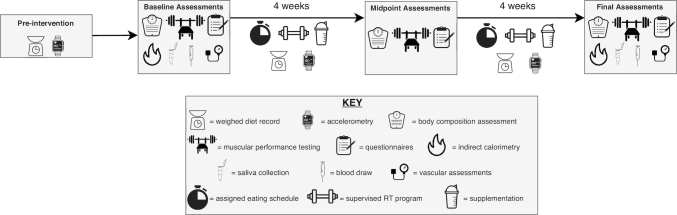
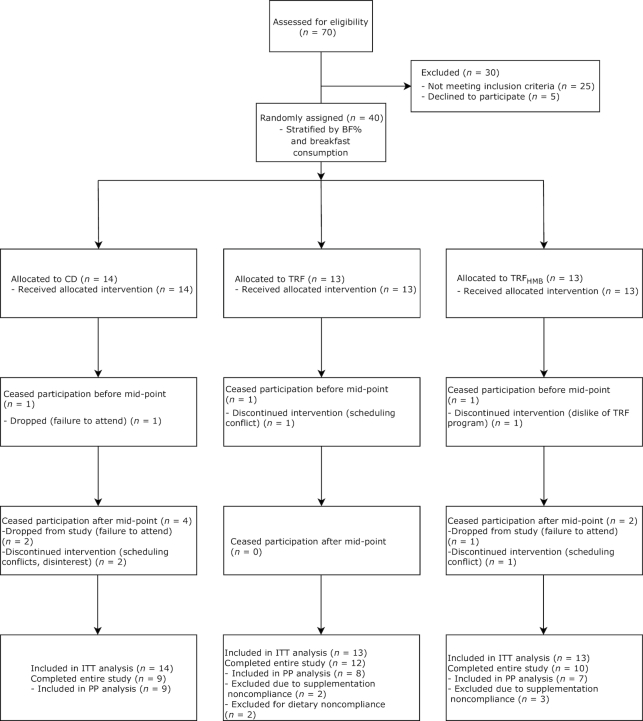
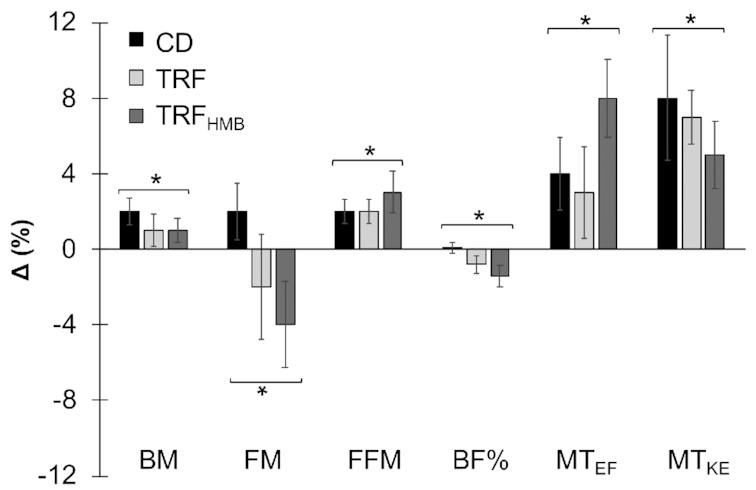
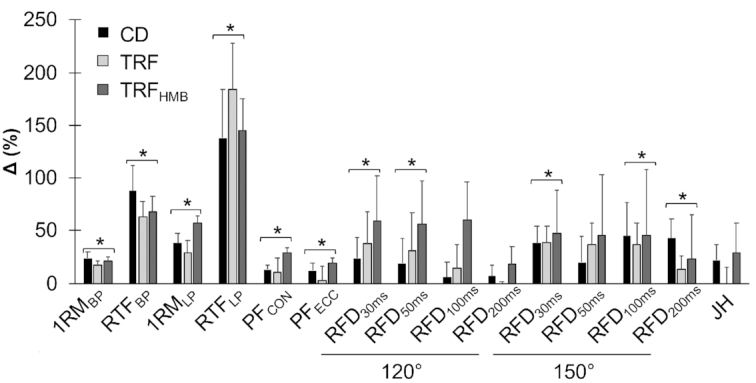
BACKGROUND: A very limited amount of research has examined intermittent fasting (IF) programs, such as time-restricted feeding (TRF), in active populations. OBJECTIVE: Our objective was to examine the effects of TRF, with or without β-hydroxy β-methylbutyrate (HMB) supplementation, during resistance training (RT). METHODS: This study employed a randomized, placebo-controlled, reduced factorial design and was double-blind with respect to supplementation in TRF groups. Resistance-trained females were randomly assigned to a control diet (CD), TRF, or TRF plus 3 g/d HMB (TRFHMB). TRF groups consumed all calories between 1200 h and 2000 h, whereas the CD group ate regularly from breakfast until the end of the day. All groups completed 8 wk of supervised RT and consumed supplemental whey protein. Body composition, muscular performance, dietary intake, physical activity, and physiological variables were assessed. Data were analyzed prior to unblinding using mixed models and both intention-to-treat (ITT) and per protocol (PP) frameworks. RESULTS: Forty participants were included in ITT, and 24 were included in PP. Energy and protein intake (1.6 g/kg/d) did not differ between groups despite different feeding durations (TRF and TRFHMB: ∼7.5 h/d; CD: ∼13 h/d). Comparable fat-free mass (FFM) accretion (+2% to 3% relative to baseline) and skeletal muscle hypertrophy occurred in all groups. Differential effects on fat mass (CD: +2%; TRF: -2% to -4%; TRFHMB: -4% to -7%) were statistically significant in the PP analysis, but not ITT. Muscular performance improved without differences between groups. No changes in physiological variables occurred in any group, and minimal side effects were reported. CONCLUSIONS: IF, in the form of TRF, did not attenuate RT adaptations in resistance-trained females. Similar FFM accretion, skeletal muscle hypertrophy, and muscular performance improvements can be achieved with dramatically different feeding programs that contain similar energy and protein content during RT. Supplemental HMB during fasting periods of TRF did not definitively improve outcomes. This study was prospectively registered at clinicaltrials.gov as NCT03404271.
Overview
The claims and statistics of this paper haven’t been checked yet.
Free: it reads the open-access text and checks the first 5 claims that cite a source we can check. Create a free account to check every claim.
Integrity signals
Registry
Cites
Statistics
Figures
Verification
Claims the paper makes
The claims and statistics of this paper haven’t been checked yet.
Free: it reads the open-access text and checks the first 5 claims that cite a source we can check. Create a free account to check every claim.
Claims other papers make about this one
Each is checked against this paper’s own text: does it say what the citing paper says it does?
The source backs part of the claim, not all of it — or backs it for a different population, condition or comparison.
In the citing paper
“Some studies have explored combining fasting with exercise, including resistance training, reporting the effectiveness of preserving [32, 85, 86] or even increasing [73] lean body mass while achieving weight loss simultaneously”
From Comparing caloric restriction regimens for effective weight management in adults: a systematic review and network meta-analysis (2024) · cites this paper as [73]
Experimental — accuracy not yet measuredThe cited source says what the claim attributes to it.
In the citing paper
“Among them, four trials [34, 35, 57, 73] documented no adverse events throughout the intervention period.”
From Comparing caloric restriction regimens for effective weight management in adults: a systematic review and network meta-analysis (2024) · cites this paper as [73]
In the citing paper
“This may explain why time-restricted feeding patterns do not seem to compromise muscle mass maintenance.44,45,46”
From The anabolic response to protein ingestion during recovery from exercise has no upper limit in magnitude and duration in vivo in humans (2023) · cites this paper as [46]
Self-check
Percentages, sums and reported differences re-computed from the paper’s own numbers.
The self-check needs the paper’s full text.
Citations
Cites
The Pittsburgh Sleep Quality Index: a new instrument for psychiatric practice and research
Buysse, D. J., Reynolds, C. F., Monk, T. H., Berman, S. R., & Kupfer, D. J. (1989) · Psychiatry Research · doi:10.1016/0165-1781(89)90047-4 · Cited by 35,234 · cited 1×
“Additionally, participants completed the Mood and Feelings Questionnaire (49), the Pittsburgh Sleep Quality Index (50), the Three-Factor Eating Questionnaire Revised 18-item version (51), and a menstrual cycle questionnaire at each morning laboratory assessment session.”
MethodFriedewald, W. T., Levy, R. I., & Fredrickson, D. S. (1972) · Clinical Chemistry · doi:10.1093/clinchem/18.6.499 · Cited by 32,423 · cited 1×
“Total cholesterol, triglycerides, and HDL cholesterol were assessed using enzymatic colorimetric assays (40–42), and VLDL and non-HDL cholesterol were calculated (VLDL = triglycerides/5 (43); non-HDL = total cholesterol – HDL).”
Method‘Small Changes' to Diet and Physical Activity Behaviors for Weight Management
Hills, A. P., Byrne, N. M., Lindstrom, R., & Hill, J. O. (2013) · Obesity Facts · doi:10.1159/000345030 · Cited by 9,493
Physical Activity in the United States Measured by Accelerometer
TROIANO, R. P., BERRIGAN, D., DODD, K. W., MÂSSE, L. C., TILERT, T., & MCDOWELL, M. (2008) · Medicine & Science in Sports & Exercise · doi:10.1249/mss.0b013e31815a51b3 · Cited by 7,638 · cited 1×
“, no movement), with an allowance ≤2 min of interruption with activity counts <100 per minute (21).”
BackgroundAntihyperlipidemic and Biochemical Activities of Mcy Protein in Streptozotocin Induced Diabetic Rats
Marella, S., Maddirela, D. R., Badri, K. R., Jyothi Kumar, M. V., & Chippada, A. (2015) · Cellular Physiology and Biochemistry · doi:10.1159/000373954 · Cited by 5,938
Calibration of the Computer Science and Applications, Inc. accelerometer
FREEDSON, P. S., MELANSON, E., & SIRARD, J. (1998) · Medicine & Science in Sports & Exercise · doi:10.1097/00005768-199805000-00021 · Cited by 3,825 · cited 1×
“Physical activity energy expenditure (PAEE; kcal/min) was estimated for each minute of wear time using the Freedson’s prediction equation (22) for activity counts >1951 counts/min and the Williams Work-Energy equation for activity counts ≤1951 counts/min (23).”
MethodAdjustment for total energy intake in epidemiologic studies
Willett, W., Howe, G., & Kushi, L. (1997) · The American Journal of Clinical Nutrition · doi:10.1093/ajcn/65.4.1220s · Cited by 3,758 · cited 1×
“wear time for each participant using a least-square adjustment method (24) due to the possibility of misclassification influencing daily PAEE.”
MethodBioelectrical impedance analysis?part I: review of principles and methods
KYLE, U. (2004) · Clinical Nutrition · doi:10.1016/j.clnu.2004.06.004 · Cited by 3,200 · cited 1×
“, bioelectrical impedance analysis (30)].”
(1995) · International Journal of Methods in Psychiatric Research · Cited by 1,847
Essentials of Strength Training and Conditioning
Baechle, T. R., & Earle, R. (1994) · Cited by 1,535
Research works printed but not linked: 1
- Hanai T Electrical Properties of Emulsions, Emulsion Science. London; New York: Academic Press; 1968.
Cited by
Cienfuegos, S., Gabel, K., Kalam, F., Ezpeleta, M., Wiseman, E., Pavlou, V., Lin, S., Oliveira, M. L., & Varady, K. A. (2020) · Cell Metabolism · doi:10.1016/j.cmet.2020.06.018 · Cited by 597
Chow, L. S., Manoogian, E. N. C., Alvear, A., Fleischer, J. G., Thor, H., Dietsche, K., Wang, Q., Hodges, J. S., Esch, N., Malaeb, S., et al. (2020) · Obesity · doi:10.1002/oby.22756 · Cited by 359
“Indeed, studies incorporating TRE with resistance training and either unrestricted intake (10), TRE with slight caloric restriction (200-250 kcal/d) and randomized whey protein supplementation (11), or TRE with instructions to maintain isoenergetic intake (34) have demonstrated preserved or increased lean mass.”
BackgroundResultClinical application of intermittent fasting for weight loss: progress and future directions
Varady, K. A., Cienfuegos, S., Ezpeleta, M., & Gabel, K. (2022) · Nature Reviews Endocrinology · doi:10.1038/s41574-022-00638-x · Cited by 357
Time-restricted eating for the prevention and management of metabolic diseases
Manoogian, E. N. C., Chow, L. S., Taub, P. R., Laferrère, B., & Panda, S. (2022) · Endocrine Reviews · doi:10.1210/endrev/bnab027 · Cited by 344
“TRE clinical trials range from a 4- to 12-hour daily eating window (20-12 hours fasting) with most (30/39 studies reported) using an 8- to 10-hour daily eating window (1614 hours fasting) (77, 88, 91, 94, 96, 117, 121-128, 131, 132, 134-137, 139-143).”
MethodIntermittent Fasting and Metabolic Health
Vasim, I., Majeed, C. N., & DeBoer, M. D. (2022) · Nutrients · doi:10.3390/nu14030631 · Cited by 285
Jamshed, H., Steger, F. L., Bryan, D. R., Richman, J. S., Warriner, A. H., Hanick, C. J., Martin, C. K., Salvy, S.-J., & Peterson, C. M. (2022) · JAMA Internal Medicine · doi:10.1001/jamainternmed.2022.3050 · Cited by 280
Moon, S., Kang, J., Kim, S. H., Chung, H. S., Kim, Y. J., Yu, J. M., Cho, S. T., Oh, C.-M., & Kim, T. (2020) · Nutrients · doi:10.3390/nu12051267 · Cited by 231
“[31] RCT Young active female 8 weeks 16:8 13 22.”
BackgroundSelf-citationAdafer, R., Messaadi, W., Meddahi, M., Patey, A., Haderbache, A., Bayen, S., & Messaadi, N. (2020) · Nutrients · doi:10.3390/nu12123770 · Cited by 227
“2019 [40] Medium n = 40 Women who strength-train 18–30 years.”
Time-Restricted Eating: Benefits, Mechanisms, and Challenges in Translation
Regmi, P., & Heilbronn, L. K. (2020) · iScience · doi:10.1016/j.isci.2020.101161 · Cited by 217
Cardiometabolic Benefits of Intermittent Fasting
Varady, K. A., Cienfuegos, S., Ezpeleta, M., & Gabel, K. (2021) · Annual Review of Nutrition · doi:10.1146/annurev-nutr-052020-041327 · Cited by 186
Ezpeleta, M., Gabel, K., Cienfuegos, S., Kalam, F., Lin, S., Pavlou, V., Song, Z., Haus, J. M., Koppe, S., Alexandria, S. J., et al. (2023) · Cell Metabolism · doi:10.1016/j.cmet.2022.12.001 · Cited by 181
Li, C., Xing, C., Zhang, J., Zhao, H., Shi, W., & He, B. (2021) · Journal of Translational Medicine · doi:10.1186/s12967-021-02817-2 · Cited by 180
“In active females, resistance training combined with TRF may result in a greater loss of fat mass than resistance training with a usual diet [28], TRF group also reported a 18% decrease in visceral fat mass [28].”
BackgroundKotarsky, C. J., Johnson, N. R., Mahoney, S. J., Mitchell, S. L., Schimek, R. L., Stastny, S. N., & Hackney, K. J. (2021) · Physiological Reports · doi:10.14814/phy2.14868 · Cited by 151
“An eating window between 12:00 p.m. and 8:00 p.m. was selected to align with previous literature on TRE and resistance training (Moro et al., 2016; Tinsley et al., 2019).”
BackgroundMethodInfluentialMeng, H., Zhu, L., Kord-Varkaneh, H., O Santos, H., Tinsley, G. M., & Fu, P. (2020) · Nutrition · doi:10.1016/j.nut.2020.110801 · Cited by 146
Self-citationIntermittent fasting: from calories to time restriction
Duregon, E., Pomatto, L. C. D., Bernier, M., Price, N. L., & de Cabo, R. (2021) · GeroScience · doi:10.1007/s11357-021-00335-z · Cited by 144
MORO, T., TINSLEY, G., PACELLI, F. Q., MARCOLIN, G., BIANCO, A., & PAOLI, A. (2021) · Medicine & Science in Sports & Exercise · doi:10.1249/mss.0000000000002738 · Cited by 134
Self-citationMoro, T., Tinsley, G., Longo, G., Grigoletto, D., Bianco, A., Ferraris, C., Guglielmetti, M., Veneto, A., Tagliabue, A., Marcolin, G., et al. (2020) · Journal of the International Society of Sports Nutrition · doi:10.1186/s12970-020-00396-z · Cited by 128
“IL-6, TNF-α, Insulin, HDL-C, TG) in resistance-trained males [21], and does not impair lean mass gain or performance improvements in resistance-trained females [22].”
BackgroundSelf-citationJones, R., Pabla, P., Mallinson, J., Nixon, A., Taylor, T., Bennett, A., & Tsintzas, K. (2020) · The American Journal of Clinical Nutrition · doi:10.1093/ajcn/nqaa192 · Cited by 115
Stratton, M. T., Tinsley, G. M., Alesi, M. G., Hester, G. M., Olmos, A. A., Serafini, P. R., Modjeski, A. S., Mangine, G. T., King, K., Savage, S. N., et al. (2020) · Nutrients · doi:10.3390/nu12041126 · Cited by 111
“2019 [22] noted significant improvements in body composition at four weeks in the TRF group, but these changes no longer remained at eight weeks.”
BackgroundMethodInfluentialSelf-citationWang, X., Yang, Q., Liao, Q., Li, M., Zhang, P., Santos, H. O., Kord‐Varkaneh, H., & Abshirini, M. (2020) · Nutrition · doi:10.1016/j.nut.2020.110974 · Cited by 117
Time-Restricted Eating and Metabolic Syndrome: Current Status and Future Perspectives
Świątkiewicz, I., Woźniak, A., & Taub, P. R. (2021) · Nutrients · doi:10.3390/nu13010221 · Cited by 113
Randomized controlled trial for time-restricted eating in overweight and obese young adults
Zhang, L.-M., Liu, Z., Wang, J.-Q., Li, R.-Q., Ren, J.-Y., Gao, X., Lv, S.-S., Liang, L.-Y., Zhang, F., Yin, B.-W., et al. (2022) · iScience · doi:10.1016/j.isci.2022.104870 · Cited by 91
O'Connor, S. G., Boyd, P., Bailey, C. P., Shams-White, M. M., Agurs-Collins, T., Hall, K., Reedy, J., Sauter, E. R., & Czajkowski, S. M. (2021) · Advances in Nutrition · doi:10.1093/advances/nmaa168 · Cited by 97
“(27, 37) suggest that TRE might not adversely affect physical activity if adequate protein and total energy are consumed within designated eating windows.”
BackgroundIntermittent fasting for the prevention of cardiovascular disease
Allaf, M., Elghazaly, H., Mohamed, O. G., Fareen, M. F. K., Zaman, S., Salmasi, A.-M., Tsilidis, K., & Dehghan, A. (2021) · Cochrane Database of Systematic Reviews · doi:10.1002/14651858.cd013496.pub2 · Cited by 98
Time-restricted eating and circadian rhythms: the biological clock is ticking
Queiroz, J. D. N., Macedo, R. C. O., Tinsley, G. M., & Reischak-Oliveira, A. (2021) · Critical Reviews in Food Science and Nutrition · doi:10.1080/10408398.2020.1789550 · Cited by 94
“A small number of studies have evaluated the effects of TRE in combination with exercise training on health parameters and adaptations to exercise (Moro et al. 2016; Tinsley et al. 2017, 2019).”
BackgroundInfluentialSelf-citationComplex physiology and clinical implications of time-restricted eating
Petersen, M. C., Gallop, M. R., Ramos, S. F., Zarrinpar, A., Broussard, J. L., Chondronikola, M., Chaix, A., & Klein, S. (2022) · Physiological Reviews · doi:10.1152/physrev.00006.2022 · Cited by 102
Dietary patterns and cardiometabolic health: Clinical evidence and mechanism
Wang, W., Liu, Y., Li, Y., Luo, B., Lin, Z., Chen, K., & Liu, Y. (2023) · MedComm · doi:10.1002/mco2.212 · Cited by 100
Pureza, I. R. D. O. M., Macena, M. D. L., da Silva Junior, A. E., Praxedes, D. R. S., Vasconcelos, L. G. L., & Bueno, N. B. (2021) · Clinical Nutrition · doi:10.1016/j.clnu.2020.10.031 · Cited by 89
Steger, F. L., Jamshed, H., Bryan, D. R., Richman, J., Warriner, A. H., Hanick, C. J., Martin, C. K., Salvy, S., & Peterson, C. M. (2022) · Obesity · doi:10.1002/oby.23614 · Cited by 93
“However, only 1 prior small study on TRE performed a per-protocol analysis [34].”
BackgroundMethodTime-Restricted Eating to Improve Cardiovascular Health
Gabel, K., Cienfuegos, S., Kalam, F., Ezpeleta, M., & Varady, K. A. (2021) · Current Atherosclerosis Reports · doi:10.1007/s11883-021-00922-7 · Cited by 91
Liu, L., Chen, W., Wu, D., & Hu, F. (2022) · The Journal of Clinical Endocrinology & Metabolism · doi:10.1210/clinem/dgac570 · Cited by 79
Trommelen, J., van Lieshout, G. A. A., Nyakayiru, J., Holwerda, A. M., Smeets, J. S. J., Hendriks, F. K., van Kranenburg, J. M. X., Zorenc, A. H., Senden, J. M., Goessens, J. P. B., et al. (2023) · Cell Reports Medicine · doi:10.1016/j.xcrm.2023.101324 · Cited by 82
Correia, J. M., Santos, I., Pezarat‐Correia, P., Minderico, C. S., & Mendonça, G. V. (2020) · Nutrients · doi:10.3390/nu12051390 · Cited by 89
“However, three recent randomized controlled trials [2,6,24], including participants undergoing 8 weeks of resistance training combined with either a normal diet or a TRF protocol, indicate that this approach may be beneficial for improving body composition (i.”
BackgroundInfluentialChrononutrition—When We Eat Is of the Essence in Tackling Obesity
Ahluwalia, M. K. (2022) · Nutrients · doi:10.3390/nu14235080 · Cited by 64
Perspective: Time-Restricted Eating—Integrating the What with the When
Parr, E. B., Devlin, B. L., & Hawley, J. A. (2022) · Advances in Nutrition · doi:10.1093/advances/nmac015 · Cited by 63
Current research: effect of time restricted eating on weight and cardiometabolic health
Gabel, K., & Varady, K. A. (2022) · The Journal of Physiology · doi:10.1113/jp280542 · Cited by 70
“…et al. 2018; Anton et al. 2019; Hutchison et al. 2019; Kesztyus et al. 2019; Chow et al. 2020; Wilkinson et al. 2020) and three energy deficit (250–500 kcal) studies (Tinsley et al. 2019; Karras et al. 2020a,b) (Table 1) have examined the effect of this diet on body weight and body composition.”
BackgroundInfluentialTime restricted eating for the prevention of type 2 diabetes
Cienfuegos, S., McStay, M., Gabel, K., & Varady, K. A. (2022) · The Journal of Physiology · doi:10.1113/jp281101 · Cited by 66
“Due to the simplicity of TRE, adherence rates to TRE are generally very high (Gabel et al. 2018; Tinsley et al. 2019; Cienfuegos et al. 2020).”
BackgroundIsenmann, E., Dissemond, J., & Geisler, S. (2021) · Nutrients · doi:10.3390/nu13093122 · Cited by 69
Keenan, S., Cooke, M. B., & Belski, R. (2020) · Nutrients · doi:10.3390/nu12082349 · Cited by 63
“and a four compartment model, combining DXA and bioimpedance spectroscopy [26] or DXA, bioimpedance spectroscopy and air displacement plethysmography [27] used.”
BackgroundMethodInfluentialCommon and divergent molecular mechanisms of fasting and ketogenic diets
Paoli, A., Tinsley, G. M., Mattson, M. P., Vivo, I. D., Dhawan, R., & Moro, T. (2023) · Trends in Endocrinology and Metabolism · doi:10.1016/j.tem.2023.10.001 · Cited by 67
Self-citationCorreia, J. M., Santos, I., Pezarat-Correia, P., Silva, A. M., & Mendonca, G. V. (2021) · Frontiers in Nutrition · doi:10.3389/fnut.2020.625240 · Cited by 58
Gu, L., Fu, R., Hong, J., Ni, H., Yu, K., & Lou, H. (2022) · Frontiers in Nutrition · doi:10.3389/fnut.2022.871682 · Cited by 60
Effects of 8 wk of 16:8 Time-restricted Eating in Male Middle- and Long-Distance Runners
BRADY, A. J., LANGTON, H. M., MULLIGAN, M., & EGAN, B. (2021) · Medicine & Science in Sports & Exercise · doi:10.1249/mss.0000000000002488 · Cited by 60
“Trained females who engaged in 8 wk of 16:8 TRE with resistance training demonstrated minor increases in energy intake but similar gains in FFM and an overall reduction in fat mass compared with a control diet (8).”
BackgroundResultXie, Y., Gu, Y., Li, Z., He, B., & Zhang, L. (2024) · Nutrients · doi:10.3390/nu16173007 · Cited by 62
“…have demonstrated the feasibility of combining exercise with dietary interventions; participants have been able to perform moderate to high-intensity endurance or resistance training during fasting periods of 12 to 36 h without adverse effects after adapting to the fasting regimen [44,45,50–52].”
BackgroundYang, F., Liu, C., Liu, X., Pan, X., Li, X., Tian, L., Sun, J., Yang, S., Zhao, R., An, N., et al. (2021) · Frontiers in Nutrition · doi:10.3389/fnut.2021.669325 · Cited by 52
A scoping review of intermittent fasting, chronobiology, and metabolism
Santos, H. O., Genário, R., Tinsley, G. M., de Carvalho, P. R., Carteri, R. B., Coelho‐Ravagnani, C. D. F., & Mota, J. F. (2021) · American Journal of Clinical Nutrition · doi:10.1093/ajcn/nqab433 · Cited by 59
Self-citationLaurens, C., Grundler, F., Damiot, A., Chery, I., Le Maho, A., Zahariev, A., Le Maho, Y., Bergouignan, A., Gauquelin‐Koch, G., Simon, C., et al. (2021) · Journal of Cachexia, Sarcopenia and Muscle · doi:10.1002/jcsm.12766 · Cited by 52
“tent fasting does not attenuate the muscle adaptations to a resistance exercise training programme.(30) In our study, we did not notice changes in muscle physical properties, suggesting that the biochemical properties of skeletal muscles were not affected.”
BackgroundNutrient Timing: A Garage Door of Opportunity?
Arent, S. M., Cintineo, H. P., McFadden, B. A., Chandler, A. J., & Arent, M. A. (2020) · Nutrients · doi:10.3390/nu12071948 · Cited by 60
“For instance, although strategies such as skipping breakfast or time-restricted feeding may be effective for inducing weight loss [115,116], training in a fasted state results in worsened performance, particularly during prolonged exercise, compared to training in a fed state [117,118].”
BackgroundOne size does not fit all; practical, personal tailoring of the diet to NAFLD patients
Zelber‐Sagi, S., Grinshpan, L. S., Ivancovsky‐Wajcman, D., Goldenshluger, A., & Gepner, Y. (2022) · Liver International · doi:10.1111/liv.15335 · Cited by 49
Sun, J.-C., Tan, Z.-T., He, C., Hu, H., Zhai, C., & Qian, G. (2023) · European Journal of Clinical Nutrition · doi:10.1038/s41430-023-01311-w · Cited by 53
The cyclic metabolic switching theory of intermittent fasting
Mattson, M. P. (2025) · Nature Metabolism · doi:10.1038/s42255-025-01254-5 · Cited by 55
“A RCT of TRE plus resistance training in young active women showed that without a reduction in overall energy intake, TRE with protein supplementation promotes skeletal muscle hypertrophy and fat loss 43 .”
Ashtary-Larky, D., Bagheri, R., Tinsley, G. M., Asbaghi, O., Paoli, A., & Moro, T. (2021) · Physiology & Behavior · doi:10.1016/j.physbeh.2021.113453 · Cited by 47
Self-citationTovar, A. P., Richardson, C. E., Keim, N. L., Loan, M. D. V., Davis, B. A., & Casazza, G. A. (2021) · Nutrients · doi:10.3390/nu13092941 · Cited by 49
Stratton, M. T., Smith, R. W., Harty, P. S., Rodriguez, C., Johnson, B. A., Dellinger, J. R., Williams, A. D., White, S. J., Benavides, M. L., & Tinsley, G. M. (2021) · European Journal of Clinical Nutrition · doi:10.1038/s41430-020-00811-3 · Cited by 46
“5% on average) [17, 39] as compared to the notable weight gain (~5% on average) observed in the present investigation.”
BackgroundSelf-citationDai, Z., Wan, K., Miyashita, M., Ho, R. S. T., Chen, Z., Poon, E. T., & Wong, S. H. (2024) · Advances in Nutrition · doi:10.1016/j.advnut.2024.100262 · Cited by 50
“In this subgroup, studies implemented TRE with either calorie restriction [33] or isocaloric eating [12,36,37,39, 42], whereas the control diet followed either the same calorie restriction [33] or isocaloric eating [12,36,37,39,42] pattern without a limited eating window.”
BackgroundMethodResultInfluentialInternational society of sports nutrition position stand: β-hydroxy-β-methylbutyrate (HMB)
Rathmacher, J. A., Pitchford, L. M., Stout, J. R., Townsend, J. R., Jäger, R., Kreider, R. B., Campbell, B. I., Kerksick, C. M., Harty, P. S., Candow, D. G., et al. (2024) · Journal of the International Society of Sports Nutrition · doi:10.1080/15502783.2024.2434734 · Cited by 50
Intermittent fasting as a nutrition approach against obesity and metabolic disease
Zhu, S., Surampudi, P. N., Rosharavan, B., & Chondronikola, M. (2020) · Current Opinion in Clinical Nutrition & Metabolic Care · doi:10.1097/mco.0000000000000694 · Cited by 52
“6 g/kg) and resistance training, reported that TRE does not adversely affect lean mass accretion (assessed by using 4 compartment model by DXA and bioimpedance spectroscopy) in physically active young women [12].”
MethodKang, J., Ratamess, N. A., Faigenbaum, A. D., Bush, J. A., Beller, N., Vargas, A., Fardman, B., & Andriopoulos, T. (2022) · Journal of the American Nutrition Association · doi:10.1080/07315724.2021.1958719 · Cited by 41
Correia, J. M., Santos, I., Pezarat‐Correia, P., Minderico, C. S., Schoenfeld, B. J., & Mendonça, G. V. (2021) · International Journal of Environmental Research and Public Health · doi:10.3390/ijerph18147227 · Cited by 44
“Indeed, increases in FFM post-TRF have been reported in two previous studies in which caloric intake was carefully controlled to avoid weight loss [40,41].”
BackgroundObesity, cancer risk, and time-restricted eating
Das, M., & Webster, N. J. G. (2022) · Cancer and Metastasis Reviews · doi:10.1007/s10555-022-10061-3 · Cited by 47
“Randomized control 8 weeks TRE: 8 h (12 pm–8 pm) TRE plus β-hydroxy β-methyl butyrate n = 40 females, resistance trained normal weight 18–30 yr ↓ Fat mass ↑ Muscle performance [153]”
MethodPavlidou, E., Papadopoulou, S. Κ., Fasoulas, A., Papaliagkas, V. T., Alexatou, O., Chatzidimitriou, M., Mentzelou, M., & Giaginis, C. (2023) · Nutrients · doi:10.3390/nu16010034 · Cited by 52
“However, concerns regarding the sustainability of intermi tt ent fasting regimens One overarching theme emerging from the analysis of clinical trials is the importance of individualization in diabesity management [105–107]. investigation [104].”
BackgroundTemporal Eating Patterns and Eating Windows among Adults with Overweight or Obesity
Popp, C. J., Curran, M., Wang, C., PRASAD, M. A., Fine, K. S., Gee, A., Nair, N., Perdomo, K., Chen, S., Hu, L., et al. (2021) · Nutrients · doi:10.3390/nu13124485 · Cited by 45
“However, prior studies have often neglected to assess baseline habitual eating patterns and only screened for breakfast consumption [17,21] or prior fasting [22,23].”
BackgroundWaldman, H. S., Rentería, L. I., & McAllister, M. J. (2019) · Nutrition Reviews · doi:10.1093/nutrit/nuz090 · Cited by 40
Wang, W., Wei, R., Pan, Q., & Guo, L. (2022) · Nutrition & Metabolism · doi:10.1186/s12986-022-00711-2 · Cited by 43
“Tinsley [34] RCT Active females 8 weeks TRF(~7.”
BackgroundWilliamson, E., & Moore, D. R. (2021) · Frontiers in Nutrition · doi:10.3389/fnut.2021.640621 · Cited by 38
Effect of Time-Restricted Eating and Resistance Training on High-Speed Strength and Body Composition
Correia, J. M., Santos, P., Pezarat‐Correia, P., Minderico, C. S., Infante, J., & Mendonça, G. V. (2023) · Nutrients · doi:10.3390/nu15020285 · Cited by 40
“In another study, the combination of TRE with resistance training resulted in similar muscular gains over time as seen with a control diet [9].”
BackgroundResultExploring Rates of Adherence and Barriers to Time-Restricted Eating
Jefcoate, P. W., Robertson, M. D., Ogden, J., & Johnston, J. D. (2023) · Nutrients · doi:10.3390/nu15102336 · Cited by 38
Intermittent Fasting: Does It Affect Sports Performance? A Systematic Review
Conde-Pipó, J., Mora-Fernández, A., Martínez-Bebiá, M., Giménez-Blasi, N., López-Moro, A., Latorre, J. A., Almendros-Ruiz, A., Requena, B., & Mariscal‐Arcas, M. (2024) · Nutrients · doi:10.3390/nu16010168 · Cited by 44
“…through Regarding muscular strength and power, eight included studies that evaluated muscular strength through maximal strength and endurance strength tests and power through peak power (PPO) and average power (W) [10,14,18,19,24–27]. peak power (PPO) and average power (W) [10,14,18,19,24–27].”
BackgroundInfluentialSantos, H. O., Genário, R., Macedo, R. C. O., Pareek, M., & Tinsley, G. M. (2020) · Critical Reviews in Food Science and Nutrition · doi:10.1080/10408398.2020.1819768 · Cited by 38
“More recently, Tinsley et al. (2019) examined a TRF program, in which all calories were consumed within 7.5 h daily for 8weeks, but they did not find changes in blood lipids, glucose and insulin, blood pressure, arterial stiffness, or cortisol responses in a healthy, active, female population…”
BackgroundInfluentialSelf-citationBarriers to adherence in time-restricted eating clinical trials: An early preliminary review
O'Neal, M. A., Gutierrez, N. R., Laing, K. L., Manoogian, E. N. C., & Panda, S. (2023) · Frontiers in Nutrition · doi:10.3389/fnut.2022.1075744 · Cited by 42
Assessing temporal eating pattern in free living humans through the myCircadianClock app
Manoogian, E. N. C., Wei-Shatzel, J., & Panda, S. (2022) · International Journal of Obesity · doi:10.1038/s41366-021-01038-3 · Cited by 39
Huang, L., Chen, Y., Wen, S., Lu, D., Shen, X., Deng, H., & Xu, L. (2022) · Food Science & Nutrition · doi:10.1002/fsn3.3194 · Cited by 41
“Previous studies (Brady et al., 2021; Moro et al., 2020; Tinsley et al., 2019) which included physically active participants (i.e., elite cyclists, long- distance runners) demonstrated weight reduction with TRE (8/16) intervention.”
BackgroundTinsley, G. M., Moore, M. L., Silva, A. M., & Sardinha, L. B. (2020) · European Journal of Clinical Nutrition · doi:10.1038/s41430-019-0496-8 · Cited by 35
“The sample size was determined based on a priori power analyses for changes in body composition and muscular performance as previously described [12].”
BackgroundMethodInfluentialSelf-citationRichardson, C. E., Tovar, A. P., Davis, B. A., Loan, M. D. V., Keim, N. L., & Casazza, G. A. (2023) · Nutrients · doi:10.3390/nu15040985 · Cited by 35
“investigated a 16/8 TRE diet combined with an 8-week resistance training program, but in resistance-trained female athletes [8,9].”
Karras, S. Ν., Koufakis, T., Adamidou, L., Pοlyzos, S. A., Karalazou, P., Thisiadou, K., Zebekakis, P. E., Makedou, K., & Kotsa, K. (2020) · International Journal of Food Sciences and Nutrition · doi:10.1080/09637486.2020.1787959 · Cited by 32
“Tinsley et al. (2019) reported no attenuation of resistance training adaptations among resistancetrained females practicing TRE (eating window between 12:00 and 20:00 h) for eight weeks.”
BackgroundXie, X., Zhang, M., & Luo, H. (2024) · Life Sciences · doi:10.1016/j.lfs.2024.122814 · Cited by 38
The Impact of Dietary Factors on the Sleep of Athletically Trained Populations: A Systematic Review
Barnard, J., Roberts, S., Lastella, M., Aisbett, B., & Condo, D. (2022) · Nutrients · doi:10.3390/nu14163271 · Cited by 33
“Females were recruited in 18 studies (51%) [43,54,58,60–62,67,68,71,76,78–85], with only 23% of studies (n = 8) recruiting females exclusively [54,58,61,62,68,76,82,85], compared to 49% for males [37,40,55–57,59,63– 66,69,70,72–75,77].”
BackgroundInfluentialTime‐restricted eating: What we know and where the field is going
Manoogian, E. N. C., & Laferrère, B. (2023) · Obesity · doi:10.1002/oby.23672 · Cited by 32
“on the population and study outcomes and they included (but were not limited to) the following: weight loss [4,11–14], improved muscle performance [15], improved energy and restfulness [4,6,16], decreased hunger [4,17], improved glucose regulation [5,6,12,13,17–19], decreased blood pressure [5,6,11,14], and improved c…”
BackgroundChristensen, R. A. G., & Kirkham, A. A. (2021) · Nutrients · doi:10.3390/nu13103476 · Cited by 28
Time-restricted eating and age-related muscle loss
Tinsley, G. M., & Paoli, A. (2019) · Aging · doi:10.18632/aging.102384 · Cited by 23
Self-citationTinsley, G. M., Harty, P. S., Moore, M. L., Grgić, J., Silva, A. M., & Sardinha, L. B. (2019) · Journal of the International Society of Sports Nutrition · doi:10.1186/s12970-019-0325-4 · Cited by 26
“Each session included 5 to 6 of these exercises, with 4 sets of 8 to 12 repetitions completed for most exercises, as previously described [18].”
BackgroundMethodSelf-citationHuang, J., Li, Y., Chen, M., Cai, Z., Cai, Z., & Jiang, Z. (2024) · International Journal of Behavioral Nutrition and Physical Activity · doi:10.1186/s12966-024-01657-9 · Cited by 25
“Sixteen studies reported adverse events [34, 35, 38, 39, 46, 47, 55, 57, 61, 62, 66, 68, 70, 73, 75, 76].”
BackgroundInfluentialTinsley, G. M., Stratton, M. T., Harty, P. S., Williams, A. D., White, S. J., Rodriguez, C., Dellinger, J. R., Johnson, B. A., SMITH, R. W., & Trexler, E. T. (2022) · Journal of Electrical Bioimpedance · doi:10.2478/joeb-2022-0003 · Cited by 28
“12 occurred without consideration of the menstrual cycle due to the short duration between visits, utilization of baseline assessments in each condition, the frequent lack of regular cycles in our participant pool of active females [27], and prior research indicating minimal influence of the menstrual cycle on bioimpe…”
BackgroundSelf-citationMayra, S. T., Chondropoulos, K., Leon, A. D., Kravat, N., & Johnston, C. S. (2022) · Obesity Research & Clinical Practice · doi:10.1016/j.orcp.2022.08.009 · Cited by 25
Keenan, S. J., Cooke, M. B., Hassan, E. B., Chen, W. S., Sullivan, J., Wu, S. X., El-Ansary, D., Imani, M., & Belski, R. (2022) · European Journal of Nutrition · doi:10.1007/s00394-022-02804-3 · Cited by 24
“To our knowledge, only one other study has demonstrated significant increases in LBM when intermittent fasting and resistance training were combined [19].”
Achieving an optimal fat loss phase in resistance-trained athletes: a narrative review
Ruiz-Castellano, C., Espinar, S., Contreras, C., Mata, F., Aragon, A. A., & Martínez-Sanz, J. M. (2021) · Nutrients · doi:10.3390/nu13093255 · Cited by 24
Langfield, T., Clarke, K., Marty, L., Jones, A., & Robinson, E. (2023) · International Journal of Behavioral Nutrition and Physical Activity · doi:10.1186/s12966-023-01453-x · Cited by 24
“Because of substantial sex differences in energy intake [22, 23], as in previous studies [24, 25] we limited studies to females to minimize participant variability in energy intake and therefore increase sensitivity to identify moderating effects of participant level SEP on energy intake.”
ResultHays, H. M., Azar, P. S., Kang, M., Tinsley, G. M., & Wijayatunga, N. N. (2025) · International Journal of Obesity · doi:10.1038/s41366-024-01704-2 · Cited by 24
“In the current analysis, the majority of the studies reported an energy de fi cit for the TRE group, either by design [34, 37, 39, 41] or unintentionally [32, 33, 35, 40].”
InfluentialSelf-citationPilot Clinical Trial of Time-Restricted Eating in Patients with Metabolic Syndrome
Świątkiewicz, I., Mila-Kierzenkowska, C., Woźniak, A., Szewczyk‐Golec, K., Nuszkiewicz, J., Wróblewska, J., Rajewski, P., Eussen, S. J. P. M., Færch, K., Manoogian, E. N. C., et al. (2021) · Nutrients · doi:10.3390/nu13020346 · Cited by 25
“TRE resulted in a decrease in energy intake [48,51], body weight even without reducing calorie intake [48,49], body fat even without impacting lean mass [49,50,52,54], BP [49], blood glucose and TG [50], glucose intolerance [55], leptin and inflammatory markers levels [50], and feeling of hunger [55], as well as an in…”
BackgroundPhysiological responses to acute fasting: implications for intermittent fasting programs
Stratton, M. T., Albracht‐Schulte, K., Harty, P. S., Siedler, M. R., Rodriguez, C., & Tinsley, G. M. (2021) · Nutrition Reviews · doi:10.1093/nutrit/nuab094 · Cited by 26
Self-citationSandoval, C., Santibañez, S., & Villagrán-Silva, F. (2021) · International Journal of Food Sciences and Nutrition · doi:10.1080/09637486.2020.1868412 · Cited by 25
“Two studies included just female participants (Harvie et al. 2011; Tinsley et al. 2019), four included males subjects (Soeters et al. 2009; Gnanou et al. 2015; Moro et al. 2016; Tinsley et al. 2017) and five included both male and female participants (Ongsara et al. 2017; Jamshed et al. 2019;…”
BackgroundMethodInfluentialProlonged nightly fasting and lower-extremity functioning in community-dwelling older adults
Estrada-deLeón, D. B., Struijk, E. A., Caballero, F. F., Sotos‐Prieto, M., Rodríguez-Artalejo, F., & López‐García, E. (2020) · British Journal Of Nutrition · doi:10.1017/s0007114520005218 · Cited by 23
Cienfuegos, S., Gabel, K., Kalam, F., Ezpeleta, M., Lin, S., & Varady, K. A. (2021) · Experimental Gerontology · doi:10.1016/j.exger.2021.111545 · Cited by 21
Protein Requirements of Pre-Menopausal Female Athletes: Systematic Literature Review
Mercer, D., Convit, L., Condo, D., Carr, A. J., Hamilton, D. L., Slater, G., & Snipe, R. M. J. (2020) · Nutrients · doi:10.3390/nu12113527 · Cited by 20
“Daily energy: 19% protein, 62% CHO, 19% fat) ↑maximal strength in both groups ↑ FFM higher vs. control Tinsley et al. 2019 [45] (cohort study) 17 recreationally active RT athletes (n = 9 intervention, n = 8 control) 63.9 ± 7.8 kg Body fat < 33% NR Eight-week whole-body RT program, three…”
BackgroundInfluentialEl ayuno intermitente y sus efectos en la salud metabólica en humanos
de Carvajal, V. M., Marín, A., Gihardo, D., Maluenda, F., Carrasco, F., & Chamorro, R. (2023) · Revista médica de Chile · doi:10.4067/s0034-98872023000100081 · Cited by 23
A Narrative Review of Intermittent Fasting With Exercise
Gabel, K., Hamm, A., Czyzewski, O., Perez, J. S., Fought-Boudaia, A., Motl, R. W., & Hibbing, P. R. (2024) · Journal of the Academy of Nutrition and Dietetics · doi:10.1016/j.jand.2024.05.015 · Cited by 19
Effects of time-restricted feeding on letrozole-induced mouse model of polycystic ovary syndrome
Ryu, K.-J., Park, H., Han, Y. I., Lee, H. J., Nam, S., Jeong, H. G., & Kim, T. (2023) · Scientific Reports · doi:10.1038/s41598-023-28260-5 · Cited by 20
Triki, R., Zouhal, H., Chtourou, H., Salhi, I., Jebabli, N., Saeidi, A., Laher, I., Hackney, A. C., Granacher, U., & Abderrahman, A. B. (2023) · International Journal of Sports Physiology and Performance · doi:10.1123/ijspp.2022-0268 · Cited by 24
Time-Restricted Eating: A Novel Dietary Strategy for Cardiac Rehabilitation
Small, S. L., Iglesies‐Grau, J., Gariepy, C., Wilkinson, M. J., Taub, P. R., & Kirkham, A. A. (2023) · Canadian Journal of Cardiology · doi:10.1016/j.cjca.2023.09.017 · Cited by 19
Panagiotou, K., Stefanou, G., Kourlaba, G., Athanasopoulos, D., Kassari, P., & Charmandari, E. (2024) · Nutrients · doi:10.3390/nu16213700 · Cited by 21
“ʺ at zero marks no effect; confidence intervals crossing this line indicate non-significant results. value indicate heterogeneity across studies [19,20,24,28,33–36,39,43]. erogeneity across studies [19,20,22,24–26,33,35–37].”
BackgroundResult
Metadata
- Authors
- Tinsley, G. M., Moore, M. L., Graybeal, A. J., Paoli, A., Kim, Y., Gonzales, J. U., Harry, J. R., VanDusseldorp, T. A., Kennedy, D. N., & Cruz, M. R.
- Affiliations
- Texas Tech University (US)
- University of Padua (IT)
- Kennesaw State University (US)
- Corresponding author
- Tinsley, Grant M
- ORCID
- Venue
- The American Journal of Clinical Nutrition
- Publisher
- Elsevier BV
- Published
- 2019-09
- Volume
- 110
- Issue
- 3
- Pages
- 628-640
- ISSN
- 0002-9165 (ISSN-L)
- PMC
- PMC6735806
- OpenAlex
- W2953470221
- Cited by
- 221
- References
- 56
- Citations by year
- 2026: 22 · 2025: 26 · 2024: 33 · 2023: 37 · 2022: 31 · 2021: 38 · 2020: 29 · 2019: 5
- FWCI
- 17.66
- Type
- journal article
- Language
- en
- Open access
- hybrid
- doi.org
- Licence
- cc-by-nc
- www.elsevier.com/tdm/userlicense/1.0/ (tdm)
- creativecommons.org/licenses/by-nc/4.0/ (vor)
- Locations
- American Journal of Clinical Nutrition (publishedVersion, cc-by-nc)
- Europe PMC (PubMed Central) (publishedVersion, cc-by-nc)
- PubMed Central (publishedVersion, cc-by-nc)
- PubMed (publishedVersion)
- DigitalCommons - Kennesaw State University (Kennesaw State University) (submittedVersion, cc-by-nc)
- Padua Research Archive (University of Padova) (submittedVersion)
- Funders
- MTI Biotech Inc.
- Texas Tech University
- Topics
- Health Sciences › Medicine › Physiology (medical) › Dietary Effects on Health
- Health Sciences › Nursing › Nutrition and Dietetics › Muscle metabolism and nutrition
- Health Sciences › Medicine › Orthopedics and Sports Medicine › Sports Performance and Training
- Keywords
- time-restricted feeding, intermittent fasting, resistance training, body composition, fat-free mass, fat mass, skeletal muscle hypertrophy, muscle performance, whey protein, protein intake, energy intake
- MeSH terms
- Adult, Body Composition, Female, Humans, Time Factors, Resistance Training, Young Adult, Meals
About these checks
Registry, retraction, Cites and statistics results are computed, not judged, with one exception: a printed reference that no index lists is read once by a model before it counts as a citation error. Claims are extracted by a model and kept only when their quote appears verbatim in the text; each cited source is then checked, with a model’s help, for whether it says what the claim relies on. Those verdicts can be wrong — read the claim’s quote and the cited source before relying on one.
Statistics and arithmetic are recomputed, not judged.
Confidence bands are shown only for fields calibrated on our annotated test set. None is calibrated yet, so no band is shown.
What counts as a claim ›How we measure confidence ›How we check this ›
Are you an author, or do you see a problem with this page? Request a review
Data sources
Bibliographic data: Semantic Scholar, OpenAlex, Crossref.
Contains information from the Semantic Scholar Academic Graph Datasets, made available under the ODC Attribution License (ODC-BY 1.0).
Semantic Scholar’s data is described in: Kinney, R., et al. (2023). The Semantic Scholar Open Data Platform. arXiv:2301.10140.
