

Dynamical modeling and multi-experiment fitting with PottersWheel
Open accessThe DOI matches its Crossref record; 26 of the 27 references it cites were found in a registry or an index.
Abstract
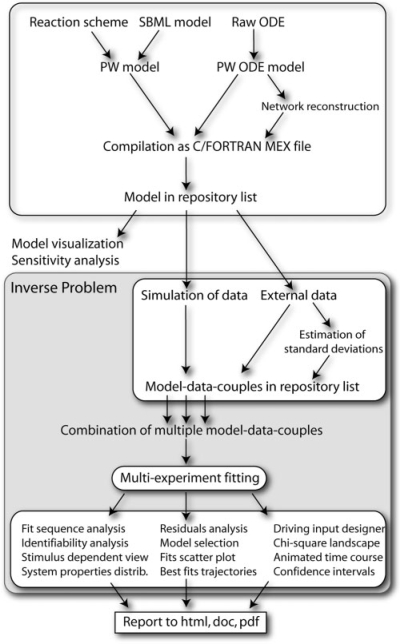
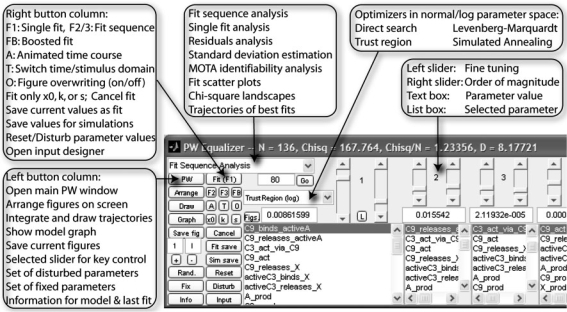
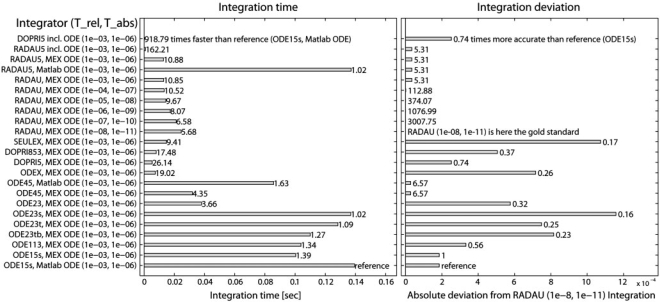
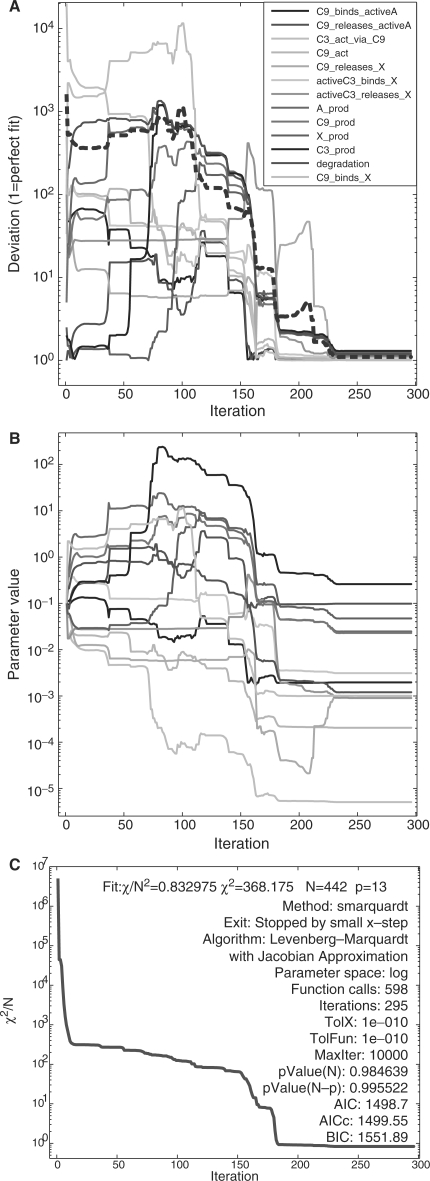
Motivation: Modelers in Systems Biology need a flexible framework that allows them to easily create new dynamic models, investigate their properties and fit several experimental datasets simultaneously. Multi-experiment-fitting is a powerful approach to estimate parameter values, to check the validity of a given model, and to discriminate competing model hypotheses. It requires high-performance integration of ordinary differential equations and robust optimization. Results: We here present the comprehensive modeling framework Potters-Wheel (PW) including novel functionalities to satisfy these requirements with strong emphasis on the inverse problem, i.e. data-based modeling of partially observed and noisy systems like signal transduction pathways and metabolic networks. PW is designed as a MATLAB toolbox and includes numerous user interfaces. Deterministic and stochastic optimization routines are combined by fitting in logarithmic parameter space allowing for robust parameter calibration. Model investigation includes statistical tests for model-data-compliance, model discrimination, identifiability analysis and calculation of Hessian- and Monte-Carlo-based parameter confidence limits. A rich application programming interface is available for customization within own MATLAB code. Within an extensive performance analysis, we identified and significantly improved an integrator–optimizer pair which decreases the fitting duration for a realistic benchmark model by a factor over 3000 compared to MATLAB with optimization toolbox. Availability: PottersWheel is freely available for academic usage at http://www.PottersWheel.de/. The website contains a detailed documentation and introductory videos. The program has been intensively used since 2005 on Windows, Linux and Macintosh computers and does not require special MATLAB toolboxes. Contact: maiwald@fdm.uni-freiburg.de Supplementary information: Supplementary data are available at Bioinformatics online.
Overview
The claims and statistics of this paper haven’t been checked yet.
Free: it reads the open-access text and checks the first 5 claims that cite a source we can check. Create a free account to check every claim.
Integrity signals
Registry
Cites
Statistics
Figures
Verification
Claims the paper makes
The claims and statistics of this paper haven’t been checked yet.
Free: it reads the open-access text and checks the first 5 claims that cite a source we can check. Create a free account to check every claim.
Claims other papers make about this one
Each is checked against this paper’s own text: does it say what the citing paper says it does?
In the citing paper
“Note that both come in forms which either incorporate information about the local geometry or not and that including such information usually leads to faster convergence [11,54].”
From Parameter uncertainty in biochemical models described by ordinary differential equations (2013) · cites this paper as [11]
In the citing paper
“For the former, model simulation time is a primary concern which can be significantly reduced by using compiled simulation code [see COPASI (Hoops et al., 2006); ABC-SysBio (Liepe et al., 2010); Potters Wheel (Maiwald and Timmer, 2008); Sloppy Cell (Brown and Sethna, 2003)].”
From A bayesian approach to targeted experiment design (2012) · cites this paper as Maiwald and Timmer, 2008
Self-check
Percentages, sums and reported differences re-computed from the paper’s own numbers.
The self-check needs the paper’s full text.
Citations
Cites
Genetic algorithms in search, optimization, and machine learning
(1989) · Choice Reviews Online · doi:10.5860/choice.27-0936 · Cited by 49,010 · cited 2×
“The simulated annealing (Ingber, 1989) and genetic algorithms (MATLAB genetic algorithm toolbox; (Goldberg, 1989)) are stochastic approaches able to handle local minima, but requiring more time.”
MethodEstimating the Dimension of a Model
Schwarz, G. (1978) · The Annals of Statistics · doi:10.1214/aos/1176344136 · Cited by 47,033 · cited 2×
“Criteria like an Information Criterion (AIC) and Bayesian information criterion (BIC) are suggested to establish a ranking of models (Akaike, 1973; Schwartz, 1978).”
BackgroundGenetic Algorithms in Search, Optimization and Machine Learning
Goldberg, D. E., & Robson, D. (1988) · Cited by 18,391
Numerical recipes in C: the art of scientific computing
(1993) · Choice Reviews Online · doi:10.5860/choice.30-5638 · Cited by 17,933
Information Theory and an Extension of the Maximum Likelihood Principle
Akaike, H. (1998) · Springer Series in Statistics · doi:10.1007/978-1-4612-1694-0_15 · Cited by 17,781
Goldberg, D. E., & Shakespeare, W. (2002) · Cited by 16,088
Convergence Properties of the Nelder--Mead Simplex Method in Low Dimensions
Lagarias, J. C., Reeds, J. A., Wright, M. H., & Wright, P. E. (1998) · SIAM Journal on Optimization · doi:10.1137/s1052623496303470 · Cited by 7,447
Inverse Problem Theory and Methods for Model Parameter Estimation
Tarantola, A. (2005) · doi:10.1137/1.9780898717921 · Cited by 6,585 · cited 1×
“PW, on the other hand, originates from the inverse problem, where for existing data a model has to be identified ((Tarantola, 2004)).”
BackgroundSolving Ordinary Differential Equations II
Hairer, E., & Wanner, G. (1996) · Springer Series in Computational Mathematics · doi:10.1007/978-3-642-05221-7 · Cited by 4,342
An Interior Trust Region Approach for Nonlinear Minimization Subject to Bounds
Coleman, T. F., & Li, Y. (1996) · SIAM Journal on Optimization · doi:10.1137/0806023 · Cited by 3,320 · cited 1×
“The trust region (MATLAB optimization toolbox; (Coleman and Li, 1996)) and Levenberg–Marquardt (Nielsen, 2006) algorithms are powerful deterministic least-square optimizers.”
Method
Research works printed but not linked: 1
- Tarantola, 2004, Inverse Problem Theory and Model Parameter Estimation.
Cited by
Raue, A., Kreutz, C., Maiwald, T., Bachmann, J., Schilling, M., Klingmüller, U., & Timmer, J. (2009) · Bioinformatics · doi:10.1093/bioinformatics/btp358 · Cited by 1,442
Self-citationEffective connectivity: Influence, causality and biophysical modeling
Valdes-Sosa, P. A., Roebroeck, A., Daunizeau, J., & Friston, K. (2011) · NeuroImage · doi:10.1016/j.neuroimage.2011.03.058 · Cited by 390
“Another framework for modeling and fitting systems defined by differential equations in bioinformatics is “Potters Wheel” (Maiwald and Timmer, 2008), which uses a profile likelihood approach (Raue et al., 2009) to explore “practical Identifiability” in addition to structural (theoretical) Identifiability.”
MethodKinetic models in industrial biotechnology – Improving cell factory performance
Almquist, J., Cvijovic, M., Hatzimanikatis, V., Nielsen, J., & Jirstrand, M. (2014) · Metabolic Engineering · doi:10.1016/j.ymben.2014.03.007 · Cited by 293
“…2006), the Systems Biology Toolbox (Schmidt and Jirstrand, 2006; Schmidt, 2007), COPASI (Hoops et al., 2006; Mendes et al., 2009), PottersWheel (Maiwald and Timmer, 2008), and AMIGO (Balsa-Canto and Banga, 2011). are several parameter sets that are equally likely to have produced the measured…”
MethodEvaluating Strategies to Normalise Biological Replicates of Western Blot Data
Degasperi, A., Birtwistle, M. R., Volinsky, N., Rauch, J., Kolch, W., & Kholodenko, B. N. (2014) · PLoS ONE · doi:10.1371/journal.pone.0087293 · Cited by 228
“In this setting, data is compared to the output of a model and appropriate values for the parameters of the model are identified, aiming to obtain the best possible agreement between data and output [4].”
BackgroundMethodProgramming biological models in Python using PySB
Lopez, C. F., Muhlich, J. L., Bachman, J. A., & Sorger, P. K. (2013) · Molecular Systems Biology · doi:10.1038/msb.2013.1 · Cited by 230
Comparison of approaches for parameter identifiability analysis of biological systems
Raue, A., Karlsson, J., Saccomani, M. P., Jirstrand, M., & Timmer, J. (2014) · Bioinformatics · doi:10.1093/bioinformatics/btu006 · Cited by 180
Self-citationDynamic Modelling of Pathways to Cellular Senescence Reveals Strategies for Targeted Interventions
Dalle Pezze, P., Nelson, G., Otten, E. G., Korolchuk, V. I., Kirkwood, T. B. L., von Zglinicki, T., & Shanley, D. P. (2014) · PLoS Computational Biology · doi:10.1371/journal.pcbi.1003728 · Cited by 166
“The goodness-of-fit statistical measures x(2) [61] and AIC [68] were used to assess the quality of fit of the model at each calibration round.”
MethodMiRNAs confer phenotypic robustness to gene networks by suppressing biological noise
Siciliano, V., Garzilli, I., Fracassi, C., Criscuolo, S., Ventre, S., & di Bernardo, D. (2013) · Nature Communications · doi:10.1038/ncomms3364 · Cited by 166
13C metabolic flux analysis in complex systems
Zamboni, N. (2010) · Current Opinion in Biotechnology · doi:10.1016/j.copbio.2010.08.009 · Cited by 177
Covering a Broad Dynamic Range: Information Processing at the Erythropoietin Receptor
Becker, V., Schilling, M., Bachmann, J., Baumann, U., Raue, A., Maiwald, T., Timmer, J., & Klingmüller, U. (2010) · Science · doi:10.1126/science.1184913 · Cited by 159
Self-citationFey, D., Halasz, M., Dreidax, D., Kennedy, S. P., Hastings, J. F., Rauch, N., Munoz, A. G., Pilkington, R., Fischer, M., Westermann, F., et al. (2015) · Science Signaling · doi:10.1126/scisignal.aab0990 · Cited by 157
“To assess the associated uncertainty, we adopted a Monte-Carlo based approach by randomly changing the initial parameters 50 times and refitting the model (table S2, text S1: Dynamic modelling of the JNK network) (39, 40).”
MethodA systems study reveals concurrent activation of AMPK and mTOR by amino acids
Dalle Pezze, P., Ruf, S., Sonntag, A. G., Langelaar-Makkinje, M., Hall, P., Heberle, A. M., Razquin Navas, P., van Eunen, K., Tölle, R. C., Schwarz, J. J., et al. (2016) · Nature Communications · doi:10.1038/ncomms13254 · Cited by 148
Addressing parameter identifiability by model-based experimentation
Raue, A., Kreutz, C., Maiwald, T., Klingmüller, U., & Timmer, J. (2011) · IET Systems Biology · doi:10.1049/iet-syb.2010.0061 · Cited by 145
“[42] T Maiwald and J Timmer.”
MethodSelf-citationRapid Phospho-Turnover by Receptor Tyrosine Kinases Impacts Downstream Signaling and Drug Binding
Kleiman, L. B., Maiwald, T., Conzelmann, H., Lauffenburger, D. A., & Sorger, P. K. (2011) · Molecular Cell · doi:10.1016/j.molcel.2011.07.014 · Cited by 133
“The MATLAB toolbox PottersWheel (Maiwald and Timmer, 2008) was used to perform differential equation modeling of M3 and to apply Maximum-Likelihood parameter calibration based on experimental data.”
MethodSelf-citationQuantitative Analysis of Glycerol Accumulation, Glycolysis and Growth under Hyper Osmotic Stress
Petelenz, E., Kühn, C., Nordlander, B., Klein, D., Hong, K.-K., Jacobson, T., Dahl, P. J., Schaber, J., Nielsen, J., Hohmann, S., et al. (2013) · PLoS Computational Biology · doi:10.1371/journal.pcbi.1003084 · Cited by 137
“Parameter estimation was done with PottersWheel [46] and SBML-PET [47].”
Parameter uncertainty in biochemical models described by ordinary differential equations
Vanlier, J., Tiemann, C. A., Hilbers, P. A. J., & van Riel, N. A. W. (2013) · Mathematical Biosciences · doi:10.1016/j.mbs.2013.03.006 · Cited by 116
“Note that both come in forms which either incorporate information about the local geometry or not and that including such information usually leads to faster convergence [11,54].”
BackgroundMethodSelenium Uptake and Methylation by the Microalga Chlamydomonas reinhardtii
Vriens, B., Behra, R., Voegelin, A., Županič, A., & Winkel, L. H. E. (2015) · Environmental Science & Technology · doi:10.1021/acs.est.5b04169 · Cited by 109
A bayesian approach to targeted experiment design
Vanlier, J., Tiemann, C. A., Hilbers, P. A. J., & van Riel, N. A. W. (2012) · Bioinformatics · doi:10.1093/bioinformatics/bts092 · Cited by 98
“For the former, model simulation time is a primary concern which can be significantly reduced by using compiled simulation code [see COPASI (Hoops et al., 2006); ABC-SysBio (Liepe et al., 2010); Potters Wheel (Maiwald and Timmer, 2008); Sloppy Cell (Brown and Sethna, 2003)].”
BackgroundMethodModeling COVID-19 epidemic in Heilongjiang province, China
Sun, T., & Wang, Y. (2020) · Chaos Solitons & Fractals · doi:10.1016/j.chaos.2020.109949 · Cited by 97
Glycerol as a probe molecule to uncover oxidation mechanism in photocatalysis
Minero, C., Bedini, A., & Maurino, V. (2012) · Applied Catalysis B: Environmental · doi:10.1016/j.apcatb.2012.02.014 · Cited by 96
Community-driven roadmap for integrated disease maps
Ostaszewski, M., Gebel, S., Kuperstein, I., Mazein, A., Zinovyev, A. Y., Doğrusöz, U., Hasenauer, J., Fleming, R. M. T., Novère, N. G. L., Gawron, P., et al. (2018) · Briefings in Bioinformatics · doi:10.1093/bib/bby024 · Cited by 93
Marten, F., Rodrigues, S., Suffczyński, P., Richardson, M. P., & Terry, J. R. (2009) · Physical Review E · doi:10.1103/physreve.79.021911 · Cited by 90
AMIGO, a toolbox for advanced model identification in systems biology using global optimization
Balsa-Canto, E., & Banga, J. R. (2011) · Bioinformatics · doi:10.1093/bioinformatics/btr370 · Cited by 80
“The use of suitable optimization methods to avoid local solutions has been illustrated during the last decade by many authors, and some of these methods have been incorporated in software tools such as: COPASI (Hoops et al., 2006), SBToolbox2 (Schmidt and Jirstrand, 2006), PottersWheel (Maiwald and Timmer, 2008) or Se…”
MethodTheoretical and experimental analysis links isoform-specific ERK signalling to cell fate decisions
Schilling, M., Maiwald, T., Hengl, S., Winter, D., Kreutz, C., Kolch, W., Lehmann, W. D., Timmer, J., & Klingmüller, U. (2009) · Molecular Systems Biology · doi:10.1038/msb.2009.91 · Cited by 79
“toolbox PottersWheel (Maiwald and Timmer, 2008) by a trust-region optimisation approach, minimising w(2), the sum of”
BackgroundMethodInfluentialSelf-citationKallenberger, S. M., Beaudouin, J., Claus, J., Fischer, C., Sorger, P. K., Legewie, S., & Eils, R. (2014) · Science Signaling · doi:10.1126/scisignal.2004738 · Cited by 76
Raia, V., Schilling, M., Böhm, M., Hahn, B., Kowarsch, A., Raue, A., Sticht, C., Bohl, S., Saile, M., Möller, P., et al. (2011) · Cancer Research · doi:10.1158/0008-5472.can-10-2987 · Cited by 75
Self-citationPredator Ecology: Evolutionary Ecology of the Functional Response
DeLong, J. P. (2021) · doi:10.1093/oso/9780192895509.001.0001 · Cited by 80
An application programming interface for CellNetAnalyzer
Klamt, S., & von Kamp, A. (2011) · Biosystems · doi:10.1016/j.biosystems.2011.02.002 · Cited by 77
Reiterer, V., Fey, D., Kölch, W., Kholodenko, B. Ν., & Farhan, H. (2013) · Proceedings of the National Academy of Sciences · doi:10.1073/pnas.1301985110 · Cited by 77
“3A; based on our estimation results and a Pearsons’s χ(2) test (9), the probability that the model conforms with the data are P = 0.”
MethodAn integrated strategy for prediction uncertainty analysis
Vanlier, J., Tiemann, C. A., Hilbers, P. A. J., & van Riel, N. A. W. (2012) · Bioinformatics · doi:10.1093/bioinformatics/bts088 · Cited by 67
Pharmacokinetics and pharmacodynamics in antibiotic dose optimization
Sy, S. K. B., Zhuang, L., & Derendorf, H. (2015) · Expert Opinion on Drug Metabolism & Toxicology · doi:10.1517/17425255.2016.1123250 · Cited by 67
“Co-linearity can be detected by correlation or by plotting the perturbed parameter values against other parameters estimated by the model.[68] Algorithms to detect nonlinear manifolds have been developed [69] but are not very sensitive.”
BackgroundWangorsch, G., Butt, E., Mark, R., Hubertus, K., Geiger, J., Dandekar, T., & Dittrich, M. T. (2011) · BMC Systems Biology · doi:10.1186/1752-0509-5-178 · Cited by 64
“Moreover, this allows for discrimination between competing model hypotheses [43,44].”
BackgroundMethodInfluentialMCMC Techniques for Parameter Estimation of ODE Based Models in Systems Biology
Valderrama, G., & Fröhlich, H. (2019) · Frontiers in Applied Mathematics and Statistics · doi:10.3389/fams.2019.00055 · Cited by 61
“Optimization methods, as e.g., implemented in Copasi [2], PottersWheel [3], and other tools, are often applied for parameters estimation in systems biology.”
MethodCoupling Cas9 to artificial inhibitory domains enhances CRISPR-Cas9 target specificity
Aschenbrenner, S., Kallenberger, S. M., Hoffmann, M. D., Huck, A., Eils, R., & Niopek, D. (2020) · Science Advances · doi:10.1126/sciadv.aay0187 · Cited by 62
Benchmarking of numerical integration methods for ODE models of biological systems
Städter, P., Schälte, Y., Schmiester, L., Hasenauer, J., & Stapor, P. L. (2021) · Scientific Reports · doi:10.1038/s41598-021-82196-2 · Cited by 71
Vera, J., Lai, X., Schmitz, U., & Wolkenhauer, O. (2012) · Advances in experimental medicine and biology · doi:10.1007/978-94-007-5590-1_4 · Cited by 63
Muñoz-Tamayo, R., Puillet, L., Daniel, J. B., Sauvant, D., Martin, O., Taghipoor, M., & Blavy, P. (2018) · animal · doi:10.1017/s1751731117002774 · Cited by 56
Spatio-temporal modeling of signaling protein recruitment to EGFR
Hsieh, M.-Y., Yang, S., Raymond‐Stintz, M. A., Edwards, J. S., & Wilson, B. S. (2010) · BMC Systems Biology · doi:10.1186/1752-0509-4-57 · Cited by 56
Reversible ubiquitination shapes NLRC5 function and modulates NF-κB activation switch
Meng, Q., Cai, C., Sun, T., Wang, Q., Xie, W., Wang, R., & Cui, J. (2015) · The Journal of Cell Biology · doi:10.1083/jcb.201505091 · Cited by 61
“NLRP3 is also negatively regulated by NO-mediated S-nitrosylation (Mishra et al., 2013).”
BackgroundMicroRNA Cancer Regulation: Advanced Concepts, Bioinformatics and Systems Biology Tools
Schmitz, U., Wolkenhauer, O., & Vera, J. (2013) · Advances in experimental medicine and biology · doi:10.1007/978-94-007-5590-1 · Cited by 58
Degasperi, A., Fey, D., & Kholodenko, B. Ν. (2017) · npj Systems Biology and Applications · doi:10.1038/s41540-017-0023-2 · Cited by 61
“Based on the simulated (y) and measured (~y) observables, a parameter estimation problem can be formulated as an optimisation problem, in which the error between measured and simulated values is minimised.(9) Mathematically, this error is described using”
BackgroundTorres, M. M., Wang, J., Yannie, P. J., Ghosh, S., Segal, R. A., & Reynolds, A. (2019) · PLoS Computational Biology · doi:10.1371/journal.pcbi.1007172 · Cited by 62
“Under the assumption that residuals between the data and model predictions are Gaussian distributed, the log-likelihood is distributed like a χ(2) distribution with N −M degrees of freedom, with N data points and M parameters being estimated [47].”
BackgroundMethodInfluentialKinetic modeling of cell metabolism for microbial production
Costa, R. S., Hartmann, A., & Vinga, S. (2015) · Journal of Biotechnology · doi:10.1016/j.jbiotec.2015.12.023 · Cited by 59
PP1 initiates the dephosphorylation of MASTL, triggering mitotic exit and bistability in human cells
Rogers, S., Fey, D., McCloy, R. A., Parker, B. L., Mitchell, N. J., Payne, R. J., Daly, R. J., James, D. E., Caldon, C. E., Watkins, D. N., et al. (2016) · Journal of Cell Science · doi:10.1242/jcs.179754 · Cited by 53
“To assess the associated uncertainty, a Monte-Carlo-based approach was used where the initial parameters were randomly changed 50 times and the model refitted to the experimental data (Hengl et al., 2007; Maiwald and Timmer, 2008).”
MethodSonntag, A. G., Dalle Pezze, P., Shanley, D. P., & Thedieck, K. (2012) · The FEBS Journal · doi:10.1111/j.1742-4658.2012.08582.x · Cited by 50
Rodriguez-Fernández, M., Banga, J. R., & Doyle, F. J. (2012) · International Journal of Robust and Nonlinear Control · doi:10.1002/rnc.2797 · Cited by 56
“However, global sensitivity analysis (GSA) methods that investigate the sensitivity over the entire input space have been recently studied with application to biochemical models [3], and several tools facilitating the computation of the most known sensitivity measures, namely Systems Biology Toolbox 2 [4], COPASI [5],…”
MethodDOTcvpSB, a software toolbox for dynamic optimization in systems biology
Hirmajer, T., Balsa‐Canto, E., & Banga, J. R. (2009) · BMC Bioinformatics · doi:10.1186/1471-2105-10-199 · Cited by 58
“COPASI [7], PottersWheel [8] or SBtoolbox2 [9], to name a few), they are restricted to problems where the decision variables are static (time-independent).”
BackgroundSensSB: a software toolbox for the development and sensitivity analysis of systems biology models
Rodriguez-Fernandez, M., & Banga, J. R. (2010) · Bioinformatics · doi:10.1093/bioinformatics/btq242 · Cited by 49
“, 2008), PottersWheel (Maiwald and Timmer, 2008), and Systems Biology Toolbox 2 (Schmidt and Jirstrand, 2006).”
BackgroundMethodTemporal control of the integrated stress response by a stochastic molecular switch
Klein, P., Kallenberger, S. M., Roth, H., Roth, K., Ly-Hartig, T. B. N., Magg, V., Aleš, J., Talemi, S. R., Qiang, Y., Wolf, S., et al. (2022) · Science Advances · doi:10.1126/sciadv.abk2022 · Cited by 50
Mager, D. E., Mody, V., Xu, C., Forrest, A., Lesniak, W. G., Nigavekar, S. S., Kariapper, M. T. S., Minc, L. D., Khan, M. K., & Balogh, L. P. (2012) · Pharmaceutical Research · doi:10.1007/s11095-012-0784-7 · Cited by 48
Gao, X., Cai, Y., Wang, Z., He, W., Cao, S., Xu, R., & Chen, H. (2019) · Journal of Translational Medicine · doi:10.1186/s12967-019-2056-3 · Cited by 54
Mechanism of PP2A-mediated IKKβ dephosphorylation: a systems biological approach
Witt, J., Barisic, S., Schumann, E., Allgöwer, F., Sawodny, O., Sauter, T., & Kulms, D. (2009) · BMC Systems Biology · doi:10.1186/1752-0509-3-71 · Cited by 48
“6 [41] was used for the solution, optimization and analysis of the ordinary differential equation system.”
MethodGarcía‐Salcedo, R., Lubitz, T., Beltran, G., Elbing, K., Tian, Y., Frey, S., Wolkenhauer, O., Krantz, M., Klipp, E., & Hohmann, S. (2014) · FEBS Journal · doi:10.1111/febs.12753 · Cited by 45
New types of experimental data shape the use of enzyme kinetics for dynamic network modeling
Tummler, K., Lubitz, T., Schelker, M., & Klipp, E. (2013) · FEBS Journal · doi:10.1111/febs.12525 · Cited by 53
“Established methods for model building and parameter estimation are publicly available in toolboxes such as D2D [84], SBML-PET [90], COPASI [90a], SBTOOLBOX2 [91] and PottersWheel [92], to name but a few.”
MethodIntricate Genetic Programs Controlling Dormancy in Mycobacterium tuberculosis
Peterson, E. J. R., Abidi, A. A., Arrieta‐Ortiz, M. L., Aguilar, B. H., Yurkovich, J. T., Kaur, A., Pan, M., Srinivas, V., Shmulevich, I., & Baliga, N. S. (2020) · Cell Reports · doi:10.1016/j.celrep.2020.107577 · Cited by 51
“We used the routine pwFitBoost available in the MATLAB toolbox PottersWheel for parameter optimization (Maiwald and Timmer, 2008). pwFitBoost is a hybrid approach that combines a stochastic simulated annealing algorithm, which performs a global search of the parameter space, and a deterministic…”
Understanding dynamics using sensitivity analysis: caveat and solution
Perumal, T. M., & Gunawan, R. (2011) · BMC Systems Biology · doi:10.1186/1752-0509-5-41 · Cited by 46
“The PSA of ODE models can be readily done using software packages such as SimBiology toolbox of MATLAB [12], PottersWheel [13], Gepasi [14], Copasi [15], JDe-signer/Jarnac [16], JSim [17], BioSens [18], SBML-SAT [19], and SensSB [20].”
MethodDynamic metabolic flux analysis of plant cell wall synthesis
Chen, X., Alonso, A. P., & Shachar‐Hill, Y. (2013) · Metabolic Engineering · doi:10.1016/j.ymben.2013.04.006 · Cited by 42
Identification of Nascent Memory CD8 T Cells and Modeling of Their Ontogeny
Crauste, F., Mafille, J., Boucinha, L., Djebali, S., Gandrillon, O., Marvel, J., & Arpin, C. (2017) · Cell Systems · doi:10.1016/j.cels.2017.01.014 · Cited by 47
Non‐stationary 13C‐metabolic flux ratio analysis
Hörl, M., Schnidder, J., Sauer, U., & Zamboni, N. (2013) · Biotechnology and Bioengineering · doi:10.1002/bit.25004 · Cited by 46
“These estimates were rejected based on x2-values with significance level below 0.05, as specified in the PottersWheel documentation (Maiwald and Timmer, 2008).”
MethodInfluentialSystems analysis of iron metabolism: the network of iron pools and fluxes
Lopes, T. J., Luganskaja, T., Vujić Spasić, M., Hentze, M. W., Muckenthaler, M. U., Schümann, K., & Reich, J. G. (2010) · BMC Systems Biology · doi:10.1186/1752-0509-4-112 · Cited by 37
“[28] have developed software ("Potter’s wheel”) the tools of which support this computer-timeintensive study very effectively.”
MethodKutumova, E. O., Akberdin, I. R., Kiselev, I. N., Sharipov, R., Egorova, V. S., Syrocheva, A. O., Parodi, A., Zamyatnin, A. A., & Kolpakov, F. (2022) · International Journal of Molecular Sciences · doi:10.3390/ijms232012560 · Cited by 44
“In particular, several MATLAB toolkits can be used for modeling, simulating, and analyzing PBPK systems, namely SimBiology [57,77–80], PottersWheel [81,82], and IntiQuan IQM Tools [70].”
MethodOn the identifiability of metabolic network models
Berthoumieux, S., Brilli, M., Kahn, D., de Jong, H., & Eugenio Cinquemani, B. (2012) · Journal of Mathematical Biology · doi:10.1007/s00285-012-0614-x · Cited by 42
“, 2006a) and several specialized software packages have been developed to support the modeler (Bellu et al., 2007; Chis et al., 2011a; Maiwald and Timmer, 2008).”
MethodADMIT: a toolbox for guaranteed model invalidation, estimation and qualitative–quantitative modeling
Streif, S., Savchenko, A., Rumschinski, P., Borchers, S., & Findeisen, R. (2012) · Bioinformatics · doi:10.1093/bioinformatics/bts137 · Cited by 40
Siciliano, V., Menolascina, F., Marucci, L., Fracassi, C., Garzilli, I., Moretti, M. N., & di Bernardo, D. (2011) · PLoS Computational Biology · doi:10.1371/journal.pcbi.1002074 · Cited by 37
“Parameter Description Fitted value STD K1 [nM] Activation coefficient 4.81 1.06 a1 Basal activity CMV-TET promoter 1.13E-05 3.62E-05 v1 [nM min {1] Maximal transcription rate CMV-TET promoter 7.54E-02 1.97E-02 v2 [min {1] General translation rate 2.71E-02 1.22E-02 d1 [min {1] Degradation rate tTA mRNA 1.01E-02 1.22E-0…”
MethodInfluentialCombining hypothesis- and data-driven neuroscience modeling in FAIR workflows
Eriksson, O., Bhalla, U. S., Blackwell, K. T., Crook, S. M., Keller, D. X., Kramer, A., Linne, M., Saudargienė, A., Wade, R. C., & Kotaleski, J. H. (2022) · eLife · doi:10.7554/elife.69013 · Cited by 41
Integration of Boolean models exemplified on hepatocyte signal transduction
Schlatter, R., Philippi, N., Wangorsch, G., Pick, R., Sawodny, O., Borner, C., Timmer, J., Ederer, M., & Dandekar, T. (2011) · Briefings in Bioinformatics · doi:10.1093/bib/bbr065 · Cited by 36
“many times and perform statistical analyses [29].”
Self-citationMenolascina, F., Bellomo, D., Maiwald, T., Bevilacqua, V., Ciminelli, C., Paradiso, A., & Tommasi, S. (2009) · BMC Bioinformatics · doi:10.1186/1471-2105-10-s12-s4 · Cited by 36
“For further experiments we selected POTTERSWHEEL[ 38 ] platform; this software provides highly powerful tools for the investigation of biological models’ properties (just like parameter fitting and identifiability analysis) and, to the best of our knowledge, is one of the few ones in Systems Biology allowing researche…”
MethodSelf-citationSchaber, J., & Klipp, E. (2011) · Current Opinion in Biotechnology · doi:10.1016/j.copbio.2010.09.014 · Cited by 33
Model-Based Characterization of Inflammatory Gene Expression Patterns of Activated Macrophages
Rex, J., Albrecht, U., Ehlting, C., Thomas, M., Zanger, U. M., Sawodny, O., Häussinger, D., Ederer, M., Feuer, R., & Bode, J. G. (2016) · PLoS Computational Biology · doi:10.1371/journal.pcbi.1005018 · Cited by 38
“It was implemented using the MATLAB Toolbox PottersWheel [51] and comprises 23 species and 47 parameters.”
MethodComprehensive estimation of input signals and dynamics in biochemical reaction networks
Schelker, M., Raue, A., Timmer, J., & Kreutz, C. (2012) · Bioinformatics · doi:10.1093/bioinformatics/bts393 · Cited by 39
“, 2003), cubic interpolation splines or by cubic smoothing splines (Maiwald and Timmer, 2008; Raue et al., 2009).”
BackgroundMethodSelf-citationSun, T., & Weng, D. (2020) · Journal of Medical Virology · doi:10.1002/jmv.25939 · Cited by 31
“The basic χ(2) criteria was used for model identification (χ(2)/N < 1, where N denotes the number of data points).(22)”
MethodInfluentialGlobal Optimization in Systems Biology: Stochastic Methods and Their Applications
Balsa‐Canto, E., Banga, J. R., Egea, J. A., Villaverde, A. F., & Hijas-Liste, G. M. (2011) · Advances in experimental medicine and biology · doi:10.1007/978-1-4419-7210-1_24 · Cited by 35
“Some of these methods have been incorporated in software tools devoted to modelling, model analysis, simulation and parameter estimation such as: COPASI [18], SBToolbox2 [37] or PottersWheel [26].”
MethodModelling and simulation of biased agonism dynamics at a G protein-coupled receptor
Bridge, L., Mead, J., Frattini, E., Winfield, I. J., & Ladds, G. (2018) · Journal of Theoretical Biology · doi:10.1016/j.jtbi.2018.01.010 · Cited by 30
Parameter estimation for externally simulated thermal network models
Brastein, O. M., Lie, B., Sharma, R. K., & Skeie, N. (2019) · Energy and Buildings · doi:10.1016/j.enbuild.2019.03.018 · Cited by 34
Costa, M. N., RADHAKRISHNAN, K., Wilson, B. S., Vlachos, D. G., & Edwards, J. S. (2009) · PLoS ONE · doi:10.1371/journal.pone.0006316 · Cited by 29
“Based upon this analysis, we determined that incorporation of receptor degradation mechanisms results in a better fit to the experimental data (Figure 1A) and we fit the new parameters using the PottersWheel MatLab toolbox [40].”
MethodLife history traits and functional processes generate multiple pathways to ecological stability
DeLong, J. P., Hanley, T. C., Gibert, J. P., Puth, L. M., & Post, D. M. (2017) · Ecology · doi:10.1002/ecy.2070 · Cited by 29
“We fit ordinary differential equations (ODEs) to each mesocosm time series using the Potterswheel toolkit in Matlab (Maiwald and Timmer 2008) to identify the parameters that drive variation in the dynamic properties of each community.”
Easy parameter identifiability analysis with COPASI
Schaber, J. (2012) · Biosystems · doi:10.1016/j.biosystems.2012.09.003 · Cited by 31
Innovations of the Rule-Based Modeling Approach
Chylek, L. A., Stites, E. C., Posner, R. G., & Hlavacek, W. S. (2013) · Springer eBooks · doi:10.1007/978-94-007-6803-1_9 · Cited by 31
“Other software tools for rule-based modeling that do not use BNGL or Kappa include ALC [98], ANC [99] , BIOCHAM [100], BioSPI [40] , BlenX4Bio [101], CplexA [102], Meredys [103], ML-Rules [90], Moleculizer [88], Pathway Logic Assistant [104] PottersWheel [105], Simmune [23, 24], and StochSim [39].”
MethodHasdemir, D., Hoefsloot, H. C. J., & Smilde, A. K. (2015) · BMC Systems Biology · doi:10.1186/s12918-015-0180-0 · Cited by 33
“Due to serious concerns about the validity of model structures and kinetics, many studies include the parallel development and analysis of multiple alternative model structures [1–3].”
BackgroundLange, F., Rateitschak, K., Fitzner, B., Pöhland, R., Wolkenhauer, O., & Jaster, R. (2011) · Molecular Cancer · doi:10.1186/1476-4598-10-13 · Cited by 25
Muñoz‐Tamayo, R., Laroche, B., Leclerc, M., & Walter, E. (2009) · IFAC Proceedings Volumes · doi:10.3182/20090706-3-fr-2004.00211 · Cited by 28
Groher, A., & Hölsch, K. (2012) · Journal of Molecular Catalysis B Enzymatic · doi:10.1016/j.molcatb.2012.05.016 · Cited by 24
Rateitschak, K., Winter, F., Lange, F., Jaster, R., & Wolkenhauer, O. (2012) · PLoS Computational Biology · doi:10.1371/journal.pcbi.1002815 · Cited by 25
“where h is the parameter vector, y kl are the experimental data, y k are values of observables at time points when experimental data are measured, s exp kl is the measurement error of the experimental data, m is the number of time points and d is the number of observables [17].”
InfluentialT160-phosphorylated CDK2 defines threshold for HGF-dependent proliferation in primary hepatocytes
Mueller, S., Huard, J., Waldow, K., Huang, X., D'Alessandro, L. A., Bohl, S., Börner, K., Grimm, D., Klamt, S., Klingmüller, U., et al. (2015) · Molecular Systems Biology · doi:10.15252/msb.20156032 · Cited by 23
“The resulting model was exported in SBML format with a slightly modified version of the export routine and then imported to the MATLAB toolbox PottersWheel 3.0.11 (Maiwald & Timmer, 2008) with appropriate modifications (both scripts are available on demand).”
InfluentialHug, S., Schwarzfischer, M., Hasenauer, J., Marr, C., & Theis, F. J. (2015) · Statistics and Computing · doi:10.1007/s11222-015-9550-0 · Cited by 22
“As hundreds of cells have been quantified, we are effectively in the situation of multi-experiment fitting (Maiwald and Timmer 2008), if every cell is viewed as its own exper-iment.”
BackgroundSolving dynamical inverse problems by means of Metabolic P systems
Manca, V., & Marchetti, L. (2012) · Biosystems · doi:10.1016/j.biosystems.2011.12.006 · Cited by 22
SBSI: an extensible distributed software infrastructure for parameter estimation in systems biology
Adams, R. R., Clark, A., Yamaguchi, A., Hanlon, N., Tsorman, N., Ali, S., Лебедева, Г. В., Goltsov, A., Sorokin, A., Akman, O. E., et al. (2013) · Bioinformatics · doi:10.1093/bioinformatics/btt023 · Cited by 21
“The provision of parallel execution for parameter optimization means that SBSI has the potential to scale to higher-dimensional modelling problems than serial codes such as PottersWheel (Maiwald and Timmer, 2008) and DOTcvpSB (Hirmajer et al.”
Nikolaev, Y., Ripin, N., Soste, M., Picotti, P., Iber, D., & Allain, F. H.-T. (2019) · Nature Methods · doi:10.1038/s41592-019-0495-7 · Cited by 20
Breitenbach, T., Lorenz, K., & Dandekar, T. (2019) · International Journal of Molecular Sciences · doi:10.3390/ijms20092179 · Cited by 21
“For a practical use, we provide the corresponding Matlab scripts where the user just has to change the corresponding model equations that can also be generated with Jimena [15], SQUAD [16] or Potterswheel [17].”
MethodRyll, A., Bucher, J., Bonin, A., Bongard, S., Gonçalves, E., Sáez-Rodríguez, J., Niklas, J., & Klamt, S. (2014) · Biosystems · doi:10.1016/j.biosystems.2014.07.002 · Cited by 21
Iwamoto, N., D’Alessandro, L. A., Depner, S., Hahn, B., Kramer, B. A., Lucarelli, P., Vlasov, A., Stepath, M., Böhm, M. E., Deharde, D., et al. (2016) · Science Signaling · doi:10.1126/scisignal.aab1967 · Cited by 22
“S4C and table S3C).”
MethodInfluentialSBML-PET-MPI: a parallel parameter estimation tool for Systems Biology Markup Language based models
Zi, Z. (2011) · Bioinformatics · doi:10.1093/bioinformatics/btr038 · Cited by 19
“The availability of many parameter estimation tools has facilitated the development of models in systems biology community (Hirmajer et al., 2009; Hoops et al., 2006; Koh et al., 2010; Maiwald and Timmer, 2008; Quach et al., 2007; Zi and Klipp, 2006).”
BackgroundContributions of SERCA pump and ryanodine-sensitive stores to presynaptic residual Ca2+
Scullin, C. S., & Partridge, L. (2010) · Cell Calcium · doi:10.1016/j.ceca.2010.01.004 · Cited by 20
Harrold, J. M., & Abraham, A. K. (2014) · Journal of Pharmacokinetics and Pharmacodynamics · doi:10.1007/s10928-014-9352-6 · Cited by 18
Predicting pathogen-specific CD8 T cell immune responses from a modeling approach
Crauste, F., Terry, E., Mercier, I. L., Mafille, J., Djebali, S., Andrieu, T., Mercier, B., Kaneko, G., Arpin, C., Marvel, J., et al. (2015) · Journal of Theoretical Biology · doi:10.1016/j.jtbi.2015.03.033 · Cited by 18
“Using PottersWheel fitting toolbox [59], we investigated the identifiability of our model parameters.”
MethodŽupanič, A., Méplan, C., Huguenin, G. V. B., Hesketh, J. E., & Shanley, D. P. (2016) · RNA · doi:10.1261/rna.055749.115 · Cited by 18
“Mathematical models of selenoprotein translation (see Results) were built and simulated in PottersWheel (Maiwald and Timmer 2008) and are available as Supplemental Material.”
Marucci, L., Santini, S., di Bernardo, M., & di Bernardo, D. (2010) · Journal of Mathematical Biology · doi:10.1007/s00285-010-0350-z · Cited by 18
StochSens—matlab package for sensitivity analysis of stochastic chemical systems
Komorowski, M., Žurauskienė, J., & Stumpf, M. P. H. (2012) · Bioinformatics · doi:10.1093/bioinformatics/btr714 · Cited by 17
“Maiwald and Timmer (2008); Rodriguez-Fernandez and Banga (2010); D.”
Model calibration and uncertainty analysis in signaling networks
Heinemann, T., & Raue, A. (2016) · Current Opinion in Biotechnology · doi:10.1016/j.copbio.2016.04.004 · Cited by 17
A preprocessing method for parameter estimation in ordinary differential equations
Strebel, O. (2013) · Chaos Solitons & Fractals · doi:10.1016/j.chaos.2013.08.015 · Cited by 22
Metadata
- Authors
- Maiwald, T., & Timmer, J.
- Affiliations
- University of Freiburg (DE)
- Corresponding author
- Maiwald, Thomas
- ORCID
- Timmer, Jens
- Venue
- Bioinformatics
- Publisher
- Oxford University Press (OUP)
- Published
- 2008-07-09
- Volume
- 24
- Issue
- 18
- Pages
- 2037-2043
- ISSN
- 1367-4803 (ISSN-L)
- 1367-4811
- PMC
- PMC2530888
- OpenAlex
- W2166071821
- Cited by
- 231
- References
- 27
- Citations by year
- 2026: 1 · 2025: 1 · 2024: 2 · 2023: 4 · 2022: 8 · 2021: 25 · 2020: 7 · 2019: 10 · 2018: 9 · 2017: 13 · 2016: 14 · 2015: 16 · 2014: 17 · 2013: 19 · 2012: 30
- FWCI
- 7.55
- Type
- journal article
- Language
- en
- Open access
- hybrid
- doi.org
- Licence
- Locations
- Bioinformatics (publishedVersion, cc-by-nc)
- Europe PMC (PubMed Central) (publishedVersion, cc-by-nc)
- PubMed Central (publishedVersion, cc-by-nc)
- PubMed (publishedVersion)
- Funders
- Bundesministerium für Bildung und Forschung (0313074D)
- European Social Fund
- Topics
- Life Sciences › Biochemistry, Genetics and Molecular Biology › Molecular Biology › Gene Regulatory Network Analysis
- Life Sciences › Biochemistry, Genetics and Molecular Biology › Molecular Biology › Microbial Metabolic Engineering and Bioproduction
- Life Sciences › Biochemistry, Genetics and Molecular Biology › Molecular Biology › Bioinformatics and Genomic Networks
- Keywords
- dynamic modeling, ordinary differential equations, parameter estimation, inverse problems, model discrimination, identifiability analysis, stochastic optimization, signaling pathways, metabolic networks, MATLAB toolbox
- MeSH terms
- Computer Simulation, Programming Languages, Software, Signal Transduction, Systems Biology
About these checks
Registry, retraction, Cites and statistics results are computed, not judged, with one exception: a printed reference that no index lists is read once by a model before it counts as a citation error. Claims are extracted by a model and kept only when their quote appears verbatim in the text; each cited source is then checked, with a model’s help, for whether it says what the claim relies on. Those verdicts can be wrong — read the claim’s quote and the cited source before relying on one.
Statistics and arithmetic are recomputed, not judged.
Confidence bands are shown only for fields calibrated on our annotated test set. None is calibrated yet, so no band is shown.
What counts as a claim ›How we measure confidence ›How we check this ›
Are you an author, or do you see a problem with this page? Request a review
Data sources
Bibliographic data: Semantic Scholar, OpenAlex, Crossref.
Contains information from the Semantic Scholar Academic Graph Datasets, made available under the ODC Attribution License (ODC-BY 1.0).
Semantic Scholar’s data is described in: Kinney, R., et al. (2023). The Semantic Scholar Open Data Platform. arXiv:2301.10140.
