

A Dual Role for Prediction Error in Associative Learning
Open accessThe DOI matches its Crossref record; 68 of the 69 references it cites were found in a registry or an index.
Abstract
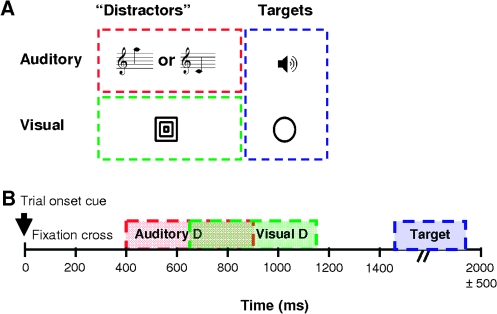
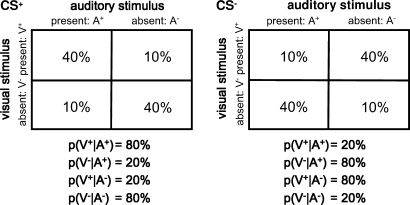
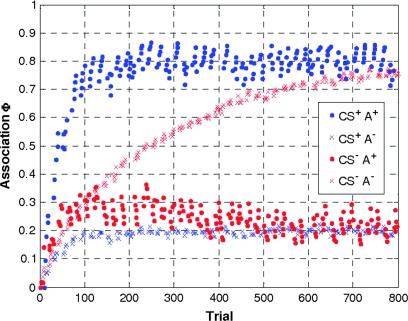
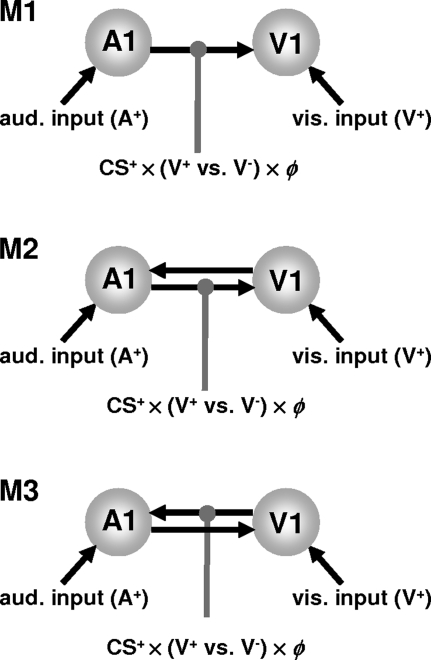
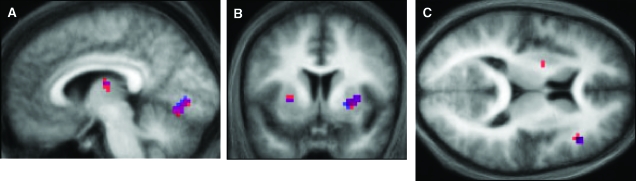
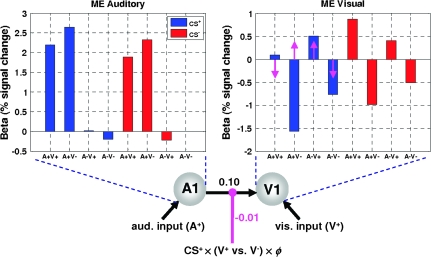
Confronted with a rich sensory environment, the brain must learn statistical regularities across sensory domains to construct causal models of the world. Here, we used functional magnetic resonance imaging and dynamic causal modeling (DCM) to furnish neurophysiological evidence that statistical associations are learnt, even when task-irrelevant. Subjects performed an audio-visual target-detection task while being exposed to distractor stimuli. Unknown to them, auditory distractors predicted the presence or absence of subsequent visual distractors. We modeled incidental learning of these associations using a Rescorla-Wagner (RW) model. Activity in primary visual cortex and putamen reflected learning-dependent surprise: these areas responded progressively more to unpredicted, and progressively less to predicted visual stimuli. Critically, this prediction-error response was observed even when the absence of a visual stimulus was surprising. We investigated the underlying mechanism by embedding the RW model into a DCM to show that auditory to visual connectivity changed significantly over time as a function of prediction error. Thus, consistent with predictive coding models of perception, associative learning is mediated by prediction-error dependent changes in connectivity. These results posit a dual role for prediction-error in encoding surprise and driving associative plasticity.
Overview
The claims and statistics of this paper haven’t been checked yet.
Free: it reads the open-access text and checks the first 5 claims that cite a source we can check. Create a free account to check every claim.
Integrity signals
Registry
Cites
Statistics
Figures
Verification
Claims the paper makes
The claims and statistics of this paper haven’t been checked yet.
Free: it reads the open-access text and checks the first 5 claims that cite a source we can check. Create a free account to check every claim.
Claims other papers make about this one
Each is checked against this paper’s own text: does it say what the citing paper says it does?
The source backs part of the claim, not all of it — or backs it for a different population, condition or comparison.
In the citing paper
“As with RS, ES has been consistently reported in human brain imaging studies across sensory modalities and noninvasive neural recording techniques 45 , 46 , 74 , 75 , 76 , 77 , 78 , 79 , 80 , 81 (but see Ref. 82)”
From Evaluating the neurophysiological evidence for predictive processing as a model of perception (2020) · cites this paper as [74]
Experimental — accuracy not yet measuredIn the citing paper
“These trial-wise prediction error estimates can be used as modulatory inputs in DCM, controlling changes in connection strength during learning (den Ouden et al., 2009).”
From Ten simple rules for dynamic causal modeling (2010) · cites this paper as den Ouden et al., 2009
Self-check
Percentages, sums and reported differences re-computed from the paper’s own numbers.
The self-check needs the paper’s full text.
Citations
Cites
Reinforcement Learning: An Introduction
Sutton, R. S., & Barto, A. G. (1998) · IEEE Transactions on Neural Networks · doi:10.1109/tnn.1998.712192 · Cited by 27,225 · cited 1×
“Cerebral Cortex May 2009;19:1175--1185 doi:10.1093/cercor/bhn161 Advance Access publication September 26, 2008”
InfluentialReinforcement Learning: An Introduction
(2005) · IEEE Transactions on Neural Networks · doi:10.1109/tnn.2004.842673 · Cited by 24,496
Rescorla, R. A. (1972) · Medical Entomology and Zoology · Cited by 9,661
A neural substrate of prediction and reward
Schultz, W., Dayan, P., & Montague, P. R. (1997) · Science · doi:10.1126/science.275.5306.1593 · Cited by 9,388 · cited 2×
“learning because they signal the need for learning in order to update predictions (Shanks 1995; Schultz et al. 1997; Schultz and Dickinson 2000).”
Rao, R. P. N., & Ballard, D. H. (1999) · Nature Neuroscience · doi:10.1038/4580 · Cited by 5,483 · cited 1×
“The total duration of the experiment was approximately 60 min per subject.”
Maldjian, J. A., Laurienti, P. J., Kraft, R. A., & Burdette, J. H. (2003) · NeuroImage · doi:10.1016/s1053-8119(03)00169-1 · Cited by 5,085 · cited 2×
“…the role of the striatum and the prefrontal cortex in associative learning (e.g., Fletcher et al. 2001; O’Doherty et al. 2004; Corlett et al. 2004), we performed an additional restricted search in these areas, using anatomical masks generated from the PickAtlas toolbox (Maldjian et al. 2003).”
Friston, K. J., Harrison, L., & Penny, W. (2003) · NeuroImage · doi:10.1016/s1053-8119(03)00202-7 · Cited by 4,583 · cited 7×
“These models were fitted separately to each subject’s data and compared using Bayesian model selection (Penny et al. 2004).”
InfluentialSelf-citationA theory of cortical responses.
Friston, K. (2005) · Philosophical Transactions of the Royal Society B: Biological Sciences · doi:10.1098/rstb.2005.1622 · Cited by 4,578 · cited 8×
“a general framework for perceptual inference and learning that is discussed in the next section (Friston 2005).”
InfluentialSelf-citationPredictive reward signal of dopamine neurons
Schultz, W. (1998) · Journal of Neurophysiology · doi:10.1152/jn.1998.80.1.1 · Cited by 4,564
Classical conditioning II: Current research and theory.
Black, A. H., & Prokasy, W. F. (1972) · Appleton-Century-Crofts eBooks · Cited by 4,449
Research works printed but not linked: 1
- Hebb DO The organisation of behaviour 1949 New York John Wiley
Cited by
Items 101–200 of 320
Encoding of predictable and unpredictable stimuli by inferior temporal cortical neurons
Kumar, S., Kaposvari, P., & Vogels, R. (2017) · Journal of Cognitive Neuroscience · doi:10.1162/jocn_a_01135 · Cited by 75
Short-Term Memory Affects Color Perception in Context
Olkkonen, M., & Allred, S. (2014) · PLoS ONE · doi:10.1371/journal.pone.0086488 · Cited by 80
“Furthermore, BOLD activation in early sensory networks has been found to be modulated by the use of prior information in perceptual decisions [48–50].”
BackgroundIndividual differences in nonverbal prediction and vocabulary size in infancy
Reuter, T., Emberson, L. L., Romberg, A. R., & Lew‐Williams, C. (2018) · Cognition · doi:10.1016/j.cognition.2018.03.006 · Cited by 74
The Development of Visual Areas Depends Differently on Visual Experience
Qin, W., Liu, Y., Jiang, T., & Yu, C. (2013) · PLoS ONE · doi:10.1371/journal.pone.0053784 · Cited by 72
“An alternative hypothesis is that the visual areas receive non-visual sensory information through corticocortical connections between these sensory modalities [45,84], which is supported by task-based fMRI studies [85,86], and a resting-state fMRI study [87] in sighted subjects, an effective connectivity study [63], a…”
BackgroundNeuroimaging of Cognition: Past, Present, and Future
Dolan, R. J. (2008) · Neuron · doi:10.1016/j.neuron.2008.10.038 · Cited by 79
TMS Over V5 Disrupts Motion Prediction
Vetter, P., Grosbras, M.-H., & Muckli, L. (2015) · Cerebral Cortex · doi:10.1093/cercor/bht297 · Cited by 66
Hughes, L. E., & Rowe, J. B. (2013) · Journal of Cognitive Neuroscience · doi:10.1162/jocn_a_00356 · Cited by 68
Violations of Core Knowledge Shape Early Learning
Stahl, A. E., & Feigenson, L. (2019) · Topics in Cognitive Science · doi:10.1111/tops.12389 · Cited by 55
Zelinski, E. L., Hong, N. S., Tyndall, A. V., Halsall, B., & McDonald, R. J. (2010) · Experimental Brain Research · doi:10.1007/s00221-010-2228-0 · Cited by 71
Task relevance modulates the behavioural and neural effects of sensory predictions
Auksztulewicz, R., Friston, K. J., & Nobre, A. C. (2017) · PLoS Biology · doi:10.1371/journal.pbio.2003143 · Cited by 71
Self-citationThe relationship between stimulus repetitions and fulfilled expectations
Grotheer, M., & Kovács, G. (2015) · Neuropsychologia · doi:10.1016/j.neuropsychologia.2014.12.017 · Cited by 63
Aitken, F., & Kok, P. (2022) · Nature Communications · doi:10.1038/s41467-022-31040-w · Cited by 69
Caudate Nucleus Signals for Breaches of Expectation in a Movement Observation Paradigm
Schiffer, A.-M., & Schubotz, R. I. (2011) · Frontiers in Human Neuroscience · doi:10.3389/fnhum.2011.00038 · Cited by 60
Stimulus repetition probability effects on repetition suppression are position invariant for faces
Kovács, G., Iffland, L., Vidnyánszky, Z., & Greenlee, M. W. (2012) · NeuroImage · doi:10.1016/j.neuroimage.2012.02.038 · Cited by 61
“Indeed, such effects have recently been described in V1, FFA and the hippocampus (den Ouden et al., 2009; Egner et al., 2010; Strange et al., 2005).”
Can expectation suppression be explained by reduced attention to predictable stimuli?
Alink, A., & Blank, H. (2021) · NeuroImage · doi:10.1016/j.neuroimage.2021.117824 · Cited by 66
Quek, G. L., & Rossion, B. (2017) · Neuropsychologia · doi:10.1016/j.neuropsychologia.2017.08.010 · Cited by 63
“…that task-irrelevant stimuli cannot entrain temporal expectations in participants - indeed, several studies have already documented this (e.g., den Ouden et al. 2009; Alink et al. 2010) - but that perhaps in order for temporal expectations to facilitate perceptual processing, the critical stimuli…”
Working Memory Load Modulates Neuronal Coupling
Pinotsis, D. A., Buschman, T. J., & Miller, E. K. (2018) · Cerebral Cortex · doi:10.1093/cercor/bhy065 · Cited by 61
Lao-Rodríguez, A. B., Przewrocki, K., Pérez‐González, D., Alishbayli, A., Yılmaz, E. O., Malmierca, M. S., & Englitz, B. (2023) · Science Advances · doi:10.1126/sciadv.abq8657 · Cited by 60
Why should any body have a self?
Hohwy, J., & Michael, J. (2017) · doi:10.31234/osf.io/fm4cr · Cited by 54
Queirazza, F., Fouragnan, E. F., Steele, J. D., Cavanagh, J., & Philiastides, M. G. (2019) · Science Advances · doi:10.1126/sciadv.aav4962 · Cited by 53
Model-based analyses: Promises, pitfalls, and example applications to the study of cognitive control
Mars, R. B., Shea, N. J., Kolling, N., & Rushworth, M. F. S. (2012) · Quarterly Journal of Experimental Psychology · doi:10.1080/17470211003668272 · Cited by 49
“For instance, model-based approaches have recently been applied to study trial-by-trial modulations in behaviour and neural activity during motor preparation (Bestmann et al, 2008 ), associative learning (Den Ouden, Friston, Daw, McIntosh, & Stephan, 2009 ), and social interactions (Behrens, Hunt, Woolrich, & Rushwort…”
Deficits in Top-Down Sensory Prediction in Infants At Risk due to Premature Birth
Emberson, L. L., Boldin, A. M., Riccio, J. E., Guillet, R., & Aslin, R. Ν. (2017) · Current Biology · doi:10.1016/j.cub.2016.12.028 · Cited by 54
Combining fMRI and behavioral measures to examine the process of human learning
Karuza, E. A., Emberson, L. L., & Aslin, R. N. (2014) · Neurobiology of Learning and Memory · doi:10.1016/j.nlm.2013.09.012 · Cited by 50
“While den Ouden et al. (2009) employed the R–”
InfluentialBrain Systems for Probabilistic and Dynamic Prediction: Computational Specificity and Integration
O'Reilly, J. X., Jbabdi, S., Rushworth, M. F. S., & Behrens, T. E. J. (2013) · PLoS Biology · doi:10.1371/journal.pbio.1001662 · Cited by 48
Effects of prior information on decoding degraded speech: An fMRI study
Clos, M., Langner, R., Meyer, M. E., Oechslin, M. S., Zilles, K., & Eickhoff, S. B. (2012) · Human Brain Mapping · doi:10.1002/hbm.22151 · Cited by 52
“…has been observed in visual processing [e.g., Hosoya et al., 2005; Sharma et al., 2003; Summerfield et al., 2006], in tactilo-motor interactions [Blakemore et al., 1998], in motor preparation [Jakobs et al., 2009] and in audiovisual perception [Arnal et al., 2011; den Ouden et al., 2009, 2010].”
BackgroundHuman orbitofrontal cortex signals decision outcomes to sensory cortex during behavioral adaptations
Wang, B., Veismann, M., Banerjee, A., & Pleger, B. (2023) · Nature Communications · doi:10.1038/s41467-023-38671-7 · Cited by 59
Prediction in infants and adults: A pupillometry study
Zhang, F., Jaffe‐Dax, S., Wilson, R. C., & Emberson, L. L. (2018) · Developmental Science · doi:10.1111/desc.12780 · Cited by 48
Learning Predictive Statistics: Strategies and Brain Mechanisms
Wang, R., Shen, Y., Tiňo, P., Welchman, A. E., & Kourtzi, Z. (2017) · Journal of Neuroscience · doi:10.1523/jneurosci.0144-17.2017 · Cited by 54
“This decreased signals can be understood in the context of repetition suppression previously observed for predictable events (Raichle et al., 1994; den Ouden et al., 2009; Summerfield and Egner, 2009; Alink et al., 2010; Kok et al., 2012).”
BackgroundThe sound of beauty: How complexity determines aesthetic preference
Delplanque, J., Loof, E. D., Janssens, C., & Verguts, T. (2018) · Acta Psychologica · doi:10.1016/j.actpsy.2018.11.011 · Cited by 50
Neural Pathways Conveying Novisual Information to the Visual Cortex
Qin, W., & Yu, C. (2013) · Neural Plasticity · doi:10.1155/2013/864920 · Cited by 49
Agustus, J. L., Ruff, C. C., & Driver, J. (2011) · Human Brain Mapping · doi:10.1002/hbm.21278 · Cited by 48
“…of perception [see Dayan et al., 1995; Friston, 2005; Helmholtz, 1860; Mumford, 1992; Rao, 1999] which emphasizes that predictable stimuli may be processed differently from unpredictable ones [e.g., den Ouden et al., 2009; Furl et al., 2010; Overath et al., 2007; Summerfield and Koechlin, 2008].”
BackgroundExpectation Suppression in Early Visual Cortex Depends on Task Set
St. John-Saaltink, E., Utzerath, C., Kok, P., Lau, H. C., & de Lange, F. P. (2015) · PLOS ONE · doi:10.1371/journal.pone.0131172 · Cited by 43
“This effect has been found in visual [1, 3, 4] and auditory [5, 6] cortices, and in both electrophysiological [1, 5] and haemodynamic [3, 4, 7] measurements.”
BackgroundFeuerriegel, D., Churches, O. F., Coussens, S. W., & Keage, H. A. D. (2017) · NeuroImage · doi:10.1016/j.neuroimage.2017.12.029 · Cited by 44
“Expected stimuli evoke smaller BOLD signals in FFA than surprising stimuli (Den Ouden et al., 2009; Egner et al., 2010), and so larger repetition effects in high repetition probability blocks are likely a result of additive effects of stimulus repetition and stimulus expectation.”
BackgroundAuditory hallucinations: Expectation–perception model
Nazimek, J. M., Hunter, M. D., & Woodruff, P. W. R. (2012) · Medical Hypotheses · doi:10.1016/j.mehy.2012.03.014 · Cited by 41
“Processing of prediction error signal requires changes in connectivity between brain regions [48], as well as formation of new neuronal pathways, mediated by NMDA receptors [49].”
BackgroundGenerative models for clinical applications in computational psychiatry
Frässle, S., Yao, Y., Schöbi, D., Aponte, E. A., Heinzle, J., & Stephan, K. E. (2018) · WIREs Cognitive Science · doi:10.1002/wcs.1460 · Cited by 38
Self-citationChan, E., Baumann, O., Bellgrove, M. A., & Mattingley, J. B. (2014) · Journal of Cognitive Neuroscience · doi:10.1162/jocn_a_00468 · Cited by 43
Changes in corticostriatal connectivity during reinforcement learning in humans
Horga, G., Maia, T. V., Marsh, R., Hao, X., Xu, D., Duan, Y., Tau, G. Z., Graniello, B., Wang, Z., Kangarlu, A., et al. (2015) · Human Brain Mapping · doi:10.1002/hbm.22665 · Cited by 43
“…assess changes in striatal connectivity as participants learn the relational association between pairs of stimuli (S-S learning) [den Ouden et al., 2010; den Ouden et al., 2009; Wimmer et al., 2012], but none have assessed such changes as a function of S-R learning or other forms of RL.”
BackgroundNeural Correlates of the Divergence of Instrumental Probability Distributions
Liljeholm, M., Wang, S., Zhang, J., & O'Doherty, J. P. (2013) · Journal of Neuroscience · doi:10.1523/jneurosci.1353-13.2013 · Cited by 39
Preference for Audiovisual Speech Congruency in Superior Temporal Cortex
Lüttke, C. S., Ekman, M., van Gerven, M. A. J., & de Lange, F. P. (2016) · Journal of Cognitive Neuroscience · doi:10.1162/jocn_a_00874 · Cited by 39
Of Kith and Kin: Perceptual Enrichment, Expectancy, and Reciprocity in Face Perception
Correll, J., Hudson, S. M., Guillermo, S., & Earls, H. A. (2016) · Personality and Social Psychology Review · doi:10.1177/1088868316657250 · Cited by 41
Prediction error boosts retention of novel words in adults but not in children
Gambi, C., Pickering, M. J., & Rabagliati, H. (2021) · Cognition · doi:10.1016/j.cognition.2021.104650 · Cited by 39
Grounding predictive coding models in empirical neuroscience research
Egner, T., & Summerfield, C. (2013) · Behavioral and Brain Sciences · doi:10.1017/s0140525x1200218x · Cited by 36
Visual Prediction Error Spreads Across Object Features in Human Visual Cortex
Jiang, J., Summerfield, C., & Egner, T. (2016) · Journal of Neuroscience · doi:10.1523/jneurosci.1546-16.2016 · Cited by 37
“Similarly, conditionally less probable (i.e., unexpected) stimuli appear to require more extensive neural processing in sensory cortex than more probable (expected) ones (Summerfield et al., 2008; den Ouden et al., 2009; Alink et al., 2010; Egner et al., 2010; Meyer and Olson, 2011).”
BackgroundComputational Neuropsychiatry – Schizophrenia as a Cognitive Brain Network Disorder
Dauvermann, M. R., Whalley, H. C., Schmidt, A., Lee, G. L., Romaniuk, L., Roberts, N., Johnstone, E. C., Lawrie, S. M., & Moorhead, T. W. J. (2014) · Frontiers in Psychiatry · doi:10.3389/fpsyt.2014.00030 · Cited by 43
Temporal prediction errors modulate cingulate–insular coupling
Limongi, R., Sutherland, S. C., Zhu, J. M., Young, M. E., & Habib, R. (2013) · NeuroImage · doi:10.1016/j.neuroimage.2012.12.078 · Cited by 36
“Only two other DCM studies have reported the modulatory properties of prediction errors (den Ouden et al., 2009; den Ouden et al., 2010) in learning conditions.”
The Timing of Reward-Seeking Action Tracks Visually Cued Theta Oscillations in Primary Visual Cortex
Levy, J. M., Zold, C. L., Namboodiri, V. M. K., & Shuler, M. G. H. (2017) · Journal of Neuroscience · doi:10.1523/jneurosci.0923-17.2017 · Cited by 35
“…by recent work suggesting that V1 can actively generate predictions about visual input (Murray et al., 2002; Summerfield et al., 2008; den Ouden et al., 2009; Alink et al., 2010; Kok et al., 2012) and can be influenced by behavioral variables such as attentional states (Ahissar and…”
BackgroundThe role of prediction and outcomes in adaptive cognitive control
Schiffer, A., Waszak, F., & Yeung, N. (2015) · Journal of Physiology-Paris · doi:10.1016/j.jphysparis.2015.02.001 · Cited by 37
“…investigating 457 prediction errors in perception have yielded evidence that the striatum codes for the 458 unexpectedness of events per se (den Ouden et al., 2009; Grahn, Parkinson, and Owen, 2008; 459 Grahn and Rowe, 2013; Schiffer and Schubotz, 2011; Schiffer et al., 2012; Seger et al.,…”
BackgroundPredictions through evidence accumulation over time
Darriba, Á., & Waszak, F. (2018) · Scientific Reports · doi:10.1038/s41598-017-18802-z · Cited by 33
“PE can be estimated by calculating surprise, a measure of the uncertainty of an event 38 .”
Neural Substrates and Models of Omission Responses and Predictive Processes
Braga, A., & Schönwiesner, M. (2022) · Frontiers in Neural Circuits · doi:10.3389/fncir.2022.799581 · Cited by 34
“…and when other sensory-sensory associations, unimodal or multimodal, are established and one of the stimuli is withheld (Figures 3C,D; McIntosh et al., 1998; Hughes et al., 2001; Bendixen et al., 2009; den Ouden et al., 2009; Stekelenburg and Vroomen, 2015; van Laarhoven et al., 2017, 2020).”
BackgroundInfluentialLearning enhances encoding of time and temporal surprise in mouse primary sensory cortex
Rabinovich, R. J., Kato, D. D., & Bruno, R. M. (2022) · Nature Communications · doi:10.1038/s41467-022-33141-y · Cited by 34
Expectancy and surprise predict neural and behavioral measures of attention to threatening stimuli
Browning, M. D., & Harmer, C. J. (2011) · NeuroImage · doi:10.1016/j.neuroimage.2011.09.007 · Cited by 32
Bratec, S. M., Xie, X., Schmid, G., Doll, A., Schilbach, L., Zimmer, C., Wohlschläger, A. M., Riedl, V., & Sorg, C. (2015) · NeuroImage · doi:10.1016/j.neuroimage.2015.08.038 · Cited by 32
“The mean best-fit learning rate across participants and conditionswas 0.054 (SD=0.031), which is consistent with previous studies (Gläscher and Büchel, 2005; den Ouden et al., 2009).”
InfluentialGlobal features of functional brain networks change with contextual disorder
Andric, M., & Hasson, U. (2015) · NeuroImage · doi:10.1016/j.neuroimage.2015.05.025 · Cited by 28
“In fact, connectivity changes in striate and visual cortex have been linked to associative learning of cue-target predictability (den Ouden et al., 2009, 2010).”
Interactions between space and effectiveness in human multisensory performance
Nidiffer, A. R., Stevenson, R. A., Fister, J. K., Barnett, Z. P., & Wallace, M. T. (2016) · Neuropsychologia · doi:10.1016/j.neuropsychologia.2016.01.031 · Cited by 32
“…Wallace et al., 2006; Wallace and Stein, 1997) and is highly susceptible to the statistics of our perceptual environment (Baier et al., 2006; den Ouden et al., 2009; McIntosh and Gonzalez-Lima, 1998) throughout development (Carriere et al., 2007; Polley et al., 2008; Wallace et al., 2004;…”
BackgroundExpectancy Violation Drives Memory Boost for Stressful Events
Kalbe, F., Bange, S., Lutz, A., & Schwabe, L. (2020) · Psychological Science · doi:10.1177/0956797620958650 · Cited by 28
Pavlovian safety learning: An integrative theoretical review
Laing, P. A. F., Vervliet, B., Dunsmoor, J. E., & Harrison, B. J. (2024) · Psychonomic Bulletin & Review · doi:10.3758/s13423-024-02559-4 · Cited by 32
“The role of prediction error in learning can be restated as the gradual minimization of surprisingness or uncertainty (Baetu & Baker, 2016; den Ouden et al., 2009; Friston, 2010).”
Huang, Q., Velthuis, H., Pereira, A. C., Ahmad, J., Cooke, S. F., Ellis, C. L., Ponteduro, F. M., Puts, N. A. J., Dimitrov, M., Batallé, D., et al. (2023) · Translational Psychiatry · doi:10.1038/s41398-023-02619-8 · Cited by 32
The effect of task complexity on the neural network for response inhibition: An ALE meta-analysis
Aziz-Safaie, T., Müller, V. I., Langner, R., Eickhoff, S. B., & Cieslik, E. C. (2024) · Neuroscience & Biobehavioral Reviews · doi:10.1016/j.neubiorev.2024.105544 · Cited by 28
“…plays a critical role in the prediction of stimuli or targets especially in uncertain situations and thus also reflect predictions errors, which may result in the optimization and learning of the S-R association involved in the response selection process (Ouden et al., 2009; Sommer et al., 2016).”
BackgroundAnosognosia for hemianaesthesia: A voxel-based lesion-symptom mapping study
Pia, L., Spinazzola, L., Garbarini, F., Bellan, G., Piedimonte, A., Fossataro, C., Livelli, A., Burin, D., & Berti, A. (2014) · Cortex · doi:10.1016/j.cortex.2014.08.006 · Cited by 29
Human preferences are biased towards associative information
Trapp, S., Shenhav, A., Bitzer, S., & Bar, M. (2014) · Cognition & Emotion · doi:10.1080/02699931.2014.966064 · Cited by 28
Cross-modal prediction changes the timing of conscious access during the motion-induced blindness
Chang, A. Y.-C., Kanai, R., & Seth, A. K. (2015) · Consciousness and Cognition · doi:10.1016/j.concog.2014.11.005 · Cited by 25
Prior probability modulates anticipatory activity in category-specific areas
Trapp, S., Lepsien, J., Kotz, S. A., & Bar, M. (2016) · Cognitive, Affective, & Behavioral Neuroscience · doi:10.3758/s13415-015-0373-4 · Cited by 24
Transfer of Predictive Signals Across Saccades
Vetter, P., Edwards, G., & Muckli, L. (2012) · Frontiers in Psychology · doi:10.3389/fpsyg.2012.00176 · Cited by 24
Eickhoff, S. B., Pomjanski, W., Jakobs, O., Zilles, K., & Langner, R. (2011) · Cerebral Cortex · doi:10.1093/cercor/bhq188 · Cited by 24
“These conclusions match recent results by Den Ouden et al. (2009), who reported that the putamen is”
ResultAdditive and interactive effects of spatial attention and expectation on perceptual decisions
Zuanazzi, A., & Noppeney, U. (2018) · Scientific Reports · doi:10.1038/s41598-018-24703-6 · Cited by 25
Surprise beyond prediction error
Chumbley, J. R., Burke, C. J., Stephan, K. E., Friston, K. J., Tobler, P. N., & Fehr, E. (2014) · Human Brain Mapping · doi:10.1002/hbm.22513 · Cited by 23
“Our data may also cast light on earlier studies that showed PEs modulate visual cortex responses and its connectivity during associative learning (den Ouden et al., 2009, 2010; Summerfield and Koechlin, 2008; Summerfield et al., 2008”
ResultSelf-citationBlank, H., & Bayer, J. (2022) · Communications Biology · doi:10.1038/s42003-022-03858-z · Cited by 23
Davis, B., & Hasson, U. (2016) · NeuroImage · doi:10.1016/j.neuroimage.2016.06.001 · Cited by 25
“…saliency effects, as seen e.g., in the oddball vs. standard contrast, are localized in quite different areas (ventral attentional networks), which involves the SMG bilaterally and anterior insula (see, Downar et al., 2002, for findings in different modalities, and Kim, 2014, for meta-analysis).”
Perception of invisible masked objects in early infancy
Nakashima, Y., Kanazawa, S., & Yamaguchi, M. K. (2021) · Proceedings of the National Academy of Sciences · doi:10.1073/pnas.2103040118 · Cited by 24
“Moreover, association learning tasks may be related to the subcortical pathways (43).”
BackgroundEye movements and imitation learning: Intentional disruption of expectation
Maryott, J., Noyce, A., & Sekuler, R. (2011) · Journal of Vision · doi:10.1167/11.1.7 · Cited by 22
Disrupted reinforcement learning during post-error slowing in ADHD
Chevrier, A., Bhaijiwala, M., Lipszyc, J., Cheyne, D., Graham, S., & Schachar, R. (2019) · PLOS ONE · doi:10.1371/journal.pone.0206780 · Cited by 21
Overlapping multivoxel patterns for two levels of visual expectation
de Gardelle, V., Stokes, M., Johnen, V. M., Wyart, V., & Summerfield, C. (2013) · Frontiers in Human Neuroscience · doi:10.3389/fnhum.2013.00158 · Cited by 21
Boldin, A. M., Geiger, R., & Emberson, L. L. (2018) · Developmental Psychobiology · doi:10.1002/dev.21624 · Cited by 22
“lobe in Kersey and Emberson (2016), we hypothesized that theremight be more subtle relationships between learning in the temporal and frontal lobes and the visual omission response.”
BackgroundMethodResultInfluentialAgent-specific learning signals for self–other distinction during mentalising
Ereira, S., Dolan, R. J., & Kurth-Nelson, Z. L. (2018) · PLoS Biology · doi:10.1371/journal.pbio.2004752 · Cited by 24
Spatial and Temporal Context Jointly Modulate the Sensory Response within the Ventral Visual Stream
He, T., Richter, D., Wang, Z., & de Lange, F. P. (2022) · Journal of Cognitive Neuroscience · doi:10.1162/jocn_a_01792 · Cited by 22
“…a phenomenon previously described in terms of suppressed sensory responses to stimuli expected by virtue of their temporal context; i.e., a leading image predicting the identity of a trailing image (den Ouden et al., 2009; Meyer and Olson, 2011; Richter et al., 2018; Richter and de Lange, 2019).”
BackgroundNatural forgetting reversibly modulates engram expressionPreprint
O’Leary, J. D., Bruckner, R., Autore, L., & Ryan, T. J. (2024) · eLife · doi:10.7554/elife.92860 · Cited by 25
“…to update or forget irrelevant information, adaptability would be impaired with frequent instances of correct but outdated memory recall, and a subsequently biased behavioral response ( Cowan et al., 2021 ; Eliassen et al., 2007 ; Marvin and Shohamy, 2016 ; Den Ouden et al., 2009 ; Miller, 2021 ).”
BackgroundNAHUM, L. H., Simon, S. R., Sander, D., Lazeyras, F., & Schnider, A. (2009) · Cortex · doi:10.1016/j.cortex.2009.11.007 · Cited by 21
Neural basis of auditory expectation within temporal cortex
Nazimek, J. M., Hunter, M. D., Hoskin, R., Wilkinson, I. D., & Woodruff, P. W. R. (2013) · Neuropsychologia · doi:10.1016/j.neuropsychologia.2013.07.019 · Cited by 24
Semantic congruence affects hippocampal response to repetition of visual associations
McAndrews, M. P., Girard, T. A., Wilkins, L. K., & McCormick, C. (2016) · Neuropsychologia · doi:10.1016/j.neuropsychologia.2016.07.026 · Cited by 22
Outcome valence and stimulus frequency affect neural responses to rewards and punishments
Glazer, J. E., & Nusslock, R. (2021) · Psychophysiology · doi:10.1111/psyp.13981 · Cited by 19
“Unlike RPEs, SPEs signal the size of unexpected outcomes independent of outcome valence and may display sensitivity for favorable or unfavorable feedback depending on which is more salient in the experimental context (Den Ouden et al., 2009; Lammel et al., 2011; Matsumoto & Hikosaka, 2009).”
Increased functional activity, bottom-up and intrinsic effective connectivity in autism
Randeniya, R., Vilares, I., Mattingley, J. B., & Garrido, M. I. (2022) · NeuroImage Clinical · doi:10.1016/j.nicl.2022.103293 · Cited by 21
Revisiting the effective connectivity within the distributed cortical network for face perception
Kessler, R., Rusch, K. M., Wende, K. C., Schuster, V., & Jansen, A. (2021) · Neuroimage Reports · doi:10.1016/j.ynirp.2021.100045 · Cited by 22
“This iterative process is described on a microscopic scale (Bastos et al., 2012) within the early visual hierarchy (Rao and Ballard, 1999) and on a macroscopic scale in the context of DCM (Chen et al., 2009; Den Ouden et al., 2009).”
A Computational Role for Top–Down Modulation from Frontal Cortex in Infancy
Jaffe‐Dax, S., Boldin, A. M., Daw, N. D., & Emberson, L. L. (2019) · Journal of Cognitive Neuroscience · doi:10.1162/jocn_a_01497 · Cited by 19
Self-citationPredictions and Incongruency in Object Recognition: A Cognitive Neuroscience Perspective
Yardley, H., PERLOVSKY, L. I., & Bar, M. (2011) · Studies in computational intelligence · doi:10.1007/978-3-642-24034-8_12 · Cited by 22
“vides one of the prime sources for learning [87,24].”
BackgroundChen, A., Zeng, F., DeAngelis, G. C., & Angelaki, D. E. (2021) · Journal of Neuroscience · doi:10.1523/jneurosci.2275-20.2021 · Cited by 18
“…is repeatedly processed to update the prediction signal until the error signal reaches zero, which corresponds with achieving a perceptual result (Murray et al., 2002; den Ouden et al., 2009; Alink et al., 2010; Meyer and Olson, 2011; Todorovic et al., 2011; Kok et al., 2012; Gordon et al., 2017).”
BackgroundFeuerriegel, D., Keage, H. A. D., Rossion, B., & Quek, G. L. (2018) · Biological Psychology · doi:10.1016/j.biopsycho.2018.09.002 · Cited by 21
The Intricate Interplay of Spatial Attention and Expectation: a Multisensory Perspective
Zuanazzi, A., & Noppeney, U. (2020) · Multisensory Research · doi:10.1163/22134808-20201482 · Cited by 20
Sharpening of Hierarchical Visual Feature Representations of Blurred Images
Abdelhack, M., & Kamitani, Y. (2018) · eNeuro · doi:10.1523/eneuro.0443-17.2018 · Cited by 21
“…processed to update the prediction signal until the error signal reaches zero, which corresponds with achieving a perceptual result (Murray et al., 2002; den Ouden et al., 2009, 2012; Alink et al., 2010; Meyer and Olson, 2011; Todorovic et al., 2011; Kok et al., 2012; Gordon et al., 2017).”
BackgroundPredictability Changes What We Remember in Familiar Temporal Contexts
Kim, H., Schlichting, M. L., Preston, A. R., & Lewis‐Peacock, J. A. (2020) · Journal of Cognitive Neuroscience · doi:10.1162/jocn_a_01473 · Cited by 17
“That is, over time the brain should adapt to the predictability (Brown and Braver, 2005; den Ouden et al., 2009) of these category exemplars and as a result build expectations about categories rather than items.”
BackgroundTracking the Emergence of Location-based Spatial Representations in Human Scene-Selective Cortex
Berens, S. C., Joensen, B. H., & Horner, A. J. (2020) · Journal of Cognitive Neuroscience · doi:10.1162/jocn_a_01654 · Cited by 17
Park, J., Kim, S., Kim, H. R., & Lee, J. (2023) · Science Advances · doi:10.1126/sciadv.adg4156 · Cited by 16
A Dynamic Affective Core to Bind the Contents, Context, and Value of Conscious Experience
Kishida, K. T., & Sands, L. P. (2021) · Springer eBooks · doi:10.1007/978-3-030-82965-0_12 · Cited by 17
Blank, H., Alink, A., & Büchel, C. (2023) · Communications Biology · doi:10.1038/s42003-023-04508-8 · Cited by 16
Predictive coding in a multisensory path integration task: An fMRI study
Krala, M., van Kemenade, B. M., Straube, B., Kircher, T. T. J., & Bremmer, F. (2019) · Journal of Vision · doi:10.1167/19.11.13 · Cited by 16
Touch anticipation mediates cross-modal Hebbian plasticity in the primary somatosensory cortex
Maddaluno, O., Guidali, G., Zazio, A., Miniussi, C., & Bolognini, N. (2020) · Cortex · doi:10.1016/j.cortex.2020.01.008 · Cited by 15
Reuter, T., Mazzei, C., Lew‐Williams, C., & Emberson, L. L. (2023) · Infancy · doi:10.1111/infa.12534 · Cited by 15
Why Should Any Body Have a Self?
(2017) · The MIT Press eBooks · doi:10.7551/mitpress/10462.003.0020 · Cited by 16
Functional Magnetic Resonance Imaging (fMRI)
Bick, A. S., Levin, N., & Goelman, G. (2014) · Elsevier eBooks · doi:10.1016/b978-0-444-53632-7.00305-1 · Cited by 15
Unsigned value prediction-error modulates the motor system in absence of choice
Vassena, E., Cobbaert, S., Andres, M., Fias, W., & Verguts, T. (2015) · NeuroImage · doi:10.1016/j.neuroimage.2015.07.081 · Cited by 16
Tanaka, Y., Kanakogi, Y., Kawasaki, M., & Myowa, M. (2017) · Developmental Cognitive Neuroscience · doi:10.1016/j.dcn.2017.12.001 · Cited by 18
Metadata
- Authors
- den Ouden, H. E. M., Friston, K. J., Daw, N. D., McIntosh, A. R., & Stephan, K. E.
- Affiliations
- Wellcome Centre for Human Neuroimaging (GB)
- New York University (US)
- University of Toronto (CA)
- Venue
- Cerebral Cortex
- Publisher
- Oxford University Press (OUP)
- Published
- 2008-09-26
- Volume
- 19
- Issue
- 5
- Pages
- 1175-1185
- ISSN
- 1047-3211 (ISSN-L)
- 1460-2199
- PMC
- PMC2665159
- OpenAlex
- W2125055052
- Cited by
- 306
- References
- 69
- Citations by year
- 2026: 10 · 2025: 11 · 2024: 9 · 2023: 14 · 2022: 13 · 2021: 15 · 2020: 16 · 2019: 18 · 2018: 21 · 2017: 26 · 2016: 24 · 2015: 19 · 2014: 19 · 2013: 25 · 2012: 20
- FWCI
- 20.90
- Type
- journal article
- Language
- en
- Open access
- hybrid
- doi.org
- Licence
- cc-by-nc
- Locations
- Cerebral Cortex (publishedVersion, cc-by-nc)
- Europe PMC (PubMed Central) (publishedVersion, cc-by-nc)
- PubMed Central (publishedVersion, cc-by-nc)
- PubMed (publishedVersion)
- Zurich Open Repository and Archive (University of Zurich) (acceptedVersion, other-oa)
- reroDoc Digital Library (submittedVersion)
- Radboud Repository (Radboud University) (submittedVersion)
- UCL Discovery (University College London) (submittedVersion)
- Zurich Open Repository and Archive (University of Zurich) (submittedVersion, other-oa)
- Radboud Repository (Radboud University) (submittedVersion, other-oa)
- Zurich Open Repository and Archive (University of Zurich)
- Funders
- Wellcome Trust (078047/ZS/04/Z, 0856780/Z/99/B, 078047, 088130)
- Universität Zürich
- Topics
- Social Sciences › Psychology › Experimental and Cognitive Psychology › Multisensory perception and integration
- Life Sciences › Neuroscience › Cognitive Neuroscience › Visual perception and processing mechanisms
- Life Sciences › Neuroscience › Cognitive Neuroscience › Memory and Neural Mechanisms
- Keywords
- prediction error, associative learning, incidental learning, surprise, Rescorla-Wagner model, predictive coding, dynamic causal modeling, auditory-visual association, primary visual cortex, putamen, associative plasticity, statistical learning
- MeSH terms
- Acoustic Stimulation, Adult, Association Learning, Cognition, Conditioning, Psychological, Female, Humans, Magnetic Resonance Imaging, Male, Models, Neurological, Neuronal Plasticity, Photic Stimulation, Young Adult
About these checks
Registry, retraction, Cites and statistics results are computed, not judged, with one exception: a printed reference that no index lists is read once by a model before it counts as a citation error. Claims are extracted by a model and kept only when their quote appears verbatim in the text; each cited source is then checked, with a model’s help, for whether it says what the claim relies on. Those verdicts can be wrong — read the claim’s quote and the cited source before relying on one.
Statistics and arithmetic are recomputed, not judged.
Confidence bands are shown only for fields calibrated on our annotated test set. None is calibrated yet, so no band is shown.
What counts as a claim ›How we measure confidence ›How we check this ›
Are you an author, or do you see a problem with this page? Request a review
Data sources
Bibliographic data: Semantic Scholar, OpenAlex, Crossref.
Contains information from the Semantic Scholar Academic Graph Datasets, made available under the ODC Attribution License (ODC-BY 1.0).
Semantic Scholar’s data is described in: Kinney, R., et al. (2023). The Semantic Scholar Open Data Platform. arXiv:2301.10140.
