

A Dual Role for Prediction Error in Associative Learning
Open accessThe DOI matches its Crossref record; 68 of the 69 references it cites were found in a registry or an index.
Abstract
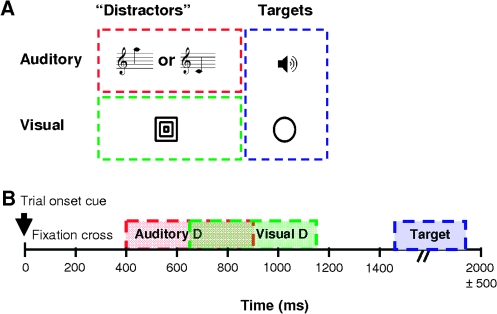
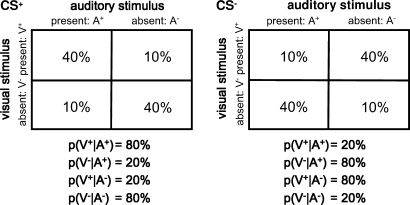
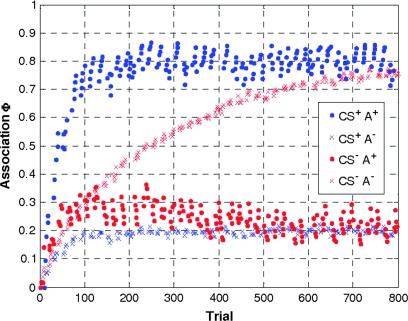
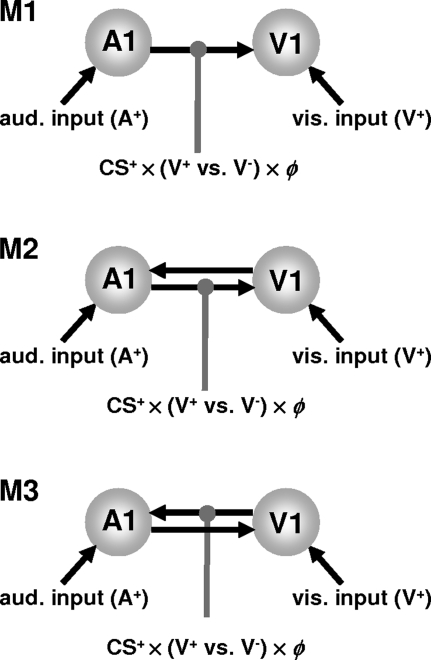
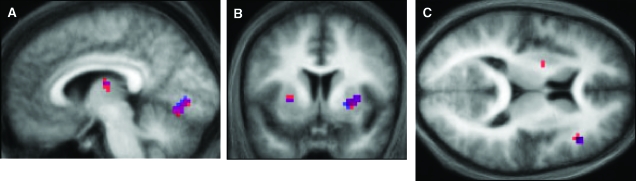
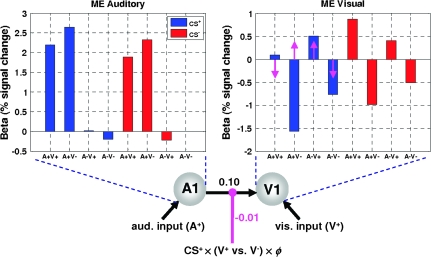
Confronted with a rich sensory environment, the brain must learn statistical regularities across sensory domains to construct causal models of the world. Here, we used functional magnetic resonance imaging and dynamic causal modeling (DCM) to furnish neurophysiological evidence that statistical associations are learnt, even when task-irrelevant. Subjects performed an audio-visual target-detection task while being exposed to distractor stimuli. Unknown to them, auditory distractors predicted the presence or absence of subsequent visual distractors. We modeled incidental learning of these associations using a Rescorla-Wagner (RW) model. Activity in primary visual cortex and putamen reflected learning-dependent surprise: these areas responded progressively more to unpredicted, and progressively less to predicted visual stimuli. Critically, this prediction-error response was observed even when the absence of a visual stimulus was surprising. We investigated the underlying mechanism by embedding the RW model into a DCM to show that auditory to visual connectivity changed significantly over time as a function of prediction error. Thus, consistent with predictive coding models of perception, associative learning is mediated by prediction-error dependent changes in connectivity. These results posit a dual role for prediction-error in encoding surprise and driving associative plasticity.
Overview
The claims and statistics of this paper haven’t been checked yet.
Free: it reads the open-access text and checks the first 5 claims that cite a source we can check. Create a free account to check every claim.
Integrity signals
Registry
Cites
Statistics
Figures
Verification
Claims the paper makes
The claims and statistics of this paper haven’t been checked yet.
Free: it reads the open-access text and checks the first 5 claims that cite a source we can check. Create a free account to check every claim.
Claims other papers make about this one
Each is checked against this paper’s own text: does it say what the citing paper says it does?
The source backs part of the claim, not all of it — or backs it for a different population, condition or comparison.
In the citing paper
“As with RS, ES has been consistently reported in human brain imaging studies across sensory modalities and noninvasive neural recording techniques 45 , 46 , 74 , 75 , 76 , 77 , 78 , 79 , 80 , 81 (but see Ref. 82)”
From Evaluating the neurophysiological evidence for predictive processing as a model of perception (2020) · cites this paper as [74]
Experimental — accuracy not yet measuredIn the citing paper
“These trial-wise prediction error estimates can be used as modulatory inputs in DCM, controlling changes in connection strength during learning (den Ouden et al., 2009).”
From Ten simple rules for dynamic causal modeling (2010) · cites this paper as den Ouden et al., 2009
Self-check
Percentages, sums and reported differences re-computed from the paper’s own numbers.
The self-check needs the paper’s full text.
Citations
Cites
Reinforcement Learning: An Introduction
Sutton, R. S., & Barto, A. G. (1998) · IEEE Transactions on Neural Networks · doi:10.1109/tnn.1998.712192 · Cited by 27,225 · cited 1×
“Cerebral Cortex May 2009;19:1175--1185 doi:10.1093/cercor/bhn161 Advance Access publication September 26, 2008”
InfluentialReinforcement Learning: An Introduction
(2005) · IEEE Transactions on Neural Networks · doi:10.1109/tnn.2004.842673 · Cited by 24,496
Rescorla, R. A. (1972) · Medical Entomology and Zoology · Cited by 9,661
A neural substrate of prediction and reward
Schultz, W., Dayan, P., & Montague, P. R. (1997) · Science · doi:10.1126/science.275.5306.1593 · Cited by 9,388 · cited 2×
“learning because they signal the need for learning in order to update predictions (Shanks 1995; Schultz et al. 1997; Schultz and Dickinson 2000).”
Rao, R. P. N., & Ballard, D. H. (1999) · Nature Neuroscience · doi:10.1038/4580 · Cited by 5,483 · cited 1×
“The total duration of the experiment was approximately 60 min per subject.”
Maldjian, J. A., Laurienti, P. J., Kraft, R. A., & Burdette, J. H. (2003) · NeuroImage · doi:10.1016/s1053-8119(03)00169-1 · Cited by 5,085 · cited 2×
“…the role of the striatum and the prefrontal cortex in associative learning (e.g., Fletcher et al. 2001; O’Doherty et al. 2004; Corlett et al. 2004), we performed an additional restricted search in these areas, using anatomical masks generated from the PickAtlas toolbox (Maldjian et al. 2003).”
Friston, K. J., Harrison, L., & Penny, W. (2003) · NeuroImage · doi:10.1016/s1053-8119(03)00202-7 · Cited by 4,583 · cited 7×
“These models were fitted separately to each subject’s data and compared using Bayesian model selection (Penny et al. 2004).”
InfluentialSelf-citationA theory of cortical responses.
Friston, K. (2005) · Philosophical Transactions of the Royal Society B: Biological Sciences · doi:10.1098/rstb.2005.1622 · Cited by 4,578 · cited 8×
“a general framework for perceptual inference and learning that is discussed in the next section (Friston 2005).”
InfluentialSelf-citationPredictive reward signal of dopamine neurons
Schultz, W. (1998) · Journal of Neurophysiology · doi:10.1152/jn.1998.80.1.1 · Cited by 4,564
Classical conditioning II: Current research and theory.
Black, A. H., & Prokasy, W. F. (1972) · Appleton-Century-Crofts eBooks · Cited by 4,449
Research works printed but not linked: 1
- Hebb DO The organisation of behaviour 1949 New York John Wiley
Cited by
Dysconnection in schizophrenia: from abnormal synaptic plasticity to failures of self-monitoring
Stephan, K. E., Friston, K. J., & Frith, C. D. (2009) · Schizophrenia Bulletin · doi:10.1093/schbul/sbn176 · Cited by 1,134
Self-citationExpectation (and attention) in visual cognition
Summerfield, C., & Egner, T. (2009) · Trends in Cognitive Sciences · doi:10.1016/j.tics.2009.06.003 · Cited by 950
Expectation in perceptual decision making: neural and computational mechanisms
Summerfield, C., & de Lange, F. P. (2014) · Nature Reviews Neuroscience · doi:10.1038/nrn3838 · Cited by 832
Ten simple rules for dynamic causal modeling
Stephan, K. E., Penny, W. D., Moran, R. J., den Ouden, H. E. M., Daunizeau, J., & Friston, K. J. (2010) · NeuroImage · doi:10.1016/j.neuroimage.2009.11.015 · Cited by 803
“These trial-wise prediction error estimates can be used as modulatory inputs in DCM, controlling changes in connection strength during learning (den Ouden et al., 2009).”
Self-citationLess Is More: Expectation Sharpens Representations in the Primary Visual Cortex
Kok, P., Jehee, J. F. M., & de Lange, F. P. (2012) · Neuron · doi:10.1016/j.neuron.2012.04.034 · Cited by 798
“These data suggest that expectation facilitates perception by sharpening sensory representations.”
InfluentialPavlovian conditioning-induced hallucinations result from overweighting of perceptual priors
Powers, A. R., Mathys, C., & Corlett, P. R. (2017) · Science · doi:10.1126/science.aan3458 · Cited by 684
Prediction, cognition and the brain
Bubic (2010) · Frontiers in Human Neuroscience · doi:10.3389/fnhum.2010.00025 · Cited by 647
“…integrated with bottom-up signals communicated through feedforward connections, a process accomplished through specifi c synchronization patterns visible across different levels of the hierarchy (Kveraga et al., 2007b) and changes in connectivity between relevant regions (den Ouden et al., 2009).”
BackgroundEvidence for a hierarchy of predictions and prediction errors in human cortex
Wacongne, C., Labyt, E., van Wassenhove, V., Bekinschtein, T., Naccache, L., & Dehaene, S. (2011) · Proceedings of the National Academy of Sciences · doi:10.1073/pnas.1117807108 · Cited by 560
Palaniyappan, L., & Liddle, P. F. (2012) · Journal of Psychiatry and Neuroscience · doi:10.1503/jpn.100176 · Cited by 548
Theory of Mind: A Neural Prediction Problem
Koster-Hale, J., & Saxe, R. (2013) · Neuron · doi:10.1016/j.neuron.2013.08.020 · Cited by 513
“As a result, in a predictive coding model, better speed and accuracy of perception are associated with reduced overall neural responses to predicted stimuli (Kok et al., 2012a; den Ouden et al., 2009).”
How prediction errors shape perception, attention, and motivation
den Ouden, H. E. M., Kok, P., & de Lange, F. P. (2012) · Frontiers in Psychology · doi:10.3389/fpsyg.2012.00548 · Cited by 512
“Reprinted from (den Ouden et al., 2009) with permission from the authors.”
BackgroundInfluentialAttention reverses the effect of prediction in silencing sensory signals
Kok, P., Rahnev, D., Jehee, J. F. M., Lau, H. C., & de Lange, F. P. (2012) · Cerebral Cortex · doi:10.1093/cercor/bhr310 · Cited by 430
Selective Activation of the Deep Layers of the Human Primary Visual Cortex by Top-Down Feedback
Kok, P., Bains, L. J., van Mourik, T., Norris, D. G., & de Lange, F. P. (2016) · Current Biology · doi:10.1016/j.cub.2015.12.038 · Cited by 397
Toward a neurobiology of delusions
Corlett, P. R., Taylor, J. R., Wang, X.-J., Fletcher, P. C., & Krystal, J. H. (2010) · Progress in Neurobiology · doi:10.1016/j.pneurobio.2010.06.007 · Cited by 394
“Perceptual associations between sensory modalities appear to be learned using mesocorticolimbic prediction error signals (den Ouden et al., 2010, 2009), which may explain the phenomenon of sensory conditioned hallucinations (Ellison, 1941; Seashore, 1895) whereby, learned associations between…”
BackgroundPrior expectation mediates neural adaptation to repeated sounds in the auditory cortex: an MEG study
Todorovic, A., van Ede, F., Maris, E., & de Lange, F. P. (2011) · Journal of Neuroscience · doi:10.1523/jneurosci.1425-11.2011 · Cited by 391
Implicit Perceptual Anticipation Triggered by Statistical Learning
Turk-Browne, N. B., Scholl, B. J., Johnson, M. K., & Chun, M. M. (2010) · The Journal of Neuroscience · doi:10.1523/jneurosci.0858-10.2010 · Cited by 363
“For example, an auditory tone that predicts a visual image can result in early visual activation even when the image does not appear, with this unexpected event in turn increasing connectivity between auditory and visual cortex (den Ouden et al., 2009).”
BackgroundNeural mechanisms of observational learning
Burke, C. J., Tobler, P. N., Baddeley, M., & Schultz, W. (2010) · Proceedings of the National Academy of Sciences · doi:10.1073/pnas.1003111107 · Cited by 367
“This predictive coding framework has been shown to be present during learning unrelated to reward (32, 33) and for highly cognitive concepts such as learning whether or not to trust someone (34).”
BackgroundFrom drugs to deprivation: A Bayesian framework for understanding models of psychosis
Corlett, P. R., Frith, C. D., & Fletcher, P. C. (2009) · Psychopharmacology · doi:10.1007/s00213-009-1561-0 · Cited by 367
“Moreover, den Ouden and colleagues recently demonstrated powerful regulatory relationships between sensory cortex responses and frontostriatal prediction error signals when human subjects learned the relationships between visual and auditory stimuli (den Ouden et al. 2009).”
BackgroundExpectation and Surprise Determine Neural Population Responses in the Ventral Visual Stream
Egner, T., Monti, J. M., & Summerfield, C. (2010) · The Journal of Neuroscience · doi:10.1523/jneurosci.2770-10.2010 · Cited by 350
“We thank Vincent De Gardelle for helpful comments on an earlier version of this manuscript.”
BackgroundMethodInfluentialHierarchical Prediction Errors in Midbrain and Basal Forebrain during Sensory Learning
Iglesias, S., Mathys, C., Brodersen, K. H., Kasper, L., Piccirelli, M., den Ouden, H. E. M., & Stephan, K. E. (2013) · Neuron · doi:10.1016/j.neuron.2013.09.009 · Cited by 342
“While RL models have also been used to study PE-dependent learning in the sensory domain (den Ouden et al., 2009; Law and Gold, 2009), amore prevalent framework to study perception has been the ‘‘Bayesian brain hypothesis’’ that the brain constructs and updates a generative model of its sensory…”
MethodSelf-citationPrior expectations induce prestimulus sensory templates
Kok, P., Mostert, P., & de Lange, F. P. (2017) · Proceedings of the National Academy of Sciences · doi:10.1073/pnas.1705652114 · Cited by 340
“Furthermore, there was no difference in the expectation signal between runs in which grating orientation was task-relevant (orientation discrimination task) and when it was irrelevant (contrast discrimination task); suggesting expectation may be a relatively automatic phenomenon (11, 40).”
BackgroundEvaluating the neurophysiological evidence for predictive processing as a model of perception
Walsh, K. S., McGovern, D. P., Clark, A., & O'Connell, R. G. (2020) · Annals of the New York Academy of Sciences · doi:10.1111/nyas.14321 · Cited by 333
Todorovic, A., & de Lange, F. P. (2012) · The Journal of Neuroscience · doi:10.1523/jneurosci.2227-12.2012 · Cited by 326
Striatal Prediction Error Modulates Cortical Coupling
den Ouden, H. E. M., Daunizeau, J., Roiser, J., Friston, K. J., & Stephan, K. E. (2010) · The Journal of Neuroscience · doi:10.1523/jneurosci.4458-09.2010 · Cited by 304
“We then tested whether the distributions of RT and response speeds (RS) (i.e., inverse reaction times) showed significant deviations from normality using a Kolmogorov– Smirnov test.”
InfluentialSelf-citationPrior Expectations Evoke Stimulus Templates in the Primary Visual Cortex
Kok, P., Failing, M. F., & de Lange, F. P. (2014) · Journal of Cognitive Neuroscience · doi:10.1162/jocn_a_00562 · Cited by 293
Prior expectations bias sensory representations in visual cortex
Kok, P., Brouwer, G. J., van Gerven, M. A. J., & de Lange, F. P. (2013) · The Journal of Neuroscience · doi:10.1523/jneurosci.0742-13.2013 · Cited by 260
“…expectations modify sensory processing at the earliest stages by affecting not only the amplitude of neural responses (Summerfield et al., 2008; den Ouden et al., 2009; Alink et al., 2010; Todorovic et al., 2011; Kok et al., 2012b), or their sharpness (Kok et al., 2012a), but also by changing the…”
BackgroundNonstimulated early visual areas carry information about surrounding context
Smith, F. W., & Muckli, L. (2010) · Proceedings of the National Academy of Sciences · doi:10.1073/pnas.1000233107 · Cited by 238
“Althoughwedidnot set out to test suchpredictive accounts directly, our paradigm could be adapted to test for prediction error signals in the target region of V1 after presenting appropriate context inducing stimuli in surrounding areas of the visual field (24, 25).”
MethodCounterfactual Choice and Learning in a Neural Network Centered on Human Lateral Frontopolar Cortex
Boorman, E. D., Behrens, T. E., & Rushworth, M. F. (2011) · PLoS Biology · doi:10.1371/journal.pbio.1001093 · Cited by 218
“During incidental audiovisual learning, the BOLD response in primary visual cortex and putamen was shown to correlate with unsigned prediction errors, when the appearance (or absence) of a black and white shape stimulus was unpredicted (or predicted) by an auditory tone [20].”
BackgroundSimple minds: a qualified defence of associative learning
Heyes, C. (2012) · Philosophical Transactions of the Royal Society B: Biological Sciences · doi:10.1098/rstb.2012.0217 · Cited by 219
Repetition suppression: a means to index neural representations using BOLD?
Barron, H. C., Garvert, M. M., & Behrens, T. E. J. (2016) · Philosophical Transactions of the Royal Society B: Biological Sciences · doi:10.1098/rstb.2015.0355 · Cited by 221
Glutamatergic model psychoses: prediction error, learning, and inference
Corlett, P. R., Honey, G. D., Krystal, J. H., & Fletcher, P. C. (2011) · Neuropsychopharmacology · doi:10.1038/npp.2010.163 · Cited by 229
“Deneve S (2008a). Bayesian spiking neurons I: inference.”
BackgroundA universal role of the ventral striatum in reward-based learning: Evidence from human studies
Daniel, R., & Pollmann, S. (2014) · Neurobiology of Learning and Memory · doi:10.1016/j.nlm.2014.05.002 · Cited by 208
Prediction and memory: A predictive coding account
Barron, H. C., Auksztulewicz, R., & Friston, K. (2020) · Progress in Neurobiology · doi:10.1016/j.pneurobio.2020.101821 · Cited by 220
Self-citationThe impact of physiological noise correction on fMRI at 7 T
Hutton, C., Josephs, O., Stadler, J., Featherstone, E., Reid, A., Speck, O., Bernarding, J., & Weiskopf, N. (2011) · NeuroImage · doi:10.1016/j.neuroimage.2011.04.018 · Cited by 210
“An important example is studies of the connectivity and causal interactions between different brain regions (e.g. den Ouden et al., 2009; Stephan et al., 2007) based on methods such as dynamic causal modeling (Friston et al., 2003), since they often assess interactions between remote brain areas…”
MethodEmberson, L. L., Richards, J. E., & Aslin, R. N. (2015) · Proceedings of the National Academy of Sciences · doi:10.1073/pnas.1510343112 · Cited by 190
“One possibility, supported by adult neuroimaging with a similar task (5), is that the expectation-based modulation exhibited in the current study is not mediated by cortico-cortical connections but is established subcortically via learning and memory systems perhaps within the basal ganglia.”
BackgroundArsalidou, M., Duerden, E. G., & Taylor, M. J. (2013) · Human Brain Mapping · doi:10.1002/hbm.22124 · Cited by 204
Rotational dynamics reduce interference between sensory and memory representations
Libby, A., & Buschman, T. J. (2021) · Nature Neuroscience · doi:10.1038/s41593-021-00821-9 · Cited by 201
Analyzing effective connectivity with functional magnetic resonance imaging
Stephan, K. E., & Friston, K. J. (2010) · WIREs Cognitive Science · doi:10.1002/wcs.58 · Cited by 202
“A first demonstration of this approach was given by a recent study which combined DCM with a Rescorla-Wagner model and showed that during incidental audio-visual associative learning the plasticity of connections from auditory to visual cortex depended on trial-by-trial prediction errors [67].”
Self-citationRabovsky, M., & McRae, K. (2014) · Cognition · doi:10.1016/j.cognition.2014.03.010 · Cited by 192
“, 2009). This could be realized in, for example, random walk models of decision making (Joordens, Piercey, & Azerbehi, 2003; Ratcliff, Gomez, & McKoon, 2004). That is, high semantic activation may facilitate deciding that a stimulus is a word and not a nonword because words have meaning whereas nonwords do not. Thus,…”
BackgroundInfluentialTime-compressed preplay of anticipated events in human primary visual cortex
Ekman, M., Kok, P., & de Lange, F. P. (2017) · Nature Communications · doi:10.1038/ncomms15276 · Cited by 191
The fate of memory: Reconsolidation and the case of Prediction Error
Fernández, R. S., Boccia, M. M., & Pedreira, M. E. (2016) · Neuroscience & Biobehavioral Reviews · doi:10.1016/j.neubiorev.2016.06.004 · Cited by 176
Functional dissociation of stimulus intensity encoding and predictive coding of pain in the insula
Geuter, S., Boll, S., Eippert, F., & Büchel, C. (2017) · eLife · doi:10.7554/elife.24770 · Cited by 184
“Within sensory cortices, unexpected omissions of visual or auditory stimuli lead to enhanced activity in auditory or visual areas, reminiscent of absolute prediction errors (den Ouden et al., 2009, 2010; Todorovic et al., 2011; Todorovic and de Lange, 2012).”
BackgroundBlank, H., & Davis, M. H. (2016) · PLOS Biology · doi:10.1371/journal.pbio.1002577 · Cited by 181
Skvortsova, V., Palminteri, S., & Pessiglione, M. (2014) · The Journal of Neuroscience · doi:10.1523/jneurosci.1350-14.2014 · Cited by 177
“…behavior has been shown previously in a variety of domains, not only reward approach and punishment avoidance, but also the monitoring of perceptual features or social representations (Behrens et al., 2008; Preuschoff et al., 2008; Law and Gold, 2009; den Ouden et al., 2009; Zhu et al., 2012).”
BackgroundComputational neuroimaging strategies for single patient predictions
Stephan, K. E., Schlagenhauf, F., Huys, Q. J. M., Raman, S., Aponte, E. A., Brodersen, K. H., Rigoux, L., Moran, R. J., Daunizeau, J., Dolan, R. J., et al. (2017) · NeuroImage · doi:10.1016/j.neuroimage.2016.06.038 · Cited by 166
Self-citationTranslational perspectives for computational neuroimaging
Stephan, K. E., Iglesias, S., Heinzle, J., & Diaconescu, A. O. (2015) · Neuron · doi:10.1016/j.neuron.2015.07.008 · Cited by 169
Self-citationShape Perception Simultaneously Up- and Downregulates Neural Activity in the Primary Visual Cortex
Kok, P., & de Lange, F. P. (2014) · Current Biology · doi:10.1016/j.cub.2014.05.042 · Cited by 163
Are we predictive engines? Perils, prospects, and the puzzle of the porous perceiver
Clark, A. (2013) · Behavioral and Brain Sciences · doi:10.1017/s0140525x12002440 · Cited by 158
SanMiguel, I., Widmann, A., Bendixen, A., Trujillo-Barreto, N., & Schröger, E. (2013) · The Journal of Neuroscience · doi:10.1523/jneurosci.5821-12.2013 · Cited by 141
“Recently, it has been shown that when an auditory–visual association is learned, even incidentally, the mere presentation of the auditory stimulus can elicit activation of visual cortex (den Ouden et al., 2009).”
BackgroundSocial learning through prediction error in the brain
Joiner, J., Piva, M., Turrin, C., & Chang, S. W. C. (2017) · npj Science of Learning · doi:10.1038/s41539-017-0009-2 · Cited by 138
“This can also be described as an error signal.(32) Social learning through prediction error J Joiner et al.”
BackgroundDecoding the yellow of a gray banana
Bannert, M. M., & Bartels, A. (2013) · Current Biology · doi:10.1016/j.cub.2013.09.016 · Cited by 146
Klinge, C., Eippert, F., Röder, B., & Büchel, C. (2010) · The Journal of Neuroscience · doi:10.1523/jneurosci.2384-10.2010 · Cited by 139
“Additional evidence for corticocortical connectivity from auditory to visual cortex comes from activation-based fMRI studies in both sighted (den Ouden et al., 2009; Werner and Noppeney, 2010) and blind humans (Fujii et al., 2009).”
BackgroundAction sharpens sensory representations of expected outcomes
Yon, D., Gilbert, S. J., de Lange, F. P., & Press, C. (2018) · Nature Communications · doi:10.1038/s41467-018-06752-7 · Cited by 145
“The remaining third of trials were no move trials (16), where participants observed index or little abductions without moving themselves.”
BackgroundSeparate mesocortical and mesolimbic pathways encode effort and reward learning signals
Hauser, T. U., Eldar, E., & Dolan, R. J. (2017) · Proceedings of the National Academy of Sciences · doi:10.1073/pnas.1705643114 · Cited by 145
Prior expectations evoke stimulus-specific activity in the deep layers of the primary visual cortex
Aitken, F., Menelaou, G., Warrington, O., Koolschijn, R. S., Corbin, N., Callaghan, M. F., & Kok, P. (2020) · PLOS Biology · doi:10.1371/journal.pbio.3001023 · Cited by 138
“Furthermore, several previous studies have reported early sensory signals evoked by task-irrelevant predictions [30,65,66].”
Hallucinations as Top-Down Effects on Perception
Powers, A. R., Kelley, M., & Corlett, P. R. (2016) · Biological Psychiatry: Cognitive Neuroscience and Neuroimaging · doi:10.1016/j.bpsc.2016.04.003 · Cited by 138
“These activations evolve via prediction error-driven learning (36).”
BackgroundLiang, K. J., & Carlson, E. S. (2019) · Neurobiology of Learning and Memory · doi:10.1016/j.nlm.2019.01.004 · Cited by 143
“, prediction error processes are likely active in many regions of the cerebral cortex [91]), it is useful and illustrative of how the cerebellum, via its numerous reciprocal anatomical connections, participates in network function in different learning domains.”
BackgroundAttention Sharpens the Distinction between Expected and Unexpected Percepts in the Visual Brain
Jiang, J., Summerfield, C., & Egner, T. (2013) · The Journal of Neuroscience · doi:10.1523/jneurosci.3308-13.2013 · Cited by 133
“…probable stimuli elicit reduced aggregate activity in sensory cortices (Näätänen et al., 1987; Garrido et al., 2008; Summerfield et al., 2008; den Ouden et al., 2009; Alink et al., 2010; Egner et al., 2010; Kok et al., 2012a) and different visual neurons code for whether anticipated and…”
BackgroundWhen does social learning become cultural learning?
Heyes, C. M. (2015) · Developmental Science · doi:10.1111/desc.12350 · Cited by 142
General mechanisms for making decisions?
Rushworth, M. F. S., Mars, R. B., & Summerfield, C. (2009) · Current Opinion in Neurobiology · doi:10.1016/j.conb.2009.02.005 · Cited by 133
“In another fMRI study, an RL model was used to estimate sensory prediction error responses during implicit audio-visual learning, and visual cortex responded robustly both to the unexpected presence and the unexpected absence of visual stimulation, precisely as predicted by the model [44] (Figure 3 ).”
Rowe, J. B., Hughes, L. E., Barker, R. A., & Owen, A. M. (2010) · NeuroImage · doi:10.1016/j.neuroimage.2009.12.080 · Cited by 127
“…modulation (Acs and Greenlee, 2008; den Ouden et al., 2009) or the structure of intrinsic connections including presence or absence of feedback connections and the roles of direct versus indirect regional interactions (den Ouden et al., 2009; Fairhall and Ishai, 2007; Stephan et al., 2007a).”
BackgroundInfluentialAssociative Prediction of Visual Shape in the Hippocampus
Kok, P., & Turk-Browne, N. B. (2018) · The Journal of Neuroscience · doi:10.1523/jneurosci.0163-18.2018 · Cited by 115
“Finally, putamen and caudate ROIs were obtained from FreeSurfer’s subcortical segmentation, since these regions have been implicated in associative learning and prediction (Poldrack et al., 2001; den Ouden et al., 2009; Turk-Browne et al., 2009; Shohamy and Turk-Browne, 2013).”
BackgroundMethodDissociating hippocampal and striatal contributions to sequential prediction learning
Bornstein, A. M., & Daw, N. D. (2012) · European Journal of Neuroscience · doi:10.1111/j.1460-9568.2011.07920.x · Cited by 124
Self-citationCurrent perspectives and methods in studying neural mechanisms of multisensory interactions
Klemen, J., & Chambers, C. (2011) · Neuroscience & Biobehavioral Reviews · doi:10.1016/j.neubiorev.2011.04.015 · Cited by 135
Encoding of Stimulus Probability in Macaque Inferior Temporal Cortex
Bell, A. H., Summerfield, C., Morin, E. L., Malecek, N. J., & Ungerleider, L. G. (2016) · Current Biology · doi:10.1016/j.cub.2016.07.007 · Cited by 118
Jakobs, O., Wang, L. E., Dafotakis, M., Grefkes, C., Zilles, K., & Eickhoff, S. B. (2009) · NeuroImage · doi:10.1016/j.neuroimage.2009.04.065 · Cited by 114
“…supported by experimental findings is, that the brain does not passively process information received from its environment but rather builds a priori models of these and their underlying causes (Rao and Ballard, 1999; Mehta, 2001; Hosoya et al., 2005; Kilner et al., 2007b; den Ouden et al., 2008).”
BackgroundBoorman, E. D., Rajendran, V. G., O’Reilly, J. X., & Behrens, T. E. (2016) · Neuron · doi:10.1016/j.neuron.2016.02.014 · Cited by 117
“…several domains of cognition (Behrens et al., 2007, 2009; Boorman et al., 2013a; Cooper et al., 2010; D’Ardenne et al., 2008; Daw et al., 2011; den Ouden et al., 2009; Hampton et al., 2006; Hare et al., 2008; Iglesias et al., 2013; Klein-Flügge et al., 2011; Payzan-LeNestour and Bossaerts,…”
BackgroundSurprise-related activation in the nucleus accumbens interacts with music-induced pleasantness
Shany, O., Singer, N., Gold, B. P., Jacoby, N., Tarrasch, R., Hendler, T., & Granot, R. (2019) · Social Cognitive and Affective Neuroscience · doi:10.1093/scan/nsz019 · Cited by 116
“…ventral putamen and ventromedial caudate, are known for their involvement in instigating reorientation reactions in response to salient unexpected events, as well as in assigning positive and negative valence to surprises (den Ouden et al., 2009; Haber and Knutson, 2010; den Ouden et al., 2010).”
BackgroundDynamic causal modelling of anticipatory skin conductance responses
Bach, D. R., Daunizeau, J., Friston, K. J., & Dolan, R. J. (2010) · Biological Psychology · doi:10.1016/j.biopsycho.2010.06.007 · Cited by 106
Self-citationA short history of causal modeling of fMRI data
Stephan, K. E., & Roebroeck, A. (2012) · NeuroImage · doi:10.1016/j.neuroimage.2012.01.034 · Cited by 112
“A third important recent development is the integration of computational models of learning into DCMs, thus enabling one to test for the expression of prediction error dependent plasticity in speci fi c neuronal circuits (den Ouden et al., 2009; den Ouden et al., 2010).”
Self-citationFrom sensation to percept: The neural signature of auditory event-related potentials
Joos, K., Gilles, A., de Heyning, P. V., Ridder, D. D., & Vanneste, S. (2014) · Neuroscience & Biobehavioral Reviews · doi:10.1016/j.neubiorev.2014.02.009 · Cited by 125
Orienting of spatial attention and the interplay between the senses
Macaluso, E. (2009) · Cortex · doi:10.1016/j.cortex.2009.05.010 · Cited by 132
Untangling Perceptual Memory: Hysteresis and Adaptation Map into Separate Cortical Networks
Schwiedrzik, C. M., Ruff, C. C., Lazar, A., Leitner, F. C., Singer, W., & Melloni, L. (2014) · Cerebral Cortex · doi:10.1093/cercor/bhs396 · Cited by 98
“Although signatures of prediction errors have been observed in early visual areas, many of these studies have not reported prediction errors on every level of the hierarchy (Fang et al. 2008; den Ouden et al. 2009; Alink et al. 2010).”
Can predictive coding explain repetition suppression?
Grotheer, M., & Kovács, G. (2016) · Cortex · doi:10.1016/j.cortex.2015.11.027 · Cited by 108
“In addition, in comparison to unexpected stimuli, expected stimuli were shown to induce a suppressed neuronal response in the primary visual cortex in other studies as well (Alink et al., 2010; Kok et al., 2012; den Ouden et al., 2009).”
ResultStatistical learning attenuates visual activity only for attended stimuli
Richter, D., & de Lange, F. P. (2019) · eLife · doi:10.7554/elife.47869 · Cited by 117
Fazeli, S., & Büchel, C. (2018) · The Journal of Neuroscience · doi:10.1523/jneurosci.0671-18.2018 · Cited by 109
“Similar observations of unsigned prediction errors have been made in the anterior insula, amygdala, and visual and auditory cortices (den Ouden et al., 2009, 2010; Todorovic et al., 2011; Todorovic and de Lange, 2012; Boll et al., 2013; Geuter et al., 2017).”
ResultModel-based approaches to neuroimaging: combining reinforcement learning theory with fMRI data
Gläscher, J. P., & O'Doherty, J. P. (2010) · WIREs Cognitive Science · doi:10.1002/wcs.57 · Cited by 104
Contextual novelty changes reward representations in the striatum
Guitart-Masip, M., Bunzeck, N., Stephan, K. E., Dolan, R. J., & Düzel, E. (2010) · The Journal of Neuroscience · doi:10.1523/jneurosci.5331-09.2010 · Cited by 104
“…studies, reward and nonreward representations expressed in the striatum do not always have obvious behavioral consequences (O’Doherty et al., 2003; den Ouden et al., 2009), fMRI studies have systematically shown that changes in striatal BOLD activity correlate with prediction errors related to…”
BackgroundSelf-citationЧетвериков, А. А., Campana, G., & Kristjansson, A. K. (2016) · Cognition · doi:10.1016/j.cognition.2016.04.018 · Cited by 110
Brain basis of communicative actions in language
Egorova, N., Юрьевич, Ш. Ю., & Pulvermüller, F. (2015) · NeuroImage · doi:10.1016/j.neuroimage.2015.10.055 · Cited by 109
“Contents lists available at ScienceDirect NeuroImage j ourna l homepage: www.e lsev ie r .com/ locate /yn img Brain basis of communicative actions in language Natalia Egorova a,b,⁎, Yury Shtyrov c,d, Friedemann Pulvermüller e,f,⁎⁎ a Medical Research Council, Cognition and Brain Sciences Unit, Cambridge CB2 7EF, UK b D…”
InfluentialSiman-Tov, T., Granot, R., Shany, O., Singer, N., Hendler, T., & Gordon, C. R. (2019) · Neuroscience & Biobehavioral Reviews · doi:10.1016/j.neubiorev.2019.08.012 · Cited by 107
Affective Value in the Predictive Mind
Van De Cruys, S. (2017) · Theoretical Philosophy/MIND Group – JGU Mainz · doi:10.15502/9783958573253 · Cited by 100
“Conversely, “neutral” perceptual prediction errors elicit activity in striatal and midbrain regions, usually connected to reward/punishment and motivational functions (e.g., Schiffer et al. 2012; Iglesias et al. 2013; den Ouden et al. 2009).”
BackgroundCortical coupling reflects Bayesian belief updating in the deployment of spatial attention
Vossel, S., Mathys, C., Stephan, K. E., & Friston, K. J. (2015) · The Journal of Neuroscience · doi:10.1523/jneurosci.1382-15.2015 · Cited by 99
“First, the putamen has been implicated in the processing of stimulus contingencies and probabilistic inference and the coding of prediction errors (den Ouden et al., 2009, 2010; Liljeholm and O’Doherty, 2012).”
MethodSelf-citationIs predictive coding theory articulated enough to be testable?
Kogo, N., & Trengove, C. (2015) · Frontiers in Computational Neuroscience · doi:10.3389/fncom.2015.00111 · Cited by 98
“…question is particularly crucial because it has been suggested that reduction of neural signals at the lower level can be explained in terms of error minimization (Murray et al., 2002; Summerfield et al., 2008; den Ouden et al., 2009; Alink et al., 2010; Todorovic et al., 2011; Kok et al., 2012b).”
BackgroundPredictive Coding in Sensory Cortex
Kok, P., & de Lange, F. P. (2015) · An Introduction to Model-Based Cognitive Neuroscience · doi:10.1007/978-1-4939-2236-9_11 · Cited by 98
Langner, R., Kellermann, T., Boers, F., Sturm, W., Willmes, K., & Eickhoff, S. B. (2011) · Cerebral Cortex · doi:10.1093/cercor/bhr083 · Cited by 92
“Since we expected differential activity in basal-ganglia structures (cf. O’Doherty et al. 2004; den Ouden et al. 2009), we employed a small-volume correction for these regions of interest, comprising caudate, putamen, and pallidum as defined Notes: Coordinates x, y, z of local maxima refer to MNI…”
BackgroundMethodResultDeserno, L., Boehme, R., Heinz, A., & Schlagenhauf, F. (2013) · Frontiers in Psychiatry · doi:10.3389/fpsyt.2013.00172 · Cited by 88
Palaniyappan, L., White, T. P., & Liddle, P. F. (2012) · Current Topics in Medicinal Chemistry · doi:10.2174/156802612805289881 · Cited by 84
SanMiguel, I., Saupe, K., & Schröger, E. (2013) · Frontiers in Human Neuroscience · doi:10.3389/fnhum.2013.00407 · Cited by 89
“A similar result is found in associative learning and conditioning studies: If two stimuli are repeatedly presented in close succession, the presentation of the first stimulus by itself can trigger responses that would usually require the presentation of the second stimulus (Den Ouden et al., 2009).”
ResultAuksztulewicz, R., Schwiedrzik, C. M., Thesen, T., Doyle, W., Devinsky, O., Nobre, A. C., Schroeder, C. E., Friston, K. J., & Melloni, L. (2018) · The Journal of Neuroscience · doi:10.1523/jneurosci.0369-18.2018 · Cited by 87
“…2013; Summerfield and de Lange, 2014; Luft et al., 2015), motor (Morillon et al., 2015), and FC, including the inferior and middle frontal gyri (den Ouden et al., 2009; Turk-Browne et al., 2010; Coull et al., 2011); and also because our electrophysiological results showed modulations of those…”
BackgroundResultSelf-citationTemporal Expectation and Attention Jointly Modulate Auditory Oscillatory Activity in the Beta Band
Todorovic, A., Schoffelen, J.-M., van Ede, F., Maris, E., & de Lange, F. P. (2015) · PLOS ONE · doi:10.1371/journal.pone.0120288 · Cited by 84
Gordon, N., Tsuchiya, N., Koenig‐Robert, R., & Hohwy, J. (2019) · PLoS Biology · doi:10.1371/journal.pbio.3000233 · Cited by 89
Concurrent Repetition Enhancement and Suppression Responses in Extrastriate Visual Cortex
de Gardelle, V., Waszczuk, M., Egner, T., & Summerfield, C. (2013) · Cerebral Cortex · doi:10.1093/cercor/bhs211 · Cited by 83
“…dissect the distinct neural levels of stimulus processing (Vuilleumier et al. 2002; Rotshtein et al. 2005) or to assess stimulus processing under implicit or subliminal condition (Henson et al. 2000, 2002; Dehaene et al. 2001; Naccache and Dehaene 2001;Turk-Browne et al. 2006; Kouider et al. 2010).”
BackgroundLaminar fMRI and computational theories of brain function
Stephan, K. E., Petzschner, F. H., Kasper, L., Bayer, J., Wellstein, K. V., Stefanics, G., Pruessmann, K. P., & Heinzle, J. (2019) · NeuroImage · doi:10.1016/j.neuroimage.2017.11.001 · Cited by 82
Self-citationThe elusive nature of the blocking effect: 15 failures to replicate.
Maes, E., Boddez, Y., Alfei, J. M., Krypotos, A., D’Hooge, R., Houwer, J. D., & Beckers, T. (2016) · Journal of Experimental Psychology General · doi:10.1037/xge0000200 · Cited by 93
“…the notion of prediction error, it has become a highly influential concept for the understanding of learning on behavioral, brain and even neuronal levels (e.g. Colombo, 2014; Corlett et al., 2004; den Ouden et al., 2009; Schultz & Dickinson, 2000; Steinberg et al., 2013; Tobler et al., 2006).”
BackgroundPrior Expectations of Motion Direction Modulate Early Sensory Processing
Aitken, F., Turner, G., & Kok, P. (2020) · The Journal of Neuroscience · doi:10.1523/jneurosci.0537-20.2020 · Cited by 79
“…shown that prior expectations can modulate processing at the earliest stages of the cortical hierarchy (Kok et al., 2012, Alink et al., 2010, Den Ouden et al., 2009), as well as early in time (starting around 100-150 ms post-stimulus; Todorovic et al., 2011, Alilović et al., 2019, Wacongne et…”
BackgroundVisual Working Memory Enhances the Neural Response to Matching Visual Input
Gayet, S., Guggenmos, M., Christophel, T. B., Haynes, J., Paffen, C. L. E., der Stigchel, S. V., & Sterzer, P. (2017) · Journal of Neuroscience · doi:10.1523/jneurosci.3418-16.2017 · Cited by 85
“Our current findings seem at odds with the finding that visual input that matches expectations elicits a weaker neural response (den Ouden et al., 2009; Alink et al. 2010; Kok et al., 2012).”
ResultHsieh, L., & Ranganath, C. (2015) · NeuroImage · doi:10.1016/j.neuroimage.2015.07.040 · Cited by 81
“Accordingly to these findings, the putamen has been proposed to play a role in supporting the temporal predictability of events (McClure et al., 2003; O'Doherty et al., 2003; den Ouden et al., 2009).”
BackgroundKnowledge acquisition is governed by striatal prediction errors
Pine, A., Sadeh, N., Ben-Yakov, A., Dudai, Y., & Mendelsohn, A. (2018) · Nature Communications · doi:10.1038/s41467-018-03992-5 · Cited by 79
Affective interoceptive inference: Evidence from heart‐beat evoked brain potentials
Gentsch, A., Sel, A., Marshall, A. C., & Schütz‐Bosbach, S. (2019) · Human Brain Mapping · doi:10.1002/hbm.24352 · Cited by 76
Metadata
- Authors
- den Ouden, H. E. M., Friston, K. J., Daw, N. D., McIntosh, A. R., & Stephan, K. E.
- Affiliations
- Wellcome Centre for Human Neuroimaging (GB)
- New York University (US)
- University of Toronto (CA)
- Venue
- Cerebral Cortex
- Publisher
- Oxford University Press (OUP)
- Published
- 2008-09-26
- Volume
- 19
- Issue
- 5
- Pages
- 1175-1185
- ISSN
- 1047-3211 (ISSN-L)
- 1460-2199
- PMC
- PMC2665159
- OpenAlex
- W2125055052
- Cited by
- 306
- References
- 69
- Citations by year
- 2026: 10 · 2025: 11 · 2024: 9 · 2023: 14 · 2022: 13 · 2021: 15 · 2020: 16 · 2019: 18 · 2018: 21 · 2017: 26 · 2016: 24 · 2015: 19 · 2014: 19 · 2013: 25 · 2012: 20
- FWCI
- 20.90
- Type
- journal article
- Language
- en
- Open access
- hybrid
- doi.org
- Licence
- cc-by-nc
- Locations
- Cerebral Cortex (publishedVersion, cc-by-nc)
- Europe PMC (PubMed Central) (publishedVersion, cc-by-nc)
- PubMed Central (publishedVersion, cc-by-nc)
- PubMed (publishedVersion)
- Zurich Open Repository and Archive (University of Zurich) (acceptedVersion, other-oa)
- reroDoc Digital Library (submittedVersion)
- Radboud Repository (Radboud University) (submittedVersion)
- UCL Discovery (University College London) (submittedVersion)
- Zurich Open Repository and Archive (University of Zurich) (submittedVersion, other-oa)
- Radboud Repository (Radboud University) (submittedVersion, other-oa)
- Zurich Open Repository and Archive (University of Zurich)
- Funders
- Wellcome Trust (078047/ZS/04/Z, 0856780/Z/99/B, 078047, 088130)
- Universität Zürich
- Topics
- Social Sciences › Psychology › Experimental and Cognitive Psychology › Multisensory perception and integration
- Life Sciences › Neuroscience › Cognitive Neuroscience › Visual perception and processing mechanisms
- Life Sciences › Neuroscience › Cognitive Neuroscience › Memory and Neural Mechanisms
- Keywords
- prediction error, associative learning, incidental learning, surprise, Rescorla-Wagner model, predictive coding, dynamic causal modeling, auditory-visual association, primary visual cortex, putamen, associative plasticity, statistical learning
- MeSH terms
- Acoustic Stimulation, Adult, Association Learning, Cognition, Conditioning, Psychological, Female, Humans, Magnetic Resonance Imaging, Male, Models, Neurological, Neuronal Plasticity, Photic Stimulation, Young Adult
About these checks
Registry, retraction, Cites and statistics results are computed, not judged, with one exception: a printed reference that no index lists is read once by a model before it counts as a citation error. Claims are extracted by a model and kept only when their quote appears verbatim in the text; each cited source is then checked, with a model’s help, for whether it says what the claim relies on. Those verdicts can be wrong — read the claim’s quote and the cited source before relying on one.
Statistics and arithmetic are recomputed, not judged.
Confidence bands are shown only for fields calibrated on our annotated test set. None is calibrated yet, so no band is shown.
What counts as a claim ›How we measure confidence ›How we check this ›
Are you an author, or do you see a problem with this page? Request a review
Data sources
Bibliographic data: Semantic Scholar, OpenAlex, Crossref.
Contains information from the Semantic Scholar Academic Graph Datasets, made available under the ODC Attribution License (ODC-BY 1.0).
Semantic Scholar’s data is described in: Kinney, R., et al. (2023). The Semantic Scholar Open Data Platform. arXiv:2301.10140.
