

Characterizing VIP Neurons in the Barrel Cortex of VIPcre/tdTomato Mice Reveals Layer-Specific Differences
Open accessThe DOI matches its Crossref record; 48 of the 48 references it cites were found in a registry or an index.
Abstract
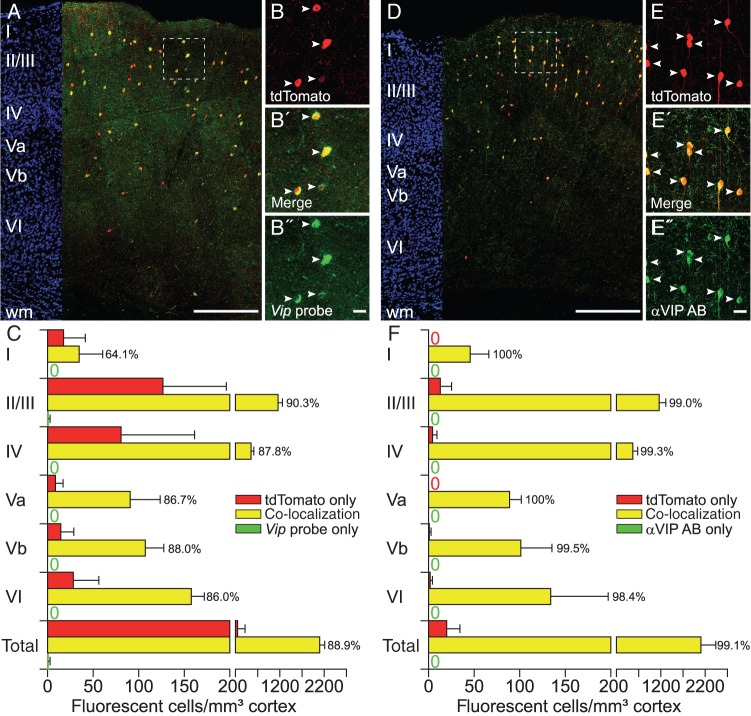
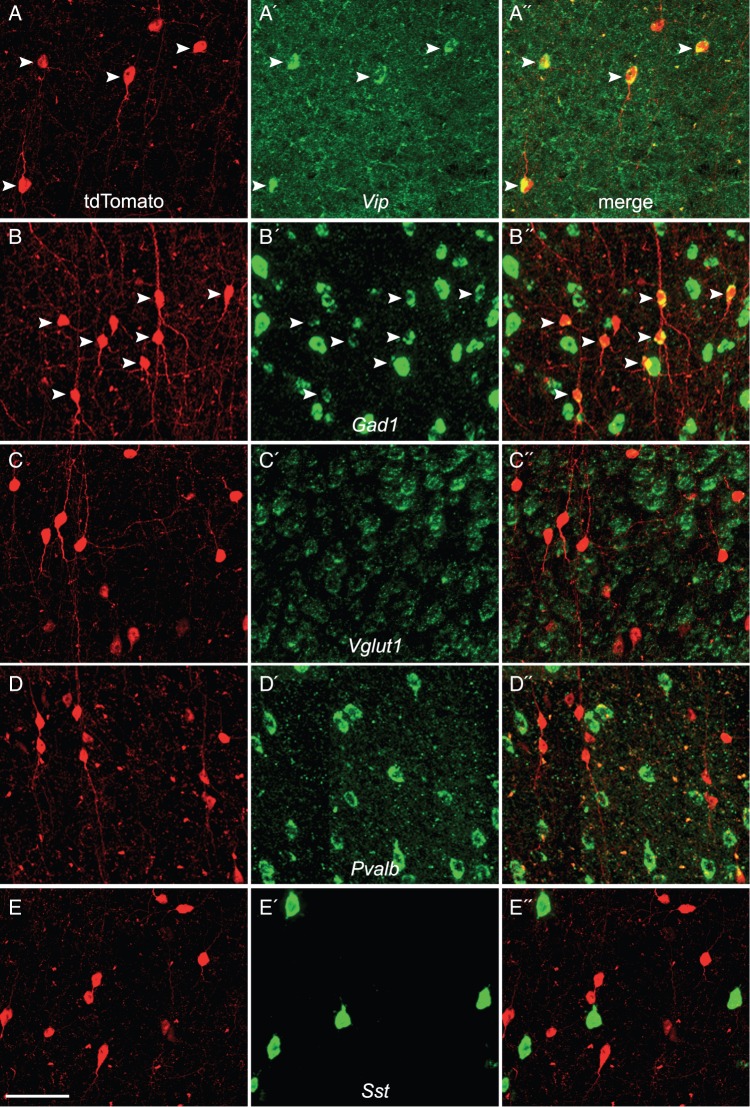
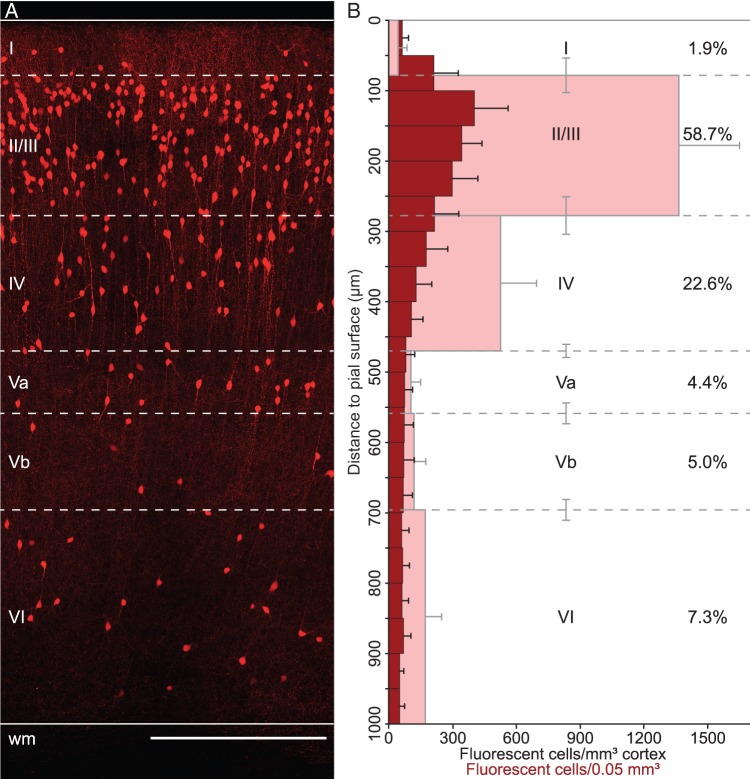
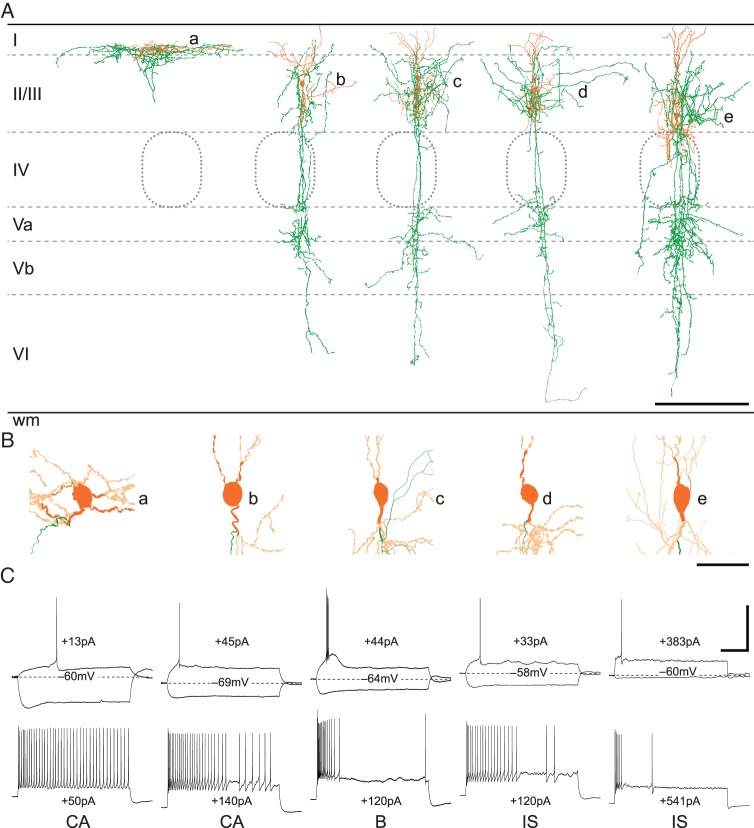
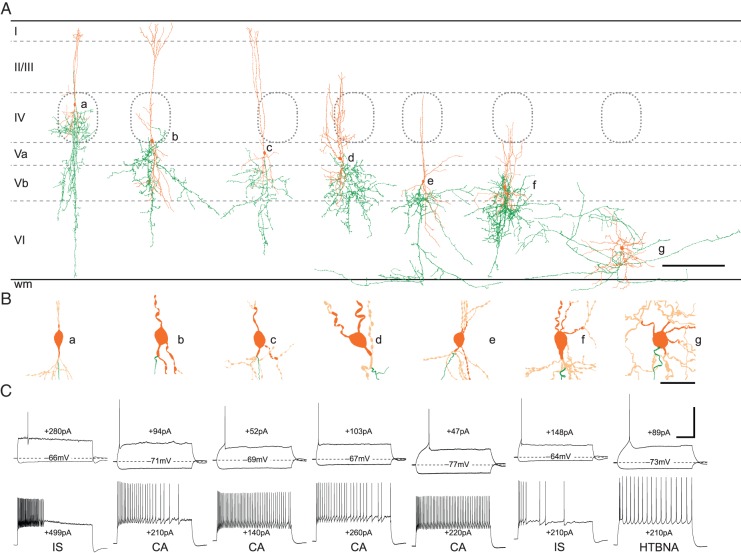
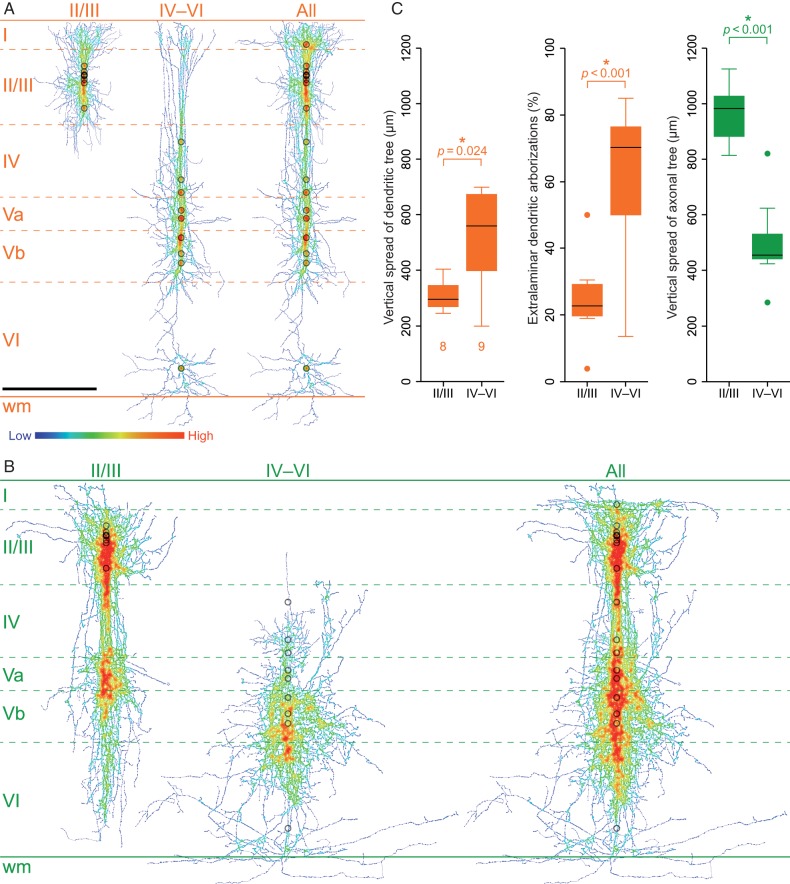
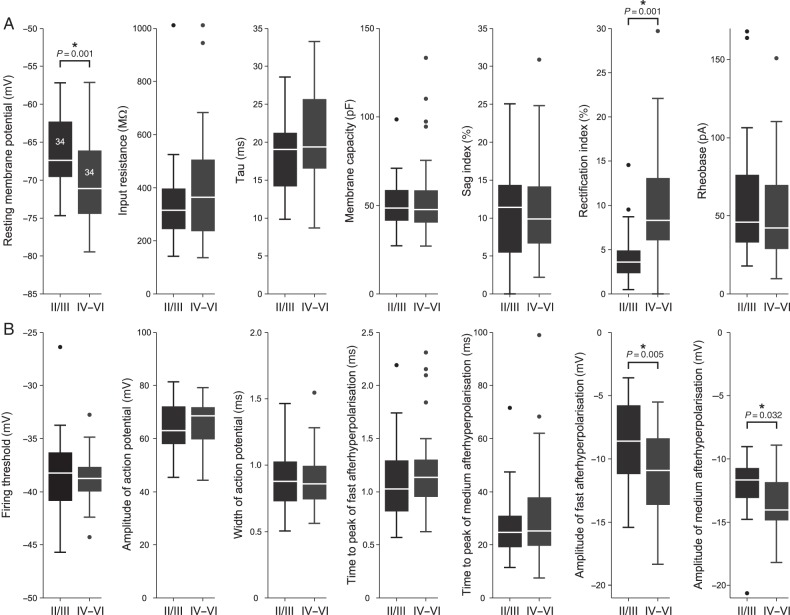
Neocortical GABAergic interneurons have a profound impact on cortical circuitry and its information processing capacity. Distinct subgroups of inhibitory interneurons can be distinguished by molecular markers, such as parvalbumin, somatostatin, and vasoactive intestinal polypeptide (VIP). Among these, VIP-expressing interneurons sparked a substantial interest since these neurons seem to operate disinhibitory circuit motifs found in all major neocortical areas. Several of these recent studies used transgenic Vip-ires-cre mice to specifically target the population of VIP-expressing interneurons. This makes it necessary to elucidate in detail the sensitivity and specificity of Cre expression for VIP neurons in these animals. Thus, we quantitatively compared endogenous tdTomato with Vip fluorescence in situ hybridization and αVIP immunohistochemistry in the barrel cortex of VIPcre/tdTomato mice in a layer-specific manner. We show that VIPcre/tdTomato mice are highly sensitive and specific for the entire population of VIP-expressing neurons. In the barrel cortex, approximately 13% of all GABAergic neurons are VIP expressing. Most VIP neurons are found in layer II/III (∼60%), whereas approximately 40% are found in the other layers of the barrel cortex. Layer II/III VIP neurons are significantly different from VIP neurons in layers IV-VI in several morphological and membrane properties, which suggest layer-dependent differences in functionality.
Overview
The claims and statistics of this paper haven’t been checked yet.
Free: it reads the open-access text and checks the first 5 claims that cite a source we can check. Create a free account to check every claim.
Integrity signals
Registry
Cites
Statistics
Figures
Verification
Claims the paper makes
The claims and statistics of this paper haven’t been checked yet.
Free: it reads the open-access text and checks the first 5 claims that cite a source we can check. Create a free account to check every claim.
Claims other papers make about this one
Each is checked against this paper’s own text: does it say what the citing paper says it does?
The source backs part of the claim, not all of it — or backs it for a different population, condition or comparison.
In the citing paper
“The large majority of Vip INs have a vertically oriented, bipolar-like dendritic morphology, the remaining being multipolar (Bayraktar et al., 2000; Pronneke et al., 2015).”
From GABAergic Interneurons in the Neocortex: From Cellular Properties to Circuits (2016) · cites this paper as Pronneke et al., 2015
Experimental — accuracy not yet measuredThe source backs part of the claim, not all of it — or backs it for a different population, condition or comparison.
In the citing paper
“This disinhibitory motif is also common to the neocortex where a majority of vertically oriented bipolar VIP and CR coexpressing interneurons reside in layer2/3 and emit axons that preferentially innervate dendrite targeting SST expressing interneurons within the same column (168, 363, 425, 475, 553, 652, 906, 928, 1046, 1134, 1270).”
From Hippocampal GABAergic Inhibitory Interneurons (2017) · cites this paper as [928]
Experimental — accuracy not yet measuredThe cited source says what the claim attributes to it.
In the citing paper
“In contrast, Vip INs in deeper layers had dendrites spanning both supra- and infragranular layers, but had their axons restricted to L5/6 (Kawaguchi and Kubota, 1996; Pronneke et al., 2015).”
From GABAergic Interneurons in the Neocortex: From Cellular Properties to Circuits (2016) · cites this paper as Pronneke et al., 2015
The cited source says what the claim attributes to it.
In the citing paper
“The axon of L2/3 Vip INs is also directed vertically, in a narrow columnar fashion, where their axonal projections often reach L4 and L5/6, in addition to their local axonal arbor (Bayraktar et al., 2000; Porter et al., 1998; Pronneke et al., 2015).”
From GABAergic Interneurons in the Neocortex: From Cellular Properties to Circuits (2016) · cites this paper as Pronneke et al., 2015
In the citing paper
“The most characteristic VIP+ interneurons are bipolar cells with vertically oriented axons. They are highly enriched in layers 2 and 3, and often display continuous adapting firing properties”
From Development and Functional Diversification of Cortical Interneurons (2018) · cites this paper as Pronneke et al., 2015
1 more claim about this paper
Create a free account to see every claim other papers make about this one.
Self-check
Percentages, sums and reported differences re-computed from the paper’s own numbers.
The self-check needs the paper’s full text.
Citations
Cites
A robust and high-throughput Cre reporting and characterization system for the whole mouse brain
Madisen, L., Zwingman, T. A., Sunkin, S. M., Oh, S. W., Zariwala, H. A., Gu, H., Ng, L. L., Palmiter, R. D., Hawrylycz, M. J., Jones, A. R., et al. (2010) · Nature Neuroscience · doi:10.1038/nn.2467 · Cited by 6,907 · cited 3×
“2011) with tdTomato-expressing Ai9 mice (Madisen et al. 2010).”
MethodCell types in the mouse cortex and hippocampus revealed by single-cell RNA-seq
Zeisel, A., Muñoz-Manchado, A. B., Codeluppi, S., Lönnerberg, P., La Manno, G., Juréus, A., Marques, S., Munguba, H., He, L., Betsholtz, C., et al. (2015) · Science · doi:10.1126/science.aaa1934 · Cited by 3,124 · cited 3×
“According to most previous studies in rodents, cortical VIPexpressing interneurons are GABAergic (Bayraktar et al. 1997; Gonchar et al. 2007; Zeisel et al. 2015).”
BackgroundResultInterneurons of the neocortical inhibitory system
Markram, H., Toledo-Rodriguez, M., Wang, Y., Gupta, A., Silberberg, G., & Wu, C. (2004) · Nature Reviews Neuroscience · doi:10.1038/nrn1519 · Cited by 2,954 · cited 2×
“They are heterogeneous in morphology and electrophysiological characteristics as well asmolecular profiles, which proved to be amajor obstacle in past classification attempts (Cauli et al. 2000; Markram et al. 2004; Ascoli et al. 2008; DeFelipe et al. 2013).”
BackgroundNeuronal Diversity and Temporal Dynamics: The Unity of Hippocampal Circuit Operations
Klausberger, T., & Somogyi, P. (2008) · Science · doi:10.1126/science.1149381 · Cited by 2,050 · cited 1×
“Cortical interneurons play an important role in controlling and shaping excitation in cortical circuits (McBain and Fisahn 2001; Pouille and Scanziani 2001; Wehr and Zador 2003; Klausberger and Somogyi 2008; Haider andMcCormick 2009).”
BackgroundA resource of Cre driver lines for genetic targeting of GABAergic neurons in cerebral cortex
Taniguchi, H., He, M., Wu, P., Kim, S., Paik, R., Sugino, K., Kvitsani, D., Fu, Y., Lu, J., Lin, Y., et al. (2011) · Neuron · doi:10.1016/j.neuron.2011.07.026 · Cited by 1,828 · cited 10×
“These functional studies used genetically engineeredVip-irescre knock-in mice (Taniguchi et al. 2011), in which the expression of the recombinase Cre is dependent on the expression of VIP to exclusively target VIP neurons.”
BackgroundMethodResultInfluentialPetilla terminology: nomenclature of features of GABAergic interneurons of the cerebral cortex
The Petilla Interneuron Nomenclature Group (PING) (2008) · Nature Reviews Neuroscience · doi:10.1038/nrn2402 · Cited by 1,491 · cited 5×
“Somatodendritic configurations of VIP neurons were diverse and included [based on Bayraktar et al. (2000) and Ascoli et al. (2008)] 3 bipolar (Figs 4Bc,Bd and 5Ba), 6 modified bipolar (i.e., tripolar; Figs 4Bb, Be and 5Bb,Bc,Bd), 6 tufted (Fig.”
BackgroundMethodThree groups of interneurons account for nearly 100% of neocortical GABAergic neurons
Rudy, B., Fishell, G., Lee, S., & Hjerling‐Leffler, J. (2011) · Developmental Neurobiology · doi:10.1002/dneu.20853 · Cited by 1,420 · cited 3×
“Roughly 30% of 5HT3aR interneurons also express vasoactive intestinal polypeptide (VIP; Lee et al. 2010; Rudy et al. 2011; Zeisel et al. 2015).”
BackgroundResultBalanced inhibition underlies tuning and sharpens spike timing in auditory cortex
Wehr, M., & Zador, A. M. (2003) · Nature · doi:10.1038/nature02116 · Cited by 1,372
Pfeffer, C. K., Xue, M., He, M., Huang, Z. J., & Scanziani, M. (2013) · Nature Neuroscience · doi:10.1038/nn.3446 · Cited by 1,353 · cited 4×
“In terms of cortical circuitry, it has been repeatedly reported that VIP neurons preferentially target several other types of inhibitory interneurons (Staiger et al. 2004b; David et al. 2007; Pfeffer et al. 2013), thus mediating disinhibition by releasing excitatory principal neurons from inhibition.”
BackgroundResultInfluentialThe neocortical circuit: themes and variations
Harris, K. D., & Shepherd, G. M. G. (2015) · Nature Neuroscience · doi:10.1038/nn.3917 · Cited by 1,215
Cited by
Items 201–217 of 217
Bogaj, K., & Urban‐Ciećko, J. (2026) · European Journal of Neuroscience · doi:10.1111/ejn.70456
“Most L2/3 VIP-INs are characterized by a bipolar morphology with dendritic arborizations in L1 and across all deeper cortical layers (Jiang et al. 2015, 2023; Prönneke et al. 2015; Georgiou et al. 2022).”
Stimulation électrique transcrânienne multisite dans l'épilepsie pharmaco-résistante
Denoyer, Y. (2019) · theses.fr (ABES) · doi:10.70675/0c55a83dz3729z4ee8zb7c9zd03118d26e81
Altérations de la connectivité corticale au cours de périodes critiques du développement
Druart, M. (2020) · theses.fr (ABES) · doi:10.70675/b4f48d73za850z42b2z8dadzfad47d4f0a69
Impact of PV interneuron - OPC synapse disruption on cognitive functioning
Vidal, M. (2021) · theses.fr (ABES) · doi:10.70675/66c1e527zbd3ez49f6z8736ze9817c27856d
The Locomoting State Selectively Amplifies Activity of Sensitizing Neurons in Primary Visual CortexPreprint
Hinojosa, A. J., Kosiachkin, Y., Dominiak, S. E., Evans, B. D., & Lagnado, L. (2026) · eLife · doi:10.7554/elife.110088.1
The Locomoting State Selectively Amplifies Activity of Sensitizing Neurons in Primary Visual CortexPreprint
Hinojosa, A. J., Kosiachkin, Y., Dominiak, S. E., Evans, B. D., & Lagnado, L. (2026) · eLife · doi:10.7554/elife.110088
Motor Cortex VIP Interneurons Participate in Dexmedetomidine-Associated Sleep Modulation
(17594), W. W., Zhang, H., Zhang, T., Huang, Q., Li, J., Li, N., Xi, Y., Yang, X., Wang, F., Tu, J., et al. (2026) · Molecular Neurobiology · doi:10.1007/s12035-026-05994-7
“Recordings were obtained mainly from superficial motor cortical layers corresponding to layers 2/3, where VIP-positive neurons were observed [29, 30].”
Banovac, I., Baković, M., Mayer, D., Sedmak, D., & Petanjek, Z. (2026) · Journal of Anatomy · doi:10.1111/joa.70223
“Current genomic and transcriptomic classifications suggest that the principal populations potentially un-derrepresented in the present study could be LAMP5-expressing neurons (Krienen et al., 2020 ; Schuman et al., 2019) and CR − /VIP + neurons (Prönneke et al., 2015 ).”
Chiantia, G. (n.d.) · Institutional Research Information System University of Turin (University of Turin)
Rodarie, D., Verasztó, C., Roussel, Y., Reimann, M., Keller, D., Ramaswamy, S., Markram, H., & Gewaltig, M.-O. (2022) · doi:10.1371/journal.pcbi.1010739.r005
Metadata
- Authors
- Prönneke, A., Scheuer, B., Wagener, R. J., Möck, M., Witte, M., & Staiger, J. F.
- Affiliations
- Universitätsmedizin Göttingen (DE)
- Venue
- Cerebral Cortex
- Publisher
- Oxford University Press (OUP)
- Published
- 2015-09-24
- Volume
- 25
- Issue
- 12
- Pages
- 4854-4868
- ISSN
- 1047-3211 (ISSN-L)
- 1460-2199
- PMC
- PMC4635925
- OpenAlex
- W1866290703
- Cited by
- 204
- References
- 48
- Citations by year
- 2026: 9 · 2025: 20 · 2024: 19 · 2023: 17 · 2022: 21 · 2021: 17 · 2020: 24 · 2019: 23 · 2018: 17 · 2017: 23 · 2016: 13 · 2015: 1
- FWCI
- 8.36
- Type
- journal article
- Language
- en
- Open access
- hybrid
- doi.org
- Licence
- cc-by-nc
- Locations
- Cerebral Cortex (publishedVersion, cc-by-nc)
- Europe PMC (PubMed Central) (publishedVersion, cc-by-nc)
- PubMed Central (publishedVersion, cc-by-nc)
- PubMed (publishedVersion)
- GoeScholar The Publication Server of the Georg-August-Universität Göttingen (Georg-August-Universität Göttingen) (submittedVersion, cc-by-nc)
- GRO (submittedVersion, cc-by-nc)
- Funders
- Deutsche Forschungsgemeinschaft (STA 431/8-1, 10-1, CRC 889)
- Cellular mechanisms of sensory information processing (TP C07)
- Topics
- Life Sciences › Neuroscience › Cellular and Molecular Neuroscience › Neuroscience and Neuropharmacology Research
- Life Sciences › Neuroscience › Cognitive Neuroscience › Neural dynamics and brain function
- Life Sciences › Neuroscience › Cellular and Molecular Neuroscience › Neuropeptides and Animal Physiology
- Keywords
- vasoactive intestinal peptide, VIP interneurons, barrel cortex, GABAergic interneurons, neuronal morphology, membrane properties, parvalbumin, somatostatin
- MeSH terms
- Action Potentials, Animals, Axons, Dendrites, Immunohistochemistry, Interneurons, Mice, Transgenic, Parvalbumins, RNA, Messenger, Somatosensory Cortex, Somatostatin, Vasoactive Intestinal Peptide, In Situ Hybridization, Fluorescence, Mice, GABAergic Neurons
About these checks
Registry, retraction, Cites and statistics results are computed, not judged, with one exception: a printed reference that no index lists is read once by a model before it counts as a citation error. Claims are extracted by a model and kept only when their quote appears verbatim in the text; each cited source is then checked, with a model’s help, for whether it says what the claim relies on. Those verdicts can be wrong — read the claim’s quote and the cited source before relying on one.
Statistics and arithmetic are recomputed, not judged.
Confidence bands are shown only for fields calibrated on our annotated test set. None is calibrated yet, so no band is shown.
What counts as a claim ›How we measure confidence ›How we check this ›
Are you an author, or do you see a problem with this page? Request a review
Data sources
Bibliographic data: Semantic Scholar, OpenAlex, Crossref.
Contains information from the Semantic Scholar Academic Graph Datasets, made available under the ODC Attribution License (ODC-BY 1.0).
Semantic Scholar’s data is described in: Kinney, R., et al. (2023). The Semantic Scholar Open Data Platform. arXiv:2301.10140.
